

How families, institutions, and one-size-fits-all systems blame people for the conditions that prevent them from thriving
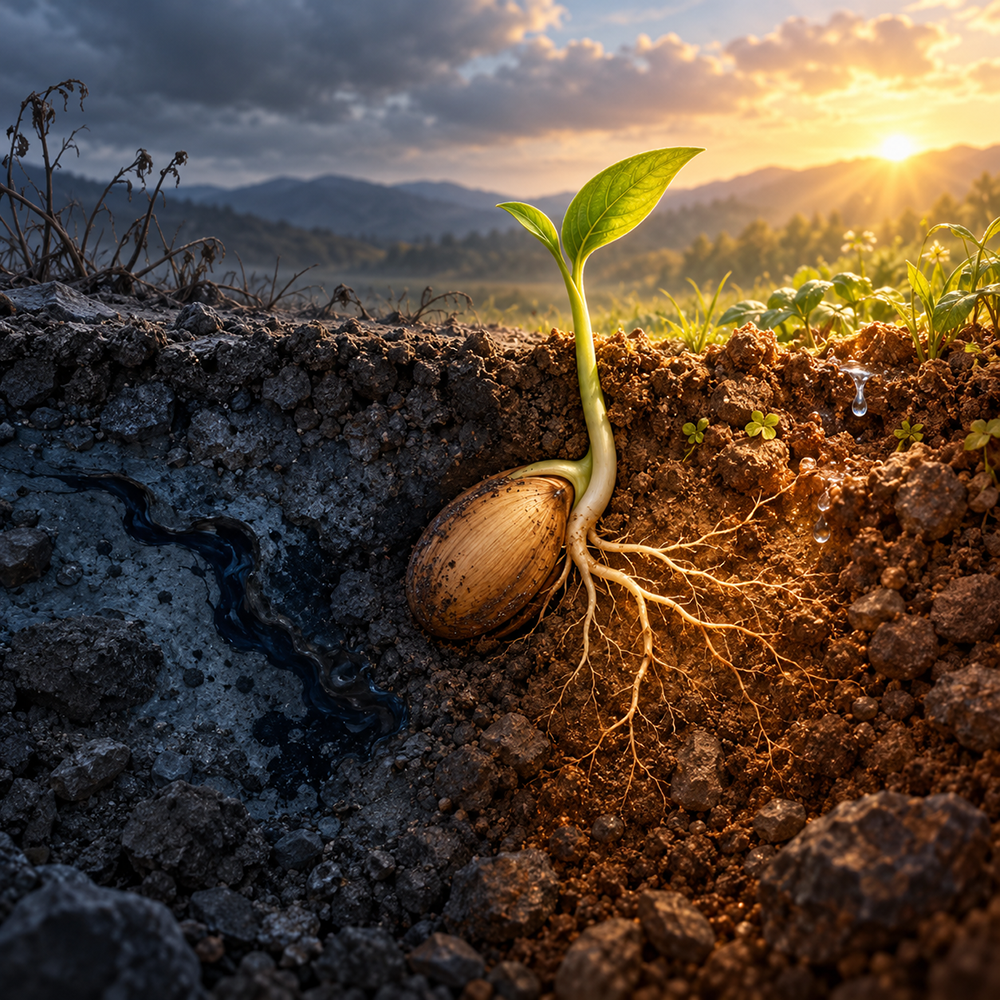
When a seed fails to grow, people may assume that something was wrong with the seed.
Perhaps it was weak.
Perhaps it was defective.
Perhaps it simply did not try hard enough to break through the soil.
But growth is never determined by the seed alone.
Some seeds need direct sunlight; others flourish in shade.
Some require abundant water, while others rot when given too much.
Certain plants need rich soil, particular temperatures, room for deep roots, protection from harsh weather, or another growing season before anything visible emerges.
Placing every seed in the same dirt and offering every one the same care would not be fair simply because the treatment was equal; it would ignore what each living thing actually needs.
Yet this is often how we treat people.
We create narrow definitions of intelligence, productivity, independence, maturity, success, and acceptable behavior.
We build families, schools, workplaces, healthcare systems, and social programs around those definitions.
Then, when someone cannot thrive within the conditions we created, we examine their character before examining their environment.
We ask why they are not more motivated, disciplined, resilient, grateful, or positive.
We rarely ask whether they have access to safety, stability, nourishment, accommodation, encouragement, or genuine support.
We may not consider whether the environment is merely imperfect—or actively causing harm.
For much of my life, I believed I was a bad seed.
I looked at people who seemed able to move through life more easily and wondered what they possessed that I did not.
They attended school, worked, formed relationships, managed responsibilities, and appeared to grow in ways I could not sustain.
I assumed their visible progress proved that my struggles came from some fundamental defect within me.
I did not yet understand that we had not been planted under the same conditions.
My environment did not simply fail to provide everything I needed.
My needs were repeatedly neglected while additional harm was poured into the soil around me.
Signs of distress were treated as character flaws.
Limits were interpreted as defiance.
Pain was dismissed as oversensitivity.
When I struggled under the weight of abuse, trauma, unsupported autism, and impossible expectations, the struggle itself was presented as evidence that I was the problem.
I was being poisoned and then punished for wilting.
That is a profoundly disorienting way to grow.
When the people controlling the environment insist that the soil is healthy, the seed has nowhere else to place the blame.
A child cannot easily conclude that the family, school, community, or larger system is failing them.
They are far more likely to conclude: something must be wrong with me.
That belief can take root long before someone possesses the language to question it.
Before we call a person lazy, difficult, broken, resistant, or unwilling to grow, perhaps we should stop examining them in isolation.
- What conditions have surrounded them?
- What nourishment have they been denied?
- What harm have they been expected to absorb?
- And were they ever given a genuine opportunity to thrive?
A seed cannot be fairly judged apart from its soil; neither can a human being.
When the Soil Is Not Merely Imperfect
No environment is perfect.
Even the healthiest families make mistakes.
Good teachers misunderstand students.
Supportive friends occasionally respond poorly.
Workplaces encounter limitations, and social systems cannot anticipate every individual need.
People can cause harm without intending to, and relationships require patience, communication, grace, and repair.
But imperfection and persistent harm are not the same thing.
Healthy environments are not defined by the complete absence of mistakes.
They are defined by what happens after those mistakes are recognized.
People listen.
They care about the impact of their behavior.
They apologize, make repairs, and change what they can.
Needs may not always be met perfectly, but they are not routinely mocked, denied, or used against the person who expresses them.
Poisoned environments operate differently.
Within them, the person naming the harm is often treated as the source of it.
Pain becomes evidence of oversensitivity.
A boundary becomes an attack.
Asking for help becomes entitlement.
Disability-related needs become excuses.
The environment repeatedly causes injury, then blames the injured person for displaying its effects.
The message becomes:
- If you were stronger, this would not hurt you.
- If you were more grateful, you would focus on the good.
- If you truly loved us, you would tolerate this.
- If you tried harder, you would grow like everyone else.
But no amount of determination can transform poison into nourishment.
Positive thinking may help someone endure a difficult season, recognize possibility, or remain connected to hope.
It cannot make an unsafe person safe.
It cannot create accountability in someone committed to denial.
It cannot provide accommodations that a system refuses to offer.
It cannot supply rest, housing, healthcare, income, connection, or protection when those resources are genuinely absent.
A plant cannot affirm its way into receiving sunlight.
It cannot practice gratitude until contaminated water becomes clean.
And it should not be blamed for responding exactly as living things respond when their essential needs remain unmet.
This does not mean that people have no agency or that healing is impossible; it means agency must be understood honestly.
We can learn, seek support, establish boundaries, and move toward better conditions—but we cannot single-handedly make a harmful environment healthy.
We cannot do every person’s portion of the work, and we cannot heal while others continually reopen the wound.
Sometimes the most truthful conclusion is not I need to try harder.
Sometimes it is:
- These conditions are harming me.
- What I need is not being provided here.
- My inability to thrive in this environment does not prove that I am incapable of thriving.
That recognition is not self-pity; it is an accurate assessment of the soil—and accurate assessment is often where meaningful change begins.
When the Seed Learns to Blame Itself
When harm is repeated long enough, it can become difficult to recognize where it is coming from.
Children depend upon the people and environments around them.
They are not usually able to step back and evaluate the family system, identify emotional abuse, recognize unmet disability needs, or understand how an adult’s unresolved wounds are affecting them.
They simply experience what happens—and try to make sense of it with the limited information they have.
If the adults insist that the environment is loving and healthy, the child may conclude that the pain must originate within them.
They begin absorbing messages such as:
- I am too sensitive.
- My needs are too much.
- I make everything difficult.
- If I communicated more clearly, nobody would mistreat me.
- If I were more obedient, useful, pleasant, or successful, I would finally be treated with love.
- If I could become the right kind of person, everything around me would become safe.
These beliefs can become survival strategies.
If the problem is supposedly inside us, then perhaps we can fix it.
We can ask for less, give more, remain quiet, anticipate everyone’s reactions, and work endlessly to become impossible to criticize.
Believing that we control the harm may feel safer than recognizing how little control we actually have over the people causing it.
But the price is self-abandonment.
We may grow into adults who distrust our own discomfort, apologize for ordinary needs, and interpret exhaustion as a moral failure.
We may remain in harmful situations because leaving feels crueler than what is being done to us.
We may mistake overfunctioning for love and assume that every relationship can be saved if we simply find the perfect combination of patience, compassion, and words.
Comparison deepens the wound.
We look at people who received guidance, encouragement, safety, accommodations, financial support, or room to make mistakes and ask why we cannot accomplish what they have accomplished.
Their growth appears to confirm our inadequacy because the invisible differences in our environments are rarely included in the comparison.
We see the flower.
We do not see the quality of its soil, the consistency of its water, the protection surrounding its roots, or the hands that helped it survive difficult seasons.
Recognizing these differences is not an attempt to diminish anyone else’s work; it is an attempt to understand our own lives accurately.
The goal is not to replace: everything was my fault with: nothing is ever my responsibility.
Healing requires something more honest: learning to distinguish what belongs to us from what never did.
We can take responsibility for our choices without accepting responsibility for the conditions other people created.
We can work toward healing without pretending that we caused the wounds.
We can develop new skills while acknowledging that we should have received support much earlier.
Perhaps the seed was never bad.
Perhaps it adapted as intelligently as it could to conditions no living thing should have been expected to endure.
 Jessica Carey

One Kind of Soil Cannot Support Every Seed
Even when an environment is not deliberately abusive, it can still become harmful by refusing to recognize human differences.
Society often designs one narrow set of conditions and calls those conditions normal.
There is one preferred way to communicate, learn, work, socialize, regulate emotion, manage time, tolerate stimulation, and demonstrate competence.
Anyone who cannot function consistently within that model is expected to adapt—regardless of the physical, emotional, or neurological cost.
When they struggle, the system rarely asks whether its expectations are reasonable.
Instead, it asks why the individual cannot keep up.
This is particularly visible in the way autistic and otherwise disabled people are treated.
Someone may need clear communication, predictable expectations, sensory accommodations, additional processing time, flexible scheduling, reduced demands, written instructions, or significant periods of recovery.
Yet these needs are frequently dismissed as preferences, excuses, or requests for special treatment.
People may point to one visible accomplishment as proof that support is unnecessary:
- You completed school, so you should be able to work full-time.
- You communicated clearly today, so communication cannot be difficult for you.
- You attended one event, so you cannot really be exhausted.
- You managed this task before, so you should always be able to manage it.
But capacity is not fixed.
Performing something once does not mean it can be repeated indefinitely, under every condition, without consequence.
A plant may survive one unusually hot day; that does not mean it can live permanently without water.
For years, I forced myself through environments that overwhelmed my nervous system because I did not know I was autistic.
From the outside, persistence could look like proof that I was capable of continuing.
Internally, each demand depleted resources that were not being restored.
Eventually, surviving through constant overextension contributed to chronic autistic burnout.
The system interpreted endurance as evidence that the conditions were sustainable.
They were not.
One-size-fits-all approaches confuse sameness with fairness.
Giving every seed identical soil, sunlight, and water may appear equal, but it only benefits the seeds whose needs happen to match what was chosen.
Real inclusion requires curiosity.
Instead of asking: “Why can’t this person function like everyone else?” we might ask:
- “What conditions help this person function well?”
- “Which barriers are consuming their energy?”
- “What support would make meaningful participation possible?”
- “Are we measuring genuine well-being—or merely visible compliance?”
People do not need to fit into identical boxes to possess equal worth.
Different needs do not indicate lesser intelligence, character, or potential.
They indicate that human beings, like every other living thing, are diverse.
The goal should not be to force every seed to survive the same environment.
It should be to create enough kinds of environments that more people finally have the opportunity to grow.
 Jessica Carey

What Teaching for Artistic Behavior Understands About Growth
This is one reason I was drawn to Teaching for Artistic Behavior, commonly known as TAB.
TAB recognizes students as artists rather than identical containers waiting to be filled with identical information.
Instead of requiring every student to create the same object, follow the same process, or arrive at the same visual solution, it allows room for curiosity, choice, experimentation, and individual direction.
Students still receive instruction, guidance, tools, and support.
Choice does not mean abandonment or the absence of structure; it means creating an environment in which students can apply what they are learning in ways that connect with their interests, ideas, abilities, and ways of thinking.
The teacher does not decide that only one kind of flower is valuable and then force every seed to become it.
The teacher helps cultivate a garden.
Some students may need demonstrations.
Others learn through independent experimentation.
One may communicate an idea through painting, while another discovers it through sculpture, fiber, collage, digital media, or materials nobody initially expected them to use.
Their paths may look different without one being inherently more legitimate.
TAB asks a question that extends far beyond the art room: what becomes possible when we stop demanding sameness and begin supporting individual growth?
Imagine if families approached children this way—observing who they genuinely are instead of deciding who they should become.
Imagine if schools treated differences as information rather than defiance.
Imagine if workplaces designed roles around multiple kinds of intelligence and contribution.
Imagine if healthcare and social-service systems asked what would make participation accessible instead of punishing people who cannot navigate unnecessarily rigid processes.
Supporting individual needs does not mean eliminating every challenge, satisfying every desire, or assuming that growth requires no discomfort.
Healthy development still involves learning, responsibility, practice, correction, and change.
But meaningful challenge is different from preventable harm.
A gardener may stake a young plant so it can withstand the wind.
That is not the same as repeatedly bending its stem until it breaks and calling the damage resilience.
Good environments do not force people to prove their worth by surviving unnecessary obstacles.
They provide enough safety for exploration, enough structure for stability, enough freedom for individuality, and enough support for growth.
Perhaps this is what our larger systems need to learn: people are not defective products moving through an assembly line.
They are living beings—each carrying different histories, capacities, sensitivities, strengths, needs, and possibilities.
A healthy garden does not become beautiful by making every plant identical.
It becomes beautiful by giving many kinds of life room to become more fully themselves.
 Jessica Carey

Normalized Poison Is Still Poison
One of the greatest obstacles to changing harmful environments is that people become accustomed to them.
When something has existed for generations, appears throughout an institution, or is practiced by nearly everyone in a family, it can begin to feel inevitable.
People stop asking whether it is healthy and begin defending it simply because it is familiar.
They say:
- That is just how life is.
- Life is hard.
- My parents treated me that way, and I survived.
- Nobody helped me.
- Everyone has problems.
- That is how our family shows love.
But repetition does not transform harm into health.
If generations of people were denied emotional safety, disability support, rest, autonomy, or respectful communication, continuing that denial does not make the system fair.
It only ensures that another generation inherits the same injuries.
Sometimes people defend harmful conditions because acknowledging them would require grieving what they endured themselves.
If another person deserves accommodation, protection, or gentleness, they may have to confront the painful reality that they deserved those things, too.
That grief is real, but it should become a reason to interrupt the pattern—not a justification for continuing it.
I never received help can lead to two very different conclusions: Therefore, nobody else should receive it.
Or: I understand what its absence costs, so I want something better for those who come after me.
Only one of those responses creates healthier soil.
Toxic positivity can also preserve harm.
Calls to “focus on the good,” “choose love,” or “stop being negative” may sound compassionate, but they become dangerous when used to silence truth, excuse abuse, or pressure someone to remain accessible to people who continue hurting them.
There may be good memories within a harmful relationship.
A family may share laughter, traditions, gifts, and moments of apparent closeness.
Those experiences can be real without erasing the harm that was also real.
Love does not require pretending that poison is water.
Gratitude does not require denying injury.
Forgiveness does not require allowing the same behavior to continue.
And positive thinking cannot make another person choose accountability, empathy, or change.
Uncomfortable truths do not disappear when they are swept beneath the rug.
They remain there—unaddressed, accumulating, and affecting everyone who enters the room.
What a system refuses to name often becomes what it continues to reproduce.
Healing begins with enough honesty to say:
- This may be familiar, but it is not healthy.
- This may be common, but it is not acceptable.
- This may have been done for generations, but it does not have to continue through us.
Normalization explains why people may stop recognizing poison; it does not make the poison harmless.
 Jessica Carey

Leaving Poisoned Soil Is Not Hatred
When someone finally recognizes that an environment is destroying them, leaving may be the most life-affirming choice available, yet harmful systems rarely describe that departure honestly.
They may call it selfishness, bitterness, betrayal, negativity, or unforgiveness.
They may insist that the person is abandoning the family, dividing the community, or refusing to work through ordinary problems.
The departure becomes the offense, while the conditions that made it necessary disappear from the conversation.
A seed reaching toward life is not attacking the soil it had to escape.
Not everyone can leave immediately or safely.
Housing, finances, disability, caregiving responsibilities, coercion, isolation, and the risk of escalation can make departure a process rather than a single decision.
Remaining does not mean someone approves of the harm, lacks courage, or is refusing to heal.
Sometimes survival requires recognizing the truth internally while quietly gathering the support and resources necessary for greater safety.
For years, I was taught that love meant continuing to absorb harm.
I was told to focus on the good, overlook the bad, and consciously choose to love family regardless of what they did.
But that definition of love required only one person to change: me.
I was expected to become more patient, more understanding, more forgiving, less sensitive, and easier to mistreat.
The people causing harm were not expected to acknowledge it, repair it, or stop.
That is not reconciliation; it is permission for the pattern to continue.
Leaving did not mean I believed every person in my family was entirely without goodness.
It did not mean I wanted anyone to suffer.
It meant I could no longer sacrifice my safety to preserve other people’s preferred image of the relationship.
We can recognize someone’s humanity without giving them unlimited access to ours.
We can hope that people heal without remaining close enough for them to continue harming us.
We can release the desire for revenge while maintaining the boundaries necessary for survival.
And we can love someone while acknowledging that the relationship they are offering is not safe enough to enter.
A healthy environment may feel sadness when someone needs distance, but it also becomes curious about why.
It examines its behavior.
It respects boundaries.
It asks whether repair is possible and understands that trust cannot be demanded.
A poisoned environment responds by blaming the person who leaves; it treats withdrawal from harm as greater wrongdoing than the harm itself.
But names do not change reality.
Calling abuse “love” does not make it loving.
Calling silence “peace” does not make it peaceful.
Calling self-protection “hatred” does not make it hateful.
Sometimes leaving is not a rejection of love; it is a refusal to continue participating in a counterfeit version of it.
The seed does not owe the poisoned soil its life simply because that is where it was first planted.
 Jessica Carey
Transplanting Does Not Produce an Immediate Bloom
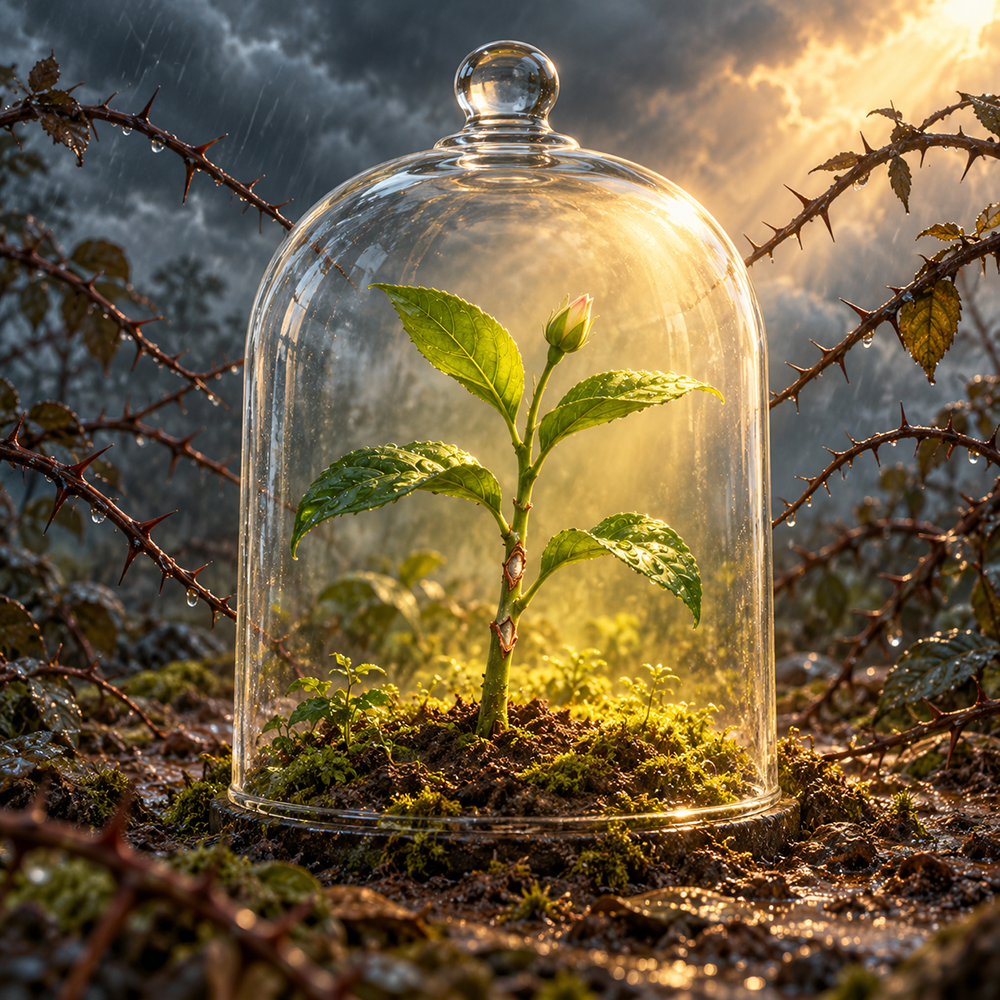
Leaving a harmful environment creates the possibility of healing; it does not instantly undo the damage.
When a plant is transplanted, it may initially appear worse.
Its roots have been disturbed.
It has been removed from the only soil it has known.
Even when the new environment is healthier, the plant may droop, shed leaves, or temporarily stop growing while it adjusts.
It needs consistent care, protection, and time.
Human beings are not so different.
After leaving a harmful environment, the immediate danger may be reduced while the body and mind continue responding as though it could return at any moment.
A person may remain hypervigilant, exhausted, frightened, confused, or unable to trust kindness.
They may experience grief for what happened, what was lost, and what should have existed but never did.
They may also be facing the material aftermath of leaving: unstable housing, financial hardship, inaccessible belongings, disrupted relationships, reduced support, healthcare needs, legal complications, or the overwhelming task of rebuilding life with depleted resources.
From the outside, people may see that the person escaped and assume the problem is over.
The poison is gone, so why aren’t you growing yet?
But surviving prolonged harm consumes enormous energy.
Removing the source of injury does not immediately replenish everything that survival required.
In my own life, leaving did not erase chronic autistic burnout, trauma, exhaustion, or the practical consequences of starting over; it gave me distance from an environment that continually reopened the wound, but distance was the beginning of recovery—not its completion.
Sometimes the first signs of healing do not resemble dramatic progress.
Healing may look like sleeping more.
It may look like doing less because the body can no longer survive through adrenaline.
It may look like recognizing a limit before crossing it, asking for help, declining an unnecessary demand, or allowing another person to offer care without immediately trying to repay it.
It may look like becoming less productive before becoming more alive.
A plant recovering from damaged roots does not need to be pulled from the soil each day so someone can check whether it is growing fast enough.
Constant pressure, scrutiny, and demands for visible improvement can become another form of harm.
Recovery needs steadiness.
It needs access to nourishment that does not disappear the moment progress becomes slow or inconvenient.
It needs relationships that do not punish vulnerability, systems that understand fluctuating capacity, and enough time for safety to become something the body can gradually believe.
Not every plant will grow into the form it might have reached without injury.
Some effects may remain.
Growth may be slower, less visible, or different from what other people expect.
Different does not mean meaningless.
The absence of an immediate bloom does not mean that leaving was a mistake; sometimes the earliest and most important evidence of healing is simply this:
The damage has stopped accumulating, and the roots finally have a chance to rest.
 Jessica Carey

Better Questions Create Better Gardens
If we want people to thrive, we must become more willing to examine the conditions surrounding them.
Too often, our first questions are judgments disguised as curiosity:
- Why aren’t they trying harder?
- Why can everyone else manage this?
- Why are they so sensitive?
- Why can’t they be more grateful?
- What is wrong with them?
These questions begin with the assumption that the individual is the problem.
They direct attention toward correcting the person while leaving the environment unchanged.
Better questions begin with curiosity rather than blame:
- What has this person been surviving?
- Which needs remain unmet?
- What barriers are consuming their energy?
- What conditions help them feel safe and function well?
- What support would make meaningful participation possible?
- Are we encouraging genuine growth—or demanding visible compliance?
Changing the question does not mean assuming that individuals have no responsibilities.
Every person remains accountable for how they treat others and for the choices that are within their control.
But responsibility must be assigned accurately.
A seed is responsible for responding to the life within it; it is not responsible for creating sunlight, producing clean water, or removing toxins someone else continues pouring into the soil.
Likewise, people can learn new skills, seek help, communicate needs, establish boundaries, and participate in their healing.
They cannot single-handedly make an abusive family accountable, transform an inaccessible institution, or manufacture resources that do not exist.
Healthy support asks what can be changed at every level.
Perhaps the individual needs information, rest, treatment, accommodation, encouragement, or a different approach.
Perhaps the relationship needs better communication, mutual accountability, and respect for boundaries.
Perhaps the institution needs more flexible procedures, accessible services, or decision-makers willing to listen.
Perhaps the entire system was built around assumptions that exclude the very people it claims to serve.
A compassionate society does not wait until someone collapses and then ask why they failed to request assistance more perfectly.
It does not make support so exhausting to obtain that only people with abundant capacity can access it.
It does not treat survival under hostile conditions as proof that accommodation was never necessary.
Better gardens are created intentionally.
They require people willing to notice which plants are struggling, investigate why, and adjust the conditions where possible.
They require resources distributed according to genuine need rather than appearances.
They require humility—the willingness to admit that what works for one person may injure another.
Most importantly, they require us to stop confusing a person’s response to harmful conditions with the truth of who that person is.
Before deciding that someone refuses to grow, we should ask whether we have offered anything capable of sustaining growth.
 Jessica Carey

Questions for Examining the Soil
If this metaphor resonates, consider pausing before asking what is supposedly wrong with the seed.
Instead, ask:
- What conditions have shaped the way I currently function?
- Which of my struggles may be understandable responses to unmet needs, inaccessible systems, trauma, or prolonged stress?
- What did I learn to believe about myself because of the environment around me?
- Which messages belong to me, and which were planted by people who misunderstood or mistreated me?
- Where am I still trying to earn nourishment that should not have been conditional?
- What environments help me feel safer, clearer, more creative, or more fully alive?
- What forms of support, accommodation, rest, protection, or connection do I genuinely need?
- Am I judging someone else’s growth without understanding the conditions surrounding it?
- Where could I help create healthier soil—not by controlling another person’s growth, but by making room for it?
These questions are not meant to locate another reason to blame ourselves; they are invitations to see the larger picture.
Sometimes healing begins when we stop asking: “Why can’t I grow correctly?”
And begin asking: “What have I been trying to grow through—and what might become possible under different conditions?”
The Life Inside the Seed Was Never the Problem
For much of my life, I compared myself with people who had been growing under different conditions.
I saw what they had accomplished, how easily they seemed to move through the world, and how naturally they appeared to belong within it.
I did not see every form of support beneath their growth.
I saw only the distance between where they were and where I believed I should have been.
I interpreted that distance as evidence against myself.
I thought I needed to become stronger, work harder, need less, remain more positive, and tolerate more; I did not understand how much energy I was spending surviving conditions that repeatedly depleted and injured me.
I was not failing to grow because there was no life within me.
I was trying to remain alive in poisoned soil.
Recognizing that truth does not erase personal responsibility, but it places responsibility where it belongs.
I am responsible for the choices I make now, the ways I treat others, and the healing that is within my power to pursue.
I am not responsible for having been neglected, abused, unsupported, or denied conditions I could not create alone.
Those truths can exist together.
Our environments shape us, but they do not necessarily have the final word about who we are.
When safety, accommodation, nourishment, truthful understanding, and genuine care become available, parts of us that appeared absent may slowly begin to emerge.
Other injuries may remain.
Growth may not follow the expected timeline.
We may never become the version of ourselves that could have existed without the damage—and grieving that possibility is valid.
But growth does not become worthless because it arrives differently.
A life does not become less meaningful because it requires support.
And a person does not become defective because the conditions surrounding them failed to recognize what they needed.
Perhaps the most compassionate thing we can offer one another is the willingness to become curious about the soil: to stop asking only what is wrong with the person and begin asking what has happened around them, what continues happening to them, and what might finally help.
A seed is not a failure because the soil was poisoned.
Leaving the poison is not hatred.
Needing different conditions is not weakness.
Growing slowly is still growing.
And growing differently does not mean growing wrongly.
Sometimes the most courageous thing a seed can do is reach beyond the place that buried it and continue turning toward the light.
Want even more content about creativity and art?
Be sure to check out all of our creative chronicles!
If you'd like to see examples of my work, you can find some of my art and creations at Redbubble and Gumroad!
Looking to learn more about my recent journey?
Check out some of these articles:
-Learning What Love Was Supposed to Feel Like
-I Wasn't Broken--I'm Burned Out
-What Chronic Autistic Burnout Actually Feels Like
-Building a Life from What Remains
-An Autistic Roadmap Back to Yourself
-Naming the Harm Doesn’t Create It
 Jessica Carey