


Recently, I was helping a friend of my friend’s grandmother organize belongings when our practical task turned into a much deeper conversation.
As we worked, we talked about the state of society: the cruelty people inflict upon one another, the divisions that keep growing wider, and the harmful patterns that pass from one generation to the next.
We wondered how humanity can speak so often about peace, kindness, love, and respect while repeatedly creating environments in which those values are absent.
At one point, she mentioned wanting to place a saying on her wall: “We cannot have world peace until we change the care we give to children.”
That thought remained with me.
Not every social problem can be traced to one cause.
Poverty, inequality, discrimination, political systems, institutional failures, and unequal access to safety and resources all shape the world in profound ways.
Yet childhood is often where people first learn what power, love, conflict, difference, and human worth are supposed to mean.
Before children can understand society’s divisions, they are watching how adults behave.
They notice whose feelings matter, whose pain is dismissed, who is protected, who is blamed, and whether power is used to care for people or control them.
They learn whether mistakes lead to honest accountability and repair—or denial, excuses, and punishment for the person who names the harm.
Children may notice human differences, but they are not born believing that those differences make another person inferior, dangerous, undeserving, or an enemy.
Those meanings are taught, modeled, reinforced, or allowed to remain unchallenged.
If we want children to create a kinder world, we must first ask what kind of world we are creating inside and around them.
Perhaps peace does not begin with a grand declaration made by powerful leaders.
Perhaps it begins much earlier and much closer to home—in the everyday ways children are seen, protected, guided, corrected, respected, and loved.
Childhood Is Where “Normal” Is First Defined
Long before children can analyze the world around them, they are learning from it.
They learn through what adults say, but perhaps even more powerfully through what adults repeatedly do.
They watch how people respond to vulnerability, disagreement, mistakes, needs, boundaries, and differences.
From those experiences, they begin forming an understanding of what relationships—and life itself—are supposed to feel like.
A child may learn that love is patient, honest, and safe.
They may learn that people can disagree without humiliating one another, that causing harm calls for accountability, and that an apology should be followed by changed behavior.
But a child can also be taught that love means tolerating mistreatment.
They may learn that powerful people do not have to apologize, that keeping appearances matters more than telling the truth, or that the person who names a problem becomes the problem.
They may learn that their needs are burdens, their feelings are inconvenient, and their worth depends upon remaining quiet, useful, obedient, or easy to manage.
These lessons are not always taught deliberately.
They can be communicated through everyday patterns: whose anger everyone must accommodate, whose pain gets minimized, whose version of events is automatically believed, and who is expected to sacrifice themselves to preserve the comfort of others.
Children also absorb the ways adults speak about people beyond their immediate families.
They notice jokes rooted in prejudice, contempt for people who are different, assumptions about who is deserving, and the casual division of humanity into people like “us” and people like “them.”
Hatred does not have to be presented as hatred to take root.
Sometimes it arrives disguised as humor, tradition, fear, superiority, or “just the way things are.”
What surrounds a child repeatedly can become their definition of normal—even when it is neither healthy nor inevitable.
That is why the care we give children reaches far beyond childhood.
We are not only responding to who they are today.
We are helping shape what they may later expect from relationships, tolerate from authority, offer to vulnerable people, and carry into families, workplaces, communities, and institutions of their own.
Children inherit more than our words; they inherit the relationship patterns, prejudices, silences, and definitions of “normal” that we place around them.
 Jessica Carey

Normalized Does Not Mean Healthy
When harmful patterns have existed for a long time, people often begin treating their age and familiarity as proof that they are necessary.
- “That is just how life is.”
- “Life is supposed to be hard.”
- “My parents treated me that way, and I survived.”
- “I never received that kind of help.”
- “Children today are too sensitive.”
- “That is how we have always done things.”
These statements may sound practical, but they can prevent us from asking a more important question: is this actually healthy, fair, or necessary?
Something can be common without being good.
It can be traditional without being wise.
It can be socially accepted without being morally right.
Entire families, communities, and institutions can normalize practices that harm people simply because questioning them would require uncomfortable honesty and meaningful change.
Surviving something does not prove that it benefited us.
Sometimes people survive despite what happened—not because of it.
I know how disorienting it can be when harmful patterns are presented as ordinary family life.
For years, naming what hurt me was treated as a greater offense than the behavior causing the pain.
That experience taught me how easily a family or larger system can protect what is familiar while blaming the person who asks for something healthier.
The wounds may appear later as difficulty trusting others, recognizing personal needs, regulating emotions, establishing boundaries, tolerating vulnerability, or believing that love can exist without fear.
There is also a painful logic behind saying: “I never received help, so why should anyone else?”
It transforms deprivation into a tradition and suffering into an initiation requirement.
Instead of allowing past hardship to inspire compassion, it uses one person’s unmet needs to justify withholding care from someone new.
A healthier response would be: “I know what it cost me to go without that support. I do not want the next person to carry the same unnecessary burden.”
Meaningful progress often begins when someone questions what others have accepted as normal.
Progress begins when we stop confusing familiarity with inevitability and recognize that inherited patterns can be examined, challenged, and changed.
We do not honor previous generations by repeating everything they endured.
Sometimes we honor them—and ourselves—by creating what they should have received, too.
Pain Can Explain a Pattern Without Excusing It
Generational trauma helps explain how pain travels through families and communities.
People often repeat what they were taught.
Someone raised around control may mistake control for protection.
Someone whose feelings were punished may become uncomfortable with other people’s emotions.
Someone who never experienced a sincere apology may not know how to take responsibility without interpreting accountability as humiliation or attack.
Understanding these origins can create compassion; it can help us see that harmful behavior did not emerge from nowhere.
But understanding a pattern is not the same as excusing it.
A painful childhood does not give someone unlimited permission to hurt other people.
Trauma may influence our reactions, beliefs, and coping mechanisms, but it does not erase the impact of our behavior or remove our responsibility to examine it.
This distinction matters because explanations can easily become shields:
- “They did the best they could.”
- “That is how they were raised.”
- “They have been through a lot.”
- “They did not know any better.”
Those statements may contain some truth, but they do not contain the whole truth.
Someone may have done what they knew while still causing serious harm.
Their intentions and limitations can be acknowledged without requiring the injured person to deny the consequences.
When harm is named, the goal should not be to decide which person is entirely good or entirely bad.
The more useful questions are:
- What happened?
- Who was affected?
- What responsibility needs to be taken?
- What must change to prevent the harm from continuing?
Not every hurt person chooses to hurt others.
Some people allow their suffering to make them more attentive to the pain around them.
They remember what it felt like to be dismissed, controlled, frightened, or abandoned and decide that they will not knowingly reproduce that experience for someone else.
That decision is where a generational pattern begins to break.
We may not be responsible for the wounds handed to us, but as adults, we become responsible for what we do with them.
Healing does not require perfection; it requires the willingness to notice, listen, take responsibility, seek help, repair what can be repaired, and choose differently when an inherited response causes harm.
Generational trauma explains how pain can travel; it does not mean the journey must continue through us.
Breaking the journey may require not only personal courage, but access to safety, education, therapy, community, material resources, and alternatives that previous generations may never have received.
 Jessica Carey
What Children Need to Learn Instead
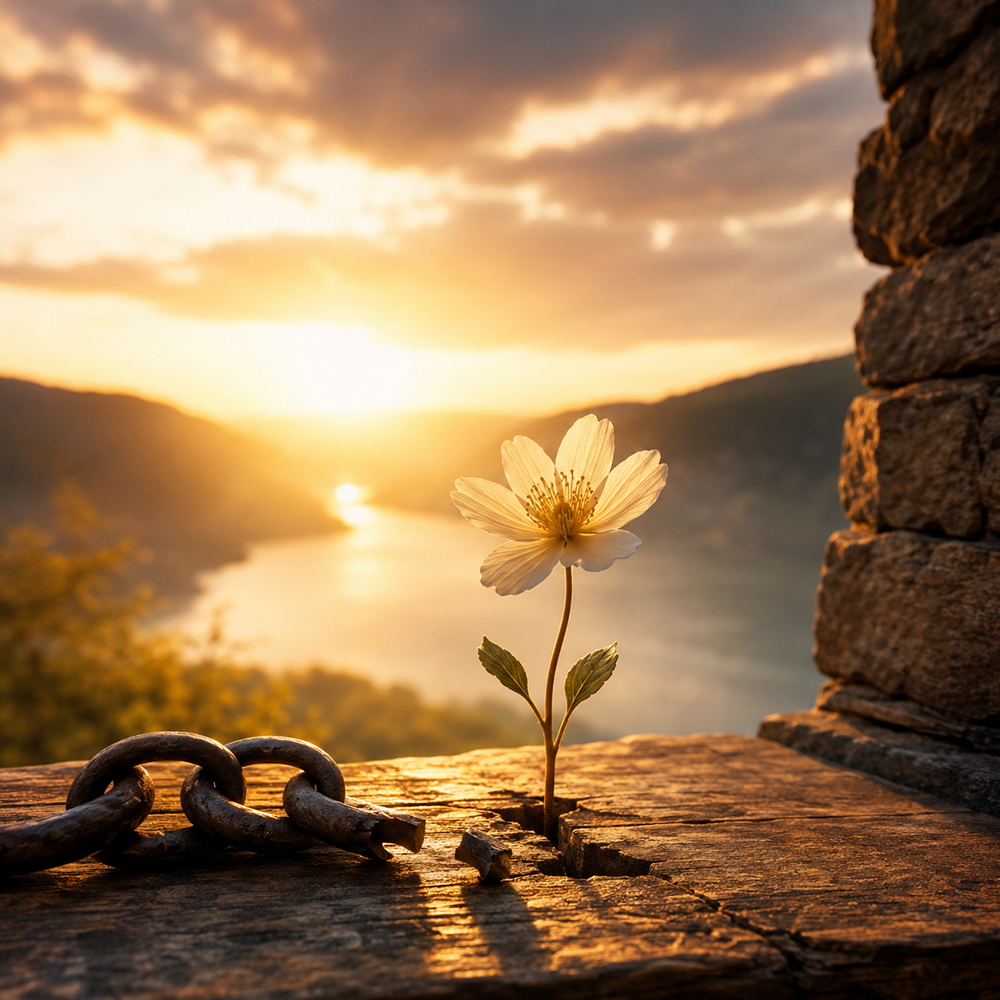
Breaking harmful patterns requires more than identifying what went wrong; children also need living examples of what healthier relationships can look and feel like.
They need to learn that love is not fear, control, or compulsory access.
Love protects dignity. It does not require someone to become smaller, quieter, or less human to keep another person comfortable.
They need to experience kindness that remains present when they are struggling, inconvenient, overwhelmed, or different.
Kindness means little if it is offered only when someone is easy to understand or gives us what we want.
They need to see respect practiced across differences in age, ability, status, race, belief, identity, and communication style.
Respect should not be confused with obedience.
Children can be guided and corrected without being humiliated, frightened, or treated as possessions.
They need honesty that makes room for uncomfortable truths.
A peaceful-looking family, classroom, or community is not truly peaceful if maintaining that appearance requires people to hide pain and remain silent about harm.
They need adults who practice integrity—people whose private behavior reflects the values they publicly claim to hold.
Children notice when adults preach compassion but respond to vulnerability with contempt, demand respect while offering none, or condemn bullying while using shame and intimidation themselves.
They also need to witness accountability and repair.
Adults will make mistakes.
Healthy care does not require perfection; it requires the humility to say: “What I did was wrong. You did not deserve it. I am sorry. I want to understand how it affected you, and I will work to respond differently.”
An apology does not weaken an adult’s authority; it teaches children that power and responsibility belong together, that relationships can survive honesty, and that causing harm does not have to be followed by denial or blame.
Most of all, children need to know that their humanity is not something they must earn.
Their feelings, needs, limits, questions, and differences do not make them defective or burdensome.
They can be held accountable for their behavior without being taught that their entire being is bad.
Healthy care does not eliminate guidance, limits, or consequences because it separates correcting a behavior from attacking a child’s dignity, identity, or worth.
The goal is not to protect children from every hardship, disagreement, disappointment, or consequence; it is to help them develop the tools to move through difficulty without abandoning either their own humanity or someone else’s.
When children regularly experience compassion, honesty, accountability, safety, and respect, those values become more than abstract lessons.
They become possibilities the child knows how to recognize, expect, and eventually offer to others.
 Jessica Carey
“It Takes a Village” Is a Responsibility, Not a Slogan
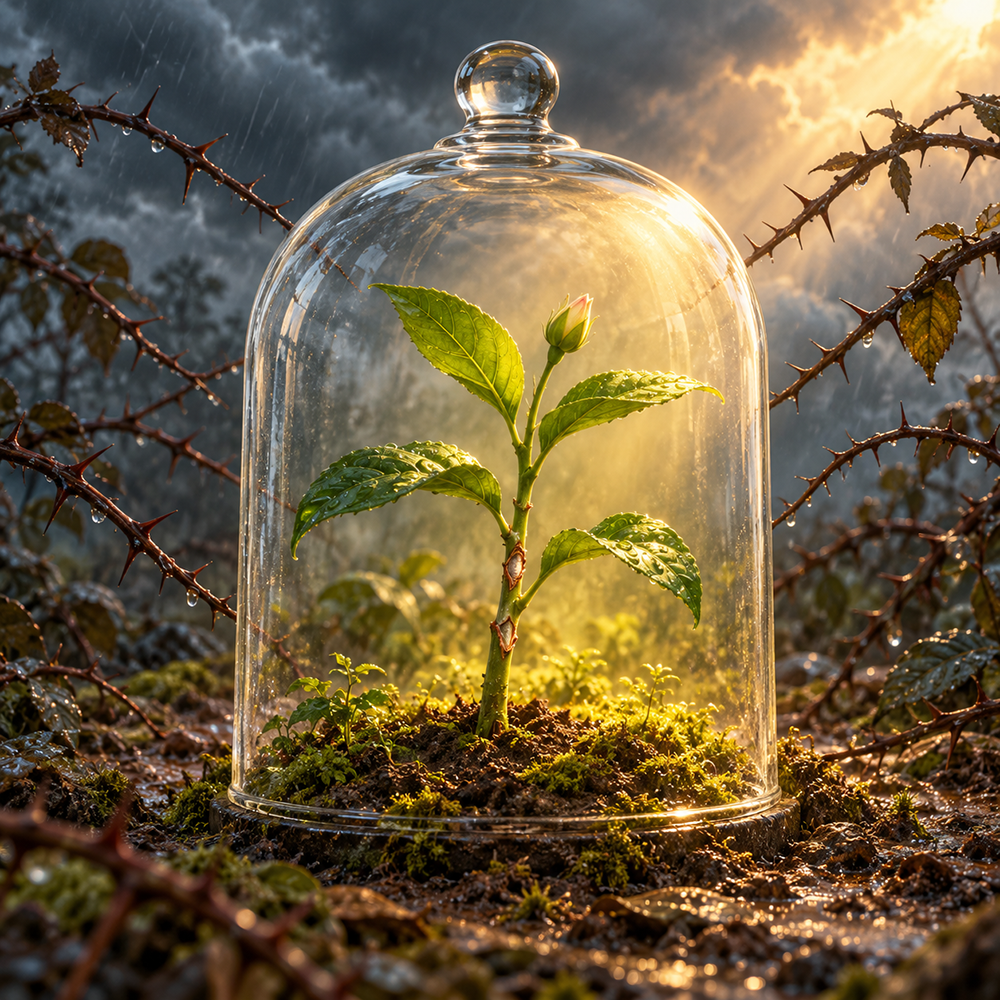
The care children receive is not shaped by parents or guardians alone.
Children are also formed by relatives, teachers, neighbors, faith communities, healthcare providers, social-service systems, media, public policies, and the ordinary adults they encounter.
Every part of the village helps communicate whose humanity matters, what behavior is acceptable, and whether vulnerable people will be protected or abandoned.
Yet society often invokes the phrase “It takes a village to raise a child” without accepting what belonging to that village requires.
A village cannot demand emotional maturity from children while adults model ridicule, retaliation, and contempt.
It cannot teach cooperation while dividing people into enemies.
It cannot tell children to report bullying or abuse and then silence them when their honesty inconveniences someone with greater power.
Nor can a community place the entire responsibility upon struggling families while withholding affordable housing, healthcare, childcare, education, accommodations, food, safety, and meaningful support.
Telling people to “do better” is not enough when the conditions surrounding them make stability nearly impossible.
Healthy communities do not merely intervene after a child has been harmed.
They work to create conditions in which children and caregivers are less likely to become isolated, overwhelmed, or desperate in the first place.
This requires more than good intentions; it means believing children when they describe harm, helping caregivers before they reach a crisis, confronting prejudice when it appears, making support accessible, and refusing to protect institutions or reputations at the expense of human beings.
It also requires adults to examine themselves:
- Do we practice the respect we demand from children?
- Do we listen to understand, or only to correct?
- Do we treat needs as part of being human or as evidence of weakness?
- Do we protect people who disclose harm, even when the truth is uncomfortable?
- Do our communities make room for different bodies, minds, cultures, and ways of communicating?
- Are we teaching children how to build relationships—or merely how to comply?
Children are always learning from the village, including when the village insists it is not teaching anything.
If we want future generations to be kinder, more honest, and more peaceful, we cannot assign them the task of repairing everything after they inherit it.
The adults and institutions surrounding them must begin building that world now.
“It takes a village” should never mean that everyone is entitled to control a child; it should mean that everyone shares responsibility for creating conditions in which children can be safe, supported, respected, and fully human.
 Jessica Carey

Peace Is Built Through Repeated Choices
World peace can feel impossibly distant when we look at the scale of cruelty, injustice, division, and suffering around us.
Most people will never negotiate a treaty, shape national policy, or stand before the world and announce a solution, but societies are not formed only through historic decisions made by powerful leaders.
They are also formed through millions of ordinary interactions that teach people whether humanity is something we share—or something we grant only to those who resemble, agree with, or benefit us.
Peace begins when an adult believes a child who says something is wrong.
It grows when someone apologizes without excuses, listens without immediately becoming defensive, and changes harmful behavior rather than demanding that everyone else become more tolerant of it.
It grows when a person interrupts prejudice instead of laughing along, offers someone else the support they were once denied, or refuses to turn their own suffering into an initiation requirement for the next generation.
Peace can look like teaching children to disagree without dehumanizing one another.
It can mean showing them that boundaries are not hatred, accountability is not cruelty, and another person’s dignity does not threaten their own.
None of these choices will repair the entire world by themselves, but cruelty also spreads through repeated choices: the joke left unchallenged, the pain dismissed, the lie protected, the vulnerable person blamed, and the inherited pattern repeated because confronting it felt too uncomfortable.
What we practice becomes culture.
What culture permits becomes precedent.
What children repeatedly witness becomes part of the world they may later reproduce.
Children should not be made responsible for repairing everything adults have damaged; we are responsible for creating conditions in which they can inherit and practice something better.
We may not be able to end every form of suffering in a single generation, but we can stop treating inherited harm as destiny.
We can question what has been normalized, heal what we are able to heal, and refuse to knowingly pass the same wounds forward.
If cruelty can be taught, compassion can be taught.
If division can be modeled, cooperation can be modeled.
If fear can move through generations, so can courage, honesty, accountability, and love.
Perhaps world peace begins much closer to home than we imagine—in every moment when we choose to protect another person’s humanity and leave the next generation something gentler to inherit.
 Jessica Carey
What Will We Pass Forward?
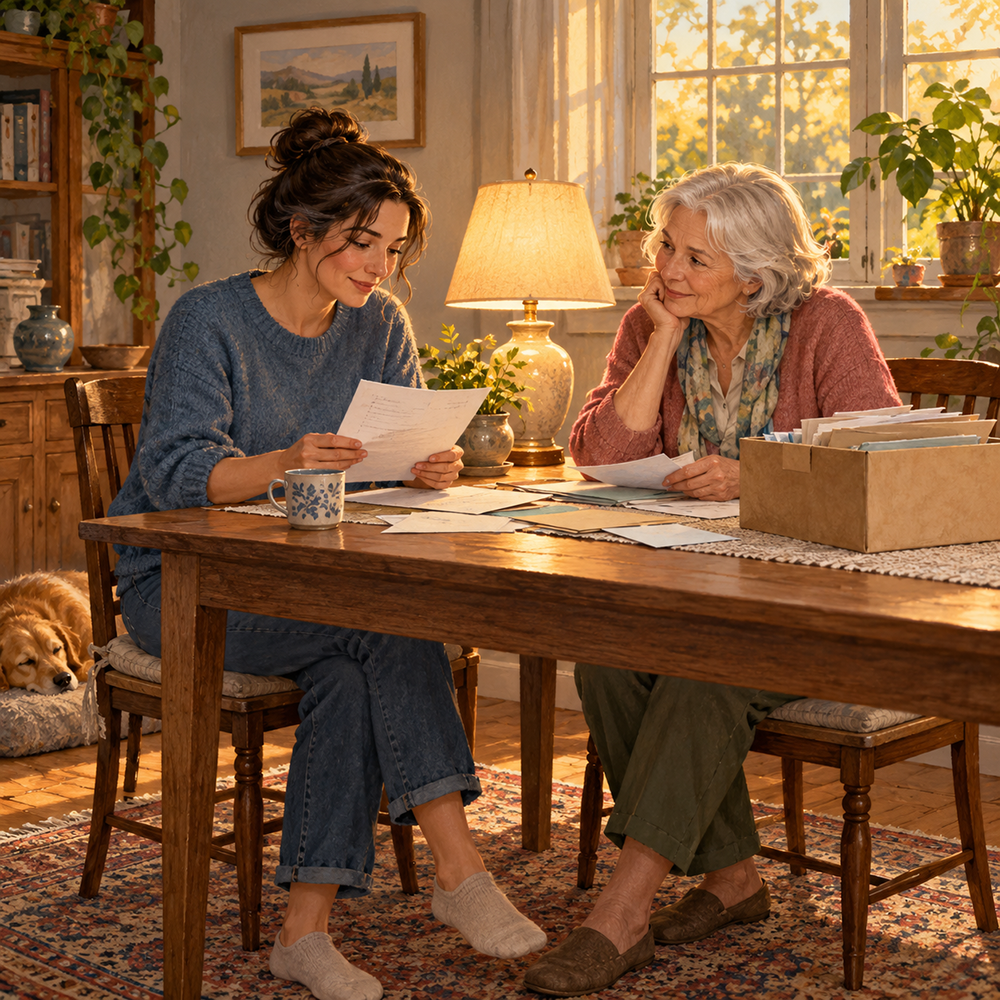
Each of us has inherited beliefs, habits, and relationship patterns that began long before we were able to examine them.
Some deserve to be preserved.
Others may need to end with us.
Changing generational patterns does not require perfection or having every answer; it begins with enough honesty to notice what we are carrying and enough courage to decide what should—and should not—be handed to someone else.
We might begin by asking:
- What did childhood teach me about love, power, conflict, and human worth?
- Which lessons helped me become more compassionate?
- Which patterns have caused harm, even if they were considered normal?
- When I make a mistake, do I defend my intentions or remain open to understanding my impact?
- Am I offering children and vulnerable people the care I once needed?
- What is one inherited pattern I can choose not to pass forward?
- What quality—kindness, honesty, safety, accountability, respect, or compassion—do I want the next generation to inherit more fully because I was here?
We cannot choose everything that was handed to us, but we can become more intentional about what passes through us.
The world children inherit will be shaped, in part, by what today’s adults are willing to question, heal, model, and change.
Want even more content about creativity and art?
Be sure to check out all of our creative chronicles!
If you'd like to see examples of my work, you can find some of my art and creations at Redbubble and Gumroad!
Looking to learn more about my recent journey?
Check out some of these articles:
-Hidden Gems for St. Louis Artists
-Hidden Gems for Autistic & Neurodivergent Adults
-Learning What Love Was Supposed to Feel Like
-I Wasn't Broken--I'm Burned Out
-What Chronic Autistic Burnout Actually Feels Like
-Building a Life from What Remains
 Jessica Carey