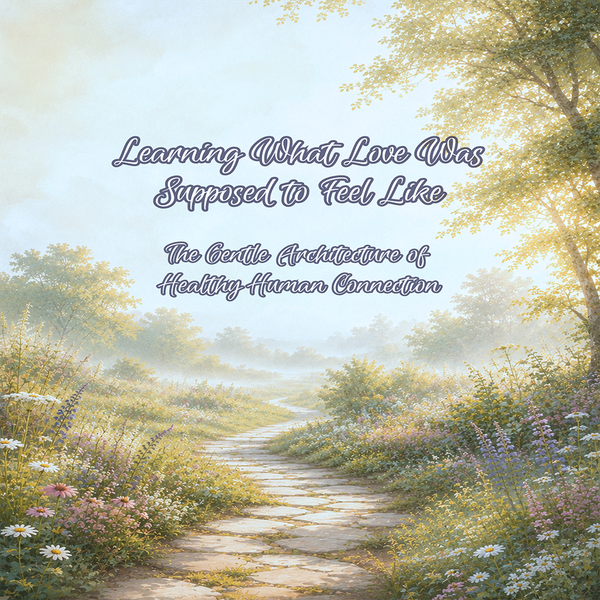

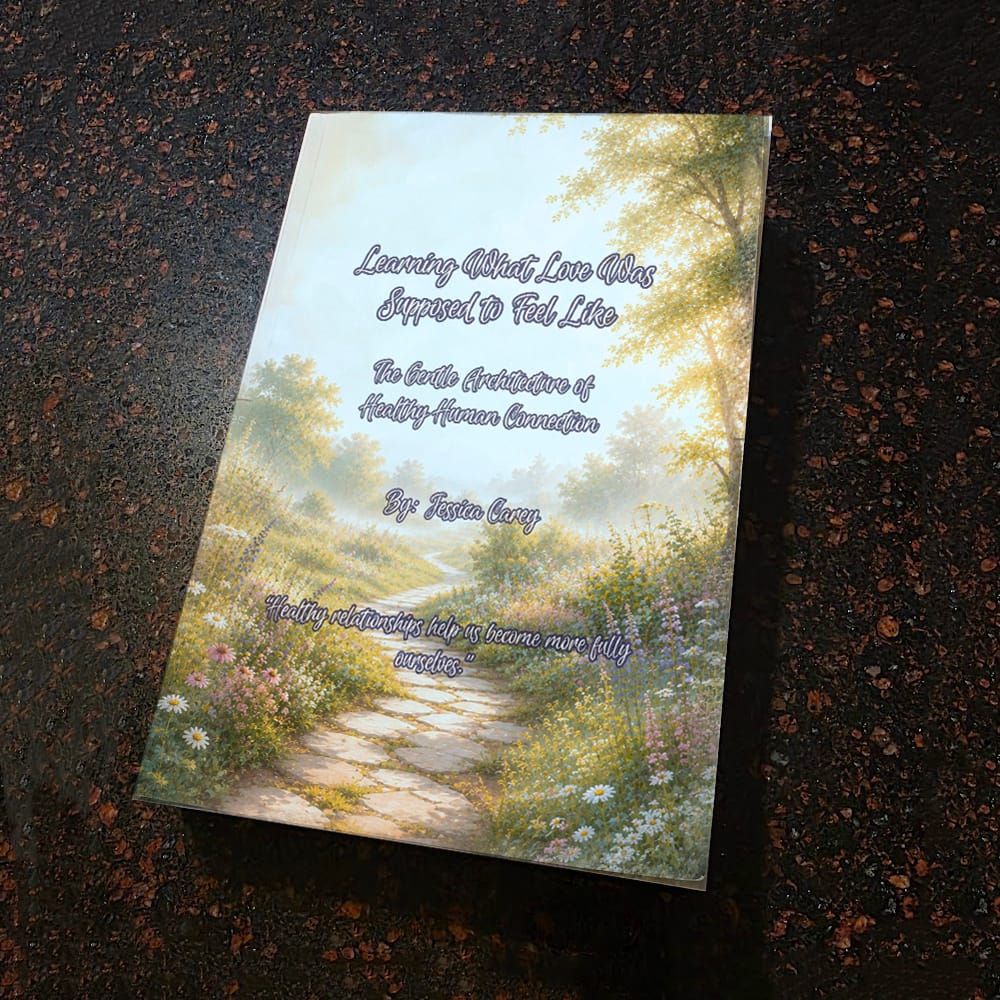
For a long time, Learning What Love Was Supposed to Feel Like: The Gentle Architecture of Healthy Human Connection existed as questions, notes, lived experiences, and pages on a screen.
Now, for the first time, it exists as a physical book that readers can hold in their hands.
Reaching this point feels both exciting and a little surreal.
This book grew from years of trying to understand what love is supposed to feel like—and why some relationships described as loving can instead leave people feeling frightened, controlled, diminished, or responsible for enduring harm.
Writing it meant examining difficult experiences, questioning lessons I had once been expected to accept, and searching for language that could help describe something healthier.
The book became more than an exploration of what goes wrong between people.
It became an attempt to understand what allows human beings to feel safe, respected, supported, and free to remain fully themselves within a relationship.
It asks what changes when love is built through trust, honesty, boundaries, accountability, repair, and genuine care rather than fear, obligation, control, or self-erasure.
Seeing those ideas become a physical book makes the work feel real in a new way.
A printed copy can be held, revisited, annotated, shared with someone else, or kept nearby while a reader reflects on the relationships within their own life.
The book is now available in a complete standard-print volume as well as a two-volume large-print edition.
Offering more than one format felt important because a book about care and human connection should make room, whenever possible, for the different needs of the people who may want to read it.
More than anything, I hope this book reaches those who have wondered whether love was always supposed to feel so difficult—and helps them imagine relationships in which they are not required to become smaller in order to belong.
What the Book Is About
At the heart of Learning What Love Was Supposed to Feel Like is a question that changed the way I understood relationships: what if love was never supposed to feel like something we had to survive?
Many of us are taught what to call love long before we are able to evaluate whether it is actually healthy.
We may learn that love means remaining loyal regardless of how someone treats us, forgiving without accountability, sacrificing ourselves to keep the peace, or accepting control and criticism because another person supposedly wants what is best for us.
When these lessons come from the people and environments that first shape us, harmful patterns can begin to feel normal.
This book gently examines those inherited ideas while exploring what allows relationships to become safer and more life-giving.
It considers trust, respect, boundaries, vulnerability, communication, honesty, emotional safety, mutual support, accountability, conflict, and repair.
It also explores the ways seemingly positive qualities—such as loyalty, forgiveness, helpfulness, or selflessness—can become distorted when they are used to excuse harm, silence reasonable needs, or demand that one person continually abandon themselves for someone else.
Although love is often discussed primarily in a romantic context, healthy human connection reaches much further.
The book considers relationships between family members, friends, partners, neighbors, and communities.
The details may differ, but the underlying questions remain:
- Can we speak honestly without fearing punishment?
- Are our boundaries respected?
- Can mistakes be acknowledged and repaired?
- Are we allowed to grow and change?
- Does the relationship make room for both people to remain fully human?
This is not a formula for creating perfect relationships.
No relationship is without misunderstanding, discomfort, or conflict.
Instead, the book explores the foundations that make it possible for people to move through those difficulties without using fear, coercion, shame, or control.
Ultimately, it asks not only whether love is present, but what that love produces.
- Does it confine people, or help them flourish?
- Does it demand that they become smaller, or give them room to grow?
Healthy relationships are not cages; they are gardens in which people are allowed to take root, reach toward the light, and become more fully themselves.
 Jessica Carey
What Readers Will Find Inside
The book begins by questioning many of the relationship lessons people absorb before they are old enough to evaluate them.
We learn from the families, communities, friendships, and environments around us what love supposedly requires, which emotions are acceptable, whether disagreement is safe, and what we must do to continue belonging.
Those early lessons can quietly shape the relationships we build later.
Familiarity may be mistaken for safety.
People-pleasing may appear to be kindness. Silence may be praised as peace.
Control may be presented as protection, and self-abandonment may be treated as proof of loyalty or love.
From there, the book explores the foundations that allow healthier relationships to grow.
These include emotional safety, trust, respect, boundaries, honesty, vulnerability, communication, mutual support, belonging, and the freedom to remain an individual while still being deeply connected to others.
It also examines what happens when relationships encounter difficulty.
Healthy connection is not defined by the absence of mistakes, disagreements, disappointment, or conflict.
It is revealed through what becomes possible afterward:
- Can both people speak honestly?
- Can impact be acknowledged?
- Can responsibility be accepted without blame being redirected?
- Can an apology lead to meaningful change?
- Can trust be rebuilt patiently rather than demanded?
Several parts of the book look closely at qualities commonly associated with goodness—such as loyalty, forgiveness, selflessness, helpfulness, and sacrifice.
These qualities can nurture beautiful relationships, but they can also be distorted into expectations that silence people, excuse repeated harm, or make one person responsible for carrying the entire connection.
The book asks how we can practice these values without allowing them to become instruments of control.
It also turns the questions inward.
Healthy relationships are not created solely by identifying what other people are doing wrong.
They require each of us to consider how we communicate, how we respond to another person’s boundaries, whether we can tolerate disagreement, how we handle our emotions, and whether we are willing to repair the harm we cause.
Across all of these subjects, the book returns to one central measure: what kind of environment is this relationship creating?
Does it produce fear, confusion, silence, and self-erasure—or does it create enough safety, honesty, freedom, and care for people to flourish?
 Jessica Carey

Why I Wrote It
I did not write this book because I have mastered every part of human connection.
I wrote it as someone who has had to consciously learn what safety, respect, accountability, and healthy love actually look like.
For much of my life, I was taught to associate love with obligation and endurance.
Being family was treated as a reason to excuse abuse, neglect, manipulation, gaslighting, coercion, scapegoating, and other forms of harm.
Loving someone supposedly meant focusing on whatever good could be found while overlooking the damage they continued to cause.
Boundaries were treated as rejection, speaking honestly invited retaliation, and protecting myself could be framed as the greater wrongdoing.
 Jessica Carey

When harmful patterns are presented as love from childhood onward, it can be difficult to recognize that relationships are capable of feeling different.
You may learn to question your perceptions, dismiss your needs, accept responsibility for other people’s behavior, or believe that belonging must be earned through continued self-sacrifice.
The cage can become so familiar that it is mistaken for home.
Writing this book became part of my effort to separate love from the harmful ideas that had been attached to it.
I wanted to find language for the difference between genuine care and control disguised as concern; between forgiveness and forced reconciliation; between supporting someone and being expected to abandon yourself for them; between imperfect relationships and patterns that are fundamentally unsafe.
This process did not give me a simple formula or make healing effortless.
It did, however, help me understand that we are allowed to question what we were taught.
We are allowed to choose boundaries, safety, distance, and relationships built on mutual respect.
We are allowed to stop calling something love when its primary effect is fear, confusion, or erasure.
The book grew from my experiences, but it is not intended to be only about me.
I wrote it in the hope that the questions I needed to ask might help other people recognize their own experiences, trust what they feel, and imagine healthier possibilities.
Sometimes learning what love was supposed to feel like begins with acknowledging what it should never have required us to endure.
 Jessica Carey
Who This Book Is For
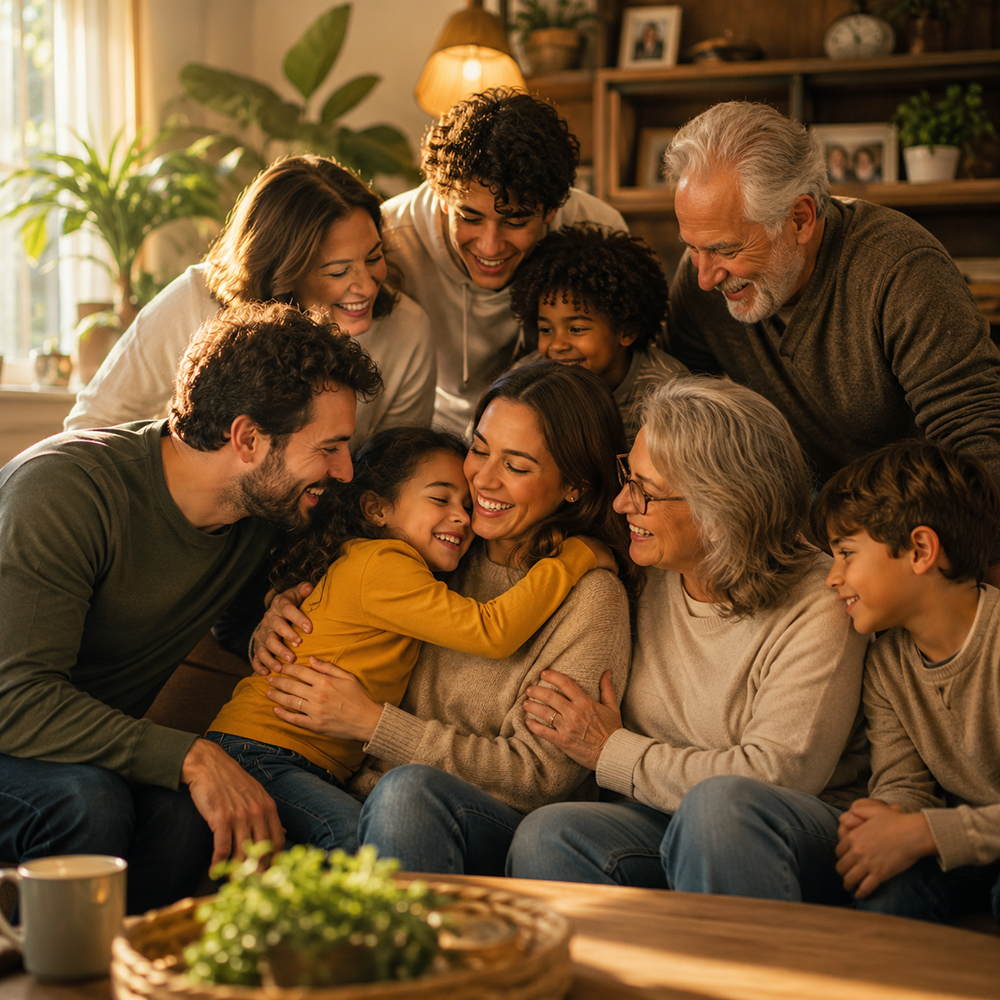
This book is for anyone who has ever wondered why a relationship described as loving left them feeling afraid, diminished, confused, or responsible for keeping everything together.
It may particularly resonate with people who learned that love meant enduring harm, avoiding conflict, anticipating other people’s needs, or sacrificing themselves to preserve a relationship.
It is for those who were taught that boundaries are selfish, forgiveness requires renewed access, loyalty means silence, or another person’s good intentions should matter more than the consequences of their behavior.
It is also for people trying to understand why certain patterns continue to follow them.
When unhealthy dynamics are normalized early in life, they can shape what we expect from family, friendship, romance, work, and community.
Recognizing those patterns does not mean blaming ourselves for learning them.
It gives us the opportunity to decide whether we want to continue living by them.
Readers do not need to identify with a particular family structure, relationship history, or form of trauma to find something meaningful here.
The book is also for anyone who wants to become a safer, more thoughtful person within their own relationships.
Healthy connection is not only about recognizing how others affect us; it also asks us to consider how our choices, communication, boundaries, and willingness to repair affect the people around us.
Some readers may find language for experiences they have struggled to explain. Others may discover questions they have never thought to ask.
Some may simply find reassurance that wanting respect, safety, honesty, reciprocity, and room to grow is not asking for too much.
Wherever someone enters the conversation, I hope the book feels less like a set of instructions delivered from above and more like a compassionate companion.
I am still living, learning, growing, and healing, too.
This book is an invitation to examine what we have been taught about love—and to consider what we might choose to build differently.
As the book moved from an idea into something people could actually read, that commitment to healthier connection also began influencing the form the book would take.
 Jessica Carey

Early Responses to the Book
Before Learning What Love Was Supposed to Feel Like became a physical book, I shared the developing work with several people.
Some read early versions of the manuscript, while others responded to excerpts, the dedication, or the larger message behind the project.
Their responses have helped me understand how these ideas can reach beyond my own experiences.
Readers have recognized patterns within their relationships, reflected on the difference between care and self-abandonment, and found language for things they were still learning to understand.
From Early Readers
“We tend to get love confused, and it’s something new I’m learning. This book described the difference in detail.”
— Jayla
“I cried at the dedication of your book. In past relationships, I was often the fixer or the rock for my partners. I think I did abandon myself to some degree because my desire for connection is so big. I can—and have decided to—change how I show up. The amount of reciprocity I receive is something I need to pay attention to. It is not my job to save everyone.”
— Sage
“I started reading it, and it is definitely something that needs to be read by many.”
— Cathy
Sage’s reflection particularly stayed with me because it captures one of the central hopes behind the book: that recognizing a pattern does not have to end with shame.
Awareness can give us the opportunity to decide how we want to show up differently, what reciprocity we need, and which responsibilities were never truly ours to carry.
Responses to the Writing and Its Message
“You’re a really good writer, Jessica. Your thoughts are worded clearly and flow well. I like your whole theme of love not being conditional or transaction-based.”
— Jenny
“You are a beautiful writer. I love how you are able to process the things you are learning and verbalize them clearly. That is a gift.”
— Hannah
“I love your emotionally moving writing.”
— Iris
“Congratulations on the publishing! Whatever you choose to do, Jessica, just know that I believe in you. You’re one of the greatest writers I’ve ever met in my life! You’re an amazing author, and you’re going to blow people’s minds with your gift of writing. Don't be surprised if this takes off on Amazon or gets picked up by a mainstream publisher and you end up having the opposite of a financial problem.”
— Brent
Hearing that the writing feels clear and emotionally meaningful matters deeply to me.
Many of the subjects within this book are complicated, painful, and difficult to name.
My hope was to approach them with enough clarity to be useful and enough gentleness that readers would feel accompanied rather than judged.
The encouragement surrounding the publication itself has also meant a great deal.
Writing and publishing a book required me to continue believing in the value of the work through uncertainty, exhaustion, and many complicated decisions.
Having other people recognize that effort—and believe that my voice has something meaningful to offer—has helped make this milestone feel more real.
These responses remind me that personal reflection can become something shared.
An experience may begin with one person, but the language created from it can help others recognize their own stories—and perhaps imagine a healthier way forward.
Why I Created a Large-Print Option
The large-print edition exists because of one person’s request.
My friend’s grandmother has a roommate who was interested in reading the book but wanted to know whether it could be made available in large print.
Until she asked, I had been focused primarily on completing and publishing the standard edition.
Her request encouraged me to consider how the book’s physical design could make it easier—or harder—for someone to read.
Increasing the font size made the book more accessible, but it also increased the total number of pages substantially.
Because Amazon’s print-on-demand service limits how many pages can be included in a single book, the complete large-print edition could not fit into one volume.
It had to be divided into Part One and Part Two.
These are not separate books, and Part Two is not a sequel.
Together, the two volumes contain the same complete work available in the single-volume standard-print edition.
The division is simply a practical result of using larger, more readable text within the printing limits.
Although creating another edition required additional formatting, adjustment, and problem-solving, the reason for doing it felt important.
A reader expressed what she needed, and I had the opportunity to listen.
That feels especially meaningful for a book about healthy human connection.
Care is not only an abstract value or something we say we possess.
It is also expressed through attention: noticing when a structure does not work well for someone, taking their needs seriously, and making a reasonable adjustment when we are able.
I cannot create one format that will meet every possible need, but I could respond to this one.
Because someone was willing to ask, the book is now available in a form that may also help other readers who find larger text more comfortable or accessible.
Sometimes accessibility begins with a single person saying: “I would like to be included, too”—and someone else deciding that the request matters.
Choosing the Right Edition
Readers can now choose between the complete standard-print edition and a two-volume large-print edition.
Standard-Print Edition
The standard-print edition contains the entire book in one volume.
This is the simplest option for readers who are comfortable with regular-sized text and would prefer to have the complete work in a single book.
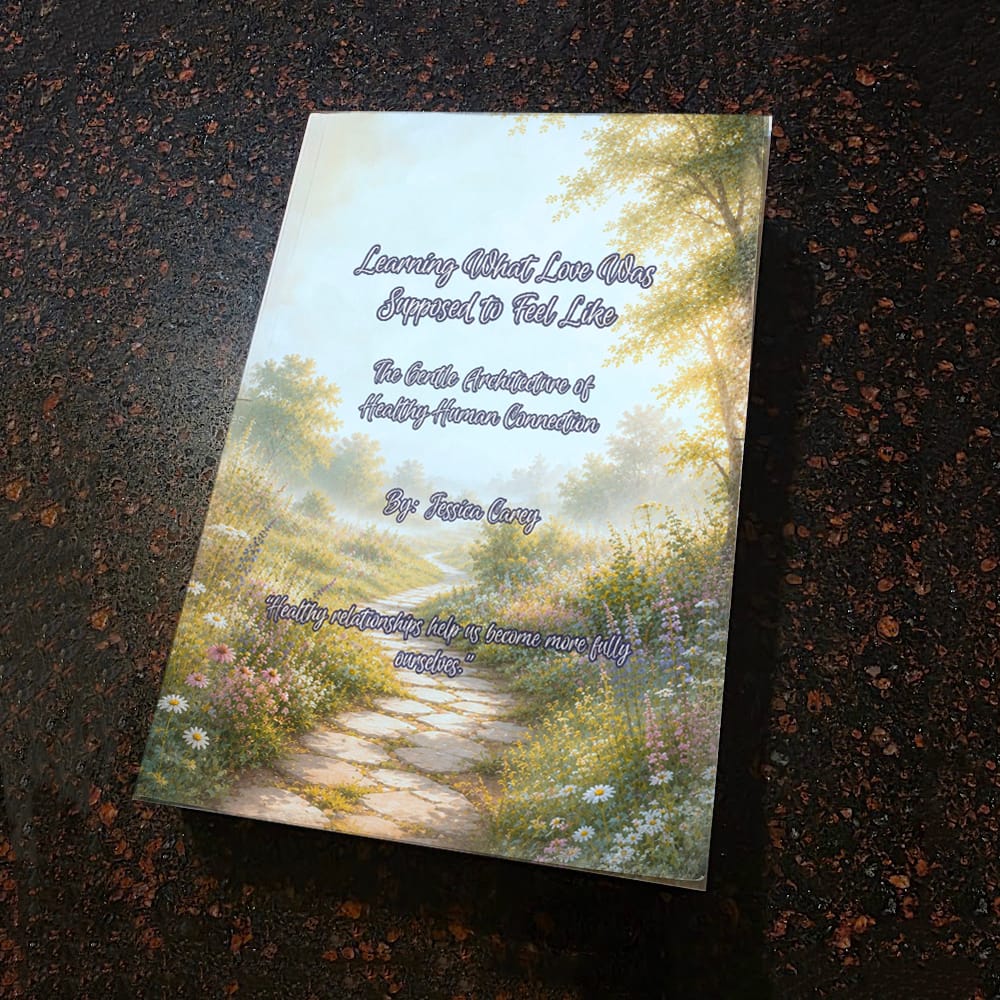
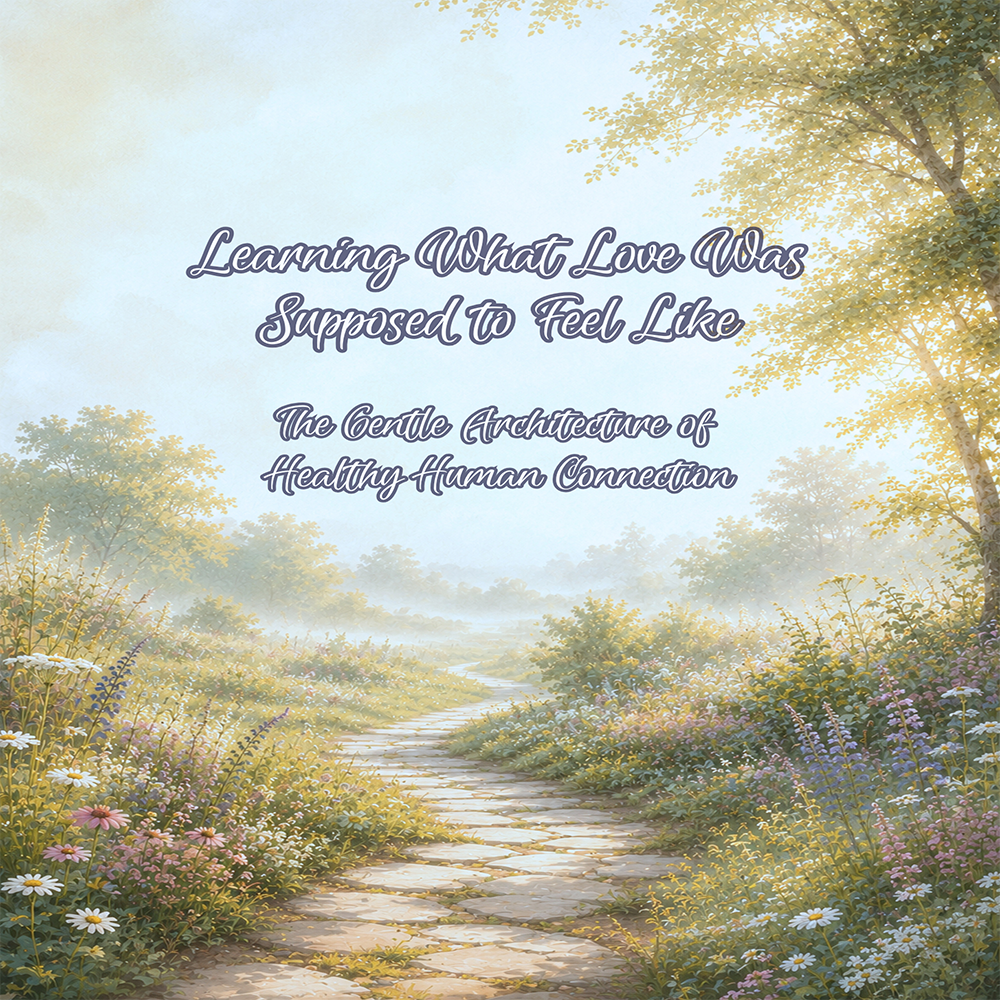
Learning What Love Was Supposed to Feel Like
The Gentle Architecture of Healthy Human Connection
Large-Print Edition
The large-print edition uses larger text for a more comfortable reading experience.
Because the increased font size caused the book to exceed Amazon’s print-on-demand page limit, the complete work had to be divided into two physical volumes.
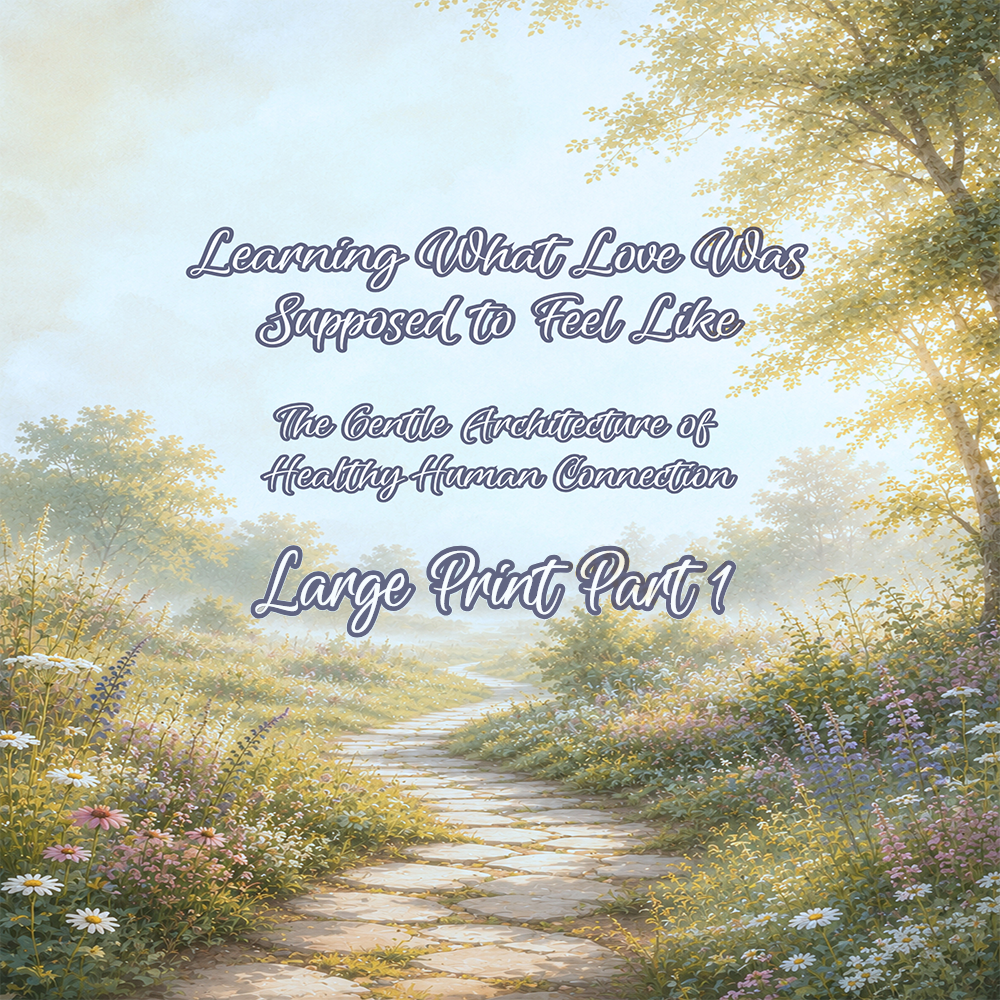
Learning What Love Was Supposed to Feel Like Large Print (Part 1)
The Gentle Architecture of Healthy Human Connection
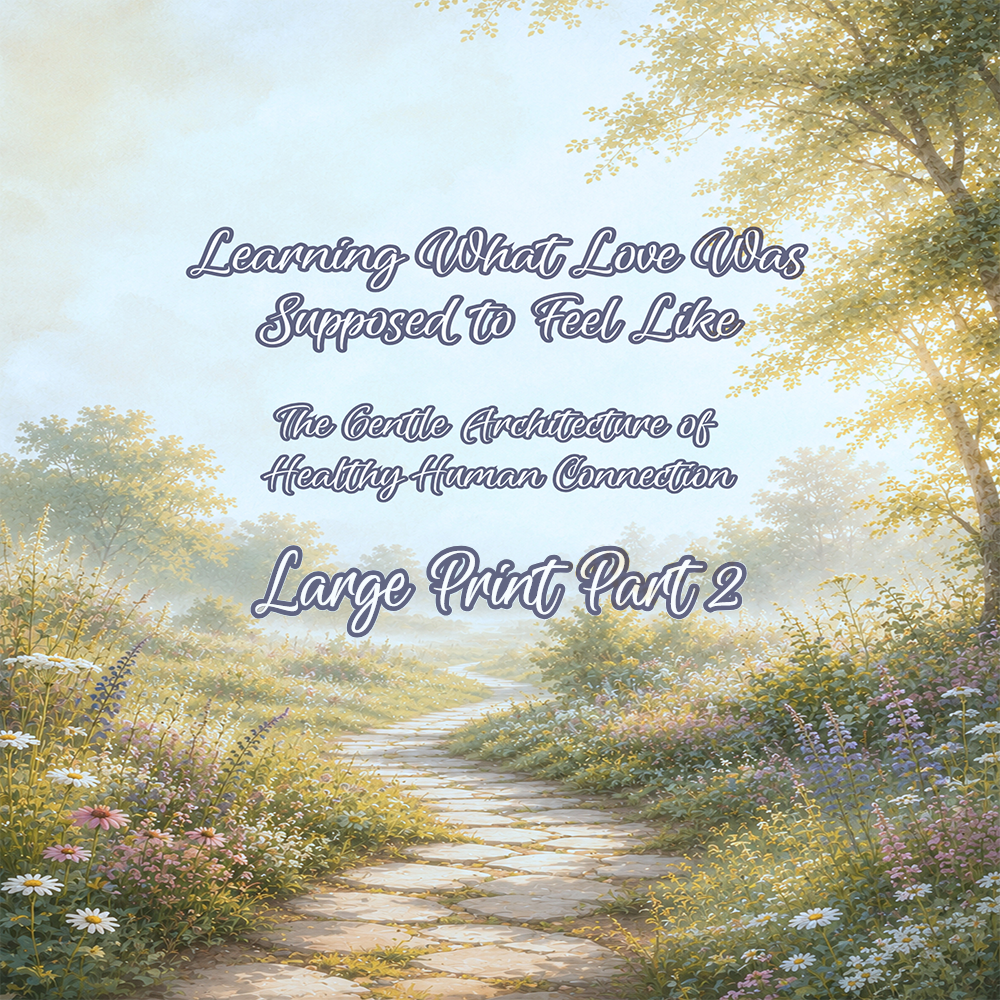
Learning What Love Was Supposed to Feel Like Large Print (Part 2)
The Gentle Architecture of Healthy Human Connection
Please note: Part One and Part Two are both required to receive the complete large-print book.
They are not separate books or a book and its sequel; together, they contain the same complete work presented in the single-volume standard-print edition.
Whichever format a reader chooses, the heart of the book remains the same: an invitation to reconsider what we have been taught about love and explore the conditions that allow people and relationships to grow.
What I Hope This Book Offers
I cannot know exactly what each reader will bring to this book or which parts will speak most strongly to them.
Some may recognize experiences they have never been able to name.
Some may encounter a new way of thinking about boundaries, accountability, forgiveness, or belonging.
Others may find reassurance that the safety and reciprocity they long for are not unreasonable expectations.
I hope the book helps readers trust that harm does not become love simply because it comes from a family member, partner, friend, or someone who claims to have good intentions.
Care must also be visible in how people respond to our humanity: whether they respect our boundaries, listen to our experiences, accept responsibility for their choices, and allow us to exist as full people rather than extensions of their needs.
I also hope it offers something constructive.
Recognizing unhealthy patterns is important, but the purpose is not to remain forever focused on everything that went wrong.
Awareness can help us make different choices—choosing relationships with greater discernment, communicating more honestly, protecting what needs protection, repairing what can genuinely be repaired, and building connections rooted in mutual respect.
For readers who have spent years adapting themselves to unsafe relationships, I hope these pages offer permission to imagine more.
Love does not have to demand constant fear, confusion, silence, or self-abandonment.
It can make room for truth.
It can honor boundaries.
It can survive accountability.
It can offer both connection and freedom.
Healthy relationships are not cages in which we must become smaller to remain loved; they are gardens where people are given the safety, nourishment, honesty, and room they need to grow.
Whether someone reads the complete standard-print edition or the two-volume large-print edition, I hope Learning What Love Was Supposed to Feel Like reminds them of something essential:
Love was never supposed to erase us; at its healthiest, love helps us become more fully ourselves.
An Invitation to Read
If this book sounds as though it might offer language, reassurance, or perspective that you have been searching for, you can explore the available print editions through the links above.
You might also consider sharing the book or this article with someone who is questioning what they were taught about love, learning to establish healthier boundaries, or trying to build relationships that feel safer and more reciprocal.
Sometimes a new understanding begins when we encounter the words for something we have felt but could not yet explain.
If you read the book, I would be honored to know what resonated with you.
What have you learned—or begun to unlearn—about what love is supposed to feel like?
Want even more content about creativity and art?
Be sure to check out all of our creative chronicles!
If you'd like to see examples of my work, you can find some of my art and creations at Redbubble and Gumroad!
Looking to learn more about my recent journey?
Check out some of these articles:
-I Wasn't Broken--I'm Burned Out
-The Difference Between Resting and Giving Up
-What Chronic Autistic Burnout Actually Feels Like
-When You Had to Raise Yourself
-Building a Life from What Remains
 Jessica Carey