
The mind may dream, but the body must be nourished if those dreams are ever to take shape.
One of the beautiful things about creativity is that it reminds us we are more than machines simply trying to get through each day.
We long to create.
To imagine.
To solve problems.
To build.
To care for others.
To tell stories.
To make music.
To paint.
To write.
Creativity feeds something deep within us. It helps us process our experiences, connect with others, and imagine new possibilities.
But while our souls may hunger for beauty and purpose, our bodies have needs too.
It's difficult to create when you're wondering how you're going to buy groceries.
It's difficult to focus when hunger becomes a constant distraction.
It's difficult to dream about tomorrow when all of today's energy is spent trying to survive.
That's why caring for ourselves isn't just about nurturing our creativity—it's also about meeting our most basic needs.
Food.
Water.
Shelter.
Rest.
Safety.
These are not luxuries. They are part of the foundation that allows us to live, heal, learn, work, create, and connect with others.
Food insecurity can happen to anyone.
A job loss.
A disability.
A medical emergency.
Rising grocery prices.
Unexpected bills.
Leaving an unsafe home or relationship.
A major life transition.
Sometimes all it takes is one difficult season for the budget to become overwhelming.
The good news is that our communities are filled with people and organizations who understand this.
Across the St. Louis area, churches, nonprofits, community groups, mutual aid organizations, and neighbors work together every day to make sure fewer people have to face hunger alone.
Some offer full grocery pantries.
Others provide hot meals.
Some maintain blessing boxes that are available 24 hours a day.
Others grow fresh produce in community gardens or organize neighborhood food-sharing efforts.
Each one is a reminder that communities become stronger when people care for one another.
In this guide, you'll find a collection of food resources throughout the St. Louis area, along with information about who they serve, what they offer, and how to access them.
Whether you're looking for help yourself, gathering resources for someone you love, or simply want to know what's available in your community, I hope this guide makes it a little easier to find the support you need.
Because sometimes the most meaningful act of creativity isn't creating something new.
Sometimes it's creating a community where everyone has enough to eat.
Table of Contents
- Before You Skip This Section...
- Types of Food Resources You May Encounter
- St. Louis Food Resource Directory
- Additional Food Pantries Throughout the St. Louis Area
- Find a Food Pantry Near You
- Visiting a Food Pantry for the First Time
- If You Need Food Today
- Looking Beyond Food
- How You Can Support Your Community
- Communities Flourish When We Care for One Another
- A Final Encouragement
Before You Skip This Section...
If you're reading this because you or someone you love is struggling to put food on the table, I want to gently say something that I hope you'll hear: there is no shame in needing help.
Many people hesitate to visit a food pantry or community meal because they think things like:
- "Someone else probably needs it more."
- "I should be able to figure this out on my own."
- "I've never needed help before."
- "Maybe if I just stretch my groceries one more week..."
Those thoughts are incredibly common.
But the truth is, these resources exist because communities understand that difficult seasons happen.
Food insecurity isn't something that only affects one type of person.
It can affect families with young children.
College students.
Seniors living on fixed incomes.
People with disabilities or chronic illnesses.
Single parents.
Caregivers.
People between jobs.
Individuals leaving unsafe living situations.
Someone recovering from a medical emergency.
Or anyone whose budget has simply been stretched beyond what it can reasonably hold.
Sometimes it's not one big crisis that creates hardship.
Sometimes it's the slow accumulation of rising grocery prices, rent increases, medical bills, car repairs, or other unexpected expenses that leave very little room to breathe.
Needing support during a season like that doesn't mean you've failed.
It means you're human.
Communities create food pantries, community meals, and mutual aid programs because they recognize that none of us can predict every challenge life will bring. These resources are one way neighbors care for one another when times become difficult.
If receiving groceries allows you to:
- Keep the lights on for another month
- Pay for medication
- Cover rent or a mortgage payment
- Buy gas to get to work
- Reduce stress and anxiety
- Feed your children nutritious meals
- Catch your breath while getting back on your feet
...then the resource is serving its purpose.
And if you're reading this from a place of stability, perhaps this guide can serve as a reminder that these organizations depend on communities, too.
Donating food.
Volunteering your time.
Sharing information about local resources.
Supporting community gardens.
Stocking a blessing box.
Checking in on a neighbor.
Each act of generosity helps make sure that when someone reaches out for help, there is something waiting for them.
One day you may be the person offering support.
Another day you may be the one receiving it.
Neither role defines your worth.
Both are part of what it means to live in a compassionate community.
Types of Food Resources You May Encounter
Not all food resources work the same way.
Some provide groceries to take home.
Others offer prepared meals.
Some are available to anyone, while others serve specific neighborhoods or zip codes.
Understanding the different types of assistance available can make it easier to find the resource that best fits your needs.
Food Pantries
Food pantries are one of the most common forms of food assistance.
Instead of serving a meal on-site, they provide groceries that you can take home and prepare yourself.
Depending on the organization, a pantry may offer:
- Fresh fruits and vegetables
- Meat and frozen foods
- Dairy products
- Bread and baked goods
- Shelf-stable items like pasta, rice, beans, and canned goods
- Baby food and formula
- Pet food
- Hygiene products
- Household essentials
Some food pantries allow people to choose many of their own groceries, creating a shopping experience that gives families more flexibility and helps reduce food waste. Others provide pre-packed boxes or bags based on household size and available donations.
Eligibility varies from one organization to another. Some pantries are open to anyone who needs assistance, while others serve specific communities, school districts, or zip codes. Some may ask for proof of address or identification, while others have very few requirements.
If one pantry isn't able to serve you because of where you live, don't be discouraged. Many organizations are happy to help you find the pantry that serves your area.
Community Meals & Soup Kitchens
Sometimes what someone needs isn't groceries—it's a meal that's ready to eat.
Community meals and soup kitchens provide prepared breakfasts, lunches, or dinners that people can enjoy on-site or, in some cases, take with them.
These meals can be especially helpful for people who:
- Are experiencing homelessness
- Live in temporary housing or hotels
- Don't have access to a kitchen
- Have limited cooking equipment
- Need immediate food support
Beyond the meal itself, these gatherings often provide something equally meaningful: community.
Sharing a meal with others can help reduce the isolation that often accompanies financial hardship and remind people that they are not alone.
Blessing Boxes & Little Free Pantries
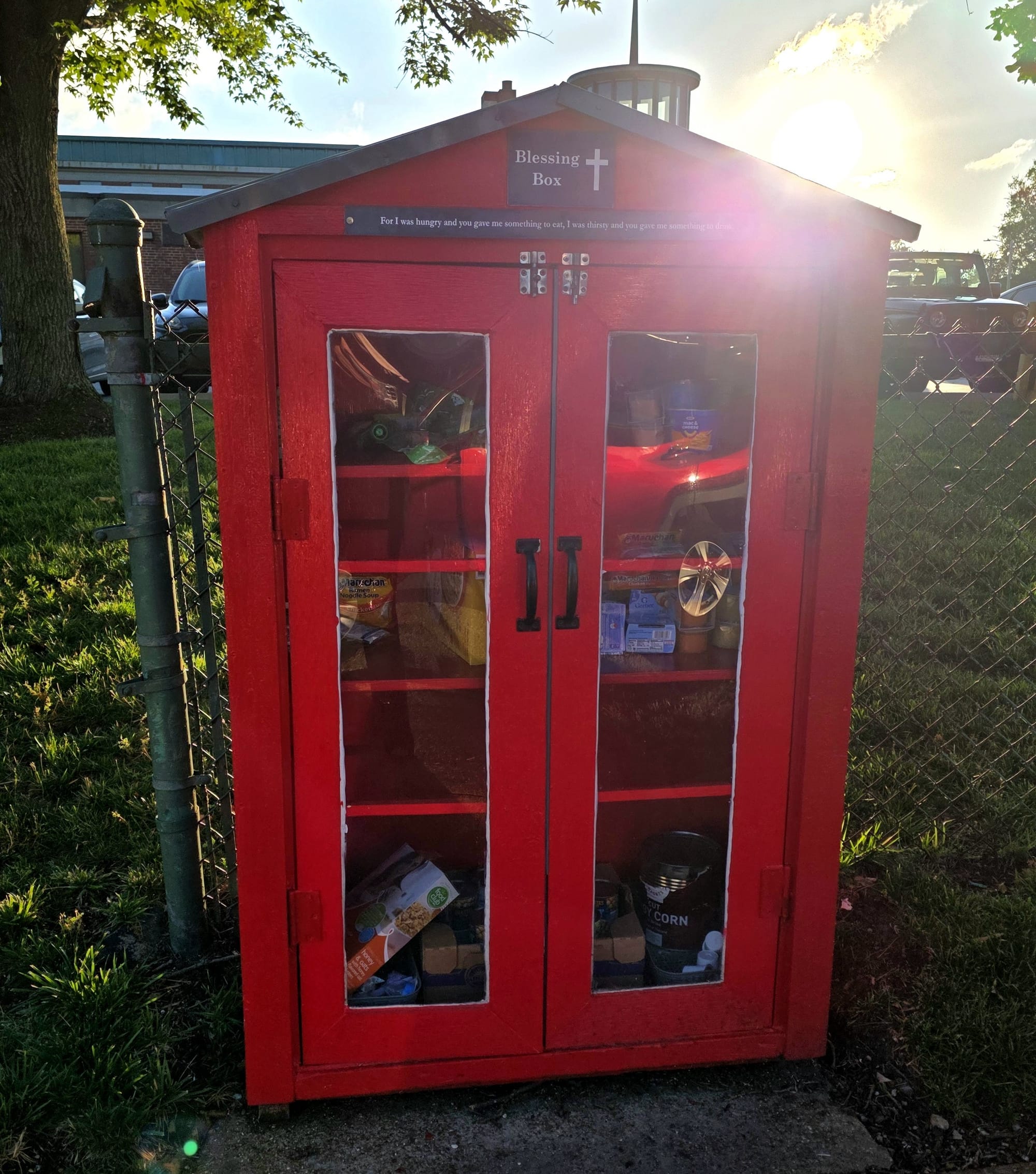
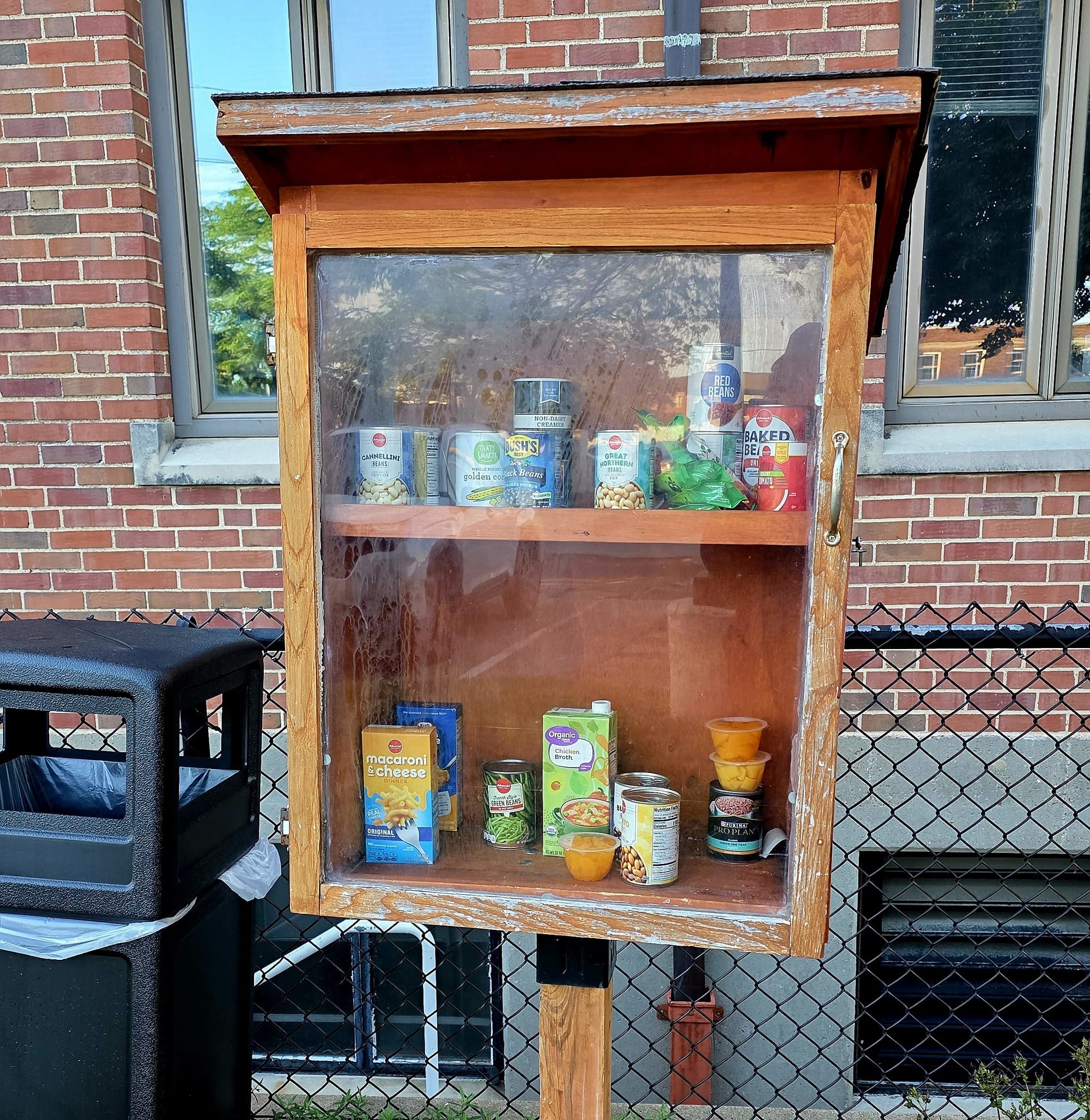
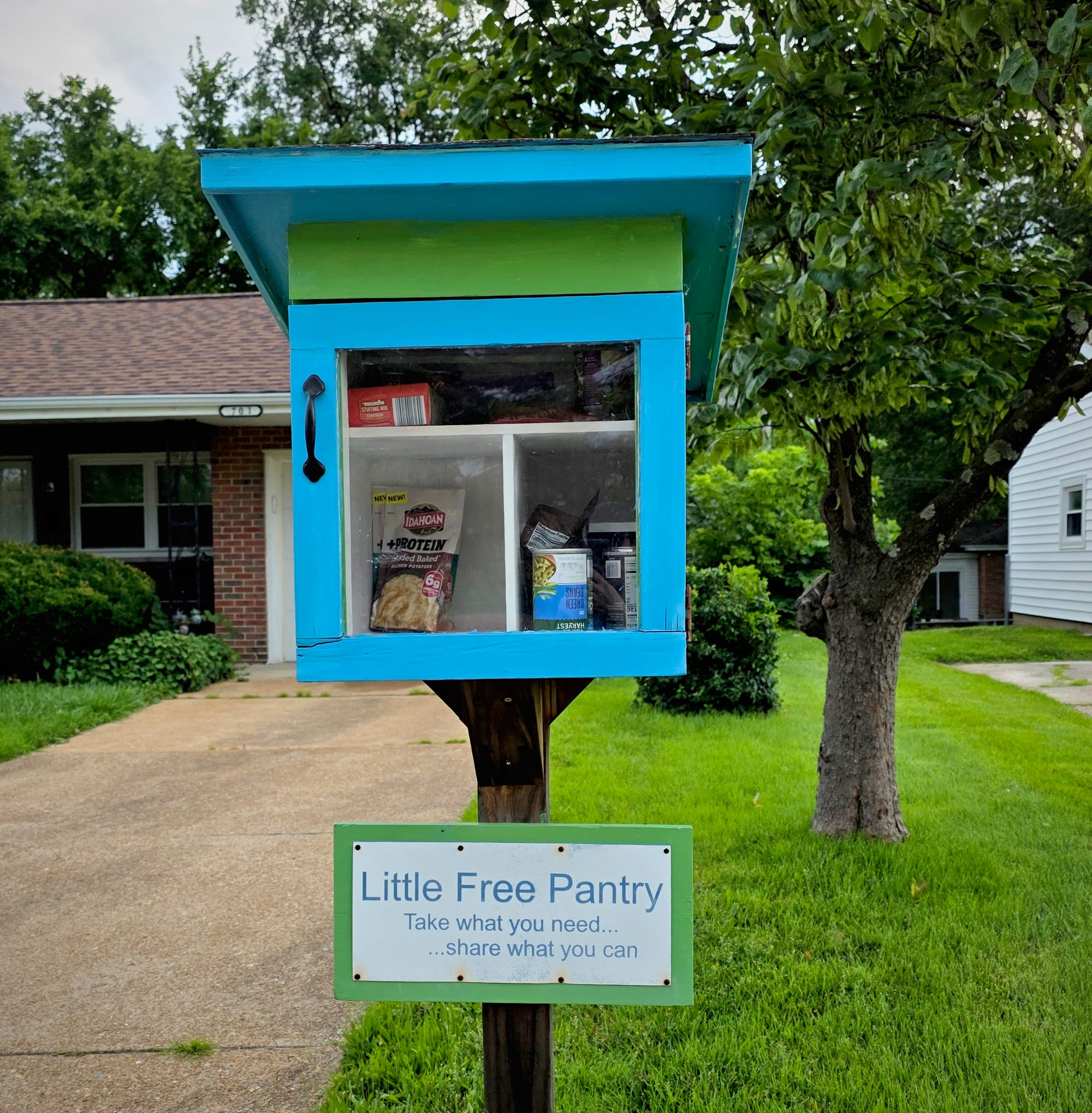
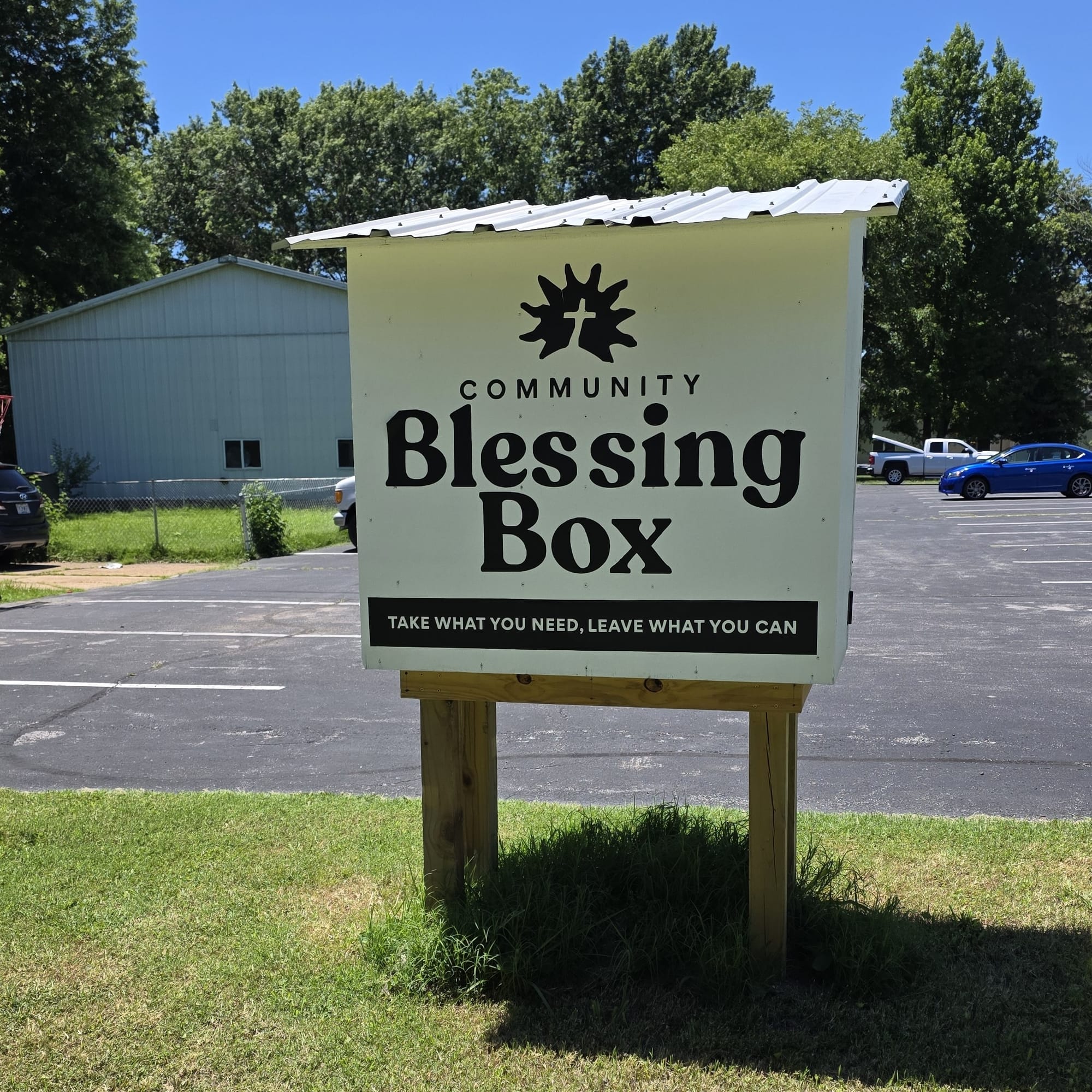
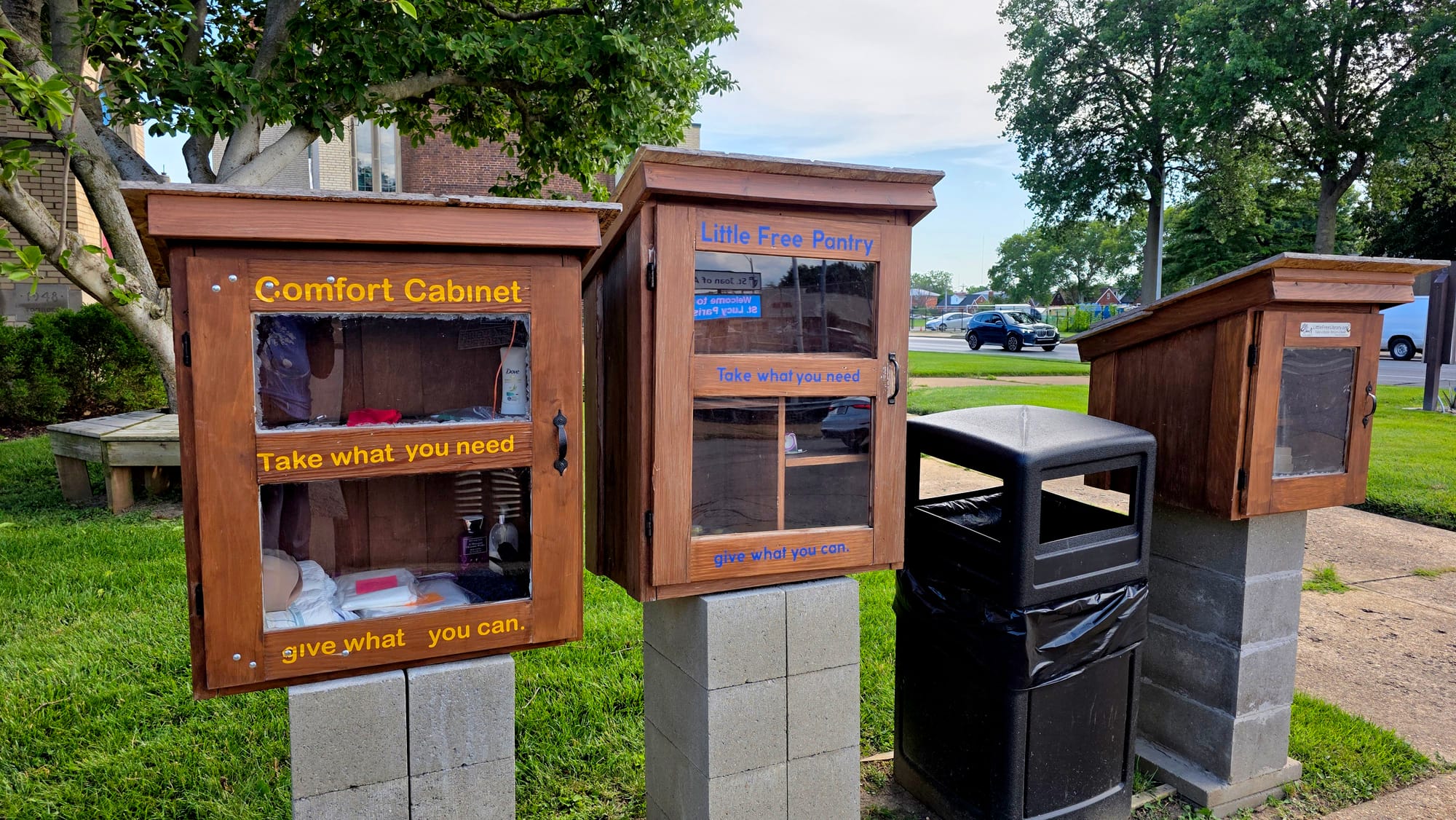
Blessing boxes—sometimes called little free pantries—are small outdoor cabinets or shelves stocked by members of the community.
Their philosophy is beautifully simple: take what you need and leave what you can.
Because they're typically located outdoors, many blessing boxes are available 24 hours a day, making them especially helpful for people who:
- Work nontraditional hours
- Have transportation challenges
- Need food outside regular pantry hours
- Prefer a more private way to receive assistance
Items commonly found in blessing boxes include:
- Canned goods
- Pasta and rice
- Peanut butter
- Cereal
- Shelf-stable milk
- Snacks
- Toiletries
- Feminine hygiene products
- Soap and shampoo
Since blessing boxes are maintained by volunteers and community donations, what's available changes from day to day. If you have the means, they're also a wonderful place to give back by leaving a few nonperishable items for the next person who may need them.
Community Gardens
Food assistance isn't always limited to pantries.
Many organizations also operate community gardens where volunteers grow fresh fruits, vegetables, and herbs.
Some gardens donate their harvest directly to food pantries and community meal programs. Others provide fresh produce to local residents or invite people to help tend the gardens in exchange for taking home some of the harvest.
Community gardens offer more than fresh food.
They create opportunities to:
- Learn gardening skills
- Spend time outdoors
- Meet neighbors
- Reduce grocery costs
- Increase access to fresh produce
In many ways, they're a reminder that nourishment can be grown together—one seed, one season, and one community at a time.
Mutual Aid & Community Food Sharing
Not every act of generosity comes through a formal nonprofit.
Mutual aid groups are built around neighbors helping neighbors.
Instead of operating through traditional charity models, these groups encourage communities to share resources directly with one another.
That support might include:
- Grocery deliveries
- Extra garden produce
- Restaurant surplus
- Emergency grocery requests
- Meal trains
- Gift cards
- Community refrigerators
- Information about local resources
Many mutual aid groups operate through neighborhood organizations, community Facebook groups, or local volunteers who simply want to help.
These efforts remind us that caring for one another doesn't always require a large organization. Sometimes it begins with ordinary people choosing to notice a need and respond with kindness.
Faith Communities & Community Outreach Programs
Many churches, mosques, synagogues, and other faith communities have long served as places of practical support for their neighborhoods.
Even if you don't belong to a particular congregation—or don't consider yourself religious—you may still be able to access many of their community outreach programs.
Depending on the organization, assistance may include:
- Food pantries
- Community meals
- Blessing boxes
- Clothing closets
- Hygiene supplies
- Household items
- Utility assistance
- Emergency financial assistance
- Community gardens
- Seasonal meal programs
Each organization sets its own guidelines, so it's always worth checking their website or giving them a call to learn what services they currently offer.
At their best, these programs reflect a simple but powerful idea: communities flourish when people care for one another, especially during life's more difficult seasons.
A Quick Note
Community resources evolve over time. Hours, eligibility requirements, and available services may change based on funding, staffing, seasonal demand, or community needs. Before visiting, it's always a good idea to check an organization's website or call ahead to confirm current information.
St. Louis Food Resource Directory
Grace Church — Fuel Packs
Location:
2695 Creve Coeur Mill Road, Maryland Heights, MO 63043
Who Can Use It?
One of the things that makes Grace Church's Fuel Packs program especially encouraging is its accessibility.
Unlike some food pantries that are limited to certain neighborhoods or zip codes, Fuel Packs is designed to serve anyone who needs food assistance. There are no residency requirements, making it a helpful option for people throughout the St. Louis area.
Whether you're navigating a temporary financial setback, stretching your grocery budget, or simply need a little extra help this month, the program exists to provide support without unnecessary barriers.
What They Offer
Fuel Packs provides free bags of groceries to help individuals and families supplement their food supply.
The contents vary depending on donations and availability, but the goal is simple: to help make sure people have food on their tables during difficult seasons.
When They're Open
- 2nd and 4th Monday of each month
- Distribution begins at 11:00 a.m.
- Available while supplies last
Good to Know
Programs like Fuel Packs remind us that asking for help doesn't have to be complicated.
Sometimes there aren't lengthy applications or appointments.
Sometimes it's simply showing up during distribution hours and allowing your community to care for you.
If you've never visited a food pantry before, this can be a welcoming place to begin.
Website
https://lighttoseelight.org/resources-a/fuelpacks/
Webster-Rock Hill Ministries
Location:
111 East Waymire Avenue, Webster Groves, MO 63119
Who Can Use It?
Webster-Rock Hill Ministries primarily serves residents of the Webster Groves and Rock Hill communities. Eligibility is generally based on where you live, so it's a good idea to contact them if you're unsure whether you're within their service area.
What They Offer
This organization provides much more than a traditional food pantry.
Services may include:
- Food pantry
- Household supplies
- Fresh produce when available
- Community garden
- Seasonal assistance
- Referrals to additional community resources
- Food vouchers for Emmanuel Episcopal Church's pantry
Because they're deeply connected with other organizations in the community, they can often help point people toward additional resources if they aren't able to meet every need themselves.
When They're Open
- Monday-Friday: 9:00 a.m.-12:00 p.m.
- Third Saturday of the month: 10:00 a.m.-12:00 p.m.
Good to Know
One of the things that stands out about Webster-Rock Hill Ministries is how they approach food assistance as part of a broader network of community care.
Rather than simply providing groceries, they also help connect people with other local organizations and services that can provide additional support.
Their community garden is another wonderful reminder that nourishing a neighborhood sometimes begins with growing food together.
Website
https://www.wrhm.org/food-supplies
Emmanuel Episcopal Church
Location:
9 South Bompart Avenue, Webster Groves, MO 63119
Who Can Use It?
Emmanuel Episcopal Church partners with Webster-Rock Hill Ministries to help provide food assistance within the local community. If you're working with Webster-Rock Hill Ministries, they may provide vouchers that can be used through Emmanuel's food pantry.
It's always a good idea to contact the church directly for current eligibility requirements and distribution information.
What They Offer
Depending on current programs and availability, Emmanuel may provide:
- Food pantry assistance
- Grocery vouchers through community partnerships
- Additional outreach ministries
Their partnership with Webster-Rock Hill Ministries is a great example of how local organizations often work together rather than trying to meet every need on their own.
Good to Know
Many food assistance organizations collaborate behind the scenes. If one location can't meet your needs, they may know another organization that can.
Don't hesitate to ask whether they can recommend additional resources in the area.
Website
https://emmanuelepiscopal.org/
Webster Groves Church of the Nazarene – Love in Action
Location:
145 East Old Watson Road, Webster Groves, MO 63119
Who Can Use It?
Love in Action is the community outreach ministry of Webster Groves Church of the Nazarene. The food pantry primarily serves individuals and families in the surrounding area, though eligibility requirements may vary depending on current resources and demand. If you're unsure whether you qualify, it's always worth reaching out—the staff and volunteers can often answer questions or direct you to another nearby pantry if needed.
What They Offer
Love in Action exists to provide practical support during difficult seasons. Depending on current donations and community needs, assistance may include:
- Groceries and pantry staples
- Fresh food when available
- Household essentials
- Connections to additional local resources
Like many community food pantries, the inventory changes throughout the year based on donations and seasonal availability.
When They're Open
- Wednesday: 10:30 a.m.–1:30 p.m.
Good to Know
One of the beautiful things about ministries like Love in Action is that they recognize people often need practical help before anything else. A bag of groceries may not solve every challenge someone is facing, but it can reduce stress, stretch a tight budget, and create a little more breathing room during a difficult week.
If you're unable to visit during pantry hours, don't hesitate to ask whether they know of other organizations with different schedules. Many local food pantries work together and are happy to point people toward additional resources.
Website
https://www.wgcn.org/Love%20in%20Action
Circle of Concern
Location:
112 St. Louis Avenue, Valley Park, MO 63088
Who Can Use It?
Circle of Concern primarily serves residents of west St. Louis County within its designated service area. Because eligibility is based on where you live, it's a good idea to check their website or contact them directly to confirm that your address falls within the communities they serve.
What They Offer
Circle of Concern is much more than a traditional food pantry. Their mission focuses on helping families move toward greater stability while meeting immediate needs.
Depending on current programs and eligibility, they may offer:
- Choice food pantry
- Fresh produce
- Meat and dairy products
- Household and hygiene items
- Seasonal food programs
- Holiday assistance
- Resource referrals
- Additional support services
One feature that many visitors appreciate is the choice pantry model, which allows individuals and families to select many of the groceries that best meet their dietary needs, household size, and personal preferences whenever possible. This approach helps reduce food waste while giving people greater dignity and flexibility.
When They're Open
Client appointments are generally available:
- Monday: 9:00 a.m.–3:00 p.m.
- Tuesday: 9:00 a.m.–3:00 p.m.
- Wednesday: 9:00 a.m.–7:00 p.m.
- Thursday: Phone lines open (no client appointments)
- Friday: 9:00 a.m.–3:00 p.m.
- Saturday: 9:00 a.m.–1:00 p.m.
Hours and holiday schedules may change, so it's always wise to check before visiting.
Good to Know
Circle of Concern recognizes that food insecurity often goes hand in hand with other challenges. By combining food assistance with additional community resources and referrals, they strive to help families address both immediate needs and longer-term stability.
If you don't live within their service area, don't be discouraged. Many food pantries throughout the St. Louis region serve specific neighborhoods, and organizations like Circle of Concern can often help point you toward resources closer to home.
Website
https://www.circleofconcern.org/programs/food-pantry/
Feed My People
Location:
171 Kingston Drive, St. Louis, MO 63125
Who Can Use It?
Feed My People serves individuals and families in South St. Louis County. Eligibility requirements may vary depending on where you live and the services you're seeking, so it's always a good idea to contact them or visit their website before your first visit.
What They Offer
For more than 40 years, Feed My People has worked to reduce hunger by providing nutritious food and compassionate support to members of the community.
Depending on current programs and availability, assistance may include:
- Choice food pantry
- Fresh produce
- Meat and dairy products
- Shelf-stable groceries
- Hygiene products when available
- Seasonal food assistance
- Holiday meal programs
- Community referrals
Their pantry is designed to help supplement household groceries while treating every visitor with dignity and respect.
When They're Open
- Monday-Friday: 10:00 a.m.-3:00 p.m.
- Saturday: 9:00 a.m.-12:00 p.m.
Good to Know
Feed My People recognizes that hunger rarely exists by itself. Financial hardship often affects many areas of life, and access to nutritious food can provide families with a little more stability while they navigate other challenges.
If you aren't sure whether you qualify, don't let uncertainty keep you from reaching out. Staff members are often happy to answer questions and connect people with additional resources if needed.
Website
https://www.feed-my-people.org/
Kirk Care
Location:
Kirkwood, Missouri
Who Can Use It?
Kirk Care serves residents of the Kirkwood School District who are experiencing financial hardship. Because their programs are community-based, eligibility is generally determined by residency within the district.
What They Offer
Kirk Care partners with local churches, schools, businesses, and volunteers to help neighbors facing difficult circumstances.
Depending on current programs, assistance may include:
- Emergency food assistance
- Grocery support
- Utility assistance
- Clothing assistance
- Holiday programs
- Referrals to additional community resources
Their mission extends beyond meeting immediate needs—they also help connect families with organizations that can provide ongoing support.
Good to Know
One of the strengths of community organizations like Kirk Care is their close relationship with local schools, churches, and other nonprofits. That collaboration allows them to respond to needs quickly while helping residents navigate other available resources throughout the Kirkwood area.
If you live outside the Kirkwood School District, don't worry. Many neighboring communities have organizations with similar missions that serve their own local residents.
Website
All Hands on Deck STL
Location:
St. Louis Metro Area
Who Can Use It?
Unlike many traditional food pantries, All Hands on Deck STL operates as a grassroots mutual aid organization. Their work focuses on connecting neighbors with neighbors to meet immediate needs throughout the St. Louis region.
Because programs and requests change regularly, the best way to learn about current opportunities is through their website or social media.
What They Offer
All Hands on Deck STL believes that communities are strongest when people care for one another directly.
Their efforts may include:
- Emergency grocery assistance
- Mutual aid support
- Blessing box maintenance
- Community food drives
- Distribution of donated goods
- Connections to additional local resources
- Volunteer opportunities
They also collaborate with other organizations throughout the region, helping resources reach people as quickly as possible.
Good to Know
One of the things that makes All Hands on Deck STL unique is that it isn't built around a single building or pantry.
Instead, it's built around relationships.
Neighbors helping neighbors.
Volunteers responding to requests.
Communities sharing what they have with one another.
It's a wonderful example of mutual aid in action—a reminder that compassion doesn't always have to come through a large institution. Sometimes it begins with ordinary people choosing to show up for one another.
If you're looking for a way to give back, organizations like All Hands on Deck STL often welcome volunteers, donations, and community involvement alongside those seeking assistance.
Website
https://www.allhandsondeckstl.org/
Loaves and Fishes
Location:
St. Louis Metro Area
Who Can Use It?
Loaves and Fishes serves individuals and families experiencing food insecurity through community partnerships and local outreach efforts. Depending on the specific program or distribution site, eligibility requirements may vary, so it's always helpful to check with the organization before visiting.
What They Offer
Inspired by the belief that no one should have to face hunger alone, Loaves and Fishes works alongside churches, volunteers, and community organizations to help provide nutritious food to those in need.
Programs may include:
- Emergency food assistance
- Grocery distributions
- Community partnerships
- Holiday meal support
- Volunteer opportunities
- Connections to additional local resources
Because food availability often depends on donations and seasonal needs, the types of groceries offered may vary throughout the year.
Good to Know
Organizations like Loaves and Fishes remind us that hunger isn't solved by one person or one pantry alone.
It takes neighbors, volunteers, businesses, faith communities, and local organizations all working together.
Every donated can of soup, every volunteer shift, and every shared meal becomes part of something much larger—a community choosing to care for one another.
Website
The Loft at St. Louis Foursquare Church
Location:
St. Louis, Missouri
Who Can Use It?
The Loft serves members of the surrounding community through practical outreach programs designed to meet immediate needs while helping people connect with additional support.
Programs may change throughout the year, so it's always a good idea to contact the church or visit their website for the most up-to-date information.
What They Offer
Depending on current community needs and available resources, The Loft may provide:
- Food pantry assistance
- Community meals or food distributions
- Clothing assistance
- Hygiene items
- Community outreach events
- Referrals to additional local organizations
Like many neighborhood churches, The Loft seeks to care for the whole person—not just by providing groceries, but by creating a welcoming space where people are treated with kindness and dignity.
Good to Know
Sometimes the most meaningful part of receiving help isn't just the food itself.
It's being greeted with compassion.
Being listened to.
Being reminded that your circumstances don't determine your worth.
Organizations like The Loft strive to create spaces where people can experience both practical support and genuine human connection.
Website
Blessing Boxes & Little Free Pantries
Location:
Throughout the St. Louis Metro Area
Known St. Louis-area locations include:
- St. Peters blessing box on Clay Avenue in Kirkwood
- First Presbyterian Church blessing box on Adams Avenue in Kirkwood
- Aloha Laulima Helping Hands blessing box on Chopin Drive in Kirkwood
- Crossings STL blessing box in Maryland Heights on Smiley Road
- Gethsemane blessing boxes in St. Louis at Hampton Pernod Avenues
Who Can Use Them?
One of the beautiful things about blessing boxes is their simplicity.
Most blessing boxes are available to anyone.
There are usually no forms to complete.
No appointments to schedule.
No proof of income to provide.
If you need something, you simply take what you need.
If you're able to give, you leave something for the next person.
What They Offer
Because blessing boxes are stocked entirely by community members and volunteers, contents vary from day to day.
You might find:
- Canned vegetables
- Pasta
- Rice
- Soup
- Peanut butter
- Cereal
- Shelf-stable milk
- Baby food
- Granola bars
- Toiletries
- Feminine hygiene products
- Soap
- Toothpaste
- Pet food
Every blessing box is a little different, reflecting the generosity of the neighborhood that cares for it.
Good to Know
One of the greatest strengths of blessing boxes is accessibility.
Many are available 24 hours a day, making them especially helpful for people who:
- Work overnight shifts.
- Have transportation challenges.
- Need food outside traditional pantry hours.
- Prefer a more private way to receive assistance.
If you have extra groceries in your pantry, consider adding a few shelf-stable items the next time you pass a blessing box. Even a handful of canned goods or toiletries can make a meaningful difference for someone else.
These small boxes are quiet reminders that kindness doesn't always have to be large to be life-giving.
Sometimes it fits inside a weatherproof cabinet on a street corner.
St. Martha's Drop-In Center
Location:
4733 Mattis Road
St. Louis, MO 63128
Who Can Use It?
St. Martha's Drop-In Center exists to serve individuals experiencing difficult circumstances by providing practical support, compassionate guidance, and connections to additional community resources.
Programs and eligibility may vary, so it's always a good idea to contact the organization directly or visit their website for current information.
What They Offer
One of the things that makes St. Martha's unique is that they recognize people often need more than food alone.
Depending on current programs and availability, assistance may include:
- Food and groceries
- Toiletries and hygiene products
- Household essentials
- Blankets and seasonal clothing
- Basic household items
- Referrals to community organizations
- Assistance connecting with additional resources
- A welcoming space where people can ask questions and explore available support
Rather than focusing on a single need, the Drop-In Center seeks to meet people where they are and help them take the next step toward greater stability.
Good to Know
Sometimes the hardest part of navigating hardship isn't asking for help.
It's knowing where to ask.
Organizations like St. Martha's can become an important first stop because they don't just provide tangible items—they also help connect people with other services throughout the community.
Whether someone needs food, hygiene supplies, clothing, housing resources, or simply help understanding what support is available, a drop-in center can serve as a valuable starting point.
Community care often works best as a network rather than a single destination.
One organization may provide groceries.
Another may offer housing resources.
Another may assist with clothing or employment.
Together, they help create pathways toward greater stability.
Website
https://saintmarthas.org/services/drop-in-center/
Additional Food Pantries Throughout the St. Louis Area
The organizations above are just a small sample of the many groups working every day to reduce food insecurity across the St. Louis region.
If one pantry isn't located near you, consider exploring some of these additional resources. Always check each organization's website or call ahead, as hours and eligibility requirements may change.
|
Organization |
Community |
|
Sunset Hills |
|
|
Arnold |
|
|
South County |
|
|
Maplewood |
|
|
Affton |
|
|
South St. Louis |
|
|
South St. Louis |
|
|
Brentwood/Richmond Heights area |
|
|
South City |
|
|
Imperial |
|
|
Carondelet |
|
|
Maplewood |
|
|
South City |
|
|
High Ridge |
Find a Food Pantry Near You
The organizations highlighted in this guide represent just a small portion of the many people and groups working to reduce hunger throughout the St. Louis region.
Because St. Louis is such a large metropolitan area, the closest food pantry to you may be very different from the closest pantry to someone else. Transportation can also be a significant challenge. If you're already stretching your budget to cover groceries, gas, rent, utilities, or other essentials, driving across the region for food assistance may simply not be practical.
The good news is that there are many more food pantries than we could reasonably include in one article.
One of the easiest ways to find food assistance near you is by using an online resource directory. In fact, the food pantry list my therapist shared with me—which included organizations throughout the St. Louis area within a selected radius—was generated using one of these searchable databases.
Some helpful tools include:
- FindHelp.org (formerly Aunt Bertha) — Search by ZIP code to find food pantries, community meals, housing assistance, healthcare, transportation, financial assistance, mental health resources, and many other community services.
- Feeding America Food Bank Locator — Helps connect you with your local food bank and partner food pantries throughout the United States.
- Missouri 2-1-1 — Call 2-1-1 or search online to connect with local food assistance, housing resources, healthcare, crisis support, and other community services.
- Local food bank websites — Many regional food banks maintain searchable directories of partner pantries and meal programs. You can try websites such as: St. Louis Area Food Bank, Why Hunger, and Fork Over Love.
When searching, consider using your:
- ZIP code
- City
- Neighborhood
- School district
Many directories also allow you to filter results by the type of assistance you're looking for, such as:
- Food pantries
- Community meals
- Mobile food distributions
- Senior food programs
- Baby supplies
- Hygiene assistance
- Holiday meal programs
If transportation is limited, don't hesitate to ask whether an organization offers:
- Mobile food distributions
- Drive-through distributions
- Delivery programs
- Multiple pickup locations
- Partner organizations closer to your home
Even if one pantry isn't able to serve you because of location or eligibility requirements, they can often recommend another organization nearby. Community organizations frequently work together, helping people find the resources that best fit their needs.
Visiting a Food Pantry for the First Time
If you've never visited a food pantry before, it's completely normal to feel unsure about what to expect.
You may wonder:
- "Do I qualify?"
- "Will people judge me?"
- "What do I need to bring?"
- "Am I taking food away from someone who needs it more?"
These questions are incredibly common.
The truth is that food pantries exist because communities recognize that everyone can experience difficult seasons. Their purpose isn't to judge people—it's to help ensure that no one has to face hunger alone.
Every Organization Is Different
There isn't one universal set of rules for every food pantry.
Some organizations welcome anyone who needs assistance.
Others serve specific ZIP codes, school districts, or counties.
Some require an appointment, while others operate on a first-come, first-served basis.
Before visiting, it's always a good idea to:
- Check the organization's website
- Call ahead if you have questions
- Confirm current hours, as they may change during holidays or due to weather
- Ask whether there are any eligibility requirements
If one pantry isn't able to serve you, don't lose hope. Many organizations are happy to recommend another pantry nearby that may be a better fit.
What Should I Bring?
Requirements vary by organization, but you may be asked to bring:
- A photo ID
- Proof of address
- A piece of mail with your current address
- Documentation showing the number of people in your household (if required)
Many organizations require very little documentation, while others have more specific eligibility guidelines because of how their programs are funded.
If you're unsure, simply ask before you visit.
What If I Have Dietary Restrictions?
Many food pantries do their best to accommodate a variety of dietary needs, but availability depends on donations.
If you have:
- Food allergies
- Diabetes
- Gluten intolerance
- Religious dietary requirements
- Other medical or dietary needs
Don't hesitate to let volunteers know.
Some pantries use a choice pantry model, allowing visitors to select many of their own groceries. Others distribute pre-packed boxes based on household size and available supplies.
If a pantry can't meet your dietary needs that day, they may know another organization that can.
What If I Don't Have Transportation?
Transportation can be one of the biggest barriers to accessing food.
If getting to a pantry is difficult, ask whether they offer:
- Mobile food distributions
- Delivery services
- Drive-through pickup
- Partner locations closer to your home
- Referrals to another nearby pantry
Some organizations also partner with local churches, schools, senior centers, or community groups to distribute food at multiple locations throughout the week.
Is It Okay to Ask Questions?
Absolutely.
Volunteers and staff understand that navigating community resources can feel overwhelming, especially if it's your first time asking for assistance.
If you're unsure about anything, consider asking:
- How often can I visit?
- Are there other food pantries nearby?
- Do you offer hygiene products or household supplies?
- Do you know of organizations that help with rent or utilities?
- Are there community meals offered nearby?
- Is there someone who can help me connect with additional resources?
Many organizations don't just provide groceries—they also help connect people with other forms of support throughout the community.
Receiving Help Is Part of Community
It can be difficult to ask for help.
Many of us are taught that needing assistance means we've somehow failed or should simply "try harder."
But hardship doesn't discriminate.
People visit food pantries for many reasons:
- A job loss
- An unexpected medical bill
- Rising grocery prices
- A disability or chronic illness
- Caring for a loved one
- Leaving an unsafe home
- Recovering from a crisis
- Simply trying to make ends meet during a particularly difficult season
Accepting help doesn't diminish your dignity.
If anything, it reflects one of the oldest strengths of healthy communities: people caring for one another when life becomes too heavy to carry alone.
One day, you may be the person receiving groceries.
Another day, you may be the one donating food, volunteering your time, or stocking a blessing box.
Both roles matter.
Both are valuable.
And both remind us that community isn't built by never needing one another—it's built by being willing to show up for one another, wherever we find ourselves.
If You Need Food Today
If you're reading this because your cupboards are nearly empty or you're unsure where your next meal will come from, know that you don't have to navigate this alone.
While many food pantries have scheduled distribution days, there are often other resources available for more immediate needs.
Consider these first steps:
- Call or text 2-1-1 to be connected with food assistance and other local community resources.
- Search FindHelp.org using your ZIP code to locate nearby food pantries, community meals, and emergency assistance.
- Check with local churches or faith communities. Even if they don't operate their own pantry, many can direct you to organizations that do.
- Look for blessing boxes or little free pantries in your area. Many are available 24 hours a day and don't require appointments or paperwork.
- Ask organizations whether they know of additional resources. Community groups often work closely together and can help connect you with nearby services if they aren't able to meet your needs directly.
If transportation is a challenge, don't hesitate to ask whether an organization offers:
- Mobile food distributions
- Delivery services
- Partner locations closer to your home
Sometimes the fastest path to help isn't finding the perfect organization—it's reaching out to the first one you can. Many groups are happy to point you in the right direction if they aren't the best fit for your situation.
Looking Beyond Food
While food is often the most immediate concern, but it's rarely the only challenge someone is facing.
Financial hardship can affect many areas of life at once. That's why many of the organizations in this guide don't just provide groceries—they also help connect people with additional forms of support throughout the community.
Another important resource to remember is your local school district.
If you have children, schools can often connect families with much more than classroom education. Many districts offer free or reduced-price breakfast and lunch programs, weekend backpack food programs, summer meal sites, and referrals to additional community resources. School counselors and social workers may also be able to help families navigate food assistance and other local support services.
If you're unsure what's available, don't hesitate to contact your child's school. They may know about resources that aren't widely advertised but can make a meaningful difference during a difficult season.
Many of the organizations listed in this guide also help connect people with additional forms of support, including:
- Clothing closets
- Utility assistance
- Rent assistance
- Hygiene supplies
- Baby items
- Holiday programs
- Community meals
- Case management
- Referrals to housing and social services
- Volunteer opportunities
If an organization can't provide exactly what you need, don't be afraid to ask if they know another one that can.
Many nonprofits, churches, and community groups work closely together. Even if one door isn't the right fit, it often leads to another.
How You Can Support Your Community
If you're reading this from a place of stability, this guide is also an invitation to help strengthen the community around you.
Food pantries, community meals, blessing boxes, and mutual aid groups exist because ordinary people choose to care for one another.
You don't have to make an enormous donation to make a meaningful difference.
Small acts of generosity add up over time.
Here are a few ways you can help:
- Donate shelf-stable food.
- Purchase toiletries or hygiene products for local pantries.
- Stock a neighborhood blessing box.
- Volunteer at a food pantry or community meal.
- Support a community garden.
- Make a financial donation to a trusted nonprofit.
- Organize a workplace or neighborhood food drive.
- Share this guide with someone who may benefit from it.
- Check in on an elderly or isolated neighbor.
Every can of soup.
Every bag of rice.
Every volunteer shift.
Every encouraging conversation.
Each one becomes part of a larger story—a community choosing to care for one another.
Communities aren't built through one extraordinary act of generosity.
They're built through thousands of ordinary acts of kindness practiced consistently over time.
Communities Flourish When We Care for One Another
Food is one of our most basic human needs.
When that need isn't met, everything else becomes more difficult.
It's harder to concentrate.
Harder to learn.
Harder to heal.
Harder to create.
Harder to care for ourselves and the people we love.
That's why food pantries, community meals, blessing boxes, gardens, churches, nonprofits, and mutual aid groups matter so deeply. They aren't simply distributing groceries—they're helping create the conditions where people can begin to breathe a little easier.
A bag of groceries may mean a parent doesn't have to choose between buying food and paying a utility bill.
A warm meal may give someone enough energy to make it through another day.
A package of toiletries may restore a small but meaningful sense of dignity.
A conversation with a volunteer may connect someone with housing assistance, healthcare, employment resources, or simply remind them that they are not facing life's challenges alone.
Sometimes the greatest gift isn't solving every problem.
Sometimes it's helping lighten someone's load enough that they can take the next step.
Healthy communities recognize that everyone experiences seasons of both giving and receiving.
At different points in our lives, we may be the neighbor stocking a blessing box.
The volunteer serving a community meal.
The donor supporting a local pantry.
Or the person quietly walking through the pantry doors, hoping to make this week's groceries stretch just a little further.
None of those roles determine our worth.
They simply reflect different moments in the shared experience of being human.
When we remove the shame from asking for help, we also make it easier for compassion to do what it does best: bring people together.
A Final Encouragement
If you're reading this because you're struggling right now, I hope you know this: you are not alone.
Needing help today does not define your future.
It does not diminish your value.
It does not make you less capable, less responsible, or less worthy of kindness.
Every person deserves nourishing food.
Every person deserves dignity.
Every person deserves to be treated with compassion.
And if you're reading this from a place of stability, perhaps this guide offers another invitation.
Consider supporting one of the organizations in your community.
Volunteer for an afternoon.
Donate a few shelf-stable groceries.
Stock a blessing box.
Share this guide with someone who may need it.
Small acts of generosity have a way of rippling outward in ways we may never fully see.
At Creativity Chronicles, we believe creativity doesn't exist in isolation.
It grows in environments where people are cared for, encouraged, and given the opportunity to flourish.
When we help ensure our neighbors have enough to eat, we're doing more than meeting an immediate need.
We're helping cultivate communities where people have the strength to heal, to hope, to learn, to dream, and yes—to create.
Because sometimes one of the most meaningful things we can create isn't a painting, a poem, or a piece of music.
Sometimes it's a community where no one has to face hunger alone.
 Jessica Carey
Want even more content about creativity and art?
Be sure to check out all of our creative chronicles!
If you'd like to see examples of my work, you can find some of my art and creations at Redbubble and Gumroad!
Looking to learn more about what's available in the St. Louis area?
Check some of these articles:
-Hidden Gems for St. Louis Artists
-Hidden Gems for Autistic & Neurodivergent Adults
-Leftovers and Upcycle Treasure Box
 Jessica Carey