

Learning to receive appreciation after years of being treated as the problem
Lately, people have been reflecting a version of me that I barely recognize.
People in my art classes have described me as counselor-like.
They bring me their problems and specifically ask for my perspective—even when I explain that I have no particular expertise in what they are facing.
A woman I recently helped asked how I had become so wise; she repeatedly described me as bright, intelligent, and dynamic.
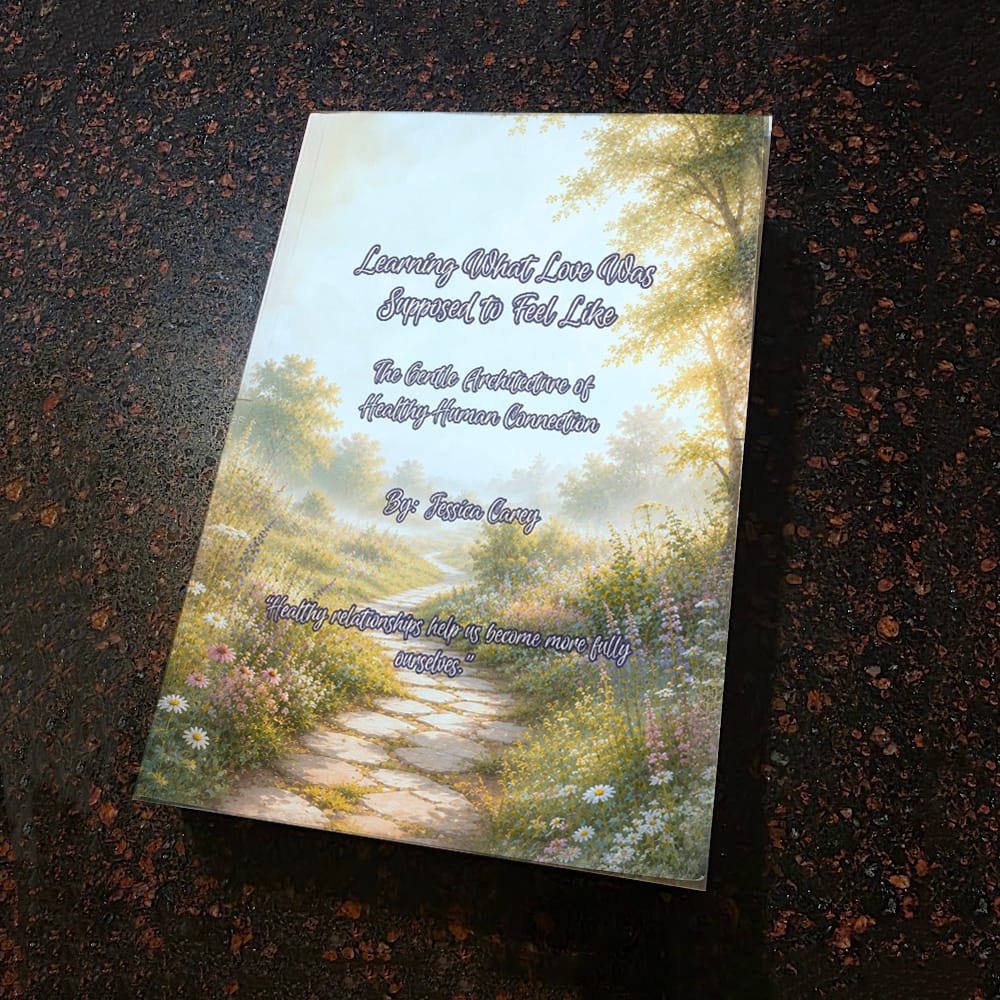
My friend’s grandmother proudly introduces me as “the author.”
Someone in her book club believes my book could spread rapidly through word of mouth, while people in an online community have described its message as desperately needed.
My therapist regularly reminds me that I am artistically gifted.
After I knitted her a scarf to thank her for everything she has done, she called it perfect and encouraged me to consider opening an Etsy shop.
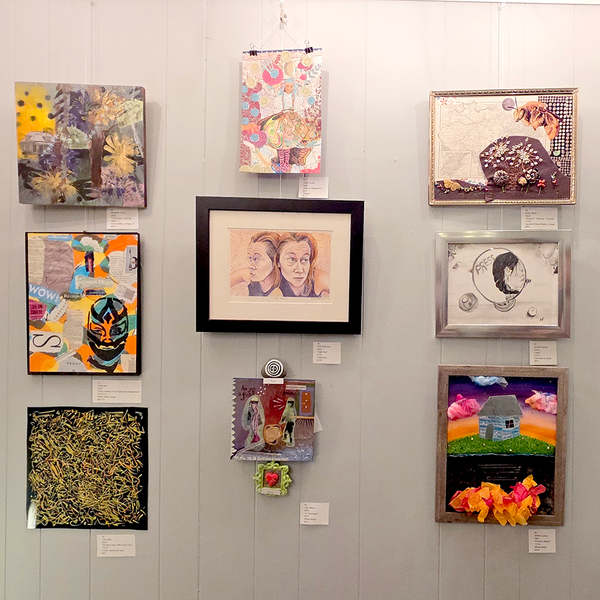
At my art club, people greet me enthusiastically when I arrive, praise what I create, and make it clear that they are genuinely glad I am there.
The host has even called me her favorite.
All of this is kind and deeply meaningful, but it is also disorienting.
For much of my life, I was surrounded by people who reflected something almost entirely different back to me.
I was described as cold, difficult, selfish, unloving, overly sensitive, burdensome, or responsible for problems I did not create.
Rather than being treated as someone whose insight mattered, I was often expected to doubt my own perception.
Rather than being celebrated for what I could create or contribute, I was made to feel as though my very presence caused trouble.
Now I keep entering spaces where people seem to see wisdom, creativity, gentleness, intelligence, and value.
Sometimes the contrast is so extreme that I wonder whether I am unusually polarizing—someone people either adore or cannot tolerate—while I stand somewhere in the middle thinking: I am just a person.
But perhaps that is not the full explanation.
Perhaps I am not witnessing two groups accurately identifying two completely different versions of me.
Perhaps I am discovering how profoundly an environment can shape the reflection a person receives.
What if the people who diminished me were not offering an objective measurement of my character?
What if some of what they condemned was connected to the role they expected me to perform?
And what if healthier relationships are not placing me on a pedestal, but finally illuminating qualities that were always present—qualities I was never permitted to recognize clearly?
 Jessica Carey

Other People Become Mirrors—but Mirrors Are Not Neutral
We learn something about ourselves through other people.
From childhood onward, their words, expressions, reactions, and treatment become mirrors.
When people consistently respond to us as though we are thoughtful, capable, difficult, burdensome, lovable, or unsafe, those reflections can gradually shape how we understand ourselves.
But mirrors are not always accurate.
People do not encounter us as neutral observers.
They interpret us through their own histories, expectations, needs, insecurities, values, wounds, and levels of emotional maturity.
They may respond not only to who we are, but to what our presence brings up within them—or to whether we fulfill the role they hoped we would play.
The same quality can therefore receive radically different interpretations.
A person who values honesty may experience direct communication as refreshing, but someone invested in denial may call it negativity or disrespect.
A person who values curiosity may appreciate thoughtful questions, but someone who expects unquestioning obedience may experience those same questions as defiance.
A person who respects boundaries may see self-advocacy as healthy, but someone who benefited from another person’s lack of boundaries may call it selfishness.
Sensitivity may be recognized as empathy in one environment and treated as weakness in another.
Independence may be celebrated as resourcefulness or condemned as disobedience.
Pattern recognition may look like wisdom to someone seeking understanding and like troublemaking to someone who does not want a pattern named.
The quality itself may not have changed, but the relationship surrounding it did.
That does not mean every criticism is false or every compliment is perfectly accurate; all of us have blind spots, make mistakes, and need honest feedback.
But feedback reveals something about the person offering it as well as the person receiving it.
This is why another person’s reaction cannot serve as a final verdict on our character.
A mirror can reveal something important, but it can also be distorted by fear, projection, entitlement, control, unresolved pain, or the role another person needs us to occupy.
Part of healing is learning to ask not only: “What does this person think of me?” but also: “What kind of mirror am I looking into—and what might be shaping its reflection?”
Sometimes the “Problem” Was the Role You Stopped Performing
In unhealthy families, friendships, workplaces, and communities, people are often assigned roles—sometimes without anyone consciously naming them.
One person becomes the caretaker.
Another becomes the peacekeeper, the problem-solver, the emotional container, the endlessly capable one, or the person expected to remain agreeable and available.
Someone else may become the scapegoat: the person blamed whenever acknowledging the system’s actual dysfunction would be too uncomfortable.
Over time, the role can become more important to the group than the person performing it.
People may appreciate someone’s generosity while ignoring their exhaustion.
They may praise their strength while refusing to offer support.
They may seek their wisdom without showing interest in their inner life.
They may value how useful, accommodating, or emotionally available that person is—but react negatively when the person develops needs, limits, or boundaries of their own.
When someone stops performing an assigned role, the surrounding system may behave as though their character has suddenly changed.
The caretaker becomes “selfish” when they need care.
The peacekeeper becomes “difficult” when they name the conflict everyone else has been avoiding.
The dependable person becomes “unreliable” when their body can no longer sustain impossible demands.
The scapegoat becomes “destructive” when they stop accepting responsibility for harm they did not cause.
The compliant person becomes “disrespectful” when they begin making their own decisions.
But the person may not have become cruel, uncaring, or unreasonable; they may simply have stopped disappearing to preserve everyone else’s comfort.
This distinction has helped me reconsider some of the radically different ways people have responded to me.
Perhaps certain people were not rejecting my entire humanity.
Perhaps they were reacting to my refusal—or eventual inability—to continue being endlessly useful, silent, forgiving, available, and easy to control.
Perhaps qualities that healthier people now experience as insight, honesty, and emotional depth became threatening in environments where survival depended upon leaving certain truths unspoken.
I cannot know every person’s motives, and I do not need to invent an explanation for each one.
But I can recognize a larger pattern: sometimes people do not reject who we are; they reject the loss of what our self-abandonment provided for them.
That does not make every present-day admirer correct about everything, nor does it make me flawless.
It simply means that being called “the problem” was never proof that I was one.
Sometimes the real disruption is not a person becoming worse; sometimes it is a person finally refusing to remain small enough for an unhealthy system to keep functioning unchanged.
 Jessica Carey

Healthier Relationships Can Reveal What Survival Concealed
Healthier people do not necessarily create our positive qualities; sometimes they simply provide enough safety for those qualities to become visible.
A person who spent years surviving may have developed tremendous insight without recognizing it as wisdom.
They learned to observe subtle changes in tone, notice patterns, anticipate reactions, and think deeply about human behavior.
Some of those abilities may have emerged through painful necessity—but with healing, they can become more than survival tools.
Discernment can support others.
Pattern recognition can illuminate complicated situations.
Sensitivity can become a source of empathy and meaningful connection.
That does not mean trauma was a gift or that mistreatment was necessary for growth; I would never credit people who caused harm for the qualities I developed while trying to survive them.
The credit belongs to the person who kept learning, creating, caring, and remaining human despite what happened.
My creativity did not suddenly appear when people began praising my artwork.
My capacity for reflection was not created when others started seeking my perspective.
Writing a book did not manufacture a new identity that had never existed before.
These parts of me were present all along.
Some were ignored.
Some were exploited.
Some were criticized because they made me harder to control.
Others remained buried beneath exhaustion, chronic autistic burnout, fear, and the constant pressure to manage everyone else’s reactions.
Healthier relationships offer a different kind of environment.
They create room for abilities to be recognized without immediately being claimed, controlled, or used against us.
They allow us to experiment, contribute, make mistakes, receive encouragement, and exist as whole people rather than functions.
In those environments, we may begin hearing unfamiliar reflections:
- You bring peace into the room.
- Your perspective matters.
- What you created is beautiful.
- I am glad you are here.
At first, those words may feel almost incompatible with everything we were taught to believe about ourselves.
Yet the unfamiliarity of appreciation does not make it untrue.
Perhaps these people are not describing a completely different person.
Perhaps they are meeting the person who had been obscured by years of survival.
Appreciation did not manufacture a new version of me; it illuminated parts of me that criticism had kept in shadow.
The light did not create what it revealed; it simply made it possible to see.
 Jessica Carey

Appreciation Can Feel Unsafe After Chronic Criticism
Being seen is not always immediately comforting.
When attention has repeatedly preceded criticism, control, humiliation, jealousy, demands, or punishment, visibility can begin to feel dangerous.
The nervous system may learn that being noticed means being evaluated—and that being evaluated means something painful is about to happen.
Even positive attention can activate that alarm.
A compliment may create pressure to prove that it is deserved.
Praise may produce fear of disappointing the person later.
Being called talented can feel like the beginning of new expectations.
Being described as wise may suggest that we must always have the answer.
Being celebrated publicly can leave us waiting for someone to cut us down.
This may be part of why recent appreciation sometimes feels so overwhelming to me.
I am grateful for it, but I am not accustomed to attention remaining kind.
In the past, being noticed did not reliably lead to safety.
It could mean scrutiny, ridicule, exploitation, or having something I cared about used against me.
My mind may understand that these newer relationships are different before my body fully believes it.
That does not mean the present appreciation is insincere; it means my nervous system is responding to a history that taught it to be cautious.
Learning to receive kindness can therefore be a genuine part of healing.
Perhaps the goal is not to force myself to feel comfortable with every compliment; it is to pause long enough to let a kinder possibility exist.
Instead of immediately minimizing the praise, redirecting attention, or explaining why it does not count, I can practice saying:
- Thank you.
- That means a lot to me.
- I am glad what I created affected you.
- I am still learning how to receive that, but I appreciate it.
Receiving appreciation does not require believing that I am perfect.
It does not mean accepting every description as the complete truth about me.
It simply means allowing another person’s positive experience to exist without immediately arguing it away.
After years of being taught that visibility leads to danger, perhaps one of the gentlest lessons healthier relationships can offer is this: being seen does not always mean being targeted.
Sometimes it means being valued.
 Jessica Carey

A Compliment Should Not Become an Assignment
There is another important distinction to make: being appreciated for a quality does not obligate us to perform it constantly.
When people describe me as wise, insightful, or counselor-like, their words can feel affirming; they suggest that my presence and perspective have helped them.
But I am not a therapist, and being a thoughtful listener does not mean I must become everyone’s emotional caretaker.
The same is true of other strengths.
Being compassionate does not require unlimited emotional availability.
Being dependable does not mean always saying yes.
Being artistically gifted does not require turning every creation into a product.
Being a strong writer does not mean producing endlessly.
Being resourceful does not mean never needing assistance.
Being intelligent or articulate does not cancel disability, chronic autistic burnout, reduced capacity, or the need for accommodations.
A compliment can quietly become a burden when it turns into an expectation:
- You are so wise, so carry my problems.
- You are so strong, so you should not need support.
- You are so talented, so make your gifts profitable.
- You are so capable, so surely you can handle more.
That transformation is especially easy to miss when someone has spent years receiving approval primarily for what they could provide.
Praise may feel kinder than criticism while still pulling the person toward another performance-based role.
Healthy appreciation feels different.
It recognizes the quality without claiming ownership of it.
It respects the person’s capacity and consent.
It allows a wise person not to have an answer, a generous person to say no, a talented person to create privately, and a dependable person to rest.
When my therapist praises the scarf I knitted and suggests that I could open an Etsy shop, I can receive her belief in my ability without turning the suggestion into an obligation.
The scarf can remain what I intended it to be: an expression of gratitude, created within the capacity and inspiration I had at the time.
My gifts belong to me before they become useful to anyone else.
I can share them freely and meaningfully without making constant access to them the price of being loved.
I can appreciate that others recognize something valuable in me while still protecting the human being carrying that value.
Healthy appreciation does not turn a person into a function; it sees the gift without losing sight of the person.
 Jessica Carey

Do Not Replace Condemnation With a Pedestal
After spending years being diminished, admiration can feel like a long-overdue correction.
It may be tempting to believe that the people praising us have finally discovered the “real” version of us, while everyone who criticized us was entirely wrong.
The truth is usually more human and more stable than either extreme.
The people who mistreated me did not possess the final truth about my character, but neither does any person who describes me as exceptionally wise, talented, calming, or destined for extraordinary success.
Both criticism and praise are forms of information—not complete definitions of who I am.
Pedestals can be dangerous because they leave little room for humanity.
The person placed upon one may feel pressure to remain endlessly insightful, creative, composed, generous, or inspiring.
Ordinary mistakes can become surprising disappointments.
Natural limitations may be interpreted as inconsistency.
A difficult day may appear incompatible with the idealized person others thought they knew.
I do not want to exchange the role of the problem for the role of the exceptional one.
Both identities can become cages when they deny complexity.
I am capable of offering meaningful insight, and I will sometimes misunderstand.
I can create beautiful things, and not everything I make will succeed.
I can have a calming presence while also becoming overwhelmed, dysregulated, or exhausted.
I can write something that profoundly affects another person without knowing how widely it will travel.
I can be generous and still need boundaries.
I can be deeply valued without being universally understood or liked.
This is why my instinctive sense that I am “just a person” may contain something healthy; it keeps me connected to our shared humanity.
Everyone has strengths, limitations, wounds, contradictions, and room to grow, but humility should not require rejecting what is good in me.
Calling myself “just a person” becomes another form of diminishment if I use it to deflect every compliment or pretend that my gifts have no particular value.
I do not need to see myself as superior to acknowledge that certain qualities I carry may be meaningful, unusual, or deeply needed.
Perhaps balance sounds like this: I am an ordinary human being whose particular gifts can have extraordinary meaning to other people.
Learning to Recognize Myself Without Surrendering Myself
Perhaps I am not someone people naturally either adore or despise.
Perhaps I am finally entering environments where I am not required to become smaller, quieter, less honest, or less complicated in order to belong.
That does not mean everyone in my past misunderstood everything about me, nor does it mean every new person sees me perfectly.
It means I can stop treating other people’s reactions as unquestionable evidence of who I am.
I can examine feedback without surrendering my self-knowledge.
- Does this person know me well enough to make this judgment?
- Are they responding to my character, or to a boundary they dislike?
- Do their words reflect a consistent pattern I should consider, or do they depend upon me remaining useful, compliant, and silent?
- Is their appreciation grounded in genuine relationship, or does it come with an expectation that I perform a particular role?
Healthy feedback is usually specific rather than sweeping.
It remains respectful when we disagree, leaves room for context, and does not depend upon our obedience.
Trustworthy appreciation also respects our limits: it does not disappear when we say no, make a mistake, need support, or stop being useful.
Over time, consistency between a person’s words and behavior tells us more than either praise or criticism alone.
These questions allow me to receive valuable reflections without becoming dependent upon them.
I can let healthier people help correct the distorted portrait created by chronic mistreatment.
I can believe that my perspective has value, that my art carries meaning, and that my presence can make other people feel calmer, seen, or encouraged.
I can allow the possibility that the book I wrote may travel farther than I expect and help people I may never meet.
But I do not need to turn those possibilities into promises or pressure.
My book does not have to become a bestseller for writing it to matter.
My art does not have to become a business for my creativity to be real.
I do not have to solve everyone’s problems to be wise or continually produce something impressive to remain worthy of appreciation.
I am still just a person—gifted in some ways, limited in others, carrying both wisdom and uncertainty, learning as I go.
The difference is that I am beginning to understand that being “just a person” never meant being insignificant.
Perhaps the people who appreciate me are not inventing someone extraordinary whom I must now learn to perform.
Perhaps they are simply seeing qualities that were difficult to recognize while I was surrounded by people committed to diminishing them.
I do not have to accept every criticism as truth.
I do not have to turn every compliment into an identity.
I can receive what is sincere, remain curious about what is accurate, release what belongs to someone else, and continue discovering myself beyond both condemnation and praise.
For the first time, I am not only learning how other people see me.
I am learning how to see myself.
 Jessica Carey
A Few Questions for Reflection
If different relationships or environments have reflected radically different versions of you, consider:
- Which descriptions of you have followed you across multiple healthy, reciprocal relationships?
- Which negative labels appeared mainly when you established boundaries, expressed needs, questioned unfairness, or stopped fulfilling an assigned role?
- Do compliments feel comforting, uncomfortable, suspicious, pressuring, or difficult to believe?
- Can you recognize your gifts without feeling superior—or immediately minimizing them?
- Has someone’s appreciation ever quietly become an expectation that you remain useful, strong, available, or impressive?
- Which parts of yourself became more visible after you entered a safer environment?
- What might change if you treated feedback as information rather than a final verdict on your identity?
Other people can offer meaningful mirrors, but no single mirror captures an entire person.
We can learn from what others reflect without handing them complete authority over who we are.
Perhaps healthy self-understanding begins when we can receive sincere appreciation, consider constructive criticism, protect ourselves from distorted projections, and still remain rooted in our own humanity.
What have healthier relationships helped you recognize about yourself that you could not see before?
Want even more content about creativity and art?
Be sure to check out all of our creative chronicles!
If you'd like to see examples of my work, you can find some of my art and creations at Redbubble and Gumroad!
Looking to learn more about my recent journey?
Check out some of these articles:
-Hidden Gems for St. Louis Artists
-Hidden Gems for Autistic & Neurodivergent Adults
-What Chronic Autistic Burnout Actually Feels Like
-Building a Life from What Remains
 Jessica Carey