

How noticing one another, making room, and sharing what we can turns strangers into neighbors
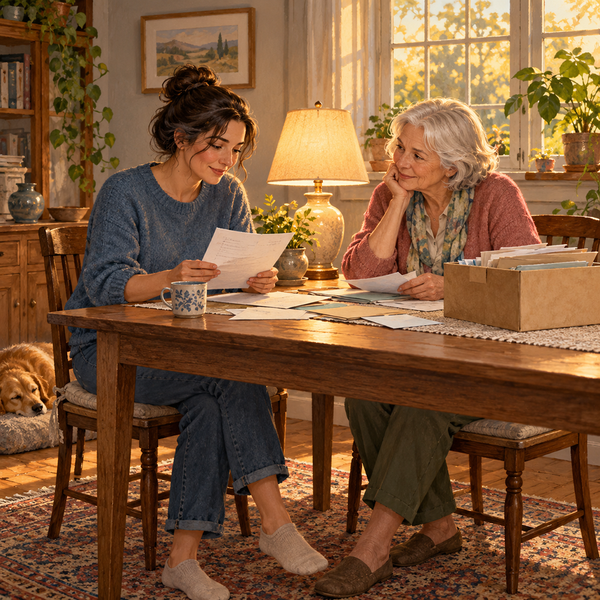
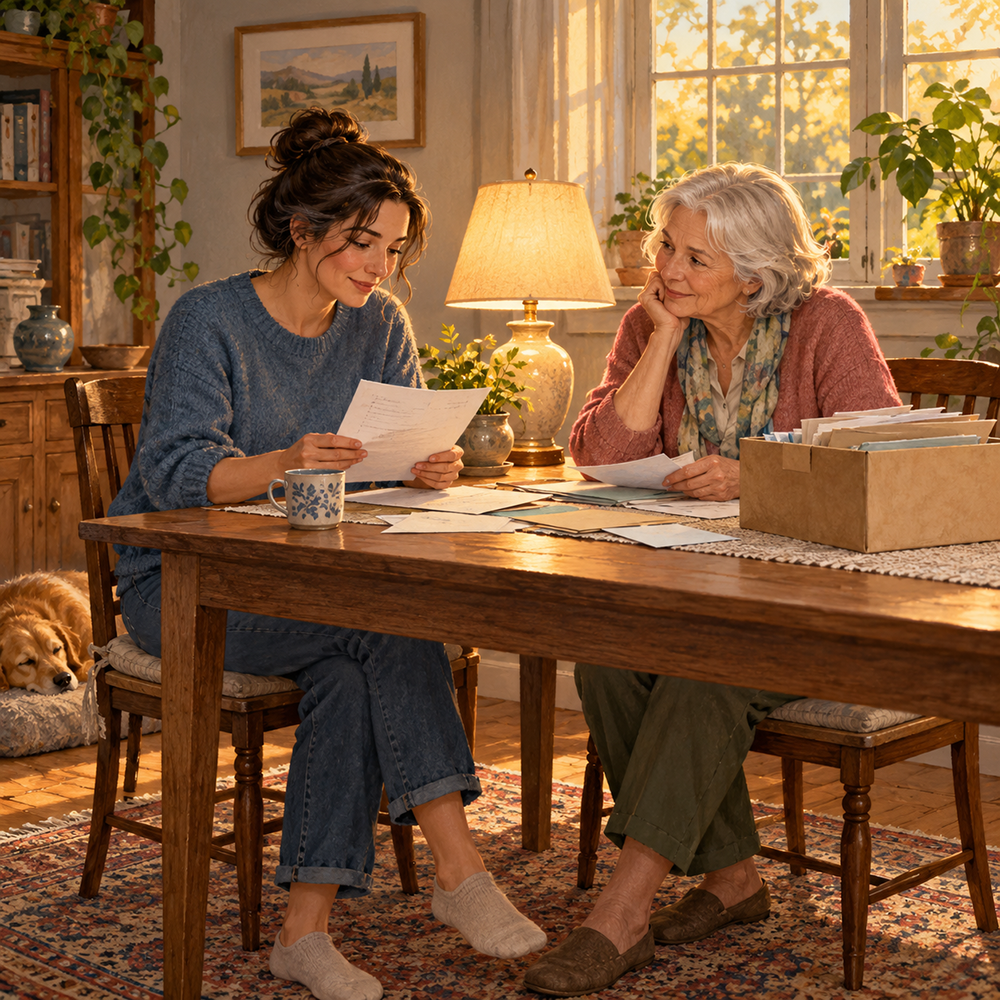
For the past several weeks, I have been attending a book club hosted by my friend’s grandmother.
I did not enter the group as a longtime member or as someone who had already read everything they were discussing; I was simply invited to join them as they worked through The Secret of Divine Civilization by ‘Abdu’l-Bahá.
Yet they listened to my thoughts.
They treated my questions and experiences as meaningful contributions.
They encouraged my writing, expressed genuine interest in the book I recently published, and continued inviting me to return.
No one handed me a membership card or formally declared that I belonged.
They made room for me.
They listened.
They remembered me.
They welcomed me back.
Perhaps that is how belonging is usually created—not through a grand announcement, but through repeated evidence that our presence matters.
The book itself explores what allows societies to advance in ways that are not merely material, but moral and spiritual.
Knowledge, education, wisdom, justice, good character, unity, and service should ultimately contribute to the peace and well-being of people.
A society cannot be considered truly civilized merely because it possesses impressive technology, wealth, or institutions; its values must become visible in how human beings actually treat one another.
That has left me thinking about what community really means.
We use the word frequently.
We speak of neighborhoods, religious communities, workplaces, schools, online communities, art communities, and support communities, but sharing a location, identity, interest, or membership list does not automatically create genuine connection.
People can live beside one another for years without knowing each other’s names.
They can attend the same gatherings while feeling profoundly alone.
They can belong to organizations that speak endlessly about compassion while receiving little care when they are struggling.
They can occupy the same room without ever feeling seen.
A collection of people is not necessarily a community.
Community begins when proximity becomes recognition—when people stop treating one another as background scenery and begin recognizing that every person carries needs, gifts, knowledge, limits, and dignity.
It grows when someone notices who has been left standing at the edge and chooses to make room.
Sometimes that begins with an invitation to sit at a table.
Sometimes it begins with listening to an unfamiliar perspective.
And sometimes it begins with a bench beside a busy road.
 Jessica Carey

Community Begins With Noticing
A recent story I found about a young student and two strangers offers a simple but powerful example.
Maren and David began receiving security-camera notifications showing a child waiting for her school bus at the edge of their driveway.
Cars were speeding along the nearby road, and the girl stood there alone each day because that was where the school district had assigned her stop.
The couple could have regarded her presence as an inconvenience.
They could have told her to leave their property, assumed someone else was responsible, or continued watching without becoming involved.
Instead, they allowed what they noticed to matter.
While David was receiving cancer treatment at the hospital, the couple discussed what they could do.
They decided to order a bench and place it farther from the road so the girl would have somewhere safer and more comfortable to wait.
When she arrived and realized the bench was intended for her bus stop, she jumped with excitement.
It was only a bench.
It did not redesign the transportation system, eliminate every danger along her route, or solve every difficulty in her life.
Yet it changed her daily experience; t communicated something larger than the object itself:
- We noticed you.
- Your safety matters.
- You are welcome here.
The girl later explained that having her own little bus stop made her feel seen and gave her something to look forward to each day.
That may be one of the simplest foundations of community: allowing another person to register fully in our awareness.
Noticing is different from merely seeing.
We can observe someone every day without wondering how they are doing, what barriers they face, or whether a small change could make their experience safer or kinder.
Genuine attention asks us to move beyond recognizing that a person exists and toward acknowledging that their experience matters.
This does not mean becoming responsible for every need we encounter.
No individual possesses unlimited energy, time, money, knowledge, or capacity.
Community cannot depend upon a few compassionate people exhausting themselves while everyone else remains uninvolved.
We can become more attentive to the places where our lives intersect: the person who is consistently overlooked, the barrier everyone has grown accustomed to, or the quiet need that has never been acknowledged.
We may not always know what to do—and noticing should be accompanied by humility rather than assumption.
But care often begins with a willingness to pause long enough to ask: what is happening here, and is there something within my capacity that could make this experience a little safer, gentler, or more welcoming?
Community begins when another person’s life stops being someone else’s concern and becomes worthy of our attention.
 Jessica Carey
Care Becomes Community Through Reciprocity
The story did not end when the bench appeared.
After realizing what Maren and David had done, the girl wrote them a thank-you note.
They responded, and a quiet exchange began.
Notes, flowers, snacks, and small gifts traveled back and forth between the child and the couple.
Before they even knew one another’s names, they had become “Bus Kid” and the “Bench People.”
Eventually, the couple added a little library so she could read while waiting.
They left an umbrella for rainy mornings.
Later, Maren met the girl’s father, and then finally met the young person whose daily presence had inspired everything.
A practical act of kindness had gradually become a relationship.
That progression matters because community is different from one-directional charity.
The girl was not simply a passive recipient of adult generosity.
She noticed their kindness, expressed gratitude, initiated communication, and offered what she could in return.
Her notes and gifts mattered.
Her excitement mattered.
Her participation helped transform a bench into a bond between people who had once been strangers.
Reciprocity does not require everyone to contribute identical resources, equal amounts of time, or the same kinds of labor.
A child and two adults undergoing a difficult season could not offer one another the same things.
But each person had something meaningful to give.
One person may have money or practical skills.
Another may have time, knowledge, encouragement, creativity, or access to resources.
Someone with very little material capacity may offer a handwritten note, a sincere thank-you, a new perspective, or evidence that another person’s effort made a difference.
Healthy reciprocity is not transactional. It does not keep score or turn kindness into debt.
It does not say: “I gave you this, so now you owe me access, obedience, gratitude, or an equivalent favor.”
Instead, it allows everyone to remain a participant rather than reducing some people to permanent helpers and others to permanent recipients.
This distinction is especially important because many forms of “help” unintentionally preserve a hierarchy.
One person is positioned as capable, knowledgeable, and generous, while another is treated only as needy, powerless, or fortunate to receive whatever is offered.
Genuine community recognizes that every person has both needs and gifts.
The person offering help today may need support tomorrow.
The person receiving assistance may carry wisdom, creativity, experience, or connection that the wider community desperately needs.
Our circumstances and capacities change, but our human dignity does not.
Perhaps this is why the exchange of notes feels as meaningful as the bench itself.
The bench said: “We see you.”
The girl’s response said: “I see you, too.”
And somewhere within that mutual recognition, strangers began becoming neighbors.
 Jessica Carey

Small Acts Can Become Structures of Care
The couple’s concern did not remain a warm feeling; it became something physical.
A bench created a safer place to wait.
An umbrella offered protection from the rain.
A miniature library turned waiting time into an opportunity to read.
The continued exchange of notes made kindness dependable rather than accidental.
Each addition communicated that the child had not merely been noticed once and then forgotten.
This is where compassion begins to shape community: when care becomes part of the environment people encounter.
Kindness is often imagined as a spontaneous moment—holding a door, offering encouragement, paying for a stranger’s meal, or helping someone through an immediate difficulty.
Those moments matter.
They can interrupt loneliness, restore hope, and remind someone that goodness still exists.
But some needs return every day.
A child still needs somewhere safe to wait tomorrow.
A disabled person repeatedly encounters the same inaccessible entrance.
A community member continues lacking transportation.
An overwhelmed family needs more than one meal.
A person who cannot tolerate phone calls remains excluded when every organization insists upon verbal communication.
When a need is ongoing, compassion may need to become more than an isolated gesture; it may need to become a routine, resource, accommodation, practice, or shared structure.
The bench is compassion made physical.
The library is generosity made accessible.
The continuing welcome is belonging made dependable.
This principle connects deeply with The Secret of Divine Civilization.
Ideals such as wisdom, unity, justice, education, and service are not meant to remain abstract virtues.
They should become visible in the conditions people live within and in the systems a society creates for their well-being.
A community’s values can be found not only in what it claims to believe, but in what it repeatedly makes possible.
- Does it make participation possible for people with different capacities?
- Does it create ways for knowledge and resources to be shared?
- Does it respond when someone is consistently left unsafe, isolated, or excluded?
- Does it depend entirely upon extraordinary individuals, or does it build care into ordinary practice?
A single person cannot redesign every system.
Maren and David could not control the school district, eliminate traffic, or ensure that every child had a safe bus stop, but they could transform the small piece of the world that intersected with their own.
Their act also traveled beyond that driveway.
After the story spread, other people began considering benches and more welcoming bus stops in their own neighborhoods.
One local response became an invitation for wider change.
That is how small acts can grow without being insignificant.
Someone notices.
Someone responds.
Others witness what is possible.
Then care becomes something that can be repeated, adapted, and built upon.
We may not be able to repair every broken structure by ourselves, but we can ask whether the compassion we feel can take a form that lasts—and whether what we create for one person might eventually make room for many others.
 Jessica Carey

Everyone Carries Something the Community Needs
My experience with the book club has reminded me that community is strengthened by difference rather than diminished by it.
The members and I do not share identical ages, histories, experiences, or perspectives.
I entered after they had already begun reading The Secret of Divine Civilization, and I had not followed every earlier conversation.
Yet I was not treated as though arriving later meant I had nothing meaningful to contribute.
They listened to my observations.
They connected my experiences to the ideas being discussed.
They encouraged my writing and treated the book I created as something worth sharing.
At the same time, I received knowledge, companionship, new perspectives, and the experience of being welcomed by people I might never have met otherwise.
No one person brought everything the gathering needed.
Each person brought something.
That is one of the differences between genuine community and a hierarchy built around status.
Healthy communities do not assume that only the oldest, wealthiest, most educated, healthiest, most confident, or longest-standing members possess something valuable.
They recognize that wisdom and contribution can take many forms.
One person may carry professional knowledge while another carries lived experience.
Someone may ask the overlooked question, organize resources, offer practical skill, contribute creativity or humor, or help another person feel heard.
Even the person who requires substantial support is not merely a collection of needs; they remain a whole human being with preferences, knowledge, relationships, gifts, and agency.
A healthy community therefore asks different questions.
Not only: what can this person do for us?
But also:
- What might they need in order to participate?
- What do they understand that we do not?
- What strengths become visible when the environment is accessible and welcoming?
- What could we create together that none of us could create alone?
This does not mean every person must contribute constantly or prove their worth through usefulness.
Belonging should not become another performance requirement.
People remain worthy of care during seasons when illness, disability, grief, exhaustion, poverty, caregiving, or crisis severely limits what they can offer.
Contribution also cannot be measured only through productivity.
Contribution may look like offering an idea, listening, allowing others to help, returning consistently, or bringing a perspective that changes how the group understands the world.
The goal is not to make everyone identical or interchangeable; it is to create enough trust, flexibility, and mutual respect for different people to participate without abandoning who they are.
Genuine community also makes room for respectful disagreement, difficult truths, and changing needs.
Connection becomes fragile when belonging depends upon everyone remaining agreeable, uncomplicated, or easy to support.
True unity does not erase individuality; it allows distinct people to orient their different gifts toward a shared good.
A thriving community is not built by finding one extraordinary person capable of meeting every need.
It is built when ordinary people recognize that no one carries everything—and no one carries nothing.
 Jessica Carey

Community Care Must Respect Capacity and Consent
There is an important distinction between building community and making ourselves responsible for everyone.
Maren and David’s kindness is especially moving because it unfolded while David was receiving cancer treatment.
But the lesson should not become: “Even people who are ill, exhausted, or struggling must always find a way to give more.”
The better lesson is that they noticed something within their particular capacity to change.
They did not become responsible for the child’s entire life.
They did not attempt to replace her parents, control her choices, or solve every difficulty connected to her daily commute.
They created a bench on their property, offered additional resources, and allowed the relationship to develop gradually.
Healthy community does not require self-erasure.
It does not mean becoming everyone’s unpaid counselor because people trust our insight.
It does not mean giving money we need for our own survival, ignoring disability-related limits, saying yes to every request, or repeatedly exhausting ourselves to prove that we are kind.
It also does not mean imposing help upon someone without listening to what they actually need.
Care can become controlling when the helper assumes they know best, makes decisions on another person’s behalf, or expects gratitude, obedience, access, or emotional closeness in return.
Even sincere intentions do not automatically make every intervention respectful.
Genuine support preserves agency.
It asks rather than assumes.
It offers rather than coerces.
It respects “no.”
It recognizes that another person is the expert on their own experience, even when they need assistance.
It remains open to correction when the offered solution does not fit.
The safest form of help is often created with people rather than merely for them.
Capacity matters, too.
A sustainable community does not depend upon a few compassionate members continually overextending themselves while everyone else benefits.
It distributes care.
It allows the helper to become the helped, makes rest legitimate, and recognizes that people move through changing seasons of ability and need.
Sometimes we can build the bench.
Sometimes we can write the note.
Sometimes we can share information, provide a ride, introduce two people, donate a material, prepare a meal, or invite someone to sit with us.
Sometimes all we can offer is a kind response or an honest acknowledgment that we care but do not currently have the capacity to help.
And sometimes we are the person who needs the bench.
None of these positions determines our worth.
No one person should have to become the entire community.
True community exists precisely because human beings have different limits and resources—and because care becomes safer and more enduring when it is shared.
 Jessica Carey

From Strangers to Community: A Practical Path
Community rarely appears fully formed.
It develops through repeated choices that transform unfamiliarity into recognition, recognition into trust, and trust into shared care.
We can begin with a few simple practices.
Notice
Pay attention to the people who regularly pass through shared spaces without being acknowledged.
- Who is present but rarely included?
- Who repeatedly encounters the same barrier?
- Who contributes quietly without receiving recognition?
- Who may be standing at the edge because no one has considered making room?
Noticing does not mean assuming that we understand someone’s life; it simply means allowing their experience to become worthy of attention.
Become Curious
Observation provides only part of the story.
Before deciding what another person needs, ask respectful questions and listen to the answers.
Learn how they understand the situation, what has already been attempted, and what kind of support would actually be useful.
Curiosity says: I recognize that something may be difficult, but I will not pretend to know your experience better than you do.
Respond Proportionately
Community is not built only through dramatic sacrifice; it is built through sustainable contributions.
A helpful response might involve offering a seat, sharing a meal or resource, providing transportation, making an introduction, modifying an inaccessible practice, writing an encouraging note, or inviting someone into the conversation.
The best contribution is not necessarily the largest one; it is the one that fits both the actual need and the giver’s genuine capacity.
Preserve Agency
Care should expand another person’s choices rather than replace them.
Offer support without requiring obedience.
Respect boundaries, preferences, communication styles, and the right to decline.
Remain willing to adjust when the original idea does not fit.
Helping someone should not require them to become smaller, quieter, indebted, or more convenient.
Return
One kind interaction can be meaningful, but trust usually grows through consistency.
Remember the person’s name.
Follow up.
Extend another invitation.
Keep the accessibility measure in place.
Ask whether the solution continues to work.
Make welcome something a person can rely upon rather than a temporary exception.
Community is often built through the quiet message: you were not noticed only once.
Build Something That Lasts
When the same need appears repeatedly, consider whether individual kindness could become a shared practice or resource.
Could a recurring problem lead to:
- a neighborhood library,
- a transportation network,
- an accessibility policy,
- a resource shelf,
- a mutual-aid system,
- a recurring gathering,
- a skill-sharing group,
- or a clearer way for people to request support?
Systems are built from repeated choices; we can deliberately build care into them.
Widen the Circle
Healthy communities do not reserve belonging only for their original members.
A bench made for one child may serve other students.
A book club can welcome new perspectives.
A resource created for one person may reveal a need shared by many.
As care grows, ask:
- Who else remains outside this circle?
- What would make participation possible for them?
- How can what we have learned travel farther than this one interaction?
We do not need to complete every step at once.
Community may begin with something as small as learning a name, asking a sincere question, or moving a bench a little farther from the road.
What matters is that we stop waiting for connection to appear by accident and begin practicing the choices that allow it to grow.
 Jessica Carey
Civilization May Begin Closer Than We Think
We often speak about changing society as though civilization is built somewhere far away—inside governments, institutions, policies, or movements too large for ordinary people to influence.
Those structures matter.
They determine where resources travel, whose needs receive attention, and whether care becomes accessible or remains dependent upon luck.
But civilization is also shaped in smaller places.
It is shaped wherever people decide whether to ignore one another or make room.
It is shaped at book-club tables where a newcomer’s perspective is treated as valuable.
It is shaped along neighborhood roads where someone notices a child standing too close to traffic.
It is shaped in classrooms, workplaces, congregations, libraries, online groups, and ordinary conversations where people either reinforce isolation or create connection.
Sometimes community begins with a bench.
Sometimes it begins with a small library, a handwritten note, a shared meal, an accessibility accommodation, or an invitation to return next week.
None of these actions will repair the entire world by itself.
A bench cannot replace safe public infrastructure.
A generous neighbor cannot substitute for functional social services.
A welcoming group cannot eliminate every form of exclusion.
But small acts and larger systems are not opposites.
Small acts reveal what people value.
Repeated acts establish expectations.
Shared expectations become practices.
Practices can eventually shape institutions and culture.
The kindness offered to one person can become evidence of what should be ordinary for everyone.
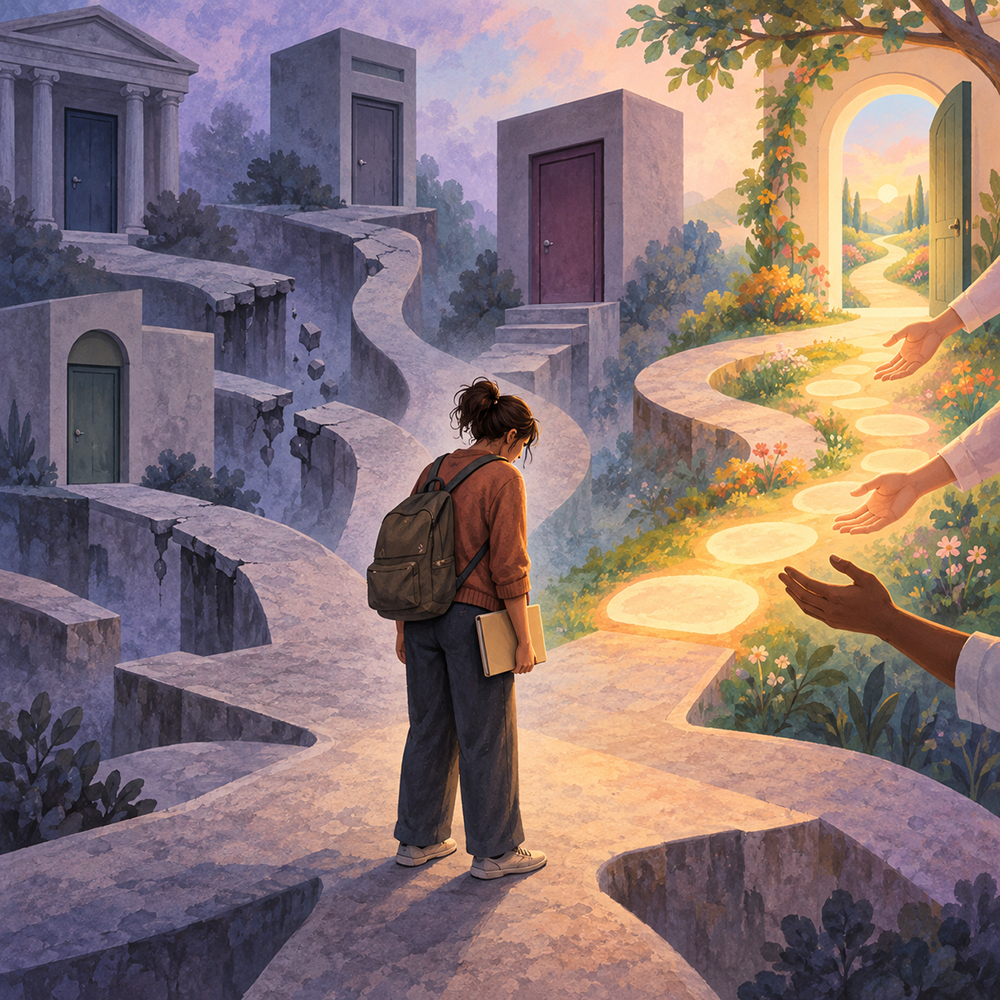
We may not possess the resources to meet every need, and we are not meant to carry the whole world alone, but each of us can help create places where fewer people must stand unseen at the edges.
We can notice.
We can listen.
We can share what is genuinely ours to offer.
We can make room for contributions that differ from our own.
We can build forms of care that remain after a single compassionate moment has passed.
Perhaps true civilization is not measured only by what humanity invents, accumulates, or constructs.
Perhaps it is also revealed by whether our progress helps people feel safer, more connected, more capable of participating, and more certain that their lives matter.
A child arrived at an assigned bus stop expecting only to wait.
Someone noticed her.
A bench appeared.
A note was written.
A relationship began.
And strangers became neighbors.
Perhaps true community always begins with some version of the same quiet message: I noticed you; you matter here, and there is room for you beside us.
 Jessica Carey

A Few Questions for Reflection
Community is built through ordinary decisions about how we see, welcome, and respond to one another.
Consider:
- When has someone’s small act helped you feel genuinely seen or included?
- Who may be present at the edge of your community without yet feeling that they belong?
- Are there people whose needs are noticed only when they become a crisis?
- What gifts or perspectives might be overlooked because they arrive in unfamiliar forms?
- Does the help offered within your community preserve people’s dignity, agency, and boundaries?
- Is care shared, or does it depend upon a few people continually overextending themselves?
- What recurring need could become a routine, resource, accommodation, or lasting structure of support?
- What is one simple, sustainable way you could make a shared space safer or more welcoming?
We do not need to become extraordinary heroes to contribute to a more connected world.
We can begin by paying attention.
We can listen before assuming.
We can offer what fits our capacity.
We can receive what others bring.
We can return often enough for trust to grow.
What might become possible if more of us stopped waiting to find community—and began creating it together?
Want even more content about creativity and art?
Be sure to check out all of our creative chronicles!
If you'd like to see examples of my work, you can find some of my art and creations at Redbubble and Gumroad!
Looking to learn more about my recent journey?
Check out some of these articles:
-Hidden Gems for St. Louis Artists
-Hidden Gems for Autistic & Neurodivergent Adults
-Learning What Love Was Supposed to Feel Like
-I Wasn't Broken--I'm Burned Out
-What Chronic Autistic Burnout Actually Feels Like
-Building a Life from What Remains
 Jessica Carey