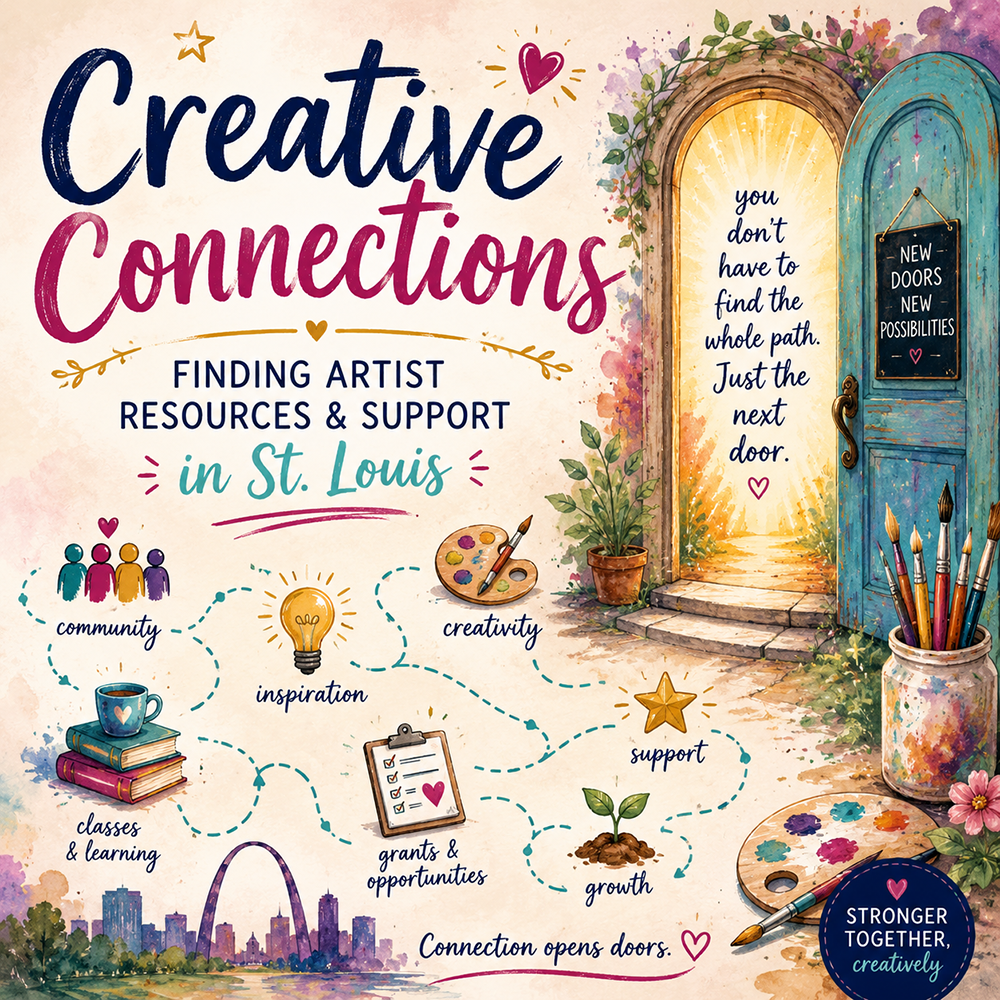
Creative Connections: Finding Artist Resources & Support in St. Louis
Sometimes the hardest part of finding support is knowing where to look.
Because the truth is: there are resources out there.
There are organizations helping artists.
There are programs, grants, classes, communities, and opportunities.
But when you are standing on the outside trying to find your way in, it can feel overwhelming.
- Where do you start?
- Who do you ask?
- How do other artists seem to know about opportunities you have never heard of?
Over the past few months, I have been exploring creative spaces throughout St. Louis and discovering something important: creative communities are built through connection.
One resource leads to another.
One conversation opens another door.
One person introduces you to someone else.
And slowly, a creative map starts forming.
Following the Creative Breadcrumb Trail
When I first started exploring local artist resources, I had no idea where the journey would lead.
I was simply searching.
Searching for spaces.
Searching for supplies.
Searching for community.
Searching for ways to keep creating.
Along the way, I discovered places like Perennial, Artists First, Marnie’s Creative Outlet, Leftovers, etc., and STL Teachers Trading Post Upcycle Treasure Box.
Each place taught me something different.
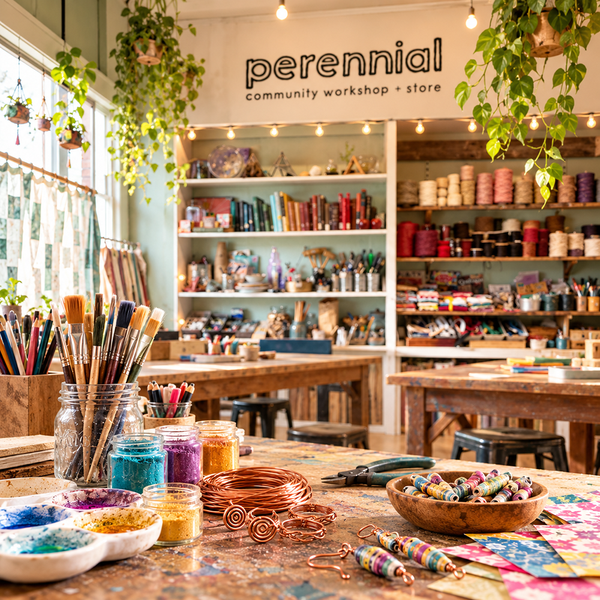
Perennial reminded me that creativity can transform what already exists.
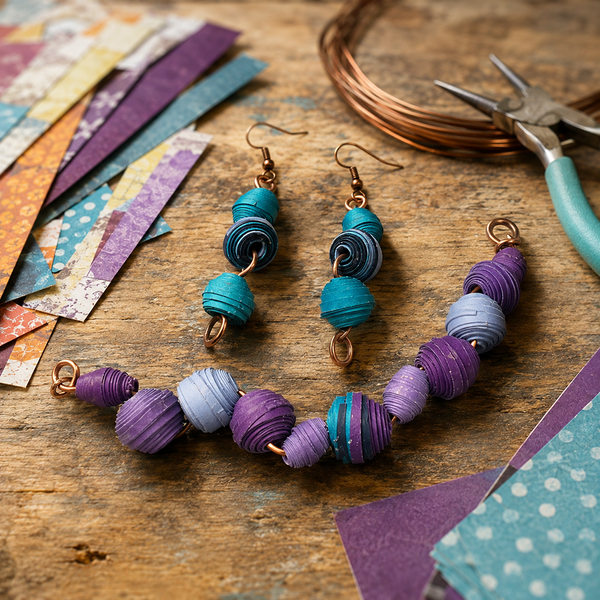
A piece of salvaged copper wire can become jewelry.
A discarded material can become something beautiful.
Artists First reminded me how important access and community are.
Sometimes artists do not just need supplies.
They need space.
Support.
Encouragement.
A place where they belong.
Marnie’s Creative Outlet reminded me that creativity does not disappear.
Sometimes people just need an invitation to reconnect with it.
And through all of these experiences, I started noticing a pattern: the next step often came from a person.
A conversation.
A recommendation.
A simple: “You should look into this.”
An Unexpected Connection at Marnie’s Creative Outlet
When my artist friend and I visited Marnie’s Creative Outlet in Webster Groves, we were expecting to tour the space, learn about classes, and explore another local creative resource.
And we did.
We learned about workshops.
Art parties.
Gallery opportunities.
Creative community.
But we also left with something unexpected: another connection.
During our conversation, Marnie Claunch recommended that we reach out to artist and educator Maria Ojascastro.
She believed Maria might be someone who could offer guidance and point us toward additional resources.
And she was absolutely right.
What started as a simple recommendation became a reminder of how powerful creative networks can be.
Because sometimes the resource you need is not a website you magically discover.
Sometimes the resource is a person willing to say: “Here is another door you can open.”
Meeting Maria Ojascastro: Art, Healing, and Community
After Marnie’s recommendation, I quickly understood why she thought Maria would be such a meaningful connection.
Maria Ojascastro, founder of Magenta Door Art Studio, is an artist, educator, and well-being instructor whose work centers around using creativity to build connection, healing, and community.
Her work reaches far beyond creating artwork.
She has used the transformative power of visual arts with many different communities, including educators, healthcare professionals, cancer survivors, neurodivergent individuals, trauma survivors, and more.
Through teaching, community programs, and creative experiences, Maria’s work reflects a belief that art can help people reconnect:
- With themselves
- With others
- With possibility
Her artistic journey is also shaped by lived experience, including navigating hardship, raising three children on the autism spectrum, supporting others through challenging seasons, and continuing to choose creativity as a source of connection and hope.
In 2026, Maria was recognized as the Outstanding Teaching Artist at the Saint Louis Visionary Awards, celebrating her impact as an artist and educator.
So when Maria generously shared a collection of artist resources, organizations, and opportunities with us, it felt like receiving another piece of the creative map.
It was a reminder of how much knowledge lives within creative communities — and how powerful it can be when people choose to share what they have learned.
Another reminder: artists are not meant to figure everything out alone.
Quick Resource List: Artist Support & Opportunities
Some of the resources Maria shared include:
Artist Growth & Community
Funding & Professional Support
- Regional Arts Commission of St. Louis
- Volunteer Lawyers and Accountants for the Arts
- CERF+ (Craft Emergency Relief Fund)
Classes & Creative Exploration
Creative Sustainability
Each resource supports a different part of the creative journey, from finding community to developing professionally, learning new skills, accessing support, and continuing to create sustainably.
Finding Your Artist Community
One of the biggest lessons I have learned while exploring creative resources is that creating art and building an artistic life are two different things.
Making artwork is one part of being an artist.
But many artists eventually run into other questions:
- How do I find opportunities?
- How do I connect with other creatives?
- How do I share my work?
- How do I grow?
- How do I navigate the practical side of being an artist?
And honestly, those questions can feel intimidating.
Especially when you are trying to figure everything out by yourself.
That is why artist communities and professional development resources can be so valuable.
They remind artists:
- You do not have to create alone.
- You do not have to know everything already.
- There are people and organizations dedicated to helping artists grow.
Artist INC: Supporting the Artist Behind the Artwork
One of the resources Maria shared was Artist INC.
Artist INC is a professional development program designed to help artists navigate the realities of building a creative career.
Because being an artist is not only about creating.
Artists also have to learn things like:
- Communicating about their work
- Setting goals
- Building sustainable practices
- Understanding opportunities
- Developing professional skills
- Navigating the business side of creativity
And many artists are never formally taught those things.
You can spend years learning how to make artwork without anyone teaching you how to support yourself as an artist.
Programs like Artist INC help fill that gap by bringing artists together to learn, share experiences, and grow.
And I think that community aspect matters.
Because sometimes the most encouraging thing is realizing:
Other artists are figuring things out, too.
Artist INC opportunities open periodically in different cities, including St. Louis, so checking current application dates can help artists know when new sessions become available.
St. Louis Artists’ Guild: Connecting Creatives
Another resource Maria recommended exploring was the St. Louis Artists’ Guild.
Artist organizations can be incredibly valuable because they create opportunities for connection, learning, and visibility.
Many artists create alone.
In home studios.
At kitchen tables.
In spare rooms.
Between responsibilities.
And while independent creativity can be wonderful, having opportunities to connect with other artists can help people feel part of something bigger.
Organizations like the St. Louis Artists’ Guild can provide ways for artists to:
- Meet other creatives
- Learn new skills
- Attend events
- Explore exhibitions
- Discover opportunities
Sometimes growth happens through practice.
Sometimes it happens through community.
Often, artists need both.
Mid-America Arts Alliance: Finding Opportunities Beyond Your Own Circle
Maria also connected us with resources from Mid-America Arts Alliance.
One thing that stood out to me was how many opportunities exist that artists may never hear about unless they are connected to creative networks.
Programs.
Calls for artists.
Funding opportunities.
Professional development.
Peer support.
Community conversations.
These resources exist, but knowing where to find them can be one of the biggest challenges.
For example, opportunities shared through artist networks may include things like:
- Peer conversations and learning spaces
- Professional development programs
- Artist surveys that help organizations understand creative needs
- Grant opportunities
- Calls for artists
- Festivals and community art events
- Workshops about sustainability, advocacy, and creative careers
Seeing these opportunities reminded me why staying connected matters.
A resource may not be exactly what you need today.
But becoming part of the network means you are more likely to discover opportunities when they appear.
That is why newsletters and artist networks can be so helpful.
Sometimes the opportunity you need already exists.
You just need a pathway to discover it.
Staying Connected to New Opportunities
One thing Maria’s resources reminded me of is that opportunities are constantly changing.
A grant available this year may have a different deadline next year.
A new workshop may open.
A call for artists may appear.
A community event may start accepting applications.
That is why joining newsletters and staying connected with artist organizations can be so valuable.
Instead of trying to search for every opportunity individually, you can become connected to communities already sharing information.
Sometimes support is not a single link.
Sometimes support is finding the places where opportunities continue to grow.
Springboard for the Arts: Building Sustainable Creative Lives
Another resource Maria shared was Springboard for the Arts.
Something I appreciate about organizations like this is the recognition that artists are whole people.
Artists need more than inspiration.
They need resources.
Information.
Support.
Sustainable systems.
Because creativity is meaningful.
But creative careers and long-term artistic practices also require practical support.
Learning how to continue creating — financially, emotionally, and professionally — matters.
The goal is not simply: “How do I make more?”
Sometimes the bigger question is: “How do I create a life where making art can continue?”
Resources like Springboard also show how creativity connects with larger communities. Artists do not exist separately from the places they live — they help shape them.
Finding Support: Grants, Resources, and Opportunities for Artists
One thing I have learned while exploring creative resources is that artists often have to wear many different hats.
Creating the artwork is only one part of the journey.
Artists also have to navigate:
- Finding opportunities
- Applying for programs
- Sharing their work
- Understanding contracts
- Building sustainable practices
- Finding financial support
Some opportunities may also support specific creative fields, such as music, writing, performing arts, craft, or visual arts.
And many artists are trying to figure those things out on their own.
That is why organizations dedicated to supporting artists can be so important.
They help provide bridges between creativity and sustainability.
Because artists deserve support, too.
Regional Arts Commission of St. Louis: Investing in Creativity
One resource Maria recommended was the Regional Arts Commission of St. Louis (RAC).
RAC supports the arts throughout the St. Louis region through resources, funding opportunities, and investment in local creativity.
For artists, grants and funding opportunities can make a significant difference.
They can help creators:
- Develop new projects
- Access needed resources
- Continue their artistic practice
- Bring creative ideas into the community
Because while passion is important, artists also need practical support.
Supplies cost money.
Studio space costs money.
Education and professional development cost money.
Creative work has value.
And resources that recognize and support that value help strengthen the entire creative community.
Volunteer Lawyers and Accountants for the Arts (VLAA): Help With the Practical Side of Art
Another resource Maria shared was Volunteer Lawyers and Accountants for the Arts.
This one stood out to me because many artists naturally focus on making.
The painting.
The writing.
The music.
The performance.
The creative idea.
But eventually, practical questions appear:
- How do contracts work?
- What about copyright?
- What happens when money enters the picture?
- How do you handle the business side?
Those topics can feel overwhelming, especially for artists who were trained creatively but not necessarily taught entrepreneurship, legal basics, or financial systems.
Resources like VLAA help artists access information and support for those less glamorous but incredibly important parts of being a creative.
Because protecting your work is also part of honoring your work.
Emergency and Long-Term Support for Artists
Another thing Maria’s resources reminded me of is that artists are people first.
Artists experience:
- Unexpected challenges.
- Financial stress.
- Burnout.
- Life transitions.
- Emergencies.
And support systems matter.
Organizations like CERF+ (Craft Emergency Relief Fund) focus specifically on supporting craft artists and understanding the realities artists face.
Their work highlights something important:
Artists need more than opportunities to create.
They need systems that help them continue.
Because creativity is not separate from life.
Artists are creating while navigating everything else that comes with being human.
Finding Calls, Festivals, and Creative Opportunities
Another valuable part of being connected to artist networks is discovering opportunities you may not find on your own.
Calls for artists.
Festivals.
Community projects.
Grant opportunities.
Collaborations.
For example, resources Maria shared included opportunities like ARTICA Festival, a multidisciplinary outdoor arts festival in St. Louis celebrating creative expression.
Local festivals and community art events, such as ARTICA Festival, can give artists opportunities to participate, experiment, and share creative work outside traditional gallery settings.
Events like these give artists opportunities to:
- Experiment
- Share their work
- Connect with others
- Participate in the larger creative community
Sometimes the hardest part is not whether opportunities exist.
It is knowing they exist.
And that is why creative networks matter so much.
Continuing to Learn and Grow as an Artist
Something I deeply believe is that artists never truly stop learning.
There is always another material to explore.
Another technique to try.
Another idea waiting.
Another way to grow.
Sometimes people think learning art has a finish line.
You take the classes.
You get the degree.
You learn the skill.
You become “an artist.”
But creativity does not really work that way.
Artists are constantly evolving.
Trying.
Experimenting.
Getting curious.
Even professional artists continue learning and discovering new directions.
Sometimes one class changes everything.
A new technique sparks a new idea.
A different material opens an unexpected path.
A creative experiment becomes the beginning of something bigger.
That is why accessible learning opportunities matter.
They give people space to continue exploring.
Creative Classes and Community Spaces
One of the resources Maria shared was the Center of Creative Arts (COCA), including information about their sliding scale tuition opportunities.
Accessibility matters because cost can become a major barrier.
Many people want to create.
Many people want to learn.
Many people want opportunities to explore.
But classes, supplies, and experiences can quickly become expensive.
Accessible programs help create more pathways into creativity.
Because someone’s ability to participate should not only depend on how much disposable income they have.
Everyone deserves opportunities to learn and create.
Trying Something New
Another resource Maria mentioned was Perennial, which felt like a beautiful full-circle moment for me.
My own journey exploring St. Louis creative resources included taking an upcycled copper jewelry class at Perennial.
Before that class, I had never transformed salvaged electrical wire into jewelry.
But one evening of experimenting introduced me to:
A new skill.
A new material.
A new way of seeing possibility.
That experience then led me to explore creative reuse resources, search for salvaged materials, and discover even more local connections.
And I think that is one of the amazing things about trying something new.
You never know where curiosity will lead.
A single class may introduce you to a new hobby.
A conversation may introduce you to another artist.
A small experiment may become something meaningful.
Creative growth often happens through following those little sparks of curiosity.
 Jessica Carey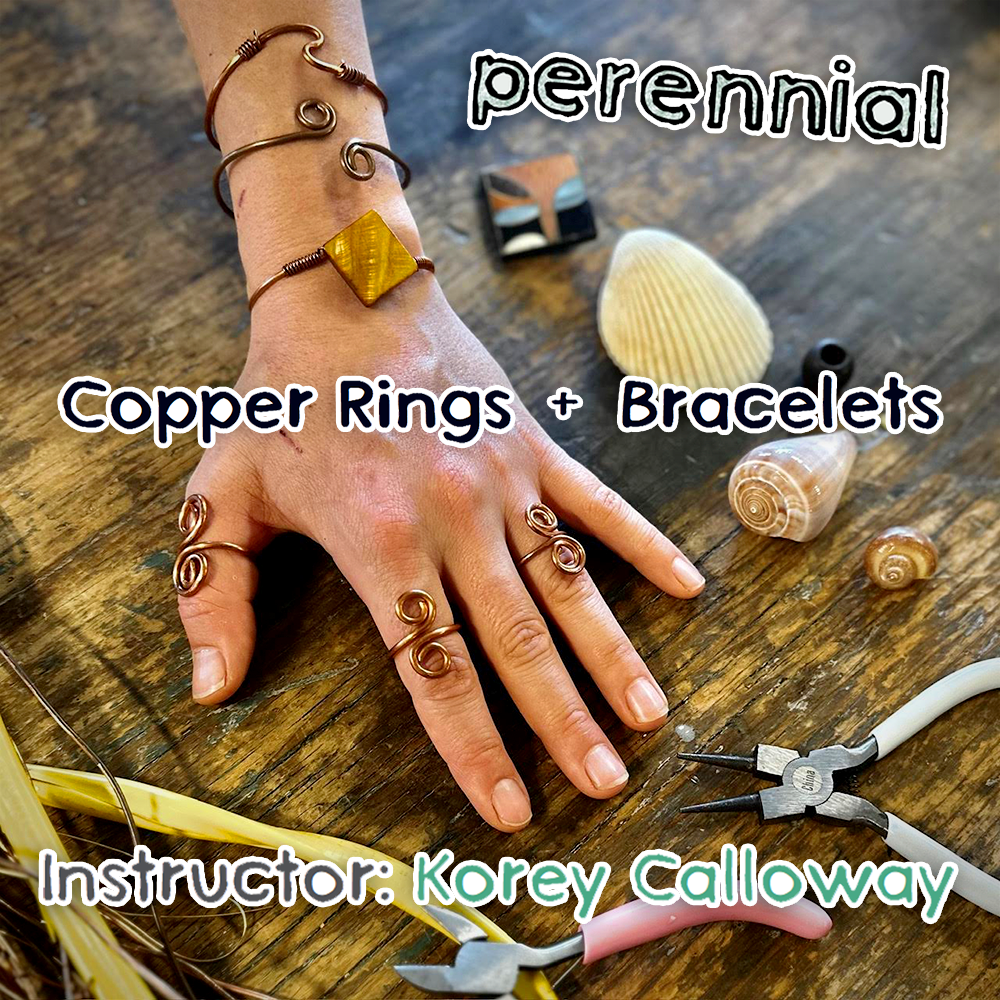
Protecting Creativity Through Rest and Sustainability
Another resource Maria shared was Global Burnout Recovery, which stood out to me because burnout is something that deserves more conversations — especially in creative spaces.
Because creating sustainably is not only about finding more opportunities.
It is also about caring for the person creating.
Artists are often passionate people.
They care deeply.
They pour themselves into their work.
They imagine, problem-solve, practice, build, share, and create.
But passion does not make people unlimited.
Creative energy still needs care.
Rest.
Support.
Recovery.
A sustainable creative life is not just about asking: “How much can I make?”
Sometimes it is also asking: “How can I keep creating without losing myself?”
Because artists are not machines designed to endlessly produce.
We are humans.
And protecting our well-being is part of protecting our creativity.
 Jessica Carey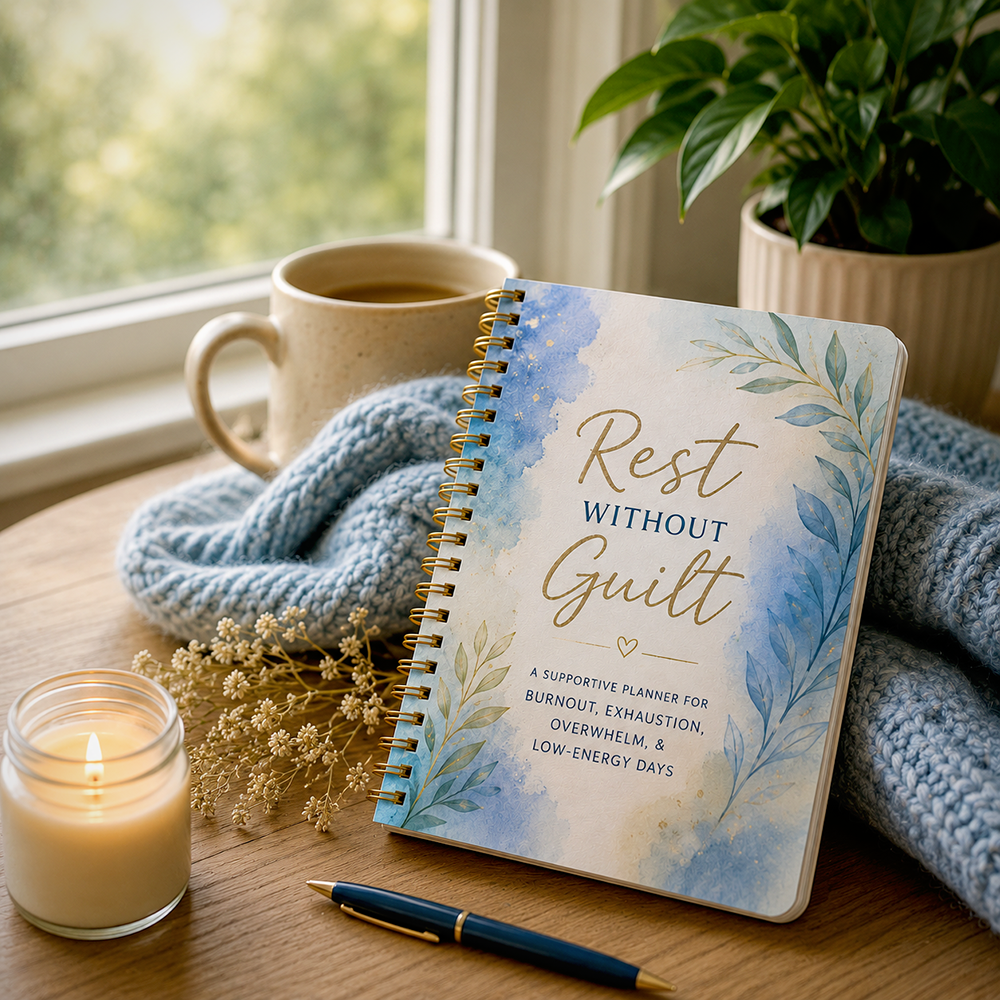
How to Find Creative Resources When You Don’t Know Where to Start
Sometimes finding creative resources can feel overwhelming.
Not because support does not exist.
But because you do not always know where the doors are.
And if you do not know a resource exists, how are you supposed to search for it?
That has been one of the biggest lessons I have learned while exploring creative spaces throughout St. Louis.
Sometimes finding support starts with one small step.
One class.
One conversation.
One question.
One connection.
You do not have to discover the entire creative map all at once.
You just have to find the next piece.
 Jessica Carey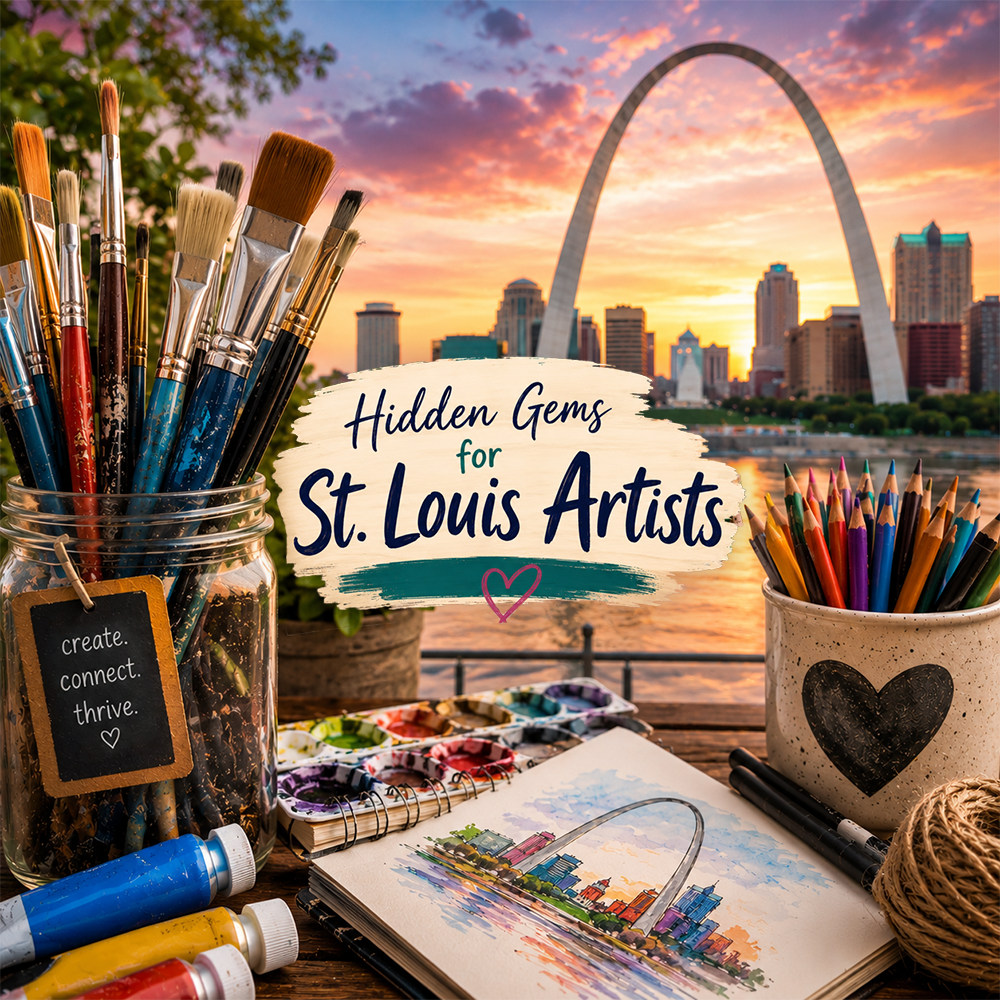
Follow the Creative Breadcrumbs
Looking back, so many of the resources I discovered happened because one thing naturally led to another.
Taking a class at Perennial led me to explore creative reuse and sourcing materials.
Searching for materials introduced me to more organizations and people.
Visiting creative spaces introduced me to artists, teachers, and community members.
Touring Marnie’s Creative Outlet led to connecting with Maria Ojascastro.
And Maria introduced even more resources, organizations, and opportunities.
At the beginning, I did not have this whole list.
I did not magically know where everything was.
I started with curiosity.
And each step revealed another.
Ask Questions
One of the simplest but most powerful things artists can do is ask.
Ask instructors.
Ask other artists.
Ask organizations.
Ask:
- “Do you know of any resources that might help?”
- “Are there other places I should look into?”
- “Do you know anyone I should connect with?”
Sometimes the answer will be no.
Sometimes you may not hear back.
And sometimes someone says: “Actually, yes. You should talk to this person.”
That one recommendation can change everything.
Share What You Are Looking For
Something else I have learned is that people cannot always help if they do not know what you need.
Are you looking for:
- Supplies?
- Studio space?
- Classes?
- Community?
- Selling opportunities?
- Professional development?
- Funding?
- Other artists?
Being willing to share what you are searching for gives people the opportunity to point you in the right direction.
That does not mean every person will have the answer.
But the right person might know the next step.
Stay Connected
Creative opportunities often appear through community.
Consider:
- Joining artist newsletters
- Following local organizations
- Attending events
- Exploring workshops
- Joining online groups
- Talking with other creatives
Sometimes opportunities are not hidden because people are intentionally keeping them secret.
They are hidden because there are so many separate pieces scattered around.
Connection helps bring those pieces together.
You Belong in Creative Spaces
And maybe most importantly:
Remember that you are allowed to show up.
Sometimes people hesitate because they think:
- “I’m not experienced enough.”
- “I’m not a professional artist.”
- “I don’t belong there yet.”
But creativity grows through participation.
You do not need to have everything figured out before you begin.
You learn by showing up.
You learn by connecting.
You learn by trying.
And sometimes the community you are searching for starts with simply walking through the first door.
Creativity Grows Through Connection
One of the biggest lessons I have learned while exploring creative resources is that creativity is not built alone.
Yes, creating itself can sometimes be quiet and personal.
A sketchbook.
A studio.
A project.
A moment between you and an idea.
But a creative life?
That grows through connection.
Through conversations.
Through shared resources.
Through people willing to open doors for one another.
When my friend and I first visited Marnie’s Creative Outlet, we expected to learn about an art space.
It was especially meaningful getting to discover these resources alongside another artist because we were both learning how many creative opportunities existed around us.
We expected to hear about classes, workshops, and creative opportunities.
And we did.
But we also received something we did not expect:
A connection.
Marnie introduced us to Maria.
Maria shared resources, organizations, and opportunities.
Those resources opened even more possibilities.
And that is something I keep seeing again and again:
Creative communities grow when people help each other find the next step.
Someone shares a resource.
Someone recommends an organization.
Someone invites you into a space.
Someone says:
- “You should meet this person.”
- “You might want to look into this.”
- “Here is something that helped me.”
Those moments matter.
Because sometimes the hardest part of finding support is not that support does not exist.
It is knowing where to find it.
Many artists are quietly trying to figure everything out by themselves.
How to access materials.
Where to find opportunities.
How to share their work.
How to keep creating.
How to belong.
But we were never meant to hold every answer on our own.
That is why creative ecosystems matter.
Artists need artists.
Teachers need teachers.
Communities need connectors.
We grow when knowledge is shared instead of hidden.
When opportunities are passed along instead of guarded.
When people turn around and help someone else find the path.
Looking back, this entire creative journey started with one step.
One class.
One question.
One conversation.
And each connection revealed another piece of the map.
I did not find every resource at once.
I found people.
And those people helped me discover possibilities I did not even know existed.
Maybe that is one of the most beautiful things about creativity.
A single idea can grow into something bigger.
A single conversation can open a new door.
A single connection can change the direction of someone’s journey.
Sometimes finding your creative path is not about already knowing where you are going.
Sometimes it simply starts with being curious enough to take the next step.
And finding people along the way who say: “Here, let me show you another door.”
To learn more about my artist friend, Jayla, her art, and her mission to create a safe space for teens, check out this article!
 Jessica Carey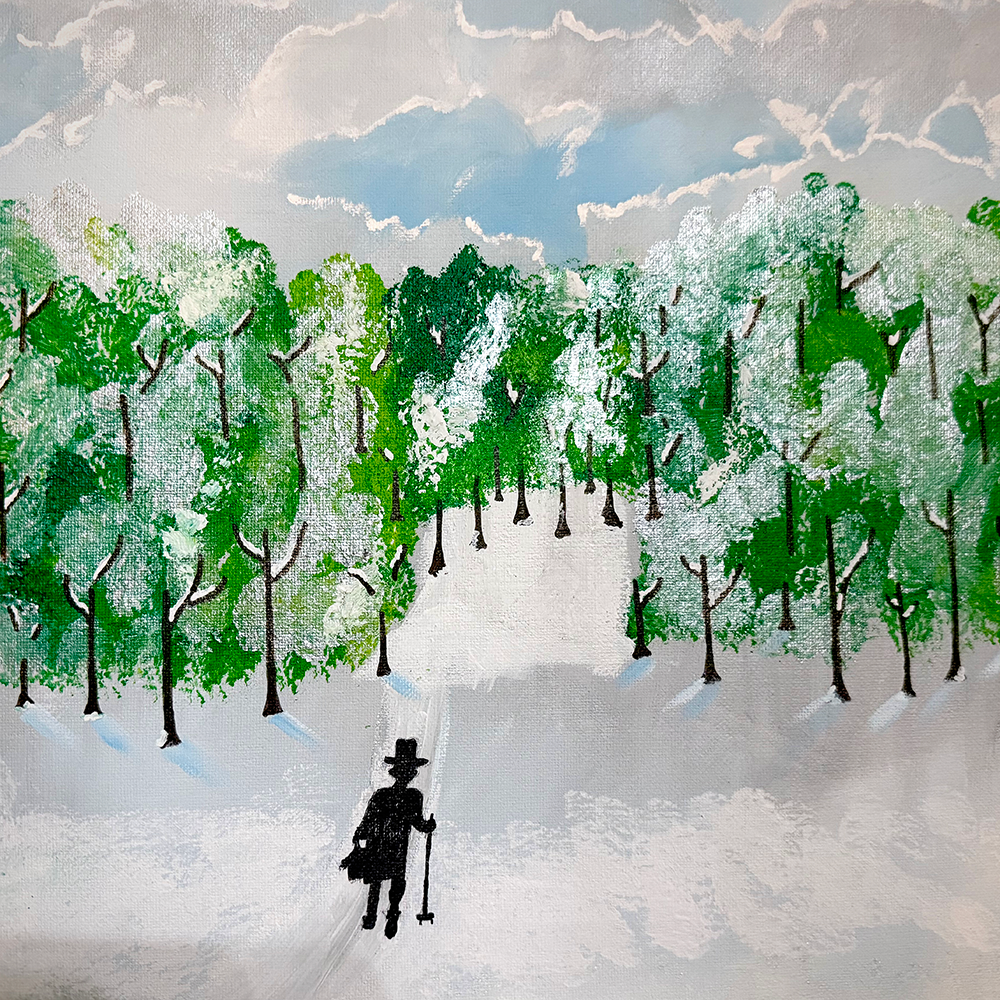
Want even more content about creativity and art?
Be sure to check out all of our creative chronicles!
If you'd like to see examples of my work, you can find some of my art and creations at Redbubble and Gumroad!
Want to check out other St. Louis art spaces?
Check out some of these articles:
-Hidden Gems for St. Louis Artists
-Perennial Copper Jewelry Class
-Leftovers and Upcycle Treasure Box
 Jessica Carey