
What if I told you this bright red watercolor once looked like a rock?
Or that a beautiful green paint could begin as powdered earth?
Or that bottle caps could become watercolor palettes?
Most of us grow up thinking of watercolor paints as something we buy.
A tube.
A pan.
A palette.
We rarely stop to wonder how those colors came to exist in the first place.
Most of us never stop to wonder where watercolor paint comes from.
We pick up a palette, squeeze color from a tube, or open a tin of paints, and the materials are simply... there.
Ready to be used.
But every color has a story.
Long before watercolor paints filled the shelves of art stores, artists made their own.
Vibrant reds came from earth pigments.
Blues from minerals.
Greens from clay.
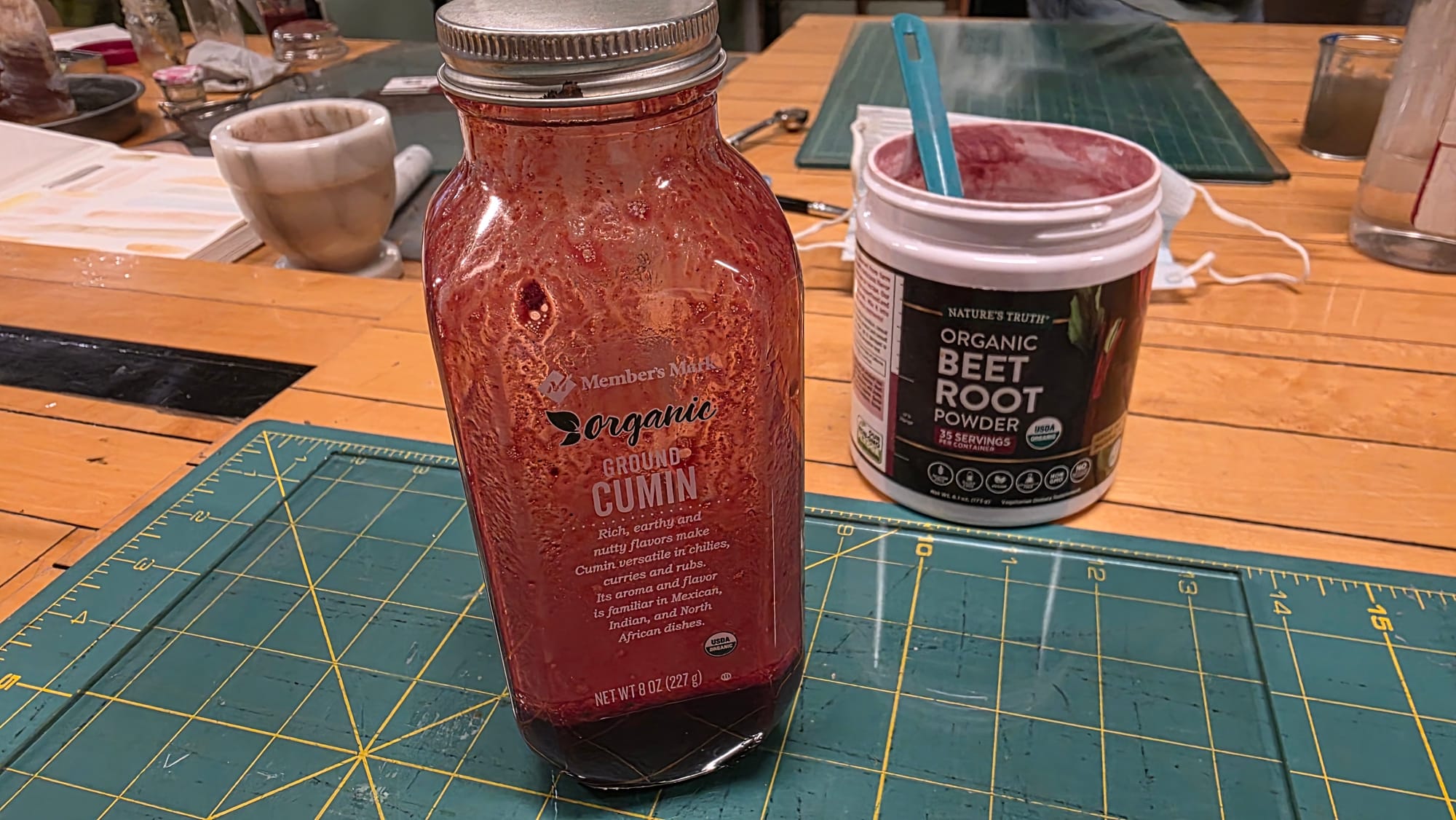
Even spices, plants, rocks, and cosmetics could become sources of color.
Creating paint wasn't just part of the artistic process—it was the artistic process.
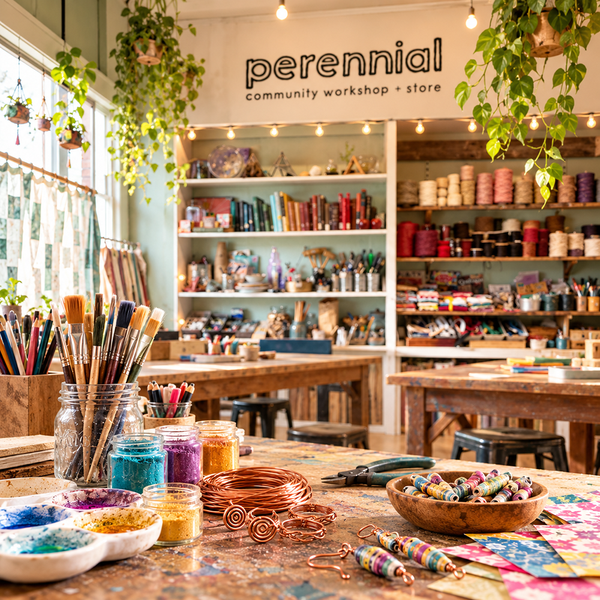
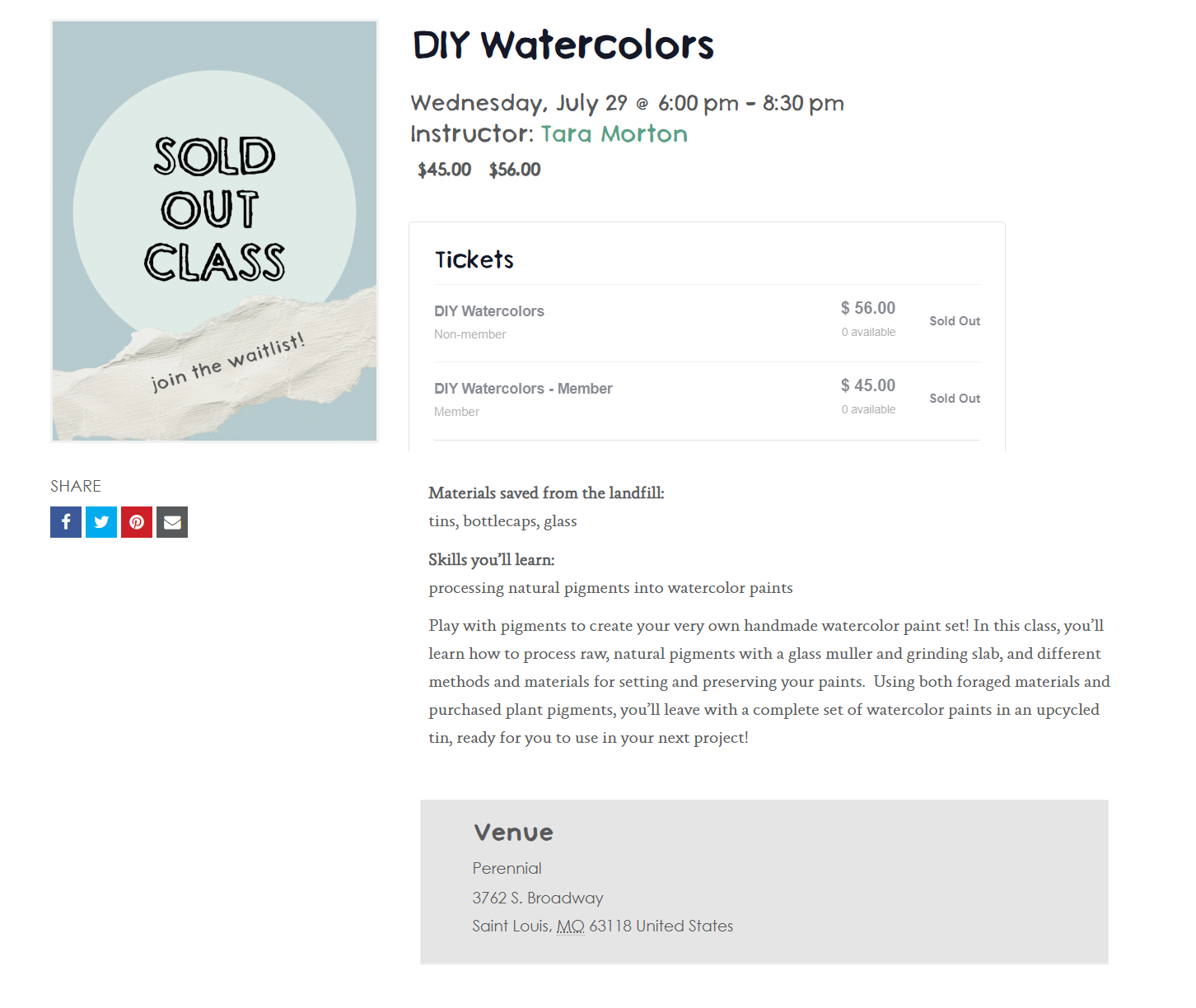
Recently, my artist friend Jayla and I attended Perennial's DIY Watercolors workshop in St. Louis, Missouri, where we stepped behind the scenes to learn exactly how watercolor paint is made.
Instead of beginning with finished supplies, we started with raw pigments, mixed our own binder, ground the ingredients together by hand, and transformed loose powders into a set of handmade watercolors.
It was fascinating to realize just how much history, science, craftsmanship, and creativity can exist inside something as simple as a small pan of paint.
Like many of Perennial's workshops, the class also reflected the organization's mission of creative reuse.
Rather than relying entirely on brand-new materials, we repurposed items like bottle caps into watercolor pans and explored how pigments can come from natural and unexpected sources—including clay, rocks, earth, spices, and even makeup.
It was a reminder that creativity often begins by looking at familiar materials with fresh eyes.
By the end of the night, I wasn't just leaving with handmade watercolors.
I was leaving with a completely different appreciation for color itself.
 Jessica Carey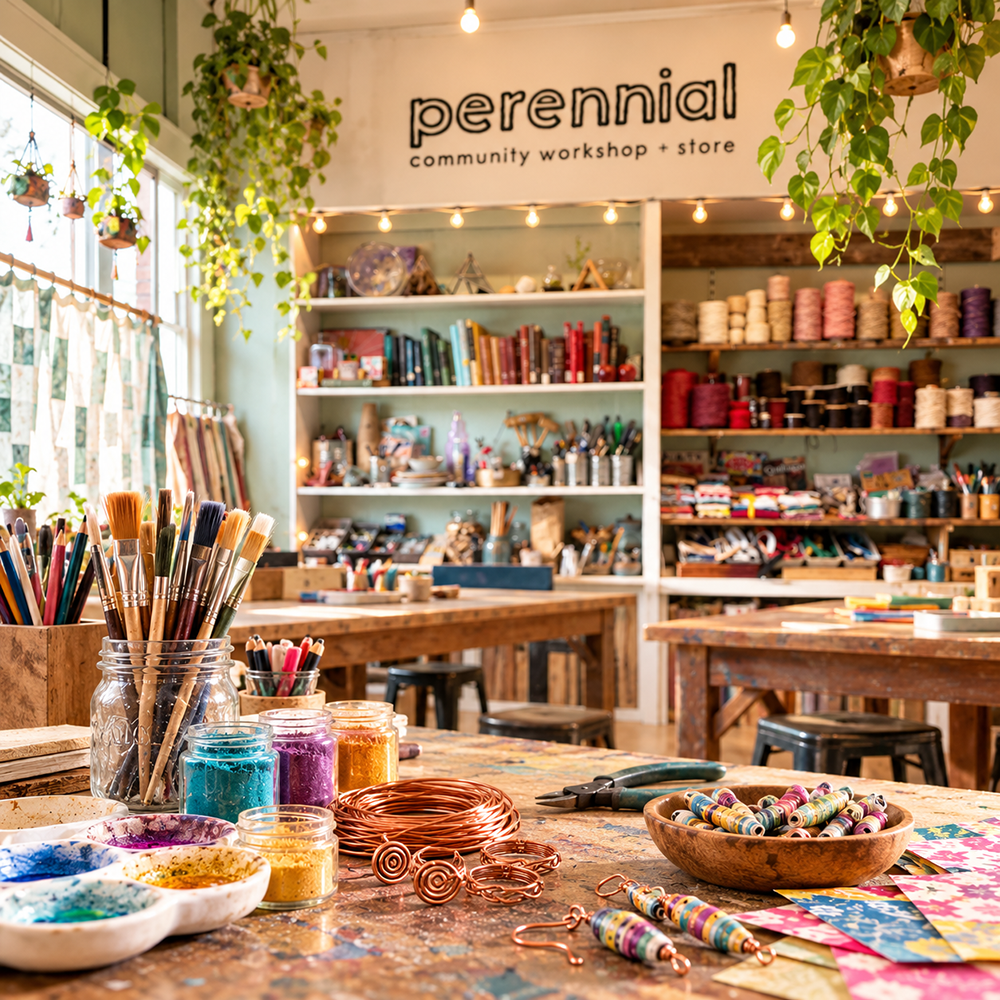
About Perennial STL
Before diving into the class itself, it's worth taking a moment to introduce the organization behind it.
Located in St. Louis, Perennial is a nonprofit creative reuse center that encourages people to see potential where others might see waste.
Through hands-on workshops, community programs, a creative reuse store, and volunteer opportunities, Perennial helps make art more accessible while promoting sustainability and environmental stewardship.
Rather than simply teaching people how to make something, many of Perennial's classes encourage participants to think differently about the materials around them.
Discarded objects become works of art.
Everyday items find new purpose.
Natural materials reveal possibilities that often go unnoticed.
After attending their Salvaged Copper Jewelry class earlier this year, I was excited to return for another workshop.
 Jessica Carey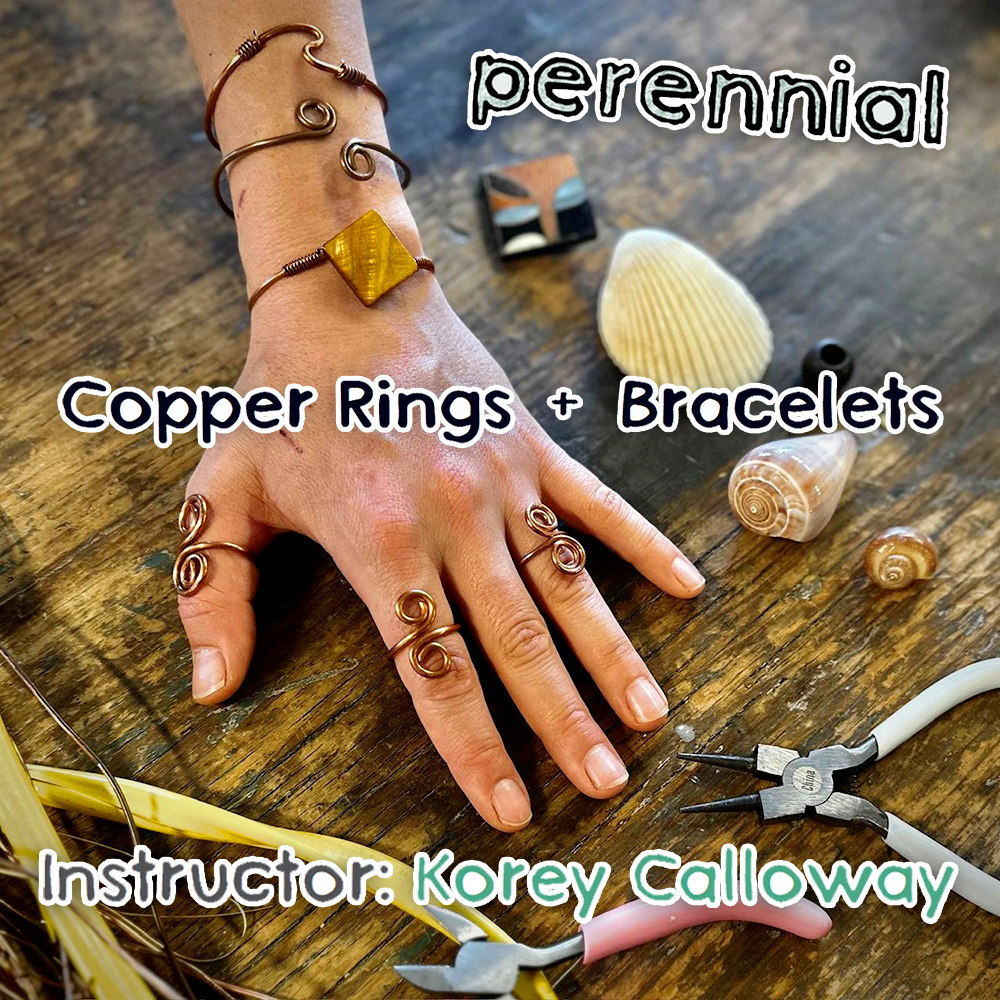
One of the things I've come to appreciate about Perennial is that no two classes feel alike.
Each introduces a completely different skill while encouraging curiosity, experimentation, and creative problem-solving.
When my friend and I saw DIY Watercolors on their class schedule, we immediately knew it would be something special.
Why This Class Caught My Attention
I've painted with watercolors for years.
Like most artists, I've purchased watercolor palettes, squeezed paint from tubes, and chosen colors without giving much thought to where they came from.
I knew paint was made from pigments, but beyond that, it was something of a mystery.
This class promised something different.
Instead of learning how to paint with watercolors, we would learn how to make them—from raw pigments all the way to finished watercolor pans.
That simple shift completely changed my perspective.
Rather than beginning with finished art supplies, we would begin with the ingredients themselves: earth pigments, minerals, clays, binders, and even recycled bottle caps that would eventually hold our finished paints.
It wasn't just an art class.
It was an opportunity to step behind the scenes and discover the hidden story inside every brushstroke.
Stepping Into the Classroom
Walking into the classroom, it was immediately clear that this wasn't going to be a typical painting class.
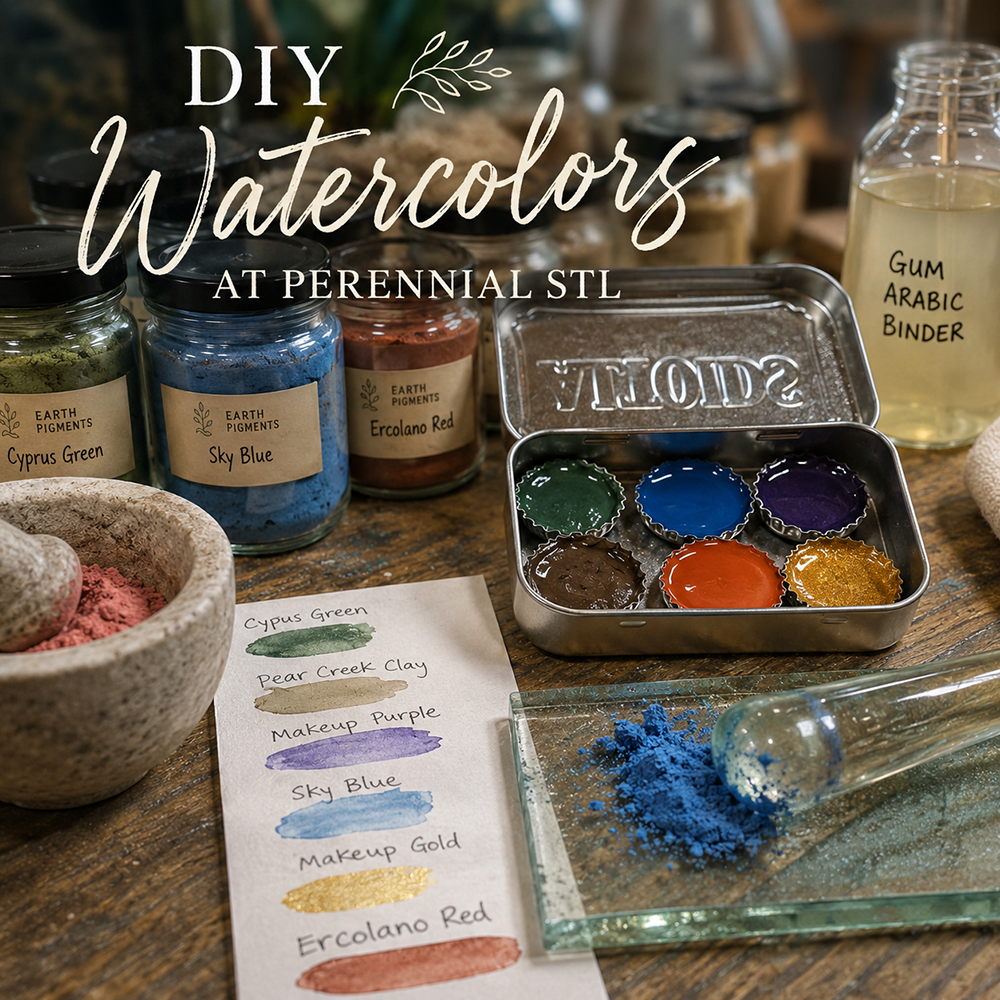
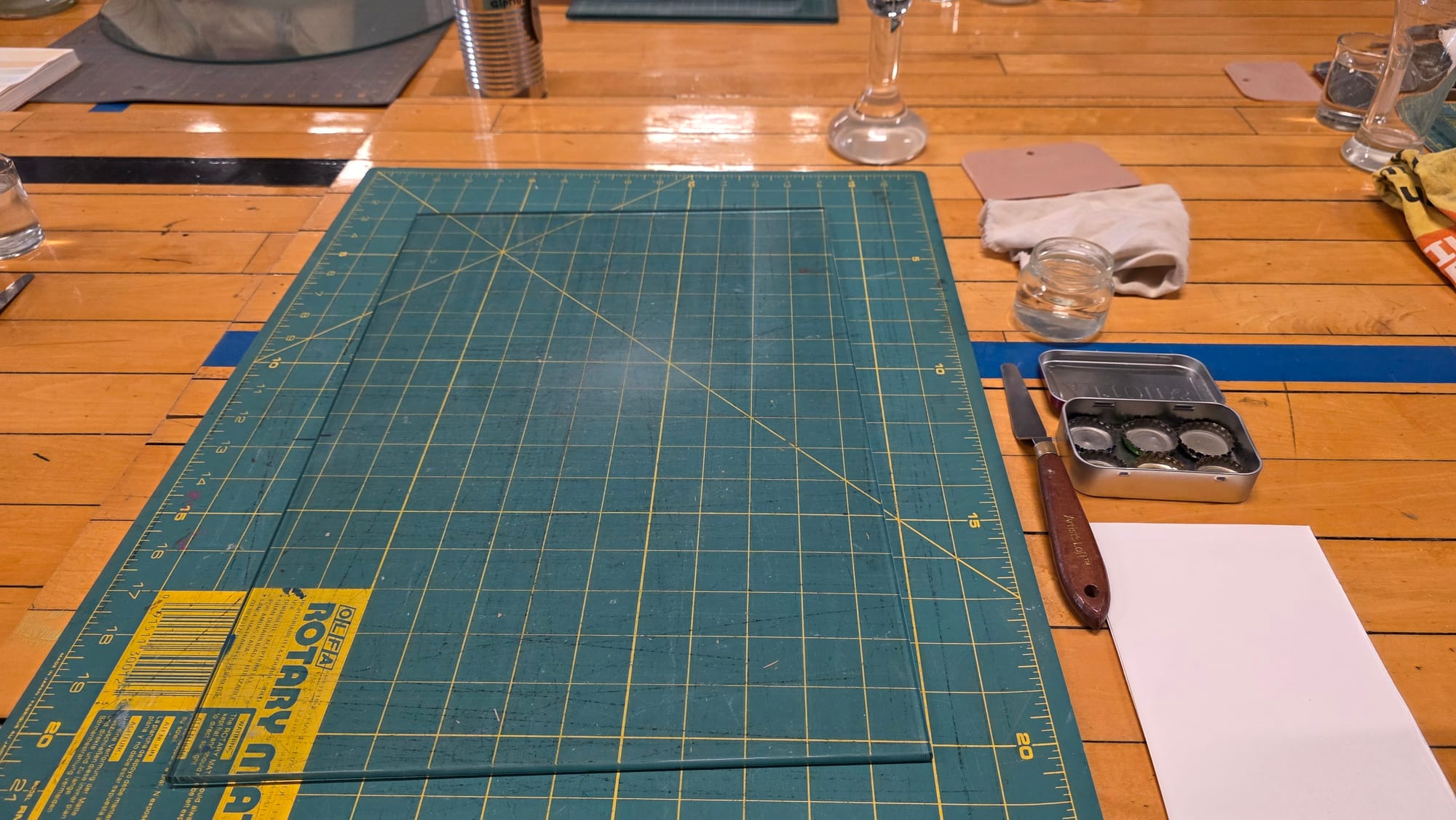
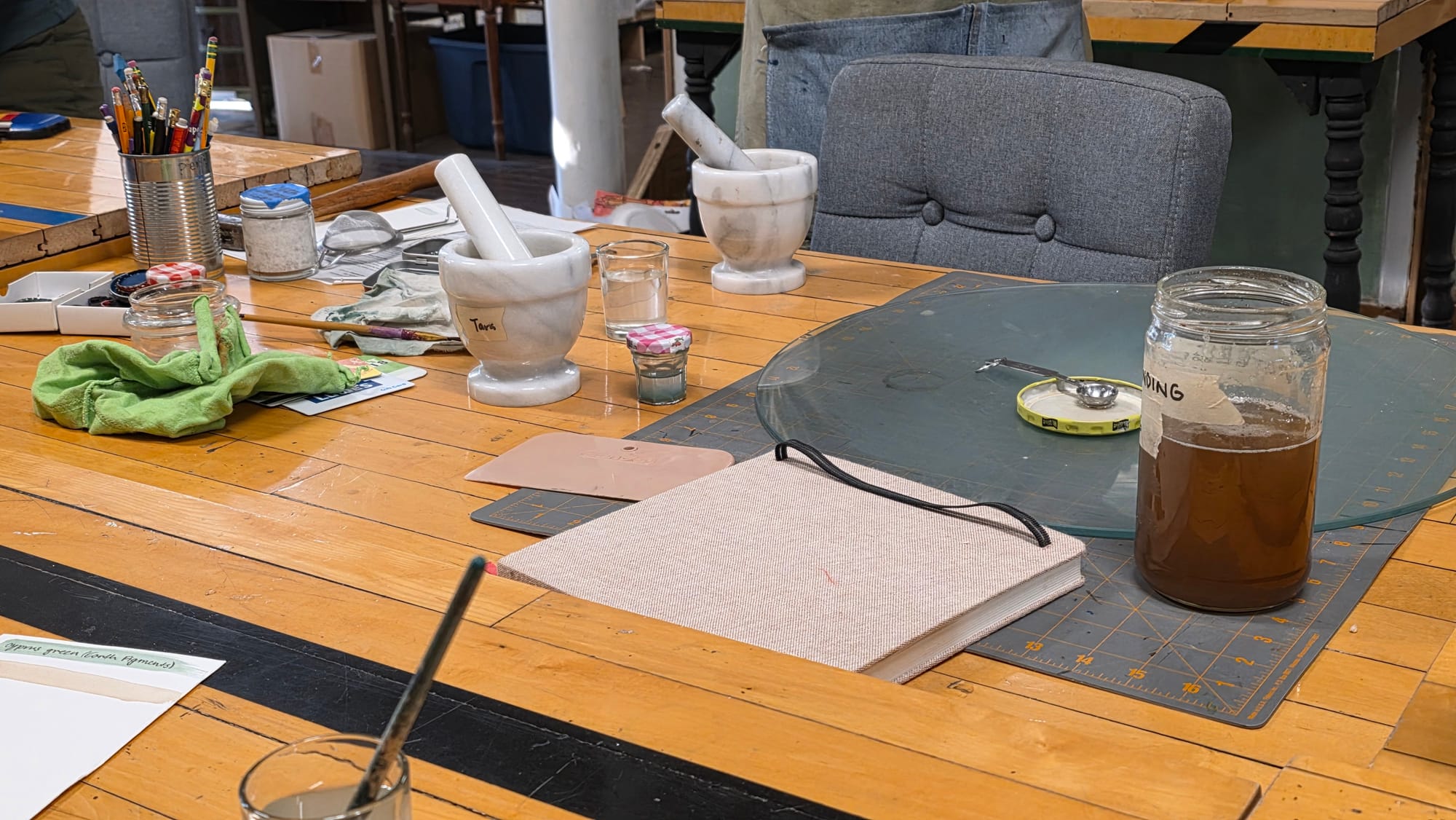
Instead of rows of watercolor palettes and paintbrushes waiting at each table, we were greeted by glass grinding slabs, marble mortar and pestles, jars filled with colorful powdered pigments, palettes, tiny bottles, and recycled bottle caps that would eventually hold our finished paints.
The room felt equal parts art studio, science lab, and history lesson.
Our instructor, Tara Morton, welcomed everyone and introduced us to the fascinating world of handmade watercolors.
Before we touched any of the materials, she explained that every paint begins with two essential components:
- Pigment — the material that provides the color. Pigments can come from clay, rocks, earth, minerals, plants, spices, and even unexpected sources like cosmetics.
- Binder — the liquid mixture that suspends the pigment and transforms it into usable watercolor paint. For our class, the binder was made from gum arabic, water, honey, and a small amount of essential oil.
It sounds simple on paper, but seeing the ingredients laid out in front of us made the process feel surprisingly tangible.
Something as familiar as a pan of watercolor paint suddenly became much more than an art supply—it became the result of countless small steps, careful experimentation, and centuries of artists learning how to work with the natural world.
As Tara passed around examples of different pigments, I found myself paying attention to colors in a completely new way.
Instead of seeing "green" or "red," I began wondering where each color came from and what it looked like before it ever became paint.
That shift in perspective happened before we had even started making anything.
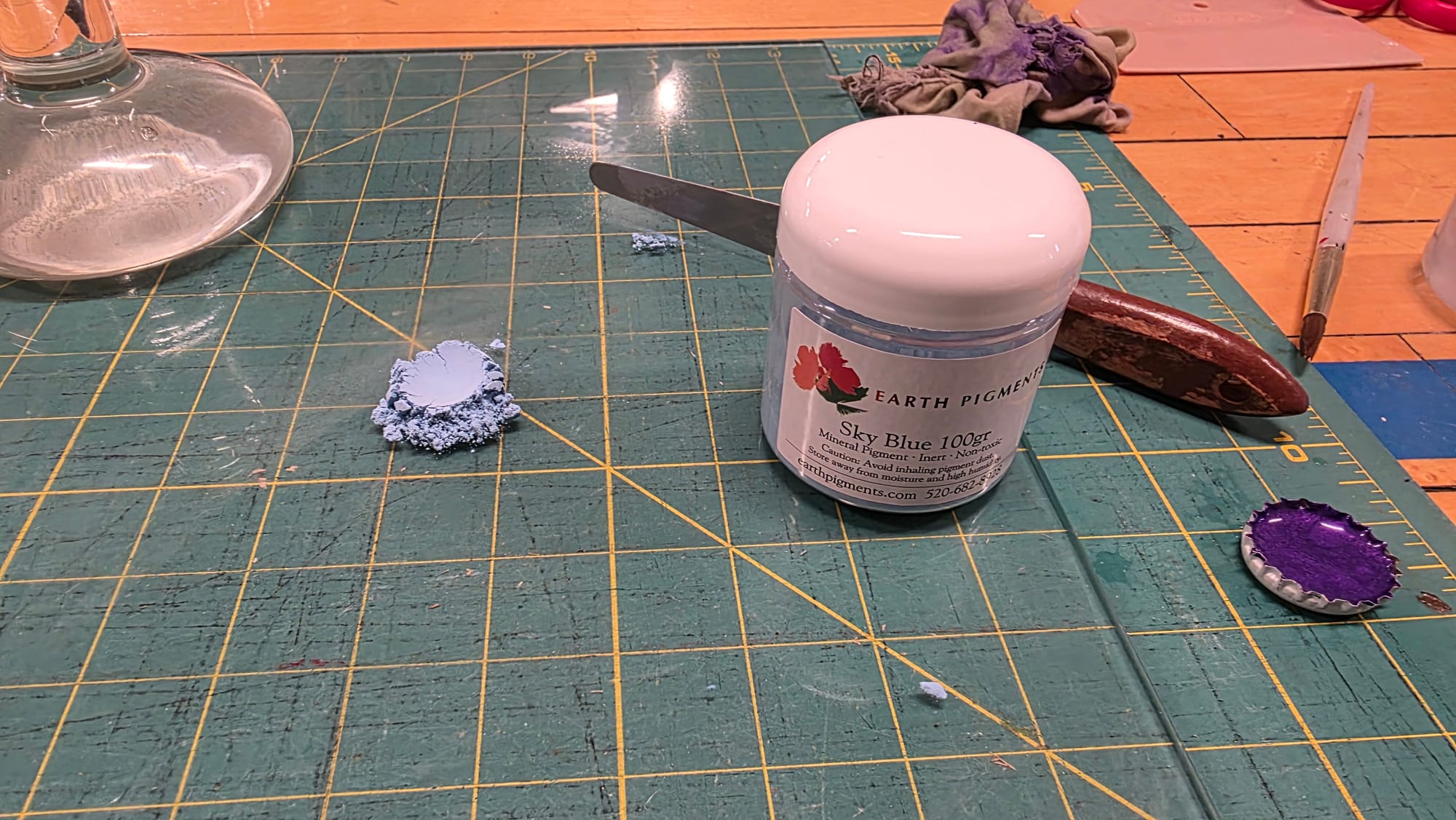
Fine pigment dust covered the glass slabs in brilliant reds, blues, and greens.
Mortar and pestles gently tapped against stone as people experimented with different materials, while conversations naturally drifted between art, history, chemistry, and creativity.
It felt both peaceful and wonderfully hands-on.
Where Color Begins
If someone asked me where watercolor paint comes from before taking this class, my answer probably would have been, "An art supply store."
Technically, that's true—but it's far from the whole story.
Before watercolor paint becomes a tube, a pan, or a palette, it begins as pigment: tiny particles that provide the paint's color.
Those pigments can come from an incredible variety of sources, including earth, clay, rocks, minerals, plants, spices, and even cosmetics.
Seeing those raw materials spread across the classroom completely changed how I thought about color.
Instead of looking at a finished paint and thinking, "That's a nice shade of green," I found myself wondering, "Where did this green begin?"
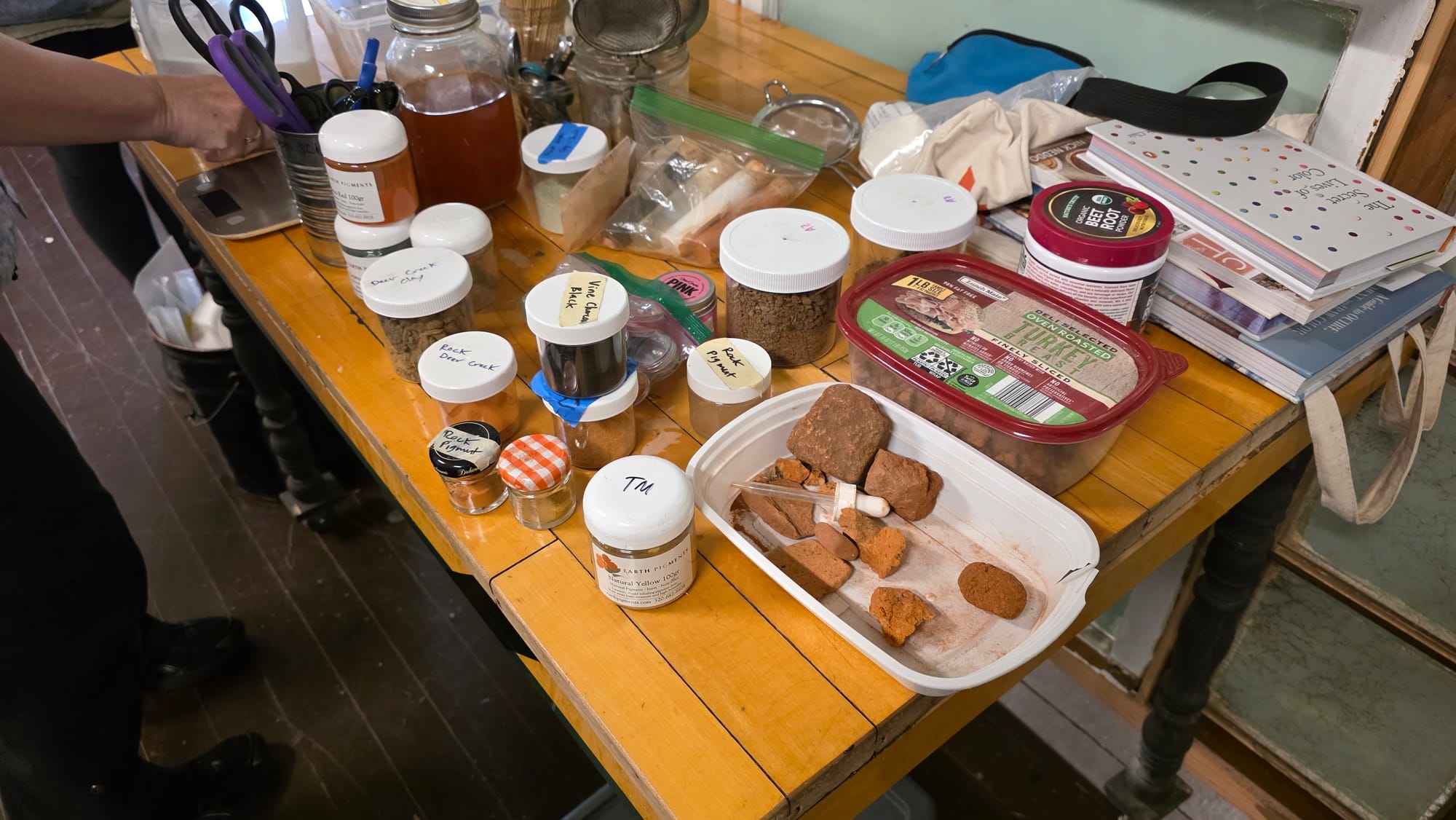
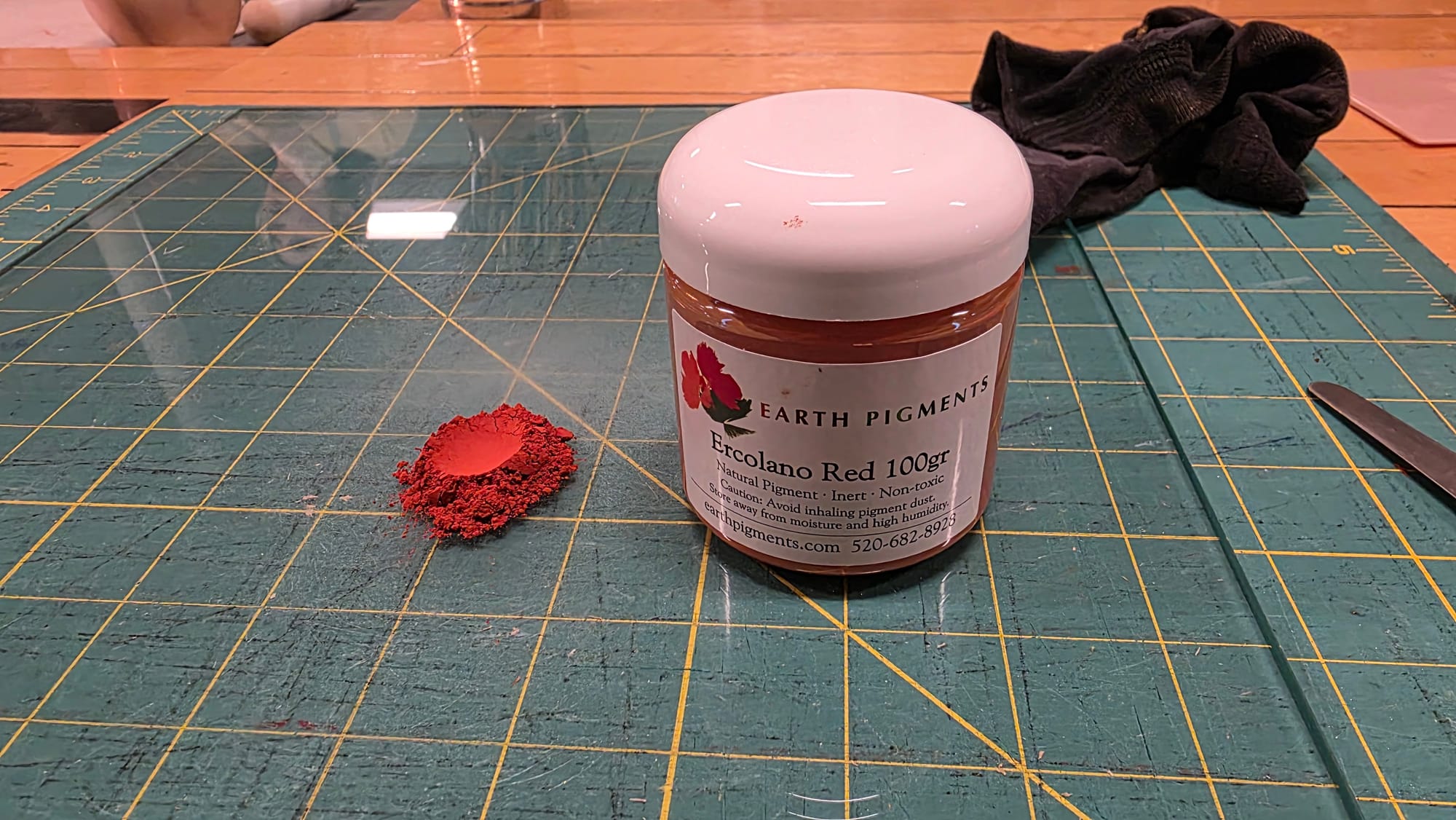
Our instructor introduced us to several beautiful pigments from Earth Pigments, including colors like Cyprus Green, Sky Blue, and Ercolano Red.
We also explored naturally occurring pigments and examples collected from different sources, demonstrating just how much color exists in the world around us.
One table held jars filled with clay, rocks, mineral samples, and other natural materials.
Another displayed pigments made from unexpected sources like makeup, reminding us that almost anything capable of producing stable color has the potential to become part of an artist's palette.
One of my favorite surprises was learning that not every pigment begins the same way.
Some are naturally occurring earth or mineral pigments, while others are lake pigments—pigments created by chemically binding a dye to an insoluble material.
During class, Tara explained that lake pigments can be made using ingredients like alum (aluminum potassium sulfate) and washing soda, opening up even more possibilities for creating color.
It was fascinating to realize that every jar represented years—sometimes centuries—of experimentation, discovery, and craftsmanship.
Artists throughout history didn't simply choose colors from a shelf.
They learned how to recognize them in nature, process them, preserve them, and eventually transform them into paints that could last for generations.
Looking around the room, it became clear that we weren't just learning how to make watercolor paint.
We were learning where color begins.
I found myself smiling more than once during class.
There was something deeply satisfying about realizing that colors I'd used for years weren't mysterious products manufactured somewhere far away.
They began with ordinary materials and people curious enough to ask: "What happens if...?"
Personal Reflection
One realization stayed with me throughout the evening.
As artists, we often become so familiar with our materials that we stop wondering about them.
We buy paints, brushes, paper, and pencils without thinking much about how they came to be.
This class invited us to slow down and ask those questions again:
- Where did this color come from?
- How was it discovered?
- What journey did it take before it ended up on my paintbrush?
For me, that curiosity made every pigment feel a little more meaningful.
Instead of seeing paint as a finished product, I began seeing it as the final chapter in a much longer story—one that begins with the earth itself.
From Powder to Paint
Once we had explored the different pigments, it was time to begin transforming them into watercolor paint.
That process started with something I had never heard of before taking the class: a binder.
While pigments provide the color, pigments alone cannot become paint.
They need something to hold the tiny particles together and help them adhere to the paper when applied with a brush.
For our class, Tara had prepared a traditional watercolor binder made from a simple mixture of gum arabic, warm water, honey, and a small amount of essential oil.
Before this class, I never would have guessed that something as familiar as honey played a role in making watercolor paint.
Seeing those ingredients laid out together reminded me that many artistic materials have surprisingly practical origins.
The real fun began when we combined our chosen pigments with the binder.
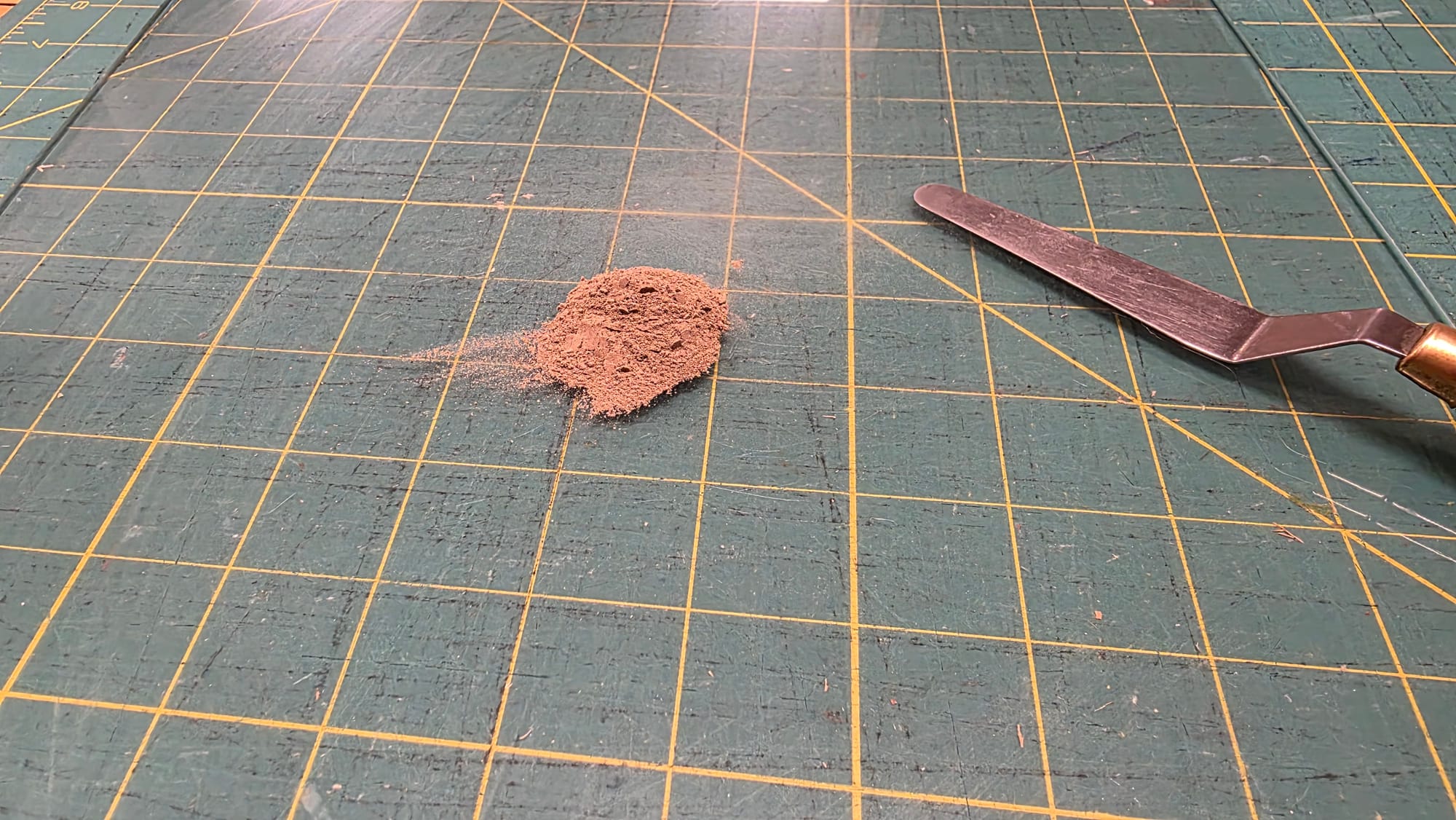
Using a glass grinding slab and a heavy glass muller, we slowly worked the pigment into the binder.
Rather than simply stirring everything together, the process involved gently grinding the mixture until it became smooth, creamy, and evenly dispersed.
At first, it looked like little more than colorful paste.
With each pass of the glass muller, however, the texture gradually changed.
Tiny particles became more evenly distributed, the color became richer, and the mixture slowly transformed into something that actually looked—and behaved—like watercolor paint.
It was surprisingly satisfying.
There was something almost meditative about the repetitive motion of grinding the pigment.
It required patience rather than speed, encouraging us to slow down and pay attention to how the paint changed beneath our hands.
Tara even brought several different glass mullers for us to compare, including professionally made versions and others created by salvaging glass objects and frosting the bottoms.
It was another reminder that creativity doesn't always require expensive specialty equipment. Sometimes a little ingenuity is just as valuable.
One of the things I appreciated most was that everyone was experimenting.
Some pigments behaved differently than others.
Some required a little more binder.
Some ground into a silky smooth consistency more quickly.
Others took a little more time and patience.
Rather than trying to make every color behave exactly the same way, the class encouraged us to observe each pigment and respond to its unique characteristics.
Throughout the evening, Tara created an atmosphere that encouraged curiosity rather than perfection.
Questions were welcomed, experimentation was expected, and she patiently explained not only how each step worked, but why it mattered.
The class felt less like following a recipe and more like being invited into centuries of artistic knowledge.
That spirit of experimentation felt perfectly at home at Perennial.
Instead of chasing perfection, we were learning through curiosity, observation, and hands-on experience.
By the end of this stage, it was amazing to realize that what had started as loose powders only a short time earlier had become handmade watercolor paint ready to be tested.
A New Appreciation for Everyday Art Supplies
One thing this process made me realize is how easy it is to take our art materials for granted.
When we buy a watercolor set, we usually see only the finished product.
We rarely think about everything that happened before that paint reached the store shelf—the careful sourcing of pigments, the experimentation with binders, the countless hours spent refining recipes, or the craftsmanship involved in creating colors that flow beautifully across paper.
Making our own paints, even for one evening, offered a glimpse into that hidden process.
It gave me a deeper appreciation for something I had used for years without ever really understanding.
The next time I open a watercolor palette, I know I'll see it a little differently.
From Bottle Caps to a Handmade Palette
Once our paints reached the right consistency, it was time to give them a home.
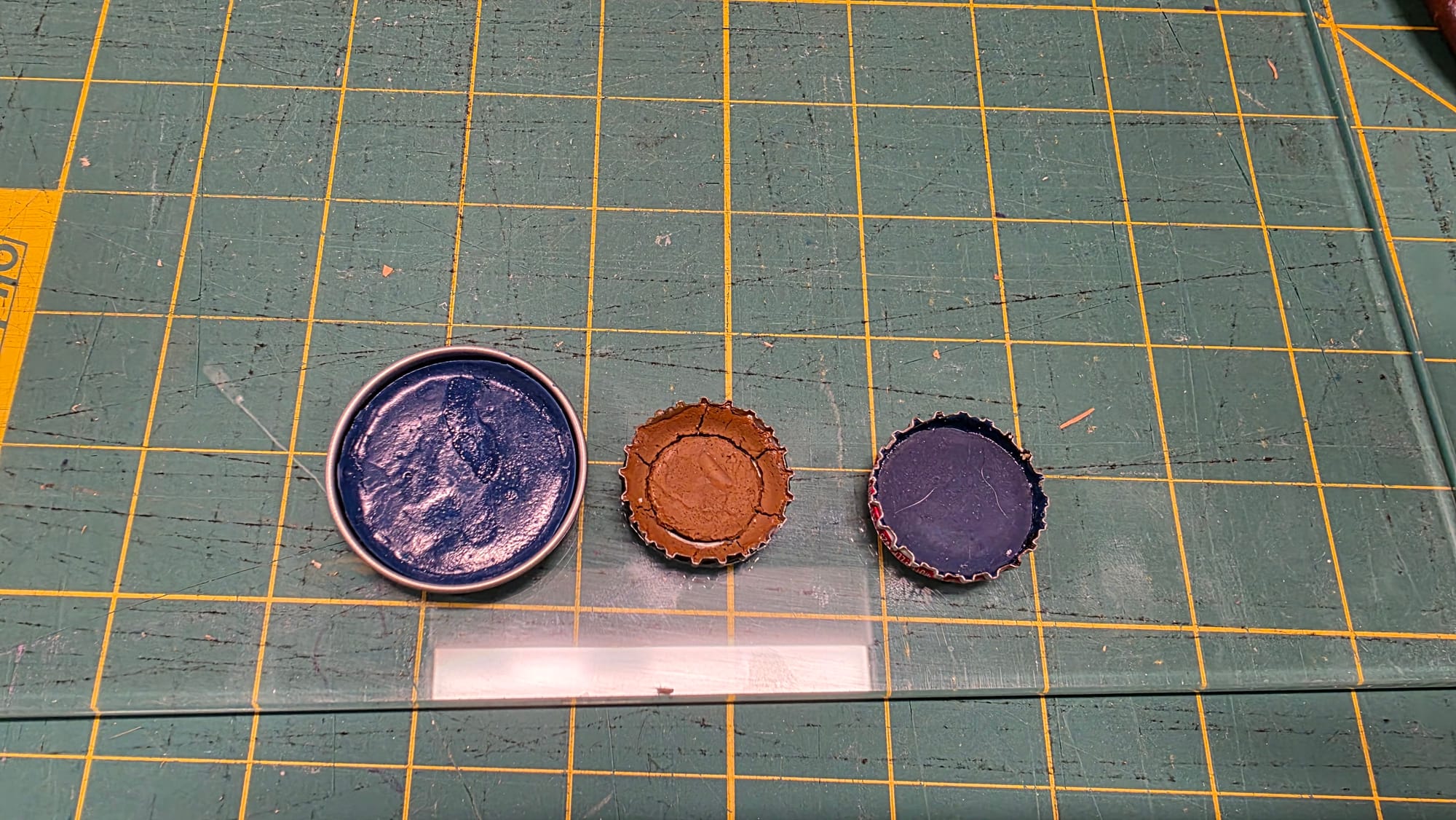
Rather than pouring them into brand-new watercolor pans, we filled recycled bottle caps with our handmade paints.
Those bottle caps would act as individual watercolor pans while the paint slowly dried and cured over the coming days.
It was such a simple idea, yet it perfectly reflected Perennial's philosophy.
Instead of purchasing new containers, we were giving everyday objects a second life.
Something that might otherwise be tossed into a recycling bin became part of an artist's toolkit.
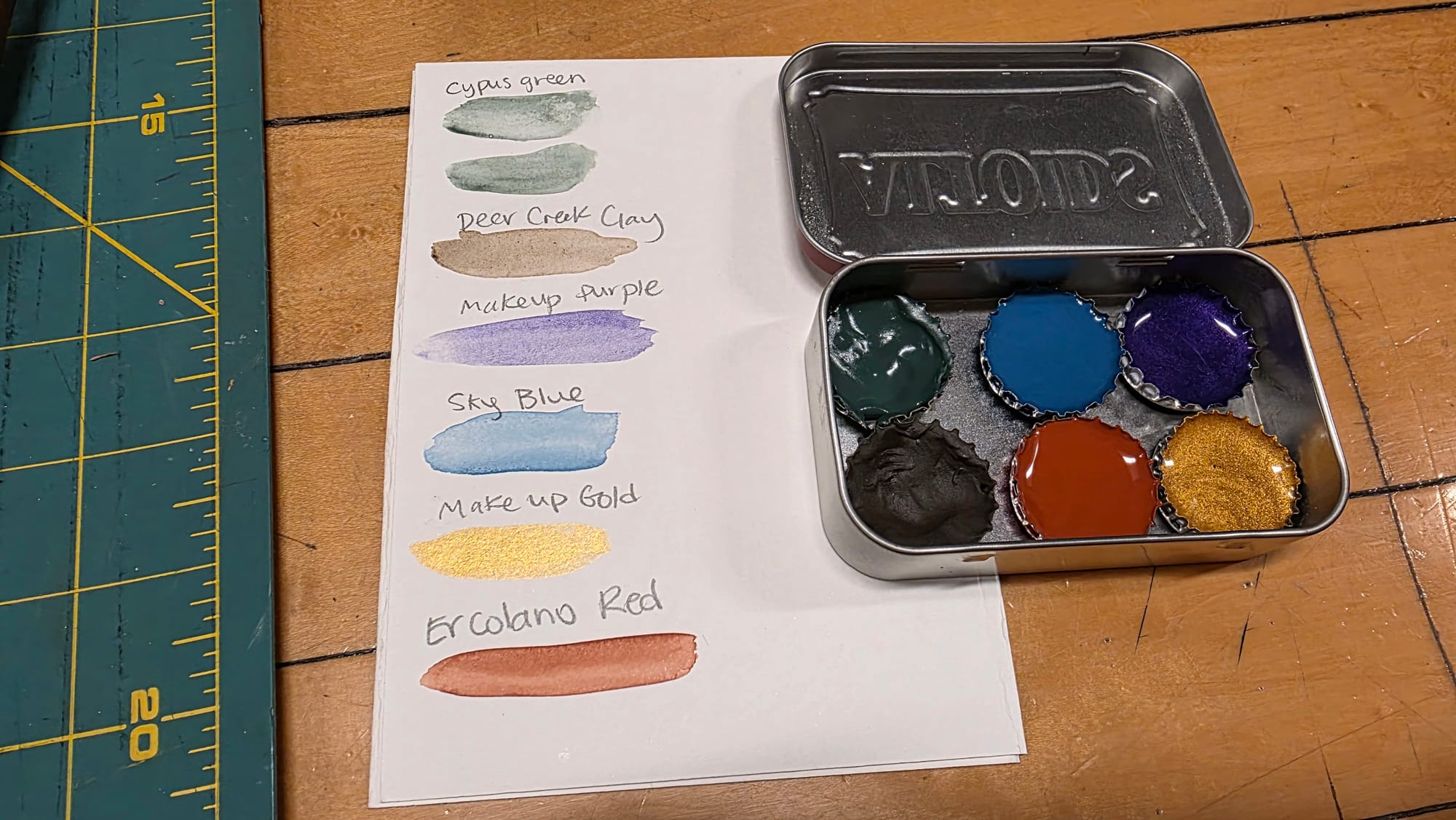
By the end of class, each of us had assembled our own miniature watercolor palette inside a reused Altoids tin.
Looking at the finished set, it was hard to believe that only a short time earlier those vibrant colors had existed as loose powders scattered across jars and mixing surfaces.
The transformation was incredibly satisfying.
Jayla and I loved seeing what different pigments and pigment combinations resulted in.
It was fun comparing our finished palettes at the end of class and seeing how each of us had interpreted the same process a little differently.
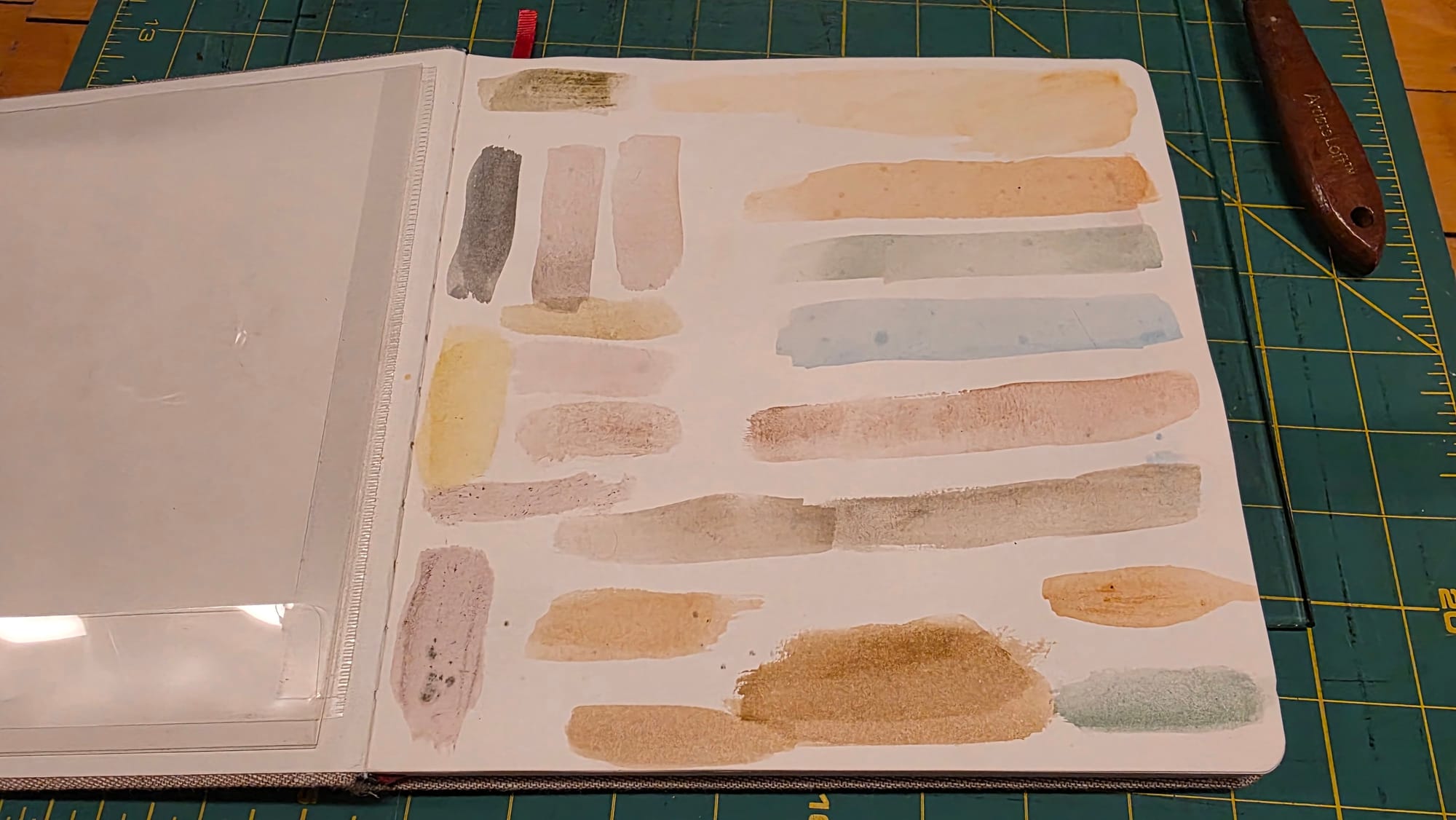
To test our paints, we created color swatches on watercolor paper, allowing us to see how each pigment behaved once activated with water.
Some colors appeared bold and vibrant.
Others were softer and more earthy.
Some flowed smoothly across the paper, while others revealed subtle textures and variations that gave each color its own unique personality.
It was a wonderful reminder that handmade materials don't always strive for perfect uniformity.
Instead, they celebrate the individuality of each pigment.
No two colors behaved exactly alike.
And that was part of their beauty.
Looking across the table, it was fascinating to see that although everyone had started with many of the same materials, each person's finished palette reflected their own choices, experimentation, and curiosity.
The class wasn't about making identical watercolor sets.
It was about learning a process and discovering what happened when we explored it for ourselves.
Creativity Through Reuse
One thing I continue to appreciate about Perennial is how naturally sustainability is woven into the creative process.
Creative reuse isn't presented as a restriction.
It's presented as an invitation.
An invitation to look at familiar objects differently.
To ask: "What else could this become?"
In this class, bottle caps became watercolor pans.
An Altoids tin became a portable palette.
Natural materials became vibrant paints.
What I love about that approach is that it encourages creativity long before the artwork itself begins.
It invites us to see possibility in ordinary things.
Sometimes that possibility becomes a piece of jewelry.
Sometimes it becomes a handmade watercolor palette.
And sometimes it simply changes the way we look at the world around us.
 Jessica Carey
More Than Making Paint
By the end of class, I realized something unexpected.
The most valuable thing I was taking home wasn't my handmade watercolor palette.
It was a new way of looking at art materials.
Before this class, watercolor paint simply felt like another supply I could pick up at an art store. If I needed more paint, I bought another palette. If I ran out of a color, I replaced it.
I rarely stopped to think about everything that happened before those paints reached the shelf.
This class invited me to slow down and look beneath the finished product.
Every pan of watercolor began as individual ingredients.
Pigments collected from the earth.
A carefully prepared binder.
Patience.
Experimentation.
Centuries of artists discovering, refining, and sharing their knowledge.
Suddenly, watercolor paint didn't feel like something that simply appeared in a package.
It felt connected to history.
Connected to science.
Connected to nature.
Connected to generations of artists who learned to observe the world around them with curiosity.
One of the things I appreciated most about the class was that it encouraged us to ask questions many of us have never thought to ask.
- Where does this color come from?
- Why does one pigment behave differently than another?
- How did artists create paint long before modern art stores existed?
- What materials around us could become art supplies if we looked at them differently?
Those questions don't just teach us how to make watercolor paint.
They teach us to become more observant.
More curious.
More connected to the creative process itself.
Rediscovering Wonder
I think one of the greatest gifts creativity offers is the ability to help us see familiar things with fresh eyes.
A rock becomes a source of color.
Clay becomes pigment.
A bottle cap becomes a watercolor pan.
An Altoids tin becomes a portable palette.
The world itself begins to feel a little more full of possibility.
That sense of wonder is something I felt throughout the evening.
Not because I expect to start making all of my own watercolor paints from now on.
But because I now understand them in a way I never had before.
Sometimes learning a new skill isn't about replacing what you already do.
Sometimes it's about gaining a deeper appreciation for it.
I suspect that every time I open a watercolor palette in the future, I'll remember that behind each tiny pan of color is a much longer story—one of experimentation, craftsmanship, curiosity, and the remarkable relationship between artists and the natural world.
And to me, that's one of the most meaningful things a class can offer.
Not just teaching you how to make something.
Helping you see something ordinary in an entirely new way.
Why Classes Like This Matter
One of the things I've come to appreciate about Perennial is that their classes are about much more than completing a project.
Yes, I left with a handmade watercolor palette.
But I also left with new knowledge, fresh inspiration, and a curiosity to keep learning.
That curiosity didn't end when class was over.
A few days later, Perennial followed up with an email containing an impressive collection of resources for anyone interested in exploring handmade watercolors further.
Rather than simply saying, "Thanks for coming!" they shared recommendations for books, suppliers, tutorials, pigment sources, terminology, and opportunities to continue experimenting at home.
For those who wanted to dive deeper, they included resources for purchasing natural earth pigments, glass mullers, mortar and pestles, gum arabic, and other watercolor-making supplies.
They also recommended books like The Secret Lives of Color by Kassia St. Clair, The Organic Artist by Nick Neddo, and Make Ink by Jason Logan—each offering a different perspective on the history and creation of natural art materials.
They even shared websites explaining how to identify pigments in nature, create watercolor binders, make lake pigments, and continue learning beyond the classroom.
I appreciated that the class wasn't presented as the end of the learning process.
Instead, it felt like an invitation to keep asking questions.
To keep experimenting.
To keep exploring.
That same philosophy extends beyond the DIY Watercolors workshop itself.
Perennial offers Open Studio sessions where participants can continue practicing skills they've learned in previous classes, Craft Club gatherings that bring together people interested in sustainability and hands-on creativity, memberships that help support the organization's nonprofit mission while providing discounts on classes, and opportunities to volunteer, donate, and become part of the broader creative community.
To me, that's one of Perennial's greatest strengths.
They're not simply teaching people how to make things.
They're helping people become lifelong learners.
 Jessica Carey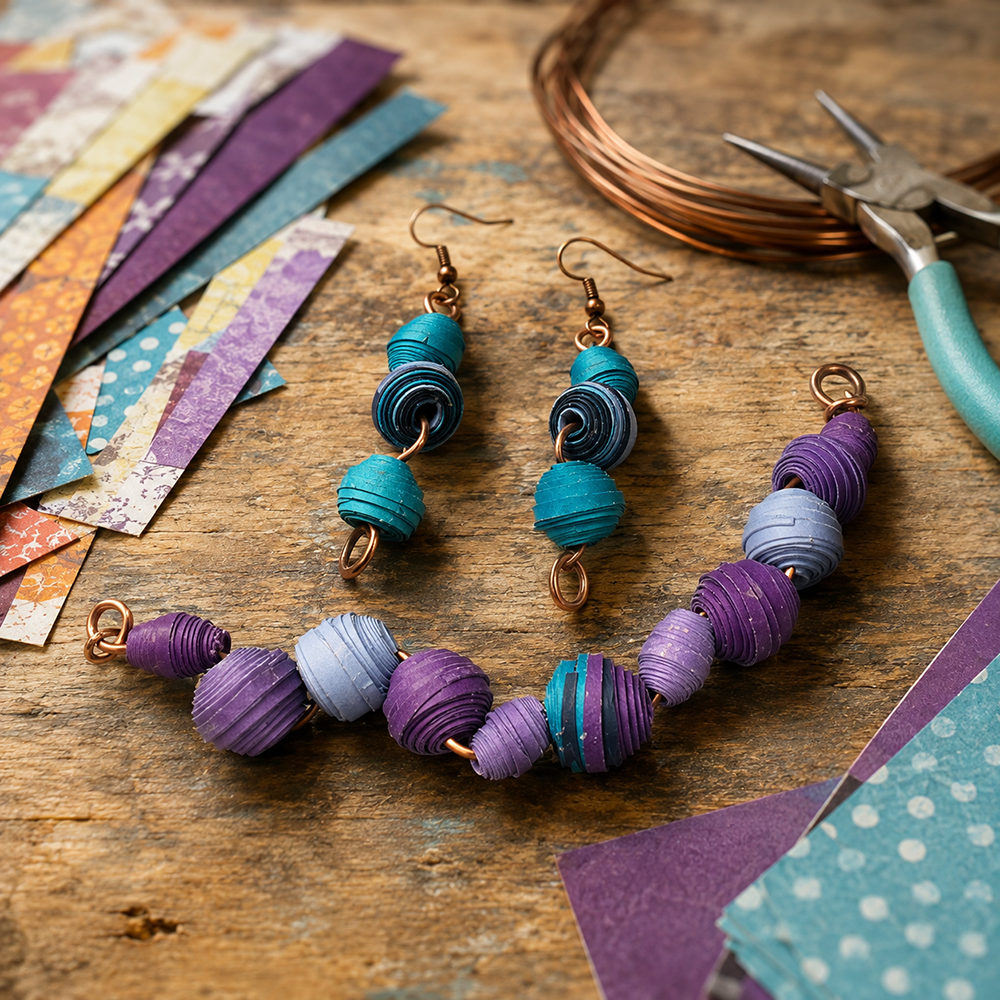
Learning Through Curiosity
One of my favorite things about this class is that it didn't assume prior knowledge.
You didn't need to understand chemistry.
You didn't need experience mixing pigments.
You didn't need years of painting experience.
You simply needed curiosity.
The workshop welcomed questions, encouraged experimentation, and reminded us that learning often begins by being willing to say: "I've never tried this before."
I think that's something many adults quietly miss.
Somewhere along the way, many of us begin believing we should already know how to do something before trying it.
Creative spaces like Perennial gently challenge that belief.
They remind us that being a beginner isn't something to avoid.
It's something to celebrate.
Every artist, scientist, craftsperson, and maker starts exactly the same way:
By learning.
By experimenting.
By making mistakes.
By asking questions.
And by remaining curious enough to keep going.
Every Color Has a Story
When I signed up for Perennial's DIY Watercolors class, I thought I was simply going to learn how to make paint.
Technically, that's exactly what happened.
I mixed pigments with a binder.
Ground the mixture into smooth watercolor paint.
Filled recycled bottle caps with handmade colors.
Created a palette that I could take home and continue using.
But looking back, I realize that wasn't the most valuable thing I gained from the experience.
The class changed the way I look at the materials I use every time I sit down to paint.
Before, watercolor paint felt like a finished product.
Now, I see the story behind it.
I see pigments collected from the earth.
Centuries of experimentation.
Artists discovering new materials.
Communities sharing knowledge across generations.
Curiosity transforming ordinary materials into something capable of capturing light, landscapes, memories, and imagination.
That perspective makes even a simple watercolor palette feel extraordinary.
One of the things I appreciate most about Perennial is that their classes don't simply teach techniques.
They encourage people to ask questions.
To experiment.
To notice.
To look at everyday objects and wonder what else they might become.
Whether that's electrical wire transformed into jewelry, bottle caps transformed into watercolor pans, or earth transformed into vibrant pigments, the underlying lesson remains the same.
Creativity often begins long before we make something.
It begins with curiosity.
With paying attention.
With asking: "What if?"
That curiosity is one of the greatest gifts we can cultivate as artists.
It encourages us to keep learning.
To keep exploring.
To remain open to ideas we hadn't considered before.
And perhaps most importantly, it reminds us that creativity isn't only found in finished artwork.
It's found in the questions that lead us there.
 Jessica Carey
Looking a Little Closer
Since taking this class, I don't think I'll ever look at watercolor paints quite the same way again.
Every palette now reminds me that color has a history.
That every pigment began somewhere.
That artists throughout history learned by observing the natural world, experimenting with new materials, and generously sharing what they discovered with others.
It's a reminder that creativity has always been built upon curiosity.
And maybe that's one of the reasons I enjoy exploring places like Perennial so much.
Every workshop invites us to look a little closer.
To ask better questions.
To see hidden possibilities.
Not just in discarded materials or natural pigments...
But in ourselves.
Because sometimes the most meaningful thing we create isn't the project we bring home.
It's a new way of seeing the world.
Want even more content about creativity and art?
Be sure to check out all of our creative chronicles!
If you'd like to see examples of my work, you can find some of my art and creations at Redbubble and Gumroad!
Want to check out other art spaces and resources?
Check out some of these articles:
-Hidden Gems for St. Louis Artists
-Perennial Copper Jewelry Class
-Leftovers and Upcycle Treasure Box
 Jessica Carey