Somewhere along the way, many people stop believing they are creative.
Not because creativity disappears.
Not because they never had it.
But because somewhere, somehow, they receive the message: “I am not good at this.”
Maybe their drawing did not look like someone else’s.
Maybe their project did not look like the example.
Maybe they compared themselves to someone sitting nearby and decided they were not talented enough.
Maybe creativity slowly became less about curiosity and more about judgment.
And that breaks my heart.
Because I have always believed something different:
Creativity belongs to everyone.
Art is not only about making something impressive enough to display.
It is not only about perfect techniques, realistic drawings, or finished products.
Art is about exploration.
Expression.
Problem solving.
Healing.
Connection.
Discovery.
Art is a way we communicate.
A way we process.
A way we play.
A way we understand ourselves and the world around us.
And I believe every person deserves access to that.
A Lifelong Connection to Creativity
Creativity has been a guiding thread throughout my entire life.
Not only as a way to make artwork, but as a way to learn, connect, imagine, and help others discover their own creative voices.
Over the years, I have explored many different creative paths:
Drawing.
Painting.
Mixed media.
Ceramics.
Jewelry.
Photography.
Digital art.
Creative resources.
And much, much more.
Plenty of experiments that started with the simple question: “What happens if I try this?”
That question has always been one of my favorite parts of creativity.
The curiosity.
The discovery.
The willingness to explore without needing every answer before beginning.
My creative journey eventually led me to earn my Bachelor of Fine Arts and my Master’s Degree in Art Education.
I wanted to understand not only how to create art, but how people develop creativity.
How people learn.
How people gain confidence.
How creative experiences can become meaningful.
Because my goal was never only: “How do I teach someone to make something?”
The bigger question was always: “How do I help someone realize they were creative all along?”
When Creativity Becomes About Comparison
Through my experiences in art education, I saw something that stayed with me.
I saw students who cared deeply about their artwork.
Students who were trying.
Students who were learning.
Students who wanted to create something meaningful.
But sometimes, instead of feeling proud of their progress, they looked around.
They compared.
They noticed someone else’s project.
They noticed the teacher example.
They noticed every difference between what they made and what they thought it was “supposed” to look like.
And sometimes those moments ended in tears.
Not because they were not creative.
Not because they failed.
But because somewhere along the way, the goal shifted.
The question became: “Is mine good enough?”
Instead of:
- “What am I learning?”
- “What am I discovering?”
- “What am I trying to express?”
And honestly, that always felt heartbreaking.
Because mistakes are not proof that someone is bad at art.
Mistakes are part of learning.
Unexpected results are part of creating.
Some of the most interesting discoveries happen because something does not go according to plan.
But when creativity becomes focused only on comparison and perfection, people start becoming afraid.
Afraid to experiment.
Afraid to take risks.
Afraid to begin.
And that fear can follow people for years.
So, many adults say things like:
- “I am not creative.”
- “I cannot draw.”
- “I am bad at art.”
But often, when you ask more questions, there is a story behind that belief.
A moment when they learned creativity was something they could fail at.
I want to help rewrite that story.
Learning There Was Another Way to Teach Art
While studying art education, one of the most influential moments in shaping my creative philosophy was learning about Teaching for Artistic Behavior (TAB).
The idea completely changed the way I looked at art education.
Instead of asking: “How do we get everyone to successfully make the same project?”
TAB asks something different: “What do artists do?”
Because artists do not all create the same thing.
Artists explore.
Artists experiment.
Artists research.
Artists problem solve.
Artists make decisions.
Artists discover their own creative voices.
The TAB philosophy recognizes students as artists.
Not future artists someday.
Artists now.
People with ideas.
Questions.
Stories.
Interests.
Choices.
Voices.
And that shift matters.
One especially meaningful part of discovering Teaching for Artistic Behavior was who introduced me to it.
The professor who taught me about TAB was actually my former middle school art teacher.
Someone who had once been part of my own creative journey as a student later helped shape the kind of educator I wanted to become.
That full-circle moment has always stayed with me.
Because great teachers do more than teach a lesson.
They plant ideas.
They encourage growth.
They influence the way we see ourselves and others.
Learning about TAB helped give language to something I already deeply believed: people are not empty containers waiting for creativity to be placed inside them.
They already have ideas, experiences, curiosity, and creative potential.
Sometimes they simply need an environment where those things are allowed to grow.
The Classroom as a Creative Community
One of the things I loved most about TAB was the idea that the classroom becomes a shared creative community.
The teacher is still there to guide.
To support.
To introduce skills.
To provide resources.
To help students grow.
But learning does not only flow in one direction.
Everyone in the room has something valuable to contribute.
Sometimes a student discovers a technique another student wants to learn.
Sometimes someone experiments with a material in a way nobody expected.
Sometimes the teacher learns something new too.
The classroom becomes less about copying an answer and more about discovering possibilities.
It becomes a place where people can ask:
- “What if?”
- “What happens when?”
- “How could I solve this?”
- “What am I trying to communicate?”
Those questions are where creativity grows.
Making Space for Choice and Voice
One of the things I appreciate most about choice-based creativity is that it respects individuality.
Different people connect with different materials.
Different ideas.
Different ways of expressing themselves.
One person may love painting.
Another may love building.
Someone else may want to combine unexpected materials together.
Another person may need time to experiment before they know where their idea is going.
And all of those approaches can belong.
Because creativity is not one-size-fits-all.
Giving people choices does not mean removing learning.
It means allowing people to apply learning in ways that matter to them.
Someone learning about color can explore color through painting, collage, fiber arts, digital art, sculpture, or countless other approaches.
The concept remains.
But the creator gets a voice.
And when people have ownership over what they create, something powerful happens.
They are not just completing an assignment.
They are building a relationship with their own creativity.
Changing Our Relationship With Mistakes
Another thing I love about open-ended creativity is that it changes how we view mistakes.
In a creative process, mistakes are not always failures.
Sometimes they are information.
A material did something unexpected.
A technique needs adjusting.
An idea needs reworking.
The project wants to move in a new direction.
That is part of how artists work.
Artists troubleshoot constantly.
They adapt.
They experiment.
They learn from what happens.
A mistake does not have to mean: “I ruined this.”
Sometimes it simply means: “I discovered something.”
And that mindset reaches far beyond art.
Because creativity teaches resilience.
Problem solving.
Flexibility.
The courage to try again.
Those are skills people carry with them long after a project is finished.
Seeing Creativity Come Alive at The Magic House
While Teaching for Artistic Behavior helped shape my philosophy as an educator, another experience helped shape my vision for what a creative space could feel like.
During college, I spent a lot of time volunteering at The Magic House, St. Louis Children’s Museum.
And one of my favorite places was the art studio and Make-It Workshop.
There was something special about seeing creativity happen in an environment built around exploration.
People could walk in.
Look around.
Discover materials.
Experiment.
Try something new.
Instead of creativity feeling intimidating, it felt inviting.
There was a sense of:
- “What can I make?”
- “What can I try?”
- “What happens if I combine these things together?”
And those questions are where creativity comes alive.
Although The Magic House focuses on children and families, the spirit of exploration stayed with me. I wondered what could happen if people of all ages had access to that same sense of creative possibility.
The Power of Creative Exploration
One of the things I love about open-ended creative spaces is that they naturally encourage curiosity.
When someone is surrounded by possibilities, ideas begin to form.
A piece of cardboard becomes a building.
Fabric scraps become a costume.
Paint becomes a way to explore color.
Random materials become inventions.
The focus shifts away from: “Am I doing this correctly?”
And moves toward: “What can I discover?”
That shift may seem small.
But it changes everything.
Because when people feel safe to explore, they are more willing to take creative risks.
They experiment.
They problem solve.
They learn through doing.
And most importantly:
They keep creating.
Building More Than Art Projects
One of the reasons I believe so strongly in accessible creative spaces is because art gives people so much more than a finished object.
Yes, people create paintings.
Drawings.
Sculptures.
Jewelry.
Mixed media projects.
But they are also building something within themselves.
Confidence.
Curiosity.
Patience.
Self-expression.
The ability to try again.
The courage to follow an idea.
That is why creativity matters.
Because art is not only about what we make.
It is about what creating makes possible within us.
Finding Pieces of the Dream Already Existing
As I have continued exploring creative resources throughout St. Louis, I have started finding pieces of this dream already alive in different places.
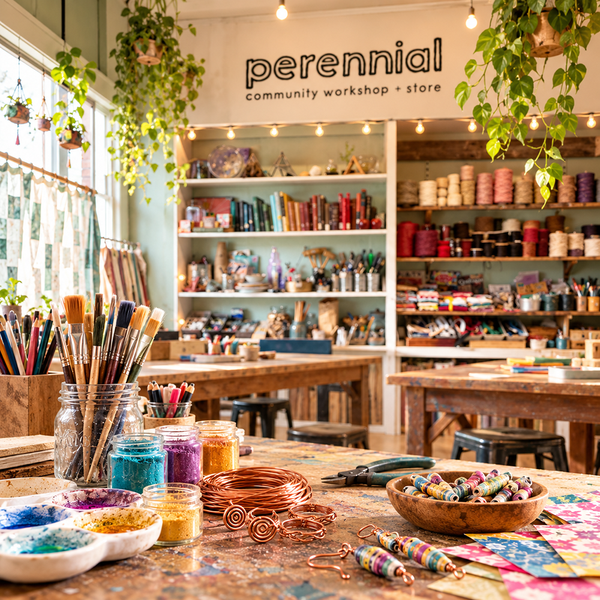
At Perennial, I saw how creativity could transform overlooked materials into something new.
At Marnie’s Creative Outlet, I saw a space focused on helping people reconnect with the joy of creating.
And at Artists First, I found something especially close to the kind of environment I have imagined.
A welcoming studio.
Shared supplies.
Creative exploration.
Supportive staff.
Artists with different backgrounds, abilities, and experiences creating alongside each other.
Walking into spaces like these has been incredibly meaningful because they prove something important:
This kind of creative community is possible.
Spaces can exist where people feel supported.
Where people can experiment.
Where people can belong.
Where someone can walk through the door and realize: “There is a place for me here.”
The Dream: Everyone Creates Project
Over time, all of these experiences started coming together into a larger dream — although, in many ways, pieces of this dream have been with me for years.
A place where creativity feels accessible.
A place where people feel welcome.
A place where someone can walk through the doors and think: “I belong here.”
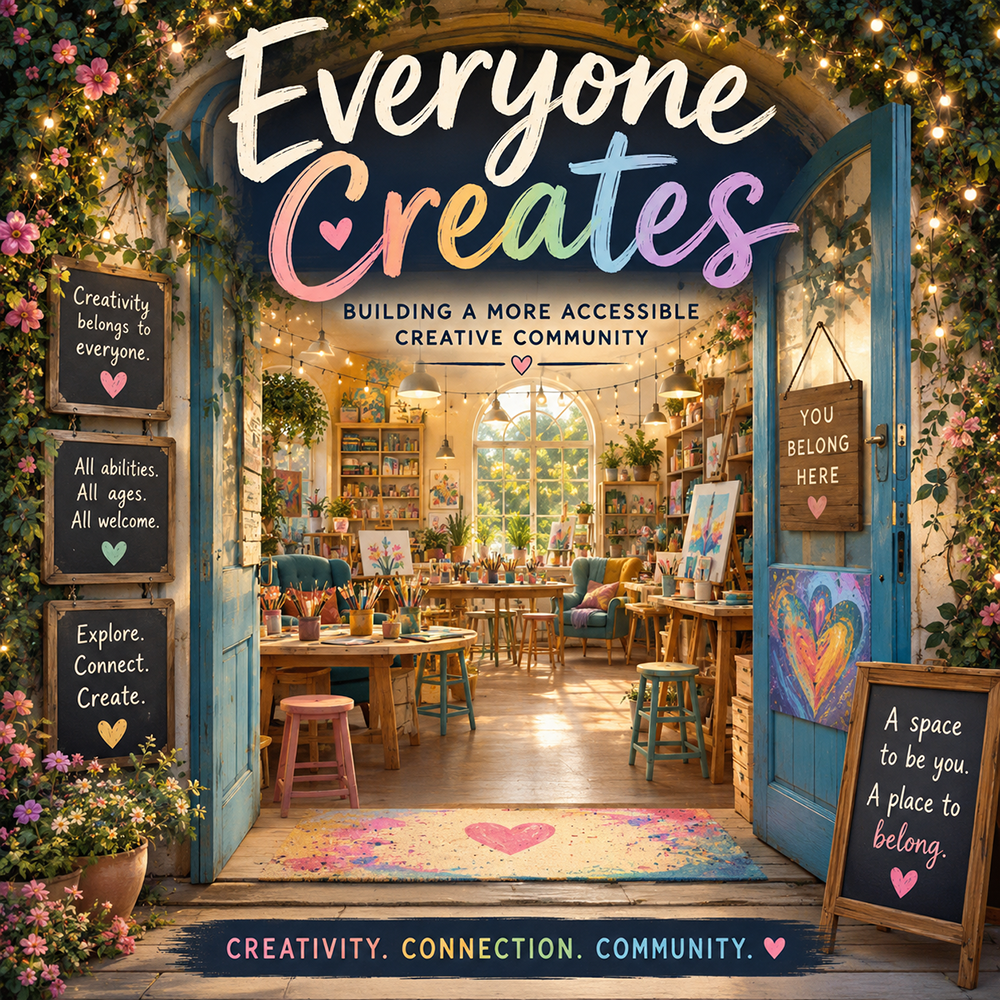
That dream eventually became the idea behind the Everyone Creates Project.
The mission is simple:
Help create a world where everyone — regardless of ability, income, experience level, or life circumstances — has access to the healing, connection, and joy creativity can provide.
Because creativity should not be a privilege.
It should not only belong to people who can afford expensive materials.
People with professional training.
People who already confidently call themselves artists.
Creativity is part of being human.
And everyone deserves opportunities to explore that part of themselves.
The Everyone Creates Project is not just about creating more artwork.
It is about creating more possibilities.
A place where someone can discover a new passion.
A place where someone can rebuild confidence they lost years ago.
A place where someone who feels isolated can find community.
A place where someone who has been overlooked can feel valued.
A place where people can remember that they have something meaningful to share.
Imagining the Space
When I imagine the Everyone Creates Project, I imagine more than a room filled with art supplies.
I imagine someone walking through the doors and immediately feeling:
- “I can breathe here.”
- “I can explore here.”
- “I do not have to prove myself here.”
A place filled with possibility.
Shelves lined with materials waiting for a new story.
Tables where different generations, backgrounds, and experiences can come together.
A beginner sitting next to an experienced artist, both learning from each other.
Someone experimenting with paint for the first time.
Someone rediscovering the hobby they loved as a child.
Someone learning a new skill they never thought they could try.
Someone proudly sharing something they created.
Quiet corners where people can step away and recharge when they need a moment.
Walls covered with artwork that celebrates different styles, perspectives, abilities, and voices.
A space where creativity does not have to look one specific way.
Because people do not create one specific way.
Some people create loudly.
Some create quietly.
Some create carefully.
Some create through experimentation.
Some create to process.
Some create to play.
Some create to connect.
All of those belong.
Because the dream has never simply been about creating an art studio.
It is about creating an environment where creativity feels safe again.
A Creative Space Without Barriers
My dream is to someday create a welcoming community art space designed around exploration, accessibility, and connection.
A space where people do not have to already see themselves as artists before walking through the door.
A space where beginners, experienced artists, disabled artists, neurodivergent creators, children, adults, and anyone simply curious about creativity can feel welcome.
Because so many people carry invisible barriers.
- “I’m not talented enough.”
- “I’m not a real artist.”
- “I don’t know where to start.”
- “I cannot afford supplies.”
- “I’ll probably mess it up.”
- “I’m too old to learn.”
- “I’m too different to belong.”
And sometimes those invisible barriers become stronger than physical ones.
They stop people from trying.
From exploring.
From expressing themselves.
From discovering what they are capable of.
The goal of Everyone Creates is removing as many barriers as possible.
Financial barriers.
Accessibility barriers.
Confidence barriers.
Community barriers.
Because sometimes the difference between someone saying: “I could never do that.”
And: “I cannot believe I made that.” is simply having access to the right support, encouragement, and opportunity.
An Open Supply Studio
One major part of this dream is an open supply studio.
A shared creative environment filled with materials people can explore.
Paint.
Drawing supplies.
Fabric.
Paper.
Beads.
Mixed media materials.
Tools.
Unexpected treasures waiting for a new purpose.
Because one of the biggest barriers to creativity is access.
Art supplies can be expensive.
And when supplies are expensive, experimenting can become intimidating.
Someone interested in painting may not have the money to buy brushes, canvases, and paint just to see if they enjoy it.
Someone interested in sewing may not have access to a sewing machine.
Someone interested in jewelry making may not know where to begin.
Someone interested in sculpture may never get the chance to try.
A shared supply space creates possibilities.
It allows people to explore without the pressure of perfection.
It makes room for curiosity.
Discovery.
Play.
It also encourages creative reuse and sustainability.
Because sometimes incredible things can come from materials someone else overlooked.
A scrap of fabric.
An old frame.
A discarded piece of wire.
A forgotten object.
Creativity teaches us to ask: “What else could this become?”
And sometimes, when we learn to see possibility in materials, we start learning to see possibility in ourselves too.
Classes, Workshops, and Creative Exploration
Another piece of the dream is offering accessible classes and workshops.
But not classes focused only on everyone creating identical results.
Not experiences where success means: “Mine looks exactly like the example.”
Instead, classes can become invitations.
A starting point.
A doorway into exploration.
A place where people can learn:
- “How does this material work?”
- “What techniques can I try?”
- “How can I make this idea my own?”
Because teaching art is not just about showing someone how to use a tool.
It is helping someone trust their own ideas.
It is helping someone build confidence.
It is helping someone realize they are capable of learning and growing.
The best creative spaces do not simply create better artwork.
They help people see themselves differently.
Supporting Disabled and Neurodivergent Creators
Accessibility is also an essential part of this vision.
Because creativity belongs to everyone, but not everyone has equal access.
Sometimes people are not missing creativity.
They are missing environments where their creativity can thrive.
Disabled and neurodivergent artists may need:
- Flexible options
- Sensory-aware environments
- Accessible programming
- Different ways to communicate, participate, and create
- Understanding
- Support
- A space where differences are not treated as problems to fix
Because inclusion is not just inviting someone into a space.
It is creating a space where they can actually participate.
The goal is not expecting every person to create, learn, or experience the world the same way.
The goal is building spaces flexible enough for different kinds of people to flourish.
A Gallery and Shop for Artists
Another dream is creating opportunities for artists to share their work.
A gallery.
A shop.
Ways for creators, including disabled artists, emerging artists, and artists who may not have traditional opportunities, to display and sell their creations.
Because sometimes people do not only need a place to make.
They need someone who believes their work deserves to be seen.
They need someone willing to say:
- “Your ideas matter.”
- “Your perspective matters.”
- “What you create matters.”
Art has always been one of the ways humans share pieces of ourselves with the world.
Giving people opportunities to share their creations is not only about selling artwork.
It is about visibility.
Confidence.
Connection.
Helping someone recognize that their voice has value.
For some artists, it could also create pathways toward income, independence, and sharing their creativity with a wider community.
More Than a Studio: A Creative Home Base
One of the biggest pieces of this dream is creating a space that feels like community.
Not somewhere people only visit when they are actively making something.
But somewhere people can belong.
A creative home base.
A place where people can sit together.
Talk.
Share ideas.
Watch movies.
Rest.
Laugh.
Celebrate successes.
Support each other through challenges.
Because people do not only need places where they can produce.
They need places where they can connect.
Some of the most meaningful creative moments happen before or after the project.
During conversations.
During shared experiences.
During moments when someone realizes: “I found my people.”
Creativity is not only about constantly making.
People need spaces where they can simply exist, too.
Spaces where belonging is not based on productivity.
Spaces where community matters just as much as creation.
Because sometimes the thing someone needs most is not another project.
Sometimes they need a place where they feel: “I am welcome here.”
Creating Something Bigger Together
A dream like this is not built alone.
And honestly, it was never meant to be.
Because the entire heart behind the Everyone Creates Project is community.
Connection.
People sharing their skills, resources, experiences, and ideas to create something bigger than any one person could build individually.
A creative community is created by a community.
Through artists.
Educators.
Volunteers.
Organizations.
Local businesses.
Supporters.
People who believe creativity matters.
There are so many different pieces that could help bring a vision like this to life.
Art supplies that are no longer being used.
Materials that could be rescued instead of discarded.
Tools and equipment that could help people learn new skills.
Artists willing to share their knowledge.
Organizations passionate about accessibility and community.
People with experience in areas like grants, nonprofits, fundraising, business, construction, marketing, or community development.
Because everyone has different strengths.
Everyone has something they can contribute.
And that is part of the beauty of community.
Someone may have the supplies.
Someone else may have the space.
Someone else may have knowledge.
Someone else may have connections.
Someone else may simply believe in the idea and share it with the right person at the right time.
Big dreams rarely happen because one person has every resource, every answer, and every connection from the beginning.
They happen because people come together and decide:
- “This matters.”
- “This is worth creating.”
- “This could help people.”
And piece by piece, something that once existed only as an idea begins becoming real.
A Small Step Forward: Community Support from BLICK Art Materials
One beautiful reminder of the power of community is that dreams often begin with small pieces coming together.
As the Everyone Creates Project continues growing from an idea into something more, BLICK Art Materials generously supported the vision by contributing toward art supplies that can help encourage creativity, exploration, and access.

This support represents exactly what the project hopes to build: a community where different people, organizations, and businesses contribute what they can to help make creativity more accessible.
Because creating something meaningful rarely happens alone.
Sometimes someone contributes materials.
Someone contributes knowledge.
Someone contributes time.
Someone contributes encouragement.
And over time, those contributions can come together to create something bigger than any one person could create alone.
Help Build the Everyone Creates Project
The Everyone Creates Project is currently in its beginning stages.
Right now, support helps build the foundation — gathering resources, creating connections, and taking small steps toward a larger dream of making creativity more accessible.
Every meaningful dream begins with small steps and people who believe in what is possible.
If this vision connects with you and you feel called to support it, there are many ways to help bring accessible creativity to more people.
Support could look like:
Creative materials:
- Art supplies
- Craft materials
- Tools or equipment
- Fabric, paper, frames, beads, and other materials waiting for a new purpose
Knowledge and skills:
- Nonprofit guidance
- Grant writing experience
- Community development
- Accessibility knowledge
- Teaching, workshops, or creative skills
Connections and opportunities:
- Organizations interested in collaboration
- Community partnerships
- Potential spaces or resources
- People who believe creativity should be accessible to everyone
Because building something like this has never been about one person having everything.
It is about many people bringing their own pieces together.
Want to help build the Everyone Creates Project?
If you have resources, ideas, connections, supplies, or would like to collaborate, please reach out:
Contact: creativity.chronicles.blog@gmail.com
For those who feel connected to this vision and would like to contribute financially, I created a fundraiser to help support the beginning stages of the Everyone Creates Project.
Funds raised will help build the foundation by supporting things like:
- Art supplies and creative materials
- Tools and equipment
- Storage and organization
- Educational resources
- Future creative opportunities
This project is still growing one step at a time, and every contribution — whether supplies, knowledge, connections, encouragement, sharing, or financial support — helps move the vision forward.
Support the Everyone Creates Project on Go Fund Me!
The Everyone Creates Project is still in the beginning stages, and every contribution helps create the foundation for something bigger.
Every contribution matters.
Sometimes one small connection becomes the doorway to something much bigger.
Starting Small. Dreaming Big.
Sometimes dreams start long before they look the way we imagined.
A community space does not appear overnight.
A vision does not become reality instantly.
Big dreams are built one small step at a time.
And even though the Everyone Creates Project is a long-term dream, the heart behind it already exists.
Because the mission has never only been about having a building.
The mission is about helping people reconnect with creativity.
Helping people find resources.
Helping people feel encouraged.
Helping people remember: “I can create, too.”
A physical space would allow that mission to grow in new ways.
But the foundation begins with every small step.
Sharing Creative Resources
One of the ways this dream has already started is through Creativity Chronicles.
As I have explored creative resources throughout St. Louis, I have realized something: there are incredible opportunities available.
But people do not always know they exist.
A person may want to create but not know where to find affordable supplies.
Someone may want community but not know where to go.
Someone may want to learn something new but not know what opportunities are available.
That is why sharing resources matters.
Every guide.
Every recommendation.
Every connection.
Every “I found this and thought someone else might need it, too.”
Those things create pathways.
Because sometimes the hardest part is not wanting to begin.
Sometimes the hardest part is knowing where the first door is.
Creating Tools for Reflection and Reconnection
Another piece of this mission has been creating resources that help people reconnect with themselves.
Because creativity is not only external.
It is not only paintings.
Sculptures.
Finished projects.
Sometimes creativity starts internally.
With reflection.
With curiosity.
With understanding yourself.
With giving yourself permission to slow down and listen.
Creative tools like journals, prompts, and reflective activities can create space for people to explore:
- Who am I?
- What matters to me?
- What do I want to create?
- What do I want my life to feel like?
Because creativity is not limited to artwork.
We are constantly creating.
Ideas.
Stories.
Connections.
Possibilities.
Our lives.
Building Community One Connection at a Time
The more I have explored creative spaces, the more I have realized:
Community is built through small moments.
A conversation.
A shared resource.
Someone helping another person learn a tool.
Someone recommending a place.
Someone saying:
- “You might like this.”
- “You should meet this person.”
- “Here is something that helped me.”
Those moments matter.
They are how creative communities grow.
They are how people find their way.
And they are proof that you do not need to wait until everything is perfectly finished to start making a difference.
Sometimes the dream begins while you are still building it.
Why Creative Spaces Matter Now
In many ways, I believe spaces like this are needed now more than ever.
So many people are overwhelmed.
Disconnected.
Burned out.
Lonely.
Constantly trying to keep up with everything life demands from them.
In a world that often focuses on productivity, achievement, and constant movement, people need spaces where they are allowed to slow down.
Places where the goal is not to prove their worth.
Places where they can simply show up.
Explore.
Connect.
Create.
Because creativity gives us something many people are searching for.
A way back to ourselves.
A way back to each other.
Creative spaces create opportunities for conversations that may have never happened otherwise.
They bring together people of different ages, backgrounds, abilities, and experiences.
They remind us that everyone has something valuable to contribute.
Sometimes someone comes in wanting to learn how to paint, sew, sculpt, or try a new material.
But they leave with something much bigger.
A new friendship.
A renewed sense of confidence.
A feeling of belonging.
A reminder that they are capable.
A reminder that they are not alone.
Because creativity has always been about more than the things we make.
It is about the connections we create along the way.
And in a world where so many people feel disconnected, those connections matter.
My new artist friend, Jayla, feels similarly and wants to create a safe, creative space of her own, too!
 Jessica Carey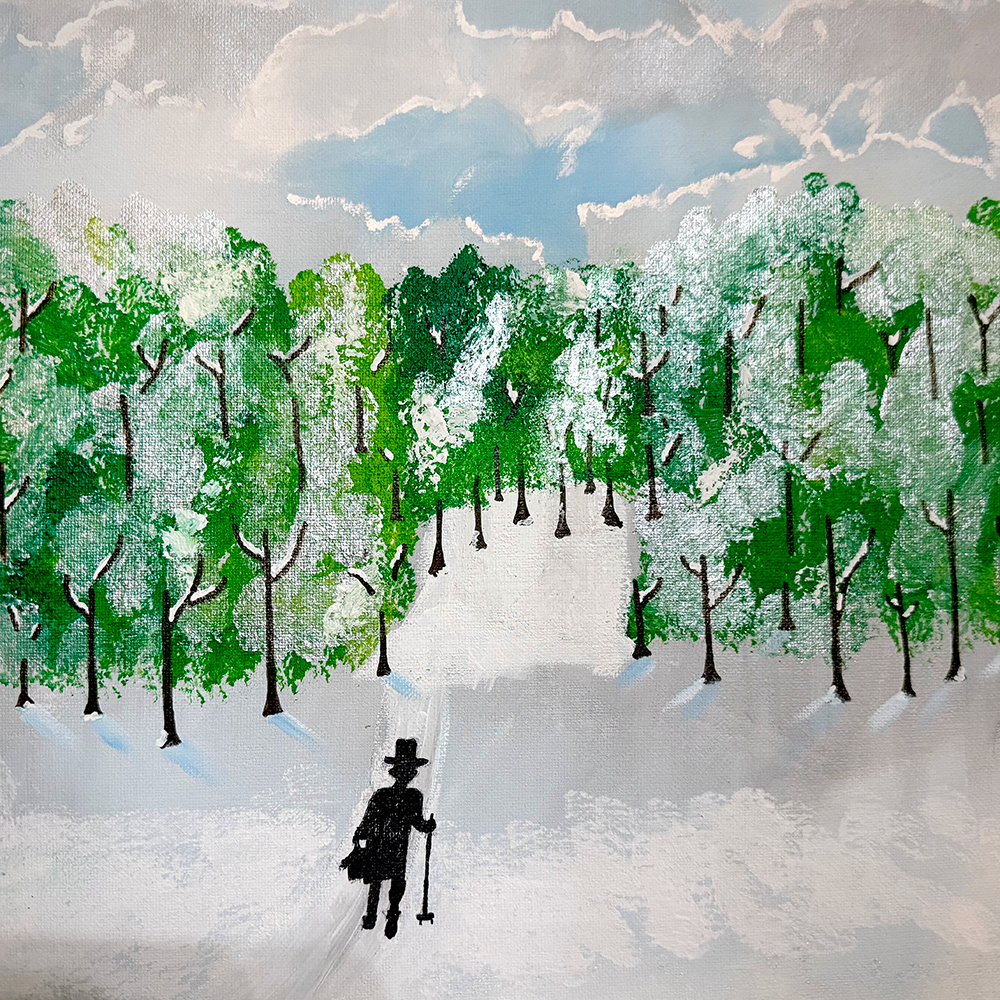
Everyone Creates
At the heart of this dream is a simple belief: everyone creates.
Not everyone creates in the same way.
Not everyone uses the same materials.
Not everyone follows the same path.
But creativity is part of being human.
Some people create paintings.
Some create stories.
Some create gardens.
Some create solutions.
Some create communities.
Some create moments of kindness.
Creativity shows up in countless different ways.
But somewhere along the way, so many people begin to doubt that part of themselves.
They remember the moment they decided:
- “I’m not creative.”
- “I’m not talented.”
- “I’m not an artist.”
Maybe someone criticized them.
Maybe they compared themselves to someone else.
Maybe they believed a mistake meant they failed.
Maybe they never had access to the opportunities, materials, or encouragement they needed.
And slowly, they stopped creating.
But creativity does not disappear.
Sometimes it simply waits.
It waits for curiosity.
It waits for encouragement.
It waits for someone to say:
- “You are allowed to try.”
- “You are allowed to explore.”
- “You are allowed to begin again.”
That is the heart behind the Everyone Creates Project.
Not creating a space where everyone makes perfect artwork.
Not creating a space where everyone has to become a professional artist.
Creating a space where people remember creativity belongs to them.
A place where someone can walk through the door unsure of themselves and discover:
- “I can make something.”
- “I can learn.”
- “I can grow.”
- “I belong here.”
Because art has never only been about the finished piece.
It is about what happens during the process.
The confidence that builds after trying something new.
The connection created while working alongside others.
The problem solving that happens when an idea changes.
The joy of discovering something unexpected.
The courage to keep going.
My dream is not just about creating more art.
It is about creating more opportunities.
More access.
More connection.
More spaces where people feel seen, supported, and encouraged.
Because somewhere there is a child afraid their project is not good enough.
An adult who has not created in years because they believe they lost their creativity.
A person who wants to try but does not know where to start.
Someone who simply needs a place where they are welcomed exactly as they are.
And I hope more people get the chance to discover the truth:
- You do not have to create perfectly to be creative.
- You do not have to prove you belong.
- You do not have to wait until you are “good enough” to begin.
- You were allowed to create all along.
Because creativity was never something you had to earn.
It was something you always had.
Want even more content about creativity and art?
Be sure to check out all of our creative chronicles!
If you'd like to see examples of my work, you can find some of my art and creations at Redbubble and Gumroad!
Want to check out other art spaces and resources?
Check out some of these articles:
-Hidden Gems for St. Louis Artists
-Perennial Copper Jewelry Class
-Leftovers and Upcycle Treasure Box
 Jessica Carey