Sometimes art hangs on a gallery wall.
Sometimes it fills the pages of a book, comes through a pair of headphones, or begins as an idea poured carefully into a mold.
And sometimes, art is a tiny resin heart someone gifts you after knowing you for barely a day.
That was one of my first introductions to Jamie Bishop's creative world.
Jamie and I had only recently met when she began sharing some of the things she had made with me—not as part of a sale or exchange, but simply because she wanted to.
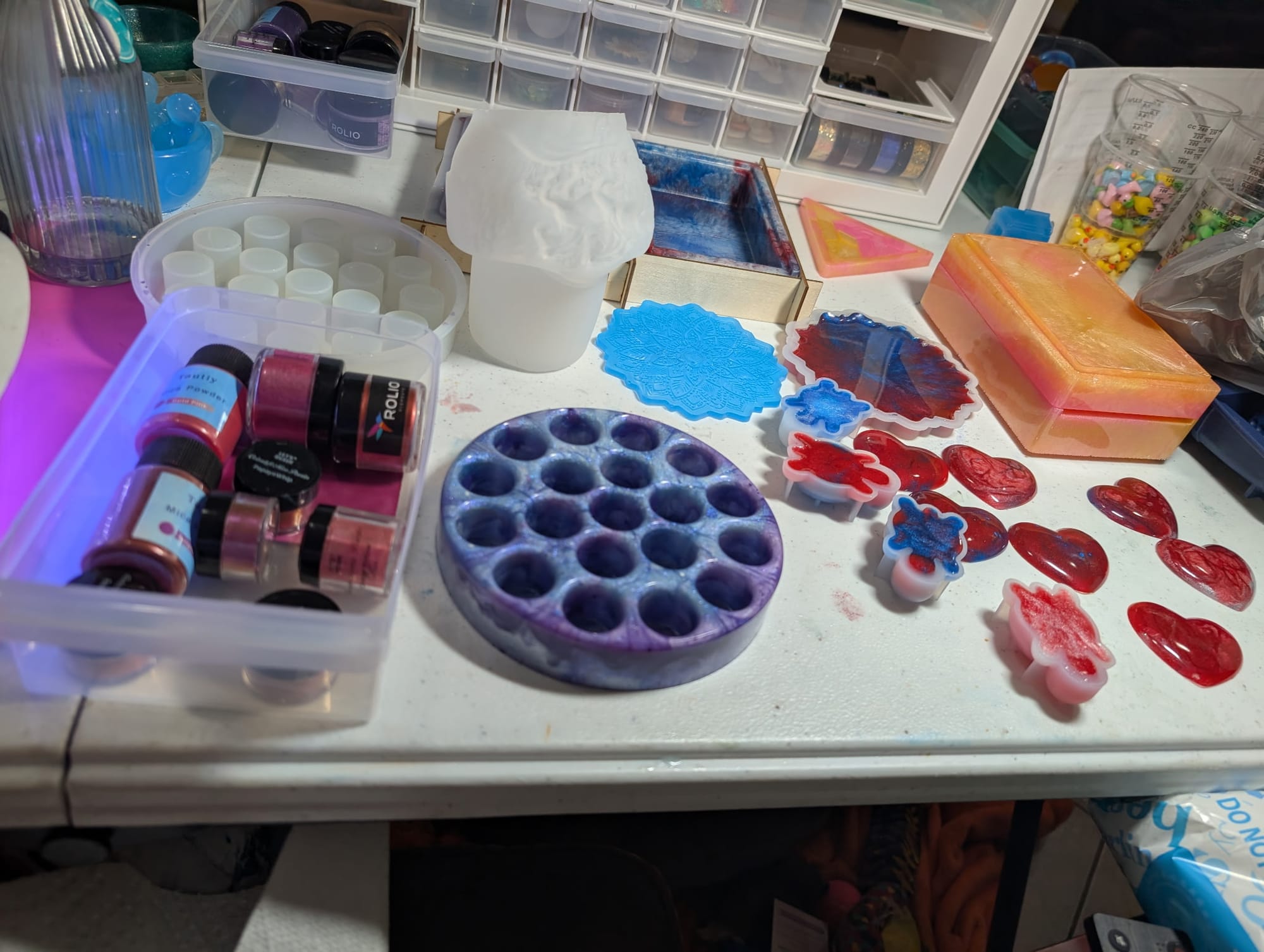
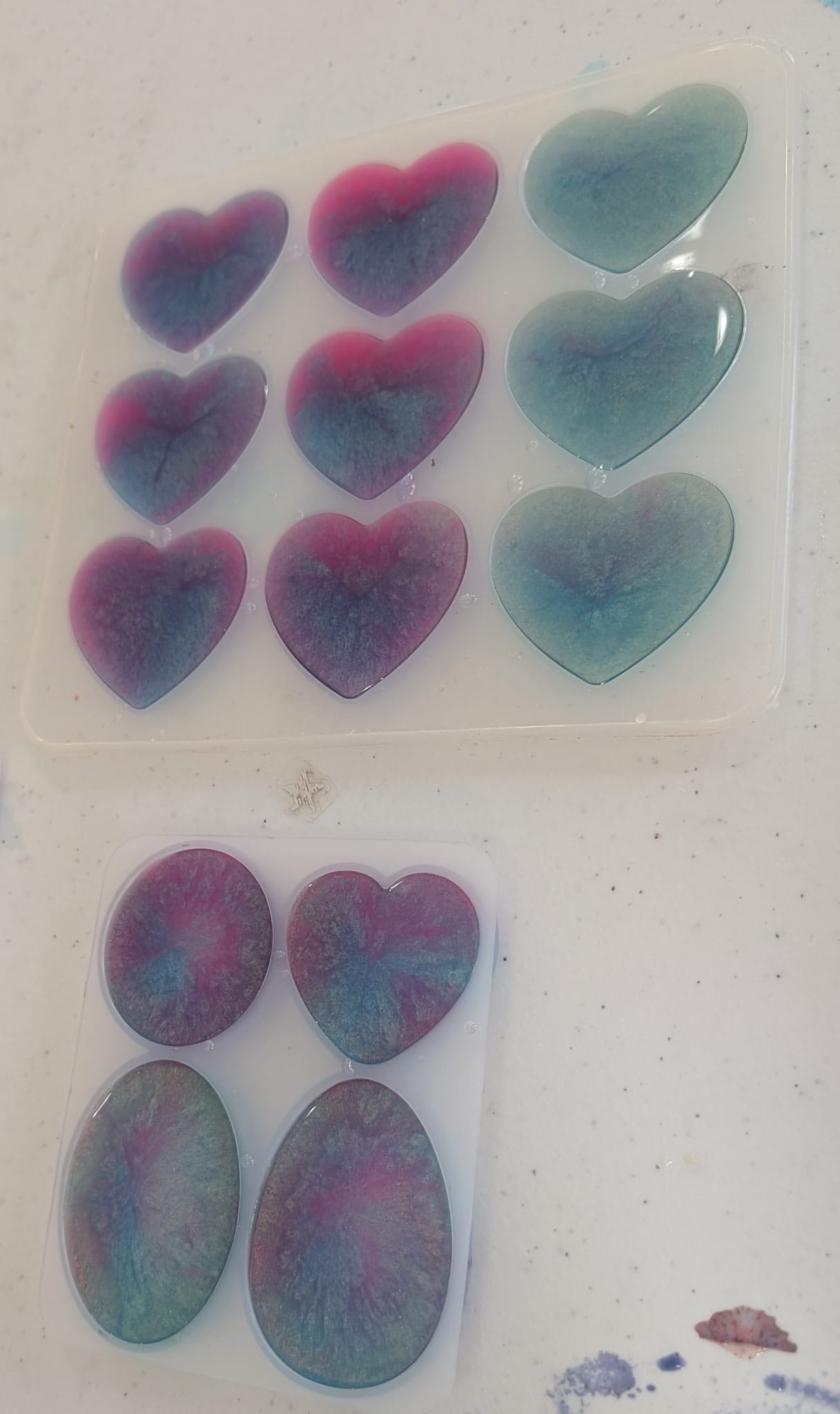
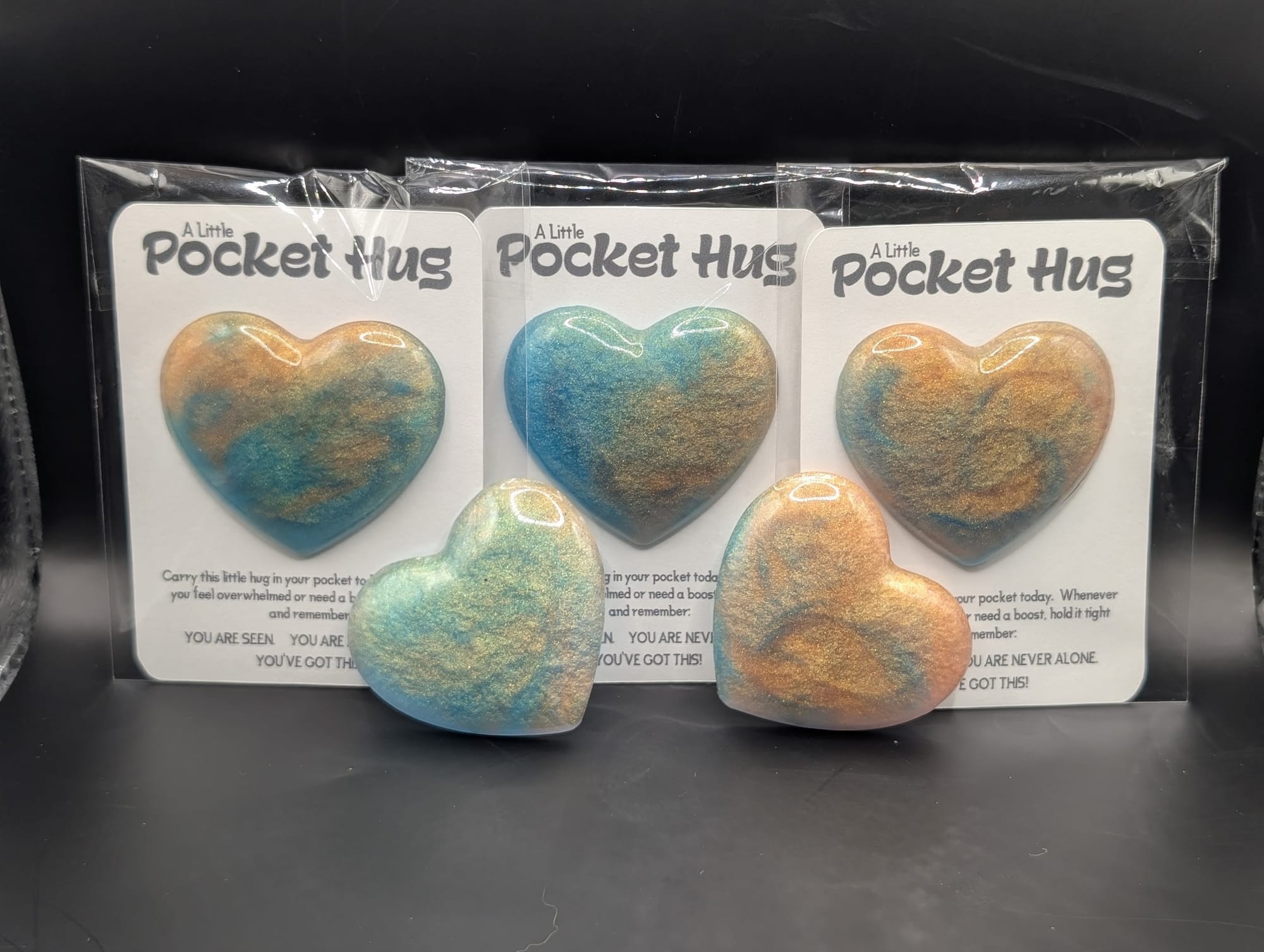
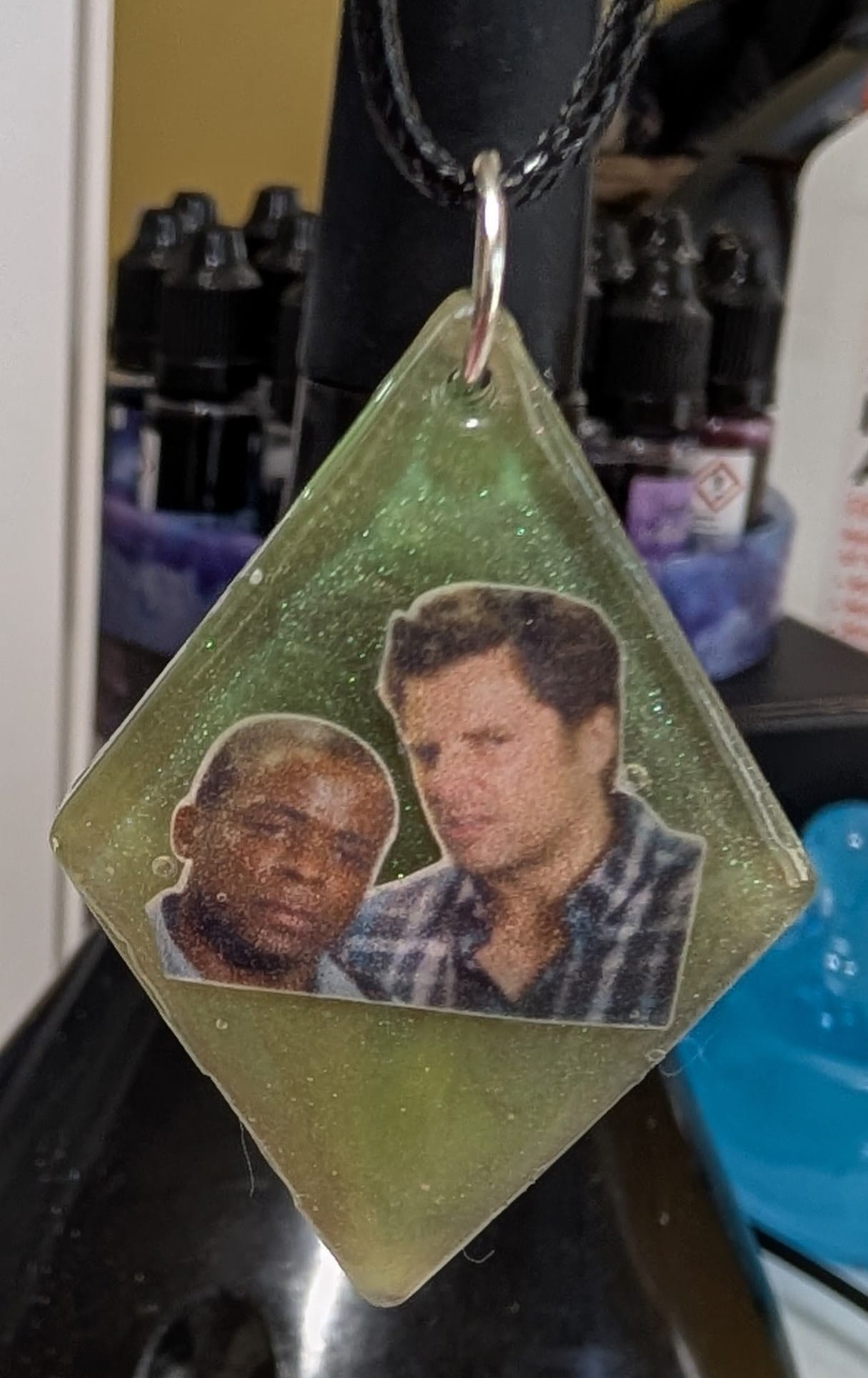
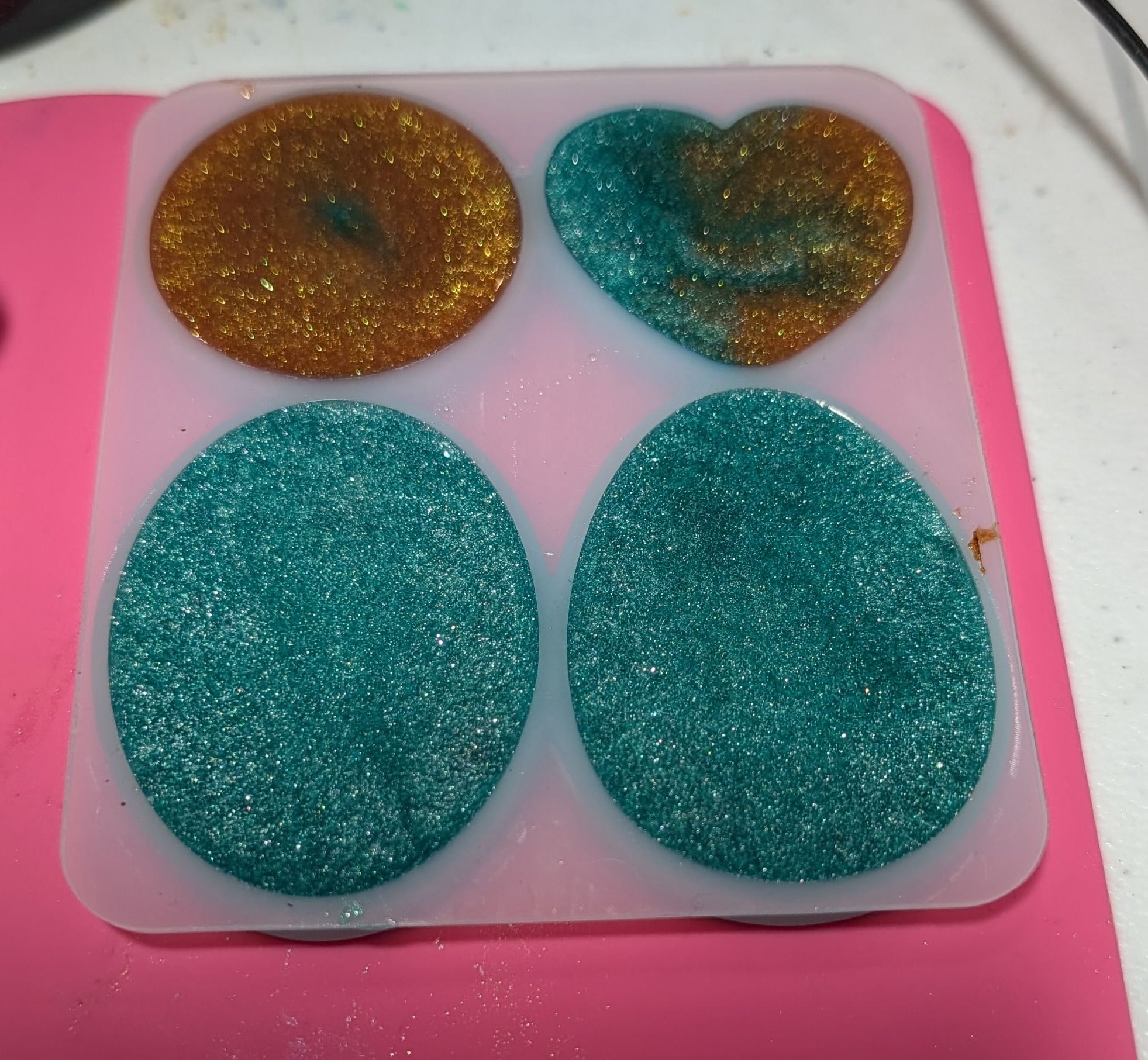
Among them were small resin hearts she calls Pocket Hugs and Stillness Stones: tactile pieces meant to offer comfort, grounding, encouragement, or simply something tangible to hold onto.
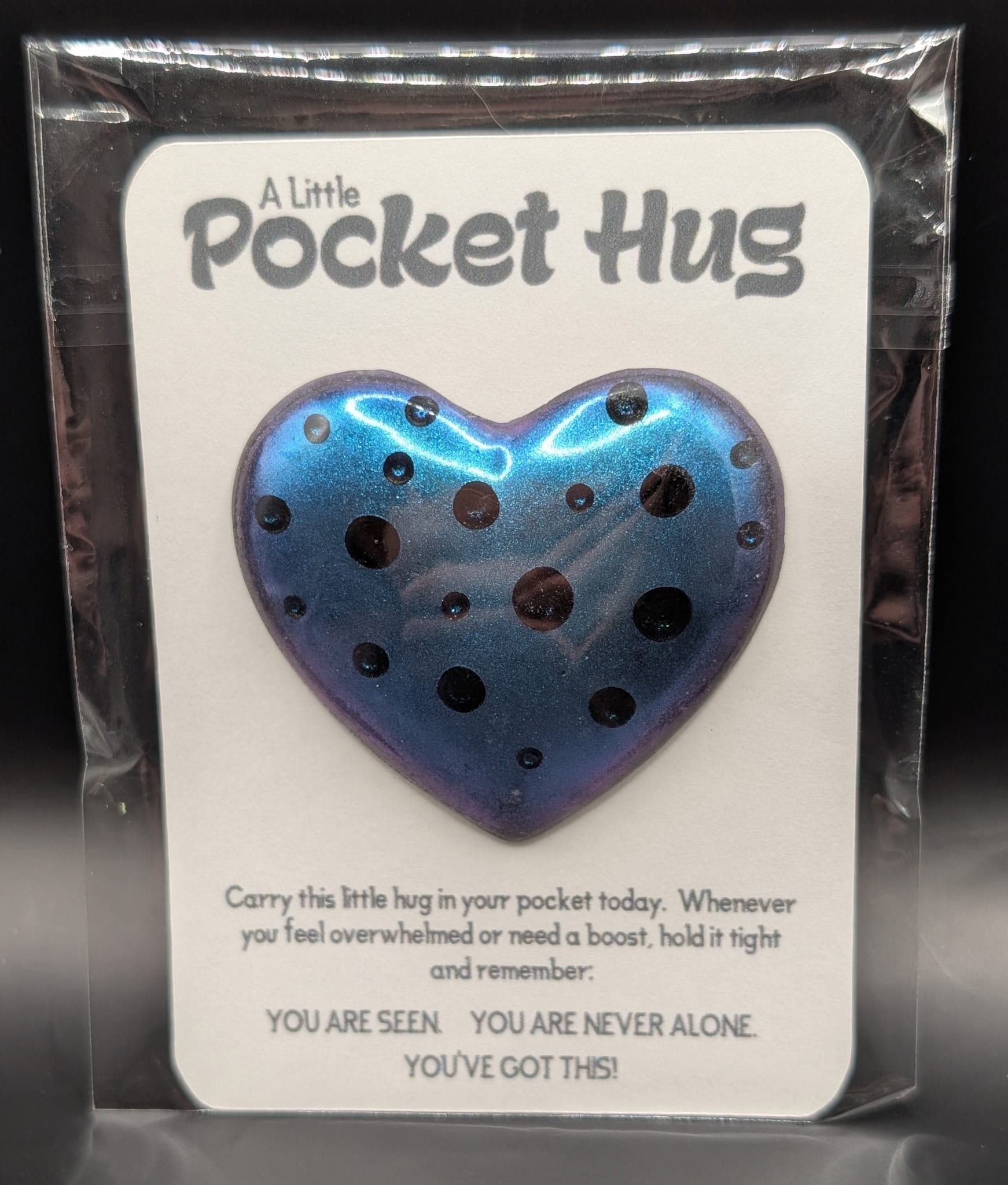
The card accompanying one of her Pocket Hugs reads: “You are seen. You are never alone. You've got this!”
It feels fitting that something so small would offer such a good introduction to Jamie.
She is a resin artist, writer, poet, illustrator, podcaster, and creative experimenter whose work moves between the playful and deeply personal.
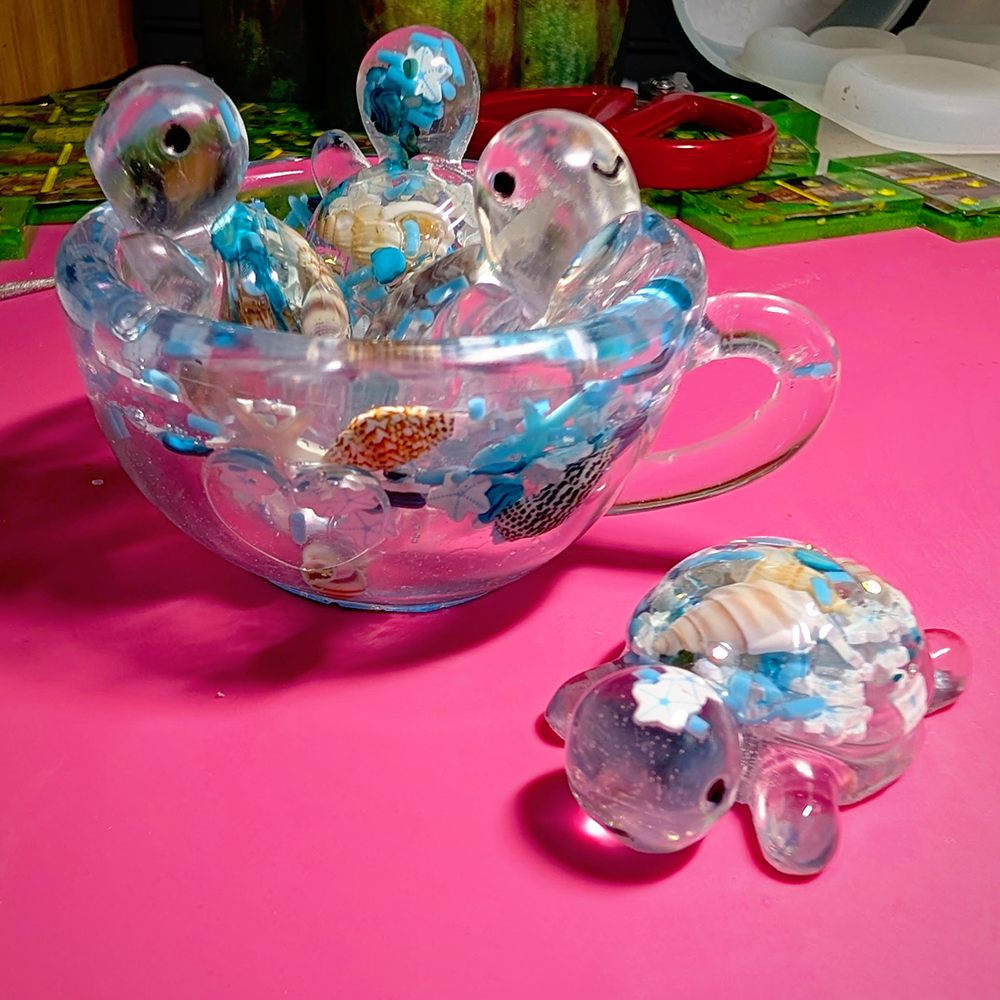
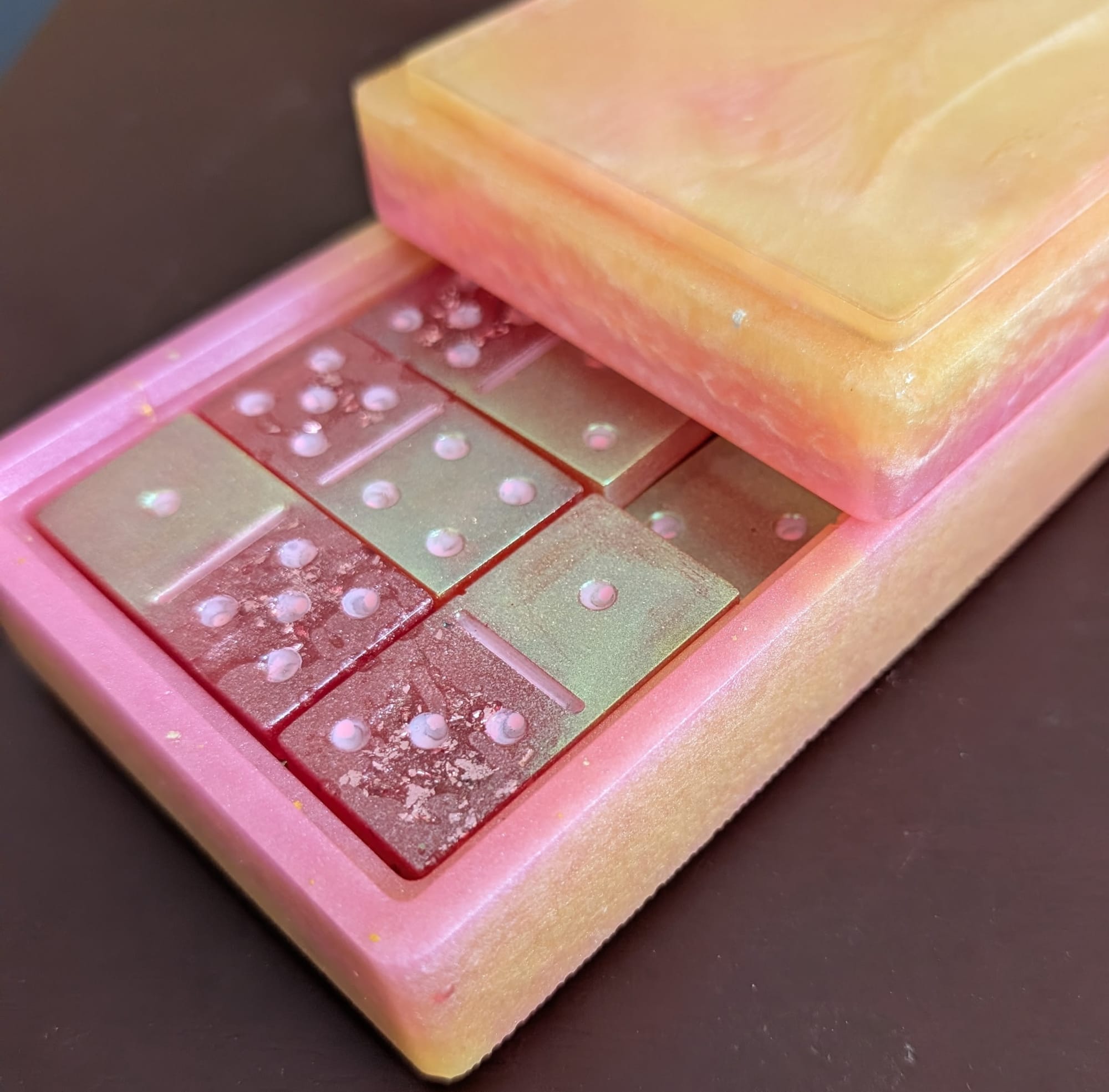
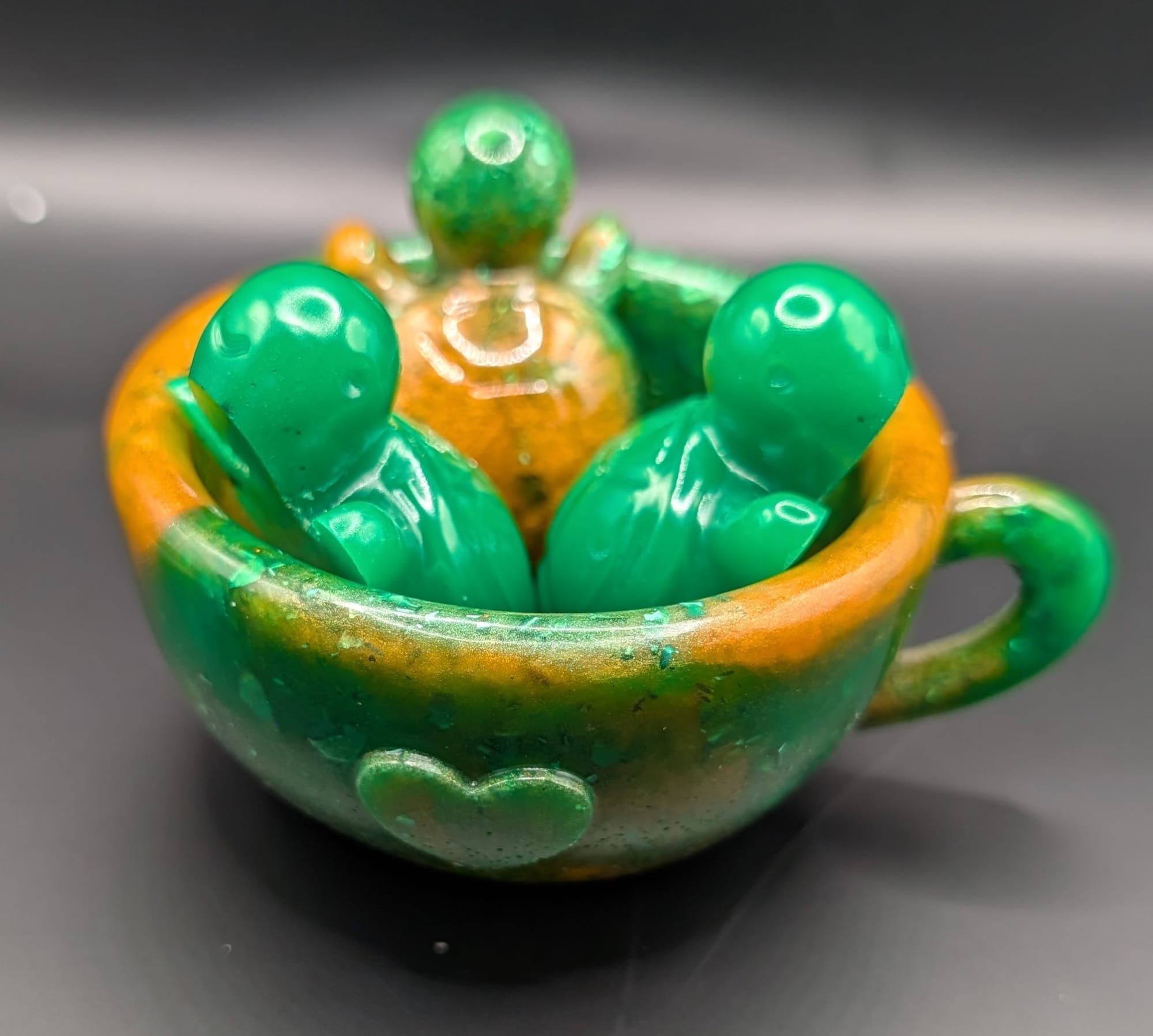
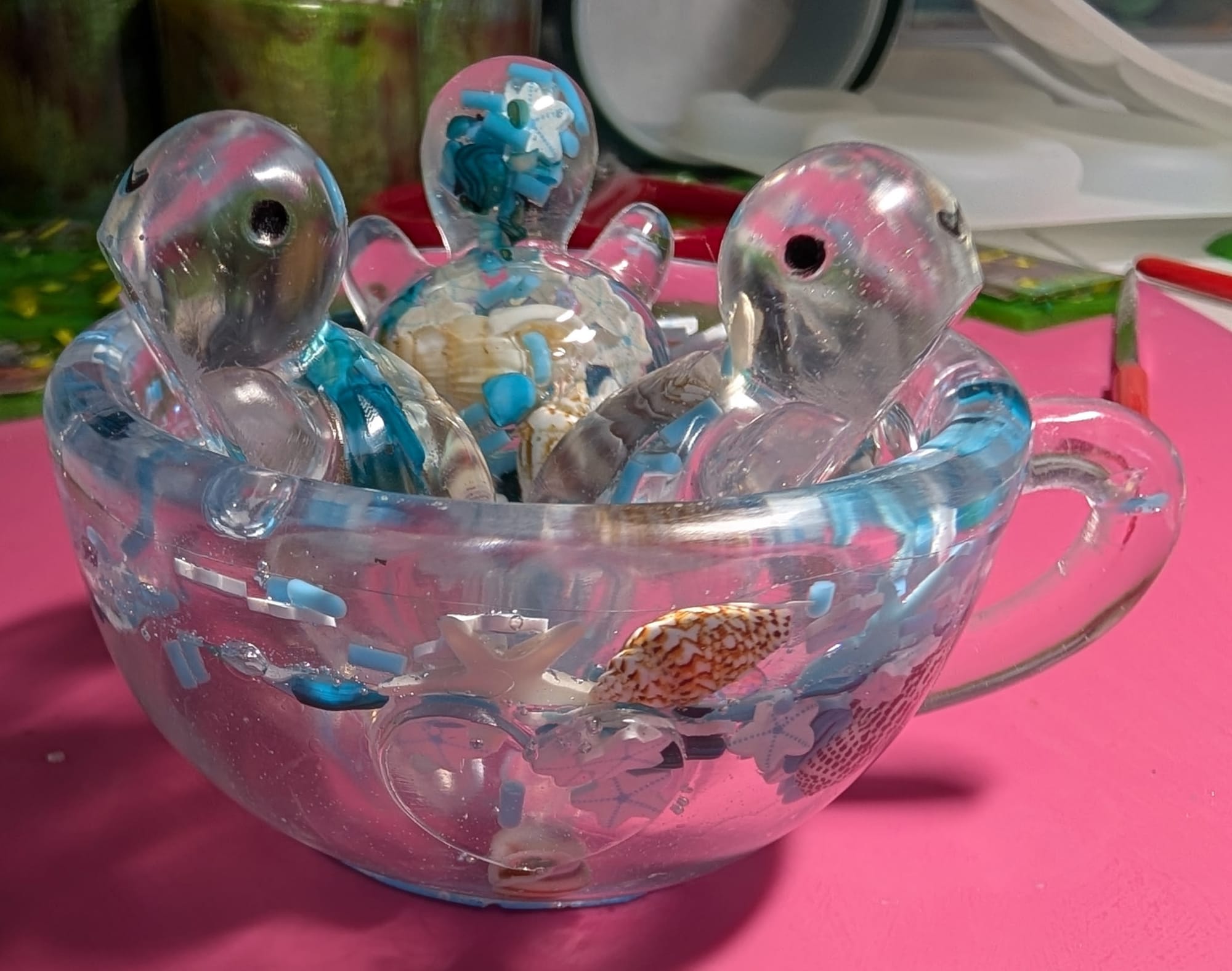
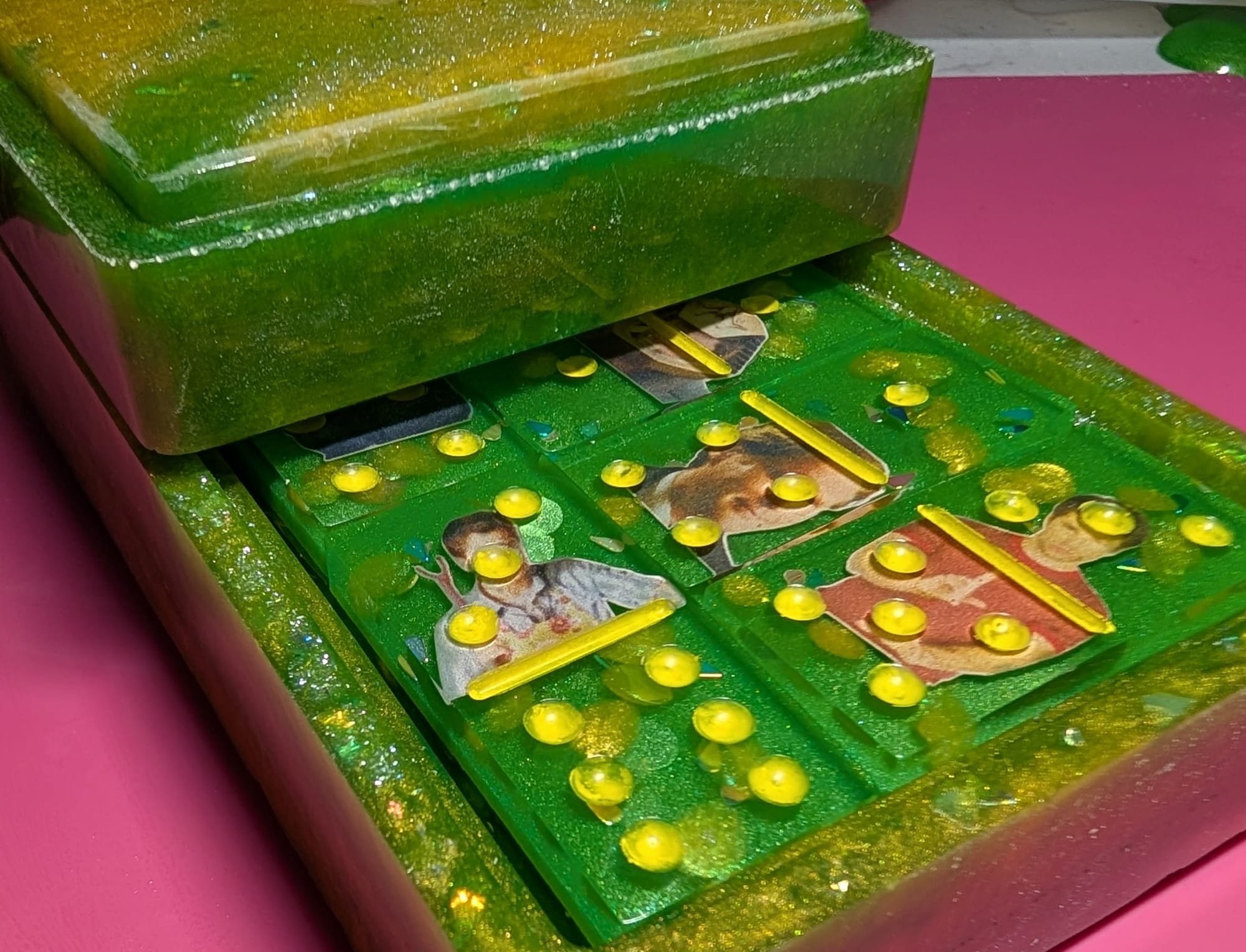
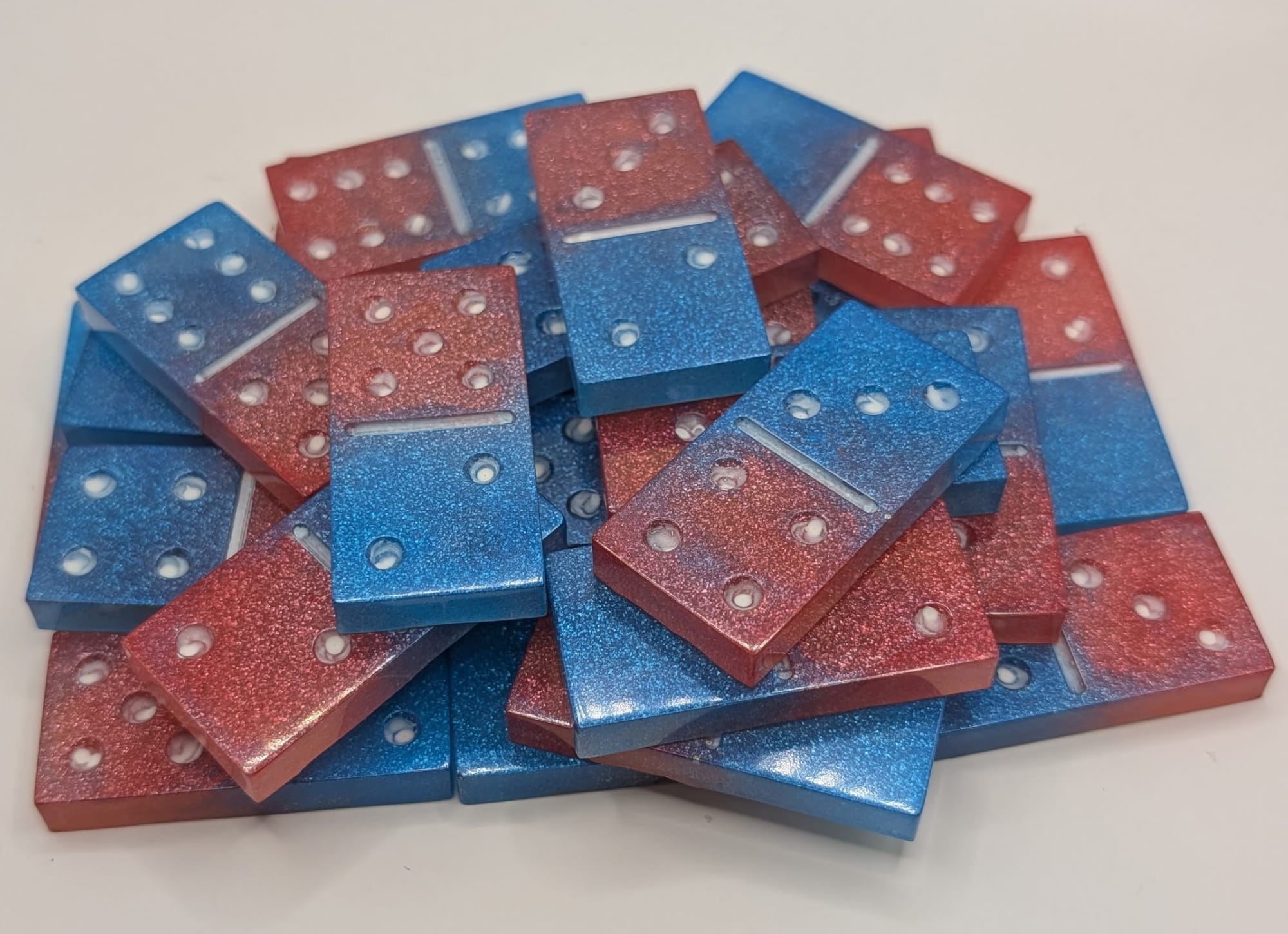
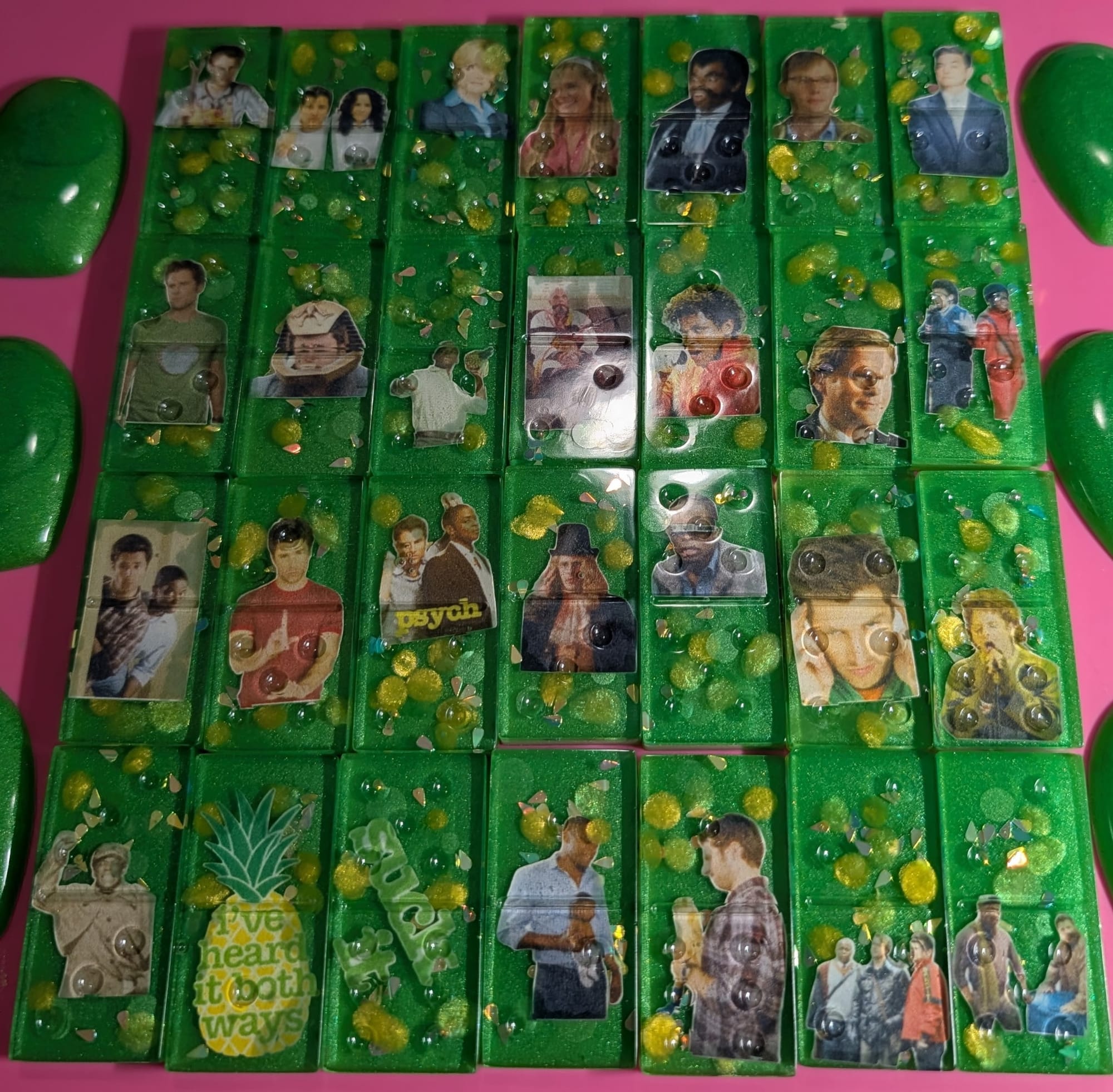
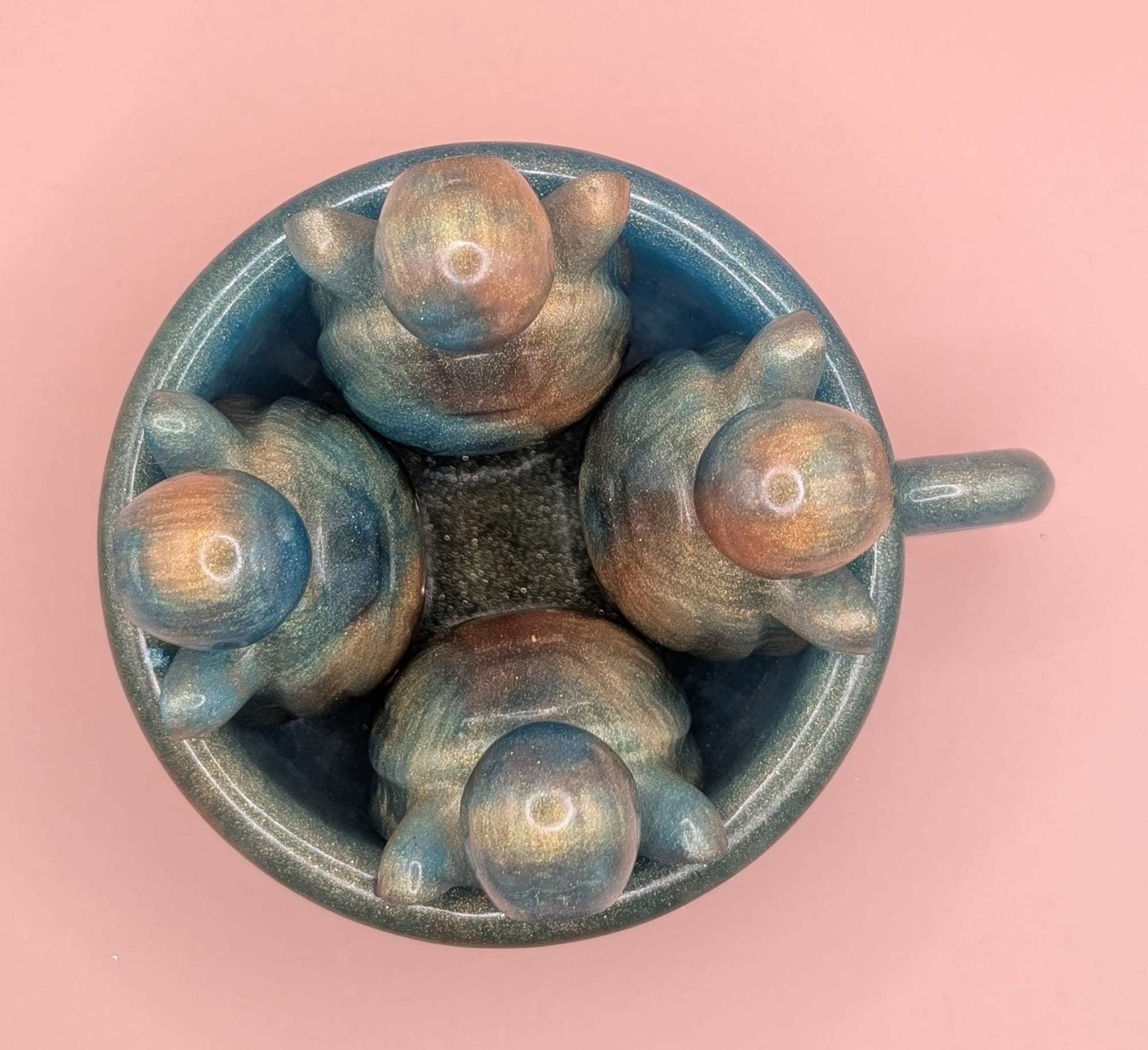
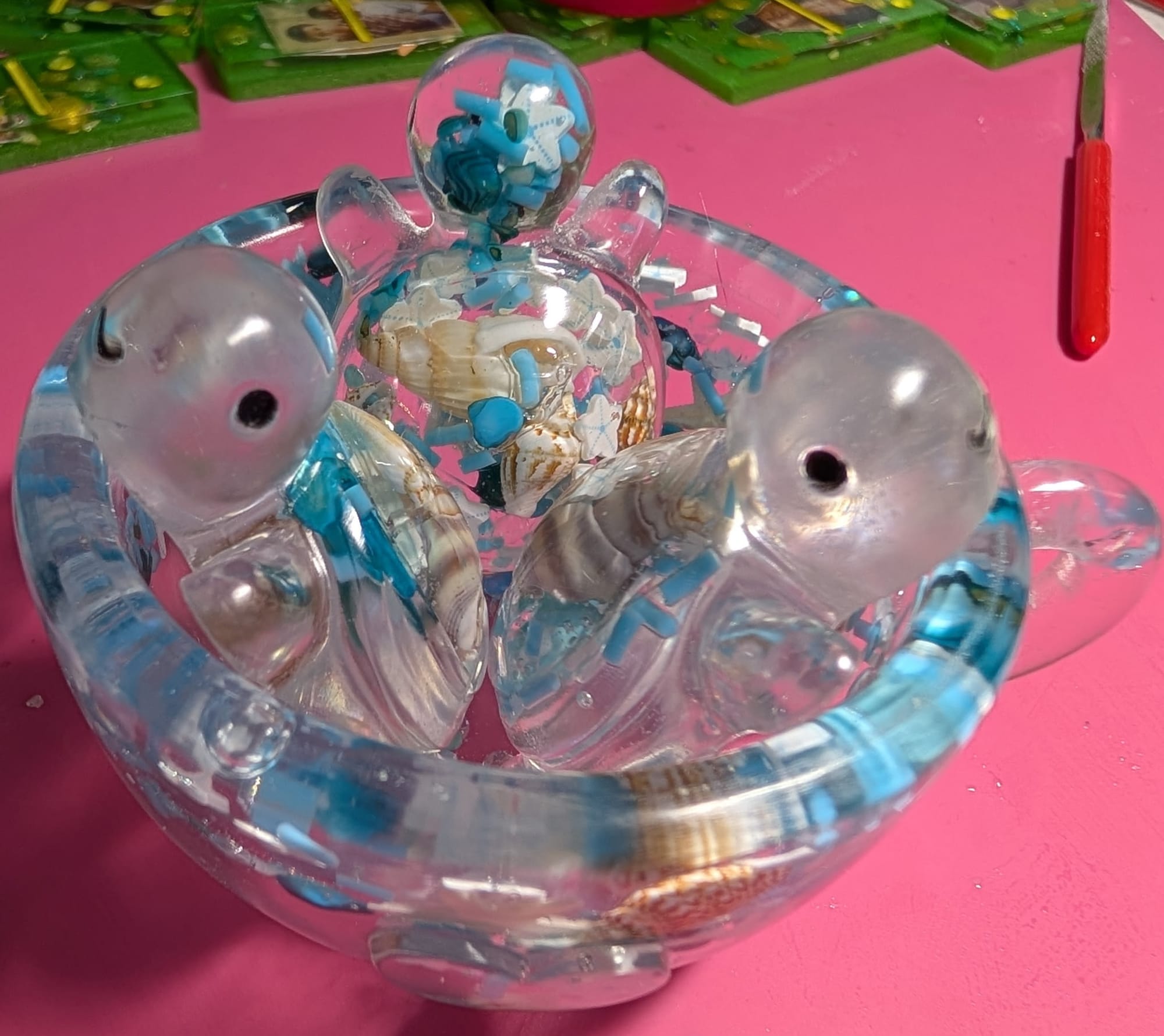
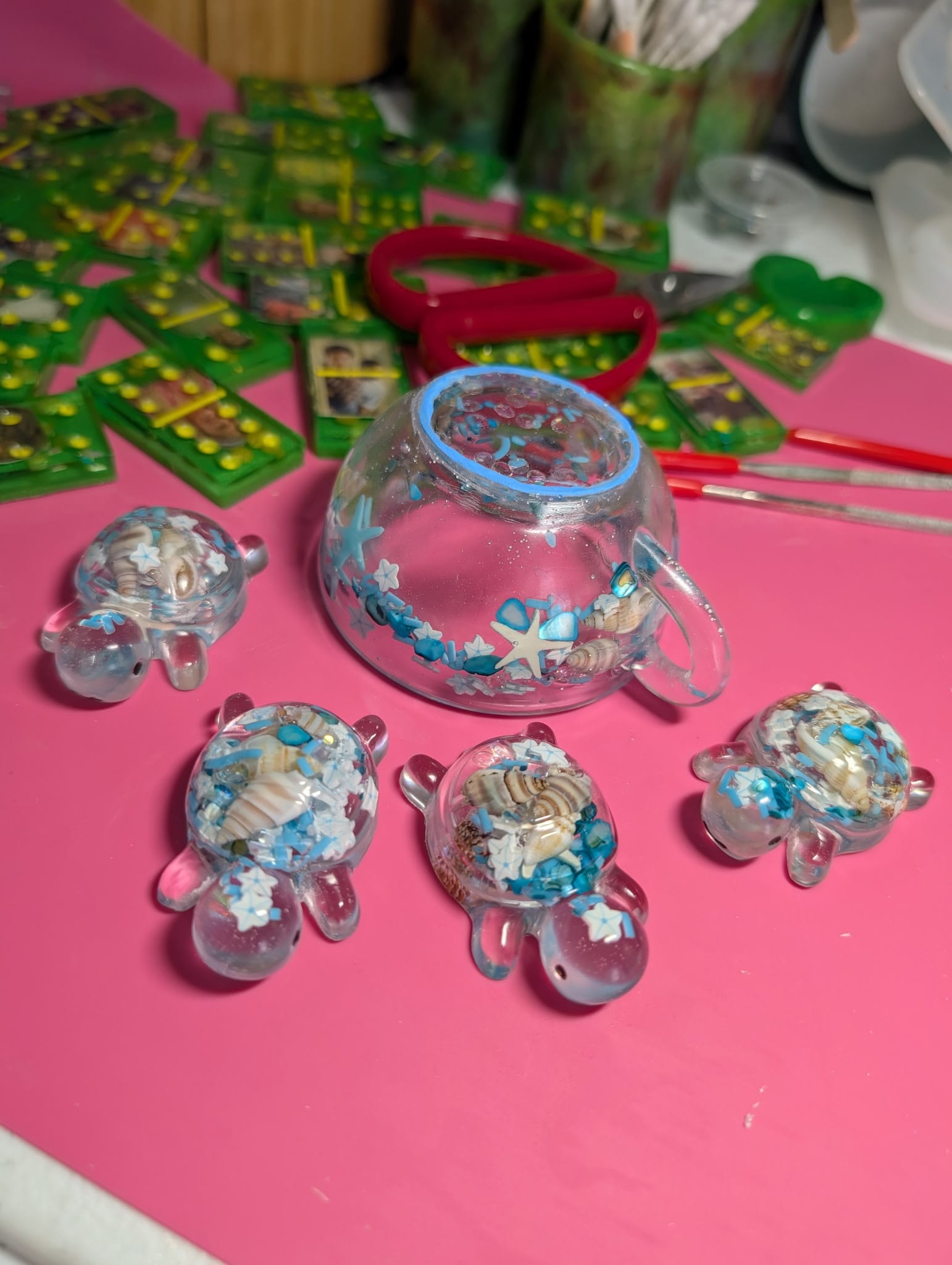
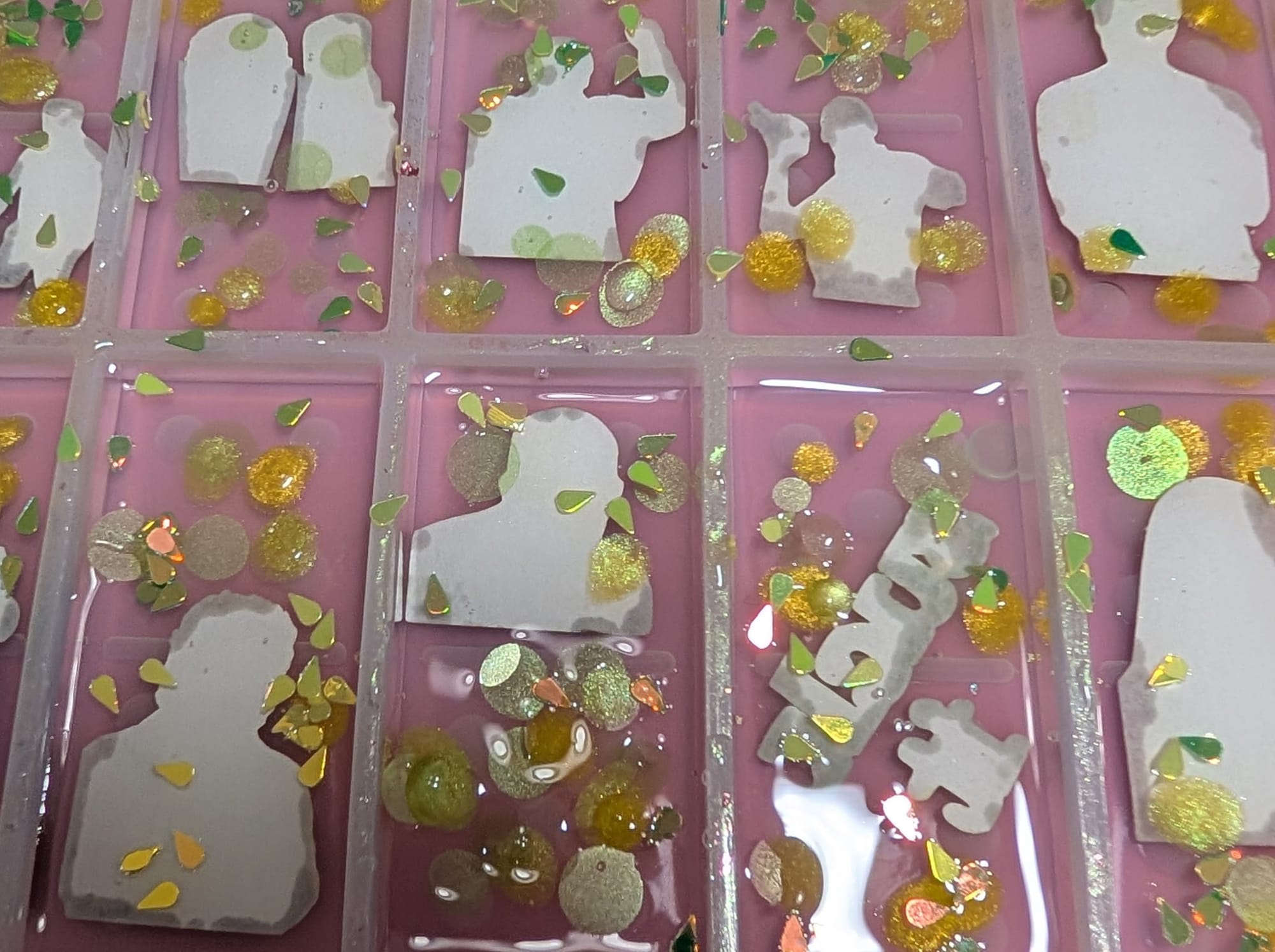
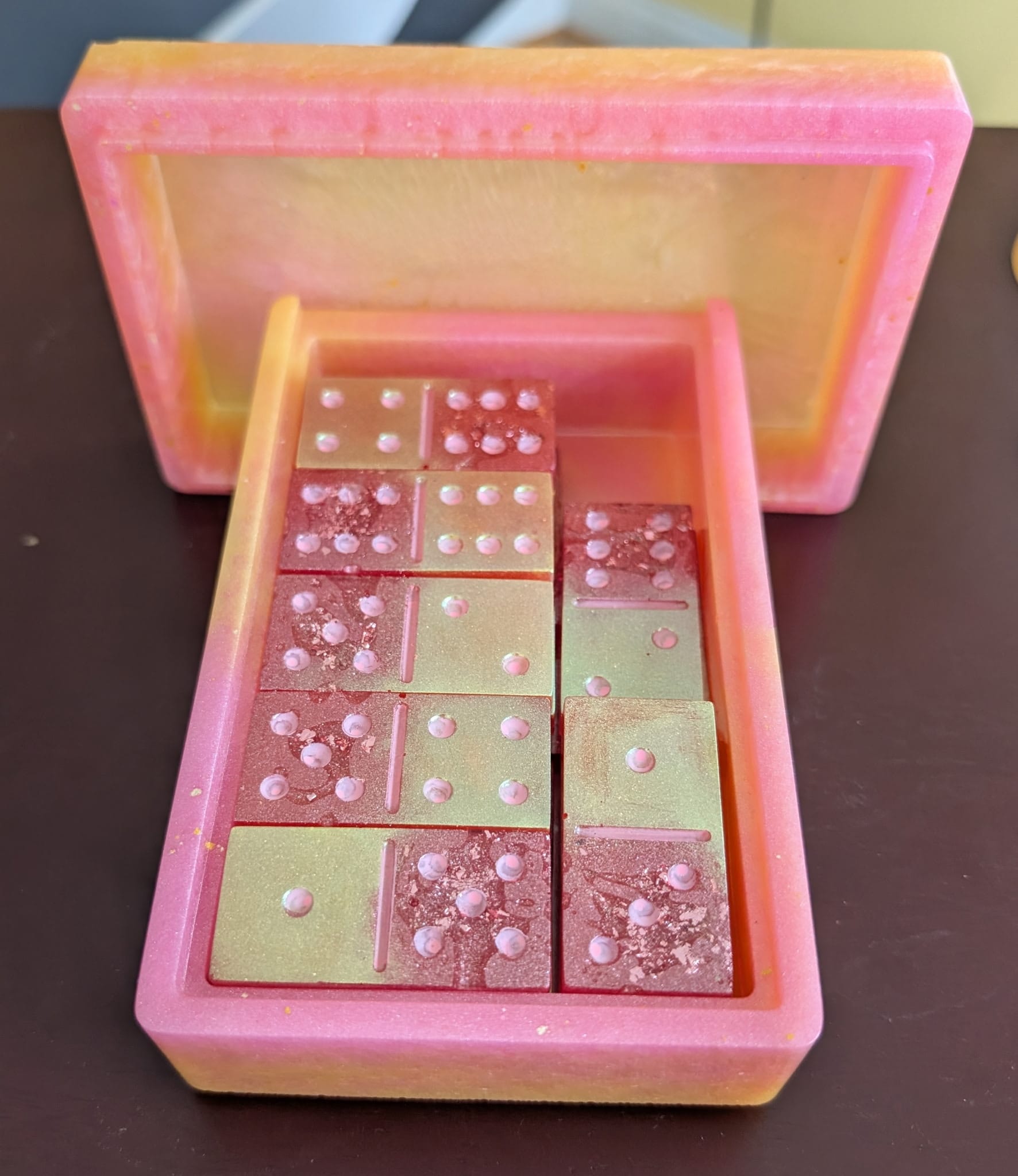
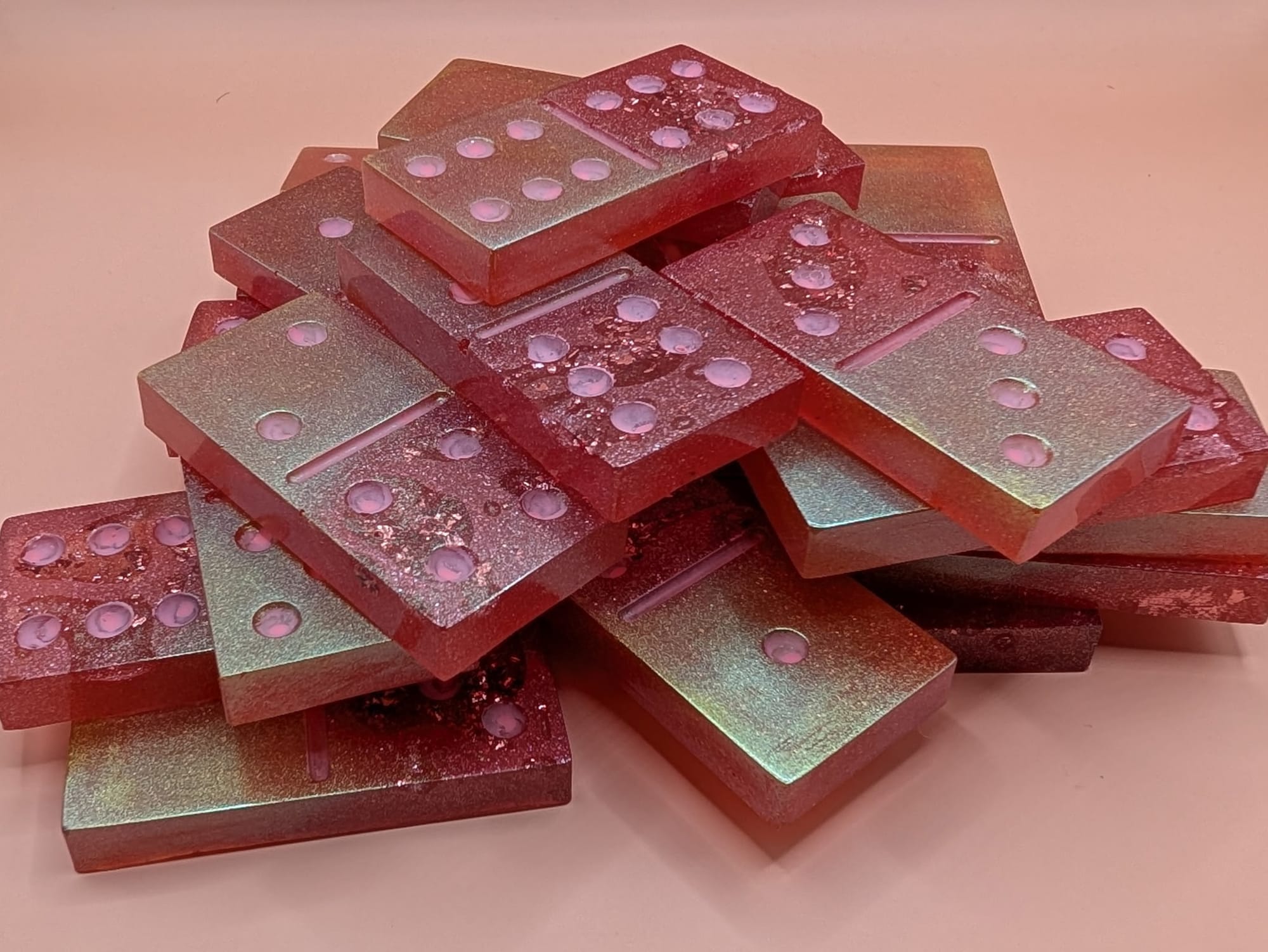
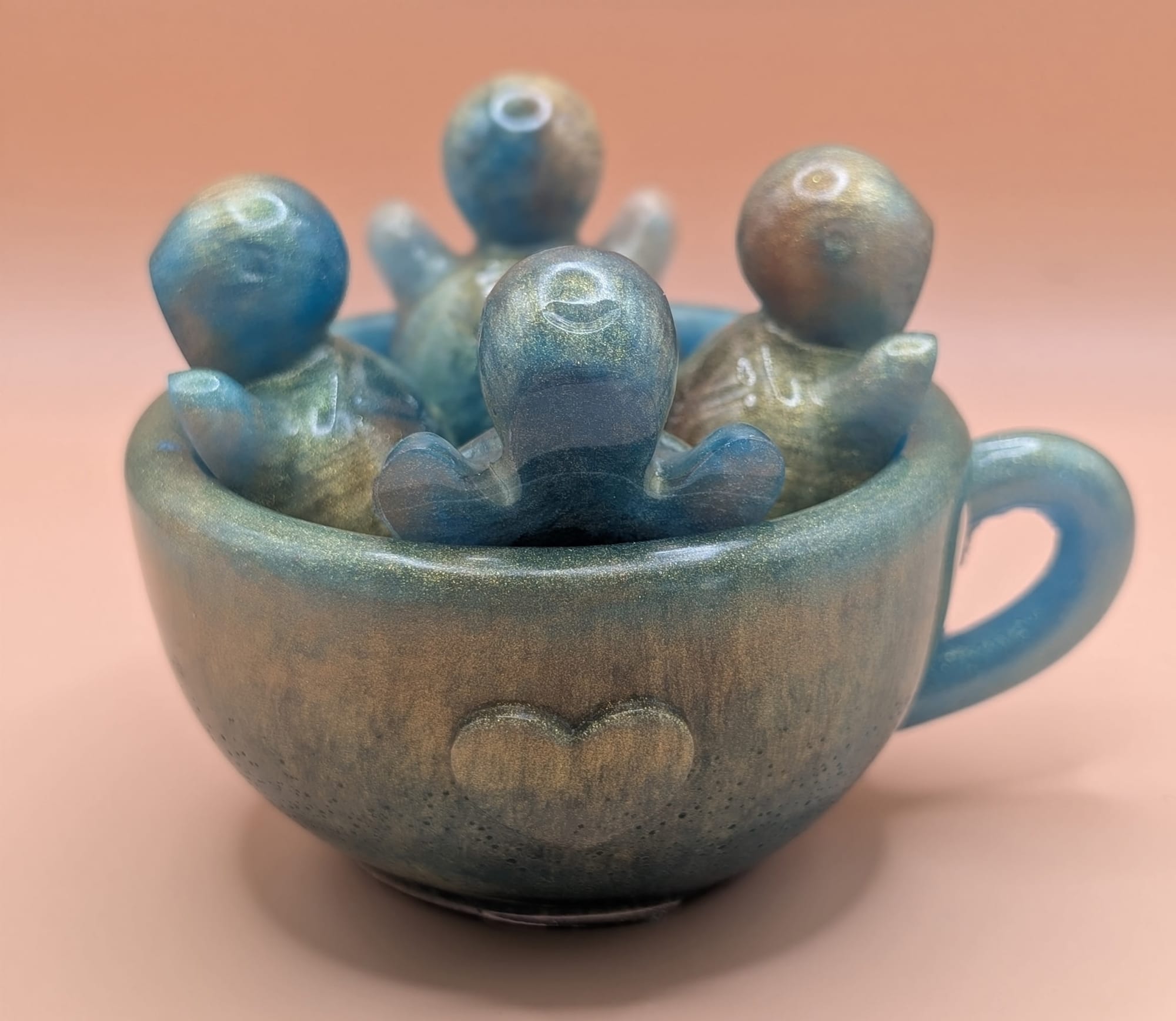
She creates everything from Pocket Hugs and shimmering dominoes to tiny glow-in-the-dark turtles tucked inside glow-in-the-dark teacups.
Through The Weight of Stillness, she writes candidly about healing, faith, neurodivergence, family, burnout, humor, creativity, and the complicated experience of being human.
Creativity is also woven into how Jamie navigates chronic autistic burnout—not simply as something to produce, but as a way to regulate, recover, play, process, and reconnect with herself.
And perhaps that is what makes her creative world so interesting.
It isn't a story about creating only when life is easy, energy is abundant, or everything has been figured out.
It's about what creativity can become while life is still unfolding.
Meet Jamie Bishop: A Creator Who Doesn't Fit in One Box
Ask someone what kind of artist they are, and there's often an expectation that the answer should fit neatly into a category.
Painter. Writer. Sculptor. Illustrator. Photographer.
Jamie Bishop doesn't fit particularly neatly into one—and that's part of what makes her creative life so interesting.
One day, creativity might mean pouring shimmering resin into a mold.
Another might find her writing a deeply personal essay, experimenting with poetry, drawing a comic, recording a podcast episode, or making something delightfully whimsical simply because she wanted to see if she could.
Her work can be tender and introspective, but it can also be funny, playful, and wonderfully ordinary.
Through The Weight of Stillness, she gives herself room to explore what challenges her, interests her, makes her laugh, breaks her heart, or helps her understand something about herself and the world around her.
That range isn't a lack of direction.
It's what creativity can look like when we stop insisting that every interest has to become a permanent identity.
Human beings aren't static.
We become curious.
We experiment.
Our needs and energy change.
Something captivates us for a season, while another medium gives us a way to express what the first one couldn't.
And sometimes we create simply because something looks fun.
There is room for seriousness without requiring everything to be serious.
There is room for experimentation without requiring mastery.
There is room to make something meaningful—and room to make a tiny glowing turtle.
Perhaps that's one of the quiet freedoms of allowing ourselves to be creative: we don't have to choose one way of creating in order for any of them to count.
Creativity doesn't always need a niche.
Sometimes it just needs permission.
The Weight of Stillness: Healing Out Loud
If Jamie's resin work gives her something tangible to hold, her writing gives her somewhere to put what cannot always be held quietly.
Her Substack and podcast, The Weight of Stillness, grew from a journey Jamie describes as “healing out loud and embracing grace.”
It is a space where she writes candidly about what she is learning, questioning, grieving, unlearning, laughing about, and slowly making peace with.
There is an important phrase in that description: out loud.
So much of healing is expected to happen privately.
We are often encouraged to emerge once we've processed everything, gathered the appropriate lessons, and turned the mess into a coherent story with a satisfying ending.
But real life rarely works that way.
Sometimes we understand something only by trying to put language around it.
Sometimes healing is less like arriving at an answer and more like becoming willing to look honestly at the question.
Jamie makes room for that unfinishedness.
In describing The Weight of Stillness, she writes that she spent years “bracing against my own history until the weight became too much to carry.”
The project emerged when she stopped running from the hidden and messy parts of her life and began allowing light into them.
Interestingly, the “stillness” in The Weight of Stillness doesn't necessarily mean rest.
Jamie describes her journey toward stillness as having “a lot more to do with surrender than rest.”
That distinction feels important.
Sometimes stillness isn't doing nothing.
Sometimes it's no longer exhausting ourselves trying to outrun what hurts.
It's allowing ourselves to notice what is happening inside us, even when what we find there is uncomfortable.
Jamie's writing reflects that willingness, moving through shame, trauma, family, faith, neurodivergence, burnout, relationships, therapy, and creativity.
But healing isn't the only thing a human being is doing while healing.
She also writes about movies, books, music, native plants, family stories, her senior Schnoodle, Dobby, and the particular absurdities of perimenopause brain fog—which she has affectionately dubbed “The Menopaussum.”
Sometimes those ordinary pieces of life become ways of understanding the deeper ones.
In Holding the Line Until We Get Home, for example, Jamie begins with Avengers: Endgame.
The moment when Captain America appears to stand alone until portals begin opening and others arrive beside him becomes a doorway into something much larger.
Jamie focuses particularly on the Wakandan call “Yibambe”—hold fast, hold firm, hold the line.
From there, a superhero movie becomes a reflection on hope, endurance, faith, belonging, Heaven, and the longing for a Home she believes she has not yet seen.
That movement—from something seemingly ordinary into something deeply personal—is characteristic of Jamie's writing.
A movie can become a meditation on longing.
A therapy session can invite the examination of an old belief.
A ridiculous family moment can become a comic.
A song can become prayer.
None of it requires Jamie to have reached the end of her story before she begins telling it.
Perhaps that is part of what healing out loud means:
- Not presenting ourselves as finished.
- Not pretending we have answers we don't.
- Just becoming willing to tell the truth about where we are—and leaving enough room for grace to meet us there.
 Jessica Carey
Creating Through Chronic Autistic Burnout
There is another part of Jamie's creative life that can't be separated from the story: she lives with chronic autistic burnout.
Autistic burnout is more than simply being tired after a difficult week.
It can involve profound exhaustion, reduced capacity, increased sensory sensitivity, and a need for significantly more recovery—particularly after prolonged periods of pushing beyond one's limits or navigating environments that demand more than the nervous system can sustainably give.
For Jamie, working with resin can be part of that recovery.
There is something very different about approaching creativity from the question “What can I accomplish?” versus “What feels supportive to my nervous system right now?”
The finished object matters, but it isn't the only thing that matters.
There is also the process: choosing colors, mixing materials, pouring resin, experimenting with shimmer and molds, working with her hands, and watching something gradually take form.
Sometimes the result is a set of shimmering dominoes.
Sometimes it's a heart.
Sometimes it's a tiny turtle.
But creativity doesn't have to become another demand.
That distinction matters in a culture that so often encourages us to finish something, sell something, post something, build an audience, or turn the things we enjoy into something productive.
Sometimes creating can simply give something back.
That doesn't mean creativity is always accessible during burnout.
There are times when even beloved activities require more energy than someone has available.
Rest is still rest, and recovery doesn't need to become another project to complete.
But when creativity is accessible, it can become something gentler: sensory, absorbing, playful, experimental.
It can offer a small pocket of choice in a life that may otherwise contain more demands than available energy.
And it can exist without requiring the person creating to be anything other than what they are that day.
Creativity isn't evidence that the burnout isn't serious.
Someone can be profoundly depleted and still experience moments of curiosity.
They can need significant rest and still want to make something.
They can have limited capacity and still find that one particular activity gives something back instead of taking more away.
Sometimes creativity isn't another thing we manage to accomplish despite being exhausted.
Sometimes it's one of the places where, for a little while, we don't have to fight ourselves at all.
 Jessica Carey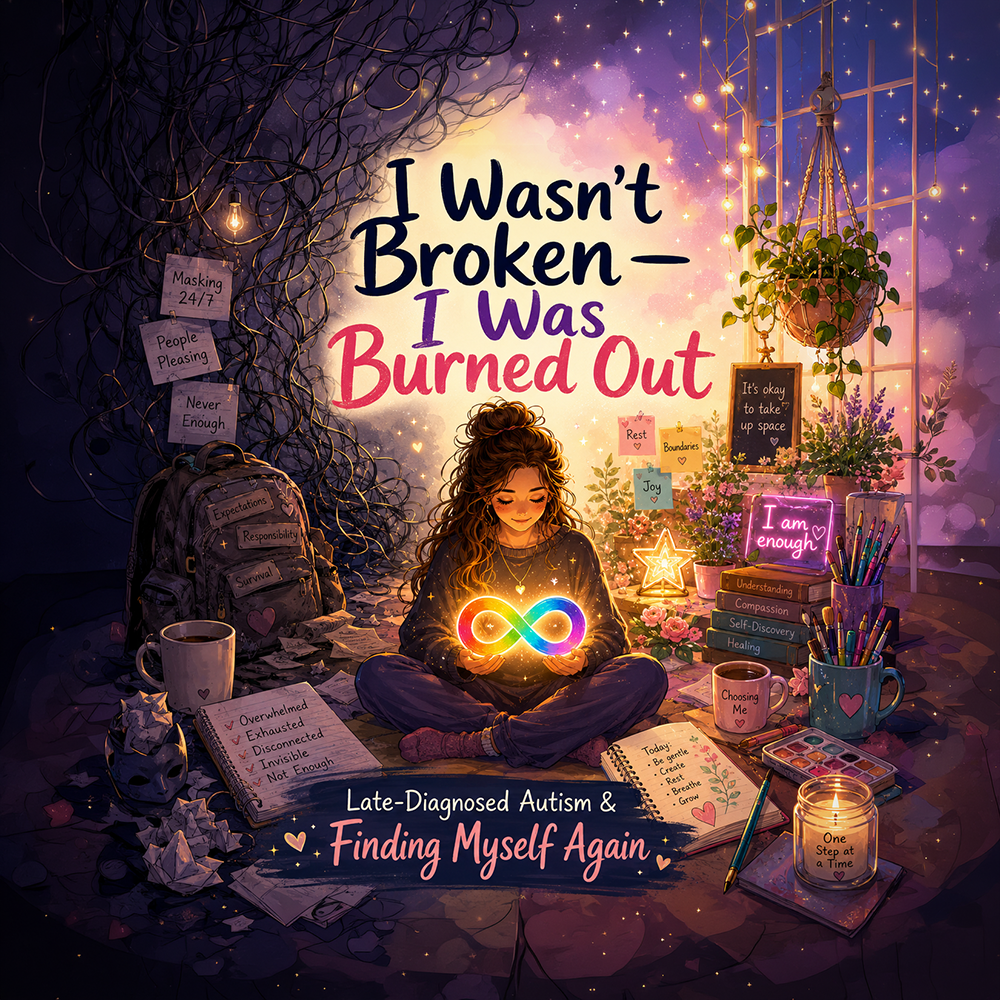
Pocket Hugs, Stillness Stones & Glow-in-the-Dark Turtles
Jamie's resin work can be meaningful without taking itself too seriously.
That may be one of my favorite things about it.
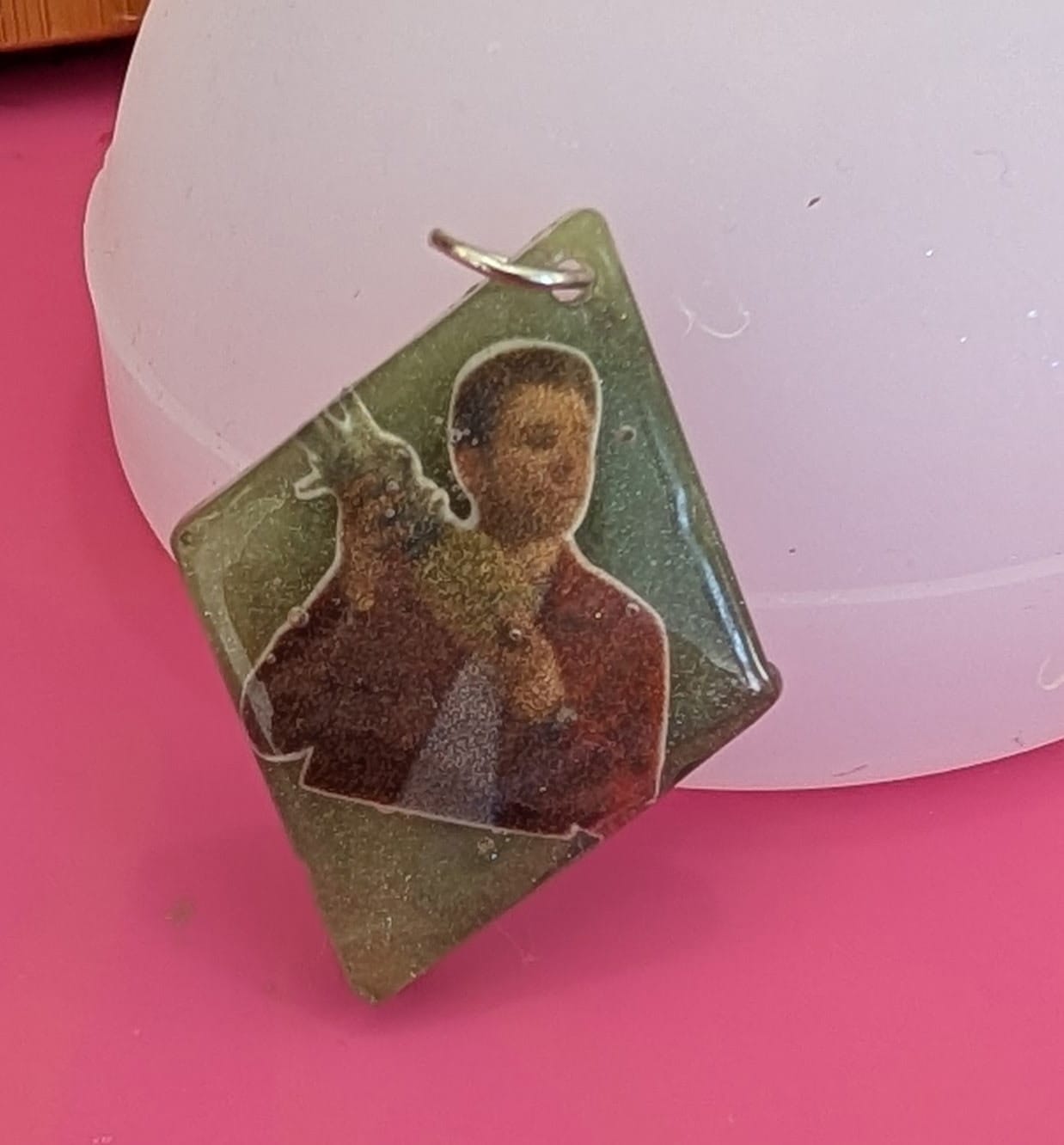
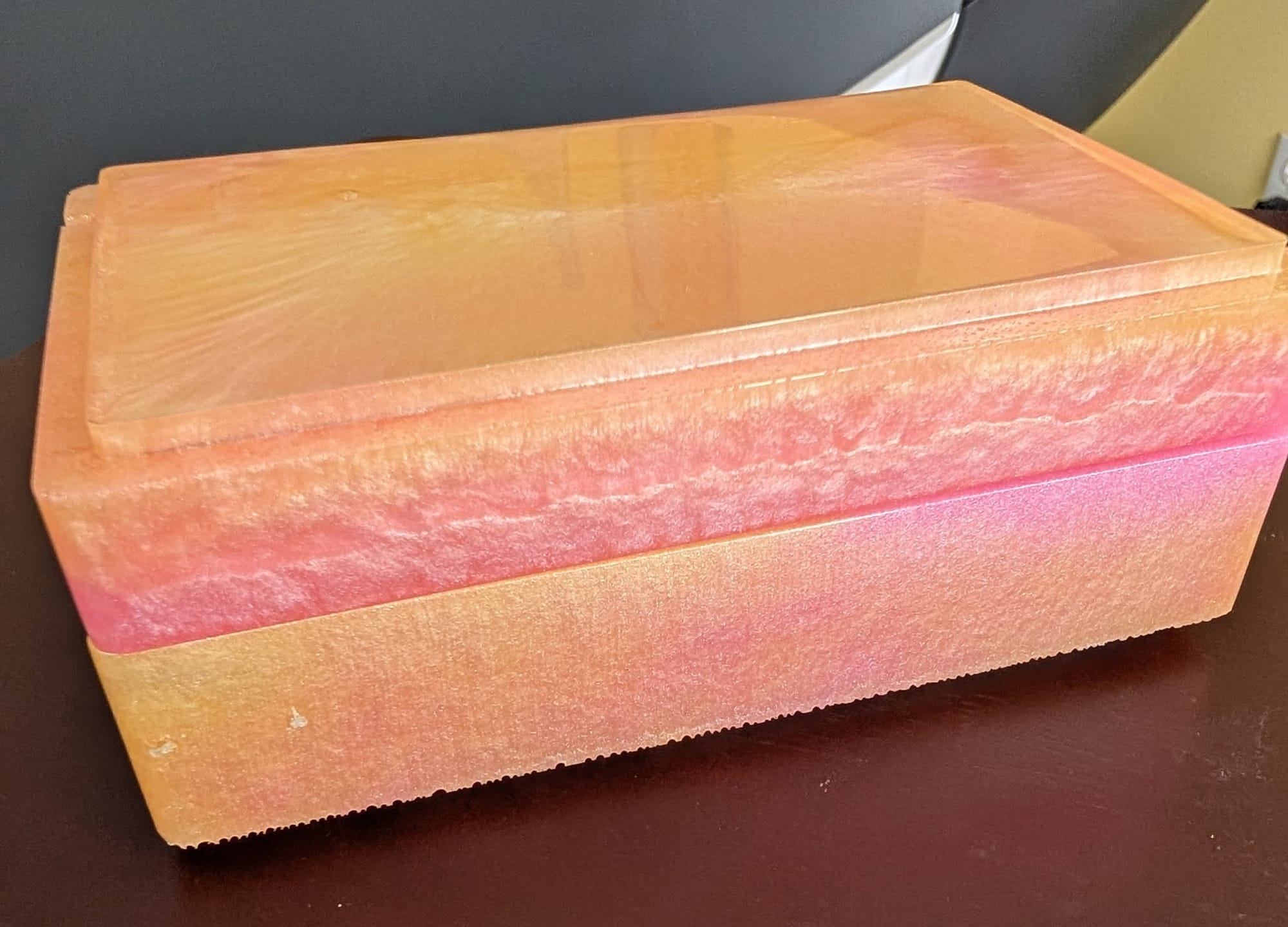
She creates shimmering dominoes, hearts, small containers, tactile pieces, and other resin experiments in different colors and finishes.
And then there are tiny glow-in-the-dark turtles sitting inside a glow-in-the-dark teacup.
Yes, the turtles glow.
Yes, the teacup glows, too.
And yes, they are every bit as adorable as that sounds.
Alongside that playfulness are pieces created specifically with comfort in mind.
Jamie makes small tactile resin pieces similar to what are commonly called “worry stones,” but she doesn't particularly like the implications of that name. Instead, hers become Stillness Stones and Pocket Hugs.
That seemingly small change in language feels particularly fitting beside the rest of Jamie's creative work.
A worry stone is named for the distress we bring to it.
A Stillness Stone is named for what we might hope to find.
And a Pocket Hug sounds less like an object designed to fix something and more like a little bit of companionship we can carry with us.
The Pocket Hugs are small resin hearts, smooth enough to rest comfortably in a hand or slip into a pocket.
The one Jamie gave me came with a simple message: “You are seen. You are never alone. You've got this!”
It doesn't promise that everything will suddenly become easy.
A little piece of resin can't solve whatever someone is carrying.
It simply offers something tangible to hold—and a reminder that someone thought of you.
But not everything Jamie makes needs to carry that kind of meaning.
There is room in creativity for comfort and processing, but there must also be room for glitter.
For curiosity.
For ridiculous ideas.
For making something just to see how it turns out.
For putting a tiny turtle in a teacup and making the entire thing glow in the dark.
Not every creation needs to carry the weight of the world.
Sometimes art gives us something comforting to hold.
And sometimes it just gives us a cute, glowing turtle.
Both count.
Creating Without Having to Be Perfect
Sometimes the thing standing between a person and creativity isn't a lack of imagination.
It's the belief that whatever they make has to be good.
Jamie knows that barrier well.
In describing the art she shares through The Weight of Stillness, she explains that she picked up a drawing pencil again after more than thirty years of believing that if she couldn't do it perfectly, she wasn't good at it.
Poetry carried a similar history.
Rules had kept her away from that form of expression for more than three decades, too.
Thirty years is a long time to believe you aren't allowed to do something simply because you might not do it perfectly.
Perfectionism can masquerade as having high standards, but when it prevents us from beginning, experimenting, playing, or learning, it doesn't improve creativity.
It silences it.
A blank page can't be criticized if we never write on it.
A drawing can't disappoint us if we never pick up the pencil.
A poem can't break the rules if we never write the first line.
But we also never get to discover what might happen if we try.
Jamie eventually picked up the pencil anyway.
Her illustrations now appear as part of The Weight of Stillness, often capturing family moments, the antics of her senior Schnoodle, Dobby, or the wonderfully named phenomenon of perimenopause brain fog: “The Menopaussum Strikes Again.”
She writes poetry, too—typically free verse—and has experimented with erasure poetry, finding something new within language that was already there.
The rules didn't have to disappear.
They simply stopped getting the final vote.
And then there is Jamie's literal voice.
She describes The Weight of Stillness podcast as “a deep exercise in personal bravery.”
She has struggled to embrace the sound of her own voice, worrying that it was too raspy or somehow simply too much.
And so she records anyway.
Not because every insecurity disappeared first, but because perhaps someone else needs to hear a real human voice speaking from within the complicated mixture of trials, trauma, mistakes, faith, healing, humor, and ordinary life.
Sometimes the first person who has to become willing to hear your voice is you.
Whether Jamie is picking up a pencil, writing a poem, or pressing record, the underlying shift feels remarkably similar.
The question changes from: “Will I be good enough at this?”
To: “What happens if I try?”
One asks us to predict our worth before we've even begun.
The other invites curiosity.
And curiosity leaves considerably more room for being human.
Courage doesn't always look—or sound—confident.
Sometimes it looks like a drawing made by someone who spent decades believing she wasn't good enough to draw.
Sometimes it sounds like a voice that its owner is still learning to accept.
Sometimes it's a poem written without waiting for permission from the rules.
We don't have to earn creativity by being good at it.
Sometimes the most important creative act is simply allowing ourselves to begin.
 Jessica Carey
The First One Through the Windshield
Some kinds of creativity ask us to make something that didn't exist before.
Others ask us to look directly at something that already exists—and tell the truth about it.
During one of our conversations, Jamie shared an image with me that I haven't been able to forget: “The first one through the windshield gets the bloodiest.”
She was talking about what can happen when someone becomes one of the first people in a family or generational system willing to examine painful patterns, name what isn't working, and try to change it.
The first person to do that doesn't necessarily receive applause for their insight.
Sometimes they receive resistance.
Because systems—including unhealthy ones—develop ways of maintaining themselves.
People learn roles.
They adapt.
They normalize things.
They find ways to function around problems that have existed for so long that the adaptations themselves begin to feel normal.
I've often thought of it like living beneath a leaking roof.
Imagine that every time it rains, water pours into the house, so everyone grabs buckets.
Over time, the family becomes remarkably skilled at managing those buckets.
They know exactly where to put them.
They know which ones fill fastest.
Maybe they even teach the next generation the proper bucket-placement technique.
Eventually, somebody looks upward and says: “Why are we spending our lives catching water? The roof is broken.”
You might imagine everyone would be relieved: Finally, let's fix the roof!
But when a system has organized itself around managing a problem rather than confronting it, the person pointing toward the hole can become more disruptive than the leak itself.
Suddenly they're accused of causing conflict.
- Why can't they just use the bucket like everyone else?
- Why do they have to keep talking about the roof?
- Why can't they appreciate everything everyone has done to manage the water?
But naming the leak didn't create it.
Seeing a pattern is not the same thing as causing it.
And refusing to continue adapting to something harmful is not the same thing as destroying the system.
Sometimes it is the first possibility of changing it.
That's what makes Jamie's windshield metaphor so powerful.
The person who goes first may take an enormous impact.
But going first can also create an opening.
Someone has to question the rule that everyone else learned not to question.
Someone has to say the thing everyone else learned not to say.
Someone has to wonder whether surviving a pattern is really the same thing as being healthy within it.
And someone has to imagine that the people coming afterward might deserve something different.
This is where Jamie's creative work and her commitment to healing begin to feel inseparable.
Writing honestly about shame, family, trauma, faith, neurodivergence, therapy, and the beliefs we inherit isn't simply an intellectual exercise.
Creativity can become one of the places where we examine the stories we've been handed and decide whether we still believe them.
Sometimes we keep parts of those stories.
Sometimes we understand them differently.
Sometimes we grieve them.
Sometimes we write something new.
And none of that means the person doing the examining has everything figured out.
Being the first one through the windshield doesn't make someone invulnerable.
It means they got cut, too.
Breaking a pattern can hurt.
Seeing clearly can hurt.
Discovering that something you normalized wasn't healthy can hurt.
Changing can require grieving not only what happened, but what should have happened and didn't.
That's why I don't think cycle-breaking should be romanticized as some heroic identity that makes suffering worthwhile.
The windshield still hurts.
The person going through it deserved not to be injured in the first place.
But there can still be meaning in what happens afterward.
A person can look honestly at what hurt them without becoming defined entirely by the hurt.
They can decide which pieces continue with them and which ones stop here.
They can make different choices.
They can create different relationships.
They can give language to experiences that once had none.
And sometimes, by doing that work out loud, they leave an opening for someone else.
Someone who thought they were the only one questioning the buckets.
Someone who wondered whether they were allowed to notice the hole in the roof.
Someone standing on the other side of the windshield, wondering whether anybody had ever made it through.
Maybe that's one reason honest creativity matters.
Sometimes we make art because we need somewhere to put what we've discovered.
And sometimes, without realizing it, we leave a path through for the next person.
 Jessica Carey
When Creativity Becomes Connection
Before I knew very much about Jamie's story, I noticed something about the way she relates to people: she shares.
She shares her writing.
She shares what she's learning.
She shares her art.
She shares pieces of herself that might help another person feel a little less alone.
We had known each other for barely a day when Jamie offered me food she had left over.
Around the same time, she freely gave me several of the resin pieces she had made.
They were small gestures, but small gestures are often where someone's values become visible.
There was no tally being kept.
No sense that accepting something meant I now owed something in return.
It simply felt like one human being noticing another and thinking: I have something I can share with you.
And somewhere amid those little acts of generosity, something else happened.
I recognized her.
Not because our lives or stories are identical, but because something in the way Jamie thinks, creates, notices, and moves through the world felt remarkably familiar.
Conversation with her has repeatedly carried that little spark of recognition: oh, you understand this, too.
The complicated relationship between creativity and burnout.
The instinct to make things and share them.
The experience of noticing patterns other people might prefer to leave unexamined.
The understanding that creativity can be more than producing something impressive—it can be regulation, processing, play, connection, and simply a way of being human.
There is something comforting about meeting another person who doesn't require a lengthy explanation before they understand the shape of what you're describing.
Sometimes connection begins there.
Not in being exactly alike, but in being recognized.
Maybe that's part of why creative communities matter so much.
Artists don't only need places to display their work, improve their skills, or sell what they make.
We also need people who understand why making something can matter even when it isn't profitable or perfect.
People who get excited about strange ideas.
People who encourage experimentation.
People who share resources, food, laughter, art, and occasionally tiny glow-in-the-dark turtles.
People who, in one way or another, say: me, too.
Jamie had already given me quite a bit within the first days of knowing her—not only resin pieces and food, but thoughtful conversation and the simple experience of feeling understood by someone I'd only just met.
Writing this spotlight isn't repayment for any of that.
Kindness doesn't create a debt.
But genuine kindness has a funny way of making us want to create more of it.
Someone shares what they have.
We receive it.
And when we have something we can freely offer, we find our own way to extend that care.
One of the things I have is this platform.
So when I discovered Jamie's resin art, then her writing, poetry, illustrations, podcast, and the larger creative world she is building through The Weight of Stillness, spotlighting her felt natural.
Jamie placed something she created into my hands.
Now I get to place a little bit of her work into yours.
Maybe you'll recognize something in it, too.
Holding the Line, One Small Thing at a Time
In Holding the Line Until We Get Home, Jamie returns again and again to one word: Yibambe.
Hold fast. Hold firm. Hold the line.
For Jamie, the phrase carries deep spiritual meaning.
It connects to her Christian faith, her longing for Heaven, and the hope of eventually reaching a Home where pain, shame, fear, and exhaustion no longer have the final word.
But when I look across Jamie's creative life, I can't help noticing another kind of holding on.
Not the conventional version of perseverance where someone grits their teeth, ignores their limits, pushes harder, and triumphs over adversity.
When someone is living with chronic autistic burnout, sometimes holding the line cannot mean pushing harder.
Sometimes continuing looks like resting.
Reducing expectations.
Accepting today's capacity instead of fighting it.
Making something small instead of something ambitious.
Doing something playful rather than productive.
Letting someone stand beside you.
Sometimes there is no dramatic breakthrough.
There is just today—and whatever we can genuinely do with it.
Creativity can meet us there.
It doesn't have to rescue us from difficult seasons.
It doesn't have to turn suffering into something beautiful or prove how strong we are.
Sometimes it simply accompanies us through them.
Perhaps that is its own kind of Yibambe.
And perhaps sometimes holding the line looks remarkably small.
I keep coming back to the little resin heart Jamie gave me when we had known each other for barely a day.
A Pocket Hug fits easily in the palm of a hand.
It can't fix a broken family system.
It can't erase trauma.
It can't end chronic autistic burnout.
It can't make an overwhelming world suddenly become manageable.
And it isn't supposed to.
It's just something to hold.
Something another person made and placed into the world with a simple message:
- You are seen.
- You are never alone.
- You've got this.
Maybe that is a fitting metaphor for creativity itself.
We sometimes put enormous expectations on art.
We want it to transform us, heal us, change the world, become our livelihood, communicate something profound, or turn suffering into meaning.
And sometimes it does those things.
But creativity doesn't have to save us in order to matter.
Sometimes it gives us somewhere to put what we're carrying.
Sometimes it lets us play.
Sometimes it helps us find our voice.
Sometimes it gives an overwhelmed nervous system somewhere gentler to settle.
Sometimes it helps another person feel a little less alone.
And sometimes it is simply one small way of saying:
- I'm still here.
- You're still here.
- Let's hold on together.
Maybe that's an essay.
Maybe it's a poem.
Maybe it's someone's voice coming through a pair of headphones.
Maybe it's a Stillness Stone resting between your fingers.
Maybe it's a tiny glow-in-the-dark turtle sitting inexplicably inside a glow-in-the-dark teacup.
Or maybe it's a little resin heart someone gives you after knowing you for barely a day.
It won't fix everything you're carrying.
But perhaps, for a moment, it doesn't need to.
Sometimes we don't need someone to fix everything.
Sometimes we just need a little something to hold onto.
 Jessica Carey
Explore Jamie's Work
Jamie shares essays, poetry, illustrations, reflections, and podcast episodes through The Weight of Stillness.
Her work explores healing, faith, creativity, neurodivergence, family, humor, and what it means to make room for grace while life is still unfolding.
Read The Weight of Stillness
Listen to The Weight of Stillness Podcast
Want even more content about creativity and art?
Be sure to check out all of our creative chronicles!
If you'd like to see examples of my work, you can find some of my art and creations at Redbubble and Gumroad!
Looking to learn more about my recent journey?
Check out some of these articles:
-Hidden Gems for Autistic & Neurodivergent Adults
-Hidden Gems for St. Louis Artists
-The Difference Between Resting and Giving Up
 Jessica Carey