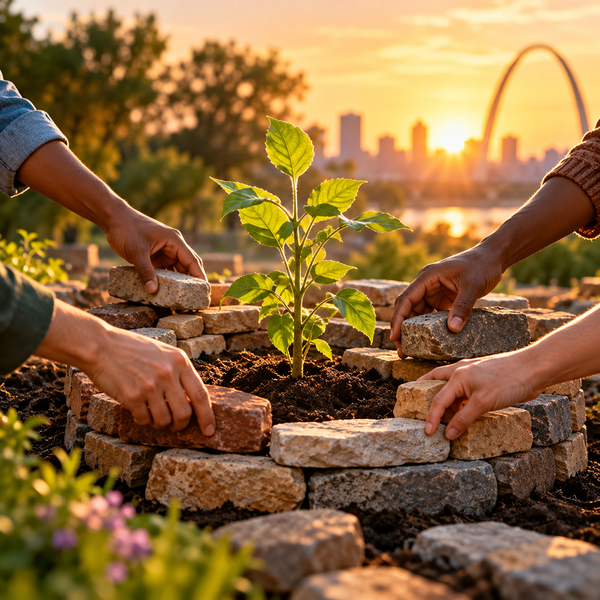


When we imagine what it takes to build a small business, nonprofit, creative practice, or community project, the list can become intimidating very quickly.
An idea may begin with passion, curiosity, or the recognition that something useful is missing—but bringing that idea into the world requires more than inspiration.
- How should it be structured?
- How do we explain it to other people?
- What will it cost?
How do we create a realistic budget, protect our work, find funding, build an audience, develop programs, use unfamiliar technology, and plan for problems we cannot predict?
Those questions become even harder when professional guidance, training, or consulting is financially out of reach.
 Jessica Carey

That is part of what made the St. Louis County Library’s 2026 Small Business & Nonprofit Conference so valuable.
Held over three days from October 7–9, the conference brought together presentations about branding, marketing, financial planning, nonprofit development, technology, accessibility, legal protection, funding, communication, organizational resilience, and many of the less-visible systems behind sustainable work.
I was initially interested because I have several connected ideas in different stages of development.
Creativity Chronicles has grown from an arts-and-creativity website into a much broader collection of writing, resources, experiments, artist stories, and community connections.
My own artistic practice continues to expand through mixed media, creative reuse, exhibitions, collaborations, and the Materials Lab.
At the same time, I have been developing the early vision for Everyone Creates, a future community arts initiative centered on creativity, accessibility, shared resources, experimentation, and belonging.
Each of those paths creates practical questions that artistic passion alone cannot answer.
I may understand why creativity matters and what kind of community I want to help build, but I am still learning about funding, organizational structure, sustainable income, budgeting, communication, legal protection, program development, partnerships, and the many systems required to support an idea over time.
The conference did not offer one simple roadmap through all of that. It offered something more realistic: a collection of perspectives, questions, tools, and possible starting points.
After the conference, the library made the complete collection of available presentations and supporting materials accessible.
The resulting resources contain slides, worksheets, templates, checklists, reference guides, handouts, and spreadsheets from across the three days.
Some resources address broad questions, such as whether starting a nonprofit is the right path or how an organization can respond to uncertainty.
Others are highly practical: a grant-readiness self-assessment, logic-model template, strategic-funding checklist, financial-forecast spreadsheet, pricing worksheet, digital-file-management guide, and instructions for tools such as Canva, Excel, Google Calendar, mail merge, and QR codes.
It is far too much material for every person to need—or for one article to analyze individually.
But that does not make the collection less useful.
It means we need a way to navigate it.
This article will organize the materials into broader categories, highlight some especially practical starting points, and share how to access the complete collection and recorded virtual sessions.
The goal is not to tell anyone to open every file or master every part of running an organization.
It is to help more people recognize what may be available to them.
Although the conference was designed for small businesses and nonprofits, its resources can also support artists, writers, makers, freelancers, educators, creative entrepreneurs, community organizers, and people who are still trying to determine what their idea might become.
You do not need to consider yourself a business expert.
You do not need to have incorporated an organization.
You do not need to understand every financial term, know exactly which structure you need, or arrive with a polished plan.
The collection is too large for every resource to help every person—but almost anyone trying to build something can probably find one useful place to begin.
A Conference for More Than Conventional Businesses
The phrase small-business and nonprofit conference may sound as though it belongs to a very specific audience.
We might imagine established companies, executive directors, professional consultants, or people arriving with completed business plans and years of organizational experience.
Many creative people do not immediately place themselves within that world.
Many creative people do not immediately identify as business owners or organizational leaders.
Yet artists still need to price and photograph their work, writers need to understand visibility and content protection, makers must consider expenses and cash flow, and community organizers need programs, budgets, partnerships, and funding plans.
Someone developing a larger social vision may also need to determine whether a nonprofit is truly the best structure—or whether another path could accomplish the same purpose with fewer complications.
These are business and organizational questions, even when the work begins with art, education, service, or community.
These are business and organizational questions, even when the work begins with art, service, education, or community.
That does not mean every creator needs to transform themselves into a conventional entrepreneur.
It does not mean every meaningful idea should become a registered business or nonprofit.
It means that practical knowledge can help protect creative work, reduce avoidable confusion, and make it easier for good ideas to survive beyond their earliest stages.
This is particularly important for people who have historically had less access to professional networks, startup funding, legal guidance, formal business education, or mentors who can explain unfamiliar systems.
A person may have a thoughtful project and the ability to carry it forward, yet still be missing one essential piece of information:
- How do I know whether this idea is financially sustainable?
- What belongs in a funding plan?
- How do I describe the people I hope to serve?
- What makes a program ready for a grant?
- How can I make my work more accessible?
- What legal protections should I understand?
- How do I create systems that do not depend upon remembering everything myself?
The conference resources cannot answer every version of those questions or replace individualized professional assistance.
They can, however, offer language, frameworks, and practical tools that help people understand what to ask next.
That makes the collection relevant far beyond conventional businesses.
It may help an artist create a more sustainable practice, a writer protect and promote their work, a freelancer organize their systems, an educator strengthen a program, or a community builder determine what kind of structure their vision actually needs.
Sometimes people do not lack commitment, creativity, or intelligence.
They lack access to the information that other people were taught to take for granted.
What Is Actually Inside the Collection?
With so many files available, the collection can look overwhelming at first.
The simplest way to approach it is not as one enormous course, but as a reference library divided into different areas of need.
Some files are presentation slides.
Others are practical worksheets, checklists, templates, reference guides, or spreadsheets that can help turn information into action.
The materials generally fall into five broad categories.
Branding, Communication, and Visibility
Several resources focus on helping people explain what they do and make their work easier to find.
The collection includes introductory and advanced Canva materials, website fundamentals for small teams, product and iPhone photography, PowerPoint, podcasting, LinkedIn, advertising, customer research, communication strategy, and ways to improve visibility through search and online maps.
Presentations such as Idea to Online: Website Fundamentals for Small Teams & Big Dreams, Snap and Sell: Better Product Images Made Easy, and The Psychographic Advantage: Finding Your Ideal Customers address different parts of the same challenge: meaningful work cannot reach people who do not know it exists or understand why it matters.
These resources may be useful for someone building an entire organization, but they can also help an individual artist photograph work for an application, a writer create an author website, a maker improve a product listing, or a small community project communicate more clearly with potential participants.
Business Planning and Financial Foundations
Another group focuses on the financial and strategic systems that help ideas become sustainable.
Topics include pricing, budgeting, financial statements, cash flow, lending, sales, business planning, paid advertising, government contracting, buying a business, and businesses that can be started with few or no upfront expenses.
The collection includes materials such as The Price Is Right, Money Metrics: Demystifying Financial Statements, Conquer Your Cash Flow: Budgeting for Business Growth, and Smart Planning. Real Execution.
Some presentations are accompanied by handouts or worksheets that give readers a place to apply the concepts to their own circumstances.
For artists and creative entrepreneurs, these subjects can feel disconnected from the actual act of creating.
Yet questions about material costs, labor, pricing, income, and sustainability directly affect whether someone can continue making their work.
Financial knowledge does not reduce art to money; it can help prevent the financial realities surrounding art from remaining invisible until they become a crisis.
Nonprofit Development, Programs, and Funding
The nonprofit resources address both how to begin and whether creating a nonprofit is the right decision.
The collection includes Starting a Nonprofit: How—and Whether—to Take the Leap, a strategy-screen template, nonprofit vision mapping, program design, funding plans, philanthropy, board development, organizational infrastructure, grant readiness, mission-focused budgeting, and financial forecasting.
Several of these resources include practical tools rather than presentation slides alone:
- A strategic-funding-plan checklist
- A grant-readiness self-assessment
- A logic-model template
- An activity-design worksheet
- A nonprofit strategy-screen template
- A budget and financial-forecast spreadsheet
These tools could help someone move from a broad desire to help people toward clearer questions about purpose, activities, outcomes, costs, leadership, and sustainability.
They may also help someone recognize that a nonprofit is not necessarily the only—or best—way to pursue a meaningful mission. Sometimes determining what not to build is part of responsible planning.
Technology and Organization
Some of the most immediately practical resources concern the systems that keep work organized.
The archive includes guidance on Excel, Google Calendar, email organization, mail merge, digital file management, QR codes, Canva, and the developing role of AI tools.
These may not sound as inspiring as defining a mission or launching a creative project, but disorganized systems can quietly consume enormous amounts of time and energy.
A useful calendar process, file-naming system, spreadsheet, or communication tool can make it easier to find information, follow through on responsibilities, and prevent important details from disappearing.
This matters especially when one person is carrying many roles at once: creator, administrator, marketer, customer-service representative, researcher, fundraiser, and project manager.
Better tools cannot create unlimited capacity, but they may reduce some of the unnecessary friction surrounding the work.
Legal Protection, Accessibility, and Resilience
The final group addresses how businesses and organizations protect their work, include more people, and respond when circumstances change.
Resources discuss copyright, trademarks, broader legal-protection strategies, protecting creative content in the age of AI, accessibility in business, intentional responses to change, communication, connection, and organizational resilience.
The inclusion of accessibility is particularly important.
Accessibility is not an optional feature to consider after everything else has been built.
It influences who can enter, understand, participate in, purchase from, work with, or benefit from what we create.
Likewise, resilience should not mean expecting individuals to endure every difficulty without adequate support.
At its best, organizational resilience means developing thoughtful systems, relationships, and plans so that every challenge does not become one person’s private emergency.
No single reader will need every category equally.
Someone preparing to sell artwork may begin with pricing and product photography.
A person developing a community program may need the logic-model and grant-readiness materials.
Someone trying to protect original writing or images may begin with copyright, trademarks, and AI-related content protection.
Another person may simply need help organizing files or creating a realistic calendar.
The collection becomes far more manageable when we stop asking: how could I possibly learn all of this?
A better question is: which resource speaks to the problem I am trying to solve right now?
How These Resources Connect With My Work
My interest in the conference was not purely theoretical.
The collection intersects with nearly every part of what I am building.
Creativity Chronicles raises questions about website development, audience, communication, funding, organization, and long-term sustainability.
My art practice involves pricing, photography, copyright, applications, commissions, recordkeeping, promotion, and the challenge of building income without allowing administrative work to consume the energy needed to create.
The Materials Lab adds questions about partnerships, contributed materials, ethical disclosure, documentation, community sharing, and communicating what an experiment makes possible.
Everyone Creates, my developing vision for a more accessible creative community, carries the largest structural questions:
- Should it eventually become a nonprofit?
- What programs would come first?
- How would those programs be funded, evaluated, and sustained?
- What would responsible leadership look like?
- How could accessibility be built into the foundation rather than added later?
- What infrastructure would be necessary before inviting people to depend upon it?
The conference collection does not hand me completed answers.
A worksheet cannot choose the correct legal structure.
A funding presentation cannot guarantee financial support.
A budget spreadsheet cannot create money that does not exist.
A branding guide cannot replace the time, energy, relationships, and specialized help required to build sustainable work.
What these resources can provide is language.
They can help me identify questions I did not yet know how to formulate.
They can show me which pieces belong in a funding plan, what makes a program easier to evaluate, how financial forecasting differs from wishful thinking, or which decisions should be considered before an idea grows larger.
They can also help me recognize where I need individualized guidance rather than another general presentation.
For me, some of the most relevant materials are the nonprofit strategy screen, grant-readiness assessment, logic-model worksheet, strategic-funding checklist, budgeting and financial-forecast spreadsheet, accessibility resources, and presentations about protecting creative work.
I do not need to complete all of them immediately.
Some may become useful while developing Creativity Chronicles.
Others may help strengthen my professional art practice.
Some belong to later stages of the Materials Lab or Everyone Creates.
A resource that is not useful today may answer a question that becomes urgent six months from now.
That is why I think of this collection less as an assignment and more as a reference shelf.
I can return when a particular question becomes relevant, choose the resource closest to that need, and use it to make the next decision more informed.
The materials do not provide a complete roadmap.
They offer signs, tools, and possible next steps along roads I am still learning how to build.
Free Information Can Reduce Gatekeeping—but Access Requires More Than Availability
Professional guidance can be expensive.
Consultations about legal structure, financial planning, branding, grant development, accessibility, technology, or organizational strategy may cost more than an emerging artist, small-business owner, or community builder can afford.
Even introductory courses and conferences can become inaccessible once registration fees, transportation, time away from work, childcare, or disability-related needs are considered.
Making these conference materials freely available removes at least one of those barriers.
Someone who could not attend all three days can still review the presentations.
A person who needs more processing time can return to a slide rather than trying to absorb everything while a presenter is speaking.
Someone who learns best by doing may benefit from a worksheet, checklist, spreadsheet, or template.
A person exploring an idea privately can begin learning without first having to prove that the idea is developed enough to deserve help.
That matters.
Knowledge is often treated as though it belongs primarily to people who can afford professional services, understand institutional language, or already have connections to someone willing to explain how things work.
Public access to information can make unfamiliar systems less mysterious and help more people enter conversations from which they might otherwise feel excluded.
But making a resource available is not the same as making every part of it accessible.
A person may receive a budget spreadsheet and still struggle to determine which numbers belong in it.
They may understand that they need a strategic funding plan without knowing where their first realistic funding source might come from.
A grant-readiness assessment can identify weaknesses in a program, but it cannot provide the money, staff, time, or specialized knowledge needed to resolve them.
Information and implementation are not the same thing.
Disability, executive-functioning limitations, fatigue, unfamiliar terminology, limited technology, financial hardship, or the sheer volume of information can make a large resource collection difficult to use.
That does not mean someone is unmotivated or incapable.
They may need help choosing the relevant resource, information in a different format, more processing time, a working example, or individualized guidance that translates general advice into manageable action.
This distinction is important because resources should support people—not become another standard against which they are judged.
It would be unfair to hand someone a presentation about cash flow and conclude that they now have everything required to escape financial hardship.
It would be equally unfair to provide a nonprofit template and assume that forming and sustaining an organization is now simple.
Free information cannot replace adequate funding, accessible systems, supportive relationships, professional expertise, or the capacity to carry out the work.
It can still make a meaningful difference.
A presentation may give someone the language to describe what they need.
A checklist may reveal which question should come first.
A template may make an unfamiliar process less intimidating.
A recorded session may allow someone to learn at a time and pace their body can manage.
Access is not a single doorway that is either open or closed.
It is the ongoing work of making information available, understandable, navigable, and connected to the support people need in order to use it.
 Jessica Carey

You Do Not Have to Consume Everything
When a free resource collection contains dozens of files, it can trigger the feeling that we should examine all of them.
We imagine opening every presentation, watching every recording, completing every worksheet, and building a perfectly organized system before taking another step.
That is neither necessary nor especially realistic.
The collection is not a course with required assignments.
There is no test at the end, no deadline for completing the folder, and no reward for forcing ourselves through information that does not match our current needs.
It is a reference library.
We are allowed to enter it with one question, find one useful resource, and leave the rest for another time.
A manageable approach might look like this:
1. Name the problem in front of you
Begin with the question that is creating the most immediate uncertainty.
Are you trying to price an artwork, improve product photographs, organize digital files, understand whether a nonprofit is the right structure, prepare a program for grant funding, protect original content, or create a more realistic budget?
The clearer the current problem becomes, the easier it is to ignore unrelated materials.
2. Choose one resource that appears closely connected
Do not begin by opening ten presentations about everything you might someday need.
Choose the title that most closely resembles the question you are trying to answer.
If you need help with pricing, start with the pricing materials.
If you are considering a nonprofit, begin with the presentation about whether to take that leap—not the advanced funding, board, and infrastructure resources all at once.
3. Look for a practical companion
A presentation can provide context, but a worksheet, checklist, template, reference guide, or spreadsheet may make the next step more concrete.
The archive includes practical companions for several subjects, including strategic funding, grant readiness, logic models, activity design, nonprofit structure, pricing, budgeting, financial forecasting, scheduling, digital organization, communication, and QR codes.
You do not necessarily need to complete every field immediately.
Sometimes simply reading the questions reveals what information you already have and what remains unclear.
4. Take one useful action
A resource has already helped if it allows you to make one informed decision.
That action might be:
- Writing a clearer description of an idea
- Identifying one expense missing from a budget
- Organizing one folder
- Revising one price
- Creating one accessibility improvement
- Saving one legal question for a qualified professional
- Recognizing that a particular structure is not right for the project
- Naming the next kind of help you need
Progress does not require transforming your entire business, organization, or creative practice in one afternoon.
5. Return when another question becomes relevant
A resource that does not apply today may become useful later.
Save the collection somewhere you can find it.
Make a brief note about the files that seem connected to future goals.
Then allow yourself to close the folder.
You do not need to keep all of its information active in your mind.
The goal is not to finish the folder.
The goal is to find the resource that helps with the next decision in front of you.
Libraries as Community Infrastructure
Libraries are often described primarily as places where people borrow books.
That remains essential—but it is far from the only role a modern library can play.
Libraries can provide access to technology, research databases, professional education, creative equipment, meeting spaces, recorded programs, practical templates, local experts, and information that would otherwise be scattered across expensive courses, unfamiliar institutions, or systems that assume people already know where to look.
The Small Business & Nonprofit Conference demonstrates that broader role.
Over three days, the St. Louis County Library brought together people with knowledge about branding, finance, nonprofit development, accessibility, legal protection, technology, communication, funding, and organizational resilience.
Making the supporting materials and virtual recordings available afterward allowed that knowledge to continue circulating beyond the original sessions.
That transforms a temporary event into an ongoing public resource.
Someone who discovered the conference too late can still learn from it.
A person who could not attend during the scheduled time can watch a recording later.
Someone who needs written information can review the slides or handouts.
An emerging business owner or nonprofit founder can return to the collection when a new question arises.
The conference is also part of a much larger ecosystem of library support.
Depending upon the location and system, libraries may offer business databases, grant-research tools, technology instruction, makerspaces, creative software, equipment, meeting rooms, one-on-one appointments, social-service connections, and programs led by professionals from throughout the community.
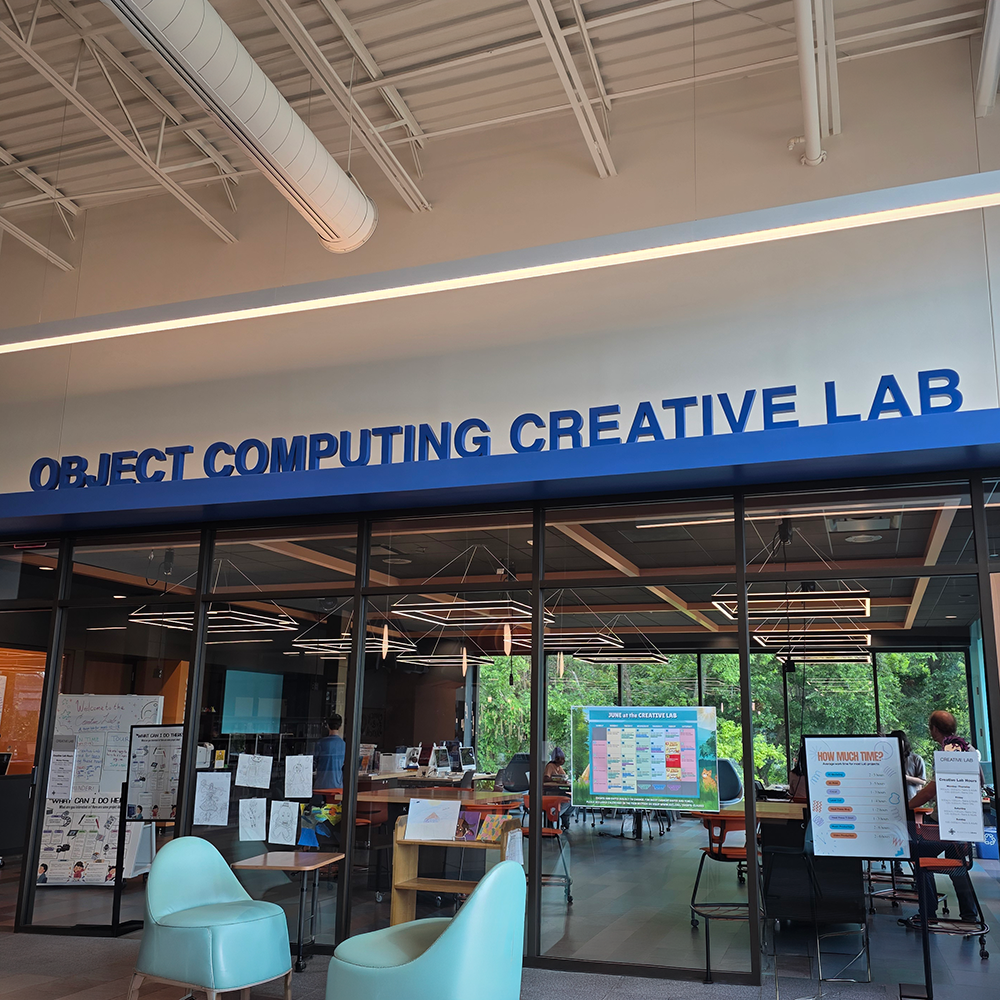
The St. Louis County Library’s Creative Lab, for example, offers access to tools such as 3D printers, a Glowforge, Cricut machines, Adobe Creative Cloud, drawing tablets, and audio equipment.
Those resources can make forms of creative and professional work possible for people who cannot purchase or store the same equipment themselves.
This is why libraries should be understood as community infrastructure.
They do not merely contain information.
They create points of access between people and the knowledge, tools, spaces, and relationships that may help them act upon it.
A library cannot build someone’s business, nonprofit, art practice, or community project for them. It cannot guarantee funding or eliminate every barrier.
It can help ensure that fewer people have to begin without information, technology, or somewhere to ask their first questions.
A professional connection may begin with learning whom to ask.
A funding search may begin with discovering where to look.
A project may begin with a tool someone cannot afford to own.
Sometimes one presentation, appointment, or worksheet is enough to make the next decision more informed.
Libraries cannot eliminate every form of gatekeeping.
They can, however, create public doors into knowledge that too often remains behind financial, professional, and social barriers.
 Jessica Carey
Explore the Conference Resources
The presentations and supporting materials from all three days of the St. Louis County Library’s 2026 Small Business & Nonprofit Conference are available in one shared collection.
The resources contains dozens of files, including:
- Presentation slides
- Worksheets and self-assessments
- Planning templates
- Checklists
- Reference guides
- Student handouts
- A budgeting and financial-forecast spreadsheet
Some subjects include both a presentation and a practical companion.
If a topic interests you, look for files with similar names—you may find a worksheet, checklist, or handout designed to accompany the main presentation.
Download the Presentations and Practical Resources
Access the complete conference resources here:
You do not need to download everything.
You may prefer to open the folder, identify the category closest to your current needs, and save only the files that seem useful.
Watch the Recorded Virtual Sessions
Several virtual conference sessions are also available as recordings:
The recordings may be especially helpful when presentation slides contain brief phrases or visual prompts that make more sense alongside the speaker’s explanation.
They also allow viewers to pause, rewind, adjust the playback speed, and return when they have more time or energy.
A Note About Time-Sensitive Information
These resources reflect the information presented during the October 7–9, 2026 conference.
Many foundational ideas, worksheets, and planning tools may remain useful over time.
However, laws, funding opportunities, software features, platform instructions, program availability, organizational contacts, and eligibility requirements can change.
Before making an important legal, financial, funding, or organizational decision, verify current information with the relevant agency, organization, platform, or qualified professional.
These materials can help you understand the landscape, identify questions, and prepare for a more informed conversation.
They should not be treated as individualized legal, financial, tax, or accounting advice.
Most importantly, use the collection in the way that serves you.
Explore one category. Open one file. Watch one session. Save one worksheet for later.
The resources are there to support your work—not to become another pile of obligations.
One Resource Can Be Enough to Begin
Dozens of files can look like an overwhelming amount of information.
They can also represent possible doorways.
One person may find a worksheet that helps them clarify whether a nonprofit is the right structure.
Another may discover a better way to photograph their artwork, calculate a price, organize digital files, prepare a program for funding, or make a business more accessible.
Someone else may open a presentation and simply learn the name of a concept they need to investigate further.
None of those outcomes requires completing the entire collection.
Most people do not begin already knowing how to create budgets, write funding plans, protect intellectual property, evaluate programs, manage technology, and communicate with supporters.
They learn as questions become relevant—through resources, guidance, experimentation, imperfect decisions, and revision.
A dream does not become less meaningful because its creator needs help with spreadsheets.
An artist does not become less creative because pricing feels confusing.
A community builder does not become less committed because nonprofit structures or grant language are unfamiliar.
These resources cannot guarantee success or replace funding, capacity, mentorship, and professional advice.
They can make useful knowledge available when someone is ready to take the next step.
For me, the conference resources do not provide a finished plan for Creativity Chronicles, my art practice, the Materials Lab, or Everyone Creates.
They provide pieces I can return to as those projects grow: a framework for thinking about a program, a spreadsheet for exploring a budget, a question about structure, or language that helps me explain what I am trying to build.
For someone else, a completely different file may become the useful one.
- What are you trying to build?
- What question is making the next step difficult?
- Which resource might help you understand that question a little more clearly?
You do not need every answer before you begin.
Sometimes one reliable resource, encountered at the right moment, is enough to make the next step possible.
 Jessica Carey

Want even more content about creativity and art?
Be sure to check out all of our creative chronicles!
If you'd like to see examples of my work, you can find some of my art and creations at Redbubble and Gumroad!
Looking to learn more about my recent journey?
Check out some of these articles:
-Hidden Gems for St. Louis Artists
-Hidden Gems for Autistic & Neurodivergent Adults
-Learning What Love Was Supposed to Feel Like
-I Wasn't Broken--I'm Burned Out
-What Chronic Autistic Burnout Actually Feels Like
-Building a Life from What Remains
 Jessica Carey