


Why the “last straw” is rarely the whole story—and leaving an unsafe family can be an act of wisdom rather than hatred
I Don’t Miss Them
One of the hardest truths to admit is that I do not miss them.
That may sound cold or cruel to people who believe family should be cherished simply because they are family.
Some will interpret my relief as proof that I am hateful, unforgiving, unreasonable, or incapable of love, but I did not arrive at this feeling because I stopped caring overnight.
I arrived here after caring for far too long without being cared for in return.
I spent years trying to make these relationships work.
I explained myself, forgave repeated harm, offered more chances, searched for better words, and tried to become easier to love.
I walked on eggshells, monitored other people’s moods, suppressed my needs, and made myself smaller in the hope of preventing the next explosion.
I became hypervigilant and increasingly disconnected from myself.
Still, nothing I did created lasting safety, accountability, or repair.
By the time I physically left, much of the relationship had already died.
What remained was obligation, fear, grief, and the performance of closeness—not the mutual care that makes a relationship real.
Physical contact can continue long after genuine connection has disappeared.
Leaving was not a punishment.
It was not an impulsive response to one disagreement or an attempt to make anyone suffer; it was the recognition that remaining connected to people who repeatedly harmed me was destroying my health and sense of self.
Being around them felt as though it were killing me.
Away from them, I began to feel lighter.
Whenever they tried to force the door open again, the heaviness returned, even accompanied by physical illness.
My body was not asking me to seek revenge; it was telling me that I was not safe.
I did not stop missing a healthy relationship.
I stopped waiting for unsafe people to become the family, friends, and loved ones they repeatedly showed me they were unwilling to be.
The absence of longing does not mean I never loved them; it may mean I had already grieved the relationship while I was still trapped inside it.
The Last Straw Was Carrying a Lifetime
People often want to identify the single incident that “caused” someone to leave.
They search for the final argument, boundary violation, or explosion and judge the decision according to that isolated moment.
When the incident does not appear severe enough to justify estrangement on its own, they conclude that the person leaving must be overreacting.
But the final incident is rarely the whole reason.
As discussed by Dr. Ramani, the breaking point can be understood through the image of a closet rod collapsing.
Someone might look at the last shirt placed on the rod and ask how something so small could have broken it.
But the last shirt was never carrying the entire weight; it merely revealed how overloaded and weakened the rod had already become.
That is what happened to me; there was no single misunderstanding that suddenly made me abandon otherwise safe and loving relationships.
There was a lifetime of mistreatment behind my decision: being blamed for other people’s behavior, having my needs and boundaries dismissed, being expected to absorb everyone else’s emotions, and being punished whenever I spoke honestly about what was happening.
I was repeatedly expected to forgive without receiving an acknowledgment, tolerate without protection, and remain connected without any evidence that the relationship would become safer.
Each incident became part of an accumulation.
Every explosion taught my nervous system to remain alert.
Every denial made me question whether anyone would ever acknowledge reality.
Every broken promise showed me that words were not reliable without changed behavior.
Every attempt to force closeness without addressing the harm communicated that preserving the appearance of family mattered more than protecting me.
Outsiders may see one argument, one departure, or one firm boundary.
They do not see all the times I stayed.
They do not see the conversations I attempted, the chances I offered, the explanations I carefully constructed, or the parts of myself I sacrificed to keep the peace.
They see the moment I could no longer carry the relationship—not the years during which I carried far more than any one person should have been expected to hold.
Even now, people may insist that I should “just let it go,” as though I am gripping one old grievance and refusing to move forward.
In reality, leaving was how I finally began letting go: not only of the people hurting me, but of the impossible responsibility to repair relationships alone.
I could not create mutuality with people who wanted access without accountability.
I could not manufacture safety by becoming quieter, more compliant, or less human.
The last straw did not carry the entire weight; it revealed how much weight had already been placed there—and how long I had been expected to stand beneath it.
My breaking point was not evidence that I was weak, hateful, or unreasonable; it was evidence that the situation had exceeded what any person could sustainably endure.
What looked sudden from the outside was the visible end of an invisible accumulation.
I did not leave because one thing went wrong.
I left because the same fundamental harms continued happening, and every attempt to address them showed me that the people involved were more committed to protecting the pattern than protecting me.
I Tried to Save the Relationship by Disappearing Inside It
Before I accepted that these relationships were unsafe, I tried to preserve them by changing myself.
I learned to monitor the emotional atmosphere around me, searching for early signs that someone might become angry, volatile, or explosive.
I measured my words, rehearsed explanations, suppressed natural reactions, and tried to anticipate needs nobody had communicated.
I believed that if I could remain calm enough, helpful enough, agreeable enough, and undemanding enough, I might finally prevent the next conflict.
Instead, I became hypervigilant.
I walked on eggshells while the people around me remained free to stomp wherever they pleased.
Their emotions filled the entire room, while mine were treated as disruptions.
They could scream, accuse, manipulate, or behave aggressively, yet I was considered the problem when I acknowledged what was happening.
My attempts to seek understanding, accountability, and repair were reframed as attacks.
I was accused of “ruining everything” because I would not pretend everything was fine.
Over time, I stopped asking what I needed and focused almost entirely on what might keep everyone else stable.
I abandoned boundaries before anyone could punish me for having them.
I tried to become useful without requiring care, present without taking up space, and loving without expecting love to be demonstrated in return.
As an undiagnosed autistic child and young adult, this pressure carried another layer.
I already knew that people experienced me as different, even when none of us understood why.
My direct communication could be treated as disrespect.
My distress could be dismissed as overreaction.
My sensory limits, need for clarity, and difficulty managing unpredictable environments were interpreted as personal failures.
Rather than receiving support, I learned to mask—to perform a version of myself that might be more acceptable and less inconvenient to everyone else.
But there was no version of me that could make an unsafe system safe.
No matter how carefully I spoke, someone could choose to misunderstand me.
No matter how much I helped, I could still be accused of selfishness when I reached my limit.
No matter how many chances I gave, the same patterns returned because I was not the person creating them.
I was attempting to solve collective dysfunction by erasing the only person whose behavior I could control: myself.
That was not compromise; compromise requires everyone involved to adjust, listen, and care about the effect they have on one another.
What I was doing was self-abandonment.
I was surrendering my needs, instincts, voice, and well-being so other people would not have to confront their behavior.
And even that was never enough.
The more I accommodated, the more accommodation was expected.
The more pain I endured silently, the easier it became for others to believe that I should continue enduring it.
My capacity was treated as an unlimited resource, and any attempt to protect what remained was cast as rejection or cruelty.
I did not refuse to compromise—I compromised myself nearly out of existence.
Eventually, I had to face the truth: a relationship that survives only when one person disappears is not being saved; it is being maintained at that person’s expense.
Leaving did not mean that I had failed to try hard enough; it meant I could no longer keep calling my own destruction love.
 Jessica Carey

The Relationship Died Before Contact Ended
People often treat the moment someone leaves as the moment a relationship ends, but sometimes the departure is only the final acknowledgment of a loss that occurred much earlier.
A relationship is more than continued contact, shared history, biological connection, or physical proximity; it requires mutual care, emotional safety, curiosity, respect, honesty, and some willingness to consider one another’s needs.
Without those things, people may continue occupying the same rooms and performing familiar roles, but genuine connection can quietly disappear.
That is what happened in many of my relationships.
I was physically present, but I was not meaningfully known.
People interacted with the role they assigned me: the helper, the peacemaker, the responsible one, the person who should need nothing, tolerate everything, and keep the family together.
They expected access to what I could provide while showing little curiosity about what the arrangement was doing to me.
They may have believed they loved me, but love cannot be measured only by what someone claims to feel or intended to give; its impact matters.
A relationship cannot remain alive on declarations of love while one person is continually blamed, silenced, frightened, neglected, or required to abandon themselves.
The relationship became increasingly one-sided; I was expected to listen, understand, accommodate, forgive, and return.
The same consideration did not flow back toward me.
When I brought up harm, the conversation rarely became about what had happened or what I needed to feel safe.
Instead, it became about my tone, my reaction, their intentions, or how much discomfort my honesty created.
I was told, directly and indirectly, that maintaining closeness mattered more than addressing why closeness had become unbearable.
Over time, I stopped bringing my full self into these relationships because doing so was unsafe.
I withheld my needs, filtered my words, and prepared myself for conflict before interactions even began.
That is not intimacy; it is survival beside people who believe proximity proves connection.
By the time I left, I was not walking away from a living, nurturing relationship.
I was stepping away from an arrangement built around obligation, unequal access, and my continued participation in pretending.
The grief had already begun while I was still there.
I had spent years mourning the family and relationships I needed but did not truly have.
This is also why I do not miss them in the way others expect.
What would I be missing—the fear, the volatility, the constant scrutiny, the pressure to become smaller?
I can grieve what should have existed without longing to return to what actually did.
I did not end a healthy relationship because I was unwilling to forgive; I stopped performing closeness after repeated harm and the refusal to repair had already hollowed the relationship out.
Physical contact can continue long after genuine relationship has disappeared.
Sometimes no contact is not what kills the relationship; it is simply the moment the harmed person stops carrying its body and calling it alive.
 Jessica Carey

Relationships Survive Rupture Through Repair—But Repair Never Came
Conflict alone does not necessarily destroy a relationship.
People misunderstand one another, make poor decisions, lose control of their emotions, and sometimes cause harm despite genuinely loving each other.
A healthy relationship is not one in which nobody ever gets hurt; it is one in which harm can be acknowledged and meaningfully repaired.
Repair requires more than wanting the conflict to end; it begins with a willingness to face what happened without denial, minimization, blame-shifting, or retaliation.
The person who caused harm must be able to listen to its impact, take responsibility for their actions, offer a sincere apology, and change the behavior that created the rupture.
That process might sound like: I understand what I did and how it affected you. You did not deserve it. I am sorry. I will respect what you need now, and this is what I am changing so it does not keep happening.
I rarely received anything resembling that.
Instead, my attempts to discuss harm were often treated as the real offense.
People focused on why I brought it up, how uncomfortable the conversation made them, or whether my words sounded sufficiently gentle.
They explained what they intended, denied details, distorted events, accused me of being too sensitive, or demanded that I acknowledge everything they believed they had done for me.
Sometimes “sorry” appeared, but it came wrapped in excuses:
- I’m sorry you feel that way.
- It was an accident.
- I didn’t mean it like that.
- You misunderstood.
- I already apologized—what more do you want?
These statements sought release from consequences without demonstrating understanding of the injury.
An apology followed by the same harm is not repair. It is another request for access without accountability.
Repair also cannot be completed by the harmed person alone.
I could communicate more carefully, offer context, acknowledge possible intentions, and suggest ways forward.
I could remain open to a sincere conversation.
But I could not make another person tell the truth, care about the impact of their behavior, or choose to change.
No amount of compassion from me could perform their half of the relationship.
The pressure to “move on” usually meant that I was expected to restore access before safety had been restored.
Forgiveness was treated as an eraser that should remove the injury, its consequences, and my right to respond.
If I remembered patterns or required evidence of change, I was called hateful or unforgiving.
The standard was not reconciliation through repair; it was reunion through my silence.
But sweeping harm under the rug does not heal a rupture; it conceals it while allowing the conditions that caused it to remain intact.
Pretending everything is fine may preserve a family gathering or public image, but it does not rebuild trust.
Trust returns through consistent behavior over time—not demands, guilt, promises, or biological entitlement.
I tried repeatedly to create opportunities for repair.
I explained what hurt and why. I asked for calm, respectful communication.
I gave additional chances after boundaries were violated. I searched for words that might finally help people understand.
Yet each failed attempt taught me something important: the obstacle was not simply that I had not explained myself well enough.
Some people did not want understanding if understanding required accountability.
They wanted the relationship to return to “normal,” but normal was the problem.
Normal meant they could behave however they wanted while I absorbed the consequences; normal meant I carried the discomfort so they would not have to.
A living relationship can survive rupture because both people participate in repair.
A one-sided arrangement cannot be repaired by the person being harmed continually returning for more.
The relationship did not become unsafe because I expected perfection; it became unsustainable because harm was repeated, reality was denied, and genuine repair never came.
My boundary was not a refusal to heal; it was an acknowledgment that healing could not keep depending upon the cooperation of people who repeatedly refused to participate in it.
 Jessica Carey

Protective Distance Is Not Punishment
People can interpret no contact as a weapon: a way to control someone, force an apology, inspire guilt, or make another person suffer.
And, like almost any human action, silence or distance can be used manipulatively.
But that is not what I was doing.
In this context, punishment would mean using distance primarily to control or hurt another person; protection means deciding what I will continue allowing around me.
I did not leave because I wanted my family or anyone else to hurt.
I did not withdraw so they would chase me, change their minds, or finally recognize my value.
I left because continued access to me meant continued opportunities to harm me—and years of experience had shown me that those opportunities would be used.
My boundary did not dictate what anyone else had to do; they remained free to believe their version of events, continue their lives, or refuse to change.
I simply stopped offering my body, mind, time, and nervous system as the place where the consequences of their choices could keep landing.
That distinction matters; when someone repeatedly screams at, belittles, blames, manipulates, threatens, or disregards another person’s boundaries, the resulting distance is not equivalent to the original mistreatment.
Consequences are not cruelty merely because the person experiencing them dislikes them.
Losing access to someone is a foreseeable result of repeatedly making that access unsafe.
Yet I was told that protecting myself meant I was “living in fear.”
People warned that I would regret staying away.
They framed renewed contact as courage and distance as emotional weakness, without taking seriously what contact had repeatedly cost me.
But fear and discernment are not the same.
Fear may insist that every person will hurt me because some people have.
Discernment recognizes that these particular people established a persistent pattern of harm, denial, escalation, and refusal to repair.
Fear can close every door without examining who is standing outside.
Discernment notices which doors have repeatedly been forced open and chooses a stronger lock.
I do not believe everyone is unsafe. I am still capable of connection, compassion, generosity, and love.
I continue to meet people, form relationships, support others, and participate in communities.
What has changed is my willingness to ignore the evidence when someone consistently shows that closeness with them requires self-betrayal.
This discernment is not merely theoretical; contact with the people who repeatedly harmed me produces a distinct bodily response—tension, depletion, hypervigilance, and sometimes physical illness.
I will explore what that contrast taught me in the next section.
Wisdom does not require me to keep touching a hot stove to prove I am no longer afraid of being burned, nor does love require unrestricted access.
I can wish someone healing without permitting them to participate in my life.
I can refuse vengeance while still allowing consequences.
I can understand that people may have their own trauma, limitations, and distorted ideas of love without volunteering to remain the target of what they refuse to address.
Compassion can explain someone’s behavior; it does not obligate me to endure it.
No contact was not a sentence I imposed upon other people.
It was a boundary I created around my own life after less restrictive boundaries repeatedly failed; it may remain necessary for as long as the danger, denial, and lack of repair remain.
I do not need to promise “forever” to know what safety requires now.
I was not trying to control what they did. I was finally taking responsibility for what I would continue allowing around me.
After a lifetime of being placed last, choosing protection was not hateful; it was the beginning of treating my life as something worth protecting.
This is not a prescription for what anyone else should do; it is an account of what became necessary in my circumstances after repeated attempts at less restrictive boundaries and repair had failed.
 Jessica Carey

The Natural Experiment: What My Body Knew When They Were Gone
For years, I was taught to distrust my perception of what was happening.
When I said that something hurt, I was told I was too sensitive.
When I described a pattern, people focused on exceptions.
When I expressed fear or exhaustion, they insisted that I was unreasonable, unstable, or creating the very problems I was trying to address.
Distance created what the video describes as a kind of “natural experiment.”
When the unsafe people and constant conflict were removed, what changed?
I felt lighter.
My circumstances did not suddenly become easy; I still carried trauma, chronic autistic burnout, financial instability, housing insecurity, and the practical consequences of having so little dependable support.
Leaving did not magically repair my nervous system or give me the foundation I should have received from the beginning.
Yet something fundamental shifted; I no longer had to devote so much of my limited energy to anticipating another explosion, decoding manipulative communication, defending reality, or recovering from the latest violation.
I was not continually watching facial expressions, tones, footsteps, and movements for signs that the emotional weather was about to turn dangerous.
There was grief, uncertainty, and tremendous difficulty—but there was also relief.
That relief is important evidence; it does not prove that every decision I make is perfect, but it tells me something meaningful about what those relationships were doing to my body.
If separation from someone creates greater calm, clarity, and ability to function, while renewed contact consistently produces dread, heaviness, hypervigilance, or illness, that difference deserves to be taken seriously.
Whenever people try to force the door open again, my body responds before I can reason myself out of it.
I feel heavy.
My energy collapses.
I may become nauseated or physically ill.
The possibility of renewed access does not feel like reconnection; it feels like danger returning.
For a long time, I believed I needed a case strong enough to convince everyone else before I was allowed to protect myself.
I kept looking for undeniable evidence that nobody could minimize, reinterpret, or blame on me.
But people committed to preserving the existing story can dismiss almost anything—including the condition of the person being harmed.
My body had been recording the evidence all along.
Its responses are not moral verdicts or infallible predictions.
Trauma can make the nervous system sound an alarm even when danger is no longer present, but that possibility does not mean every alarm is false.
Sometimes a body reacts because it recognizes a pattern the mind has been trained to excuse.
The contrast matters: away from them, I begin to unfold.
When access is threatened again, I contract.
Distance did not create the truth about the relationship.
It quieted the chaos enough for me to perceive it.
The fact that I feel lighter is not proof that I am heartless; it may be evidence of how much weight I was carrying in their presence.
My relief does not celebrate anyone’s pain or wish them harm; it tells me that my system is no longer under the same continuous assault.
After spending a lifetime being told to override myself for everyone else’s comfort, I am finally learning to listen when my own body says: this is what safety feels like. Please do not take me back.
Why Everyone Focused on My Boundary Instead of Their Behavior
One of the most painful parts of leaving unsafe relationships was discovering how many people were more disturbed by my boundary than by what made it necessary.
They questioned why I left, whether I had forgiven enough, and how I could do this to my family.
They warned that I might regret the distance and suggested that continuing to protect myself meant I was living in fear.
Yet many of those same people showed little willingness to examine the years of mistreatment, volatility, denial, and failed attempts at repair that came before it.
My refusal to return became the scandal; their treatment of me remained background noise.
This happens partly because boundaries disrupt established systems.
In a dysfunctional family or community, each person may be expected to perform a particular role.
Mine was often to help, absorb, accommodate, remain composed, and take responsibility for problems I did not create.
As long as I stayed in that position, everyone else could continue behaving as they always had.
When I stepped out of the role, the system lost one of the people who had been carrying its consequences.
Acknowledging why I left would require others to confront uncomfortable truths.
They might have to recognize behavior they enabled, minimized, participated in, or ignored.
They might have to admit that what they called love was not safe, that family loyalty had been used to protect harmful people, or that they repeatedly asked the victim to make peace with conditions the perpetrators refused to change.
It is often easier to call one person unforgiving than to ask an entire system to become accountable.
The pressure to return was therefore not necessarily evidence that reconciliation was healthy.
Sometimes people wanted me back because my absence exposed the dysfunction.
My boundary interrupted the family’s preferred story—that nothing serious had happened and that everyone was essentially fine until I became unreasonable.
If I returned without repair, that story could remain intact.
If I stayed away, my absence continued to ask a question nobody wanted to answer: what became so unsafe that leaving felt healthier than staying?
Rather than investigate that question, people assigned motives to me; I was supposedly hateful, unstable, vindictive, or controlled by fear.
These labels shifted attention away from observable behavior and toward alleged flaws in my character.
Once I was defined as the problem, nobody had to take my account seriously or offer me protection.
This was a continuation of the same dynamic I was trying to escape.
When harm occurred, attention moved from what had been done to how I reacted.
My distress was treated as the disruption, while the behavior producing it remained unquestioned.
Even my attempts to seek help sometimes resulted in pressure to resume contact with the very people from whom I needed protection.
Neutrality under those circumstances was not truly neutral.
Encouraging a harmed person to return while requiring nothing from those who caused the harm reinforces the existing imbalance.
Reconciliation without truth and accountability does not restore peace; it restores access.
If people genuinely cared about the relationship, the questions would be different.
They would ask what happened, whether I was safe, what repair had been attempted, and whether the harmful behavior had changed.
They would not begin by treating renewed contact as the only acceptable outcome.
My boundary did not create the family’s dysfunction; it made the dysfunction harder to hide.
I am not responsible for preserving other people’s comfort by participating in a false version of events.
Nor am I obligated to sacrifice my safety so a family can continue appearing intact.
A family is not healed because everyone remains in the same room.
Healing begins when truth can enter the room without the person speaking it being punished.
 Jessica Carey

Forgiveness Does Not Mean Reconciliation, Trust, or Access
Forgiveness is often used as a demand placed upon the person who was harmed.
Instead of asking whether the people responsible have acknowledged their actions, changed their behavior, or become safer, others ask why the victim has not forgiven enough to return.
In that framing, forgiveness becomes less about healing and more about restoring everyone else’s comfort.
I have been called hateful and unforgiving because I would not give people unlimited chances, erase what happened, or behave as though nothing needed to change, but remembering a pattern is not hatred.
Responding to evidence is not vengeance.
Refusing to resume an unsafe relationship is not the same as wishing harm upon someone.
Forgiveness, reconciliation, trust, and access are separate things.
Forgiveness—however a person understands or practices it—is an internal and deeply personal process.
It may involve releasing the desire for retaliation, refusing to let resentment control one’s life, or surrendering the expectation that the past can somehow become different; it cannot be forced according to somebody else’s timetable, and it does not require denying anger, grief, or injustice.
Reconciliation is relational. It requires participation from everyone involved.
There must be truth, accountability, respect, repair, and meaningful evidence that the relationship can become different.
One person cannot reconcile alone any more than one person can create mutual connection alone.
Trust must be earned through consistent behavior over time; it is not automatically restored by an apology, a family title, shared history, religious pressure, or another person’s desire to “put everything behind us.”
Trusting someone who has repeatedly demonstrated that they are unsafe is not a moral virtue.
Access is a boundary; I am allowed to decide who can participate in my life, enter my space, communicate with me, or receive personal information about me.
Nobody becomes entitled to that access simply because I no longer want revenge or because I understand the pain that may have contributed to their behavior.
I can hope that someone heals without volunteering to become the place where their unhealed wounds continue landing.
I can release responsibility for punishing them while still allowing natural consequences.
I can recognize their humanity without sacrificing mine.
This distinction matters spiritually as well.
Love does not require cooperation with ongoing harm.
Grace is not permission to continue abusing another person without consequences.
Even compassion needs discernment, or it can be manipulated into enabling what it claims to heal.
For me, genuine forgiveness cannot mean returning to a situation that was destroying me.
It cannot require silencing the truth, overriding my body’s warnings, or offering renewed access to people who have shown no accountability or change.
That would not be forgiveness; it would be another act of self-abandonment disguised as goodness.
I am not holding the past over anyone’s head to control them.
I am allowing the past to inform what is safe in the present.
If the same patterns remain, the boundary remains relevant.
Perhaps forgiveness, for me, includes releasing the fantasy that the right explanation will finally make unsafe people understand.
Perhaps it means no longer devoting my life to waiting for an apology or transformation that may never arrive.
Perhaps it means entrusting ultimate judgment to God while accepting that protecting my life is still my responsibility.
Love may wish someone healing from a distance; wisdom decides whether they are safe enough to approach.
I do not need to hate people to know I cannot have them in my life.
I do not need to wish them suffering to stop offering myself as the one who suffers.
And I do not need to reconcile with people who refuse repair in order to prove that my heart is free.
 Jessica Carey

I Do Not Regret Choosing Myself
People warned that I would regret leaving.
They spoke as though distance would eventually reveal that I had made a terrible mistake—that loneliness, guilt, or nostalgia would send me back to the relationships I had worked so hard to escape.
But I do not regret choosing safety.
That does not mean the decision has been painless.
I grieve what I needed and never received.
I grieve the family and relationships that might have existed if honesty, accountability, protection, and mutual care had been possible.
I grieve how much of my life was spent surviving people who were supposed to help me feel safe enough to live.
Grief, however, is not the same as regret.
I can mourn what should have been without wanting to return to what actually was.
I can feel sadness about the loss while still recognizing that remaining connected was costing me my health, identity, energy, and peace.
Leaving did not solve every problem in my life, but it stopped requiring me to repeatedly enter an environment that made healing nearly impossible.
For perhaps the first time, I am learning to consider my own needs before automatically sacrificing them.
I am discovering who I am outside the roles other people assigned me: the perpetual helper, peacekeeper, scapegoat, emotional caretaker, and person expected to endure everything without complaint.
Choosing myself does not mean I believe only my needs matter; it means I finally understand that mine matter, too.
My distance came after years of chances, explanations, adjustments, and hope—not an absence of effort.
Unless genuine safety, accountability, and sustained change arrive, staying away may remain the wisest choice.
Time passing does not, by itself, restore trust or create an obligation to resume contact.
I spent a lifetime being placed last—and then learned to place myself there, too, leaving interrupted that pattern.
I am giving myself the protection, consideration, and loyalty I was repeatedly expected to offer everyone except myself.
I do not regret that—I regret that it became necessary, but now that it is necessary, I will not call self-preservation cruelty simply because other people preferred me unprotected.
The Boundary Did Not Create the Damage
The door did not close because I was unwilling to love, forgive, or try; it closed after every attempt to keep it open required me to leave myself outside.
I did not destroy a safe, mutual relationship.
I stopped performing one that had already been hollowed out by repeated harm, one-sided expectations, denied reality, and refused repair.
The boundary did not create the damage; it acknowledged the damage that everyone else expected me to keep absorbing.
No contact is not the answer to every difficult relationship, but when contact repeatedly requires hypervigilance, self-erasure, and exposure to people who refuse accountability, distance may be wisdom rather than hatred.
I can grieve what should have been, wish others healing, and still listen when my body tells me that returning would be unsafe.
I did not leave because I stopped caring.
I left because caring about other people could no longer require the destruction of myself.
After a lifetime of being placed last, I am no longer willing to help anyone keep me there.
If genuine accountability, safety, and sustained change never arrive, distance may remain the most loving choice I can make toward myself.
That is not cruelty; it is clarity.
And for the first time, I am allowing that clarity to protect me.
 Jessica Carey
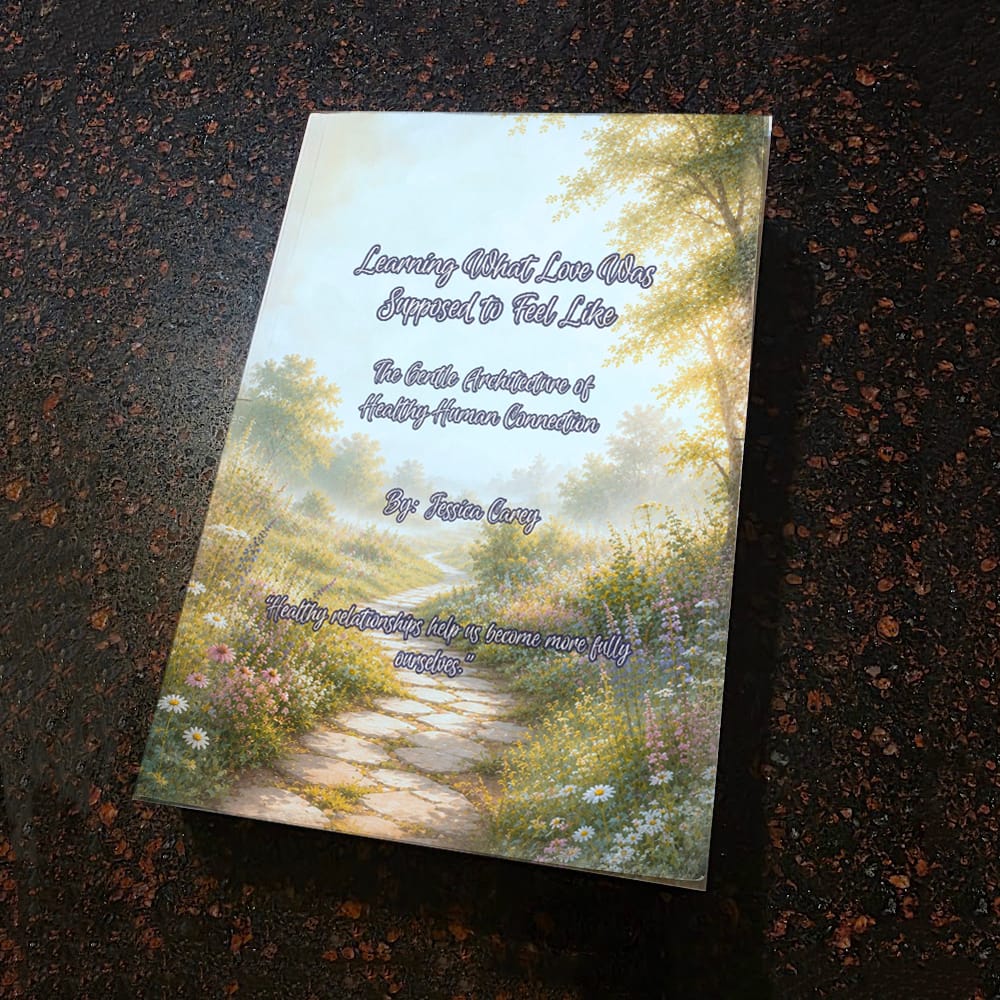
Continue exploring: These questions are also at the heart of my book, Learning What Love Was Supposed to Feel Like: The Gentle Architecture of Healthy Human Connection. The book explores emotional safety, reciprocity, boundaries, accountability, repair, and what changes when love no longer requires someone to abandon themselves.
Want even more content about creativity and art?
Be sure to check out all of our creative chronicles!
If you'd like to see examples of my work, you can find some of my art and creations at Redbubble and Gumroad!
Looking to learn more about my recent journey?
Check out some of these articles:
-Hidden Gems for St. Louis Artists
-Hidden Gems for Autistic & Neurodivergent Adults
-I Wasn't Broken--I'm Burned Out
-What Chronic Autistic Burnout Actually Feels Like
-Building a Life from What Remains
 Jessica Carey