
Three Healthcare Courses—and One Creative Question
After completing a Gale course about spirituality, health, and healing, I found myself curious about several related courses available for free through the library.
I eventually completed three more certificate programs: Certificate in Mindfulness, Certificate in Mindful Relationships, and Certificate in Healing Environments for Body, Mind, and Spirit.
Like the earlier course, these programs were created primarily for nurses and other healthcare professionals.
I am not a healthcare provider, and I did not approach the material as though I were training to become one.
I approached it as an artist, writer, art educator, and someone deeply interested in how people heal, connect, create, and build more humane environments.
Healthcare may have been the courses’ original context, but many of their central questions extend far beyond a hospital or clinical setting.
- What helps someone feel safe and respected?
- How does the environment affect stress, attention, and well-being?
- What allows people to communicate without abandoning themselves or overpowering one another?
- How can we become more present in lives that constantly pull our attention in different directions?
As I moved through the lessons, I began noticing how often their ideas also applied to art and creativity.
We sometimes talk about creativity as though it exists entirely inside a person.
Someone is considered imaginative or unimaginative, talented or untalented, inspired or uninspired.
When creating becomes difficult, the common response is to assume the person needs more discipline, confidence, motivation, or practice.
Those things can matter, but they are not the entire story.
Creativity does not occur separately from the rest of our lives.
We bring our bodies, nervous systems, relationships, histories, surroundings, responsibilities, and unmet needs into everything we make.
A person trying to create beneath harsh lighting, surrounded by overwhelming noise, may have a very different experience from someone working in a space that accommodates their sensory needs.
An artist whose ideas are regularly dismissed or controlled may become hesitant to experiment.
Someone who is exhausted, unsafe, grieving, or constantly interrupted may not be lacking creativity at all; they may be lacking the conditions that allow their creativity to emerge.
Supportive conditions can change what becomes possible.
A welcoming space, a thoughtful question, a respectful relationship, or a few moments of close attention may give an uncertain idea room to develop.
This is especially meaningful to me as a late-diagnosed autistic artist.
Sensory conditions, clarity, autonomy, interest, and emotional safety can dramatically affect my ability to engage with something.
When an idea genuinely captures my attention, I may be able to spend hours exploring it.
When I am overwhelmed, depleted, frequently interrupted, or expected to work in a way that conflicts with how my mind functions, even beginning can become difficult.
That difference is not adequately explained by talent or willpower; context matters.
These courses gave me a useful way to think about that context through three interconnected environments.
- Mindfulness concerns the environment within us: our attention, awareness, thoughts, emotions, and relationship with ourselves.
- Mindful relationships concern the environment between us: how we listen, communicate, establish boundaries, navigate differences, and affect one another.
- Healing-environment design concerns the environment around us: the physical, sensory, social, natural, and increasingly digital spaces in which daily life unfolds.
None of these areas exists entirely on its own.
A noisy or confusing space can make communication more difficult.
An unsafe relationship can keep the nervous system on alert even in an otherwise peaceful room.
Constant digital interruptions can fragment attention, affect relationships, and follow us into places intended for rest or creativity.
Likewise, a thoughtfully designed space, a respectful relationship, or a moment of genuine presence can influence far more than one isolated part of life.
Together, the courses raised a question that feels important not only for healthcare providers, but also for artists, educators, community organizers, and anyone trying to make or nurture something meaningful: what helps a person feel present, safe, connected, and supported enough to create?
There is no universal formula.
People have different bodies, minds, histories, cultures, abilities, preferences, and circumstances.
What calms one person may overwhelm another.
What helps one artist concentrate may distract someone else.
Mindfulness is not a cure for harmful conditions, and a beautiful room cannot compensate for mistreatment or unmet material needs.
Still, we can pay closer attention to the conditions we are creating—for ourselves and for one another.
We may not be able to command inspiration or guarantee healing.
We can, however, examine what supports attention, what constricts it, which relationships encourage honest expression, and what our surroundings communicate about who is welcome to participate.
We can begin treating creativity not merely as an individual trait, but as something living within an entire ecosystem of attention, connection, choice, and environment.
The first part of that ecosystem begins with something both simple and remarkably difficult: learning how to notice.
Note: this article reflects on what I learned as an artist, educator, and student; it is not medical, mental-health, or therapeutic advice.
 Jessica Carey
Creativity Begins With Attention
Before we can transform something through art, we must first notice it.
That may sound obvious.
Artists look at things.
Writers observe people and experiences.
Musicians listen.
Makers pay attention to materials.
Yet looking is not always the same as seeing, just as hearing is not always the same as listening.
Much of daily life happens through a kind of automatic recognition.
We identify a cup as something that holds a drink, a chair as somewhere to sit, and a window as a way to see outside.
Once our minds understand what something is and how it functions, we may stop examining it closely.
We learn to move efficiently through familiar surroundings without consciously processing every color, shape, reflection, sound, and texture.
Mindfulness interrupts that automatic process.
The course described mindfulness as paying attention intentionally, in the present moment, and without immediately judging what we find; it can be practiced through formal meditation, but it can also occur during ordinary activities.
The essential practice is noticing what is happening—within us and around us—before habit, expectation, or judgment determines our response.
This kind of attention is already closely related to art.
When we draw an ordinary cup, we may discover that it is not as symmetrical as we assumed.
Its color changes where the light strikes it.
Its handle creates a shape within a shape.
Its surface contains reflections of the room, while a chip along the rim may reveal years of use.
The longer we look, the less the cup resembles the simplified symbol stored in our minds.
The same thing can happen when we photograph a neighborhood street, write about a familiar relationship, mix two colors, listen closely to rainfall, or study the movement of our own hands.
Sustained attention reveals details, patterns, contradictions, and associations that hurried recognition overlooks.
This is part of why artists repeatedly make work about seemingly ordinary subjects; as I explored in Why We Make Art About Ordinary Things, art can make the familiar visible again.
Mindful attention works in a similar way.
It does not necessarily give us an entirely new world; it can help us encounter the existing world with renewed curiosity.
Approaching the Familiar With a Beginner’s Mind
One of the mindfulness attitudes that feels especially relevant to creativity is beginner’s mind: meeting an experience with openness instead of assuming we already know everything it has to offer.
Experience can strengthen an artistic practice, but it can also create expectations.
Once we learn how a material is “supposed” to behave, what a finished artwork is “supposed” to look like, or which methods are considered correct, we may stop exploring other possibilities.
A beginner does not yet know all the rules; that uncertainty can be uncomfortable, but it can also create freedom.
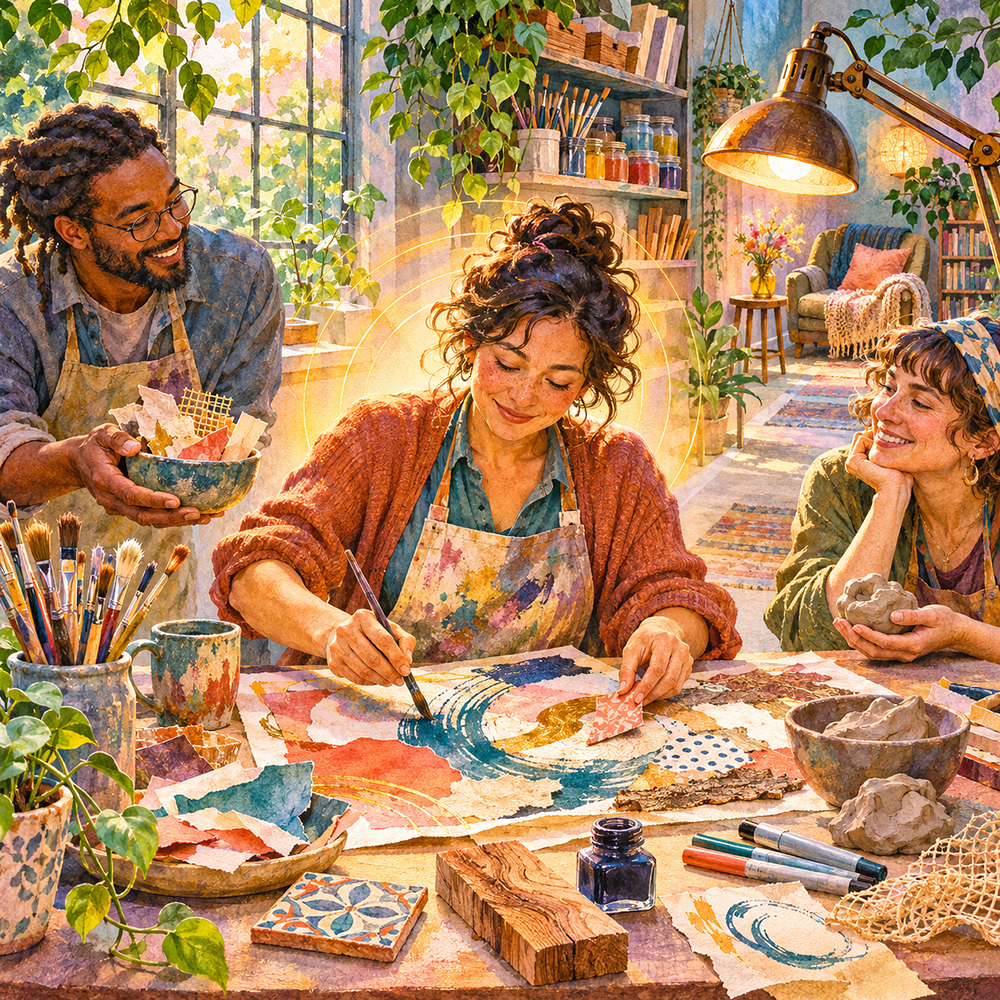
- What happens if paint markers are used on discarded tile rather than paper?
- What might a wood offcut become if we pay attention to its cracks, grain, and irregular shape?
- Can a paint-color sample become part of an illustration rather than remaining a disposable store item?
- What if an Inktober prompt such as “apple” becomes a cosmic apple instead of a traditional still life?
These choices emerge when we approach materials and prompts as invitations rather than fixed instructions.
We can use what we already know while remaining open to being surprised.
Beginner’s mind does not require pretending that we have no experience; it asks us not to let experience become a cage.
We can know how something has been done before without assuming that is the only way it can be done.
 Jessica Carey

Making Without Constantly Striving
Another mindfulness attitude, nonstriving, may initially appear incompatible with creative work.
Artists often have goals: completing a piece, learning a technique, preparing for an exhibition, building a portfolio, or communicating a particular idea.
Creativity frequently requires effort and persistence.
Nonstriving does not mean that goals are wrong or that artists should never work toward improvement; it means there are moments when constantly measuring the present against a desired outcome prevents us from fully engaging with what is happening now.
If every mark is judged by whether it is bringing the work closer to perfection, the process can become tense and restrictive.
If every experiment must become a sellable product, experiments stop being experiments.
If every creative activity must generate content, income, recognition, or proof of productivity, there is little room left for play.
Sometimes we need to make a mark simply to see what it does.
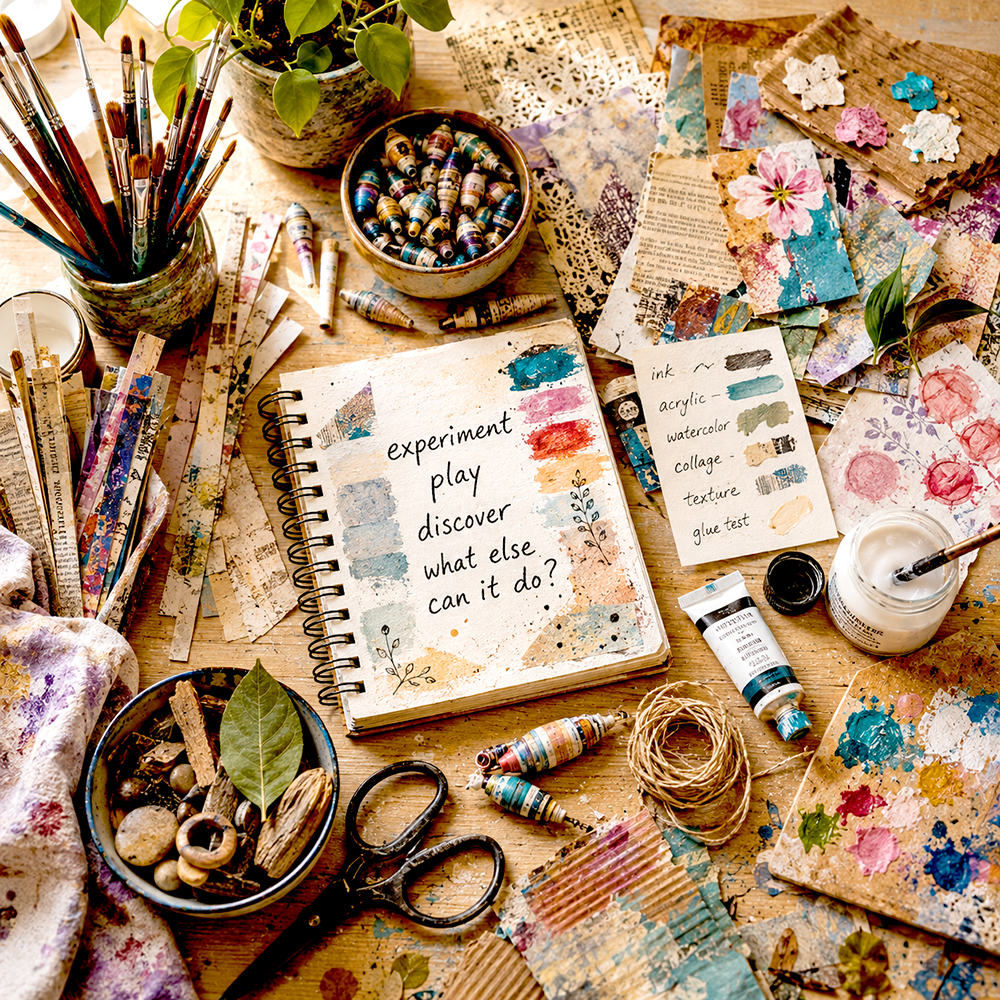
We may test how one ink layers over another, press an object into clay, combine colors that supposedly clash, or follow a pattern without knowing where it will lead.
The result may become part of a finished work, teach us something for a future project, or remain nothing more than evidence that we were curious.
Its value does not depend entirely on what it becomes.
This process-centered approach is also central to Teaching for Artistic Behavior; artists develop ideas by choosing, experimenting, revising, reflecting, and sometimes beginning again.
The learner is not merely reproducing a predetermined object; they are practicing how artists think.
Noticing Judgment Without Letting It Take Control
Mindfulness does not require us to stop having judgments.
Minds compare, categorize, anticipate, and evaluate.
An artist may look at a work in progress and immediately think:
- This looks terrible.
- I have ruined it.
- Someone else could do this better.
- I should already know how to do this.
- This is not worth finishing.
The practice is not to pretend those thoughts never occurred; it is to recognize them as thoughts rather than unquestionable verdicts.
“This looks terrible” can become “I am having the thought that this looks terrible.”
That small shift creates space.
Perhaps the work genuinely needs revision.
Perhaps the unfamiliar stage simply feels uncomfortable.
Perhaps the artist is tired, comparing an experiment with someone else’s finished work, or expecting immediate mastery of a new material.
Nonjudgment does not prohibit discernment.
Artists still make decisions about composition, technique, meaning, and completion.
The difference is that thoughtful evaluation can guide the work without becoming a judgment of the artist’s worth.
A disappointing result does not mean the person lacked creativity; it means an experiment produced information.
Moving Between Doing and Being
The mindfulness course also contrasted “doing mode” with “being mode.”
Doing mode helps us plan, solve problems, meet deadlines, and complete necessary tasks.
It is not inherently harmful; without it, many creative ideas would never become tangible.
The difficulty arises when doing becomes our only acceptable state.
An artist needs the part of the process that orders supplies, prepares surfaces, measures dimensions, meets submission requirements, edits drafts, and finishes work.
But creativity also needs periods of receiving rather than directing—observing, wandering, wondering, playing, resting, and allowing connections to form without demanding an immediate result.
This balance matters to me because my attention is strongly affected by interest, sensory conditions, energy, and meaning.
When something captures my curiosity, engagement may feel almost effortless and continue for hours.
When I am depleted or attempting to force myself through something that offers no meaningful point of connection, beginning may require enormous effort.
Mindful attention does not make those differences disappear; it can, however, help me notice what is happening without immediately turning it into a moral failure.
- Am I avoiding the work because I am afraid?
- Does the task need to be divided into smaller parts?
- Would another material make it more engaging?
- Is the environment overwhelming?
- Do I need more information—or do I genuinely need rest?
Attention does not always produce an instant solution; sometimes it simply helps us ask a more truthful question.
Creativity begins there: not with forcing ourselves to manufacture something impressive, but with becoming curious enough to notice what is actually present.
The Nervous System Comes Into the Studio, Too
Mindfulness can help us notice what is happening within and around us, but awareness does not make us separate from our bodies, histories, or circumstances.
The nervous system comes into the studio, classroom, rehearsal space, and writing session with us.
So do exhaustion, hunger, physical pain, grief, trauma, sensory overwhelm, financial stress, relationship conflict, uncertainty, and the accumulated demands of daily life.
These experiences can affect concentration, memory, decision-making, motivation, and the ability to begin or sustain creative work.
This is one reason advice such as “just focus,” “push through it,” or “be more disciplined” can be so inadequate.
Such advice assumes that creative difficulty is primarily a problem of willpower.
Sometimes persistence is useful, but sometimes a person is already using tremendous energy simply to remain functional.
The visible result does not always reveal the effort occurring beneath it.
Creativity Requires More Than Willpower
We often admire stories of artists who continued creating through extraordinary hardship.
Those stories can be meaningful, but they can also produce an unfair expectation: if someone truly cares about art, they should always be able to create regardless of their circumstances.
Human beings do not work that way.
When the nervous system senses danger or remains under prolonged stress, it may prioritize immediate survival over experimentation and play.
Attention may narrow.
Decisions may become harder.
The possibility of making a mistake can feel more threatening.
Even choosing among several materials or beginning an open-ended project may require energy that is not currently available.
That does not mean creativity has vanished; it may mean the person has limited access to it under the present conditions.
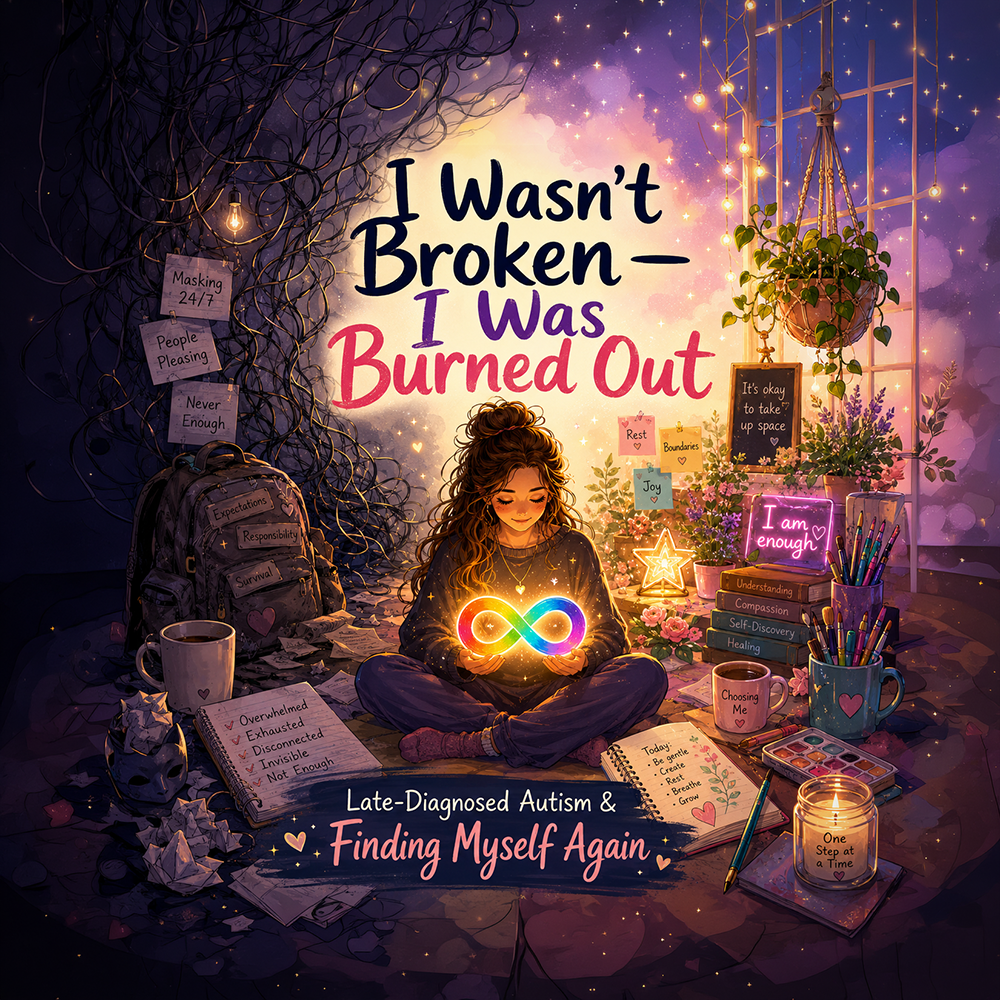
I have experienced this distinction personally through chronic autistic burnout.
There have been times when I possessed ideas, knowledge, and genuine interest but could not consistently access the energy required to translate them into finished work.
Housing instability, financial strain, sensory demands, appointments, difficult interactions, and the continual need to solve urgent problems do not remain neatly outside the creative process.
They consume some of the same attention and capacity that artmaking requires.
At other times, a meaningful idea or compelling material can capture my attention so fully that I am able to spend hours working with it.
From the outside, those two experiences might appear contradictory: how can someone struggle to begin one task and then become deeply absorbed in another?
But creative capacity is not an on-and-off switch; it changes according to energy, interest, safety, sensory conditions, emotional meaning, available support, and the demands surrounding the activity.
Acknowledging that complexity is more truthful than reducing everything to motivation.
 Jessica Carey
Awareness Is Information, Not an Accusation
Mindful awareness can help us recognize what is happening before we decide how to respond.
Perhaps I am avoiding a project because I am afraid it will not match the idea I imagined.
Perhaps the instructions are too vague, the number of choices has become overwhelming, or I do not yet understand the material.
Perhaps I need to make the task smaller.
Perhaps the lighting, noise, smell, or activity around me is draining more energy than I realized.
Or perhaps I need rest.
The purpose of checking in is not to interrogate ourselves until we uncover another reason to feel guilty; it is to gather information.
Instead of asking only: why can’t I make myself do this? we might ask:
- What is my body communicating?
- What part of this task feels difficult?
- Is the obstacle physical, emotional, sensory, practical, or relational?
- Would fewer choices make starting easier?
- Would a different material or method create more interest?
- Am I afraid of judgment or failure?
- Do I need support, clarification, privacy, food, movement, quiet, or rest?
- Is this a temporary block, or are the surrounding conditions repeatedly making creativity inaccessible?
These questions do not guarantee an immediate answer, but they shift the conversation from blame toward curiosity.
Adaptation Is Part of the Creative Process
Once we understand what is interfering, we may be able to adapt the process.
A large project can become a small experiment.
A detailed drawing can become a page of loose marks.
An elaborate setup can be replaced with materials that are already within reach.
A noisy shared space may call for headphones, a quieter time of day, or a portable creative kit.
If decision fatigue is the problem, choosing only three colors or one material can reduce the number of decisions required.
An artist may also change mediums entirely.
Writing might be more accessible than painting on one day.
Arranging materials, photographing textures, collecting references, testing colors, or preparing a surface may be enough on another.
These activities may not resemble the finished artwork we imagine, but they can still belong to the creative process.
Adaptation is not cheating; it is creative problem-solving applied to the way we work.
This is especially relevant for disabled and neurodivergent creators.
A sustainable practice does not have to imitate a schedule or method designed for someone else’s mind and body; it can be constructed around actual needs, strengths, limitations, rhythms, and available resources.
Mindfulness Cannot Repair an Unsafe Situation by Itself
There is also a necessary boundary around discussions of mindfulness.
Present-moment awareness can help someone recognize stress, return attention to the body, or respond more intentionally.
It cannot make an unsafe environment safe.
It cannot provide stable housing, remove an abuser, eliminate discrimination, restore depleted resources, or substitute for medical and mental-health care.
Mindfulness should never be used to teach people to tolerate mistreatment more quietly.
If someone is repeatedly overwhelmed because a space is inaccessible, the answer should not be limited to teaching that person breathing exercises.
If a workload is unsustainable, self-care cannot replace structural change.
If a relationship continually violates someone’s boundaries, greater acceptance does not require remaining available for further harm.
Sometimes awareness reveals that we need to regulate ourselves within a difficult moment; sometimes it reveals that something outside us needs to change.
Both conclusions matter.
Rest Is Not the Opposite of Creativity
Creative culture often celebrates production while treating rest as lost time.
Yet rest is one of the conditions that can allow perception, curiosity, and imaginative connection to return.
Not every pause produces a brilliant idea, nor must rest justify itself by improving productivity.
Rest is a human need before it is a creative strategy.
A sustainable creative practice must contain room for both engagement and recovery.
The question is not simply: how can I force myself to keep producing?
It is also: what conditions allow me to remain connected to creativity without continually abandoning myself?
That question takes us beyond the internal practice of attention and toward the spaces surrounding us—because creativity is affected not only by what happens within the nervous system, but also by the environments the nervous system is being asked to endure.
The Environment Is Part of the Creative Process
Creativity is often represented as though it happens in an empty white space: an artist, an idea, and a material waiting to be transformed.
Real creative spaces are rarely so neutral.
They have light, temperature, sound, smells, furniture, pathways, storage systems, interruptions, and other people.
They may feel welcoming or intimidating, calm or chaotic, flexible or controlling.
They communicate—sometimes without words—who belongs there, what kinds of activity are expected, and how much freedom a person has to explore.
The course on healing environments emphasized that design can support or hinder health, safety, dignity, comfort, and connection.
Although much of the material concerned hospitals and other healthcare settings, the underlying principle applies anywhere people are asked to learn, work, recover, gather, or create:
The environment is not merely a backdrop to an experience; it helps shape the experience.
That principle has significant implications for creative spaces.
What a Space Asks of the Nervous System
Every environment places demands on the people using it.
Harsh fluorescent lighting may require someone to work while managing headaches or visual strain.
Loud conversations, machinery, music, or sudden noises may make concentration difficult.
Strong fragrances or art-material odors can produce discomfort or make a space inaccessible.
Cluttered walkways, unclear labels, and disorganized supplies can require additional planning and decision-making before a project even begins.
None of these conditions automatically prevents creativity.
Some people enjoy energetic, visually full studios.
Others concentrate well with background noise or feel inspired when materials remain visible.
The important point is that the environment affects how much physical, sensory, and cognitive energy remains available for the creative task.
A person may appear disengaged when they are actually processing too many competing inputs.
This is especially relevant to autistic and otherwise neurodivergent creators.
Sensory overload does not always look dramatic from the outside.
Someone may become quieter, struggle to make choices, lose access to language, feel increasingly agitated, or need to leave.
If the environment is treated as neutral, all of that difficulty may be attributed to the individual.
A more compassionate question is not simply: why is this person having trouble participating?
It is also: what is this space requiring from them?
Light, Color, and the Ability to See
Lighting affects far more than whether a room appears attractive.
Artists need enough light to distinguish colors, see details, work safely, and understand how materials are changing.
Natural light can be valuable, but it also shifts throughout the day.
Direct sunlight may create glare or heat, while insufficient lighting can cause eye strain and fatigue.
Some people are sensitive to flickering or intensely bright lights, even when others do not notice a problem.
A flexible creative space might therefore include several options: natural light, adjustable task lighting, softer ambient lighting, curtains or shades, and areas away from glare.
Control matters.
The ability to adjust a lamp or move to a different work area may be more useful than declaring one lighting arrangement universally ideal.
Color also influences how people experience a room, but its effects are not perfectly predictable.
Cultural associations, memories, preferences, visual sensitivities, and the purpose of the space all matter.
A bright wall may feel energetic to one person and overwhelming to another.
A neutral room may feel peaceful, empty, institutional, or uninspiring depending on who enters it.
Color should be used thoughtfully without assuming that a particular shade will make everyone feel the same thing.
Sound, Silence, and Creative Concentration
Sound can support creativity, interrupt it, or do both at different times.
Music may help someone enter a rhythm while painting, carving, sewing, or arranging materials.
Conversation can create connection and allow ideas to move between people.
The sounds of tools and active making can make a shared studio feel alive.
But constant sound can also become exhausting.
Overlapping conversations, scraping chairs, background music, power tools, and phones may require a person to filter more information than their nervous system can comfortably manage.
A genuinely inclusive space should not require everyone to prefer the same sensory atmosphere.
Possible supports might include:
- A quieter room or low-stimulation corner
- Advance notice before loud equipment is used
- Permission to wear headphones or ear protection
- Control over whether background music is played
- Acoustic materials that reduce echo
- Break areas where participation is not required
- Written instructions that remain available when spoken information is difficult to process
Silence should not be treated as antisocial, just as conversation should not be treated as inherently disruptive.
Different forms of creative engagement require different conditions.
Organization Is an Accessibility Tool
The course also discussed wayfinding: the ability to understand where we are, where we need to go, and how to reach a destination without unnecessary confusion.
In a creative environment, wayfinding includes more than signs directing people to rooms.
It also includes understanding:
- Where materials are located
- Which supplies may be used freely
- Which tools require permission or instruction
- Where unfinished projects can be stored
- How to clean shared equipment
- Where to ask for help
- What will happen during a class or gathering
- Where someone can go when they need a break
Clear labels, visible examples, consistent storage, written steps, picture-based instructions, and uncluttered pathways can reduce the amount of information a person must hold in mind.
Organization does not require making every creative space rigid or sterile; it creates a dependable structure within which experimentation can occur.
When materials are difficult to find or the unspoken rules are known only by regular participants, newcomers must spend energy trying to understand the system.
Clear expectations communicate that people do not need insider knowledge to belong.
Nature and Space for Restoration
The healing-environments course repeatedly returned to the relationship between people and nature.
Natural light, plants, outdoor views, gardens, natural materials, and opportunities to step outside may support comfort, attention, and a sense of connection.
Creative work often draws upon the same relationship.
Nature provides subjects, materials, patterns, colors, metaphors, and spaces where the mind can move differently.
Even brief contact with an outdoor environment may interrupt the feeling of being enclosed within tasks and demands.
A creative space does not need an elaborate garden to acknowledge this.
A window, a small plant, natural textures, images of local landscapes, or access to an outdoor sitting area may make a difference.
Whenever possible, people can also be offered opportunities to gather visual references, observe seasonal changes, or create outside.
As with every environmental choice, nature should remain an invitation rather than a prescription.
Not everyone experiences outdoor spaces in the same way, and allergies, weather, mobility, insects, temperature, or trauma may affect access and comfort.
No Single Environment Works for Everyone
Helpful design principles exist, but there is no universally healing or creative environment because there is no universal nervous system, body, history, culture, or creative process.
A color associated with calm may remind someone else of a hospital, institution, or difficult period in their life.
Music intended to create a soothing atmosphere may prevent another person from concentrating.
A room filled with visible materials may inspire one artist while overwhelming someone who has difficulty filtering visual information.
People also enter spaces with needs and experiences that may not be immediately visible.
A survivor of trauma may need to see the exit and know they can leave without being questioned.
A wheelchair user may encounter furniture arrangements that other people barely notice.
Someone with chronic pain may need to change positions frequently.
A person with low vision may benefit from strong contrast and clear lighting, while someone with light sensitivity may need a dimmer area.
Neurodivergence does not create one standardized set of needs, either.
One autistic participant may enjoy vivid colors, movement, repetition, and abundant sensory input while another needs reduced noise, fewer visible materials, and more physical space.
This is why “calming” should not be the only goal of a creative environment.
Creativity can be quiet and contemplative, but it can also be energetic, messy, funny, social, intensely focused, loud, or strange.
A space designed exclusively around stillness may unintentionally exclude people whose creativity emerges through movement, conversation, strong color, or active sensory engagement.
The goal is not to make every person calm in the same way. It is to reduce unnecessary distress while offering different ways to participate.
A shared space cannot meet every possible preference simultaneously, but it can offer flexibility and greater personal control:
- Can the lighting be adjusted?
- Can someone move away from a speaker?
- Is wearing ear protection accepted?
- May participants sit, stand, move, observe, or take a break?
- Are instructions available in written as well as spoken form?
- Are there active communal areas and quieter individual spaces?
- Can someone participate without touch, eye contact, or public explanation?
- Are people offered meaningful choices in materials and processes?
Even small choices can reduce helplessness.
The ability to select a seat may matter more than choosing one supposedly perfect chair for everyone.
The option to turn off music may be more inclusive than carefully curating a universally “relaxing” playlist.
Accessibility is therefore not only a checklist completed before people arrive.
Doorway width, table height, signs, lighting, pathways, and adaptive tools matter, but accessibility is also an ongoing relationship.
- When someone says that part of the environment is not working for them, are they believed?
- Are they treated as difficult?
- Is an accommodation framed as a burden or as useful information?
- Can something be adjusted without forcing the person to disclose more private information than necessary?
An inclusive environment is not one whose designers correctly anticipated every human need; it is one whose people remain willing to listen, adapt, and learn.
Rather than asking: what setting will make everyone creative? we might ask: how can this setting offer enough safety, clarity, flexibility, and choice for different people to discover what supports their creativity?
A Space Communicates Who Is Welcome
Perhaps the most powerful feature of an environment is its symbolic meaning.
A space communicates care or neglect through its condition; it communicates who was considered during its design.
The height of a table, width of a pathway, readability of a sign, cost of participation, availability of adaptive tools, and willingness to accommodate sensory needs all reveal something about whose presence was anticipated.
Creative spaces also communicate beliefs about creativity itself.
Perfect examples displayed without any visible experiments may suggest that only polished work belongs.
Expensive materials may imply that art requires resources newcomers do not possess.
Strict instructions may communicate that there is one acceptable outcome.
By contrast, works in progress, varied examples, reclaimed materials, accessible tools, and permission to explore can show that creativity is not reserved for experts.
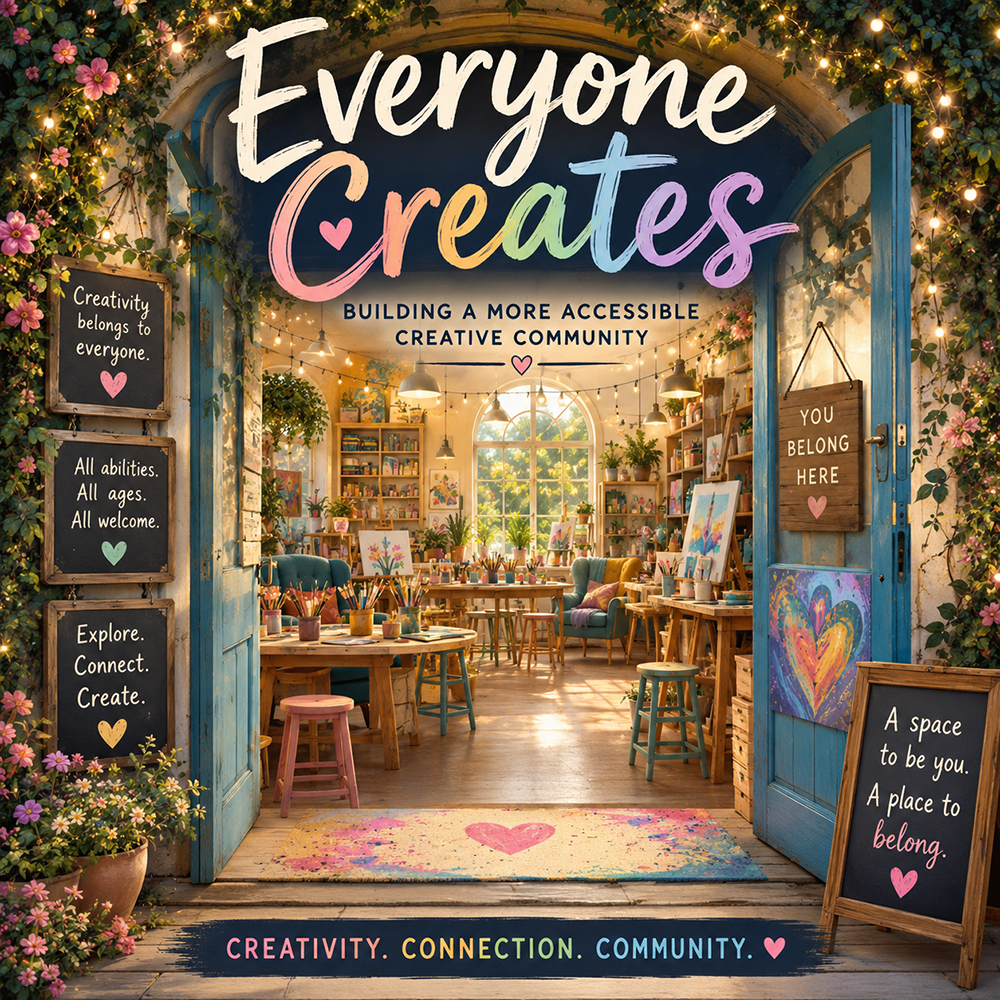
This is one reason the environment matters so much to my vision for the Everyone Creates Project.
I do not want to create only a room containing art supplies; I want to help build a space where different kinds of people can understand what is available, make meaningful choices, regulate their level of participation, and create without first proving that they belong.
That includes studios for making, but it also includes quieter spaces, comfortable seating, clear organization, flexible instruction, shared and reclaimed materials, scholarships, home-based creative options, and respect for different bodies and minds.
The goal would not be to construct one supposedly perfect environment; it would be to offer enough flexibility that people can find or help shape conditions that work for them.
A creative space begins supporting art long before the first mark is made.
It begins with the message carried by its light, sound, layout, materials, expectations, and accessibility: you were considered when this place was created; there is room for you here.
 Jessica Carey
Creativity Is Relational
The image of the solitary artist is powerful: one person alone in a studio, bringing an idea into existence through individual vision and determination.
Solitude can be valuable.
Many artists need privacy, uninterrupted attention, and freedom from other people’s expectations.
Yet even art made in complete physical isolation exists within a larger network of relationships.
Someone taught us how to hold a tool, introduced us to a material, wrote the book we consulted, manufactured the supplies, created the tradition we are responding to, or encouraged us to continue when we were uncertain.
Our ideas are shaped by conversations, memories, cultures, communities, conflicts, and the work of people who came before us.
Creativity may be deeply personal, but it is rarely entirely separate from other people.
The Certificate in Mindful Relationships course explored how communication is shaped not only by words, but also by tone, timing, body language, personal history, culture, environment, and the assumptions each person brings into an exchange; it also emphasized listening as an active process rather than simply waiting for an opportunity to speak.
Those ideas have direct implications for creative communities.
How We Respond to an Idea Matters
Creative ideas are often shared before they are fully formed.
Someone may mention a possible project, show an unfinished sketch, attempt an unfamiliar technique, or explain an idea they do not yet know how to execute.
At that stage, the response they receive can influence whether the idea continues developing.
A dismissive reaction can close the process quickly:
- That won’t work.
- Why would you make that?
- That isn’t real art.
- You should do it this way instead.
Even when such comments are intended as advice, they may replace curiosity with judgment before the artist has had time to understand their own idea.
A more mindful response might begin with questions:
- What interests you about this idea?
- What are you hoping to explore?
- Which part feels most important?
- Would you like encouragement, practical help, or constructive feedback?
- Is there a particular problem you are trying to solve?
These questions do not require uncritical praise.
They create enough room to understand the artist’s intention before attempting to redirect it.
That difference matters; advice can be technically accurate and still be unhelpful if it answers a question the artist was not asking.
Listening Is a Creative Practice
Listening is often treated as passive, but attentive listening requires curiosity, patience, and a willingness to temporarily loosen our own assumptions.
Those are creative capacities.
When we listen closely, we may recognize a connection we would otherwise miss.
We may understand why a particular material matters to someone, why a seemingly small detail carries emotional weight, or why an unconventional method solves a problem we had not noticed.
Listening also helps collaborative projects become more than one person’s idea imposed upon everyone else; it allows the work to change as different people contribute knowledge, skills, experiences, and perspectives.
This is especially important in education and community art settings.
A facilitator who has already decided what every finished project should look like has little reason to listen.
But when participants are treated as artists capable of making meaningful choices, conversation becomes part of the creative process.
The question changes from: how do I make them follow my directions? to: what are they trying to do, and what support might help them do it?
That is one reason Teaching for Artistic Behavior has remained so meaningful to me.
The educator is not the sole owner of creativity in the room.
Students are not empty containers waiting to receive the correct artistic answer.
They bring ideas, interests, cultural knowledge, preferences, questions, and ways of seeing that deserve to affect the work.
Encouragement Can Change What Becomes Possible
Encouragement cannot remove every practical barrier, but it can alter what someone believes is worth attempting.
Many of my recent creative experiences have grown through relationships.
An art club host encouraged me to participate in Inktober for the first time.
Companies and local businesses shared materials that allowed me and other artists to experiment.
Art club members responded with curiosity when we tested polymer clay, paint markers, woodburning, and printmaking.
Artists at events have explained their processes, shared resources, and encouraged me to place my own work into more public spaces.
These interactions did more than make me feel supported; they created concrete possibilities.
A piece of donated wood became an opportunity to learn woodburning.
Discontinued tile samples became new surfaces for paint markers.
Printmaking ink became an invitation to carve, test gradients, and learn from more experienced printmakers.
Shared enthusiasm gave experiments somewhere to continue.
Creativity moved through the relationships surrounding the materials.
This is also part of the vision behind the Everyone Creates Project.
Access to supplies matters, but creativity needs more than objects.
People also need communities where questions are welcomed, knowledge is shared without condescension, experimentation is respected, and beginners are not made to feel that they must earn the right to participate.
 Jessica Carey
Feedback Should Serve the Work—not Control the Artist
Constructive feedback can help artists see what they are too close to notice; it can identify technical problems, clarify meaning, or reveal how an audience is experiencing a piece.
However, feedback becomes controlling when the responder begins treating personal preference as an objective rule.
There is a difference between saying: my attention keeps moving toward this area because of the strong contrast, and: you need to remove that because I don’t like it.
The first describes an observable response and gives the artist information; the second attempts to take ownership of the decision.
Mindful feedback distinguishes between:
- What we observe
- What we interpret
- What we personally prefer
- What the artist intended
- What decision ultimately belongs to the artist
The artist can listen carefully without surrendering authorship.
Not every suggestion must be accepted.
Sometimes feedback reveals a problem that needs revision.
Sometimes it reveals that the work is communicating exactly the tension or discomfort the artist intended.
A healthy critique helps the artist make a more informed choice; it does not make the choice for them.
Psychological Safety Makes Experimentation Possible
Creativity requires some willingness to be uncertain.
An experiment may fail.
A new technique may produce awkward early attempts.
A personal work may be misunderstood.
An idea may change halfway through. Someone may ask a question that exposes what they do not yet know.
When mistakes are met with ridicule, humiliation, or impatience, people learn to protect themselves.
They may choose only familiar subjects, copy approved examples, hide unfinished work, or stop participating.
When uncertainty is treated as a natural part of learning, more possibilities remain available.
Psychological safety does not mean no one experiences discomfort, disagreement, or critique; it means people can participate without expecting that their vulnerability will be used against them.
Questions can be asked.
Limits can be communicated.
Different interpretations can exist.
Harm can be addressed rather than denied.
This kind of safety is especially important for people whose ideas or communication styles have often been dismissed.
Neurodivergent artists, disabled artists, beginners, children, older adults, and people from marginalized communities may enter creative spaces carrying memories of being underestimated, corrected, excluded, or spoken over.
A respectful relationship cannot erase those experiences, but it can offer a different one.
Creativity expands when people do not have to spend all of their energy defending their right to be present; it grows where curiosity replaces humiliation, support does not demand conformity, and connection leaves room for a person to remain fully themselves.
That kind of relationship requires care—but it also requires boundaries.
Boundaries Protect Creative Life
Creativity may be relational, but healthy creative relationships do not require constant availability.
Artists are often encouraged to share generously, collaborate, support their communities, remain open to feedback, build networks, and say yes to opportunities.
These practices can lead to meaningful connection.
They can also become unsustainable when generosity is treated as an unlimited resource or when access to the artist is mistaken for ownership of their time, energy, ideas, and work.
Boundaries help distinguish connection from consumption.
They protect the conditions creativity needs: time to think, space to experiment privately, freedom to decline unsuitable opportunities, and enough energy to make choices intentionally.
Without those protections, a creative practice can gradually become organized around other people’s expectations.
Creativity Requires Some Protected Space
An idea is not always ready to be explained, evaluated, posted, or turned into a product.
Artists may need time to experiment, change direction, contradict themselves, or create without knowing whether the result will ever be shown.
Protecting that early development is not selfishness; it is part of respecting the creative process.
Generosity Does Not Mean Unlimited Labor
Creative people are often asked to give.
They may be asked to donate artwork, design something “quickly,” volunteer their skills, provide free instruction, contribute to an event for exposure, or help someone else develop an idea.
Any one request may seem reasonable, especially when it comes from a friend, community group, or cause the artist values.
The problem emerges when the artist’s time is treated as less valuable because the work appears enjoyable or meaningful.
Enjoying a task does not make the labor unreal.
Artists invest time not only in producing the final object, but also in learning techniques, developing ideas, gathering materials, maintaining tools, communicating, revising, packaging, traveling, documenting, and recovering from the effort.
A request for creative work is a request for some portion of a person’s finite capacity.
Artists can choose to give freely; they can donate work, teach without charge, share resources, or contribute to community projects.
Generosity is most meaningful when it remains a genuine choice—not an obligation enforced through guilt, family roles, friendship, exposure, or assumptions about what a “good” person should provide.
A Boundary Is Not a Punishment
People sometimes interpret boundaries as rejection, hostility, or lack of care.
Yet a boundary does not necessarily say: I do not value you.
It may say:
- I cannot take on another project right now.
- I am not ready for feedback.
- I can help with this part, but not the entire task.
- I do not lend this particular tool.
- I need written communication rather than a phone call.
- I need time to consider the request before answering.
- I am willing to collaborate, but the final decision about my work remains mine.
These limits clarify what is and is not available.
They can prevent resentment, confusion, overcommitment, and the eventual collapse that occurs when someone repeatedly gives beyond their capacity.
A boundary also provides information.
If a relationship remains respectful only when one person says yes, gives freely, or suppresses their own needs, the apparent harmony may have depended upon self-abandonment rather than mutual care.
Mindfulness Can Help Us Notice the Cost of Saying Yes
Mindful awareness may help create a pause between receiving a request and automatically agreeing to it.
That pause matters for people who have learned to preserve relationships by being useful, agreeable, undemanding, or endlessly accommodating.
The body may recognize overwhelm before the mind has found words for it.
Tightness, exhaustion, dread, confusion, or the sudden urge to escape can all be information worth noticing.
These sensations do not make every request harmful, and they do not always dictate the answer.
They may, however, signal that we need more time, clarification, a smaller commitment, or permission to decline.
Useful questions might include:
- Do I genuinely want to do this?
- Do I have the capacity to do it without harming myself?
- What will I need to postpone or sacrifice if I agree?
- Is the request reciprocal and respectful?
- Am I saying yes because I feel safe—or because I fear what will happen if I say no?
- Could I offer a smaller form of help?
- Does this opportunity support the creative life I am trying to build?
A mindful answer is not automatically yes; sometimes the most honest and compassionate response is no.
Boundaries Make Sustainable Generosity Possible
My interest in gathering and sharing creative resources is not separate from boundaries; it depends upon them.
I enjoy noticing materials that might otherwise be discarded, connecting them with people who can use them, sharing information, and helping opportunities reach beyond their original audience.
But gathering is not the same as accepting responsibility for every material, person, project, or unmet need I encounter.
No individual can rescue every overlooked resource or create every missing opportunity.
Sustainable community-building requires shared responsibility.
People contribute in different ways and at different times.
Someone may offer materials, another person may provide transportation, someone else may teach a technique, and another may create the organizational structure that helps those contributions reach people.
Boundaries allow generosity to remain connected to choice rather than compulsion.
They also protect the distinction between care and control.
Supporting an artist does not grant authority over their work.
Providing materials does not create ownership of what they make.
Offering advice does not require the advice to be followed.
Collaboration should expand what participants can create together without erasing anyone’s agency.
A creative life needs connection, but it also needs room to breathe.
Boundaries help preserve that room; they allow artists to offer what they can, protect what remains personal, and build relationships in which care does not require anyone to disappear.
Technology Can Support Creativity—and Fragment It
Technology has transformed what artists can learn, make, share, and access.
A person can watch a printmaker demonstrate a technique, take an online course through the library, research an unfamiliar material, connect with artists across the world, create digital artwork, build a website, apply to exhibitions, publish writing, sell work, or participate in a creative community without leaving home.
For disabled, neurodivergent, geographically isolated, or financially limited creators, digital access can be especially significant.
Online learning may remove transportation demands, reduce sensory strain, allow information to be paused and reviewed, and make participation possible according to a person’s available energy.
That accessibility is part of why the Gale courses themselves worked for me.
I could complete them in a lower-stimulation environment, move at my own pace, revisit information, and engage when I had the capacity.
Learning did not require being present in a crowded classroom at a fixed time or processing everything as quickly as it was spoken.
Technology can create genuine access.
It can also consume the attention needed to use that access meaningfully.
When Every Tool Also Wants Our Attention
The course on healing environments included a lesson about technology, attention, and health.
It discussed technostress, information overload, constant availability, task-switching, and “continuous partial attention”—a state in which awareness remains spread across many incoming demands without fully settling on any one of them.
That experience is familiar to many creative people.
An artist may open a device to look up one reference image and encounter messages, notifications, news, advertisements, videos, and several unrelated ideas.
A writer may pause to verify one detail and emerge twenty minutes later having read three articles and answered two emails.
Someone attempting to post finished work may become absorbed in looking at everyone else’s work instead.
The device remains useful, but the original intention becomes harder to hold.
Unlike a passive tool waiting on a workbench, many digital platforms are designed to repeatedly invite reengagement.
They do not simply provide information; they continually announce that more information is available.
Creativity often requires a different rhythm.
Ideas need enough uninterrupted time to develop beyond their first obvious form.
Materials need to be explored without constantly shifting tasks.
A difficult section of a drawing or draft may require staying with uncertainty long enough for another possibility to emerge.
When attention is repeatedly interrupted, we may continue doing many things while feeling that we have fully entered none of them.
Sharing the Work Can Begin to Replace Making It
The internet has given artists unprecedented ability to reach audiences without waiting for traditional gatekeepers; that opportunity matters.
My own website allows me to share art, writing, resources, creative experiments, and the ideas developing behind the Everyone Creates Project.
Visibility can lead to relationships, exhibitions, material donations, sales, invitations, and opportunities that would not otherwise exist.
At the same time, the pressure to remain visible can alter the creative process.
A project may begin to be evaluated according to whether it will perform well online.
Artists may feel pressure to post consistently, follow trends, create vertical videos, document every stage, respond quickly, and maintain activity across several platforms.
Instead of asking what the work needs, we may begin asking what the algorithm will reward.
Documentation is not inherently harmful; it can preserve a process, help others learn, and allow an artist to recognize their own development.
The difficulty arises when recording the experience repeatedly interrupts having the experience.
Not every experiment needs to become content.
Some work may need to remain private.
Some processes are difficult to film while fully participating in them.
Some creative periods may produce nothing easily shareable.
An artist’s temporary silence online does not mean their practice has disappeared.
Comparison Changes How We See Our Own Progress
Digital platforms also place artists in constant proximity to finished work.
We may see an elegant final image without seeing the discarded attempts, years of practice, specialized tools, editing, financial resources, assistants, or time that made it possible.
When our own unfinished experiment is placed beside someone else’s carefully selected result, the comparison is structurally unequal.
This can be especially discouraging for beginners.
Their awkward early work is not evidence that they lack potential; it is evidence that they are at the stage where learning occurs.
Yet online presentation can make it appear as though everyone else began with mastery.
Comparison may also narrow creative choices.
When certain styles repeatedly receive attention, artists can begin adjusting their work toward what already performs well.
The internet expands exposure to possibilities, but its reward systems can also create pressure toward sameness.
Mindful technology use asks us to notice how looking at other people’s work affects our own:
- Do we feel curious and energized?
- Are we learning something useful?
- Are we connecting with artists whose work matters to us?
- Or are we becoming discouraged, overstimulated, distracted, or compelled to keep scrolling?
The answer may change from day to day.
The purpose is not to judge ourselves for using technology, but to recognize when it is no longer serving the intention that brought us there.
Protecting Attention Without Rejecting Technology
The solution does not need to be total disconnection.
Technology is too intertwined with creative learning, accessibility, community, and livelihood to divide neatly into “good” offline experiences and “bad” online ones.
The more useful goal is intentionality.
That might involve:
- Silencing nonessential notifications during creative work
- Keeping a reference image open without leaving several other platforms available
- Setting aside separate times for making and posting
- Writing down unrelated ideas instead of immediately following each one
- Allowing messages to wait
- Taking photographs at a natural stopping point rather than interrupting every stage
- Unfollowing accounts that reliably produce distress or harmful comparison
- Using digital tools for a defined purpose and checking whether that purpose is still being served
- Creating periods when an artwork exists without an audience
These practices should remain adaptable.
Strict digital rules can become another source of pressure, particularly when technology is necessary for communication, income, safety, or disability access.
The question is not whether technology belongs in creative life; it already does.
The question is whether we are using it as a tool—or whether its constant demands are determining how our attention is spent.
Creative work needs connection, information, and opportunities; it also needs periods in which nothing new is asking to be noticed.
Protecting those periods does not reject the digital world; it gives us enough undivided attention to decide what we want to contribute to it.
Mindfulness Is Not Limited to Sitting Meditation
The word mindfulness often brings to mind a particular image: someone sitting perfectly still, eyes closed, breathing slowly in a peaceful room.
That can be one form of mindfulness, but it is not the only one.
The mindfulness course described formal practices such as breath awareness, mindful eating, walking meditation, yoga, tai chi, and qigong.
It also emphasized that mindfulness can be brought into ordinary activities.
The central practice is not achieving a particular posture or emptying the mind; it is intentionally noticing what is happening in the present without immediately judging, resisting, or trying to control every part of the experience.
For some people, sitting meditation is calming and accessible.
For others, stillness may increase discomfort, make bodily sensations more difficult to tolerate, or leave the mind searching for more stimulation.
Closing the eyes may feel unsafe.
Focusing on breathing can become distressing rather than soothing.
Pain, restlessness, trauma, sensory needs, or differences in attention may make a traditional meditation format poorly suited to a particular person.
That does not mean they are incapable of mindfulness.
It means the practice may need another form.
Artmaking Can Become a Practice of Attention
Creative activity naturally offers many points of sensory focus.
A person working with clay can notice pressure, temperature, moisture, resistance, and the changing shape beneath their hands.
Someone drawing can attend to the movement of a line, the sound of a pencil against paper, or the relationship between one mark and another.
A painter may observe how colors mix, separate, cover, or remain visible beneath new layers.
Printmaking asks for attention to pressure, placement, ink consistency, surface texture, and the moment the paper is lifted.
Fiber arts may involve rhythm, touch, counting, repetition, and the gradual formation of a pattern.
Woodburning requires awareness of heat, grain, speed, resistance, and the way different woods respond to the same tool.
These activities do not automatically become mindful simply because they are creative.
Artmaking can also happen on automatic pilot, under intense pressure, or while attention is divided among several other demands.
The difference lies in the quality of attention.
We can pause long enough to feel how a material responds.
We can notice the impulse to rush.
We can observe frustration when a result differs from what we expected.
We can recognize pleasure in a color, texture, sound, or repeated motion without needing that pleasure to justify itself through a perfect finished product.
Art can give attention somewhere tangible to rest.
Mindfulness Does Not Require Mental Imagery
Many guided practices ask participants to picture a peaceful beach, protective light, favorite place, or detailed scene.
These exercises may be vivid and helpful for people who naturally form mental images.
They may be confusing or inaccessible for people with aphantasia.
I have aphantasia traits, which means I do not necessarily produce the kind of internal visual imagery that such instructions assume.
Telling someone to “see” a place in their mind is not universally equivalent to giving them access to that place.
A practice can instead use what is genuinely available.
Someone might notice:
- The physical support of the chair or floor
- The temperature of the air
- A sound nearby and another farther away
- The texture of a material held in the hands
- The rhythm of walking or repeated movement
- Words associated with safety or calm
- A real photograph or object rather than an imagined one
- The factual knowledge that a meaningful place exists, even without picturing it
Creative practices can also externalize what cannot be internally visualized.
Instead of being asked to see an imagined scene, a person might arrange colors, select images, build a collage, photograph an environment, or gradually discover the image through making.
The absence of a mental picture is not the absence of imagination.
Imagination may operate through concepts, language, emotion, pattern, association, movement, sound, or direct interaction with materials.
Movement Can Hold Attention, Too
Mindfulness is sometimes easier when the body is allowed to move.
Walking can offer a gentle structure for attention: the contact between feet and ground, changes in temperature, surrounding sounds, shifting light, or the rhythm of steps.
Repetitive creative actions—stitching, carving, kneading, sanding, weaving, dotting, folding, or rolling paper—can provide a similar anchor.
Movement may also help regulate energy that becomes uncomfortable when suppressed.
Some people concentrate more effectively while fidgeting, pacing, rocking, changing positions, or using their hands.
Requiring visible stillness can consume the attention that was supposed to be directed toward the practice.
A mindful activity does not need to look calm from the outside.
Someone may be deeply present while enthusiastically layering colors, moving around a studio, drumming, dancing, or sorting a large collection of materials.
The relevant question is not whether their body resembles a stereotypical meditator; it is whether the activity helps them connect with their present experience.
Everyday Life Contains Opportunities to Notice
Mindful attention does not need to become another formal task added to an already overwhelming schedule.
It may appear in small moments:
- Watching water move across a paintbrush
- Noticing the smell of wood or paper
- Listening to the changes in a familiar piece of music
- Feeling the warmth of a mug
- Observing light travel across a wall
- Arranging tools before beginning
- Walking outside and looking for a particular color
- Pausing before deciding that an artwork has failed
- Eating one bite slowly enough to notice its texture
- Spending time with a pet without simultaneously checking a device
None of these moments must become a productivity strategy; their purpose is not to optimize every second of life.
They are opportunities to return to an experience that might otherwise pass unnoticed.
The Practice Should Serve the Person
Mindfulness is most humane when it remains adaptable.
If a practice increases distress, the person should not be shamed for stopping, changing it, opening their eyes, moving, seeking support, or choosing something else.
A technique is not morally superior because it is traditional, difficult, or effective for someone else.
This is especially important in creative and educational settings.
A teacher or facilitator can offer possibilities without demanding that every participant experience them identically.
Someone may focus through drawing while another prefers movement, sound, tactile materials, observation, or quiet writing.
The goal is not to make everyone perform mindfulness correctly.
It is to help people discover forms of attention that allow them to become more present without requiring them to override their bodies and minds.
Sometimes that presence emerges in silence.
Sometimes it emerges through motion, texture, repetition, color, or sound.
Sometimes mindfulness looks less like stepping away from creativity and more like entering the creative process fully—one mark, breath, movement, or material at a time.
Creativity Can Help Us Relate Differently to the World
Attention changes more than what we notice within ourselves; it can also change how we relate to the world around us.
The courses repeatedly connected human well-being with the larger environment.
They explored nature, sustainability, air and water quality, climate change, ecological grief, and the ways buildings and communities affect health.
Although these subjects may initially seem separate from creativity, artists constantly interact with the material world.
We select, alter, combine, consume, preserve, and discard materials.
We draw inspiration from places, living things, cultural traditions, manufactured objects, and natural patterns.
We also create images and stories that influence what other people notice and consider worth protecting.
Creativity is therefore not only an internal experience; it is one way human beings enter into relationship with their surroundings.
Attention Can Strengthen Connection to Place
It is difficult to care deeply about something we have never been encouraged to notice.
A neighborhood may appear ordinary until someone begins documenting its buildings, gathering places, changing storefronts, plants, and people.
A tree may remain part of the background until an artist studies its bark, changing shadows, seasonal growth, or the life gathering around it.
A stream, empty lot, garden, or familiar walking route can become meaningful through repeated attention.
Art does not need to depict pristine wilderness to strengthen a relationship with place; it can help us see the environments where life is actually unfolding—including urban streets, overlooked patches of nature, industrial landscapes, community gardens, damaged ecosystems, and spaces undergoing change.
Once a place has been carefully observed, its loss may no longer feel abstract.
That awareness can bring appreciation, but it can also bring grief.
Ecological grief recognizes the emotional impact of environmental destruction, changing seasons, disappearing species, damaged communities, and places becoming unrecognizable.
Creative work can provide a way to witness those changes when ordinary language feels insufficient.
Art cannot reverse every loss, but it can preserve memory, communicate concern, invite conversation, and refuse to let destruction remain invisible.
Materials Carry Histories
Every creative material comes from somewhere.
Paper, pigment, clay, fabric, wood, plastic, and metal carry environmental, manufacturing, labor, and transportation histories that may remain invisible when we encounter only the finished supply.
Artists cannot achieve perfect material purity, and environmentally preferable options may be inaccessible because of cost, location, disability, safety, or the needs of the work.
The goal is not guilt. It is greater awareness of what we use, how safely we use it, how long it remains useful, and what happens to it afterward.
Creative Reuse Asks a Different Question
Creative reuse begins by interrupting the assumption that an object’s first purpose is its only possible purpose.
A discarded tile sample can become a surface for paint markers.
A hardwood offcut can become a woodburned scene, bookbinding equipment, or a base for sculpture.
A paint-color sample can become part of an illustration.
Matboard scraps can become framing, collage material, or another experiment not yet imagined.
These objects are not endlessly useful merely because someone is creative, and keeping everything would create its own burdens.
Still, many materials are discarded not because they have no remaining value, but because their value has not yet been recognized by the right person.
That idea has become central to my article A Gatherer, Not a Hoarder: The Art of Finding and Sharing Possibilities.
Gathering, at its healthiest, is not about accumulating unlimited objects; it is about noticing overlooked potential and helping materials reach people who can genuinely use them.
The Materials Lab has allowed that principle to become practical.
Instead of discussing sustainability only as an abstract ideal, artists can test how reclaimed, donated, discontinued, or unconventional materials actually behave.
Some experiments work beautifully.
Others reveal limitations.
Both outcomes produce knowledge that can be shared.
 Jessica Carey
Sustainability Is Also About Access
Environmental responsibility should not become another system in which people with the fewest resources are blamed for problems they did not create.
Someone may rely on inexpensive supplies because they cannot afford specialized alternatives.
A disabled artist may need disposable materials for accessibility or safety.
A person experiencing housing instability may be unable to store, clean, transport, or reuse materials in the ways that sustainability advice assumes.
Individual choices matter, but they exist within larger systems of manufacturing, labor, infrastructure, pricing, waste management, and access.
This is why community approaches are so valuable.
A creative-reuse center, materials exchange, shared studio, donation network, or community supply library can make sustainable practices more possible without placing every responsibility upon one individual.
Materials that would overwhelm one person’s storage may become useful when organized and distributed through a wider system.
The Everyone Creates Project could eventually contribute to that kind of ecosystem: receiving appropriate materials, testing possibilities, sharing knowledge, and helping supplies reach artists, educators, and community members who may not otherwise have access to them.
Sustainability becomes connected not only to reducing waste, but also to expanding participation.
Art Can Help Us Practice Belonging to the World
Creativity does not place us outside the world as observers.
We make with materials drawn from it, inside environments shaped by it, while depending upon communities and ecosystems larger than ourselves.
Mindful creativity can help us recognize those relationships.
It can invite us to notice before consuming, learn before discarding, and remain curious about what our choices support.
It can help us mourn what is being lost without allowing grief to become the only possible response.
It can encourage responsibility without pretending that individual artists can solve systemic problems alone.
Most of all, it can challenge the idea that the world around us is merely a collection of resources waiting to be used.
A piece of art can begin with a different understanding: that we are participants in a living environment, and that attention itself can become a form of care.
What These Courses Changed—or Reinforced—for Me
I did not finish these courses with an entirely new definition of creativity.
Many of their central ideas connected with principles I already valued: attention, autonomy, accessibility, meaningful choice, compassionate relationships, material exploration, and respect for the whole person.
What the courses gave me was a clearer framework for understanding how those principles interact.
Creativity is affected by at least three overlapping environments:
- The internal environment of attention, energy, emotion, bodily needs, and the relationship we have with ourselves
- The interpersonal environment created through communication, feedback, boundaries, encouragement, power, and belonging
- The external environment of light, sound, materials, organization, nature, technology, accessibility, and physical space
A difficulty in one environment can affect the others.
Sensory overwhelm may make communication harder.
A controlling relationship may remain present in the mind long after the conversation ends.
An inaccessible space may require so much energy to navigate that little remains for artmaking.
Constant digital interruptions can affect attention, rest, and connection simultaneously.
Support can also travel across these environments.
A clear explanation can reduce anxiety.
A flexible workspace can make self-regulation easier.
A respectful relationship can make experimentation feel safer.
Access to an appropriate material may allow an idea that once seemed impossible to become tangible.
This framework helps me understand creativity less as a mysterious gift and more as something that develops through relationships between people, conditions, and possibilities.
Reinforcing My Vision for Everyone Creates
These ideas strongly reinforce the vision behind the Everyone Creates Project.
The project has never been only about placing art supplies in a room.
Materials matter, especially when cost prevents people from participating, but access to supplies is not the same as access to creativity.
A person also needs to understand what is available, feel permitted to use it, and have enough choice to discover what holds meaning for them.
They may need written instructions, adaptive tools, a quieter space, an example they can examine closely, permission to observe before joining, or reassurance that there is no single correct result.
Someone may benefit from working beside other people without being expected to converse continually.
Another person may need collaboration and active discussion.
Some participants may want structured instruction, while others need open studio time.
Some may create quickly and move among several projects; others may require repeated visits to develop one idea.
A truly inclusive creative space cannot promise to eliminate every obstacle; it can promise to remain curious about obstacles instead of automatically blaming the people encountering them.
The courses strengthened my belief that the Everyone Creates Project should be developed as an ecosystem rather than simply a program.
Its studios, lounge areas, material-sharing systems, home kits, classes, exhibitions, sensory supports, scholarships, and community relationships would all influence who can participate and what becomes possible.
The question should not only be: what art activities can we offer?
It should also be: what conditions help different people recognize themselves as artists?
Choice Is Part of Care
The courses also reinforced how closely care is connected to agency.
A supposedly helpful practice can become harmful when it is imposed without regard for the person receiving it.
Relaxing music is not relaxing when someone cannot turn it off.
Group participation is not connection when someone is punished for needing privacy.
Guided imagery is not accessible when it assumes everyone can form mental pictures.
Advice is not supportive when it replaces a person’s own intentions.
This matters in both healthcare and creative education.
Teaching for Artistic Behavior treats students as artists who make authentic choices.
That does not mean teachers withdraw all structure or allow unsafe practices; it means support is organized around helping learners develop ideas, skills, judgment, and independence rather than merely reproducing a predetermined object.
The same respect should influence creative community spaces.
Participants can be offered guidance without surrendering authorship.
They can be invited without being pressured.
They can change their minds, communicate needs, approach materials differently, and decide how much of their work or story they wish to share.
Choice is not an obstacle to care; meaningful choice is one way care becomes visible.
Remaining Honest About the Limits
I completed these courses as an artist, writer, and educator—not as a nurse, therapist, physician, or other healthcare professional.
I am considering how their ideas might inform creative practice, accessible environments, education, and community-building.
Art and mindfulness can support expression, reflection, connection, and well-being, but they do not replace healthcare, mental-health treatment, physical safety, stable housing, material resources, or accountable relationships.
Likewise, attractive design cannot make an organization healing if the people within it are ignored, coerced, or denied meaningful choice.
Learning Across Disciplines
None of these cautions makes the course material irrelevant outside healthcare. They make thoughtful interpretation more important.
Artists can learn from architecture, psychology, education, ecology, disability studies, healthcare, community organizing, and many other fields without pretending to become experts in all of them.
Cross-disciplinary learning helps us ask questions our own field may overlook.
These courses encouraged me to consider not only what people create, but also what helps them remain present enough to create, safe enough to experiment, and supported enough to continue.
They reinforced something I have gradually learned through both art and life: people often do not need to be pushed harder.
They need to be understood more accurately.
Sometimes that understanding changes the person’s approach.
Sometimes it changes a relationship.
Sometimes it reveals that the surrounding environment—not the person within it—is what needs to be redesigned.
I accessed all three courses for free through Gale using a library card.
Course availability differs among library systems, but it is worth checking the online learning resources offered by your local library; useful education may be available well beyond what appears on the physical shelves.
 Jessica Carey

Creativity Needs Conditions, Not Commands
We often speak about creativity as though it either appears or does not.
A person is called creative or uncreative, motivated or lazy, inspired or blocked.
When the work is not happening, the assumed solution is often another command: focus, try harder, become more disciplined, stop overthinking, produce something anyway.
Sometimes persistence is necessary; artists do need to practice, tolerate uncertainty, revise imperfect work, and continue after disappointment.
But commands alone cannot create the conditions creativity needs.
A seed contains the capacity to grow, but growth still depends upon its relationship with light, water, soil, temperature, time, and care.
Telling it to try harder would not replace what is missing.
Human creativity is far more complex, but the same basic truth remains: capacity and conditions interact.
Attention matters.
So do physical safety, sensory needs, energy, available materials, freedom from constant interruption, and enough time for an idea to develop.
Relationships matter—the people who listen, encourage, teach, criticize, collaborate, dismiss, control, or make room.
The physical and digital environments surrounding us matter, including what they communicate about whose needs were considered and who is expected to belong.
None of these conditions guarantees that creativity will arrive in a particular form or according to a convenient schedule.
A supportive studio cannot manufacture inspiration.
Mindfulness cannot eliminate every creative block.
A caring community cannot prevent every failure or disappointment.
What these conditions can do is make curiosity, experimentation, expression, and continued participation more possible.
Creating a More Supportive Ecosystem
The three courses helped me understand creativity as part of an ecosystem.
A thoughtful change in one area may ease strain elsewhere.
Written instructions can reduce the pressure of processing spoken information.
A quieter workspace can make conversation more manageable.
A respectful boundary can preserve enough energy for a project.
A clearly organized material station can give a newcomer the confidence to begin without needing to ask permission for every step.
Not every improvement must be dramatic.
Sometimes creating better conditions means changing the lighting, silencing notifications, or placing commonly used tools within reach.
Sometimes it means asking what kind of feedback an artist wants before offering it.
Sometimes it means allowing someone to observe, move, rest, or work privately.
Sometimes it means recognizing that a person who appears unmotivated may actually be overwhelmed, depleted, unsupported, or trying to function in an environment that was never designed with them in mind.
Small changes do not solve every structural problem, but they can reveal a different philosophy: the person should not always be expected to reshape themselves around the environment.
The environment can also become more responsive to the person.
Making Room for What Wants to Grow
Perhaps creativity is not always something we need to force into existence.
Sometimes it is already present as curiosity, sensitivity, pattern recognition, humor, experimentation, problem-solving, storytelling, movement, or the impulse to combine two things that have not been placed together before.
It may be waiting beneath exhaustion, fear, sensory overload, judgment, lack of access, or years of being told that only certain forms of expression count.
The work, then, is not simply to demand more output.
It is to notice what nourishes creative life and what repeatedly constricts it.
It is to build relationships where unfinished ideas can be spoken without humiliation.
It is to create spaces that offer clarity without rigidity, support without control, and choices without abandonment.
It is to protect attention while remaining connected to the people and technologies that help ideas travel.
This is the kind of environment I hope to continue building through my art, writing, Materials Lab experiments, and the developing vision for the Everyone Creates Project.
Not a perfect environment.
Not one that assumes everyone needs the same thing.
A responsive environment—one willing to listen, adapt, and recognize that creativity can take many forms.
We may not be able to command inspiration, guarantee healing, or remove every barrier, but we can become more thoughtful about what we ask of ourselves and one another.
We can protect attention, respect limits, share resources, design with greater care, and make room for people whose creative capacities have been underestimated.
Sometimes the most important question is not: why aren’t you creating?
It is: what would help your creativity feel possible here?
What conditions help you feel most able to create?
Is there one change you could make—to your attention, relationships, physical space, or digital environment—that might give your creativity a little more room to grow?
Courses discussed in this article
- Certificate in Mindfulness
- Certificate in Mindful Relationships
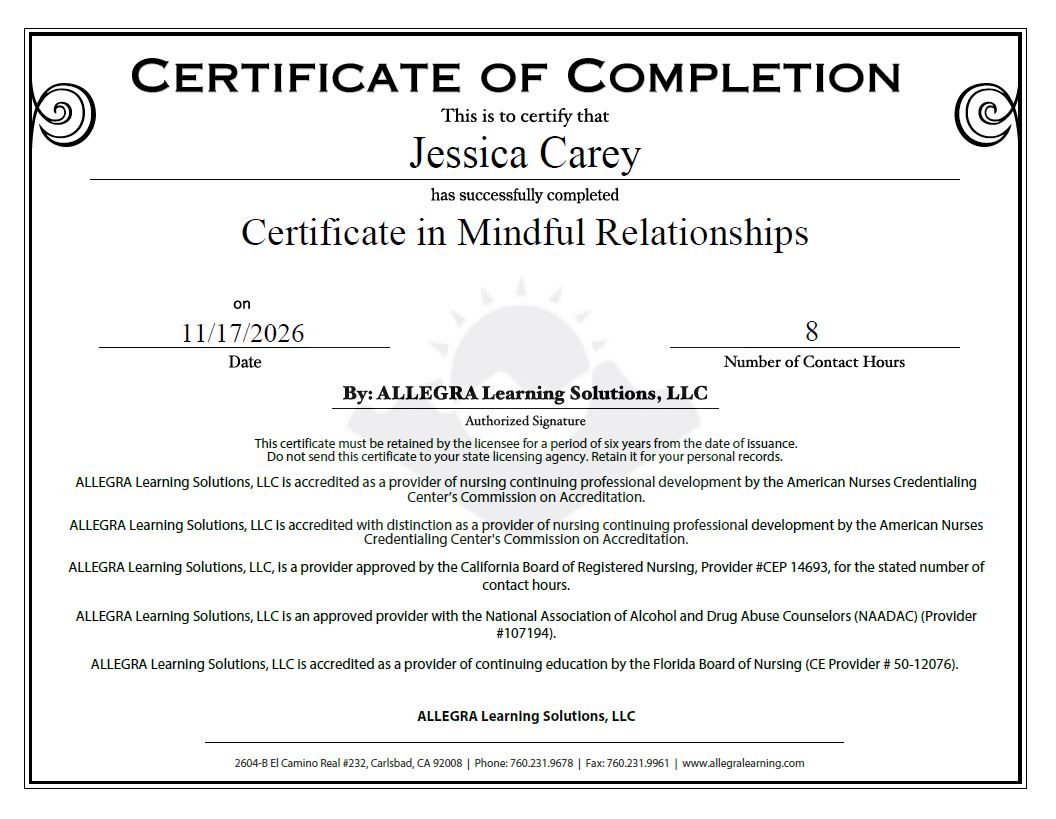
- Certificate in Healing Environments for Body, Mind, and Spirit
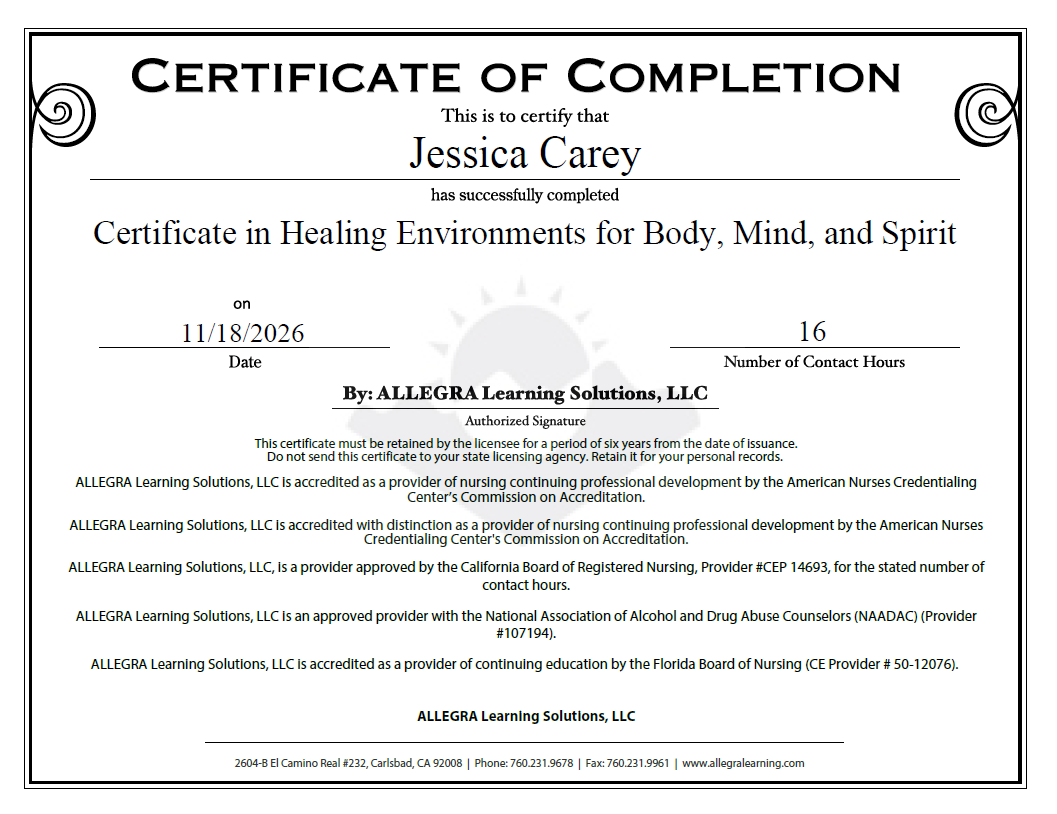
These self-paced Gale courses were accessed free through my local library. Availability may vary by library system.
Want even more content about creativity and art?
Be sure to check out all of our creative chronicles!
If you'd like to see examples of my work, you can find some of my art and creations at Redbubble and Gumroad!
Looking to learn more about my recent journey?
Check out some of these articles:
-Hidden Gems for St. Louis Artists
-Hidden Gems for Autistic & Neurodivergent Adults
-Learning What Love Was Supposed to Feel Like
-The Difference Between Resting and Giving Up
-What Chronic Autistic Burnout Actually Feels Like
-Building a Life from What Remains
 Jessica Carey