
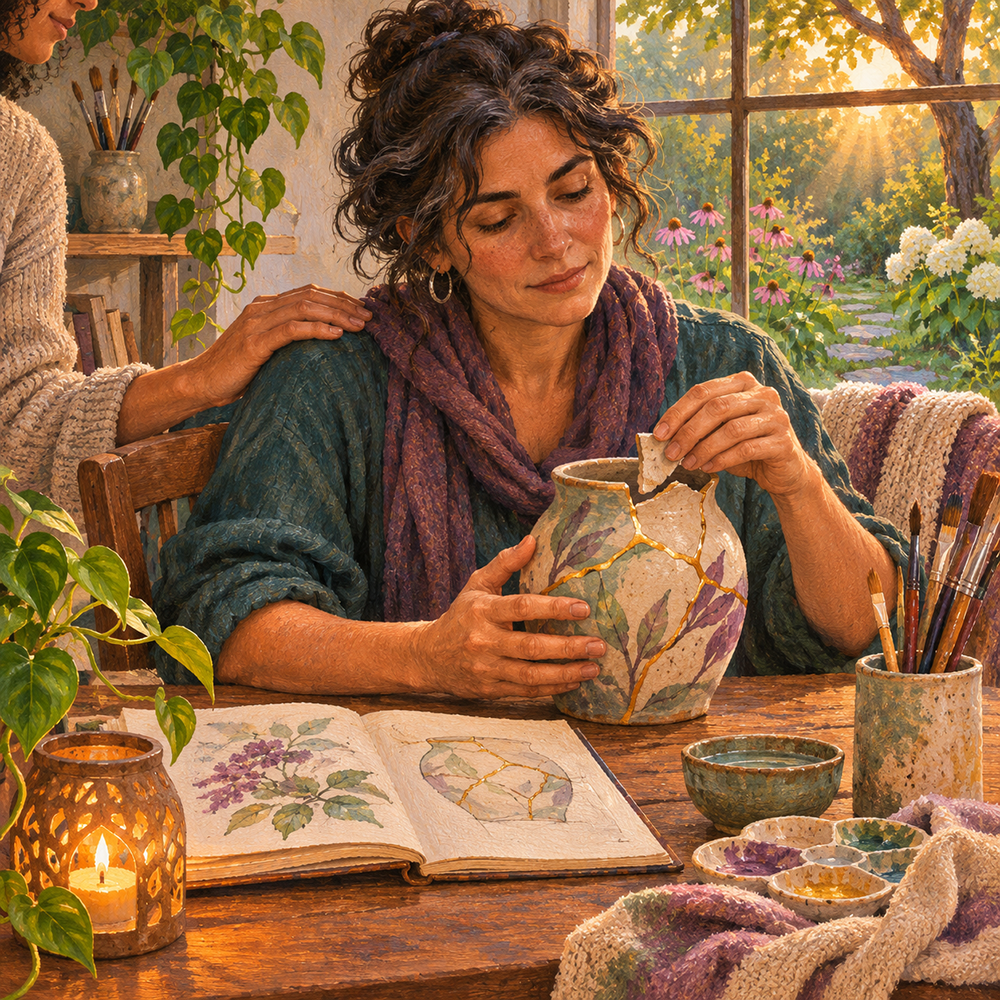
I was not the audience most obviously imagined for a course called Certificate in Spirituality, Health, and Healing.
The course, which I accessed for free through my local library’s online learning resources, was primarily designed for nurses and other healthcare professionals.
Across 12 lessons, the course moved from definitions of spirituality and spiritual care into rituals, religion, culture, ethical care, creative and therapeutic interventions, healing environments, death, grief, childhood, and aging.
Rather than reviewing every lesson in order, I want to explore the themes that connected most strongly with my work and experience: whole-person healing, creativity, accessibility, grief, and the conditions that help people feel safe enough to participate in life.
I am not a nurse, physician, therapist, chaplain, or other healthcare provider.
I am an artist, writer, art educator, late-diagnosed autistic adult, and someone deeply interested in what helps people feel safer, more connected, and more fully human.
Much of my creative work explores relationships, belonging, trauma, boundaries, identity, community, and what it means to continue building a life after experiences that have caused harm.
That background made me curious about the course even if I did not fit its most obvious professional audience.
I discovered the course through the online learning resources available with my library card.
Because it was free and self-paced, I could follow my curiosity without committing to the cost, travel, or sensory demands of a conventional classroom.
The online format made that exploration more accessible.
I could work through the lessons at my own pace, in a quieter environment, without managing the travel, sensory demands, rapid transitions, and social expectations that can make in-person learning more difficult while experiencing chronic autistic burnout.
The course contained plenty of material written specifically for clinical settings: professional responsibilities, spiritual assessments, ethical boundaries, patient care, end-of-life support, and the roles of nurses, chaplains, therapists, and other trained providers.
I approached those subjects as a learner rather than as someone qualified to offer medical or spiritual-care services.
Yet many of the questions underneath the clinical material were not limited to hospitals.
- What helps someone feel seen as a whole person rather than a collection of symptoms?
- How do culture, identity, relationships, beliefs, and personal meaning affect the way someone experiences hardship?
- What makes an environment feel calming, respectful, accessible, or safe?
- How can music, visual art, movement, storytelling, humor, nature, animals, and personal rituals support expression and connection?
- What does it mean to accompany someone through grief without trying to rush, correct, or explain away what they are feeling?
- What is the difference between curing a condition and helping a person experience healing?
Those questions matter to healthcare providers, but they also matter to artists, educators, caregivers, writers, community organizers, family members, and anyone trying to create spaces where people can be met with greater dignity.
They matter to me personally, too.
I have experienced the difference between being treated as a problem that needed to function differently and being met as a person whose nervous system, history, needs, and ways of processing the world deserved to be understood.
I have lived through losses that could not be solved by a cheerful phrase or reframed into an immediate lesson.
I have also experienced how art can give form to feelings that ordinary conversation cannot always hold.
Creating has not erased trauma, ended chronic burnout, produced stable housing, or replaced professional support; art cannot do everything.
But creativity has helped me ask questions, preserve meaning, communicate experiences, imagine alternatives, and make something tangible from circumstances that once felt impossible to explain.
It has connected me with other people and helped me envision the kind of inclusive creative community I would someday like to help build.
The course gave me new language for some of those experiences while also raising questions about what healing genuinely requires.
The world does need healing—but healing cannot be reduced to telling hurting people to become more positive, spiritual, resilient, or forgiving.
People also need safety, material stability, accessible environments, trustworthy relationships, responsive care, meaningful choices, and places where their experiences are taken seriously.
Perhaps that is where the course became most relevant beyond its intended audience.
It invited me to consider healing not as a single treatment or final destination, but as a multidimensional process involving the body, mind, relationships, environment, identity, creativity, and spirit.
What might change if more of our homes, schools, healthcare systems, workplaces, libraries, art studios, and community spaces were designed with that fuller understanding of human beings in mind?
 Jessica Carey
Healing and Curing Are Not the Same
This article reflects on what I learned as an artist, writer, and student. It is not medical, mental-health, spiritual-care, or art-therapy advice.
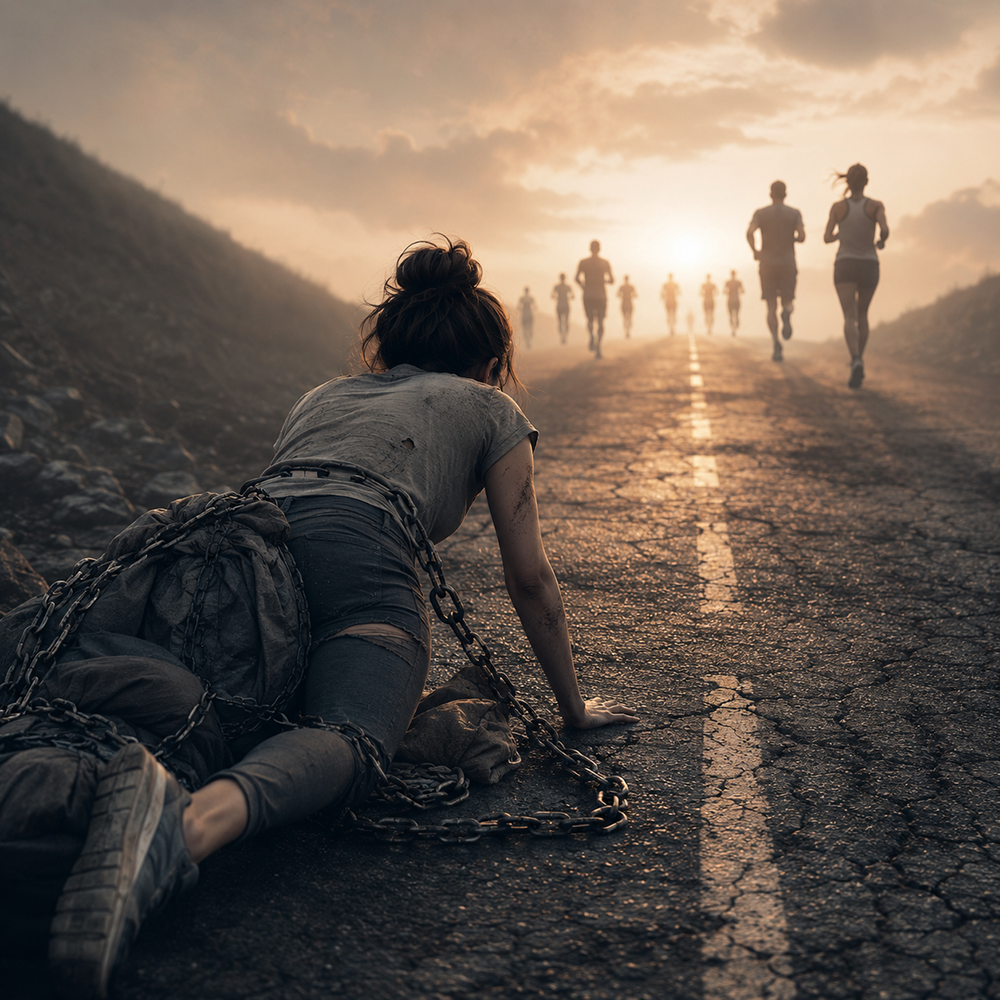
One of the course’s most important distinctions was also one of its simplest: healing and curing are not necessarily the same process.
Curing generally focuses on eliminating a disease, resolving a physical condition, or reducing identifiable symptoms; it asks whether the illness is gone, the injury has closed, or the treatment has corrected what was wrong.
Healing is broader and less easily measured.
It may involve restoring a sense of meaning, dignity, connection, balance, or wholeness.
It can include the body, but it can also involve identity, relationships, environment, beliefs, emotions, and the way someone understands what has happened to them.
Curing and healing can happen together, but one does not guarantee the other.
A person may receive successful medical treatment while continuing to feel frightened, isolated, violated, or disconnected from their former identity.
The condition may have been cured while important parts of the person’s experience remain unaddressed.
Someone else may live with a chronic illness, disability, grief, or irreversible loss that cannot simply be removed.
That person may still experience forms of healing: greater self-understanding, safer relationships, meaningful community, renewed purpose, more accessible surroundings, or a life increasingly shaped around what genuinely supports them.
This distinction felt especially important to me as a late-diagnosed autistic adult.
Autism is not an illness from which I need to be cured because my brain and nervous system are not temporary problems awaiting removal.
At the same time, receiving an autism diagnosis did not instantly heal the effects of living for decades without understanding why certain environments, expectations, transitions, relationships, or sensory experiences affected me so strongly.
The diagnosis gave me a more accurate framework; it helped explain why functioning in ways that appeared ordinary to other people could require enormous effort from me—and why continuously overriding that effort eventually contributed to chronic autistic burnout.
That understanding matters, but understanding alone cannot retroactively provide the support I needed as a child; it cannot immediately restore lost capacity, create stable housing, or erase the harm caused when legitimate needs were treated as weakness, defiance, oversensitivity, or personal failure.
Healing may instead involve learning to believe my nervous system before it reaches crisis.
It may mean creating quieter conditions, communicating in writing when speech is costly, declining demands that exceed my capacity, recognizing sensory distress as real, and no longer measuring my worth by how successfully I can imitate someone with entirely different needs.
That does not cure autism.
It helps heal the relationship I was taught to have with myself.
A similar distinction applies to trauma.
Healing does not mean pretending the harm was secretly beneficial, deciding that everything happened for a reason, or becoming so unaffected that the past no longer matters.
It does not require forgiving someone who remains unsafe, restoring a relationship that continues to cause harm, or demonstrating spiritual growth by tolerating more mistreatment.
Healing also cannot be separated entirely from material reality.
A person cannot meditate their way out of homelessness.
Art cannot replace food, healthcare, legal protection, accessible services, or a safe place to sleep.
Prayer cannot make an abusive environment harmless.
Positive thinking cannot transform coercion into consent or neglect into adequate care.
Spiritual and creative practices may offer comfort, expression, meaning, or strength while someone faces those conditions.
They may help preserve a sense of self when circumstances are dehumanizing, but they should not be used to disguise the need for practical support or to relocate responsibility from harmful systems onto the people being harmed by them.
This is one reason the language of healing must be handled carefully.
When healing becomes another expectation, it can reproduce the very pressure it claims to relieve.
People may be told that they should have moved on, found meaning, become grateful, forgiven, returned to productivity, or transformed their suffering into something inspirational; that version of healing is often more concerned with making other people comfortable than with honoring the person who lived through the experience.
Real healing may be nonlinear, incomplete, and difficult to recognize from the outside.
It may look like grieving what should have existed but did not.
It may look like finally becoming angry about something that was previously minimized.
It may look like leaving, resting, asking for help, establishing a boundary, making art, telling the truth, or constructing a life that no longer revolves around surviving the same injury.
It may involve discovering that wholeness does not require returning to a previous version of oneself.
Sometimes there is no earlier, untouched self waiting to be restored.
Sometimes healing means meeting the person who survived, understanding what they need now, and building forward from there.
Healing is not always a return; sometimes it is the gradual creation of a life that can hold what happened without allowing it to define every possibility that remains.
 Jessica Carey
Spirituality Is Broader Than Religion
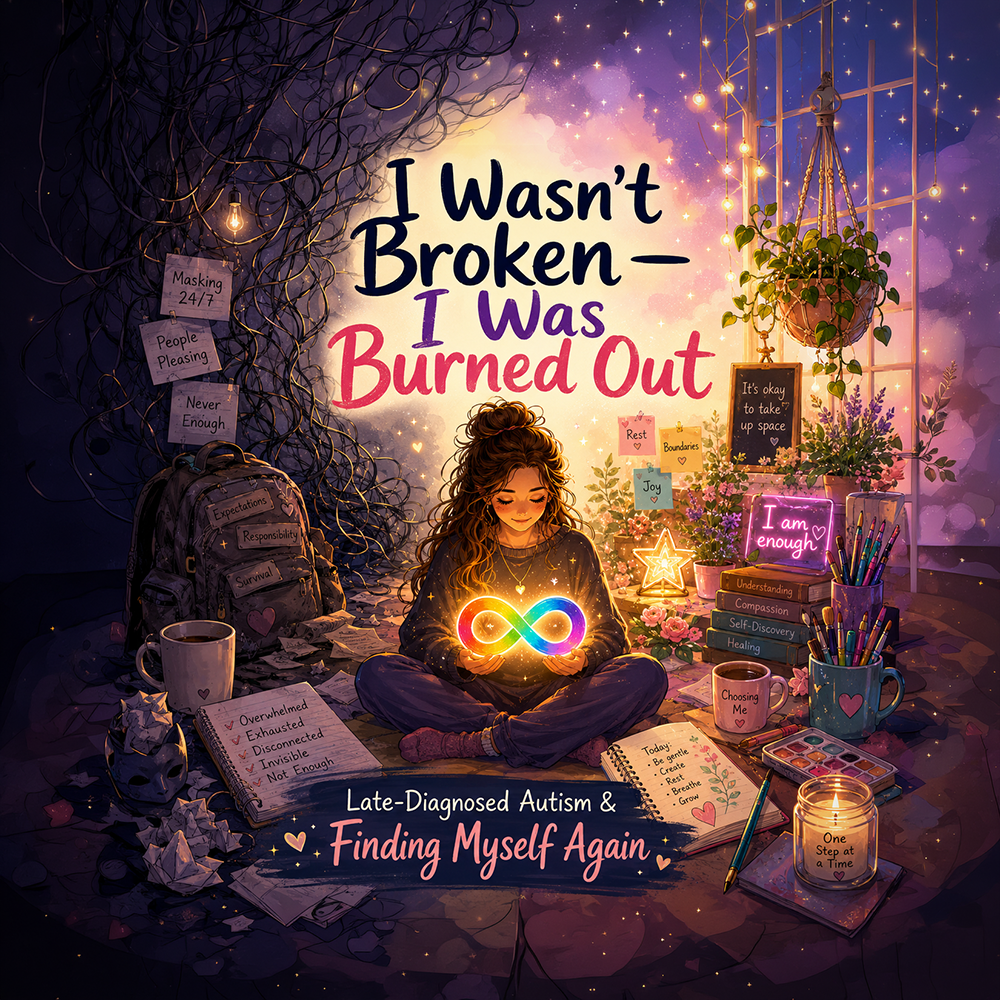
Another foundational idea within the course was that spirituality and religion can overlap, but they are not identical.
Religion generally involves an organized system of beliefs, traditions, teachings, rituals, ethics, and community practices.
Spirituality is broader and more personal; it may involve a relationship with God, Source, the sacred, nature, humanity, community, one’s inner life, or something larger than oneself.
For some people, religion provides the primary structure through which spirituality is understood and practiced.
For others, spirituality may be expressed through meditation, prayer, gratitude, service, creativity, storytelling, music, movement, nature, relationships, contemplation, or the search for meaning.
Someone may participate deeply in a religious tradition, combine elements from more than one tradition, identify as spiritual but not religious, remain uncertain, or find meaning without believing in a deity at all.
A label cannot tell us everything about someone’s inner life.
Knowing that a person is Christian, Muslim, Jewish, Buddhist, Hindu, Bahá’í, Pagan, agnostic, atheist, or affiliated with any other tradition does not reveal precisely what they believe, how actively they practice, what experiences have shaped them, or what kinds of support they would welcome.
Two people can use the same religious language while understanding it in profoundly different ways.
This distinction mattered to me because my own relationship with religion has been complicated.
I grew up within a strict Catholic environment in which faith was often presented through obedience.
Questions could be treated as challenges to authority rather than sincere attempts to understand.
Religious appearances did not always match the way people behaved privately, and ideas such as love, forgiveness, family, and duty could be used to pressure someone into accepting harmful treatment.
That history did not make every religious belief false or every religious community unsafe; it did teach me that religious language, by itself, is not proof of compassion, integrity, or spiritual maturity.
A person can speak frequently about love while behaving without care.
Someone can attend services, quote sacred texts, perform expected rituals, and still avoid accountability for the harm they cause.
Conversely, a person who does not use conventional religious language may live with profound kindness, humility, honesty, generosity, reverence, and concern for others.
The course helped reinforce the importance of looking beyond labels and asking what spirituality actually means to the individual.
- Does it offer hope, connection, purpose, courage, or belonging?
- Does it provide rituals for grieving, celebrating, remembering, or marking change?
- Does it help the person become more compassionate and truthful?
- Or has spiritual language become entangled with fear, shame, punishment, coercion, exclusion, or the demand to remain silent?
Spirituality can support healing, but it can also become an area in need of healing.
Someone who has experienced religious harm may not find comfort in prayer, sacred texts, clergy, or familiar language about God.
Those same practices might be deeply sustaining to someone else.
Respectful care does not assume that one response is more spiritually advanced than the other.
Instead, it makes room for the person to define what feels meaningful and safe.
While I was taking the course, the grandmother of the friend I was staying with invited me to a Bahá’í Holy Day celebration.
I knew relatively little about the Bahá’í faith, but I was curious, so I accepted the invitation.
One of the songs described humanity as flowers in God’s garden—different from one another, yet growing within the same garden.
The imagery was simple, but its emphasis on unity without sameness stayed with me.
Difference was not presented as a flaw that needed to be corrected before people could belong; the garden was beautiful because it contained many kinds of flowers.
That message resonated with questions already present throughout my work:
- What would our communities look like if belonging did not require conformity?
- What if differences in minds, bodies, cultures, beliefs, abilities, and ways of creating were approached as part of human variety rather than as problems to eliminate?
The experience did not require me to adopt every Bahá’í belief or ignore my complicated history with religion.
I could enter with curiosity, receive what was meaningful, ask questions, and allow the encounter to expand my understanding.
That freedom matters.
Spirituality rooted in healing should not depend on coercion; it should not require someone to surrender discernment, accept unsafe authority, deny their lived experience, or perform certainty they do not possess.
It may instead create room for honest questions.
It may help someone name what they value, locate themselves within a larger story, or experience connection during a season of isolation.
For me, creativity has often provided that kind of space.
Art and writing allow me to explore questions that do not always have immediate answers; they help me examine what love, safety, belonging, grief, justice, and hope actually mean—not merely what I was told they were supposed to mean.
A spiritual life, like a creative life, may involve continued attention rather than final certainty.
Perhaps the most respectful question is not: what religion are you? or What should you believe?
It is: what gives your life meaning, and what helps you feel connected to something beyond isolation?
Presence Can Be a Form of Care
The course also emphasized that spiritual care is not only about performing a ritual, offering a prayer, locating the correct resource, or saying something profound.
Sometimes care begins with presence.
That may mean listening carefully, noticing what matters to someone, allowing difficult emotions to exist, and resisting the urge to force an immediate solution onto an experience that cannot be quickly solved.
Presence can sound passive, especially within a culture that often measures helpfulness by visible action.
If someone is hurting, we may feel pressure to provide advice, identify a lesson, restore optimism, explain why something happened, or direct the person toward what we believe they should do next.
Action certainly matters.
A person who needs housing, medical treatment, food, transportation, protection, or professional support requires more than sympathetic attention.
But practical help and emotional presence are not opposites.
Someone can help address a concrete need without taking control of the person experiencing it.
Someone can share resources while still listening.
Someone can acknowledge that a problem requires action without treating another human being as a project to manage.
This distinction is particularly important when supporting people through trauma, disability, grief, spiritual distress, or circumstances that challenge their sense of meaning.
A rushed response may communicate: this feeling is too uncomfortable. Please resolve it quickly.
A dismissive reassurance may communicate: I need this situation to appear less serious than it feels to you.
Unrequested advice may communicate: I trust my interpretation of your life more than I trust yours.
Presence offers something different: I may not be able to remove this, but I am willing to recognize that it is real.
That recognition can matter deeply.
Throughout my life, I have often encountered responses that appeared helpful on the surface but required me to override myself.
I was encouraged to push through exhaustion, remain positive, tolerate mistreatment, reconcile without accountability, become more productive, or continue functioning as though the cost to my nervous system did not matter.
At other times, people focused so quickly on possible solutions that there was little space to understand the actual problem.
Support became another set of expectations I was supposed to fulfill correctly.
When someone is already overwhelmed, being handed more instructions can become another burden.
Sometimes the first helpful question is not: how can I make this person return to normal?
It is: what is this experience like for them, and what do they identify as helpful right now?
The answer may differ from what an observer expects.
A person may want prayer—or may have been harmed by religious language and want none.
They may want to talk—or may communicate more clearly in writing.
They may want company—or need quiet and privacy.
They may want advice, practical assistance, professional support, creative expression, a familiar ritual, time in nature, or simply someone who can listen without turning their pain into a debate.
Respectful care does not assume that the same response will help everyone; it asks.
This is also why knowing someone’s religious affiliation, diagnosis, culture, age, or family role is not enough to determine what they need.
Those details may provide context, but they cannot replace curiosity about the individual.
A person is not a checklist of expected beliefs and responses.
Presence therefore requires humility.
It means recognizing that another person remains the primary witness to their own inner life.
Supporters may possess professional knowledge, relevant resources, or valuable outside perspectives, but those things do not grant ownership over someone else’s meaning.
Presence also requires boundaries.
Being present does not mean taking responsibility for solving everything, remaining available without limit, or becoming someone’s only source of support.
Compassion is not the same as self-erasure.
Healthy care recognizes when a need exceeds one person’s role, knowledge, or capacity and when referral to a qualified professional is appropriate.
The person offering care is still a person, too.
Perhaps this is part of what makes genuine presence different from rescuing.
Rescuing places one person above another: the capable person acts upon the person in need.
Presence stands beside.
It may offer information, assistance, advocacy, protection, or skill, but it does not erase the other person’s voice.
It does not demand dependence as proof that the help mattered.
It does not make care conditional upon obedience, gratitude, or agreement.
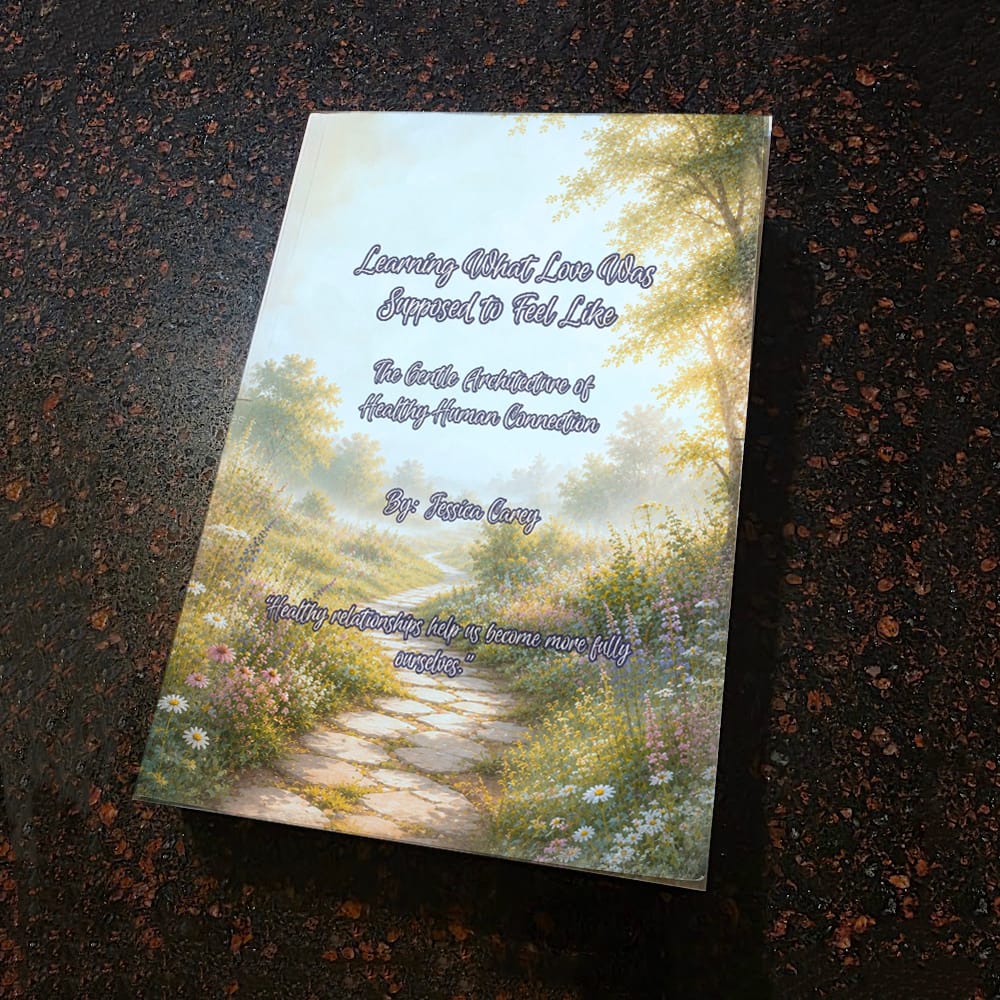
This understanding connects closely with the ideas I explored while writing Learning What Love Was Supposed to Feel Like.
Healthy love does not control someone in the name of helping them; it does not use concern as permission to ignore consent, boundaries, autonomy, or truth.
Care creates conditions in which another person can remain fully human.
Sometimes that means acting decisively.
Sometimes it means helping someone find a safer resource.
Sometimes it means asking a better question.
And sometimes it means remaining long enough to hear an answer that cannot be condensed into something easy.
 Jessica Carey
Creativity Can Support Healing—But It Is Not Automatically Art Therapy
The part of the course that connected most directly with my own work explored creative and relational approaches to healing.
It discussed music therapy, art therapy, dance and movement therapy, humor, and animal-assisted therapy.
Each can support people in different ways, depending on the person, setting, need, and goals involved.
The course also reinforced an important distinction:
Something can feel therapeutic without automatically becoming therapy.
Art therapy is a mental-health profession practiced by trained art therapists; it combines knowledge of visual art, human development, psychology, therapeutic relationships, assessment, and ethical practice.
The artwork is not simply assigned as a pleasant activity; the creative process becomes part of structured care offered within an appropriate professional scope.
I am an artist and art educator, not an art therapist.
People have often described me as thoughtful, insightful, easy to talk to, or just like a therapist or counselor, but relational strengths are not the same as clinical training.
That distinction does not diminish the value of art education, community art programs, independent creative practice, or the ways people naturally use creativity to understand their lives.
It protects the meaning of a specialized profession while allowing us to recognize that art can still support well-being outside a clinical setting.
Making art can be therapeutic without being art therapy.
Someone may draw because the repetitive movement feels calming.
A person may write because language helps organize an experience that previously felt chaotic.
Someone may shape clay because working with their hands brings them into the present moment.
A group may create together because shared activity makes social connection feel more accessible than direct conversation.
A person experiencing grief may make something to remember what was lost.
Someone rebuilding after trauma may create an image of the life, identity, or future they are trying to reclaim.
None of those activities automatically becomes clinical treatment; they can still matter.
Creativity gives people a language that does not depend entirely on ordinary speech.
Some experiences are too complex, contradictory, sensory, painful, or unfamiliar to explain directly.
An image, color, texture, movement, object, metaphor, or story may hold several truths at the same time without forcing them into a single tidy conclusion.
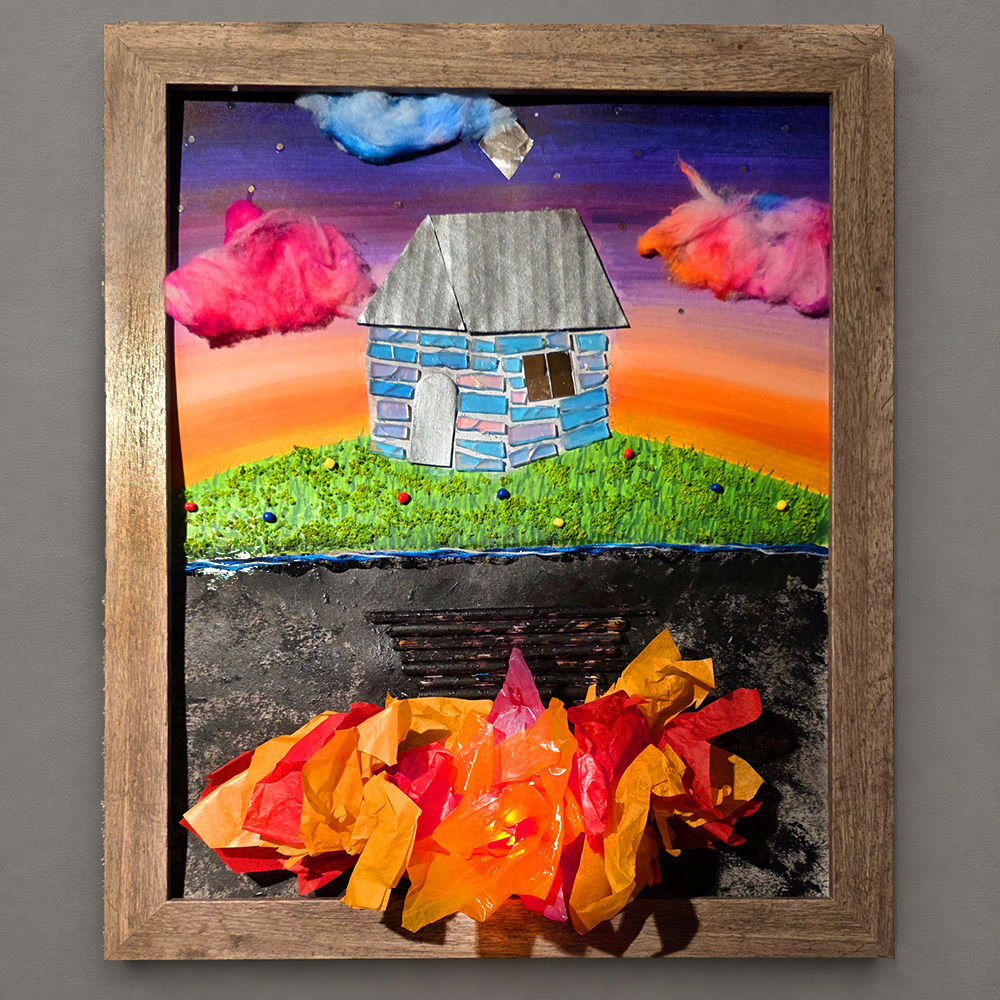
That is part of what happened when I created Phoenix Rebirth.
The mixed-media piece depicts a small home above a waterline beneath a guiding star and the beginning of dawn. Its walls are imperfect, iridescent, cracked, and silvered in reference to kintsugi.
Below the surface, the house becomes a burned reflection.
Charred bamboo, ash, smoke, darkness, and illuminated fire represent the destruction caused by harm, neglect, unsafe love, and other people’s choices.
The image holds two realities together: what happened was destructive, but it does not get the final say.
Creating the piece did not erase the harm or solve the practical circumstances I was still facing; it did not provide stable housing, restore lost safety, or transform the people who caused harm into accountable people.
What it did provide was a form through which I could make those experiences visible.
I could choose the materials, determine the composition, decide what belonged above and below the surface, and create a literal source of light within the darkest area.
The small tea light did not pretend the darkness was absent.
Its brightness became visible because the darkness remained part of the image.
 Jessica Carey
That act of choosing matters.
Trauma often involves the removal of choice.
Someone else controls the environment, the story, the available options, or what the harmed person is permitted to say about what occurred.
Creative work can return a measure of authorship.
The artist decides what to reveal, obscure, transform, preserve, repeat, break apart, or rebuild.
The finished work does not need to satisfy someone else’s version of events.
It can hold anger without becoming cruel, grief without becoming hopeless, beauty without denying damage, and possibility without pretending the past was acceptable.
Creativity can also make room for experimentation.
There is rarely only one correct way to draw a line, combine colors, arrange fragments, shape a piece of clay, write a sentence, or respond to a material.
The process invites questions:
- What happens if I try this?
- What does this material allow?
- Can the mistake become part of the work?
- What else might be possible?
Those questions can be especially meaningful for people whose lives have been shaped by rigid expectations, punishment for mistakes, or environments in which they were expected to suppress their own preferences.
Art can provide a small territory where curiosity is permitted; it can also connect people without requiring identical experiences.
Someone viewing Phoenix Rebirth does not need to know every detail of my history to recognize destruction, shelter, light, rebuilding, and the tension between what happened and what remains possible.
Their interpretation may connect the work to a different kind of loss or renewal within their own life.
The personal can become relational without becoming universal.
This is one reason I believe access to creativity matters.
Art supplies, instruction, studio space, time, encouragement, and creative community are often treated as luxuries.
Yet the ability to express oneself, experiment, make choices, learn new processes, and contribute something meaningful can support dignity and connection.
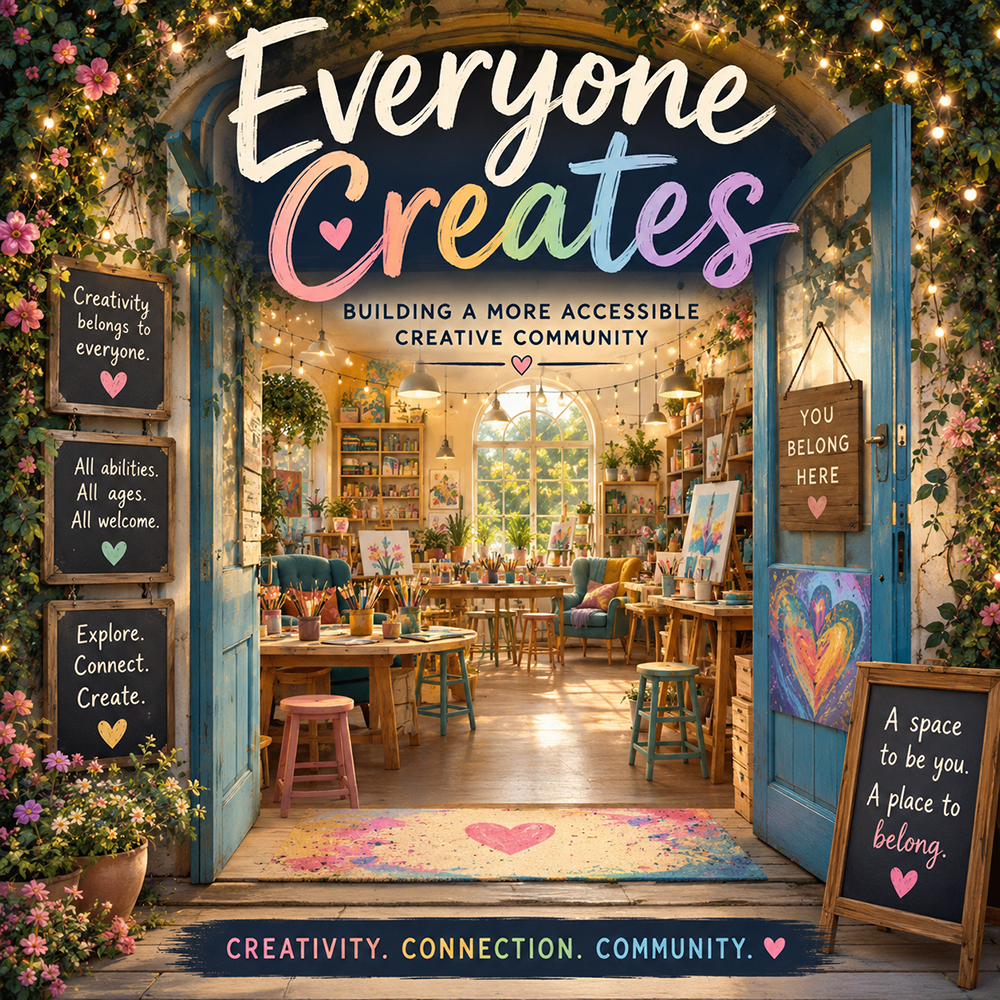
That belief sits near the heart of the Everyone Creates Project.
The goal is not to present every creative activity as therapy or to suggest that artists should perform work requiring a licensed mental-health professional.
It is to recognize that people deserve welcoming opportunities to create—especially those who have been excluded by cost, disability, sensory environments, rigid instruction, inaccessible spaces, or the belief that art is reserved for the naturally talented.
An inclusive creative space could offer materials, guidance, community, quiet, experimentation, different ways to participate, and permission to create without turning every result into a test of skill or productivity.
It could also recognize when someone needs support beyond what an artist, educator, volunteer, or community program can responsibly provide.
Creativity is not a replacement for therapy, healthcare, safe housing, medication, legal protection, social services, or human accountability; it does not need to replace those things to be valuable.
Art can give form to what has been silenced.
It can help someone recognize a feeling, preserve a memory, communicate an experience, make a choice, connect with another person, or imagine something beyond the conditions that currently exist.
Sometimes it creates beauty.
Sometimes it creates evidence.
Sometimes it creates a question.
And sometimes the first sign that another life may be possible is the moment someone can imagine it.
 Jessica Carey
Healing Environments Are About More Than Decoration
One of the lessons that stayed with me most strongly focused on sacred spaces and healing environments.
The course described an optimal healing environment as having three interconnected layers:
- Internal: the person’s thoughts, emotions, beliefs, intentions, and sense of wholeness.
- Interpersonal: the relationships among the people within the space.
- Physical: the qualities of the surroundings, including light, sound, air, temperature, nature, materials, accessibility, and design.
This framework challenged the idea that a healing environment is simply a room decorated with calming colors, inspirational words, and a few plants.
Those details may contribute to an atmosphere, but decoration alone cannot create safety.
A room can be visually beautiful while the people inside it behave without compassion.
A building can display messages about wellness while denying people meaningful choices.
A space can call itself inclusive while requiring disabled people to tolerate conditions that repeatedly overwhelm or exclude them.
A healing environment depends not only on what a place looks like, but also on what happens there and how people are treated.
The physical environment still matters deeply.
Lighting can support comfort or cause pain and exhaustion.
Sound can offer calm, information, and connection—or make it impossible for someone to think, rest, or communicate.
Scents that one person experiences as soothing may trigger nausea, headaches, memories, allergies, or sensory distress in someone else.
Color, temperature, clutter, movement, furniture, navigation, privacy, and access to nature can all affect how safely a person’s nervous system responds to a space.
These effects are not identical for everyone.
A lively room filled with music and conversation may energize one person while overwhelming another.
A dimly lit room may feel peaceful to someone and disorienting to someone else.
Silence may be restorative, uncomfortable, or inaccessible depending on the individual and circumstances.
This is why personal choice matters more than a universal formula for calm.
As an autistic person, I am especially aware of how quickly an environment can consume capacity.
A place does not have to be physically dangerous to become inaccessible.
Harsh lighting, overlapping conversations, unpredictable noise, strong odors, confusing layouts, crowded pathways, or expectations of constant social interaction can require so much processing that little energy remains for the activity I entered the space to complete.
Other people may not see that cost.
They may see someone standing quietly, leaving early, struggling to answer questions, avoiding a crowded area, or needing additional recovery afterward.
Without understanding the sensory environment, they may interpret those responses as disinterest, inflexibility, anxiety, poor social skills, or unwillingness to participate.
The problem is then assigned entirely to the person rather than examined within the environment.
A more compassionate question would be: what conditions might allow this person to participate more fully without having to sacrifice their well-being to do so?
Sometimes the answer is surprisingly practical.
Adjustable lighting.
A quieter room.
Clear written directions.
Predictable schedules.
Visible signs and straightforward navigation.
Seating away from the busiest pathway.
Permission to wear headphones or use sensory tools.
Materials organized so that someone can understand the choices without processing unnecessary clutter.
Options to participate independently, beside others, or collaboratively.
A place to step away without being punished, questioned, or treated as rude.
None of these changes guarantees that every space can meet every need.
They do, however, shift accessibility from an individual test of endurance toward a shared design responsibility.
The interpersonal layer may matter even more.
A quiet room does not feel safe if someone’s boundaries are ignored there.
A comfortable chair does not create dignity if the person sitting in it is spoken over, infantilized, manipulated, or treated as incapable of understanding their own needs.
Nature imagery cannot compensate for coercion.
A sign that says you belong here means little if belonging is withdrawn whenever someone communicates differently, needs help, sets a limit, or fails to perform gratitude correctly.
Healing environments require relationships shaped by consent, respect, curiosity, accountability, and genuine care.
This has changed the way I think about the word home.
A home is more than a physical shelter, though physical shelter is essential; it is also a place where someone should be able to rest without remaining alert to intrusion, punishment, conflict, or the possibility that their needs will be used against them.
A beautifully arranged house can still become a cage.
A modest or temporary space can sometimes offer more peace when the people within it respect boundaries, communicate honestly, and allow one another to exist without constant performance.
My experiences with instability and unsafe belonging have made me understand why the built environment and the relational environment cannot be separated.
People need walls, doors, beds, food, and protection from the weather.
They also need the right to close a door, make decisions, keep possessions safe, communicate needs, experience quiet, and know that care will not be withdrawn as punishment for having boundaries.
This framework also connects directly with my vision for Everyone Creates.
An inclusive creative space should not merely look cheerful in photographs; it should consider how people actually move, process, communicate, choose, rest, and create inside it.
That might include areas with different levels of stimulation, clear organization, accessible pathways, adjustable options, comfortable seating, natural elements, written and visual instructions, affordable materials, quieter work areas, and opportunities to participate without being forced into constant conversation.
It should include art that feels meaningful rather than art selected only because it matches the furniture.
Most importantly, it should be shaped by people who understand that accessibility is not an inconvenience added after the “real” design is complete; it is part of the design.
A healing creative space would not promise that everyone entering it would be healed; no environment has that power.
It could, however, avoid creating unnecessary harm.
It could make participation more possible.
It could give people greater choice over how they engage.
It could offer beauty without demanding performance, community without eliminating solitude, and creative opportunity without requiring someone to prove that they belong.
A space becomes healing not because every wall looks peaceful, but because the people within it are treated as whole human beings whose bodies, boundaries, cultures, senses, and ways of being matter.
 Jessica Carey

Grief Includes More Than Death
The course’s lesson on grief emphasized something our culture does not always recognize clearly enough:
Grief is not limited to death.
Death can create profound and life-altering grief, but people may also grieve relationships, health, ability, work, financial security, independence, identity, community, safety, housing, and futures they believed they would have.
Some losses are visible and socially recognized.
Others occur quietly, without ceremonies, sympathy cards, bereavement leave, or a shared language for explaining what has changed.
The course described disenfranchised grief as grief that is not fully recognized, understood, or validated by others.
That concept gave a name to experiences I had often struggled to explain.
There is grief in losing a stable place to live—even when no single building ever felt completely safe or fully mine.
There is grief in being separated from possessions, routines, creative materials, familiar places, privacy, and the ordinary ability to decide where I will sleep or how long I can remain somewhere.
There is grief in repeatedly adapting to temporary spaces while trying not to inconvenience the people offering shelter.
Homelessness is not only the absence of a permanent address; it can involve the loss of autonomy, continuity, safety, predictability, community, and the feeling that life has somewhere dependable to unfold.
Those losses may be difficult for other people to see, especially when someone is staying indoors rather than sleeping visibly outside.
The person may appear temporarily housed while still lacking a home, legal security, control over the space, or confidence about what will happen next.
The grief remains real even when it does not match someone else’s image of homelessness.
Late autism diagnosis can also involve grief.
Receiving an accurate explanation for lifelong patterns can bring relief, recognition, and self-compassion; it can finally make experiences that once seemed disconnected begin forming a coherent picture.
At the same time, that understanding can reveal how much support was missing.
There may be grief for the child who was expected to tolerate overwhelming environments without accommodation.
Grief for the adult who interpreted chronic exhaustion as personal failure.
Grief for the relationships damaged by misunderstandings that might have been approached differently.
Grief for years spent masking, pushing through, or trying to become a version of oneself that required constant self-abandonment.
The diagnosis does not create those losses; it makes them more visible.
That visibility can be both liberating and painful.
Chronic autistic burnout carries another kind of grief: the loss of access to capacities that may once have seemed dependable.
Tasks that were previously difficult but possible may become unreachable.
Social interaction may require more recovery.
Sensory tolerance may narrow.
Planning, transitions, speech, decision-making, or ordinary responsibilities may consume energy the person no longer possesses.
It can be tempting to compare the present self with a previous period of functioning and ask why effort no longer produces the same result.
But the earlier functioning may have been sustained by borrowing energy from a future that eventually arrived with nothing left.
Grieving that change does not mean accepting that life has no value; it means acknowledging that something has changed and that pretending otherwise will not restore it.
Family separation can contain grief, too—even when leaving was necessary.
People often assume that grief proves a relationship should be restored.
If someone misses a family member, remembers a good moment, or mourns the relationship they wanted, outsiders may interpret those feelings as evidence that reconciliation is the proper ending.
But grief does not automatically mean returning is safe.
A person can grieve a parent, sibling, home, tradition, or imagined future while also experiencing relief that the harm is no longer happening in the same way.
Relief does not cancel grief.
Grief does not cancel the need for boundaries.
Both can exist because human relationships are rarely composed of only one kind of memory.
I can grieve the family I hoped could exist without pretending that the family system I experienced was safe.
I can miss certain people, places, rituals, belongings, and moments without agreeing to re-enter patterns of manipulation, coercion, gaslighting, scapegoating, or abuse.
Sometimes the deepest grief is not only for the relationship that ended; it is for the relationship that never became what it was supposed to be.
That loss is difficult to mourn because there may be no clear ending.
The person is grieving possibility—the care that should have existed, the protection that should have been offered, the apology that never came, or the home that looked like belonging from the outside without providing safety within it.
These forms of grief are often rushed because they make other people uncomfortable.
Someone may be told to move on, forgive, focus on gratitude, stop dwelling on the past, or recognize that others have experienced worse.
None of those responses makes the loss smaller.
Grief does not become excessive simply because someone else fails to understand what was lost.
The course cautioned against treating grief as a neat sequence of stages.
People may move in and out of different responses.
Grief may quiet and return around anniversaries, places, objects, music, financial changes, bodily sensations, or unexpected reminders.
It may coexist with laughter, creativity, curiosity, love, anger, numbness, gratitude, or relief.
There is no contradiction in having a meaningful day while still grieving.
Healing does not require remaining visibly devastated, but neither does it require converting every loss into a positive lesson.
Art and writing have helped me give some of these losses a form.
A house can become an image of both shelter and destruction.
A phoenix can represent survival without calling the fire a gift.
A garden can represent relationships built through care rather than confinement.
Words can preserve distinctions other people try to collapse: love is not control, forgiveness is not access, gratitude is not debt, and grief is not consent to return.
Creative expression does not complete grief; it can provide somewhere for grief to exist without demanding that it become simpler than it is.
Perhaps one of the most healing things we can offer is permission for a loss to count.
Not every grief needs to be compared, justified, spiritualized, or hurried toward closure.
Sometimes healing begins when someone is finally able to say:
- This changed my life.
- This mattered.
- This hurt.
- And I am allowed to grieve it.
 Jessica Carey

Healing Changes Across a Lifetime
Several of the course’s later lessons explored spirituality and care across different stages of life, including childhood, aging, dying, and grief.
The needs surrounding each stage are not identical.
A child is developing language, identity, trust, imagination, and an understanding of the world.
An older adult may be adapting to changes in health, mobility, independence, relationships, roles, or living environment while carrying decades of knowledge and experience.
Someone approaching death may be confronting questions of meaning, fear, unfinished relationships, remembrance, dignity, and what they want the people around them to understand.
Yet certain human needs remain recognizable throughout life.
People need dignity.
They need trustworthy connection.
They need opportunities to make meaningful choices.
They need their culture, beliefs, memories, identities, and ways of communicating to be taken seriously.
They need room to ask difficult questions without being punished for having them.
And they need others to remember that dependence in one area does not erase personhood in every other area.
Children and older adults are both frequently spoken about rather than spoken with.
Adults may assume that a child is too young to understand what is happening, even when the child can clearly sense fear, conflict, instability, illness, grief, or a change in the emotional environment.
Similarly, an older person may be treated as though age, disability, illness, slower movement, or the need for assistance has made their preferences less important.
In both cases, other people may begin making decisions more efficiently by removing the individual from the conversation.
Protection can then blur into control.
Assistance can become infantilization.
Concern can become permission to override consent.
This does not mean children and vulnerable adults never need protection, guidance, advocacy, or support with decisions; they do.
It means that care should preserve as much voice, choice, communication, and dignity as circumstances allow.
A child may not control the major decisions surrounding their life, but they can still be offered truthful, age-appropriate explanations and meaningful choices.
An older adult may need practical assistance while still knowing what feels familiar, comfortable, spiritually significant, frightening, or important to them.
Someone who communicates without speech may still have preferences, boundaries, awareness, relationships, and ways of expressing consent or distress.
The absence of a conventional response does not mean the absence of an inner life.
This is one reason person-centered care matters.
Broad knowledge about childhood development, aging, disability, religion, or culture can help someone ask better questions; it should not be used to replace questions entirely.
The more respectful approach remains:
- What matters to this particular person?
- What brings them comfort or meaning?
- How do they communicate preference, distress, or connection?
- Who do they trust?
- What helps them remain connected to their identity?
- What do they want others to understand?
These questions apply in hospitals and care facilities, but they also belong in families, schools, community programs, creative spaces, and ordinary relationships.
I have often found meaningful connection with children and older adults, perhaps because both tend to respond to curiosity, imagination, sincerity, and conversations that move beyond small talk.
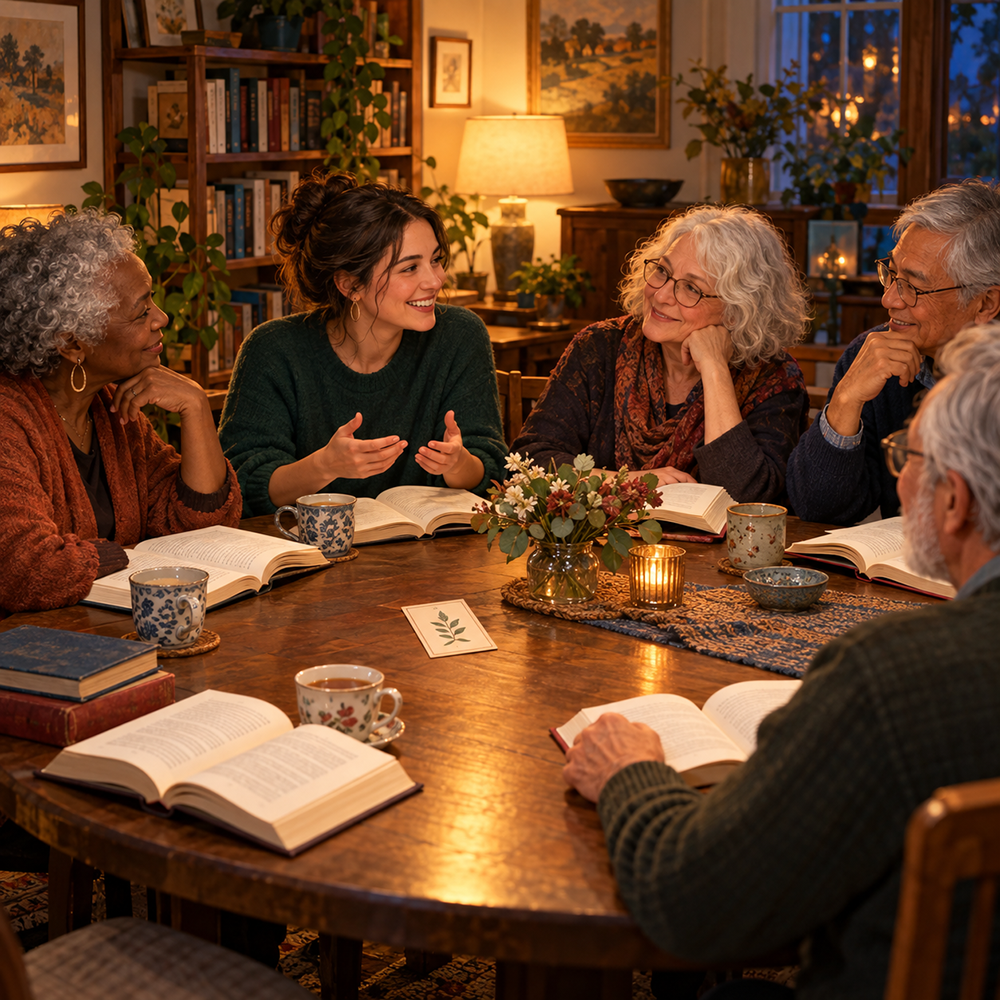
A recent intergenerational book discussion reinforced that age alone does not determine who can offer insight or belong in a thoughtful exchange.
That evening also reminded me that support does not only flow from older people toward younger ones, or from those considered more capable toward those considered less capable.
Care can be reciprocal.
Children may offer honesty, imagination, affection, and ways of seeing that adults have forgotten.
Older adults may offer history, experience, patience, perspective, and continuity.
Disabled people may require support in some areas while offering knowledge, creativity, emotional insight, advocacy, or companionship in others.
A person nearing the end of life may still teach, comfort, reconcile, create, choose, bless, remember, or shape the lives of the people around them.
Human value does not disappear when productivity changes.
The course’s attention to death and dying reinforced the importance of presence, cultural humility, spiritual choice, family relationships, meaningful objects, stories, music, rituals, and legacy.
Not every person approaching death wants the same kind of conversation or spiritual practice.
Some may want prayer, sacred readings, familiar music, family presence, or contact with a faith leader.
Others may want quiet, honest conversation, nature, photographs, creative work, or freedom from religious language.
The appropriate response is not to impose a prescribed meaning on the person’s final stage of life.
It is to help preserve what they identify as meaningful.
Perhaps this is the thread that connects care across the lifespan.
Healing does not always mean increasing independence, returning to productivity, or preparing someone to function according to a single adult standard.
For a child, healing may involve restoring trust and safety.
For an adult, it may involve rebuilding identity or finding support through change.
For an older person, it may involve maintaining connection, dignity, meaning, and participation as capacities shift.
For someone who is dying, healing may involve reconciliation, peace, remembrance, truthful presence, or the knowledge that they will not be abandoned.
At every stage, the person remains more than the condition, age, role, or need that brought others into their life.
Care begins by remembering that.
 Jessica Carey
What I Would Hold Carefully
The course gave me language, frameworks, and questions that I expect to carry into my creative work and future community-building efforts.
It also included ideas that deserve to be approached carefully.
A course can contain meaningful insight without every claim carrying the same level of evidence, applying to every person, or belonging within every reader’s professional role.
Learning responsibly requires more than deciding whether to accept or reject the course as a whole; it requires discernment.
At the same time, spiritual and complementary practices should never be treated as replacements for medical care, mental-health treatment, material support, accessibility, legal protection, or safety.
Prayer may comfort someone, but it cannot substitute for appropriate treatment.
Meditation may help regulate attention or stress for some people, but it does not make an unsafe environment safe.
Art may help a person express trauma, but a community art program is not automatically equipped to treat trauma clinically.
Nature may support well-being, but a garden does not eliminate the need for housing, healthcare, food, or human accountability.
Whole-person care should expand the forms of support available to someone; it should never become an excuse to withhold evidence-based treatment or practical assistance.
I would also hold claims about specific healing practices carefully.
Research quality varies.
Some practices have substantial professional standards and evidence behind particular uses.
Others may have limited, mixed, emerging, culturally specific, or primarily subjective support.
The fact that someone experiences meaning or comfort through a practice does not automatically prove that the practice can treat a medical condition.
Both truths can coexist:
- A practice may be personally meaningful.
- Its medical effects may still require careful evidence.
Individual differences matter, too.
A scent described as calming may overwhelm someone with sensory sensitivities.
A guided visualization may be inaccessible or frustrating for someone with aphantasia.
A religious ritual may soothe one person and activate traumatic memories for another.
A therapy animal may offer comfort to someone while creating fear, allergies, sensory distress, or physical risk for someone else.
Music, touch, light, color, movement, humor, and social interaction should never be assumed to have universal effects.
Choice is essential.
Cultural information also requires humility.
Learning broad patterns can help someone avoid treating their own customs as universal.
However, a cultural description should become a starting point for respectful questions—not a script imposed on an individual.
No person perfectly represents every tradition, identity, community, or belief associated with them.
Professional boundaries matter as well.
Art therapists, music therapists, mental-health professionals, chaplains, nurses, physicians, and other trained providers possess specialized knowledge and ethical responsibilities.
An artist, teacher, volunteer, friend, family member, or community organizer should not claim a clinical role they are not qualified to perform.
We can offer creativity, presence, education, encouragement, resources, and community while remaining honest about the limits of our role.
Perhaps the greatest danger comes when spirituality is used to blame people for their suffering.
Illness is not proof of inadequate faith.
Disability is not a spiritual failure.
Continuing grief does not mean someone has refused to heal.
Trauma does not persist because a person lacks positivity.
Remaining affected by injustice does not mean someone has chosen victimhood.
And forgiveness, even when freely chosen, does not require renewed access, reconciliation, silence, or the removal of consequences.
Healing language becomes harmful when it demands that wounded people produce the emotional outcome that makes everyone else most comfortable.
A responsible understanding of healing leaves room for mystery, but it also leaves room for evidence, boundaries, consent, material reality, and the right to say that something did not help.
That is what I would carry from the course most carefully:
The whole person matters.
Supporting the whole person requires more possibilities—not fewer protections.
Libraries as Doorways Into Unexpected Learning
I might never have taken this course if I had encountered it only through a traditional college catalog or an expensive professional-development program.
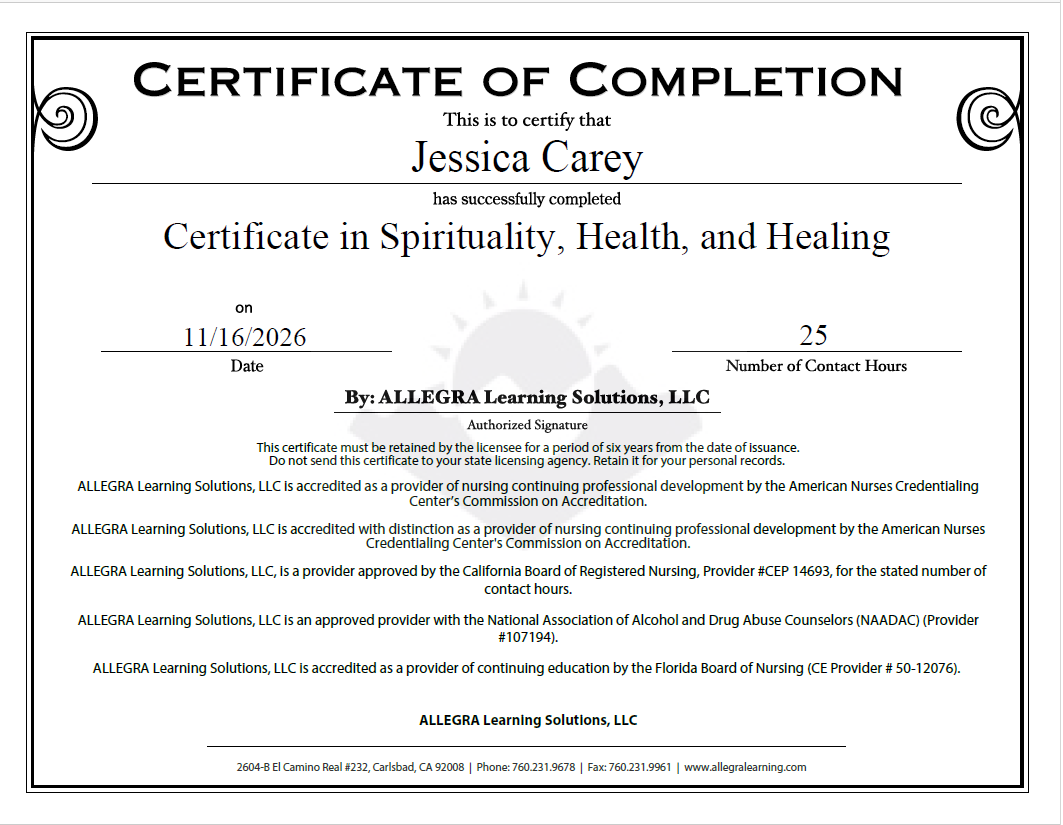
I found it because my local library provided free access to online learning through Gale.
That access lowered several barriers at once.
The course did not require me to travel to a classroom, manage a crowded environment, follow someone else’s pace, or pay the full cost of enrolling independently.
I could work through the lessons from a quieter setting, pause when my capacity was limited, return to difficult material, and take notes in the form that worked best for me.
That flexibility was especially valuable while experiencing chronic autistic burnout and housing instability.
Accessibility did not mean the course was effortless.
The curriculum was extensive, and some lessons contained dense clinical, cultural, spiritual, and ethical material.
But the online format allowed me to engage without using most of my available energy simply reaching and tolerating the learning environment.
It reminded me that access is not only about whether information technically exists.
A resource may be available somewhere while remaining unreachable because of cost, transportation, scheduling, disability, sensory demands, technology, or the expectation that everyone learn in the same way.
Libraries can help narrow some of those gaps.
Many people still primarily associate libraries with borrowing books.
Books remain essential, but contemporary libraries may also provide access to databases, business research, job-search assistance, online courses, creative programs, technology, community events, language learning, digital media, and other educational resources.
The exact offerings vary by library system, so not every reader will find this same course or platform.
Still, it is worth exploring what a local library card may quietly unlock.
That has become a recurring lesson in my life.
The library has connected me with small-business and nonprofit resources, research tools, workshops, creative opportunities, and information I would not necessarily have known how to find alone.
Some of those resources have supported my own work; others have become information I could share with artists, new vendors, and people developing community projects.
Knowledge can continue moving.
A resource found for one reason may become useful in an entirely different context.
The course itself demonstrated that possibility.
Although the course was designed primarily for healthcare professionals, its larger questions crossed professional boundaries.
I could reflect on healing without being a nurse, consider spiritual harm without being a chaplain, recognize the importance of sensory environments without being an architect, and value creative expression while respecting the boundaries of professional art therapy.
The course’s clinical material belonged within specific professional scopes; its broader questions belonged to anyone concerned with how human beings experience care, meaning, grief, community, and the environments around them.
Learning across disciplines can reveal connections that remain hidden when knowledge is kept inside isolated categories.
My background in art education affected what I noticed about creativity.
My autistic experience affected what I noticed about sensory environments and individual differences.
My experiences with trauma, homelessness, and family separation affected what I noticed about grief, safety, spiritual harm, and the limitations of telling people merely to become resilient.
My hopes for Everyone Creates affected what I noticed about community, dignity, accessibility, and the conditions that allow people to participate.
I did not leave the course as a healthcare provider, nor was that my goal.
I left with new language for questions I was already asking and a broader understanding of how those questions appear within other fields.
That is one of the quiet powers of a library.
It does not require every act of learning to lead toward a new credential, profession, product, or measurable outcome.
Sometimes curiosity is enough reason to begin.
And sometimes the course that appears to belong to someone else helps us understand more clearly the work that is already ours.
 Jessica Carey

Creating More Conditions for Healing
The world does need healing.
We see the need in overwhelmed healthcare systems, inaccessible communities, unsafe families, widespread loneliness, unresolved grief, spiritual harm, economic instability, discrimination, burnout, and the many ways people are expected to survive conditions no individual should have to repair alone.
Yet healing is often discussed as though it were primarily a personal responsibility.
People are told to become more resilient, manage stress more effectively, practice gratitude, improve their mindset, forgive, rest, meditate, attend therapy, or find meaning in what happened.
Some of those practices may genuinely help. Individual choices matter.
But the language of personal healing becomes incomplete when it ignores the conditions continually causing harm.
A person cannot self-care their way out of an environment that repeatedly violates their safety.
Someone cannot regulate their nervous system into making inaccessible systems accessible.
A creative practice cannot provide housing.
A support group cannot substitute for adequate healthcare.
A positive outlook cannot correct discrimination, poverty, abuse, or institutional neglect.
People should not be assigned the entire responsibility for healing from circumstances that relationships, communities, and systems continue to reproduce.
Perhaps the more useful question is not only: how can this person heal?
It is also: what conditions are helping or obstructing that healing?
That question changes where responsibility is placed.
It asks families whether love is accompanied by safety, accountability, consent, and respect.
It asks healthcare providers whether the whole person is being heard rather than reduced to symptoms.
It asks schools whether differences are being accommodated or punished.
It asks workplaces whether expectations are sustainable.
It asks spiritual communities whether their teachings are creating compassion or coercion.
It asks public systems whether support is genuinely reachable.
It asks artists, educators, libraries, and community organizations what kinds of spaces they are helping create.
Healing remains personal because every person’s experience, needs, meanings, and choices are their own.
But the conditions surrounding healing are collective.
We influence one another’s possibilities.
A safe relationship cannot erase every wound, but it can stop adding new ones.
An accessible room cannot resolve chronic illness, but it can allow someone to participate with less unnecessary strain.
A reliable resource cannot rebuild an entire life, but it may remove one barrier.
An honest conversation cannot undo grief, but it can help someone feel less alone within it.
A creative opportunity cannot solve systemic injustice, but it can give someone a place to express, question, imagine, contribute, and be witnessed.
Art occupies a meaningful place within that larger network of care—not because it can replace healthcare, housing, safety, or accountability, but because it can support expression, agency, remembrance, connection, and imagination.
Creativity may not repair every injury, but it can help someone give form to what happened and imagine possibilities beyond the conditions that currently exist.
This course did not give me a single formula for healing.
It reinforced that healing may involve professional treatment, practical assistance, accessible environments, trustworthy relationships, creativity, spirituality, grief, rest, advocacy, and changes to the conditions in which someone lives.
No single form of support can carry the entire process, and no one should be blamed when healing remains incomplete.
What we can do is create more conditions in which healing becomes possible.
We can listen before assuming.
We can ask what matters to the individual.
We can respect boundaries rather than treating access as proof of love.
We can design environments that account for different bodies, senses, cultures, and ways of communicating.
We can distinguish between professional therapy and meaningful community care.
We can offer resources without demanding control.
We can make room for grief that does not follow a timetable.
We can treat creativity as part of human dignity rather than a reward reserved for people with money, confidence, talent, or uncomplicated lives.
We can build gardens instead of cages.
I began the course as an artist and writer curious about material created primarily for healthcare professionals.
I finished it still an artist and writer—but with a clearer understanding of why creative work, accessible environments, spiritual humility, practical support, and relational safety belong within the same conversation.
Healing is more than curing.
It is more than coping.
And it is more than an individual learning how to endure what should never have been demanded of them.
Perhaps healing also asks something of the rest of us:
to become people, communities, and systems that cause less harm—and make more room for life.
What has helped you feel more whole during a difficult season?
Was it a person, place, belief, resource, creative process, practical form of support, or combination of many things?
And what might our communities become if healing were understood not only as something individuals pursue, but as something our relationships and environments can either support or obstruct?
 Jessica Carey

Want even more content about creativity and art?
Be sure to check out all of our creative chronicles!
If you'd like to see examples of my work, you can find some of my art and creations at Redbubble and Gumroad!
Looking to learn more about my recent journey?
Check out some of these articles:
-Hidden Gems for St. Louis Artists
-Hidden Gems for Autistic & Neurodivergent Adults
-Building a Life from What Remains
 Jessica Carey