

What a Free Library Conference Taught Me About Resources, Connections, and Possibility
How many opportunities exist around us that we simply don't know about?
Not because we're ignoring them.
Not because we haven't tried hard enough.
But because nobody ever told us they were there.
I've been thinking about this after attending the St. Louis County Library's three-day Small Business and Nonprofit Conference.
The entire conference was completely free.
Over October 7–9, the library offered an impressive variety of presentations covering everything from starting a nonprofit and finding grant funding to business planning, marketing, technology, accessibility, financial management, and creative tools.
Some sessions were held in person, while others were offered virtually.
There were opportunities to learn about developing a website, protecting creative work, understanding financial statements, building nonprofit programs, using Canva, exploring AI tools, and much more.
And those were only some of the options.
But what struck me wasn't simply the number of presentations.
It was how much knowledge, support, and connection could be found through a resource I hadn't fully understood the possibilities of.
Sometimes We Don't Know What We Don't Know
I've always appreciated libraries, but I hadn't realized just how many resources and opportunities they could offer beyond borrowing books.
- Research tools
- Educational programs
- Professional development
- Technology
- Community events
- Connections to people and organizations with knowledge that might otherwise be difficult—or expensive—to access
And even after discovering some of these resources, I suspect there's still plenty I haven't encountered yet.
That's part of what makes community resources so interesting; we can't take advantage of opportunities we don't know exist.
And sometimes discovering one opportunity introduces us to several others.
A workshop might lead to a useful resource, a presentation might introduce an organization, or a conversation might reveal a program we hadn't heard of.
What begins as a single learning opportunity can become an introduction to an entire network of people, knowledge, and possibilities.
During the conference, I met other people who were starting businesses, exploring nonprofit ideas, or navigating challenges similar to my own.
In fact, I made at least one valuable new connection at every presentation or session I attended.
That wasn't something I could have predicted simply by reading the program schedule.
The presentations provided information, but the conversations added something different: the opportunity to exchange experiences, discover shared interests, and begin building relationships with people in the community.
And I think that's an important part of the value we sometimes overlook.
A community resource isn't always just a place where we receive something.
Sometimes it's a place where people who might be able to help, encourage, teach, or collaborate with one another finally have an opportunity to meet.
Of course, not every event will be useful to everyone.
Not every program will fit our needs, and attending something doesn't guarantee that we'll find the answers or support we're looking for.
But it can be worth exploring what's available.
Not necessarily this conference.
Not necessarily this library.
Not necessarily anything related to business or nonprofits.
And while my experience centered on a small business and nonprofit conference, the larger lesson applies far beyond those fields.
Community resources can support creativity, education, personal interests, professional development, connection, and countless other needs.
The point isn't that everyone needs to pursue the same opportunities; it's that we may have more possibilities around us than we realize—and sometimes the first challenge is simply discovering them.
Your Library Is More Than a Place to Borrow Books
When most people think of libraries, they probably think of books.
And understandably so.
But one of the things I've been discovering is just how much libraries can offer beyond their physical collections.
Some provide access to research databases, educational platforms, specialized technology, creative equipment, and other resources that might otherwise be expensive or difficult to obtain.
Others offer workshops, professional development opportunities, and community programs that connect people with knowledge and expertise.
And different library systems may provide different opportunities.
That's part of what makes exploring their offerings so worthwhile: a library card may open doors we didn't even realize were there.
 Jessica Carey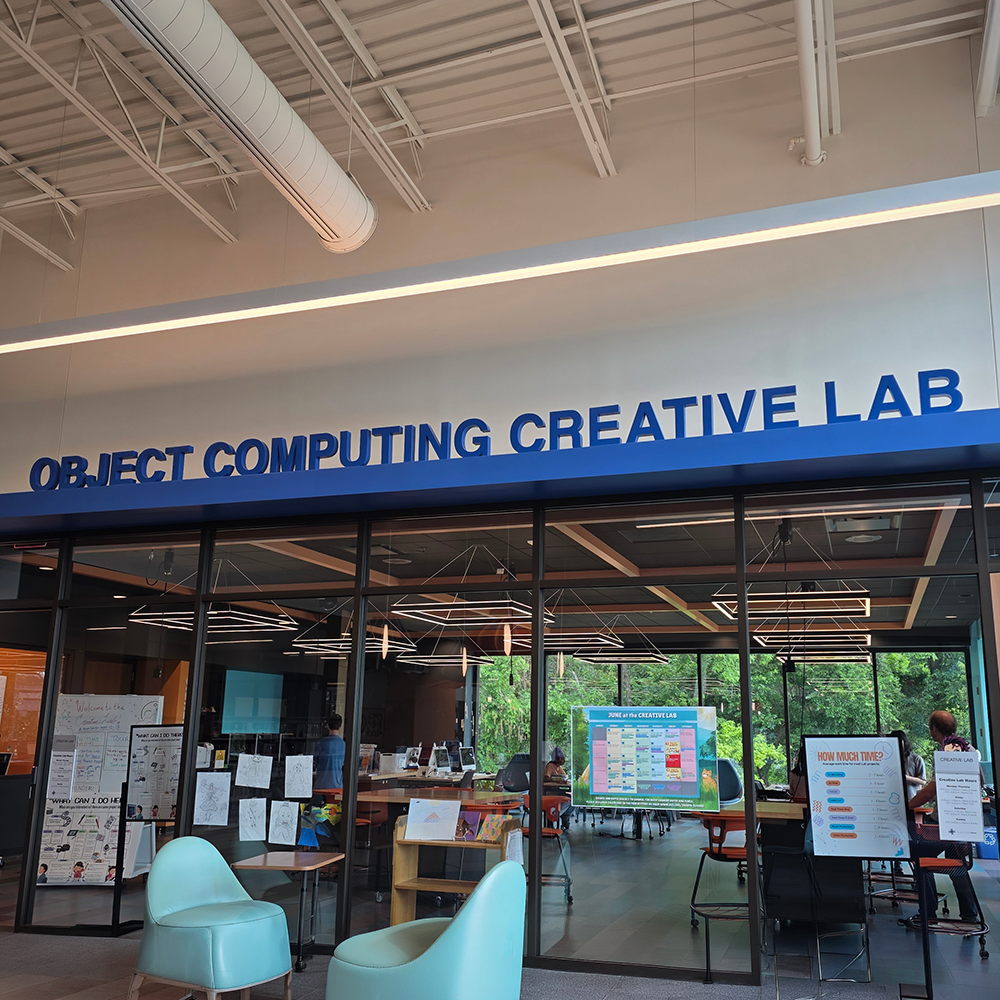
Resources You Might Not Know You Have Access To
One of the things discussed during the conference was how libraries can provide access to research tools and educational resources that people might otherwise overlook.
For example, Reference Solutions can help people research businesses, industries, and potential customers; it's a paid research service, but participating libraries provide free access to their patrons.
LinkedIn Learning offers courses covering business, technology, creative skills, professional development, and other subjects.
Some library systems provide access through eligible library accounts.
For people exploring nonprofits or funding opportunities, resources such as Candid's Foundation Directory can help with researching grantmakers and potential funding sources.
Access may be available at participating library locations.
There are also free educational resources beyond individual library systems, such as Candid Learning and MOSourceLink, that can help people explore nonprofit development, fundraising, entrepreneurship, and business support.
And that's before considering the creative resources some libraries offer.
Here in St. Louis, the County Library's Creative Lab provides opportunities to explore equipment, software, and creative technologies that might otherwise be expensive or difficult to access individually.
What's especially interesting is that different library systems may offer different resources.
In the St. Louis area, we have the County Library, the City Library, and several municipal library systems.
Depending on residency and eligibility, people qualify for cards from more than one system, potentially opening access to different collections, programs, and services.
It's worth checking the specific requirements and offerings rather than assuming every library provides exactly the same things.
Sometimes Access Is the Opportunity
A resource doesn't necessarily have to be something we take home.
Sometimes it's access to equipment.
A database.
A class.
A knowledgeable person.
A workspace.
A piece of software.
Or simply information about an opportunity we didn't know existed.
And that can make a meaningful difference.
Someone interested in starting a business might discover a research tool.
An artist might find equipment they couldn't afford to purchase.
A person exploring nonprofit work might learn where to begin researching grants.
Someone hoping to develop a new skill might discover an online course.
A community organizer might find a workshop or connection that helps them take the next step.
None of these resources guarantees success, and availability varies; some require registration, specific library credentials, reservations, or in-person access.
But the possibilities are worth investigating.
Because sometimes the question isn't: how am I supposed to afford every tool, class, subscription, or resource I might need?
Sometimes another question is available: does my community already provide access to something that could help?
And we may never discover the answer unless we think to ask.
Libraries are one wonderful place to start—but the larger lesson is to look beyond what we already know is available.
A Budgeting Workshop That Offered More Than Advice
One of the presentations that stood out to me was the final session of the conference, “Budgeting for Mission Impact,” presented by Nancy Jordan of Clarity Starts Now.
Budgeting and financial planning are areas I've personally struggled with.
Numbers, financial terminology, spreadsheets, and all the moving pieces involved in organizing finances can become overwhelming, especially when you're trying to figure out how to fund something you're passionate about.
And I suspect I'm not alone in that.
We often hear how important it is to have a budget, develop a financial plan, or understand where our money is going.
But being told something is important isn't necessarily the same as being given the tools to actually do it.
That's part of what made this presentation worth sharing.
More Than Information: Something You Can Use
During the session, Nancy shared a nonprofit budgeting spreadsheet designed to help organizations organize and plan their finances.
The workbook includes sections for revenue, personnel expenses, non-personnel expenses, and detailed budget planning.
Rather than starting with a completely blank spreadsheet and trying to figure out what information belongs where, participants received an existing framework to explore.
And sometimes that's an important difference.
Knowing what you need to do and knowing how to begin doing it aren't always the same thing.
A template doesn't automatically make financial planning easy, and it may still require time, guidance, or adaptation.
But having a starting point can make an unfamiliar task feel a little more approachable.
Nancy also shared an opportunity to continue learning through a free masterclass later in October.
For anyone interested in exploring that opportunity, you can find more information through Clarity Starts Now's workshop page.
The spreadsheet itself was developed for nonprofit budgeting, so it won't necessarily fit every person's situation without modification.
I'll also be confirming whether the workbook can be shared publicly before making it available for download.
Sometimes the Lesson Is Bigger Than the Intended Audience
What I found especially interesting, though, was that the value of this presentation didn't necessarily end with nonprofit budgeting.
Even though the spreadsheet was designed for nonprofit organizations, some of the underlying ideas about organizing expenses, planning ahead, and understanding financial needs could potentially be adapted to other kinds of projects.
And that made me think about something broader: how often do we overlook useful knowledge simply because it wasn't originally presented for someone in our exact circumstances?
Look Beyond the Label
Something I've been thinking about throughout this conference is how easily we can overlook opportunities simply because they don't appear to be intended for us.
A presentation is labeled nonprofit management.
But you're an independent artist.
A workshop focuses on small business development.
But you're working on a community project.
A class teaches marketing strategies.
But you're trying to find an audience for something you've created.
A resource is listed under entrepreneurship.
But you're simply looking for a better way to organize an idea.
It's easy to look at those labels and think: well, that's not really for me.
Sometimes that's true, but sometimes we're dismissing something before we've had the opportunity to discover what it might offer.
 Jessica Carey
What Happens When We Look Outside Our Usual Categories?
There's a business concept called Blue Ocean Strategy, which focuses on finding new opportunities by moving beyond conventional competition and exploring possibilities in less-contested spaces.
I've been thinking about how a similar willingness to look beyond familiar boundaries can apply to learning and resourcefulness.
Not because every resource can be used for every purpose.
But because knowledge doesn't always stay neatly inside the category where we first encounter it.
A nonprofit budgeting workshop might introduce financial planning concepts that an independent artist could adapt.
A business presentation about communicating value might help someone explain why their community project matters.
A lesson about developing partnerships might inspire a creative collaboration.
A workshop about website accessibility might offer useful information to someone maintaining a personal blog.
A presentation about photography or visual storytelling might help someone document their artwork, share a project, or communicate an idea.
The original audience matters.
But it doesn't necessarily define every possible application of what we've learned.
Sometimes the Connection Is the Opportunity
The original audience matters, but it doesn't necessarily define every possible application of what we've learned.
And sometimes this kind of thinking helps us recognize connections between fields, ideas, and experiences that might initially seem unrelated.
The question isn't whether every resource is meant for us; it's whether there's something useful we can learn from it.
Curiosity Doesn't Mean Ignoring Eligibility
There's an important distinction here.
Learning from a resource and qualifying for a resource are two different things.
A grant restricted to registered nonprofits doesn't become available to an individual simply because they found the information useful.
A program with residency requirements still has those requirements.
A specialized workshop may genuinely require certain experience or qualifications.
And some resources are designed for particular communities or needs for good reasons.
Looking beyond labels shouldn't mean disregarding those boundaries.
It means being curious about what knowledge, ideas, methods, or connections might still be relevant, even when the original context is different from our own.
Maybe the opportunity itself isn't a fit.
But the organization offering it has another program.
Maybe the funding isn't available to you.
But the presentation teaches you how to research other possibilities.
Maybe the workshop isn't directly related to your project.
But you meet someone whose experience complements yours.
Sometimes the value is exactly what the program promised.
And sometimes it's something you didn't know to look for.
Don't Let the Label Be the End of Your Curiosity
I don't think we need to approach every event, resource, or conversation wondering how to turn it into something useful.
Not everything needs to become an opportunity, but there's value in remaining open to ideas that come from unexpected places.
A resource might not fit our circumstances exactly, yet still introduce a helpful technique, a different perspective, or another possibility worth exploring.
And sometimes the most meaningful discovery comes from recognizing a connection we hadn't considered before.
Looking beyond the label doesn't guarantee we'll find what we need, but it can help us recognize possibilities we might otherwise have dismissed before exploring them.
Sometimes the Most Valuable Resource Is a Connection
One of the things I appreciated most about the conference was the opportunity to connect with other people.
The presentations were valuable, of course, but so were the conversations happening around them.
People were exploring business ideas, developing nonprofits, looking for funding, building projects, and trying to figure out their next steps.
And while our goals weren't necessarily identical, there was often common ground.
Similar questions.
Shared challenges.
Different experiences.
Ideas worth exchanging.
Sometimes a conversation doesn't immediately solve anything.
But it can introduce a possibility that wasn't there before.
Support Doesn't Always Look Like Money
When we talk about finding resources, particularly for businesses, nonprofits, and creative projects, it's easy to focus on financial support.
And funding absolutely matters.
But support can take many forms.
Someone might share knowledge about a process they've already navigated.
An organization might offer access to equipment or specialized training.
A business might donate leftover materials or supplies.
A professional might provide guidance that helps someone avoid an expensive mistake.
A community member might introduce two people whose work complements each other.
A group might collaborate on a project that would be difficult for any one person to accomplish alone.
These are examples of in-kind support, knowledge-sharing, and collaboration—all of which can help remove different kinds of barriers.
Not every conversation produces an opportunity, of course.
But relationships can make it easier for information, knowledge, and support to reach people who might otherwise never encounter them.
I've experienced some of these possibilities through my own creative work.
Different organizations, businesses, and community members have supported my projects in different ways—from donated and reclaimed art materials to scholarships, educational opportunities, access to equipment, and professional guidance.
None of those contributions has solved every challenge, but each has helped make something possible that might otherwise have remained out of reach.
And that's something I think is worth recognizing.
Support doesn't always have to come from one organization providing everything; sometimes different contributions help fill different gaps, creating possibilities that wouldn't exist through any single resource alone.
 Jessica Carey
Collaboration Can Create Possibilities That Didn't Exist Before
Another recurring idea from the conference was the value of collaboration.
For nonprofits, partnerships can sometimes strengthen projects, expand their reach, and demonstrate community involvement to potential funders.
For artists and other creative people, collaboration might mean sharing materials, exchanging skills, organizing an exhibition, developing a workshop, or connecting with organizations that have complementary goals.
But collaboration isn't valuable only because it might help someone obtain funding.
Sometimes collaboration is what makes an idea possible in the first place.
One person has an idea.
Another has experience.
Someone else has access to a space.
Another person has materials.
Someone knows how to organize the project.
Someone knows the people it could benefit.
Individually, nobody has everything.
Together, they may have enough to begin.
That doesn't mean every project needs a partnership or that people should feel obligated to contribute what they have.
It simply means we don't always have to approach our goals as though every resource, skill, and solution must come from us alone.
Connections Are Relationships, Not Transactions
I think this distinction is especially important.
Networking is sometimes presented as a strategy for finding people who can help us get what we want.
But meaningful community connection should be more than collecting contacts or approaching every conversation with an agenda.
People aren't opportunities to extract from.
They're people.
With their own experiences.
Goals.
Challenges.
Knowledge.
Limitations.
And things they're hoping to accomplish.
Sometimes we can help each other.
Sometimes we can simply listen.
Sometimes we discover shared interests.
Sometimes a conversation becomes a collaboration.
And sometimes it's just a pleasant conversation.
That still has value.
I didn't attend the conference knowing exactly who I would meet or what those connections might become, but I came away with new people to learn from, exchange ideas with, and potentially collaborate with in the future.
And that's something I couldn't have received simply by downloading a presentation.
Because community resources aren't only about the programs, equipment, databases, or information an organization provides.
Sometimes they're also about creating opportunities for people to find one another.
And that can be just as meaningful as discovering a new resource.
What Might Be Available in Your Community?
One of my biggest takeaways from this experience is that we may have more opportunities around us than we realize.
Not necessarily the same opportunities.
Not necessarily through the same organizations.
And certainly not opportunities that will be equally accessible or useful to everyone.
But possibilities worth knowing about.
A library might offer free classes, research databases, creative equipment, or professional development.
A community center might host workshops, support groups, or gatherings around shared interests.
An arts organization might provide access to materials, studio space, exhibitions, scholarships, or educational programs.
A local business might have leftover supplies that could be reused for a creative project.
A nonprofit might offer guidance, training, or connections to other organizations.
A college, museum, makerspace, or neighborhood organization might host an event that introduces people to something they hadn't considered before.
And sometimes the most useful opportunity isn't even the one being advertised.
It's the person you meet.
The question you think to ask.
The organization someone mentions in passing.
Or the idea that occurs to you while learning about something seemingly unrelated.
 Jessica Carey
Start With Curiosity, Not Another To-Do List
I don't think the lesson here is that everyone needs to attend more events, sign up for more programs, or constantly search for opportunities.
That can become overwhelming surprisingly quickly.
And not everyone has the time, energy, transportation, financial flexibility, or accessibility support to participate in everything that interests them.
Even free opportunities can have costs.
Getting somewhere takes time.
Transportation may cost money.
A crowded environment can be exhausting.
A program might require registration, equipment, or follow-up work.
And sometimes an opportunity simply isn't a good fit.
That's worth acknowledging, but exploring what's available doesn't necessarily require a major commitment.
Sometimes it starts with visiting a library's website.
Looking through a community calendar.
Browsing an organization's resource page.
Sending an email to ask what services are available.
Asking someone whether they know of a program related to your interests.
Or discovering that an organization you've known about for years offers something you never realized was there.
The goal isn't to pursue every opportunity; it's to become a little more aware of the possibilities.
What Have You Never Thought to Look For?
We don't need to know every opportunity our communities have to offer.
And we certainly don't need to pursue everything we discover.
But sometimes a little curiosity can reveal resources, people, or possibilities we hadn't previously considered.
The goal isn't to add more responsibilities to our lives; it's to recognize that the options we already know about may not be the only ones available.
 Jessica Carey
Sometimes Opportunity Begins With Knowing Where to Look
When I first decided to attend the St. Louis County Library's Small Business and Nonprofit Conference, I knew there would be opportunities to learn.
What I didn't fully anticipate was just how many other possibilities might emerge from those three days.
Resources I hadn't known about.
Tools I could explore.
Ideas I could adapt.
Organizations worth learning more about.
And people I might never have met otherwise.
All through a completely free community event.
That doesn't mean every question I had was answered, every obstacle disappeared, or every opportunity will lead somewhere.
There are still barriers to navigate, resources that remain out of reach, and challenges that can't be solved simply by attending a workshop or making a new connection.
But the experience reminded me of something important: sometimes the resources we need aren't necessarily obvious from where we're standing.
And sometimes what we discover isn't the answer itself, but a new question, a different perspective, or a possible next step.
That's valuable, too.
We shouldn't have to figure everything out alone.
And while communities don't always have the resources or support people need, there's value in learning what they do have to offer—and sharing those discoveries with others.
Because sometimes an opportunity begins with something surprisingly simple: discovering that it exists.
And sometimes that discovery opens a door we didn't even know was there.
Have you discovered a helpful resource, program, or opportunity in your community that you didn't know existed? I'd love to hear about it. Sometimes sharing what we've learned is how someone else discovers their next opportunity.
Want even more content about creativity and art?
Be sure to check out all of our creative chronicles!
If you'd like to see examples of my work, you can find some of my art and creations at Redbubble and Gumroad!
Looking to learn more about my recent journey?
Check out some of these articles:
-Hidden Gems for St. Louis Artists
-Hidden Gems for Autistic & Neurodivergent Adults
-Learning What Love Was Supposed to Feel Like
-I Wasn't Broken--I'm Burned Out
-What Chronic Autistic Burnout Actually Feels Like
-Building a Life from What Remains
 Jessica Carey