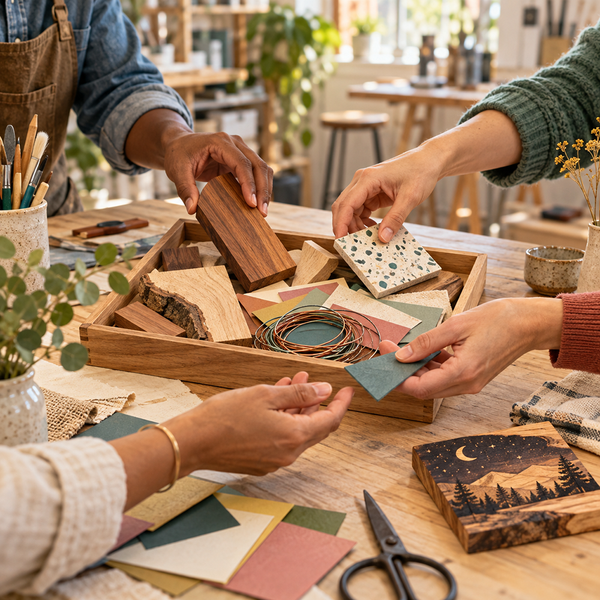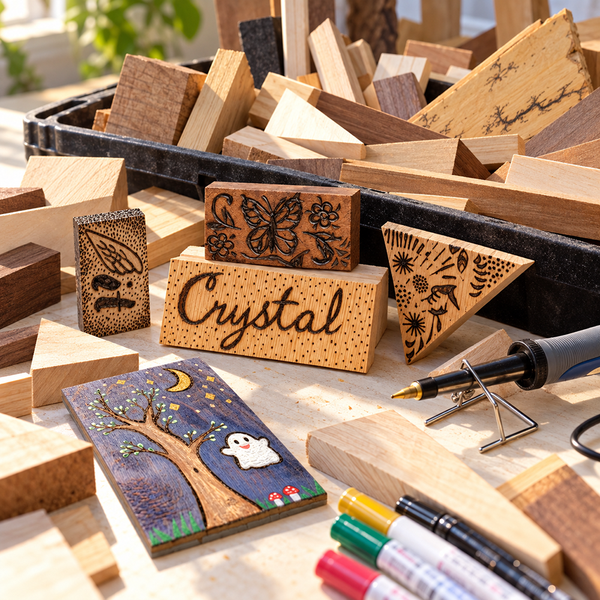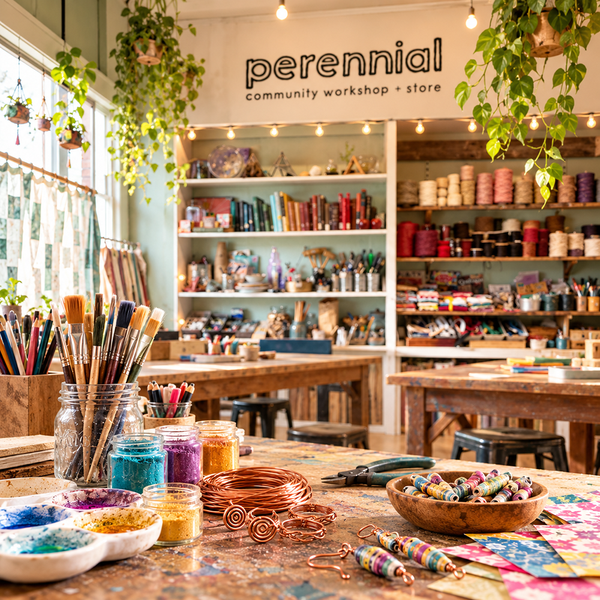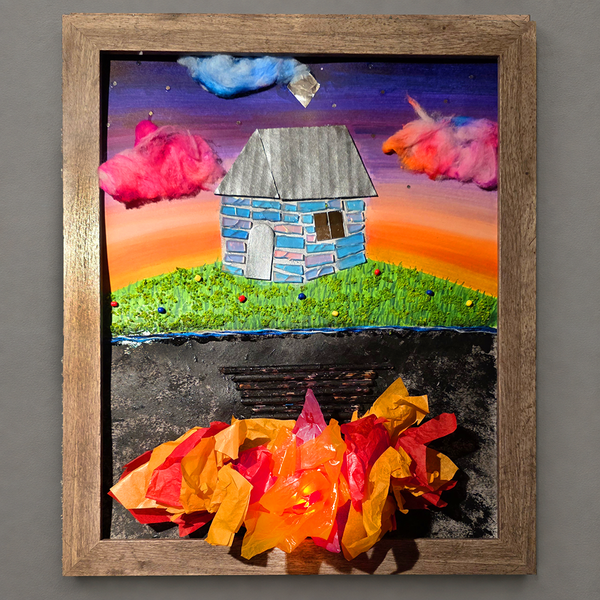


Lately, people keep asking me some variation of the same question: how are you getting all this stuff?
Friends have asked.
People at art club have asked.
People in other groups I'm part of have been surprised when I tell them about the materials I've found.
Art supplies.
Paper samples.
Electrical wire.
Mat board and framing scraps.
Wood.
Tile.
Stone.
Flooring remnants.
Tools.
Some of it has come directly from art and craft companies.
Some has come from businesses whose work has almost nothing to do with traditional art supplies.
Some of it is brand-new product.
Some of it is material that had simply reached the end of its usefulness for the person or business that had it.
And the answer to how I've found so much of it is almost embarrassingly simple: I asked.
It Didn't Start With a Secret List of Free Stuff
I didn't discover a hidden directory containing all the places willing to hand artists free materials.
I wish such a thing existed.
This actually started much more simply.
I started my search with my Easterseals family navigator, looking around the St. Louis area to see what kinds of assistance might exist to help me rebuild my art supplies.
We searched online.
We followed leads.
We looked at what different organizations and businesses offered.
And sometimes, I just asked.
That's how I discovered that some opportunities are already sitting there publicly.
Other possibilities only appeared because someone was willing to answer a question I wasn't sure they'd say yes to.
Over time, that changed the way I started looking at resources.
Instead of only asking: where can I buy this?
I started asking:
- What might already exist?
- Who works with this material?
- What happens to the pieces they can't use?
- Does somebody have samples, scraps, offcuts, discontinued materials, or surplus that might otherwise go unused?
And: what if I just asked?
Asking Doesn't Guarantee a Yes
I want to make something clear before we go any further:
Asking isn't the same as expecting.
Nobody owes us materials simply because we ask.
A business may have nothing available, the timing may be wrong, or safety, liability, policy, storage, and countless other practical considerations may make sharing impossible.
Sometimes the answer will simply be no.
That's okay.
I'm not asking because I assume the answer should be yes.
I'm asking because I don't actually know what the answer is until I ask.
We Reject Ourselves More Often Than We Realize
I think a lot of us have become remarkably good at hearing no before anybody has actually said it:
- They probably won't do that.
- I don't want to bother anyone.
- That's probably not for people like me.
- They'll think it's weird.
- I'm sure they don't have anything.
- Why would they help me?
So we don't ask.
And then the answer effectively becomes no anyway.
Not because anyone rejected us.
Because we rejected the possibility on everyone else's behalf.
I understand why.
Asking can make us feel vulnerable.
And many people have very good reasons for becoming reluctant to ask for help.
Maybe they've been rejected repeatedly.
Maybe asking has been made humiliating in the past.
Maybe they've learned that needing anything makes them a burden.
Maybe they're exhausted from navigating systems where getting help requires proving over and over again that they're struggling enough to deserve it.
So I don't think the answer is: why didn't you just ask?
As though asking is always easy.
I'm much more interested in another question: what if asking were allowed to feel possible again?
Because Things Are Hard Enough Already
Life is expensive, especially in today's turbulent economy.
Increasingly, things that once felt ordinary can start feeling like luxuries.
Creative materials certainly can.
A few tubes of paint.
A nice sketchbook.
Yarn.
Clay.
Paper.
Wood.
Tools.
Classes.
Studio space.
The costs add up quickly.
And when money is already stretched between housing, food, transportation, healthcare, utilities, and everything else required simply to exist, creativity can become one of the first things we're expected to sacrifice.
You don't need that.
And technically?
Maybe we don't.
We don't need a box of beautiful paper in quite the same way we need dinner.
But human lives aren't made meaningful only by the things required to keep our bodies functioning.
We make.
Experiment.
Play.
Learn.
Repair.
Decorate.
Build.
Share.
Imagine.
And I don't think the only answer to rising costs should be that ordinary people quietly accept having less and less access to the things that make life interesting.
Sometimes we can ask another question: what do we already have around us?
 Jessica Carey
Maybe Scarcity and Waste Are Existing Side by Side
Because here's the strange thing.
While one person is thinking: I can't afford materials, so I guess I can't make anything,
somewhere else, a business may be throwing away perfectly usable scraps.
A woodworker has pieces too small for the next project.
A frame shop has mat-board offcuts.
A flooring company has remnants.
A tile showroom eventually has samples it no longer needs.
A paper company has swatches.
A sign shop has offcuts.
Someone has yarn they don't want.
Someone else has tools they rarely use.
One person's: I have no use for this can exist remarkably close to another person's: I wish I had something like that.
Neither person necessarily knows the other exists.
And maybe that's one of the strangest things about scarcity.
Sometimes there truly isn't enough.
But sometimes something we need is already here—it simply isn't connected to the person who could use it yet.
That's where creative reuse becomes more than a clever way to save money.
It becomes a different way of looking at resources.
And maybe the old saying has survived for a reason: one person's trash really can be another person's treasure.
The interesting question is how we help the two find each other.
We Buy Inside a System That Constantly Throws Things Away
Once I started looking for materials differently, I began noticing something strange.
A lot of what we call waste isn't necessarily useless.
Sometimes it's just no longer useful for the thing it was originally meant to do.
A piece of hardwood might be too small for a woodworker's next project.
A strip of mat board might be left over after a picture frame is cut.
A tile sample might belong to a collection a showroom no longer carries.
A piece of stone might be the wrong size or shape for another countertop.
A paper swatch might have already served its purpose in a sample book.
A sign shop might have an oddly shaped offcut left after cutting the piece a customer actually ordered.
None of those materials necessarily stopped being usable.
They simply reached the end of one particular use.
And that's an important distinction.
“Waste” Depends on What You're Trying to Do
Imagine a woodworker needs a board six feet long.
They have a beautiful piece of hardwood that's only eight inches.
For their project, it might genuinely be scrap.
But give that same piece to someone making a small sculpture, mosaic, ornament, jewelry display, miniature, assemblage, or experimental artwork?
Suddenly eight inches might be plenty.
The material didn't change. The need did.
That's one of the things I love most about creative reuse.
It asks us to look at something that has reached the end of one story and wonder: what else could this become?
A flooring sample doesn't have to become a floor.
Electrical wire doesn't have to stay hidden inside a wall.
Mat board doesn't have to surround a framed picture.
Paper samples don't have to remain samples.
Stone remnants don't have to become countertops.
Once the original purpose disappears, another possibility can begin.
One Person's Trash Really Can Be Another Person's Treasure
We've probably all heard some version of that phrase.
But the more I've explored creative reuse, the less it feels like a cliché.
Because trash is often a description of someone's relationship with an object—not necessarily an objective description of the object's potential.
One person sees: I can't use this.
Another sees: I've been looking for something exactly like this.
Or, even better: I have absolutely no idea what this is going to become, but I want to find out.
That last possibility is especially exciting to me.
Creative reuse isn't only about replacing something I would otherwise have purchased.
Sometimes the material itself creates the idea.
I might never walk into an art store and think: you know what I need today? A weird little piece of countertop.
But put an interesting stone remnant in front of me, and suddenly I'm wondering what I could make with it.
The material becomes an invitation.
Creative Reuse Changes the Question
When we think about obtaining art supplies, the usual question is: where can I buy what I need?
Creative reuse gives us another one: what already exists that I could use?
That's a surprisingly big shift.
Because once we stop requiring something to have ART SUPPLY printed across the packaging before we're willing to make art with it, the world gets considerably larger.
A framing shop becomes a source of interesting board.
A woodworking shop becomes a source of shapes and textures.
A tile or flooring business becomes a source of color and pattern.
A sign shop becomes a source of unusual substrates and offcuts.
A paper company becomes an entire playground of weights, finishes, colors, and textures.
And our own homes, closets, garages, neighborhoods, workplaces, friend groups, and communities contain materials, too.
The question becomes less: where are the art supplies? and more: what could become an art supply?
That is a very different way of seeing.
 Jessica Carey
Reuse Comes Before Recycling for a Reason
There's an environmental piece to this, too.
We often talk about recycling as though it's the obvious endpoint for something we no longer need, but reuse and recycling aren't quite the same thing.
Recycling generally means processing discarded material so it can become material for new products.
Reuse keeps an existing item or material in use without first requiring that transformation.
Missouri's Department of Natural Resources specifically distinguishes the two and notes that reuse can save energy and natural resources while reducing useful material entering Missouri landfills.
That's also why the EPA's waste-management hierarchy gives source reduction and reuse priority over recycling where appropriate.
For creative people, there's something wonderfully literal about that.
We don't necessarily have to send the scrap somewhere to be broken down and transformed into a new commercial product.
Sometimes we can simply look at it and say: I can do something with that.
Of Course, Not Everything Should Become an Art Supply
Creative reuse does require some common sense.
Something being discarded doesn't automatically make it safe to take home.
Businesses can deal with sharp materials, chemicals, treated products, contaminated items, proprietary materials, electrical components, heavy objects, broken glass, or other things that require particular handling.
Some waste also isn't actually available to the public.
A business may have contractual disposal requirements.
Insurance concerns.
Safety policies.
Storage limitations.
Privacy or security issues.
Or they may simply not want people accessing their waste stream.
That's their right.
Creative reuse isn't permission to take things simply because somebody appears to be throwing them away.
When we're dealing with another person's or business's materials, asking first matters.
Which brings us back to the strange little behavior that started this entire experiment.
Someone Has to Make the Connection
This is the part I keep coming back to.
Imagine a business has a box of perfectly usable offcuts.
They don't need them.
You would love them.
But they don't know you exist.
And you don't know the box exists.
From their perspective: we need to get rid of this.
From yours: I can't afford to buy material for this project.
Both problems can exist at exactly the same time.
And unless something connects the two, the material may be discarded while you go without.
Sometimes there are formal creative-reuse programs designed to make those connections.
Sometimes communities create swaps, sharing groups, libraries of things, donation programs, or reuse centers.
And sometimes the connection is much smaller.
It's one person sending an email.
Walking into a shop.
Talking to someone at art club.
Asking a friend.
Or saying: this may be an odd question, but what happens to your scraps?
They might say no.
They might tell you everything gets recycled.
They might have nothing at all.
Or they might say: actually, we've got a whole box in the back; do you want to look through it?
You don't know which answer you're going to get.
And that's precisely why the next part matters.
Because asking is a skill.
 Jessica Carey
Asking Is a Skill
For something so simple, asking can feel surprisingly complicated.
Maybe that's because many of us don't want to come across as demanding.
We don't want someone to think we're looking for a handout.
We don't want to inconvenience anybody.
We don't want to hear no.
And sometimes we don't even know whether the question we're thinking about asking is something we're allowed to ask.
I've certainly had moments when I've looked at a business and thought: would it be weird if I emailed them about this?
Usually, I have no idea what they're going to say.
That's kind of the point.
Because I've learned that there's an enormous difference between assuming something is available and simply asking whether a possibility exists.
Asking Isn't Demanding
I think this distinction matters enough to say twice.
Asking is not the same as expecting.
When I contact a business about materials, I'm not deciding that they should give them to me.
I'm giving them an opportunity to tell me what's possible.
Those are very different things.
A respectful question leaves room for every answer:
- Yes, we have something.
- Not right now, but check back later.
- We don't have that, but we do have something else.
- Here's a program you might qualify for.
- No, unfortunately we can't do that.
All of those are legitimate answers.
And occasionally the answer is something you never would have thought to ask for in the first place.
That's one of the interesting things I've discovered through doing this.
Sometimes I ask about one possibility and the person on the other end understands what I'm trying to accomplish and says, essentially: we can't do that—but what about this?
The conversation itself reveals possibilities.
Ask About the Possibility, Not the Free Stuff
There's also a difference between approaching someone with: can you give me free stuff? and: I'm working with this kind of material. Do you ever have scraps, offcuts, samples, or other material you can no longer use?
The second question gives the person useful context.
Maybe you're making mosaics and wondering what happens to discontinued tile samples.
Maybe you're experimenting with collage and wondering whether a frame shop has mat-board offcuts.
Maybe you work with wood and are curious about small hardwood remnants.
Maybe you're an educator looking for materials students can experiment with.
Maybe you're learning a new craft but can't afford to purchase an entire collection of supplies just to find out whether you enjoy it.
Or maybe you're simply interested in keeping useful material out of the waste stream.
Tell people what you're actually trying to do.
You don't need an impressive pitch.
You don't need a giant audience.
You don't need to make yourself sound more important than you are.
You just need to give someone enough information to understand why you're asking.
A Simple Question Can Be Enough
For a local business, an email might be as simple as:
Hi! I'm a local artist interested in creative reuse, and I was wondering whether your shop ever has clean scraps, offcuts, discontinued samples, or other materials that aren't useful to you but might be suitable for art projects.
No worries at all if not—I just wanted to ask before purchasing new materials. Thank you!
That's it.
You can adapt the question to whatever you're actually looking for.
A woodworker might get a question about hardwood offcuts.
A printer might get a question about paper.
A flooring company might get a question about samples or remnants.
Specific enough that they understand what you're asking. Open enough that they can tell you what they actually have.
And then?
Let them answer.
Make “No” Easy
This might be one of the most important parts of asking respectfully.
I don't want someone to feel cornered into helping me.
A genuine request has to leave room for a genuine no.
That's why phrases like: No worries at all if this isn't possible or : I completely understand if you don't have anything available can matter.
Not as a manipulation tactic.
Not because we're apologizing for existing.
But because we're communicating something important: I'm asking you a question, not handing you an obligation.
And if the answer is no?
Thank them.
Move on.
Don't argue.
Don't try to make them feel guilty.
Don't treat their refusal as evidence that you shouldn't have asked.
A no doesn't make the question inappropriate.
It simply gives you information you didn't have before.
Sometimes “No” Isn't Even the Answer
This is where asking has surprised me the most.
There are more possible answers than yes and no.
Sometimes the answer is: not right now.
A business may only generate certain scraps occasionally.
Samples may not become available until displays change.
Someone may already have a person who collects their current material.
A company may have exhausted its donation budget for the year.
The employee you're speaking with may need to ask somebody else.
Or they may tell you to check back in a month.
That's still useful information.
Sometimes the answer is: we don't have that, but have you tried...
And now you've learned about another resource.
Sometimes it's: actually, we have something slightly different. Would that work?
That's how resourcefulness grows.
You stop looking for one predetermined answer and start paying attention to what's actually available.
Don't Only Ask Businesses
And this doesn't have to involve companies at all.
Think about the people around you:
- Friends
- Neighbors
- Family members you have healthy relationships with
- Coworkers
- Art clubs
- Community groups
- Schools
- Libraries
- Churches or other community organizations
- Neighborhood groups
- Local online sharing groups
Maybe someone has a bag of yarn they've been meaning to donate.
Someone bought a craft kit and discovered they hated the craft.
Someone has frames sitting in a basement.
Someone has leftover tile from a renovation.
Someone has tools they would happily lend but don't want to permanently give away.
Someone is getting rid of magazines that would be perfect for collage.
Sometimes simply saying:
I'm looking for ___ for an art project. If you happen to have any you're trying to get rid of, I'd be happy to give it a second life.
is enough.
You aren't asking everyone around you to start buying supplies for you.
You're letting people know that something they no longer need might be useful to you.
And that distinction matters.
Asking Can Benefit the Other Person, Too
This is another part of the equation we sometimes overlook.
We tend to imagine receiving help as a one-directional transaction: one person gains something, while the other loses something.
But creative reuse doesn't always work that way.
Sometimes a business needs to dispose of material.
Sometimes scraps take up storage space.
Sometimes someone has been meaning to clean out a closet for six months.
Sometimes people feel terrible throwing away perfectly good supplies and are genuinely relieved to find someone who wants them.
Entire creative-reuse organizations are built around this kind of mutually useful exchange.
For example, SCRAP Creative Reuse works with businesses generating materials such as wood pieces, fabric, leather and paper, while making donated materials available to creative communities.
The Scrap Exchange similarly describes collecting materials from businesses, industries, individuals and municipal sources and redistributing them for creative use.
The exchange doesn't have to be: you did me a favor.
Sometimes it's: you had something you didn't need. I needed something you had. We found each other.
That's a much more interesting model.
You Don't Have to Know the Answer Before You Ask
I think this may be one of the hardest mental shifts.
We want certainty before we act.
We want someone to tell us: yes, contact this exact person; they will definitely help you.
But that isn't how most possibilities work.
I don't know whether they'd be willing to do that is not the same sentence as they won't do that.
If the question is respectful, appropriate, and leaves the other person free to decline, we don't have to reject ourselves for them.
Sometimes they'll say no.
Sometimes nobody responds.
Sometimes they'll tell us to check back later, point us toward someone else, or offer something completely different.
And every once in a while, somebody says:
- Sure, come take a look.
- We were going to throw this away anyway.
- I know somebody you should talk to.
- We might be able to help.
A respectful no gives us information we didn't have before.
But an unexpected yes can create a possibility that never would have existed if we'd decided the answer for someone else.
That's why we ask.
 Jessica Carey
Look Beyond Art Stores
When I first think about needing an art material, my brain naturally goes to the obvious place: where can I buy it?
Need paint? Art store.
Need paper? Art store.
Need clay? Art store.
Need yarn? Craft store.
There's nothing wrong with that.
Those businesses exist for a reason, and sometimes the purpose-made material really is exactly what we need.
But creative reuse has taught me to add another question: who already works with this kind of material?
That question opens a much bigger door.
An Art Supply Doesn't Have to Be Sold as an Art Supply
A piece of mat board doesn't know whether it came from an art store or a frame shop.
Wood doesn't know whether it was packaged into a craft-store bundle or left over from somebody building furniture.
Tile doesn't know whether it was purchased for a mosaic or once sat in a showroom display.
Paper doesn't know whether someone bought it specifically for collage or whether it began its life as a manufacturer's sample.
Materials don't care what aisle they came from.
We do.
And once we loosen that distinction, an extraordinary number of places begin looking different.
A frame shop might have mat-board offcuts.
A woodworker might have hardwood scraps.
A sign company might have vinyl or substrate remnants.
A printer or paper company might have samples, swatches, odd sheets, or discontinued stock.
A flooring or tile business might eventually have outdated samples.
A countertop fabricator might have small pieces of stone.
An upholsterer might have fabric remnants.
An electrician or electronics recycler might encounter wire and other materials with creative possibilities.
A florist might have ribbons, containers, decorative materials, or other leftovers.
None of these places are necessarily art-supply businesses.
But they all work with materials.
And that's the more useful connection.
Ask Where the Material Lives
Instead of beginning with: where do artists get this?
Try: who uses this every day?
If you want interesting paper, don't only look at sketchbooks.
Who works with paper?
- Printers
- Paper distributors
- Bookbinders
- Frame shops
- Packaging companies
- Design studios
If you're interested in wood, who works with wood?
- Furniture makers
- Cabinetmakers
- Carpenters
- Woodworkers
- Lumber businesses
If you're interested in stone or tile?
- Fabricators
- Flooring businesses
- Tile showrooms
- Kitchen and bath companies
- Construction businesses
Suddenly you're not searching for a particular product.
You're following the material itself.
And somewhere along that material's journey, there may be pieces that are no longer commercially useful but haven't stopped being creatively useful.
Sometimes You Don't Even Know What You're Looking For
There's another version of resourcefulness that I think is just as interesting.
Sometimes I don't need a particular material at all.
I want to know: what do you have?
That's a different kind of creative process.
If I decide beforehand that I need twelve identical blue ceramic tiles measuring exactly two inches square, creative reuse may not be the best way to get them.
I have a very specific requirement, and buying the appropriate material might make more sense.
But experimentation can work in the opposite direction.
Instead of starting with an idea and purchasing the materials necessary to execute it, we can start with the material and ask what ideas it creates.
- Here's a strange piece of wood. What could I do with it?
- Here are twenty tiny scraps of mat board. What could they become?
- Someone gave me a box of colorful electrical wire. What happens if I try weaving it?
- This paper has a texture I've never used before. What happens if I draw on it? Fold it? Paint it? Cut it?
The limitation becomes part of the experiment.
And sometimes that's more creatively interesting than having exactly what we thought we wanted.
 Jessica Carey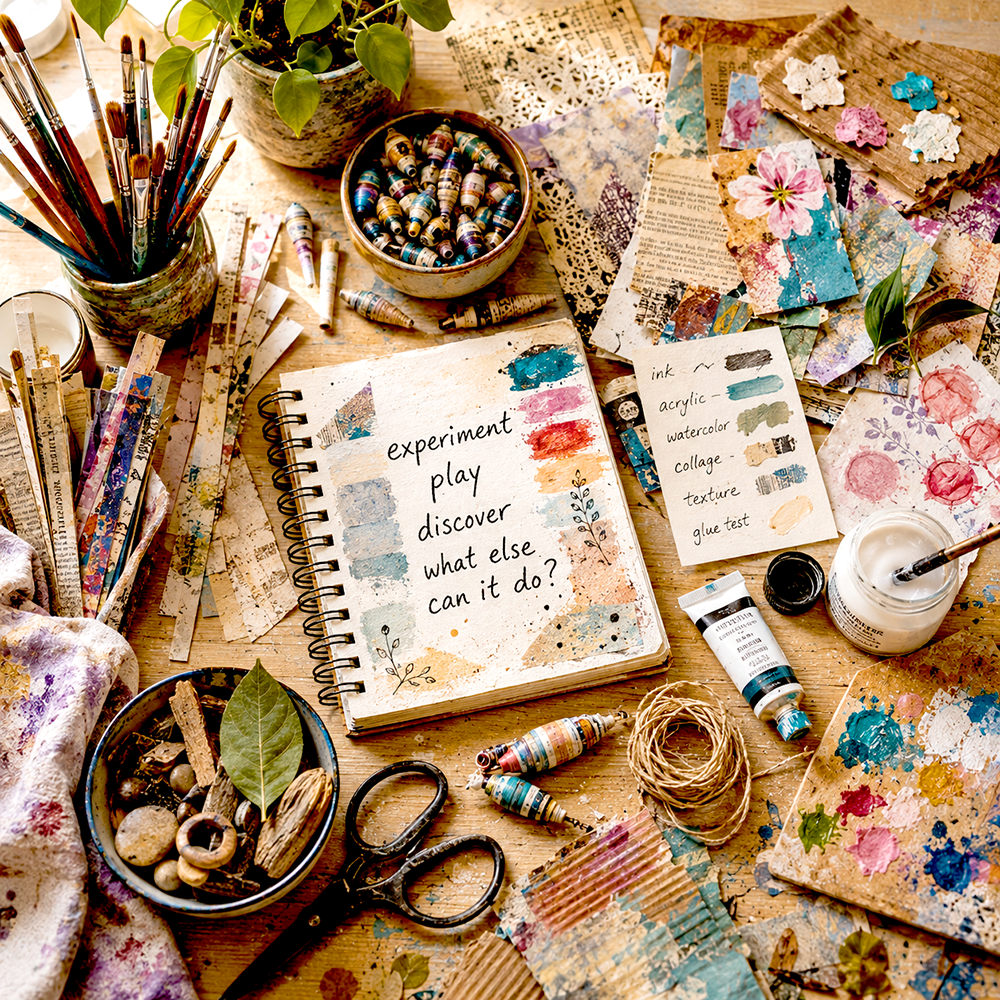
Follow the Waste Stream
One phrase I've encountered while doing this is waste stream.
It sounds rather industrial, but the idea is useful.
Every business that makes, installs, cuts, prints, packages, replaces, or sells physical things has materials moving through it.
Something comes in.
Something gets transformed.
Something goes out.
And depending on the business, pieces can be left along the way:
- Offcuts
- Remnants
- Samples
- Seconds
- Discontinued products
- Packaging
- Misprints
- Old displays
- Odd sizes
Things that are perfectly usable but no longer economically useful for that particular business.
That doesn't mean those materials are automatically available.
Some may need to be recycled or disposed of in particular ways.
Some aren't safe.
Some businesses simply can't give materials away.
But it gives us a better question than: do you have free art supplies?
Try: what happens to the material you can't use?
That's a question I probably wouldn't have thought much about before I started exploring creative reuse.
Now I find it fascinating.
Look for the Awkward Pieces
There's something else worth remembering: artists can sometimes use precisely the things businesses have trouble using.
A furniture maker may need long, structurally useful boards.
I might need a piece four inches long.
A countertop fabricator needs stone large enough and shaped appropriately for an installation.
A mosaic artist might be thrilled with fragments.
A frame shop needs mat board large enough to cut around somebody's artwork.
A collage artist may want pieces the size of a hand.
A flooring installer needs enough matching material to cover a room.
An artist may want five completely different samples.
What makes something commercially awkward can sometimes make it creatively interesting.
The mismatched colors.
The irregular edges.
The strange dimensions.
The discontinued pattern.
The tiny pieces.
The thing that doesn't quite belong with anything else.
Those characteristics can be inconveniences in one context and inspiration in another.
Your Community Counts, Too
And we shouldn't limit this thinking to businesses.
Materials live everywhere.
Someone in your art club may have supplies from a medium they tried once and didn't enjoy.
A friend may have leftover tile from renovating a bathroom.
A neighbor might have scrap wood from building shelves.
Someone in a community group might have yarn they no longer want.
A teacher may have materials left from an old project.
A family might be clearing out a craft room.
A local organization may have supplies that aren't useful for its programs anymore.
Sometimes the easiest form of creative reuse isn't finding a company's waste stream.
It's simply letting people around us know: if you're ever getting rid of this kind of thing, I'd love to use it.
That can be enough to create a connection that didn't exist before.
This Isn't About Collecting Everything
There is, however, a danger hiding inside all of this.
Once you start seeing creative potential everywhere, everything starts looking useful.
That does not mean you need to take everything.
Free materials still require space.
They may require cleaning, sorting, transporting, processing, or storing.
And something isn't actually a resource if it becomes a pile you feel guilty about every time you look at it.
Creative reuse works best when we're still willing to say: that's interesting, but I don't have a use for it.
Or: someone else could probably use this more than I can.
The goal isn't to move waste from a business's dumpster into the corner of our own homes.
The goal is to connect useful material with useful possibility.
Start Seeing Materials Before Products
Maybe that's the larger creative shift.
Consumer culture tends to present materials to us after someone has already decided what they're for.
This is scrapbook paper.
This is jewelry wire.
This is mosaic tile.
This is a wooden craft blank.
Creative reuse lets us encounter things a little earlier in the process:
- Paper
- Wire
- Stone
- Wood
- Fabric
- Plastic
And then we get to ask: what else can it do?
That question can lead somewhere wonderfully unpredictable.
Because once we stop searching only in places labeled ART SUPPLIES, we may discover that creative materials have been hiding throughout our communities all along.
We just weren't looking at them that way.
Some Opportunities Are Already Public
Asking around has uncovered possibilities I never would have known existed otherwise.
But here's something else I've learned: sometimes you don't even have to be the first person to ask.
There are businesses, organizations, community groups, nonprofits, libraries, creative reuse centers, and other programs that have already decided to make certain resources available.
The challenge is often simply finding them.
I discovered this firsthand when my Easterseals family navigator and I started searching for ways I might be able to rebuild some of my art supplies.
We weren't following a secret list.
We were looking around.
Searching websites.
Following links.
Seeing what programs existed.
And asking questions when the answer wasn't obvious.
That's how I discovered that some opportunities had been sitting there all along.
Look for the Door That's Already Open
Before contacting an organization with a completely new request, take a few minutes to see what it already offers.
Search its website for words like:
- donation
- community
- artist support
- samples
- scraps
- surplus
- reuse
- community giving
- educator resources
- financial assistance
- scholarship
Sometimes there is an actual application.
Sometimes there are designated pickup times.
Sometimes a creative reuse center exists specifically to redistribute unwanted materials.
Sometimes a library lends equipment you'd otherwise have to purchase.
Sometimes a makerspace offers financial assistance.
Sometimes a business openly allows people to take certain scraps.
These opportunities won't exist everywhere.
But that's precisely why looking before assuming matters.
Sometimes the Opportunity Isn't Where You'd Expect It
One of the resources my family navigator and I found was BLICK's donation-request program.
That was interesting to me because I hadn't initially known there was a formal avenue to ask for support.
Instead of trying to guess whether someone at an art store might be willing to help, there was already a process created for donation requests.
That doesn't mean everyone who submits a request will receive one.
Eligibility, available resources, timing, and organizational priorities can all affect what a company is able to support.
But that's exactly the point.
I didn't know what the answer would be.
The opportunity existed, so I asked.
And without my navigator and me looking for possibilities in the first place, I might never have known the program existed.
 Jessica Carey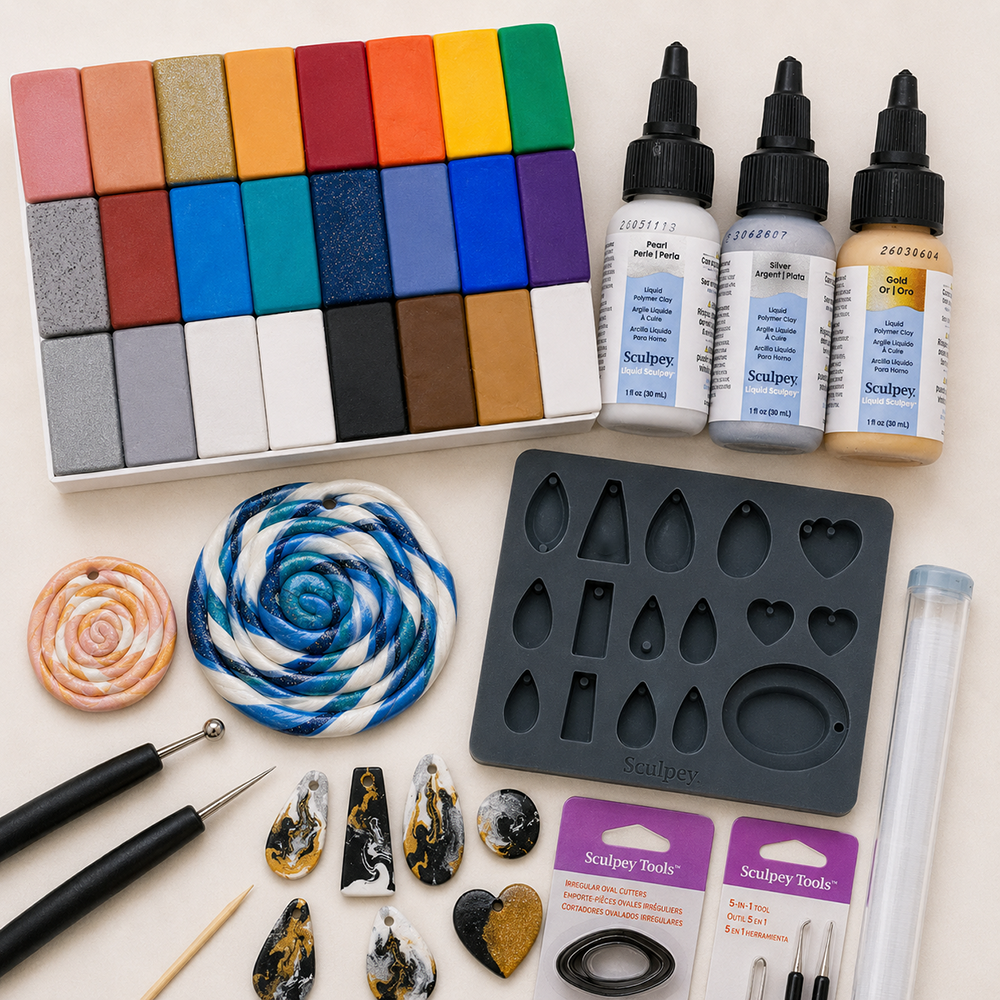
Public Reuse Can Look Completely Different
Other opportunities don't involve formal donation applications at all.
Sometimes they're much more literal.
A local St. Louis-area lumber business, Lumber Logs LLC, opens to the public during retail hours from 9–11 a.m. on the first and third Saturdays of each month.
When I contacted them about creative reuse, I was invited to look around their waste stream during those hours.
They cautioned that most of the material tends to be large pieces, so there may or may not be something suitable for a particular project.
I love that example because it demonstrates how different this can look from asking an art company for products.
We're not talking about neatly packaged craft supplies.
We're talking about looking at what remains from working with wood and asking: could any of this become something else?
And the answer may genuinely be no.
You might look and find nothing useful.
That's part of creative reuse, too.
The goal isn't to take material simply because it's free.
It's to find the places where something another person doesn't need intersects with something you can actually use.
Sometimes “Take It” Really Does Mean Take It
I found another variation through Absolute StoneCraft.
When I asked about stone remnants that might otherwise be discarded, I learned that the business maintains a rock dumpster behind its facility containing stone scraps.
And, importantly, I was told that anyone is welcome to look through it and take stone scraps at their own risk.
That's different from a business privately agreeing to save something specifically for me.
It's an arrangement they're comfortable extending beyond one person.
At the time I asked, I was told access worked best after 4 p.m. or on weekends, with the possibility of broader pickup access later.
And because arrangements like that can change, I'd still recommend contacting a business before making a special trip.
But think about what that dumpster represents.
To the fabricator, those irregular pieces may no longer work for the countertops or other projects they produce.
To somebody else?
A piece might become part of a mosaic.
A sculpture base.
A garden artwork.
A display.
A mixed-media experiment.
A material somebody hasn't even figured out how to use yet.
The stone hasn't run out of possibilities just because it has run out of commercial purpose.
Public Information and Personal Generosity Aren't the Same Thing
There's an important boundary here, though.
I've had other businesses generously offer materials after I contacted them personally.
Some have offered scraps.
Some have offered samples.
Some have told me I can return periodically.
Some are willing to contact me when particular materials become available.
I'm incredibly appreciative of those responses.
But I'm intentionally not turning every one of those conversations into a public directory.
If someone tells me: sure, Jessica, come by and we'll see what we have, that doesn't necessarily mean they want twenty strangers arriving tomorrow asking for the same arrangement.
Generosity can become unsustainable surprisingly quickly when a personal offer suddenly becomes public information.
So there's a distinction worth respecting:
- If an organization publicly advertises a program or explicitly makes a resource available to the public, share it.
- If somebody makes an individual arrangement with you, don't automatically assume you've been given permission to advertise that arrangement to everyone else.
You can still share the idea.
Tell people that frame shops may have scraps.
That woodworkers may have offcuts.
That flooring businesses sometimes replace samples.
That manufacturers may have donation programs.
Then let people build their own relationships with businesses in their communities.
That's much healthier than sending everyone to the same generous person.
Search Locally, Not Just Nationally
And this is where I think the possibilities get especially interesting.
A national company may have a formal application buried somewhere on its website.
But a tiny business five minutes from your house may have something useful sitting in the back room.
Your library may have equipment you assumed you'd have to buy.
Your city may have a tool-lending program.
A creative reuse center may redistribute materials from local businesses.
A community organization may run supply swaps.
A university may have surplus programs.
A local Buy Nothing group may connect neighbors who have exactly the thing someone else needs.
So try combinations like:
- [your city] creative reuse
- [your city] art supply donations
- [your city] material exchange
- [your city] tool library
- [your city] makerspace scholarship
- [your city] free art supplies
- [your city] surplus materials
And don't stop when Google doesn't immediately hand you a perfect answer.
Look at the organizations themselves.
Follow their resource pages.
Look at what local industries exist.
Ask community groups.
Talk to artists.
Talk to librarians.
Ask the person standing beside you at art club.
Resources don't always advertise themselves as resources.
Sometimes we have to recognize them.
 Jessica Carey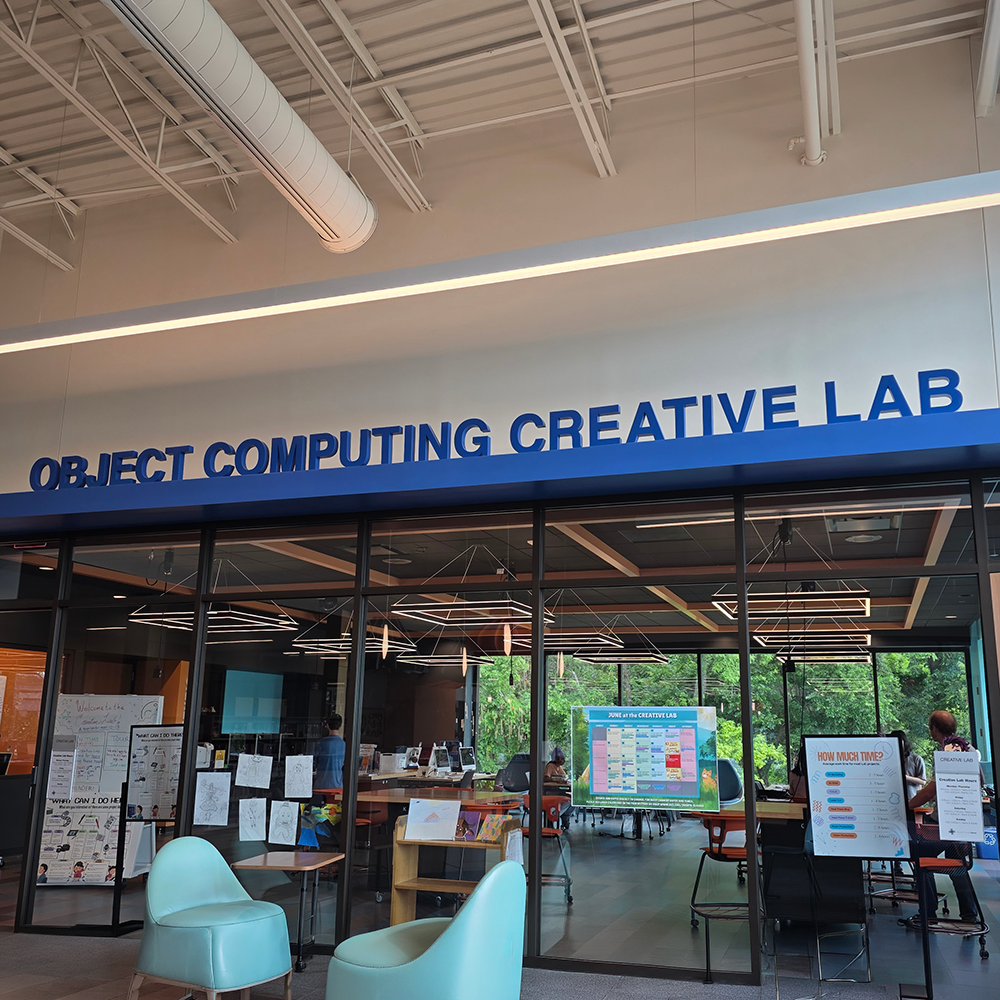
The Goal Isn't to Find a Loophole
I think that's an important distinction underneath all of this.
Creative resourcefulness isn't about figuring out how to extract as much free stuff as possible from everybody around us.
It's about becoming more aware of what already exists and how it might be shared.
Sometimes that means applying for an established donation program.
Sometimes it means finding a publicly available waste stream.
Sometimes it means borrowing instead of buying.
Sometimes it means swapping.
Sometimes it means accepting something somebody was already trying to give away.
And sometimes it means paying for exactly what we need because there isn't an appropriate alternative.
There's no failure in that.
The point isn't: never buy anything again.
It's: buying something new doesn't always have to be our first or only question.
Before we assume the only solution to a need is another purchase, we can look around.
We can search.
We can ask.
We can see what our communities already contain.
Because sometimes the resource really is out there.
We just didn't know there was a door.
Your Community Is a Resource, Too
Businesses aren't the only places where useful things are sitting unused.
Sometimes they're sitting in the closet of the person next to us.
Someone has yarn left from a project they finished three years ago.
Someone bought a set of watercolor paints, tried them twice, and discovered watercolor absolutely was not for them.
Someone has leftover tile from remodeling a bathroom.
Someone has frames they don't need.
Someone's children have outgrown a box of craft supplies.
Someone bought a tool for one project and hasn't touched it since.
Someone else has exactly the thing we've been thinking we couldn't afford.
The problem, once again, is that neither person necessarily knows what the other has or needs.
Sometimes You Just Have to Let People Know
There's a wonderfully low-pressure version of asking that doesn't even require approaching someone with a direct request.
You can simply let people know what you're looking for:
- I'm experimenting with collage right now, so if anyone ever has old magazines they're getting rid of, I'd happily take some.
- I'm looking for little pieces of wood for an art project.
- If anyone has yarn they're planning to donate anyway, I'd love to give some of it a home.
You're not asking somebody to go out and purchase something for you.
You're not asking them to surrender something they want.
You're simply making a connection possible: if you have something you don't need, I might be able to use it.
And sometimes people are delighted to discover that something they were about to throw away or donate can go directly to someone who actually wants it.
Art Clubs Can Become Little Ecosystems
I've started noticing this in creative communities especially.
Bring an unusual material into an art club and suddenly people start talking.
Someone knows a technique you've never tried.
Someone has a tool that might work.
Someone remembers a material sitting at home.
Someone tried the same thing years ago.
Someone has scraps.
Someone wants your scraps.
Someone sees a possibility in the material that never occurred to you.
That exchange can be just as valuable as the material itself.
Because resources aren't only objects.
Knowledge is a resource.
Experience is a resource.
Tools are resources.
Connections are resources.
Ideas are resources.
Space can be a resource.
Sometimes the most useful thing someone gives you isn't a box of supplies.
It's: oh, I know someone you should ask!
And suddenly one connection leads to another.
 Jessica Carey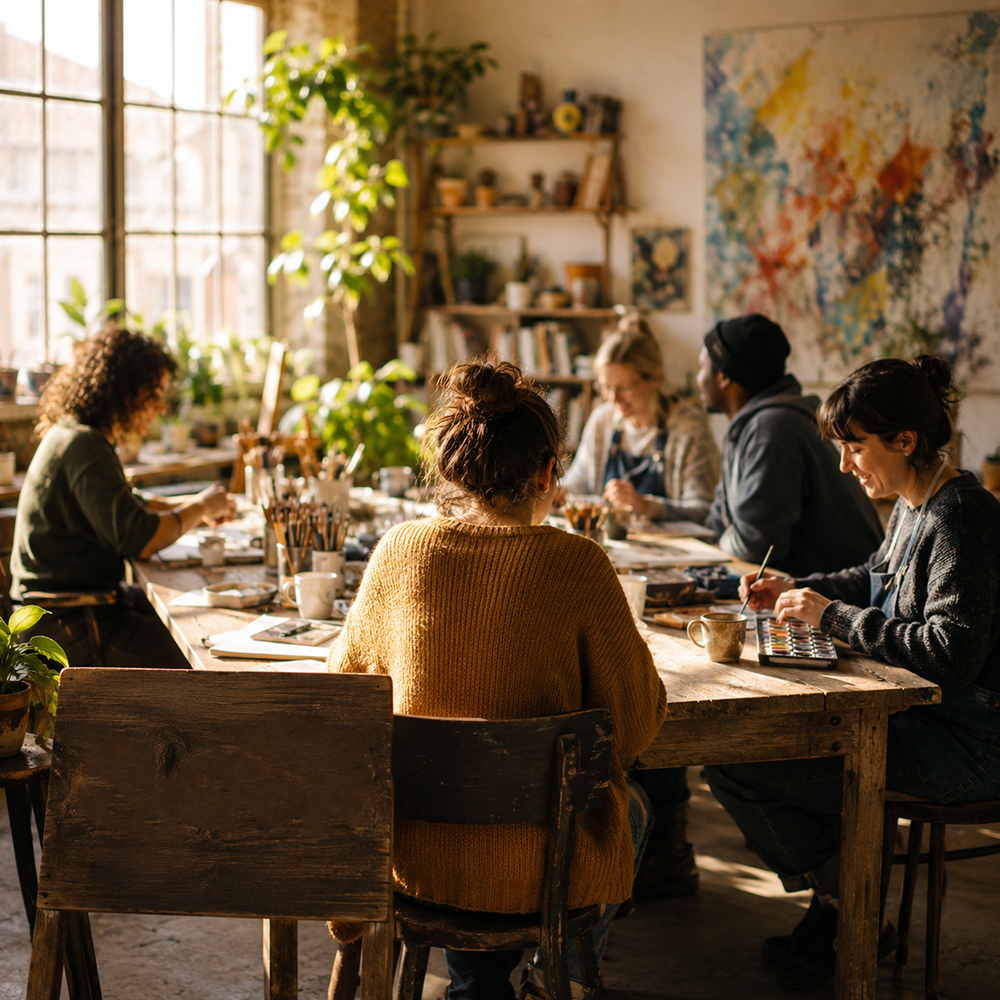
We Don't All Need to Own Everything
This may be one of the stranger assumptions consumer culture has taught us:
If we need something, each of us should individually buy and own it.
But think about how inefficient that can become.
Ten people each need a particular tool twice a year.
Do all ten people necessarily need to own one?
Maybe.
Sometimes personal ownership makes sense.
But sometimes one person already has the thing.
Maybe it can be borrowed.
Maybe there's a library that lends it.
Maybe a makerspace provides access to it.
Maybe an art club can share equipment.
Maybe several people can split materials.
Maybe someone has enough of something to share.
Human communities have done versions of this forever.
We've borrowed.
Lent.
Shared.
Traded.
Gifted.
Bartered.
Passed things down.
Taught one another.
Helped build things.
Helped repair things.
Cooked for each other.
Watched each other's children.
Shared tools.
Shared knowledge.
Total self-sufficiency was never really the only way human beings knew how to live.
Receiving Doesn't Have to Create a Debt
I think this part matters, too.
Sometimes people struggle to accept something because receiving immediately feels like owing: they gave me something; what do I have to give them?
Healthy reciprocity doesn't always have to work like a receipt.
If someone gives you $20 worth of yarn, you don't necessarily owe them exactly $20 worth of something else.
Maybe someday you give somebody else supplies you no longer need.
Maybe you teach someone how to do something.
Maybe you bring materials to art club and let everybody experiment.
Maybe you share a public resource you discovered.
Maybe you help someone move a table.
Maybe you make dinner.
Maybe you connect two people who could help each other.
Or maybe someone simply wanted their unused yarn to go somewhere it would actually be appreciated.
Generosity doesn't always need to be immediately balanced to be reciprocal.
Community can operate across time and across people.
I help you.
You help someone else.
Someone else helps me.
Nobody is keeping a spreadsheet.
The resource keeps moving.
Giving Is Part of Creative Resourcefulness, Too
And this works in both directions.
Creative reuse isn't only about becoming better at finding things.
It's also about becoming better at letting things go.
That art material I bought and never connected with?
Maybe somebody else would love it.
Those scraps I'm keeping because surely I'll use them someday?
Maybe another artist has an idea for them right now.
That tool I no longer need?
Maybe someone is putting off trying something because they can't afford one.
We can ask ourselves the same question we've been asking businesses: is this still useful to me—or could it become more useful somewhere else?
That doesn't mean giving away everything we aren't actively using.
It means recognizing that sometimes circulation creates more value than accumulation.
One person's supply closet can become another person's experiment.
And someday that exchange may travel in the other direction.
Community Can Make Creativity More Accessible
This becomes especially important when money is tight.
Not everyone can solve rising costs by earning more money.
Not everyone has disposable income.
Not everyone has storage space for an entire studio.
Not everyone has transportation to drive across town searching for supplies.
Not everyone has the physical ability, time, energy, or executive functioning required to hunt down every resource individually.
And sometimes the thing someone needs isn't even money.
They need information.
A ride.
A tool.
A person who knows how to use the tool.
A place to work.
Someone to tell them: hey, I saw this and thought of you.
That's why I think creative resourcefulness works best when it stops being an individual scavenger hunt and starts becoming community knowledge.
One person discovers something.
They tell someone else.
Someone brings leftover materials to art club.
Another person knows a place that accepts donations.
Someone has a tool.
Someone knows a technique.
Someone needs what another person was about to discard.
Little connections accumulate.
And suddenly everyone doesn't have to solve every problem alone.
Maybe That's What Community Is Supposed to Do
There's a version of independence that can be genuinely empowering.
Knowing how to solve problems matters.
Being resourceful matters.
But somewhere along the way, I think we've sometimes confused independence with never needing anyone.
Those aren't the same thing.
A box of scraps brought to art club.
A borrowed tool.
A recommendation.
A shared ride.
A message that says: I remembered you were looking for this. Do you still need it?
These things may seem small.
But maybe that's precisely how community gets built.
Not by everybody learning how to need nothing from anyone—but by becoming people who can ask, receive, share, give, and notice what one another might need.
And that raises a bigger question: when did resourcefulness start meaning that we were supposed to struggle alone?
Resourcefulness Isn't a Moral Obligation to Struggle
There's a strange contradiction in the way we talk about resourcefulness.
We admire people who figure things out.
Who improvise.
Who repair instead of replace.
Who find unexpected solutions.
Who make something useful out of almost nothing.
But sometimes we seem to admire struggle itself, too:
- Life is hard.
- That's just how it is.
- Figure it out.
- Everyone has problems.
- You can't expect people to help you.
- If you can't afford it, go without.
There's often an unspoken assumption underneath those messages: if something is difficult, perhaps difficulty is simply what you're supposed to endure.
But hardship isn't automatically meaningful just because it's hard.
And making something unnecessarily difficult doesn't necessarily make us more responsible, independent, or deserving.
Sometimes it just makes life harder.
“Doing It Yourself” Isn't Always the Most Resourceful Option
Imagine I need a particular tool for one project.
I could save for months and buy one.
Or I could discover that my library has one I can use for free.
Which option is more resourceful?
If I need wood for an experiment, I could buy a brand-new board and cut it into tiny pieces.
Or I could ask a woodworker whether they already have small offcuts they can't use.
If I want to learn a craft, I could purchase every tool before I've ever tried it.
Or I could borrow something, attend a community program, use shared equipment, or see whether someone has supplies they no longer need.
Resourcefulness isn't proving that we can acquire everything alone.
It's figuring out what makes sense with the resources actually available to us.
Sometimes that means buying something.
Sometimes it means making do.
Sometimes it means repairing.
Sometimes it means borrowing.
Sometimes it means reusing.
And sometimes it means asking another human being for help.
We Can Become So Afraid of Being a Burden That We Never Ask
For some people, asking is genuinely difficult.
Maybe we've been taught that needing help is embarrassing.
Maybe someone has responded badly when we asked before.
Maybe we've watched people who receive assistance get judged as lazy, irresponsible, entitled, or undeserving.
Maybe we've learned to minimize our needs because other people always seemed to have something worse going on.
Maybe navigating assistance has required so much paperwork, explanation, rejection, waiting, and proving that eventually it feels easier to stop asking altogether.
After enough experiences like that, silence can start feeling safer.
We learn to tell ourselves:
- I'll figure it out.
- I don't want to bother anyone.
- Other people need it more.
- I should be able to handle this myself.
And sometimes we can handle it ourselves.
The question is whether we actually have to.
There's a difference.
Asking for Help and Expecting Rescue Aren't the Same Thing
None of this means other people are responsible for solving every problem we have.
Community doesn't eliminate boundaries.
People can say no.
Businesses can say no.
Friends can be unavailable.
Programs can have eligibility requirements.
Resources can run out.
And sometimes there simply isn't a solution available.
But there's a tremendous amount of space between: everyone else should solve my problems and: I must solve every problem completely alone.
Most human life happens somewhere in between.
We contribute what we can.
We ask when we need something.
We offer when we have something.
We respect other people's limits.
They respect ours.
Interdependence isn't the absence of responsibility. It's responsibility that doesn't require isolation.
Not Everyone Has Equal Access to Resourcefulness
There's another uncomfortable truth worth acknowledging.
Advice like: just ask around can sound wonderfully simple when asking is easy for you.
But people's circumstances are different.
Someone may not have reliable transportation to collect materials.
Someone may not have space to store them.
Someone may have limited energy for sending twenty emails hoping one gets answered.
Someone may struggle with phone calls, unfamiliar places, social interactions, or unpredictable pickup arrangements.
Someone may live somewhere with very few community resources.
Someone may not have a network of people they can comfortably ask.
Someone may have been repeatedly rejected by the very systems supposedly designed to help.
And sometimes buying the convenient option—when someone can afford it—is actually the most accessible choice.
That's why I don't want creative resourcefulness to become another standard we're expected to meet perfectly.
You shouldn't have bought that. You could have found it free somewhere.
No, that's not the point.
Resourcefulness should expand our options, not create another way to judge ourselves or one another.
There Is No Prize for Making Life Harder Than It Needs to Be
I think this is something many of us need permission to reconsider.
If there is an easier, ethical, accessible way to meet a need, we don't have to reject it simply because the harder route feels more virtuous.
If someone genuinely wants to help us, we don't have to manufacture a reason they shouldn't.
If a resource was created specifically for people to use, using it isn't cheating.
If someone has something they don't want and we can genuinely use it, accepting it doesn't mean we failed to provide for ourselves.
And if our community can solve a problem together more easily than any of us could solve it individually?
Maybe that's not a failure of independence.
Maybe that's a functioning community.
Resourcefulness Can't Solve Structural Scarcity
There's also a limit to what any article about creative reuse should claim.
A box of free art supplies doesn't solve poverty.
A community swap doesn't fix unaffordable housing.
Scrap wood doesn't make healthcare accessible.
Borrowing tools doesn't change wages.
And finding clever ways to stretch what we have shouldn't become an excuse for society to keep making basic necessities harder to afford.
There's a dangerous version of the resourcefulness story that says: look how creatively people survive with almost nothing and stops asking why they have almost nothing.
I don't want to tell that story.
There can be something genuinely empowering about discovering possibilities within limited resources.
But resourcefulness shouldn't be used to romanticize deprivation.
People deserve adequate resources and creative ways of sharing what already exists.
Those ideas can coexist.
Maybe We Were Never Supposed to Do Everything Alone
For all our cultural emphasis on self-sufficiency, human beings have always depended on one another.
We share knowledge.
We divide labor.
We exchange goods.
We care for one another.
We teach skills.
We build things together.
We pass objects from one generation to another.
We create systems so every individual person doesn't have to independently solve every problem from the beginning.
Even the things we think we obtained entirely “by ourselves” usually depended on enormous networks of other people.
Someone grew the food.
Someone built the road.
Someone manufactured the tool.
Someone taught us how to read.
Someone created the information we searched.
Someone stocked the shelf.
Someone designed the system.
Independence has always contained more interdependence than we tend to admit.
So maybe we don't need to become people who never need anything from anybody.
Maybe we need to become better at participating in communities where asking and giving can both exist without shame.
Where no is allowed.
Where yes is allowed, too.
Where having a need doesn't make someone a burden.
Where having something to offer doesn't make someone responsible for everyone.
And where we don't automatically assume that every difficulty has to be carried privately simply because it's ours.
Because sometimes resourcefulness looks like making something from scraps.
Sometimes it looks like finding a public program.
Sometimes it looks like sharing what we have.
And sometimes it looks remarkably simple: I could use some help. Is there anything available?
Maybe the strongest communities aren't the ones where nobody ever needs anything.
Maybe they're the ones where nobody has to pretend they don't.
Start With What You're Trying to Do
Once you start thinking about all the materials, businesses, programs, people, and possibilities around you, creative resourcefulness can actually become a little overwhelming.
Suddenly you're wondering about frame shops and woodworkers and libraries and paper companies and community groups and tool libraries and scraps and samples and donation programs and—where am I even supposed to start?
You don't need to investigate everything.
You don't need to send fifty emails.
You don't need a spreadsheet containing every potentially useful business within a hundred-mile radius.
Start much smaller.
Ask: what am I actually trying to do?
Start With the Need, Not the Free Stuff
There's an important difference between looking for resources and simply collecting whatever you can get for free.
If the question is: what can I get? the possibilities are practically endless.
But if the question is: what would actually help me right now?
things become much clearer.
Maybe you want to experiment with mosaic but tile is expensive.
Maybe you need paper for collage.
Maybe you're learning to knit and don't own the necessary tools yet.
Maybe you need small pieces of wood for an assemblage.
Maybe you want to try printmaking but aren't ready to invest heavily in a medium you've never used.
Maybe you need access to a piece of equipment rather than ownership of it.
Start there.
Resourcefulness works better when we're solving an actual problem rather than accumulating solutions in search of problems.
Ask Who Already Interacts With That Resource
Once you know what you're looking for, follow the material.
If you need paper: who works with paper?
If you need wood: who works with wood?
If you need tile: who sells, installs, removes, or displays tile?
If you need a tool: who might already own one?
If you need access to expensive equipment: is there somewhere I can use it without owning it?
This is where searches like:
- creative reuse near me
- tool library near me
- makerspace near me
- art supply donation program
- [material] scraps near me
can help.
Look at local businesses.
Libraries.
Community centers.
Schools.
Universities.
Creative reuse organizations.
Art groups.
Friends.
Neighbors.
And sometimes the company that actually manufactures the thing you're looking for.
You're not trying to find someone you can convince to give you something.
You're trying to understand where the resource already exists.
Think Beyond “Do You Have Anything Free?”
Once you've identified a possibility, think about what might make sense for that particular place.
A frame shop probably isn't going to give away the custom frame someone just ordered.
But what happens to the mat-board pieces left after it's cut?
A woodworker needs usable lumber.
But what happens to the pieces too small for their work?
A flooring showroom needs current displays.
But what happens when those displays are replaced?
A manufacturer sells new products.
But does it have a donation program, samples, discontinued items, seconds, or community-support opportunities?
A library may not give you a machine.
But can you use one there?
Sometimes the resource you need isn't the obvious resource.
And sometimes changing the question from: can I have one? to: is there a way I can access one?
opens an entirely different set of possibilities.
Ask—and Respect the Answer
Once you've identified a possibility, ask.
Explain briefly what you're trying to do, be specific enough that the person understands your question, and don't assume anything is available.
Then let them answer.
If it's yes, find out what you need to know: when to come, where to go, how much you're welcome to take, and whether there are any safety requirements or other boundaries.
If it's no, thank them and move on.
If they don't respond, don't repeatedly push.
Resourcefulness means exploring possibilities—not forcing them.
If Someone Says Yes, Be a Good Steward of the Yes
This part matters.
Generosity works much better when we treat it carefully.
If someone offers materials, follow whatever boundaries they've given you.
Show up when you agreed to.
Don't take more than you're invited to take.
Don't assume today's yes automatically means yes forever.
Don't bring additional people unless that's clearly welcome.
Don't advertise a private arrangement as a public giveaway.
And don't take things simply because they're free.
Take what you can genuinely use.
If you discover later that you can't use something after all, see whether it can continue circulating rather than becoming waste in a different location.
And, of course: thank people.
It doesn't need to become an elaborate performance of gratitude.
A sincere: thank you, I'm excited to give this a second life can mean a lot.
Keep Your Eyes Open for the Unexpected Answer
You may begin looking for one thing and find something entirely different.
That's part of the fun.
Maybe the woodworker doesn't have the type of wood you imagined, but they have oddly shaped hardwood offcuts you've never worked with before.
Maybe a company can't provide the product you requested, but someone points you toward a program you didn't know existed.
Maybe the paper isn't the color you wanted, but its texture inspires an entirely different experiment.
Maybe someone at art club hears what you're looking for and says: wait, I have some of that at home.
Resourcefulness isn't only the ability to find exactly what we originally imagined.
Sometimes it's the ability to recognize: this isn't what I expected—but what could I do with it?
And if the answer really is no, let it redirect you.
Try another source, change the material, borrow instead of own, use something you already have, or decide that this particular thing is worth buying.
Creative resourcefulness isn't about forcing every closed door open; it's noticing that there may be more than one door.
Keep It Small Enough to Be Sustainable
You also don't have to turn this into a second job.
That's especially important.
Saving $10 isn't necessarily worth spending six hours, driving forty miles, sending fifteen emails, and exhausting yourself.
Free doesn't always mean without cost.
There's time.
Transportation.
Energy.
Storage.
Processing.
Cleaning.
Coordination.
Physical effort.
Sometimes the $10 material at the store genuinely is the better option.
Resourcefulness includes recognizing that, too.
The goal is to make creativity more accessible—not to make obtaining creative materials so complicated that we're too exhausted to create with them.
Start with one thing.
One material.
One project.
One question.
See what happens.
A Simple Place to Begin
If all of this still feels like a lot, reduce it to a few questions:
- What do I need?
- Who already interacts with it?
- What might they have that they don't need?
- Is there an existing public resource I can use?
- If not, is there a respectful way to ask?
- If the answer is yes, can I actually use what is being offered?
- If the answer is no, what's another possibility?
That's really it.
You don't need to become an expert at finding free things.
You don't need to know where every resource is hiding.
You just need to become a little more willing to look before assuming there is no option.
Because the most useful question may not always be: how am I going to afford this?
Sometimes it might be: what possibilities haven't I checked yet?
And you may be surprised by what happens when you start looking.
Maybe We Don't Have to Do Everything Alone
One person's trash is another person's treasure.
It's one of those sayings we've heard so many times that it's easy to stop thinking about what it actually means.
But after spending more time exploring creative reuse, I've started to think there's something much bigger inside it.
Value depends partly on who is looking.
The woodworker sees an offcut too small for the next project.
An artist sees the beginning of a sculpture.
A frame shop sees a piece of mat board left after a larger cut.
Someone else sees collage material.
A business sees a discontinued sample.
A maker sees something they've never experimented with before.
One person says: I don't know what to do with this.
Another says: I've been looking for something exactly like this.
Sometimes the only thing missing between them is a conversation.
What We Already Have Between Us
None of this means scarcity isn't real.
Sometimes the resource we need genuinely isn't available.
Sometimes we can't afford something and there isn't a clever workaround.
Creative reuse doesn't make those realities disappear.
But I've also started wondering how often scarcity and abundance are existing beside each other without knowing it.
Someone needs paper while someone else has too much.
Someone needs a tool for an afternoon while someone else has one sitting untouched most of the year.
A business discards scraps while an artist buys new material because they don't know those scraps exist.
A person assumes help isn't available while a program created to help them sits undiscovered.
Not every mismatch can be solved.
But some can.
And the more I've explored this, the less interested I am in becoming extraordinarily good at getting things for free.
That's not really what this is about.
I'm much more interested in what happens when we become better at noticing what we already have between us:
- What materials could keep circulating?
- What tools could be shared?
- What knowledge could be passed along?
- What public resources haven't we found yet?
- What do I have that somebody else could use?
- Who might have something I need?
Resourcefulness can become something larger than an individual survival strategy.
Maybe the answer to increasingly expensive lives isn't only: everyone needs to become better at doing more with less.
Maybe part of the answer is that we become better at doing more together.
So ask.
Share.
Borrow when borrowing makes sense.
Accept what someone genuinely wants to give.
And when something no longer serves you, let it keep moving.
A box of scraps.
A borrowed tool.
An introduction.
An email.
A person saying: I have this. Could you use it?
Resourcefulness doesn't have to end with us.
What Do We Already Have Between Us?
I don't know what someone will say when I ask.
That's still true.
Sometimes it's no.
Sometimes nobody responds.
Sometimes what I hoped for simply isn't possible.
But I've also heard enough unexpected yeses to stop assuming I already know the answer:
- Sure, come take a look.
- We have some scraps you might be able to use.
- Let me ask my team.
- I know somebody you should talk to.
- We'd be happy to help.
None of those answers were guaranteed.
I simply wouldn't have heard them if I hadn't asked.
So maybe the next time something feels inaccessible, we don't have to immediately conclude: I guess I'll have to go without.
And we don't have to assume: I have to figure this out completely by myself.
We can look around first.
We can see what already exists.
We can ask.
We can share.
We can let other people say yes when they genuinely want to say yes—and graciously accept when the answer is no.
Because maybe one person's trash is another person's treasure isn't only a saying about discarded things.
Maybe it's a reminder that what one person lacks and what another person has can sometimes exist surprisingly close together.
And maybe one of the most resourceful questions we can learn to ask isn't: how am I supposed to do all of this on my own?
Maybe it's: what do we already have between us?
Want even more content about creativity and art?
Be sure to check out all of our creative chronicles!
If you'd like to see examples of my work, you can find some of my art and creations at Redbubble and Gumroad!
Looking to learn more about my recent journey?
Check out some of these articles:
-Hidden Gems for St. Louis Artists
-Hidden Gems for Autistic & Neurodivergent Adults
-Learning What Love Was Supposed to Feel Like
-I Wasn't Broken--I'm Burned Out
-The Difference Between Resting and Giving Up
-What Chronic Autistic Burnout Actually Feels Like
-When You Had to Raise Yourself
 Jessica Carey