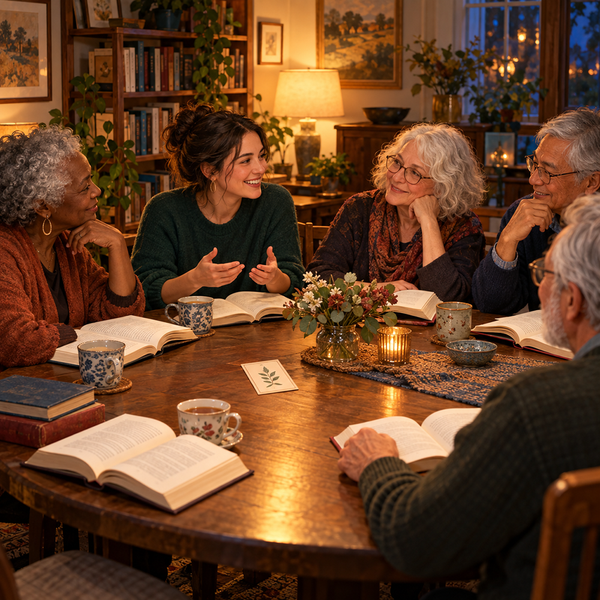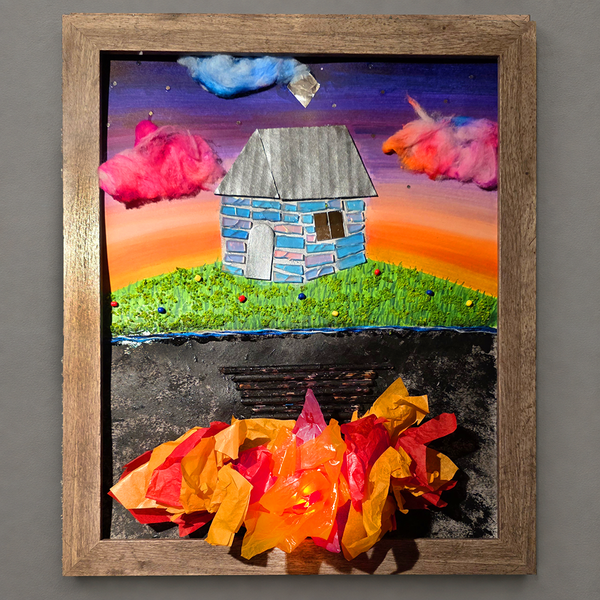

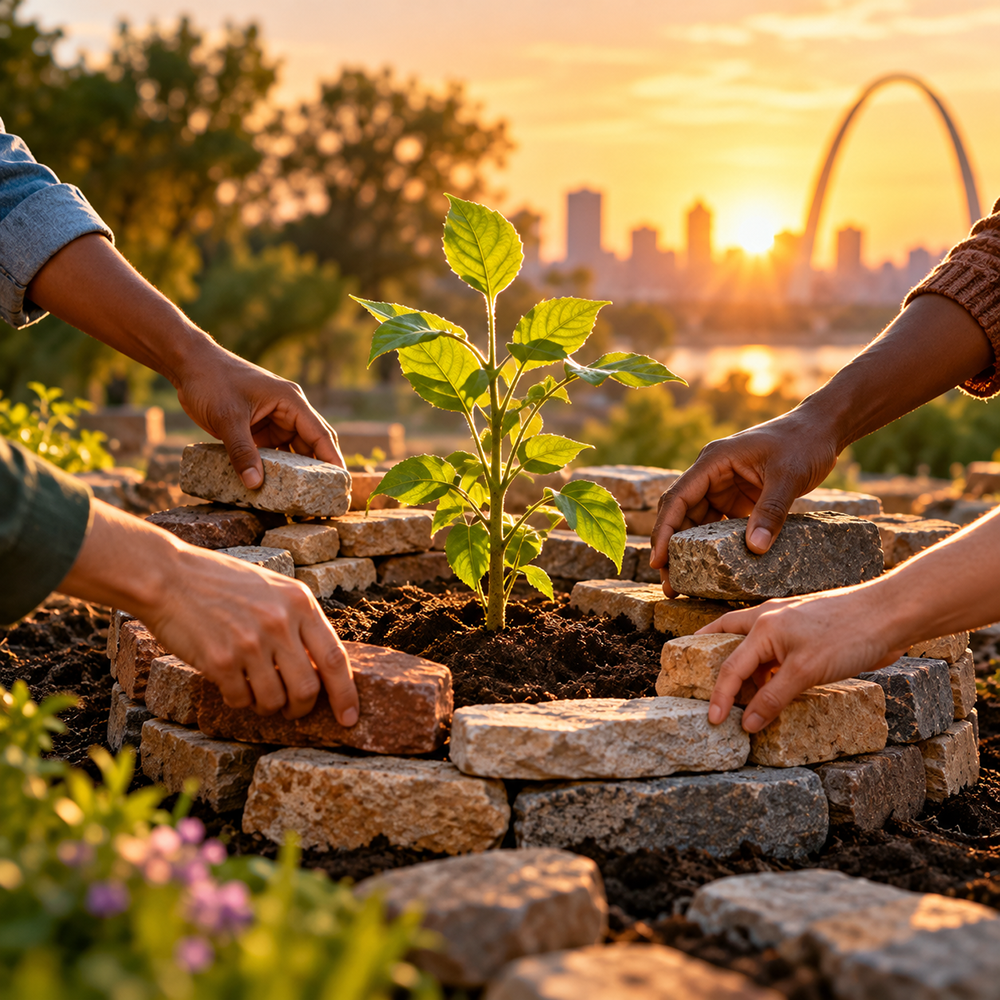
Exploring funding, partnerships, shared resources, and the connections that help ideas grow.
Every business, nonprofit, community initiative, or creative project begins somewhere.
Sometimes with a problem someone wants to solve.
Sometimes with a need that isn't being met.
Sometimes with an idea that keeps growing until it becomes something we want to bring into the world.
But having an idea and knowing how to make it happen are two very different things.
- Where do you begin?
- How do you find the resources you need?
- Who can help you understand the parts you don't know?
- How do you fund something that doesn't exist yet?
- And how do you build something meaningful without having to figure out every detail on your own?
These are questions I've been exploring through my own creative work.
Through Creativity Chronicles, I've been developing educational resources, sharing artistic experiments, and building relationships with people and organizations who value creativity, accessibility, and resourcefulness.
I've also been developing Everyone Creates, a vision for a welcoming, inclusive community arts initiative where people can explore creativity, share resources, learn new skills, and connect with others.
But turning a vision into something sustainable involves much more than simply having a good idea.
That's part of why I attended the St. Louis County Library's free, three-day Small Business and Nonprofit Conference in October 2026.
The presentations explored everything from nonprofit development and fundraising to budgeting, business planning, partnerships, technology, and community engagement.
And while the conference offered plenty of practical information, one of the biggest themes I took away was the importance of recognizing the different kinds of support that can help an idea grow.
Funding, knowledge, professional guidance, and community relationships can each help address different needs.
And sometimes, the most promising opportunities emerge when people with complementary skills and shared interests find ways to work together.
Not every promising idea will receive the support it needs, and meaningful projects can face very real financial, structural, and accessibility barriers.
But building something doesn't necessarily mean we have to possess every skill, resource, or answer ourselves.
Sometimes the first step toward making an idea possible is learning how to connect the pieces—and discovering who might be willing to help build it with us.
You Don't Have to Figure Everything Out Alone
One of the challenges of starting something new is realizing just how many different kinds of knowledge may be involved.
You might understand the problem you're trying to solve.
You might have experience working with the people you hope to serve.
You might have creative ideas, professional skills, or a clear vision for what you want to accomplish.
But that doesn't necessarily mean you know how to establish a nonprofit, develop a sustainable budget, research funding opportunities, navigate legal requirements, or build an effective organizational structure.
And why would it?
Being knowledgeable in one area doesn't automatically make us experts in every other area.
That's one of the things I appreciated about the Small Business and Nonprofit Conference.
Rather than expecting participants to arrive with all the answers, the presentations introduced people to resources, tools, and organizations that could help them navigate unfamiliar territory.
Finding the Right Information Can Make a Difference
For example, I learned more about several research and educational resources that can support people developing businesses, nonprofits, and community initiatives.
Reference Solutions, available through participating libraries, provides information about businesses, industries, and potential customers.
Access through a library can make a resource that ordinarily requires payment available to eligible patrons at no additional cost.
MOSourceLink connects entrepreneurs and small business owners with information, organizations, and resources intended to support business development.
For people exploring nonprofit funding, Candid's Foundation Directory can help with researching grantmakers and identifying potential funding opportunities.
The St. Louis Public Library provides access to this resource, subject to its current access requirements.
Candid Learning also offers educational materials about fundraising, grant research, and nonprofit development.
And library-supported learning platforms, including LinkedIn Learning and Gale Courses, may provide opportunities to develop skills in business, technology, marketing, and other areas without purchasing individual courses.
Of course, availability varies between library systems.
That's one reason it can be useful to explore what different libraries offer rather than assuming they all provide the same resources.
 Jessica Carey
Sometimes You Need More Than a Tutorial
Research tools and online courses can be helpful, but some questions benefit from guidance by people with specialized experience.
For example, here in St. Louis, Volunteer Lawyers and Accountants for the Arts (VLAA) provides educational opportunities and professional resources for artists and arts organizations.
I've personally had the opportunity to speak with someone from VLAA about exploring the development of a nonprofit.
That kind of guidance matters because starting an organization involves decisions that can have long-term financial, legal, and administrative consequences.
VLAA also offers an Accidental Arts Administrator program, designed to help people working in arts organizations better understand areas such as nonprofit formation, fundraising, budgeting, governance, and strategic planning.
Resources like these don't eliminate the work involved in building something.
But they can help us understand what questions to ask, which decisions deserve careful consideration, and where additional expertise may be needed.
Learning Doesn't Have to Mean Doing Everything Yourself
Something I think is especially important to recognize is that seeking guidance isn't the same as lacking ability or commitment.
An artist doesn't have to become an accountant to create meaningful work.
An educator doesn't have to become a lawyer to recognize an unmet community need.
A nonprofit founder doesn't have to personally possess every skill required to operate an organization.
What matters is understanding which responsibilities need to be addressed and finding appropriate ways to address them.
That might involve developing a new skill, consulting a professional, or working with someone whose expertise complements our own.
It can also mean recognizing when a particular responsibility requires more time, support, or resources than we currently have.
Building something responsibly means recognizing both our strengths and the areas where additional knowledge or assistance is needed.
Funding Isn't Just About Finding a Grant
When people think about funding a business, nonprofit, or community project, grants are often one of the first things that come to mind.
And understandably so.
A grant can provide resources that help an organization develop programs, purchase equipment, compensate people for their work, or pursue a particular mission.
But grants are only one piece of a much larger picture.
One of the things I appreciated about the conference was learning more about the different ways people and organizations can find support for the work they're trying to accomplish.
Different Kinds of Support for Different Needs
Depending on the project and its organizational structure, potential support might include:
- Foundation and corporate grants: Funding for eligible organizations or projects that align with a funder's priorities.
- Individual donors and philanthropic supporters: People who choose to contribute financially to causes, organizations, or creative work they believe in.
- Corporate sponsorships: Businesses supporting an initiative through funding, products, services, or other agreed-upon contributions.
- Giving circles: Groups of people pooling contributions and collectively deciding which causes or organizations to support.
- In-kind donations: Contributions of materials, equipment, supplies, professional services, or other noncash resources.
- Unrestricted funding: Financial support that eligible recipients can use for general needs rather than only for a narrowly defined project.
These possibilities aren't interchangeable, and eligibility matters.
A nonprofit may qualify for charitable grants that an individual artist or conventional business cannot.
A business might pursue commercial investment or sponsorship arrangements that operate very differently from charitable donations.
And some projects may benefit from exploring partnerships or fiscal sponsorship rather than immediately establishing a separate nonprofit.
The goal isn't necessarily to find one source willing to fund everything; it's to understand which kinds of support are appropriate for the work and the needs involved.
Support Doesn't Always Have to Be Financial
One of the ideas that especially resonated with me was the importance of recognizing in-kind contributions.
I've experienced this through my own creative work.
Through Creativity Chronicles and the Materials Lab, I've been fortunate to receive support from art supply manufacturers, local businesses, arts organizations, and educational programs.
Some have contributed art supplies, usable remnants, and unconventional materials that I've been able to explore through creative experiments.
Others have provided gift certificates, scholarships, access to educational opportunities, or professional guidance.
For example, reclaimed materials from local businesses have opened up possibilities for creating artwork with supplies that might otherwise have been discarded.
Scholarships have also helped make creative learning and professional development opportunities more accessible.
These contributions haven't eliminated every financial challenge, but they've helped make experimentation, education, and project development possible in ways that might otherwise have been difficult.
And there's something meaningful about recognizing that.
A contribution doesn't have to arrive as a check to make a difference.
A business donating usable surplus materials might help an artist experiment without purchasing everything new.
An organization offering access to specialized equipment might remove the need for an expensive purchase.
A professional sharing their expertise might help someone navigate an unfamiliar process.
Different contributions can address different barriers.
Making Support Visible
Another idea discussed during the conference was the importance of demonstrating that a project has support from others.
When approaching potential funders or partners, it can be helpful to show that people and organizations already recognize value in the work.
That might include existing partnerships, donated materials, volunteer contributions, educational collaborations, or other forms of support.
It doesn't guarantee funding, and different funders evaluate applications differently.
But it can help communicate that an initiative has begun developing relationships and putting resources to meaningful use.
This is also one reason documentation matters.
Keeping track of contributions, how they were used, and what they helped accomplish can provide useful information for budgeting, project planning, acknowledgments, and future proposals.
Of course, documentation should reflect actual contributions, and any financial valuations should follow the applicable accounting or reporting requirements.
The purpose isn't to make a project appear more established than it is.
It's to make the work, relationships, and support that already exist easier to understand.
 Jessica Carey
Finding the Right Fit Matters More Than Asking Everyone
Another important takeaway is that funding research isn't simply about identifying organizations with money.
It's about understanding their priorities.
- What kinds of projects do they support?
- Who is eligible?
- What expenses can their funding cover?
- Are they interested in arts education, accessibility, community development, environmental sustainability, or another area?
- Do they offer project-specific grants, general operating support, sponsorships, or other forms of assistance?
A strong proposal can't turn an ineligible applicant into an eligible one, and even a worthwhile project may not align with a particular funder's mission.
When eligibility or funding priorities are unclear, a brief letter of inquiry or introductory email may help determine whether an opportunity is worth pursuing before investing significant time in an application.
Not every funder accepts unsolicited inquiries, so it's important to check their guidelines first.
That's why resources such as Candid's Foundation Directory and the Missouri Common Grant Application can be useful starting points for researching potential opportunities and understanding application expectations.
But beyond the forms and funding criteria, there's also something worth remembering: support often begins with people understanding what we're trying to accomplish, why it matters, and how their contribution could make a difference.
And that brings us to another important part of building something meaningful: collaboration.
When eligibility or funding priorities are unclear, a brief letter of inquiry or introductory email may help determine whether an opportunity is worth pursuing before investing significant time in an application.
Not every funder accepts unsolicited inquiries, so checking their guidelines first is important.
 Jessica Carey
Collaboration Can Be More Powerful Than Competition
Starting a business, nonprofit, or community initiative can involve developing programs, finding resources, reaching an audience, and managing responsibilities that extend far beyond the original idea.
But what if some of the knowledge, materials, facilities, or expertise we needed already existed within our communities?
And what if working with others could create opportunities that would be difficult to develop independently?
Different Strengths, Shared Possibilities
One of the recurring themes from the conference was the value of collaboration.
For nonprofits, partnerships can sometimes strengthen programs, expand their reach, and demonstrate community involvement to potential funders.
For small businesses and independent creators, collaboration might introduce new audiences, shared resources, complementary skills, or opportunities to develop something together.
Consider a community arts program.
An artist might have the experience to develop engaging activities.
A local business might have usable surplus materials.
A community organization might already have relationships with the people the program hopes to reach.
A library or creative space might have equipment or facilities that could support the activities.
Each brings something different.
And together, they might be able to develop an experience that would be difficult for any one of them to provide independently.
Collaboration doesn't always mean finding someone who does the same thing we do. Sometimes it means finding people whose strengths complement our own.
Delmar DivINe: A Community Built Around Connection
One particularly interesting resource mentioned during the conference was Delmar DivINe, a St. Louis community development and social innovation hub spearheaded by Maxine Clark, the founder of Build-A-Bear Workshop.
Located in the former St. Luke's Hospital complex along Delmar Boulevard, the initiative brings nonprofit organizations and community-focused efforts into a shared environment.
The larger vision is especially meaningful because of the history of the Delmar Divide, which has long represented racial and economic disparities within St. Louis.
Rather than viewing organizations as entirely separate entities working in isolation, Delmar DivINe offers an example of creating physical space where organizations can operate near one another, develop relationships, and explore opportunities for collaboration.
And I find that concept fascinating.
Imagine how much easier it might be to discover complementary programs, exchange knowledge, or build partnerships when organizations have more opportunities to interact.
Of course, sharing a location doesn't automatically guarantee collaboration or equitable outcomes.
But creating environments that make connection more possible is a meaningful idea in itself.
It raises an interesting question: what could our communities accomplish if more of our resources, knowledge, and efforts were connected rather than scattered?
Collaboration Should Be About More Than Funding
Another point discussed during the conference was that funders may look favorably on collaboration.
That makes sense in certain circumstances.
A well-designed partnership can demonstrate that organizations understand their communities, recognize complementary strengths, and are working toward shared outcomes.
But I think it's important not to lose sight of why collaboration matters in the first place.
The goal shouldn't simply be to make a proposal more appealing to potential donors.
A partnership should have a meaningful purpose.
Perhaps it makes a program more accessible.
Perhaps it reduces unnecessary duplication.
Perhaps it brings together people with different areas of expertise.
Perhaps it allows resources to be shared more effectively.
Or perhaps it creates opportunities for people who might otherwise be excluded.
Not every organization needs to collaborate with every other organization, and not every partnership will be a good fit.
Successful collaboration also requires communication, clear expectations, respect for boundaries, and an understanding of what each participant can realistically contribute.
But when the goals align, working together can offer something beyond financial support.
It can create a stronger foundation for the work itself.
Building With Others, Not Just Alongside Them
This is something I've been considering through my own creative projects and the developing vision for Everyone Creates.
The idea of an inclusive creative community doesn't necessarily require one person or organization to provide every material, class, service, piece of equipment, or area of expertise.
There may be opportunities to work with artists, educators, libraries, local businesses, nonprofits, creative spaces, and other community members who share overlapping interests.
Different collaborators might contribute knowledge, space, materials, programming, or connections.
Some partnerships might even lead to ideas that neither party had originally considered.
Of course, collaboration requires effort, and support isn't guaranteed, but understanding what others are already doing can help us identify opportunities to complement existing efforts rather than unnecessarily duplicating them.
Sometimes the most meaningful progress comes from connecting resources, people, and ideas that might otherwise remain separate.
 Jessica Carey
Turning Ideas Into Something Practical
Having a meaningful idea is one thing. Understanding what it will take to bring that idea to life is another.
And sometimes, the practical side of building something can feel especially intimidating.
Budgets, spreadsheets, expenses, revenue projections, administrative responsibilities…
It's a lot to consider, particularly when your strengths and experience lie in areas other than finance or business management.
That's why I appreciated the final presentation I attended at the conference: “Budgeting for Mission Impact,” led by Nancy Jordan of Clarity Starts Now.
The session explored budgeting as part of developing and sustaining a nonprofit organization, but I think there's a broader lesson here that applies to many different kinds of projects.
A budget isn't just about how much money you have; it's also about understanding what you need, what you're trying to accomplish, and what resources it will take to get there.
Making the Invisible Work Visible
One thing that's easy to overlook when developing a project is how much work happens behind the scenes.
Imagine organizing a community art workshop.
You might immediately think about purchasing art supplies.
But what about the space where the workshop will happen?
The time spent planning and preparing?
Instructor compensation?
Accessibility accommodations?
Equipment, transportation, outreach, or cleanup?
Some of those needs might be met through donated materials, shared facilities, partnerships, or volunteer contributions.
Others may require actual funding.
And some costs, particularly people's time and expertise, deserve to be recognized even when resources are limited.
While donated materials, volunteer contributions, and shared resources can be incredibly valuable, it's important to distinguish between freely offered support and work that deserves compensation.
A sustainable project shouldn't depend on continually overlooking the labor required to make it possible.
This is where budgeting becomes more than a collection of numbers.
It can help reveal needs that might otherwise go unnoticed, identify gaps, and make it easier to communicate what a project actually requires.
It also connects to the importance of documenting in-kind support, which I discussed earlier.
Knowing what has already been contributed—and what still needs to be secured—can make planning more realistic.
A Practical Resource to Explore
Nancy Jordan's presentation also provided a nonprofit budgeting spreadsheet designed to help organizations organize their financial planning.
The workbook includes a planning worksheet, revenue and budget summaries, personnel expenses, non-personnel expenses, and a more detailed expense budget.
It also includes instructions to help users navigate the different sections.
For someone developing a nonprofit, a tool like this can offer a starting point for thinking through programs, staffing, revenue, and expenses.
And while the spreadsheet is specifically designed for nonprofit budgeting, some of the underlying questions are useful well beyond that setting.
- What are we trying to accomplish?
- What activities will be involved?
- What resources do we already have?
- What will we need to obtain?
- What expenses are essential, and what might be possible through collaboration or shared resources?
Of course, not every project needs a complex organizational budget; a small creative initiative may benefit from starting with a much simpler plan.
The important thing is finding a planning approach that fits the scale of the work, rather than making the process more complicated than it needs to be.
The presentation also introduced an opportunity for a free follow-up masterclass through Clarity Starts Now, offering another way for interested participants to continue learning.
Planning Should Help an Idea Grow, Not Become Another Barrier
I think there's an important balance here.
Practical planning matters. So does accountability, especially when other people are contributing money, materials, time, or expertise.
But planning tools should help people understand and develop their ideas—not make them feel that they must master every administrative detail before they're allowed to begin.
Sometimes the next step is creating a budget.
Sometimes it's asking someone with financial experience to review a plan.
Sometimes it's identifying one small, manageable project to test before attempting something larger.
A small pilot project can help reveal unexpected expenses, accessibility needs, community interests, or opportunities for collaboration before making larger commitments.
Starting small doesn't necessarily mean thinking small; sometimes it's a way to give a larger vision a more realistic foundation.
And sometimes it's recognizing that additional support is necessary before moving forward.
An idea doesn't become less meaningful because its creator needs help with the practical details.
If anything, recognizing those needs is part of understanding what it will take to build something that can last.
Building Something Doesn't Have to Mean Building It Alone
One of my biggest takeaways from the Small Business and Nonprofit Conference was that meaningful ideas need more than enthusiasm to become sustainable.
They need opportunities to grow, resources to draw upon, and people who can contribute different kinds of knowledge and support.
Throughout the conference, I was reminded that the process of developing something doesn't have to follow one particular path.
Different projects have different needs, and the people behind them bring different experiences, strengths, and circumstances.
What matters is finding approaches that are appropriate for the work—and recognizing where collaboration, guidance, or additional resources might help.
Of course, none of this means the process is easy.
Funding can be difficult to secure.
Resources may have eligibility restrictions.
Professional guidance isn't always accessible.
And building relationships requires time, energy, and opportunities that aren't equally available to everyone.
These are real barriers, and community collaboration shouldn't be treated as a substitute for the financial and structural support that people and organizations genuinely need.
Still, there's something encouraging about recognizing how many different forms meaningful support can take.
Sometimes the next step isn't finding one person or organization willing to provide everything.
Sometimes it's identifying one unanswered question, one useful resource, one potential collaborator, or one manageable step toward a larger goal.
And sometimes, what begins as one person's idea can grow into something that brings many people's contributions together.
Because building something meaningful doesn't always mean building it alone.
Sometimes it means discovering what we can create together.
Have you discovered a helpful resource, organization, partnership, or community connection while developing a business, nonprofit, or creative project? I'd love to hear about it. Sharing what we've learned might help someone else find an opportunity they didn't know existed.
Want even more content about creativity and art?
Be sure to check out all of our creative chronicles!
If you'd like to see examples of my work, you can find some of my art and creations at Redbubble and Gumroad!
Looking to learn more about my recent journey?
Check out some of these articles:
-Hidden Gems for St. Louis Artists
-Hidden Gems for Autistic & Neurodivergent Adults
-Learning What Love Was Supposed to Feel Like
-I Wasn't Broken--I'm Burned Out
-What Chronic Autistic Burnout Actually Feels Like
-Building a Life from What Remains
 Jessica Carey