

Recently, I began a professional-development and entrepreneurship program for artists.
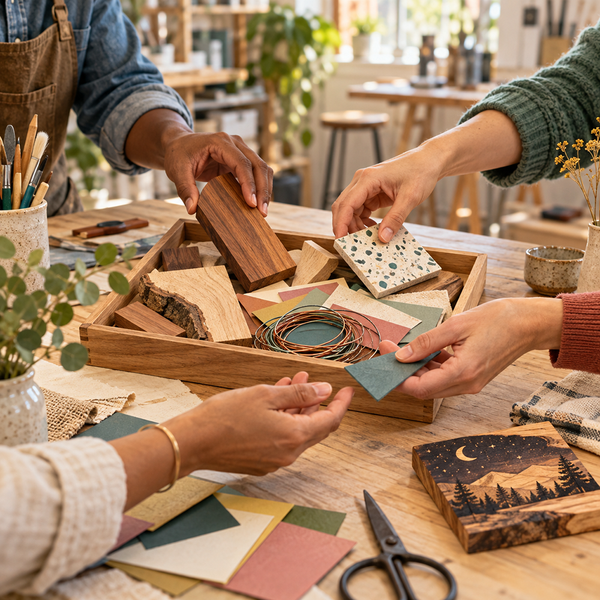
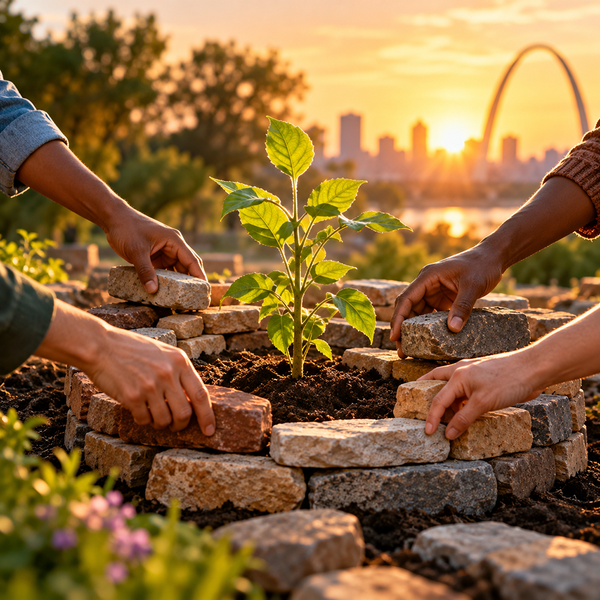
During our first week, we were asked to create a map—not of streets or landmarks, but of the lives we hope to build.
We considered what success means to us, what we value, what we are good at, where we need support, and what we might want our lives to look like one, three, five, or ten years from now.
Looking that far ahead can feel intimidating under any circumstances.
It can feel almost impossible when the present is unstable.
- How do you imagine the next ten years when you do not know where you will be living next month?
- How do you create professional goals while recovering from trauma and chronic autistic burnout?
- How do you plan for creative work, financial stability, relationships, community, or a family when so many immediate circumstances remain outside your control?
But perhaps that is when some kind of map becomes especially valuable.
Not because it can predict what will happen.
Not because every goal will unfold according to schedule.
And certainly not because creating a plan obligates us to follow it forever.
A personal map is not a binding contract with our current selves; it is a record of what we understand, value, need, and hope for from where we are standing today.
That distinction matters.
Many people hesitate to make plans because they fear choosing incorrectly.
- What if they discover that they do not enjoy the career they pursued?
- What if their health, finances, relationships, responsibilities, or priorities change?
- What if an opportunity appears that they could not have anticipated?
- What if the person they become no longer wants the life their younger self imagined?
Then the map changes.
There is nothing shameful, irresponsible, or inconsistent about updating a plan when new information becomes available.
We change.
Our circumstances change.
The world changes.
Sometimes we develop new abilities.
Sometimes we recognize needs we previously ignored.
Sometimes a loss closes one route, while an unexpected relationship or opportunity reveals another.
Changing direction does not necessarily mean that the original plan failed.
The original plan may have helped us move far enough to discover something we could not see from where we began.
Maps are revised whenever people learn more about the territory, and our personal maps deserve the same flexibility.
For much of my life, I was taught to measure success through endurance: keep going, work harder, ignore internal warning signs, meet expectations, and prove that I could handle whatever was placed in front of me.
I became skilled at surviving routes that were steadily harming me.
Eventually, chronic autistic burnout made it impossible to pretend that determination alone could make an unsustainable life sustainable.
Now, creating a map means asking different questions.
- What kind of life would allow me to heal rather than continually demand that I override myself?
- What work would use my strengths without requiring constant self-abandonment?
- What kinds of relationships, environments, support, creativity, and rest would help me build a life that feels meaningful—not merely one that appears successful from the outside?
I do not have complete answers.
My current circumstances do not allow me to control every next step.
But I am beginning to understand the direction in which I want to travel: toward safety, stability, creative freedom, reciprocal relationships, meaningful service, community, and a life spacious enough to include both contribution and rest.
That direction can guide me even when the entire route remains invisible.
We often imagine planning as an attempt to control the future; at its healthiest, however, planning is simply a way of becoming more intentional about what we move toward.
A map can help us notice whether an opportunity aligns with our values.
It can show us which resources or skills we may need.
It can reveal when we are continuing down a familiar road merely because other people chose it for us.
It can also remind us that a difficult season is not the totality of our lives.
But the map must remain ours.
We are allowed to redraw it.
We are allowed to add destinations, abandon routes that are harming us, take unexpected detours, rest for a while, or decide that something we once wanted no longer belongs in the life we are creating.
The goal is not to predict every turn correctly.
The goal is to know ourselves well enough to choose a meaningful direction—and remain open enough to revise that direction as life teaches us more.
 Jessica Carey
Define Success Before You Spend Your Life Chasing It
If we do not define success for ourselves, we will usually inherit someone else’s definition.
We may learn that success means earning the highest possible income, reaching a prestigious position, owning impressive things, remaining constantly productive, or meeting a particular set of milestones by a particular age.
We may pursue goals because they look respectable from the outside—even when the life required to achieve them is making us miserable.
None of those conventional goals are inherently wrong.
Someone may genuinely want to build a large company, earn an advanced degree, buy an expensive home, gain recognition, or reach the top of a profession.
The important question is whether the goal reflects that person’s values—or whether they have simply been taught that achieving it will prove their worth.
Sometimes we spend years climbing a ladder before asking whether it is leaning against a wall we ever wanted to reach.
Success can be much quieter than society suggests.
It may mean having a safe place to live and enough income to meet our needs.
It may mean work that feels meaningful without consuming our entire lives.
It may include creative freedom, dependable relationships, better health, time in nature, spiritual connection, community service, travel, parenthood, or the ability to rest without fearing that everything will fall apart.
For someone recovering from trauma, success may begin with feeling safe inside their own home.
For someone living with a disability, it may involve creating a life that respects their actual capacity rather than forcing them to imitate someone without the same needs.
For someone who has spent years caring for everyone else, it may include discovering what they enjoy when they are no longer organizing their entire existence around other people.
For someone leaving an established career, success may mean beginning again in a way that feels more honest.
My own definition has changed considerably.
I once thought success depended on how much I could accomplish, manage, endure, and provide.
I learned to ignore exhaustion and keep functioning because being useful felt safer than having needs.
Like many people, I became accustomed to measuring strength by how long I could continue after my mind and body were already asking me to stop.
That definition eventually became impossible to sustain.
Success now looks less like proving that I can survive anything and more like building a life I do not have to continually survive.
I want safety and a home of my own.
I want meaningful creative work, writing, financial stability, loving relationships, family, community, exploration, and opportunities to make life more accessible and hopeful for other people.
I want to contribute—but I also want enough support, spaciousness, and rest to remain a human being within the life I build.
Those desires may evolve.
Some may take forms I cannot currently imagine.
Naming them now does not mean demanding that every detail happen exactly as envisioned.
It gives me a way to evaluate the choices and opportunities in front of me.
- Does this move me toward greater safety or return me to survival?
- Does it create sustainable growth or require chronic self-abandonment?
- Does it support the life I value—or merely help me appear successful?
One helpful way to clarify our definition is to imagine an ordinary day rather than a spectacular achievement.
- What does a successful Tuesday look like?
- Where do you wake up?
- How hurried or peaceful is the morning?
- What kind of work occupies your time?
- Who do you interact with?
- Is there room for food, rest, movement, creativity, connection, or solitude?
- How does your body feel at the end of the day?
- Do you recognize yourself within your own life?
A meaningful future is built from ordinary days; if our vision of success depends on being chronically exhausted, disconnected from ourselves, or unavailable to everyone and everything we love, the achievement may cost more than we truly want to pay.
This does not mean every day must be comfortable or perfectly balanced.
Meaningful goals require effort, and life will always contain demanding seasons.
But temporary strain is different from constructing an entire identity around depletion.
Before deciding how far we want to go, it is worth asking what we are actually traveling toward.
Not what would impress everyone else.
Not what would finally prove that we are worthy.
Not what we have been told a successful life is supposed to resemble.
What would make our own lives feel meaningful, sustainable, connected, and whole?
 Jessica Carey
Begin With Your Honest Coordinates
Knowing where we hope to go is only one part of creating a useful map, but we also need an honest understanding of where we are beginning.
Imagine trying to follow directions while pretending you are in a different city.
Even the clearest route would be useless because it would begin from the wrong location.
Yet people are frequently encouraged to build their lives around imaginary versions of themselves—the people they believe they should be rather than the people they actually are.
We may make plans based on the energy we wish we had, the support we think we should not need, the skills other people expect us to possess, or the circumstances we hope will somehow improve on their own.
An honest starting point asks us to consider the complete picture:
- What strengths, skills, experiences, and resources do I already possess?
- What responsibilities and obstacles currently affect me?
- What gives me energy, meaning, or a sense of connection?
- What consistently leaves me depleted or dysregulated?
- Where might I need education, assistance, accommodations, collaboration, or different systems?
- What have I genuinely preferred—and what have I merely learned to endure?
This is not an invitation to compile evidence against ourselves.
Recognizing an area of difficulty does not erase our strengths.
Acknowledging a disability, limitation, or support need does not make us incapable.
Nor does possessing intelligence, talent, education, or determination mean that we should be able to do everything without help.
Human beings have uneven capacities.
Someone may be an extraordinary teacher and struggle with administration.
A talented artist may need help understanding contracts or taxes.
A compassionate caregiver may become overwhelmed by noisy environments.
Someone who communicates beautifully in writing may require additional processing time during spoken conversations.
A person may be capable of handling a demanding task occasionally without being able to sustain it every day.
Success does not require converting ourselves into people with no weaknesses or needs; it requires learning when to grow, when to adapt, when to collaborate, and when a particular demand is fundamentally incompatible with our well-being.
This has been an important—and painful—lesson in my own life.
For years, my ability to continue functioning was treated as proof that the way I was living must be manageable.
If I completed the task, arrived at the appointment, met the deadline, solved the problem, or continued caring for other people, then the cost remained largely invisible.
Often, it was invisible even to me.
I had learned to override exhaustion, sensory distress, emotional pain, and the accumulating signs of autistic burnout.
I confused my ability to survive an experience with evidence that the experience was sustainable.
Eventually, my mind and body could no longer absorb what I kept demanding from them.
I am now learning that endurance is information—not destiny.
The things we have survived can reveal courage, adaptability, and resourcefulness. But surviving something does not obligate us to reproduce it.
Being capable of forcing ourselves through a harmful situation does not mean that situation belongs in the future we are building.
We can honor our resilience without designing a life that continually requires it.
That means paying attention to preferences that may once have seemed unimportant.
- Do we work better with structure or flexibility?
- Collaboration or solitude?
- Predictability or frequent novelty?
- Quiet environments or stimulating ones?
- Do we need advance notice, written information, regular breaks, creative freedom, clear expectations, or help with transitions?
These details are not trivial; they affect whether a life works in practice rather than merely looking possible on paper.
The same honesty should be applied to our strengths.
Many of us dismiss abilities that come naturally because they do not feel impressive.
We may overlook our curiosity, empathy, persistence, imagination, problem-solving, lived experience, ability to connect ideas, or willingness to ask questions.
We may focus so intensely on what we lack that we fail to recognize what is already in our hands.
An accurate map contains both.
It does not exaggerate our abilities or reduce us to our struggles.
It acknowledges the resources we already carry, the terrain currently surrounding us, and the support required to travel safely.
We do not need to begin from an ideal location.
We need to begin from the truth.
 Jessica Carey
Find the Thread Beneath Everything You Do
A meaningful life does not always resemble a straight, orderly path.
Our interests may seem disconnected.
Our work may change.
We may move between careers, relationships, creative practices, communities, or seasons that appear to have little in common.
This can leave us wondering whether we lack direction when, in reality, we may be looking for consistency in the wrong place.
The common thread may not be what we do.
It may be why we do it.
One framework for exploring this distinction is Simon Sinek’s Golden Circle, which invites us to consider our why, how, and what:
- Why: What purpose, belief, need, or hope drives us?
- How: What strengths, approaches, values, or processes shape the way we contribute?
- What: What do we actually create, offer, build, teach, or do?
The “what” is usually the easiest part to see; it includes our job titles, projects, products, services, responsibilities, and visible accomplishments.
But the “what” can change many times over the course of a life.
A teacher may become a writer.
An employee may start a business.
An artist may become an advocate.
Someone may leave paid work temporarily to recover, care for another person, pursue education, or rebuild after a major disruption.
These changes do not necessarily mean they have abandoned their purpose.
Their deeper reason for contributing may still be present beneath each new form.
My own work can appear scattered when viewed only through its visible activities.
I create art.
I write articles.
I experiment with unfamiliar materials.
I research resources, contact businesses, share opportunities, advocate for greater accessibility, and imagine an inclusive creative community that does not yet fully exist.
Those activities could be treated as unrelated projects competing for my attention, but they grow from the same underlying purpose.
- I want people to feel seen.
- I want them to reconnect with creativity, possibility, and their own inner wisdom.
- I want useful knowledge and resources to reach people who have been excluded from them.
- I want to help create the kind of welcoming, accessible community I needed and could not find.
Once I recognize that thread, the individual pieces make more sense.
An article can serve that purpose.
So can a piece of artwork.
So can connecting an artist with a material they could not afford, transforming something discarded into a creative resource, or helping someone understand that their way of creating is valid.
The forms may change while the deeper direction remains.
This does not mean everyone needs one grand calling or a perfectly polished mission statement.
Purpose does not have to be dramatic, public, or profitable; it may be as simple as creating beauty, helping people feel safe, solving practical problems, nurturing curiosity, caring for living things, telling the truth, bringing people together, or making difficult experiences gentler.
Sometimes purpose becomes clearer when we think about legacy—not whether we will become famous, but what we hope will be safer, kinder, more beautiful, or more possible because we were here.
Moreover, our purpose doesn't need to remain identical throughout our lives.
Like the rest of the map, it can deepen or change as we do.
The goal is not to force every interest into one neat explanation; it is to become curious about the patterns that already exist.
We might ask:
- What kinds of problems do I repeatedly want to help solve?
- What experiences have mattered most to me, and why?
- When have I felt most connected to what I was doing?
- What values do I want present even if my work changes?
- How do I hope people feel after interacting with me or what I create?
- What do I want there to be more of in the world because I participated in it?
Sometimes the answer is easier to recognize through impact than occupation.
Someone may not know what career they want, but they may know they want people to feel less alone.
Someone may be uncertain which creative medium to pursue, but know they want to preserve overlooked stories.
Someone may not have the resources to build their larger vision yet, but can already begin embodying its values in smaller ways.
A deeper purpose becomes a compass rather than a cage.
It can help us decide which opportunities belong on our map without demanding that they all look the same.
It can also help us release paths that appear impressive but continually lead us away from what matters.
We do not always need one permanent answer to the question: “What am I supposed to do with my life?”
Sometimes we need to identify the thread—and remain open to the many forms it may take.
 Jessica Carey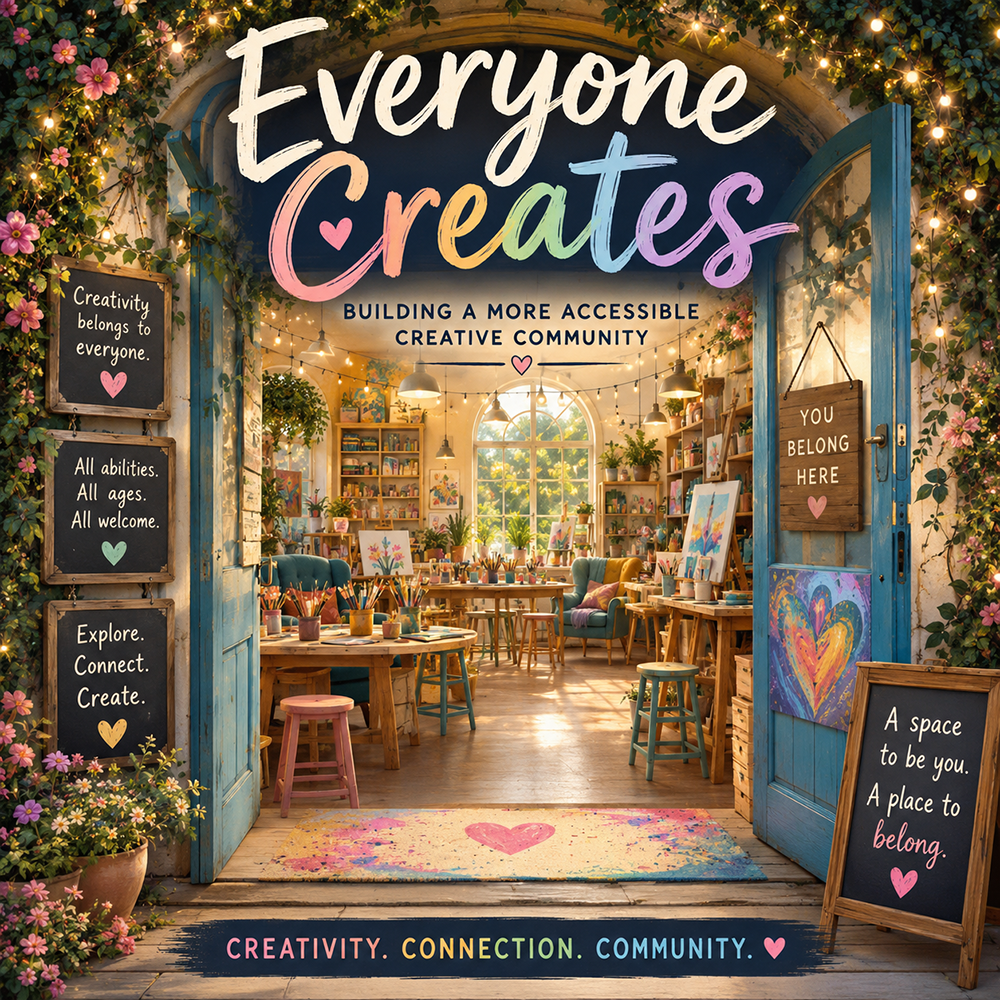
A Map Becomes Useful When You Move
Reflection can help us understand what we value, what we need, and where we hope to go.
But eventually, a map asks something of us.
We have to take a step.
That step does not need to be enormous.
It does not need to guarantee success or commit us to a permanent path.
It simply needs to create movement—and movement gives us information that thinking alone cannot provide.
We learn by applying, asking, experimenting, visiting, researching, making, speaking, and trying.
An idea that remains entirely inside our minds cannot introduce us to the people, resources, obstacles, alternatives, or opportunities that exist beyond what we currently know.
I have been learning this while rebuilding my creative life.
When I left unsafe family situations, I also lost access to most of my belongings, including the vast collection of art supplies I had accumulated over many years.
I could not afford to replace much of anything, but art remains central to how I process experiences, communicate, experiment, connect with people, and imagine a future.
So I began reaching out.
I contacted businesses, manufacturers, organizations, and local shops.
I explained what I was creating, what had happened to my materials, and how I hoped to experiment, write about what I learned, share discoveries with other artists, and develop more accessible creative opportunities.
Not everyone responded.
Some people said no.
Many said nothing at all.
A few possibilities led nowhere.
But that was not the whole story.
Other people offered materials, information, introductions, encouragement, or an invitation to continue the conversation.
Supplies that might have remained in storage, scrap bins, sample collections, or waste streams began becoming artwork, experiments, articles, and shared creative experiences.
None of those connections existed before I made the need and the vision visible.
This does not mean that asking guarantees an open door.
Nor does it mean that anyone is obligated to support a goal simply because it matters to us.
Other people retain the freedom to assess their resources, priorities, policies, and capacity.
Asking is not the same as demanding.
It is allowing another person to answer a question we cannot accurately answer for them.
Movement can take many forms:
- Sending an application or asking whether a resource exists
- Sharing an idea with someone trustworthy
- Testing a small version of a larger project
- Learning a skill or attending a new community
- Requesting an accommodation, introduction, or other support
Each action reveals more of the landscape.
A conversation may show us that an idea needs refining.
A small experiment may reveal that we love the process—or that we only loved the idea of it. An application may connect us with people we did not know.
A refusal may clarify what a program does not offer.
An unexpected response may reveal an entirely different route.
Even disappointment can provide information.
That does not mean rejection is painless or that every setback should be reframed as a hidden blessing.
Sometimes a closed door is simply a loss.
But it does not automatically prove that the entire direction is wrong or that we were foolish to try.
It may mean that this particular route is unavailable.
The important distinction is between remaining committed to a meaningful direction and becoming convinced that it must be reached through one specific door.
We can continue moving toward creativity without receiving support from every company.
We can pursue community without forcing closeness with people who repeatedly dismiss us.
We can seek meaningful work without insisting that only one title, organization, or opportunity could possibly provide it.
The map gives us direction.
Action helps us discover the actual terrain.
We do not need certainty before taking every step.
Often, certainty is not waiting at the beginning of the road; it develops as we move.
 Jessica Carey
Choose Landmarks, Not a Perfect Life Plan
Long-term goals can be useful, but they can also become overwhelming.
A vision of where we hope to be in five or ten years may feel inspiring from a distance.
Then we look at the gap between that future and our present circumstances and wonder how we could possibly cross it.
The temptation is to construct a perfect sequence:
- First I will do this.
- Then this will happen.
- That will lead to the next opportunity.
- And if I perform every step correctly, I will arrive at the life I imagined.
But lives rarely unfold that neatly.
Other people make decisions that affect us.
Programs change.
Relationships begin or end.
Health and capacity fluctuate.
Opportunities appear unexpectedly, while carefully prepared plans sometimes fail for reasons we could never have prevented.
A plan cannot eliminate uncertainty.
What it can do is give us landmarks.
A landmark is different from a rigid timeline; it identifies something meaningful we hope to move toward while leaving room for more than one route.
For example: “I must hold this exact job at this particular organization within three years” depends on many conditions outside one person’s control.
A more flexible landmark might be: “I want work that uses my creativity, supports greater financial stability, respects my needs, and contributes something meaningful.”
The second version still offers direction, and it also leaves room for opportunities that may not exist yet.
My own long-term vision includes a safe home, recovery from chronic autistic burnout, financial stability, loving and reciprocal relationships, sustainable creative work, and an inclusive community project that reduces barriers to artistic participation.
Those are significant goals. I cannot complete them all immediately, and some outcomes depend on decisions, systems, resources, and people I cannot control.
If I measured progress only by whether the final destination had already been reached, nearly every day would feel like failure.
Instead, I can identify nearer landmarks.
I can gather documentation, seek appropriate support, protect recovery time, develop creative resources, participate in healthier communities, test small versions of larger ideas, and form relationships with people and organizations whose values align with what I hope to build.
These actions do not guarantee every outcome; they help create conditions in which a better future becomes more possible.
We can also measure progress partly through actions rather than results.
- Submitting a thoughtful application is an action. Being selected is an outcome.
- Making an appropriate request is an action. Receiving help is an outcome.
- Communicating a boundary is an action. Another person respecting it is an outcome.
We should remain accountable for what belongs to us without assuming responsibility for every decision made by other people or institutions.
A simple personal map might include:
- The destination: What would a meaningful and sustainable life look and feel like?
- The current location: What strengths, needs, responsibilities, obstacles, and resources exist now?
- The compass: Which values or deeper purpose should guide decisions?
- The next landmark: What would meaningful progress during the next year look like?
- The next step: What is one realistic action that can be taken from here?
- The door to approach: What question, request, application, or possibility needs to be made visible?
- The review point: When will the map be reconsidered and updated?
That final step is essential.
A map should be reviewed not only when something goes wrong, but because living produces new information.
We may discover that a goal costs more than it gives us, find a better route, or realize that something we never considered now matters deeply.
Changing a goal does not automatically mean we lacked commitment; sometimes it means we gained wisdom.
We are allowed to adjust the timeline, choose another route, redefine the destination, pause, or release a goal that no longer fits the person we have become.
Our goals should help us participate more intentionally in our lives.
They should not become another system through which we punish ourselves for being human.
 Jessica Carey
Support Should Help Us Travel—Not Take Over the Map
Creating a personal map does not mean building an entire life alone.
We may need teachers, therapists, mentors, friends, collaborators, family members, community resources, accommodations, or professional guidance.
Other people can help us recognize strengths we have overlooked, learn skills we do not possess, and discover routes we could not have found by ourselves.
Interdependence is not failure.
No one has every skill, resource, connection, or form of knowledge required to build a meaningful life entirely on their own.
Even the people who appear fiercely independent rely on systems, infrastructure, communities, institutions, and work performed by others.
But receiving support is not the same as surrendering authorship of our lives.
There is an important difference between helping someone read their map and grabbing it from their hands.
Unhealthy help often begins with certainty:
- “I know what is best for you.”
- “You should want this.”
- “This is what someone like you needs.”
- “If you would simply listen to me, your life would improve.”
The person providing help may have experience, knowledge, or good intentions, but when they stop listening, their support can become control.
They may begin trying to direct someone toward the life they believe should be built rather than understanding the life that person is actually trying to create.
Healthy support is more collaborative.
It may sound like:
- What matters most to you?
- What have you already tried?
- What kind of help would be useful?
- What would help you retain choice and ownership?
Care should be something we practice with people—not something we do to them.
This matters especially when supporting someone who is disabled, overwhelmed, recovering from trauma, living through crisis, or otherwise in a vulnerable position.
Difficulty in one area does not erase a person’s right to make decisions about their own life.
Needing support does not make someone an empty space for other people’s plans.
At the same time, retaining ownership does not require rejecting every outside perspective.
Someone else may notice an obstacle we have minimized or a pattern we cannot yet see.
They may possess expertise we genuinely need.
Respectful support can challenge us, ask difficult questions, or help us consider consequences without treating us as incapable of knowing ourselves.
The difference lies partly in whether the relationship preserves dignity, consent, curiosity, and choice.
As I develop my own map, I am recognizing how essential the right people will be.
My larger goals involve areas beyond my expertise, including financial systems, nonprofit development, publishing, business administration, legal questions, accessibility, and community partnerships.
The answer is not to force myself to become equally skilled at everything.
It is to build relationships with trustworthy people whose knowledge complements mine—and who understand that collaboration is not permission to take control.
The healthiest guides do not insist that we reproduce their journey; they help us understand the terrain, warn us about hazards, share what they know, and leave room for us to choose.
A meaningful life remains our responsibility, but it does not have to become our solitary burden.
We can carry our own map while allowing good people to walk beside us.
 Jessica Carey
You Only Need Enough Map for the Next Step
I still do not know exactly how the next several years of my life will unfold.
I do not know which opportunities will grow, which applications will succeed, how quickly stability will come, or what unexpected circumstances may redraw the route.
I cannot guarantee that every goal I have named will happen according to the timeline I imagined.
But I know more than I once did.
I know that I want a life built around safety rather than survival.
I want safety, sustainable creative work, reciprocal relationships, meaningful community, and enough rest to remain fully human within the life I build.
I want what I create to help other people feel seen, welcomed, capable, and less alone.
Those things do not give me a complete route.
They give me a direction.
From here, I can ask whether a choice moves me closer to or farther from the life I hope to build.
I can recognize when an opportunity fits the larger purpose beneath my work.
I can also notice when a familiar path demands the same self-abandonment I am trying to leave behind.
Some steps will be small.
- An email
- An application
- A boundary
- A conversation
- An hour spent creating
- A request for help
- A day of necessary rest
- A decision not to return to something that repeatedly causes harm
Small steps may not look impressive from the outside, but they still alter the direction of a life.
I am also learning that a detour is not always a defeat.
Sometimes the path changes because we gain information.
Sometimes we discover that a destination no longer belongs to us.
Sometimes our capacity changes, another priority becomes more urgent, or an unexpected opportunity reveals a route we could not have planned.
We are allowed to respond.
We can redraw the map without declaring the entire journey a failure.
We can change our minds without treating our former selves with contempt.
That earlier version of us was making decisions with the knowledge, needs, and circumstances available at the time.
Growth does not require shaming the person who could not yet see what we see now.
Perhaps the most useful maps are drawn in pencil.
They offer enough structure to help us move and enough flexibility to let us remain alive to what we encounter.
They contain destinations, but they also leave blank spaces for roads that have not yet appeared.
You do not need to know every turn your life will take.
You do not need certainty that every door will open before you approach it.
You do not need a flawless ten-year plan, unlimited resources, or complete confidence in your ability to reach the destination.
You need enough honesty to name what matters.
Enough self-knowledge to recognize what helps you thrive.
Enough humility to seek guidance and support where you need it.
Enough courage to make one possibility visible.
And enough freedom to update the map when life teaches you something new.
Start where you actually are.
Use what you already carry.
Ask for what might help.
Take the next meaningful step.
Rest when the journey requires it.
Release routes that demand that you abandon yourself.
The whole path may not be visible yet.
The next honest step can still be enough.
 Jessica Carey
Want even more content about creativity and art?
Be sure to check out all of our creative chronicles!
If you'd like to see examples of my work, you can find some of my art and creations at Redbubble and Gumroad!
Looking to learn more about my recent journey?
Check out some of these articles:
-Hidden Gems for St. Louis Artists
-Hidden Gems for Autistic & Neurodivergent Adults
-Learning What Love Was Supposed to Feel Like
-I Wasn't Broken--I'm Burned Out
-The Difference Between Resting and Giving Up
-What Chronic Autistic Burnout Actually Feels Like
-When You Had to Raise Yourself
 Jessica Carey