

The Room Was Full, but There Was Never a Home
My family was involved in my life—sometimes overwhelmingly so.
They had opinions about what I did, where I went, how I behaved, what decisions I made, and who I was supposed to become.
They paid attention to whether I fulfilled the role they expected me to play.
But that did not mean they knew me; involvement is not the same as connection.
At family gatherings, people would be brought together for photographs and expected to hug one another as though physical proximity could prove emotional closeness.
Nicknames were assigned without asking whether I wanted them, creating the appearance of familiarity without the relationship that should have made such familiarity feel natural.
Birthdays and holidays brought presents, sometimes many of them.
From the outside, that could look like abundant care, but buying something was easier than becoming curious about me.
My parents would scream and demand that I produce a list of exactly what I wanted so they—and other relatives—would know what to buy.
The responsibility for making their gestures appear thoughtful was placed back onto me.
They did not have to notice what interested me, remember something I had mentioned, or wonder what might make me feel understood.
I was expected to provide the answers so everyone else could complete the performance.
The gifts were real. The gatherings happened. The photographs existed.
So did the loneliness.
This is one reason emotional neglect can be so difficult to recognize and explain.
People imagine neglect as total absence: nobody present, nobody watching, nobody providing anything at all.
When a family is highly involved—or even controlling—it may seem impossible to say that a child was unseen.
But being watched is not the same as being known.
Being managed is not the same as being protected.
Being given things is not the same as being loved in ways you can actually feel.
And being required to participate in the appearance of closeness does not create a safe, mutual relationship beneath it.
In his video about feeling alone within a family, Jerry Wise describes how a family can always be around while never truly being there for you.
The family may pay close attention, but that attention can be organized around its own anxiety, stability, image, and needs.
The child learns to be the version of themselves that keeps the system functioning.
That distinction put words to something I have struggled to explain.
My family was “over-invested” in me when investment meant control.
They wanted access to my choices, labor, behavior, accomplishments, and future.
They wanted me to reflect well on them and remain available for the roles I had been assigned.
But investment in controlling a person is not the same as investment in that person’s well-being.
They did not show the same determination to understand my internal world.
There was little curiosity about how I experienced life, what frightened or overwhelmed me, what made me feel safe, or what kind of support I needed.
There was no warm place where I could arrive as myself without first determining which version of me the situation required.
There were houses and relatives and rooms filled with people.
There was never a home.
A home is more than the place where your belongings are stored or your relatives gather.
It is supposed to be somewhere you can exist without continually earning your right to take up space.
It is where somebody wants to know the person behind the performance—not only whether you are behaving properly, being useful, keeping the peace, or making the family look whole.
I became useful long before anyone became safe for me.
I learned to monitor other people, anticipate reactions, and recognize what was expected.
I learned that connection meant giving people the version of me they wanted.
I learned to participate in closeness as a performance while remaining profoundly alone inside it.
What I did not learn was what it felt like to be met with sustained warmth, curiosity, gentleness, and care.
For many years, I interpreted that disconnection as evidence that something was wrong with me.
Perhaps I was simply incapable of feeling close to people.
Perhaps I expected too much. Perhaps every family felt this way, and I was ungrateful for being unable to experience their version of involvement as love.
But the loneliness was not proof that I was impossible to love or know.
It revealed something about the relationships surrounding me.
People knew what I could do for them.
They knew the role I played.
They knew the acceptable version of me they had helped construct.
They did not know the person living underneath it.
 Jessica Carey
At the time, none of us knew that person was autistic.
I did not yet have language for the sensory experiences, overwhelm, need for predictability, exhaustion, or differences that shaped my life.
I only knew that being myself caused problems and that surviving required continual adaptation.
Long before I learned the word masking, I was already building a version of myself that other people could tolerate.
And because that version appeared to function, almost nobody wondered what keeping her alive was costing me.
 Jessica Carey
Being Monitored Is Not Being Known
When people pay close attention to you, it can be difficult to explain why you still feel invisible.
My family noticed me; they noticed what I did, what I failed to do, and whether my behavior aligned with their expectations.
They monitored my choices, corrected me, criticized me, and reacted when I tried to move in a direction they had not chosen.
But their attention rarely contained curiosity.
They were not trying to discover who I was.
They were trying to determine whether I was being who they needed me to be.
That is not the same thing.
To know another person, you have to allow their inner world to exist independently of your own.
You have to accept that they may experience something differently, want something you would not choose, or possess limits you do not understand.
You have to listen with at least some willingness to let what they tell you change what you believe.
Control requires none of that.
A controlling person can watch you constantly without seeing you clearly.
In fact, control often depends upon replacing the real person with a simpler story:
- She is being difficult.
- She is too sensitive.
- She should know better.
- She is capable of more.
- She needs to stop making everything complicated.
- She will be fine if she does what we tell her.
Once those conclusions have been made, there is no need to ask what she is actually experiencing.
Whatever she says can be filtered through the story that has already been created about her.
If I resisted something, the question was not necessarily why is this difficult for her?
It could be treated as disobedience, ingratitude, selfishness, immaturity, or an attempt to cause problems.
My internal experience mattered less than how my response affected everyone else.
At the same time, I learned to pay extremely close attention to the people around me.
I learned to notice changes in tone, expression, posture, and mood.
I learned that an ordinary interaction could change rapidly and that I might need to adjust just as quickly.
I tried to anticipate what other people wanted before they became angry that I had not already provided it.
I became responsible for understanding them in ways they were never expected to understand me.
That one-way awareness can look like closeness.
You may know another person’s moods, preferences, grievances, and expectations intimately.
You may be able to predict their reactions before they say a word.
They may depend on you for practical help or emotional stability.
But mutual connection requires more than knowing how to prevent someone else from becoming upset.
I knew how to monitor the emotional climate.
I did not know what it felt like to trust that my own emotions would be received with care.
I knew how to become useful.
I did not know what it felt like to need something without fearing punishment, ridicule, resentment, or rejection.
I knew how to adapt myself to other people.
I did not know whether anyone would remain if I stopped adapting.
This is part of why the family could appear close while feeling so profoundly lonely from within it.
Closeness flowed in one direction.
I was expected to move toward other people’s needs, moods, values, and versions of reality.
They were not similarly expected to move toward mine.
The more successfully I performed that role, the more invisible the person beneath it became.
Success created its own trap.
If I anticipated what people wanted, suppressed my distress, completed the task, and kept functioning, my performance became evidence that I did not need help.
Nobody saw the effort required because concealing the effort was part of what I had learned to do.
And when I could not perform successfully, people often focused on the disruption rather than the distress beneath it.
They saw the reaction, not what overwhelmed me.
They saw resistance, not what felt unsafe.
They saw capability in one moment and assumed it should exist identically in every other moment.
They saw a problem to correct rather than a person trying to communicate.
For much of my life, I did not have the language to explain the difference.
I did not know that I was autistic.
I did not understand why certain environments, demands, sensations, transitions, and interactions affected me so intensely.
I could not explain needs I had never been allowed to identify.
I only knew that other people seemed to possess the authority to define my experience—and that my own account rarely carried equal weight.
Over time, I began participating in my own disappearance.
I questioned my perceptions.
I tried to override my limits.
I judged my pain according to whether other people considered it reasonable.
Instead of asking what my mind and body were communicating, I asked what response would cause the least trouble for everyone else.
The monitoring that surrounded me eventually became monitoring I carried inside myself.
Even when my family was not in the room, I was still trying to become the person they had trained me to be: undemanding, useful, vigilant, and able to continue no matter what anything cost.
Long before I understood autistic masking, I understood that being accepted depended upon hiding whatever other people did not want to see.
 Jessica Carey
The Child No One Knew Was Autistic
I was autistic long before anyone knew to call me autistic.
The diagnosis came at age 33 in April 2026, but the disability did not suddenly begin when someone finally recognized it.
My nervous system had always processed the world differently.
I had always been affected by sensations, environments, transitions, demands, uncertainty, and social expectations in ways other people did not necessarily experience or understand.
Without the correct explanation, those differences were interpreted through other people’s assumptions:
- Sensory distress could be treated as oversensitivity.
- Overwhelm could look like overreaction.
- A need for predictability could be interpreted as stubbornness.
- Withdrawal could be seen as antisocial behavior.
- Difficulty beginning or completing something could be mistaken for laziness or unwillingness.
The effort required to function could remain completely invisible as long as I eventually completed whatever was expected of me.
Nobody had to understand what was happening internally if they could pressure me until my external behavior looked acceptable.
I did not know enough to defend myself from those interpretations.
I had no language for sensory overload, executive dysfunction, autistic shutdowns, masking, or burnout.
I did not know that other people might be moving through the same environment without having to consciously endure and process everything that was overwhelming me.
I assumed their experience was the standard and mine was the defect.
When something that seemed easy for everyone else was difficult for me, I did not think: perhaps my nervous system has different needs.
I learned to think: I should be able to do this. I need to try harder. I cannot let anyone see how much this affects me.
That message fit seamlessly into what my family had already taught me.
My needs were inconvenient.
My reactions were the problem.
Other people’s interpretations were more trustworthy than my own experience.
Keeping the peace mattered more than telling the truth about what something was doing to me.
Autistic masking did not begin for me as a calculated decision to deceive anyone; it was an adaptation.
I observed what other people expected, suppressed responses that caused conflict, rehearsed what seemed acceptable, and tried to build a version of myself that could move through the world without continually being corrected.
The same skills that helped me survive my family also helped conceal my autism.
I became articulate.
I learned to explain ideas.
I pursued an education, earned degrees, created art, wrote, worked with others, and developed abilities people could recognize and admire.
Those accomplishments were real; they are still real.
But they did not mean the struggle underneath them was imaginary.
People often treat disability and ability as opposites: if someone communicates well, thinks deeply, creates beautiful work, succeeds academically, or demonstrates skill in a particular area, others may assume that person cannot also have significant limitations.
Autism does not work that way.
An autistic person can possess considerable strengths while needing substantial support.
We can be highly capable in one area and profoundly limited in another. We can understand complex ideas while struggling with tasks other people consider basic.
We can communicate powerfully through writing and still become overwhelmed by spontaneous conversation, rapid demands, unfamiliar environments, transitions, sensory input, or too many competing responsibilities.
One ability does not cancel another difficulty.
Intelligence does not create an unlimited nervous system.
A master’s degree does not make someone neurotypical.
Good writing does not prove that daily living is easy.
Being able to explain my disability does not make me less disabled by it.
Yet the more successfully I communicated, created, or achieved, the easier it became for other people to believe I could do everything else, too.
My visible strengths were used to erase my invisible struggles.
- If I succeeded, it proved I did not need help.
- If I struggled, I was told I was not trying hard enough.
- If I explained my limits, people pointed to my accomplishments as evidence that those limits could not be real.
- If I forced myself beyond them and completed the task, the damage afterward remained private—and my performance became the new minimum expected of me.
This created an impossible standard.
I was required to demonstrate enough ability to be respected, but not so much that people stopped believing I was disabled.
I needed to communicate clearly enough to advocate for myself, only to have that clarity used as proof that I did not require advocacy or support.
Meanwhile, nobody saw how much energy went into appearing functional.
They saw the finished paper, not what it took to produce it.
They saw the degree, not the years of forcing myself through demands my body and mind struggled to sustain.
They saw the conversation, not the preparation, monitoring, processing, and recovery surrounding it.
They saw what I managed to accomplish, but they did not see everything that became impossible afterward.
My late diagnosis did not rewrite my childhood; it gave me a more truthful way to understand it.
I was not a defective neurotypical child who needed to become more disciplined, agreeable, resilient, or convenient.
I was an autistic child living without recognition, accommodation, or protection—inside a family system that had little tolerance for needs it had not authorized.
I needed adults to become curious about my experience.
Instead, I learned to disappear inside theirs.
By the time I finally understood that I was autistic, I had already spent decades overriding the signals my body sent me.
I had learned to interpret endurance as maturity, collapse as personal failure, and continued performance as the only acceptable response to pain.
The diagnosis gave me a name for the person who had been there all along.
It could not restore the energy spent pretending she was someone else.
 Jessica Carey
The Impossible Person Others Invent
Receiving an autism diagnosis gave me language for my experience, but it did not guarantee that other people would listen or try to understand.
In some ways, the diagnosis created a new version of an old problem; people who had previously dismissed my differences could now filter everything I did through their assumptions about autism.
Instead of becoming curious about what autism meant in my particular life, they often behaved as though the label gave them permission to define me.
The person they imagine tends to take one of two contradictory forms.
In one version, I am essentially a child.
I am presumed naïve, irrational, incapable of understanding my own circumstances, or unable to make adult decisions without someone managing me. My joy can be treated as childish.
My sensory sensitivities can be mocked as the behavior of a “big baby.”
My need for clarity, predictability, or accommodation can be interpreted as evidence that I am immature and unwilling to cope with ordinary life.
People may speak to me patronizingly, make decisions on my behalf, or present manipulation as a compassionate way of handling me.
In the other version, I am almost superhuman.
Because I am intelligent, communicate well in writing, earned a master’s degree, create art, conduct research, and keep trying to solve extraordinarily difficult problems, I am presumed capable of functioning exactly like a non-disabled person under any circumstances.
My accomplishments become evidence against my disability:
- If I can write an article, I should be able to sustain a traditional job.
- If I can advocate for myself, I should not need advocacy.
- If I can explain chronic autistic burnout, I should be able to think my way out of it.
- If I managed something once, I should be able to repeat it indefinitely, regardless of what it cost or what conditions have changed.
I am either too autistic to be trusted or too capable to be autistic in any way that requires meaningful support.
There is very little room between those extremes for the actual person.
Recently, a friend told me that she knew me better than I realized.
She compared me with her younger autistic brother and with autistic children between roughly seven and thirteen years old whom she had once worked with.
According to her, she needed to treat me like a child—allowing me to believe that something was my idea or choice so I would agree to do it.
What she described was not understanding; it was manipulation disguised as insight.
She placed herself in the position of the knowledgeable adult and me in the position of a child who could not be reasoned with honestly.
She presumed that my disagreement would not come from valid judgment, limits, preferences, or information she had failed to consider; it would come from an autistic tendency that she, as the more rational person, needed to manage.
She claimed to know me while disregarding what I said about myself.
When I later told my therapist—an autism specialist—what had been said, she had a strong visceral reaction, and she described it as vile and said my friend was either misinformed or uneducated about autism.
That response mattered because I had been trying to determine whether I was overreacting.
Years of having other people define reality for me have made it difficult to trust my own alarm when something feels demeaning; I am accustomed to wondering whether the harm is really harm or whether I am simply being too sensitive again.
But treating an autistic adult like a child is not kindness.
Manipulating someone into compliance is not support.
Assuming that disagreement proves incapacity is not expertise.
Knowing autistic children, having an autistic relative, or working with autistic people does not make someone the ultimate authority on every autistic person they meet; proximity is not the same as understanding.
Even professional knowledge does not justify overriding an individual’s account of their own life.
Autistic people are not interchangeable, and we do not stop being adults when our support needs become visible.
At the same time, recognizing my adulthood cannot require pretending that I am not disabled.
People sometimes respond to infantilization by emphasizing everything an autistic person can do; that may be well-intentioned, but it can create the opposite form of erasure.
I should not have to prove that I am indistinguishable from a neurotypical person to earn adult dignity.
My competence and disability are not mutually exclusive:
- I can possess expertise and need help.
- I can make thoughtful decisions and become overwhelmed by unexpected change.
- I can communicate powerfully in writing and struggle to process a pressured conversation in real time.
- I can create ambitious work and have difficulty completing basic daily tasks.
- I can understand what needs to happen and still lack the neurological capacity to make it happen consistently.
This unevenness is sometimes described as a spiky profile.
Skills and limitations do not form one smooth, predictable line.
Exceptional ability in one area cannot be used to calculate capacity in every other area.
But many people prefer simpler categories.
If I am competent, they do not have to accommodate me.
If I am incompetent, they do not have to respect me.
Either conclusion allows them to stop listening.
The same dynamic can appear in friendships, families, workplaces, medical appointments, social services, and disability systems.
Someone looks at a small portion of my life and decides they understand the whole.
Their confidence can become greater than my lived experience, even when they know very little about autism and nothing about what it costs me to keep functioning.
When I try to correct them, I may be treated as defensive, resistant, difficult, or unwilling to help myself, and the act of advocating for my reality becomes further evidence that their interpretation is right.
This is how a person can become invisible while speaking clearly.
The problem is not that I have failed to explain myself; sometimes the other person has already decided that my explanation cannot be trusted.
Infantilization and impossible expectations may appear to be opposites, but they grow from the same refusal: the refusal to recognize an autistic person as a reliable witness to their own existence.
I am not an oversized child who needs to be tricked into compliance.
I am not a machine whose intelligence eliminates the need for rest, support, safety, or accommodation.
I am an autistic adult with real strengths, real limitations, and the greatest direct access to what it feels like to live inside my own mind and body.
Anyone who genuinely wants to know me must begin there.
 Jessica Carey
The Battery They Assume Is Always Full
People often evaluate capacity by looking at whether a task was completed.
- Did you attend the appointment?
- Did you drive there?
- Did you finish the degree?
- Did you meet the deadline?
- Did you work the shift?
If the answer is yes, they assume the person was capable of doing it; what they rarely ask is what completing it consumed—or what became impossible afterward.
Capacity is not adequately measured by whether someone can force themselves through an experience once.
Imagine that every person is operating with a battery.
Society tends to behave as though everyone begins the day with the same new battery: fully charged, quick to recharge, and capable of powering the same number of tasks.
If one person can work, commute, cook, socialize, answer messages, maintain a home, and prepare to do it again tomorrow, everyone else is expected to reach approximately the same output.
But human bodies and nervous systems do not come with identical batteries.
Some hold more energy than others. Some recharge quickly. Some require particular conditions to recharge at all.
Illness, disability, trauma, stress, unsafe environments, financial instability, and years of overexertion can all affect how much energy a person has and what different demands cost them.
Autistic people may also expend energy on things that barely register for someone else.
A trip is not only the time spent at the destination; it may include preparing for the transition, planning the route, driving, navigating unfamiliar spaces, processing sensory input, communicating with strangers, interpreting unclear expectations, masking visible distress, and recovering afterward.
A conversation is not always only a conversation; it may require rehearsing, monitoring facial expressions and tone, processing language in real time, suppressing sensory reactions, searching for the correct response, and replaying the interaction later.
An unexpected change is not necessarily one small adjustment; it can require dismantling an entire mental framework and constructing another while the nervous system is already overwhelmed.
The task other people see may represent only a small portion of its true energy cost.
Before chronic autistic burnout, I repeatedly made that cost invisible.
I pushed through. I ran on stress, fear, obligation, and sheer willpower.
When my body signaled that something was too much, I treated the signal as another obstacle I was required to overcome.
That approach sometimes allowed me to complete the immediate task.
It did not make the task sustainable.
If a nearly depleted battery is forced to power one more demand, it may succeed for a little longer.
That does not prove the battery was healthy or fully charged; it means the remaining energy was consumed.
Eventually, there is nothing left to draw from.
Chronic autistic burnout is not simply feeling tired after a demanding week.
Research based on the lived experiences of autistic adults describes autistic burnout in terms of chronic exhaustion, loss of skills, and reduced tolerance to stimuli following sustained stress and a mismatch between demands and available capacity.
The experience can vary, but tasks that were previously difficult may become impossible.
Sensory sensitivities may intensify.
Executive functioning, communication, memory, emotional regulation, and the ability to care for basic needs may all be affected.
Rest does not necessarily produce quick restoration, particularly when the conditions causing the burnout have not changed.
My battery does not recharge overnight simply because the calendar moved to another day.
Sometimes it feels less like an aging battery and more like an empty gas tank; people can stand beside the car insisting that the destination is important, that everyone else is driving, and that I need to press the accelerator harder.
None of those arguments put fuel in the tank.
Yet this is often how people respond to diminished capacity:
- Try harder.
- Push through.
- Work your ass off.
- Everyone is tired.
- Everyone has to do things they do not want to do.
- Take medication and keep going.
These statements assume that effort is the missing ingredient; they ignore how much effort may already have been spent—and how attempting to extract still more can deepen the damage.
Medication can be genuinely helpful.
It can treat particular conditions, reduce certain symptoms, and improve many people’s lives.
It is neither inherently harmful nor a universal solution.
But medication cannot make every environment sustainable.
It cannot transform an autistic nervous system into a neurotypical one.
It cannot replace safety, accommodation, recovery time, practical support, or a realistic understanding of human limits.
Sometimes people recommend medication less as a way to support the suffering person and more as a way to make that person capable of returning to the same demands that harmed them.
The unspoken goal becomes restoring productivity, not restoring well-being, and that distinction matters.
Recovery cannot mean forcing a damaged battery to imitate a new one convincingly enough that everyone else can stop thinking about it.
It must include reducing the demands that caused the damage, respecting the capacity that actually exists, and making room for forms of life and contribution that do not require continual self-destruction.
Intelligence cannot recharge me.
Willpower cannot indefinitely replace neurological capacity.
Completing one meaningful project does not mean I can also work a traditional job, maintain a household, navigate multiple service systems, drive long distances, manage unpredictable social demands, recover from trauma, and meet every basic daily need without support.
These demands do not occur in isolation; they draw from the same limited supply.
When someone points to one thing I accomplished as proof that I can do everything else, they erase every choice, sacrifice, and period of recovery surrounding that accomplishment.
They see where I spent my energy without seeing everything I could not afford afterward.
My visible output is not a complete record of my capacity, and neither is anyone else’s.
A humane society would not wait until people collapse before believing they were carrying too much; it would not treat the ability to endure harm temporarily as evidence that the harm can continue indefinitely.
It would ask a different question.
Not only: can you make yourself do this?
But also: what will doing this cost you—and will you have anything left when it is over?
 Jessica Carey
When “Fine” Costs Everything Else
My friend Jamie recently began returning to work after taking medical leave during autistic burnout.
On the second day, she described the experience in a post titled “It is going...fine...”.
- Not bad.
- Not exactly good.
- Doable.
- “Tolerable-ish.”
She was working only two hours a day; on paper, that might sound gentle or insignificant.
Someone unfamiliar with autistic burnout could look at that number and wonder why it should be difficult; two hours is not a full workday, and on paper, it leaves most of the day available for everything else.
Except that is not how capacity works.
Jamie had to fight through weariness when her alarm went off.
She began working later that morning, completed the two hours without stopping, and then promptly fell asleep.
A phone call woke her after an hour; otherwise, she believed she might have slept through the afternoon.
The work occupied two hours on a schedule.
Its effects occupied much more of her life.
There was the anxiety of thinking about work beforehand.
There was the cognitive demand of learning an unfamiliar task, understanding expectations, and wondering whether she was doing it correctly.
There was the effort of remaining engaged for the full two hours.
Then there was the crash afterward.
From the outside, the story could be reduced to a successful return:
- She logged in.
- She worked.
- She completed the hours.
- Nothing visibly disastrous happened.
But that summary leaves out nearly everything necessary to understand the experience.
It leaves out the alarm she struggled to answer, the weight she felt dragging behind her, the anxiety she managed, and the sleep her body demanded afterward.
It leaves out how carefully a person in burnout may have to ration the energy required for work against the energy required for the rest of life.
Jamie also wrote about rationing her remaining resin.
Creating with resin has been meaningful during her recovery, but her supplies were running low.
Returning to paid work carried the relief of contributing financially again and the possibility of eventually having more spending money.
At the same time, work was consuming energy while limited finances constrained an activity that helped her create, express herself, and remain connected to who she is.
These realities do not cancel one another.
A person can feel relieved to earn money and still be harmed by the demands of working.
Work can be technically possible without being easy, healthy, or sustainable.
A reduced schedule can be a meaningful accommodation and still require an enormous adjustment.
Someone can complete every assigned hour and still have no usable life left afterward; that final cost is rarely included when society evaluates whether a disabled person can work.
The question is usually whether we can perform the labor—not whether performing it leaves enough capacity to eat, bathe, clean, attend appointments, manage relationships, create, recover, and experience anything beyond survival.
If paid work consumes nearly the entire battery, the remaining hours are not truly free; they become recovery time: the portion of life spent trying to become functional enough to work again.
A person may appear capable because the collapse happens in private.
Employers see the completed shift.
Friends may see an occasional message or photograph.
Readers see the published piece.
Very few people see the hours spent sleeping, staring at unfinished tasks, struggling to make decisions, or attempting to restore a nervous system that has been pushed beyond capacity.
Even fewer recognize that creativity may be part of recovery rather than an optional reward to be enjoyed only after every productive obligation has been satisfied.
Art is not necessarily evidence that someone could have spent that energy working instead.
Different activities make different neurological demands; creative work can provide regulation, agency, meaning, expression, and a way to reconnect with a self that burnout has made difficult to reach.
Jamie’s resin pieces and drawings do not disprove her burnout; they are part of how she is living through it.
Near the end of her post, she acknowledged the feeling that the person she is right now may not be enough.
She answered that fear through her faith and reminded herself: “I am struggling, but that doesn’t make me any less worthy.”
That truth extends beyond any one belief system.
Human worth cannot depend upon whether our batteries hold enough charge to satisfy an economy, an employer, a family, or anyone else measuring our lives from the outside.
Jamie’s experience is her own, and I do not want to collapse our different lives into one story.
But I recognize the uneasy territory she describes: being able to do something while knowing how precarious that ability is; feeling grateful for what remains possible while grieving what it costs; continuing because financial survival does not pause simply because a nervous system has reached its limits.
Sometimes “fine” means nothing visibly fell apart during the hours other people were watching.
It does not tell us what happened before.
It does not tell us what happened afterward.
And it does not tell us how long the person can keep paying that price.
 Jessica Carey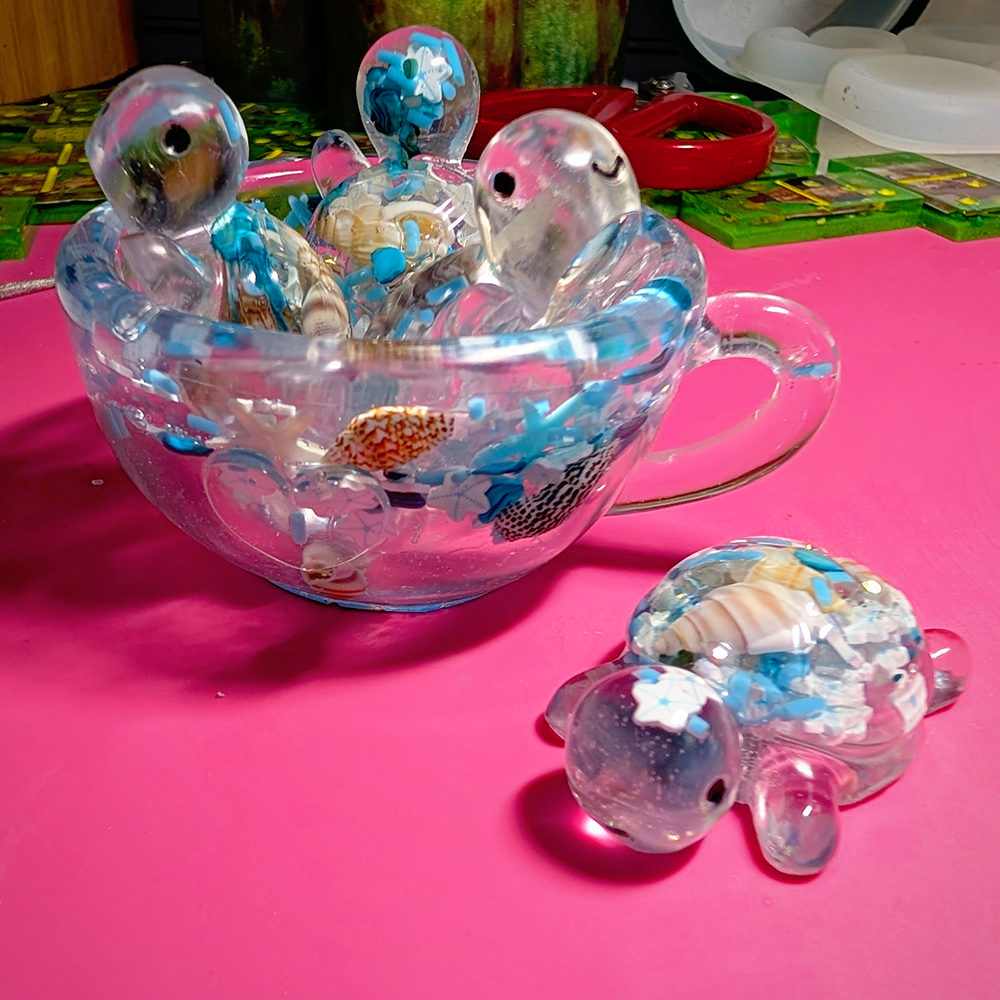
I Did Not Fail; Their Version of Me Was Impossible
For most of my life, I believed that if I tried hard enough, I could eventually become the person everyone expected me to be:
- She could tolerate every environment.
- She could adapt to every change.
- She could meet every demand without becoming overwhelmed.
- She could work, drive, create, care for others, manage a household, navigate complicated systems, and solve each new crisis without needing meaningful support.
- She would never be too sensitive, too exhausted, too confused, too emotional, or too much.
- She would also never need too much.
Whenever I failed to become that person, I assumed the problem was insufficient effort, so I tried harder.
I learned more.
I became more capable.
I pushed myself through fear, exhaustion, sensory distress, and tasks that consumed far more energy than anyone realized.
I attempted to eliminate every possible reason another person might have for calling me lazy, difficult, selfish, immature, or unwilling.
But the standard kept moving.
Every accomplishment became proof that I could withstand the next demand.
Every time I forced myself beyond my limits, the extraordinary effort was forgotten and the result became my new baseline.
What I survived yesterday became what I was expected to repeat tomorrow.
Nobody could see that the person they admired for being resilient was becoming progressively less able to survive what resilience required.
Eventually, my body could no longer maintain the arrangement.
Chronic autistic burnout did not arrive because I suddenly stopped caring or trying.
It emerged after years of caring, trying, adapting, and overriding myself far beyond what was sustainable.
The collapse was not evidence that I had failed to become strong enough; it was evidence that the version of me everyone demanded had never been humanly possible:
- She had no nervous system.
- She had no finite energy.
- She carried no trauma.
- She required no safety, consistency, recovery, or care.
- She existed to reassure other people that I was fine and to keep my needs from interfering with what they wanted from me.
No real person could live that way indefinitely.
Recognizing this has required me to reconsider much of what I was taught about myself:
- Perhaps I was not weak because experiences affected me deeply.
- Perhaps I was not lazy because my energy ran out.
- Perhaps I was not selfish because I wanted some portion of my life to belong to me.
- Perhaps I was not immature because I needed support.
- Perhaps the supposedly reasonable expectations were unreasonable because they depended upon ignoring the person expected to fulfill them.
The family system trained me to interpret its limitations as truths about my character.
If I felt alone in a room full of relatives, I assumed I was incapable of connection.
If nobody responded compassionately to my needs, I assumed the needs were unacceptable.
If maintaining relationships required continual self-erasure, I assumed erasing myself was what love demanded.
But a family’s inability to know me does not mean I am unknowable.
Another person’s refusal to believe my disability does not make it unreal.
A system’s failure to accommodate me does not prove I am incapable of contributing.
The loneliness, exhaustion, and disconnection were not merely descriptions of who I was; they also revealed the conditions in which I was trying to survive.
This does not mean every difficulty came from other people or that an accommodating world would make autism disappear; I would still be autistic.
I would still have sensory sensitivities, uneven abilities, limited energy, and needs that differ from those of many people around me.
Support would not make me non-disabled.
It would mean I no longer had to be harmed unnecessarily for being disabled.
There is grief in understanding this.
I cannot recover the childhood in which I might have been recognized and supported.
I cannot reclaim all the energy spent masking, monitoring, proving, and pushing.
I cannot know what my life might have become if someone had looked beneath my behavior and asked what I was experiencing.
A late diagnosis can explain the past without changing it.
It can also expose how many judgments were built upon a false premise: that I was a neurotypical person refusing to function properly rather than an autistic person struggling without recognition or accommodation.
I am now trying to build a life from the truth instead of continuing to organize it around that misunderstanding.
The truth is not that I can do nothing.
It is not that I can do everything.
It is that I have genuine abilities and genuine disabilities; my capacity changes, and my needs are real.
What I accomplish matters, and so does what accomplishing it costs me.
- I am allowed to make decisions using all of that information.
- I am allowed to stop treating pain as proof that I should push harder.
- I am allowed to question expectations that require my continual deterioration.
- I am allowed to grieve the person I might have been while becoming curious about the person who survived.
Chronic autistic burnout has taken much from me, but it has also made one truth impossible to ignore: I cannot recover by becoming more efficient at abandoning myself.
Healing cannot mean reconstructing the mask, recharging just enough to resume the same impossible performance, or convincing everyone that nothing has changed.
It must mean learning to live without measuring my humanity against a person who never truly existed.
I did not fail to become her; I survived trying.
Now I want the opportunity to discover who I am when survival no longer requires pretending to be someone else.
 Jessica Carey
To Be Known Instead of Managed
What would it mean to be truly known?
It would not require another person to understand every feature of autism perfectly.
It would not mean that every need could be met, every difficult experience prevented, or every limitation removed.
It would begin with something much simpler: believing that I have meaningful knowledge about my own life.
A person who wants to know me does not decide in advance what I should be able to tolerate and then judge me according to that expectation.
They do not interpret every limit as refusal, every disagreement as defiance, or every need as evidence of immaturity.
They ask.
They listen.
They allow the answer to be different from the one they expected.
That is the difference between support and management.
Management asks: how can I make this person behave in the way I consider appropriate?
Support asks: what is this person experiencing, and what might help?
Management disguises decisions, pressures someone into compliance, and treats resistance as a problem to overcome.
Support provides honest information, respects agency, and recognizes that an autistic adult still has the right to make choices other people would not make.
Management assumes the person must continually adapt to the environment.
Support also asks what can change in the environment.
This does not mean autistic people can avoid every demand, uncertainty, responsibility, or uncomfortable experience.
Life contains changes that cannot always be announced far in advance.
Resources are limited.
Other people have needs and boundaries, too.
But hardship does not have to be deliberately maximized before our efforts count.
A change that cannot be avoided may still be communicated with kindness.
A difficult task may be approached with clarity, preparation, flexibility, and recovery time.
A limit can be taken seriously even when nobody has the power to remove it completely.
Grace does not solve everything.
It can keep an already difficult experience from becoming needlessly harmful.
I needed that grace as a child.
I needed adults who did more than correct my behavior.
I needed people willing to wonder what the behavior communicated.
I needed someone to recognize that a child who appeared difficult might be distressed, that a child who withdrew might be overwhelmed, and that a child who learned to ask for almost nothing might not actually need nothing.
I needed a home where knowing everyone else was not the price of remaining unknown myself.
I cannot return to that childhood and place those people around me, but I can reject the beliefs their absence created.
I can stop assuming that my needs make me unlovable.
I can stop treating my body as an adversary that must be defeated.
I can recognize that the quiet parts of me did not disappear simply because nobody made room for them.
I can practice listening to myself with the curiosity I needed from others.
That does not remove the need for community.
Self-understanding is not a substitute for safe housing, disability accommodations, financial stability, competent professional support, or relationships in which care flows in more than one direction.
People harmed by neglect should not be told to become entirely self-sufficient as the solution to having been left alone.
We heal partly through experiencing something different.
A professional can ask what communication method is accessible instead of insisting that everyone use the same one.
A friend can believe that an activity is exhausting even if it would be easy for them.
A workplace can measure whether a schedule is sustainable, not merely whether an employee can endure it temporarily.
A family can become curious about a person’s interests instead of requiring that person to manufacture evidence of closeness.
A community can recognize that competence and disability live inside the same human being.
None of these acts is spectacular. They are ordinary forms of respect.
Yet their absence can shape an entire life.
The systems surrounding disabled people often focus on making us easier to manage: more compliant, more productive, less visibly distressed, and less disruptive to established expectations.
Success is measured by how closely we approximate people whose minds, bodies, resources, and histories differ from ours, but a person should not have to become less visible to become more acceptable.
Autistic people do not need to be treated as children who cannot know their own minds; we also do not need to be celebrated as extraordinary exceptions whose intelligence supposedly allows us to transcend disability.
We need room to be complicated human beings.
We need our strengths to be recognized without having them weaponized against our struggles.
We need our support needs acknowledged without having our adulthood taken away.
We need lives in which rest is not shameful, creativity is not frivolous, and worth is not calculated according to how much labor can be extracted before we collapse.
Most of all, we need people to stop confusing the version of us they find convenient with the person standing before them.
For much of my life, people knew the roles I played:
- They knew the child who tried not to create problems.
- They knew the capable person who kept going.
- They knew the writer, artist, student, helper, problem-solver, and survivor.
- They knew what I could provide, what they could expect, and what they wanted me to become.
Now I am trying to know the person beneath all of that:
- She is autistic.
- She is intelligent and disabled.
- She is capable of meaningful things and limited in meaningful ways.
- She is profoundly exhausted.
- She is still creative, perceptive, hopeful, and alive.
- She does not need to earn the right to exist by functioning as though nothing ever happened to her.
Perhaps home begins there—not with a performance of closeness, but with the freedom to tell the truth and remain.
The person beneath the mask was never gone; she has just been waiting for somewhere safe enough to be known.
 Jessica Carey
Want even more content about creativity and art?
Be sure to check out all of our creative chronicles!
If you'd like to see examples of my work, you can find some of my art and creations at Redbubble and Gumroad!
Looking to learn more about my recent journey?
Check out some of these articles:
-Hidden Gems for St. Louis Artists
-Hidden Gems for Autistic & Neurodivergent Adults
-Learning What Love Was Supposed to Feel Like
-The Difference Between Resting and Giving Up
 Jessica Carey