

The Darkness Was Not Imaginary
Since September 2025, I have been living through one of the darkest seasons of my life.
I fled a family system marked by neglect, mistreatment, abuse, and control, but escaping did not create safety.
It left me without a permanent home, separated from many of my belongings, and carrying financial damage I did not create alone.
At the same time, I have been trying to survive chronic autistic burnout after spending most of my life undiagnosed.
My body and mind had already been pushed beyond sustainable limits.
Yet nearly every system I encountered seemed to require more energy, more driving, more explaining, more paperwork, and more proof that I was struggling enough to deserve help.
The people and programs meant to reduce the burden have not always done so.
My experience with case management did not merely fail to help; it caused additional harm.
My case manager repeatedly assumed she knew what I needed instead of listening to what I told her.
She scheduled appointments according to what worked for her without checking my availability or whether the appointments were necessary.
She attempted to begin a disability application while incorrectly stating that I was not working, even though I had told her multiple times that I worked part-time.
I had also already begun the disability process months earlier with my Easterseals family navigator and had met with the disability doctor.
None of that stopped her from proceeding according to the version of my life she had constructed.
The dynamic was painfully familiar.
Someone else positioned herself as the knowledgeable adult and professional expert.
I became the supposedly incompetent person who needed to be directed.
What I actually said about my life carried less authority than what someone who barely knew me assumed about it.
It felt like my family all over again—only this time, it was happening inside a system that existed to provide support.
Meanwhile, everything required driving.
I am deeply grateful to have somewhere free to stay in O’Fallon.
At the same time, appointments, services, limited work, and other necessities can be far away, creating additional financial and neurological costs.
Gasoline kept approaching four dollars per gallon.
My income was extremely limited.
My debt continued growing.
Every trip required money I could not comfortably spend and energy my burned-out nervous system did not have.
People kept telling me to work harder, push through, and continue functioning.
I had already been pushing through for years.
That was part of how I reached this state.
There have been many moments when “keep going” did not sound like encouragement. It sounded like another command to produce energy that no longer existed.
Faith can become complicated in a season like this.
People sometimes speak about trusting God as though trust should make fear, grief, anger, or exhaustion disappear.
They offer spiritual reassurance in ways that can feel like another refusal to witness what is actually happening.
But naming darkness is not the same as surrendering to it.
Faith does not require me to call abuse a lesson, systemic abandonment an opportunity, or preventable suffering part of a beautiful plan.
I do not believe God needs people to be neglected, impoverished, homeless, or pushed into collapse to prove that we trust Him.
The darkness was real, and it is still real.
I do not yet have stable housing.
My financial situation has not been repaired.
Chronic autistic burnout has not disappeared.
The service systems surrounding me have not suddenly become accessible, responsive, or safe.
And yet, something has begun to feel different.
Not fixed.
Not certain.
Not transformed beyond recognition.
But different.
Small forms of help have been appearing close together.
A resource center provided a gas card.
The library notified me that I had unexpectedly won a grocery gift card from the summer reading program.
Easterseals accepted me into a program that may help me move toward developmental-disability services.
My family navigator offered to travel to where I am staying so that, for once, I would not have to make another long drive.
Pastels, yarn, and other creative materials have also begun arriving for the work I am building, while local businesses have offered resources that might otherwise have been discarded.
I did the research and outreach that opened those conversations.
These opportunities did not emerge without effort, but effort alone cannot control who responds, which doors open, or when an idea finds someone willing to help it grow.
Recently, more people have begun saying yes.
I was selected as one of twenty-five artists for an artist program, where I will receive professional guidance for developing my creative work.
I was also accepted into Homeschooled, a faith-based community centered on people building businesses, families, ministries, and communities together.
None of these opportunities guarantees financial security or removes the urgent problems in front of me, but they make it harder to believe that nothing is moving.
For a long time, it felt as though every seed I planted disappeared into barren ground.
I kept researching, writing, creating, reaching out, applying, and asking questions while receiving very little evidence that any of it could become a stable life.
Now, small green shoots are starting to appear.
A material arrives.
A door opens.
Someone offers to come to me.
A community makes room.
A possibility that seemed closed becomes worth investigating again.
The darkness had been telling me that I was alone, that nothing I built would matter, and that help would never arrive.
Then, within that same darkness, small lights began answering.
 Jessica Carey
Mercy in Gallons, Gift Cards, and Small Openings
The night before these small lights began gathering, I found a gas station charging $3.39 per gallon.
Most stations I had passed were charging between $3.89 and $3.99.
To someone with stable income, the difference might not seem particularly significant; it could be dismissed as a few dollars saved during an ordinary stop.
But there is nothing insignificant about a few dollars when every necessity is being placed onto debt.
Gas is not optional when appointments, services, temporary housing, and limited work are scattered across different parts of the region.
I cannot reach the organizations that claim to help me without spending money and energy to get there.
The farther away I have to stay, the more obtaining help costs before anyone provides it.
Finding the lower price felt like one small burden removed.
When I passed the same station the following morning, the price had already risen to $3.59; the timing became part of the gift.
I had not simply found less expensive gas somewhere that always charged less.
I had arrived during a brief window when it cost even less than it would a few hours later.
That morning, I attended an appointment at a resource center; the meeting did not solve my circumstances, but I left with a $20 gas card.
Twenty dollars cannot repair the financial damage created by years of family abuse, reduced capacity, homelessness, and rising costs.
It cannot eliminate all the driving required to reach help, but it can purchase enough fuel to make another necessary trip.
That matters.
Later, I stopped at the library because I had received an unexpected email; the summer reading program had ended approximately a month earlier, and I had assumed that I had not won anything.
Instead, the library notified me that I had won a $100 grocery gift card.
Again, it was not enough to create lasting security.
It was enough to buy food I would not have to place onto a credit card.
Help does not become meaningless because it is temporary.
When resources are scarce, one expense removed creates space around several others.
A grocery card may preserve money for gasoline.
A gas card may make an appointment accessible.
A lower price may allow the remaining assistance to stretch farther.
Small amounts can move through an entire survival budget.
The same day also brought a different kind of help.
I learned that I had been accepted into Easterseals’ ISLA/Pre-ISLA program, and staff offered a more hopeful understanding of my possible eligibility for Missouri developmental-disability services.
I had repeatedly heard that the disability needed to exist before age twenty-two, as though my late autism diagnosis automatically excluded me.
But the relevant distinction may be between when a disability manifested and when someone finally diagnosed it.
Autism did not begin when I was diagnosed at 33.
I was born autistic; the traits, limitations, sensory experiences, and developmental differences existed long before anyone recognized what they meant.
A late diagnosis may make the evidence more difficult to assemble, but it does not rewrite when the disability began.
That clarification did not guarantee approval.
It reopened a door other people had encouraged me to consider closed.
Sometimes hope arrives as better information.
My family navigator then offered to come to the place where I am temporarily staying so we could sort through paperwork and determine next steps.
For once, I would not have to drive across the region to receive support.
Someone was willing to bring help closer to me.
That may sound like an ordinary scheduling decision.
After so many systems had expected me to absorb the cost of their convenience, it felt like care.
Another change arrived through the family for whom I work.
They planned to take the following day off, which meant I would not need to make a long drive for only an hour or two of work.
That news carried two truths: I would lose a small amount of income at a time when I desperately needed every dollar while I also genuinely needed the rest.
My body had been pushed through meetings, driving, emotional pain, uncertainty, and continual transitions.
Chronic autistic burnout does not disappear because income is necessary.
The day without driving would not restore everything I had spent, but it would stop one more withdrawal from an already depleted account.
Not every mercy arrives without complication.
Sometimes relief and loss share the same doorway.
Then my friend, Jamie, gave me a small sparkly blue ghost made from resin.
I had not requested it; I was not expecting it.
It did not solve anything practical.
It was simply cute, blue, handmade, and given to me.
That mattered, too.
When life is dominated by applications, bills, appointments, eligibility requirements, and the need to prove hardship, an unexpected object offered only to create joy can feel almost sacred.
It asks nothing.
It does not evaluate whether you qualify.
It does not require you to describe your trauma in sufficient detail.
Someone thought of you and placed something delightful into your hands.
By the end of the day, my circumstances remained precarious.
I was still homeless.
I was still in considerable debt.
I was still living with chronic autistic burnout.
I still did not know which services would ultimately approve me, where I would live, or how I would build sustainable income.
But I had less expensive gas, help purchasing more of it, money for groceries, a newly opened service pathway, a navigator willing to come to me, a day without another long drive, and a tiny blue ghost sparkling beside me.
No single event was rescue.
Together, they interrupted the belief that nothing would ever arrive.
None of it was enough to rebuild my life.
For that moment, it was enough to help me breathe.
 Jessica Carey
The Sign That Finally Turned Green
For the month I had been staying in O’Fallon, I repeatedly passed an electronic air-quality sign, which was almost always orange.
Reduce travel and carpool.
The message felt painfully disconnected from the life I was actually living.
I would have loved to reduce my travel.
Driving is exhausting during chronic autistic burnout, especially when every trip requires transitions, navigation, traffic, sensory input, social interaction, and recovery time I may not have.
But the services I needed were rarely close to where I was staying.
Organizations expected me to drive to their offices.
Appointments were arranged around other people’s locations and schedules.
Limited work required additional travel.
Even trying to obtain help often meant spending more money on gas and drawing more energy from a nervous system already operating beyond its limits.
The sign told people to travel less as though everyone had that choice.
On this particular day, I had already spent hours moving between meetings, appointments, errands, and conversations.
I was carrying physical exhaustion, financial distress, uncertainty about housing, and the pain of another interaction in which someone who claimed to know me had treated me without compassion or respect.
My therapist had been furious when I described what was said.
I was hurt, angry, and profoundly tired of people insisting that their assumptions about me mattered more than my lived experience.
Yet the day had also contained help.
I had purchased gasoline at the right moment.
A gas card and grocery card had reached me.
A possible path toward disability services had reopened.
My navigator had offered to come to me.
Another long drive had been removed from the following day.
A tiny blue ghost had appeared simply to make me smile.
As I finally drove back toward the place where I was staying, I passed the air-quality sign again.
For the first time since I had begun seeing it, the sign was green.
Breathe easier.
The words were not complicated.
They were reporting the air.
But after everything that had happened, they reached me as something more.
Breathe.
You have made it through this day.
You do not have to solve the entire future before you sleep.
You do not have to keep pressing the accelerator simply because other people cannot see that the tank is empty.
Help has not fully arrived, but abandonment is not the only thing happening.
I cannot "scientifically prove" that God or the angels changed an air-quality sign to communicate specifically with me.
Faith does not require me to pretend certainty where I do not possess it.
There may be an ordinary explanation for every event that felt spiritually meaningful.
The gasoline price changed because prices change.
The cards came through programs and people.
The program acceptance followed an application.
The sign turned green because the air quality improved.
But something does not have to violate the laws of nature before it can feel sacred.
Perhaps grace often reaches us through ordinary mechanisms: another person’s decision, a message delivered at the right time, a resource we did not expect, a moment whose meaning extends beyond its practical explanation.
The question is not always whether an event can be scientifically or logically explained.
Sometimes the question is what it awakens in us.
That sign did not tell me exactly what would happen next; it did not promise that my disability application would be approved, that housing would appear, that my debt would disappear, or that every opportunity would become what I hoped.
It gave me no timeline.
It simply interrupted the demand to keep bracing for disaster.
For one moment, I could imagine that the next season might contain something other than more loss.
I could imagine that perhaps the scattered help was not meaningless.
Perhaps the small openings were beginning to form a path.
Perhaps I had reached a moment of transition—not a completed rescue, but the first place from which rescue no longer felt entirely impossible.
I had been holding my breath through nearly a year of instability.
The sign did not tell me the struggle was over.
It told me there was air.
And for that moment, I let myself breathe it.
The Gospel of “Try Harder”
That morning, MercyMe’s song Best News Ever came on the radio.
I had heard it before, but certain words reached me differently that day.
The song begins by naming messages that are often presented as wisdom:
- Work harder.
- Keep pushing.
- Make sure your goodness is good enough.
- Do not ask for help.
- Earn what you receive.
- If you cannot keep up, accept being left behind.
These messages are not limited to religion; they are woven through families, workplaces, social services, healthcare, and the broader culture.
They are repeated so often that they begin to sound like universal truth:
- If you are struggling, try harder.
- If you are exhausted, become more disciplined.
- If you need support, prove that you have done everything possible without it.
- If your body can no longer sustain the demand, find a way to silence the symptoms and return to producing.
There is always another standard to meet before rest, safety, or assistance becomes permissible.
That morning, the song’s rejection of those messages felt inseparable from everything I had been experiencing.
People had repeatedly told me to push through chronic autistic burnout as though pushing through were a new strategy I had never considered.
They could not see that pushing through was how I had survived most of my life.
I pushed through sensory overwhelm because my distress inconvenienced other people.
I pushed through exhaustion because needs were treated as weakness.
I pushed through work, school, driving, family responsibilities, and emotional pain because stopping never felt safe.
I kept functioning until the ability to keep functioning began to disappear.
Then people looked at the collapse and prescribed more effort.
Society often treats exhaustion as a personal moral failure rather than information about a body, life, or system that has become unsustainable.
Hard work is not inherently harmful.
Effort can build skills, relationships, art, businesses, communities, and lives.
Some of the small openings appearing around me grew from work I chose to do: researching organizations, writing messages, applying to programs, developing ideas, and continuing to create when I could.
But effort and self-destruction are not synonyms.
Work becomes harmful when a person is expected to override every signal of distress indefinitely.
Perseverance stops being virtuous when it is demanded by people who will not share the burden, change the conditions, or acknowledge what continued endurance is costing.
There is nothing spiritually pure about preventable suffering for suffering’s sake.
Yet many people have absorbed a theology in which help must be earned through sufficient pain, productivity, obedience, or self-denial.
Grace is treated as the prize waiting at the end of perfect effort.
That does not feel like grace to me: if grace must be earned, it is no longer grace.
The Christian story is not about humanity finally becoming good enough to deserve love; it is about love reaching humanity when human effort could not bridge the distance.
That is why the MercyMe song’s message struck me so deeply.
The cross does not represent a cosmic performance review.
It does not teach that the exhausted, disabled, impoverished, or traumatized must achieve enough independence before becoming worthy of care.
It interrupts the entire economy of deserving.
That does not eliminate responsibility or mean that every desire will be fulfilled without effort.
It does not promise that faith will erase disability, debt, homelessness, grief, or the consequences of other people’s choices.
It means human worth is not waiting at the end of an impossible assignment.
Help is not shameful.
Need is not evidence of spiritual failure.
Rest is not a reward reserved for those who have finished everything.
Our value is not measured by how much can be extracted from us before we break.
I do not believe the Divine looks at someone barely holding themselves together and responds with the same contemptuous instruction society offers:
Try harder.
Work more.
Need less.
Return when you have proven that you deserve to survive.
I believe grace moves in the other direction.
It meets people inside their limits.
It enters through another person’s generosity, a resource arriving at the right time, a burden shared, a door opened, or a moment of rest that was not earned through collapse.
Sometimes grace may also strengthen us to act.
It may give us the courage to send the message, submit the application, tell the truth, leave what is harming us, or begin building something small.
But receiving grace is not payment for having acted perfectly.
My recent opportunities did not appear because I finally became good enough.
I made sincere efforts, but I did not control the responses.
I could ask, apply, research, and create.
I could not force another person to answer kindly, make room, offer materials, share knowledge, or say yes.
Perhaps grace is sometimes what meets effort without turning effort into the price of love.
That matters because I am still living in a world that keeps score.
Systems ask whether I worked enough quarters, submitted enough evidence, fit the correct definition, contacted the correct office, completed the correct form, and suffered in the officially recognized way.
Some requirements serve necessary purposes; resources are finite, and programs need ways to make decisions.
But administrative eligibility should never become a verdict on human worth.
Being excluded from a program does not mean a person did not deserve safety.
Being unable to work does not mean a person stopped contributing value.
Needing help does not make someone less responsible, faithful, intelligent, or worthy.
The world may continue telling us to prove ourselves through endless exertion.
I am beginning to hear another message beneath it.
You have already pushed.
You have already carried more than anyone should have carried alone.
You are allowed to ask.
You are allowed to receive.
You are allowed to rest before everything is repaired.
That may be the best news of all.
 Jessica Carey
Perhaps the Seed Was Never the Problem
The same day I was accepted into Homeschooled, the program’s creator released a video about debt, development, community, and what people have been given to build.
One image stayed with me.
A seed can contain the potential to become an enormous tree and still fail to grow when it has never been given suitable soil.
The absence of growth does not always prove that something is wrong with the seed.
Sometimes the conditions could not support what it carried.
That idea touched a much older wound.
For most of my life, I was surrounded by people who expected outcomes without providing what made those outcomes sustainable.
I was supposed to succeed, remain useful, manage responsibilities, and make the family look functional.
But there was little safety, warmth, encouragement, practical support, or curiosity about who I was.
When I struggled, the conclusion was that I needed to try harder.
When I succeeded, the success became evidence that I did not need help.
Nobody questioned the soil.
 Jessica Carey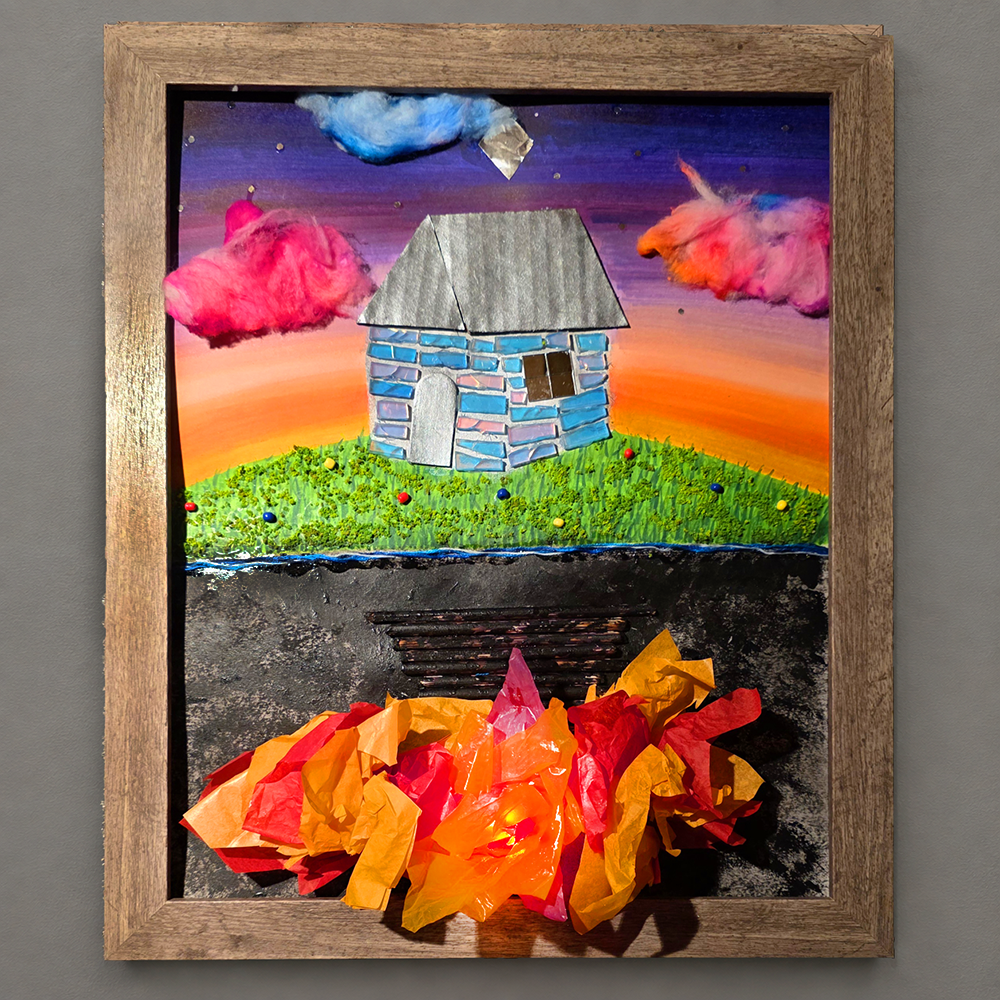
I carried that interpretation into adulthood.
When my writing, art, education, or ideas did not create immediate stability, I assumed I was the problem.
Perhaps I was not talented enough, disciplined enough, strategic enough, or capable of turning what I carried into something useful.
I had ideas but limited energy with which to pursue them.
I could imagine projects, resources, articles, workshops, and creative communities while struggling with basic daily tasks.
The distance between what I could envision and what I could physically sustain became another reason to question myself.
But recently, people and organizations have begun responding differently.
A $100 certificate from an art-supply company gave me materials I could not have afforded.
A polymer-clay company sent products for experimentation and writing.
A recycling company donated electrical wire for creative reuse.
A framing shop offered mat board, frames, and other remnants—and invited me to return.
Paper companies sent swatches and samples.
Woodworkers, flooring businesses, tile stores, sign shops, and stone fabricators offered access to materials that might otherwise become waste.
A company offered knitting tools.
Complimentary PanPastel materials arrived.
Yarn arrived, too.
Some of these opportunities are complete.
Others remain conversations, invitations, or possibilities that may develop later.
They are not all guaranteed partnerships, and donated materials do not automatically become income, housing, or a sustainable organization.
But together, they reveal something.
Ideas I had been carrying privately began finding people who could recognize their value.
The response was not simply: “Here are free things.”
It was:
- Yes, this material could have another life.
- Yes, artists could use what we no longer need.
- Yes, your experiments and writing could introduce people to possibilities.
- Yes, a creative-reuse network might be worth building.
- Yes, you may return.
- Yes, we would like to see what you create.
I had to participate in opening those doors.
I researched. I wrote messages. I explained my work and the larger vision behind it.
I asked people and organizations directly instead of assuming they would reject me.
That effort matters.
But I could not manufacture another person’s generosity.
I could not force a company to take my work seriously, a local business to save materials, or a stranger to imagine how our goals might overlap.
I planted questions.
Other people chose to answer them with possibility.
Perhaps grace does not always arrive instead of effort.
Sometimes it arrives through the meeting of effort, timing, relationship, and another person’s freely offered yes.
That does not mean every unanswered message represented the wrong soil or that every successful response was divinely ordained.
It means I am beginning to gather evidence that rejection, scarcity, and isolation were never the only possible responses to what I carried.
The same pattern may be emerging through community.
I was selected as one of twenty-five artists; the art program cannot eliminate burnout or stabilize my finances overnight, but it can give me professional guidance, information, and relationships as I consider how my creative work might develop.
Homeschooled offers another potential kind of soil: a faith-centered community of people trying to build businesses, ministries, families, and projects without pretending they must create everything alone.
Being accepted into a community does not automatically make that community safe or ensure that it will meet every need.
Trust still develops through experience.
Opportunities must become real through what people actually do, not only what they promise.
But an opening is still an opening.
The video spoke about not despising small beginnings.
That phrase feels especially relevant when the visible beginning looks nothing like the future you hope to build.
A box of wire is not a creative-reuse center.
A stack of paper samples is not a sustainable nonprofit.
A professional-development program is not a completed career.
One supportive contact is not an entire community.
A sparkly resin ghost is not a home.
But a beginning does not have to resemble the finished thing before it matters.
What is in my hands right now may be small, incomplete, scattered, and uncertain. It may still carry information about what could grow.
Perhaps the years of limited visible progress did not prove that I had nothing valuable to offer.
Perhaps some of my abilities were planted in environments that extracted from them without nurturing them.
Perhaps chronic autistic burnout is not evidence that the seed failed, but evidence of what happens when growth is demanded without adequate light, water, space, or rest.
And perhaps these recent openings are not a guarantee that every struggle is ending.
They may simply be the first handfuls of better soil.
For now, that is enough to make me curious about what might still be able to grow.
 Jessica Carey
Gratitude Does Not Excuse Broken Systems
I am grateful for every form of help that reached me.
I am grateful for the lower gas price, the gas card, the grocery card, the donated art materials, the navigator willing to travel, the professional-development opportunity, and the people who offered information or encouragement.
Gratitude does not require me to pretend these things solved problems they could not solve.
A $20 gas card does not make it reasonable for service providers to continually require an unhoused, disabled person to drive long distances without offering transportation assistance or more accessible alternatives.
A $100 grocery card does not make food insecurity acceptable.
I am deeply grateful to have won it; I can also recognize that nobody’s ability to eat should depend upon winning a summer reading drawing.
A day without driving gives my nervous system needed rest, but it does not change the fact that losing even one or two hours of work reduces income I already cannot afford to lose.
Donated art supplies create possibility, yet they do not pay for stable housing, healthcare, transportation, or the time and support required to build a sustainable creative life.
A promising interpretation of disability eligibility gives me reason to continue.
It does not undo the years I lived without diagnosis or guarantee that the system will recognize retrospective evidence fairly.
Both truths can exist.
The help matters.
The larger need remains.
People sometimes treat gratitude as an agreement to stop speaking about what is wrong.
If someone receives any kindness, assistance, or temporary relief, they are expected to focus exclusively on the positive.
Do not criticize the program that gave you something.
Do not mention the barriers surrounding the help.
Do not ask why assistance required so much exhaustion to obtain.
Be grateful.
I am grateful.
I am also paying attention.
I can appreciate a navigator who comes to me while questioning why so many other professionals automatically expect me to absorb the distance.
I can thank a resource center for fuel while asking why accessing help consumes so much of it.
I can celebrate hopeful information while documenting the misinformation, assumptions, and disregard that made the path harder.
I can value support without surrendering my right to describe its limits.
Gratitude and accountability are not enemies.
Honest gratitude recognizes what something gave.
Accountability recognizes what it could not give—and what should never have been missing in the first place.
This distinction also matters spiritually.
Faith can be used to comfort people in suffering; it can also be used to keep them quiet within conditions that should change.
Someone is harmed, and they are told to forgive before anyone stops the harm.
Someone lacks necessities, and they are told to be grateful for what they have.
Someone collapses under impossible demands, and they are told that God will give them strength to continue meeting those same demands.
Someone speaks about injustice, and they are accused of lacking faith.
That is not the kind of spirituality I want to practice.
I do not believe gratitude requires calling deprivation sufficient.
I do not believe forgiveness requires continued access to the person who caused harm.
I do not believe faith requires silence about injustice.
I do not believe God gives us small mercies so we will become more cooperative with systems that abandon people.
Perhaps grace helps us survive what should never have been required of us.
Justice asks why it was required at all.
The gas card matters because transportation costs are real.
The grocery card matters because food is necessary.
The day of rest matters because a human nervous system has limits.
The donated materials matter because creativity needs resources.
The new communities matter because people cannot develop entirely alone.
These are not signs that human beings should accept less; they reveal what becomes possible when a burden is shared.
Imagine if help did not depend upon a fortunate price, a contest drawing, an unusually accommodating individual, or the persistence to contact dozens of organizations while severely burned out.
Imagine if accessible communication, transportation assistance, safe housing, accurate information, creative opportunity, and respectful support were built into the systems people encountered.
Imagine if someone did not have to reach collapse before their limits became credible.
My gratitude makes me want more people to experience relief—not fewer people to ask for it.
A blessing does not become less meaningful when it reveals how widely that blessing is needed.
The individual people who helped me are not responsible for solving every structural problem.
A library cannot repair the housing system through one grocery card.
A resource worker cannot redesign every disability program with one meeting.
A business offering materials is not obligated to finance an artist’s entire life.
But society collectively makes choices about what it funds, whom it accommodates, whose account it believes, and how difficult receiving help must become.
Those choices can change.
Small mercy helps a person survive the broken system.
Justice asks why survival depended upon luck.
I want to honor both.
I can receive what arrived with genuine gratitude.
I can also continue telling the truth about what has not arrived—and why no one should have to fall so far before finding something that helps them breathe.
 Jessica Carey
Grace Does Not Always Look Like Rescue
When people speak about divine help, they often tell stories with unmistakable endings.
The illness disappears.
The financial crisis ends.
A safe home becomes available.
The impossible door opens, and life divides neatly into before and after.
I believe those forms of rescue can happen. I also know that they have not happened for me yet.
I am still homeless.
I am still living with the consequences of family abuse and financial harm.
I am still trying to navigate systems that have too often added confusion and distress instead of providing stability.
My body and mind are still struggling under the accumulated weight of chronic autistic burnout.
None of the small mercies I received erased those realities.
They did not eliminate my debt, create permanent security, provide a home, or guarantee what would happen next.
And yet, they mattered.
Perhaps grace does not always arrive first as rescue from the entire situation.
Sometimes it arrives as enough strength, provision, beauty, or companionship to survive the next part of it.
It may look like someone bringing help to me so I do not have to make another exhausting drive.
It may be accurate information after months of conflicting answers.
It may be a burden unexpectedly removed from one day.
It may be a small blue ghost, made by a friend and offered with affection.
It may be evidence that my work and ideas can find support outside the family system that repeatedly treated them—and me—as though they had little value.
It may simply be a sign saying: “Breathe easier,” appearing on the exact evening when breathing easier feels impossible.
These moments do not provide certainty about the future.
They are not contracts promising that everything will now unfold the way I hope.
They do not require me to pretend that inadequate help is enough or that serious problems have become insignificant.
They give me something smaller and, for the moment, more reachable: a reason not to declare the story over while I am still living inside it.
Maybe the message was not: “Everything is fixed.”
Maybe it was: “You are not facing everything entirely alone.”
That distinction matters spiritually because faith can become another cruel measurement if we are not careful.
Receiving an unexpected kindness is not proof that one person is more faithful or favored than another.
Continuing to suffer is not evidence that someone failed to pray correctly, overlooked a blessing, or did not believe hard enough.
People experiencing devastation should not be made responsible for finding a beautiful lesson inside every wound.
They should not have to turn trauma into inspiration before others will care about what happened to them.
I do not believe suffering becomes sacred merely because something meaningful can eventually grow alongside it.
The abuse was not necessary because it taught me something.
Neglect was not loving because it made me resourceful.
Broken systems are not good because kindness occasionally reaches people through their cracks.
Grace does not justify the wound; it helps us remain human while the wound is tended—and justice asks why the wound was allowed to deepen for so long.
That is why I can receive these small signs without romanticizing the circumstances that made them so desperately important.
I can be grateful for what reached me while continuing to name the conditions that made such help necessary.
Gratitude does not require me to call deprivation abundance.
Faith does not require me to call mistreatment a blessing.
Hope does not require me to deny how frightened and exhausted I am.
Perhaps grace, at least in this season, is the permission to hold all of those truths at once.
My life is not secure yet.
Help has begun to appear.
The systems surrounding me remain deeply flawed.
Some people have chosen to listen.
I am profoundly tired.
Something in me is still reaching toward possibility.
That may not be the dramatic rescue story people prefer to tell, but it is honest.
And sometimes grace begins there—not with an instant escape from the darkness, but with enough light to see that the darkness is not the only thing present.
 Jessica Carey
For Tonight, Breathe Easier
I do not know exactly what comes next.
I do not know whether the programs I have entered will lead to the stability I need, whether the right housing will become available, or how long recovery from chronic autistic burnout will take.
I do not know which creative opportunities will grow into something lasting or which systems will finally provide meaningful support.
My life is still filled with uncertainty.
But uncertainty is not the same as hopelessness.
For a long time, nearly every message around me seemed to say the same thing:
Push harder.
Work more.
Need less.
Stop struggling.
Earn your right to survive.
When I could no longer meet those demands, people often treated my collapse as a failure of effort rather than the predictable result of being forced beyond my limits for years.
Then, in the middle of an especially grueling stretch, other messages began appearing.
A lower gas price when every dollar mattered.
A grocery card I no longer expected to receive.
A navigator willing to come to me instead of requiring another exhausting drive.
A small blue ghost made by a friend.
Boxes of creative materials arriving at the door.
Programs opening paths toward support, knowledge, and community.
A song reminding me that grace is not something we earn by grinding ourselves into dust.
And finally, a green sign that said: breathe easier.
Perhaps none of these moments can tell me what the future holds.
But together, they interrupted the story despair had been telling me—the story that I was entirely alone, that nothing would ever change, and that every remaining door had already closed.
Something is moving, even if I cannot yet see its full shape.
There are people I have not met yet who may understand what I am building.
There are resources I have not discovered.
There are ideas still waiting for the right conditions.
There may be forms of home, community, purpose, and support that I cannot imagine clearly from where I am standing now.
A seed beneath the soil can look like nothing is happening.
A person in burnout can look unproductive while using tremendous energy simply to remain alive.
A life in transition can look ruined when it is also, quietly and painfully, becoming something new.
I do not need to call the suffering good in order to believe that goodness can still reach me.
I do not need to thank the darkness for teaching me to recognize light.
I do not need to know the entire path before taking the next possible step.
And I do not need to force hope into certainty.
For now, hope can be smaller and gentler than that.
It can mean noticing that the sign changed.
It can mean receiving what helps without putting myself on trial for needing it.
It can mean resting when rest becomes available instead of treating exhaustion as another moral failure.
It can mean allowing myself to wonder whether these small openings are not isolated accidents, but early evidence that my life may contain possibilities beyond survival.
Maybe help is not arriving all at once.
Maybe it is arriving in pieces—through people, information, provision, creativity, unexpected kindness, and moments that meet me precisely where I am.
Pieces are not the same as safety; they are not yet a home, a restored nervous system, or a repaired support structure.
But pieces can become a path.
So I will continue naming what is broken.
I will continue asking for the support that should exist.
I will continue refusing the belief that human beings must earn compassion through endless suffering.
And I will also leave room for mystery.
I will leave room for the possibility that God, the angels, or whatever loving presence moves through this world may still be reaching me through ordinary things: a changed price, an unexpected gift, a person who listens, a door opening, a song at the right moment, or a roadside sign glowing green after a very long day.
The sign did not say that everything was over.
It did not say that I would never struggle again.
It offered something far more immediate.
For tonight, breathe easier.
Help may be closer than it appears.
The story is not finished yet.
Want even more content about creativity and art?
Be sure to check out all of our creative chronicles!
If you'd like to see examples of my work, you can find some of my art and creations at Redbubble and Gumroad!
Looking to learn more about my recent journey?
Check out some of these articles:
-Hidden Gems for St. Louis Artists
-Hidden Gems for Autistic & Neurodivergent Adults
-Learning What Love Was Supposed to Feel Like
-I Wasn't Broken--I'm Burned Out
-The Difference Between Resting and Giving Up
-What Chronic Autistic Burnout Actually Feels Like
-When You Had to Raise Yourself
 Jessica Carey