
We often think of joy as something private.
A feeling we experience.
A moment we enjoy.
A reward we receive after working hard enough or surviving something difficult.
But joy has always had a way of overflowing.
Watch a young child discover something wonderful.
They don't quietly keep it to themselves.
They run toward someone:
- "Come look!"
- "You have to see this!"
- "Watch what I found!"
Long before we're taught to compete, compare, or protect what we have, we instinctively understand something beautiful.
Joy wants company.
It reaches outward.
Not because it has to, but because sharing joy is part of its nature.
Perhaps this is why some of our happiest memories are difficult to separate from the people who shared them with us:
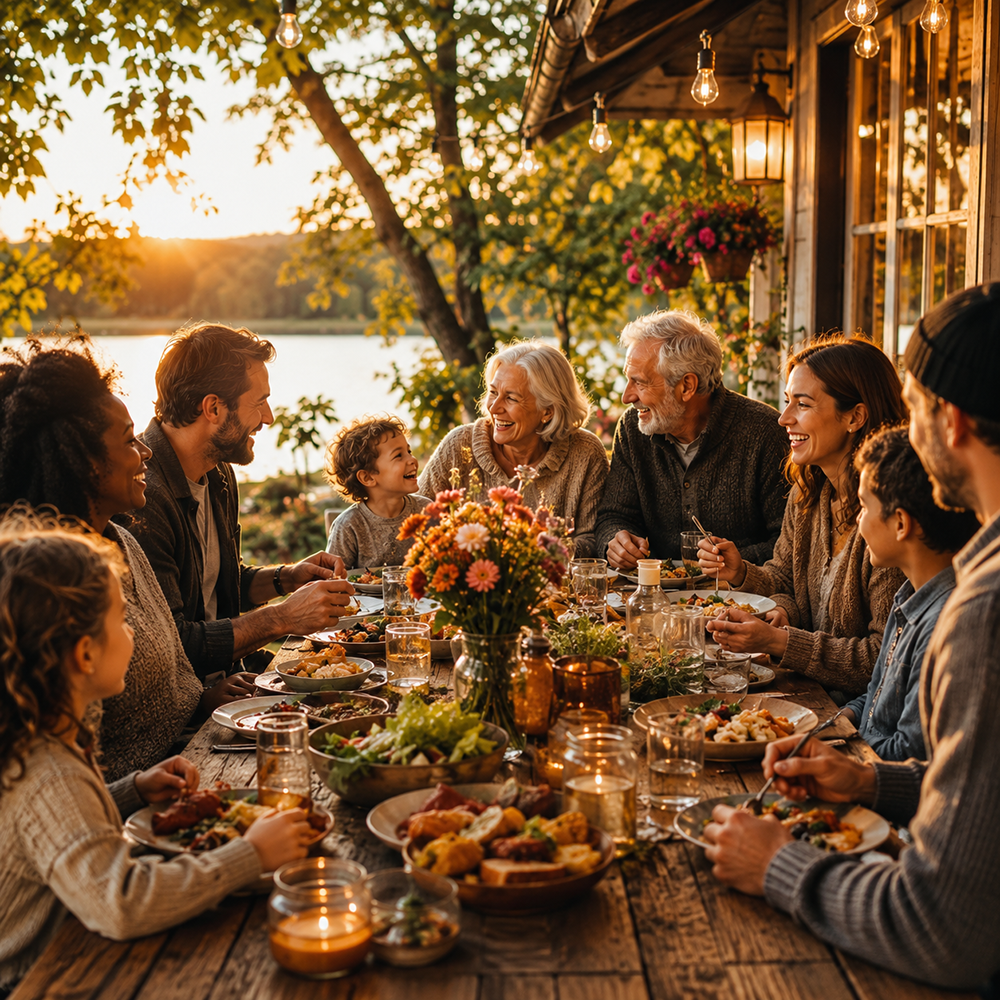
- A family gathered around the dinner table
- Friends laughing until their stomachs hurt
- A road trip with the windows down
- Children chasing fireflies on a summer evening
- Watching the first snowfall together
- Creating something with our hands
- Cheering as someone crosses a finish line
- Standing beside someone we love as they accomplish something they once thought impossible
The joy wasn't found only in the moment itself.
It was found in experiencing that moment together.
Healthy relationships understand something our culture often forgets.
Life was never meant to be lived as a series of private victories.
It was meant to include shared meals.
Shared celebrations.
Shared traditions.
Shared adventures.
Shared creativity.
Shared wonder.
Shared hope.
Even our language reflects this truth.
We don't simply say: "I'm happy."
We say:
- "I can't wait to tell you."
- "You have to see this."
- "Let's celebrate."
- "Come with me."
Joy naturally becomes an invitation.
It opens the door instead of closing it.
It pulls up another chair at the table.
It makes room for one more person to experience something beautiful alongside us.
Perhaps this is one reason healthy relationships feel so life-giving.
They don't simply help us carry life's burdens.
They also give us people with whom delight becomes richer than it could ever be alone.
Because while pain often becomes lighter when it is shared...
Joy becomes larger.
Not because it increases the number of wonderful things that happen to us.
But because every smile, every laugh, every celebration, every moment of wonder reminds us that life is not only something to survive.
It is something to savor.
And perhaps that has always been one of love's quietest purposes.
Not merely helping one another endure the difficult parts of life...
But helping one another notice—and delight in—the beautiful ones.
 Jessica Carey
Joy Grows When We Share It
One of the remarkable things about joy is that it doesn't behave the way many other things in life do.
If we divide a loaf of bread among many people, each person receives a smaller portion.
If we divide money, everyone has less.
If we divide time, each person receives only part of it.
But joy follows different rules.
Instead of shrinking when it is shared, it often grows.
Perhaps you've experienced this yourself.
Someone receives exciting news, and before long they're calling a friend or family member.
Not because the achievement is somehow incomplete.
But because joy naturally reaches outward:
- A child proudly holds up a drawing and says, "Look what I made!"
- An artist can't wait to show someone the painting they finally finished
- A couple calls their loved ones to announce an engagement
- Parents rush to share photos of a newborn baby
- A friend excitedly tells everyone about a new job, a new home, or a long-awaited dream finally coming true
None of these moments require an audience to be meaningful.
Yet they often become even more meaningful when experienced together.
Perhaps this is because human beings were never designed to experience life entirely alone.
We were created to witness one another's lives.
To celebrate one another's victories.
To encourage one another's dreams.
To delight in another person's delight.
Healthy relationships understand something unhealthy relationships often forget.
Another person's joy is not a threat.
It is an invitation.
An invitation to celebrate instead of compete.
To encourage instead of compare.
To say: "I'm genuinely happy for you," without secretly wishing their success had been ours.
This kind of joy is deeply generous.
It doesn't ask: "What do I lose if someone else shines?"
It asks: "How wonderful that someone I love is experiencing something beautiful."
Perhaps this is why healthy communities feel so different from unhealthy ones.
In unhealthy environments, success often creates comparison.
Recognition creates jealousy.
Achievement creates competition.
People quietly wonder whether another person's growth somehow diminishes their own.
Healthy communities move in the opposite direction:
- One person's graduation becomes everyone's celebration
- One person's healing becomes everyone's hope
- One person's answered prayer strengthens another person's faith
- One person's creative breakthrough inspires someone else to begin creating again
Instead of becoming smaller when someone else flourishes, healthy people become grateful that goodness is spreading.
Joy has a remarkable way of reminding us that another person's light does not make our own light any dimmer.
If anything, it helps illuminate the world a little more.
Perhaps that is one of the quietest miracles of healthy relationships.
They teach us that life is not a competition over who experiences the most happiness.
It is an opportunity to multiply happiness by choosing to celebrate it wherever we find it.
When we learn to rejoice with one another, the world begins to feel larger.
Hope becomes more contagious.
Wonder becomes easier to notice.
Gratitude becomes more natural.
And joy, rather than belonging to one person alone, becomes something a community carries together.
Because perhaps joy was never intended to be collected like a trophy.
Perhaps it was always meant to move from heart to heart, reminding us that one of the greatest gifts we can give another person is not only our help in times of sorrow...
But our wholehearted delight in their moments of joy.
 Jessica Carey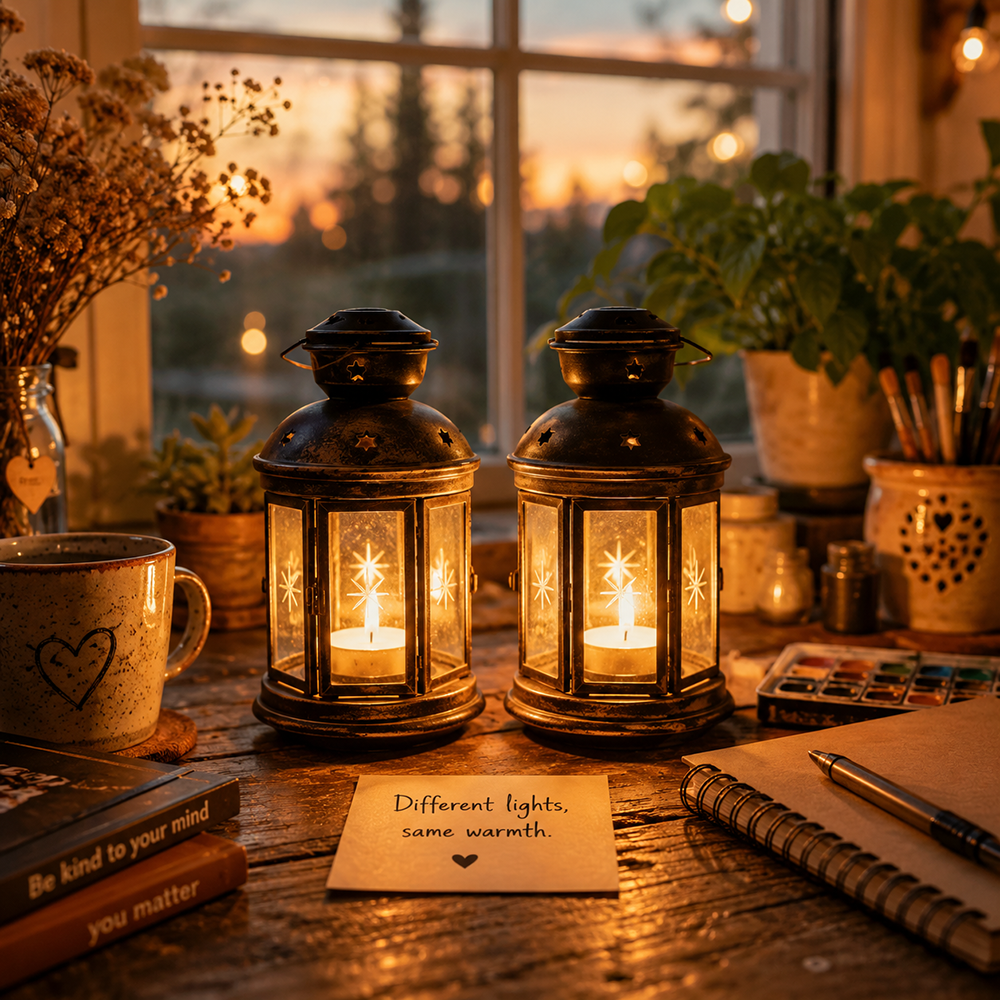
Another Person's Joy Can Awaken Our Own Longing
One of the surprising things about joy is that witnessing someone else's happiness can stir unexpected emotions within us.
Sometimes we celebrate wholeheartedly.
Sometimes we laugh with them.
Sometimes their joy fills us with hope.
And sometimes...
Their joy quietly reminds us of something our own heart has been longing for:
- Perhaps a friend announces they're expecting a child after years of hoping
- A couple celebrates fifty years of marriage
- Someone finds a loving family after years of loneliness
- A friend buys their first home
- An artist finally earns a living from their work
- Someone experiences the kind of friendship you've always dreamed of having
In moments like these, our hearts may feel two emotions at the same time.
We can be genuinely happy for them.
And genuinely aware of our own longing.
Those feelings are not enemies.
They can exist together.
Healthy love allows both.
Many people immediately label this experience as jealousy.
Sometimes it is.
But not every ache in the presence of another person's joy comes from envy.
Sometimes it comes from hope.
Sometimes it comes from grief.
Sometimes it comes from recognizing something beautiful we have not yet experienced ourselves.
There is a profound difference between saying: "I wish you didn't have that."
And saying: "I'm so glad you have that... and I hope one day I will, too."
The first diminishes another person's joy.
The second honors it while acknowledging our own humanity.
One is rooted in scarcity.
The other is rooted in longing.
Longing is not something to be ashamed of, as it often reveals what we value most.
The person who aches while watching a loving family may not be resentful.
They may simply be discovering how deeply they desire belonging.
The person who tears up at a healthy marriage may not begrudge the couple.
They may simply be grieving the love they have not yet found.
The artist who admires another creator's flourishing may not wish for them to fail.
They may simply be reminded of dreams still waiting to unfold within themselves.
Sometimes another person's joy becomes a mirror.
It reflects not what we resent...
But what we hope for.
Healthy relationships make room for these honest emotions.
They allow us to celebrate another person's life without pretending our own heart has no unmet desires.
In fact, the ability to do both may be one of the clearest signs of emotional maturity.
We can rejoice with someone else's happiness...
While gently admitting: "I would love something like that someday."
One does not cancel out the other.
Love is spacious enough to hold both celebration and longing in the same heart.
This kind of longing can even become a quiet source of hope.
Instead of saying: "Life is unfair."
Or: "Why do they get everything?"
We can gently ask: "If something this beautiful exists... perhaps it is possible for me, too."
Another person's flourishing becomes evidence that goodness is real.
Not proof that there is less goodness available for everyone else.
Healthy communities understand this.
Rather than competing over who receives the most joy, they remind one another that another person's happiness is not a closed door.
It is a glimpse of what is possible.
It whispers: "Beautiful things can happen."
And perhaps that hope is one of the greatest gifts we can offer one another.
Because every time we celebrate another person's joy without surrendering our own dreams, we choose abundance over scarcity.
We refuse to believe that love, belonging, healing, friendship, or wonder exist in limited supply.
Instead, we become people who can honestly say:
- "I am grateful this beautiful thing found you."
- "And I still believe that beautiful things can find me, too."
Healthy joy never asks us to deny our grief; healthy grief never asks us to deny another person's joy.
Many people measure a relationship by asking: "Does this person hurt me?"
That is an important question.
But healthy relationships invite another question: "Who do I become in this person's presence?"
- Do I laugh more?
- Create more?
- Rest more?
- Dream more?
- Notice beauty more?
- Become more generous?
- Feel more myself?
Healthy relationships don't merely remove darkness.
They increase light.
Healthy homes make joy easier.
Healthy friendships make celebration safer.
Healthy communities make creativity more likely.
Healthy classrooms make curiosity flourish.
Healthy workplaces make people more willing to contribute.
Every environment teaches people what emotions are welcome there.
 Jessica Carey
Celebration Is an Act of Love
One of the simplest ways we share joy is by celebrating one another.
At first glance, celebration may seem like something reserved for life's biggest milestones:
- Graduations
- Weddings
- Birthdays
- Anniversaries
- New babies
- Promotions
- Retirement
These moments certainly deserve to be celebrated.
But healthy relationships teach us that celebration isn't limited to life's biggest events.
It becomes a way of paying attention.
It notices the quiet victories that others might overlook:
- The friend who finally finished writing their first chapter
- The child who bravely tried something new
- The neighbor who planted their first garden
- The artist who completed a painting after months of creative burnout
- The person who made it through another difficult week
- The recovering addict reaching another milestone
- The couple who chose repair instead of resentment after a difficult conversation
Not every victory changes the world.
But every victory matters to the person who lived it.
Healthy relationships understand this.
They don't ask: "Is this accomplishment important enough to celebrate?"
They ask: "Is it important to you?"
If the answer is yes, then they rejoice alongside you.
Celebration is one of the clearest ways we communicate: "Your life matters to me."
It says:
- "I notice your efforts."
- "I'm proud of your growth."
- "I'm grateful this happened."
- "Your happiness brings me happiness."
These words do more than acknowledge an achievement.
They acknowledge a person.
 Jessica Carey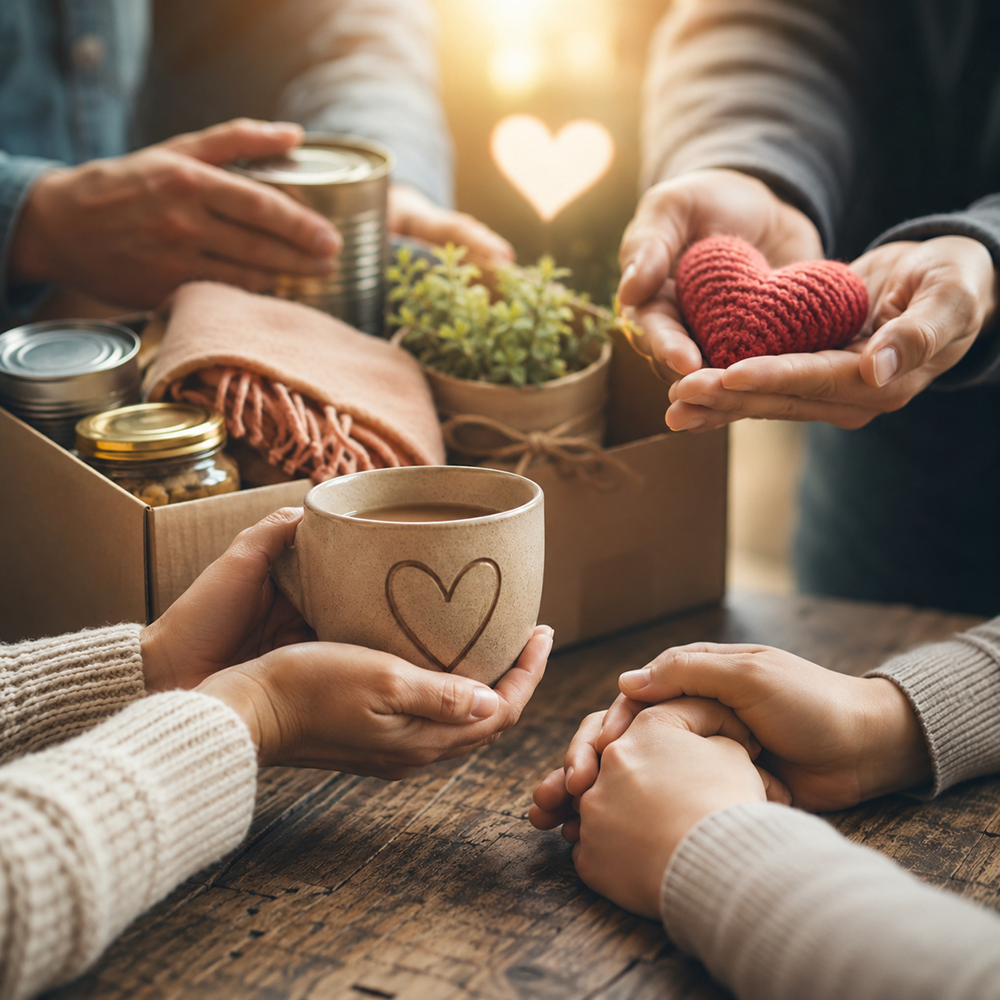
Perhaps that is why genuine celebration feels so different from polite congratulations.
One fulfills a social expectation.
The other delights in another human being.
Healthy celebration also resists comparison.
It doesn't measure whether one person's accomplishment is "more worthy" than another's.
For one person, graduating from college may be the celebration of a lifetime.
For another, getting out of bed after months of depression is an equally meaningful victory.
One child proudly shows a parent a finger painting.
Another proudly earns a doctoral degree.
The achievements are different.
The delight can be equally sincere.
Because healthy love isn't measuring the size of the accomplishment.
It's celebrating the courage, growth, effort, or beauty it represents.
Perhaps this is one reason celebrations bring people together.
They remind us that life is not only a collection of responsibilities.
It is also a collection of moments worth noticing.
Moments worth remembering.
Moments worth pausing for.
In a busy world, celebration gently tells another person: "I don't want this beautiful moment to pass unnoticed."
Celebration also has a remarkable way of strengthening hope.
When we celebrate another person's healing, we remember that healing is possible.
When we celebrate someone's kindness, we remember goodness still exists.
When we celebrate creativity, courage, love, or perseverance, we remind one another that these things are worth pursuing.
Joy becomes contagious.
Hope quietly spreads.
Not because every life is free from hardship.
But because goodness is being witnessed together.
Perhaps this is why healthy communities celebrate so freely.
They understand that delight is not a limited resource.
Another person's success does not diminish our own.
Another person's happiness does not leave less happiness available for everyone else.
Instead, every celebration becomes another reminder that beauty is still entering the world:
- Every shared meal
- Every birthday candle
- Every standing ovation
- Every proud smile
- Every tear of joy
- Every heartfelt hug
- Every moment spent saying: "I'm so happy for you."
Becomes another thread woven into the story of a life shared together.
Because celebration has never simply been about marking important events.
It has always been about reminding people that their lives, their growth, and their joy are worth noticing.
And perhaps one of the most loving things we can say to another person isn't simply: "Congratulations."
It's: "Thank you for letting me celebrate this with you."
 Jessica Carey
Wonder Is Better When It Is Shared
Some of the most meaningful moments in life are not achievements.
They aren't promotions.
Awards.
Milestones.
Or accomplishments.
Sometimes they're simply moments that remind us how beautiful it is to be alive:
- Watching the sun disappear beneath the horizon
- Hearing the first birds sing on a spring morning
- Seeing fireflies dance across a summer field
- Walking through a forest after fresh rain
- Watching snow quietly blanket the world
- Standing beneath a sky full of stars
- Holding a seashell to your ear
- Listening to waves meet the shore
- Watching a child discover something for the very first time
None of these moments ask anything of us.
They simply invite us to notice.
Wonder has a remarkable way of slowing us down.
It gently reminds us that life is not made only of deadlines, responsibilities, and problems waiting to be solved.
It is also filled with beauty that asks only to be appreciated.
One of the quietest gifts healthy relationships give us is someone to notice that beauty with.
How often do we instinctively say:
- "Look at this."
- "Did you see that?"
- "Come here."
- "You have to watch this."
We rarely experience wonder by saying: "I hope no one else sees this."
Instead, wonder naturally becomes an invitation.
We want someone beside us.
Someone who will smile at the same sunset.
Laugh at the same unexpected moment.
Stand quietly beside us as the stars begin to appear.
The beauty itself doesn't become greater because another person is present.
But our experience of it often does.
Not because the sunset changed.
Because it became part of a shared memory.
Healthy relationships teach us that some of life's richest moments cannot be owned; they can only be experienced.
A rainbow belongs to no one.
Neither does birdsong.
Or the smell of fresh rain.
Or the laughter of children playing.
Or autumn leaves drifting through the air.
These gifts remind us that some of the most meaningful parts of life are freely given.
Perhaps this is one reason wonder is so deeply connected to gratitude.
It teaches us to receive instead of constantly striving.
To notice instead of rushing.
To delight instead of merely consuming.
Wonder asks us to pause long enough to remember that life contains goodness we could never manufacture for ourselves.
Healthy people often become guides into wonder for one another.
They point out wildflowers growing beside the sidewalk.
Recommend a beautiful hiking trail.
Share a favorite book.
Invite someone to watch meteor showers.
Teach a child to notice birds.
Introduce a friend to a piece of music that moves them.
Take someone to the ocean for the first time.
None of these moments solve life's problems.
Yet they quietly enlarge life.
They remind us that the world is fuller of beauty than we often realize.
And that beauty becomes even richer when someone gently says: "I'm so glad you're here to experience this with me."
Wonder also has a remarkable way of renewing hope.
When life has been filled with disappointment, pain, or exhaustion, it's easy to begin believing that beauty has disappeared.
Usually it hasn't.
We've simply become too overwhelmed to notice it.
Sometimes another person helps us see again.
They point toward the sunset we almost missed.
They invite us outside after the rain.
They hand us a flower they noticed growing through a crack in the sidewalk.
They laugh in a way that reminds us joy still exists.
They help us remember that the world contains more than the hardships we've been carrying.
In that sense, wonder becomes a quiet act of care.
Not because it ignores suffering.
But because it gently reminds us that suffering is not the whole story.
Perhaps this is one of the reasons healthy relationships are so life-giving.
They don't only help us survive together.
They help us notice together.
They teach us to become students of beauty.
To remain curious.
To keep discovering.
To refuse the temptation to become numb to the extraordinary gifts hidden within ordinary days.
Because perhaps one of the greatest joys in life is not simply seeing something beautiful.
It's turning to someone you love and saying: "Can you believe we get to experience this?"
 Jessica Carey
Joy Lives in Ordinary Traditions
When people think back on the happiest moments of their lives, they often remember the big milestones.
A wedding.
A graduation.
The birth of a child.
A long-awaited dream finally coming true.
These moments deserve to be treasured.
Yet if we look more closely, many of our deepest memories come from something much quieter:
- Friday night pizza around the table
- Grandma's soup when someone was sick
- Holiday cookies made from the same worn recipe every year
- Board games that lasted long after bedtime
- Movie nights with blankets piled on the couch
- Morning coffee shared before the house woke up
- Walking the dog together after dinner
- Stopping for ice cream on the first warm day of spring
- Watching the leaves change each autumn
- Reading the same bedtime story one more time because someone asked
None of these moments would make the evening news.
Yet they become part of the emotional architecture of a life.
Traditions are far more than routines.
They quietly answer one of the deepest questions every human heart asks: "Where do I belong?"
Every shared meal says: "There is a place for you at this table."
Every yearly tradition says: "I'm looking forward to making another memory with you."
Every familiar ritual gently whispers: "We have a life together."
Over time, these ordinary moments become anchors.
When life feels uncertain, they remind us that some things remain steady.
Some joys return.
Some people keep showing up.
Healthy traditions also create something our busy lives often lack:
Rhythm.
In a world that constantly urges us to hurry toward the next accomplishment, traditions invite us to pause:
- To celebrate birthdays instead of rushing through them
- To decorate for holidays
- To gather around a table without needing a special reason
- To mark the changing seasons
- To make pancakes on Saturday mornings
- To watch the sunset from the same porch every summer
These rituals don't interrupt life; they are life.
They remind us that a meaningful life isn't built only through extraordinary achievements.
It's also built through ordinary moments that become extraordinary because they are shared.
One of the beautiful things about traditions is that they don't have to be expensive or elaborate.
Some of the richest family traditions cost almost nothing:
- Making homemade pizza together
- Lighting candles during dinner
- Growing tomatoes in the backyard
- Visiting the library every Saturday
- Taking an evening walk after work
- Watching the first snowfall with hot chocolate
- Leaving encouraging notes for one another
- Creating handmade birthday cards instead of buying them
- Picking wildflowers
- Reading aloud together
The value of these traditions isn't found in how much they cost.
It's found in how much of ourselves we bring to them.
Love transforms ordinary moments into cherished memories.
Healthy relationships also remain willing to create new traditions.
As people grow, families change, friendships deepen, and communities evolve, new opportunities for joy emerge.
Perhaps an annual camping trip begins.
A monthly game night.
A neighborhood potluck.
A yearly day of volunteering together.
A tradition of making art every Sunday afternoon.
A weekly phone call with someone who lives far away.
These moments become part of the story people carry for the rest of their lives.
Not because they were spectacular.
But because someone cared enough to keep showing up.
Again.
And again.
And again.
Perhaps that is one of the quietest truths about joy.
It rarely arrives all at once.
More often, it is patiently woven into our lives through ordinary faithfulness:
- A shared meal
- A familiar song
- A yearly tradition
- A walk through the neighborhood
- A cup of tea
- A conversation before bed
Tiny moments that quietly say: "I'm grateful we're doing life together."
Years later, we often discover that these simple rituals weren't interruptions to the important parts of life.
They were the important parts.
Because in the end, a life worth celebrating is rarely built from a handful of extraordinary days.
It is built from thousands of ordinary moments filled with presence, gratitude, laughter, and love.
Love doesn't only create memories; it creates culture.
 Jessica Carey
Creativity Is One of the Ways Joy Becomes Visible
One of the most beautiful things about creativity is that it allows joy to take shape.
Love is invisible.
Wonder is invisible.
Delight is invisible.
Gratitude is invisible.
Yet through creativity, these experiences become something we can see, hear, touch, taste, or share:
- A handwritten letter
- A loaf of fresh bread
- A painting hanging on a wall
- A song sung around a campfire
- A quilt stitched together over many evenings
- A meal lovingly prepared for friends
- A garden planted with hope for seasons yet to come
- A birthday cake decorated by hand
- A child proudly carrying home a craft made at school
These creations become more than objects.
They become expressions of the heart.
This is perhaps why creativity has always been woven into human life.
Long before people created museums or galleries, they painted cave walls.
They carved wood.
They told stories around fires.
They danced.
They sang.
They embroidered blankets.
They built homes.
They decorated ordinary tools with extraordinary care.
Across cultures and throughout history, people have consistently done something remarkable.
They have taken the ordinary...
And filled it with meaning.
Not because survival required beauty.
But because the human spirit longs for more than survival.
It longs to create.
Healthy relationships often make creativity flourish.
When people feel emotionally safe, they become more willing to imagine.
To experiment.
To make mistakes.
To laugh at imperfect attempts.
To learn new skills.
To pick up instruments they haven't played in years.
To paint even if no masterpiece emerges.
To bake simply because sharing food brings people together.
Creativity thrives wherever people feel free to explore without fear of ridicule or perfection.
Perhaps this is why so many people rediscover creativity after finding healthier relationships.
Not because someone else gave them talent.
But because someone gave them permission to stop being afraid.
One of the quietest gifts we can give another person is creating alongside them:
- Parents coloring with their children
- Friends making pottery together
- Neighbors planting community gardens
- Families decorating for holidays
- Couples learning to cook new recipes
- Grandparents teaching grandchildren how to sew, carve, knit, or bake
- Artists encouraging one another instead of competing
These moments create far more than finished projects.
They create memories.
Laughter.
Patience.
Stories.
Inside jokes.
Confidence.
Connection.
The finished creation may eventually wear out.
The relationship often grows stronger because of it.
Creativity also reminds us that joy is not merely something we consume.
It is something we contribute.
Our culture often teaches us to search endlessly for entertainment.
Something to watch.
Something to buy.
Somewhere to go.
But healthy communities have always understood another way.
Sometimes the deepest joy comes not from consuming beauty...
But from helping create it.
When we plant flowers, the neighborhood becomes more beautiful.
When we cook for friends, everyone gathers around the table.
When we write stories, compose music, build furniture, knit blankets, or create art, we leave behind little reminders that love took visible form.
We become participants in the beauty we long to experience.
Perhaps this is one reason creativity feels so hopeful.
Every blank page says: "Something beautiful could begin here."
Every empty garden bed whispers: "Life can grow."
Every lump of clay.
Every ball of yarn.
Every piece of wood.
Every untouched canvas.
Every unwritten melody.
Every recipe shared across generations.
Carries the quiet possibility that something good has not yet entered the world—but soon might.
Healthy relationships understand this.
They don't ask whether every creation is perfect; they delight that someone had the courage to create at all.
They applaud the child's finger painting.
Admire the beginner's first scarf.
Display homemade cards on the refrigerator.
Encourage the friend starting a small business.
Celebrate the person trying something new for the first time.
Because they understand that creativity isn't ultimately about producing flawless work.
It's about participating in life.
It is one of the ways human beings say:
- "I was here."
- "I noticed beauty."
- "I wanted to add a little more of it to the world."
Perhaps that is one of the greatest gifts creativity offers.
It reminds us that we are not merely observers of the world.
We are co-creators of the environments we live in:
- Every thoughtful meal
- Every welcoming home
- Every handmade gift
- Every song
- Every mural
- Every garden
- Every story
- Every act of craftsmanship
Quietly asks the same question: "How might I leave this place a little more beautiful than I found it?"
And perhaps that has always been one of joy's deepest invitations.
Not simply to find beauty wherever it already exists...
But to become people who help beauty grow.
 Jessica Carey
Play Is Not Just for Children
One of the first things many people lose under chronic stress is play.
We become productive.
Responsible.
Efficient.
Busy.
Everything begins serving a purpose.
Even rest becomes another task to optimize.
Yet watch healthy children together.
They invent games.
Tell ridiculous stories.
Build forts from blankets.
Splash in puddles.
Pretend.
Laugh until they fall over.
None of it is "productive."
Yet all of it is profoundly human.
Healthy adults do not stop playing because they mature.
They simply learn new ways to play; they:
- Dance
- Garden
- Cook
- Travel
- Build things
- Tell jokes
- Play board games
- Try new hobbies
- Explore new cities
- Throw snowballs
- Skip stones across lakes
- Laugh until tears fill their eyes
Play reminds us that life is more than survival.
It reminds us that delight has value all by itself.
Healthy relationships make room for silliness.
For curiosity.
For laughter that serves no purpose except bringing people together.
Perhaps one of the clearest signs that we feel emotionally safe is that we begin to play again.
 Jessica Carey
There Is Always Room for One More
Delight is one of the purest forms of love because it enjoys another person's existence without needing to gain anything in return.
A meaningful life is rarely built from extraordinary days alone.
More often, it grows through ordinary days that people choose to inhabit with extraordinary presence.
Joy always makes room for others; not just physically.
Emotionally.
Spiritually.
Relationally.
Healthy communities keep setting another place at the table.
Healthy joy allows itself to be received.
Many people are comfortable giving kindness, encouragement, hospitality, and celebration, yet struggle to accept those same gifts from others.
Healthy relationships remind us that joy flows in both directions.
Sometimes love looks like preparing the meal.
Other times it looks like gratefully accepting the invitation to the table.
Joy is one of the few things that leaves more behind after it has been shared than before.
 Jessica Carey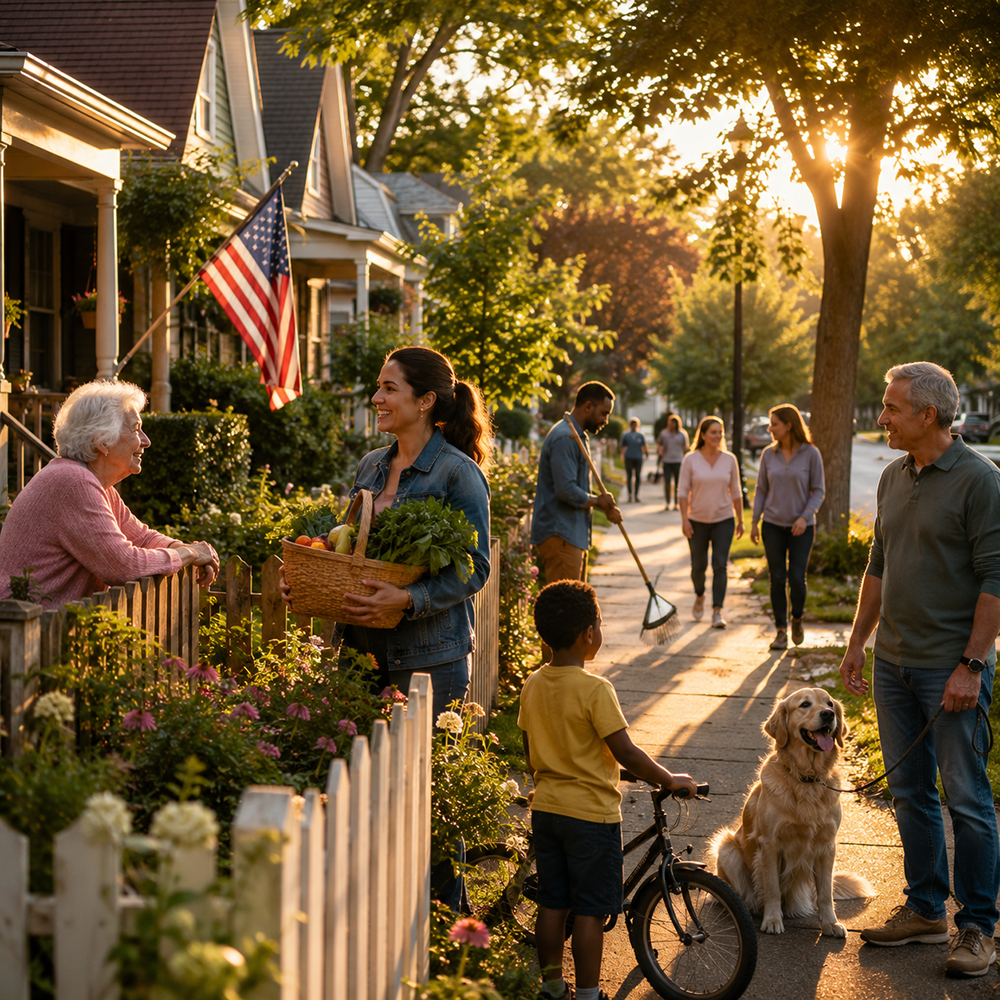
Joy Is Not the Absence of Sorrow
One of the greatest misconceptions about joy is that it belongs only to people whose lives are easy.
We imagine joy arriving after every problem has been solved.
After grief has ended.
After the diagnosis is behind us.
After relationships are healed.
After the finances improve.
After life finally becomes what we hoped it would be.
But if we wait for a life without sorrow before allowing ourselves joy, we may spend much of our lives waiting.
Life has always been both beautiful and difficult.
Love and loss often walk beside one another.
Hope and heartbreak frequently share the same season.
We celebrate birthdays while missing someone who should still be here.
We welcome new beginnings while grieving what has ended.
We laugh with friends while quietly carrying private burdens.
The human heart is capable of holding more than one truth at a time.
Healthy joy does not ask us to pretend everything is okay.
It never requires us to ignore pain or silence grief.
Instead, it gently reminds us that sorrow is not the only thing that is true.
Even in seasons of hardship, goodness continues to appear:
- A neighbor brings over dinner
- A child bursts into laughter
- The sky turns brilliant shades of orange at sunset
- Someone sends an encouraging message at exactly the right moment
- A friend sits quietly beside us without trying to fix anything
- Fresh flowers bloom after a long winter
None of these moments erase suffering.
But they remind us that suffering has not erased beauty.
Perhaps this is why joy can feel almost like an act of courage.
Not because we deny what hurts.
But because we refuse to let pain become the only story we tell about our lives.
Every genuine laugh...
Every shared meal...
Every celebration...
Every moment of wonder...
Every piece of music...
Every creative project...
Every tradition lovingly continued...
Quietly declares: "There is still goodness here."
That declaration is not naïve.
It is deeply hopeful.
Healthy relationships help us remember this.
When our vision narrows because grief has become so heavy, someone else notices the flowers blooming outside the window.
When exhaustion makes beauty difficult to see, someone gently invites us for a walk.
When disappointment convinces us that joy has disappeared, someone laughs, creates, cooks, celebrates, or simply sits beside us until our own heart begins to soften again.
They do not force us to be happy.
They simply help us remember that joy still exists.
Sometimes they hold hope for us until we are ready to carry it ourselves.
This is one of the quiet gifts of sharing life together.
There will be seasons when your joy strengthens someone else's weary heart.
There will be other seasons when their joy quietly carries yours.
Neither person remains the giver forever.
Neither remains the receiver forever.
Healthy relationships become places where hope continues to circulate, even when one person's strength begins to falter.
Perhaps this is another way love bears one another's burdens.
Sometimes we don't only carry another person's sorrow.
We help carry their hope until they can feel it again.
None of this means we should rush grief or pretend it is smaller than it is.
Grief deserves tenderness.
It deserves patience.
It deserves space.
Some losses permanently change us.
Healthy joy never asks us to forget the people we miss or the dreams that didn't unfold as we hoped.
Instead, it gently whispers that love leaves room for both remembrance and new beginnings.
We can carry cherished memories while still making new ones.
We can honor what was while remaining open to what may yet be.
Perhaps that is why joy and sorrow are not opposites.
Love is.
Where love exists, we eventually experience both.
We grieve because we have loved.
We celebrate because we have loved.
We long because we have loved.
We hope because we have loved.
Joy and sorrow are not enemies fighting for space within the heart.
They are companions, each revealing something precious about what matters most to us.
And perhaps a life worth celebrating is not one that has escaped sorrow.
It is one that continues to choose love, beauty, gratitude, and hope, even while carrying it.
 Jessica Carey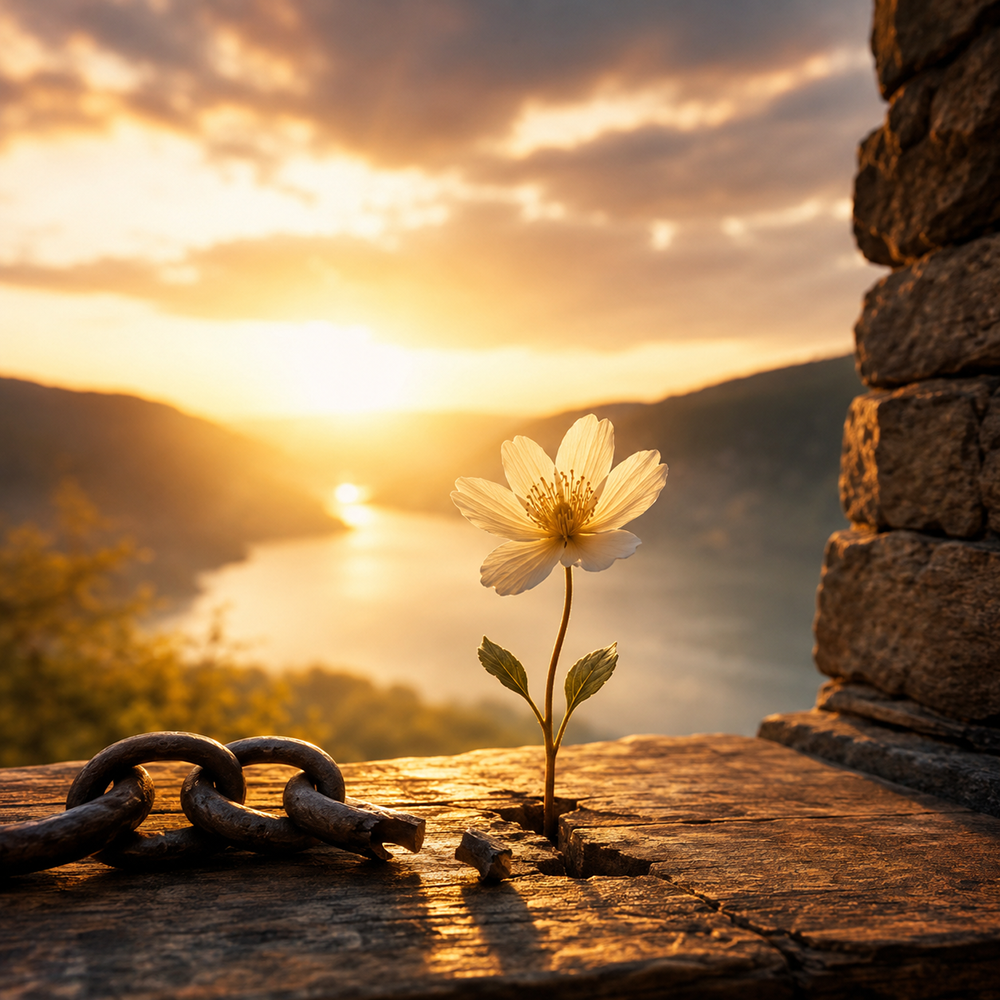
Building a Life Worth Celebrating
Perhaps one of the greatest tragedies of an unhealthy world is not only that it causes suffering.
It also teaches people to expect less joy than life was capable of offering.
People stop celebrating.
Stop creating.
Stop inviting others over.
Stop laughing as freely.
Stop playing.
Stop wondering.
Stop dreaming.
Not because these things no longer matter.
But because survival consumes so much of their energy.
Healthy relationships gently reverse that process.
Little by little, they remind us that we were made for more than merely getting through another day.
We were made to delight.
To create.
To celebrate.
To belong.
To help one another become more fully alive.
Perhaps one of the greatest gifts we can give one another is not simply helping each other survive.
It is helping each other truly live.
A life worth celebrating is rarely built through extraordinary moments alone.
More often, it is woven together through countless ordinary acts of love:
- A shared meal after a long day
- A walk beneath changing leaves
- A friend who remembers your birthday
- A tradition passed from one generation to the next
- A painting created together
- A song sung around a campfire
- A table with one more chair pulled out
- A neighbor welcomed
- A child encouraged
- A dream celebrated
- A quiet moment of wonder shared with someone who simply says: "I'm glad you're here."
None of these moments seem especially grand on their own.
Yet together, they become the story of a beautiful life.
Healthy relationships do far more than reduce suffering.
They create places where people feel free to laugh without fear.
To create without perfection.
To celebrate without comparison.
To rest without guilt.
To wonder without rushing.
To hope without shame.
They become environments where the human spirit has room to breathe.
Where joy is not treated as a distraction from life, but recognized as one of the reasons life is worth living.
This kind of joy is not loud all the time.
Sometimes it looks like children running through sprinklers on a summer afternoon.
Sometimes it looks like friends laughing around a kitchen table.
Sometimes it is music drifting through an open window.
Sometimes it is planting flowers in a front yard.
Sometimes it is sitting quietly beside someone you love as the sun sets.
Joy wears many faces.
Some are exuberant.
Others are gentle.
All remind us that being fully alive is about more than accomplishing tasks or reaching milestones.
It is about learning to delight in the goodness that surrounds us and helping others do the same.
Perhaps this is one of love's highest callings.
Not merely protecting one another from harm.
But inviting one another into fullness of life:
- To notice beauty
- To celebrate goodness
- To make room for play
- To create together
- To laugh often
- To grieve honestly
- To hope courageously
- To keep opening our hearts to wonder, even after disappointment
Love does not only ask: "How can I lessen another person's burden?"
It also asks: "How can I help another person experience more joy?"
Both questions matter.
Both are acts of compassion.
Both help build a world where people can flourish.
When enough people choose this way of living, something remarkable begins to happen:
- Homes become more welcoming
- Friendships grow deeper
- Neighborhoods become kinder
- Communities become more connected
- Children grow up believing their joy matters
- Older generations feel remembered rather than forgotten
- Creativity flourishes
- Hospitality becomes ordinary
- Celebration becomes generous
- Hope becomes contagious
Little by little, we begin building the kind of world many of us have quietly longed for all along.
Not a perfect world.
But one where people consistently help one another become more fully alive.
We will not always remember every conversation we've had.
Or every gift we've received.
Or every accomplishment we've achieved.
But we often remember how people made life feel:
- The friend who celebrated our smallest victories
- The family who made room for one more person at the table
- The teacher who believed in us
- The neighbor who shared vegetables from their garden
- The artist who inspired us to create
- The child whose laughter reminded us to play again
- The person who noticed beauty and invited us to notice it, too
These people leave something behind that cannot be measured.
They leave a way of living.
A way of loving.
A way of seeing the world.
Perhaps that is the quiet invitation before each of us.
To become someone whose presence leaves more joy than fear.
More hope than despair.
More generosity than scarcity.
More curiosity than judgment.
More beauty than indifference.
Not because we can remove every sorrow from the world.
But because every shared meal, every act of kindness, every celebration, every tradition, every work of creativity, every moment of wonder, and every genuine expression of love becomes another small way of saying:
- "Life is precious."
- "You matter."
- "There is still beauty here."
- "Come share it with me."
Because in the end, a life worth celebrating is not measured by how much joy we managed to gather for ourselves.
It is measured, at least in part, by how much joy we helped create, protect, and share with others.
And perhaps that has always been one of love's most beautiful purposes.
Not simply to help us endure the world as it is...
But to help us build a world where more people can flourish.
The deepest measure of a life is not how much joy we possess, but how much joy our presence makes possible.
Joy keeps setting another place at the table.
 Jessica Carey
Want even more content about creativity and art?
Be sure to check out all of our creative chronicles!
If you'd like to see examples of my work, you can find some of my art and creations at Redbubble and Gumroad!
Looking to learn more about my recent journey?
Check some of these articles:
-The Difference Between Resting and Giving Up
-Hidden Gems for St. Louis Artists
-Hidden Gems for Autistic & Neurodivergent Adults
-I Think I Might Be Autistic... Now What?
 Jessica Carey