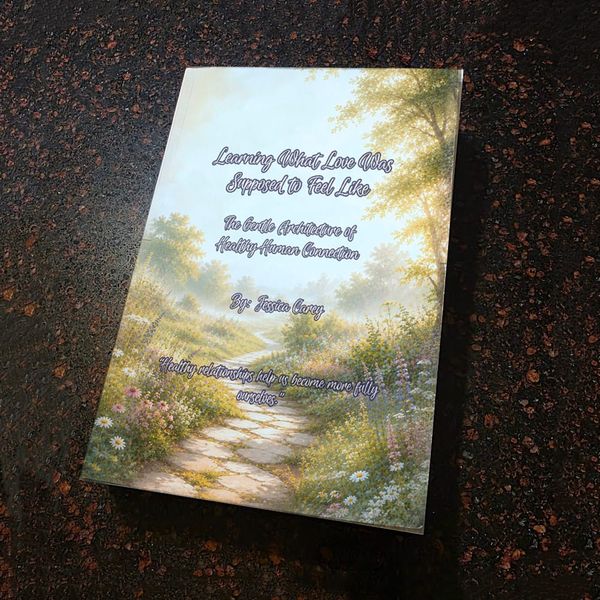

People talk about kindness often.
Be kind.
Choose kindness.
Spread kindness.
And those are beautiful ideas.
But something I have learned is that not everything wearing the mask of kindness is actually kind.
Sometimes control introduces itself as care.
Sometimes fear disguises itself as love.
Sometimes a gift quietly comes with invisible strings attached.
And if you have spent a long time around unhealthy relationships, learning the difference can be confusing.
Because from the outside, the action may look the same.
Someone offers money.
Someone gives you somewhere to stay.
Someone buys something you need.
Someone checks on you.
Someone says, “I’m only doing this because I care about you.”
But the question is not only: “What did someone do?”
The deeper question is: “What happened afterward?”
Did their kindness give you room to breathe?
Or did it become another cage?
And when I talk about love, I do not only mean romantic love. I mean the love found in families, friendships, communities, mentorship, and the everyday ways humans choose to care for each other.
 Jessica Carey
Love Does Not Possess
There is an old saying: “If you love something, set it free.”
And I think there is a deep truth hidden inside those words.
Because real love does not wrap its hands tightly around another living being and say: “Mine.”
Real love does not attach puppet strings.
Real love does not say: “Because I helped you, I now get to control you.”
That is not love.
That is fear.
Fear tries to hold tighter.
Fear tries to control outcomes.
Fear says:
- “What if they leave?”
- “What if they don’t choose me?”
- “What if they make choices I don’t approve of?”
So, fear builds cages and calls them protection.
But love creates safety.
Love says:
- “I care about you, and you are still your own person.”
- “I want good things for you, even when I am not the one providing them.”
- “I can support you without owning you.”
Because true love is not possession.
It is connection.
 Jessica Carey
Discovering What Safe Kindness Feels Like
For a long time, I thought I understood kindness.
Throughout my life I have witnessed the difference between someone doing something “nice” and someone creating a space where you actually feel safe.
Sometimes you do not realize how long you have been holding your breath until you finally experience a place where you can exhale.
Recently, I stayed somewhere that reminded me what peaceful care can feel like.
There was no constant urgency.
No hidden expectations.
No feeling like rest would later be used against me.
Just a quiet space filled with creativity, nature, warmth, and reminders that humans can care for each other simply because caring matters.
And that contrast made me think deeply about what true kindness actually is.
For much of my life, peace felt unfamiliar. I had experienced many versions of “kindness” that came with expectations, pressure, or invisible strings attached. I knew what it felt like to receive help that somehow left me feeling smaller instead of safer, drowning instead of thriving.
Until people I had never met offered me a glimpse of sanctuary — a taste of what true home, safety, and community actually are.
 Jessica Carey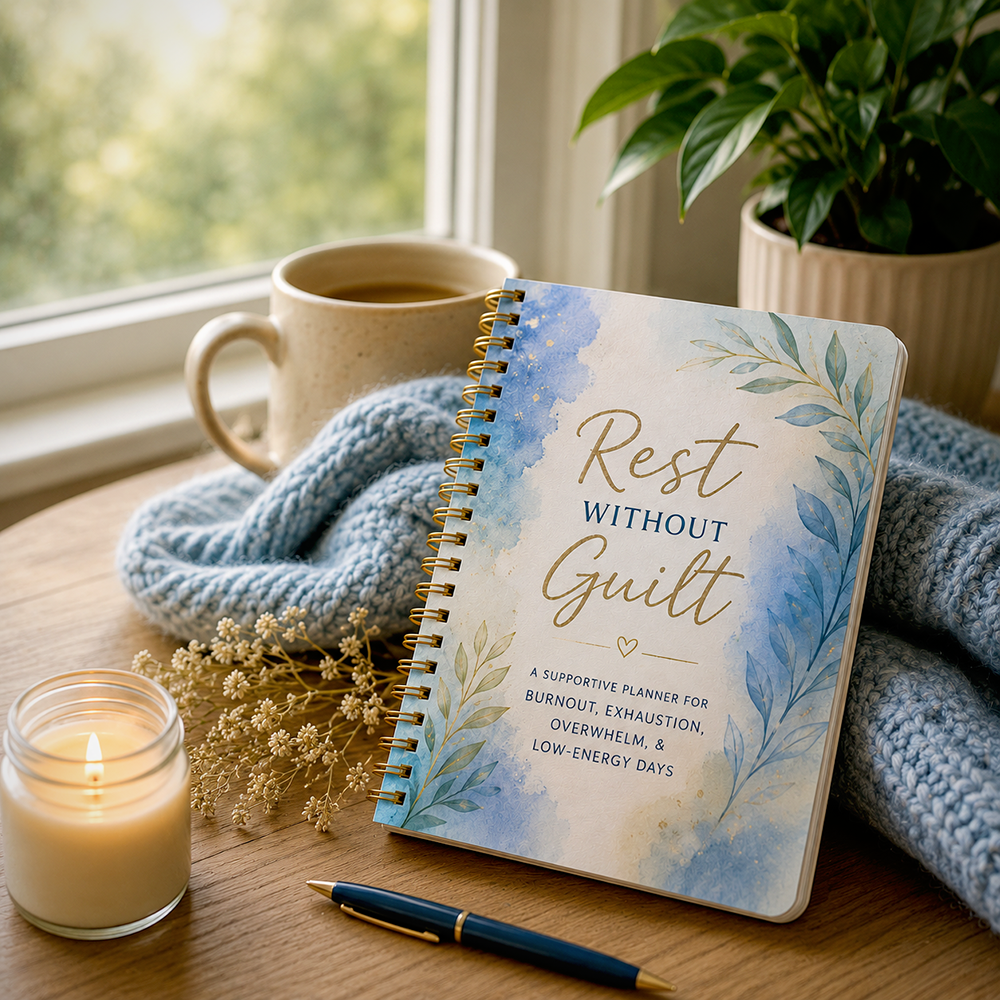
A Gift Should Not Become a Chain
A gift given freely feels very different than a gift used as leverage.
Someone can do something that looks incredibly generous on the outside while the energy underneath says:
- “Now you owe me.”
- “I helped you, so you should listen to me.”
- “I sacrificed for you, so your boundaries hurt my feelings.”
- “I gave you something, so now I have a say over your life.”
Sometimes the heaviest chains are made out of things people insist we should be grateful for.
True kindness does not keep a running scoreboard.
True kindness does not wait until you are vulnerable and then hand you a bill made of guilt.
 Jessica Carey
Kindness Still Has Boundaries
At the same time, real kindness does not mean destroying yourself to save everyone else.
Love does not require self-abandonment.
You can care deeply and still say:
- “I don’t have the capacity.”
- “I’m not able to help financially.”
- “I need time.”
- “I need to make sure this is healthy for me, too.”
Boundaries are not the opposite of kindness.
Healthy boundaries allow kindness to stay kind.
Because help given through guilt, pressure, resentment, or obligation eventually stops feeling like love.
The healthiest help comes from a place that says: “I choose this freely.”
Not: “I have to do this or I am a bad person.”
Real kindness does not come from abandoning yourself to earn love. It comes from having love to share — including love for yourself.
 Jessica Carey
Being Loved for Who You Are, Not What You Provide
I have seen what happens when people are valued only for what they can give.
People with resources can be surrounded by others who see opportunity instead of humanity.
People with generous hearts can become exhausted from always being needed but rarely truly known.
And eventually a painful question forms: “If I stopped giving, would anyone still stay?”
Real love answers: “Yes.”
Because I was never here for what you could provide; I was here because you mattered.
 Jessica Carey
What True Kindness Feels Like
True kindness feels spacious.
It feels like finally being able to breathe.
It feels like entering a peaceful home where you are not constantly waiting for the next explosion, criticism, expectation, or hidden rule.
It feels like: “Come rest.”
Not: “Come rest, but remember you owe me.”
It feels like: “You are safe here.”
Not: “You are safe here as long as you remain useful to me.”
True kindness sees another person’s humanity.
It offers what it can.
It respects what it cannot give.
It allows both people to remain whole.
Because love was never meant to be a cage.
Love was always meant to be a place where living things finally have enough safety to grow.
 Jessica Carey
When Peace Feels Unfamiliar
One of the hardest parts about experiencing unhealthy versions of love is that eventually your nervous system starts expecting love to hurt.
You expect kindness to come with a catch.
You expect support to have hidden conditions.
You expect generosity to become something someone uses against you later.
So when you finally encounter genuine kindness, sometimes it feels confusing.
Someone offers you help and does not bring it up again.
Someone gives you space without punishing you for needing it.
Someone supports you without trying to control the outcome.
Someone cares about you without demanding ownership over your life.
And part of you wonders: “What’s the catch?”
Because when you have spent so long around conditional care, unconditional care can feel almost impossible to trust.
I have been learning there is a difference between a place where you are allowed to exist and a place where you are only allowed to perform.
A place can have four walls and still not feel like a home.
A place can provide shelter and still leave you constantly tense, overwhelmed, and exhausted.
Because home is not only a building.
 Jessica Carey
Home is safety.
Home is peace.
Home is being able to breathe.
Home is not walking around on eggshells, constantly preparing yourself for the next criticism, conflict, demand, or emergency.
It is not feeling like every mistake threatens your belonging.
It is not wondering when today’s kindness will become tomorrow’s debt.
True care feels different.
It feels quieter.
It does not constantly announce itself.
It does not need applause.
It does not remind you repeatedly of everything it has done.
It does not keep a list of your failures next to a list of its sacrifices.
Sometimes kindness simply says:
- “You looked hungry, so I made extra.”
- “You seemed tired, so rest.”
- “You are struggling, so here is what I can offer.”
Not because it expects repayment.
Not because it wants control.
Not because it wants to become the hero of your story.
Simply because another living being was hurting, and compassion answered.
After years of survival mode, sometimes healing begins with realizing you were not broken — you were exhausted from environments you were never meant to carry.
 Jessica Carey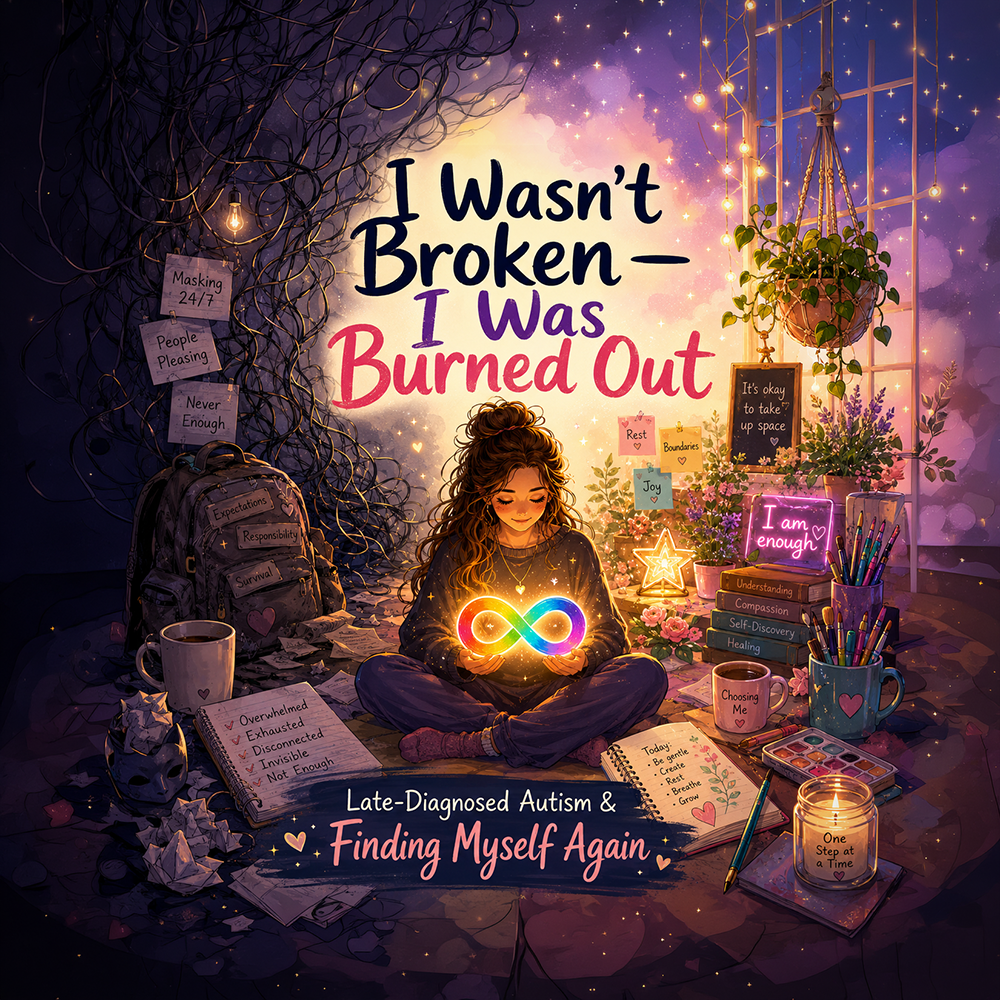
Love Creates Room to Grow
No matter how much the hand insists:
- “I’m only holding on because I care.”
- “I’m protecting you.”
- “I know what is best.”
The pressure meant to protect eventually prevents growth.
Living things need space.
Plants need room for their roots.
People need room for their choices.
Relationships need room for individuality.
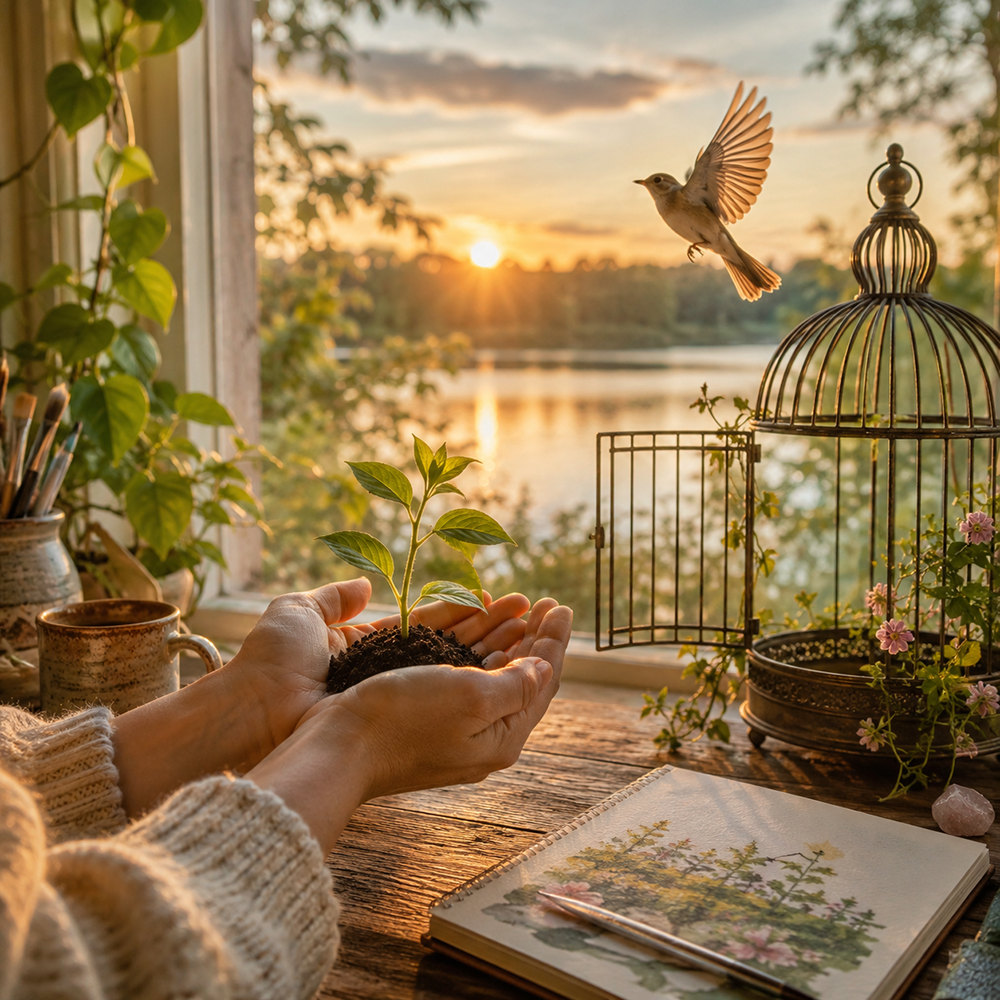
Love is not the hand squeezing the seed.
Love is the sunlight, water, and soil saying: “I will support your becoming.”
Because the goal of love is not dependence.
The goal of love is flourishing.
I created Rest Without Guilt as a gentle space for people learning to reconnect with themselves after exhaustion and survival mode.
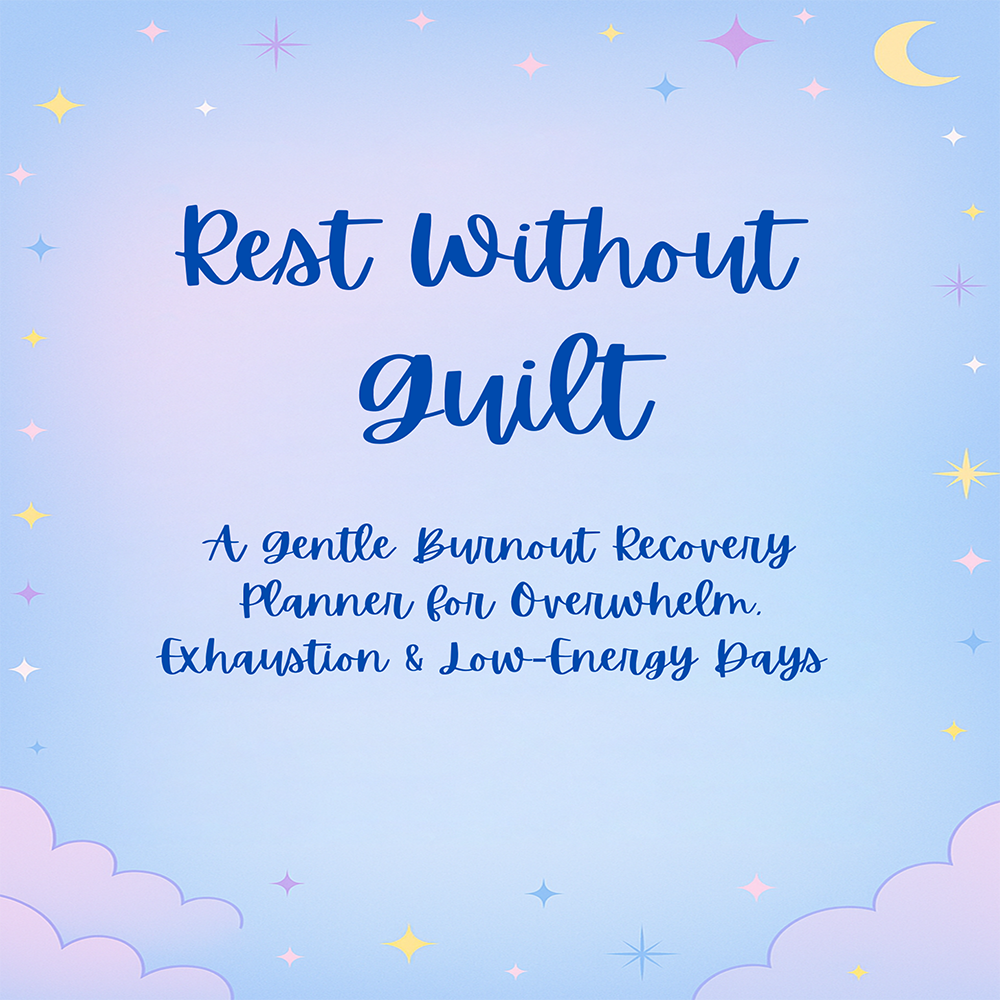
Rest Without Guilt
A Gentle Burnout Recovery Planner for Overwhelm, Exhaustion & Low-Energy Days
When Helping Becomes About the Helper
One of the most confusing lessons I have learned is that sometimes help stops being about the person receiving it.
Sometimes “help” quietly becomes about the helper.
- Their need to feel important
- Their need to feel needed
- Their need to feel like the hero
- Their need to control an outcome that makes them uncomfortable
And this can be especially difficult to recognize because the action itself may look kind on the surface.
After all, someone helped.
Someone showed up.
Someone gave something.
Someone sacrificed.
So, why does it feel heavy instead of healing?
Why does it feel like pressure instead of support?
Why does it feel like you became smaller instead of stronger?
Maybe because the help was never truly given to set you free.
True support empowers.
Control creates dependence.
A loving person does not see someone struggling and think: “How can I make sure they always need me?”
They think: “How can I help them find solid ground again?”
Because the purpose of support is not to keep someone beneath you.
The purpose of support is to help them stand.
Imagine finding an injured bird.
Love does not heal the bird’s wing and then keep the cage locked because it enjoys being the rescuer.
Love does not say: “After everything I did for you, you owe me your flight.”
 Jessica Carey
Love celebrates when the bird becomes strong enough to soar.
Because the healing was always the goal.
Not ownership.
Not dependence.
Not control.
Freedom.
There is a difference between being appreciated and requiring repayment through someone else’s obedience.
Gratitude is beautiful.
Appreciation matters.
Healthy relationships involve mutual care.
But gratitude should not mean surrendering your autonomy.
Someone helping you does not mean they purchased the right to:
- Control your choices
- Ignore your boundaries
- Dismiss your feelings
- Or decide what your life should become
You can deeply appreciate someone and still be your own person.
Both things can exist together.
And sometimes the kindest thing we can do as helpers is examine ourselves.
- Am I helping because I truly have something to give?
- Or am I helping because I need to feel valuable?
- Am I supporting this person’s growth?
- Or am I trying to become necessary for their survival?
- Am I offering a hand?
- Or am I attaching strings?
Because real love does not ask: “How can I make sure they never leave?”
Real love asks: “How can I help them become more fully themselves?”
The beautiful thing about genuine kindness is that it multiplies.
When people are loved well, they often want to love others well.
When people are given safety, they often want to create safety.
When people experience generosity without chains, they learn they do not have to build chains either.
Kindness given freely becomes a seed.
And seeds are meant to grow beyond the hands that planted them.
 Jessica Carey
Gratitude Is Not the Same as Owing Yourself Away
Something that can become very confusing after experiencing conditional love is understanding the difference between gratitude and debt.
Because gratitude is beautiful.
Gratitude is connection.
Gratitude recognizes:
- “Someone cared.”
- “Someone showed up.”
- “Someone chose kindness when they did not have to.”
That matters.
Appreciating someone’s love, time, energy, support, or generosity is a wonderful thing.
But gratitude and ownership are not the same.
Receiving kindness does not mean you signed away your humanity.
A person can be deeply grateful and still have boundaries.
You can say: “Thank you for helping me.”
And also: “I still need privacy.”
You can say: “Thank you for supporting me.”
And also: “I still get to make my own choices.”
You can say: “Thank you for caring about me.”
And also: “I need you to respect my no.”
Healthy people understand this.
Because the goal was never control.
The goal was care.
True generosity gives someone a stronger foundation beneath their feet.
Conditional generosity quietly removes the ground and replaces it with strings.
It says:
- “You are standing because of me.”
- “Remember where you would be without me.”
- “After everything I have done, how dare you disagree?”
 Jessica Carey
But love does not keep someone small so it can stay powerful.
Love does not intentionally create a permanent imbalance where one person is always the giver and the other is always beneath them.
Love wants restoration.
Love wants dignity.
There is a difference between appreciation and repayment.
In healthy relationships, kindness naturally flows back and forth.
Maybe not in identical ways.
Maybe not at identical times.
Someone may support you financially during a difficult season.
Someone else may offer emotional support, creativity, encouragement, wisdom, laughter, patience, or simply a safe place to exist.
We are not meant to calculate every act of care until everyone’s numbers match perfectly.
Community works because different people have different gifts at different times.
But kindness loses its purity when it becomes a hidden contract.
When expectations were never communicated.
When the price appears only after someone accepts the help.
When someone says: “I freely give this to you.”
But later reveals: “What I really meant was that I bought permission to control you.”
That is not generosity.
That is a transaction someone disguised as love.
The most beautiful kindness I have witnessed does not make people feel smaller.
It restores their sense of worth.
It whispers:
- “You matter, even when you have nothing to offer.”
- “You deserve compassion, even when you are struggling.”
- “You are more than what you can produce, provide, achieve, or repay.”
Because true kindness sees a person.
Not a project.
Not an investment.
Not a possession.
A person.
 Jessica Carey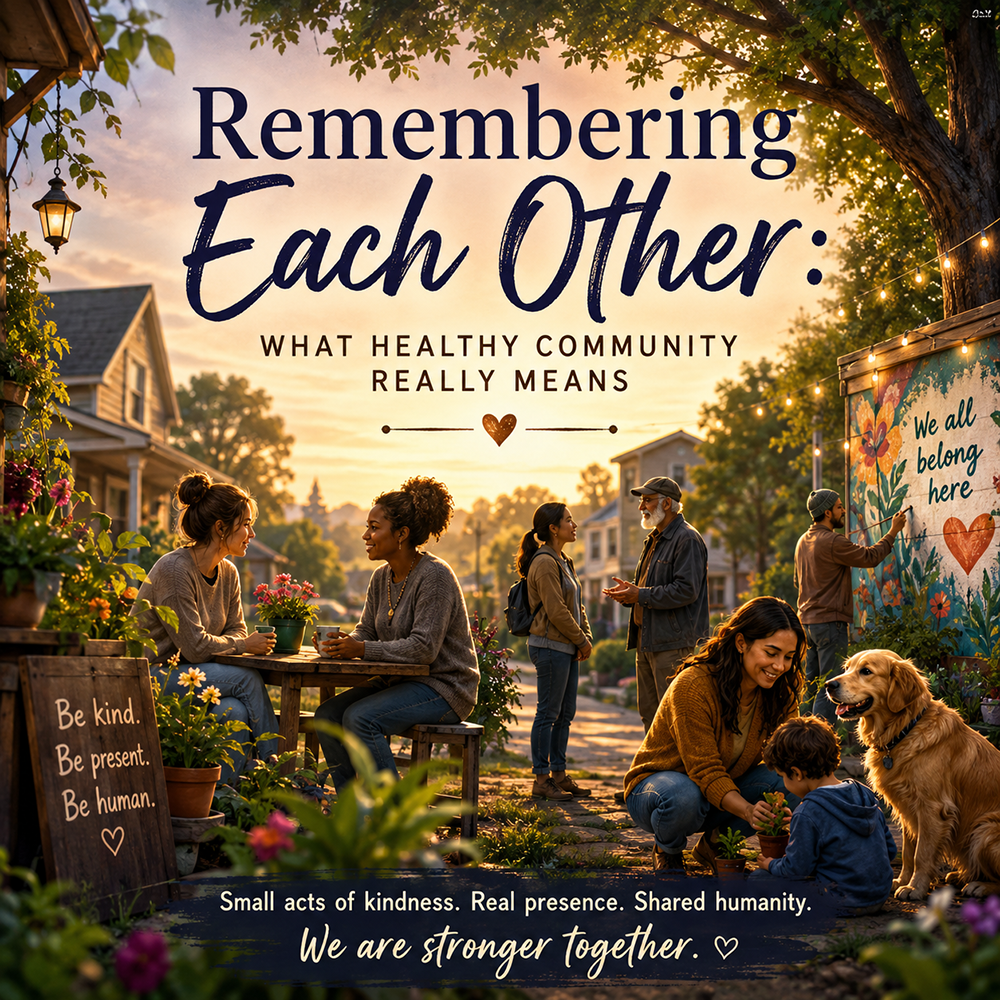
Learning to Trust Healthy Kindness Again
When kindness has hurt you before, accepting genuine kindness can become surprisingly difficult.
Because sometimes the wound is not that no one ever helped.
Sometimes the wound is that help was not safe.
Help came with conditions.
Care came with criticism.
Support came with control.
So, eventually your heart learns: “Be careful.”
Because last time someone offered something, there was a price you did not know you were agreeing to pay.
Some people learn: “I should never need anyone.”
They become fiercely independent because dependence once meant danger.
They convince themselves:
- “I will do everything alone.”
- “I will never ask for help.”
- “I will never put myself in a position where someone can hold something over me again.”
And that response makes sense.
A heart that has been trapped does not want to walk into another cage.
Others learn a different lesson.
They learn: “People only value me for what I provide.”
They become afraid that if they stop giving, people will leave.
They wonder:
- “Do they actually love me?”
- “Or do they love what they receive from me?”
- “Would they still choose me if I had nothing to offer?”
And that wound is painful, too.
Because nobody wants to feel like a resource instead of a person.
Healthy love heals both fears.
To the person afraid of receiving, it says:
- “You can accept support without surrendering yourself.”
- “You can need others and still be powerful.”
- “You can be grateful and still have boundaries.”
To the person afraid of giving, it says:
- “You are allowed to protect yourself.”
- “You do not have to buy love.”
- “You do not have to rescue everyone to prove you are good.”
- “You are worthy even when you say no.”
 Jessica Carey
True connection is not built from one person saving and another person owing.
It is built from two whole humans recognizing each other.
Sometimes I have more.
Sometimes you have more.
Sometimes I need support.
Sometimes you need support.
Sometimes the kindest thing I can say is “yes.”
Sometimes the kindest thing I can say is “no.”
Both can be love.
Because kindness is not about abandoning yourself.
It is not about abandoning others.
It is the space where compassion and boundaries meet.
The place where we can say:
- “I matter.”
- “You matter, too.”
And we build from there.
Maybe that is what real community was always supposed to be.
Not a hierarchy.
Not rescuers and burdens.
Not powerful people and powerless people.
Just humans.
Different strengths.
Different struggles.
Different seasons.
Holding a little extra light for each other when someone else’s gets dim.
Not because they owe us their flame afterward.
But because we remember what darkness feels like.
 Jessica Carey
You Can Tell the Difference by What Grows There
Maybe one of the clearest ways to recognize the difference between love and control is to look at what grows in its presence.
Because both may say: “I care about you.”
Both may say: “I am trying to help.”
Both may say: “I only want what is best.”
But the results often look very different.
Control creates fear.
Love creates safety.
Control creates shrinking.
Love creates becoming.
Control says: “You can be yourself as long as your self does not inconvenience me.”
Love says: “I want to know who you really are.”
A flower struggling to bloom does not need someone standing over it yelling:
- “Grow faster!”
- “What is wrong with you?”
- “Why aren’t you blooming yet?”
- “After everything I’ve done watering you, this is all you’ve grown?”
 Jessica Carey
It needs someone willing to understand what is happening.
Maybe it needs different soil.
More sunlight.
More water.
More time.
More protection from the storms it has been trying to survive.
A struggling flower is not helped by shame.
It is helped by the conditions that allow life to return.
People are not so different.
Sometimes we blame ourselves for not blooming in environments where we were barely surviving.
We wonder:
- “Why am I so tired?”
- “Why can’t I create?”
- “Why can’t I relax?”
- “Why can’t I just be happy?”
But living things respond to their environments.
A plant placed in darkness will naturally reach desperately for light.
That does not mean the plant failed.
It means the plant was trying to survive.
Real love brings people closer to themselves.
You start recognizing your own voice again.
You laugh more.
You create more.
You become curious.
You rest without as much guilt.
You discover parts of yourself that were buried underneath survival.
Not because someone else fixed you.
But because safety finally gave you room to unfold.
True kindness does not demand: “Become who I need you to be.”
It asks: “Who were you before the world convinced you that person was not welcome?”
It does not carve someone into a preferred shape.
It helps uncover what was already there.
That is why safe people often feel different.
Your nervous system notices.
Your creativity notices.
Your joy notices.
Your body notices.
Around some people, you constantly feel like you are holding your breath.
Around others, you finally exhale.
That exhale matters.
Sometimes that exhale is your heart recognizing: “This is what peace feels like.”
The world does not need more people controlling others “for their own good.”
It needs more people creating spaces where others remember their own goodness.
Places where people are not projects.
Where help does not become ownership.
Where kindness does not become currency.
Where love does what love was always meant to do:
Help living things grow.
 Jessica Carey
Kindness Does Not Require Losing Yourself
Sometimes when people with gentle hearts get hurt enough times, they begin to wonder if kindness itself was the mistake.
- Maybe I cared too much.
- Maybe I should have been colder.
- Maybe having a soft heart was the problem.
But maybe the problem was never the kindness.
Maybe the problem was kindness without protection.
A lighthouse does not stop shining because storms exist.
But it also does not throw itself into the ocean trying to rescue every ship.
It stands firmly rooted.
It shines.
It guides.
It offers what it was built to offer.
And it remains standing.
Maybe healthy kindness is like that.
Not a wall.
Not a cage.
A light with a foundation.
There are people who have spent their whole lives being valued for what they provide.
Their money.
Their skills.
Their emotional support.
Their ability to fix problems.
Their willingness to always show up.
And slowly, a painful question can begin forming: “If I stopped giving, would I still be loved?”
That question matters.
Because nobody deserves to feel like their worth comes only from their usefulness.
 Jessica Carey
A kind heart still belongs to a person who needs care, too.
You are allowed to ask:
- “Do I actually want to give this?”
- “Am I giving freely, or am I giving because I am afraid?”
- “Will I feel peaceful afterward, or will I feel resentful?”
- “Am I helping someone stand, or am I repeatedly carrying someone who refuses to try?”
These questions do not make someone selfish.
They allow kindness to stay healthy.
Real love exists in freedom on both sides.
The person receiving help should not become controlled.
The person giving help should not become consumed.
The receiver is allowed to say: “Thank you, but I am still my own person.”
The giver is allowed to say: “I care about you, but I have limits, too.”
Both people matter.
 Jessica Carey
Healthy kindness is not a one-way river where one person endlessly pours themselves out until they run dry.
It is more like a garden.
Different things bloom in different seasons.
Sometimes one plant needs more water.
Sometimes another needs support.
Sometimes something needs rest.
But the goal is the health of the whole garden.
Not sacrificing one living thing to keep another alive.
The world does not need fewer caring people.
It needs more people who understand that love and boundaries were never enemies.
The opposite of being controlled is not becoming cold.
The answer is learning how to keep your heart open without handing everyone the key to your entire house.
Because true kindness includes you, too.
 Jessica Carey
We Were Never Meant to Do Everything Alone
Somewhere along the way, many of us learned that needing help meant we had failed.
That strength meant carrying everything quietly.
That independence meant never leaning on anyone.
That if we could not handle everything ourselves, we were not trying hard enough.
But humans were never designed to exist in isolation.
We have always survived through connection.
Community.
Different people bringing different strengths.
Different people helping in different seasons.
A forest survives because everything is connected.
The tallest trees provide shelter.
Smaller plants protect the soil.
Fungi create hidden networks beneath the ground.
Fallen leaves return nutrients for new growth.
Everything gives.
Everything receives.
Not always equally.
Not always at the same time.
But together, the ecosystem thrives.
Healthy community works the same way.
Some people have financial resources.
Some people have knowledge.
Some people have creativity.
Some people have time.
Some people have encouragement.
Some people know how to fix things.
Some people know how to listen.
Some people notice beauty others overlook.
Everyone has something.
And everyone will have seasons where they need something.
The problem is not needing each other.
The problem is when needing each other becomes distorted.
When support becomes control.
When generosity becomes superiority.
When asking for help becomes shame.
When giving help becomes a way to gain power.
That is where things break.
True community does not say: “I am above you because I am helping.”
It says:
- “Today I have something you need.”
- “And someday, you may have something someone else needs.”
It recognizes that circumstances change.
The person receiving support today may be the person creating something beautiful tomorrow.
The person who needs rest today may be the person offering shelter later.
The person who needs encouragement today may become someone else’s reason to keep going.
Kindness is not supposed to create a ladder where some people stand above others.
It creates a circle.
A place where people can bring what they have.
Receive what they need.
And remember that being human was never supposed to be a solo project.
Maybe the greatest act of kindness is not saving someone.
Maybe it is seeing someone.
Looking at another person and saying: “You are still valuable here.”
Not because of your money.
Not because of your productivity.
Not because of what you can do for me.
Simply because you exist.
Because you are a living being.
And living beings deserve care.
This belief in community care is part of why I started collecting creative resources and support opportunities for local artists and neurodivergent individuals.
 Jessica Carey
 Jessica Carey
Becoming the Kindness You Needed
One of the most beautiful things humans can do is choose not to pass their pain forward.
To experience loneliness and choose connection.
To experience cruelty and choose compassion.
To experience control and choose freedom.
To experience a lack of support and decide: “I want to help create something different.”
That choice matters.
Because pain changes people.
But we still get to participate in what it changes us into.
Sometimes people who have been deeply hurt build walls and promise: “No one will ever hurt me again.”
And that response is understandable.
Walls can feel safer than open doors.
But if we are not careful, the same walls that keep pain out can also keep love from entering.
Other people swing the opposite direction.
They remember how much it hurt to struggle alone, so they promise: “I will never let anyone else feel that way.”
They become the helper.
The fixer.
The person everyone can depend on.
But sometimes they forget they are a person who needs care, too.
They become the safe place they never had, while never allowing themselves to experience safety.
Healing asks for something different.
Not a closed heart.
Not an empty cup.
A heart with both compassion and boundaries.
A heart that says: “I know what darkness feels like, so I will bring light where I can.”
And also: “I am a living being who needs warmth, too.”
The goal is not to become someone who never needs help.
The goal is not to become someone who saves everyone.
The goal is to become someone who remembers:
Everyone has humanity.
Including yourself.
Maybe one of the greatest ways we heal is by becoming proof that another way exists.
Being the person who listens because we know what it felt like to be unheard.
Creating safe spaces because we know what unsafe spaces cost.
I have been grateful to discover people and places already creating those kinds of spaces:
 Jessica Carey
 Jessica Carey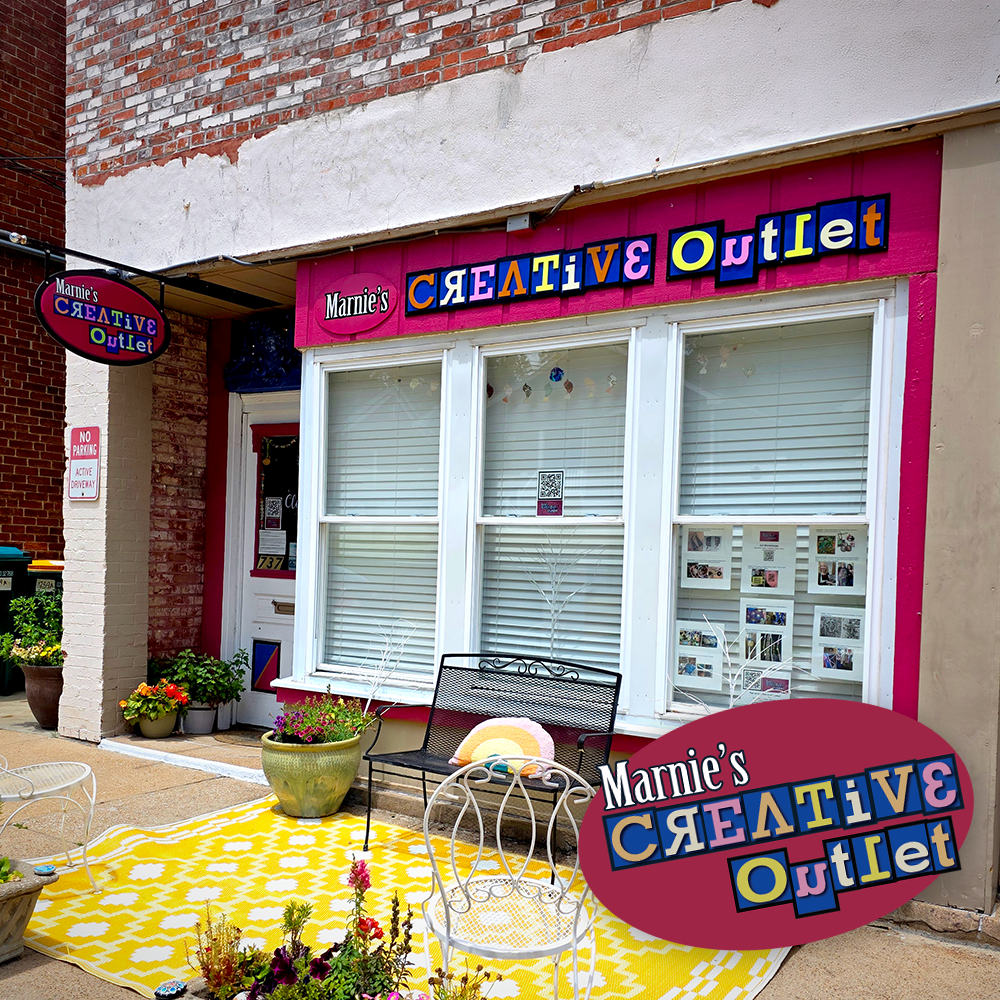
 Jessica Carey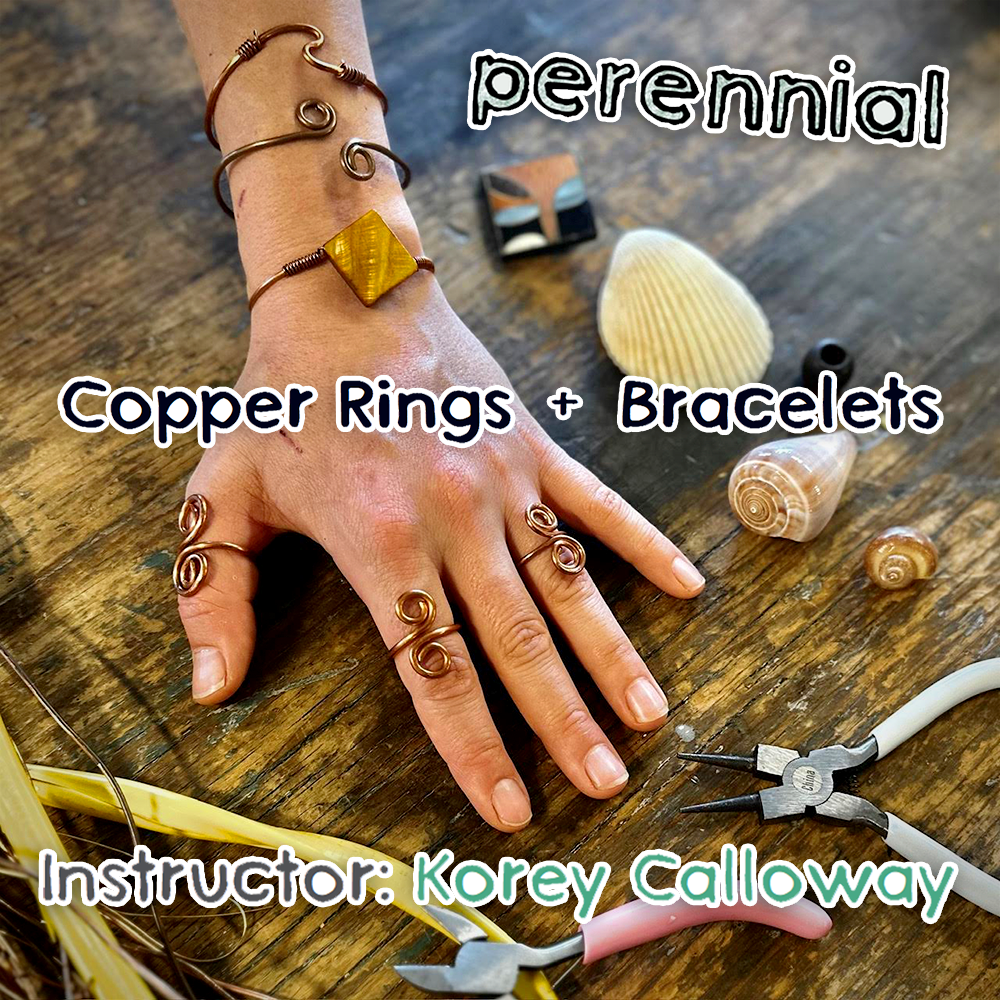
Offering encouragement because we know how heavy discouragement becomes.
Choosing gentleness because we know how deeply harshness wounds.
Not because we owe the world our exhaustion.
Not because our pain only matters if something beautiful comes from it.
But because we have the power to choose what we grow from the soil we were given.
A flower that grew through concrete does not owe everyone its petals.
But when it blooms, its existence reminds others:
Growth is still possible here.
Beauty is still possible here.
Life is still possible here.
And sometimes that reminder alone is an act of kindness.
This idea is also the heart behind Everyone Creates: building spaces where creativity, resources, and support are shared without shame.
 Jessica Carey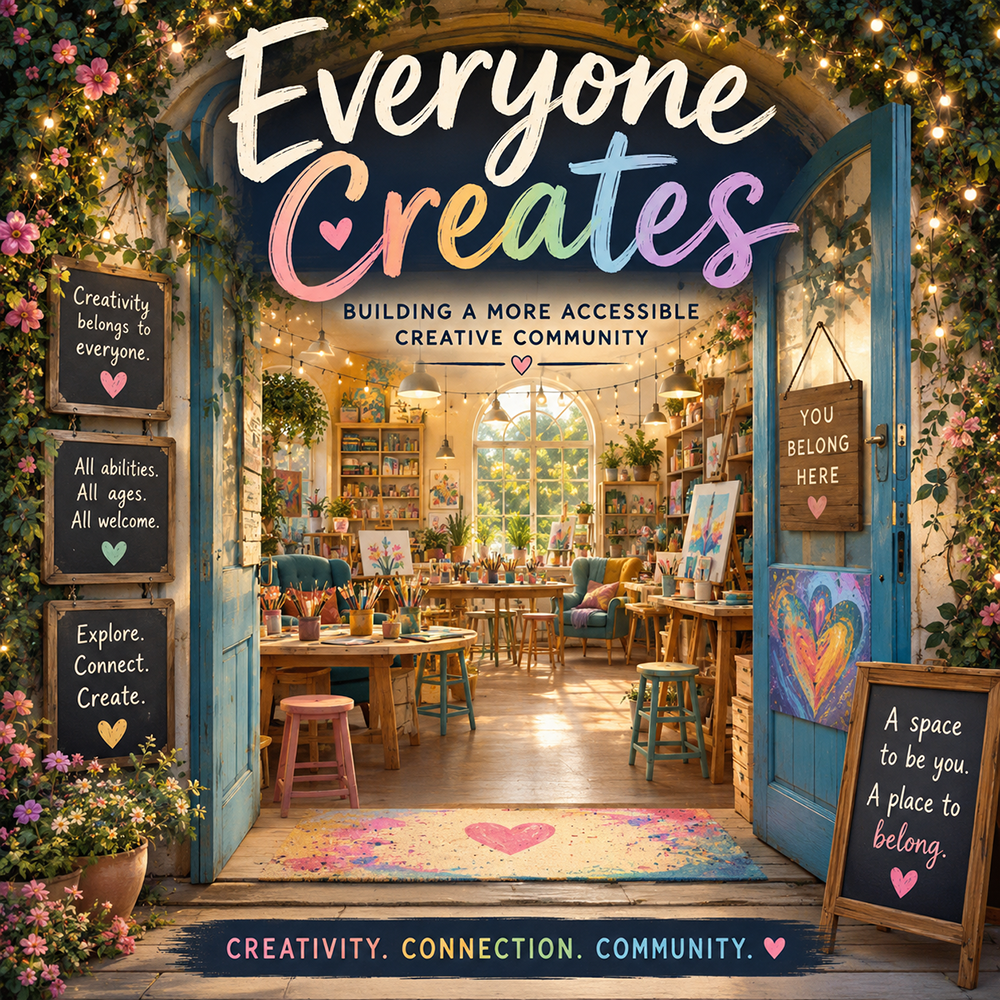
A Different Kind of Love Is Possible
For anyone who has only known love mixed with fear, control, guilt, or conditions, it can be difficult to imagine anything else.
When something has been normal for long enough, we sometimes mistake familiar for healthy.
We tell ourselves:
- “Maybe this is just how relationships work.”
- “Maybe everyone keeps score.”
- “Maybe love always comes with a price.”
But it doesn’t.
There is another kind of love.
A quieter kind.
A safer kind.
A kind that does not need to announce how much it has done.
A kind that does not use yesterday’s generosity as tomorrow’s weapon.
A kind that does not require you to become smaller so someone else can feel bigger.
Real kindness feels different.
It feels like breathing after holding your breath for years.
It feels like a door opening instead of a cage closing.
It feels like someone sitting beside you instead of standing above you.
It feels like: “You are welcome here.”
Not because you earned enough.
Not because you performed enough.
Not because you became exactly who someone wanted you to be.
Simply because you are a living being worthy of compassion.
And maybe that is one of the most beautiful things we can offer each other.
Not perfection.
Not endless giving.
Not fixing every problem.
Just moments of genuine humanity.
A safe place to land.
A reminder that someone cares.
A little more light in a world that can sometimes feel heavy.
Kindness does not have to be loud to change a life.
Sometimes it looks like a meal shared.
A listening ear.
A room offered.
A resource passed along.
A moment where someone says:
- “I see you.”
- “You matter.”
- “You do not have to carry everything alone.”
The kindness I want to believe in — and the kindness I hope to create — is not made of strings.
It is not made of cages.
It is not made of fear.
It is made of open hands.
Strong roots.
Gentle hearts.
 Jessica Carey
Want even more content about creativity and art?
Be sure to check out all of our creative chronicles!
If you'd like to see examples of my work, you can find some of my art and creations at Redbubble and Gumroad!
Looking to learn more about my recent journey?
Check out some of these articles:
-The Difference Between Resting and Giving Up
-Real Friendship is a Safe Place to be Human
-Hidden Gems for St. Louis Artists
-Hidden Gems for Autistic & Neurodivergent Adults
-I Think I Might Be Autistic... Now What?
 Jessica Carey