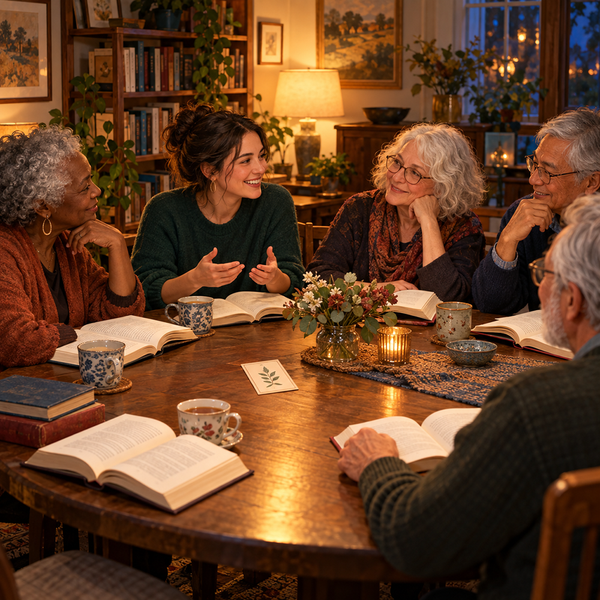


One of the deepest longings of the human heart is not simply to be noticed; it is to be known.
To have someone see beyond our accomplishments, our appearance, our roles, or the carefully edited version of ourselves we present to the world.
To be known is to have someone recognize who we are beneath all the expectations.
Beneath the masks.
Beneath the performances.
Beneath the fear that we must constantly prove our worth.
Many people spend years surrounded by others while quietly wondering whether anyone truly knows them.
They may be admired for what they accomplish.
Respected for what they contribute.
Appreciated for what they give.
Loved for the role they play.
But somewhere underneath those relationships lives a quieter question: "If people knew the whole of me… would they still choose me?"
Perhaps few questions require more courage to ask.
From an early age, many of us begin learning which parts of ourselves feel welcome and which parts seem safer to hide.
Perhaps we were praised for always being helpful.
So, we learned to keep our own needs quiet.
Perhaps we discovered that being agreeable earned approval.
So, we stopped saying when something hurt.
Perhaps our excitement was called "too much."
Our sensitivity became "too emotional."
Our curiosity became "too many questions."
Our mistakes became labels we carried far longer than they deserved.
Perhaps we learned that belonging depended on fitting in.
On being easy.
On being useful.
On never making anyone uncomfortable.
Little by little, we begin editing ourselves.
Not because we are trying to deceive anyone.
But because every human being longs to belong.
When acceptance feels uncertain, pretending can begin to feel safer than honesty.
Over time, something subtle begins to happen.
The mask that once felt temporary slowly becomes familiar.
We stop asking: "Who am I?"
And start asking: "Who do I need to be for other people?"
Without realizing it, our identity becomes shaped more by expectations than by authenticity.
We become experts at reading the room.
Sensing what people want.
Adjusting our personalities.
Changing our opinions.
Hiding our struggles.
Downplaying our excitement.
Making ourselves smaller—or sometimes larger—depending on what feels safest.
From the outside, it can look like confidence.
On the inside, it can feel profoundly lonely.
Because there is a unique kind of loneliness that comes from being loved for a version of yourself that isn't fully real.
The tragedy is not that people wear masks.
There are seasons when we all protect tender parts of ourselves while trust is still growing.
Wisdom invites discernment.
Not every person is a safe person.
Not every relationship has earned access to our deepest thoughts, fears, or dreams.
Healthy vulnerability is not the same as indiscriminate openness.
It unfolds over time, alongside trust, mutual care, and consistent respect.
The deeper tragedy is believing that the mask is what made us worthy of love in the first place.
When we begin to believe that belonging must always be earned through performance, we stop experiencing relationships as places of rest.
Instead, they become stages.
We feel responsible for maintaining the right image, saying the right things, and avoiding the parts of ourselves we fear might be rejected.
That is not belonging.
It is exhausting.
Healthy relationships tell a different story.
They do not demand perfection before offering acceptance.
They do not require constant performance before extending care.
Instead, they slowly create something precious: safety:
- The kind of safety that allows people to speak honestly
- To admit uncertainty
- To laugh loudly
- To ask for help
- To change their minds
- To make mistakes
- To have needs
- To dream impossible dreams
- To bring both their strengths and their struggles into the relationship without fearing that either one will cost them their place
Authenticity is rarely born from bravery alone.
More often, it grows in environments where people discover, little by little, that they no longer have to hide.
Perhaps that is one of the greatest gifts we can offer another person.
Not admiration for the image they project.
But enough love, patience, and safety that they begin to believe they no longer need to project one at all.
Because there is a profound difference between being accepted for the role you play...
And being cherished for the person you truly are.
One asks you to keep performing.
The other quietly says:
- "You don't have to pretend here."
- "You don't have to earn your place."
- "You already belong."
Truly knowing another person is one of the slowest and most beautiful projects love ever undertakes.
And perhaps that is one of the bravest moments in any healthy relationship.
Not the moment someone finally knows everything about us.
But the moment we begin to believe that being fully known might not lead to rejection after all.
It might lead us home.
 Jessica Carey
Why We Hide
Few people wake up one morning and decide: "Today, I'm going to stop being myself."
More often, it happens gradually.
Quietly.
Almost invisibly.
Perhaps we shared an idea and were laughed at.
We expressed excitement and were told to calm down.
We cried and heard: "You're too sensitive."
We asked for help and were made to feel like a burden.
We admitted we were struggling and were met with criticism instead of compassion.
Or perhaps no one ever said these things directly.
Maybe we simply noticed which versions of ourselves received smiles...
And which versions were ignored.
Which emotions were welcomed.
Which ones made people uncomfortable.
Which dreams were encouraged.
Which parts of our personality seemed to fit.
Little by little, we begin making small adjustments.
Not because we are dishonest.
But because we are human.
Because belonging matters.
There is wisdom in learning how to live respectfully with others.
Every healthy relationship asks us to practice kindness, humility, and consideration.
Authenticity has never meant saying whatever comes to mind or refusing to grow.
Becoming fully known is not about rejecting wisdom or accountability.
It is about no longer believing we must hide who we are in order to deserve love.
 Jessica Carey
There is an important difference between maturity and masking.
Maturity helps us become more thoughtful while masking asks us to become less ourselves.
One helps us grow.
The other teaches us to disappear.
Sometimes the masks we wear are obvious:
- The person who pretends everything is fine
- The one who never asks for help
- The person who always has to appear successful
- The one who never lets anyone see them cry
Sometimes the masks are far more subtle:
- Always agreeing to avoid conflict
- Laughing when something actually hurt
- Pretending not to care
- Downplaying our excitement so we don't seem "too much."
- Hiding our passions because they feel unusual
- Never admitting we are lonely
- Always being the strong one
- Always being the funny one
- Always being the responsible one
Sometimes we become so accustomed to these roles that we no longer realize they are roles.
One of the saddest consequences of living behind a mask is that even when people genuinely care for us, we may struggle to believe their love is meant for us.
Instead, we quietly wonder: "Do they love me... or the version of me I've learned to present?"
If our belonging has always felt tied to performance, compliments can become strangely empty.
Praise for being capable.
Reliable.
Successful.
Helpful.
Perfect.
Can leave us feeling unseen if those are the only parts of ourselves anyone ever notices.
Deep down, we may wonder:
- "Would I still be worthy of love if I were tired?"
- "If I failed?"
- "If I changed my mind?"
- "If I admitted I was afraid?"
- "If I stopped pretending I had everything together?"
These questions are not signs of weakness.
They are signs of a heart longing to be loved as a person rather than evaluated as a performance.
Perhaps this is why authenticity requires courage.
Not because being ourselves is inherently frightening.
But because we cannot control how others will respond.
Every act of honesty carries a small risk.
Every genuine opinion.
Every vulnerable conversation.
Every boundary.
Every dream shared aloud.
Every admission of uncertainty.
Every moment we allow another person to see us more clearly.
Authenticity always involves trust.
It is an invitation rather than a demand.
A gift offered carefully.
Not because we expect everyone to receive it well.
But because somewhere along the way, we begin believing that living truthfully is worth more than endlessly performing.
The beautiful thing is that healthy relationships respond differently than unhealthy ones.
Instead of asking: "How can I make you fit?"
They ask: "Who are you?"
Instead of rewarding conformity above all else, they become curious.
They make room for differences.
They welcome honest conversations.
They recognize that no two people are meant to become identical.
Real belonging isn't built by making everyone the same.
It's built by creating enough safety that people no longer have to hide.
And perhaps that is where genuine community begins.
Not when everyone agrees about everything.
But when people no longer fear that being honest will cost them their place.
 Jessica Carey
Identity Is Bigger Than the Roles We Play
Every one of us plays many roles throughout life:
- A parent
- A child
- A spouse
- A friend
- A teacher
- A caregiver
- An employee
- A leader
These roles matter.
They shape our responsibilities and the ways we contribute to the lives of others.
But they are not the whole of who we are.
Sometimes, especially in unhealthy environments, a role slowly becomes an identity.
We stop being a person who is responsible...
And begin believing we must always be the responsible one.
We stop being someone who enjoys making people laugh...
And become the funny one who never lets anyone see sadness.
We become the peacemaker.
The achiever.
The caretaker.
The strong one.
The easy one.
The dependable one.
Over time, the role grows so familiar that we begin confusing it with ourselves.
Yet every role leaves parts of us unseen:
- The responsible one still needs rest
- The caretaker still needs care
- The funny one still experiences grief
- The strong one still becomes overwhelmed
Healthy relationships gently remind us that we are always more than the role we play.
They make room for the whole person.
Not just the part that has always served everyone else.
 Jessica Carey
Safe People Help Us Become More Ourselves
One of the quietest miracles of a healthy relationship is that it does not ask us to become someone else.
Instead, it gives us permission to become more fully ourselves.
This rarely happens all at once.
Authenticity isn't a switch we flip.
It unfolds.
Little by little, we begin testing the waters:
- We share an honest opinion.
- We admit we don't have everything figured out.
- We laugh a little louder.
- We reveal a dream we've kept to ourselves.
- We ask for help.
- We say "no" without apologizing for existing.
- We stop pretending we're okay when we aren't.
Each small act of honesty becomes a question: "Will you still be here if you see this part of me?"
Healthy relationships answer that question over and over again.
Not merely with words.
But with consistent presence.
Safety is built through thousands of ordinary moments:
Someone listens without interrupting.
They remain curious instead of becoming defensive.
They don't mock our enthusiasm.
They don't shame our emotions.
They don't punish honesty.
They don't weaponize vulnerability during future disagreements.
They apologize when they hurt us.
They celebrate our uniqueness instead of trying to reshape it.
None of these moments seem extraordinary on their own.
Yet together they quietly communicate something life-changing: "You don't have to hide here."
Perhaps this is why emotional safety feels so deeply peaceful.
Our nervous system no longer spends every interaction asking: "Who do I need to be today?"
Instead, it slowly begins asking: "Who am I becoming?"
That is a profoundly different question.
One is rooted in fear.
The other is rooted in freedom.
One is concerned with survival.
The other makes room for flourishing.
Healthy relationships often reveal parts of ourselves we didn't even know were waiting:
- The playful person who had forgotten how to laugh
- The artist who stopped creating after years of criticism
- The curious child who learned to stop asking questions
- The gentle soul who became guarded after repeated disappointment
- The dreamer who convinced themselves it was safer not to hope
None of these parts disappeared.
They simply waited for an environment where it felt safe to emerge again.
Healthy relationships don't manufacture these qualities; they uncover them.
Like sunlight reaching a garden after a long winter, they create the conditions where dormant things begin to grow.
This is one reason love is so much more than acceptance.
Acceptance says: "You can stay."
Healthy love says: "You can grow."
It delights in watching people become more confident.
More honest.
More creative.
More peaceful.
More courageous.
Not because they are becoming someone new.
But because they are becoming more fully who they were created to be.
 Jessica Carey
Healthy love does not shrink people.
It expands them.
One of the most beautiful questions we can ask ourselves about any relationship is not: "Does this person like me?"
But: "Who do I become when I'm with them?"
- Do I feel smaller or freer?
- Do I speak honestly or carefully calculate every word?
- Do I laugh naturally or constantly monitor myself?
- Do I feel inspired to grow, or pressured to perform?
- Do I leave feeling more connected to myself...
- Or further away?
Healthy relationships have a remarkable way of helping us feel more at home within our own lives.
Not because they solve every problem.
But because they remind us that we never had to become someone else in order to be worthy of love.
Perhaps this is why healthy relationships are so transformative.
They don't simply tell us that we matter.
They create experiences where we begin to believe it.
Not because they flatter us.
Not because they ignore our imperfections.
But because they continue choosing relationship while seeing both our strengths and our struggles.
That kind of love doesn't merely comfort us.
It quietly reshapes the way we see ourselves.
When fear no longer consumes so much of our energy, something beautiful begins to happen.
We become more playful.
More curious.
More creative.
We laugh more easily.
We take healthy risks.
We ask questions without embarrassment.
We begin dreaming again.
We notice beauty more often.
We become more generous because we are no longer spending all our energy protecting ourselves.
Healthy relationships do not merely remove fear.
They make room for life.
Like a tree that finally has enough sunlight to grow new branches, people often discover gifts, interests, and parts of themselves they thought had been lost:
- The musician picks up an instrument again
- The artist begins creating
- The childlike wonder returns
- The quiet person begins sharing ideas
- The exhausted person laughs without forcing it
- The hopeful person begins making plans for the future
Healthy relationships don't simply make us feel safer.
They make us more fully alive.
 Jessica Carey
Being Known Requires Witnesses
To know another person is not merely to observe them.
It is to bear witness to their life.
To notice who they are becoming.
To remember the stories they have shared.
To celebrate their victories.
To grieve their losses.
To recognize the small changes others might overlook.
Healthy relationships are filled with this quiet kind of attention:
- Someone remembers your favorite book.
- They ask how your interview went.
- They notice when your smile seems forced.
- They remember the dream you almost gave up on.
- They celebrate the artwork you finally finished.
- They recognize the courage it took to set a difficult boundary.
None of these moments seem dramatic.
Yet together they quietly communicate: "Your life matters enough for me to pay attention."
Perhaps this is one of the deepest meanings of being known.
Not simply that someone possesses information about us.
But that someone continually bears witness to our life with care.
Healthy relationships often help us discover ourselves as much as they help others discover us.
Sometimes another person's curiosity, encouragement, and acceptance reveal gifts, strengths, and dreams we had forgotten were there.
Being known by someone else often becomes one of the ways we come to know ourselves more honestly.
 Jessica Carey
Love Is Curious
Healthy love does not assume it already knows another person.
It remains curious.
It keeps asking questions.
It notices what makes someone come alive.
It remembers the stories they've shared.
It delights in discovering new layers of who they are becoming.
To know someone is not to finish learning about them.
It is to keep paying attention.
People are not puzzles to solve.
They are lives to accompany.
Perhaps this is why healthy relationships stay fresh over the years.
The goal is never to say: "I already know everything about you."
The goal is to keep saying: "Tell me more."
Because every person is continually growing.
Changing.
Learning.
Healing.
Dreaming.
The people we love today will not be exactly the same people we love ten years from now.
Healthy love doesn't resist that growth.
It remains curious enough to grow alongside it.
Healthy relationships don't merely tolerate who we are.
They delight in discovering more of who we are becoming.
 Jessica Carey
We Cannot Be Fully Known if We Never Let Ourselves Be Seen
Many of us long for deeper relationships.
Yet without realizing it, we keep much of ourselves hidden.
Not because we are dishonest.
But because we are afraid:
- Afraid of being misunderstood
- Afraid of seeming strange
- Afraid of being "too much"
- Afraid of not being enough
So, we keep conversations safe.
We talk about the weather.
Work.
The news.
Our schedules.
We smile politely.
We say: "I'm fine."
We wait for someone else to go first.
Yet relationships rarely become deep by accident.
Someone eventually chooses to become visible.
Sometimes that looks surprisingly ordinary:
Sharing what genuinely excites you.
Admitting what you're struggling with.
Talking about a book that changed your thinking.
Inviting someone into a creative project.
Expressing gratitude.
Asking a meaningful question.
Saying: "I've never told many people this..."
Authenticity rarely begins with revealing everything.
It begins with revealing something real.
Each small act of honesty becomes an invitation.
Not a demand.
An invitation for deeper connection.
 Jessica Carey
Vulnerability Is an Invitation, Not a Performance
Being fully known does not happen all at once.
Trust grows the same way a garden grows.
Not overnight.
But through consistent care:
- One conversation at a time
- One act of honesty
- One kept confidence
- One repaired misunderstanding
- One moment of kindness after another
Every honest conversation quietly removes another brick from the wall fear spent years building.
In healthy relationships, vulnerability is rarely demanded.
It is invited.
People begin sharing more of themselves because they discover it is safe to do so.
Not because someone insisted they "open up."
But because trust quietly earned the privilege of knowing more.
Healthy vulnerability is not about telling everyone everything.
Some parts of our lives are deeply personal.
Some stories are still healing.
Some dreams are too tender to place into careless hands.
Wisdom teaches us that openness and discernment belong together.
Being authentic does not mean removing every boundary.
It means allowing the right people to know us more deeply as trust grows.
Just as we would not hand a stranger the keys to our home, we need not immediately hand them the keys to our heart.
Both are precious.
Both deserve thoughtful care.
One of the beautiful things about vulnerability is that it often begins with surprisingly ordinary moments:
- Admitting: "I'm having a hard day."
- Saying: "I don't know."
- Asking: "Can you help me?"
- Sharing a dream we've been afraid to speak aloud
- Apologizing after we've caused hurt
- Letting someone see our unfinished work instead of waiting until it's perfect
- Allowing ourselves to cry in front of someone we trust
These moments may seem small.
Yet each one quietly says: "I'm choosing to let you see a little more of who I really am."
Healthy relationships receive those moments with care.
They don't rush to fix every problem.
They don't minimize another person's emotions.
They don't respond with ridicule or gossip.
They don't treat vulnerability as weakness.
Instead, they listen.
They ask thoughtful questions.
They honor what has been shared.
Sometimes they simply remain present.
Because often the greatest gift we can offer another person is not advice.
It is the assurance that they no longer have to carry something alone.
Unfortunately, not every relationship responds this way.
Some people misuse what has been entrusted to them.
They mock.
Manipulate.
Dismiss.
Weaponize.
Or betray confidence.
Experiences like these can make vulnerability feel dangerous.
It is understandable when someone who has repeatedly been hurt becomes cautious about opening their heart again.
Healthy relationships recognize this.
They do not shame people for protecting themselves.
Instead, they patiently rebuild trust through consistency.
Trust cannot be demanded.
It can only be demonstrated.
Perhaps this is why courage is such an important part of being known.
Not because courage removes fear.
But because courage allows us to take wise, thoughtful steps toward connection despite the possibility of being misunderstood.
Sometimes courage looks dramatic.
More often, it looks quiet:
- Speaking honestly
- Admitting uncertainty
- Setting a boundary
- Receiving a compliment instead of dismissing it
- Sharing a hope
- Allowing ourselves to be cared for
- Saying: "This is who I really am."
One small truth at a time.
Healthy vulnerability also transforms relationships in another important way.
When one person has the courage to be genuine, it often gives others permission to do the same.
An honest conversation replaces polite small talk.
Someone admits they are struggling.
Another shares a dream they have been hiding.
Laughter becomes less guarded.
Silence becomes more comfortable.
People stop competing to appear as though they have everything together.
Instead, they begin encouraging one another toward honesty.
Authenticity is remarkably contagious.
Like kindness, it has a way of quietly spreading through a relationship, a family, or even an entire community.
Perhaps this is one of the reasons vulnerability is so powerful.
It reminds us that relationships are not strengthened by pretending to be perfect.
They are strengthened by learning that imperfect people can still be deeply loved.
Not because their imperfections are ignored.
But because love sees the whole person:
- The strengths
- The weaknesses
- The victories
- The fears
- The dreams
- The disappointments
And chooses to remain present.
Perhaps being fully known has never been about finding people who believe we are flawless.
Perhaps it has always been about finding people who know we are human...
And choose relationship anyway.
 Jessica Carey
Authenticity Will Not Please Everyone
One of the hardest truths about becoming more authentic is that not everyone will celebrate it.
Sometimes the people who cheer the loudest are those who have always wanted to know the real you.
Other times, honesty changes the relationship.
Not because authenticity is wrong.
But because authenticity changes the patterns on which some relationships have been built.
Perhaps someone has always expected you to say yes.
To remain quiet.
To avoid disagreement.
To meet their needs before your own.
To laugh off hurt feelings.
To stay small enough that they never have to examine their own behavior.
When you begin speaking honestly...
Setting healthy boundaries...
Expressing your own needs...
Or simply allowing your true personality to be seen...
Those patterns begin to change.
Sometimes the relationship grows stronger.
Sometimes it becomes strained.
Not because authenticity destroys healthy relationships.
But because unhealthy patterns often depend on someone continuing to play a role.
This can feel heartbreaking.
Especially when we genuinely care about the other person.
We may wonder if we are becoming selfish.
Too difficult.
Too sensitive.
Too honest.
But there is an important question worth asking: Did the relationship become unhealthy because you became more yourself?
Or: Did becoming more yourself simply reveal that the relationship had only been comfortable with the version of you that kept sacrificing yourself?
Those are not the same thing.
One blames authenticity.
The other reveals conditional acceptance.
Healthy relationships make room for growth.
They expect people to change.
To mature.
To learn.
To discover new passions.
To develop new convictions.
To become more confident.
To heal from old wounds.
To become more honest about what they need.
Real love is curious about that growth.
It doesn't demand that people remain frozen in time.
It asks: "Who are you becoming?"
And then it walks beside them with interest, encouragement, and respect.
This does not mean healthy relationships never experience tension.
Of course they do.
Growth often requires difficult conversations.
Misunderstandings happen.
People disappoint one another.
Needs change.
Life changes.
Healthy relationships are not defined by the absence of conflict.
They are defined by their willingness to respond with humility, curiosity, repair, and mutual respect.
Authenticity does not eliminate challenges.
It creates the possibility of facing those challenges honestly instead of hiding behind performance.
Sometimes authenticity also reveals something unexpected.
The people who truly love us are often relieved when we stop pretending.
Perhaps they were tired, too.
Perhaps they had been waiting for permission to stop performing themselves.
One honest conversation becomes another.
One vulnerable moment opens the door for another.
Gradually, the relationship becomes less about maintaining appearances...
And more about genuinely knowing one another.
Authenticity has a remarkable way of inviting authenticity.
When one person has the courage to remove their mask, others often discover they no longer want to wear theirs either.
This is one reason healthy communities are so life-giving.
They are not places where everyone looks the same, thinks the same, or expresses themselves in identical ways.
They are places where differences can exist without threatening belonging.
Where questions are welcomed.
Where individuality is celebrated.
Where people are encouraged to contribute their unique gifts rather than suppress them.
A healthy community understands something beautiful.
Unity does not require uniformity.
In fact, diversity of personality, experience, perspective, culture, creativity, and gifting often makes a community richer.
Just as an orchestra creates harmony through many different instruments rather than one repeated note, healthy relationships become more beautiful when each person is free to bring their authentic self.
Perhaps this is one of the quietest forms of courage.
Not convincing everyone to accept us.
Not proving our worth.
Not winning universal approval.
Simply choosing, day by day, to live honestly.
To love generously.
To remain teachable.
To continue growing.
And to trust that the relationships capable of flourishing will not require us to become less ourselves in order to belong.
Because perhaps the goal was never to be accepted by everyone.
Perhaps the goal has always been to become fully ourselves—and to build relationships where everyone else is free to do the same.
Authenticity and integrity are close companions, but they are not the same.
Authenticity asks: "Am I being honest about who I am?"
Integrity asks: "Am I living in a way that reflects what I believe?"
Healthy relationships encourage both.
They create enough safety for us to be honest about ourselves while also encouraging us to continue growing in wisdom, kindness, humility, and courage.
Authenticity without integrity can become self-centered.
Integrity without authenticity can become performance.
Healthy love invites us to become both genuine and grounded.
Not pretending to be someone we are not.
And not abandoning the values that help us become the best version of ourselves.
 Jessica Carey
To Be Fully Known Is to Finally Rest
There is a unique kind of exhaustion that comes from constantly managing how other people see us.
Wondering whether we said the right thing.
Whether we shared too much.
Whether we appeared capable enough.
Likeable enough.
Successful enough.
Interesting enough.
Strong enough.
For many people, relationships become places of constant calculation:
- Every conversation feels like something to navigate.
- Every interaction becomes another opportunity to perform.
- Every misunderstanding feels like a threat to belonging.
Over time, this quiet vigilance becomes exhausting.
Not because relationships are meant to be difficult.
But because pretending always requires energy.
Perhaps this is one of the greatest gifts healthy relationships offer: rest.
Not simply physical rest.
But relational rest.
The kind of rest that comes from no longer needing to constantly monitor yourself:
- You stop rehearsing every sentence before speaking.
- You stop apologizing for taking up space.
- You stop wondering whether every emotion will be judged.
- You stop believing that every mistake might cost you the relationship.
Instead, you begin to breathe more deeply.
Laugh more freely.
Speak more honestly.
Sit more comfortably in silence.
You discover that love feels remarkably peaceful when it no longer has to be earned.
This does not mean healthy relationships never challenge us.
They do.
They encourage growth.
Invite accountability.
Call us toward greater kindness, wisdom, and humility.
But there is an important difference between being challenged to grow...
And being pressured to become someone else.
Healthy love never asks us to abandon our humanity in exchange for acceptance.
It invites us to become more fully ourselves while continuing to grow in character.
Growth rooted in love expands us.
Performance rooted in fear shrinks us.
Perhaps this is why the most life-giving relationships often feel surprisingly ordinary:
- You can sit together without needing to impress one another.
- You can disagree without fearing abandonment.
- You can admit uncertainty without losing respect.
- You can laugh until tears fill your eyes.
- You can cry without apologizing.
- You can celebrate one another's victories without comparison.
- You can be quiet without feeling awkward.
- You can simply... be.
That kind of peace is difficult to describe until it has been experienced.
But once someone experiences it, they rarely mistake performance for belonging again.
There is something deeply healing about discovering that another person knows your strengths...
And your weaknesses...
Your confidence...
And your fears...
Your successes...
And your regrets...
And still chooses to remain.
Not because they believe you are perfect.
But because they understand that love has never depended on perfection.
It has always depended on relationship.
Being fully known does not remove every insecurity overnight.
But it slowly begins to loosen shame's grip.
Shame quietly whispers: "If people knew the real me, they would leave."
Love tells a different story.
Not that every person will understand us.
Not that every relationship will last.
But that our worth has never depended on hiding.
Healthy relationships don't eliminate every insecurity.
They slowly teach us that being imperfect is not the same thing as being unlovable.
Little by little, shame loses its voice.
Not because someone keeps complimenting us.
But because someone keeps showing up.
Instead of wondering: "If people really knew me..."
We begin discovering: "Someone really does know me."
And rather than rejection...
We experience acceptance.
Not the kind of acceptance that ignores our need to grow.
But the kind that reminds us we are worthy of love even while we are still growing.
Perhaps this is why being fully known feels so much like coming home.
Not because every question has been answered.
Not because every wound has healed.
But because the striving begins to quiet.
The performance begins to end.
The mask begins to loosen.
The heart begins to trust.
And we slowly discover something many of us have spent our entire lives searching for: a place where our soul no longer has to hide.
One of the beautiful paradoxes of healthy relationships is that they don't merely help us feel accepted by another person.
They help us become more at peace with ourselves.
When we are consistently met with honesty, patience, grace, and truth, we often stop relating to ourselves through constant criticism.
We become gentler.
More honest.
More compassionate.
More willing to grow without believing that every imperfection makes us unworthy.
Perhaps this is one of love's quietest miracles.
It doesn't simply change how two people relate to one another.
It slowly transforms how each person relates to themselves.
 Jessica Carey
Becoming the Kind of Person Who Makes Others Feel Safe
Perhaps one of the greatest gifts we can offer another person is not advice.
Not admiration.
Not even agreement.
Perhaps one of the greatest gifts we can offer is safety.
The kind of safety that quietly says:
- "You don't have to pretend with me."
- "You don't have to impress me."
- "You don't have to earn your place here."
- "I'm interested in knowing who you really are."
There are few gifts more healing than being welcomed without being asked to become someone else first.
Healthy relationships do not happen by accident.
They are built through countless ordinary choices.
Choosing curiosity instead of assumptions.
Listening instead of interrupting.
Asking questions instead of making judgments.
Protecting someone's confidence instead of sharing it casually.
Celebrating another person's uniqueness instead of trying to reshape them.
Making room for differences instead of demanding sameness.
Extending grace when someone is still learning.
Offering truth with kindness rather than using truth as a weapon.
Every one of these choices quietly tells another person: "It is safe to be human here."
Imagine what our homes might become if every member of the family felt free to be honest.
Imagine friendships where no one felt pressured to compete or pretend.
Imagine classrooms where children believed their questions were welcome.
Imagine workplaces where people could admit mistakes without humiliation and ask for help without fear.
Imagine neighborhoods where people were valued for who they were rather than what they achieved.
Imagine communities where belonging was rooted in mutual respect instead of conformity.
This is not an impossible dream.
It begins with ordinary people making ordinary choices, one relationship at a time.
Being the kind of person who helps others feel known does not require having all the right answers.
It asks for something both simpler and more challenging.
Presence.
Patience.
Humility.
The willingness to listen long enough to discover who someone really is instead of deciding for them.
The courage to remain curious.
The grace to let people surprise us.
The wisdom to remember that every person carries a story we have not yet fully heard.
This kind of love changes more than individual relationships ;it shapes cultures:
Children who grow up feeling known often become adults who know how to welcome others.
Friends who experience acceptance become friends who extend acceptance.
Communities that celebrate authenticity become places where creativity, courage, and compassion naturally flourish.
The freedom we receive rarely ends with us.
It continues through the way we love the next person.
Perhaps this is why being fully known is not merely a personal gift.
It is a communal one.
Every time we create space for another person to speak honestly...
To ask difficult questions...
To share their dreams...
To admit their fears...
To bring their whole self into a relationship without fearing rejection...
We help build the kind of world many hearts have quietly been longing for.
A world where people do not have to spend their lives hiding.
A world where belonging is not purchased through performance.
A world where love is generous enough to welcome truth.
None of us will do this perfectly.
There will be moments when we misunderstand one another.
Moments when fear speaks louder than love.
Moments when we miss opportunities to listen well or respond with grace.
Yet healthy relationships are not built by perfect people.
They are built by people who remain willing to learn.
To apologize.
To repair.
To grow.
To begin again.
The goal is not perfection.
It is faithfulness.
A continual choice to become the kind of person whose presence makes honesty feel a little safer.
Perhaps that is one of the quietest ways we help build something better.
Not by creating a world where no one is ever misunderstood.
But by creating relationships where misunderstanding is met with curiosity instead of condemnation.
Where differences are explored instead of feared.
Where growth is encouraged instead of controlled.
Where love does not ask people to become smaller in order to belong.
Instead, it invites them to become more fully alive.
Because perhaps one of the greatest measures of a healthy relationship is not how impressive it appears from the outside.
It is whether the people within it become freer to tell the truth.
Freer to grow.
Freer to love.
Freer to create.
Freer to rest.
Freer to become the people they were always meant to be.
And perhaps that is what it means to truly know another person.
Not to possess them.
Not to define them.
Not to remake them in our own image.
But to receive the gift of who they are with gratitude, to encourage their growth with humility, and to walk beside them with the quiet confidence that love is spacious enough for both truth and grace.
Because in the end, building something better begins one relationship at a time.
And every time someone leaves our presence feeling a little safer, a little more seen, and a little more free to be themselves...
We have helped build a world where more people can finally come home.
Every healthy relationship quietly hands us permission to remove one more layer of the mask.
We often think courage means putting on armor.
Sometimes courage is removing it.
Healthy environments don't produce identical people.
They allow different people to flourish.
A greenhouse doesn't tell every flower to become a rose.
It simply creates the conditions where each plant can grow according to its own nature.
Healthy relationships do the same.
Perhaps one of the greatest gifts of healthy relationships is not that they remove every fear.
It is that, over time, they quietly answer the question we have been carrying all along: "If you knew the real me... Would you still stay?"
Healthy love answers: "Yes."
Not because you are flawless.
Not because you have earned it.
Not because you never disappoint me.
But because relationships have never been about finding perfect people.
They have always been about learning to love real ones.
That creates beautiful symmetry.
 Jessica Carey
Want even more content about creativity and art?
Be sure to check out all of our creative chronicles!
If you'd like to see examples of my work, you can find some of my art and creations at Redbubble and Gumroad!
Looking to learn more about my recent journey?
Check some of these articles:
-The Difference Between Resting and Giving Up
-Hidden Gems for St. Louis Artists
-Hidden Gems for Autistic & Neurodivergent Adults
-I Think I Might Be Autistic... Now What?
 Jessica Carey