


To be human is to feel:
- Joy
- Grief
- Fear
- Anger
- Excitement
- Disappointment
- Love
- Loneliness
- Hope
Every emotion tells part of the story of what it means to be alive, yet emotions have often been misunderstood.
Some people are taught to suppress them.
To "get over it."
To stop crying.
To stay calm no matter what is happening inside.
As though healthy people simply stop feeling deeply.
Others are taught something very different.
That every emotion automatically justifies every reaction.
That because we feel something strongly... it must be completely true.
And because it feels urgent... everyone else must immediately respond to it.
Neither extreme reflects emotional health.
Healthy emotional regulation does not ask us to become less emotional.
Nor does it ask us to hand responsibility for our emotions to everyone around us.
Instead, it invites us to hold our emotions with both compassion and wisdom.
Our emotions are real.
They matter.
They often point toward something that deserves our attention.
Perhaps a need.
A wound.
A fear.
A hope.
A value.
Or an experience that asks us to slow down and listen more closely.
At the same time, emotions do not always tell us the whole story.
Feeling afraid does not automatically mean we are in danger.
Feeling rejected does not automatically mean someone intended to reject us.
Feeling angry does not automatically mean another person acted with harmful intent.
Sometimes our emotions accurately recognize reality.
Sometimes they are responding to incomplete information, old wounds, assumptions, or fears that deserve gentle exploration rather than immediate certainty.
That is why emotional regulation is not about ignoring our feelings.
It is about becoming curious enough to ask: "What is this emotion trying to tell me?"
And then asking another equally important question: "Do I have the whole picture?"
Healthy emotional regulation makes room for both.
It honors our inner experience without assuming our first interpretation is automatically the final truth.
It allows our emotions to have a voice.
Without giving them absolute authority.
Perhaps that is one of the greatest gifts emotional regulation offers.
The ability to experience our feelings fully... without becoming controlled by them.
To respond thoughtfully instead of reacting impulsively.
To remain connected to our values even when our emotions become intense.
And to remember that while our feelings deserve compassion...
They do not automatically deserve control over someone else.
Because emotional maturity is not measured by how little we feel.
It is measured by how lovingly, honestly, and wisely we learn to carry what we feel—both for our own well-being and for the well-being of the people around us.
 Jessica Carey
Emotions Are Information, Not Commands
Every emotion has something to say.
Joy may tell us that something feels deeply meaningful.
Fear may alert us to possible danger.
Sadness may reveal loss.
Anger may signal that something feels unfair or that a boundary has been crossed.
Loneliness may remind us of our need for connection.
Disappointment may point toward hopes that were not fulfilled.
In that sense, our emotions are incredibly valuable.
They invite us to pay attention.
To slow down.
To become curious.
To ask: "What is happening inside me right now?"
Yet emotions are only one part of the conversation.
They provide information, but they do not automatically provide instructions.
Information still benefits from interpretation.
Feeling afraid does not always mean we are unsafe.
Feeling embarrassed does not automatically mean we have done something wrong.
Feeling rejected does not necessarily mean someone intended to reject us.
Feeling angry does not automatically prove another person acted with harmful intent.
Sometimes our emotions recognize reality with remarkable accuracy.
Other times they are influenced by exhaustion.
Stress.
Past experiences.
Unhealed wounds.
Incomplete information.
Or assumptions that deserve further exploration.
That does not make our emotions unreliable.
It makes them human.
Healthy emotional regulation does not ask us to dismiss our emotions.
It asks us to become curious about them.
Instead of immediately asking: "How do I get rid of this feeling?"
It invites us to ask: "What might this feeling be trying to show me?"
And then: "What else do I need to understand before deciding how to respond?"
 Jessica Carey
Those questions create space between feeling and action.
Within that space, wisdom has room to grow.
We become less likely to react impulsively.
More likely to respond thoughtfully.
This is especially important during moments of intense emotion.
Strong feelings naturally narrow our attention.
- When we are frightened, we often look for danger.
- When we are angry, we often look for blame.
- When we are ashamed, we often look for evidence that we have failed.
Those reactions are understandable.
They are part of how our minds try to protect us.
Healthy emotional regulation gently widens our perspective again.
It reminds us that while our emotions deserve to be heard... they do not always tell the entire story.
Perhaps emotional maturity begins with learning to hold two truths at the same time: "This feeling is real."
And: "I may still have more to learn before I fully understand why I am feeling it."
That posture is neither dismissive nor naïve.
It is curious.
Compassionate.
And deeply humble.
Because emotional regulation is not about distrusting our feelings.
It is about allowing our feelings to become wise companions rather than unquestioned commanders.
When emotions become information instead of instructions... we gain the freedom to choose responses that reflect not only what we feel in the moment, but also the kind of person we hope to become.
 Jessica Carey
Emotional Regulation Is Not Emotional Suppression
Many people grow up believing there are only two ways to handle emotions: either we bottle them up... or we let them spill out onto everyone around us.
Neither is emotional regulation.
Suppressing emotions is not the same as regulating them.
Suppression says:
- "Don't feel this."
- "Push it down."
- "Ignore it."
- "Get over it."
- "Just stay positive."
At first, that may seem effective.
The emotion becomes quieter.
The conversation moves on.
Life continues.
Yet emotions rarely disappear simply because we pretend they are not there.
Often, they wait.
Until stress builds.
Until exhaustion sets in.
Until one small moment opens the floodgates for everything that was never allowed to be felt.
On the other hand, emotional regulation is not the same as expressing every emotion the moment it arises.
Strong feelings do not automatically require immediate action.
Nor do they require every person around us to immediately absorb or solve what we are experiencing.
Healthy emotional regulation chooses a different path.
It begins by acknowledging what is real:
- "I'm hurt."
- "I'm angry."
- "I'm overwhelmed."
- "I'm afraid."
- "I'm disappointed."
Without shame.
Without judgment.
Without pretending those feelings do not exist.
Then it asks another question: "What does this emotion need?"
- Sometimes the answer is rest
- Sometimes it's a conversation
- Sometimes it's quiet reflection
- Sometimes it's prayer or meditation
- Sometimes it's journaling
- Sometimes it's movement
- Sometimes it's talking with a trusted friend or therapist
- Sometimes it's simply allowing ourselves to cry
Notice that none of those responses require us to deny our emotions.
Neither do they require us to immediately discharge them onto someone else.
Instead, they invite us to tend to our inner world with the same kindness we might offer someone we deeply love.
There is another important truth worth remembering.
Processing emotions is not the same as becoming consumed by them.
We can make room for grief without letting grief define our entire identity.
We can acknowledge anger without allowing anger to choose our words.
We can honor fear without allowing fear to make every decision for us.
Emotional regulation does not ask us to become emotionally smaller.
It asks us to become emotionally wiser:
- To learn when to pause
- When to speak
- When to seek support
- When to rest
- When to ask questions
- And when to simply sit with an emotion long enough for it to teach us something before deciding what comes next
Perhaps that is why emotional regulation is not about controlling our emotions.
Nor is it about pretending they do not exist.
It is about building a relationship with our inner world that is grounded in honesty, compassion, and wisdom.
Because emotions were never meant to be locked away.
Nor were they meant to run the entire house.
They were meant to have a seat at the table—heard, respected, and understood—without becoming the only voice we listen to.
 Jessica Carey
Your Feelings Are Yours to Hold
Human beings were never meant to carry life's burdens entirely alone.
We are made for connection.
Comfort.
Encouragement.
Support.
There is nothing weak about needing another person's kindness during difficult seasons.
Healthy relationships make space for that:
- They listen
- They comfort
- They sit beside us in grief
- They celebrate with us in joy
- They remind us that we are not alone
Receiving support is part of being human.
 Jessica Carey
Expecting someone else to become responsible for our emotional world is something different.
There is a profound difference between saying: "I'm struggling. Could you sit with me for a while?"
And saying: "It's your job to make me feel better."
The first is an invitation.
The second is a burden.
Healthy emotional regulation recognizes that while other people can support us...
They cannot do our inner work for us.
They cannot process our grief.
Heal our wounds.
Calm every fear.
Or carry every disappointment.
Those are journeys we ultimately must learn to walk ourselves, even as others lovingly walk beside us.
Sometimes people become so uncomfortable with their own emotions that they begin trying to control the people around them instead:
- "If you would just change..."
- "If you would stop..."
- "If you would do what I want..."
- "Then I would finally feel okay."
Yet emotional peace rarely comes from controlling another person's choices.
It grows from learning to respond to our own inner world with honesty, compassion, and wisdom.
 Jessica Carey
This does not mean other people's actions never affect us.
They absolutely do.
Kindness can soothe.
Cruelty can wound.
Trust can bring peace.
Betrayal can bring heartbreak.
Our relationships matter deeply.
At the same time, another person's influence on our emotions is different from making them permanently responsible for managing those emotions.
That responsibility remains our own.
Healthy relationships recognize this balance.
They gladly offer support.
They freely give comfort.
They celebrate together.
Grieve together.
And help carry one another through difficult seasons.
But they also respect something equally important.
Each person remains responsible for tending to their own inner world.
Not because they have to do it alone.
But because no one else can ultimately do it for them.
Perhaps emotional maturity is learning to say both of these things at the same time: "I would deeply appreciate your support."
And: "I do not expect you to carry responsibilities that belong to me."
That balance creates relationships where love remains generous instead of exhausting.
Supportive instead of controlling.
Compassionate instead of codependent.
Because healthy relationships do not ask us to become one another's emotional managers.
They invite us to become faithful companions as each person learns to care responsibly for the heart they have been given.
 Jessica Carey
Discomfort Does Not Create Permission
No one enjoys emotional discomfort.
Fear is uncomfortable.
Shame is uncomfortable.
Grief is uncomfortable.
Jealousy is uncomfortable.
Disappointment is uncomfortable.
Anger is uncomfortable.
Uncertainty is uncomfortable.
Our minds naturally look for relief.
That is part of being human.
The question is not whether we seek relief.
The question is how we seek it.
Sometimes emotional discomfort gently invites us inward.
To reflect.
To rest.
To ask questions.
To seek support.
To learn something about ourselves.
Other times, discomfort tempts us toward something very different.
It whispers: "Make someone else fix this feeling."
That temptation can take many forms.
Controlling another person's choices.
Demanding reassurance without end.
Guilt-tripping.
Blaming.
Manipulating.
Shaming.
Punishing.
Trying to force certainty where uncertainty naturally exists.
In those moments, the goal quietly shifts.
Instead of understanding our emotions... we begin trying to escape them by controlling the people around us.
Yet emotional discomfort does not automatically give us permission to do that.
Feeling anxious does not automatically justify controlling another person's freedom.
Feeling insecure does not automatically justify demanding constant proof of love.
Feeling disappointed does not automatically justify punishing someone else.
Feeling angry does not automatically justify cruelty.
Our emotions explain us, but they do not excuse everything we choose to do.
Our emotions explain why something feels difficult.
They do not automatically determine what another person owes us.
This does not mean we ignore our feelings.
Quite the opposite.
Healthy emotional regulation asks us to become even more curious:
- "What am I actually afraid of?"
- "What need feels threatened right now?"
- "What story am I telling myself?"
- "Do I have the whole picture?"
- "What response would reflect my values rather than simply my discomfort?"
Those questions are not always easy.
Yet they create something incredibly valuable: choice.
Without that pause, discomfort often becomes reaction.
With it, discomfort can become wisdom.
There is another important truth worth remembering.
Some discomfort is not a sign that something has gone wrong.
Sometimes discomfort is simply part of growth:
- Learning a new skill
- Having a difficult conversation
- Setting a healthy boundary
- Apologizing
- Receiving honest feedback
- Letting go of control
- Healing old wounds
All of these can feel deeply uncomfortable.
Yet discomfort alone does not tell us whether we should move toward something or away from it.
Perhaps one of the greatest gifts of emotional regulation is learning that we do not have to obey every uncomfortable feeling the moment it appears.
We can acknowledge it.
Listen to it.
Learn from it.
And still choose our actions with wisdom rather than urgency.
Because discomfort is part of being human.
It is not permission to abandon our values or another person's dignity.
And the moments when we feel most uncomfortable are often the moments that reveal most clearly the kind of person we are becoming.
 Jessica Carey
Anger Without Cruelty
Anger is one of the most misunderstood emotions.
Some people have been taught that anger itself is wrong.
That kind people never become angry.
That healthy people remain calm no matter what happens.
Others have learned the opposite lesson: that anger gives them permission to say whatever they want.
- Raise their voice
- Threaten
- Humiliate
- Intimidate
- Or treat another person with contempt
Neither reflects emotional maturity.
Anger is not the problem.
Like every emotion, anger often carries important information:
- It may tell us that something feels unfair
- That a boundary has been crossed
- That someone has been harmed
- That something we deeply value is at stake
Those messages deserve our attention.
They deserve curiosity.
They deserve compassion.
What they do not automatically deserve is unquestioned obedience.
Feeling angry does not automatically mean our interpretation is complete.
Nor does it give us permission to abandon our values.
Healthy emotional regulation invites us to pause:
- "What is my anger trying to protect?"
- "What need or value feels threatened?"
- "Do I understand the whole picture?"
- "What response reflects the kind of person I want to be?"
Those questions do not weaken anger.
They deepen our understanding of it.
There is another important truth worth remembering.
Anger can be expressed honestly without becoming cruel.
We can speak firmly without yelling.
Set boundaries without threatening.
Disagree without insulting.
Confront harmful behavior without attacking another person's worth.
Strength and gentleness are not opposites.
Some of the strongest people are those who remain deeply respectful while speaking difficult truths.
Of course, there are moments when anger feels overwhelming.
The healthiest response is not to pretend everything is fine.
Sometimes we need to step away.
Take a walk.
Breathe.
Journal.
Pray.
Talk with someone we trust.
Allow our nervous system time to settle before continuing a difficult conversation.
Choosing to pause is not weakness.
It is wisdom.
Perhaps one of the greatest tests of emotional maturity is not whether we ever become angry.
It is whether we continue treating another person's dignity as something worth protecting while we are angry.
Because anger explains why we feel the urge to act.
It does not determine how we choose to act.
Our emotions may influence us.
Our values can still guide us.
Healthy emotional regulation does not ask us to become people who never feel anger.
It invites us to become people whose anger remains in service of truth, justice, and healing rather than fear, pride, punishment, or control.
Because anger can illuminate what matters deeply to us.
Cruelty never has to be the light it shines.
 Jessica Carey
Disappointment Without Punishment
Disappointment is one of life's most familiar emotions.
- Plans fall through
- People make different choices than we hoped
- Expectations go unmet
- Dreams change
- Relationships shift
Sometimes life simply unfolds differently than we imagined.
Feeling disappointed is not a failure.
It is part of loving, hoping, trusting, and caring.
The more deeply something matters to us, the more likely we are to feel disappointment when reality does not match our hopes.
Healthy emotional regulation does not ask us to pretend that disappointment doesn't hurt.
It invites us to acknowledge the hurt honestly.
To grieve what was lost.
To adjust our expectations when necessary.
And to decide what comes next with wisdom rather than resentment.
There is another path disappointment sometimes takes.
Instead of processing the pain, we begin looking for someone to carry it.
Someone to blame.
Someone to punish.
Someone to make responsible for restoring the future we wished had happened.
That punishment can take many forms.
Coldness.
The silent treatment.
Passive-aggressive comments.
Guilt-tripping.
Withdrawing affection.
Keeping score.
Making another person "pay" emotionally for our disappointment.
Those reactions may temporarily relieve our discomfort.
They rarely bring genuine healing.
Instead, they often create new wounds alongside the original disappointment.
Healthy emotional regulation asks a different question: "How can I care for this disappointment without abandoning my values?"
- Sometimes that means having an honest conversation
- Sometimes it means grieving privately
- Sometimes it means changing our expectations
- Sometimes it means accepting that another person's choices belong to them, even when those choices are painful for us
It is also important to recognize that another person's disappointment does not automatically mean we have done something wrong.
People may feel disappointed because we said no.
Set a healthy boundary.
Needed rest.
Made a different life choice.
Or simply wanted something different than they did.
Their disappointment is real.
It deserves compassion.
It does not automatically mean we are responsible for eliminating it.
Likewise, our own disappointment does not automatically entitle us to control another person's decisions.
We can deeply wish someone had chosen differently while still respecting that the choice was theirs to make.
Perhaps one of the quietest signs of emotional maturity is the ability to let disappointment remain disappointment.
Without turning it into punishment.
Without turning it into resentment.
Without turning it into control.
Because disappointment reminds us that life cannot always be arranged according to our hopes.
Healthy emotional regulation teaches us that while we cannot always choose what happens... we can choose how we respond when reality and expectation part ways.
And sometimes the most loving response is not to make someone else carry our disappointment... but to carry it with honesty, compassion, and grace while continuing to treat both ourselves and others with dignity.
 Jessica Carey
Caring for Your Emotional Well-Being Is Part of Emotional Responsibility
Emotional regulation is not only about how we respond when strong emotions arise.
It is also about how we care for ourselves long before we reach our breaking point.
Every human being has limits.
Our bodies need sleep.
Our minds need rest.
Our nervous systems need opportunities to recover.
Our hearts need meaningful connection.
Our lives need moments of joy, reflection, and peace.
These are not luxuries.
They are part of being human.
Yet many people grow up receiving a very different message:
- Keep going
- Push harder
- Stop complaining
- You don't really need that
- Everyone else manages, so why can't you?
Over time, those messages can teach us to ignore our own humanity.
To treat exhaustion as weakness.
To see rest as something that must be earned.
To believe our needs are somehow less legitimate simply because someone else experiences life differently.
But another person's capacity is not the measure of ours.
People have different nervous systems.
- Different life experiences
- Different responsibilities
- Different health conditions
- Different personalities
- Different seasons of life
What restores one person may not restore another.
What overwhelms one person may not overwhelm someone else.
Neither reality makes either person weak.
It simply makes them human.
Healthy emotional regulation begins with respecting those differences instead of judging them.
It asks: "What does my mind, body, and heart genuinely need in order to remain healthy?"
Not: "What do other people think I should be able to handle?"
 Jessica Carey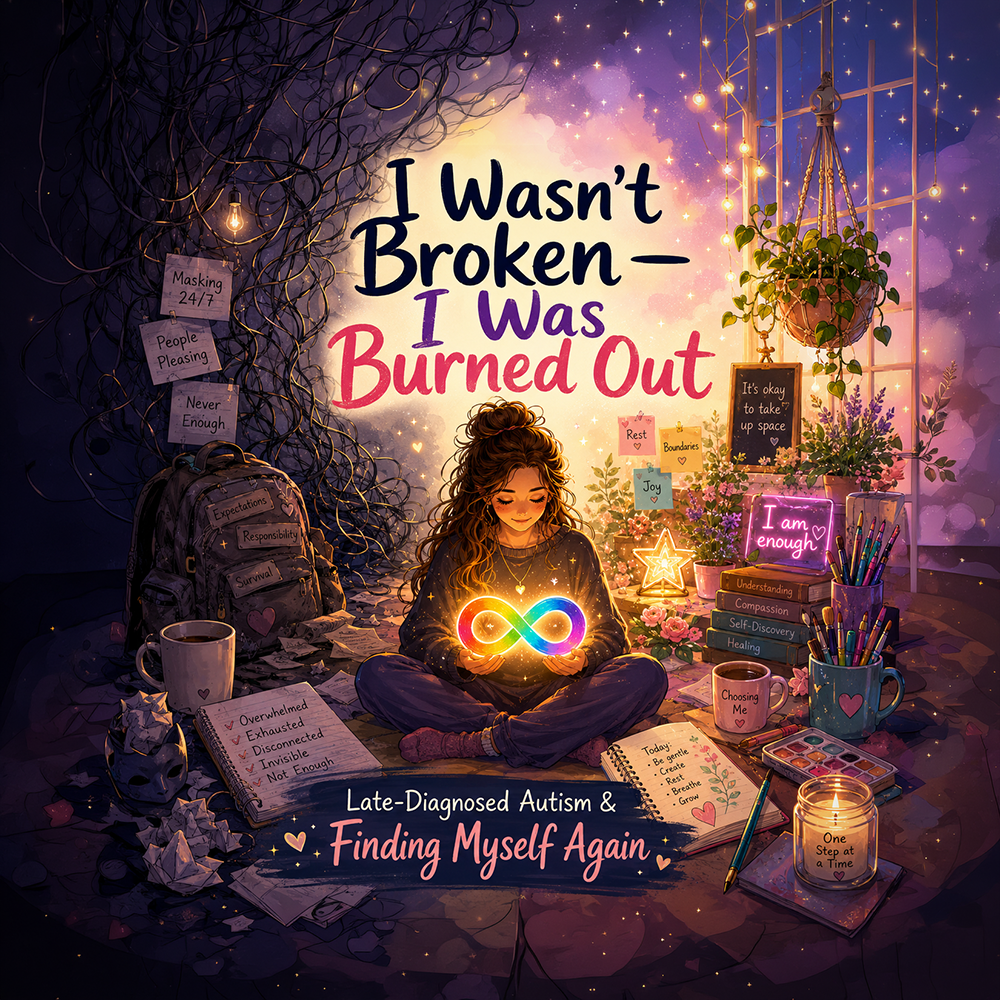
Sometimes emotional responsibility means saying yes.
Other times, it means saying no.
No to one more commitment.
No to another exhausting conversation.
No to constantly carrying responsibilities that were never ours.
No to pushing ourselves beyond what is sustainable simply because someone else expects it.
Those choices may disappoint people.
They may misunderstand us.
They may wish we had more time, more energy, or more capacity.
Their disappointment is real.
It deserves kindness.
But another person's expectations do not erase our humanity.
Our limits do not disappear simply because they inconvenience someone else.
There is another important truth worth remembering.
Human beings are living beings, not machines.
We are not designed for endless output.
We cannot continually give without receiving.
Carry without resting.
Pour without being replenished.
Every living thing has rhythms.
Times of growth.
Times of work.
Times of recovery.
Ignoring those rhythms does not make us stronger.
It often leaves us more depleted.
Caring for our emotional well-being is not selfish.
It is one of the ways we take responsibility for the life we have been given.
When we consistently ignore our own needs, we often become less patient.
Less present.
Less emotionally available.
Not because we lack love.
But because we have been trying to give from places that have not been restored.
Perhaps emotional regulation is not only about calming ourselves after difficult moments.
Perhaps it is also about building a life that honors our humanity before those moments arrive.
Because caring for ourselves is not the opposite of caring for others.
It is one of the ways we make that care sustainable over the course of a lifetime.
When we learn to respect our own limits with wisdom instead of shame, we become better able to offer others something that is genuine rather than something squeezed from exhaustion.
Not because we have become endlessly strong.
But because we have finally accepted that being human was never something we needed to apologize for.
 Jessica Carey
Guilt Invites Growth. Shame Questions Worth.
Among all our emotions, shame deserves special attention.
Unlike guilt, which often points toward something we have done... shame often convinces us that something is wrong with who we are.
Healthy guilt says: "I made a mistake."
Shame quietly whispers: "I am the mistake."
That difference matters.
Guilt can invite reflection.
Accountability.
Repair.
Growth.
It asks: "How can I make this right?"
Shame asks something very different.
It says:
- "I'm broken."
- "I'll never change."
- "If people really knew me, they wouldn't love me."
- "There must be something fundamentally wrong with me."
When shame becomes the loudest voice in our inner world, it can begin shaping the way we see everything else.
A small mistake becomes proof that we are a failure.
Constructive feedback becomes rejection.
One disagreement becomes evidence that we are unworthy of love or belonging.
Healthy emotional regulation gently interrupts that story.
It reminds us that making mistakes is part of being human.
We are responsible for our choices.
But our mistakes are not the entirety of who we are.
This does not mean ignoring harm we have caused.
Quite the opposite.
Healthy guilt can become one of our greatest teachers.
It encourages us to apologize.
Repair relationships.
Learn from our actions.
And choose differently in the future.
Shame rarely produces that kind of lasting growth.
Instead, it often leads people toward hiding.
Defensiveness.
Perfectionism.
Blame.
Or believing they are beyond hope.
Perhaps one of the most compassionate things we can learn is to separate our worth from our worst moments.
To honestly acknowledge when we have caused harm...
Without concluding that we are beyond healing.
Because emotional maturity is not built by convincing ourselves that we never fail.
It grows when we become people who can look honestly at our imperfections without allowing them to become our identity.
We are more than our mistakes.
Just as we are more than any other single emotion we experience.
Supporting Someone's Emotions Is Different from Carrying Them
Human beings are not meant to face life alone.
Healthy relationships offer comfort.
Encouragement.
Understanding.
A listening ear.
A shoulder to cry on.
A hand to hold during difficult seasons.
Those gifts matter deeply.
There are moments when another person's presence helps steady our hearts in ways we could never create entirely on our own.
Human beings are wired for co-regulation.
A calm voice...
A caring hug...
Someone sitting beside us...
These genuinely help regulate our nervous systems.
Emotional regulation isn't about never needing anyone.
It's about allowing support without expecting someone else to permanently become responsible for our emotional state.
Love has a remarkable ability to help calm frightened nervous systems, soften loneliness, and remind us that we do not have to suffer in isolation.
That is one of the beautiful purposes of healthy relationships.
Yet there is another truth that is equally important.
Supporting someone is not the same as becoming responsible for their emotional well-being.
Healthy support says:
- "I'm here with you."
- "I'll listen."
- "I care."
- "You don't have to go through this alone."
Taking over says: "Your emotional state is now my responsibility to fix."
Those are very different relationships.
No matter how deeply we love someone, there are parts of their inner journey that only they can walk.
We cannot process another person's grief for them.
Heal their childhood wounds.
Choose their responses.
Practice emotional regulation on their behalf.
Or do the lifelong work of healing that belongs within their own heart.
Likewise, no one else can do those things for us.
They can walk beside us.
Encourage us.
Remind us of hope.
Offer wisdom.
Help us carry burdens during difficult seasons.
But they cannot live our inner life for us.
Sometimes people become exhausted because they unknowingly begin carrying responsibilities that were never theirs.
They feel responsible for another person's happiness.
Another person's anger.
Another person's anxiety.
Another person's healing.
Another person's choices.
Over time, that weight becomes impossible to sustain.
Not because they stopped loving.
But because they began carrying something no human being was designed to carry alone.
Healthy relationships recognize a different balance.
We support one another generously.
We comfort one another compassionately.
We show up consistently.
And we trust one another enough to allow each person to continue doing the inner work that only they can do.
There is also an important difference between support and enabling.
Support helps another person grow stronger.
Enabling unintentionally keeps another person dependent by repeatedly rescuing them from work that ultimately belongs to them.
Support encourages responsibility.
Enabling slowly replaces it.
That distinction can be uncomfortable.
Sometimes the most loving response is not to solve someone's problem for them.
Sometimes it is to remain beside them while believing they are capable of taking the next step themselves.
That kind of love does not abandon.
It empowers.
Perhaps healthy relationships are not built because one person carries everyone else's emotional world.
Perhaps they become healthy because each person learns to care responsibly for their own heart while generously helping carry life's burdens together.
There is a profound difference.
One creates dependence.
The other creates partnership.
Because love was never meant to make us emotionally alone.
Nor was it meant to make us emotionally responsible for becoming another person's entire source of stability.
Healthy relationships invite us to become companions.
Walking beside one another with compassion.
Encouraging growth.
Offering support freely.
And trusting that each heart is ultimately responsible for learning how to carry itself with wisdom, honesty, and hope.
 Jessica Carey
Emotional Regulation Creates Freedom
At first glance, emotional regulation can sound restrictive.
As though it asks us to hold back.
To become quieter.
More controlled.
Less emotional.
Yet healthy emotional regulation does something very different.
It creates freedom.
Without emotional regulation, our reactions often begin choosing for us.
Every frustration demands an immediate response.
Every fear insists we retreat.
Every disappointment tells us to give up.
Every criticism feels like proof that we are not enough.
Every uncomfortable emotion becomes something we feel compelled to escape as quickly as possible.
Over time, life can begin to feel as though it is being directed by whatever emotion happens to be loudest in the moment.
Emotional regulation gently interrupts that pattern.
It creates space.
A pause between what we feel...
And what we choose.
Within that pause lives something precious.
Freedom.
The freedom to say:
- "I'm angry... and I still choose kindness."
- "I'm disappointed... and I still choose respect."
- "I'm afraid... and I still choose courage."
- "I'm hurt... and I still choose honesty."
- "I'm overwhelmed... and I still choose to care for myself rather than pretending I'm fine."
That freedom does not come from having fewer emotions.
It comes from becoming less controlled by them.
There is another beautiful gift emotional regulation offers.
It frees us from needing every external circumstance to determine our inner world.
We cannot control every disappointment.
Every misunderstanding.
Every loss.
Every difficult person.
Every unexpected change.
What we can gradually learn is how to respond to those realities in ways that remain aligned with our values.
That does not make life easy.
It makes us steadier within it.
Steadiness is not emotional numbness.
It is the quiet confidence that while life will continue to surprise us, disappoint us, delight us, and challenge us...
We are capable of meeting those moments without abandoning ourselves or harming others.
Perhaps that is why emotional regulation is ultimately an expression of freedom.
Not freedom from emotions.
Freedom from being ruled by every emotion.
The ability to experience life deeply without losing ourselves within it.
To remain open-hearted without becoming directionless.
To remain compassionate without becoming consumed.
And to continue choosing the kind of person we hope to become, even when our feelings are asking us to choose something easier.
Because emotional maturity is not measured by how calm we appear on the outside.
It is measured by how faithfully we return, again and again, to the values we most want to live by—especially when our emotions make those values hardest to practice.
That is the quiet freedom emotional regulation makes possible.
 Jessica Carey
No One Can Do Your Inner Work for You
One of the greatest gifts healthy relationships can offer is support.
People can encourage us.
Comfort us.
Challenge us.
Celebrate with us.
Sit beside us through grief.
Offer wisdom.
Help us see blind spots.
Remind us that healing is possible.
Those gifts are invaluable.
Yet even the healthiest relationships have limits.
There is one kind of work that no one else can do for us.
The work that happens within our own hearts.
No one else can choose humility for us.
Practice emotional regulation for us.
Heal old wounds for us.
Reflect on our patterns for us.
Take responsibility for our choices for us.
Or decide who we want to become.
People can walk beside us, but they cannot walk within us.
That truth can feel both comforting and painful.
Comforting because it reminds us that our growth is not dependent on another person's willingness to change first.
Painful because it also means we cannot force someone else to do the inner work they are unwilling to do.
Sometimes we desperately want another person to understand.
To listen.
To apologize.
To become curious.
To seek help.
To heal.
To choose a different way of relating.
Those hopes are deeply human.
Sometimes they become reality.
People do change.
People learn.
People grow.
Sometimes growth takes years. Sometimes it begins with one honest moment of humility.
No matter how long it takes, genuine change is measured less by promises and more by the quiet consistency of new choices over time.
Healing remains possible.
Yet growth cannot be borrowed.
It cannot be demanded.
It cannot be forced through better arguments, greater sacrifice, or endless patience.
At some point, every person must decide whether they are willing to look honestly at themselves.
That is true for all of us.
No matter how loving our family...
How wise our therapist...
How supportive our friends...
Or how compassionate our partner...
There are still choices that belong only to us.
Perhaps one of the greatest acts of emotional maturity is recognizing where our responsibility ends.
We are responsible for tending to our own hearts.
For seeking help when we need it.
For learning.
Growing.
Repairing.
Resting.
Reflecting.
And continuing to become more aligned with the values we hope to live by.
We are not responsible for forcing another person's growth.
Just as no one else can force ours.
That truth is not an invitation to become indifferent.
It is an invitation to become discerning.
To invest our energy where we have the ability to create meaningful change.
Within our own choices.
Within our own character.
Within our own willingness to learn.
Perhaps emotional regulation is not ultimately about mastering our emotions at all.
Perhaps it is about becoming faithful caretakers of the inner life we have been entrusted with.
To approach ourselves with honesty instead of denial.
Compassion instead of shame.
Curiosity instead of certainty.
Responsibility instead of blame.
Hope instead of despair.
Because while no one else can do our inner work for us... neither can they take away our ability to begin.
And every act of healing...
Every moment of reflection...
Every choice to pause before reacting...
Every decision to care for ourselves and others with greater wisdom...
Quietly shapes the kind of person we are becoming.
One choice at a time.
 Jessica Carey
Becoming a Faithful Caretaker of Your Inner World
To be human is to feel.
There will always be moments of joy.
Moments of grief.
Moments of fear.
Moments of anger.
Moments of disappointment.
Moments when our emotions feel clear.
And moments when they feel confusing.
None of those experiences make us broken.
They make us human.
Emotional regulation has never been about becoming someone who no longer feels deeply.
It has never asked us to silence our hearts.
Pretend we are unaffected.
Or carry every burden alone.
Instead, it invites us into a different way of living.
One rooted in honesty instead of denial.
Compassion instead of shame.
Curiosity instead of certainty.
Responsibility instead of blame.
Wisdom instead of reaction.
Along the way, we discover something beautiful.
Our emotions are not enemies to conquer.
Nor are they rulers meant to govern every choice we make.
They are companions.
Sometimes joyful.
Sometimes painful.
Always worthy of being heard.
Never meant to carry the entire weight of deciding who we become.
Perhaps that is the quiet gift emotional regulation offers.
The ability to remain connected to ourselves without becoming controlled by every passing feeling.
To remain open-hearted without becoming overwhelmed.
To remain compassionate without abandoning our own well-being.
To remain responsible without carrying responsibilities that were never ours.
There will be days when we respond wisely.
There will also be days when we wish we had handled things differently.
That, too, is part of being human.
Emotional maturity is not built through perfection.
It grows every time we pause.
Reflect.
Repair.
Learn.
And choose again.
Over time, those choices quietly shape something far deeper than our reactions.
They shape our character.
Our relationships.
Our sense of peace.
And the kind of presence we bring into the lives of the people around us.
Imagine what our homes could become...
If people learned to pause before reacting.
To ask questions before assuming.
To care for their own hearts instead of demanding others carry them.
To seek understanding instead of control.
To express anger without cruelty.
To experience disappointment without punishment.
To receive support without surrendering responsibility.
Perhaps emotional regulation has never been about becoming less emotional.
Perhaps it has always been about becoming more deeply human.
Learning to hold our own hearts with the same kindness, patience, and wisdom we hope to offer everyone else.
Because every one of us has an inner world.
A place where fears, hopes, memories, dreams, wounds, and emotions quietly live.
No one else can fully tend that place for us.
Yet neither are we asked to tend it without love.
Or without hope.
Perhaps the greatest act of emotional maturity is becoming a faithful caretaker of the life within us.
Listening with honesty.
Responding with wisdom.
Growing with humility.
Resting without shame.
Seeking support when needed.
Offering ourselves the same compassion we would gladly extend to someone we deeply love.
Because the goal has never been to stop feeling.
The goal has always been to learn how to carry what we feel in ways that bring more peace instead of fear...
More understanding instead of blame...
More healing instead of harm...
And more love into both our own hearts and the relationships we build with others.
One emotion...
One choice...
One moment of quiet courage...
At a time.
 Jessica Carey
Want even more content about creativity and art?
Be sure to check out all of our creative chronicles!
If you'd like to see examples of my work, you can find some of my art and creations at Redbubble and Gumroad!
Looking to learn more about my recent journey?
Check some of these articles:
-The Difference Between Resting and Giving Up
-Hidden Gems for St. Louis Artists
-Hidden Gems for Autistic & Neurodivergent Adults
-I Think I Might Be Autistic... Now What?
 Jessica Carey