
Recently, I told the members of my art club that a polymer-clay company had sent me a generous collection of materials to experiment with and eventually write about.
They were surprised—not only by how much I had received, but by the fact that I had reached out in the first place.
The host already offers polymer clay as one of the possible projects at her art parties.
She owns molds and other tools, but she has never experimented with liquid polymer clay.
Now, when I bring the new materials to art club, we can try them together.
What began as a collaboration connected to my own creative work is becoming an opportunity for several people to explore an unfamiliar material.
That is what has stayed with me.
The materials did not stop with me.
Neither did the possibility.
 Jessica Carey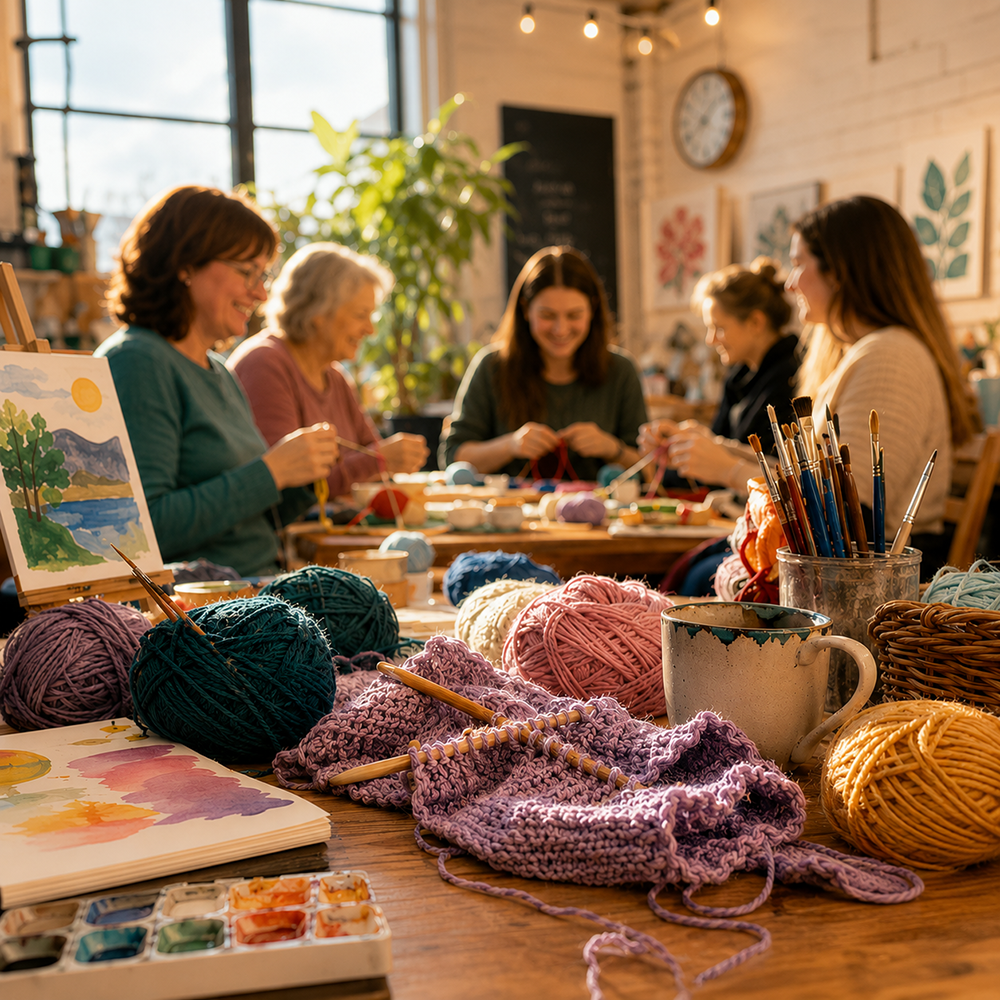
Similar moments have been happening elsewhere.
When I mentioned a potential source of reclaimed wood, another member immediately began imagining what she might make: wooden combs, small boxes and containers, and perhaps eventually furniture.
When I explained that a local framing shop was willing to give me scraps for collage, friends were surprised that useful art materials might be available in something a business no longer needed.
Another artist was surprised to learn that some companies have formal programs through which they support artists and community projects.
In each case, the initial opportunity led to something larger:
- A material became an experiment.
- An experiment became a shared activity.
- A discarded object became creative possibility.
- A piece of information became an idea someone else could pursue.
- A single connection began creating more connections.
This reflection is not an argument that businesses, organizations, or individuals owe us free products; they do not.
A request is not a claim on someone else’s resources, and every organization has its own priorities, limitations, policies, and reasons for saying either yes or no.
It is also not an argument for sending indiscriminate requests to every company we can find.
The support I have received has emerged from thoughtful, relevant conversations about the creative work I have already been building—my website, my writing, my Materials Lab experiments, and my plans for making creative resources more accessible to others.
The larger lesson is not “ask everyone for free things.”
It is this: what resources, knowledge, materials, and relationships already exist around us—and what might become possible if we began connecting them?
Many people appear to assume that their only options are whatever they can purchase, produce, or figure out alone.
A new artist may believe she must personally afford every supply.
Someone starting a creative business may assume that every need must be met from a limited personal budget.
A community group may repeat the same familiar projects because nobody knows where to find other materials.
A business may discard perfectly usable remnants because it does not know who could transform them.
Meanwhile, another person may have exactly the information, material, introduction, or idea that could help.
The problem is not always a total absence of resources; sometimes the resources and the people who could use them simply have not found one another yet.
That is where asking becomes more than an individual act.
When one person begins making connections—and then shares what they discover—the benefit can travel.
A donation can support more than one artist.
A business’s surplus can become material for a workshop.
One person’s research can save someone else hours of searching.
A relationship with a local organization can make a new community project more sustainable.
Even a refusal may come with information about a better contact, a different resource, or another possibility.
Community does not mean that everyone must give everything they have; it means that we no longer assume every person must build, struggle, learn, and survive entirely alone.
Sometimes we have materials.
Sometimes we have knowledge.
Sometimes we have space, skills, time, connections, or an idea another person has not considered.
And sometimes, the first step toward discovering how those pieces fit together is simply allowing one another to know what we are trying to build.
I have written elsewhere about the power of asking and allowing other people to answer for themselves. Here, I want to look beyond the individual request toward what can happen when opportunities begin circulating through a community.
 Jessica Carey
We Can Only Imagine the Opportunities We Know Exist
The reactions I received were revealing.
People were surprised that an art-material company had supported my creative work.
They were surprised that a framing business might give an artist usable remnants.
They were surprised by the possibility of obtaining reclaimed wood for creative projects.
They were surprised that some companies have programs specifically intended to support artists and communities.
These possibilities were not necessarily secret, but before someone mentioned them, researched them, or asked about them, they were outside what many people around me had imagined was available.
That distinction matters.
We often make decisions based on the options we can currently see:
- What can I afford to buy?
- What materials do I already own?
- What does the nearest store sell?
- What have people around me done before?
- What can I accomplish without involving anyone else?
Those are reasonable questions, but they can create a very small map of what is possible.
If nobody in a creative group knows that local businesses may have usable remnants, those materials never enter the conversation.
If nobody realizes that some companies welcome collaboration proposals, nobody develops one.
If someone assumes that starting a business means personally purchasing everything at retail price, potential partnerships and community relationships may never be explored.
The options we know about begin to feel like the only options that exist.
This is not necessarily a failure of imagination.
We cannot investigate a possibility we have never encountered.
Information is distributed unevenly, and many opportunities travel through conversations, relationships, and local knowledge rather than appearing in an obvious online directory.
That is one reason community matters.
One person may know a business with leftover wood.
Someone else may know about an artist-support program.
Another person may have equipment they rarely use.
A local organization may have space but lack programming.
A new creative business may have exciting ideas but not yet have the budget to purchase every material it needs.
None of these pieces automatically connect themselves.
People connect them.
When we talk openly about what we are creating, what we need, what we have, and what we have discovered, we expand one another’s maps.
Even when we cannot personally provide the answer, we may know something that helps another person find it.
This is already happening within my art community.
When I share a resource, people begin imagining projects.
When someone tells me what they hope to create, I begin wondering where the appropriate materials, knowledge, or connections might be found.
One person’s idea gives another person something new to investigate.
The result is not merely a collection of free or inexpensive supplies; it is a community becoming more aware of its own possibilities.
Someone still has to do the research.
Someone still has to make contact.
Someone still has to explain the project, respect the answer, transport the materials, and transform an opportunity into something useful.
But that burden does not always have to fall entirely on one person.
A community can share information.
It can exchange introductions. It can divide research.
It can recommend local businesses, reuse sources, teaching opportunities, tools, and spaces.
It can help a new artist or small-business owner discover paths that would have been difficult to find alone.
That may be one of the most practical meanings of community: none of us has to know everything, because what one person discovers can become part of what all of us are able to imagine.
Assumption Is Not the Same as an Answer
One difference my therapist and I have discussed is that many people assume they already know what someone else will say.
I try to ask the source directly.
I do not always receive the answer I want.
Sometimes an organization declines.
Sometimes a person cannot help.
Sometimes I receive no response at all.
Sometimes the possibility I imagined simply does not exist.
But sometimes I receive an answer far better than the one I would have invented on someone else’s behalf.
That matters because an assumption is not information:
- “They probably will not be interested” is not the same as “They said no.”
- “She seems fine” is not the same as “I asked what she needs.”
- “They must already have support” is not the same as “I learned what support is actually available to them.”
- “We have never done that before” is not the same as “It cannot be done.”
When we ask the appropriate person or organization, we allow reality to replace speculation.
We may still hear no, but we may also hear yes, not right now, try this instead, or I know someone you should contact.
In ordinary situations, failing to ask may simply mean missing an opportunity, but when someone is responsible for another person’s care, access, safety, or well-being, repeatedly substituting assumptions for communication can become something more serious.
- A parent may assume a quiet child is fine instead of asking why the child has stopped speaking about their needs.
- A relative may assume that someone with degrees, skills, or a composed appearance cannot be struggling.
- A professional may assume that a disabled person does not need an accommodation because the need is not immediately visible.
- A community may claim that its programs are accessible without asking excluded people what prevents them from participating.
In those situations: “We thought you were fine” does not undo the consequences of never checking.
Not every unmet need is caused by intentional cruelty.
People can overlook what they do not understand.
Resources can be limited.
Communication can fail despite sincere effort.
But good intentions do not make curiosity unnecessary.
Care requires some willingness to find out.
Sometimes that means asking:
- What do you need?
- What am I not seeing?
- Is the current arrangement actually working for you?
- What barrier is making this difficult?
- Who would know the answer better than I do?
- Have I confirmed this—or merely assumed it?
Asking does not guarantee that we can meet every need; it allows the need to become visible enough to be understood, discussed, and taken seriously.
A healthy community does not decide what people need without them—it asks, listens, and lets their answers change what happens next.
For people raised to believe that having needs makes them burdensome, learning to ask can also be part of recovering from parentification, self-neglect, and the fear of needing help.
 Jessica Carey
Building Something Should Not Require Doing Everything Alone
The host of my art club has shared challenges with starting and running her creative business.
That is understandable.
Starting almost anything requires resources: materials, equipment, storage, space, knowledge, promotion, transportation, and time.
When someone is building from a limited personal budget, even a relatively small expense can determine whether an idea moves forward, gets scaled down, or remains out of reach.
We often treat this struggle as an unavoidable test of commitment.
If you really believe in your idea, fund everything yourself.
If you are sufficiently resourceful, figure everything out alone.
If the business cannot immediately pay for every need, perhaps it should not exist.
But many successful projects were never built through individual effort alone; they grew through relationships, recommendations, shared knowledge, donated or borrowed resources, collaborations, referrals, mentorship, and people who believed the idea was worth supporting.
Community support does not have to mean asking someone else to finance an entire dream.
It may look like:
- A business setting aside safe, usable remnants instead of discarding them
- An artist sharing information about a material source
- A community space lending equipment
- Someone making an introduction
- A company contributing products to a relevant project
- Two groups sharing the cost of supplies they can both use
- An experienced business owner explaining a process to someone new
- Community members helping test an activity before it is offered publicly
Any one of these contributions may appear small; together, they can substantially reduce the cost, uncertainty, and isolation involved in starting something.
They can also create relationships that benefit more than the original recipient.
A creative business that receives usable materials may turn them into workshops, products, or experiences for local residents.
A company that donates surplus avoids throwing it away and sees it transformed into something meaningful. Artists encounter materials they might not otherwise have tried.
Community members gain new reasons to gather, learn, and create.
This does not mean every request will be appropriate or every potential partnership will be mutually beneficial.
A struggling small business is not automatically entitled to another organization’s inventory, labor, money, or attention.
Community care still requires consent, honesty, boundaries, and respect.
But there is an enormous space between believing we are owed support and believing we must never seek it.
Within that space are conversations such as:
- “We are developing this project. Do you know anyone we should speak with?”
- “Do you ever have safe, usable remnants that cannot be sold?”
- “Would you be interested in collaborating on a community workshop?”
- “Is there a way our projects could support one another?”
- “What did you wish you had known when you were starting?”
- “Is there another possibility we have not considered?”
These questions do not guarantee assistance; they create opportunities for people to recognize where their interests, resources, and goals may already overlap.
Perhaps someone has material but no use for it.
Someone else has an idea but no material.
Someone has space.
Someone has tools.
Someone has knowledge.
Someone knows the person the others have been trying to find.
Building community means allowing those people to discover one another.
A person beginning a business or community project will still need to work hard.
Support does not erase the labor of planning, organizing, learning, making, and following through. It simply challenges the idea that struggle must be maximized before the work becomes legitimate.
We do not prove that our dreams matter by making them unnecessarily difficult.
Sometimes the most resourceful thing we can do is stop asking: “How am I supposed to carry all of this alone?” and begin asking: “Who else might care about what I am trying to build—and what could we make possible together?”
 Jessica Carey
A Rising Tide Is Made of Circulating Support
It is easy to imagine support as something that travels in only one direction.
One person has resources.
Another person needs them.
The first gives, the second receives, and the exchange ends there.
But healthy community support can be much more dynamic than that.
The person who receives materials may use them to teach someone else.
The artist who learns about a resource may share it with another maker.
A small business may transform donated remnants into an affordable workshop.
Someone who cannot contribute money may contribute knowledge, labor, encouragement, transportation, or an introduction.
The same person may receive in one situation and give in another.
One person’s opportunity does not always diminish what is available to everyone else; sometimes it expands what the whole community knows, attempts, and creates.
The polymer-clay materials I received are one example; they were sent to support my creative experimentation and writing, but their impact does not have to remain confined to me.
Bringing them to art club gives other people the opportunity to explore them.
Their observations may influence what I make or write.
The host may discover another activity she can offer at future art parties.
Someone else may encounter a material that inspires an entirely different project.
One opportunity begins producing many forms of value.
The same can happen with information.
When I learn about reclaimed materials, artist-support programs, or local businesses willing to consider creative reuse, I can pass that knowledge along.
The information is not depleted because someone else uses it.
In many cases, it becomes more valuable because more people can see what it makes possible.
This does not mean every resource should be broadcast indiscriminately.
Some opportunities are limited.
Some relationships depend on trust.
Some businesses may welcome a small number of carefully considered collaborations but become overwhelmed by unrelated requests.
Sharing responsibly means providing context—not merely telling everyone where they might obtain something for free.
A useful resource should not become an invitation to disregard the generosity, boundaries, or workload of the people providing it.
Instead of saying: “This place gives away supplies,” we might explain:
- What kind of project or partnership the organization agreed to support
- Whether the opportunity is publicly available
- What requirements or limitations apply
- How the materials will be used
- What the recipient contributes to the relationship
- Whether permission was given to share the opportunity more broadly
That care protects both the resource and the relationship behind it.
Community is not built by extracting as much as possible from whoever is willing to give; it is built by paying attention to what creates genuine mutual value.
A business may reduce waste.
An artist may gain access to materials.
A workshop host may develop a new project.
Participants may learn a new process.
Readers may discover a product or creative possibility.
The broader community may gain something meaningful that did not exist before.
Not every exchange will benefit everyone equally, and reciprocity does not require an immediate, perfectly balanced repayment.
Support is not truly generous if every kindness creates an invisible debt.
But we can still ask how an opportunity might travel beyond us without exploiting either the giver or the receiver.
Perhaps that is the real promise of the rising tide: not that everyone receives the same thing, but that what reaches one person can create movement, knowledge, and possibility for many others.
When Suffering Becomes the Price of Deserving
Not everyone sees receiving support as something to celebrate.
I grew up around the belief that life is hard, life is supposed to be hard, and respectable people endure that hardship without asking others to make it easier.
Within that worldview, unnecessary struggle can begin to look like evidence of strength.
One extended family member has described how, when their children were young and money was scarce, Sunday “lunch” meant filling up on samples at a Sam's Club.
That story reflects genuine hardship and the resourcefulness required to survive it; it may also hold grief, fear, and memories of having too little support.
But surviving without adequate help does not mean that inadequate help was good.
It does not mean future generations should be required to experience the same deprivation.
There is dignity in surviving difficult circumstances; there is no moral virtue in preserving preventable hardship merely because someone else had to endure it first.
Yet families and communities sometimes turn painful experiences into rules:
- Nobody helped me, so you should manage without help, too.
- I had to learn on my own, so nobody should teach you.
- I went without that opportunity, so it is unfair for you to receive it.
- If you were truly capable, you would not need support.
- Help should be reserved for people who appear worse off than you.
This turns need into a competition.
Instead of asking whether a particular resource could genuinely help someone, people begin judging whether that person has suffered enough to deserve it.
Visible accomplishments are presented as proof that no need could exist underneath them.
A degree, a professional skill, a composed appearance, or family who technically exist “on paper” are treated as evidence that a person must already have all the support they require.
But human need does not work that way:
- A person can be educated and lack financial stability.
- A person can be capable and exhausted.
- A person can appear composed while using nearly all of their energy to remain functional.
- A person can have relatives and still lack a safe, dependable family.
- A person can possess strengths and still need accommodation, information, materials, encouragement, or practical help.
Community care cannot function if support is available only to whoever can prove the greatest visible suffering.
When people insist that we should go without because they once went without, they do not repair the unfairness of their past; they repeat it.
Their reaction may come from jealousy.
It may come from grief about opportunities they never had, shame about needs they were taught to hide, or fear that accepting help would invalidate the sacrifices they made.
We cannot always know another person’s private motive.
But we can recognize the effect of that belief: support is withheld, opportunities remain undiscovered, and suffering continues long after it could have been reduced.
There is another way to respond to what we lacked.
We can say:
- I do not want you to struggle as silently as I did.
- Let me teach you what nobody taught me.
- Let me tell you about the resource I wish I had known about.
- If I cannot help directly, perhaps I can help you find someone who can.
- Your receiving something good does not erase what I survived.
A healthier community does not use yesterday’s deprivation as the standard for what people should accept today; it transforms painful knowledge into a reason to make the path kinder for whoever comes next.
The question does not have to be: “Why should you receive help when I did not?”
It can become: “What can we build now that we understand what happens when people are left to struggle alone?”
What If Connection Became Part of How We Create?
What I have been doing should not have to be extraordinary.
It takes initiative to research possibilities, contact organizations, explain a project, and follow up, but the underlying idea is simple: notice what exists, ask respectful questions, and connect useful resources with people who can transform them.
What if more creative communities did this intentionally?
An art club could occasionally ask members:
- What are you hoping to make?
- What material or tool is currently out of reach?
- What useful resources have you discovered?
- Do you have supplies you no longer need?
- Do you know a business, organization, or person who might be a helpful connection?
- Is there something several of us could explore together?
A small creative business could keep a list of needs that are appropriate to share—not as demands, but as openings for collaboration.
A local business could identify safe remnants that might be useful rather than automatically discarding them.
Artists could exchange information about publicly available programs without overwhelming the people who provide them.
Community spaces could help match underused tools, knowledge, and materials with people who need access to them.
None of this requires every person to become a full-time resource coordinator.
It begins with conversation.
Someone mentions that they want to learn woodworking.
Another person remembers hearing about reclaimed lumber.
Someone needs affordable materials for a workshop.
Another person knows a business that regularly generates usable offcuts.
A new artist is struggling with the cost of equipment.
Someone in the group knows where equipment can be borrowed or used on-site.
The first answer may not solve the whole problem, but it gives the community somewhere new to look.
Over time, these conversations could become a shared body of knowledge:
- Places that offer public classes or equipment access
- Organizations with clearly published donation programs
- Businesses that have chosen to make certain remnants available
- Opportunities for artists, educators, and community projects
- Skills members are willing to teach
- Tools or materials people are comfortable sharing
- Projects that would benefit from collaboration
The goal is not to identify every possible source of something free; it is to make community knowledge easier to access while respecting the boundaries of everyone involved.
That means distinguishing between a public opportunity and a private kindness.
If an organization openly advertises a program, sharing the application information may be helpful.
If a business has privately agreed to support one specific project, that does not automatically mean it wants dozens of unrelated requests.
If an individual shares a personal contact, we should ask before distributing that person’s information more widely.
Responsible connection requires context.
It also requires thinking about what we can offer—not as payment for our right to have needs, but as part of understanding where genuine relationships might grow.
An artist might offer:
- Thoughtful feedback about a material
- Photographs of what it became
- A workshop or demonstration
- Writing that introduces readers to a creative process
- Help testing a new project
- Knowledge of another resource
- A connection between two groups with compatible goals
Someone else may contribute organizing ability, transportation, storage, technical knowledge, encouragement, or time; not everyone has the same resources, and not every contribution needs to be public, financial, or immediately measurable.
The question is not only: “What can I get?”
It is also: what already exists among us, and how can we help it reach where it will be useful?
That shift changes asking from a private attempt to secure an advantage into a form of community awareness.
One person notices.
One person asks.
One person shares.
Someone else imagines what could be created.
And gradually, a group of isolated people begins functioning more like a village.
I have seen how much easier the creative path becomes when people share artist resources, local opportunities, and community knowledge rather than expecting everyone to rediscover them alone.
 Jessica Carey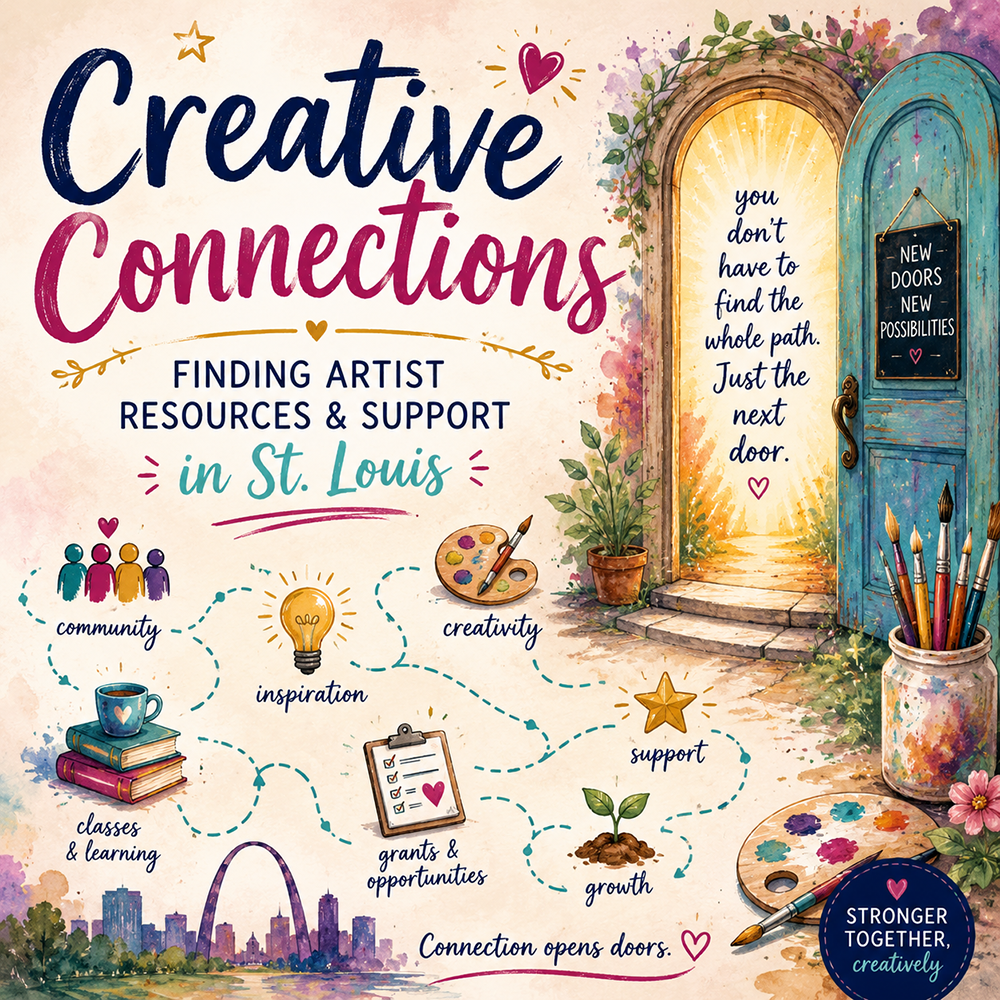
Building the Village One Question at a Time
I am still learning what becomes possible when I stop assuming that I must do everything alone.
That lesson has not come naturally to me; I was raised around the belief that “good” people do not ask for much—that they should ask for absolutely nothing and remain in the role of giver rather than receiver.
They struggle quietly.
They make do.
They remain grateful for whatever they already have, even when it is not enough.
If someone else suffered without receiving help, then I was expected to do the same.
For a long time, asking felt less like an ordinary human act and more like violating an invisible rule.
But I have begun asking anyway.
Not because I believe everyone owes me something.
Not because every idea deserves funding, every request deserves approval, or every business should give away its resources.
I ask because I cannot know what another person, organization, or company might genuinely want to support until a respectful conversation exists.
Plenty of those conversations lead nowhere.
Others lead to materials, information, introductions, discounts, opportunities, or ideas I did not know enough to search for.
And increasingly, what I find does not remain mine alone.
Materials become shared experiments.
Reclaimed resources inspire projects.
Information travels between artists, businesses, and community spaces.
What begins as one person’s discovery becomes another person’s possibility.
This has changed the way I think about receiving.
Support does not always end with the person who initially receives it; sometimes it moves through that person.
It becomes knowledge shared, materials explored, waste transformed, a workshop developed, a new connection made, or an idea that gives someone else permission to imagine more.
I have something to receive, but I also have something to contribute.
I have years of work invested in my website.
I have ideas, research, writing, creative experiments, and a growing vision for helping people access materials and opportunities.
I can introduce others to possibilities they did not know existed.
I can help connect surplus with creativity and private discovery with community knowledge.
That does not make every exchange perfectly equal, nor should it have to; community is not a ledger in which every act of care must be repaid immediately and precisely.
It is a living network of people who sometimes give, sometimes receive, and sometimes help two disconnected pieces find each other.
Perhaps some people will continue to see that as weakness, opportunism, or an attempt to avoid the hardship everyone is supposedly meant to endure, but I see something different.
I see an art-club host who might discover new ways to support her growing business.
I see an artist imagining what reclaimed wood could become.
I see businesses with usable materials that do not have to become waste.
I see creative people whose ideas might grow if they had access to one missing resource, introduction, or piece of information.
I see possibilities that remain invisible until someone begins a conversation.
“It takes a village” is often repeated as though the village simply appears when we need it.
But villages must be built and maintained; people have to communicate.
They have to reveal what they need, notice what they have, share what they know, respect one another’s limits, and allow support to move in more than one direction.
Maybe building that village begins with a few ordinary questions:
- What are you trying to create?
- What would make it more possible?
- What do we already have among us?
- Who might know something we do not?
- What could happen if we stopped treating every need, resource, and dream as something each person must carry alone?
A rising tide does not appear because one person collects all the water.
It rises when possibility begins to circulate.
 Jessica Carey
Want even more content about creativity and art?
Be sure to check out all of our creative chronicles!
If you'd like to see examples of my work, you can find some of my art and creations at Redbubble and Gumroad!
Looking to learn more about my recent journey?
Check out some of these articles:
-Hidden Gems for St. Louis Artists
-Hidden Gems for Autistic & Neurodivergent Adults
-Learning What Love Was Supposed to Feel Like
-I Wasn't Broken--I'm Burned Out
-The Difference Between Resting and Giving Up
-What Chronic Autistic Burnout Actually Feels Like
 Jessica Carey