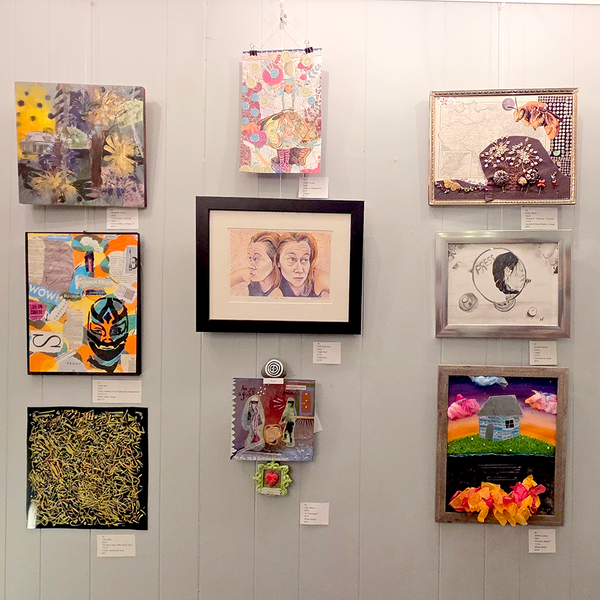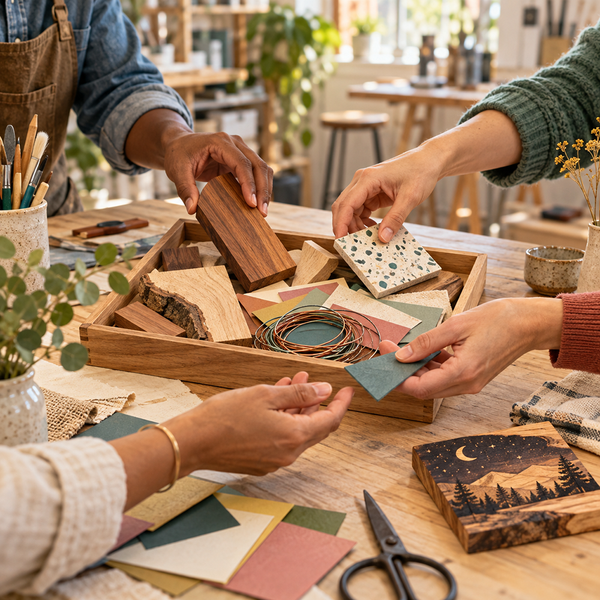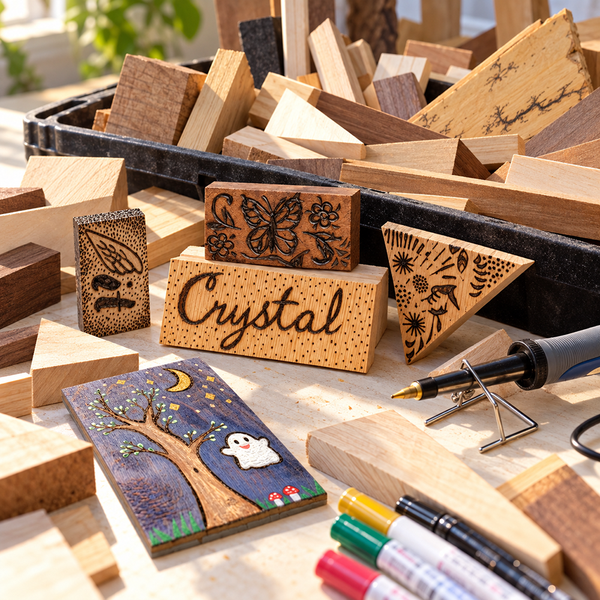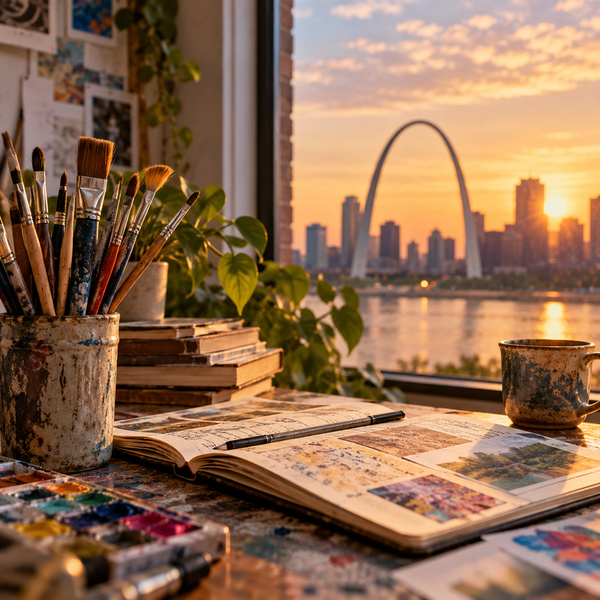

There are people who make things and still insist they aren't artists.
They draw.
Paint.
Knit.
Photograph.
Build.
Sew.
Write.
Make jewelry.
Decorate.
Arrange.
Design.
Transform materials into things that didn't exist before.
And yet, when the word artist enters the conversation: oh, I'm not an artist.
Maybe they make things sometimes.
Maybe it's just a hobby.
Maybe they've never sold anything.
Maybe they didn't go to art school.
Maybe they aren't that good.
Or perhaps: I can't draw.
Which sometimes means something much more specific: I can't draw realistically.
And somehow, an entire creative identity gets rejected because one particular artistic skill doesn't come easily.
The Remarkably Tiny Box We Sometimes Put Art Inside
I've heard people say: I'm not creative. I can't even draw a stick figure.
And I've always found the logic behind that fascinating.
Because even if someone genuinely struggles with drawing... why did drawing become the test?
What about sculpture?
Collage?
Fiber?
Photography?
Ceramics?
Printmaking?
Jewelry?
Digital art?
Assemblage?
Paper art?
Mosaics?
Bookmaking?
Mixed media?
Installation?
Design?
And even within drawing, why does the ability to create a convincing realistic image determine whether someone is creative?
Hyperrealism is an extraordinary skill.
It is also one extraordinarily specific way of making art.
Someone can spend years developing the technical ability to render skin, glass, hair, fabric, reflections, and light with astonishing precision.
That's art.
So is an abstract painting.
A strange little clay creature.
A woven form.
A collage made from discarded packaging.
A photograph.
A hand-built vessel.
A scribbled character.
A giant cardboard sculpture.
A tiny embroidered landscape.
A conceptual installation.
A drawing consisting entirely of lines and shapes.
Art is enormous.
And yet we can make the definition inside our own heads remarkably small.
“I Can't Do That” Isn't the Same as “I Can't Create”
Maybe someone looks at a beautifully rendered portrait and thinks: I could never do that.
Perhaps they're right.
At least right now.
Most of us could probably walk through a museum and find thousands of things we don't currently possess the technical ability to make.
That doesn't tell us very much about whether we're creative.
It tells us: I don't know how to make that particular thing in that particular way.
That's a much smaller statement.
And a much more accurate one.
There is an enormous difference between: I can't paint like that and: I can't make art.
Between: drawing isn't one of my strengths and: I'm not creative.
Between: I don't know how to do this and: I'm not an artist.
Sometimes we take a specific limitation and turn it into a verdict about the whole person.
 Jessica Carey
And Then There's the Word Artist
Interestingly, even people who comfortably acknowledge that they make art can hesitate here.
Are you an artist?
Well...
Suddenly, it feels like we've been asked to provide credentials.
- Do I have an art degree?
- Have I exhibited?
- Do I sell my work?
- How much?
- Do people commission me?
- Do I have a studio?
- A portfolio?
- A recognizable style?
- Am I technically skilled enough?
- Have I been doing this long enough?
- Do other artists consider me one?
At what point, exactly, does: I make art become: I am an artist?
There doesn't seem to be an official ceremony.
No certificate arrives in the mail.
No mysterious Council of Artists appears at the door carrying a beret and announces: congratulations, we've reviewed your portfolio; you may use the word now.
And yet many of us behave as though somebody, somewhere, has to approve the application.
Maybe We're Waiting for Permission That Isn't Coming
There are legitimate contexts where definitions matter.
Someone can be an amateur artist rather than a professional artist.
A grant can establish eligibility requirements.
A gallery can decide whose work it represents.
A professional organization can define membership criteria.
Someone can have substantially more training, experience, or technical skill than someone else.
None of that is imaginary.
But those are more specific questions than: are you allowed to think of yourself as an artist?
That's the question I find interesting.
Because perhaps some people aren't avoiding the word because it doesn't describe what they do.
They're avoiding it because they believe they haven't earned it yet:
- Not skilled enough
- Not serious enough
- Not successful enough
- Not educated enough
- Not productive enough
- Not original enough
- Not professional enough
- Not whatever mysterious amount of enough finally turns a person who makes art into an Artist
And perhaps we've bundled far too many different things into one word:
- Profession
- Skill
- Education
- Income
- Recognition
- Productivity
- Identity
- Practice
These things can overlap, but they aren't identical.
Someone can be highly skilled without working professionally.
Someone can be professionally successful without formal art education.
Someone can have an art degree and work in another field.
Someone can make art privately for decades.
Someone can be a beginner.
Someone can be disabled and unable to produce work consistently.
Someone can make things purely because making them brings joy.
So perhaps before we decide who has earned the right to call themselves an artist, we should ask a more basic question: what qualifications are we actually requiring—and who decided they were qualifications in the first place?
Because if someone is genuinely engaged in making art, perhaps the question isn't whether they've become impressive enough to qualify.
Maybe we've made the box around the word artist much smaller than art itself.
 Jessica Carey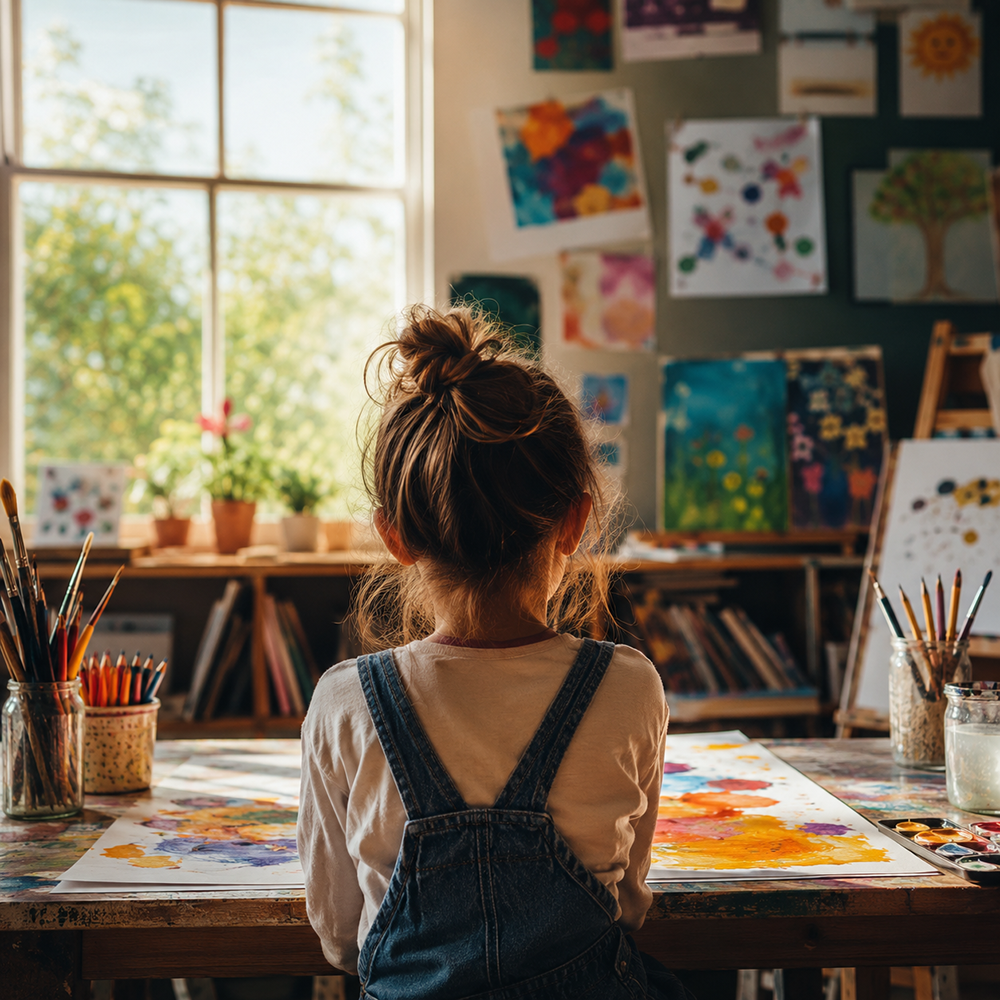
What Are the Qualifications?
Suppose we wanted to create an official checklist.
Not just for being a professional artist.
Not for receiving a grant.
Not for entering a particular exhibition.
Simply: who qualifies as an artist?
What would we put on it?
An Art Degree?
That seems like an obvious possibility.
Maybe someone becomes an artist after studying art formally.
Except...
Artists existed long before modern art schools.
Plenty of artists are self-taught.
Some learn through family or community traditions.
Some take workshops.
Some learn from books, videos, mentors, experimentation, or years of simply making things.
And plenty of people with art degrees eventually spend most of their lives doing something else.
Formal education can provide extraordinary things.
Technique.
History.
Critique.
Resources.
Mentorship.
Community.
Time devoted to developing a practice.
But education and identity aren't quite the same thing.
A degree can tell us something about how someone studied art.
It can't be the thing that makes artistic practice exist.
Selling Your Work?
Maybe money is the dividing line.
You make things for yourself? Hobbyist.
Someone gives you $50 for one? Artist.
But that's strange, too.
What if nobody buys the next piece?
Do you temporarily stop being an artist?
What if you give your work away?
What if you make public art without selling objects?
What if you make art privately and have no interest whatsoever in monetizing it?
And perhaps most importantly: why would another person's willingness or ability to pay determine whether the act of making was artistic?
Selling art can turn an artistic practice into a source of income.
It can make someone a working or professional artist.
It can be an enormous accomplishment.
But money describes something about the economic relationship surrounding the artwork.
It doesn't necessarily tell us whether the person making it was an artist five minutes before the sale happened.
Exhibitions? Recognition? An Audience?
Maybe other people have to see the work.
A gallery exhibits it.
A juror selects it.
An organization recognizes it.
An audience follows it.
Now someone else has effectively said: yes, this counts.
External recognition can matter.
It can create opportunities.
Build careers.
Connect artists with communities.
And sometimes simply having another person take our work seriously helps us take ourselves seriously too.
But if recognition is required, we run into another problem: what about the artist nobody has discovered yet?
Or the person who doesn't want to be discovered?
The person making work at their kitchen table?
The person whose work isn't fashionable?
The person without access to galleries, professional networks, social media, transportation, money, or the right connections?
Does artistic identity appear only once someone else notices?
That gives gatekeepers an extraordinary amount of power over a word describing something the artist is already doing.
Technical Skill?
This one can feel particularly convincing.
Surely someone has to be good enough.
But we're back to the question from the beginning: good at what?
Drawing?
Painting?
Realism?
Ceramics?
Sculpture?
Conceptual thinking?
Artistic ability isn't one universal skill, and people can develop dramatically different strengths.
A beginner may have far less technical control than someone who has practiced for decades.
That's real.
Skill exists.
Expertise exists.
Craftsmanship exists.
We don't have to flatten those differences to make artistic identity more inclusive.
But perhaps skill tells us whether someone is a beginner, developing, experienced, or extraordinarily accomplished artist.
That still leaves another question: why would those differences necessarily divide artist from not artist?
 Jessica Carey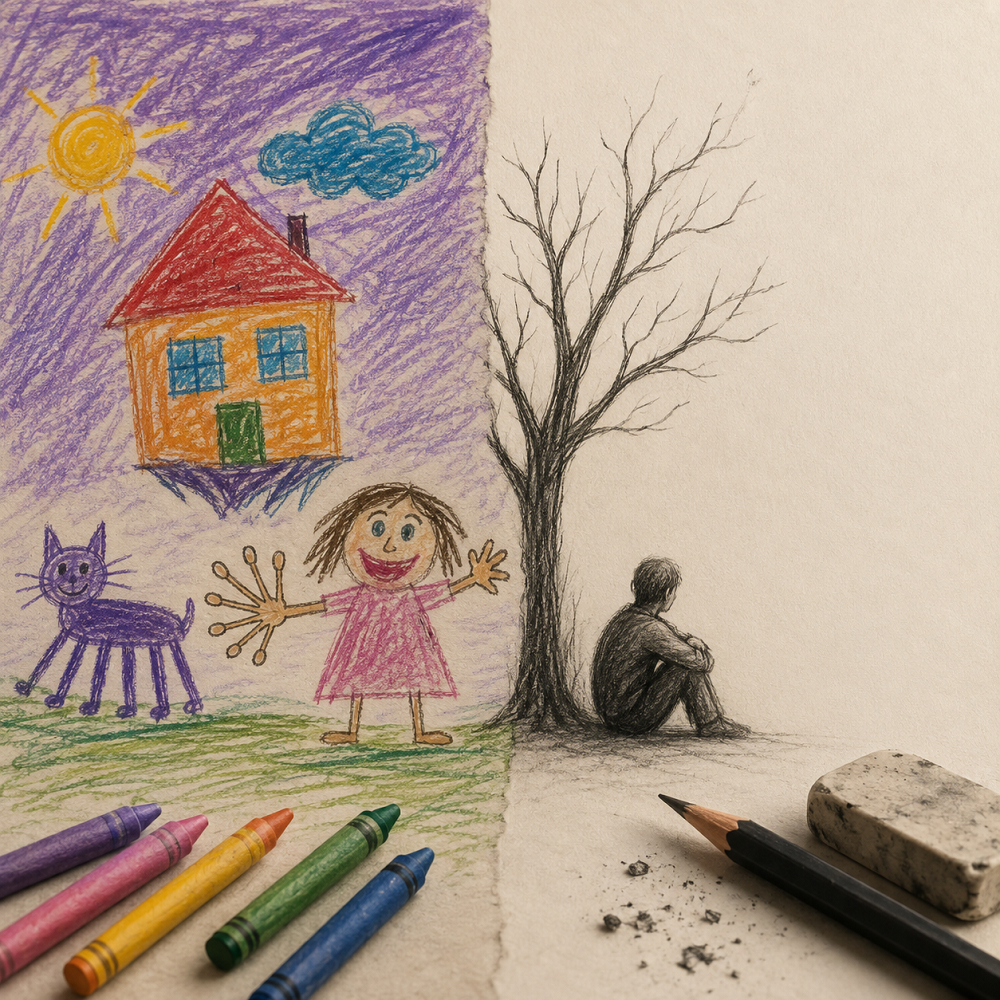
Maybe You Have to Be Serious About It
This qualification is harder to see because serious can mean almost anything.
- Do you have to make art every day? Every week?
- Maintain a studio practice?
- Have long-term goals?
- Build a portfolio?
- Study your craft?
- Sacrifice something for it?
What about someone who creates purely for pleasure?
Someone who spends six months obsessively making and then doesn't touch a material for another six?
Someone whose job or caregiving responsibilities leave little time?
Someone whose capacity changes from day to day?
Someone who simply likes making things on Sunday afternoons?
Are they less professional? Possibly.
Less prolific? Certainly, in some cases.
But less artist? That requires another leap.
What About the Amateur?
Maybe someone makes art seriously for decades but never turns it into a profession.
They study.
Practice.
Develop extraordinary skill.
Create because they love creating.
We might reasonably call them an amateur artist rather than a professional artist.
But notice what happened.
We added a description.
We didn't remove artist.
Professional and amateur can be useful distinctions.
Perhaps they tell us something about someone's relationship to their artistic practice without determining whether that practice makes them an artist at all.
Every Qualification Creates Strange Exceptions
This is where our imaginary checklist starts falling apart.
- Require a degree, and self-taught artists disappear.
- Require income, and unpaid artists disappear.
- Require exhibitions, and private artists disappear.
- Require technical mastery, and beginners disappear.
- Require constant production, and anyone whose creative life happens in seasons becomes questionable.
- Require recognition, and somebody else gets to decide whether your practice counts.
None of that means these distinctions are meaningless.
Education matters.
Skill matters.
Experience matters.
Professional accomplishment matters.
Recognition can matter.
Someone with thirty years of dedicated practice knows things a beginner doesn't.
Someone earning their living through art faces professional realities a hobbyist may never encounter.
We can acknowledge meaningful differences without turning every difference into a hierarchy of who is allowed to use the word.
Maybe the problem is that we're asking artist to do too many jobs.
We want it to tell us:
- what someone does
- how skilled they are
- how educated they are
- whether they're paid
- how committed they are
- how successful they are
- whether other people take them seriously
That's an enormous amount of information for one little word.
Perhaps we need the modifiers precisely because the underlying category is broader.
Professional artist.
Amateur artist.
Emerging artist.
Self-taught artist.
Working artist.
Student artist.
Different experiences.
Different relationships to art.
Different levels of expertise.
But notice the word that remains: artist.
And perhaps that's where we can separate two questions we've been treating as though they were one: what kind of artist is this person? and have they earned the right to be an artist at all?
Those are not necessarily the same question.
Artist and Professional Artist Aren’t Synonyms
Maybe part of the confusion comes from treating two statements as though they mean the same thing: I am an artist and I am a professional artist.
They don't necessarily make the same claim.
One describes an artistic identity or practice.
The other tells us something additional about someone's relationship to that practice.
That additional distinction can matter.
“Professional” Actually Communicates Something
Imagine someone says: I'm a professional photographer.
We reasonably assume something beyond: I enjoy taking photographs.
Perhaps they photograph weddings.
Sell prints.
Work for publications.
Create commercial images.
Take commissions.
Earn some or all of their income through photography.
The exact boundaries of professional can vary, but the word gives us useful information.
The same can be true for professional illustrators, ceramicists, painters, designers, sculptors, musicians, writers, and other artists.
Professional practice can involve things like:
- Clients
- Contracts
- Commissions
- Deadlines
- Sales
- Exhibitions
- Licensing
- Business expenses
- Applications
- Marketing
- Taxes
- Relationships with galleries or organizations
Those realities deserve to be recognized.
But notice what the word professional is doing.
It's adding information to artist.
It isn't necessarily creating the artist.
Context Sometimes Requires a Boundary
There are also situations where professional artist can't simply mean: anyone who feels like using the term.
A grant may be intended for artists at a particular career stage.
A residency may require evidence of an established practice.
An organization may need criteria for membership.
An opportunity may require a portfolio, exhibition history, publication record, or evidence of professional activity.
Those boundaries aren't automatically gatekeeping in the harmful sense.
Sometimes an organization simply has to answer: who is this particular opportunity designed to serve?
And that answer may exclude people.
Someone can be an artist and still not qualify for a particular professional opportunity.
Those statements can coexist.
This grant isn't for me doesn't have to become: therefore I'm not a real artist.
A Career Is One Relationship to Art
This distinction becomes especially important when we think about the enormous number of people who create without making art their primary occupation.
Someone works in accounting and paints every evening.
Someone teaches during the day and makes ceramics on weekends.
Someone raises children and illustrates when they have time.
Someone works in retail and spends years developing textile work.
Someone is retired and finally has time to explore printmaking.
Someone makes sculptures and never attempts to sell one.
Someone gives almost everything they create to friends.
Someone sells occasionally but could never support themselves through those sales.
Their economic circumstances are different.
Their artistic practices may be different.
Their levels of skill may be wildly different.
But employment status doesn't magically determine whether artistic thinking is happening.
A career in art is one way of being an artist.
It isn't necessarily the entrance requirement.
Money Can Change the Practice
And professionalization isn't always simply the better or more advanced version of making art.
Getting paid can be wonderful.
It can allow someone to spend more time creating.
Provide access to materials.
Open opportunities.
Validate expertise.
Make an artistic life financially possible.
But turning art into work can also introduce things that weren't there before:
- Deadlines
- Client expectations
- Marketability
- Production demands
- Administrative work
- Pressure to sell
- Pressure to maintain an audience
- The need to make something even when we don't particularly feel like making it
For some people, becoming professional is the dream.
For others, keeping creativity separate from their income is precisely what allows them to enjoy it.
Neither relationship automatically makes the resulting creative life more authentic.
Someone doesn't have to want: how can I monetize this? before they're allowed to say: this matters to me.
“Amateur” Doesn't Mean “Bad”
This is also why amateur deserves a little rescue.
We often use it dismissively: that looks amateur.
Meaning unskilled.
Unpolished.
Not serious.
But when we're talking about someone's relationship to a practice, an amateur is not necessarily someone without expertise.
An amateur can become extraordinarily skilled.
They may study for decades.
Practice obsessively.
Develop sophisticated techniques.
Know enormous amounts about their medium.
They simply aren't making that practice their profession.
And there is nothing inherently lesser about creating because you love creating.
Art doesn't become more artistically legitimate the moment a payment processor gets involved.
Professional Success Is Unevenly Accessible
There's another reason professional success can't function as a universal test of artistic legitimacy: becoming professional requires more than artistic ability.
It can also require time, money, materials, space, transportation, technology, connections, opportunity, and the capacity to navigate professional systems.
Not everyone has equal access to those things.
And some people may have enormous artistic capacity while facing circumstances that make conventional professional participation difficult or impossible.
If professional success becomes our test for who counts as an artist, we may accidentally begin measuring access alongside artistry.
We Can Respect Expertise Without Building a Gate Around “Artist”
None of this requires pretending everybody has equivalent experience.
A person beginning watercolor yesterday and a watercolorist with forty years of practice aren't equally experienced.
Someone who occasionally sells a piece and someone managing a full-time studio business don't have the same professional practice.
Someone taking their first ceramics class doesn't possess the technical knowledge of a master ceramicist.
Those differences are real.
We have words for them:
- Beginner
- Experienced
- Professional
- Amateur
- Emerging
- Established
- Student
- Master
- Working
- Full-time
- Part-time
- Self-taught
- Formally trained
Those words tell us more about an artist.
We don't necessarily need to use them to determine whether the word artist is available in the first place.
Because perhaps: I'm an artist doesn't have to mean: I'm claiming to be an expert.
It doesn't have to mean: I'm claiming to deserve professional opportunities.
It doesn't have to mean: I'm claiming my work is exceptional.
And it certainly doesn't have to mean: I'm better at art than you are.
Maybe sometimes it simply means: making art is something I do, and it is meaningful enough to me that this word feels like mine.
Professional status can tell us something important about how someone practices art.
But perhaps it doesn't get to decide whether the person practicing it is an artist.
“But I’m Not Good Enough”
Perhaps the most persistent qualification isn't a degree.
Or money.
Or exhibitions.
It's this: I'm not good enough to call myself an artist.
That raises an interesting question: how good do you have to be?
And perhaps more importantly: good at what?
 Jessica Carey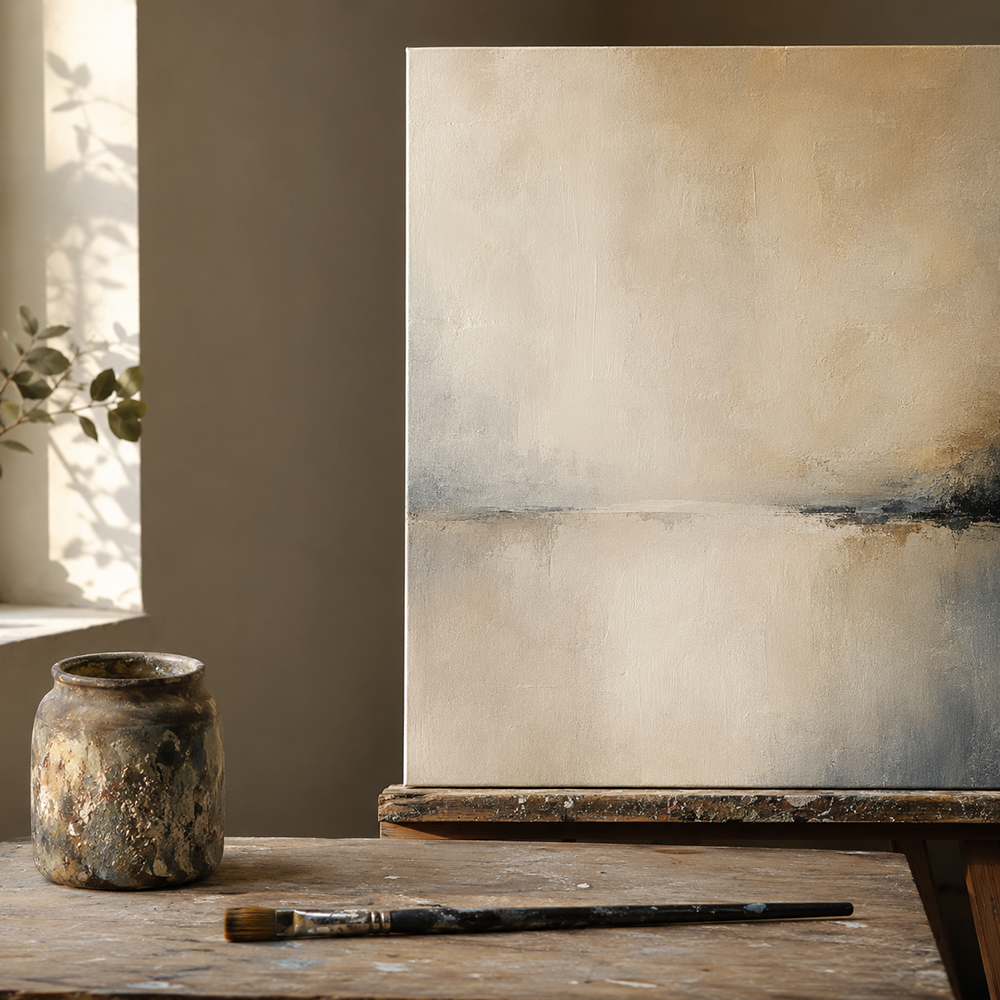
Where Is the Artist Line?
Imagine artistic development as a very long continuum.
Someone picks up a paintbrush for the first time.
They learn.
Practice.
Experiment.
Make some terrible paintings.
Make some better ones.
Develop more control.
Learn about color.
Find techniques they like.
Make hundreds more paintings.
Eventually, perhaps, they become extraordinarily skilled.
At what exact point along that continuum did they become an artist?
Painting number ten? Fifty? Five hundred?
When their proportions improved?
When someone complimented their work?
When a teacher said they were talented?
When they developed a recognizable style?
When they made something they finally thought was good?
There doesn't seem to be an obvious threshold where: person making art suddenly transforms into: artist.
And if we can't identify that threshold, perhaps technical accomplishment was never the entrance requirement in the first place.
Beginner Is Not the Opposite of Artist
We use beginner as though it sometimes means: not a real artist yet.
But beginner describes experience.
Someone can be a beginner pianist.
A beginner knitter.
A beginner gardener.
A beginner photographer.
Why couldn't someone be a beginner artist?
They may not have much technical knowledge yet.
Their ideas may exceed their ability to execute them.
They may need instruction.
They may make things that don't work.
They may look at what they've created and think: well, that certainly wasn't what I pictured.
None of that is unusual.
It's what learning looks like.
If artist is reserved for the end of artistic development, we have another problem: where exactly is the end?
Artists continue learning, too.
Experienced Artists Become Beginners Again
Someone can have decades of artistic experience and still encounter a material that makes them feel completely clueless.
Give an accomplished painter a pottery wheel for the first time.
Give a ceramicist unfamiliar digital software.
Give a photographer knitting needles.
Give an illustrator welding equipment.
Their artistic experience may help them in some ways. They may understand composition, observation, experimentation, or creative problem-solving.
But technically?
They might be terrible at first.
Does the painter temporarily stop being an artist while producing a truly unfortunate clay bowl?
Of course not.
We understand that they're an artist learning ceramics.
That's revealing.
Because we readily allow established artists to be beginners.
Perhaps beginners don't need to wait until they're established before they're allowed to be artists either.
Skill Isn't One Thing
There's another problem with using skill as the qualification:
Artistic ability isn't a single ladder.
Someone can draw extraordinary realistic portraits and struggle with abstraction.
Someone can have a remarkable sense of color but find perspective difficult.
Someone may be wonderful at sculpting forms while feeling completely lost with paint.
Someone might excel at composition.
Or storytelling.
Pattern.
Material experimentation.
Conceptual thinking.
Craftsmanship.
Observation.
Improvisation.
Design.
There isn't one universal skill called being good at art that everyone possesses in greater or lesser quantities.
There are overlapping abilities, experiences, interests, and ways of thinking.
And this is where the familiar declaration—I'm not creative because I can't draw—becomes especially strange.
Maybe you can't draw very well.
That tells us something about your current drawing ability.
It doesn't tell us everything you're capable of creating.
Technical Mastery Is Real
None of this means skill doesn't matter.
Technical mastery can be astonishing, and there are things an artist with forty years of experience can do that a beginner simply cannot do yet.
Practice matters.
Knowledge matters.
Craftsmanship matters.
Calling a beginner an artist doesn't erase any of that.
The mistake is assuming artist and expert are synonyms.
A beginner doesn't need to claim mastery in order to claim participation.
Art Doesn't Have to Be Hyperrealistic to Demonstrate Skill, Either
And sometimes the problem isn't actually a lack of skill.
It's that we've decided only certain skills count.
A person sees a hyperrealistic portrait and thinks: now THAT'S an artist.
The technical achievement is immediately visible.
We can compare the drawing with reality and marvel at how closely they match.
But other artistic abilities can be harder to measure at a glance.
Choosing exactly the right relationship between two colors.
Creating an abstract composition that holds our attention.
Understanding how materials interact.
Developing an unusual visual language.
Creating an atmosphere.
Knowing when to leave something alone.
Reducing an idea to an elegantly simple form.
Making something playful, strange, unsettling, tender, or deeply personal.
Technical realism is one remarkable artistic ability.
It isn't the universal measuring stick for artistic legitimacy.
“Not Good Enough” Usually Hides Another Question
When someone says: I'm not good enough to call myself an artist, perhaps what they're really asking is:
- Would other people take me seriously if I said it?
- Would someone look at my work and think I'm delusional?
- Am I claiming more expertise than I actually have?
- Do I have the right to put myself in the same category as people whose work is far beyond mine?
Those fears make sense.
But artist doesn't have to mean: equally accomplished as every other artist.
Calling yourself a writer doesn't mean claiming to write like your favorite novelist.
Calling yourself a musician doesn't mean claiming to perform like a concert virtuoso.
And calling yourself an artist doesn't mean looking at the most technically extraordinary artist you can find and declaring: we're equally skilled.
It means you're describing your relationship to making art.
Maybe Skill Changes the Description, Not the Permission
Perhaps this is another place where modifiers help us.
Beginner artist.
Developing artist.
Student artist.
Experienced artist.
Self-taught artist.
Professional artist.
Accomplished artist.
They're not interchangeable.
Each communicates something different.
And someone may move among those descriptions over a lifetime.
But perhaps we don't need: not artist → artist to function as another skill level on the same ladder.
Because if you're waiting until you're good enough before allowing yourself the word, there's always someone better.
Someone more technically accomplished.
More experienced.
More successful.
More knowledgeable.
And there will probably always be something you don't know how to do.
Maybe the question doesn't have to be: am I good enough to be an artist?
Maybe it's: am I making, exploring, learning, expressing, experimenting, or developing ideas through art?
If so, your skill can keep growing.
Your work can change.
Your knowledge can deepen.
You can become dramatically better at what you do.
You don't necessarily have to wait for some imaginary level of mastery before you're allowed to be the person who's doing it.
What About People Who Make Art Differently?
There's another question hiding inside all these supposed qualifications.
Even after we remove:
- Do you have a degree?
- Do you sell your work?
- Are you technically accomplished enough?
we can still carry an image of what a real artist is supposed to look like.
They make.
Consistently.
Independently.
Productively.
They have a studio.
Maintain a body of work.
Apply for opportunities.
Attend events.
Promote themselves.
Meet deadlines.
Keep creating.
Keep showing up.
Keep producing.
And for some artists, that's exactly what an artistic life looks like.
But what happens when someone can't?
Productivity Isn't the Same as Artistry
Maybe someone creates twenty pieces a month.
Someone else creates two a year.
Is the first person twenty times more of an artist?
It sounds ridiculous when we put it that way.
And yet productivity can quietly become another qualification:
- I haven't made anything lately, so I don't really feel like an artist anymore.
- I don't create consistently enough.
- Everyone else is producing so much more than I am.
Creative lives don't always move at a steady pace.
People have jobs.
Families.
Responsibilities.
Financial limitations.
Changing circumstances.
Sometimes creativity comes in enormous bursts.
Sometimes it becomes quiet.
And disability can make that inconsistency even more pronounced.
Someone may deeply value their artistic practice while being unable to access it as often as they want.
A period of reduced output doesn't necessarily erase everything that came before it—or everything that remains part of how that person thinks.
How much someone can produce and whether they're an artist aren't necessarily the same question.
Independence Can Be Another Invisible Requirement
We also tend to romanticize the independent artist.
One person.
One vision.
One pair of hands.
They conceive the artwork and physically execute every part of it themselves.
But what happens when someone needs help?
Maybe they need another person to prepare materials.
Position something.
Reach something.
Operate equipment.
Transport work.
Handle administrative tasks.
Translate communication.
Photograph finished pieces.
Set up an exhibition.
Or physically perform part of a process the artist cannot perform themselves.
Does receiving assistance make the artistic thinking less theirs?
That question becomes particularly important for disabled artists, but it isn't limited to disability.
Artists have always worked with assistants.
Studios.
Fabricators.
Technicians.
Collaborators.
Craft specialists.
Printers.
Installers.
Other people who help transform an idea into physical reality.
We rarely conclude that a famous artist stopped being an artist because someone else helped fabricate an enormous sculpture.
So perhaps complete physical independence was never a particularly sensible requirement for artistic authorship in the first place.
Access Can Look Like Ability From the Outside
Imagine two equally imaginative people.
One has:
- A dedicated studio
- Money for materials
- Reliable transportation
- Time to make
- Access to equipment
- Professional connections
- The ability to attend openings
- Energy for networking
- Enough financial stability to take unpaid opportunities
The other doesn't.
Their artistic lives may look dramatically different from the outside.
One accumulates exhibitions.
Connections.
Portfolio pieces.
Recognition.
Opportunities.
The other may make things quietly whenever resources and capacity allow.
If we look only at visible professional achievement, it becomes tempting to assume the first person is simply more serious.
Maybe they are.
But we don't actually know that from the evidence we've been given.
We're seeing two different levels of access.
And this is where artistic gatekeeping can become particularly unfair.
Sometimes what looks like a difference in artistic legitimacy is actually a difference in what someone has been able to access.
Disability Can Challenge the Picture of the “Serious Artist”
Disabled artists can encounter this especially sharply.
An artist may need adaptive tools.
More time.
Help with physical processes.
Different communication.
A modified workspace.
Frequent breaks.
Flexible deadlines.
They may be unable to attend traditional networking events.
Unable to maintain a constant public presence.
Unable to produce work on a predictable schedule.
Unable to participate in opportunities designed around assumptions about stamina, transportation, communication, sensory environments, or physical ability.
None of those things tells us whether the person has artistic ideas.
Whether they understand their materials.
Whether they experiment.
Whether they make meaningful decisions.
Whether they develop a visual language.
Whether they have something they want to explore or express.
In other words: they tell us something about how the artist needs to work.
They don't necessarily tell us whether the person doing that work is an artist.
What About People Whose Art Lives Outside the Art World?
Access isn't only about disability.
There are people making extraordinary things who have very little connection to what we conventionally call the art world.
Someone quilting at home.
Someone carving wood in a garage.
Someone creating elaborate decorations for community celebrations.
Someone embroidering.
Someone painting miniatures.
Someone making jewelry at their kitchen table.
Someone creating digital illustrations after their day job.
Someone transforming discarded materials because those are the materials available.
Someone learning a craft passed through their family or community.
Someone who has never entered a gallery except as a visitor.
Do they become artists only when an institution notices?
Or when the object enters a particular kind of space?
Sometimes the distinction between art and craft has carried its own history of hierarchy and gatekeeping; that's a much larger subject than we need to solve here.
But it raises a useful question: whose forms of making have we been taught to recognize as artistic?
That hierarchy can shape our own identities, too.
If someone has absorbed the idea that painting belongs in the category of art while quilting, embroidery, jewelry, paper craft, woodworking, or other forms of making belong somewhere lesser, they may be doing deeply creative work while never imagining that artist could describe them.
Sometimes the gate isn't only around the person; it's around the kind of making we've been taught to recognize.
Maybe Some “Qualifications” Are Actually Privileges
A professional portfolio can demonstrate commitment and experience.
An exhibition history can tell us something meaningful.
Formal education can build knowledge.
A large body of work can reveal years of exploration.
None of those things should be dismissed.
But perhaps we should be careful about moving from: this person has achieved something significant to: people who haven't achieved it aren't really artists.
Because some markers of artistic legitimacy require resources beyond artistic ability.
- Time
- Money
- Health
- Space
- Transportation
- Education
- Technology
- Connections
- Opportunity
- Support
The capacity to navigate systems that weren't designed equally well for everyone.
That's why I think there's an important distinction between recognizing achievement and using achievement as permission.
We can celebrate someone for earning an MFA without requiring an MFA.
Celebrate an artist supporting themselves through their work without requiring everyone to monetize theirs.
Celebrate extraordinary productivity without treating inconsistent production as artistic failure.
Celebrate independence without treating assistance as illegitimacy.
Celebrate exhibitions without pretending invisible work isn't art.
Art Can Happen Under Different Conditions
Maybe an artist creates every day.
Maybe they create when they can.
Maybe they work alone.
Maybe they need support.
Maybe they have expensive professional materials.
Maybe they work with cardboard, scraps, thrifted objects, or whatever they can access.
Maybe thousands of people see their work.
Maybe five people do.
Maybe nobody does.
Those differences can shape the artist's practice profoundly.
They can affect opportunity.
Career.
Recognition.
Income.
Technique.
Output.
They may deserve to be talked about honestly rather than flattened into everyone is exactly the same.
But they don't necessarily answer the question: is this person an artist?
And perhaps that's where gatekeeping becomes easiest to recognize.
If our definition of artist quietly requires someone to be consistently productive, professionally visible, financially resourced, physically independent, and capable of participating in conventional art-world systems—maybe some of what we've been calling artistic qualification is actually access wearing a very convincing disguise.
 Jessica Carey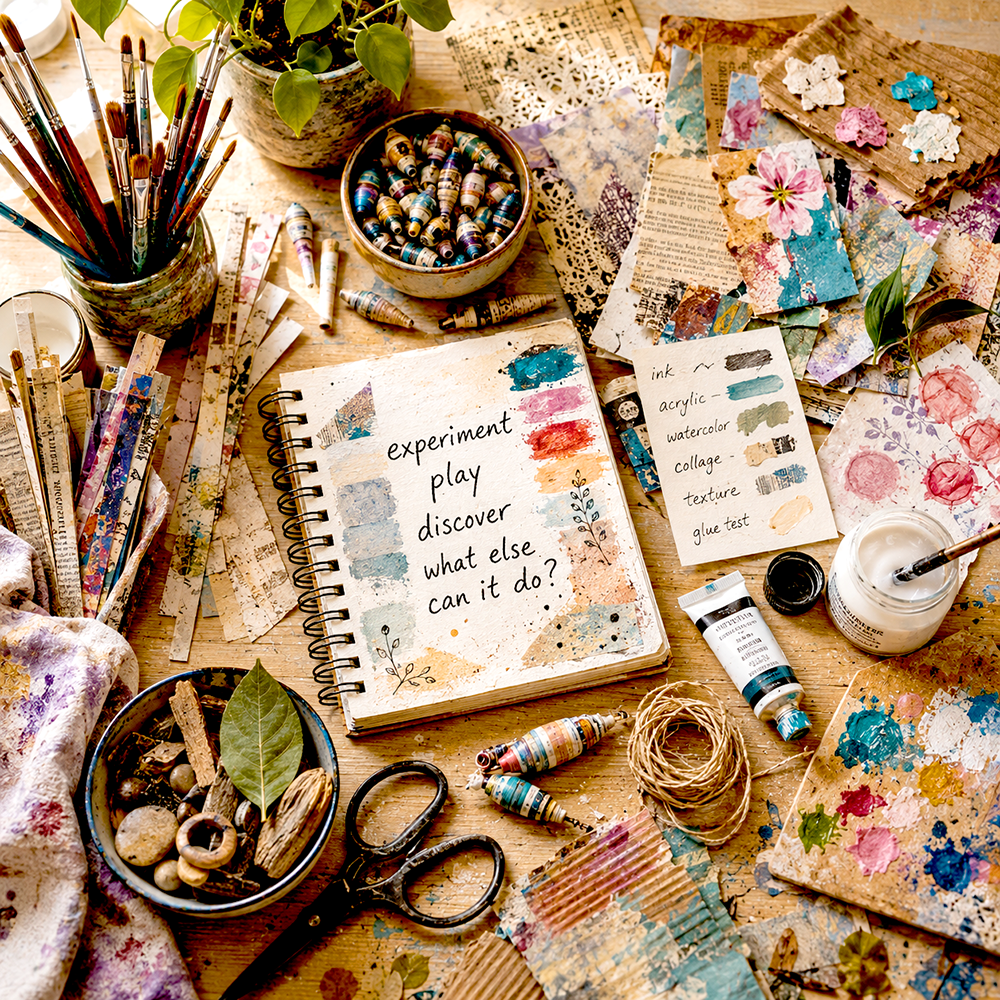
Maybe “Artist” Is Something You Do
After all of this, perhaps we've been approaching the word artist backward.
We've been asking: what do I have to accomplish before I become one?
Maybe another question is more useful: what do artists actually do?
They make.
Imagine.
Explore.
Notice.
Arrange.
Experiment.
Interpret.
Express.
Transform.
Respond.
Develop ideas.
Solve problems.
Work with materials, images, sounds, movement, language, space, or whatever else their practice asks of them.
Not every artist does all of those things.
Not every artist does them in the same way.
But perhaps artist doesn't have to function primarily as a prize awarded after someone has done enough impressive things.
Maybe it can describe a person engaged in artistic practice.
 Jessica Carey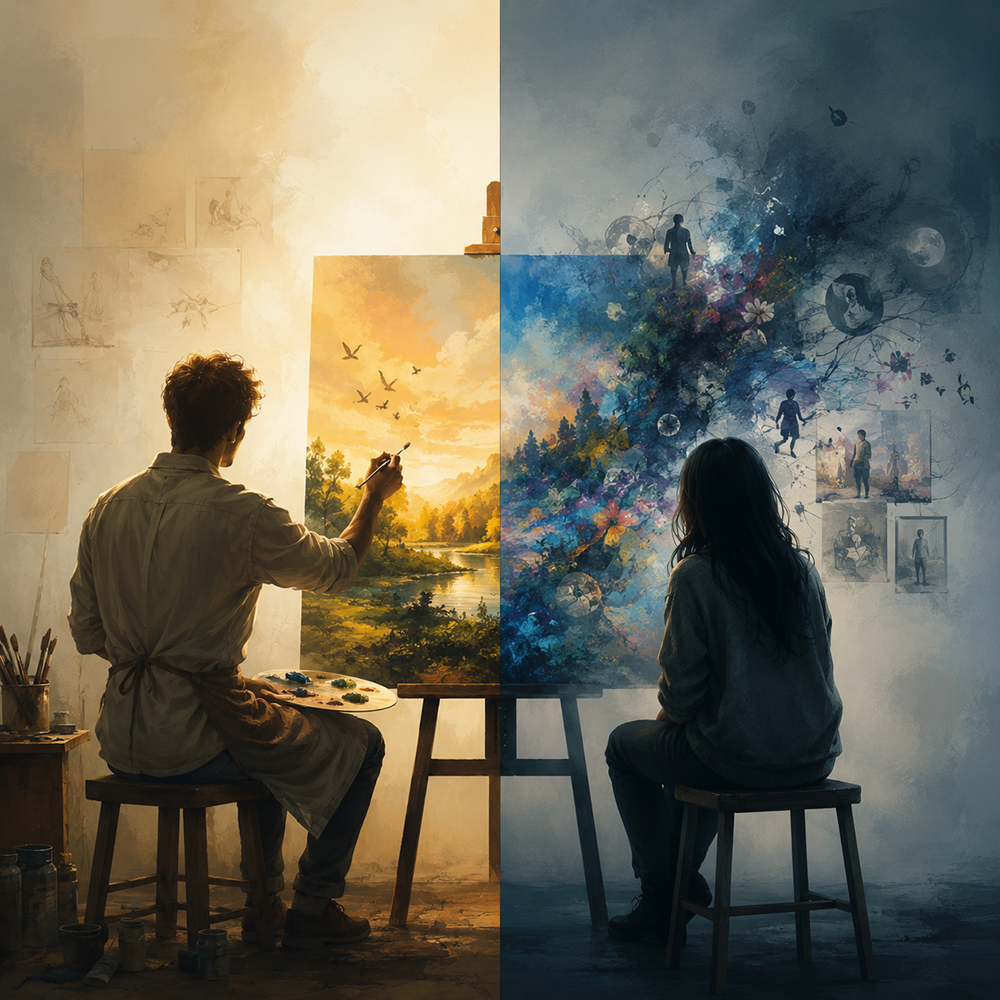
The Doing Can Come Before the Identity
There's something interesting about the way identity sometimes follows action.
Someone starts painting.
At first: I'm trying painting.
Then: I paint sometimes.
Then: painting is one of my hobbies.
Maybe eventually: I'm a painter.
But when did the painting become real?
It was real from the beginning.
The person may become more experienced.
More committed.
More knowledgeable.
More skilled.
Their relationship with the practice may deepen enormously.
But the activity itself didn't wait for the identity to catch up.
Sometimes we're already making art while still feeling strangely uncomfortable saying: I'm an artist.
Maybe we don't need to resolve that discomfort immediately.
But perhaps we can at least notice it.
Making Art Doesn't Require an Audience
There's another assumption worth loosening: does anybody else have to see it?
Imagine someone who spends years painting and never shows the paintings publicly.
No exhibitions.
No online portfolio.
No social media.
No sales.
Maybe the paintings hang around their home.
Maybe they're given to friends.
Maybe they end up stacked in a closet.
Does the absence of an audience retroactively change what happened while they were painting?
The colors were still chosen.
Problems were still solved.
Decisions were still made.
Ideas were still explored.
The person still engaged with a material and made something that didn't exist before.
An audience can become part of an artistic practice.
It doesn't necessarily have to authorize one.
Art Can Matter Even When It Stays Small
Maybe the artistic life isn't a career.
Maybe it isn't even a particularly large part of someone's life.
Someone draws while watching television.
Makes tiny sculptures occasionally.
Decorates handmade cards.
Takes photographs on walks.
Crochets strange creatures because they find it delightful.
Experiments with watercolor once every few months.
Keeps a sketchbook nobody else sees.
That may not be a professional practice.
It may not be ambitious.
It may not be particularly visible.
But why should artistic identity require ambition?
Not everything meaningful has to become more.
More productive.
More polished.
More public.
More profitable.
More impressive.
Something can matter precisely at the scale it already occupies.
“I Don't Want the Word” and “I Haven't Earned the Word” Are Different
Removing barriers around the word artist doesn't mean assigning it to people who don't want it.
Someone might make beautiful quilts and say: I'm a quilter.
Someone might make jewelry and prefer: I'm a maker.
Someone might crochet and think of themselves as a crafter.
Someone else might simply say: I like making things.
Wonderful.
They don't need to be corrected: actually, you're an ARTIST.
They get to choose their language, too.
But there's an important difference between: that word doesn't feel like me and: I'd love to call myself an artist, but I don't think I've earned it.
Maybe because:
- I haven't sold anything.
- I don't have a degree.
- I only make things for fun.
- Other people are much better than I am.
- I haven't been productive lately.
- Nobody knows my work.
Now we're back to the gates we've been examining throughout this article.
The person isn't rejecting the identity.
They're waiting for permission to claim it.
And perhaps nobody ever told them that permission doesn't necessarily have to arrive from outside.
Identity Doesn't Have to Be a Claim of Greatness
Maybe part of what makes artist uncomfortable is that it can feel boastful: who am I to call myself an artist?
As though saying it means:
- My work is important.
- My work is excellent.
- You should admire what I make.
- I belong beside the greatest artists in history.
But perhaps: I'm an artist can be much quieter than that.
It can mean:
- Art is something I practice.
- Making is part of how I interact with the world.
- This matters to me.
It doesn't tell us whether the work is brilliant.
It doesn't tell us whether anyone else likes it.
It doesn't tell us how technically accomplished the person is.
It doesn't even tell us whether they're particularly confident about what they're doing.
It's an identity.
Not a review.
Maybe We Don't Need an Artist Licensing Department
Perhaps we can retire the imaginary application.
No checkbox for: degree obtained.
No minimum annual art income.
No required exhibition count.
No realism test.
No productivity quota.
No panel of experts reviewing whether we're sufficiently serious.
Those things may matter in particular contexts.
But perhaps the broad identity of artist can rest somewhere simpler:
- Do you make art?
- Do you engage with it as a meaningful practice?
- Does artist feel like a truthful word for your relationship with what you do?
If so, perhaps the word is available.
Not because skill doesn't matter.
Not because professional accomplishment doesn't matter.
Not because every creative act automatically establishes a lifelong identity.
But because identity and achievement aren't the same thing.
And perhaps the most important distinction is this:
There's nothing wrong with saying: I make art, but I don't consider myself an artist.
But there may be something unnecessarily painful about wanting to say: I'm an artist and stopping yourself because you're still waiting for someone more qualified to tell you that you've finally earned it.
Maybe artist isn't something other people award us when our work becomes impressive enough.
Maybe sometimes it's simply a word we recognize ourselves inside.
You Don’t Need Permission
Maybe you're a professional artist.
Maybe you've never sold a thing.
Maybe you have an art degree.
Maybe everything you know came from books, videos, workshops, other makers, experimentation, or years of figuring things out yourself.
Maybe you've been creating for decades.
Maybe you started last Tuesday.
Maybe you make constantly.
Maybe months pass when you make almost nothing.
Maybe thousands of people see your work.
Maybe your art lives mostly in your home.
All of those things tell us something about your artistic life.
But perhaps none of them gets to decide whether you're allowed to have one.
There Is No Moment When Permission Arrives
That's the strange thing about waiting until we finally feel qualified enough to call ourselves an artist.
What exactly are we waiting for?
Someone to buy something?
Someone to exhibit it?
A degree?
A compliment from the right person?
A certain level of technical ability?
For someone whose work we respect to look at ours and declare: yes, you're one of us now.
Maybe some of those things happen.
Maybe they don't.
But there probably isn't going to be a definitive moment when the universe hands us an official certificate saying: ARTIST STATUS: APPROVED.
We can spend years waiting for a permission that nobody was actually responsible for giving.
 Jessica Carey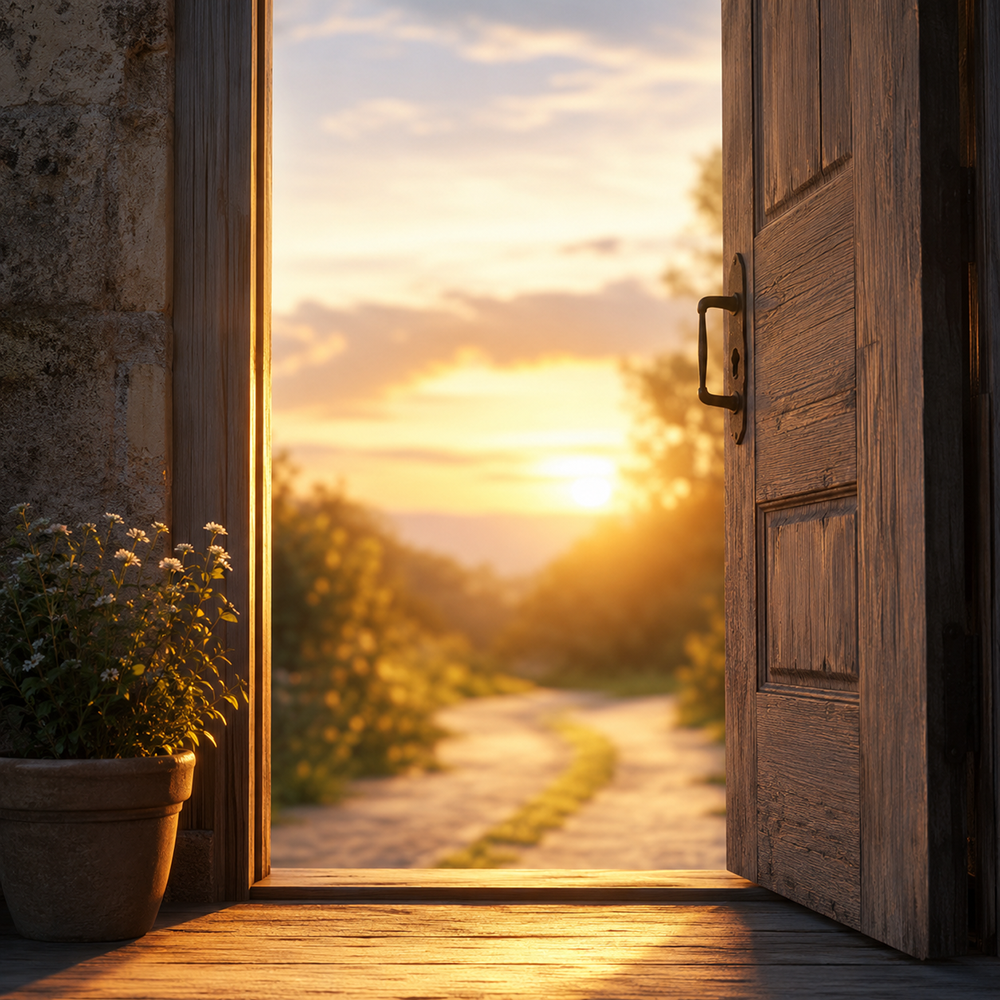
Different Artistic Lives Are Still Artistic Lives
Maybe you're a beginner artist.
An amateur artist.
A disabled artist.
A professional artist.
A self-taught artist.
An artist whose practice has been quiet lately.
Those descriptions aren't apologies.
They tell us something more.
Someone else may know more than you.
Have more experience.
Possess extraordinary technical ability.
Have opportunities you haven't had.
Their artistic life doesn't have to invalidate yours.
And neither does the form your creativity takes.
Maybe you can't draw realistically.
Maybe you knit.
Collage.
Photograph.
Build.
Sew.
Write.
Design.
Make jewelry.
Transform discarded materials.
Create things that don't fit comfortably into one category at all.
Art was never as small as the box we sometimes put around it.
And perhaps neither is the word artist.
You Don't Have to Use the Word
Of course, you still don't have to call yourself an artist.
Maybe maker feels better.
Creator.
Crafter.
Designer.
Illustrator.
Photographer.
Writer.
Knitter.
Creative.
Or maybe you don't want an identity attached to it at all: I just like making things.
That's enough, too.
The point isn't to replace one gate with another.
It isn't: you make art, therefore you have to identify as an artist.
It's that if you make art, care about making art, and recognize yourself in the word—you don't necessarily need someone else to authorize it.
Maybe You Already Are
So if you find yourself saying: I'm not a real artist because... perhaps listen to what comes next.
- Because I'm still learning
- Because I don't sell anything
- Because I can't make art like that
- Because I haven't made much lately
- Because other people are better
Maybe some of those statements contain perfectly real information about where you are.
But do they actually complete the sentence?
Or have we taken something true—I'm still learning—and transformed it into something much larger: therefore I don't belong here.
You can learn.
Develop.
Practice.
Change.
Become more skilled.
Build a career—or decide you don't want one.
Make more.
Make less.
Explore an entirely different medium and become a beginner all over again.
None of that requires pretending you're already everything you could someday become.
It only requires allowing yourself to be where you are now.
Maybe another word feels more truthful to you.
Use it.
But if artist is the word you keep circling—the word that feels right until you start listing all the reasons you haven't earned it—perhaps you can stop waiting for the imaginary committee to make its decision.
There isn't an Artist Licensing Department.
There isn't a universal skill test.
There isn't one correct artistic life you have to reproduce.
And nobody needs to arrive at your door and announce: congratulations, you're finally legitimate.
You don't have to call yourself an artist.
But if you are making art and the word feels true, perhaps the person who gets to call you one is you.
Want even more content about creativity and art?
Be sure to check out all of our creative chronicles!
If you'd like to see examples of my work, you can find some of my art and creations at Redbubble and Gumroad!
Looking to learn more about my recent journey?
Check out some of these articles:
-Hidden Gems for St. Louis Artists
-Hidden Gems for Autistic & Neurodivergent Adults
-Learning What Love Was Supposed to Feel Like
-I Wasn't Broken--I'm Burned Out
-The Difference Between Resting and Giving Up
-What Chronic Autistic Burnout Actually Feels Like
-When You Had to Raise Yourself
 Jessica Carey