
For much of my life, I wondered if the world would be easier if I could simply care less.
Notice less.
Feel less.
If I could somehow turn down the volume on the parts of me that noticed when someone’s smile did not reach their eyes.
The parts that felt deeply moved by small moments of beauty.
The parts that struggled to walk past suffering without wanting to help.
The parts that asked:
- “Is everyone included?”
- “Is everyone okay?”
- “Could this be done with more kindness?”
Because somewhere along the way, many sensitive people learn that their sensitivity is the problem.
- “You’re too sensitive.”
- “You think too much.”
- “You care too much.”
- “Just let it go.”
- “Stop taking things personally.”
Maybe you have heard those words so many times that you started believing them.
Maybe you started seeing your softness as something you needed to outgrow.
Something embarrassing.
Something inconvenient.
Something you needed to hide if you wanted to survive in the world.
And maybe sometimes you did need to learn.
Because sensitivity does not mean we always understand everything perfectly.
Feeling something strongly does not automatically mean we see the whole picture.
Our emotions are important messengers, but they are not the entire story.
Part of growing is learning how to pause.
To listen.
To understand ourselves and others.
To ask: “What is this feeling trying to tell me?”
But maybe the answer was never to stop feeling.
Maybe the answer was learning how to carry your sensitivity with wisdom.
Because sensitivity itself was never the enemy.
Sensitivity is what allows someone to notice the person sitting alone.
The quiet change in someone’s voice.
The beauty of sunlight coming through trees.
The emotion hidden inside a song.
The tiny details other people walk past.
The places where more compassion could exist.
Human beings were not designed to move through life unaffected by everything around us.
We connect.
We respond.
We care.
A world without sensitivity would not simply be a world without pain.
It would also be a world without so much of what makes life beautiful.
The art.
The music.
The stories.
The kindness.
The moments when one person notices another person struggling and decides: “I do not want you to carry this alone.”
Maybe the goal was never to build walls so high that nothing could reach us.
Maybe the goal was learning how to build doors.
Boundaries that protect us without disconnecting us.
Wisdom that guides our compassion without destroying it.
Strength that allows us to stay open without losing ourselves.
Because the world does not need fewer people who care.
It needs more people who learn how to care wisely.
But genuine kindness is not about control, obligation, or losing ourselves. I explored the difference between true care and conditional kindness here.
 Jessica Carey
What Sensitivity Really Is
Sensitivity is often misunderstood.
Many people hear the word “sensitive” and immediately think:
Fragile.
Weak.
Easily upset.
Unable to handle reality.
But sensitivity is not the inability to handle life.
Sensitivity is the ability to deeply experience it.
Sensitive people often notice things other people overlook.
The small shift in someone’s voice.
The expression someone quickly hides.
The person standing quietly on the edge of a room hoping someone notices them.
The beauty in an ordinary moment.
The feeling that something needs more care.
Sensitivity is not just about sadness or pain.
It is also the reason someone stops to admire a sunset.
Why a song can bring tears to someone’s eyes.
Why a piece of art can communicate something words never could.
Why a small act of kindness can stay with someone for years.
A sensitive heart sees details.
And details matter.
Because a world built without sensitivity becomes a world where important things get missed.
The person who is struggling but does not know how to ask for help.
The problem everyone learned to ignore.
The small moment where kindness could change someone’s entire day.
Many of the things that make humanity beautiful require sensitivity.
Empathy requires noticing.
Creativity requires openness.
Connection requires caring.
Growth requires being willing to understand experiences beyond our own.
But sensitivity is not the same thing as always being right.
It does not mean every feeling is a fact.
It does not mean every reaction tells the whole story.
Sometimes they tell us:
- “Something here matters.”
- “This affected me.”
- “I need to pay attention.”
And then wisdom helps us understand what those feelings mean.
Because the goal is not to be controlled by everything we feel.
The goal is also not to stop feeling entirely.
The goal is learning how to listen.
How to understand.
How to respond.
A smoke alarm exists because noticing smoke matters.
But after the alarm goes off, we still look around.
We ask questions.
- Is there danger?
- Is something burning?
- Does something simply need attention?
The alarm is not the enemy.
It is a messenger.
Our sensitivity can work the same way.
It invites us to pay attention.
To ourselves.
To others.
To the world around us.
And when sensitivity is paired with wisdom, boundaries, and compassion, it becomes something powerful.
Not something that separates us from life.
Something that helps us connect more deeply with it.
When Sensitivity Gets Shamed
Many sensitive people do not start out believing their sensitivity is a problem.
They learn it.
Slowly.
Through the moments when their feelings are dismissed.
Their questions are ignored.
Their concerns are minimized.
Their natural way of experiencing the world is treated like something they need to fix.
Maybe they cried easily and were told: “Stop being dramatic.”
Maybe they noticed something unfair and heard: “That’s just how things are.”
Maybe they expressed hurt and were told: “You need to grow thicker skin.”
Maybe they cared deeply and were told: “You think too much.”
Over time, those messages can become an internal voice: “Maybe I am the problem.”
But sometimes “too sensitive” does not actually mean someone is feeling too much.
Sometimes it means they are noticing something others learned not to notice.
Sometimes they are asking a question others stopped asking.
Sometimes they are reacting to something everyone else became used to.
A smoke alarm can be annoying.
It can interrupt.
It can make everyone stop what they are doing.
But the goal is not to remove every smoke alarm because the sound is uncomfortable.
The goal is to ask: “Why is it going off?”
People are not always comfortable with being reminded of things they would rather avoid.
Compassion asks uncomfortable questions:
- “Is this hurting someone?”
- “Could we do this better?”
- “Are we considering everyone affected?”
- “Are we choosing what is easy or what is right?”
And sometimes the person asking those questions gets labeled as the problem because changing a system is harder than silencing the person who noticed.
But sensitivity also requires self-awareness.
Because there is another side to this conversation.
Sometimes our past experiences influence how we interpret the present.
Sometimes pain makes certain situations feel louder.
Sometimes we misunderstand.
Sometimes another person’s intention and our experience do not perfectly match.
That does not mean our feelings are wrong.
It means feelings are invitations to explore, not conclusions we never question.
Healthy environments do not shame people for having feelings.
They also do not require everyone to perfectly understand everything immediately.
They create space for curiosity.
For conversations like:
- “Help me understand.”
- “This affected me.”
- “I did not realize that.”
- “Can we figure this out together?”
Because the opposite of dismissing sensitivity is not believing every feeling means someone else is wrong.
The opposite is respect.
Respect for ourselves.
Respect for others.
Respect for the complexity of being human.
You were not born caring too much.
You were born with the ability to care.
And learning how to use that care wisely is very different from trying to remove it completely.
Sometimes recognizing what is unhealthy begins with questioning what we were taught to accept as normal.
 Jessica Carey
The Difference Between Sensitivity and Carrying Everything
One of the hardest lessons for many sensitive people to learn is that caring deeply does not mean carrying everything.
Because when you naturally notice pain, it is easy to feel responsible for fixing it.
You see the person struggling.
The problem nobody is addressing.
The need nobody is meeting.
The weight someone else is holding.
And your first instinct may be: “How can I help?”
That instinct is beautiful.
But even beautiful things need balance.
A candle can share its flame without disappearing.
A tree can offer shade without pulling itself out of the ground.
A river can nourish everything around it because it continues to have a source.
Nature understands something humans often forget: giving and receiving were meant to exist together.
Many sensitive people become very good at noticing everyone else.
They ask:
- “What do they need?”
- “How do they feel?”
- “How can I make this easier?”
- “How can I prevent anyone from getting hurt?”
But sometimes they forget to ask:
- “What do I need?”
- “How do I feel?”
- “Am I okay, too?”
Compassion is not supposed to require abandoning yourself.
Your exhaustion matters, too.
Your limits matter, too.
Your life matters, too.
Because you are not only here to be a source of comfort for everyone else.
You are also a living being worthy of care.
Sometimes sensitive people learn unhealthy versions of kindness.
They learn:
- “If someone needs something, I have to provide it.”
- “If someone is upset, I have to fix it.”
- “If I disappoint someone, I did something wrong.”
- “If I set a boundary, I am being unkind.”
But love without boundaries eventually becomes depletion.
A lighthouse helps guide ships through the storm.
It provides light.
Direction.
Hope.
But it does not leave its foundation and throw itself into the ocean every time there is a wave.
Because if the lighthouse destroys itself trying to become a rescue boat, eventually there is no light left to give.
Healthy compassion asks: “What can I offer?”
Not: “How much of myself can I sacrifice?”
Healthy compassion says: “I care about your pain.”
Not: “Your pain belongs entirely to me.”
Healthy compassion remembers: Two people matter here. Not just one.
And sometimes the kindest thing you can do is recognize what is yours to carry and what is not.
 Jessica Carey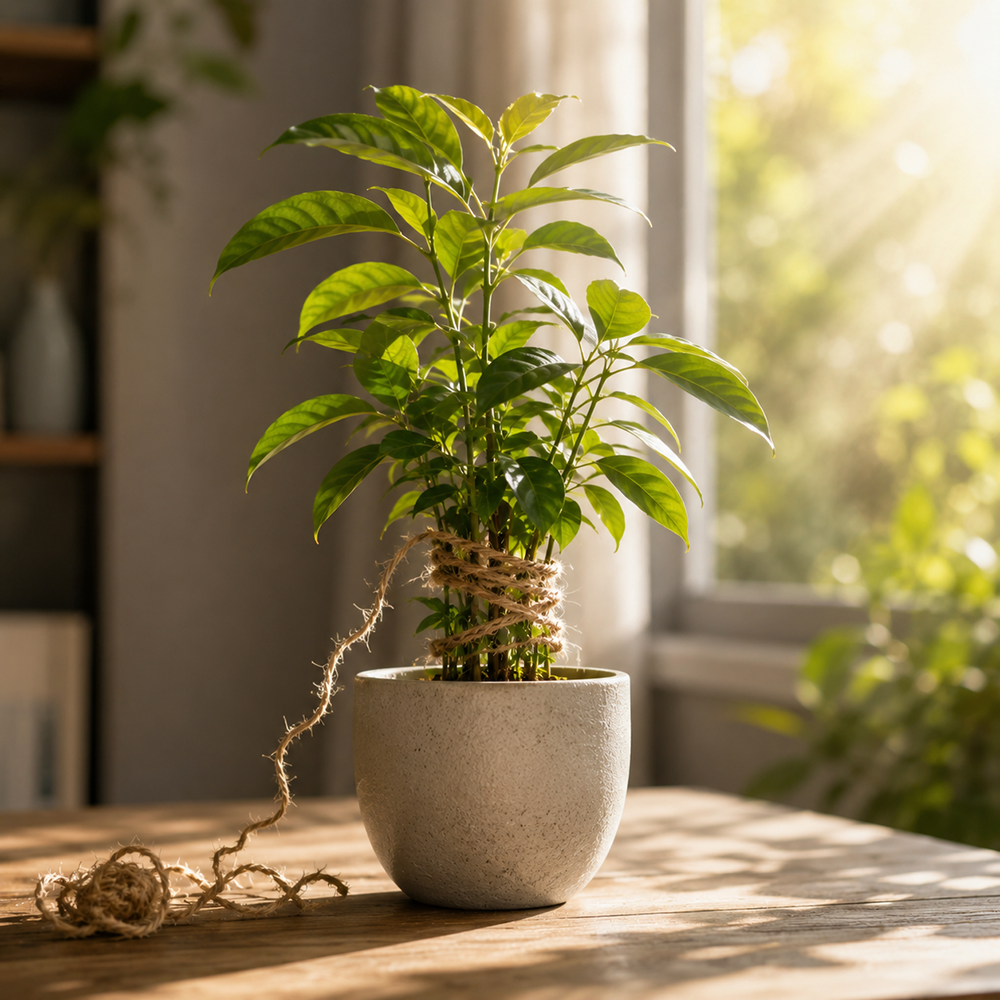
You can support someone without controlling their journey.
You can love someone without fixing every struggle.
You can care without losing yourself.
Because sensitivity was never meant to become a cage.
It was meant to become a connection.
A bridge.
A reminder that we belong to each other.
But bridges need support, too.
They cannot hold weight forever without care, maintenance, and rest.
The world needs people who care.
But it does not need caring people to destroy themselves.
Your sensitivity is not measured by how empty you are willing to become for others.
Sometimes protecting your own light is what allows it to keep shining.
For many caring people, years of carrying too much can eventually lead to exhaustion and burnout.
 Jessica Carey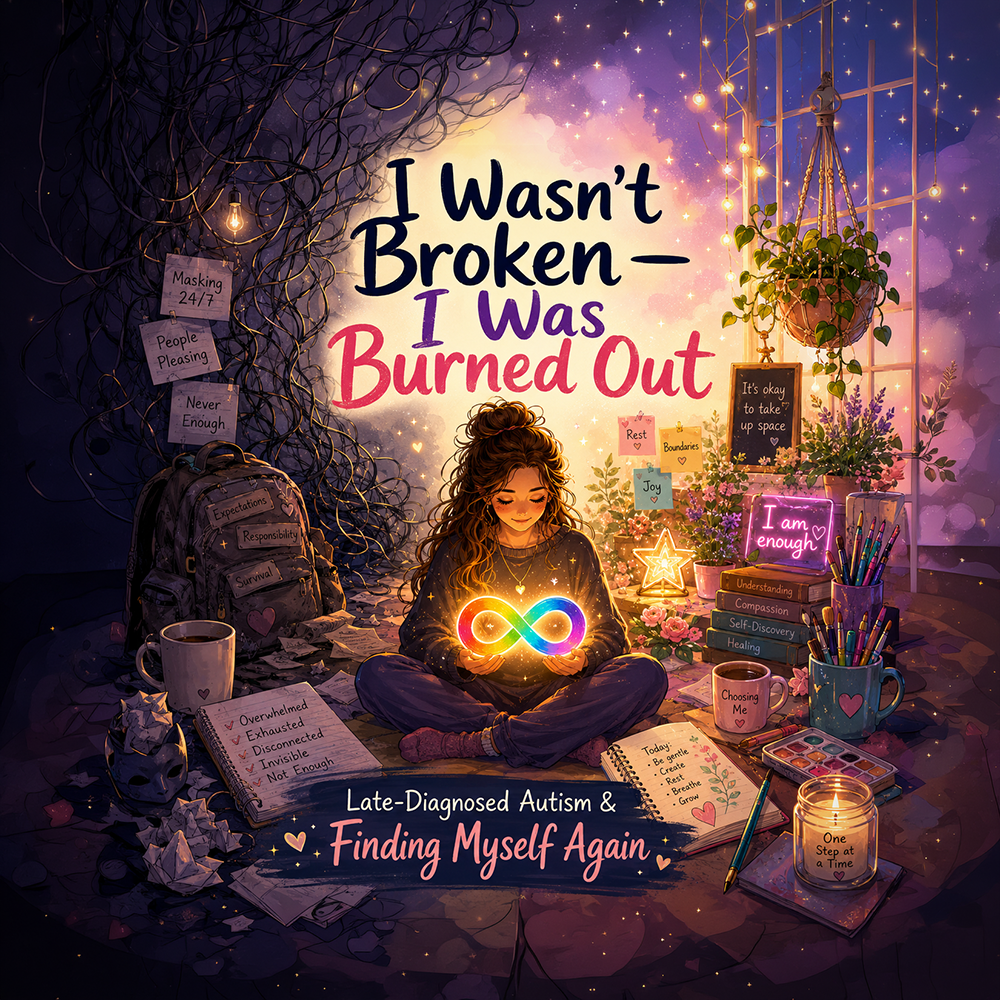
Empathy Is Not Weakness
Sometimes people mistake a lack of feeling for strength.
They believe being unaffected means being powerful.
That the strongest person is the one who does not care.
Does not cry.
Does not need anyone.
Does not let anything touch them.
But being disconnected is not the same thing as being strong.
Sometimes walls are built because they were necessary.
Because someone cared deeply and got hurt.
Because they gave too much and received too little.
Because they trusted people who did not handle that trust carefully.
And for a while, those walls may have helped them survive.
But the goal of healing is not to become impossible to hurt.
Because becoming impossible to hurt often requires becoming harder to reach.
And some of the most beautiful parts of being human exist because we can be reached.
Because something can move us.
Because someone else’s joy can become our joy.
Because someone else’s pain can inspire compassion.
Because we can look at another living being and think: “You matter.”
Empathy requires courage.
It asks us to recognize:
- “My experience is not the only experience.”
- “My perspective is not the only perspective.”
- “My needs matter, and so do yours.”
It invites us outside ourselves.
Many of humanity’s greatest acts of kindness began because someone cared enough to notice.
Someone saw suffering and decided: “This should change.”
Someone saw loneliness and decided: “You deserve connection.”
Someone saw a problem and imagined something better.
A world without empathy would not be a stronger world.
It would simply be a lonelier one.
Because empathy is the bridge between: “My life matters.”
And: “Your life matters, too.”
Of course, empathy does not mean agreeing with everyone.
It does not mean accepting harmful behavior.
It does not mean ignoring boundaries.
Sometimes empathy means understanding why someone became the way they are while still recognizing: “This is not okay.”
Sometimes empathy means caring about someone from a distance.
Sometimes empathy means wishing someone healing without allowing them unlimited access to your life.
Because real empathy includes everyone.
Including yourself.
The strongest hearts are not the ones that have never been hurt.
They are not the ones covered in armor, refusing to feel anything at all.
Sometimes the strongest hearts are the ones that have every reason to become cruel but keep choosing compassion.
Not because they are naive.
Not because they do not understand pain.
But because they understand pain deeply enough that they do not want to create more of it.
Remaining kind in a world where you have experienced hurt is not weakness.
Caring is not weakness.
Feeling is not weakness.
It is one of the strongest things there is.
 Jessica Carey
The World Needs Different Kinds of Strength
Somewhere along the way, many people learned a very narrow definition of strength.
Strength meant being unaffected.
Being independent.
Being confident.
Being able to push through anything.
Being the person who never breaks.
And those forms of strength can have value.
There are times when endurance matters.
There are times when courage means standing firm.
There are times when life asks us to do difficult things.
But those are not the only kinds of strength that exist.
A forest does not survive because every living thing becomes an oak tree.
The wildflowers do not fail because they are not trees.
The moss does not fail because it grows close to the ground.
The bees do not fail because they are small.
Each part of the ecosystem contributes something different.
Something necessary.
Something valuable.
Human beings are the same.
Some people are builders.
Some people are protectors.
Some people are dreamers.
Some people are problem-solvers.
Some people are caregivers.
Some people are creators.
Some people are the ones who notice tiny cracks before something breaks.
Some people are the ones who imagine something better before anyone else believes it is possible.
A world only built on toughness would miss so much.
Who would create the songs that help people feel understood?
Who would write the stories that make someone feel less alone?
Who would notice the person quietly struggling?
Who would ask:
- “Can this be kinder?”
- “Can this be more accessible?”
- “Who are we forgetting?”
Sensitivity has shaped humanity in countless ways.
Through art.
Through inventions.
Through communities.
Through moments where someone looked at the world and thought: “There has to be another way.”
Every creation begins with noticing.
A painter notices colors, shadows, and emotions others may walk past.
A writer notices questions, stories, and experiences waiting to be expressed.
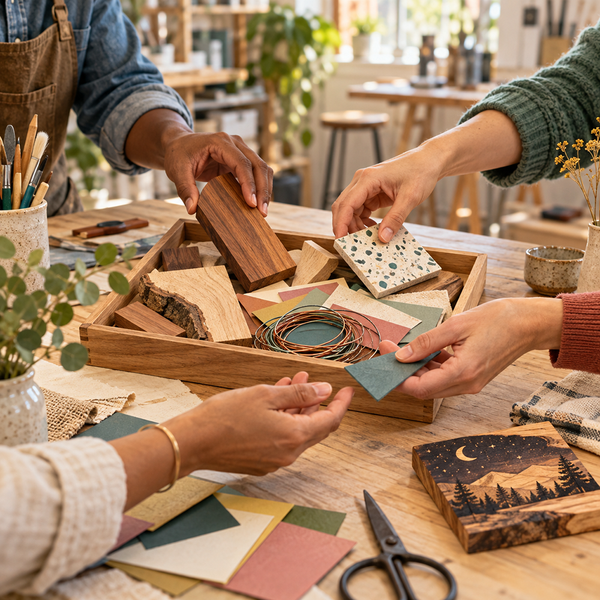
A maker looks at ordinary materials and imagines what they could become.
Creativity is often sensitivity transformed into something others can experience.
Because change often begins with someone being affected enough to care.
The person who notices suffering is not automatically weaker than the person who ignores it.
The person who feels deeply is not automatically less capable than the person who hides emotion.
The person who asks for gentleness is not automatically less resilient than the person who learned to survive without it.
Different strengths serve different purposes.
We do not look at a flower and criticize it for not providing shade.
We do not look at a river and criticize it for not standing still.
We do not look at the moon and wonder why it does not shine like the sun.
Different does not mean less.
Maybe the question was never: “How do I become more like everyone else?”
Maybe the better question is: “What am I here to bring?”
Because a world full of only one kind of strength would not be stronger.
It would be incomplete.
The world needs courage.
And compassion.
Logic.
And creativity.
Protection.
And tenderness.
People who build.
People who dream.
People who notice.
People who remind us that being human is about more than surviving.
It is also about connecting.
Creating.
Caring.
Growing.
Together.
Learning to Honor Your Sensitivity Wisely
Learning to value your sensitivity does not mean letting everything in.
It does not mean carrying every emotion.
Solving every problem.
Absorbing every pain.
Opening the door to every person.
A sensitive heart still needs a safe place to live.
Because even the most beautiful things in nature need protection.
Flowers need roots.
Rivers need banks.
Gardens need boundaries.
Not because they are weak.
Because they are alive.
Sometimes sensitive people spend so much time trying to prove their kindness that they forget kindness was supposed to include them, too.
They offer understanding.
Patience.
Forgiveness.
Encouragement.
Second chances.
But rarely pause to ask: “Am I offering myself those same things?”
Your sensitivity is not only something you give away.
It is also something you can turn inward.
The same compassion that notices another person struggling can notice when you are exhausted.
The same gentleness you offer someone else can be offered to yourself.
The same patience you give others as they grow can exist for your own growth, too.
Caring wisely means learning:
Not every problem is mine to solve.
Not every emotion is mine to absorb.
Not every person is mine to rescue.
Not every situation requires me to abandon myself.
Sometimes love looks like showing up.
Sometimes love looks like listening.
Sometimes love looks like offering support.
And sometimes love looks like recognizing:
- “I cannot carry this in a healthy way.”
- “I need rest, too.”
- “This is beyond what I can give.”
Boundaries do not remove compassion.
They protect it.
A garden fence does not mean: “I hate everything outside of this garden.”
It means: “This space matters, and I am caring for what grows here.”
Your heart is a living thing.
It is not an endless resource to be drained until nothing remains.
It needs nourishment.
Joy.
Rest.
Safe connections.
Places where it can receive instead of always provide.
Because the goal was never to become someone who feels nothing.
The goal was never to stop noticing.
To stop caring.
To stop being moved by the world.
The goal is learning how to carry your sensitivity in a way that lets it remain alive.
A sensitive heart with wisdom is a powerful thing.
It can see pain without becoming only pain.
It can offer kindness without disappearing.
It can care deeply without losing itself.
It can remain open — not because the world has never hurt it, but because it has learned how to protect what matters.
Maybe honoring your sensitivity is not about changing who you are.
Maybe it is about finally treating that part of yourself with the same care you have always tried to give everyone else.
The World Still Needs Soft Hearts
There are many things in this world that may try to convince you to care less.
Feel less.
Notice less.
Hope less.
To look at everything happening around you and decide: “This is just how things are.”
But so much of what makes humanity beautiful exists because someone cared enough not to look away.
Someone noticed a problem and imagined a solution.
Someone saw someone hurting and offered kindness.
Someone looked at something discarded and saw possibility.
Someone felt something deeply enough to create art, music, stories, and ideas that reminded others: “You are not alone.”
Sensitivity has always been part of how humans create a better world.
Not because sensitive people are perfect.
Not because they never misunderstand.
Not because caring automatically gives someone all the answers.
But because caring is where so many important questions begin.
Maybe some people will never understand why little things matter to you.
Why certain moments stay with you.
Why you notice what you notice.
Why you feel what you feel.
But different does not mean wrong.
The world does not need every flower to become a tree.
It does not need every river to become an ocean.
It does not need every person to experience life exactly the same way.
Different forms of existence bring different forms of beauty.
Maybe your sensitivity is not something you were supposed to defeat.
Maybe it is something you were supposed to understand.
To care for.
To guide with wisdom.
To protect with boundaries.
To allow to grow.
Because the answer to a world that sometimes feels too harsh is not always becoming harsher.
Sometimes the answer is creating more places where gentleness can survive.
More spaces where people can breathe.
More reminders that kindness still exists.
So if you are someone who feels deeply:
May you learn that your heart deserves the same compassion it gives away.
May you find people who value your softness instead of only benefiting from it.
May you remember that protecting your light and sharing your light can exist together.
Want even more content about creativity and art?
Be sure to check out all of our creative chronicles!
If you'd like to see examples of my work, you can find some of my art and creations at Redbubble and Gumroad!
Looking to learn more about my recent journey?
Check some of these articles:
-The Difference Between Resting and Giving Up
-Real Friendship is a Safe Place to be Human
-Hidden Gems for St. Louis Artists
-Hidden Gems for Autistic & Neurodivergent Adults
-I Think I Might Be Autistic... Now What?
 Jessica Carey