

Trust is one of the foundations of human connection.
Friendships.
Families.
Relationships.
Communities.
They all need trust to grow.
And yet, trust can feel incredibly difficult.
Because trusting means accepting something uncomfortable:
We cannot control everything.
We cannot control every choice another person makes.
We cannot prevent every mistake.
We cannot guarantee nobody will ever hurt us.
We cannot remove every uncertainty from being human.
And that can be terrifying.
So, sometimes, instead of building trust... people build control.
They tighten their grip.
They create endless rules.
They try to manage every outcome.
They convince themselves: “If I can just control enough, nothing bad will happen.”
And often, underneath that control is fear.
Fear of loss.
Fear of failure.
Fear of pain.
Fear of watching someone struggle.
Fear of things going wrong.
Those fears are human.
Most people who struggle with trust are not doing so because they woke up one day and decided: “I want to harm the people around me.”
Often, they are trying to protect something.
But fear does not automatically create safety.
And control does not automatically create love.
Often the tighter we hold something, the more damage we accidentally cause.
A flower cannot grow if someone keeps digging it up every day to check the roots.
A butterfly cannot strengthen its wings if someone breaks open the cocoon for it.
A person cannot discover their own strength if someone never allows them the chance to use it.
Real trust does not say: “Nothing bad will ever happen.”
It says: “Even when things are uncertain, I believe growth is possible.”
Because love was never supposed to mean: “I will control everything so nothing ever hurts you.”
Sometimes love means: “I will walk beside you while trusting you are capable of learning how to walk, too.”
Healthy love is not built by holding tighter. It grows through respect, safety, and freedom.
 Jessica Carey
Trust Is Not the Same as Blind Faith
Sometimes when people hear the word “trust,” they imagine something dangerous.
Ignoring warning signs.
Pretending problems do not exist.
Giving endless chances to people who continue causing harm.
Letting everyone have access to your life without discernment.
But that is not trust.
Trust is not closing your eyes and hoping for the best.
Trust is not silencing yourself when something feels wrong.
Trust is not abandoning your own wisdom to prove you are a loving person.
Healthy trust keeps its eyes open.
It notices patterns.
It pays attention to actions.
It recognizes that words and intentions matter, but choices reveal what someone is actually building.
Because trust is not created through promises alone.
It is created through consistency.
The person who repeatedly shows honesty.
The person who respects boundaries.
The person who listens when something matters.
The person who takes accountability.
The person who tries to repair when something goes wrong.
 Jessica Carey
Little by little, trust grows.
Like a garden.
A seed does not become a forest overnight.
Roots strengthen over time.
Through care.
Through patience.
Through the environment around them.
Relationships are similar.
Trust needs something healthy to grow inside.
Because distrust is not always the problem.
Sometimes distrust is information.
Sometimes your mind and body remember: “Something about this does not feel safe because I have seen this pattern before.”
Listening to that does not make someone cold.
It makes them aware.
Sometimes sensitivity is not weakness — it is information helping us understand ourselves and the world around us.
 Jessica Carey
But sometimes pain from the past can also convince us: “What happened before will always happen again.”
And that is where healing becomes complicated.
Because wisdom remembers the lesson.
Fear expects the same ending every time.
Wisdom says: “I recognize this pattern, and I will respond differently.”
Fear says: “I will never allow anything close enough to find out.”
Wisdom builds a gate.
Fear builds a prison.
A gate can open for what is healthy.
It can close against what causes harm.
It protects without removing the possibility of connection.
But a prison keeps everything out.
Including the good.
Real trust does not mean: “No one will ever hurt me.”
No human being can promise that.
Real trust means:
- “I trust myself to notice.”
- “I trust myself to learn.”
- “I trust myself to set boundaries.”
- “I trust myself to walk away from what repeatedly harms me.”
- “And I trust that goodness can still exist.”
Because the answer to being hurt was never becoming someone who cannot feel.
It was becoming someone who knows: “My heart can stay open without leaving myself unprotected.”
Moreover, trust is not one door that is either fully open or permanently locked.
It has rooms.
It has layers.
Different relationships hold different kinds of trust.
Someone may be a wonderful acquaintance but not someone we share our deepest struggles with.
Someone may be fun to spend time with but not the person we rely on in a crisis.
That does not always mean someone is bad.
It simply means trust grows through experience, understanding, and consistency.
Healthy trust learns who belongs where.
 Jessica Carey
Control Is Often Fear Pretending to Be Protection
Sometimes control does not look like control from the inside.
Sometimes it feels like love.
Concern.
Responsibility.
Protection.
It sounds like:
- “I just do not want anything bad to happen.”
- “I am only trying to help.”
- “I know what is best.”
- “I am doing this because I care.”
 Jessica Carey
And sometimes those words come from a genuine place.
People can try to control what they are afraid to lose.
They try to manage what feels uncertain.
They try to protect what matters to them.
But fear and love do not always create the same outcome.
Fear asks: “How do I make sure nothing goes wrong?”
Love asks: “How do I support what is right?”
Fear says: “I need to prevent you from making mistakes.”
Love says: “I will help you learn how to handle them.”
Fear says: “I need to control the path.”
Love says: “I trust you are learning how to walk.”
 Jessica Carey
Because a life without mistakes is not a life where someone learned.
It is a life where someone was never given the chance.
A child who is never allowed to solve problems does not magically become confident.
A person who is never trusted to make choices does not magically develop independence.
Someone who is constantly managed does not learn: “I am capable.”
They learn: “Someone else must always know better than me.”
And that is one of the hardest parts about control disguised as care: it can accidentally create the very thing it claims to prevent.
Trying to prevent someone from ever struggling can prevent them from discovering their strength.
Trying to prevent every wrong choice can prevent someone from developing wisdom.
Trying to protect someone from every fall can prevent them from learning they can stand back up.
Because confidence does not grow from someone else controlling every outcome.
Confidence grows from experience.
Trying.
Learning.
Adjusting.
Growing.
A bird strengthens its wings by using them.
A tree strengthens its roots by facing changing weather.
Humans strengthen themselves by living.
 Jessica Carey
That does not mean we abandon people.
That does not mean we refuse to help.
That does not mean we watch someone suffer and say: “Figure it out yourself.”
Trust is not neglect.
Trust is not indifference.
Trust is not a lack of care.
Healthy support says: “I am here with you.”
Unhealthy control says: “I need to take over for you.”
Healthy support asks: “What do you need?”
Unhealthy control assumes: “I already know.”
 Jessica Carey
Healthy support empowers someone.
Unhealthy control slowly teaches them not to trust themselves.
And sometimes the hardest act of love is allowing someone the dignity of their own journey.
Their own choices.
Their own lessons.
Their own growth.
Because people are not projects to perfect.
They are living beings becoming.
And love was never supposed to be: “I trust myself to control your life.”
It was always supposed to include: “I trust you to live yours.”
True kindness supports someone without turning care into ownership.
 Jessica Carey
Helping Someone Is Not the Same as Taking Away Their Power
Helping someone is one of the most beautiful things humans can do.
A helping hand.
A moment of support.
A reminder that someone does not have to face everything alone.
Those things matter.
Humans were never meant to live completely independent from one another.
We all need support.
We all need kindness.
We all have moments where someone else’s care helps us keep going.
But healthy support and taking over are not the same thing.
Because sometimes, without realizing it, people cross the line from: “I want to help you.”
Into: “I need to control the outcome.”
They start making every decision.
Removing every obstacle.
Solving every problem.
Preventing every struggle.
And they may genuinely believe: “I am making life easier.”
But sometimes making everything easier in the moment makes things harder in the future.
Because struggle is not always a sign something has gone wrong.
Sometimes struggle is where growth happens.
The first time a child ties their shoes, it may be messy.
Slow.
Frustrating.
The adult beside them may know they could finish it in seconds.
But if the adult always steps in because watching the struggle is uncomfortable, the child never learns: “I can do this.”
The message quietly becomes: “You need me.”
Instead of: “You are capable.”
And this does not stop when we grow older.
Sometimes people call it helping when they never allow another person to try.
Sometimes people call it protecting when they never allow another person to choose.
Sometimes people call it love when they never allow another person to grow.
But real support does not shrink someone.
It strengthens them.
Real support says:
- “I see your ability, even while you are learning.”
- “I believe you can grow.”
- “I am here if you need me.”
It does not say: “Move aside. I trust myself more than I trust you.”
Because one of the greatest gifts we can give someone is not only our help.
It is our belief in them.
The belief that they can learn.
That they can adapt.
That they can become stronger.
That they are more capable than they realize.
A gardener does not grow a flower by pulling the stem upward.
They create the conditions where the flower can grow itself.
People are similar.
Love provides sunlight.
Encouragement.
Support.
A safe place to return.
But it cannot force someone else’s roots to grow.
Healthy trust understands:
- “I can support your journey without owning it.”
- “I can care about your choices without controlling them.”
- “I can walk beside you without taking away your ability to walk.”
Because the goal of helping someone should not be making them forever dependent on your help.
The goal is helping them discover: “I was growing stronger all along.”
 Jessica Carey
Trust Requires Allowing People to Grow
One of the hardest parts of loving someone is accepting that their journey belongs to them.
Not because we do not care.
But because we do.
When someone matters to us, we naturally want good things for them.
We want them safe.
Happy.
Healthy.
Successful.
We want them to avoid pain we may already understand.
And when we see a challenge ahead, it can be tempting to grab the steering wheel.
To redirect.
To decide: “I know where this road leads, so I need to make sure they do not go there.”
But growth cannot always be handed from one person to another.
Some things have to be lived.
Experienced.
Learned.
Wisdom can be shared.
Advice can be offered.
Support can be available.
But another person’s life cannot be lived for them.
A person who is never allowed to choose never learns how to trust their choices.
A person who is never allowed to try never learns what they are capable of.
A person who is never allowed to grow never discovers who they could become.
Because growth requires space.
Think about a plant.
You can give it sunlight.
Water.
Healthy soil.
Protection during harsh conditions.
But you cannot unfold every leaf yourself.
You cannot force every flower open.
You cannot pull it taller and call that growth.
Growth happens from within.
Humans are the same.
Love can create the environment.
Encouragement.
Safety.
Support.
A place to return.
But trust gives someone room to become.
 Jessica Carey
And sometimes that means allowing discomfort.
Allowing uncertainty.
Allowing someone to do things differently than we would.
Because another person making a different choice does not automatically mean they are making the wrong choice.
Another person walking a different path does not automatically mean they are lost.
Sometimes they are simply becoming someone other than the person we imagined.
And that can be difficult.
Especially for people who attach love to control.
Because control says: “If I love you, I need to make sure you become who I think you should be.”
Trust says: “If I love you, I want to understand who you truly are.”
Control tries to create a person.
Trust gets to know one.
And there is a world of difference between the two.
Because people are not unfinished projects waiting for someone else to complete them.
They are living beings growing through their own experiences.
They deserve guidance.
Connection.
Support.
Community.
But they also deserve dignity.
Autonomy.
The chance to discover their own voice.
Sometimes love means reaching out your hand.
Sometimes love means walking beside someone.
And sometimes love means trusting: “I have given you roots. Now I get to watch you discover your wings.”
 Jessica Carey
Trust Requires Vulnerability
Trust is difficult because it asks us to accept something we cannot fully escape: uncertainty.
There is no relationship.
No friendship.
No community.
No connection.
Without some amount of vulnerability.
Because letting someone matter means accepting that their choices can affect us.
Letting someone know us means accepting they will see parts of us we usually protect.
Letting ourselves care means accepting there is always a possibility of being hurt.
And that can feel terrifying.
Especially after pain.
When someone has been disappointed enough times, they may start believing: “The safest thing I can do is stop needing anyone.”
They build walls.
They stop asking.
They stop hoping.
They stop letting people see anything that could be wounded.
And sometimes, those walls started for a reason.
They protected something precious.
They helped someone survive.
They created distance from things that truly were harmful.
But something can protect us during one season and limit us in another.
A wall can keep danger out.
But a wall without doors also keeps kindness out.
It keeps out the person who would have listened.
The friend who would have stayed.
The community that would have welcomed us.
Genuine friendship gives us space to be known while still honoring healthy boundaries.
 Jessica Carey
The love that would have looked different than what hurt us before.
And that is one of the hardest parts of healing.
Learning that: “Someone hurt me.”
Does not have to become: “Everyone will hurt me.”
Trust does not mean pretending the past did not happen.
It does not mean forgetting the lessons we learned.
It does not mean handing everyone a key to our lives.
It means realizing: “I can choose who gets close.”
Trust has doors.
Trust has boundaries.
Trust has wisdom.
Healthy trust does not say: “Come in, no matter how you treat me.”
It says: “I will pay attention to who respects this space.”
Because trust is not only about believing in others.
It is also about rebuilding trust with ourselves.
Trusting ourselves to notice.
To listen.
To communicate.
To leave situations that repeatedly harm us.
To recognize the people who handle our hearts with care.
And slowly, little by little, we learn:
- Maybe protection does not have to look like isolation
- Maybe strength does not have to look like never needing anyone
- Maybe courage is not refusing to care
Maybe courage is allowing ourselves to care while remembering: “I will not abandon myself again.”
Because the goal was never to become someone who cannot be hurt.
The goal was becoming someone who knows: “I am capable of facing whatever comes.”
And from that place, connection becomes possible again.
Not because we know with absolute certainty that nothing will ever go wrong.
But because we finally understand: a closed heart may avoid some pain, but an open, wise heart gets to experience life.
Constantly ignoring your own needs to keep peace can slowly disconnect you from yourself.
 Jessica Carey
 Jessica Carey
Trust Is Built Through Small Choices
Trust also requires honesty.
Not perfection.
Honesty.
Because trust cannot grow where people constantly have to question what is real.
A difficult truth spoken with care creates more safety than a comfortable illusion.
Healthy relationships do not require knowing every thought someone has or removing all privacy.
Privacy and secrecy are not the same thing.
Privacy protects individuality.
Secrecy hides things that affect trust.
Especially when those things affect another person’s ability to make informed choices.
Trust grows where people can communicate openly, even when the conversation is uncomfortable.
 Jessica Carey
Trust is not created in a single moment.
It is not built from one promise.
One apology.
One good intention.
One declaration of: “You should trust me.”
Trust grows through patterns.
The little choices.
The ordinary moments.
The things that happen again and again until someone learns: “I know what I can expect here.”
 Jessica Carey
A bridge is not built from one piece of wood.
It is built one piece at a time.
Carefully.
Intentionally.
Strong enough to hold weight.
Trust works the same way.
Every time someone tells the truth, they add a piece.
Every time someone respects a boundary, they add a piece.
Every time someone listens instead of dismissing, they add a piece.
Every time someone takes accountability and repairs harm, they add a piece.
Slowly, the bridge becomes stronger.
But the opposite is also true.
Every ignored boundary removes a piece.
Every broken promise removes a piece.
Every time someone says things like:
- “That never happened.”
- “You are overreacting.”
- “You should just get over it.”
another piece weakens.
 Jessica Carey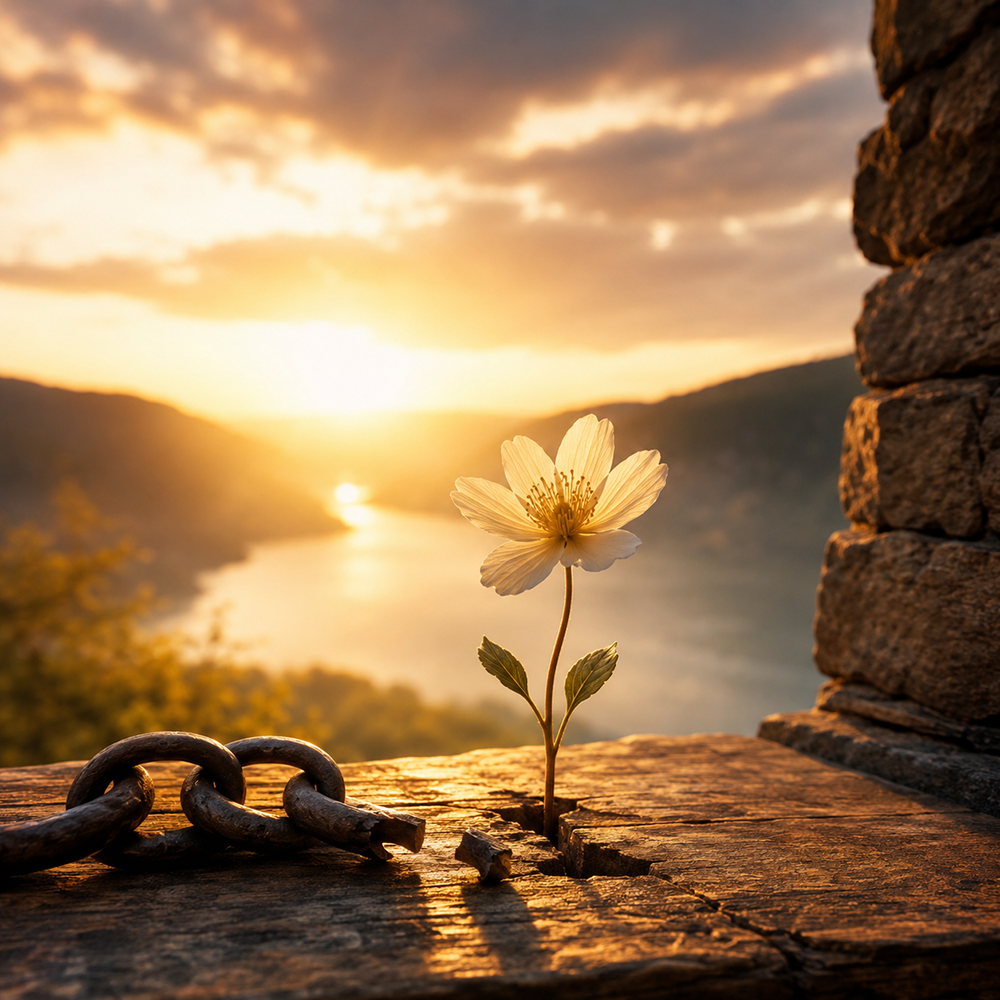
And eventually, people may look at the damaged bridge and wonder: “Why will you not walk across?”
But trust does not disappear from nowhere.
Sometimes it disappears because the bridge was not cared for.
And rebuilding it requires more than saying: “I want things to go back to normal.”
Because repair is not pretending the damage never happened.
Repair is acknowledging:
- “Something happened here.”
- “Something needs attention.”
- “I care enough to rebuild.”
 Jessica Carey
That takes humility.
Patience.
Consistency.
A person cannot break pieces of the bridge over and over again while demanding someone else keep crossing it.
Trust requires participation from both sides.
The person rebuilding trust has to show: “My actions are changing.”
The person learning to trust again has to allow room for the possibility: “Something different can exist.”
Both require courage.
Because trust is not only about avoiding harm.
It is about creating safety.
The safety to communicate honestly.
The safety to have boundaries.
The safety to make mistakes and repair.
The safety to be human.
And maybe that is one of the reasons trust feels so rare.
Because trust is slower than control.
Control demands.
Trust grows.
Control grabs.
Trust nurtures.
Control says: “You need to believe me because I said so.”
Trust says: “I will keep showing you through my choices.”
Because the strongest relationships are not built by people who never mess up.
They are built by people who care enough to repair when they do.
Small choices become patterns.
Patterns become safety.
Safety becomes trust.
 Jessica Carey
Choosing Trust in a Fearful World
Trust can feel like a risk.
Because in many ways, it is.
Trusting means accepting that we cannot control every outcome.
We cannot guarantee every person will understand us.
We cannot guarantee every choice will go perfectly.
We cannot guarantee we will never experience disappointment or pain.
That uncertainty can feel frightening.
So it makes sense why people reach for control.
Rules.
Walls.
Assumptions.
Distance.
Anything that creates the feeling: “If I can manage enough, maybe nothing bad will happen.”
But control cannot give us the thing we are truly searching for.
Because underneath control, many people are looking for safety.
Connection.
Love.
Peace.
Belonging.
And those things cannot grow where there is no room to breathe.
A relationship cannot grow without trust.
A family cannot grow without trust.
A true home is not created through control or obligation. It grows through safety, trust, and belonging.
 Jessica Carey
A friendship cannot grow without trust.
A community cannot grow without trust.
Because trust is the space where living things have room to become.
The flower opening toward the sun.
The bird discovering its wings.
The person realizing:
- “I am capable.”
- “I am respected.”
- “I am allowed to grow.”
Trust does not mean everything will always happen the way we hoped.
Sometimes people disappoint us.
Sometimes things change.
Sometimes life surprises us.
But the answer to uncertainty was never controlling everything until nothing can move.
Because when nothing can move... nothing can grow.
A garden protected from every possible storm would also never feel the rain.
A heart protected from every possible hurt would also struggle to experience love.
A life protected from every possible mistake would also lose the lessons that create wisdom.
Being alive requires some level of trust.
Trust that we can learn.
Trust that we can adapt.
Trust that we can choose differently.
Trust that even when something goes wrong, the story does not have to end there.
And maybe one of the deepest forms of trust is not only trusting other people.
Maybe it is learning to trust ourselves.
Trusting ourselves to notice patterns.
To honor our needs.
To listen.
To speak.
To walk away when something continues causing harm.
And to stay open when something beautiful is trying to grow.
Because trust is not weakness.
Trust is not ignorance.
Trust is not pretending darkness does not exist.
Trust is looking at a world where hurt exists... and choosing not to let hurt become the only thing we believe in.
It is saying:
- “I know storms exist.”
- “And I still believe gardens are worth planting.”
It is saying:
- “I know people can cause harm.”
- “And I still believe kindness exists.”
It is saying:
- “I cannot control everything.”
- “But I can choose what I nurture.”
Fear builds cages.
Trust opens doors.
And maybe a healthier world begins when more of us learn:
We do not need to hold everything so tightly.
We do not need to control every step.
We do not need to see every ending before we begin.
Sometimes love means believing enough to let something grow.
Sometimes kindness means offering support without ownership.
Sometimes connection means opening the door and trusting what is real enough to stay.
Because trust was never about having proof that nothing could go wrong.
It was about creating enough safety, wisdom, and courage to allow something beautiful to go right.
Healthy communities grow when people remember they share the world with other living beings.
 Jessica Carey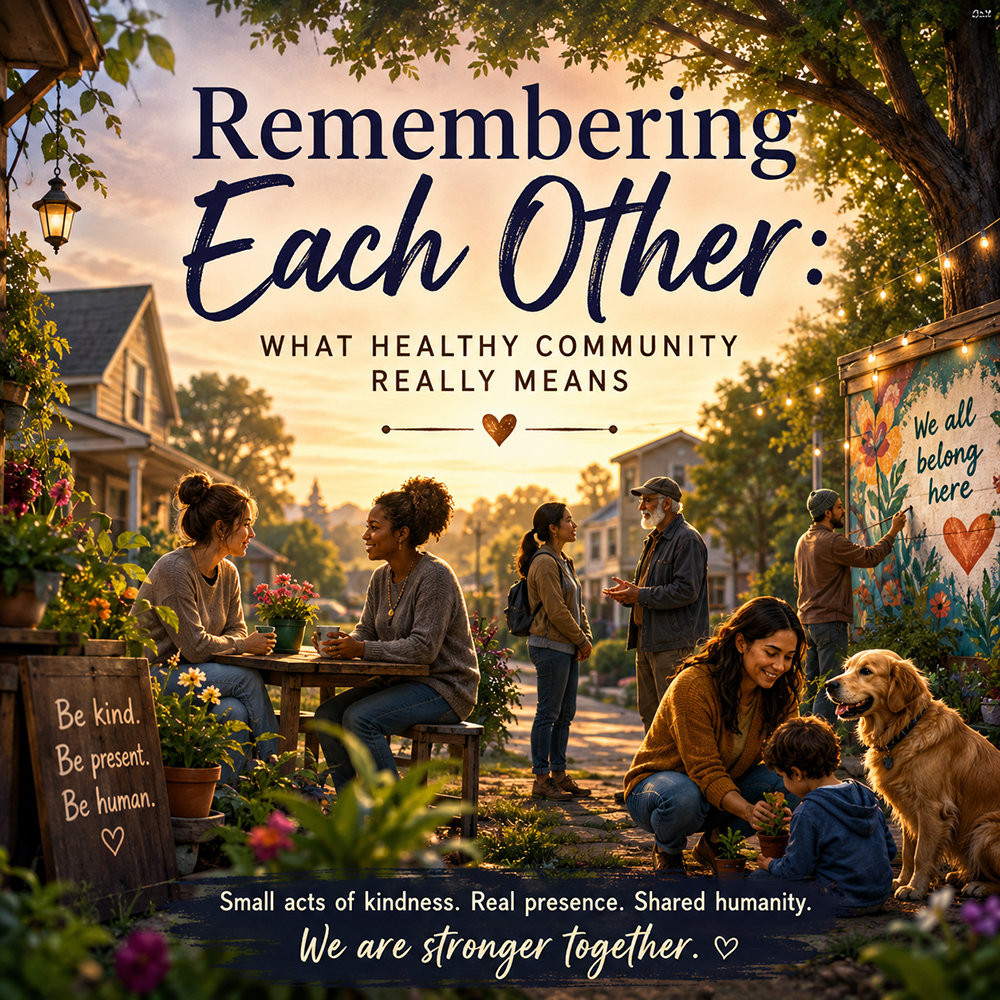
Want even more content about creativity and art?
Be sure to check out all of our creative chronicles!
If you'd like to see examples of my work, you can find some of my art and creations at Redbubble and Gumroad!
Looking to learn more about my recent journey?
Check some of these articles:
-The Difference Between Resting and Giving Up
-Hidden Gems for St. Louis Artists
-Hidden Gems for Autistic & Neurodivergent Adults
-I Think I Might Be Autistic... Now What?
 Jessica Carey