


Sometimes the hardest relationships to understand are not the ones where someone openly says: “I do not care about you.”
Sometimes the hardest relationships are the ones where someone says:
- “I love you.”
- “I’m worried about you.”
- “I only want what is best for you.”
While their actions leave you feeling unheard, controlled, exhausted, or small.
Because words matter.
Intentions matter.
But they are not the entire picture.
Love is not only something we claim.
Love is something we practice.
Healthy love requires more than caring about someone.
It requires curiosity.
Respect.
Humility.
Accountability.
The willingness to listen when someone says: “Something here is hurting me.”
Every person makes mistakes.
Every relationship has misunderstandings.
Every human being has moments where they could have handled something better.
But there is a difference between a mistake and a repeated pattern.
A mistake becomes a learning opportunity.
A mistake says:
- “I did not realize this hurt you. I want to understand.”
- “I handled that poorly. Let me try again.”
- “I cannot change the past, but I can choose differently moving forward.”
A harmful pattern says:
- “I hurt you, but your reaction is the problem.”
- “I made a choice, but you are responsible for the consequences.”
- “I crossed a boundary, but you are wrong for having one.”
- “I refuse to listen, but you are wrong for feeling unheard.”
One creates connection.
The other slowly destroys it.
 Jessica Carey
Repair is also more than words.
An apology can open the door.
But changed actions are what rebuild trust.
“I am sorry” matters most when it is followed by:
- “I understand why this happened.”
- “I am working on doing this differently.”
- “I want my future choices to reflect what I learned.”
Because repair is not just wanting the conflict to end.
Repair is caring enough to address what caused it.
A person can genuinely believe they are helping and still cause harm.
A person can have good intentions and still need to change their actions.
Because the question is not only: “Did I mean well?”
The question is also: “Am I willing to listen when someone tells me my impact was different from my intention?”
Imagine accidentally taking a wrong turn while driving with someone.
That happens.
People make wrong turns.
But if your passenger says: “We are going the wrong way,”
and you refuse to look at the map,
refuse to read the signs,
refuse to consider another route,
and keep driving farther away while insisting: “I know where I’m going,”
eventually the problem is no longer the original wrong turn.
The problem is refusing to adjust.
Growth is a choice.
Healing is a choice.
Learning a healthier way is a choice.
And yes, people can change.
People can surprise us.
People can recognize old patterns, do the difficult work, and build something better.
That possibility matters.
But possibility is not the same thing as reality.
Someone’s ability to change someday does not erase the choices they are making today.
You can hope someone finds healing without letting their unhealed patterns keep harming you.
You can believe someone has goodness inside them without pretending their behavior is okay.
You can leave the door open for growth without standing in the doorway forever waiting.
Because love does not ask one person to disappear while waiting for another person to finally choose accountability.
Real love requires both people to show up.
 Jessica Carey
You Cannot Save a Ship Someone Else Keeps Crashing
Relationships are a little like navigating a ship together.
No one person sees everything.
One person may notice the storm clouds.
Another may notice the changing waves.
Someone may see an obstacle ahead that the other person missed.
That is why healthy relationships require communication.
Not because one person is always right.
Because everyone has blind spots.
A healthy relationship says:
- “Tell me what you are seeing.”
- “Help me understand.”
- “Maybe I missed something.”
- “How do we navigate this together?”
 Jessica Carey
It is not about one person having complete control.
It is about learning how to work as a team.
But unhealthy dynamics often look very different.
Sometimes one person grabs the steering wheel and insists:
- “I know best.”
- “I know exactly what needs to happen.”
- “Just trust me.”
And maybe they genuinely believe they are helping.
Maybe they are scared.
Maybe they are convinced their direction is the safest one.
 Jessica Carey
But then the other person says:
- “Please slow down.”
- “There is something ahead.”
- “This direction is hurting us.”
- “We need to talk about this.”
And instead of listening, they tighten their grip.
They steer harder.
They dismiss every warning because they are more focused on proving they are right than understanding what is happening.
Then the ship hits the iceberg.
And this moment reveals so much.
Because healthy relationships are not defined by never hitting obstacles.
Every relationship will face storms.
Every relationship will have moments where someone misjudges.
The question is: What happens after?
A healthy response looks like:
- “I did not see what you saw.”
- “I understand why you were trying to warn me.”
- “Let’s figure out how to repair this.”
- “Next time, I want to listen better.”
An unhealthy pattern says:
- “This crash is your fault.”
- “You should have warned me differently.”
- “You are making me feel bad by mentioning the iceberg.”
- “If you trusted me more, this would not have happened.”
Then, sometimes, the damage gets worse.
The ship is already damaged.
There is already a fire.
But instead of bringing water, they bring more fuel.
More blame.
More defensiveness.
More control.
More refusal to listen.
Then they point to the growing flames and say: “Look at this disaster you caused!”
But noticing the fire is not the same as starting it.
Naming damage is not the same as creating damage.
Setting a boundary around something harmful is not an attack.
And sometimes people become so focused on avoiding the discomfort of accountability that they create the very outcomes they were afraid of.
They fear losing connection, but push people away by trying to control them.
They fear being wrong, but damage trust by refusing to acknowledge mistakes.
They fear difficult conversations but create bigger conflicts by avoiding honest ones.
 Jessica Carey
Fear may create silence.
But it does not create peace.
Avoiding accountability may protect someone’s ego.
But it does not protect the relationship.
Because a relationship cannot survive with only one person repairing the ship.
One person cannot steer, patch the holes, put out the fires, and rebuild trust alone.
At some point, the question becomes: “Are we both trying to save this?”
Because love is not one person endlessly drowning while trying to convince the other person to stop drilling holes.
 Jessica Carey
Control Can Wear the Language of Care
One of the hardest things to untangle is that unhealthy patterns do not always look obviously unhealthy.
Sometimes they come wrapped in words that sound loving.
- “I’m just worried about you.”
- “I only want what is best.”
- “I am trying to help.”
- “I am doing this because I care.”
And sometimes those words are genuine.
Sometimes people really are worried.
Sometimes people really are trying to help.
Sometimes people make mistakes while trying to love someone.
But the difference between care and control is what happens next.
Healthy care stays curious.
Control assumes.
Healthy care asks: “How can I support you?”
Control says: “I have already decided what you need.”
Healthy care says: “Help me understand your experience.”
Control says: “My perspective is the only one that makes sense.”
Because real support requires seeing the other person as a whole human being.
Not a project.
Not a problem to fix.
Not a situation to manage.
Not an extension of yourself.
A person.
Imagine seeing someone carrying something heavy.
Healthy support says: “Would you like help carrying that?”
Control walks over, rips it from their hands, starts running in a random direction, and then gets angry when they say: “Wait, that is not where I needed it to go.”
The intention may have been helping.
But help that refuses to listen often stops feeling helpful.
Sometimes people confuse reducing their own discomfort with helping someone else.
They feel anxious, afraid, or uncomfortable, so they try to make those feelings go away by controlling the situation around them.
But another person’s independence is not automatically a threat.
Someone having boundaries is not automatically rejection.
Someone making a different choice is not automatically disrespect.
Healthy relationships require emotional responsibility.
Meaning:
- “My feelings matter, but they do not give me ownership over someone else.”
- “My fears matter, but they do not automatically define reality.”
- “My concerns matter, but they do not erase another person’s voice.”
 Jessica Carey
Without that awareness, concern can become control.
Protection can become restriction.
Help can become harm.
Not because caring is wrong.
Because caring without respect stops being healthy.
Love does not say: “I care about you, so I get to control you.”
Love says: “I care about you, so your experience matters to me.”
And sometimes the greatest damage happens when someone becomes so focused on protecting someone from what they fear might happen that they stop noticing the harm they are actually causing.
They are trying so hard to prevent an imagined fire somewhere else that they ignore the matches in their own hands.
Real love requires humility.
The willingness to ask:
- “What if I misunderstood?”
- “What if there is something I do not see?”
- “What if my way is not the only way?”
- “What does this person actually need from me?”
Because love is not proven by how tightly we hold onto someone.
Sometimes love is shown by how much we respect that they are their own person.
Healthy love and kindness create safety instead of strings. I explored more about the difference between genuine kindness and conditional care here.
 Jessica Carey
A Relationship Is a Bridge, Not a Battlefield
Relationships require effort.
Every meaningful connection will have moments where people misunderstand each other.
Moments where communication is messy.
Moments where two people need to slow down and ask: “How do we find our way back to each other?”
That is normal.
Because relationships involve imperfect humans learning how to understand each other.
But a relationship is supposed to be a bridge.
Not a battlefield.
A bridge requires both sides.
Both sides need support.
Both sides need maintenance.
Both sides need care.
One person cannot stand alone holding all the materials while the other person refuses to build and then blame them because the bridge is incomplete.
Healthy relationships ask: “How do we meet each other?”
Unhealthy dynamics demand: “How do I make you easier for me?”
Those are very different questions.
Sometimes one person becomes responsible for everything.
They are expected to:
- Communicate perfectly
- Understand endlessly
- Forgive immediately
- Stay calm always
- Predict every reaction
- Avoid every trigger
- Carry every uncomfortable emotion
 Jessica Carey
And when things still fall apart, they are told: “You did not try hard enough.”
But one person cannot communicate enough for two people.
One person cannot listen enough for two people.
One person cannot apologize enough for two people.
One person cannot heal a relationship that the other person keeps damaging.
Healthy connection requires participation.
Not perfection.
Participation.
The willingness to say:
- “I want to understand.”
- “I want to work on this.”
- “I care about how my actions affect you.”
- “I want us both to feel respected.”
Unhealthy dynamics often turn every conversation into a competition.
Someone has to win.
Someone has to lose.
Someone has to be right.
Someone has to be blamed.
But relationships are not supposed to be about defeating each other.
If one person “wins” by destroying the other person, the relationship still loses.
Repair requires humility.
Because sometimes the hardest words to say are:
- “I was wrong.”
- “I hurt you.”
- “I need to change.”
Not because making a mistake makes someone terrible.
But because admitting mistakes requires letting go of the idea that we have to be perfect to be worthy.
And that fear keeps many people stuck.
They are so afraid of being wrong that they keep defending the very behaviors causing harm.
They protect their ego while the relationship breaks.
But accountability is not an enemy.
Accountability is how trust gets rebuilt.
Accountability says: “This relationship matters more than pretending I never make mistakes.”
A healthy bridge is not created because it never faces storms.
It survives because both sides care enough to repair the damage.
To strengthen weak places.
To rebuild when needed.
Because love is not one person carrying the entire bridge.
Love is two people choosing, again and again: “I want to meet you in the middle.”
 Jessica Carey
When Boundaries Are Treated Like Betrayal
One of the hardest parts of changing unhealthy dynamics is that healing does not always receive applause from the people benefiting from things staying the same.
Sometimes the moment someone starts creating healthier boundaries is the moment they receive the most resistance.
Not because the boundary is wrong.
But because the pattern is changing.
If someone is used to you always saying yes, your first “no” can feel shocking.
If someone is used to unlimited access to your time, energy, or emotions, your limits may feel unfamiliar.
If someone is used to you carrying the entire bridge, they may become upset when you finally set the materials down and ask them to build too.
But discomfort does not automatically mean harm.
Someone being unhappy with your boundary does not automatically mean your boundary is unfair.
Growth often requires adjusting to new ways of relating.
Healthy relationships can struggle with boundaries at first.
People may need time to understand.
They may feel hurt.
They may ask questions.
They may need conversations.
That is human.
The difference is whether they are willing to respect that you are a separate person with your own needs.
Unhealthy dynamics often respond differently.
Instead of asking: “Why was this boundary needed?”
They ask: “How do I get things back to the way they were?”
Instead of: “How do we create something healthier?”
They ask: “How do I make this person stop making me uncomfortable?”
 Jessica Carey
Sometimes people mistake access for love.
They believe:
- “If you love me, you will always answer.”
- “If you love me, you will always agree.”
- “If you love me, you will never disappoint me.”
- “If you love me, my feelings will always come first.”
But love was never supposed to mean one person disappears.
A relationship with no room for your needs is not peace.
It is self-abandonment.
 Jessica Carey
A relationship where only one person’s discomfort matters is not balance.
It is imbalance.
Boundaries are not walls built to punish people.
They are doors with handles.
They communicate:
- “This is how I can participate in this relationship safely.”
- “This is what I need for this connection to continue.”
- “This is where my responsibility ends and yours begins.”
Sometimes people say:
- “But they are family.”
- “They love you.”
- “They are trying.”
And those things may be true.
But love does not remove the need for respect.
History does not remove the need for accountability.
Someone can matter to you deeply and still have patterns you cannot continue participating in.
Someone can have good qualities and still have behaviors that cause harm.
Someone can have the potential to grow and still not be choosing growth right now.
Creating distance is not always giving up on someone.
Sometimes it is recognizing:
- “I cannot heal this relationship by myself.”
- “I cannot keep absorbing harm while waiting for change.”
- “I can hope someone grows without sacrificing myself until they do.”
Love grows best where there is room for both people to exist.
 Jessica Carey
You Cannot Choose Healing for Someone Else
One of the hardest truths to accept is that someone can have the ability to change and still not choose change.
Those are two different things.
People can grow.
People can heal.
People can recognize harmful patterns, take accountability, and choose a different way forward.
Human beings are capable of incredible transformation.
That possibility matters.
But possibility is not the same thing as participation.
Potential is not the same thing as action.
And sometimes we hold onto who someone could become while ignoring who they are choosing to be right now.
Hope can be a beautiful thing.
Hope allows us to believe people are more than their worst moments.
Hope reminds us that the future does not have to repeat the past.
Hope leaves room for growth.
But hope was never meant to become a place where we abandon ourselves.
Sometimes accepting reality gets mistaken for giving up.
But there is a difference between saying: “I believe you can never change.”
And saying: “I cannot keep living as though you already have.”
Because change requires more than words.
It requires willingness.
It requires humility.
It requires the courage to look inward and ask difficult questions.
- “What role did I play?”
- “What harm did I cause?”
- “What do I need to learn?”
- “How can I do better?”
And that work can be uncomfortable.
Growth often is.
It requires facing parts of ourselves we may not be proud of.
It requires admitting:
- “I did not handle that well.”
- “I was wrong.”
- “I hurt someone.”
- “I need to change.”
But accountability is not destruction.
Accountability is an invitation.
It says:
- “You are capable of doing better.”
- “You are capable of growing.”
- “You are more than your worst choice.”
 Jessica Carey
The problem is that some people are so afraid of being wrong that they keep protecting the very patterns hurting themselves and others.
They defend.
They deny.
They blame.
They rewrite the story.
They focus so much on avoiding the discomfort of accountability that they avoid the very thing that could set them free.
And sometimes their attempts to hold onto control create exactly what they were afraid of losing.
They grip tighter because they fear distance.
But the tighter they grip, the less safe the relationship feels.
They avoid responsibility because they fear being seen as “bad.”
But refusing accountability damages trust far more than admitting a mistake ever would.
They demand closeness.
But their actions create distance.
Because healthy connection cannot be forced.
Trust cannot be demanded.
Respect cannot be controlled into existence.
You can offer someone opportunities to meet you differently.
You can communicate.
You can explain.
You can leave space for repair.
But you cannot do their half of the work.
You cannot heal for someone.
You cannot learn for someone.
You cannot take accountability for someone.
You cannot build both sides of the bridge.
Sometimes stepping away does not mean: “I stopped caring.”
Sometimes it means: “I finally accepted that caring about someone does not give me the ability to choose for them.”
You can hope someone finds healing.
You can hope someone chooses growth.
You can hope someday things become different.
But you are allowed to breathe while you wait.
Because love was never supposed to require holding your breath forever.
 Jessica Carey
Love Creates Safety, Not Silence
Sometimes people mistake silence for a healthy relationship.
No arguments.
No difficult conversations.
No disagreements.
No visible problems.
Everything looks “fine.”
But quiet does not always mean peace.
Sometimes quiet means safety.
Sometimes quiet means fear.
And those are very different kinds of silence.
Healthy silence feels like resting.
Like sitting beside someone without needing to perform.
Like knowing you can simply exist without constantly preparing for something to go wrong.
It feels like: “I do not have to hide parts of myself to stay connected.”
Unhealthy silence feels different.
It is the silence of carefully choosing every word.
Predicting every reaction.
Avoiding every difficult topic.
Constantly scanning:
- “Are they upset?”
- “Did I do something wrong?”
- “How do I prevent the next explosion?”
One silence comes from trust.
The other comes from survival.
When unhealthy patterns become familiar, it can become difficult to recognize that survival is not the same as peace.
 Jessica Carey
Healthy relationships do not require pretending everything is perfect.
They create enough safety to talk about the things that are not.
Because every relationship will have moments of discomfort.
Every relationship will have disagreements.
Every relationship will involve two different people with different thoughts, feelings, experiences, and needs.
The difference is whether there is room for both people.
Healthy communication sounds like:
- “Help me understand.”
- “I did not realize it felt that way.”
- “Can we talk about what happened?”
- “How can we handle this differently next time?”
Unhealthy communication sounds like:
- “You are making a big deal out of nothing.”
- “That never happened.”
- “You always ruin everything.”
- “After everything I have done for you.”
- “You are hurting me by saying I hurt you.”
 Jessica Carey
One seeks connection.
The other seeks control.
And sometimes the person who finally speaks up gets blamed for creating the problem.
But naming a wound is not the same thing as causing it.
Turning on a light does not create the mess in the room.
It simply reveals what was already there.
Sometimes the part of us that notices something is wrong is not the problem — it is information asking us to pay attention.
 Jessica Carey
When someone says:
- “This hurt me.”
- “I need something different.”
- “This pattern cannot continue.”
they are not automatically attacking the relationship.
Sometimes they are giving the relationship the information it needs to survive.
Because healthy relationships do not require everyone to avoid discomfort forever.
They require enough trust to move through discomfort together.
Love is not: “Never tell me when something is wrong.”
Love is: “Your experience matters enough for me to listen.”
Love is not: “Protect me from ever feeling uncomfortable.”
Love is: “Even when conversations are uncomfortable, I still care about understanding you.”
A relationship where only one person is allowed to have feelings is not harmony.
A relationship where only one person’s needs matter is not closeness.
A relationship where one person must shrink so the other never has to grow is not peace.
Years of shrinking yourself, suppressing needs, and staying in survival mode can come with a cost.
 Jessica Carey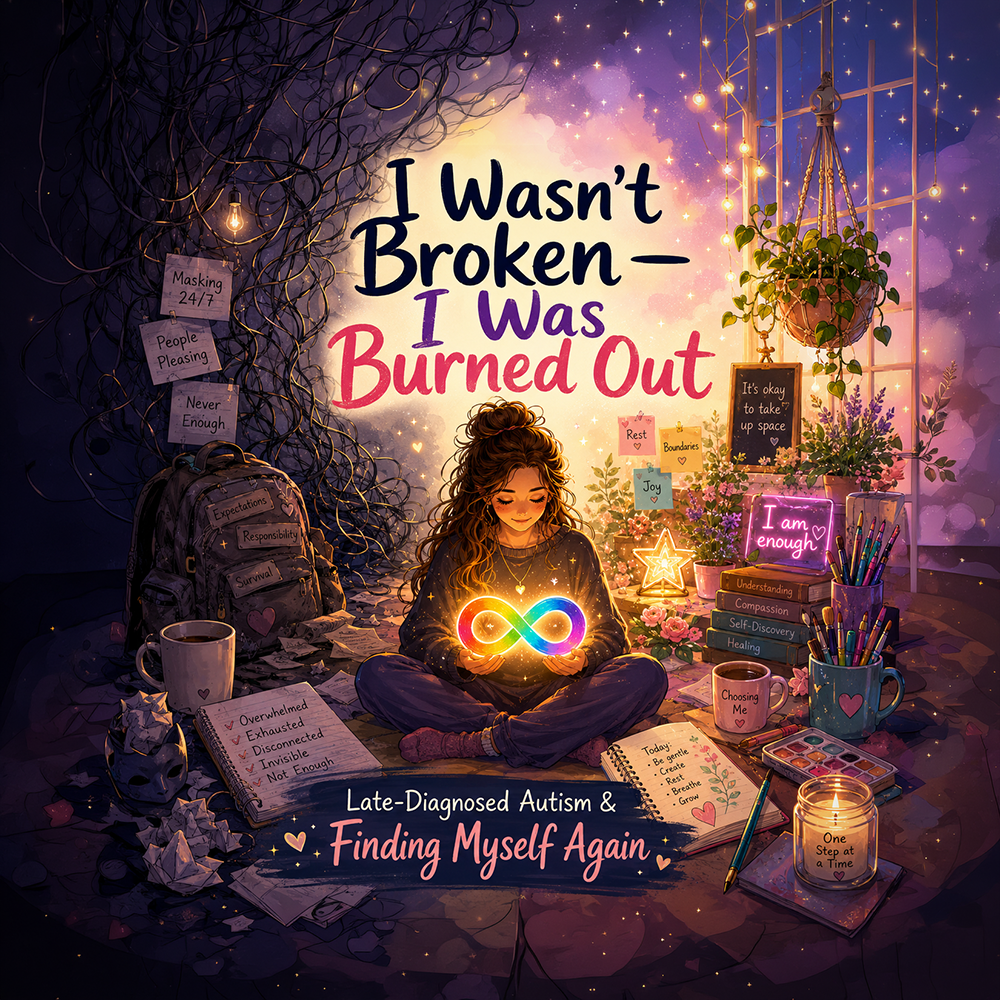
Real safety is not created by silence.
It is created by trust.
By respect.
By repair.
By knowing: “We can face hard things without turning against each other.”
Because love should not require someone to disappear in order for the relationship to survive.
 Jessica Carey
Love Leaves Room for Both People
Love was never meant to be a place where only one person gets to exist.
It was never meant to be one person’s feelings, fears, needs, and experiences taking up all the space while the other person slowly disappears.
Healthy love creates room.
Room for two perspectives.
Two voices.
Two imperfect humans learning how to understand each other.
Healthy love does not mean:
Nobody ever disagrees.
Nobody ever gets hurt.
Nobody ever makes mistakes.
Nobody ever needs to grow.
Because real relationships involve real people.
And real people are always learning.
But healthy love cares about what happens after.
After the misunderstanding.
After the disagreement.
After the mistake.
After someone says: “That hurt me.”
Healthy love moves toward repair.
It says:
- “Your feelings matter to me.”
- “Our relationship matters more than my need to always be right.”
- “I want to understand, not just defend.”
Because being wrong about something does not mean someone is a bad person.
Needing to grow does not mean someone has failed.
Changing your behavior does not mean you were never worthy of love.
Growth is part of being human.
But refusing to grow?
Refusing to listen?
Refusing accountability while expecting someone else to keep absorbing the consequences?
That is different.
Love is not proven by how much someone can tolerate.
It is not measured by how long someone can stay silent.
It is not shown by how much of themselves they are willing to lose.
Love is found in the moments where people choose each other in healthy ways.
Not through ownership.
Not through control.
Not through fear.
But through respect.
Through honesty.
Through kindness.
Through the willingness to say: “I care enough to work on this.”
 Jessica Carey
Sometimes the most loving thing you can do is reach toward someone.
Sometimes the most loving thing you can do is rebuild together.
Sometimes the most loving thing you can do is offer another chance.
And sometimes the most loving thing you can do is finally stop pretending you can create a healthy relationship by yourself.
Because a bridge requires both sides.
A ship requires people willing to navigate together.
Putting out a fire requires someone willing to stop adding fuel.
You can hope someone grows.
You can believe in who someone could become.
You can leave space for change.
But you are also allowed to acknowledge reality.
You are allowed to say: “I hope someday you choose something different.”
While also saying: “I cannot keep living inside the consequences of what you are choosing now.”
Real love does not demand that someone disappear.
Real love does not ask one person to drown so another person never has to learn how to swim.
Real love does not ask one person to disappear so another person never has to grow.
Real love does not require control.
Because the healthiest relationships are not built by one person winning.
They are built by two people choosing, again and again: “Your humanity matters. And mine does, too.”
 Jessica Carey
Want even more content about creativity and art?
Be sure to check out all of our creative chronicles!
If you'd like to see examples of my work, you can find some of my art and creations at Redbubble and Gumroad!
Looking to learn more about my recent journey?
Check some of these articles:
-The Difference Between Resting and Giving Up
-Real Friendship is a Safe Place to be Human
-What Healthy Community Really Means
-Hidden Gems for St. Louis Artists
-Hidden Gems for Autistic & Neurodivergent Adults
-I Think I Might Be Autistic... Now What?
 Jessica Carey