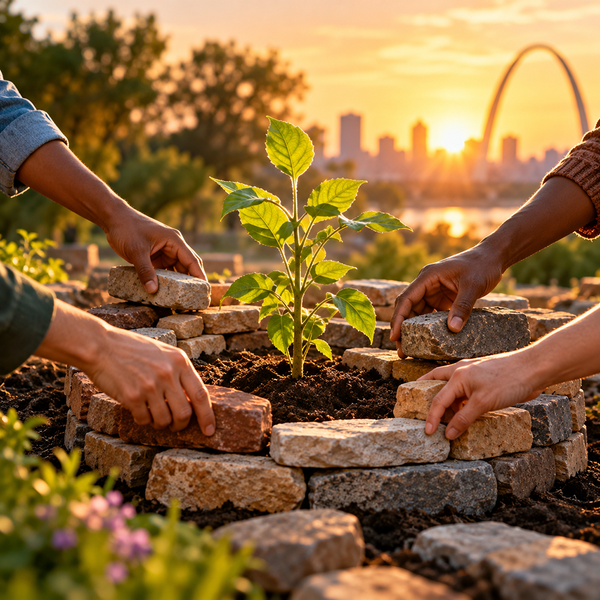


It is easy to imagine ourselves as separate people living separate lives.
We often speak as though our choices belong only to us:
- My words
- My attitude
- My habits
- My relationships
- My life
Yet anyone who has lived very long knows this is not entirely true:
- A parent's patience shapes a child
- A teacher's encouragement awakens confidence
- A friend's kindness softens grief
- A stranger's generosity restores hope
- A cruel comment lingers for years
- An apology changes the direction of a relationship
- A warm smile eases someone's loneliness
One act of courage inspires another.
Our lives are constantly touching one another in ways we rarely notice.
Like ripples spreading across a pond, what begins in one person often reaches far beyond them.
Perhaps we have never been as separate as we imagined.
Perhaps we have always been deeply interconnected.
Nature quietly reminds us of this truth.
No tree grows entirely alone.
Its roots intertwine with others beneath the soil.
The quality of the earth matters.
The amount of sunlight matters.
The water matters.
The climate matters.
Healthy soil nourishes growth.
Polluted soil hinders it.
Neither determines everything, but both influence what becomes possible.
People are remarkably similar.
None of us develops in isolation.
Every relationship becomes part of the environment in which our lives unfold.
Every home.
Every classroom.
Every friendship.
Every workplace.
Every neighborhood.
Every community.
Teaches us something about ourselves, about others, and about the kind of world we believe we live in.
Perhaps this is why relationships matter so deeply.
They do not merely occupy our lives.
They shape them.
 Jessica Carey
Every Relationship Creates a Climate
When we think about the weather, we usually think about today's conditions.
Perhaps it's sunny.
Perhaps it's raining.
Perhaps the wind is stronger than usual.
Tomorrow will probably be different.
Weather changes constantly.
Climate is something else.
Climate is what happens when today's weather is repeated day after day, season after season, year after year.
A rainforest is not created by one afternoon of rain.
A desert is not formed by one sunny day.
The climate emerges from patterns.
Relationships work much the same way.
One difficult conversation rarely defines a friendship.
One thoughtful gesture does not instantly build trust.
One forgotten birthday does not necessarily end a relationship.
One apology, while meaningful, does not immediately heal years of hurt.
Instead, relationships become what they repeatedly practice.
Every interaction leaves something behind:
- A word of encouragement
- A sarcastic remark
- A patient response
- A dismissive glance
- A genuine apology
- A forgotten promise
- A shared meal
- A moment of laughter
None of these moments seem especially large by themselves.
Yet over time they begin accumulating, quietly shaping the emotional climate people experience whenever they are together.
Our nervous systems are constantly asking: "Am I safe?"
Healthy environments answer: "Yes."
Not by eliminating every challenge, but by responding consistently with honesty, respect, repair, and care.
Over time, people stop bracing for danger.
They begin using that energy for curiosity, creativity, love, and growth instead.
Eventually, people stop asking: "What happened today?"
And begin feeling: "This is what it's is like to be with this person."
That feeling is climate.
Healthy climates are rarely built through perfection.
They are built through consistency:
- A parent who regularly listens with patience
- A friend who remembers what matters to you
- A spouse who apologizes after causing hurt
- A teacher who encourages curiosity
- A coworker who shares credit generously
- A neighbor who greets people warmly
These ordinary choices seem almost insignificant in isolation, yet together they create something remarkably powerful.
People begin expecting kindness.
They begin expecting honesty.
They begin expecting repair instead of resentment.
Safety becomes the atmosphere rather than the exception.
Unhealthy climates develop in much the same way.
Rarely through one dramatic event alone.
More often through repeated patterns:
- The criticism that never seems to stop
- The jokes that always come at someone else's expense
- The broken promises
- The conversations where no one feels heard
- The constant walking on eggshells
- The affection that disappears whenever expectations are unmet
- The apologies that never lead to change
Eventually, people begin adapting to the climate around them.
They speak less.
Laugh less.
Risk less.
Hope less.
Not because they want to, but because every environment teaches people what is safe.
This is one reason small moments matter so much.
We often dismiss them because they seem ordinary:
- "It's only one compliment."
- "It's only one harsh word."
- "It's only one family dinner."
- "It's only one encouraging text."
- "It's only one eye roll."
- "It's only one apology."
But life is built from ordinary moments.
The extraordinary is almost always the accumulation of the ordinary.
Just as rivers are formed from countless drops of water, relationships are formed from countless interactions that quietly shape how people experience one another.
Every small choice becomes another drop in the climate we are creating.
The beautiful news is that climates can change.
A neglected garden can slowly become healthy again and so can a relationship.
Not through one grand gesture, but through new patterns faithfully practiced over time:
- Listening more consistently
- Apologizing more sincerely
- Encouraging more intentionally
- Showing up more reliably
- Celebrating more generously
- Speaking more truthfully
- Extending more grace
Trust grows the same way a forest grows.
Slowly.
Quietly.
One season at a time.
Healthy climates are not built in a day, but they are built every day.
Perhaps this is why our everyday choices matter far more than we often realize.
We are never simply deciding how to respond to one conversation.
We are helping shape the climate another person will experience tomorrow.
And the day after that.
And the day after that.
The question is not whether we are influencing one another.
We always are.
The deeper question is: what kind of climate is slowly emerging because of our repeated presence?
Healthy environments often create healthy responses, which in turn strengthen the environment itself.
Encouragement leads to greater confidence, confidence often leads to greater contribution, and those contributions encourage others in return.
In the same way, unhealthy environments can create cycles of fear, criticism, and withdrawal. Relationships rarely move in only one direction.
They become living systems where each interaction influences the next.
 Jessica Carey
What Grows Depends on the Environment
Imagine placing the very same seed into two different gardens.
One is filled with rich soil.
It receives sunlight.
Rain.
Space for roots to spread.
Someone carefully tends it.
Pulls the weeds.
Protects it from unnecessary harm.
The other garden is neglected.
The soil is dry and compacted.
Light is scarce.
Weeds choke out new growth.
No one notices when the plant begins to struggle.
The seed itself has not changed.
Yet the environments shape what becomes possible.
The difference is not found only within the seed.
It is also found within the conditions surrounding it.
People are remarkably similar.
Each of us carries gifts, potential, and capacities that may never fully emerge if the environment continually works against them:
Curiosity grows where questions are welcomed.
Confidence grows where mistakes become opportunities to learn instead of reasons for shame.
Creativity grows where experimentation is encouraged instead of ridiculed.
Trust grows where honesty is met with care.
Courage grows where people know they will not stand alone.
Joy grows where celebration is freely shared.
Love grows where it is practiced consistently.
None of these qualities appear by accident.
Like healthy plants, they flourish where they are nourished.
This does not mean our environment determines everything.
Human beings are not passive plants carried wherever the wind blows.
People possess remarkable resilience.
Some flowers push through cracks in concrete.
Some trees grow from the sides of cliffs.
Some forests return after devastating fires.
There are people who choose kindness after growing up in cruelty.
People who become generous despite experiencing neglect.
People who learn trust after betrayal.
People who create beauty in places marked by pain.
Their stories remind us that hope is never lost.
The environment influences us profoundly.
It does not imprison us.
Yet resilience should never become an excuse for unhealthy environments.
When someone grows despite hardship, we often celebrate their strength, and rightly so.
But we should also ask a different question: "What might have been possible if they had been nurtured from the beginning?"
- How much creativity was never expressed because someone was told they weren't talented?
- How many dreams quietly disappeared because encouragement never came?
- How many children stopped asking questions because curiosity was met with criticism?
- How many people learned to hide parts of themselves simply because it felt safer?
We should admire resilience, but we should never glorify the conditions that made resilience necessary.
Healthy relationships understand something gardeners have always known.
Growth cannot be forced.
You cannot pull on a flower to make it bloom faster.
You cannot shout at a seed until it sprouts.
You cannot demand fruit from a tree while refusing to care for its roots.
Real growth happens through patient, consistent nurture.
The same is true of people.
Encouragement rarely changes someone overnight.
Neither does trust.
Or kindness.
Or faithful presence.
But over time, these ordinary acts become nourishment.
Little by little, people begin risking honesty.
Trying again.
Believing in themselves.
Laughing more freely.
Dreaming once more.
Not because someone commanded them to grow, but because someone helped create an environment where growth finally felt possible.
Perhaps this is one of the deepest misunderstandings about human flourishing.
We often focus almost entirely on changing people.
Changing their habits.
Changing their attitudes.
Changing their behavior.
Sometimes those changes are needed.
But we rarely ask an equally important question: "What kind of environment is surrounding this person?"
A struggling plant does not always need to become a different plant.
Sometimes it needs healthier soil.
More light.
Cleaner water.
More room for its roots.
Likewise, people often flourish not because they became different people...
But because they finally found healthier relationships, healthier communities, healthier homes, or healthier places to grow.
This truth invites both compassion and responsibility.
Compassion, because we begin recognizing how deeply environments shape people's lives.
Responsibility, because we realize that every interaction contributes to someone else's environment:
- Every encouraging word adds nourishment.
- Every act of patience creates shelter.
- Every apology removes a weed.
- Every celebration brings warmth.
- Every honest conversation strengthens the roots of trust.
None of these moments seem extraordinary on their own.
Yet together they become the conditions where lives slowly change.
Perhaps this is why love is so much more than an emotion.
Love is cultivation.
It patiently tends the soil.
Protects what is fragile.
Makes room for growth.
Delights in each new leaf without demanding immediate fruit.
Healthy love does not stand over another person asking: "Why aren't you growing faster?"
Instead, it quietly asks: "What do you need in order to flourish?"
That question changes everything.
Because it reminds us that becoming something better is rarely about forcing people into a new shape.
It is about faithfully creating the kind of environment where the goodness already planted within them has room to take root, stretch toward the light, and gradually become all it was meant to be.
 Jessica Carey
We Become the Climate We Carry
One of the remarkable things about being human is that we do not simply experience environments.
We also create them.
Every room we enter changes, however slightly, because we are there.
Not through dramatic speeches or extraordinary accomplishments, but through ordinary presence:
- The way we greet people
- The way we listen
- The assumptions we make
- The patience we offer
- The gratitude we express
- The stories we tell
- The way we respond when someone disappoints us
Little by little, our repeated ways of living become part of the atmosphere other people breathe.
Think about how different it feels to enter two different homes.
In one, laughter comes easily.
People interrupt one another with excitement rather than contempt.
Mistakes are met with patience.
Questions are welcomed.
Apologies are sincere.
The room feels warm long before anyone lights a fire.
In another home, everyone seems careful.
People choose their words cautiously.
Silences feel heavy.
One person's mood determines everyone else's.
No one quite knows when criticism might arrive.
Nothing has to be said out loud.
The climate is already speaking.
The same is true of friendships.
Workplaces.
Classrooms.
Neighborhoods.
Communities.
Some places quietly invite people to unfold.
Others teach them to withdraw.
Some encourage creativity.
Others reward conformity.
Some make people feel seen.
Others make them feel invisible.
Every environment is teaching something.
The question is never whether we are teaching.
The question is what we are teaching.
Perhaps this is why seemingly ordinary moments matter so much.
A child nervously shows you a drawing.
Will they learn that creativity is welcomed... or that perfection is expected?
A friend shares a dream they have barely spoken aloud.
Will they leave feeling encouraged... or embarrassed for hoping?
Someone admits they made a mistake.
Will they discover that honesty leads to repair... pr that honesty only makes them a target?
None of these moments seem particularly significant by themselves.
Yet each one quietly teaches another person something about the kind of world they are living in.
Over time, our presence becomes predictable.
People begin to know what they can expect when they are with us:
- Do they expect curiosity?
- Or quick judgment?
- Do they expect encouragement?
- Or constant criticism?
- Do they expect honesty?
- Or manipulation?
- Do they expect peace?
- Or walking on eggshells?
- Do they leave feeling more hopeful... or more discouraged?
- More themselves... or less?
These questions are not meant to produce guilt.
They are invitations to awareness because what we repeatedly practice becomes the climate we carry.
The beautiful news is that healthy climates are contagious.
One patient person can slow the pace of an anxious conversation.
One thoughtful apology can interrupt a cycle of defensiveness.
One act of generosity can inspire another.
One teacher's encouragement can awaken a lifelong love of learning.
One neighbor's hospitality can begin transforming an entire street.
One friend who listens without trying to fix everything can change the way another person understands love.
One person's calm changes a room.
One person's gratitude changes dinner.
One teacher changes a classroom.
One repaired marriage changes children.
One welcoming neighbor changes an entire street.
One mentor changes generations.
Goodness often spreads quietly.
Like roots beneath a forest floor, we rarely see all the connections it creates.
Yet over time, those hidden connections strengthen the whole community.
The same is true of unhealthy patterns.
Contempt makes contempt easier.
Fear teaches fear.
Gossip invites more gossip.
Control breeds more control.
Bitterness often multiplies when it is left unexamined.
This is why our habits matter so deeply.
What we repeatedly practice does not stay contained within us; it begins shaping the lives of the people around us.
Every relationship becomes a place where something is being cultivated, whether we intend it or not.
Perhaps this is why wisdom asks us to pay attention not only to our actions, but to our patterns.
Anyone can have a generous afternoon.
Anyone can have a difficult day.
Character is revealed less by isolated moments than by the atmosphere our lives consistently create:
- When people think about spending time with us, what do they anticipate?
- Do they expect to be listened to?
- To be respected?
- To be encouraged toward growth?
- To be treated with honesty and grace?
None of us will answer "yes" to these questions perfectly, but they gently point us toward the kind of people we are becoming.
This is not about becoming someone who is endlessly cheerful or never struggles.
Healthy environments make room for sadness.
For grief.
For disagreement.
For difficult conversations.
For honest emotions.
The goal is not constant positivity.
The goal is faithful love.
A healthy climate is not one where storms never come.
It is one where people know they will not face those storms alone.
Perhaps that is one of the quietest ways we help build something better.
Not by trying to control every outcome.
Not by trying to fix every person.
But by becoming someone whose consistent presence leaves the places we enter a little more hopeful.
A little more honest.
A little more peaceful.
A little more courageous.
A little more alive.
Because the environments we create today become part of the lives others carry with them tomorrow.
 Jessica Carey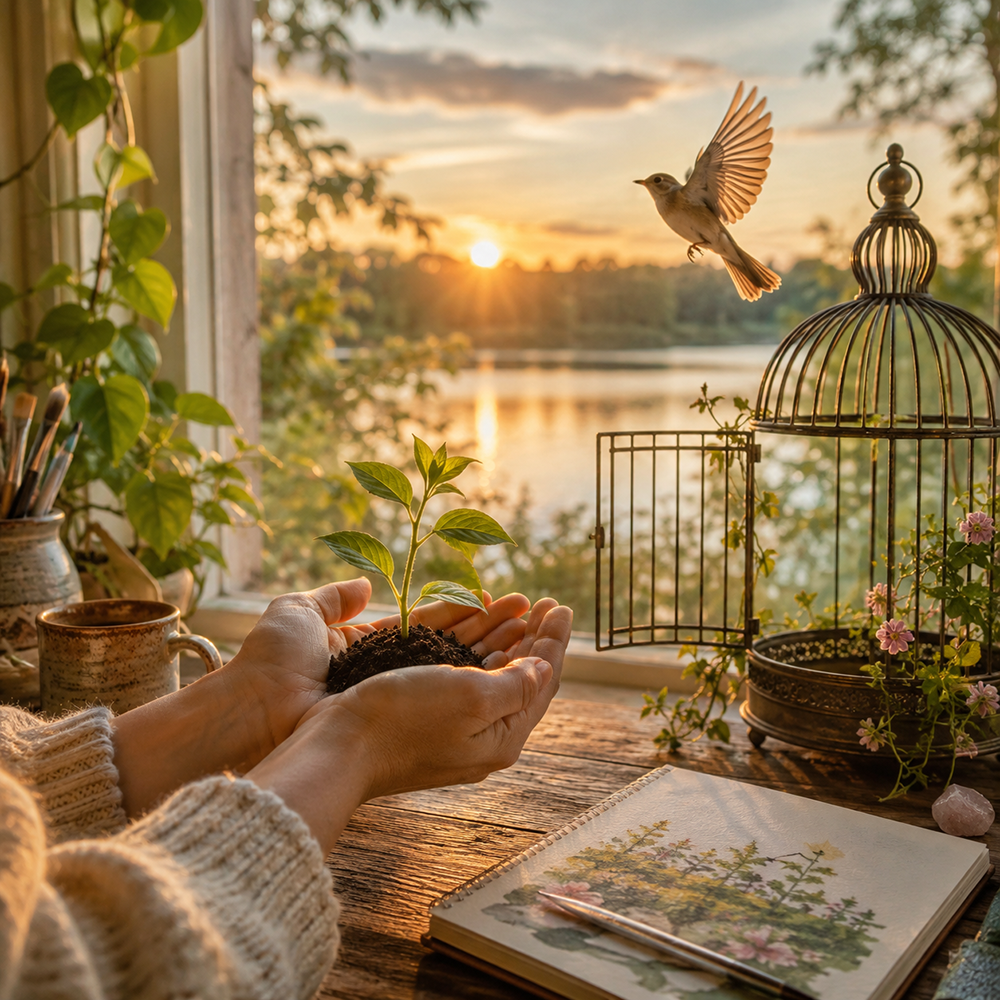
Healing Is Rarely a Solitary Journey
Many of us have been taught to think of healing as something we accomplish alone.
We imagine it as a private journey.
Something that happens quietly within our own minds and hearts.
There is truth in that.
No one else can make our choices for us.
No one else can do the inner work of reflection, growth, or healing on our behalf.
Yet healing has never been entirely solitary.
From the moment we enter the world, our lives are shaped in relationship.
We learn language from others.
We learn trust from others.
We learn how to understand ourselves through the way we are treated.
It should not surprise us, then, that healing often unfolds in relationship as well.
Not because another person rescues us, but because healthy relationships create spaces where healing has room to grow.
Think again about a struggling plant.
No gardener can command it to bloom.
No amount of shouting produces new leaves.
Growth cannot be forced.
But a gardener can loosen hardened soil.
Provide water.
Remove weeds.
Protect tender shoots.
Make room for sunlight.
The gardener does not create the life within the plant.
They simply help create conditions where that life has a greater opportunity to flourish.
Healthy relationships often do something remarkably similar.
Sometimes healing begins with someone listening without interrupting.
Sometimes it begins with hearing: "I believe you."
Or: "That wasn't okay."
Or: "You don't have to carry this alone."
Sometimes it begins when someone responds with patience where we expected criticism.
With kindness where we expected rejection.
With curiosity where we expected judgment.
These moments may appear small.
Yet they gently challenge beliefs that pain may have taught us long ago:
Perhaps not everyone will abandon me.
Perhaps mistakes do not always lead to shame.
Perhaps honesty can be met with compassion.
Perhaps I do not always have to be afraid.
Healing often begins when new experiences quietly challenge old expectations.
This does not mean healing follows a straight path.
There are seasons of progress.
Seasons of discouragement.
Moments when old fears return.
Days when hope feels distant.
Healthy relationships understand this.
They do not demand constant improvement.
They recognize that growth often looks less like a straight line and more like the changing seasons.
Healthy environments understand seasons.
There are seasons of planting.
Seasons of waiting.
Seasons of pruning.
Seasons of abundant growth.
Seasons when very little appears to be happening at all.
Winter does not mean the garden has died; sometimes unseen growth is still taking place beneath the surface.
Yet every season serves the life of the garden.
People are much the same.
There are seasons when we receive more than we give.
Seasons when we carry others.
Seasons when others carry us.
Seasons of grief.
Seasons of celebration.
Healthy relationships do not expect perpetual spring.
They remain faithful through every season.
One of the quiet gifts of healthy relationships is that they help us borrow hope until we can carry more of it ourselves.
There are days when another person's steady presence reminds us that tomorrow is still worth believing in.
There are moments when someone else's confidence helps us take one more step.
Not because they walked the path for us, but because they refused to let us walk it entirely alone.
This is not dependence.
It is companionship, and companionship has always been one of the ways human beings endure difficult seasons.
Healing also changes the environments we create:
- Someone who experiences patient listening often becomes a better listener.
- Someone who receives genuine encouragement becomes more likely to encourage others.
- Someone who learns what healthy repair looks like begins practicing repair in their own relationships.
- Someone who finally experiences belonging often becomes someone who welcomes others.
Healing rarely ends with the individual.
Like kindness, it has a way of spreading.
One restored relationship influences another.
One healthy family shapes future generations.
One compassionate teacher influences hundreds of students.
One mentor changes the course of someone's life.
What begins in one relationship often continues far beyond it.
This is one reason hope matters so much.
Pain is contagious, but so is healing.
Fear spreads.
So does courage.
Contempt spreads.
So does kindness.
Isolation spreads.
So does belonging.
Every healthy relationship becomes another place where the cycle can begin changing.
Not perfectly.
Not instantly.
But faithfully.
Little by little.
Season after season.
One life touching another.
Perhaps this is one of the most beautiful truths about being human.
None of us heals entirely alone, and none of us heals only for ourselves.
As we grow in wisdom, compassion, honesty, and love, we inevitably begin shaping the environments around us.
The patience we received becomes the patience we offer.
The grace we experienced becomes the grace we extend.
The courage someone once believed into us becomes the courage we help awaken in another.
Healing is deeply personal, but it is rarely private.
Its fruits reach far beyond the individual, quietly becoming part of the climate in which others will live, grow, and one day help someone else flourish.
 Jessica Carey
We Are All Gardeners of the Human Heart
Perhaps one of the greatest misconceptions of modern life is the belief that we are merely responsible for ourselves.
Certainly, each of us is responsible for our own choices.
Our own character.
Our own growth.
Yet we are also constantly participating in one another's lives.
Every conversation.
Every classroom.
Every friendship.
Every family dinner.
Every workplace.
Every neighborhood gathering.
Every act of kindness.
Every moment of patience.
Every word of encouragement.
Every sincere apology.
Every invitation.
Every boundary.
Every gesture of welcome.
Every choice quietly contributes to the world someone else experiences.
Whether we realize it or not, we are all helping cultivate the gardens in which other people live.
This does not mean we are responsible for controlling another person's life.
We cannot make someone heal.
We cannot force someone to grow.
We cannot choose their responses or remove every hardship they will face.
Each person remains wonderfully and irreducibly responsible for their own choices.
Yet we can influence the conditions surrounding those choices.
We can become people who nourish rather than deplete.
Who encourage rather than discourage.
Who make honesty safer.
Who make curiosity welcome.
Who celebrate growth instead of demanding perfection.
Like gardeners, we cannot manufacture life, but we can faithfully tend the soil.
Perhaps this changes the way we think about ordinary days:
- The conversation we almost rushed through
- The child asking one more question
- The coworker who seemed unusually quiet
- The neighbor we wave to each morning
- The friend who hesitated before sharing something vulnerable
- The stranger who looked exhausted
These moments rarely feel history-changing.
Yet lives are rarely shaped only by history-changing moments.
More often, they are shaped by thousands of seemingly ordinary encounters that quietly communicate:
- "You matter."
- "You are safe here."
- "I'm listening."
- "I'm glad you're here."
The ordinary becomes extraordinary through repetition.
Imagine what our communities might become if more of us embraced this way of living.
Homes where children grow up believing that mistakes are opportunities to learn rather than reasons to hide.
Friendships where people feel free to tell the truth.
Schools where curiosity is celebrated.
Workplaces where dignity matters more than status.
Neighborhoods where hospitality becomes ordinary.
Communities where people are known by name instead of merely passing one another by.
None of these begin with grand programs or perfect systems; they begin with people.
With ordinary people choosing, day after day, to cultivate healthier environments.
Perhaps this is what it means to build something better.
Not waiting for someone else to transform the world.
Not believing our influence is too small to matter.
But recognizing that every healthy relationship becomes another place where kindness can take root.
Where courage can grow.
Where joy can multiply.
Where honesty can breathe.
Where hope can be restored.
One relationship may seem small.
One family may seem ordinary.
One classroom may seem insignificant.
Yet forests begin with seeds.
Communities begin with relationships.
Cultures are shaped by countless everyday interactions repeated across generations.
The world we long for is often built one ordinary moment at a time.
None of us will cultivate these gardens perfectly.
There will be days when we are impatient.
Days when we misunderstand one another.
Days when our own pain spills into our relationships.
Days when we fail to notice what someone needed from us.
Healthy environments are not created by flawless people.
They are created by people who remain willing to repair.
To apologize.
To learn.
To begin again.
Even gardens require continual tending.
The goal has never been perfection.
It has always been faithful cultivation.
Perhaps this is one of the most hopeful truths about being human.
Just as harmful patterns can spread from one generation to the next... so can healing.
Just as fear can become contagious... so can courage.
Just as criticism can echo across years... so can encouragement.
Every act of love becomes another seed.
Every moment of patience another drop of water.
Every honest conversation another ray of sunlight.
Every repaired relationship another reminder that broken things can grow again.
None of us can plant every seed.
None of us can tend every garden.
But every one of us has been entrusted with a small piece of the world.
And how we care for that piece matters.
Perhaps, in the end, becoming something better has never been about becoming extraordinary.
It has been about becoming faithful.
Faithful in the ordinary moments.
Faithful in the small choices.
Faithful in the way we speak.
The way we listen.
The way we encourage.
The way we forgive.
The way we welcome.
The way we show up.
Because every day, whether we realize it or not, we are becoming part of someone else's environment.
The question is not whether our lives will leave an imprint.
They will.
The question is what kind of imprint they will leave:
- Will people leave our presence carrying more fear... or more peace?
- More shame... or more dignity?
- More loneliness... or more belonging?
- More despair... or more hope?
- More hesitation... or more courage?
- More exhaustion... or more life?
Perhaps this is one of love's greatest callings.
Not merely to care for people, but to help cultivate the conditions where they can become more fully themselves, where they can grow in wisdom and compassion, and where they, in turn, help others flourish.
Because we have never simply been individuals living beside one another.
We have always been gardeners of one another's lives.
And perhaps building something better begins the moment we realize that every word, every action, every relationship, and every ordinary day is another opportunity to leave the soil of the world a little richer than we found it.
 Jessica Carey
Every Small Choice Becomes Part of the Culture
When we hear the word culture, we often think about nations, traditions, or large organizations.
But every relationship has a culture.
Every family has a culture.
Every friendship.
Every classroom.
Every workplace.
Every community.
Culture is simply the collection of values, habits, expectations, and stories that are practiced so consistently they begin to feel normal.
It answers quiet questions like:
- "How do people treat one another here?"
- "What happens when someone makes a mistake?"
- "Is honesty welcomed or punished?"
- "Do people feel safe asking for help?"
- "Is kindness ordinary or exceptional?"
Most of the time, these questions are never spoken aloud.
They are answered by what people experience day after day.
Culture is not built in dramatic moments.
It is built in ordinary ones:
- A family that says "I'm sorry" when someone is hurt slowly creates a culture of repair.
- A friendship where people celebrate one another's successes creates a culture of generosity.
- A classroom where questions are welcomed creates a culture of curiosity.
- A workplace where everyone shares credit creates a culture of humility.
- A neighborhood where people greet one another creates a culture of belonging.
No single moment creates these environments.
They emerge through repetition.
Just as streams gradually carve valleys through stone, our daily choices slowly shape the cultures we live in.
The opposite is also true.
When criticism becomes ordinary, people stop sharing ideas.
When gossip becomes entertainment, trust begins to disappear.
When apologies never come, resentment quietly grows.
When fear becomes normal, honesty slowly fades.
No one wakes up intending to create these cultures.
They emerge whenever unhealthy patterns go unnoticed and unchallenged.
Like weeds in a neglected garden, they rarely appear all at once.
They spread gradually until they begin crowding out healthier growth.
This is why small choices deserve our attention.
Every encouraging word strengthens one pattern.
Every act of patience reinforces another.
Every repaired misunderstanding teaches something.
Every moment of hospitality becomes part of the story people tell themselves about what relationships are supposed to feel like.
Over time, these moments become expectations.
People begin believing: "This is simply how we treat one another here."
That belief becomes culture.
One of the beautiful things about healthy cultures is that they often invite people into goodness rather than forcing it.
When generosity is common, generosity becomes easier.
When honesty is consistently welcomed, honesty becomes less frightening.
When forgiveness is regularly practiced, people become more willing to admit mistakes.
When curiosity replaces quick judgment, people become more open to learning.
Healthy cultures gently call forth the best in people.
Not because everyone is perfect, but because goodness becomes the atmosphere they breathe together.
This is one reason building something better always begins closer than we imagine.
We often wonder how to change the world, yet the world is made of homes.
Homes are made of relationships.
Relationships are made of conversations.
Conversations are made of moments.
And moments are shaped by choices.
Every culture, no matter how large, is built one interaction at a time.
Perhaps this means we should never underestimate ordinary faithfulness:
- Listening well today
- Offering an apology
- Welcoming someone who feels alone
- Keeping a promise
- Expressing gratitude
- Speaking kindly when irritation would be easier
These moments may never make headlines, yet they become the quiet architecture of healthy communities.
Little by little, they shape the environments where future generations will learn what love, trust, courage, and belonging look like.
Perhaps this is how the world has always changed.
Not only through extraordinary people accomplishing extraordinary things, but through ordinary people faithfully practicing extraordinary love in the ordinary moments of everyday life.
 Jessica Carey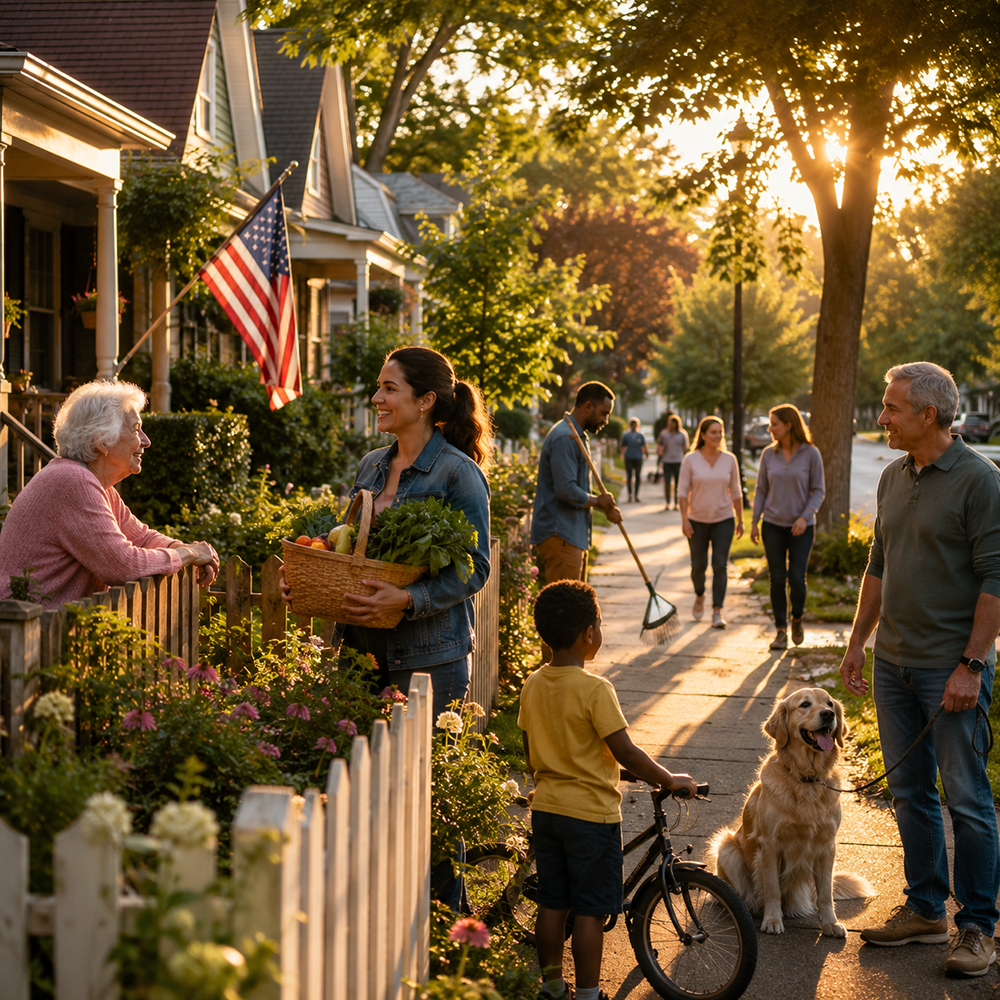
Flourishing Happens Together
One of the remarkable things about healthy ecosystems is that they are wonderfully diverse.
A thriving forest is not made of one kind of tree.
It contains towering oaks and delicate wildflowers.
Towering pines and quiet mosses.
Birds and insects.
Fungi beneath the soil.
Flowing streams.
Rich earth.
Sunlight.
Rain.
Each contributes something different.
Each depends, in ways both seen and unseen, upon countless others.
Scientists continue discovering astonishing relationships beneath the forest floor—hidden networks that quietly share nutrients, strengthen weakened trees, and remind us that life often flourishes through connection rather than competition.
The health of the whole is not found in sameness; it is found in relationship.
People are much the same.
No one possesses every gift.
Every perspective.
Every strength.
Every insight.
Some people naturally notice beauty.
Others notice problems that need solving.
Some bring calm into difficult situations.
Others inspire courage.
Some ask thoughtful questions.
Others help us laugh.
Some create.
Some organize.
Some teach.
Some comfort.
Some quietly serve behind the scenes.
None of these gifts are more important than another.
Like the many parts of a healthy ecosystem, they work together to create something none could accomplish alone.
This is one reason comparison so often steals joy.
When we compare ourselves to others, we often assume that difference means deficiency.
We see another person's strengths and quietly conclude that our own gifts matter less.
Nature tells a different story.
A forest does not ask every flower to become a tree.
The river is not failing because it is not a mountain.
The stars do not compete with the sunrise.
Each contributes something uniquely beautiful to the whole.
Likewise, healthy communities do not ask people to become copies of one another.
They invite each person to bring the gifts only they can offer.
Perhaps this is why belonging matters so deeply.
Belonging is not merely about being accepted.
It is about having the freedom to contribute.
To know that our presence matters.
That our kindness matters.
Our creativity.
Our wisdom.
Our questions.
Our encouragement.
Our compassion.
Our experiences.
Our unique way of seeing the world.
Healthy environments do not simply make room for differences.
They recognize those differences as gifts.
This also changes the way we think about helping one another grow.
Healthy relationships do not try to produce identical people.
They do not measure everyone by the same standards or expect every life to unfold in the same way.
Instead, they ask a gentler question: "What has been planted within this person?"
Not: "Why aren't you becoming someone else?"
But: "How can I help what is already good within you continue to grow?"
This is one of the quietest expressions of love.
To delight in another person's unique way of being human rather than trying to reshape them into our own image.
Perhaps this is one reason communities become so beautiful when people begin encouraging rather than competing with one another.
Someone else's success no longer diminishes our own.
Their joy becomes something we celebrate.
Their gifts become something we appreciate.
Their strengths fill places where our own strengths are limited.
Together, we become more capable than any one of us could have been alone.
Just as a forest becomes stronger through diversity, communities flourish when each person is free to contribute what only they can offer.
This does not mean every difference is automatically healthy.
Growth still matters.
Integrity still matters.
Kindness still matters.
There are ways of living that harm both ourselves and others.
Healthy environments lovingly challenge those patterns because love always seeks what helps people flourish.
Yet within that shared commitment to truth, goodness, and love, there is extraordinary room for individuality.
No two lives need look exactly alike in order to be deeply beautiful.
Perhaps this is one of the greatest gifts healthy environments offer.
They free us from two exhausting burdens: the burden of pretending to be someone we are not and the burden of expecting everyone else to become who we are.
Instead, we begin delighting in the astonishing variety of human life.
We learn from one another.
Strengthen one another.
Balance one another.
Carry one another through different seasons.
Together, we become something richer than any one person could become alone.
Maybe that is what flourishing has always looked like.
Not isolated excellence, but interconnected goodness.
Not one remarkable tree standing alone in a field, but an entire forest growing together, each life strengthening the others in ways both visible and hidden.
Because perhaps becoming something better has never meant becoming everything.
It has meant becoming fully ourselves while helping others become fully themselves, too.
And in that shared growth, we discover one of the deepest truths about being human:
We were never meant merely to exist beside one another.
We were meant to flourish together.
 Jessica Carey
We Become the Environments and Who We Choose
As we grow older, something remarkable begins to change.
When we are children, we have very little control over the environments that shape us.
We do not choose our families.
Our schools.
Our neighborhoods.
Or many of the relationships that influence our early lives.
Yet adulthood gradually brings a new responsibility.
Little by little, we begin choosing where we place our roots.
The friendships we cultivate.
The communities we join.
The voices we regularly listen to.
The habits we practice.
The stories we believe.
We also become wise by learning to recognize the environments we are living in.
The environments that once shaped us eventually become environments we can begin choosing.
This does not mean every choice is easy.
Sometimes growth requires changing the soil around us, not because we have failed, but because flourishing becomes difficult in climates that consistently diminish dignity, curiosity, or hope.
Some people face enormous obstacles.
Leaving unhealthy environments can require tremendous courage, support, and time.
Yet whenever healthier choices become possible, they matter.
Because just as soil influences a plant, the environments we repeatedly enter begin shaping the people we become.
One of the kindest things we can sometimes do for ourselves is to plant our lives where growth is more likely.
Character is not built primarily through intentions.
It is built through repeated actions:
- Every apology makes humility a little more natural.
- Every act of generosity strengthens generosity.
- Every patient response makes patience easier next time.
- Every choice becomes rehearsal for the person we are becoming.
Likewise, every habit of contempt strengthens contempt:
- Every avoidance strengthens fear.
- Every dishonest moment makes honesty harder.
We are continually practicing becoming someone.
The question is: who?
Long after people forget many of our words, they often remember how life felt in our presence.
 Jessica Carey
An Invitation to Cultivate Life
Perhaps one of the greatest gifts this perspective offers is a renewed sense of purpose.
Most of us will never influence millions of people.
We may never write history books.
Lead nations.
Invent world-changing technologies.
Or become widely known.
Yet every one of us will shape lives.
Not because we are famous.
But because we are present.
The child who watches how we respond when we make a mistake.
The friend who remembers whether we listened.
The coworker who notices whether we shared encouragement or criticism.
The neighbor who experiences our kindness.
The stranger who crosses our path for only a few moments.
We rarely know how deeply our ordinary lives reach into the lives of others, but they do.
Perhaps this is why love has always been more practical than dramatic.
It is found in the patient conversation after a long day.
The apology that restores trust.
The meal shared around a table.
The encouraging text sent without being asked.
The curiosity that replaces assumptions.
The gentle answer instead of the harsh one.
The willingness to begin again after failure.
These moments may never seem extraordinary.
Yet they quietly become part of the environment in which another person's life unfolds.
This does not mean we carry the weight of everyone else's flourishing.
We cannot become the sunlight for every garden.
We cannot water every field.
We cannot heal every wound.
That has never been our calling.
Healthy gardens are tended by many hands.
Communities flourish because many people contribute their unique gifts.
Our responsibility is not to become everything.
It is to faithfully care for the small part of the world entrusted to us.
To love the people before us.
To tend the relationships we have.
To cultivate the places where our feet are planted.
There is a quiet freedom in that.
We do not need to compare our influence to someone else's.
A forest is not sustained by its tallest tree alone.
Tiny wildflowers nourish pollinators.
Moss protects the soil.
Streams carry life across the landscape.
Hidden roots strengthen the ground beneath everyone's feet.
Every part contributes to the flourishing of the whole.
Human communities are no different.
The person who quietly welcomes others.
The teacher who patiently encourages.
The friend who faithfully listens.
The parent who consistently repairs after mistakes.
The neighbor who notices when someone is struggling.
These acts may seem small, yet healthy worlds are built from countless acts of ordinary faithfulness.
Perhaps this is one of the most hopeful truths about being human.
None of us begins life in a perfect environment.
Many of us carry wounds from climates we did not choose.
Words that diminished us.
Relationships that felt unsafe.
Homes where love was confused with control, fear, or performance.
Those experiences matter.
They shape us in real ways, but they do not have to be the final chapter of our story.
Every act of healing.
Every choice toward kindness.
Every repaired relationship.
Every boundary that protects dignity.
Every moment of courage.
Every generous welcome.
Becomes an opportunity to create a different environment than the one we may have inherited.
We may not be able to rewrite yesterday, but together, we help write tomorrow.
Perhaps that is what it truly means to build something better.
Not the pursuit of perfect people or perfect communities, but the patient cultivation of healthier ones.
Communities where truth and kindness walk together.
Where courage is encouraged.
Where curiosity is welcomed.
Where differences are valued.
Where mistakes become opportunities for repair rather than reasons for rejection.
Where joy is multiplied because it is shared.
Where every person is invited to become more fully themselves while helping others do the same.
This is not accomplished through one grand gesture.
It is built conversation by conversation.
Choice by choice.
Season by season.
Generation by generation.
Perhaps, in the end, this has always been the invitation.
To recognize that we are not merely passing through one another's lives.
We are helping shape the conditions in which those lives unfold.
Every word plants something.
Every action waters something.
Every habit strengthens something.
The question has never been whether our lives will leave something behind.
They always will.
The question is: what will grow because we were here?
- Will people leave our presence carrying a little more hope?
- A little more courage?
- A little more peace?
- A little more freedom to be themselves?
- A little more confidence that they belong?
- Will the homes we build feel safer?
- Will the friendships we cultivate become deeper?
- Will the communities we help shape become places where more people can flourish?
These are not questions we answer once.
They are questions we answer every day.
Because love has never simply been something we feel.
It is something we cultivate.
A way of tending the soil beneath one another's lives.
A way of protecting what is fragile, nourishing what is good, and patiently making room for growth.
And becoming something better has never meant standing alone as the strongest tree in the forest.
Perhaps it has always meant helping create the kind of forest where every life has the chance to take root, stretch toward the light, and flourish alongside the others.
Because in the end, none of us is merely living in the world.
Day by day, relationship by relationship, we are helping create the world one another will live in.
And perhaps there is no greater calling than to leave that world a little more compassionate, a little more courageous, a little more truthful, and a little more alive than we found it.
 Jessica Carey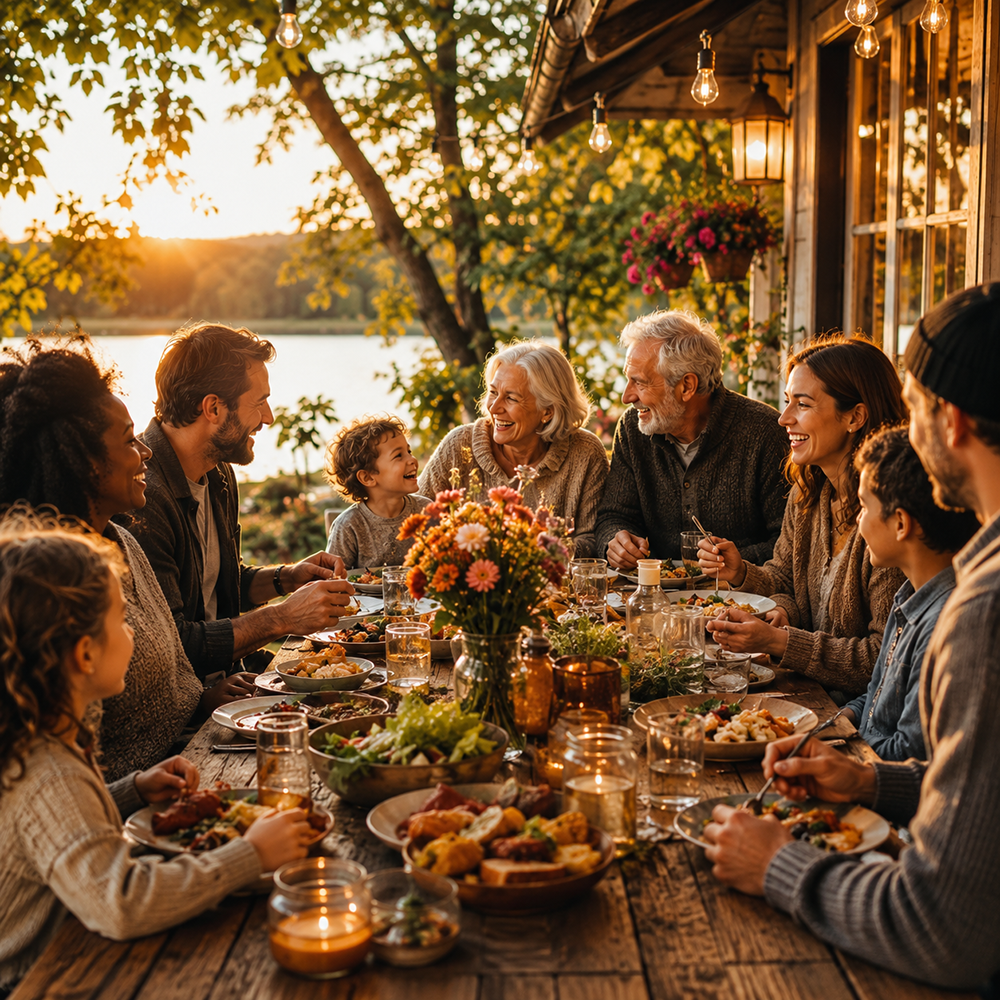
Want even more content about creativity and art?
Be sure to check out all of our creative chronicles!
If you'd like to see examples of my work, you can find some of my art and creations at Redbubble and Gumroad!
Looking to learn more about my recent journey?
Check some of these articles:
-The Difference Between Resting and Giving Up
-Hidden Gems for St. Louis Artists
-Hidden Gems for Autistic & Neurodivergent Adults
-I Think I Might Be Autistic... Now What?
 Jessica Carey