
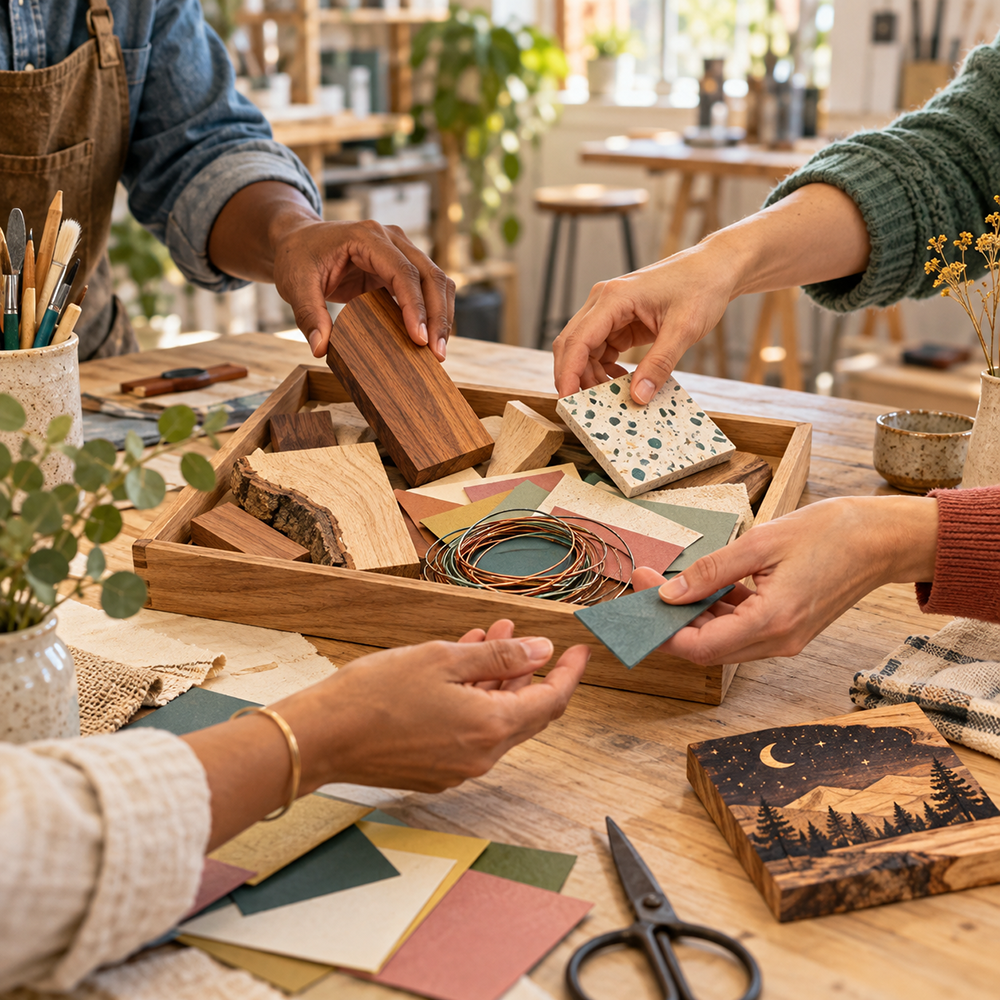
I have always been a gatherer.
I gather information, ideas, materials, opportunities, and connections.
I notice things that other people may pass over—not because they are truly worthless, but because their usefulness is no longer immediately obvious.
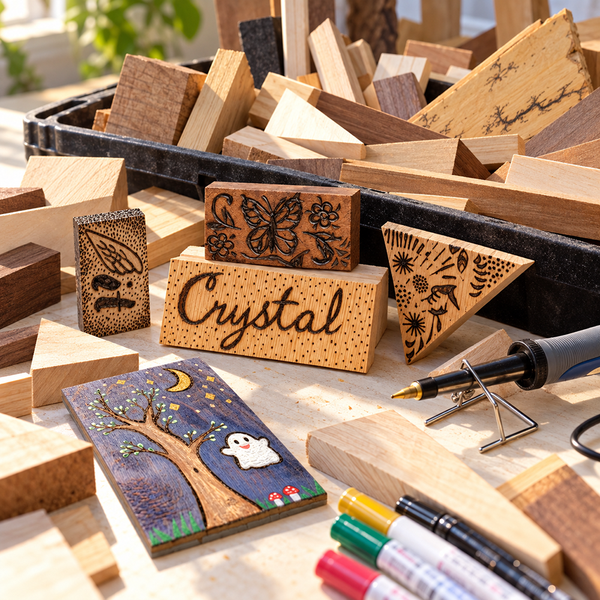
A small piece of hardwood may be too irregular or too small for the project it was originally cut for.
To a woodworker, it may simply be an offcut left behind after the more usable portions have been removed.
When I look at it, however, I begin imagining what else it could become.
- Could someone paint on it?
- Burn a miniature scene into its surface?
- Turn it into a book cover, a sculpture base, a gift, or part of a fairy garden?
- Would another artist see a possibility that would never occur to me?
That curiosity is at the heart of how I approach materials.
When I received a collection of walnut, maple, and cherry hardwood offcuts, I did not see a box of predetermined projects; I saw questions.
Some pieces became experiments of my own.
Others moved into the hands of people who imagined possibilities I never would have considered.
The wood helped me recognize that a material’s value can expand as it moves between people, ideas, and creative practices.
The same pattern has appeared again and again in my work.
I encounter tile and flooring samples, framing scraps, paper, wire, unfamiliar art products, or other materials that no longer have an obvious destination.
 Jessica Carey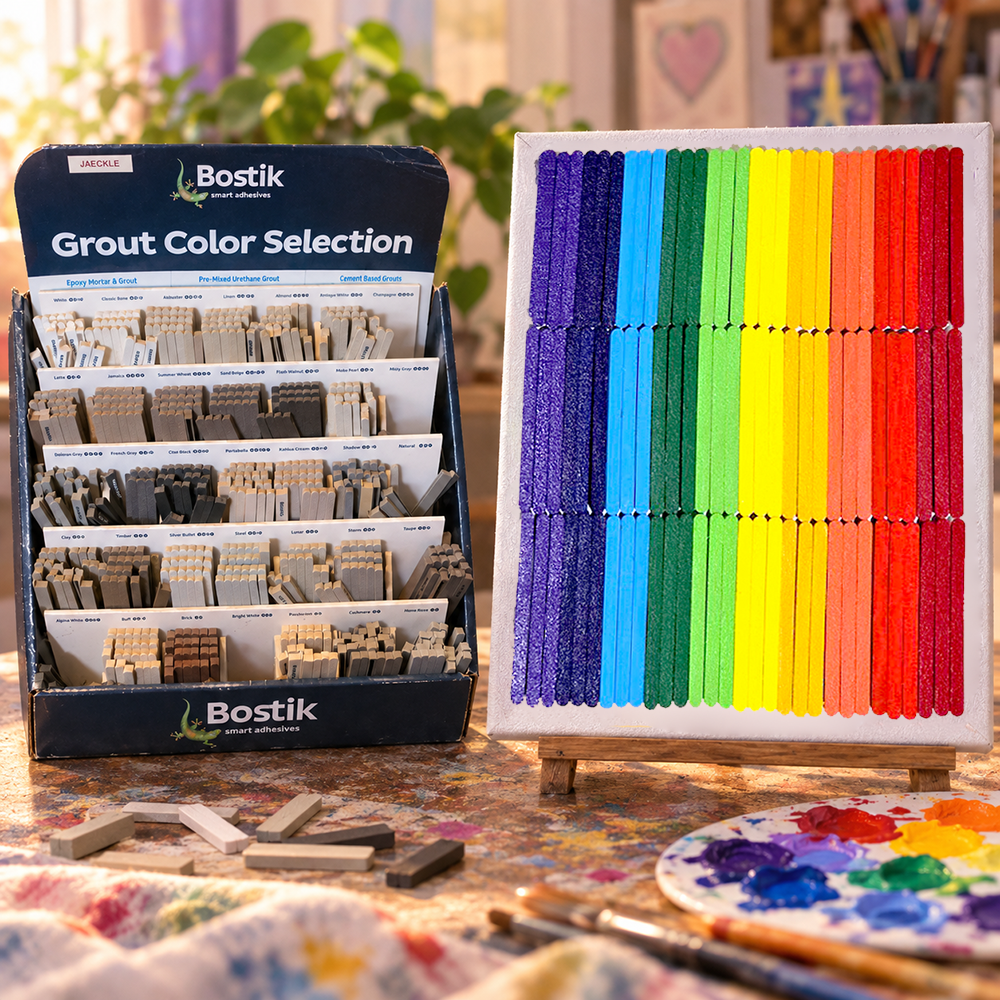
Almost immediately, questions begin forming:
- What else could this become?
- What happens if we try a different tool or technique on it?
- Who might be able to use this?
- What could someone else see here that I cannot?
Not every material is safe, useful, or realistic to keep; the goal is not to save everything; it is to recognize genuine possibilities and help the right ones move.
Sometimes that means experimenting with a material myself.
Sometimes it means documenting what I learn so another artist can begin with more information than I had.
Sometimes it means offering supplies to people whose skills, interests, or ideas are different from mine.
At other times, it means connecting someone with an opportunity, organization, creative space, or source of support that they may not have discovered alone.
This is why I have begun to understand gathering as something larger than collecting.
Collecting can end with possession; gathering can become a form of attention, stewardship, and connection.
It asks not only: what can I do with this? but also: where could this become most useful? Who might need it? What could happen if it reached the right hands?
Perhaps gathering is not always about keeping.
Sometimes it is about recognizing that something still has value—and helping it find its next life.
 Jessica Carey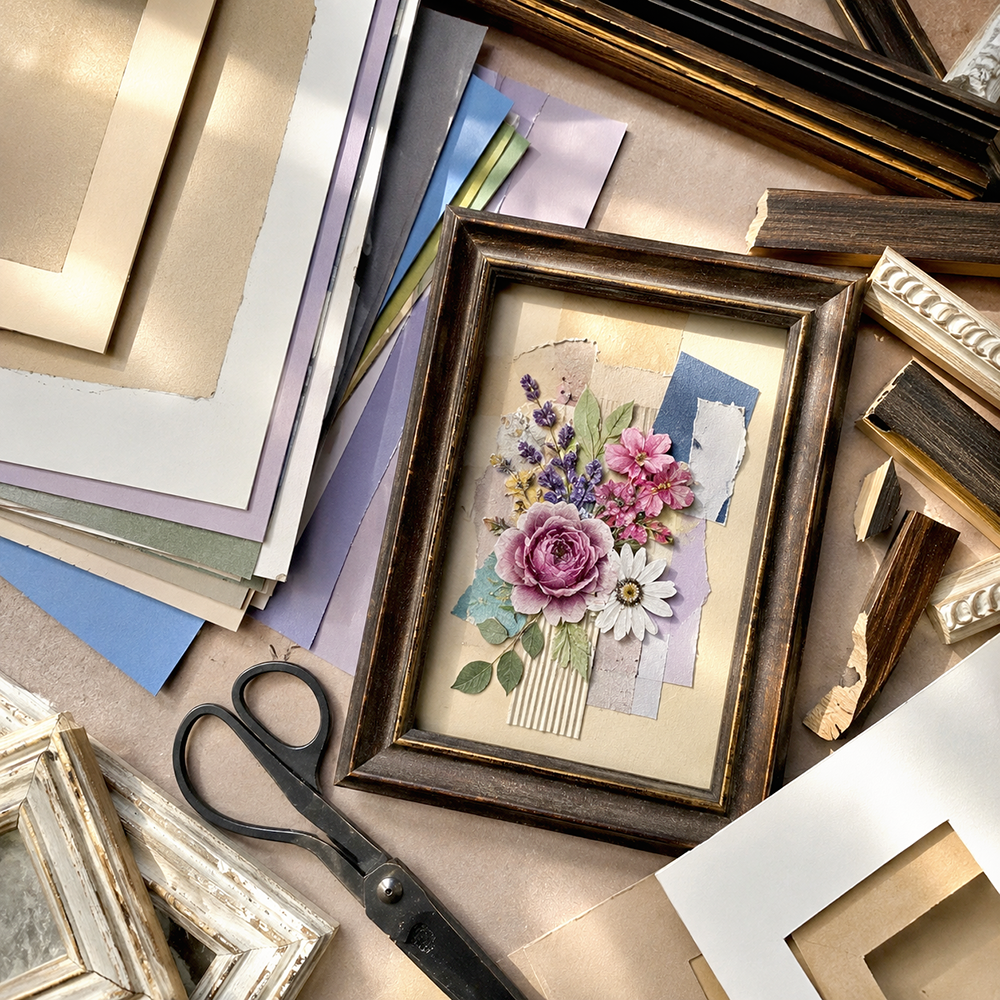
Gathering With Purpose
Creative people are often skilled at seeing possibilities in things that other people consider finished, outdated, or unusable.
A scrap of matboard could become a collage element.
A tile sample could become a surface for drawing.
A piece of wire could become part of a sculpture. A small block of wood might be exactly the right size for a miniature scene.
That ability to imagine another use can make it difficult to discard potentially useful materials.
If almost anything could become art, where should we draw the line?
For me, the difference between gathering and simply accumulating is not whether I keep unconventional things. It is whether there is thought, movement, and purpose behind them.
Accumulation can end with possession.
Something enters a space and remains there indefinitely, even if no one has the time, capacity, or genuine desire to use it.
Purposeful gathering asks additional questions:
- Is this material safe and realistically usable?
- Do I have a specific experiment in mind?
- Is there someone else who would benefit from it?
- Can it be stored without becoming a burden?
- Is there a reasonable path between finding it and putting it to use?
- Do I have permission to take or redistribute it?
Gathering responsibly also means respecting ownership, boundaries, and the systems people may already have in place; creative reuse is an invitation to ask what might be available—not permission to assume that anything unused belongs to us.
Not everything needs to be rescued simply because it has potential.
Potential exists almost everywhere, but time, energy, space, and attention are limited.
Accepting every available material would eventually make it harder—not easier—to create, experiment, and share.
Discernment is therefore part of the creative process.
Sometimes the right choice is to bring a material home and test it.
Sometimes it is to take only a few pieces instead of an entire box.
Sometimes it is to tell another artist about the opportunity.
Sometimes it is to recognize that an item may be useful to someone, but that I am not the person responsible for finding that use.
Purposeful gathering is not about saving everything; it is about helping suitable resources continue moving.
A material might travel from a business that no longer needs it to an artist who experiments with it, then to a classroom, community studio, or another creator with an entirely different idea.
Its value does not depend on one person possessing it forever.
Its value may come from being placed where it can actually become something.
That is why sharing is not an afterthought within this process; it is one of the things that gives gathering meaning.
I may be the person who notices a material, asks whether it is available, transports it, tests it, or tells others about it.
I do not have to be the person who completes every step or creates every finished piece.
Gathering with purpose means knowing that possibility does not always need to remain in my hands in order for me to help it grow.
Seeing Possibility Before It Has Been Proven
One of the most important parts of creative reuse happens before anyone makes a finished artwork.
It begins in the uncertain space between encountering a material and knowing what it can become.
When I first receive an unfamiliar product, discarded sample, or unusual surface, I do not always have a fully formed project in mind.
Sometimes I simply sense that there is something worth investigating.
The material creates questions before it provides answers.
- What happens if paint markers are used on discontinued tile rather than paper?
- Will they work differently on unfinished wood, glossy scrapbook paper, or stone?
- Could a hardwood offcut become more than a leftover from someone else’s project?
- Which parts of the material should be preserved, and which might be altered?
The answers cannot always be predicted; they have to be discovered through experimentation.
That is part of the purpose behind the Materials Lab.
An overlooked material does not need to arrive with instructions for its second life.
Testing, observing, documenting, and sharing what happens can reveal possibilities that were previously invisible.
Some experiments succeed immediately; others behave in unexpected ways.
A marker may glide across tile but absorb into wood, while a natural crack, edge, or grain pattern may redirect an entire design.
Even an unsuccessful test can reveal which tools are incompatible, which surfaces need preparation, or which ideas might work with a few adjustments.
Discovery does not require every experiment to become a polished artwork.
This is also why I value placing materials in more than one person’s hands.
My own art education, experiences, and preferences shape what I notice—but they also limit what I imagine.
Where I see painting surfaces, a bookbinder may see pieces that could become useful bookbinding equipment.
A sculptor may see structural support.
A woodworker may understand the grain, strength, or character of a piece in ways that I do not.
A child may invent a use that none of us would have considered.
No single person can uncover every possibility within a material.
This means possibility often has to be recognized before it can be proven.
Someone has to pause before an object is discarded and wonder whether its usefulness has truly ended.
Someone has to be willing to experiment without knowing whether the result will be beautiful, practical, or successful.
The first act of transformation is not cutting, painting, sculpting, or assembling.
It is looking at what already exists and believing there may be more to discover.
Materials Become More Valuable When They Circulate
A material’s value does not always increase by remaining in one person’s possession.
Sometimes it becomes more valuable when it begins to move.
The hardwood offcuts I received are a good example.
Some became surfaces for my own experiments, including a miniature night scene created around a natural crack in the wood.
 Jessica Carey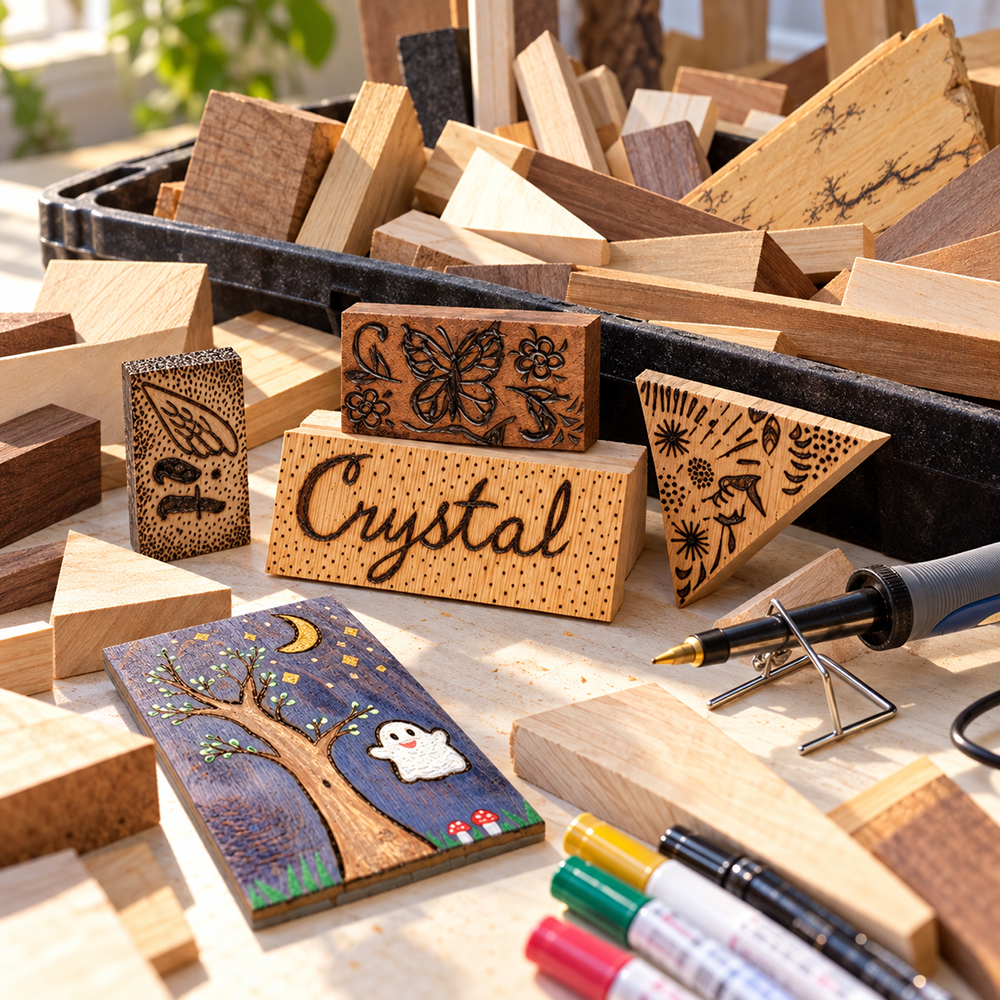
But the pieces also began generating possibilities beyond my individual practice.
An art-space host displayed one of the unusual triangular pieces and imagined additional creative uses.
Members of an art group considered how the wood might become book covers, sculpture bases, or surfaces for painting.
Another artist experimented with painting directly on a piece.
Friends with interests in woodworking, woodburning, and fairy gardens saw still more potential.
The wood remained physically the same, but every person brought a different history, skill set, and way of seeing to it.
What looked like a collection of small leftovers became the beginning of several creative paths.
The same thing happened while experimenting with paint markers across tile, wood, scrapbook paper, and other possible surfaces.
My tests revealed certain qualities: how the markers moved, where colors appeared most vivid, which surfaces absorbed the ink, and which allowed it to sit on top.
Someone else could begin with those observations and take the material in an entirely different direction.
This is one reason I document experiments rather than keeping the results to myself.
Information can circulate even when a physical material cannot.
A person may never receive one of the original pieces I tested, but they can still learn from what happened and apply that knowledge to something available in their own environment.
Sharing can take many forms; it may mean giving someone a material, inviting others to experiment alongside me, publishing what I discovered, or simply telling the right person that a resource exists.
Each form allows an opportunity to travel farther than it would have if I had treated it as something meant only for me.
This does not make my own needs or creative ideas unimportant.
I am allowed to keep materials I genuinely want to use.
Sharing should not require giving away everything valuable or denying myself the resources necessary for my own work.
The point is not self-sacrifice; it is circulation.
If I have more of something than I can realistically use—or if another person is especially well suited to explore it—sharing can expand what the original resource makes possible.
Instead of one person holding twenty unrealized ideas, several people may each bring one idea to life.
A resource does not have to remain mine in order for finding it to matter.
In fact, one of the most meaningful parts of gathering is watching something continue beyond me.
I may have noticed the material, asked the initial question, or helped create the connection, but I do not have to control its final form.
Sometimes my role is to make the artwork.
Sometimes my role is to conduct the experiment.
Sometimes my role is simply to help a useful material reach the hands that are ready for it.
 Jessica Carey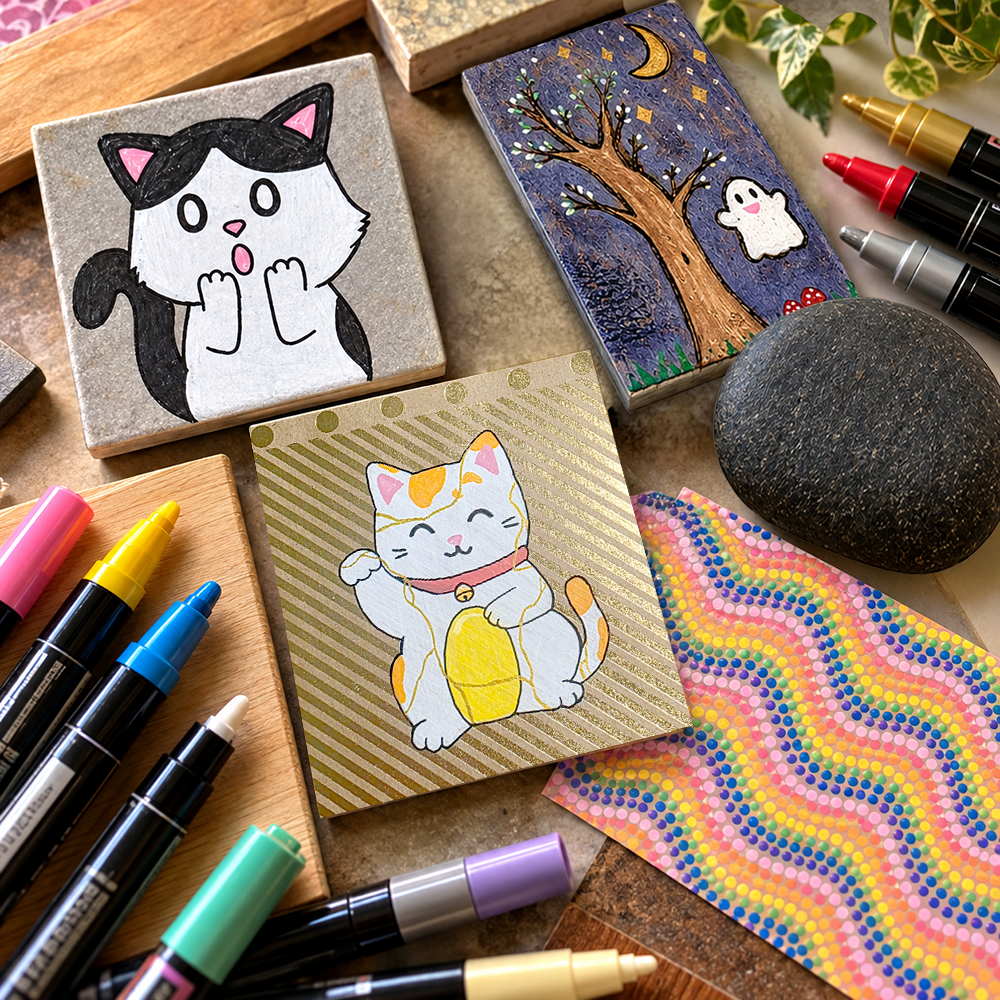
Gathering Is Also a Form of Community-Building
The materials are only one part of what I gather.
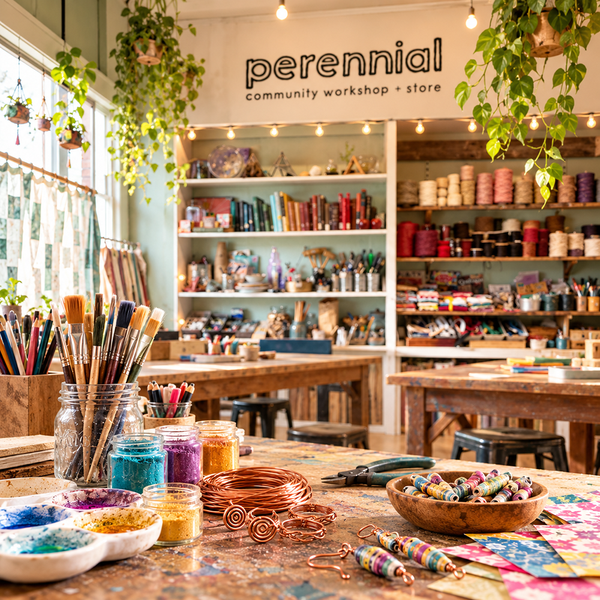
I also collect information about creative spaces, scholarships, accessible programs, workshops, funding opportunities, local organizations, unconventional material sources, and people whose work might connect.
When I discover something useful, my first instinct is often to wonder who else might need to know about it.
This follows the same pattern as creative reuse.
A material can remain overlooked because no one has imagined another purpose for it.
An opportunity can remain inaccessible because the people who would benefit from it do not know it exists.
A business may have useful remnants with no clear destination while an artist, teacher, or community program is struggling to afford supplies.
The resources and the needs may already exist; what is missing is the connection between them.
Community-building often begins with someone noticing that gap.
One person may know about a scholarship but not need it personally.
Another may need financial support but have no idea that the scholarship exists.
A woodworking business may have small offcuts it cannot use.
An artist may be searching for affordable surfaces.
A creative space may have tools and knowledge that could help someone develop an idea—if that person knows the space is available and feels welcome entering it.
None of these connections is dramatic on its own, yet together, they begin creating an informal network of access, knowledge, materials, and mutual support.
This is where the Materials Lab connects with my larger vision for an art nonprofit tentatively named Everyone Creates.
The Materials Lab asks: what can artists do with this material?
Everyone Creates asks: how could materials, tools, knowledge, and opportunities become part of an ongoing community resource?
An experimental sample might reveal that a material is worth saving.
A documented project might help another artist understand how to use it.
A relationship with a local business might eventually divert usable remnants from the waste stream.
A shared supply library, workshop, or creative space could make those materials accessible to people who might otherwise be excluded by cost, disability, lack of storage, or limited access to traditional art resources.
The larger vision grows from many small acts of gathering and connection.
I do not have to manufacture every resource myself.
Sometimes my contribution is recognizing that two existing pieces belong together.
I can ask questions, share information, introduce possibilities, and help people find one another.
This does not mean taking responsibility for solving every unmet need or becoming the permanent manager of every connection.
Healthy community cannot depend on one person endlessly carrying all of its information, materials, and labor.
The goal is to help build pathways that other people can also strengthen, use, and share.
Perhaps that is what I am gathering most of all: not objects, but pieces of a possible ecosystem.
A material leads to an experiment.
The experiment produces knowledge.
That knowledge reaches another artist, a relationship opens a new source of support, and one connection makes the next connection easier.
Over time, scattered possibilities begin to resemble community.
 Jessica Carey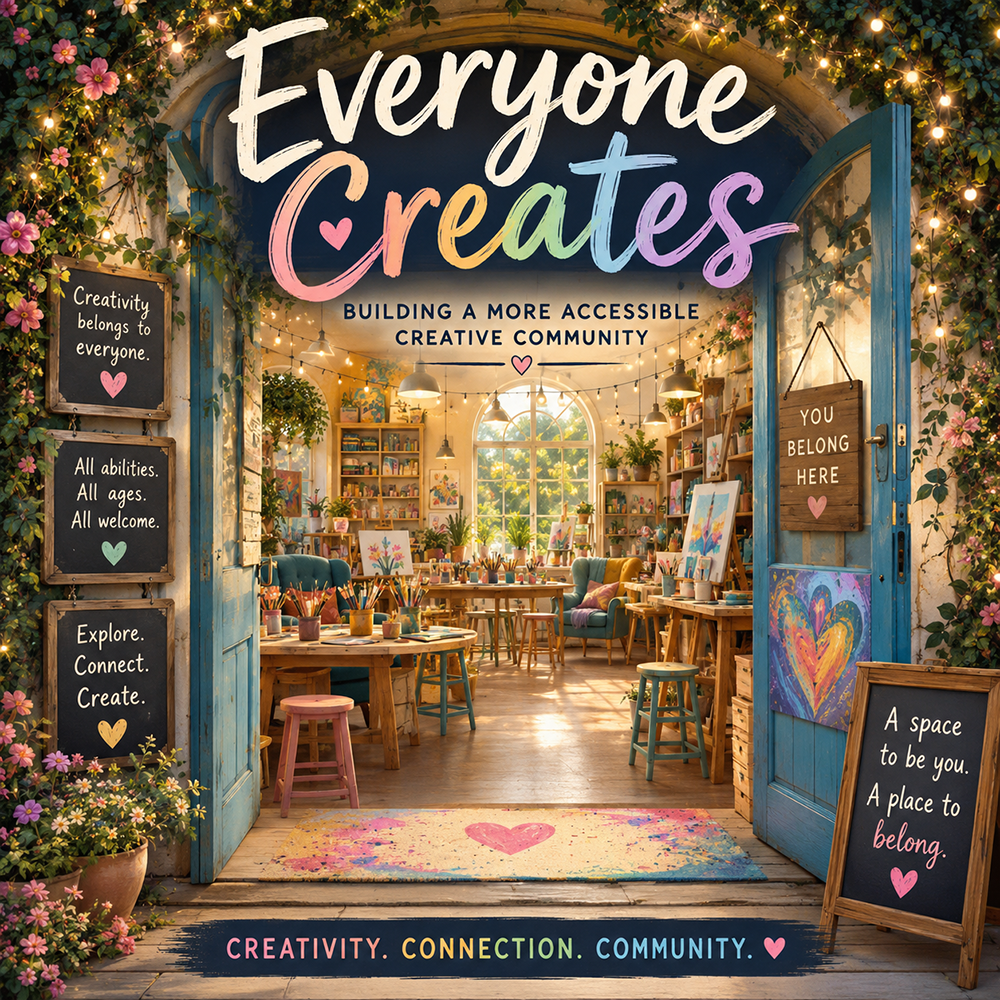
Resourcefulness Is Not the Same as Pretending Scarcity Is Good
There can be something deeply empowering about creating with what is available.
An ordinary object can become an art material.
A discarded sample can inspire an experiment.
A substitute can produce an effect that the original plan never would have revealed.
Limitations can invite us to improvise, reconsider our assumptions, and discover that creativity is not confined to expensive or conventional supplies.
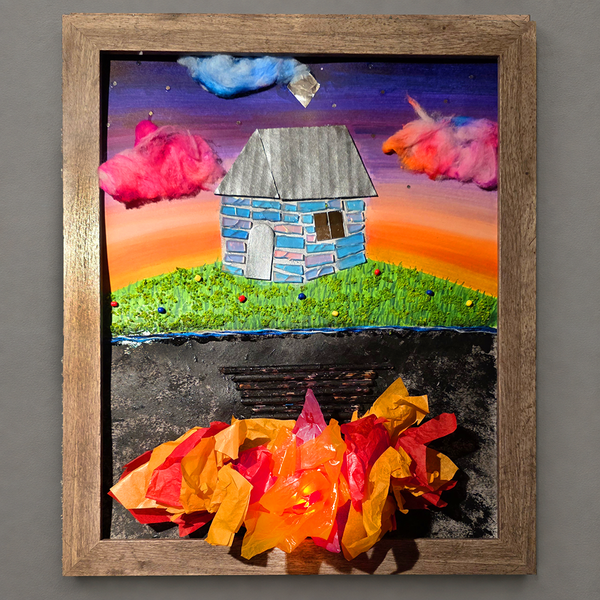
I relied on that kind of resourcefulness while creating Phoenix Rebirth, a mixed-media artwork about destruction, rebuilding, and creating a life from what remains available.
Without reliable access to much of my own art-supply collection, I worked with shared studio materials and whatever I could realistically find: cardboard, aluminum foil, plastic bags, cotton balls, a popsicle stick, discarded samples, and mica powder mixed with clear glue when silver paint was unavailable.
Materials that might have appeared insignificant became structure, texture, light, fire, water, and shelter.
I am proud of what I was able to make, but I do not want that pride to become a romantic story about scarcity.
Losing access to resources was not necessary for me to become creative.
Instability, financial hardship, displacement, and a lack of adequate support did not improve my life simply because I found ways to keep making art within them.
Resourcefulness helped me respond to difficult circumstances; it does not make those circumstances fair or desirable.
Both truths can exist at once:
- Beautiful and meaningful work can emerge from limited materials.
- People still deserve stability, access, choice, and sufficient support.
There is a harmful tendency to celebrate what someone creates under pressure while ignoring why they were forced to work under that pressure in the first place.
We admire the ingenuity without asking whether the person should have had to be so ingenious merely to continue participating.
Creative reuse should expand people’s choices—not become another way of telling them to accept deprivation.
An artist may genuinely love working with reclaimed wood, discarded paper, or unusual industrial remnants.
Another may need a particular tool, archival material, accessible workspace, or professional-quality supply to realize their vision.
Neither approach is morally superior.
Reuse is valuable because it opens additional possibilities, reduces waste, and invites experimentation—not because artists should be expected to survive indefinitely on whatever others no longer want.
This is part of why access matters so much within my larger vision.
A community art supplies library, shared studio, scholarship, donated material network, or accessible workshop can help transform resourcefulness from an isolated survival strategy into collective support.
Instead of each person struggling alone to make something from almost nothing, people can contribute materials, knowledge, tools, space, and ideas to an ecosystem where more creators have genuine options.
The goal is not to prove how little artists can endure.
The goal is to make creativity more possible.
I can honor the strength and imagination I developed without pretending I should have needed them under these circumstances.
I can appreciate what overlooked materials made possible while continuing to believe that artists deserve more than scraps, barriers, and closed doors.
Resourcefulness is powerful.
It is even more powerful when it exists alongside safety, access, stability, and choice.
 Jessica Carey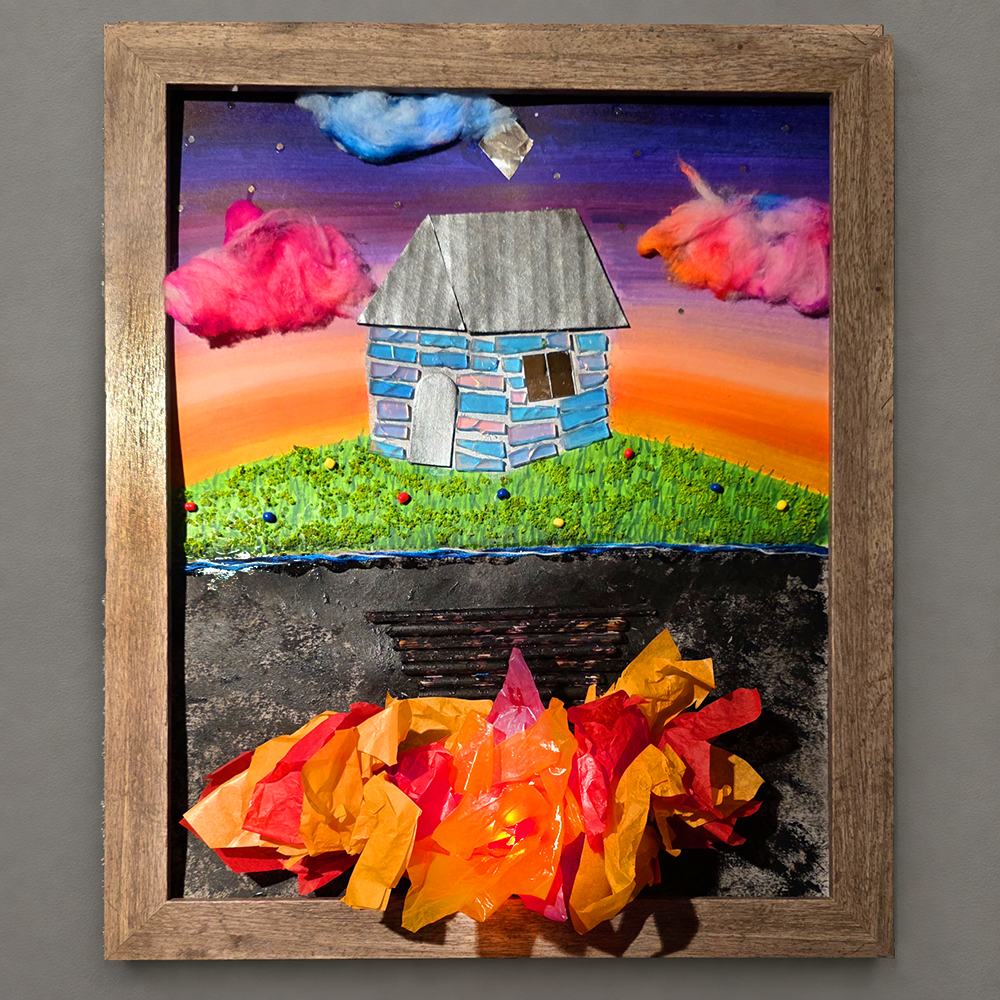
Helping Possibility Find a Home
The transformation of an overlooked material does not begin when someone paints, cuts, burns, folds, or assembles it.
It begins in the moment someone pauses before discarding it and asks whether its story is truly finished.
A small piece of hardwood may never become furniture, but it might hold a miniature landscape.
A discontinued tile may no longer belong in a showroom, but it can become a drawing surface.
A remnant, sample, or unfamiliar product may lead to an experiment that teaches several artists something new.
The same can be true of information, opportunities, skills, and human connections.
Something valuable may already exist, yet remain unable to help anyone because it has not reached the place where it is needed.
Gathering is one way of helping close that distance.
I gather because I notice connections; I see what something might become, who might benefit from it, and how one overlooked resource could open a door.
Sometimes I create with what I find.
Sometimes I test it, document it, or share it.
Sometimes I simply connect a person with a material, opportunity, or source of support that seems suited to them.
I cannot save or use everything, and I am not meant to.
My responsibility is not to carry every discarded object, unmet need, or unrealized possibility.
It is to pay attention, make thoughtful choices, and help what I reasonably can continue moving.
That may be the difference between gathering and merely holding on.
Gathering has direction; it allows things to pass through our hands without insisting that they belong to us forever.
It recognizes that value can grow through experimentation, exchange, and shared access.
It trusts that someone else may see a possibility we cannot—and that helping them reach it is itself a meaningful contribution.
- What useful materials might be overlooked in the places around you?
- What information, skill, or opportunity could you pass along?
- Who might create something meaningful if they were given access to the resources you no longer need?
We do not have to rescue everything; we do not have to turn every scrap into art or personally complete every possibility we recognize.
Sometimes our role is simply to notice that something has more life in it—and help it find the place where that life can continue.
Sometimes creating something new begins not with obtaining more, but with seeing more possibility in what is already here.
Want even more content about creativity and art?
Be sure to check out all of our creative chronicles!
If you'd like to see examples of my work, you can find some of my art and creations at Redbubble and Gumroad!
Looking to learn more about my recent journey?
Check out some of these articles:
-Hidden Gems for St. Louis Artists
-Hidden Gems for Autistic & Neurodivergent Adults
-Learning What Love Was Supposed to Feel Like
-I Wasn't Broken--I'm Burned Out
-What Chronic Autistic Burnout Actually Feels Like
-Building a Life from What Remains
 Jessica Carey