

Inktober, But Make It Different
Sometimes, all it takes to spark a new creative experiment is a little encouragement.
Recently, Marnie, the owner of Marnie's Creative Outlet and host of our weekly art club, encouraged me to participate in Inktober.
If you're unfamiliar with it, Inktober is an annual drawing challenge that takes place throughout October. Participants are encouraged to create artwork inspired by daily prompts, traditionally using ink.
It's a fun way to encourage creativity, develop artistic skills, and challenge yourself to make something regularly.
But as I started thinking about participating, I found myself wondering something: who says I have to draw on regular paper?
Don't get me wrong; there's nothing wrong with paper!
It's an incredibly versatile material, and I've certainly used plenty of it throughout my artistic journey.
But I've always enjoyed experimenting with different materials, trying unfamiliar techniques, and finding creative possibilities in unexpected places.
And sometimes, doing the same thing over and over again can get a little boring.
I like variety.
I like discovering new things.
And I especially enjoy asking: "What happens if I try this instead?"
A Different Kind of Drawing Challenge
When most people think about drawing, they probably imagine pencils, pens, or markers moving across a sheet of paper.
And when it comes to a challenge like Inktober, it's easy to picture a sketchbook gradually filling with illustrations.
But drawing doesn't have to be limited to a sketchbook: what if the surface itself became part of the experiment?
What if, instead of changing the drawing tool, I changed what I was drawing on?
- A piece of wood
- A ceramic tile
- A sheet of patterned scrapbook paper
- Maybe even a rock
Each surface has its own characteristics, and those differences can influence how materials behave, how designs develop, and what the finished artwork looks like.
Suddenly, a drawing challenge becomes an opportunity to explore much more than drawing.
It becomes an experiment in materials, surfaces, and creative possibilities.
Working With What I Have
Another thing that made this especially exciting was having a collection of materials to experiment with, thanks to the generosity of several people.
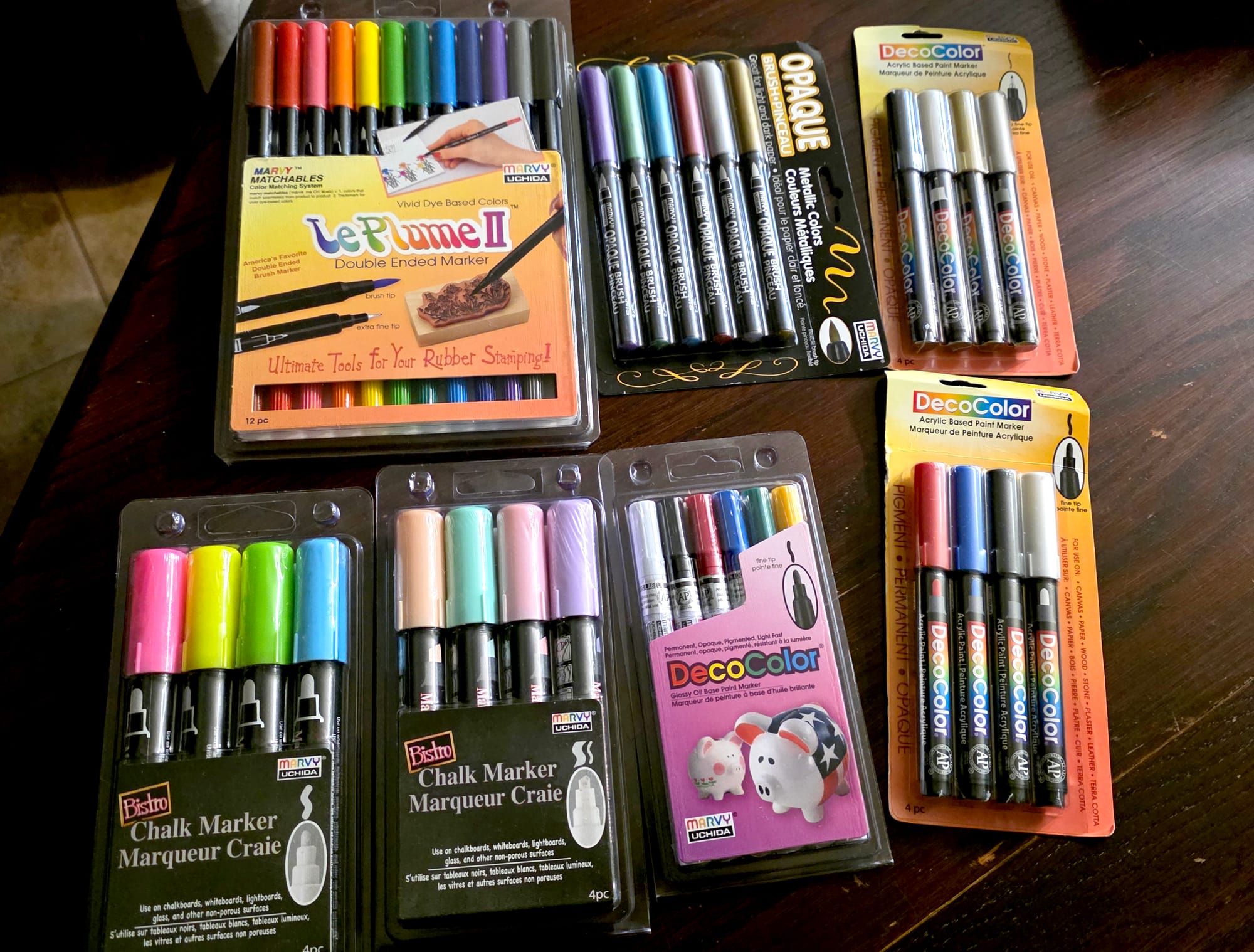
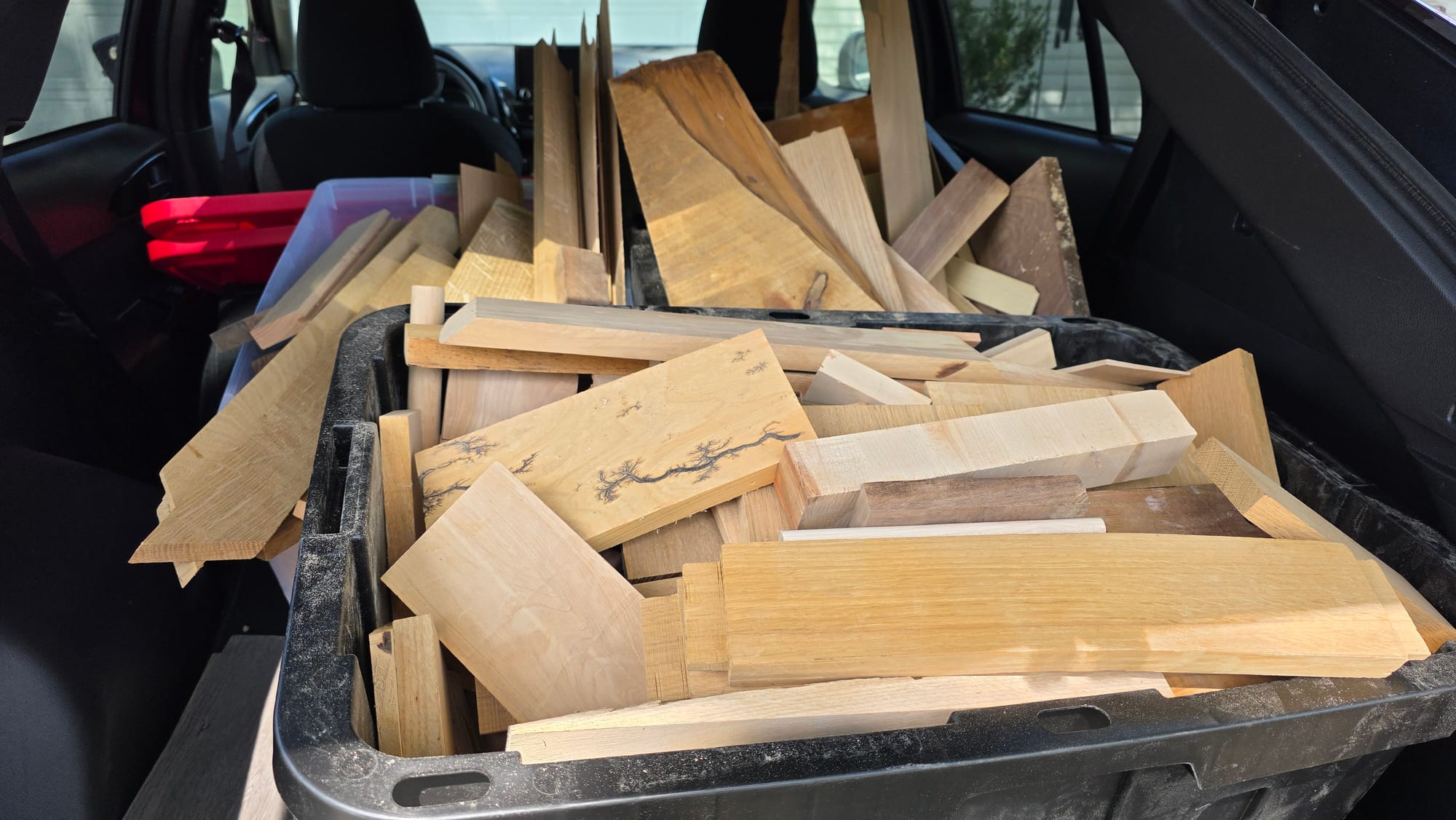
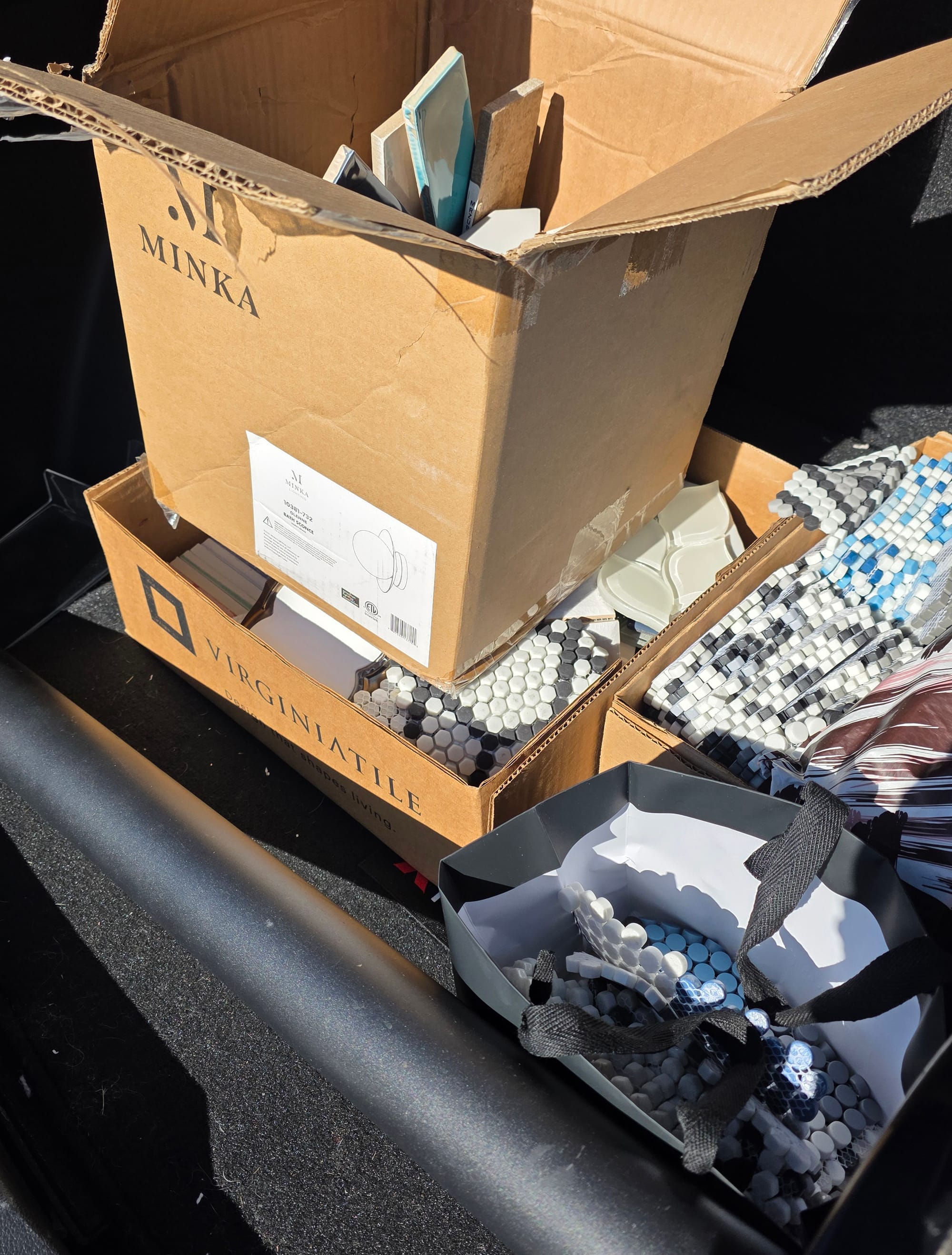
Lawrence at Marvy Uchida had provided an assortment of markers, Heather at Virginia Tile had shared discontinued tile samples, and Seth at MuniMo Woodworking and Design had generously provided hardwood offcuts.
Different materials, from different places—but together, they offered an opportunity to explore what happens when familiar drawing tools meet unfamiliar surfaces.
Rather than purchasing a collection of traditional drawing surfaces, I could experiment with materials I already had access to.
And instead of limiting myself to one technique or surface, I could explore how the markers behaved on different materials.
- Would the colors look different on wood than on ceramic tile?
- How would a smooth, glossy surface compare with one that had a more noticeable texture?
- What happens when the surface already has a pattern or design?
- Could I combine the markers with other techniques, like wood burning?
- Which combinations might lead to something unexpected?
I didn't have all the answers.
But I had plenty of curiosity—and a wonderful assortment of materials to experiment with.
An Invitation to Experiment
One of the things I appreciate about creative challenges is that they can provide a starting point without necessarily determining the entire creative process.
A prompt might suggest a subject.
But how I interpret it, what materials I use, and what I decide to create are all opportunities to explore.
And that's what I wanted to embrace with Inktober.
Not another obligation to produce a perfect drawing every day.
Not a rigid set of rules about how my artwork should look.
Just an opportunity to play, experiment, learn, and see what happens.
Some experiments might turn into finished pieces.
Others might simply teach me something about a material or technique.
And that's perfectly okay.
Because for this Materials Lab, I'm interested in a slightly different question: what happens when we change the surface instead of changing the medium?
Let's find out.
 Jessica Carey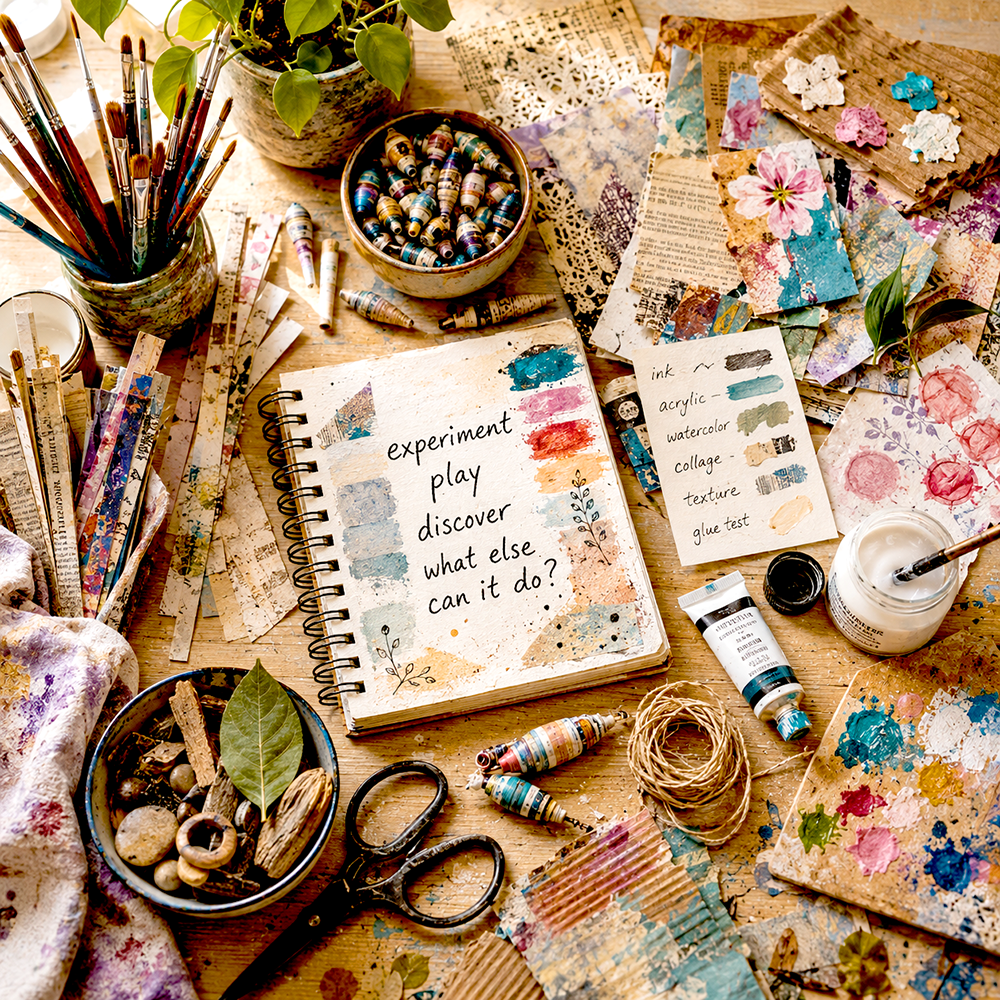
Materials Lab Notes
Primary materials: Assorted paint markers, including DecoColor markers from Marvy Uchida
Marker source: Generously provided by Lawrence at Marvy Uchida
Surfaces: Hardwood offcuts, discontinued ceramic tile samples, and patterned scrapbook paper
Additional material sources: Hardwood offcuts provided by Seth at MuniMo Woodworking and Design; tile samples provided by Heather at Virginia Tile
Experiments so far: Drawing and painting on wood, ceramic tile, and patterned paper; exploring combinations of paint markers and wood burning
Future possibilities: Painting rocks, exploring additional unconventional surfaces, and testing how different materials hold up over time
Setting: Independent experimentation and art club at Marnie's Creative Outlet
Status: Experiment ongoing
Disclosure: The markers featured in this experiment were generously provided by Lawrence at Marvy Uchida. Heather at Virginia Tile provided discontinued tile samples, and Seth at MuniMo Woodworking and Design provided hardwood offcuts, all at no cost. The experiments, observations, and opinions shared here are my own.
What I'm Working With
One of the things I love about this particular experiment is that I'm not starting with a single, perfectly matched set of supplies.
Instead, I'm bringing together materials that came from different places and were originally intended for different purposes.
Thanks to Lawrence at Marvy Uchida, I've had the opportunity to explore an assortment of markers, including different types and colors of paint markers.
And rather than limiting those markers to traditional drawing paper, I've been curious about what happens when I use them on other surfaces.
That's where some of the other materials I've gathered come into play.
Hardwood Offcuts
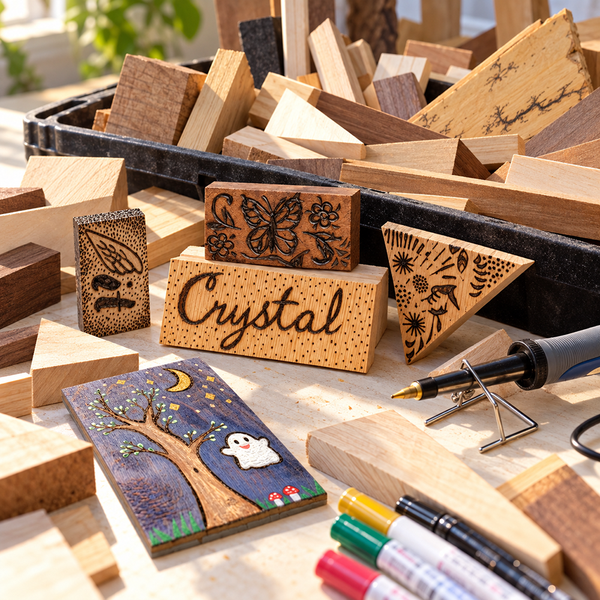
Seth at MuniMo Woodworking and Design generously shared a wonderful collection of hardwood offcuts in different shapes, sizes, and thicknesses.
I've already been using some of these pieces to experiment with wood burning, but they also offer opportunities to explore adding color.
Unlike a smooth sheet of paper, wood has natural grain patterns and variations in texture; those characteristics can become part of the artwork rather than simply something to work around.
I'm particularly interested in how the markers interact with the natural wood surfaces and how they might complement the marks created through wood burning.
 Jessica Carey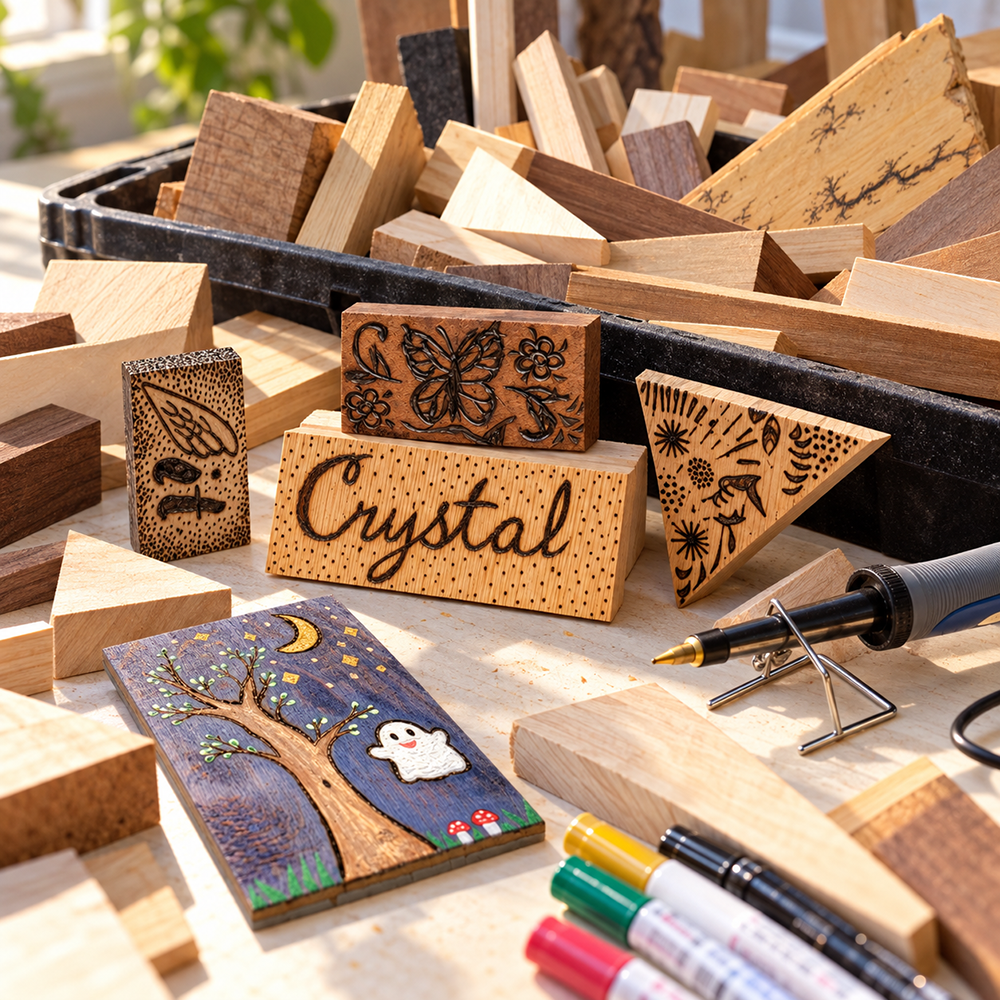
Ceramic Tile Samples
Heather at Virginia Tile generously provided an assortment of discontinued tile samples, including pieces in different shapes, colors, and finishes.
Some have relatively smooth, glossy surfaces, while others have more noticeable texture.
And that opens up an entirely different set of questions:
- How do paint markers behave on ceramic tile compared with wood?
- Do the colors look different against darker or lighter surfaces?
- How does the texture affect the way the markers move?
- What might be needed to protect the artwork once it's finished?
I've already begun experimenting with different designs on the tiles, from playful little illustrations to colorful patterns.
But I'm still learning about how the materials behave and what kinds of projects they might be best suited for.
Patterned Scrapbook Paper
Of course, I haven't abandoned paper entirely!
I've also been experimenting with drawing on patterned scrapbook paper.
Unlike a blank white page, patterned paper already contributes something to the artwork before I make a single mark.
It might have colors, textures, illustrations, or repeating designs that influence what I decide to create, and I find that interesting.
Instead of beginning with a completely blank surface, I can respond to something that's already there.
The existing pattern becomes part of the creative process.
One Medium, Different Possibilities
What makes this experiment particularly interesting to me is that I can use similar drawing materials across several very different surfaces.
The markers might be the same, but the experience doesn't necessarily stay the same.
Wood brings natural grain and texture.
Ceramic tile introduces smooth or textured surfaces that weren't originally designed as drawing paper.
Patterned scrapbook paper offers existing colors and designs to work with.
And each one invites a slightly different approach.
I'm not necessarily trying to determine which surface is the best.
I'm more interested in discovering what makes each one different, what kinds of creative opportunities it offers, and how I might use those characteristics in future projects.
Because sometimes changing just one part of the creative process can open up an entirely new collection of possibilities.
Experiment #1: Paint Markers on Wood
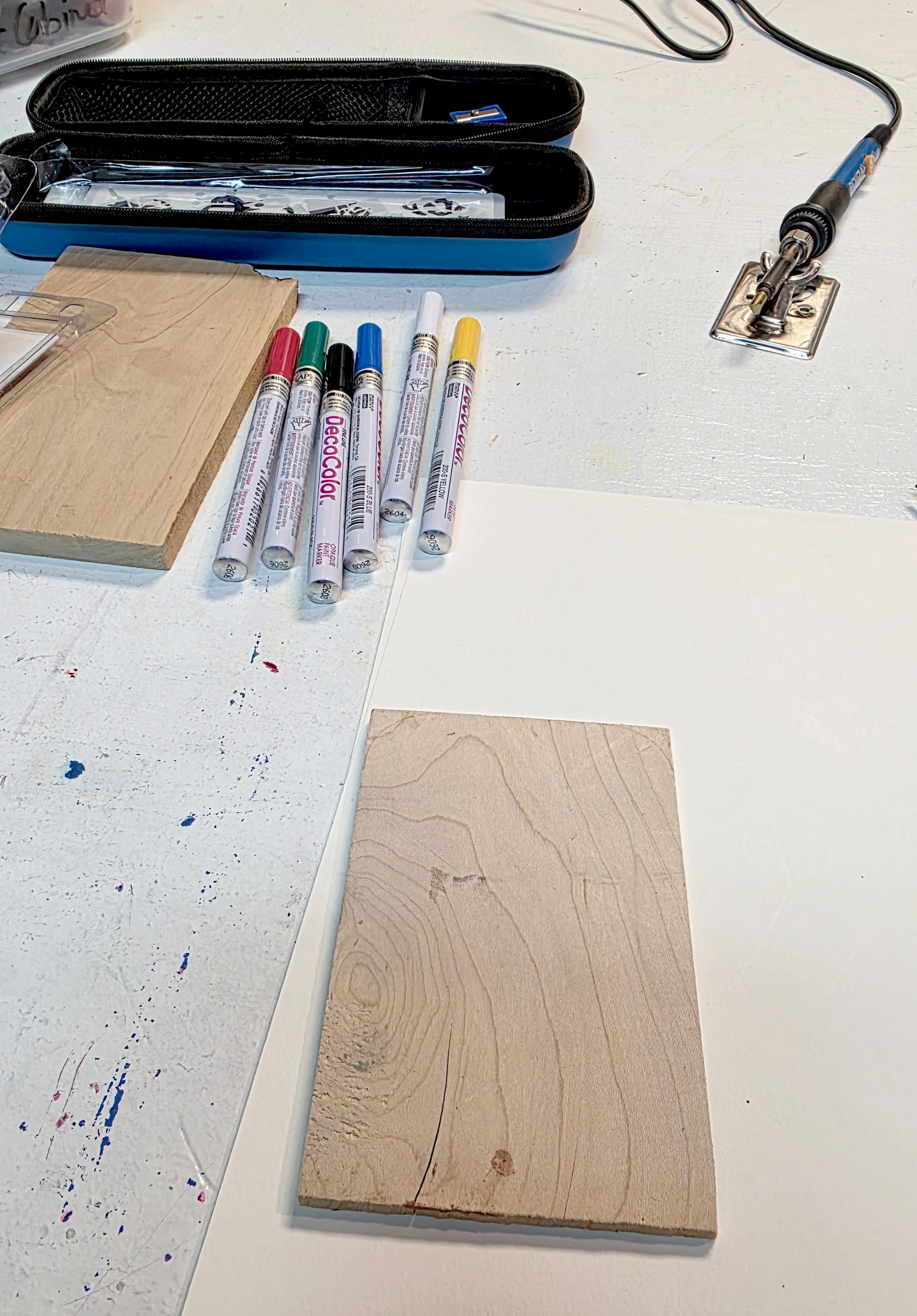
One of the first surfaces I wanted to experiment with was wood.
Thanks to Seth at MuniMo Woodworking and Design, I'd already been exploring wood burning with an assortment of hardwood offcuts.
And thanks to Lawrence at Marvy Uchida, I now had an assortment of colorful markers to experiment with, too.
So naturally, I started wondering: what happens if I combine them?
Wood burning creates dark marks directly in the wood, while paint markers allow me to introduce colors, highlights, and other details.
And I was curious about how the two techniques might work together.
A Little Ghost in the Woods
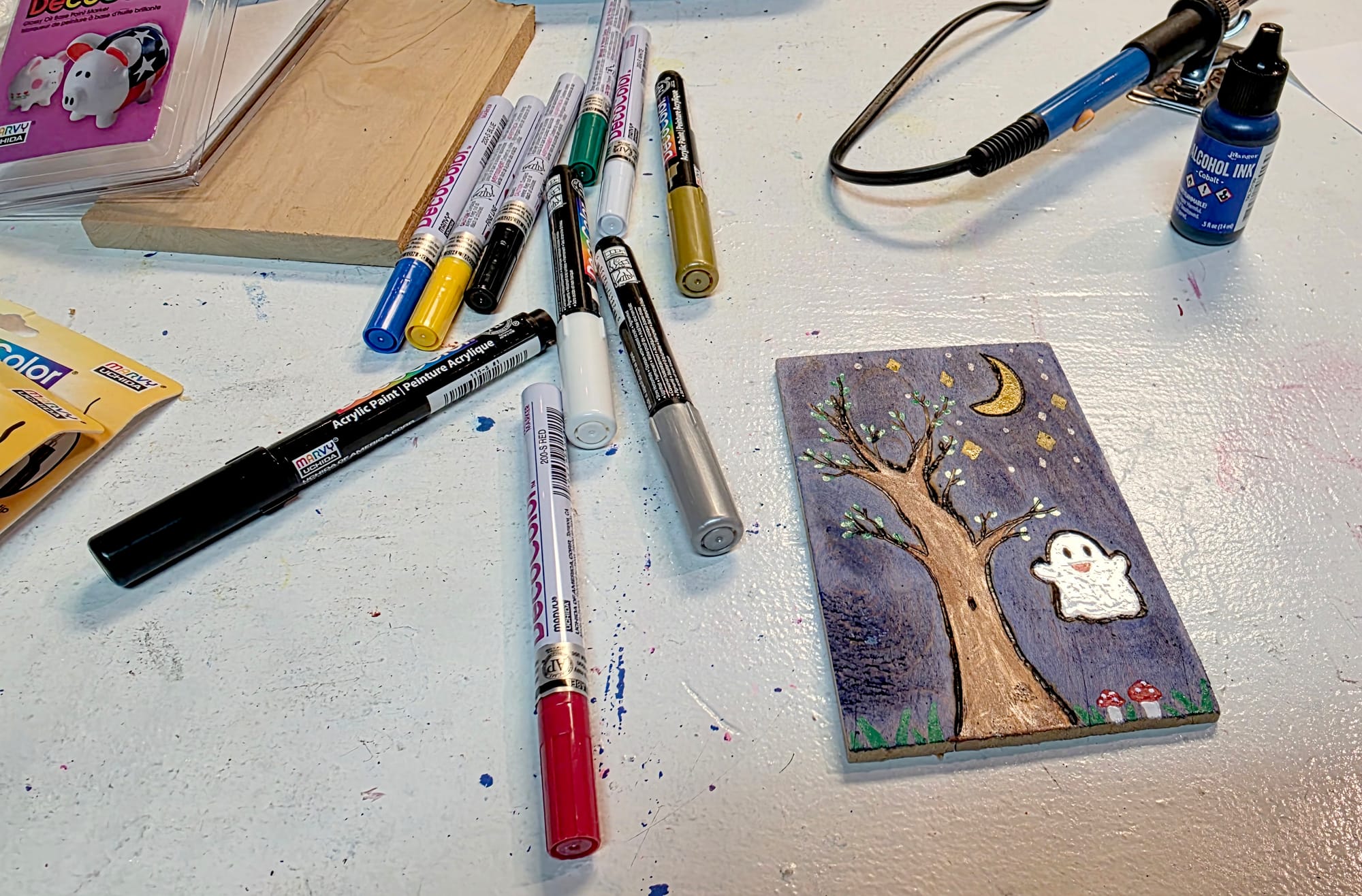
One of my Inktober experiments became a whimsical nighttime scene featuring a little ghost floating beside a tree.
I used a small rectangular piece of wood as my canvas, creating a scene with a branching tree, a crescent moon, twinkling stars, little mushrooms, and a friendly ghost.
Rather than completely covering the wood with paint, I incorporated the wood-burning technique I'd been learning.
The burned outlines helped define parts of the illustration, while the paint markers brought color and personality to the scene.
The nighttime sky became a deep, muted blue-purple, with a golden crescent moon and little stars scattered across it.
The tree retained a warm, earthy appearance, with delicate green details along its branches.
And, of course, the little ghost needed to stand out against the dark background!
I gave it a bright white body and a sweet little face, making it the playful focal point of the composition.
A few tiny mushrooms and patches of grass helped complete the scene.
I love how it turned out (and so does my art club)!
There's something about combining a slightly rustic wooden surface with a whimsical illustration that I find especially charming.
And it was fun seeing how a simple piece of leftover wood could become its own little world.
When Two Techniques Meet
One of the things I particularly enjoyed about this experiment was discovering how wood burning and paint markers could contribute different qualities to the same artwork.
Wood burning creates dark lines and marks that become part of the wooden surface itself.
Paint markers, on the other hand, allow me to introduce color in a way that wood burning alone can't accomplish.
And when I combine them, I can explore how those qualities interact.
The burned marks can help define shapes, create outlines, or introduce texture.
The paint markers can add colorful details, contrast, and a different kind of visual interest.
I don't necessarily have to choose one technique over the other; I can let them work together.
And that's one of the things I enjoy about mixed-media art.
Sometimes combining materials creates opportunities that wouldn't exist if I limited myself to using only one.
Letting the Wood Be Part of the Artwork
Another interesting aspect of drawing and painting on wood is that the surface already has its own characteristics.
Unlike a blank sheet of white paper, wood has grain patterns, natural color variations, and sometimes an uneven texture.
Those characteristics can influence the artwork.
In my little ghost scene, I enjoyed incorporating the natural warmth of the wood alongside the darker background and colorful details.
Something else I've noticed is that I haven't had much difficulty achieving the pigment coverage I wanted on the hardwood pieces I've tried so far.
I suspect the porous nature of the wood may be part of the reason, although I haven't tested enough different woods and markers to say for certain.
It's been encouraging, though, especially since I'm still relatively new to combining paint markers with wood burning.
Rather than thinking of the wooden surface as something that needed to disappear completely beneath the artwork, I could allow parts of its natural appearance to remain visible.
And that opens up some interesting possibilities:
- What if I used the grain to suggest the bark of a tree?
- Could the natural color of the wood become part of a landscape?
- What happens if I use only a few colors and leave most of the wood exposed?
- Or what if I take the opposite approach and cover the entire surface with a colorful illustration?
There isn't necessarily one right answer.
Each approach could lead to something different.
More Than a Substitute for Paper
What I'm discovering is that wood doesn't have to imitate paper to become an interesting drawing surface.
Its natural grain, color, and texture can contribute something of their own, especially when combined with wood burning and colorful illustrations.
I'm still exploring which markers and techniques work best on different pieces, but my little ghost scene has already given me plenty of reasons to keep experimenting.
Experiment #2: Paint Markers on Tile
After experimenting with wood, I wanted to explore something completely different: ceramic tile!
Thanks to Heather at Virginia Tile, I'd received a wonderful assortment of discontinued tile samples in different shapes, sizes, colors, and finishes.
And naturally, I started wondering what I could do with them.
After all, tile isn't exactly the first thing most people think of when choosing a surface for drawing, but why not?
It's sturdy, comes in all sorts of interesting colors and textures, and offers a completely different experience from working on paper or wood.
And with an assortment of paint markers available, I had plenty of opportunities to experiment.
From Flooring and Walls to Little Works of Art
One of the things I find fascinating about creative reuse is how a material can take on an entirely different purpose.
Ceramic tile is typically associated with floors, walls, backsplashes, and other architectural surfaces.
But a discontinued tile sample doesn't necessarily have to remain a sample.
It could become a little decorative artwork.
A colorful experiment.
A handmade gift.
Or something entirely unexpected.
And because Heather had shared an assortment of samples, I could try different designs without needing to purchase tiles specifically for art projects.
Once again, materials that were no longer needed for their original purpose became an opportunity to create something new.
 Jessica Carey
A Few Ghosts, Cats, and Colorful Experiments
Naturally, I couldn't resist making a few playful illustrations!
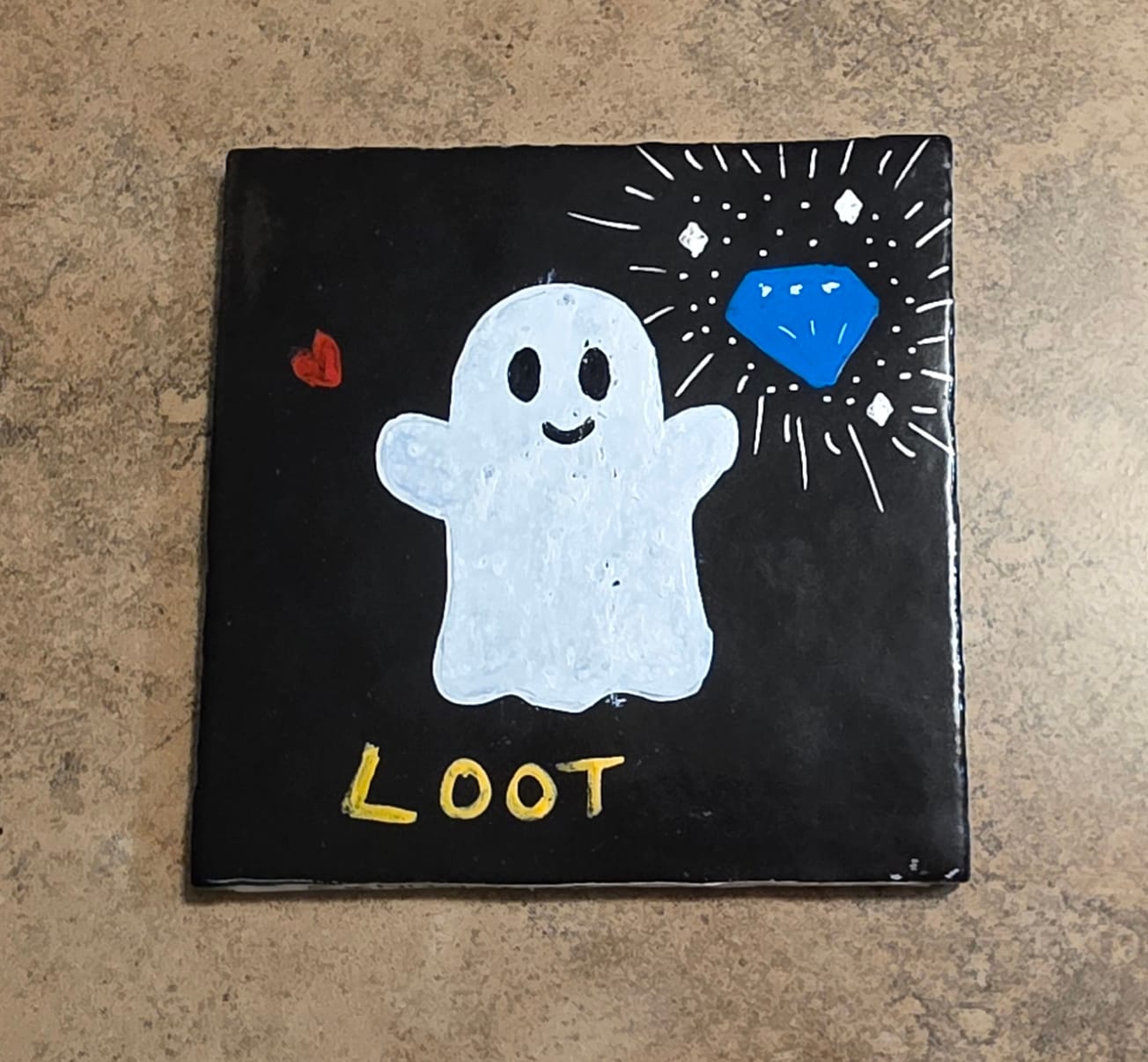
One of my experiments involved a little ghost on a dark tile, accompanied by the word LOOT.
I loved the contrast between the playful design and the dark background.
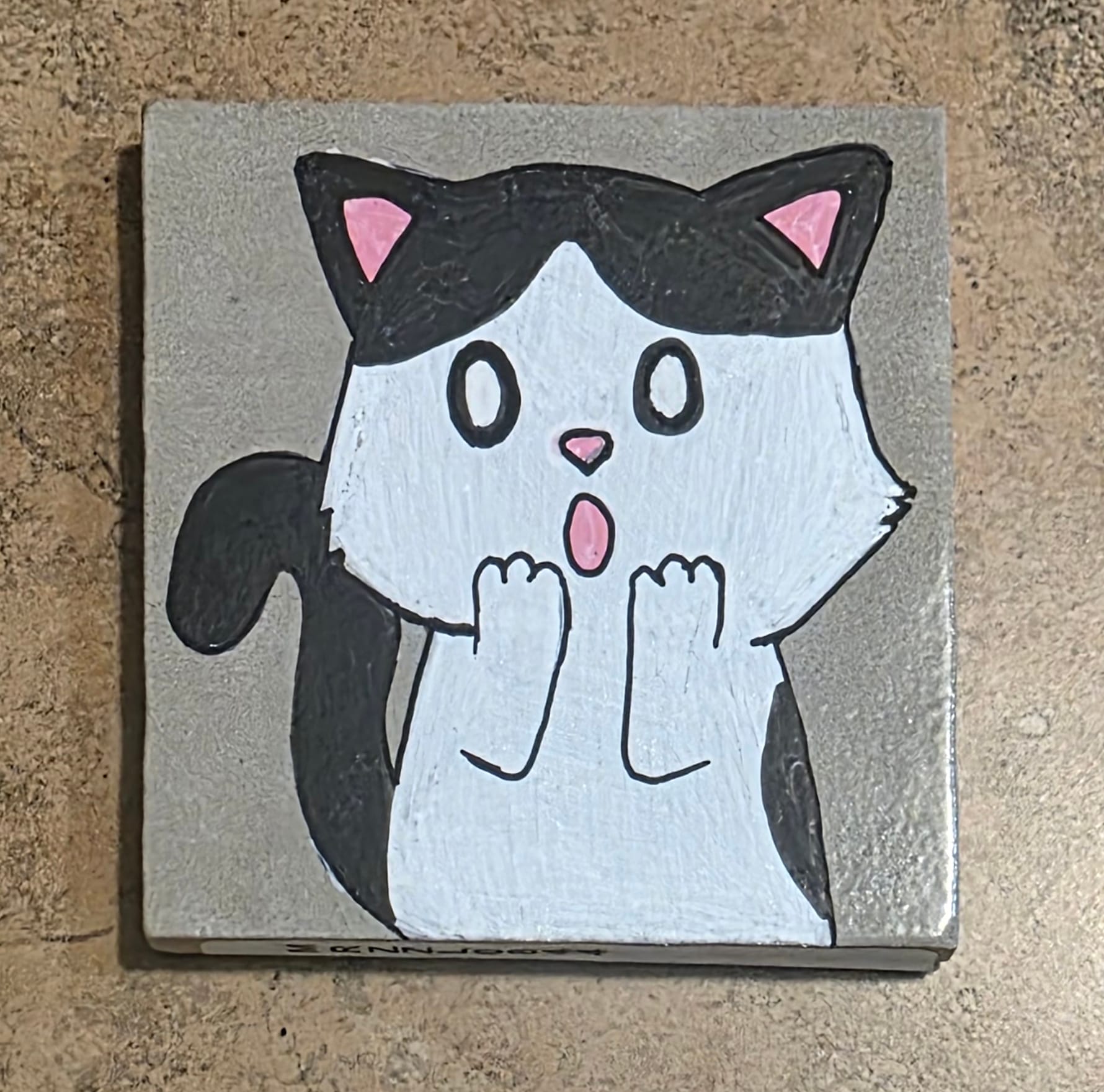
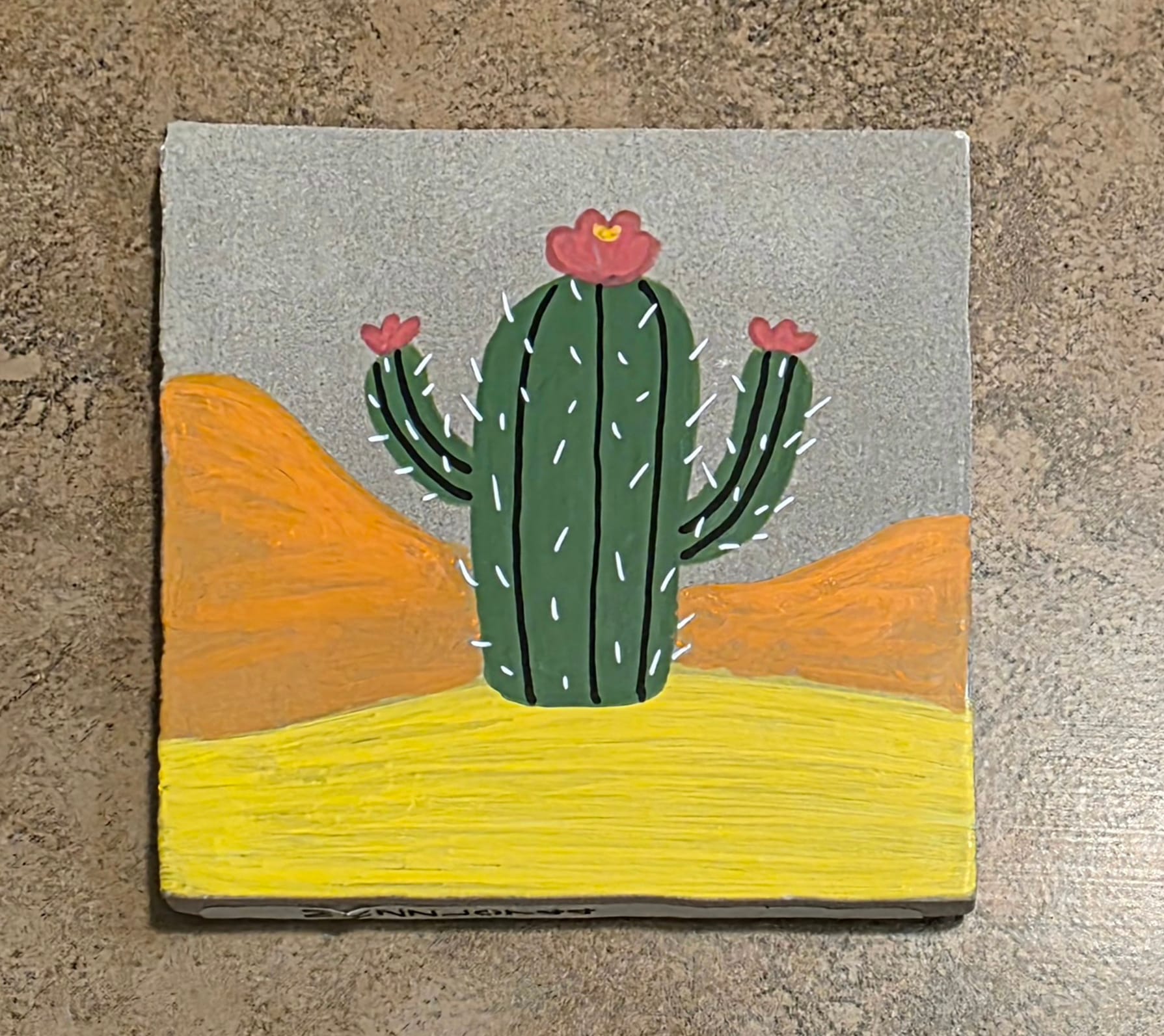
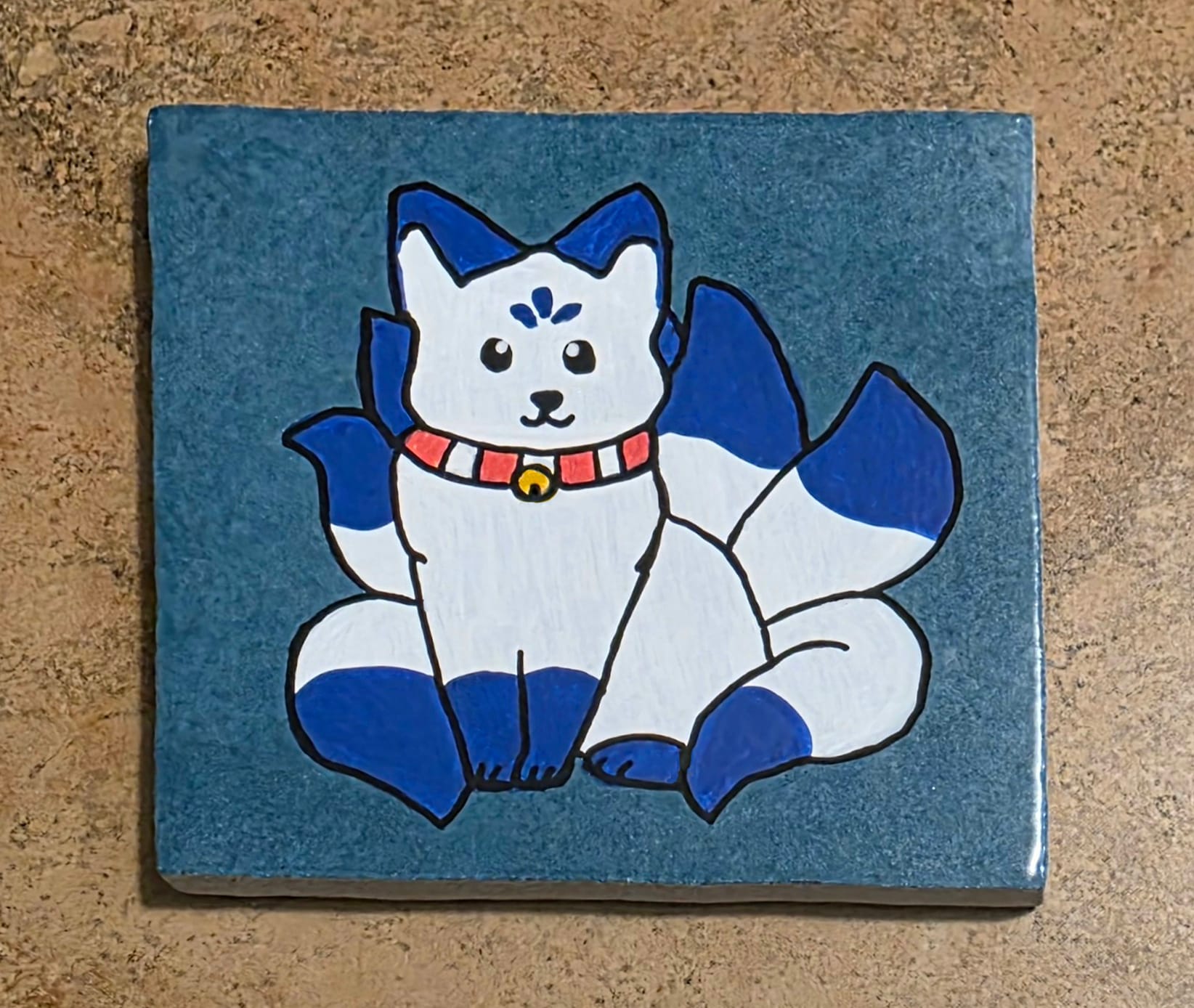
I also experimented with drawing cats on other tile samples, exploring how different illustrations might look against the existing tile colors and finishes.
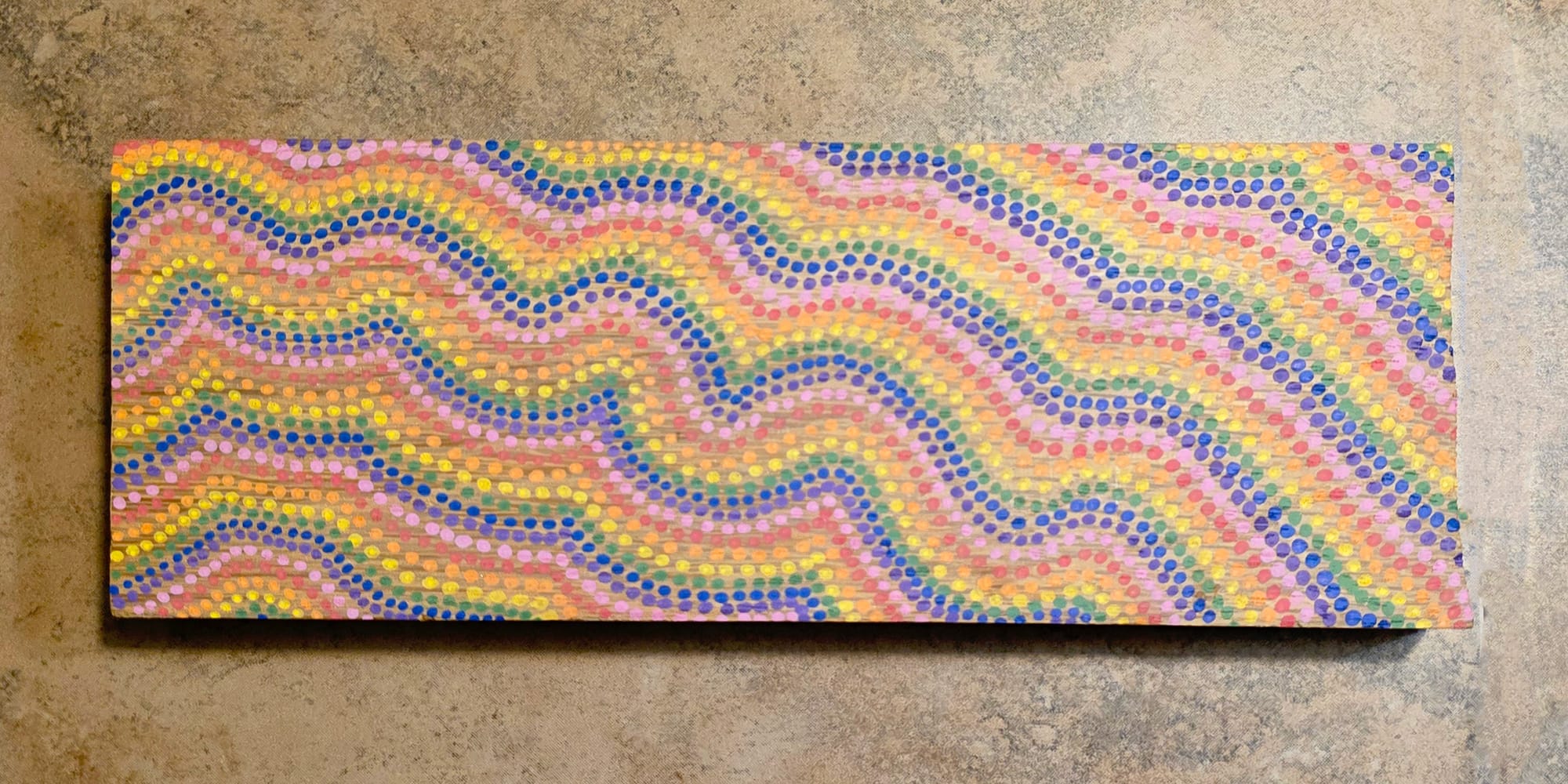
And then there was a more abstract experiment: a rectangular tile decorated with a colorful pattern of dots.
Rather than creating a recognizable illustration, I focused on arranging colors and marks across the surface.
It's interesting how changing the approach can make the same materials feel different.
A ghost illustration invites storytelling.
A cat drawing introduces personality.
And a collection of colorful dots becomes an opportunity to explore pattern, rhythm, and composition.
Same markers, and same general type of surface; completely different creative possibilities.
A Different Kind of Surface
One of the biggest differences between ceramic tile and wood is the surface itself.
Wood has natural grain and variations in texture, while ceramic tiles can have smooth, glossy finishes or more noticeable surface patterns.
And those characteristics raise some interesting questions about how paint markers behave.
- How easily do the markers move across a smooth tile?
- Does the paint sit on the surface differently than it does on wood?
- What happens when I add another color or layer?
- Do certain markers work better on particular finishes?
- How much does the existing color of the tile influence the finished design?
One thing I've already noticed is that achieving the coverage I want can sometimes require multiple layers of pigment.
For example, when creating one of my cat illustrations on a gray tile, I needed to apply several layers of white to make it stand out against the darker background.
That was an interesting contrast to my wood experiments, where I haven't experienced the same difficulty with pigment coverage so far.
But I also noticed something else: not all of the paint markers seem to provide the same level of coverage.
In my experiments so far, some of the ultra-fine paint markers have provided better coverage than some of the wider-tip markers.
I'm not sure exactly why.
It could involve differences in pigment formulation, opacity, paint flow, the amount of paint being deposited, or a combination of factors.
I wouldn't necessarily assume that the tip size itself is responsible.
But it's something I've noticed, and it gives me another variable to consider as I continue experimenting.
After all, the surface isn't the only thing that can influence the results.
Sometimes the particular marker matters just as much as what I'm drawing on.
I'm also curious about whether different tile finishes affect how well the paint adheres.
After all, getting a marker to leave a colorful mark on a surface isn't necessarily the same thing as making artwork that will hold up to handling, moisture, or everyday wear.
What About Durability?
This is one area where I still have some experimenting to do.
While I've enjoyed decorating the tile samples, I haven't completed controlled tests to determine how durable the different marker designs will be over time.
And that's an important distinction.
A piece that looks wonderful sitting on a shelf might need different preparation or protection if it's going to be handled frequently, exposed to moisture, or displayed outdoors.
I'm curious about whether certain tile finishes work better than others, whether different paint markers require different treatments, and whether an appropriate protective coating could help preserve the artwork.
But I don't want to assume something is permanent or weather-resistant simply because the marker can write on it.
For now, I'm approaching these pieces as decorative experiments while I continue learning about the materials.
Looking at Tile a Little Differently
What I particularly enjoy about this experiment is how it changes the way I look at something ordinary.
A tile sample might not seem especially exciting at first glance.
But give me a few colorful markers, an interesting surface, and the freedom to experiment?
Suddenly, I have all sorts of ideas!
And that's something I keep coming back to throughout The Materials Lab.
Sometimes creativity begins when we stop thinking about what a material was originally made for and start wondering what else it could become.
These little tile experiments have already given me plenty of ideas, and I'm excited to keep exploring different designs, finishes, and techniques.
Because who says a tile has to end up on a floor or wall?
Maybe it would rather become a little work of art!
Experiment #3: Paint Markers on Patterned Scrapbook Paper
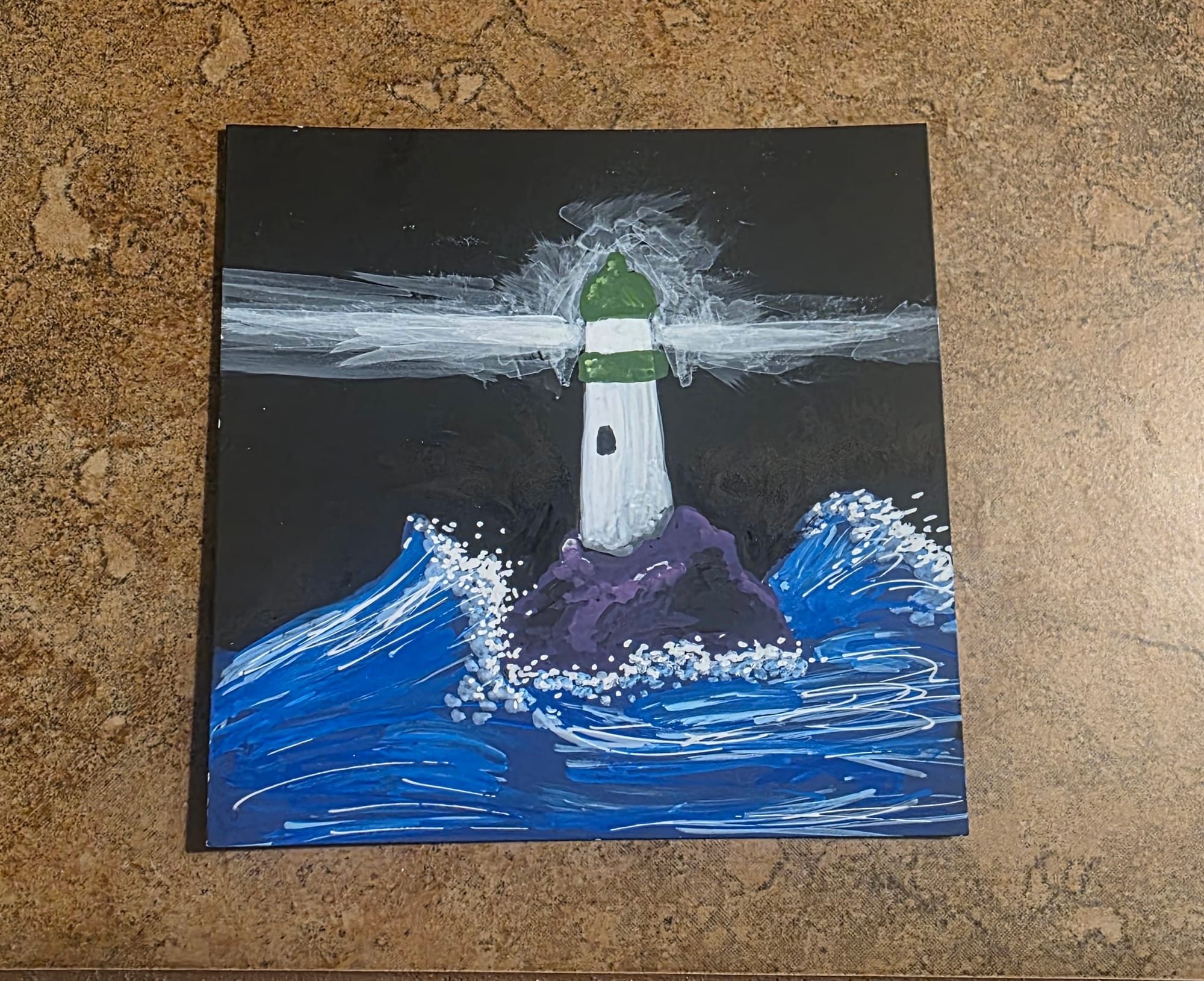
Okay, so I know what you're probably thinking: wait a minute, wasn't this experiment supposed to be about going beyond paper?
Well, yes!
But there's a difference between drawing on a blank sheet of paper and working with a surface that already has its own colors, patterns, and personality.
And that's what I wanted to explore next.
Starting With Something Already There
When I draw on a blank sheet of paper, I'm usually the one deciding where everything goes.
I choose the subject, the colors, the composition, and the details.
But patterned scrapbook paper introduces something different.
The background has already made some of those decisions for me.
It might have a repeating pattern, decorative illustrations, interesting colors, or a design that fills the entire page.
Instead of starting with a completely blank surface, I'm working with something that already has its own visual character, and I find that interesting!
Because suddenly, I'm not just asking what I want to draw.
I'm also asking how my artwork might interact with what's already there.
Working With the Pattern: A Kintsugi-Inspired Drawing
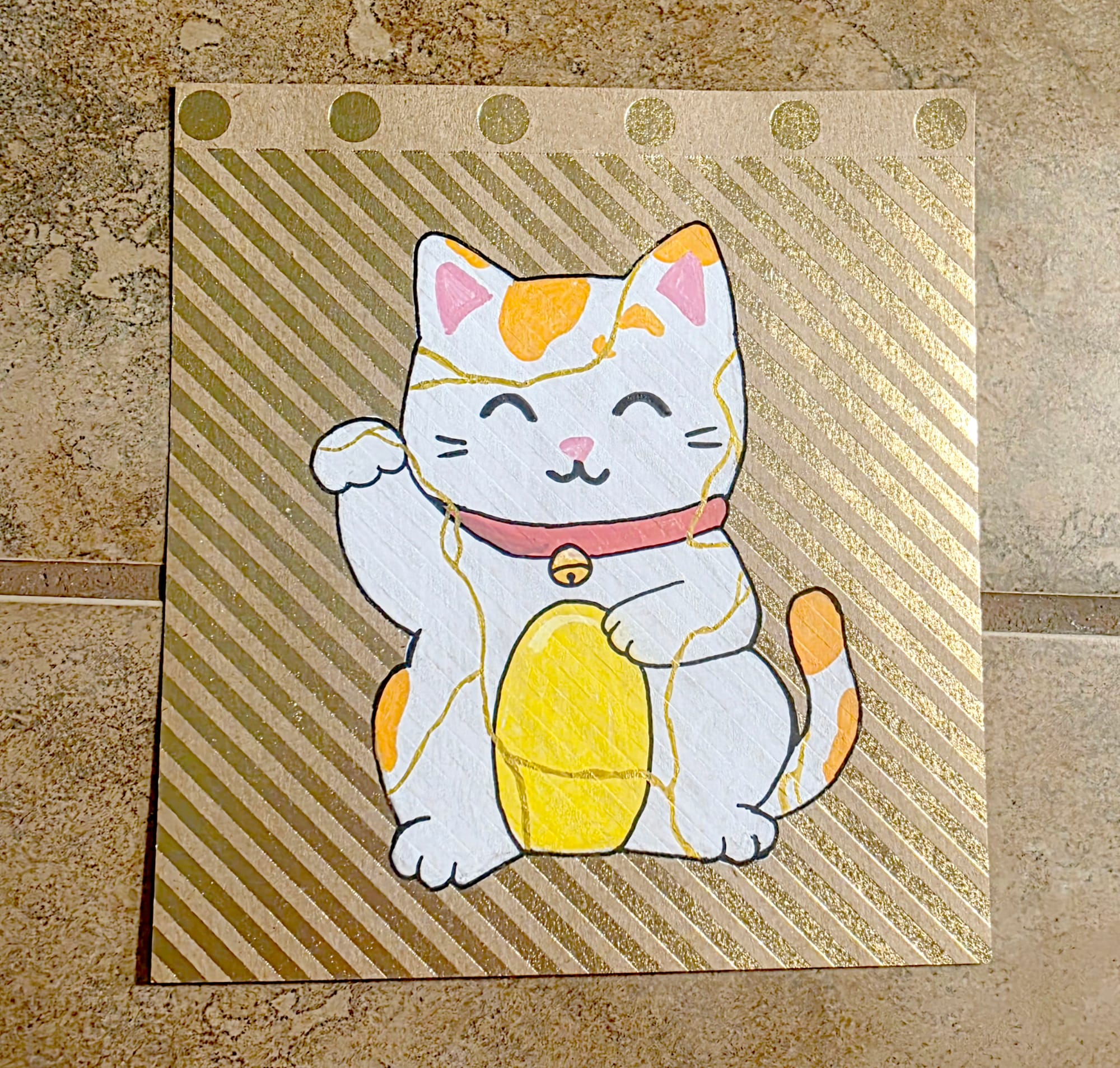
For one of my experiments, I decided to create a kintsugi-inspired drawing using the paint markers.
If you're unfamiliar with kintsugi, it's a Japanese art of repairing broken pottery using lacquer and precious metal powder, traditionally gold. Rather than hiding the cracks, the repairs become part of the object's appearance.
I love that concept, and I thought it would be interesting to explore it through drawing.
When selecting my scrapbook paper, I came across a design featuring gold foil stripes.
And I thought it would be a wonderful fit!
The metallic details tied in beautifully with the kintsugi theme, allowing the existing paper design to contribute something meaningful to the artwork.
Rather than simply drawing on top of a decorative background, I was choosing a background that complemented the subject itself.
An Interesting Discovery About Pigment Coverage
While working on the drawing, I noticed something interesting.
The gold foil stripes required more layers of pigment to achieve the coverage I wanted than the surrounding paper.
My suspicion is that the regular paper absorbed more of the pigment, while the metallic foil had a less absorbent surface.
But that's just a possible explanation, not something I've formally tested.
What I do know is that the two areas behaved differently when I applied the markers.
And that's exactly the kind of thing I find interesting about these experiments!
Even though I was working on a single sheet of scrapbook paper, the different finishes created different drawing experiences.
The finished piece still looks great, and I'm happy with how it turned out.
But it's something I'll keep in mind when working with metallic or other decorative papers in the future.
Sometimes changing the surface doesn't even require changing the entire sheet of paper; different finishes within the same material can introduce their own surprises!
A Different Kind of Creative Challenge
One thing I appreciate about experimenting with patterned surfaces is how they encourage me to approach composition differently.
With my kintsugi-inspired drawing, I wasn't starting with a blank background.
The gold foil stripes were already part of the design, and I deliberately chose them because they complemented what I wanted to create.
That meant thinking about how my drawing would interact with the existing pattern rather than treating the paper as an empty canvas.
And as I discovered, the metallic details didn't just influence the appearance of the artwork; they also affected how I applied the paint markers.
It's a wonderful reminder that even familiar materials can offer new creative experiences when we approach them differently.
Beyond the Blank Page
I think that's what makes this little experiment worth including alongside the wood and ceramic tile.
Wood introduces natural grain and texture.
Tile offers different finishes and surfaces.
And patterned scrapbook paper introduces something else entirely: an existing visual design that I can respond to and build upon.
Each surface presents different opportunities, and I don't necessarily need to decide which one is best.
I'm more interested in discovering what each one encourages me to try.
Because sometimes the most interesting creative possibilities aren't found in starting with a blank slate.
They're found in discovering what we can add to something that's already there.
 Jessica Carey
What Changes When the Surface Changes?
After experimenting with paint markers on wood, ceramic tile, and patterned scrapbook paper, I've been thinking about something: how much does the surface itself influence the creative process?
After all, I can use the same general type of art material on several different surfaces, but that doesn't necessarily mean the experience—or the finished artwork—will be the same.
Each surface brings something different to the table.
And that's part of what makes experimenting so interesting!
Same Markers, Different Possibilities
One of the things I've enjoyed about these experiments is seeing how different surfaces invite different creative approaches.
With hardwood, I can explore the natural grain, color, and texture of the material. I can leave parts of the wood exposed, add colorful illustrations, or combine paint markers with wood burning.
With ceramic tile, I can experiment with surfaces that have different colors, finishes, and textures. A smooth tile offers a different starting point from a piece of natural wood, and there's plenty more to discover about how well different markers adhere to those surfaces.
And with patterned scrapbook paper, I can respond to colors and designs that are already there. Instead of starting with a blank background, I can incorporate the existing pattern into the artwork.
They're all drawing surfaces, but they don't all encourage me to approach drawing in quite the same way.
And I find that fascinating.
What I've Noticed—and What I'm Still Exploring
Here's a little look at the different surfaces I've been working with and some of the questions I'm investigating.
|
Surface |
Observations so far |
Still exploring |
|
Hardwood |
Good pigment coverage on pieces tested; wood burning and
paint markers work together in the ghost scene |
Other wood species, marker formulations, long-term
durability |
|
Ceramic tile |
White needed several layers on gray tile; some ultra-fine
markers appeared more opaque than wider-tip markers |
Adhesion, finish differences, layering, protection |
|
Patterned scrapbook paper |
Gold foil stripes required more pigment layers than
surrounding paper |
Other metallic finishes, different papers, marker
compatibility |
|
Rocks (planned) |
Not yet tested |
Texture, coverage, preparation, outdoor durability |
Of course, this isn't a list of final conclusions.
Some of these are things I've already begun exploring, while others are questions I'd like to investigate further.
And that's okay!
The whole point of experimenting is to learn.
The Surface Can Become Part of the Design
Something I find particularly interesting is that the surface doesn't always have to disappear beneath the artwork.
Sometimes, it can actually contribute to the design.
A piece of wood might have an interesting grain pattern that could become part of a tree, landscape, or other illustration.
A colored tile might provide the perfect background for a bright, contrasting design.
A piece of patterned scrapbook paper might already contain shapes or colors that inspire an entirely new composition.
And a rock might have an unusual shape that suggests a particular creature, object, or scene.
Rather than always trying to make the surface look like something else, I can explore ways to work with the characteristics it already has.
Sometimes the material itself can help inspire what the artwork becomes.
What Works on One Surface Might Not Work on Another
Looking at these experiments side by side, I'm beginning to notice some interesting differences in how the markers behave.
But I'm also realizing that the surface itself might not be the only factor.
The color of the pigment, the marker formulation, the underlying surface color, and the material's finish could all influence the results.
And that leaves me with some interesting questions.
- Could absorbency help explain why the gold foil required more layers than the surrounding paper?
- Why did some of the ultra-fine markers appear to provide better coverage than the wider-tip markers?
- How much does the color of a surface influence the number of layers needed?
I haven't isolated these variables through controlled comparisons, so I don't want to jump to conclusions.
But these experiences have already taught me something useful: when a material behaves differently than expected, it's worth considering both the surface and the tools we're using.
And that's something I'll continue paying attention to as I experiment.
 Jessica Carey
There's More Than One Way to Make Art
I think this is one of the things I appreciate most about exploring different materials.
It's easy to fall into familiar routines.
We might reach for the same sketchbook, use the same tools, or approach a project in the same way we've approached dozens of others.
And there's nothing inherently wrong with that!
Familiarity can be comfortable, and practicing the same techniques can help us develop our skills.
But sometimes, changing just one thing can make the creative process feel new again.
- What happens if I use a different surface?
- What if I combine two techniques?
- What if I work with an existing pattern instead of a blank background?
- What if I let the material help determine what I create?
Suddenly, there are all sorts of new possibilities to explore.
And I don't have to abandon the materials or techniques I already enjoy to discover them; sometimes I just need to give them somewhere new to go.
What Else Can They Draw On?
After experimenting with paint markers on wood, ceramic tile, and patterned scrapbook paper, I've started looking at other materials a little differently.
Because now, whenever I come across an interesting surface, I find myself wondering: could I draw on that, too?
And if I could, what might happen?
That's one of the things I love about experimenting with art materials.
One discovery often leads to another question.
And that question leads to another idea.
Before I know it, I've got an entirely new collection of possibilities to explore!
Taking the Experiment Outdoors
One thing I've been wanting to try is painting rocks.
I've seen so many charming examples of painted rocks over the years, from colorful patterns and tiny landscapes to adorable little creatures.
And I think it would be fun to experiment with creating some of my own!
Unlike a rectangular piece of paper or a flat tile, rocks come in all sorts of interesting shapes, sizes, colors, and textures.
Some are relatively smooth.
Others have bumps, grooves, or irregular surfaces.
And sometimes, the shape of a rock might even suggest what it could become.
A rounded stone might inspire a little animal.
An unusually shaped rock might become a whimsical character.
Or a smooth, flat stone could provide a wonderful surface for a miniature landscape.
I love the idea of letting the material help inspire the artwork rather than deciding everything in advance.
Of course, there are also some practical questions I'd want to explore.
- How well will the markers work on different types of stone?
- Will some surfaces need preparation before painting?
- If I wanted to display a painted rock outdoors, what would be needed to protect it from moisture, sunlight, and changing weather conditions?
Those are all things I'd like to learn more about.
For now, rock painting is still on my list of future experiments, but I'm excited to give it a try!
Looking Beyond Traditional Art Supplies
The more I experiment, the more I realize how many potential drawing surfaces exist beyond a traditional sketchbook.
- Wood scraps
- Tile samples
- Stones
- Cardboard
- All sorts of other materials that might otherwise be overlooked
Some surfaces might be wonderful for creating small decorative pieces.
Others might work better as components in larger mixed-media projects.
And some might turn out to be less suitable for particular markers or techniques.
But that's part of what I want to discover.
I'm not necessarily looking for one perfect surface that works for everything.
I'm interested in exploring what different materials have to offer.
And I especially appreciate that many of these possibilities can come from materials that are already available, rather than requiring an entirely new collection of supplies.
 Jessica Carey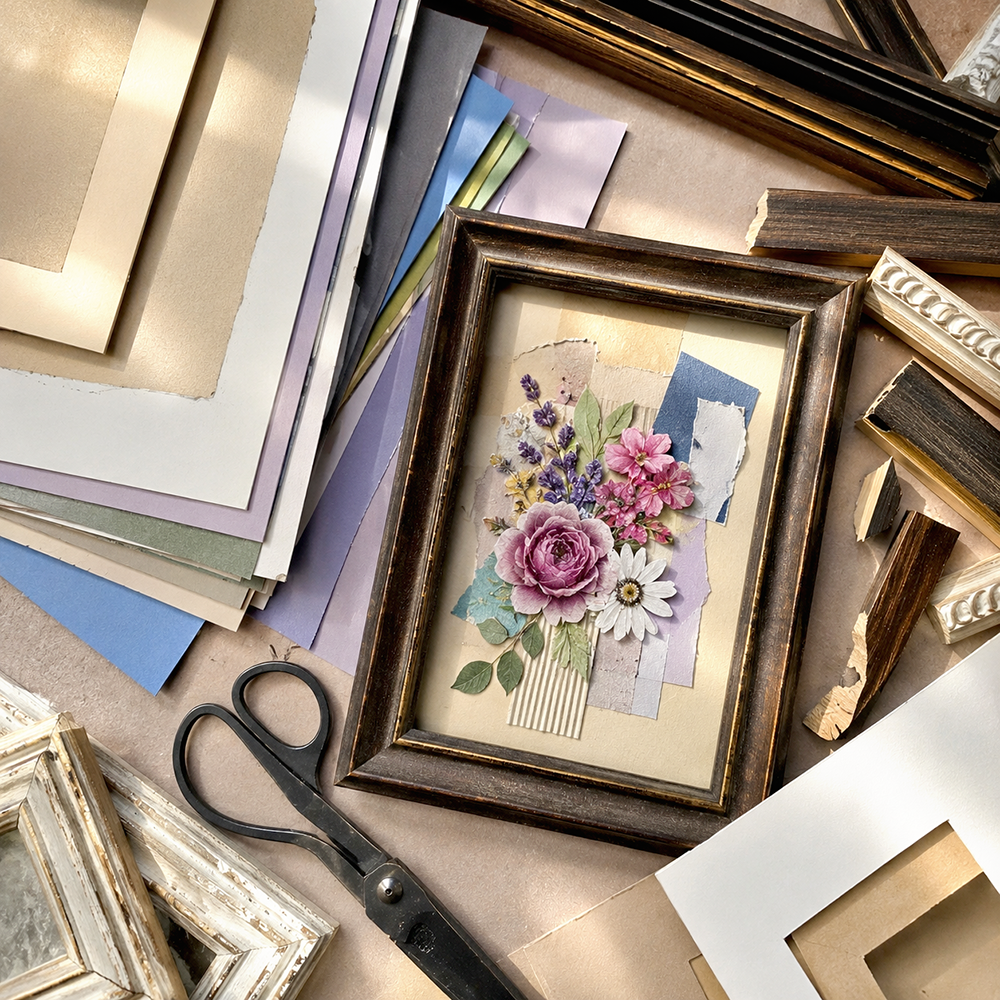
Following the Possibilities
One thing I've noticed is that each experiment seems to inspire another.
Wood burning made me curious about adding color.
Exploring paint markers on wood encouraged me to try them on tile.
And now I'm looking forward to seeing what happens when I introduce rocks and other unexpected surfaces.
I don't know exactly where these experiments will lead, and that's part of the fun.
For now, I'm enjoying following the ideas as they come and discovering what else these materials might do.
Try It Yourself: Change the Surface
Have a favorite drawing tool? Try using it on a different surface!
Choose a clean, suitable material you already have, and test a small, inconspicuous area first.
Pay attention to how the tool feels, how the color appears, and whether the material behaves differently than you're used to.
You don't need to create a masterpiece.
Just see what happens when you change one thing.
And remember to check whether your materials are compatible with the surface you're using, especially if you're hoping to create something permanent or suitable for outdoor display.
A Thank-You to Lawrence, Heather, and Seth
Before wrapping up this experiment, I want to take a moment to recognize three people whose generosity helped make it possible.
Because while I've been having all sorts of fun exploring different surfaces, I wouldn't have had nearly as many opportunities to experiment without the materials they shared.
Thank You, Lawrence!
First, a huge thank-you to Lawrence at Marvy Uchida for generously providing an assortment of markers for me to experiment with!
Having access to different types and colors of markers has opened up so many creative possibilities.
Rather than limiting myself to traditional drawing paper, I've been able to explore how the markers work on wood, ceramic tile, patterned scrapbook paper, and potentially other surfaces in the future.
And it's been so much fun!
I especially appreciate having the opportunity to try materials in different ways, discover what I enjoy working with, and share those experiences with others.
Thank You, Heather!
I'd also like to thank Heather at Virginia Tile for generously sharing an assortment of discontinued tile samples!
I love finding creative possibilities in materials that might otherwise be overlooked.
And these samples have given me an opportunity to explore something I wouldn't necessarily have thought to purchase specifically for drawing.
From playful little ghosts and cats to colorful patterns, it's been fun seeing how ordinary tile samples can become little works of art.
And I'm looking forward to discovering what else I might create with them!
Thank You, Seth!
And another big thank-you to Seth at MuniMo Woodworking and Design for generously sharing such a wonderful assortment of hardwood offcuts!
I've already been having a fantastic time exploring wood burning with these pieces, and experimenting with paint markers has introduced another layer of possibilities.
It's been especially exciting discovering how different techniques can complement one another.
And because Seth provided such a variety of wood pieces, I've had opportunities to explore different shapes, sizes, and creative approaches.
I'm incredibly grateful for his generosity and all the possibilities these materials have opened up.
When Generosity Meets Curiosity
Something I particularly appreciate about this experience is how materials from different sources can come together in unexpected ways.
Lawrence provided the markers.
Heather provided the tile samples.
Seth provided the hardwood offcuts.
And through experimenting, I've been able to explore combinations that might not have occurred to me otherwise.
A marker intended for drawing and decorating becomes part of a mixed-media wood-burning project.
A discontinued tile sample becomes a tiny illustrated artwork.
A piece of leftover hardwood becomes a little nighttime scene.
And each experiment inspires another question: what else could I try?
I think that's one of the wonderful things about sharing creative resources.
A material doesn't have to remain limited to its original purpose.
And an act of generosity can create opportunities that extend far beyond a single project.
Sometimes, all it takes is someone willing to share what they have and someone curious enough to explore what it might become.
The Experiment Continues
So, what happens when we change the surface instead of changing the medium?
Well, I'm still finding out!
But I've already discovered that changing what I draw on can change how I approach the entire creative process.
Wood has given me opportunities to combine wood burning with colorful illustrations, with encouraging results from the markers I've tried so far.
Ceramic tile has shown me how much the background color and choice of marker can influence pigment coverage.
And my kintsugi-inspired drawing demonstrated how even the different finishes on a single sheet of scrapbook paper can affect both the artistic design and the drawing experience.
And rocks? Well, those are still waiting for their turn!
What I love most is that I don't have to settle on one favorite surface or one particular way of creating.
I can experiment with different materials, combine techniques, and follow whatever ideas catch my attention.
Some experiments might become finished artworks.
Others might lead to new questions or ideas for future projects, and that's part of the fun because creativity doesn't always require an entirely new set of supplies.
Sometimes, it simply requires looking at the materials we already have and asking a different question: what if I tried drawing on this instead?
And with so many interesting surfaces still waiting to be explored, I have a feeling I'll be asking that question for quite a while.
Until next time, keep creating, keep experimenting, and don't be afraid to try something unexpected!
Want even more content about creativity and art?
Be sure to check out all of our creative chronicles!
If you'd like to see examples of my work, you can find some of my art and creations at Redbubble and Gumroad!
Looking to learn more about my recent journey?
Check out some of these articles:
-Hidden Gems for St. Louis Artists
-Hidden Gems for Autistic & Neurodivergent Adults
-Learning What Love Was Supposed to Feel Like
-I Wasn't Broken--I'm Burned Out
-What Chronic Autistic Burnout Actually Feels Like
-Building a Life from What Remains
 Jessica Carey