
Sometimes an art material begins its life as an art supply.
Other times, it begins as something somebody else no longer needs.
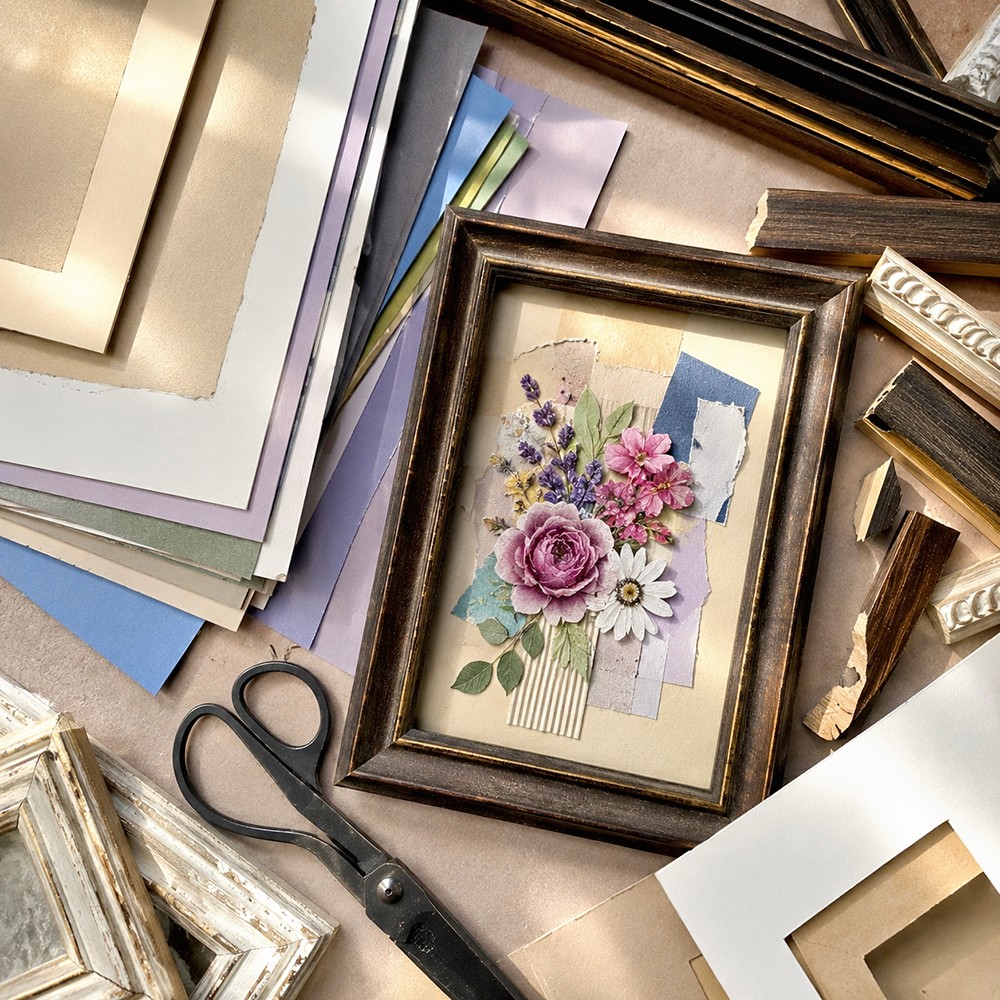
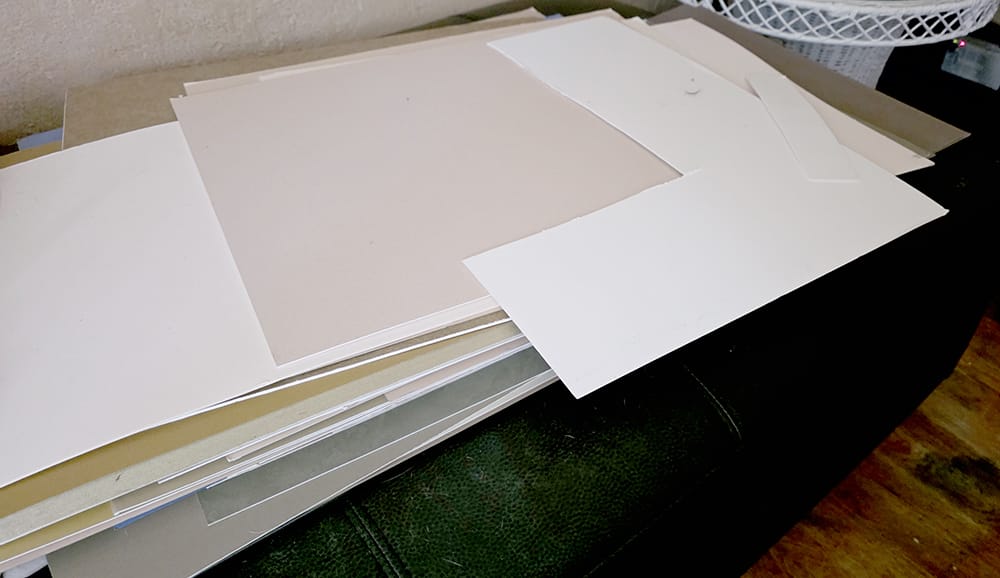
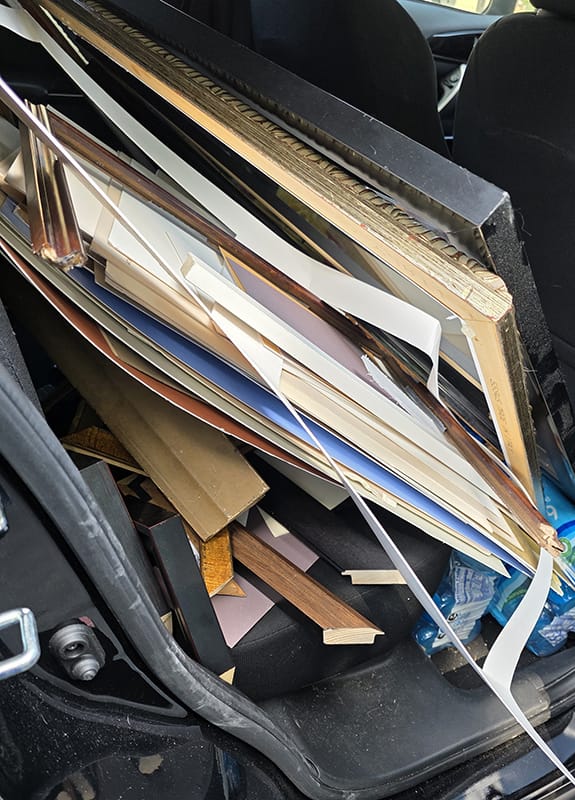
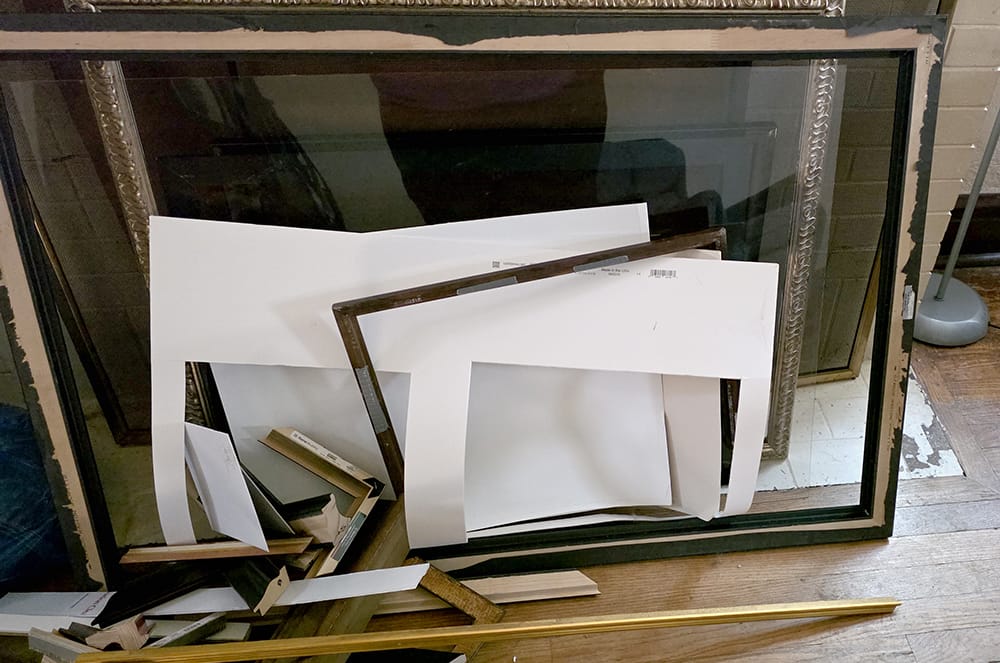
Recently, Norton's Fine Art & Framing generously let me collect materials that otherwise had nowhere particularly useful to go: scraps of mat board, pieces of framing material, and old frames customers had left behind.
To a framing shop, some of these are leftovers.
To an artist?
They're possibilities.
And when I saw the amount and variety of material waiting there, the familiar Materials Lab question immediately came to mind: what else can it do?
 Jessica Carey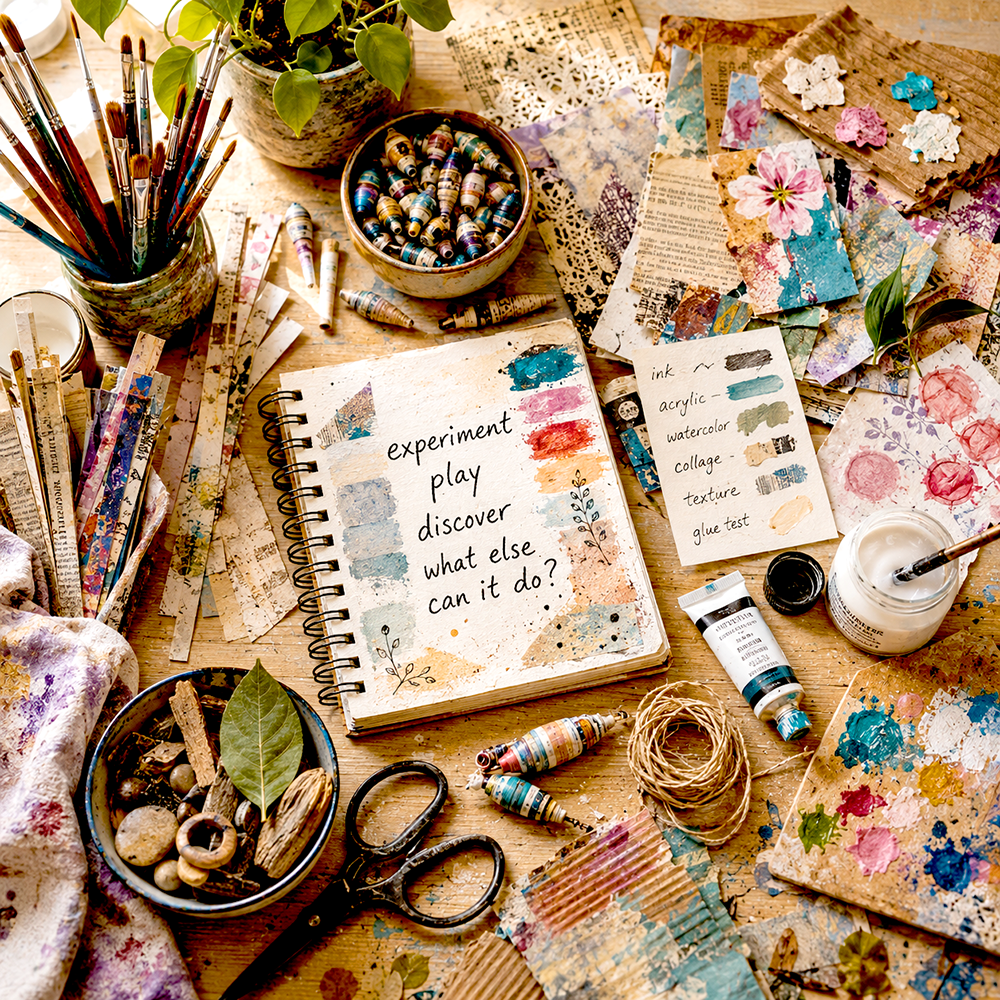
One Person's Scrap Is Another Artist's Supply
There is something particularly satisfying about creative reuse because the material doesn't need to be manufactured, purchased, or even originally intended for what it eventually becomes.
It already exists.
The challenge—and the fun—is figuring out what you can do with it.
The Norton's haul included large and small pieces of mat board in different colors and thicknesses, moulding offcuts, and frames in a range of sizes and styles.
Some pieces are immediately usable.
Others will probably require a little imagination.
That is exactly what makes them interesting.
Mat board alone could become a surface for drawing, painting, collage, printmaking, bookmaking, dimensional construction, handmade frames, or countless experiments I haven't discovered yet.
Frame scraps could become borders, assemblage elements, small structures, or something completely unrelated to framing.
And instead of those materials becoming waste, they get another life.
 Jessica Carey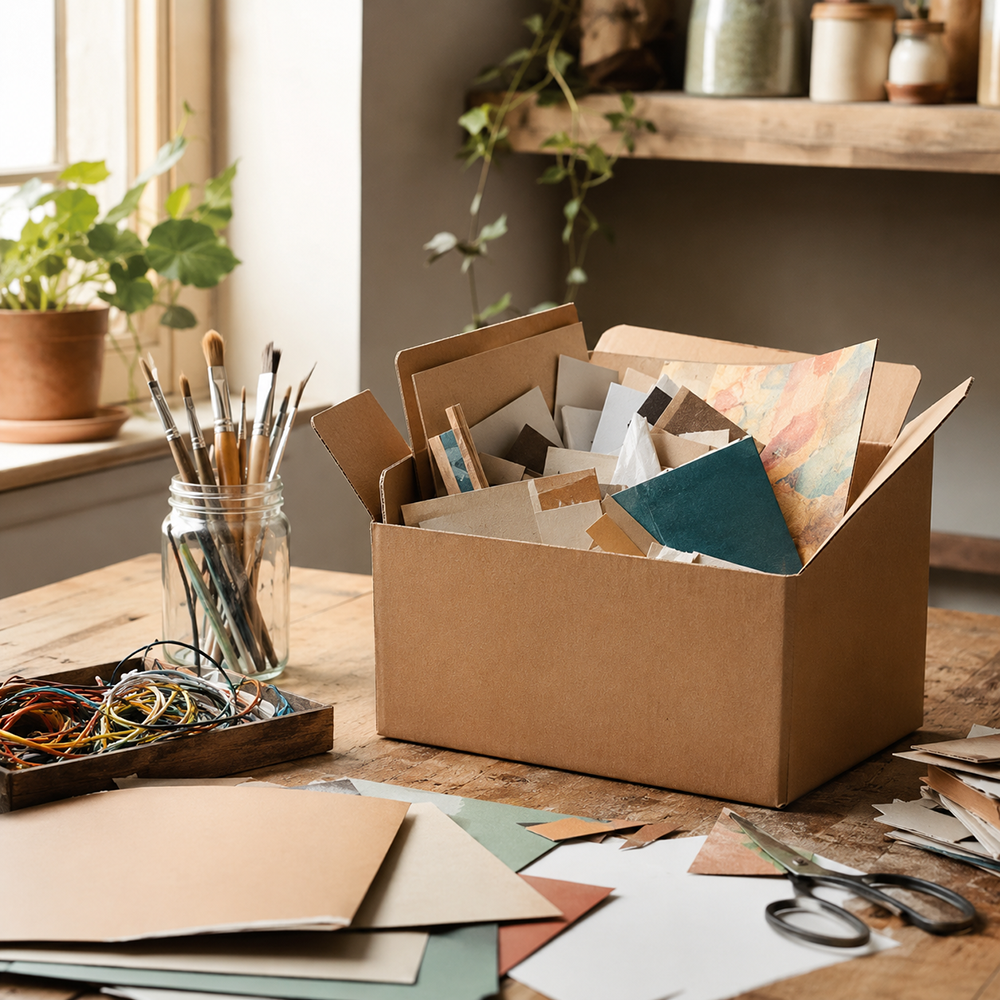
The First Experiment: An Art Party
A few days after picking up the materials, two artist friends and I got together for an informal art night.
We cooked dinner, put on music, spread out our supplies, and spent about three hours simply making things together.
There was no assignment. No requirement that anybody produce something impressive—or even finish anything.
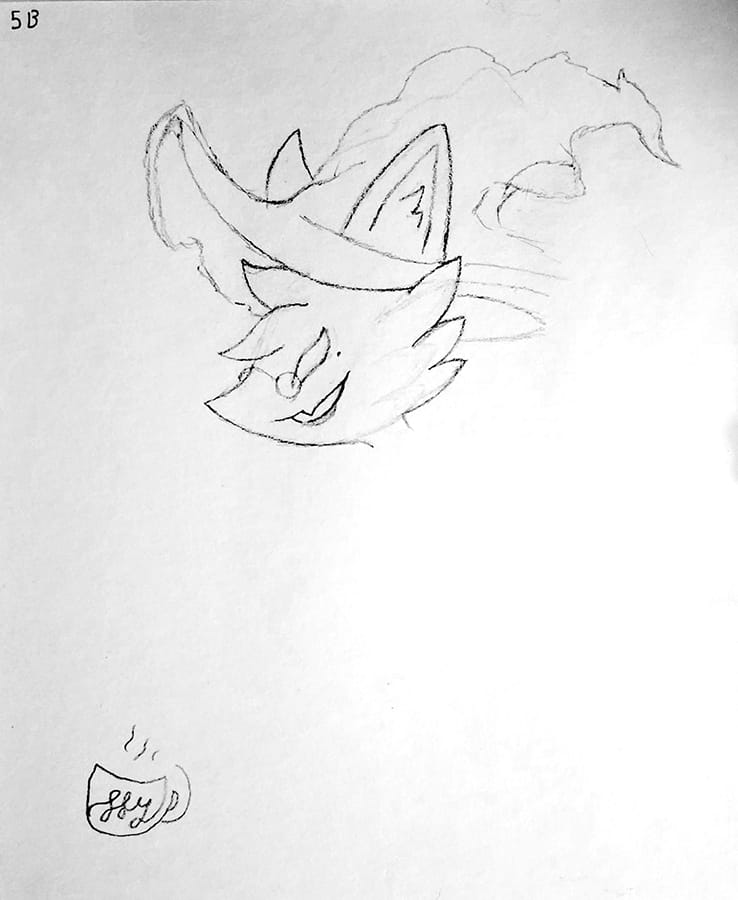
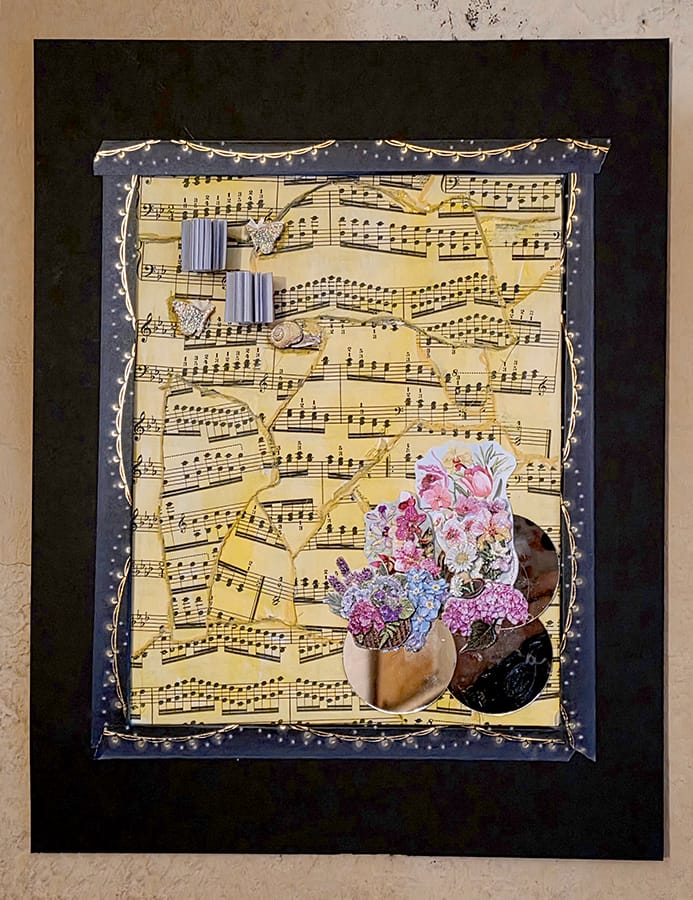
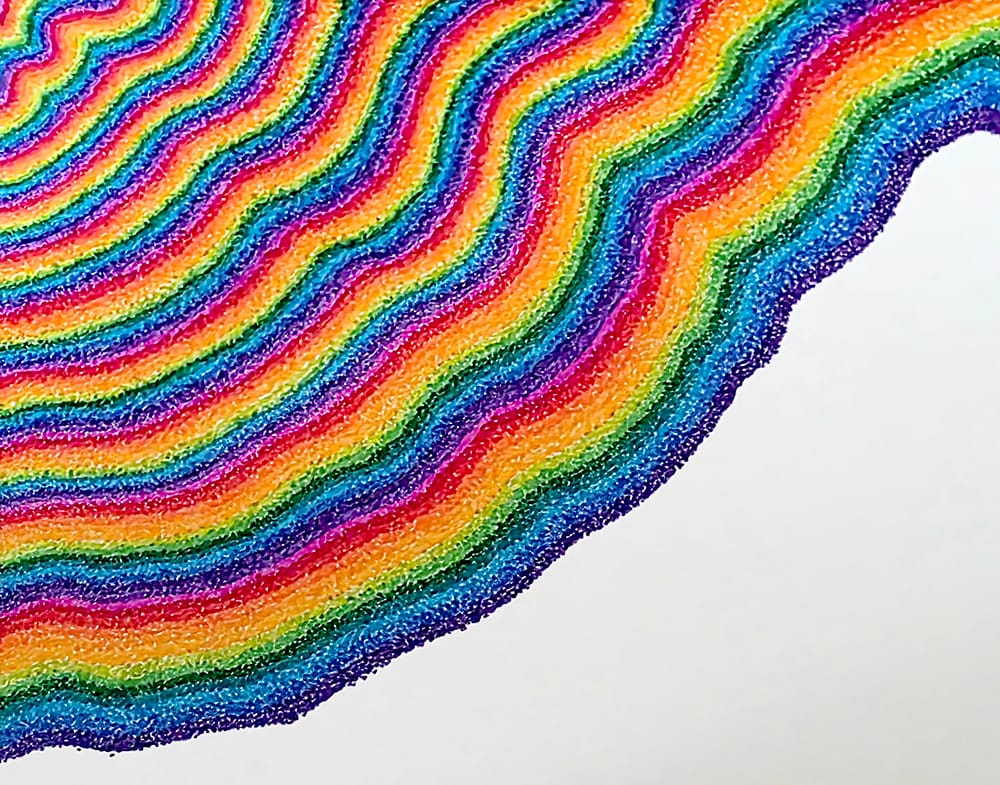
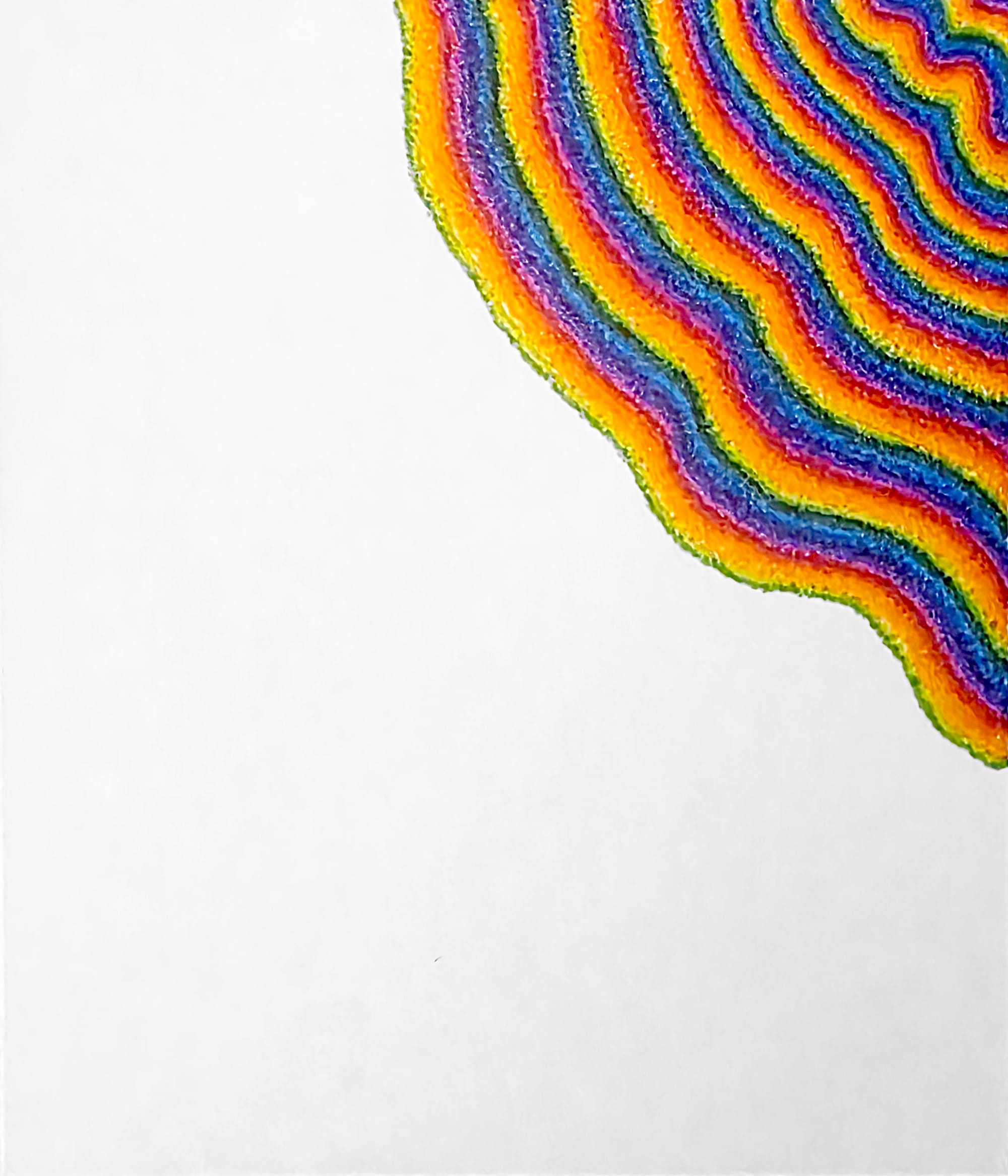
And almost immediately, the donated mat board went in three different directions.
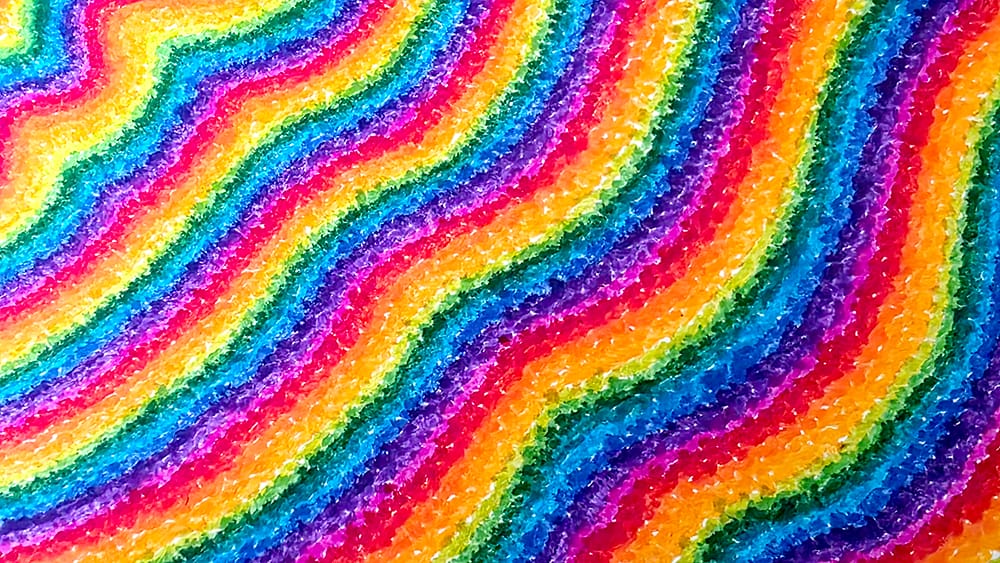
I started a colorful stippled/dot-art piece.
One friend began drawing.
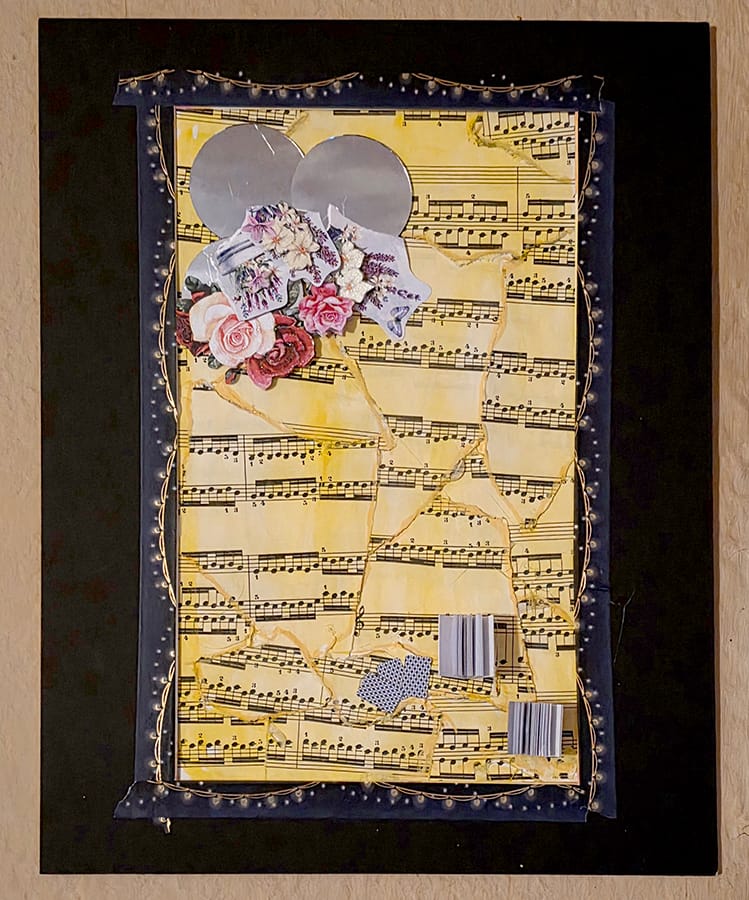
Another created mixed-media collages and even cut additional pieces of mat board to create frames around them.
Same discarded material. Three artists. Three completely different possibilities.
That may be one of my favorite things about creative reuse: the material doesn't dictate what it has to become.
Someone just has to look at it and ask a different question.
Free Materials Can Create Freedom to Experiment
There is another part of this experiment that I don't want to overlook: these materials were free.
Art supplies can be expensive, and when money is tight, experimentation can begin to feel like a luxury.
A beautiful sheet of expensive paper can carry an invisible pressure:
- Don't waste it.
- Don't mess it up.
- Make something worthy of the material.
Scrap materials can change that equation.
It's easier to cut something apart, test an unfamiliar technique, follow a strange idea, or discover that something simply doesn't work when you're not worried about ruining a supply you can't afford to replace.
And if an experiment fails?
You still learned something from a material that might otherwise have been discarded.
Creative reuse doesn't merely keep useful materials out of landfills or save money.
It can make creativity more accessible—and create permission to play.
 Jessica Carey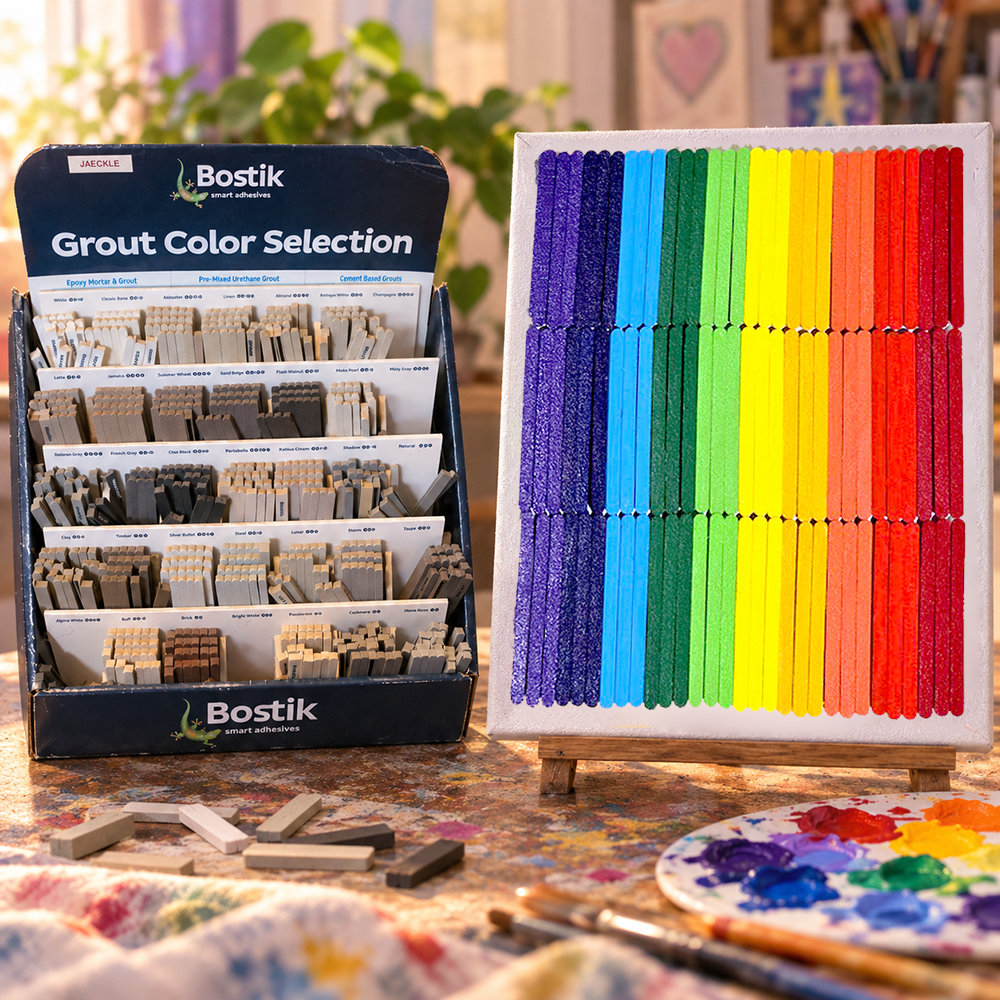
When Waste Becomes Community
Perhaps my favorite part of this particular Materials Lab experiment isn't actually the mat board.
It's the relationship behind it.
Ty Norton didn't simply let me take a pile of scraps.
He kindly offered to continue setting usable remnants aside so that I can come back periodically and give more of them another life.
That is such a simple arrangement, but imagine what could happen if more communities did this.
A framing shop has mat board and moulding scraps.
A sign shop has vinyl and acrylic offcuts.
An upholsterer has fabric remnants.
A printer has paper.
A cabinetmaker has wood.
An artist has ideas.
One person's trash really can become another person's treasure—but only if the two people find each other.
That is where creative reuse becomes something bigger than recycling. It becomes collaboration.
 Jessica Carey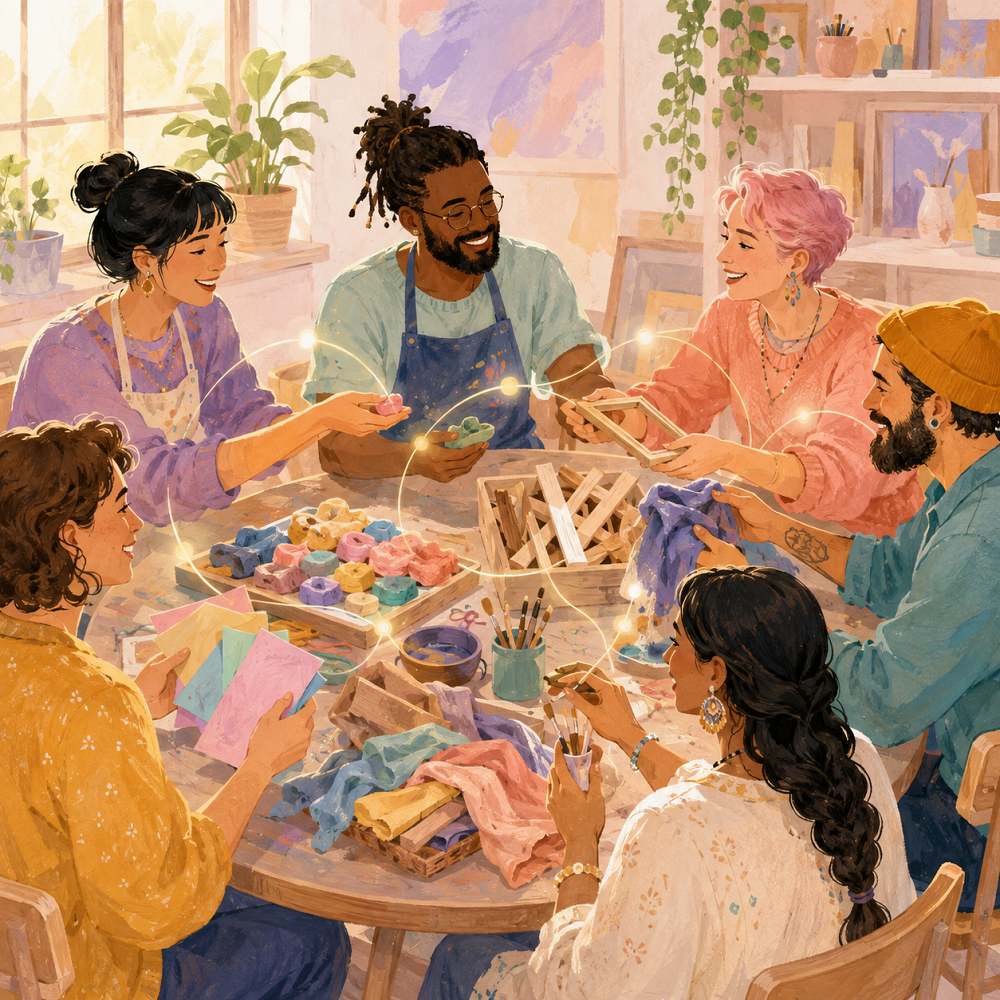
Thank You, Norton's
I want to give a particularly heartfelt thank-you to Norton's Fine Art & Framing and to Ty for their generosity.
It would have been easy to regard these remnants simply as waste and throw them away.
Instead, Norton's was willing to put them into the hands of local artists who could actually use them—and even offered to continue doing so.
That kind of kindness deserves to be recognized.
I'm only beginning to discover what these materials might become, and I'll continue adding experiments as I work my way through them.
For now, though, a pile of framing scraps has already become an evening of possibility, three artists creating together, several new works of art, and the beginning of an ongoing community connection.
Not bad for something headed toward a landfill.
So here's the Materials Lab question: what else can it do?

Materials Lab Notes: Scrap Mat Board
What it is: A thick paper-based board normally used around artwork inside a frame.
What I noticed: It's sturdier than ordinary drawing paper but still lightweight and easy to work with. Scraps come in unpredictable sizes and colors, which can become part of the experiment rather than something to work around.
So far we've tried: Stipple/dot art, drawing, collage, and handmade framing.
Still to try: Painting, cutting and layering, dimensional construction, bookmaking, weaving, and mixed-media experiments.
Best feature so far: Because these were scraps, experimenting with them felt remarkably low-pressure.
What Can Scrap Mat Board Become?
Once we stop looking at something only in terms of what it was made to do, we can start asking what else it could do.
Mat board is normally something we encounter as part of a finished frame.
It surrounds and helps present the artwork rather than becoming the artwork itself.
But take it out of that context, and suddenly it becomes a surprisingly versatile art material.
Depending on the size, thickness, color, and condition of the scraps you find, you might use them for:
- drawing, doodling, or illustration
- painting and mixed-media experiments
- collage bases
- handmade frames and borders
- cut-paper or layered artwork
- book or journal covers
- signs, tags, bookmarks, or ornaments
- stencils and templates
- small sculptural or dimensional constructions
- miniature architecture
- weaving experiments or handmade looms
- mosaic-like compositions made from smaller pieces
- surfaces for testing unfamiliar materials and techniques
And I'm sure that list isn't remotely complete.
That's part of the point.
A scrap doesn't necessarily need a predetermined purpose before it becomes useful.
Sometimes the material itself can be the beginning of the idea.
What About the Frame Scraps?
The mat board was the first material we reached for, but it was only part of what Norton's gave me.
There are also old frames and assorted pieces of frame moulding waiting to be explored.
I don't know exactly what I'm going to do with all of them yet.
And for the Materials Lab, that's almost ideal.
Some pieces might become small frames again—but others don't necessarily need to.
Short lengths of moulding could potentially become assemblage materials, architectural elements, borders, ledges, miniature structures, pieces of sculpture, or components of larger mixed-media work.
Old frames could be painted, altered, combined, dismantled, built onto, or used to frame something they were never originally intended to hold.
I want to experiment before declaring what works.
So, for now, these materials get to remain a question: what else can they do?
As I find out, I'll add those experiments here.
 Jessica Carey
When the Material Comes Before the Idea
Usually, we think about artmaking in one direction: I want to make this; what supplies do I need?
Creative reuse can reverse the process: I have this; what could it become?
That sounds like a small distinction, but it can completely change the creative process.
A strangely shaped piece of mat board might determine the composition of a drawing.
A narrow strip might suggest weaving rather than painting.
A frame that's too battered for its original purpose might become much more interesting once you stop trying to restore it to what it used to be.
The limitations aren't necessarily obstacles to creativity.
Sometimes they're the thing that starts it.
Instead of beginning with a blank canvas and infinite possibilities, you're given a puzzle: this is the material, this is its shape, and this is what I have. Now what can I do with it?
And sometimes that question leads somewhere you never would have planned.
Creativity Doesn't Have to Start at the Art Store
This experiment has also made me think about how narrowly we sometimes define an "art supply."
Paint is an art supply.
Paper is an art supply.
Canvas is an art supply.
But what about the mat-board scraps behind a framing counter?
Tile samples, flooring remnants, packaging, ribbon, wire, cardboard, broken jewelry, old frames?
None of those things necessarily announces itself as an art material.
But artists have always been very good at seeing possibilities where other people see leftovers.
You don't have to start collecting everything anyone wants to throw away—and not every discarded material is clean, safe, or practical to reuse. Businesses may also have their own policies about what they can give away.
But it can be worth becoming curious about the materials already moving through your community:
- What gets discarded?
- What remains usable?
- And could somebody else use it?
Sometimes the connection begins with nothing more complicated than respectfully asking.
 Jessica Carey
 Jessica Carey
Try It Yourself: Start With the Material
You don't need access to a framing shop—or an entire carload of scraps—to experiment with creative reuse.
Find one clean, safe material you already have that you might ordinarily overlook.
Don't decide what you're going to make first.
Instead, spend a moment looking at the material itself:
- What happens if you draw on it?
- Can you cut it?
- Fold it?
- Layer it?
- Connect several pieces?
- Use the front and the back?
- Turn something flat into something dimensional?
- Combine it with a completely different material?
And perhaps most importantly: what happens when you stop asking what it is supposed to be used for?
You don't even have to make anything good.
You are simply finding out what the material can do.
And sometimes, that's where the most interesting ideas begin.
 Jessica Carey
Want even more content about creativity and art?
Be sure to check out all of our creative chronicles!
If you'd like to see examples of my work, you can find some of my art and creations at Redbubble and Gumroad!
Looking to learn more about resources available in the St. Louis area?
Check out some of these articles:
-Hidden Gems for St. Louis Artists
-Perennial Copper Jewelry Class
-Perennial DIY Watercolors Class
-Perennial Paper Bead Earrings Class
-Leftovers and Upcycle Treasure Box
 Jessica Carey