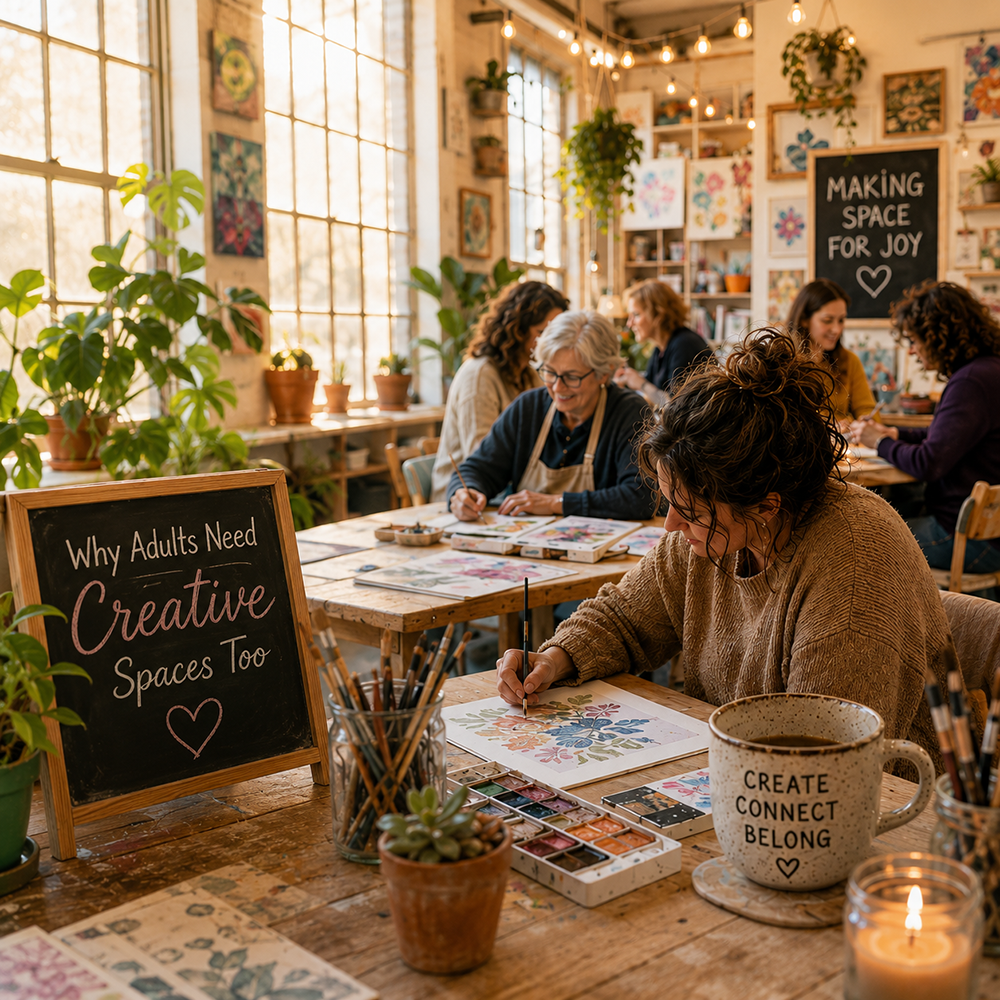
Somewhere along the way, many adults stop making things.
Not because they stopped being creative.
Not because they stopped having ideas.
Not because creativity stopped mattering.
But because life got louder.
Responsibilities grew.
Free time disappeared.
And slowly, something that once felt natural started feeling like something we needed permission to do.
But what if creativity was never something we were supposed to leave behind?
What if adults need creative spaces just as much as children do?
Think back to childhood for a moment.
Before we worried about whether something was “good enough.”
Before we wondered whether creativity was practical, profitable, or productive.
Before we compared our work to everyone else’s.
Many of us simply created.
We drew pictures because we had ideas.
We made crafts because experimenting was fun.
We built things out of cardboard boxes, blankets, sticks, paper, tape, or whatever random materials we could find.
We invented stories.
We explored.
We played.
We created entire worlds from imagination alone.
And we usually did not stop halfway through and think:
- “Is this worth my time?”
- “Could I sell this?”
- “Am I talented enough to deserve these supplies?”
- “Does this make me a real artist?”
We created because creating is a natural part of being human.
But somewhere between childhood and adulthood, that relationship often changes.
Creativity slowly becomes something we feel like we have to earn.
Something we need permission for.
Something we have to justify.
When Did Creativity Become Something We Had to Outgrow?
Children are encouraged to explore.
Schools have art rooms.
Libraries host craft activities.
Children’s museums create spaces designed entirely around curiosity, discovery, and hands-on learning.
We understand that children need opportunities to imagine, experiment, and express themselves.
But then people grow up.
And suddenly, those opportunities become much harder to find.
Instead of: “What do you want to make?”
The questions become:
- “What do you do for work?”
- “Can you make money from that?”
- “What is the point?”
- “Are you actually good?”
The expectation changes from exploration to achievement.
Creativity becomes another thing measured by results.
The painting needs to look professional.
The hobby needs to become a side hustle.
The skill needs to improve.
The time needs to be productive.
And somewhere along the way, many adults quietly put down the paintbrush.
Not because they stopped being creative.
Not because they stopped needing creativity.
But because the world stopped creating space for it.
Creativity Is Not Just for Children
There is a strange idea that play, curiosity, and creativity are things we eventually age out of.
But humans do not stop needing expression when they become adults.
Adults still experience emotions they need to process.
Adults still need opportunities to learn.
Adults still need curiosity, exploration, and discovery.
Adults still need moments where life becomes about more than responsibilities and survival.
Creativity gives us a place where there is not always a right answer.
A place where mistakes can become discoveries.
A place where we can experiment without needing to have everything figured out.
And for many people, especially people who have experienced stress, burnout, loneliness, disability, major life changes, or difficult seasons, creativity can become a way of reconnecting with pieces of themselves they thought they lost.
Sometimes Creativity Gets Buried Under Survival
Many adults do not lose creativity because they stop caring.
Sometimes life simply gets heavy.
Work.
Bills.
Responsibilities.
Caregiving.
Stress.
Exhaustion.
Trying to keep everything together.
Sometimes all of your energy goes toward making it through the day.
And when you are constantly pouring from an empty cup, creativity can feel like one more thing you do not have energy for.
The sketchbook gets pushed into a drawer.
The supplies collect dust.
The ideas get saved for “someday.”
The hobbies that once brought joy slowly disappear beneath everything else demanding your attention.
But losing access to creativity does not mean you are no longer creative.
Sometimes that creative part of yourself is still there.
Waiting.
Not for you to try harder.
Not for you to become someone different.
But for a safe space where it can come back.
Creativity Is Easier to Find When We Have Spaces That Welcome It
While creating at home can be wonderful, there is something uniquely powerful about having a dedicated creative space.
A place you can walk into and feel: “This is why I am here.”
A place where the supplies are already waiting.
Where creativity is encouraged.
Where other people are exploring too.
Because sometimes the hardest part of creating is not actually the art.
Sometimes the hardest part is starting.
At home, creativity often has to compete with everything else.
The laundry waiting to be folded.
The dishes in the sink.
The notifications on your phone.
The endless list of things that need to get done.
And for many adults, creating at home is not always accessible.
Not everyone has space for supplies.
Not everyone has extra money for materials.
Not everyone has a quiet environment where they can focus.
Not everyone has encouragement from the people around them.
Sometimes the barrier is not a lack of creativity.
Sometimes the barrier is a lack of access.
Accessibility matters because creativity should not only belong to people with unlimited time, money, energy, space, or support.
Some people need lower-cost options.
Some people need welcoming environments.
Some people need spaces where different ways of learning, communicating, and creating are accepted.
The more accessible creativity becomes, the more people get the opportunity to discover what they are capable of.
Adults Need Community Spaces Too
There is something beautiful about watching children create together.
A room full of kids making art rarely looks silent and perfect.
It is messy.
Curious.
Experimental.
One person discovers something and immediately wants to show someone else.
Someone tries a technique, and another person gets inspired.
Ideas bounce around the room.
Creativity spreads.
But adults need those experiences, too.
Somewhere along the way, many adults lose those natural gathering spaces.
After school ends, there may no longer be an art classroom.
After college ends, there may no longer be a studio full of people experimenting.
As life changes, it can become harder to find places where people gather simply to learn, explore, and create together.
Many adults are lonely.
Many adults are overwhelmed.
Many adults are craving spaces where they can connect without everything revolving around work, spending money, drinking, or productivity.
Creative spaces offer something different.
Many people talk about the importance of “third spaces” — places outside of home and work where people can gather, connect, and build community.
And many adults are missing those spaces.
Not every gathering place needs to revolve around buying something.
Not every connection needs to happen through work.
People need places where they can simply exist together.
Where they can share interests.
Learn from each other.
Build friendships naturally.
Creative spaces can become those places.
They give people a reason to gather.
A reason to talk.
A reason to share ideas.
A reason to connect.
Creating Around Others Can Remind Us We Belong
One of the most beautiful parts of community creativity is that connection can happen naturally.
You do not always need the perfect introduction.
You do not always need to know exactly what to say.
Sometimes connection begins with:
- “What are you making?”
- “How did you do that?”
- “That color is beautiful.”
- “I’ve always wanted to try that.”
Creativity creates bridges between people.
A beginner can learn from someone experienced.
Someone experienced can rediscover joy by helping someone new.
People from different backgrounds, ages, abilities, and life experiences can sit beside each other and create.
Not because everyone is making the same thing.
Not because everyone has the same skill level.
But because everyone belongs there.
That is something creative spaces can give us: permission to show up exactly where we are.
To learn.
To experiment.
To try.
To be a beginner.
To create without needing to prove ourselves first.
What Adult Creative Spaces Can Look Like
When people hear the words “creative space,” it can be easy to imagine something huge.
A professional art studio.
An expensive membership.
A perfectly designed room filled with every supply imaginable.
And while those spaces can exist, creativity does not always need something extravagant.
Sometimes a creative space is simply somewhere that says:
- “You are welcome here.”
- “Come explore.”
- “Come learn.”
- “Come create.”
Creative spaces can take so many different forms, and many already exist in communities — sometimes hiding in places people do not even realize.
Open Studios: A Place to Simply Create
One beautiful example of an adult creative space is an open studio.
Unlike a traditional class where everyone follows the same instructions and creates the same project, open studios often provide something different:
Freedom.
The freedom to explore materials.
The freedom to work at your own pace.
The freedom to follow your curiosity.
Spaces like Artists First in St. Louis create opportunities for artists of different backgrounds and abilities to come together, use supplies, experiment, and create in community.
And there is something incredibly special about being surrounded by other creative people.
Someone may be painting.
Someone else may be drawing.
Someone may be trying something completely new for the first time.
Ideas naturally start spreading.
People ask questions.
People share techniques.
People encourage each other.
Because creativity is not only about the final artwork.
Sometimes the most meaningful part is the connection that happens along the way.
 Jessica Carey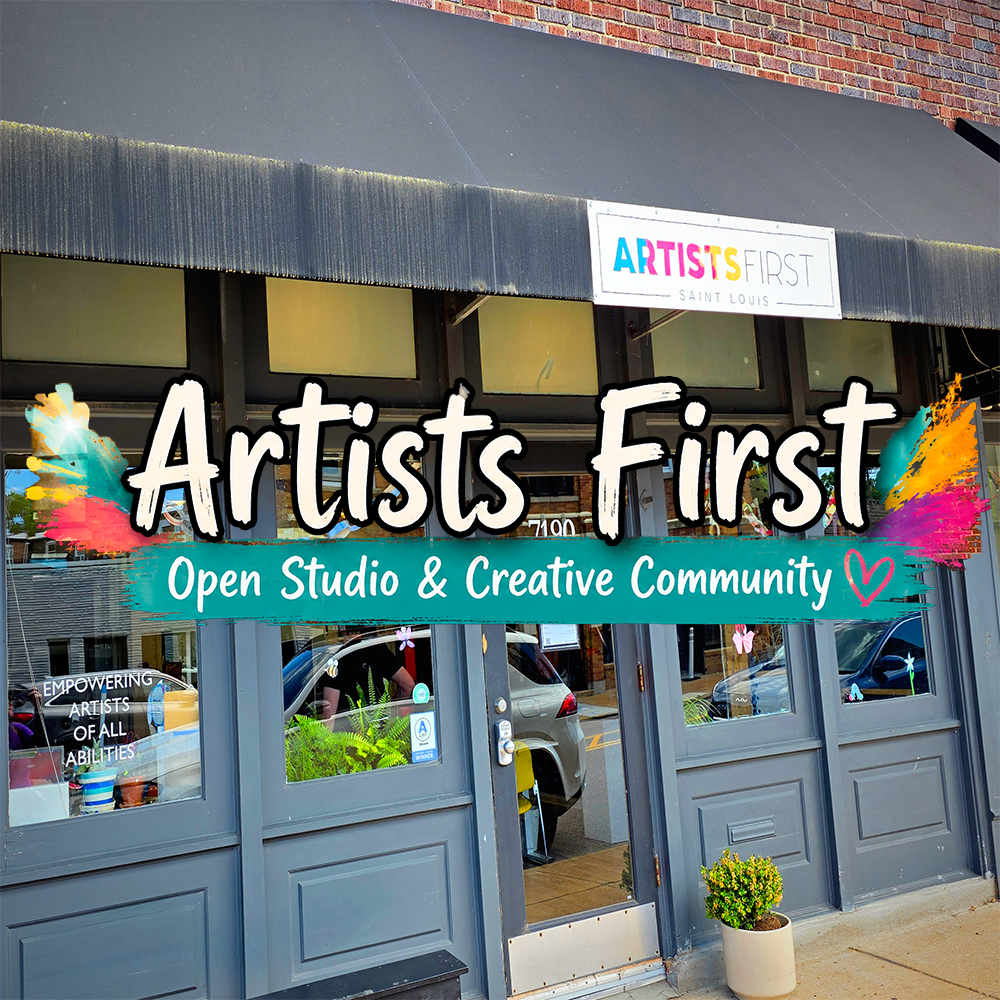
Small Studios & Community Art Classes
Another wonderful doorway back into creativity can be small community studios.
Sometimes adults avoid creative spaces because they think:
- “I’m not a real artist.”
- “I’m not talented enough.”
- “I haven’t created anything in years.”
- “I wouldn’t know where to start.”
But welcoming studios remind us that creativity is not something you have to earn.
You do not have to arrive as an expert.
You are allowed to arrive curious.
Places like Marnie's Creative Outlet create opportunities for people to try new materials, learn from artists, attend workshops, and reconnect with making things by hand.
Classes can be especially helpful because they remove one of the biggest barriers:
Decision fatigue.
You do not have to figure everything out yourself.
Someone else gathers the supplies.
Someone else explains the steps.
Someone else creates the container.
You simply show up and create.
And sometimes, that support is exactly what someone needs to begin again.
 Jessica Carey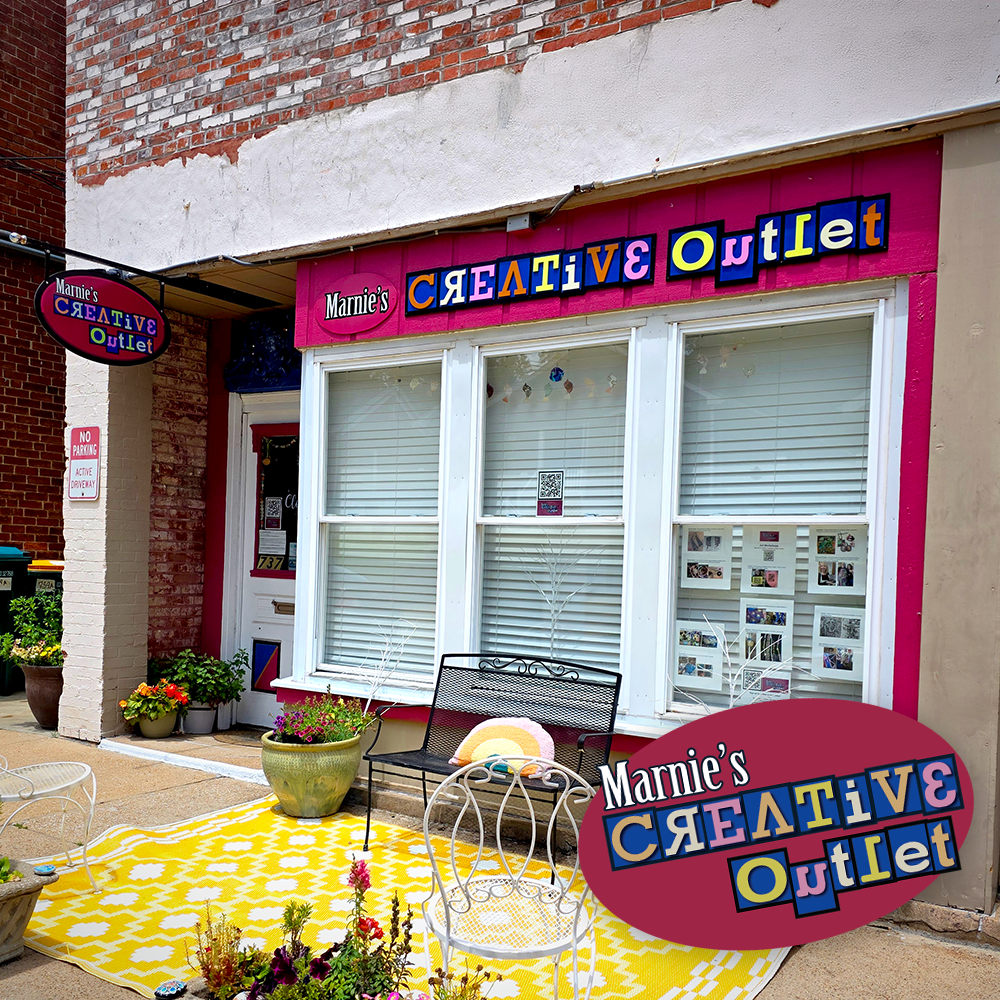
Libraries: More Than Just Books
Many people think of libraries as places for books.
And they absolutely are.
But modern libraries can also be incredible creative resources.
Some libraries now offer access to things like:
- Creative technology
- Recording equipment
- Craft tools
- Makerspaces
- Workshops
- Study rooms
- Community gathering areas
They are places where learning does not stop after childhood.
They remind us that curiosity is lifelong.
You are allowed to learn something new at 10.
At 30.
At 60.
At 90.
There is no age where someone suddenly stops deserving opportunities to explore.
Sometimes the doorway back into creativity is not buying hundreds of dollars of supplies.
Sometimes it is discovering what resources already exist around you.
Makerspaces: Places for Big Ideas
Some creative dreams require more than a kitchen table.
Maybe someone wants to try woodworking.
Sewing.
3D printing.
Laser cutting.
Photography.
Technology.
Design.
But buying all of those tools individually can be unrealistic.
That is where makerspaces can be such incredible resources.
They give people access to equipment, education, and community.
They make tools available that many people could never afford alone.
And maybe most importantly: they remind us that learning does not have an expiration date.
Adults are still allowed to experiment.
Adults are still allowed to be beginners.
Adults are still allowed to wonder: “What happens if I try?”
Creative Reuse Spaces: Finding Possibility in What Already Exists
Not every creative space starts with brand-new supplies.
Sometimes creativity begins by looking at something forgotten and asking: “What else could this become?”
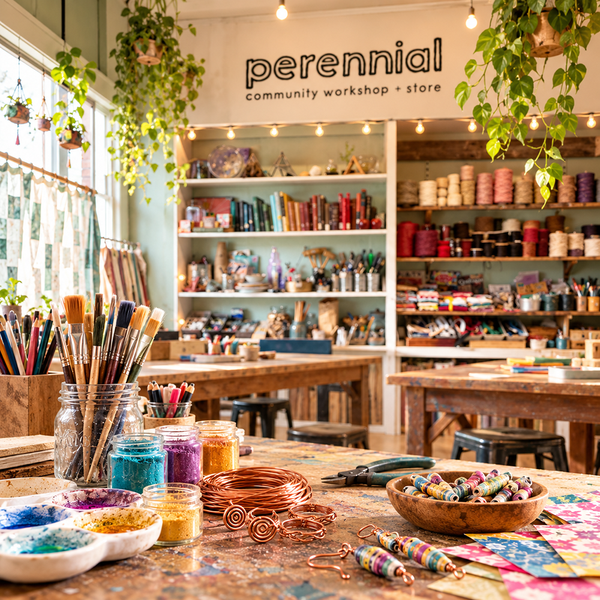
Creative reuse spaces help give materials a second life.
Fabric scraps.
Paper.
Frames.
Wood.
Household objects.
Unexpected materials waiting for a new purpose.
Places focused on reuse, like Perennial in St. Louis and other creative reuse organizations, remind us that creativity is not always about having the newest or most expensive supplies.
Sometimes creativity is about imagination.
Seeing possibility.
Experimenting.
Transforming what already exists into something new.
They also make creativity more accessible by helping people explore without needing to spend a fortune on materials.
Because creativity should not depend on having unlimited resources.
Sometimes the most interesting ideas begin with what is already around us.
 Jessica Carey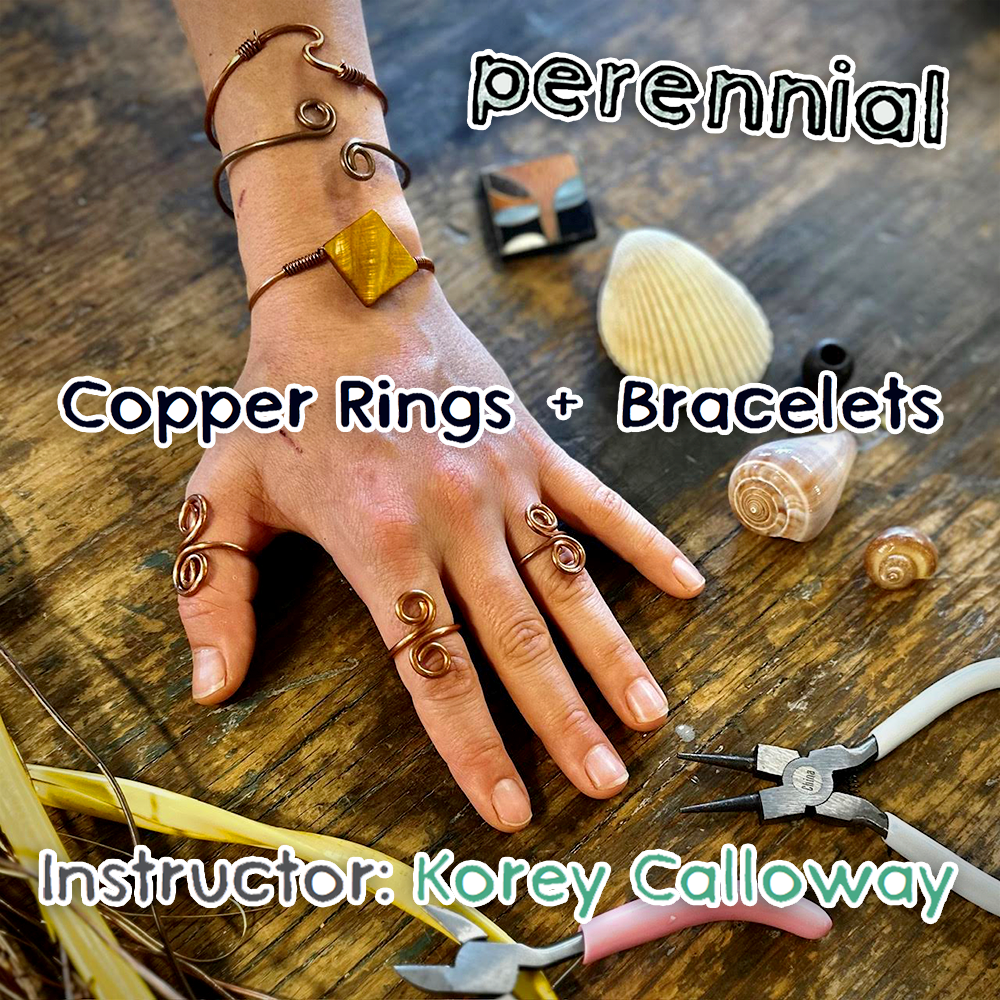
Why I Started Searching for Creative Spaces Again
For me, this topic is deeply personal.
Creativity has always been a huge part of my life.
It shaped what I studied.
It shaped the work I wanted to do.
It shaped the way I connected with the world.
I earned my Bachelor of Fine Arts and my Master’s in Art Education because I believed in the importance of creativity.
I spent time volunteering at The Magic House Children’s Museum, helping children explore, experiment, and discover what they could create.
And something I always loved witnessing was that moment when someone realized: “I can do this.”
Because creativity is not only about making something beautiful.
Sometimes it is about confidence.
Curiosity.
Problem-solving.
Expression.
Connection.
It is about discovering possibilities.
But one thing I started noticing more and more was:
Those spaces were everywhere for children.
But much harder to find for adults.
Searching for the Spaces That Still Exist
After experiencing burnout and going through a season where I had to rebuild my relationship with creativity, I started searching.
- Where do adults go when they want to create?
- Where do people go when they do not already have a studio?
- Or endless supplies?
- Or connections?
- Or know where to begin?
And slowly, I started finding places.
Places I had never heard about before.
Organizations quietly doing incredible things.
Creative communities hidden throughout St. Louis.
Spaces where adults were still learning.
Still experimenting.
Still making things.
Still connecting.
I found places like Artists First, where artists of different backgrounds and abilities can create alongside each other.
I discovered workshops like Perennial, where old materials are given new life through creativity and imagination.
I toured spaces like Marnie’s Creative Outlet, built around teaching, sharing, and helping people explore art.
I learned about some local libraries offering a Creative Lab, equipment, resources, and opportunities people may not realize exist.
I discovered makerspaces, like MADE Makerspace, where people can access tools and learn skills that would be difficult to explore alone.
And each place reminded me of something:
Adults never stopped needing creativity.
We just stopped making it easy to find.
 Jessica Carey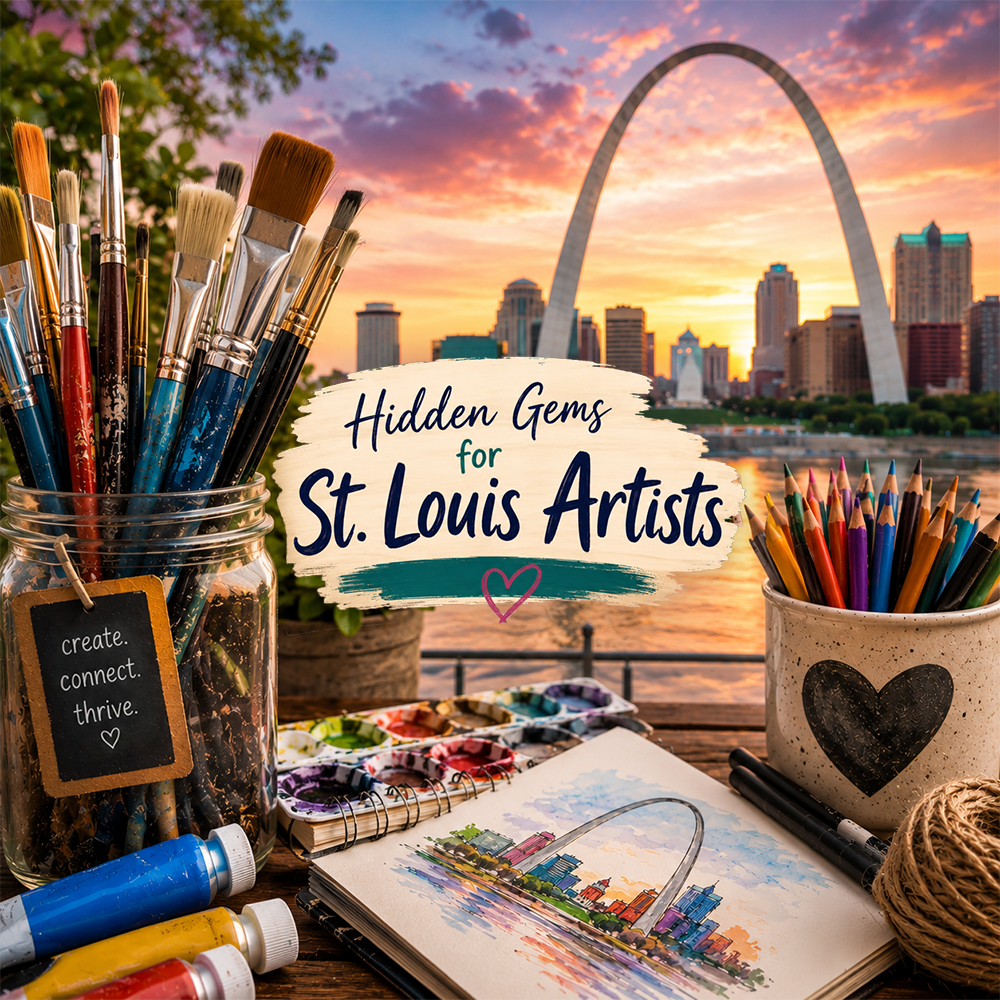
What Happens When People Have Access
Something powerful happens when people have access to creative spaces.
Someone who thought: “I’m not creative” starts experimenting.
Someone who thought: “It’s too late to learn” tries something new.
Someone who felt alone finds community.
Someone who lost a part of themselves starts reconnecting.
Because sometimes the biggest barrier is not ability.
Sometimes it is access.
Access to supplies.
Access to encouragement.
Access to teachers.
Access to space.
Access to people who remind you: “You belong here, too.”
The Dream Behind the Everyone Creates Project
The more I explored these spaces, the more a bigger dream continued growing:
- What if even more places like this existed?
- What if creativity was easier for people to access?
- What if there were spaces where people of different ages, abilities, experiences, and backgrounds could come together?
A place where people could learn new skills.
Experiment with materials.
Share knowledge.
Build confidence.
Create community.
A place where someone did not have to already see themselves as an artist before walking through the door.
A place where curiosity was enough.
That is the heart behind the Everyone Creates Project.
It is still at the beginning.
Still growing piece by piece.
But the belief behind it is simple:
Creativity belongs to everyone.
 Jessica Carey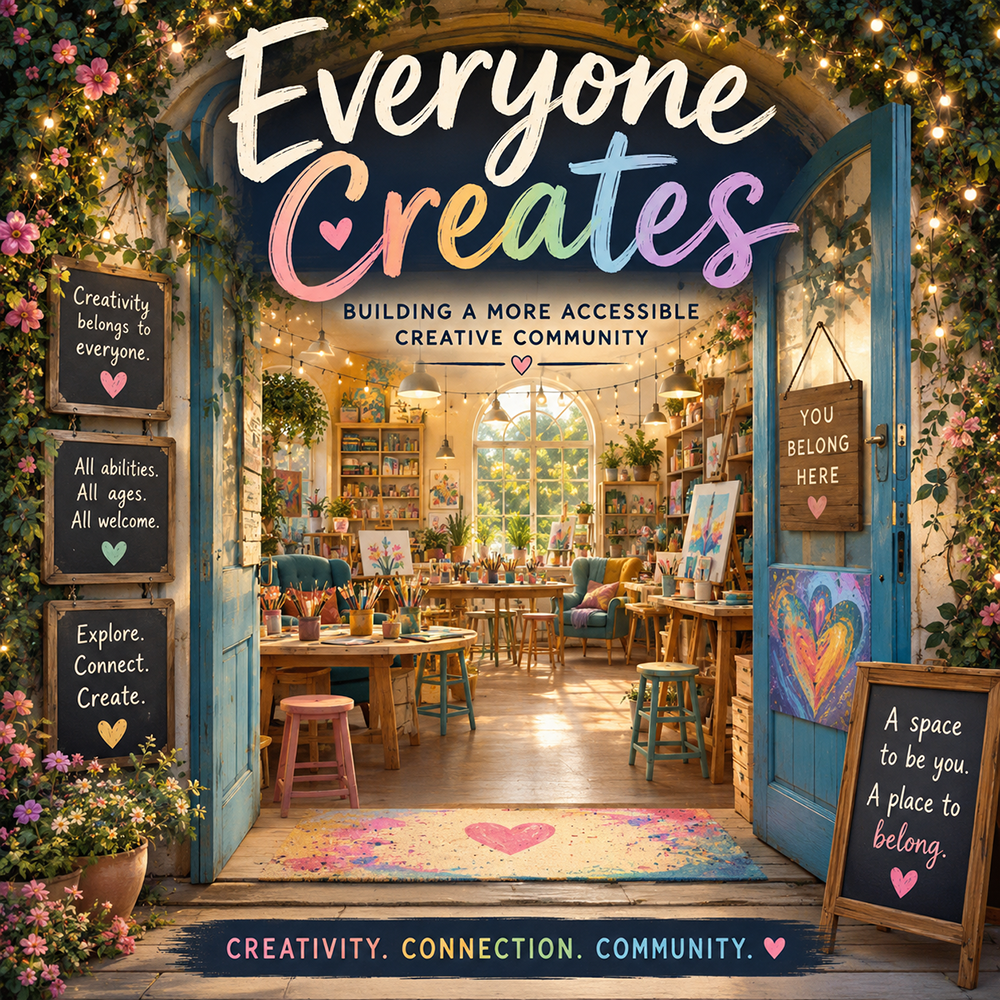
You Are Never Too Old to Create Again
Somewhere along the way, many adults start believing they missed their chance.
- “I should have started younger.”
- “I’m too old to learn.”
- “I’m not naturally talented.”
- “I don’t know where to begin.”
- “I’m not really an artist.”
But creativity was never meant to belong only to a select group of people.
It belongs to humans.
The beginner picking up a paintbrush for the first time.
The person returning to a hobby after decades away.
The exhausted person trying to reconnect with themselves.
The professional artist learning something new.
The person creating privately just because it brings them joy.
All of it matters.
Creativity Does Not Have an Age Limit
We celebrate children exploring because we understand something important:
They are learning.
They are discovering.
They are expressing themselves.
They are figuring out who they are.
But that process does not end when someone becomes an adult.
Adults are still growing.
Still changing.
Still discovering new parts of themselves.
Still becoming.
We do not reach a certain age where curiosity stops being important.
We do not reach a point where connection stops mattering.
We do not become too old to experience the joy of making something with our own hands.
Start Where You Are
Maybe you do not have a studio.
Maybe you do not have expensive supplies.
Maybe you have not created anything in years.
Maybe you feel nervous walking into a creative space for the first time.
That is okay.
Start small.
Visit your local library.
Look for community classes.
Explore nearby art organizations.
Find creative reuse stores.
Join an open studio.
Watch tutorials.
Create at your kitchen table.
Make something imperfect.
Make something simple.
Make something just because.
The goal is not perfection.
The goal is connection.
With creativity.
With others.
With yourself.
Creativity Belongs to Everyone
A world without creativity would be a world without so many of the things that make us human.
Stories.
Music.
Art.
Inventions.
Ideas.
Solutions.
Dreams.
Creativity is how we imagine something that does not exist yet.
It is how we express what words cannot always hold.
It is how we turn ordinary materials into something meaningful.
And sometimes, it is how we find pieces of ourselves again.
That is why creative spaces matter.
Not because everyone needs to become a professional artist.
Not because everything we make needs to be perfect.
Not because creativity has to become another accomplishment.
But because people need places where they are allowed to explore.
To learn.
To connect.
To belong.
A paintbrush is not just a paintbrush.
A sketchbook is not just a sketchbook.
A creative space is not just a room full of supplies.
Sometimes it is a doorway.
A doorway back into curiosity.
A doorway back into community.
A doorway back into yourself.
Because creativity does not end when childhood does.
You are still allowed to create.
You are still allowed to begin again.
Want even more content about creativity and art?
Be sure to check out all of our creative chronicles!
If you'd like to see examples of my work, you can find some of my art and creations at Redbubble and Gumroad!
Want to check out other art spaces and resources?
Check out some of these articles:
-Hidden Gems for St. Louis Artists
-Leftovers and Upcycle Treasure Box
 Jessica Carey