


At a recent appointment, I worked with a former classmate I had known from elementary school through high school.
As we talked about my current circumstances and the kinds of environments in which I might thrive, she remarked that I would probably do very well living near many elders.
The observation caught my attention because older women have been entering my life in especially meaningful ways lately.
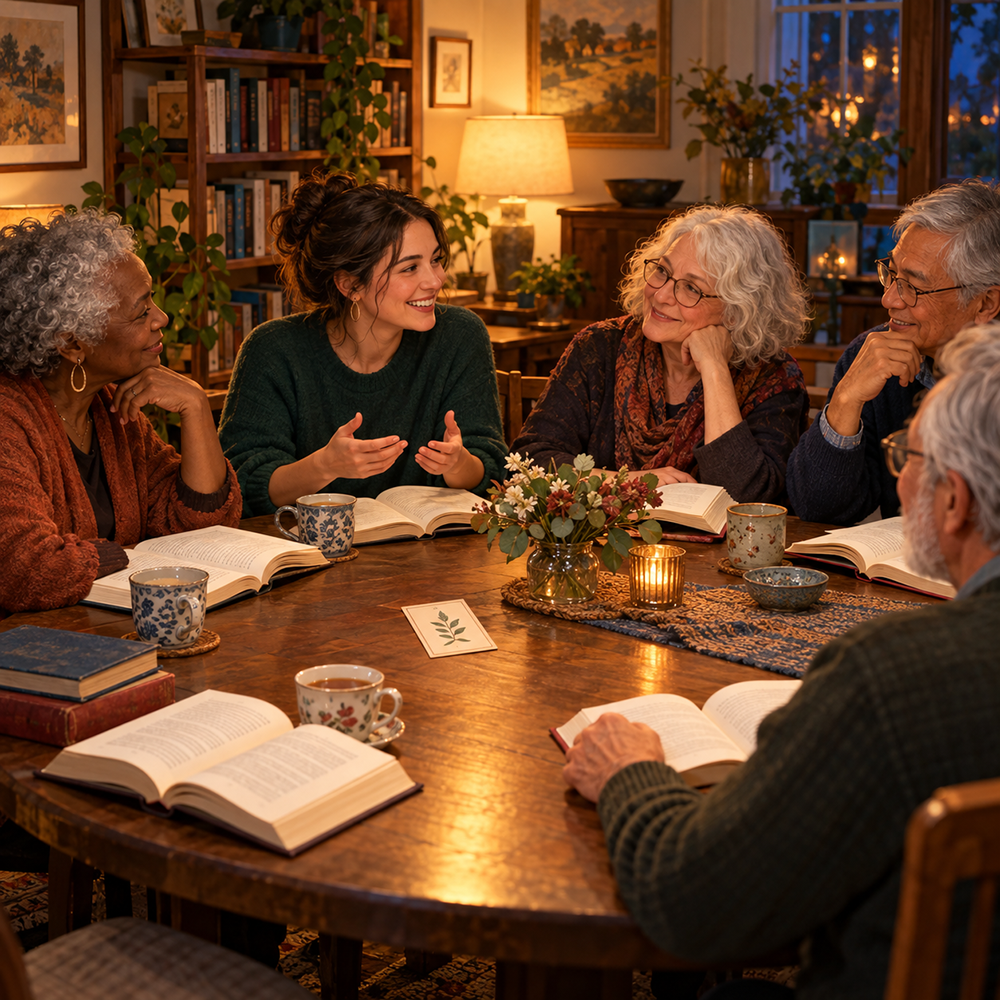
A friend’s grandmother welcomed me into her home during an unstable season; she has invited me to join her friends for book discussions, meals, and movie nights where conversations rarely remain on the surface.
Another woman I helped organize belongings spoke with me about dignity, intelligence, disability, and the importance of treating people patiently.
In an online community, a grandmother I had never met in person began exchanging long messages with me about faith, discernment, justice, creativity, difference, and the complicated ways people understand the world.
These women have shared decades of experience, including stories of hardship, relationships, faith, family, illness, injustice, and the moments when someone’s unexpected kindness changed the direction of their lives.
Yet the exchange has not traveled in only one direction.
They have also told me that I helped them notice distinctions they had not previously considered, articulate ideas they had struggled to express, or see familiar experiences from a different angle.
They valued the perspectives I had developed through creativity, autism, trauma, education, and a lifetime of trying to understand why people so often say one thing while practicing another.
Perhaps that is why the comment about elders felt significant.
I did not deliberately set out to build an intergenerational community.
I simply kept finding myself in conversations where age did not determine who was allowed to teach, question, encourage, or learn.
Different lives met one another with enough openness for something new to emerge between them.
It made me wonder: what becomes possible when people from different generations stop assuming who is supposed to possess the wisdom—and begin genuinely listening to one another?
 Jessica Carey
Wisdom Does Not Travel in Only One Direction
Intergenerational relationships are sometimes imagined as a one-way exchange: older people possess wisdom, while younger people are expected to listen and receive it.
There can be tremendous value in learning from someone who has lived through decades we have not yet experienced.
Elders may carry historical memory, hard-earned perspective, practical knowledge, and an understanding of how people and communities have changed over time.
Their stories can help us recognize patterns that would otherwise appear new or isolated.
But age alone does not guarantee wisdom.
A person can live for many years without questioning what they were taught, acknowledging the harm they caused, or becoming curious about experiences different from their own.
Experience can deepen humility, but it can also harden assumptions when someone decides that surviving one path makes them an authority on every path.
Younger people also carry knowledge their elders may not possess; they may offer new language for previously unnamed experiences, greater awareness of disability or mental health, different cultural perspectives, creative uses of technology, or the courage to question traditions that have survived longer than they have deserved.
Healthy intergenerational relationships do not require either person to become the unquestioned authority.
The grandmother I met online has shared experiences from her life that help me understand how harmful beliefs and systems affected women before I was born.
She has encouraged me not to surrender my perception merely because a larger group—or someone with greater authority—insists that I must be mistaken.
At the same time, she has told me that my writing helps her notice nuances she had not previously considered.
Our conversations have explored the difference between being nice and being kind, between discernment and judgment, and between respecting another person’s experience and assuming that one solution should apply to everyone.
Neither of us has to know everything for the exchange to be valuable.
The healthiest elders do not use experience to close a conversation.
They bring what they have learned into relationship with what someone else knows.
And the healthiest younger people do not dismiss age as irrelevance; they remain curious about the history, survival, insight, and unfinished questions another life contains.
Wisdom grows when experience and fresh perspective are allowed to meet without either demanding that the other disappear; it does not travel only from old to young, teacher to student, helper to helped, or expert to novice.
Sometimes it moves back and forth within the same conversation.
Discernment Makes Room for Difference; Judgment Erases It
One distinction that emerged repeatedly in our conversations was the difference between discernment and judgment.
Judgment often begins with an assumption:
- This worked for me, so it should work for everyone.
- My interpretation is the correct one.
- If your experience contradicts mine, you must be mistaken.
- I have more authority or experience, so I know you better than you know yourself.
Discernment is more careful because it considers context, evidence, patterns, intentions, impact, and individual differences.
It does not require us to pretend that every behavior is safe or every claim is equally accurate; it simply resists turning one experience into a universal rule.
I often think about people as different kinds of plants.
A cactus, fern, orchid, and wildflower do not require identical conditions.
One plant may thrive in direct sunlight and dry soil, while another needs shade, moisture, or a particular temperature.
Giving every plant the same amount of water would not be fairness; it would nourish some while damaging others.
 Jessica Carey

People are much the same.
A schedule, treatment, environment, spiritual practice, communication style, career structure, or form of support that helps one person may overwhelm someone else.
That does not automatically make the approach good or bad; it means human beings are not interchangeable.
Even something as ordinary as food demonstrates this.
Citrus fruit may provide nutrients and enjoyment for many people, but it makes me physically ill.
My experience does not prove that citrus is universally harmful, just as someone else benefiting from it does not make my reaction imaginary.
Multiple truths can exist without canceling one another.
Unfortunately, I have often encountered people who respond to difference by asserting that they know better.
When I explain that something is inaccessible, harmful, exhausting, or incompatible with my needs, they may treat my lived experience as a misunderstanding to correct rather than information to consider.
This is particularly damaging when authority is involved.
A family member, professional, religious leader, institution, or older adult may possess knowledge or experience without possessing complete knowledge of another person.
Confidence, credentials, age, volume, or good intentions do not make every assumption accurate.
Discernment listens before prescribing; it remains open to correction. It asks whether an approach is producing the outcome it claims to create.
Judgment says: “I already know what you need.”
Discernment asks: “What conditions help you live, participate, and grow?”
 Jessica Carey

Words Matter—but Relationships Reveal Their Meaning
Our conversations also explored the limits of language.
Words help us communicate and understand experience, but no single label can contain the full reality of what it describes.
A picture is more than its named subject; its color, composition, context, history, and emotion remain beyond the label.
The same is true of the words we use for relationships and values.
People frequently speak about love, family, respect, faith, help, forgiveness, and kindness as though everyone shares the same understanding of them.
Yet those words can hold radically different meanings depending upon what someone has experienced.
For one person, family may evoke safety, affection, and belonging.
For another, it may bring memories of control, fear, neglect, or being expected to endure harm without protest.
One person may use respect to mean honoring another person’s dignity, autonomy, limits, and perspective.
Someone else may use the same word to demand silence, agreement, or unquestioning obedience.
Even love can be used to describe both genuine care and behavior that is coercive, possessive, or destructive.
This is one reason I have always felt an important difference between being nice and being kind.
Niceness can be a social performance.
It may preserve appearances, avoid discomfort, seek approval, or create an expectation of something in return.
A person can sound pleasant while remaining indifferent to someone else’s well-being.
Kindness is more substantial.
It listens.
It notices.
It respects another person’s humanity even when no audience is watching and no reward is promised.
Kindness may sometimes require an uncomfortable truth, a sincere apology, a boundary, or action that costs more than polite words.
People have frequently described harmful behavior toward me as love.
They have insisted that their intentions were good while refusing to examine the actual effects of their choices.
When I tried to explain the impact, the conversation often shifted away from what happened and toward defending the word they had placed around it.
That is part of why I wrote Learning What Love Was Supposed to Feel Like; I had spent years hearing beautiful values attached to relationships that repeatedly produced fear, confusion, exhaustion, and self-erasure.
Words can announce what people hope to represent.
Relationships reveal what those words mean in practice.
Love becomes recognizable through safety, honesty, freedom, accountability, and care.
Respect becomes visible when differences and boundaries are honored.
Kindness becomes real when another person’s experience is allowed to matter.
A value that never shapes behavior remains only a word.
 Jessica Carey

“Let’s Just Get to My House”
The most moving part of our exchange was not a philosophical insight. It was an offer.
After I shared some of what I have been navigating—homelessness, chronic autistic burnout, financial strain, family interference, and the exhaustion of repeatedly seeking support—she told me that if I ever reached a dead end with nowhere to go, I could contact her.
Her apartment was small; she did not pretend to possess the money, resources, or influence needed to solve my entire situation.
Instead, she offered what she had: somewhere to pause and a willingness to help me consider what might come next.
She described a dream in which someone was trying to move but did not know how they would reach their destination.
In the dream, she said: “Let’s just get to my house, and we will figure it out from there.”
That sentence stayed with me.
People often hesitate to help because they cannot complete the entire journey for someone.
They cannot provide permanent housing, erase debt, restore health, replace lost belongings, resolve a legal problem, or repair everything another person has endured.
But sometimes the most urgent need is not a complete solution.
Sometimes it is one quiet night.
A meal.
A ride partway.
A room where no one is shouting.
A person who believes what happened.
Enough safety for an overwhelmed nervous system to settle.
Enough time and space to identify the next step.
She understood this because someone had once offered refuge to her when her own family responded to her hardship by saying: “You made your bed; now you have to lie in it.”
Instead of allowing that rejection to teach her that struggling people should be abandoned, she remembered the person who chose differently.
She decided to pass the care forward.
That distinction matters.
Pain can teach us to withhold what we never received, or it can help us recognize why another person should not be forced to endure the same deprivation.
She did not turn the refuge she once needed into something the next person would have to earn.
An offer of help should still be approached with discernment.
Kindness does not require ignoring safety, boundaries, practical limitations, or the need to build trust gradually.
Nor does caring about someone mean becoming responsible for every part of their life.
But genuine care does not wait for perfect circumstances before allowing another person’s need to matter.
Sometimes love sounds less like “I know how to fix everything” and more like: “You do not have to solve the entire journey tonight. Let us get somewhere safer, and then we will determine what comes next.”
 Jessica Carey

Justice Without Vengeance
Another idea we returned to was the difference between justice and revenge.
These concepts are often treated as though they are interchangeable.
When someone speaks firmly about wrongdoing, accountability, restitution, or consequences, others may assume they are motivated by bitterness or a desire to cause suffering.
But vengeance asks: how can the person who harmed me be made to hurt?
Justice asks: how can the harm be stopped, the truth acknowledged, the injured protected, and what was taken repaired where possible?
I do not want the people who harmed me to experience cruelty simply because I experienced it.
Adding more suffering to the world would not undo mine.
I do not want to become a reflection of the behavior I am trying to challenge.
But rejecting vengeance does not require accepting injustice.
There comes a point when “forgiveness” becomes a word used to protect harmful people from the consequences of their choices.
Calls for peace can become demands for silence.
Compassion for someone’s history can be used to erase compassion for the people affected by their behavior.
Good intentions do not replace accountability.
An apology without acknowledgment does not repair trust. An explanation does not erase an impact.
Forgiveness does not require restoring access to an unchanged pattern.
And refusing to retaliate does not mean wrongdoing should be allowed to continue unchecked.
Much of my life has involved watching the person who named the problem become the problem.
When I tried to address mistreatment, the conversation often became about my tone, sensitivity, memory, or supposed inability to forgive.
The original behavior disappeared while my response was placed on trial.
Justice restores the missing questions:
- What actually happened?
- Who was affected?
- What protection or support is now needed?
- What responsibility belongs to the person, organization, or system involved?
- What repair is possible?
- What must change so the pattern is not repeated?
Justice is not only about punishment.
Sometimes its most important work is liberation: helping harmed people become safer, restoring access to resources, recognizing losses, removing barriers, and preventing someone’s power from becoming permission to cause further harm.
The goal is not to divide humanity into entirely good and entirely evil people; it is to create a world in which everyone’s humanity matters enough for wrongdoing to be taken seriously.
Accountability does not deny someone’s dignity; it asks them to recognize the dignity of the people their choices affected.
Chosen Community Can Interrupt Inherited Isolation
For much of my life, I was taught that needing anything made me a burden.
I learned to become the dependable one: the helper, the responsible oldest sibling, the person who required as little as possible and absorbed more than was healthy.
I was expected to anticipate other people’s needs, manage their reactions, and keep functioning quietly regardless of what it cost me.
Even then, it was never enough to make the environment safe.
That history can make receiving care feel disorienting.
When someone offers help without shaming, controlling, or demanding something in return, part of me remains alert for the hidden condition.
I may understand intellectually that the person is being sincere while my nervous system still expects kindness to become leverage.
Yet some of the people showing me the clearest examples of care are not members of my family of origin.
They are people who were once strangers.
They have invited me into their homes, gatherings, conversations, and communities.
They have remembered what I shared, appreciated my creativity, asked what I needed, offered encouragement, and treated my limitations as human realities rather than moral failures.
These relationships do not erase what happened or instantly make trust easy.
Nor does kindness from a new person mean discernment is no longer necessary.
Chosen community should not require us to ignore warning signs, rush intimacy, or accept every offer simply because it appears generous.
But it can give us new evidence.
It can show us that relationships are capable of feeling different from the ones that first defined them for us.
It can demonstrate that disagreement does not have to become punishment, vulnerability does not have to become ammunition, and receiving assistance does not have to mean surrendering autonomy.
Family titles alone do not create safety.
Shared blood does not automatically produce honesty, respect, or mutual care.
At the same time, a lack of biological connection does not prevent people from becoming meaningful witnesses, mentors, friends, protectors, or chosen family.
The older women entering my life cannot replace everything that was absent or repair every consequence of the past.
That is not their responsibility.
What they can offer—and what I can offer in return—is a relationship in which another kind of pattern becomes possible.
Sometimes a generational cycle is interrupted when one person refuses to repeat the harm done to them.
Sometimes it is also interrupted when someone encounters people who demonstrate that care was always capable of looking different.
 Jessica Carey
The Wisdom We Exchange
I keep returning to the comment that I might thrive while living near elders.
Perhaps part of the reason is that I value depth, reflection, history, and conversations that are allowed to move beyond the surface.
I enjoy hearing how people’s lives have shaped their understanding of the world, what they have survived, what they have changed their minds about, and what they wish others had understood sooner.
But perhaps some elders also enjoy being around me because I bring something of value to the exchange.
I ask questions.
I notice distinctions.
I connect ideas across art, relationships, disability, trauma, faith, systems, and everyday life.
I may give language to something another person has sensed but never articulated.
My perspective has been shaped by experiences they may not share, just as their wisdom has been shaped by years I have not yet lived.
The relationship is not: they possess wisdom, and I need to receive it.
It is: we each carry pieces of understanding the other may need.
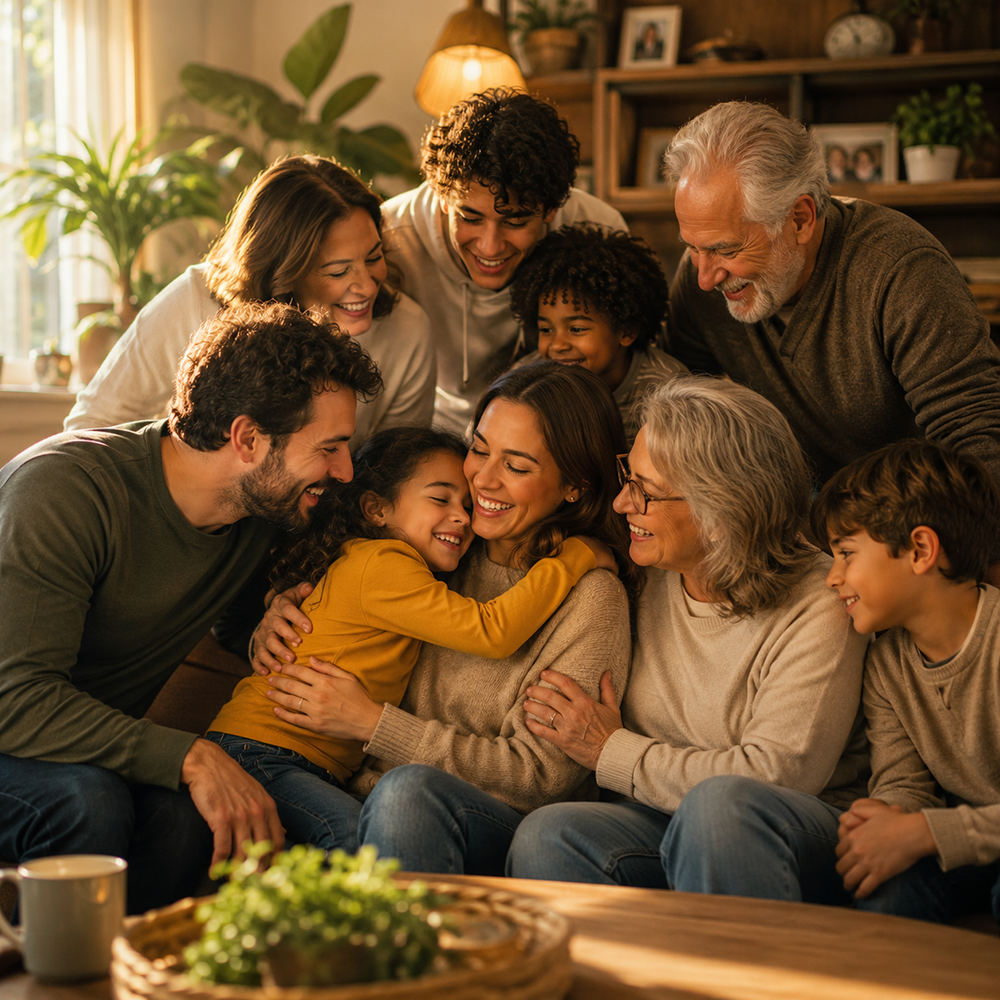
Intergenerational community is healthiest when it does not reduce one person to the teacher and another to the student, one to the helper and another to the helped, or one to the authority and another to the obedient recipient.
Human beings move between these roles throughout their lives.
The person offering refuge today may need support tomorrow.
Allowing trustworthy people to help us can also be a form of participation; it gives another person’s care somewhere meaningful to land without turning that care into debt.
Someone who struggles in one area may carry extraordinary insight in another.
A person with fewer material resources may still offer creativity, attention, encouragement, knowledge, or a perspective that changes how someone else understands their life.
We do not always need someone who can carry us all the way to the destination.
Sometimes we need someone willing to travel part of the distance, offer a quiet place to breathe, and remind us that the next step does not have to be discovered alone.
Perhaps that is one of the gifts of genuine intergenerational community: experience meets possibility, memory meets new perspective, and two people who might otherwise have remained strangers begin helping one another see more of the whole.
Wisdom does not travel in only one direction, and neither does care.
Questions for Reflection
- Who has helped you feel understood across a generational difference?
- What has someone older or younger helped you see differently?
- Do you use your experience to close conversations or deepen them?
- When you cannot solve someone’s entire problem, what safe and sustainable “partway” help might you still offer?
- What care did someone once give you that you now have an opportunity to pass forward?
Want even more content about creativity and art?
Be sure to check out all of our creative chronicles!
If you'd like to see examples of my work, you can find some of my art and creations at Redbubble and Gumroad!
Looking to learn more about my recent journey?
Check out some of these articles:
-Hidden Gems for St. Louis Artists
-Hidden Gems for Autistic & Neurodivergent Adults
-I Wasn't Broken--I'm Burned Out
-What Chronic Autistic Burnout Actually Feels Like
-Building a Life from What Remains
 Jessica Carey