
There is a strange question that tends to follow creativity around: “But is it good?”
We don't always say it aloud.
Sometimes it appears as a grade written at the top of an art project.
Sometimes it's the example hanging at the front of a classroom—the polished version students quietly begin measuring their own work against.
Sometimes it's a ribbon at an art show, a number of likes online, a price tag, a compliment given to one person while another wonders why nobody noticed theirs.
And sometimes the judgment comes from inside us before anyone else has the chance:
- Mine doesn't look as good as theirs.
- I messed it up.
- I'm terrible at this.
- I'm just not artistic.
I've always struggled with the way we put a kind of price tag on creativity—even when no money is involved.
Before becoming an art educator, and throughout my practicums and student teaching, I saw what comparison could do to children who were creating.
I watched students become genuinely distressed—sometimes breaking down in tears—because their artwork didn't look as "good" as a classmate's or as polished as the teacher's example.
And what struck me was everything that judgment erased.
Maybe that student had learned something they didn't know before.
Maybe they had experimented.
Maybe they had solved a problem.
Maybe they had taken a creative risk.
Maybe something went terribly wrong and they figured out how to keep going.
Maybe they understood the material differently by the end than they had at the beginning.
Maybe they had simply spent time making something that was completely and unmistakably theirs.
But when the finished product became the primary measure of success, all of that could suddenly seem irrelevant.
The child wasn't looking at everything they had learned.
They were looking across the table and thinking: “Theirs is better than mine.”
When Creating Becomes Performing
There is nothing inherently wrong with wanting to make something beautiful.
There is nothing wrong with developing technical skill, studying other artists, practicing, improving, entering exhibitions, earning good grades, selling work, or feeling incredibly proud when something turns out exactly the way you imagined.
Those things can be wonderful.
The problem begins when achievement becomes the price of admission to creativity.
When making something stops being an experience and becomes a performance of competence.
When the question shifts from: what could I try?
To: what if I do it wrong?
From: I wonder what will happen.
To: what is this supposed to look like?
From: look what I made!
To: is mine good enough?
Something gets lost in that transition.
Curiosity becomes caution.
Experimentation becomes risk.
Mistakes become evidence.
And instead of discovering what they might be capable of, people can begin discovering all the reasons they supposedly shouldn't create at all.
 Jessica Carey
Art Produces More Than Artwork
The finished object is visible.
That makes it easy to evaluate.
We can hold two drawings beside one another.
We can inspect craftsmanship.
We can assess technique.
We can decide whether something met a rubric or resembled the example.
What is harder to display on a classroom wall is everything that happened while someone was making it.
The questions they asked.
The choices they made.
The frustration they worked through.
The unexpected discovery.
The idea that changed halfway through.
The conversation with the person beside them.
The material they had never touched before.
The technique they finally understood.
The mistake that became something interesting.
The moment they taught someone else what they had just figured out.
The moment someone else taught them.
The quiet concentration.
The ridiculous idea they tried simply because they wanted to know whether it would work.
The realization: oh, I can do this.
Those things are part of art too.
In fact, sometimes they are the most important part.
That's one reason I became so drawn to Teaching for Artistic Behavior (TAB) and its understanding of students as artists rather than people simply following an art teacher's prescribed path toward a predetermined finished product.
What resonated with me was the emphasis on learning, exploration, curiosity, choice, process, and creative community.
The teacher still has knowledge and an important role, but knowledge doesn't flow in only one direction.
A classroom can become a place where people learn from one another—where the educator can teach without needing to be the only person in the room capable of teaching something.
That feels much closer to creativity as I understand it.
Because making art isn't only about demonstrating what you already know.
It's one of the ways we discover what we don't know yet.
 Jessica Carey
What the Finished Artwork Can't Show Us
The finished object is visible.
That makes it easy to evaluate.
We can compare two drawings, inspect craftsmanship, assess technique, decide whether something met a rubric, or notice whether it resembles the example.
What is harder to see is everything that happened while someone was making it.
The questions they asked.
The choices they made.
The frustration they worked through.
The unexpected discovery.
The mistake that became something interesting.
The technique they finally understood.
The moment they taught someone else something—or learned something from the person beside them.
A finished piece of art cannot tell us everything that happened while a person was becoming the person who made it.
That is one reason I became so drawn to Teaching for Artistic Behavior (TAB) and its understanding of students as artists rather than people simply following an art teacher's prescribed path toward a predetermined finished product.
What resonated with me was the emphasis on learning, exploration, curiosity, choice, process, and creative community.
The educator still brings knowledge and guidance, but knowledge does not have to flow in only one direction.
A classroom can become a place where people learn from one another.
Because making art isn't only about demonstrating what you already know.
It's also one of the ways we discover what we don't know yet.
And instead of always asking: “Is the art good?”
Maybe we can sometimes ask: “What happened while you were making it?”
 Jessica Carey
Who Decided Hobbies Require Competence?
Adults often give children permission to make mediocre art that they deny themselves.
We buy children crayons because drawing is something children are simply allowed to do.
Nobody looks at a four-year-old scribbling and asks about their artistic career trajectory.
Then adulthood arrives and suddenly:
- “I can't draw.”
- “I'm not artistic.”
- “What's the point?”
- “What am I going to do with it?”
There is something almost absurd about the way adults sometimes talk about making art.
Hand someone a pencil and ask them to draw something, and there's a decent chance you'll hear:
“Oh, I can't draw.”
Suggest painting:
“I'd be terrible at that.”
Dancing?
“I have no rhythm.”
Singing?
“Nobody wants to hear that.”
Pottery?
“Mine would probably look awful.”
And perhaps it would.
Why is that a problem?
Somewhere along the way, many of us learned that enjoyment isn't enough reason to make something.
We should also demonstrate some level of competence at it—or at least show enough promise that becoming competent seems possible.
But hobbies were never supposed to be auditions.
You Are Allowed to Be Bad at Something You Enjoy
Imagine someone trying pottery for the first time.
They sit down at the wheel.
The clay wobbles wildly.
Whatever they intended to make slowly becomes an object that can only generously be described as a bowl.
They laugh.
They had fun.
They want to do it again.
Was that a successful creative experience?
I would say yes.
But if the only question we ask is whether the bowl is good, we might reach an entirely different conclusion.
That's the problem with allowing technical quality to become the primary measure of creative success.
It can make us forget that a person enjoying themselves is an outcome, too.
You are allowed to love something you aren't particularly talented at.
You can sing badly.
Dance awkwardly.
Make lopsided pottery.
Take mediocre photographs.
Write stories nobody would publish.
Paint flowers that look nothing like flowers.
Sew crooked seams.
Make jewelry you'd never sell.
Knit something that somehow becomes a shape no known garment has ever required.
And keep doing it.
Not because you're secretly going to become brilliant if you practice long enough.
Not because every beginner is actually a misunderstood artistic genius.
But because: you like doing it.
That is enough.
 Jessica Carey
“I'm Not Good at It” and “I Don't Enjoy It” Are Different Things
These statements are often treated as though they mean the same thing.
They don't.
You can be excellent at something you hate doing.
You can be terrible at something you adore.
Skill answers one question: how effectively can I do this right now?
Enjoyment answers another: what happens inside me while I'm doing it?
Neither answer automatically determines the other.
Yet people sometimes abandon creative activities they genuinely enjoy because they decide they aren't sufficiently talented to justify continuing.
Imagine applying that standard to every other pleasurable experience.
You aren't particularly good at walking through a botanical garden.
Nobody grades your ability to watch a sunset.
You don't need to demonstrate advanced technical competence before you're permitted to enjoy listening to music.
And while creative activities involve skills that can certainly be developed, the presence of skill doesn't mean enjoyment has to wait until mastery arrives.
 Jessica Carey
Beginners Are Supposed to Look Like Beginners
There's another strange expectation surrounding creativity:
We understand intellectually that learning takes time, while emotionally expecting ourselves to skip that part.
We see someone's beautiful watercolor without seeing their first hundred paintings.
We hear the musician without hearing the years of practice.
We see someone's perfectly fitted handmade clothing without seeing the seams they once had to rip apart.
We admire the ceramicist's elegant bowl without seeing the clay that collapsed.
Then we attempt something for the third time and think: why doesn't mine look like that?
Because you're on the third one.
You're allowed to have a third-one-looking third one.
Being a beginner isn't evidence that you lack talent.
It isn't even evidence that you have talent.
It is simply evidence that you are beginning.
And beginning deserves to exist without immediately being converted into a prediction about whether someone will eventually become good enough to continue.
 Jessica Carey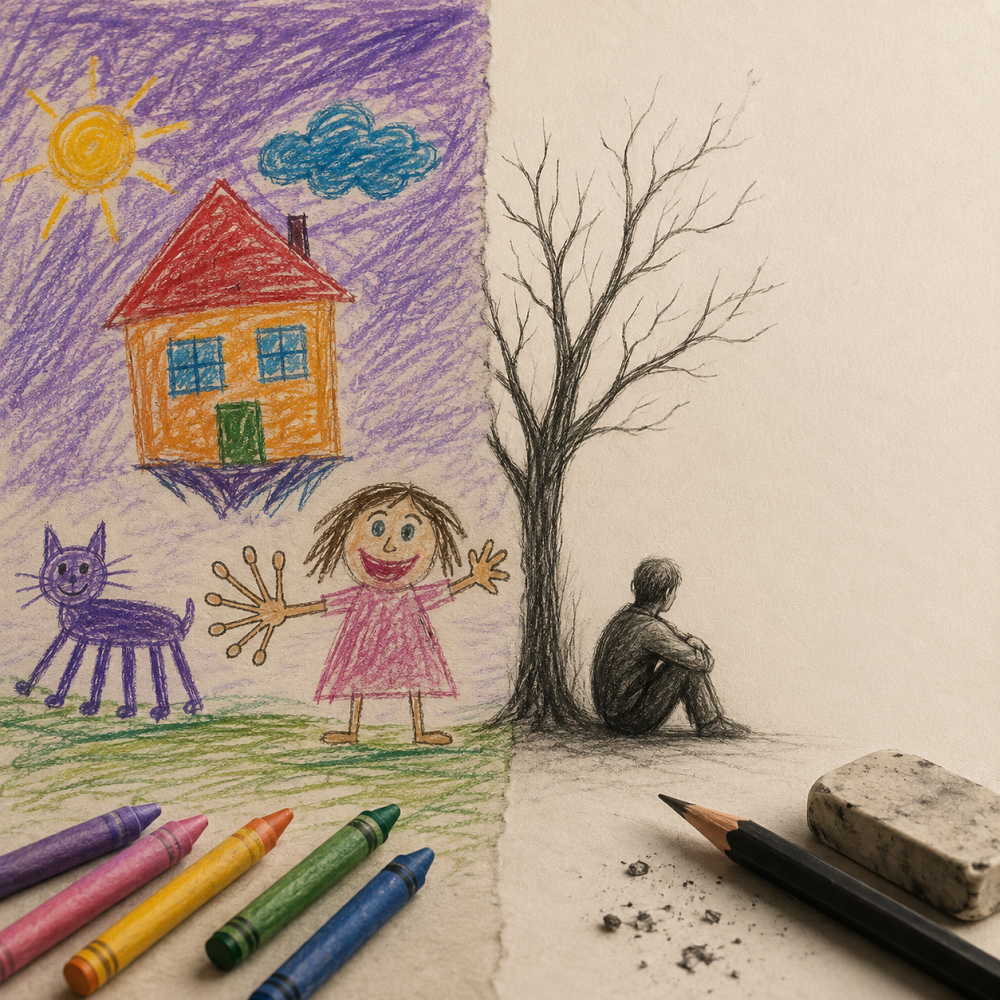
Comparison Can Steal the Experience You're Actually Having
Comparison is particularly dangerous because there will almost always be someone better.
Even extraordinarily skilled artists can find someone whose work makes them feel inadequate.
Someone draws more realistically.
Someone understands color better.
Someone learns faster.
Someone has been practicing longer.
Someone has more expensive materials.
Someone has professional training.
Someone's work gets more attention.
Someone sells more.
Someone wins the award.
Someone's project looks exactly like the example.
If the purpose of creating is to prove that you're better than the person beside you, creativity becomes a race with no reliable finish line.
And comparison can make something peculiar happen:
You can be enjoying yourself right up until you look at someone else's work.
Your painting hasn't changed.
Your pot hasn't changed.
Your drawing hasn't changed.
The hour you spent making it hasn't changed.
But suddenly the experience feels worse because another person's object has become evidence against your own.
Someone else's beautiful work doesn't actually make yours less valuable.
Two things can exist beside one another without requiring a winner.
Art Doesn't Need a Winner
This is particularly important when children are learning.
There can certainly be reasons to assess learning.
Students need feedback. Educators need ways to understand whether concepts are being grasped.
Constructive critique can help someone grow.
But assessment and ranking are not the same thing.
If one student's project is technically stronger, that doesn't necessarily mean they learned more.
Maybe they entered the classroom with considerably more experience.
Maybe another student took the bigger creative risk.
Maybe someone solved a harder problem.
Maybe someone discovered something important through a mistake.
Maybe the student whose final project appears least polished made the greatest leap from where they began.
A lineup of finished projects can't necessarily tell us those things.
And creativity becomes much smaller when the goal is for everyone to arrive at the same polished destination.
There Is No Minimum Skill Requirement for Joy
If you want to become technically excellent at something, wonderful.
Study it.
Practice.
Take classes.
Ask questions.
Seek critique.
Learn from people who know more than you do.
Make the hundredth version and marvel at how different it looks from the first.
Mastery can be deeply satisfying.
But mastery is one possible relationship with creativity, not the requirement for having one.
You can also make things casually.
Experiment.
Quit something and try something else.
Return five years later.
Refuse to monetize it.
Never show anyone.
Remain enthusiastically mediocre for the rest of your life.
You do not owe your hobbies excellence.
Perhaps that's something more of us need permission to remember.
You don't have to become good enough at art to justify making it.
You don't have to earn your place at the table by producing the prettiest thing sitting on it.
You don't even have to improve unless improvement is something you want.
Sometimes the question really can be as simple as: did you enjoy making it?
If the answer is yes, perhaps that is already a perfectly good reason to make another.
 Jessica Carey
What If the Finished Product Isn't the Point?
We live in a world of finished products.
We see the painting hanging on the wall.
The sweater folded neatly on a shelf.
The ceramic bowl after it has survived the kiln.
The photograph someone decided was worth sharing.
The polished performance.
The published story.
The finished song.
What we don't usually see is everything that came before.
The abandoned sketches.
The tangled yarn.
The clay that collapsed.
The sentences that got deleted.
The colors that looked completely different once they dried.
The measurements that were somehow wrong despite being checked three times.
The idea that seemed brilliant until someone actually tried to make it.
The project that changed halfway through because the original plan simply wasn't working.
And perhaps most importantly: we don't see everything the person learned while making it.
The Object Is Only Part of What Was Created
When we evaluate art primarily through the finished product, we naturally focus on what is visible.
- Does it look polished?
- Is the craftsmanship strong?
- Does it resemble the example?
- Did the person use the technique correctly?
- Would someone display it?
- Would someone buy it?
Those questions can tell us things about the object.
They tell us considerably less about the experience of making it.
Maybe someone learned how to use a tool for the first time.
Maybe they discovered they hate one material and love another.
Maybe they changed their mind halfway through.
Maybe they solved a problem nobody taught them how to solve.
Maybe they asked someone beside them for help and ended up making a friend.
Maybe they taught another person something they had just learned themselves.
Maybe they became completely absorbed for two hours and temporarily stopped worrying about everything else.
Maybe they failed spectacularly.
Maybe they laughed about it.
Maybe they tried again.
The finished object cannot hold all of that information.
A project can look unsuccessful while the experience of making it was extraordinarily successful.
Process Isn't the Thing We Endure to Get to the Art
It's easy to think of the creative process as everything standing between us and the thing we actually want.
We tolerate the sketching because we want the painting.
We practice because we want to perform well.
We wrestle with yarn because we want the sweater.
We revise because we want the finished story.
The product becomes the destination, and everything before it becomes the journey we have to survive to get there.
But what if the journey is part of the thing we're actually doing?
If you spend ten hours knitting something, the finished object is one outcome.
You also spent ten hours knitting.
Your hands learned movements they didn't know before.
You encountered problems.
You made decisions.
You experienced textures and repetition.
You probably made mistakes.
You may have pulled stitches out and tried them again.
You learned something about how yarn behaves.
Perhaps you talked with other people while you worked.
Perhaps you enjoyed the rhythm of it.
Perhaps you wanted to throw the entire thing across the room at least once.
All of that happened.
The finished object doesn't retroactively decide whether those hours had value.
Mistakes Aren't Empty Space
One of the strangest things about creative learning is that the moments we most want to erase are often the moments containing the most information.
When something works immediately, we may not even know why it worked.
When it doesn't?
Now there are questions.
- What happened?
- Why did it do that?
- Can I fix it?
- Do I need to start over?
- What happens if I do this instead?
- Could this become something else?
Mistakes create opportunities to investigate.
That doesn't mean mistakes are always enjoyable.
Sometimes they are deeply frustrating.
Sometimes starting over really is the best option.
Sometimes you've spent hours on something only to discover that it cannot be salvaged, and no philosophical appreciation of "the process" makes that particularly delightful.
But frustration and value can coexist.
Something going wrong doesn't mean nothing worthwhile happened.
Sometimes the Material Changes the Plan
Creative work also asks us to negotiate with reality.
We begin with an idea.
Then the material gets involved.
Paint behaves differently than expected.
Clay has structural limitations.
Wood has grain.
Fabric stretches.
Yarn has tension.
Technology glitches.
Gravity continues stubbornly existing.
And suddenly the thing we're making starts becoming something slightly—or dramatically—different from the thing we imagined.
That can feel like failure if success means: the finished object must match the original plan.
But creativity can also ask another question: what can this become now?
That question doesn't require pretending every accident is secretly brilliant.
Sometimes a failed bowl is simply a failed bowl.
But sometimes an unexpected result opens a door we couldn't have planned because we didn't know the door existed.
The mistake becomes a texture.
The strange color combination becomes interesting.
The broken piece becomes part of a different sculpture.
The story changes direction.
The "wrong" photograph captures something better than the intended one.
The project becomes something else entirely.
That's not necessarily evidence that the original plan was bad.
It's evidence that creating is a conversation between intention and discovery.
A Perfect Copy Can Teach Less Than a Beautiful Mess
This is one reason I've always been uncomfortable when art education becomes overly focused on everyone reaching the same predetermined result.
If thirty students are shown exactly what their projects should look like, carefully walked through the same sequence of steps, and ultimately produce thirty polished variations of the teacher's example, the classroom may look impressively successful.
But what exactly are we measuring?
The consistency of the products?
Or the depth of the learning?
A student who follows instructions perfectly may certainly learn something.
But so might the student whose project goes completely sideways and has to figure out what to do next.
Perhaps especially that student.
Because artists don't spend their entire lives reproducing teacher examples.
They make choices.
They encounter uncertainty.
They develop ideas.
They change direction.
They discover.
They respond.
They ask questions for which someone hasn't already placed the answer on the board.
Creativity needs room for things we didn't plan.
The Product Can Matter Without Being Everything
None of this means finished artwork is meaningless.
There is genuine satisfaction in completing something.
It can feel wonderful to step back and think: I made that.
Craftsmanship matters when craftsmanship matters to the person making the work.
Technical knowledge can expand what someone is capable of expressing.
And sometimes we absolutely want the sweater to fit, the bowl to hold soup, the photograph to be in focus, or the chair not to collapse when somebody sits on it.
Process and product aren't enemies.
The problem comes when the product becomes so dominant that everything else disappears behind it.
Because a technically imperfect object can represent enormous growth.
And a technically beautiful object doesn't automatically tell us whether the person who made it felt curious, challenged, engaged, connected, or alive while doing so.
Maybe We Need More Than One Definition of Success
Instead of asking only: did it turn out right?
We might also ask:
- What did you discover?
- What surprised you?
- What did you change?
- What frustrated you?
- What would you do differently?
- What part did you enjoy?
- What did someone else teach you?
- What did you figure out yourself?
- What happened that you hadn't planned?
And perhaps one of the most wonderfully creative questions of all: “Okay... so what could it become now?”
Because sometimes the most interesting thing about making art is that we begin thinking we know what we're making.
And then creativity has other ideas.
The Scarf That Became a Bag
Recently, I learned how to knit.
Like most people learning something new, I didn't begin with particularly ambitious expectations.
I wasn't trying to create an elaborate sweater or intricate pattern.
I intended to make a scarf.
Simple enough.
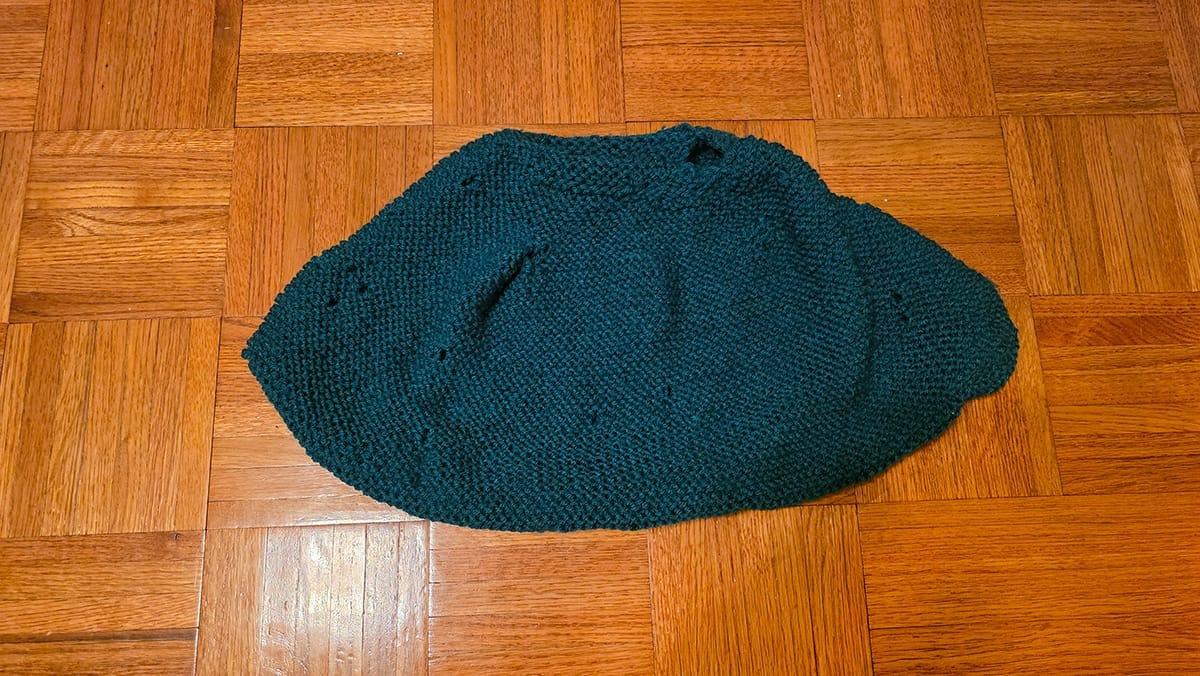
Except my scarf apparently had other plans.
As I continued knitting, something about the shape became increasingly... questionable.
Instead of developing into the nice, straightforward scarf I had intended, the piece curved and changed until it became very clear that this was not going to be a scarf.
Technically, I suppose I could have looked at it and concluded: I messed it up.
Because I did.
If success meant “produce the object you intended to produce,” my first knitting project was unsuccessful; it was quite the failure on that front.
But then something funny happened.
We looked at the strange shape I'd accidentally created and realized: it would make a pretty great bag.
I Didn't Make the “Right” Thing
There is something delightfully creative about accidentally making the wrong thing and discovering that the wrong thing has possibilities of its own.
The stitches weren't suddenly perfect because we called it a bag.
I hadn't secretly followed an advanced bag pattern without realizing it.
It was still my very first attempt at knitting, complete with all the evidence that the person making it had only recently learned how knitting needles worked.
But instead of asking: “How do we make this failed scarf disappear?”
We asked: “What could this be?”
And the answer changed my relationship with the entire project.
The thing I had made didn't need to become a successful scarf to become something worth keeping.
Then Everyone Told Me Not to Get Rid of It
What happened next stayed with me even more.
The people at art club loved the accidental bag.
More experienced knitters encouraged me to keep it because it was my first project.
And several people told me essentially the same thing: they wished they still had theirs.
Their first knitting projects hadn't looked "right."
They weren't "good enough."
So they had frogged them—unraveled the stitches so the yarn could be used again.
There is nothing inherently wrong with frogging knitting, of course.
Sometimes you want the yarn back.
Sometimes fixing a mistake matters.
Sometimes unraveling something and starting again is part of learning the craft.
But hearing several people say they wished they hadn't destroyed those first attempts made me think about something larger: how often do we erase the evidence that we were ever beginners?
We Usually Display the After, Not the Before
We love progress pictures when there's an impressive transformation.
- My first drawing versus my drawing ten years later.
- My first cake versus what I make professionally now.
- My first pottery piece versus my latest.
The early work becomes acceptable because it proves how far someone eventually traveled.
But what about keeping the beginning simply because it was the beginning?
The crooked stitches.
The uneven edges.
The proportions that make absolutely no sense.
The first attempt made by hands that didn't yet know what experienced hands know.
Those objects can contain something our technically better work never will: the moment when we didn't know how yet—and tried anyway.
My accidental bag may never be the finest thing I knit.
I rather hope it isn't.
As I keep knitting, I hope my stitches become more consistent.
I hope I understand tension better.
I hope I learn increasingly complicated techniques and eventually look back at that first project and wonder what on earth I was doing.
But none of that would make the bag less valuable.
It would make it more valuable in a different way.
Because then I could hold the beginning beside everything that came afterward.
Improvement Doesn't Make the Beginning Embarrassing
There's a peculiar temptation to become embarrassed by our earlier creative work once our skills improve.
We look back and see everything we'd do differently now.
But of course we would do it differently now.
We know things the person who made that first project didn't know yet.
That's what learning is supposed to do.
Our early work doesn't become shameful because we eventually become capable of better work.
If anything, it becomes evidence.
- Here is where I started.
- Here is what I knew then.
- Here are the mistakes I didn't even know I was making.
- Here is the person willing to try anyway.
There is something tender about being able to look back at that person without mocking them.
They were learning.
They deserved patience, too.
Not Every Mistake Needs to Be Undone
I think there's another lesson hidden in that accidental bag.
When something goes wrong, our instinct can be to correct it until nobody can tell it ever went wrong.
Undo the stitches.
Erase the line.
Paint over it.
Start again.
Delete the paragraph.
Make it look intentional.
And sometimes that's exactly what the work needs.
But not always.
Sometimes we can respond to an unexpected result with curiosity instead of correction.
- What happened here?
- Do I like any part of it?
- Can I work with this?
- Does it suggest something else?
- What could this become?
That's not settling for bad work.
It's a creative skill in itself: responding to what actually exists instead of remaining so attached to what was supposed to exist that we miss another possibility.
My First Knitting Project Is Still a Success
I didn't successfully make my first scarf.
I successfully learned how to begin knitting.
I learned stitches.
I learned more about how yarn behaves.
I learned what happens when things don't quite go according to plan.
I made something useful almost entirely by accident.
I got to share the experience with a group of people who celebrated the weird thing I'd created instead of treating it like evidence that I wasn't good at knitting.
And now I have something tangible that records where I began.
That seems like considerably more than failure.
Maybe one day my knitting projects will beautifully turn out as intended.
Maybe I'll make complicated things I can't currently imagine making.
And maybe I'll look back at my wonky little accidental bag and laugh.
But I don't want to erase it.
It doesn't need to be a good scarf.
It isn't a scarf.
It's my first knitting project.
And perhaps that is already enough reason for it to be worth keeping.
 Jessica Carey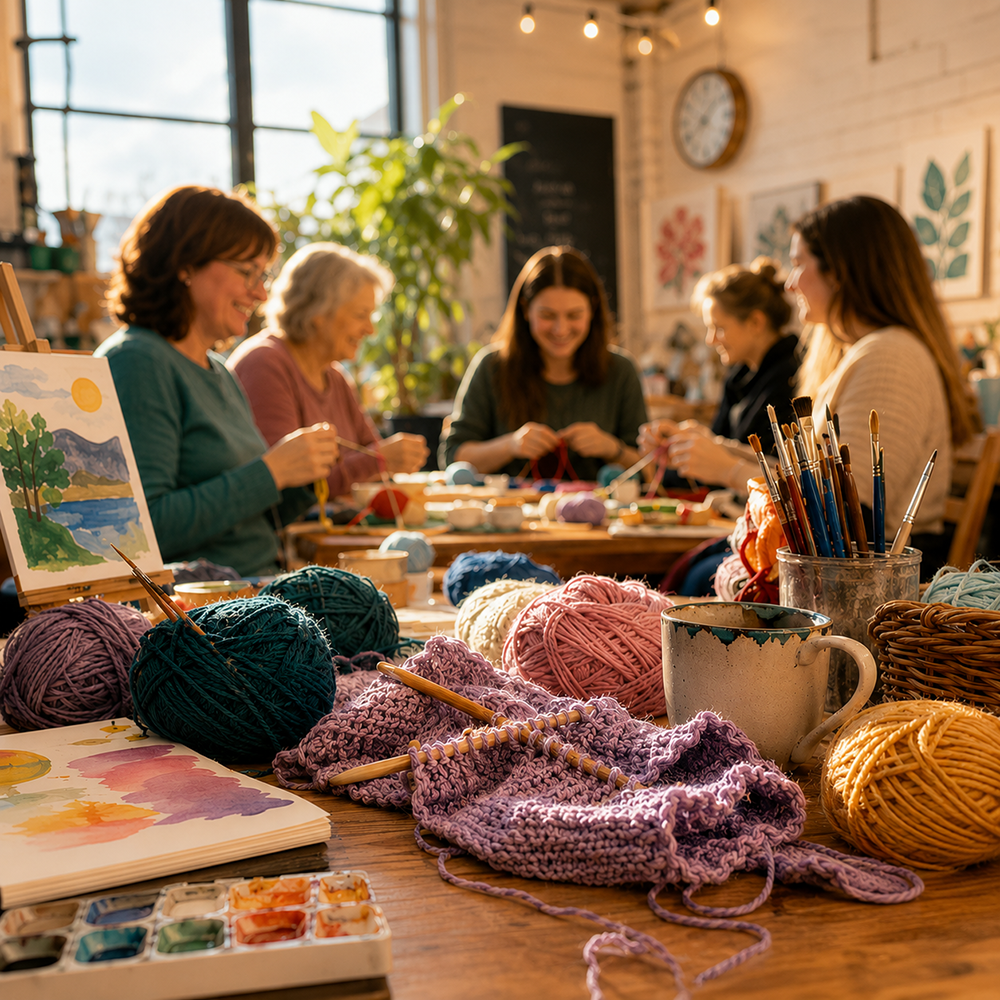
You Are Allowed to Make Things No One Else Will See
There was a time when you could make something and simply... have it.
A drawing could stay inside a sketchbook.
A photograph could remain on your camera.
A poem could live in a notebook.
A cake could be slightly lopsided and still taste wonderful.
A craft project could sit on your shelf without ever becoming content.
No announcement.
No audience.
No likes.
No comments.
No analytics.
No need to photograph it in perfect lighting before you were allowed to enjoy it.
You made something.
And that could be the entire story.
When an Invisible Audience Enters the Room
Sharing creativity can be wonderful.
Artists have always shared their work.
Art can communicate, connect people, start conversations, build communities, inspire someone else to try something, and allow us to witness ways of seeing the world that aren't our own.
The problem isn't sharing.
The problem is what can happen when the possibility of sharing begins influencing the experience before we've even made anything.
Suddenly an invisible audience enters the room.
- Will people like this?
- Is this worth posting?
- Does it look impressive enough?
- What if nobody responds?
- Should I redo this part before I take a picture?
- What will people think?
The project hasn't even left our hands yet, and we're already imagining how someone else might evaluate it.
Creativity quietly becomes performance.
Not Everything Has to Become Content
We live in a strange moment where almost any experience can become content.
The meal.
The vacation.
The outfit.
The garden.
The book we're reading.
The thing we're making.
Even the messy creative process itself can be photographed, edited, captioned, posted, and transformed into something meant to be consumed by other people.
Again, there is nothing inherently wrong with that.
Sharing the process can build extraordinary communities.
Tutorials teach people skills.
Artists find one another.
Beginners discover that other people's work isn't magically appearing fully formed.
Creative businesses reach customers.
Someone posts something they made and receives encouragement that genuinely helps them continue.
But something can be valuable without becoming publicly valuable.
You don't have to turn every creative experience into evidence that you had a creative experience.
You are allowed to make things that aren't content.
You are allowed to make things that have no audience.
What Changes When Nobody Is Watching?
There can be a peculiar freedom in knowing that nobody else ever has to see what you're making.
You can make the ugly version.
Try the strange idea.
Use colors that supposedly don't go together.
Write something embarrassingly sentimental.
Draw something ridiculous.
Experiment with a technique you have absolutely no idea how to use.
Make something you don't understand yet.
Abandon it halfway through.
Start over.
Keep it anyway.
There is nobody waiting for the reveal.
Nobody expecting the finished product to justify the process.
Nobody comparing it with what you made last week.
Nobody asking whether you're going to sell it.
And that privacy can create room for something important: honesty.
- What would you make if you knew nobody was going to judge it?
- What would you try if you didn't need to explain why?
- What colors would you choose?
- What would you write?
- Would you make something sillier?
- Stranger?
- Messier?
- More personal?
- Would you experiment more freely if the experiment didn't need to become impressive?
Attention Isn't the Same Thing as Value
Social media also gives us numbers.
Likes.
Views.
Shares.
Comments.
Followers.
Sales.
Numbers can be useful. If you're running a creative business, trying to reach an audience, selling artwork, or building a professional practice, some of those measurements genuinely matter.
But they measure attention.
And attention isn't identical to artistic value.
A painting that receives twelve likes isn't twelve units valuable.
A photograph nobody comments on doesn't become less meaningful.
A story read by three people can matter enormously to one of them.
And something nobody else ever sees can still matter deeply to the person who made it.
The danger comes when external response becomes the evidence we use to determine whether our own experience was worthwhile.
Because then silence can begin to feel like failure.
You can love something while you're making it, post it, receive almost no response, and suddenly wonder whether you were wrong to love it.
But nothing about the object changed.
Only the audience did—or didn't—respond.
Some Creativity Can Belong Only to You
Not every thought needs an audience.
Not every sketch needs critique.
Not every experiment needs documentation.
Not every creation needs to become part of your portfolio.
Some things can simply belong to the person who made them.
There can be something almost intimate about that.
A sketchbook nobody else reads.
A song played badly in your living room.
A journal full of strange drawings.
A tiny clay creature sitting on your desk.
A photograph you love for reasons you couldn't explain to anyone else.
Something made during a difficult period that isn't beautiful but means something to you.
Something ridiculous that makes you laugh every time you see it.
No one else has to understand why it matters.
You were there for the making of it.
Sometimes that's enough.
Sharing Should Be an Invitation, Not an Obligation
None of this means we should hide our art.
Share it when sharing feels good.
Put it on the refrigerator.
Post it online.
Give it to someone.
Hang it in a gallery.
Enter the exhibition.
Sell it.
Wear it.
Perform it.
Let people celebrate it with you.
Creative community can be one of the most beautiful parts of making things.
But perhaps sharing can come after creation rather than hovering over it.
First:
- What do I want to make?
- What am I curious about?
- What happens if I try this?
And then, perhaps: do I want anyone else to see it?
The answer can be yes.
The answer can be no.
The answer can change depending on the project.
An audience can add something to creativity without being the thing that gives creativity its worth.
You don't need witnesses for the hours you spent making something to have happened.
You don't need applause for curiosity to count.
You don't need engagement metrics to prove that an idea was worth exploring.
Sometimes the most freeing thing we can remember is remarkably simple: you can make something just because you wanted to make it.
And nobody else ever has to see it.
 Jessica Carey
Not Every Hobby Needs to Become a Side Hustle
Make something beautiful enough and eventually someone will probably say it: “You should sell these!”
It's usually intended as a compliment.
Someone sees something you've made, recognizes skill or beauty in it, and wants to tell you that your work has value.
There can be something lovely about that.
But hidden inside the compliment is an idea worth examining: why is money so often the next measure we reach for when we want to prove that creativity matters?
You made something beautiful.
Could you sell it?
You're good at knitting.
Have you thought about opening an Etsy shop?
You make incredible cakes.
You should start taking orders.
You're good at photography.
You could do this professionally.
And suddenly something that began with: I really enjoy doing this.
Can become: could I make this profitable?
Those aren't the same question.
Money Is One Kind of Value
There is nothing wrong with selling creative work.
Artists deserve to be paid.
Designers deserve to be paid.
Writers deserve to be paid.
Musicians deserve to be paid.
Photographers, performers, craftspeople, makers, illustrators, teaching artists, and other creative professionals deserve compensation for their labor and expertise.
In fact, creative work is often undervalued, with artists expected to work for exposure, donate their skills, lower their prices, or somehow treat payment as less important because they happen to love what they do.
That's a real problem.
But there's a strange contradiction here.
We can simultaneously undervalue professional creative labor while placing too much importance on whether personal creativity can become financially valuable.
Professional artists hear: “Why should I pay that much? You enjoy making it.”
Hobbyists hear: “You're good at that. Why aren't you selling it?”
Both misunderstand something about creativity.
Enjoyment doesn't make professional labor worthless, and money doesn't make personal creativity worthwhile.
Turning a Hobby Into a Business Changes the Hobby
Imagine that you love making ceramic mugs.
You choose whatever shape interests you.
Experiment with glazes.
Spend an afternoon making something weird simply because the idea amused you.
Give a mug to a friend occasionally.
Then people begin asking to buy them.
Wonderful.
Maybe you want that.
But selling mugs doesn't simply mean doing exactly what you were already doing and receiving money afterward.
Now there may be orders.
Deadlines.
Customer expectations.
Pricing.
Inventory.
Packaging.
Shipping.
Marketing.
Taxes.
Messages.
Photographs.
Product listings.
Recreating designs people liked.
Making something when you aren't particularly in the mood to make it because someone already paid you.
None of those things are inherently bad.
They are simply different.
A hobby asks: what do I feel like making?
A business sometimes has to ask: what does someone else want me to make?
For some people, that transition is exhilarating.
For others, it changes the very thing they loved.
You Don't Have to Optimize Your Joy
There is enormous pressure to make our time productive.
Learn a skill.
Build a portfolio.
Grow an audience.
Create passive income.
Develop your personal brand.
Turn your hobby into a side hustle.
Use your free time to build something that might eventually earn money.
And yes, for someone who wants or needs additional income, creative skills can become meaningful opportunities.
But there is also something exhausting about the idea that every part of ourselves should eventually produce something measurable.
Sometimes you can spend three hours painting and have nothing economically useful to show for it.
You spent three hours painting.
That's what you did.
Maybe you enjoyed yourself.
Maybe you learned something.
Maybe you made something ridiculous.
Maybe you lost track of time.
Maybe you talked with friends while you worked.
Maybe the painting ends up in a closet.
Those hours don't become wasted simply because nobody paid you for them.
“But You're So Good at It!”
This is where the pressure can become particularly subtle.
If someone is still learning, we allow the activity to be recreational.
But once they become skilled, suddenly skill seems to create an obligation.
You're too good at this just to do it for fun.
But why?
Why should becoming better at something take away your right to do it purely because you love it?
A person can spend twenty years becoming an extraordinary knitter and never sell a scarf.
Someone can become an excellent photographer and never accept a client.
Someone can write beautiful poetry and keep it in a drawer.
Someone can become an accomplished pianist and never perform publicly.
Skill doesn't automatically transform recreation into untapped economic potential.
Sometimes skill simply means: you've spent a long time doing something you love.
That's beautiful, too.
The Things We Make for Love Don't Need a Market
Some creative things belong to economies that money doesn't measure particularly well.
The blanket made for a new baby.
The birthday cake decorated for someone you love.
The ridiculous drawing tucked into a friend's card.
The handmade ornament that appears on the same tree every December.
The scarf that isn't perfect but keeps someone warm.
The scrapbook nobody outside the family would care about.
The tiny craft someone made simply because it reminded them of you.
These objects have value.
But trying to calculate that value in dollars would miss the point.
Sometimes the important thing isn't: how much would someone pay for this?
It's: someone thought of me while they were making it.
And Sometimes You Do Want to Sell It
Maybe you make something and think: I want this to become more.
Wonderful.
Learn the business side.
Price your labor fairly.
Find customers.
Apply to markets.
Build the website.
Create the portfolio.
Sell the paintings.
Publish the book.
Take the commissions.
Grow the creative career.
There is no purity in refusing money for art.
Artists shouldn't have to struggle financially to prove that they genuinely care about creativity.
The distinction is choice.
You can make art professionally.
You can make art recreationally.
You can do both.
You can sell some things and keep others entirely for yourself.
You can build a creative business and still protect one creative practice from becoming part of that business.
You can change your mind.
Money can become part of your relationship with creativity without becoming the measure of it.
Some Things Are Allowed to Be Economically Useless
Maybe that's the idea that feels most rebellious.
You can spend time doing something that will never make you money.
Something that doesn't advance your career.
Something that doesn't grow your audience.
Something that isn't networking.
Something that doesn't improve your resume.
Something that isn't secretly an investment in your future productivity.
You can make something because making it was how you wanted to spend an afternoon.
That's enough.
Because perhaps the question after someone makes something beautiful doesn't always need to be: “Could you sell that?”
Sometimes we could simply say: “Did you enjoy making it?”
And allow the answer to have value all by itself.
 Jessica Carey
Art Doesn't Have to Heal You, Either
There is another way we sometimes try to prove that creativity is worthwhile.
If art doesn't have to produce money, perhaps it should produce wellness.
We hear about creativity as self-care.
Art as healing.
Art as stress relief.
Art as mindfulness.
Art as emotional expression.
Art as a way to process difficult experiences.
And creativity absolutely can be those things.
Making something can provide comfort.
Repetitive processes like knitting, stitching, coloring, or working with clay can feel soothing.
Writing can help someone put language around experiences that are difficult to understand.
Music can give emotion somewhere to go.
Creating alongside other people can reduce isolation and build connection.
Those possibilities matter.
But I think we should be careful not to accidentally create another requirement.
Art doesn't have to heal you to deserve your time either.
Creativity Is Not Another Assignment
There is something almost ironic about turning creativity into another task on the wellness checklist.
Drink enough water.
Exercise.
Journal.
Meditate.
Get enough sleep.
Practice gratitude.
Make art.
Now the activity that was supposed to offer freedom has another job.
- Am I doing this enough?
- Am I feeling calmer yet?
- Why isn't this helping?
- Shouldn't I be enjoying this?
- Am I doing self-care wrong?
Creativity can become another place where we're expected to produce the correct outcome—except instead of producing a beautiful painting or a profitable product, we're supposed to produce a better version of ourselves.
That's still productivity wearing different clothes.
Sometimes art doesn't need to improve you.
Sometimes you can just make something.
Sometimes Making Art Is Frustrating
Anyone who has spent enough time creating knows that it isn't always peaceful.
Sometimes the yarn tangles.
The clay collapses.
The paint turns muddy.
The sewing machine behaves as though it has developed a personal grudge against you.
The proportions are wrong.
The software crashes.
You discover three hours into a project that you misunderstood the instructions.
You drop something.
Break something.
Lose something.
Run out of exactly the material you need.
And occasionally you become so frustrated with the entire project that the most therapeutic creative decision available seems to be walking away from it.
That's normal.
The fact that an activity is creative doesn't mean every moment of it will feel restorative.
Something can challenge you and still be worthwhile.
Something can frustrate you and still be something you love.
You can even decide: I absolutely hate doing this.
That's useful information, too.
You Don't Have to Turn Pain Into Something Beautiful
There can also be pressure—especially around discussions of art and healing—to transform difficult experiences into creative work.
Turn grief into poetry.
Turn trauma into paintings.
Turn anger into music.
Turn heartbreak into a story.
For some people, that can be deeply meaningful.
But nobody owes the world beautiful evidence of what they survived.
Pain does not have to become art in order to have meaning.
You don't have to make something profound from every difficult experience.
You don't have to explain yourself through creativity.
You don't have to share the things you do create.
And you certainly don't have to suffer in order to become a "real" artist.
The romantic image of the tortured artist has done enough damage already.
Creativity can emerge from pain.
It can also emerge from delight.
Boredom.
Curiosity.
Silliness.
Fascination.
Love.
Play.
A weird idea that appeared while you were brushing your teeth.
All of those belong.
Sometimes Art Can Be Completely Unserious
I think we underestimate the value of making ridiculous things.
Not everything needs symbolism.
Not everything needs an artist statement.
Not every color choice needs to represent something.
Sometimes you paint the cat purple because purple seemed fun.
Sometimes you make an absurdly tiny hat for an inanimate object.
Sometimes you write a terrible poem specifically because making it terrible is funny.
Sometimes you decorate something far beyond what any reasonable person would consider necessary.
Sometimes you make a creature that looks like absolutely nothing found in nature and give it a ridiculous name.
And that's it.
There isn't a deeper meaning.
You had fun.
That counts.
Play is one of the first ways many of us encounter creativity, yet adulthood has an interesting habit of trying to make everything serious enough to justify spending time on it.
Maybe some things don't need justification.
 Jessica Carey
Art Therapy and Making Art Aren't the Same Thing
There's another distinction worth making.
Art therapy is a professional mental-health practice. Making art because it feels therapeutic is not automatically art therapy.
Both can be valuable, but they aren't interchangeable.
A person doesn't become an art therapist simply by handing someone paint during a difficult time, just as making something emotionally meaningful doesn't automatically turn a creative activity into clinical treatment.
We don't need to medicalize ordinary creativity for it to matter.
You can paint because painting makes you feel better.
You can knit because repetitive movement feels comforting.
You can write because you need somewhere to put your thoughts.
And you can also paint because you like blue.
Knit because you want socks.
Write because you invented a ridiculous fictional character and want to know what happens to them.
Creativity doesn't need a diagnosis or treatment goal to have value.
You Don't Have to Feel Better When You're Finished
Maybe this is the harder permission.
You can create something and still feel sad afterward.
Still be stressed.
Still be angry.
Still be overwhelmed.
Still have the same problems waiting for you.
The painting doesn't have to fix anything.
The song doesn't have to provide closure.
The journal entry doesn't have to produce an epiphany.
The craft doesn't have to regulate your nervous system perfectly.
Sometimes creating helps.
Sometimes it doesn't.
Sometimes it helps in ways we don't immediately recognize.
And sometimes it was simply something we did for an hour.
The activity doesn't become worthless because it didn't transform us.
Creativity Is Allowed to Just Be Part of a Life
Maybe we don't need to argue that everyone should create because art will make them happier, healthier, calmer, more productive, more emotionally intelligent, or more resilient.
Those benefits may happen.
But they're not admission requirements.
Art can be meaningful without being medicine.
It can be useful without being productive.
It can be valuable without being profitable.
It can be enjoyable without being impressive.
And it can be worthwhile without becoming anything larger than itself.
You don't have to emerge from every creative experience healed, transformed, enlightened, or improved.
Sometimes you can sit down with some materials, follow your curiosity for a while, make whatever happens to come out of it, and then continue with your day.
Art doesn't always need to make you better.
Sometimes it's enough that it gave you somewhere to be for a little while.
 Jessica Carey
“But I’m Not Creative”
Some people don't say: “I'm bad at art.”
They say: “I'm just not creative.”
It's a much bigger statement.
Being bad at drawing describes a skill.
Being not creative sounds like a description of who someone fundamentally is.
And once creativity becomes an identity reserved for a particular kind of person, an enormous amount of human behavior somehow stops counting.
We Made Creativity Much Smaller Than It Is
When we hear the word creative, certain images tend to appear.
A painter standing before a canvas.
A musician writing a song.
A novelist staring at a blank page.
A dancer choreographing a performance.
A ceramicist working at a wheel.
Those people are certainly creating.
But creativity isn't confined to activities we traditionally label the arts.
Someone experiments with ingredients because they're tired of making dinner the same way.
Someone rearranges their room until the space finally feels right.
Someone puts together an outfit in a combination nobody else would have chosen.
Someone invents an elaborate game with their children.
Someone looks at a broken object and figures out an unconventional way to repair it.
Someone gardens.
Decorates.
Sews.
Builds.
Takes photographs.
Styles hair.
Does makeup.
Arranges flowers.
Makes playlists.
Writes funny captions.
Wraps gifts.
Plans parties.
Tells stories.
Improvises when the original plan falls apart.
Solves a problem nobody handed them instructions for.
Creativity can happen whenever we take what exists and ask: “What else could I do with this?”
Creativity Isn't the Same Thing as Artistic Skill
This distinction matters.
Drawing is a skill.
Painting is a collection of skills.
Knitting involves skills.
Playing an instrument involves skills.
Writing involves skills.
You can develop those abilities through instruction, experimentation, observation, repetition, feedback, and practice.
Creativity is something slightly different.
It's the part that wonders.
- What if I tried this?
- Could these go together?
- Is there another way?
- What happens if I change this?
- Could this become something else?
That's why someone can be technically skilled without being particularly exploratory, while a complete beginner can make wonderfully creative choices despite having almost no technical ability yet.
Skill gives us tools; creativity explores what we might do with them.
And the two can grow alongside one another without being identical.
You Don't Have to Call Yourself an Artist
Sometimes the word artist itself becomes intimidating.
People imagine that claiming it requires credentials.
A degree.
A portfolio.
Exhibitions.
Sales.
Technical mastery.
A career.
Permission from some invisible committee responsible for deciding who qualifies.
So perhaps you don't want to call yourself an artist.
That's okay.
You don't need the label.
You can paint without being a painter.
Write without calling yourself a writer.
Knit without becoming a fiber artist.
Take photographs without becoming a photographer.
Sing without being a singer.
Make things without building an identity around making them.
Labels can help people find community and describe what matters to them.
But you don't need to adopt an identity before you're allowed to participate in the activity.
You can simply begin.
Creativity Often Looks Like Problem-Solving
Some of the most creative people may not recognize themselves as creative because their creativity appears somewhere that isn't traditionally called art.
Think about what happens when something doesn't go according to plan.
You don't have the ingredient the recipe requires.
The shelf doesn't fit where you intended.
The budget isn't large enough for the original idea.
The instructions don't make sense.
The project breaks.
The event gets rained out.
The thing you intended to make becomes strangely shaped and starts looking suspiciously like something else entirely.
Now what?
You adapt.
Substitute.
Rearrange.
Combine.
Invent.
Ask someone.
Try something.
Fail.
Try another thing.
That is creative thinking.
Creativity isn't always the ability to imagine something completely unprecedented.
Sometimes it's simply the willingness to look at what is in front of you and think: “There has to be another way.”
Maybe You Haven't Found Your Medium Yet
There is another possibility hidden inside “I'm not creative.”
Maybe you haven't encountered the kind of creativity that feels like yours.
Someone who hated drawing in school might love woodworking.
Someone intimidated by painting might become obsessed with photography.
Someone who doesn't enjoy writing stories might love decorating cakes.
Someone who thinks museums are boring might spend hours designing elaborate builds in a video game.
Someone who hates crafts might love gardening.
Someone who doesn't connect with visual art might discover dance.
Someone who struggles with traditional materials might love digital design.
Someone might spend years believing they aren't creative simply because the few doors they were shown weren't their doors.
That doesn't mean everyone needs to keep trying artistic activities until they discover a hidden passion.
You are allowed not to enjoy making art.
But it does mean that one unsuccessful encounter with one medium doesn't tell us very much about someone's overall capacity for creativity.
Curiosity May Be a Better Place to Start
Maybe instead of asking: “Am I creative?”
We could ask:
- What am I curious about?
- What do I enjoy making?
- Where do I naturally experiment?
- What kinds of problems do I enjoy solving?
- When do I lose track of time?
- What do I change simply because I think it could work differently?
- Where do I already make choices nobody else could make exactly the same way?
Those questions don't require a person to pass a creativity test.
They simply invite them to notice themselves.
Because creativity doesn't always announce itself with an easel and a paintbrush.
Sometimes it appears in a kitchen.
A garden.
A workshop.
A computer.
A closet.
A notebook.
A conversation.
A solution improvised five minutes before something was supposed to begin.
Or a scarf that somehow decided it would rather become a bag.
You Don't Have to Prove You're Creative
Maybe that's the final trap inside the label.
We turn creative into another thing we have to earn.
Now we need evidence.
- Look what I made.
- Look how original I am.
- Look how talented I am.
But creativity doesn't need another audition.
You don't need to prove you're sufficiently imaginative before you're allowed to explore.
You don't need to produce an impressive object before curiosity counts.
And you certainly don't need someone else to certify that what you're doing is creative enough.
Maybe you're an artist.
Maybe you're a maker.
Maybe you're a hobbyist.
Maybe you're a person who occasionally gets strange ideas and follows them to see where they go.
The label matters considerably less than the permission.
- You are allowed to wonder.
- You are allowed to experiment.
- You are allowed to make things.
And perhaps creativity has been there all along—not as a special talent you needed to discover, but as something ordinary and human you were never required to earn.
You Are Allowed to Want to Get Better, Too
There is a danger in talking about process over product that I don't want to ignore.
If we're not careful, “You don't have to be good at art” can start sounding like: “Being good at art doesn't matter.”
That's not what I mean.
Skill can matter enormously.
There is something deeply satisfying about learning how to do something that once felt impossible.
The first time your hands finally understand the stitch.
The moment you figure out why your proportions have been looking strange.
The first pot that actually stays centered.
The first time you mix exactly the color you were trying to create.
The moment you realize you no longer need to look up every step.
The photograph that finally captures what you've been trying to see.
The song you can play now that your fingers couldn't manage six months ago.
Improvement can be one of the joys of creativity.
It just shouldn't be the price we have to pay to deserve it.
“I Want to Improve” Is Different From “I Have to Be Good”
Those two statements can look similar from the outside.
Both people might practice.
Take classes.
Watch tutorials.
Ask questions.
Study other artists.
Redo projects.
Seek feedback.
Learn technique.
But internally, they can feel completely different.
One says: “I'm curious about how much I can learn.”
The other says: “I need to become good enough for this to count.”
One leaves room for discovery.
The other turns every mistake into a verdict.
When improvement is something we want, mistakes can become information.
When competence feels like something we owe, mistakes can become evidence that we don't belong.
Technique Can Give Creativity More Vocabulary
There is a reason artists study technique.
Learning how materials work can expand what we're able to do with them.
Someone who understands color mixing has more options than someone who doesn't.
A knitter who learns additional stitches gains new ways of constructing things.
A writer who understands structure can intentionally follow it, bend it, or abandon it.
A photographer who understands light can make choices that were previously accidental.
A ceramicist who understands clay can attempt forms that weren't possible when they were first learning.
Technique doesn't have to restrict creativity.
It can give creativity a larger vocabulary.
You might begin with three words.
Then ten.
Then a hundred.
Eventually you have enough language to say things you couldn't say before.
But having only three words doesn't mean you aren't allowed to speak.
Good Teaching Opens Doors Instead of Guarding Them
This is also where I think the role of an educator matters.
A good art teacher doesn't need to choose between: “Do whatever you want; technique doesn't matter.”
And: “Follow my instructions exactly so your project looks correct.”
There is an enormous space between those extremes.
An educator can teach someone how a material works without deciding what they must make with it.
They can demonstrate a technique and then invite experimentation.
They can introduce artists without turning those artists' work into templates to reproduce.
They can help a student solve a problem without taking the project away and solving it for them.
They can offer feedback without turning feedback into judgment of the person.
They can say: here's something I know.
And also: “What are you discovering?”
That is one of the things I value so much about the philosophy behind Teaching for Artistic Behavior.
The educator still teaches.
Expertise still matters.
Technique still matters.
But the teacher isn't the sole owner of knowledge, and the student's job isn't simply to reproduce the teacher's idea successfully.
The classroom becomes a community of artists who can learn from one another.
Critique Doesn't Have to Mean Judgment
The same is true of critique.
Critique can become frightening when it feels like someone is standing over a finished piece deciding whether it deserves approval.
But useful critique can be something entirely different.
It can ask:
- What were you trying to do?
- What do you think is working?
- Where did you get stuck?
- What effect is this choice creating?
- What could you try next?
- Do you want help solving this part?
That kind of feedback doesn't say: “Here is how far your work falls short of mine.”
It says: “Let's look closely at what you're making and where you want to take it.”
And importantly, sometimes a person doesn't want critique.
If someone is casually painting because they enjoy it, they don't necessarily need an unsolicited technical analysis of everything they could improve.
Not every creation is an assignment awaiting feedback.
Mastery Can Be Playful
We sometimes imagine serious skill development as the opposite of play.
But mastery can create more room for play.
Once you understand a material well, you can deliberately misuse it.
Once you know the rules, you can decide which ones are interesting to break.
Once certain techniques become instinctive, your attention can move elsewhere.
And sometimes learning itself is simply fun.
There can be enormous satisfaction in thinking: I couldn't do this before.
Not because becoming better finally made you worthy of creating.
But because learning is interesting.
You Can Care About the Product
You are also allowed to care deeply about how something turns out.
Maybe you want the scarf to look beautiful.
Maybe you're making a gift and craftsmanship matters to you.
Maybe you've imagined a particular painting for months and desperately want to translate that vision accurately.
Maybe you're entering an exhibition.
Maybe you're selling the work.
Maybe you're building something functional and it genuinely needs to work.
Maybe you simply want to look at the finished piece and think: yes, that's exactly what I wanted.
There is nothing shallow about that.
Process matters.
Product can matter too.
The problem was never caring about the result.
The problem is believing the result determines whether the entire experience had value.
Growth Doesn't Have to Become a Race
Perhaps the healthiest relationship with improvement leaves room for where we actually are.
You can look at someone else's extraordinary work and think: I'd love to learn how to do that someday.
Without adding: therefore, what I can do today is embarrassing.
You can admire expertise without using it as evidence against yourself.
You can notice your weaknesses without turning them into character flaws.
You can want your hundredth project to be better than your first while still loving the strange first project for what it represents.
Growth doesn't require contempt for the person you were before you grew.
That person was the one who began.
Get Better Because You Want to Know What Comes Next
Practice if you enjoy practicing.
Study technique if you're fascinated by technique.
Take the class.
Ask the question.
Redo the stitch.
Try the harder pattern.
Learn the software.
Study anatomy.
Experiment with perspective.
Seek thoughtful critique.
Spend twenty years mastering a craft if that's what lights you up.
Or remain happily mediocre forever.
Both are legitimate relationships with creativity.
Because “You don't have to be good at art” was never an argument against becoming good.
It was an argument against believing you have to become good before you're allowed to belong.
Improvement can be wonderful.
Mastery can be wonderful.
Achievement can be wonderful.
But creativity was yours before any of those things happened.
You don't practice to earn the right to create.
You practice because you're already creating—and you're curious about what you might be able to do next.
 Jessica Carey
Art Was Never Asking You to Audition
Maybe we've spent too much time asking whether we're good enough for creativity.
Good enough to call ourselves artists.
Good enough to show someone what we made.
Good enough to take the class.
Good enough to use the expensive supplies.
Good enough to keep going.
Good enough to deserve the time we're spending.
Somewhere along the way, making things can begin to feel like an audition.
And we're waiting for someone—an educator, an audience, a customer, a judge, an algorithm, or perhaps simply the harshest part of ourselves—to tell us: yes, you're good enough, and you may continue.
But art was never asking us to audition.
The Materials Don't Care
The paint doesn't know whether you went to art school.
The clay doesn't know whether your last project won an award.
The yarn doesn't care whether the scarf actually becomes a scarf.
The sketchbook doesn't know whether anyone will ever see what's inside it.
The camera doesn't ask how many followers you have.
The piano doesn't require an audience.
The blank page doesn't demand publication.
Materials simply offer possibilities.
- What happens if you do this?
- What happens if you try that?
- What happens if it doesn't work?
- What happens if you keep going?
And perhaps we've made creativity much more complicated than it ever needed to be.
You Don't Have to Earn the Good Parts
Maybe making art helps you feel calmer.
Maybe it introduces you to friends.
Maybe it gives you something to look forward to.
Maybe you discover you're surprisingly good at something.
Maybe you discover you're hilariously bad at something and love doing it anyway.
Maybe you become fascinated by technique and spend years mastering it.
Maybe you sell your work.
Maybe nobody ever sees it.
Maybe a project becomes an object you treasure.
Maybe it becomes something you laugh about.
Maybe it becomes something completely different from what you intended.
Maybe you frog it and start again.
Maybe you keep the wonky first attempt because one day you want to remember what your hands knew before they learned everything that came later.
None of those experiences requires permission from the finished product.
There Are So Many Ways for Art to Be “Good”
We use the word good as though it means one thing.
A good drawing is realistic.
A good ceramic piece is technically sound.
A good photograph is beautifully composed.
A good project earns the grade.
A good artist sells their work.
A good post gets engagement.
But perhaps good can describe more than the object.
Maybe the artwork isn't technically good, but the afternoon was.
Maybe the painting is awkward, but the conversation you had while making it was wonderful.
Maybe the pottery is lopsided, but you discovered that you love clay.
Maybe the photograph isn't remarkable, but taking it made you notice something beautiful.
Maybe the knitting is wonky, but you learned.
Maybe the project doesn't belong in a gallery, but it belongs on your shelf because you made it.
Maybe good doesn't always need to mean: this object demonstrates exceptional artistic skill.
Sometimes it can mean: something worthwhile happened here.
Creativity Doesn't Need to Become Anything Else
It doesn't have to become a career.
A side hustle.
Content.
A portfolio.
A treatment plan.
A competition.
An identity.
A lesson.
A masterpiece.
It can become those things.
But it doesn't have to.
You can make something simply because making it sounded interesting.
You can try something once and never touch it again.
You can return to something you loved twenty years ago.
You can become extraordinarily skilled.
You can remain spectacularly mediocre.
You can make beautiful things.
You can make ugly things.
You can make things nobody—including you—quite knows how to describe.
You are still allowed to create.
Maybe the Freedom Isn't Discovering You're Secretly Talented
Sometimes encouragement sounds like: don't say you're bad at art; you're probably better than you think.
That's kind.
But I think there is something even more freeing.
- What if you're not?
- What if your drawing really is bad?
- What if you never develop a natural eye for composition?
- What if your singing remains off-key?
- What if your pots stay a little crooked?
- What if you knit for years and never become the person making impossibly elaborate sweaters?
Would you still be allowed to enjoy it?
Of course.
We don't need to convince everyone that they're secretly talented in order to give them permission to create.
Because talent was never the requirement.
Make the Thing Anyway
So use the good sketchbook.
Take the beginner class.
Pick up the yarn.
Buy a little block of clay.
Write the terrible first paragraph.
Paint the flower that looks nothing like a flower.
Sing badly in the kitchen.
Make the oddly shaped bowl.
Try the project you're fairly certain you'll mess up.
Ask someone to teach you.
Teach someone what you know.
Learn from the person beside you.
Change your mind halfway through.
Make something nobody sees.
Make something you proudly show everyone.
Sell it if you want.
Don't sell it if you don't.
Get better because learning excites you—not because you're trying to earn permission to continue.
And when the thing in front of you doesn't look anything like what you imagined, perhaps don't rush quite so quickly to decide that it failed.
Look at it.
Look at everything that happened while you were making it.
And ask a different question.
Not: “Is my art good enough?”
But: “What did creating this give me?”
Maybe the answer is knowledge.
Maybe it's curiosity.
Maybe it's community.
Maybe it's joy.
Maybe it's frustration followed by persistence.
Maybe it's a ridiculous story.
Maybe it's nothing profound at all.
Maybe you simply enjoyed making something on a Tuesday afternoon.
That counts, too.
Because the most freeing thing about creativity may not be discovering that you're talented after all.
It may be discovering that you never needed to be.
Want even more content about creativity and art?
Be sure to check out all of our creative chronicles!
If you'd like to see examples of my work, you can find some of my art and creations at Redbubble and Gumroad!
Looking to learn more about my recent journey?
Check out some of these articles:
-Hidden Gems for St. Louis Artists
-Hidden Gems for Autistic & Neurodivergent Adults
-Learning What Love Was Supposed to Feel Like
-I Wasn't Broken--I'm Burned Out
-The Difference Between Resting and Giving Up
 Jessica Carey