


The Thanksgiving I Didn't Expect
The lights went out the night before Thanksgiving, but for once, I didn't feel as though something had gone wrong.
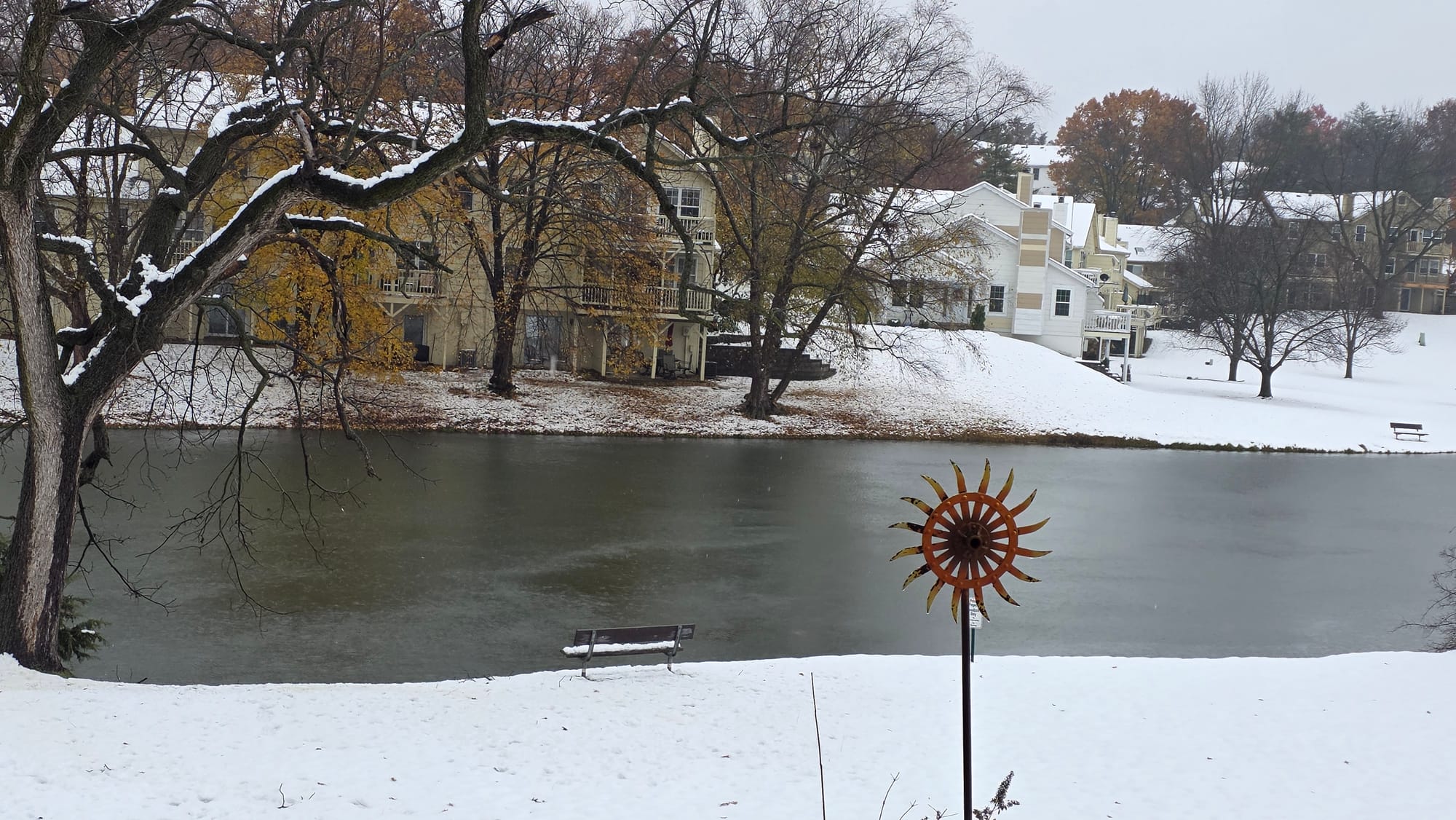
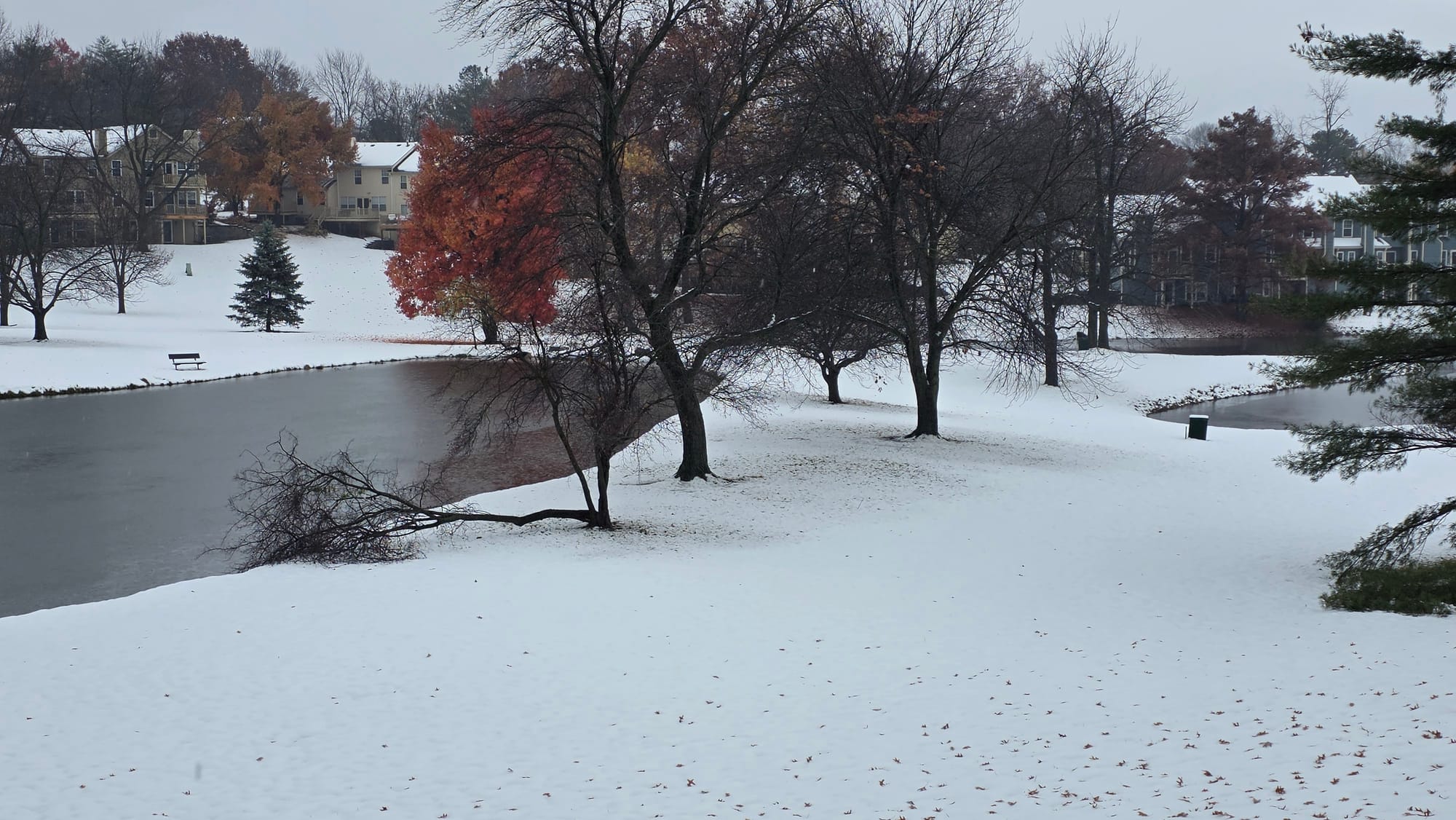
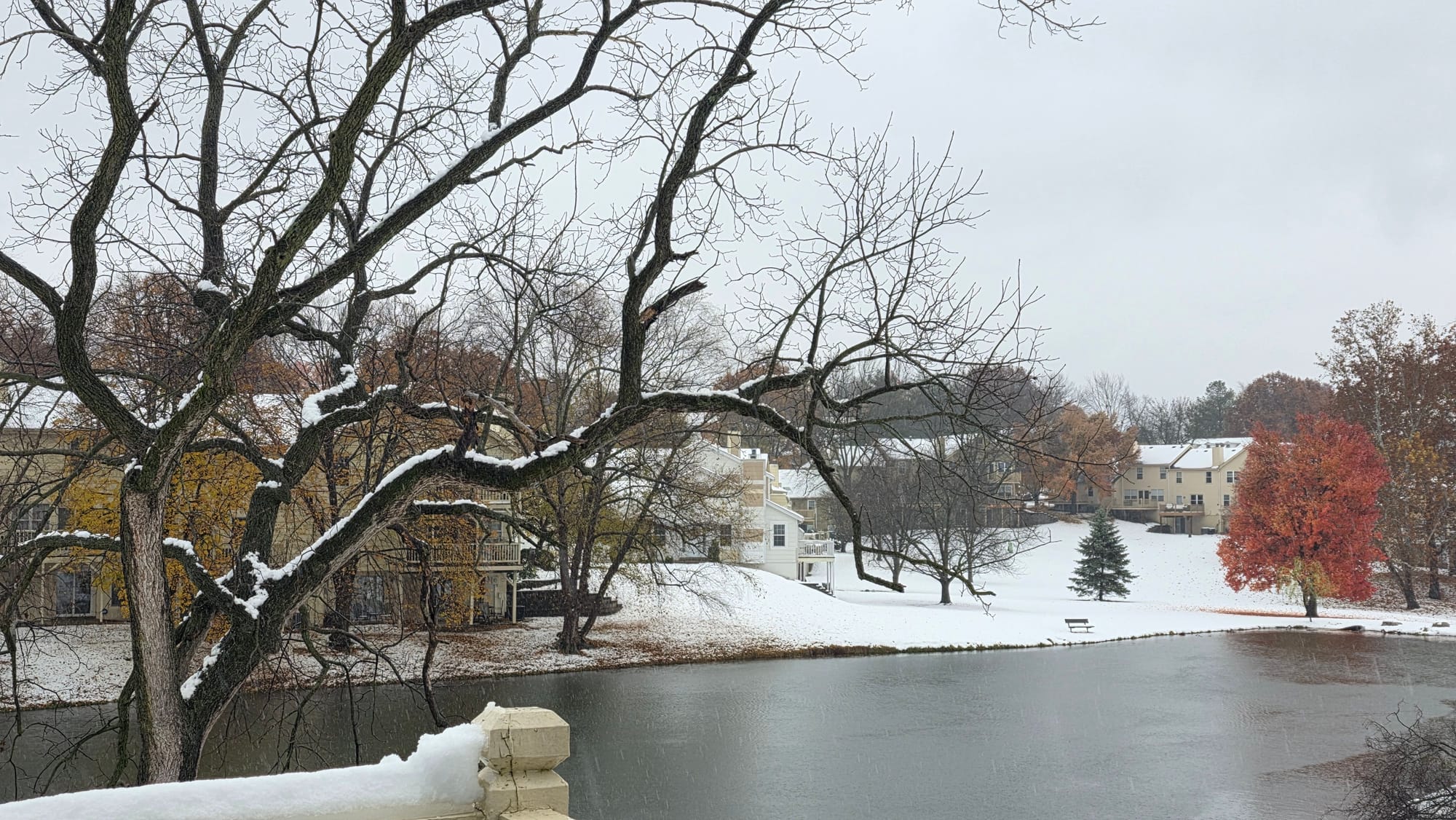
Snow had fallen throughout the previous day and Thanksgiving day itself, transforming the familiar landscape into something quietly beautiful.
A blanket of white covered the ground, snow rested along the branches of trees, and the lingering reds, oranges, and golds of autumn stood out against the muted winter scenery.
It was as though two seasons were sharing the same space, neither entirely finished nor fully begun.
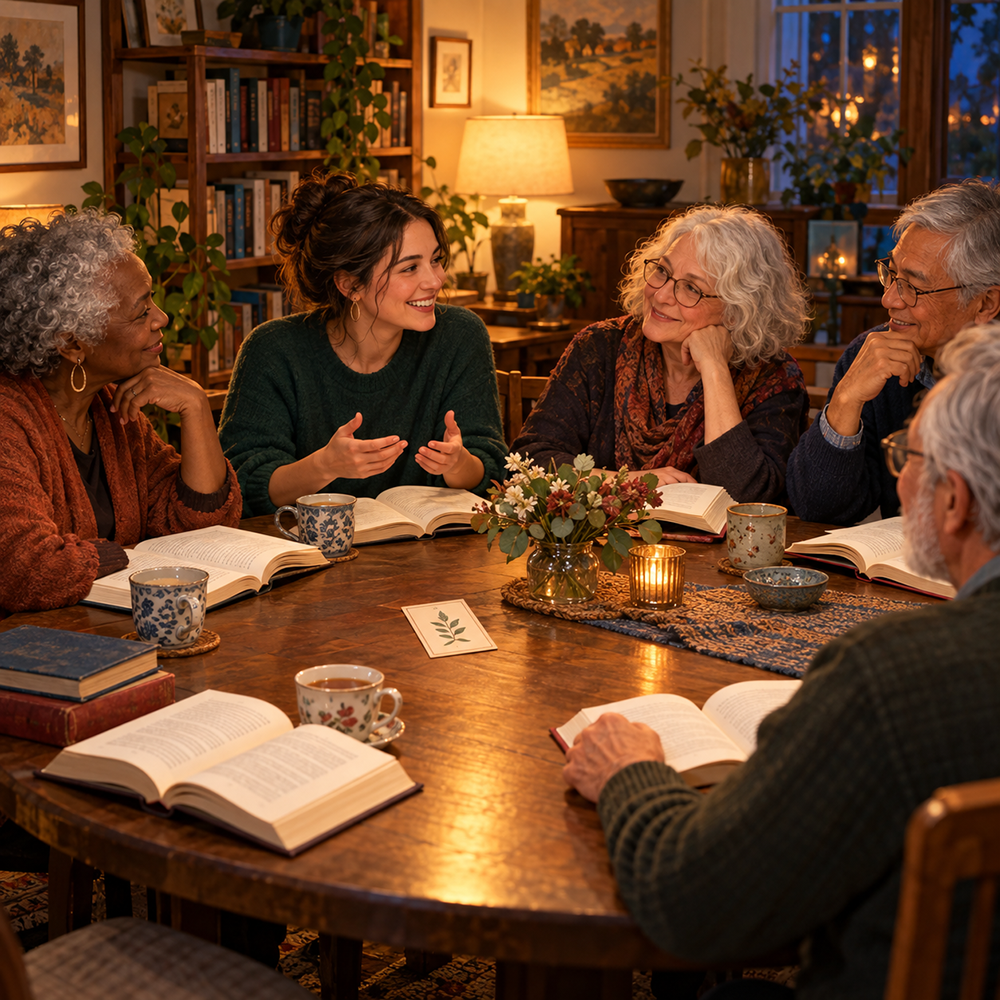
The evening before Thanksgiving, I had gathered around a table with my friend, their mom, their grandmother, and several others.
We shared a meal, enjoyed one another's company, and celebrated together; it was quite possibly the most enjoyable holiday gathering I've experienced.
Around 10 p.m., after the guests had departed and the weather had worsened, the electricity went out; it wouldn't return until the afternoon Thanksgiving Day (and as of today—Saturday—the power has gone out additional times and we've been without Wi-Fi the entire time).
Between the holiday closures, the snowy weather, and the absence of electricity/Wi-Fi, many of the things I had intended to do were suddenly no longer possible.
And surprisingly, I was perfectly okay with that.
I had blankets; I had somewhere to sleep.
Unlike a previous power outage I experienced during the summer, when the heat made sleep nearly impossible, I could actually get comfortable and rest.
Perhaps, this was an invitation from God, the Universe, the Divine — however one understands a Higher Power — to do something I had already been feeling the need to do: Stop. Rest. Relax. Simply exist for a little while.
So that's what I did.
Later on Thanksgiving Day, I also spent time with my friend and their mom (I also spent time with them yesterday and will be spending more time with them after I finish writing this); the unexpected interruption hadn't taken away the opportunity to celebrate Thanksgiving or enjoy meaningful companionship.
Instead, it had given me something I hadn't intentionally scheduled between those moments of connection: space to breathe.
My circumstances are far from perfect, and a peaceful Thanksgiving doesn't erase the uncertainties that remain.
Yet this holiday offered something I hadn't anticipated.
Sometimes, the gifts we need most aren't the ones we plan for; sometimes, they arrive in the quiet spaces left behind when our plans change.
When the World Went Quiet
An Unexpected Change of Plans
It's not often that several aspects of everyday life come to a simultaneous standstill.
Thanksgiving/Black Friday meant many businesses and services were closed.
The snowfall made staying indoors more appealing (and some businesses decided to close early).
The power outage limited what could reasonably be accomplished even while remaining inside.
Each circumstance on its own might have been relatively insignificant; together, they created an unusual pocket of stillness.
There have been things I intended to accomplish, but many of them simply have to wait.
Spending energy trying to work around every limitation didn't particularly appeal to me, either.
Rather than feeling frustrated by what was unavailable, I found myself appreciating the simplicity of what remained.
There was something surprisingly freeing about having fewer decisions to make.
When Doing Gives Way to Being
We live in a world where there is almost always something else we could be doing.
Even when we have time off, there are projects to finish, messages to answer, responsibilities to address, information to consume, and countless ways to occupy ourselves.
The availability of these options can create its own subtle pressure; when something could be accomplished, it can be difficult to resist the feeling that it should be accomplished.
But for this stretch, many of those possibilities have been temporarily removed.
The world hadn't ended.
My responsibilities hadn't disappeared.
There would be opportunities to return to them later.
For the moment, however, there was considerably less competing for my attention.
I could simply allow the morning to unfold.
The Quiet Beauty of an Ordinary Landscape
Outside, the snow had transformed the familiar surroundings.
The pond, trees, benches, and neighboring homes were still there, yet the landscape felt different beneath its white covering.
Bare branches traced intricate patterns against the gray sky, while trees still holding their autumn leaves offered unexpected bursts of color.
Nothing particularly extraordinary needed to happen for the scene to be worth appreciating.
There was beauty in the familiar, in the temporary transformation, and in the meeting of two seasons.
Perhaps there was something fitting about witnessing a landscape entering its quieter season while finding myself unexpectedly invited into a quieter rhythm of my own.
Not every moment needs to be filled.
Not every available hour needs to be optimized.
Sometimes, there is enough in simply noticing what is already here.
 Jessica Carey

Perhaps This Was an Invitation to Rest
Listening to the Season I'm Actually In
For some time now, I've felt an increasing desire to hibernate.
Not necessarily to escape life, abandon my dreams, or withdraw from everything meaningful, but to retreat from the relentless demands that have characterized so much of my recent experience.
Living with chronic autistic burnout has made me increasingly aware of the difference between what I want to accomplish and what I realistically have the capacity to sustain.
There are so many things I care about, so many ideas I'd love to explore, and so many possibilities I can envision, yet caring deeply about something doesn't automatically provide the energy necessary to pursue it.
Enthusiasm and exhaustion can coexist.
Sometimes, even the things we genuinely enjoy need to wait while we tend to more fundamental needs.
The power outage and winter weather didn't create my need for rest; it simply provided an unexpected opportunity to honor a need that was already there.
 Jessica Carey

When Rest Is Difficult to Choose
Knowing that we need rest and allowing ourselves to receive it are two different things.
For those of us accustomed to navigating survival mode, carrying responsibilities, or continually finding ways to make difficult circumstances work, stopping can feel surprisingly complicated.
There is often something that legitimately needs our attention.
Financial concerns, unfinished projects, and uncertain circumstances don't disappear simply because we're exhausted.
Yet our need for restoration doesn't disappear because those responsibilities exist, either.
Sometimes, the difficulty isn't recognizing that we're tired; it's finding circumstances in which resting feels possible without immediately worrying about the consequences.
For a little while, the decision became considerably simpler.
Many things would have to wait regardless of what I did—why not allow myself to rest?
Considering how much I'd already been wanting to hibernate, there was something almost amusing about the timing.
Between Thanksgiving, the snow, and the power outage, life seemed to have removed most of the alternatives.
Apparently, this was going to be a rest day whether I had scheduled one or not.
Receiving an Invitation Rather Than Resisting an Interruption
I chose to receive the experience as a gentle invitation from God, the Universe, the Divine — whatever language resonates with one's understanding of a Higher Power.
Perhaps this was an opportunity to slow down, release my expectations for the day, and listen to what my body had already been communicating.
I don't need to know whether the circumstances were divinely orchestrated or simply the result of winter weather to find spiritual meaning within them.
Nor do I believe that every hardship must contain a hidden blessing or that suffering is necessary for growth.
But when an unexpected circumstance offers something genuinely nourishing, I can allow myself to receive it.
This time, what was available was rest, and rest was precisely what I needed.
Rest Is Not Something We Have to Earn
As much as I appreciated this unexpected opportunity, I also recognize that I shouldn't need a power outage, a snowstorm, or a holiday to justify slowing down.
None of us should have to reach the point where continuing becomes impossible before our need for rest is considered legitimate.
Rest is not a reward for sufficient productivity; it is not a privilege reserved for those whose responsibilities are complete.
It is a fundamental part of being alive.
And while I still have much to navigate, I don't have to resolve everything before allowing myself a moment of peace.
Perhaps the deeper invitation wasn't simply to rest while the electricity was unavailable.
Perhaps it was to remember that I'm allowed to rest even when it is.
 Jessica Carey

The Same Circumstances Can Feel Entirely Different
Two Power Outages, Two Different Experiences
This wasn't the first time I'd experienced an extended power outage while couch surfing this year.
During the summer, the electricity went out where I was staying, remaining unavailable from the afternoon until the following morning.
That experience was considerably less restful.
I don't tolerate heat particularly well, and when temperatures become uncomfortable, sleeping becomes nearly impossible for me.
Rather than providing an opportunity for restoration, the absence of electricity interfered with my ability to meet a fundamental need.
This time, however, I had blankets; I could bundle up, get comfortable, and sleep.
In both instances, I experienced circumstances outside my control, yet the impact those circumstances had on me was remarkably different.
The difference wasn't simply a matter of perspective.
It was also a matter of having what I needed.
Context Changes Our Experience
We sometimes underestimate how significantly our surroundings influence our ability to navigate unexpected situations.
Temperature, sensory conditions, physical comfort, available resources, existing exhaustion, and the support around us can all shape how we experience the same event.
This is particularly relevant for those of us with sensory sensitivities or limited capacity, although it is certainly not exclusive to neurodivergent individuals.
What feels like a manageable inconvenience under one set of circumstances may become genuinely overwhelming under another.
Even the same person can respond differently to seemingly similar situations without becoming any more or less resilient, adaptable, or spiritually grounded.
Our experiences don't occur in isolation from our environments.
Having access to what we need can make an enormous difference in how much energy an unexpected circumstance requires of us.
 Jessica Carey

Appreciation Without Comparison or Judgment
I'm grateful that this particular power outage allowed me to rest.
But that doesn't mean I should have been able to appreciate the summer outage in the same way.
Nor does it mean everyone experiencing a winter power outage has the resources to remain safe and comfortable.
The blankets, shelter, and ability to sleep weren't insignificant details; their presence mattered.
Rather than expecting ourselves or others to find peace regardless of the conditions we're experiencing, perhaps we could become more attentive to the conditions that make peace possible.
Sometimes, what we need isn't a different attitude but a different environment, additional resources, or greater support.
Having what we need can make room for experiences that might otherwise be inaccessible.
Gathering Around a Different Kind of Table
Before the electricity went out and the snow brought much of the world to a temporary standstill, I had already experienced something worth celebrating.
I had shared a Thanksgiving meal with my friend, their mom, their grandmother, and several people their grandmother knows.
There was nothing particularly elaborate or extraordinary required to make the evening meaningful; we gathered, shared food, spent time together, and enjoyed one another's company.
Yet what stood out to me most wasn't necessarily what happened during the gathering; it was how I felt afterward.
I wasn't completely drained.
I didn't feel emotionally hollow, exhausted, or as though something had been taken out of me.
I had genuinely enjoyed myself.
For someone whose previous experiences with holidays have often been considerably different, that was no small thing.
When Holidays Have Historically Meant Exhaustion
Holidays are frequently portrayed as occasions of warmth, togetherness, joy, and belonging.
But not everyone grows up experiencing them that way.
For those navigating dysfunctional family dynamics, gatherings can involve unspoken expectations, emotional labor, tension, masking, and the pressure to maintain appearances regardless of what is happening beneath the surface.
A celebration can look perfectly normal from the outside while being profoundly exhausting for those participating in it.
Throughout much of my life, holiday gatherings with my family left me feeling depleted.
Rather than experiencing the warmth and connection that holidays are supposed to represent, I often found myself feeling exhausted and somewhat dead inside.
There is a particular kind of loneliness that can accompany being surrounded by people without experiencing genuine connection.
Physical proximity is not the same as emotional closeness.
Sharing a table is not necessarily the same as experiencing belonging.
And participating in a celebration is not the same as feeling celebrated, welcomed, or nourished by it.
 Jessica Carey

Discovering That Connection Doesn't Have to Be Depleting
As an introvert and an autistic person navigating chronic burnout, I recognize that social interaction requires energy.
I value solitude, quiet, and opportunities to recharge.
But there is a meaningful difference between the ordinary tiredness that can accompany socializing and the deeper depletion that can result from navigating unhealthy relational dynamics.
Enjoying someone's company doesn't mean I won't eventually need time alone.
Needing time alone doesn't mean I didn't enjoy their company.
Both can be true.
Perhaps one of the things that made this Thanksgiving feel particularly nourishing was that it made room for both; I could enjoy meaningful companionship without having to fill every available hour with social interaction.
Solitude and connection didn't have to compete with one another—they could complement one another.
What made this Thanksgiving particularly meaningful was experiencing companionship without the familiar sense of emotional exhaustion that had characterized so many previous holidays.
In fact, rather than dreading additional holiday interactions, I found myself looking forward to spending more time with my friend and their mom later on Thanksgiving Day.
The opportunity to rest hadn't diminished my desire for companionship; there was room for both.
Perhaps some of what I had come to associate with holiday gatherings was never an inevitable part of gathering at all.
Perhaps it had much more to do with the environments and relationships in which those gatherings occurred.
Belonging Beyond Biological Family
We are often taught to associate holidays with biological family, as though shared ancestry naturally guarantees the kind of connection these occasions are meant to celebrate.
But meaningful relationships are not confined to bloodlines.
Belonging can emerge through friendship, community, shared experiences, unexpected invitations, and the simple willingness to make room for another person.
Sometimes, people who enter our lives through entirely different paths help us discover what companionship can feel like when it isn't entangled with longstanding patterns of obligation and dysfunction.
That doesn't erase the past or undo what was missing, but it does offer something valuable in the present: an experience that demonstrates other possibilities exist.
I don't currently have a permanent home of my own, yet I was welcomed into a holiday gathering where I could genuinely enjoy being present.
There is something deeply meaningful about that.
Perhaps one of the greatest gifts of this Thanksgiving wasn't discovering a new way to celebrate; it was discovering that celebration could actually feel like celebration.
 Jessica Carey
The Warmth That Doesn't Require Electricity
More Than One Kind of Warmth
When we think about losing electricity during cold weather, warmth is understandably one of our first concerns.
I was fortunate to have blankets that allowed me to remain comfortable throughout the night, but there was another kind of warmth that had nothing to do with electricity, heating systems, or the temperature outside.
It was the warmth of companionship.
Of sharing a meal.
Of being welcomed into someone's home and genuinely enjoying the time spent together.
The electricity may have gone out, but those experiences remained.
There was something beautiful about having enjoyed an evening of connection before settling into an unexpected period of quiet.
Neither experience diminished the other.
Both offered something I needed.
What Actually Makes a Holiday Meaningful?
The preparations, decorations, meals, schedules, and traditions associated with holidays can contribute to an enjoyable experience, but they cannot manufacture genuine connection.
This Thanksgiving reminded me that the logistics of a celebration and the meaning of a celebration are not necessarily the same thing.
An unexpected snowfall, a change of plans, or a temporary loss of electricity couldn't undo the warmth of an evening I had genuinely enjoyed.
The circumstances were imperfect, but the experience was no less meaningful because of it.
A Different Kind of Light
Among the snow-covered scenery stood a metal sun sculpture, surrounded by bare branches and remnants of autumn.
Against the gray sky and white landscape, it offered a fitting image for this particular Thanksgiving.
Even when the sun isn't visibly shining, we can encounter reminders of warmth and light in other forms.
Sometimes, that light appears through another person's hospitality, a shared laugh, a thoughtful invitation, or the simple comfort of being able to exist in someone's company.
These things don't eliminate every difficulty, but they can make our experience of life a little warmer.
The electricity would eventually return, but the warmth I appreciated most about this Thanksgiving had never depended on it.
Going With the Flow Without Abandoning Ourselves
Allowing the Day to Be Different
I had plans for this week—ones that didn't involve multiple power outages, no Wi-Fi, and needing to write this from the library computer.
Had the electricity remained on, the Wi-Fi remained accessible, and the weather been different, I likely would have spent portions of the week doing other things, but those plans weren't the only possible path toward an enjoyable or meaningful experience.
Rather than becoming preoccupied with what I had intended to accomplish, I allowed myself to work with what was available.
I needed to be flexible and resourceful, working with what I could, because getting upset would not change the circumstances—they were out of my control, but my mindset and outlook were something I could choose.
There would still be opportunities to celebrate, spend time with people I care about, and return to my projects.
Those possibilities hadn't disappeared simply because the day unfolded differently than anticipated.
The schedule had changed, not the potential for goodness.
Sometimes, we become so attached to our expectations of an experience that we overlook what the experience itself has to offer.
An unexpected change doesn't necessarily mean something has been ruined; it may simply mean that the day will take a different shape.
Acceptance Is Not Resignation
Going with the flow is sometimes interpreted as accepting whatever happens without objection, but there is an important distinction between accepting the reality of a present circumstance and surrendering our legitimate needs, boundaries, or aspirations.
I can accept that the electricity is temporarily unavailable without accepting housing instability as a permanent condition.
I can appreciate an unexpected opportunity to rest while continuing to advocate for circumstances that would make regular rest possible.
I can find goodness in the present without abandoning my hopes for the future.
Acceptance doesn't have to mean approving of everything that happens.
Nor does it require remaining in harmful situations, suppressing discomfort, or pretending that unmet needs don't matter.
Sometimes, it simply means recognizing where we are and responding to what is actually happening rather than exhausting ourselves trying to make the present conform to what we expected.
Flexibility That Honors Our Needs
What made going with the flow particularly accessible this Thanksgiving was that the alternative aligned with something I genuinely needed.
I wasn't overriding my body's signals in the name of adaptability.
I was allowing myself to rest.
Healthy flexibility involves discerning when to adjust our plans, when to honor our limits, and when circumstances require us to advocate for change.
Some situations call for action.
Others call for boundaries.
And some offer an opportunity to release our expectations and receive something different.
This Thanksgiving happened to offer the latter.
I didn't accomplish everything I had originally intended, but that doesn't mean the time was wasted.
Sometimes, going with the flow isn't about learning to tolerate more.
Sometimes, it's about allowing ourselves to demand a little less of the moment — and of ourselves.
Gratitude Without Forced Positivity
Goodness Doesn't Require the Absence of Hardship
Thanksgiving naturally invites reflection on gratitude, but gratitude can become complicated when life isn't unfolding as we had hoped.
I'm still navigating chronic autistic burnout, financial hardship, housing instability, and considerable uncertainty about the future.
A beautiful snowfall, an enjoyable holiday gathering, and an unexpected opportunity to rest haven't resolved those challenges, but they don't need to resolve them to be meaningful.
I can be concerned about my financial circumstances while appreciating a shared meal.
I can long for a permanent home of my own while feeling grateful for the hospitality I've received.
I can be deeply exhausted while genuinely enjoying someone's company.
I can have unresolved concerns about tomorrow while experiencing peace today.
These experiences don't contradict one another.
Life rarely fits neatly into categories of entirely good or entirely bad. Often, we find ourselves holding several different truths at once.
Gratitude Is Not a Competition in Suffering
When the electricity went out, I recognized that the circumstances could have been considerably worse.
I had blankets, shelter, and the ability to sleep; the previous evening's celebration had already taken place, and there were still opportunities to spend time with people I cared about.
Recognizing these things helped me appreciate what was available.
However, acknowledging that circumstances could be worse is different from believing that our difficulties are insignificant because someone else is experiencing greater hardship.
Gratitude shouldn't require us to minimize our struggles, silence our needs, or feel guilty for wanting circumstances to improve.
Someone else's suffering doesn't invalidate our own, just as our own suffering doesn't prevent us from appreciating something good.
We don't have to choose between compassion for what is difficult and appreciation for what is beautiful.
There is room for both.
 Jessica Carey

Gratitude as Noticing Rather Than Performing
Perhaps gratitude becomes more nourishing when we approach it as an opportunity to notice rather than an obligation to feel a particular way.
This week, there are many things worth noticing.
The unexpected beauty of snow resting alongside autumn foliage.
The comfort of warm blankets.
The enjoyment of a shared meal.
The absence of the emotional exhaustion I had come to associate with holidays.
The opportunity to sleep, slow down, and spend time with people whose company I genuinely enjoyed.
None of these experiences needed to become a grand solution to my circumstances.
They were valuable in their own right.
I didn't have to convince myself that everything was wonderful.
I didn't have to manufacture enthusiasm or reinterpret every difficulty as a blessing.
There was already something good to appreciate.
Perhaps authentic gratitude isn't about making our lives appear brighter than they are.
It's about allowing ourselves to recognize the light that is genuinely present without pretending the shadows don't exist, and sometimes, that light is enough to make an ordinary, imperfect day worth celebrating.
Nature's Permission to Enter a Season of Stillness
When Two Seasons Share the Same Landscape
One of the things I particularly appreciated about the snowfall was the coexistence of autumn and winter.
Some trees had already surrendered their leaves, while others still displayed vibrant shades of red, orange, and gold.
Snow covered the ground and rested along branches, creating a landscape that seemed to belong to two seasons simultaneously.
There was no uniform transition; each tree appeared to be moving through the changing season in its own way, according to its own rhythm.
Perhaps there is something we can learn from that.
Our own transitions rarely happen according to neat schedules.
We may be ready to release certain things while still holding onto others.
We may experience moments of renewed enthusiasm alongside a profound need for restoration.
We can find ourselves somewhere between seasons, and there is nothing inherently wrong with that.
Not Every Season Is a Season of Production
Nature doesn't maintain the same level of visible activity throughout the year.
Many trees enter dormancy.
Some animals hibernate.
Plants conserve resources, and the landscape undergoes changes that aren't always immediately apparent.
Yet we don't generally look at a snow-covered garden and accuse it of failing to reach its potential; we recognize that it is experiencing a different season.
Human beings, however, are often expected to maintain relatively consistent levels of productivity regardless of changing circumstances, available resources, or personal capacity.
We may even internalize those expectations, measuring ourselves against what we could accomplish during an entirely different season of our lives.
Lately, I've felt drawn toward a quieter rhythm — something resembling my own version of hibernation.
Perhaps that desire deserves curiosity rather than criticism.
A Garden Is Still a Garden in Winter
One of the central metaphors behind my book, Learning What Love Was Supposed to Feel Like, is the importance of creating conditions that honor the nature and needs of living beings.
A garden doesn't lose its identity or worth when its flowers stop blooming; it doesn't become undeserving of care because its growth is no longer visible.
And neither do we.
There may be things happening beneath the surface during quieter periods of our lives.
We may be processing experiences, conserving energy, rediscovering ourselves, or gradually recovering capacity.
But even if we cannot identify some hidden form of growth, our stillness doesn't need to be justified by what it might eventually produce.
We are living beings, not perpetual production systems.
Perhaps this Thanksgiving week offered a small opportunity to embrace the rhythm the landscape seemed to embody.
To allow the season to be what it was.
To exist without demanding immediate transformation.
And to remember that even a garden beneath a blanket of snow remains worthy of tenderness, patience, and care.
 Jessica Carey

Receiving Instead of Constantly Giving
The Other Side of Giving
Thanksgiving often brings attention to what we can give: our time, resources, assistance, hospitality, and expressions of appreciation.
There is tremendous beauty in giving freely and contributing to the well-being of others.
But there is another side of generosity that deserves recognition.
Receiving.
For those of us accustomed to being the dependable person, anticipating others' needs, or finding ways to be helpful, receiving can sometimes feel less familiar than giving.
We may become so accustomed to considering what we can offer that we rarely consider what we might allow ourselves to receive.
Yet meaningful relationships aren't sustained by one person continually pouring into others while having nowhere to replenish themselves.
Healthy communities make room for both giving and receiving.
Allowing Goodness to Reach Us
Much of what made this Thanksgiving meaningful wasn't something I needed to accomplish.
From the hospitality I received to the beauty of the snowy landscape, there were experiences I could appreciate without needing to create, improve, or orchestrate them.
These moments reminded me that not everything meaningful in life needs to originate from my own efforts.
Sometimes, goodness reaches us through the generosity of others; sometimes, it emerges through circumstances we couldn't have anticipated.
And sometimes, our role is simply to welcome what is being offered.
Being Welcome Without Having to Earn It
There is a difference between contributing to a community because we genuinely want to and feeling that we must continually demonstrate our usefulness to justify our place within it.
Our capacity to give will naturally fluctuate throughout our lives; there will be seasons when we have an abundance to share and seasons when we need considerably more support than we can provide.
Neither determines our inherent worth.
I still have a deep desire to create, contribute, and help cultivate communities where others can experience genuine belonging.
But that vision doesn't require me to exclude myself from the kindness I hope to extend to others; I am also someone who can receive hospitality, companionship, understanding, and care.
Perhaps part of cultivating a more compassionate world is allowing ourselves to participate in that compassion from both sides.
Not every gift needs to become a debt.
Not every kindness requires immediate repayment.
Sometimes, receiving with genuine appreciation is enough.
 Jessica Carey

Gentle Reflections for an Imperfect Holiday
Whether this Thanksgiving has brought celebration, solitude, unexpected changes, difficult emotions, or some combination of these experiences, there is no single correct way to experience the day.
Perhaps, rather than evaluating how closely our lives resemble our expectations, we can approach our present circumstances with a little more curiosity and compassion.
If it feels nourishing, consider sitting with one or more of these questions:
- What unexpected goodness has appeared in my life recently?
- What have I been needing but struggling to give myself permission to receive?
- Which relationships and environments leave me feeling nourished rather than depleted?
- What expectations could I release without abandoning my genuine needs?
- Can I appreciate something good without requiring it to resolve everything that is difficult?
- What would honoring my current season of life look like?
- What might become possible if I allowed myself to receive kindness as freely as I hope to offer it?
- Can I allow an unplanned moment to be meaningful without needing to make it productive?
There is no need to answer every question, arrive at a profound realization, or transform these reflections into another project.
Perhaps one question resonates. Perhaps none do.
Perhaps what would be most nourishing right now is simply putting everything aside and enjoying a little stillness.
That, too, is a perfectly worthwhile way to spend the moment.
Perhaps This Was the Thanksgiving I Needed
Thanksgiving afternoon, the electricity returned before going out again on Friday while the Wi-Fi still remains unavailable.
The things I had intended to do became possible again; there were still projects awaiting my attention, responsibilities to navigate, and uncertainties that hadn't disappeared.
But I don't regret the hours that had unfolded differently than anticipated.
I had shared a Thanksgiving meal with people whose company I genuinely enjoyed.
I had appreciated the beauty of a landscape where autumn and winter met.
I had wrapped myself in blankets, slept, and allowed myself to experience a little stillness.
And later that day, there was another opportunity to enjoy the company of people I cared about.
What initially appeared to be an interruption hadn't prevented me from experiencing the holiday.
If anything, it had allowed me to experience a different balance of what I needed: companionship and solitude, celebration and restoration, warmth and quiet.
Perhaps this was the Thanksgiving I needed rather than the Thanksgiving I had planned.
Not because losing electricity was inherently a blessing, but because I was able to receive something nourishing within the circumstances that unfolded.
I don't know what the coming weeks or months will bring; I still long for greater stability, a home of my own, and circumstances that allow me to recover and flourish.
But I don't have to postpone appreciating life until those things become reality.
This Thanksgiving didn't need to change everything to be worth celebrating.
It offered a reminder that meaningful connection is possible, that kindness can reach us in unexpected ways, and that there can be moments of genuine peace even within an uncertain season.
Perhaps the invitation now is to carry a little of that gentleness forward — to remember that rest is still available to honor when the lights are on, that plans can change without diminishing the value of a day, and that goodness doesn't always need to be pursued to be encountered.
Sometimes, it is already there, waiting to be noticed and received.
This Thanksgiving, the lights went out.
Yet there was warmth, there was companionship, there was beauty, and there was peace, and for that, I am genuinely grateful.
Want even more content about creativity and art?
Be sure to check out all of our creative chronicles!
If you'd like to see examples of my work, you can find some of my art and creations at Redbubble and Gumroad!
Looking to learn more about my recent journey?
Check out some of these articles:
-Hidden Gems for St. Louis Artists
-Hidden Gems for Autistic & Neurodivergent Adults
-The Difference Between Resting and Giving Up
-Building a Life from What Remains
 Jessica Carey