

When Being Alone Hurts Less Than Being Surrounded by the Wrong People
One of the greatest misconceptions about loneliness is that it comes from being alone.
It doesn't.
Some of the loneliest seasons of my life happened while I was surrounded by people.
Family members.
Friends.
Coworkers.
Teachers.
A romantic partner.
People saw me every day, yet very few truly knew me.
Some made assumptions instead of asking questions.
Some projected motives onto me that never existed.
Some used me for what I could provide.
Some judged me without trying to understand me.
Others simply remained emotionally indifferent.
For years, I found myself surrounded by people while feeling increasingly invisible.
That kind of loneliness is difficult to describe to someone who hasn't experienced it. It isn't the quiet solitude of spending an evening by yourself.
It is the exhausting feeling of constantly shrinking, masking, explaining yourself, or walking on eggshells while longing for someone—anyone—to simply see you as you are.
Over time, I learned something I never expected: being alone and being lonely are not the same thing.
In many ways, I discovered that peaceful solitude was far less painful than constantly being surrounded by relationships that left me feeling unseen, unsafe, or emotionally depleted.
That doesn't mean I stopped wanting connection.
Quite the opposite.
Like many people, I've always dreamed of finding a genuine life partner, building a loving family, and creating a home filled with warmth, laughter, and emotional safety. The safe, loving home I had never been given.
Those desires never disappeared, but my definition of success changed.
I never wanted just relationships. Not just anyone can fill those empty spots.
I want healthy relationships.
Because the wrong people can slowly convince you that you are too much, not enough, difficult to love, impossible to understand, or responsible for carrying everyone else's emotional burdens.
The right people do something entirely different; they create space for you to become more fully yourself.
That realization changes how people think about friendship, family, community, and romantic love.
The goal is not simply to avoid being alone; the goal is to build relationships where everyone involved can genuinely flourish.
 Jessica Carey
We Were Never Meant to Simply Collect People
Modern culture often measures success by how many people surround us.
How many followers.
How many friends.
Whether we're married.
Whether we're dating.
Whether we always have someone to text.
Yet none of those things tell us whether we are actually connected.
A crowded room cannot cure emotional loneliness.
Just having a relationship cannot heal emotional neglect.
Marriage cannot replace mutual respect.
And constant communication cannot substitute for genuine understanding.
Human beings don't simply need proximity; we need presence.
We need people who are curious about who we are instead of assuming they already know.
- People who listen instead of waiting for their turn to speak
- People who celebrate our growth instead of feeling threatened by it
- People who care whether we've eaten, whether we're safe, whether we're struggling, and whether we're becoming the people we hope to be
Those are the relationships that nourish us.
Everything else may fill our calendars while quietly leaving our hearts empty.
 Jessica Carey
The People Closest to You Always Shape You
Whether we realize it or not, every relationship leaves fingerprints on us.
Not because other people define our worth, but because human beings are deeply relational. We learn who we are, what to expect from others, and what we believe is "normal" through repeated interactions with the people around us.
Healthy relationships help us grow while unhealthy relationships teach us to disappear.
The difference is rarely found in a single dramatic moment. More often, it's found in thousands of ordinary interactions over weeks, months, and years.
The friend who celebrates your excitement instead of dismissing it.
The partner who listens instead of becoming defensive.
The coworker who gives credit where it's due.
The neighbor who checks in after a difficult week.
The parent who apologizes after making a mistake.
The teacher who believes in your potential.
These moments may seem small on their own, but together they create an environment where people feel safe enough to grow.
The opposite is equally true.
Constant criticism.
Walking on eggshells.
Being ignored.
Having your feelings minimized.
Feeling like your needs are an inconvenience.
Being manipulated through guilt or fear.
Always wondering which version of someone you'll encounter today.
These experiences slowly reshape a person, too.
Not because they're weak, but because human beings aren't designed to thrive in environments where love feels conditional and safety feels uncertain.
Over time, many people begin shrinking themselves without even realizing it.
They stop sharing ideas because they're used to being dismissed.
They apologize for having needs.
They second-guess their memories.
They become afraid to disappoint people.
They laugh less.
Dream less.
Trust less.
Not because that's who they truly are, but because they've spent years adapting to relationships that required them to become smaller in order to survive.
Healthy relationships invite the opposite.
They don't require you to become less of yourself.
They give you the freedom to become more.
 Jessica Carey
w
The Health of a Relationship Is Measured by What It Grows
One question has become increasingly important to me over the years.
Not: "How long have we known each other?"
Or: "What title does this relationship have?"
Instead, I ask something much simpler: Who am I becoming because of this relationship?
- Am I becoming more peaceful?
- More confident?
- More compassionate?
- More honest?
- More curious?
- More fully myself?
- Or am I becoming more anxious?
- More exhausted?
- More afraid?
- More withdrawn?
- More convinced that my needs don't matter?
Relationships are like gardens.
Whatever they're consistently watered with is what eventually grows.
Care grows trust.
Respect grows security.
Honesty grows intimacy.
Encouragement grows confidence.
But criticism grows fear.
Control grows resentment.
Manipulation grows confusion.
Neglect grows loneliness.
Eventually, every relationship bears fruit that reflects what has been planted there.
That is why choosing the people we allow close to us matters so deeply.
Not because people need to be perfect, but because love is never just something we feel.
It is something we cultivate together, one interaction at a time.
Flourishing doesn't mean a life without hardship.
It means having relationships that help you meet hardship without losing yourself.
It means having room to laugh, to grieve, to create, to rest, to make mistakes, to learn, and to keep becoming the person you were created to be.
 Jessica Carey
When the Fear of Being Alone Becomes Greater Than the Desire to Be Well
Most people don't stay in unhealthy relationships because they enjoy being mistreated.
They stay because they're afraid of what comes next.
- Afraid of being alone
- Afraid that no one else will love them
- Afraid they've invested too much to leave
- Afraid that starting over means they've failed
- Afraid that this is simply "how relationships are"
That fear is understandable.
Human beings were never meant to live in complete isolation. We naturally long for companionship, belonging, and people who will walk through life beside us. There is nothing weak or shameful about wanting those things.
I've wanted them, too.
I've always hoped to one day build a peaceful home with a loving partner and children—a place where kindness is ordinary, laughter is welcomed, mistakes are repaired, and everyone knows they are safe to be themselves.
Those dreams are beautiful, and they are worth protecting.
Because loneliness can tempt us to accept relationships that quietly destroy the very future we're hoping to build.
Sometimes people stay because they believe someone is better than no one.
But that isn't always true.
If a relationship constantly leaves you feeling anxious, invisible, manipulated, belittled, or unsafe, its presence may actually deepen the loneliness it promised to cure.
A relationship cannot fill the ache of loneliness if it is the very thing creating it.
 Jessica Carey
Being Chosen Is Not the Same as Being Cherished
One of the easiest traps to fall into is believing that someone's interest automatically means they value us.
It doesn't.
Someone can pursue you intensely while remaining completely uninterested in your well-being.
Someone can say they love you while repeatedly disrespecting your boundaries.
Someone can want your attention without wanting your flourishing.
Being wanted is flattering.
Being cherished is life-giving.
The difference isn't found in grand romantic gestures or dramatic declarations.
It's found in ordinary patterns:
- Do they listen when you speak?
- Do they respect your "no" without punishing you for it?
- Do they celebrate your growth, or do they feel threatened by it?
- Do they care about your hopes, your fears, your health, your dreams?
- Can you disagree without fearing retaliation?
- Do they make your life more peaceful, or more chaotic?
Healthy love isn't proven by how intensely someone pursues you.
It's revealed by how consistently they care for you.
 Jessica Carey
Love Should Never Require You to Become Smaller
One of the saddest realities of unhealthy relationships is how gradually they can reshape a person's sense of self.
Not all at once.
Little by little.
You stop bringing up your needs because they always become arguments.
You stop sharing your excitement because it gets dismissed.
You stop expressing your opinions because conflict feels inevitable.
You stop asking for help because you've learned disappointment is easier than hope.
Eventually, you aren't choosing silence because it's who you are.
You're choosing silence because it feels safer.
Healthy love moves in the opposite direction.
It doesn't ask you to disappear.
It invites you to unfold.
The healthiest people don't love a carefully edited version of you.
They make it safer for the real you to emerge.
They don't demand perfection.
They make room for honesty.
They don't require constant performance.
They welcome authenticity.
And they don't ask you to earn your worth.
They recognize it from the beginning.
 Jessica Carey
Genuine Care Is Measured in Ordinary Moments
When people think about love, they often imagine grand romantic gestures.
Expensive gifts.
Dramatic declarations.
Picture-perfect moments.
Those things can certainly be meaningful, but they are not what sustain relationships.
Real care is usually much quieter:
- It's noticing someone hasn't eaten and bringing them a meal
- Remembering the book they mentioned months ago because you know it would make them smile
- Driving across town because their car broke down
- Checking in after a difficult day
- Helping carry a heavy box
- Celebrating their successes without making them about yourself
- Sitting beside them in silence when words aren't enough
- Respecting their "no" without guilt or punishment
- Repairing after you've hurt them instead of pretending nothing happened
The healthiest relationships are rarely built on extraordinary moments.
They're built on thousands of ordinary ones.
 Jessica Carey
Caring Means Asking: "What Helps You Flourish?"
One of the biggest differences I've noticed between healthy and unhealthy relationships is the direction their attention flows.
Unhealthy relationships often revolve around one question: "What can I get from this person?"
Healthy relationships quietly ask something different: "How can I contribute to this person's well-being?"
That doesn't mean sacrificing yourself.
It doesn't mean abandoning your own needs.
Healthy relationships aren't one-sided rescue missions.
Both people remain responsible for their own lives.
Both people have boundaries.
Both people have needs.
But each genuinely wants the other person to flourish, and that changes everything.
- When someone is hungry, you look for ways to help feed them if you're able.
- When they're overwhelmed, you ask what would lighten the load.
- When they're celebrating, you celebrate with them.
- When they're grieving, you don't rush them to "move on."
Care doesn't always solve someone's problems.
Sometimes it simply says: "You don't have to carry this alone."
 Jessica Carey
Healthy Relationships Make Life Bigger
Healthy relationships don't simply protect us from harm.
They expand our lives.
They introduce us to new ideas.
Encourage forgotten dreams.
Laugh with us until our stomachs hurt.
Celebrate milestones that might otherwise pass unnoticed.
Invite us into communities we'd never have discovered on our own.
Help us become braver versions of ourselves.
Life begins to feel larger because it is no longer carried alone.
One person's excitement becomes shared excitement.
One person's victory becomes everyone's celebration.
One person's burden becomes lighter because many hands help carry it.
Healthy relationships don't merely help us survive.
They help us delight in being alive.
Healthy relationships often give us the courage to create again.
To pick up the paintbrush after years of believing we weren't talented enough.
To share our ideas without fear of ridicule.
To try something new because someone believed in us before we fully believed in ourselves.
When people feel emotionally safe, creativity often begins to bloom alongside healing.
Healthy relationships also remind us that life is meant to be delighted in—not merely endured.
They become the people we can't wait to call when something wonderful happens.
The people who laugh with us until our stomachs hurt.
Who celebrate our victories without making them about themselves.
Who notice beauty alongside us.
Who encourage spontaneous adventures, shared traditions, inside jokes, and ordinary moments that become cherished memories.
Delight has a way of multiplying when it is shared.
One person's excitement becomes everyone else's celebration, just as one person's burden becomes lighter when many hands help carry it.
Joy becomes more joyful.
Wonder becomes more contagious.
Hope becomes easier to hold.
Healthy relationships don't simply help us survive life's hardships.
They help us experience more fully the goodness, beauty, and everyday moments that make life worth living.
 Jessica Carey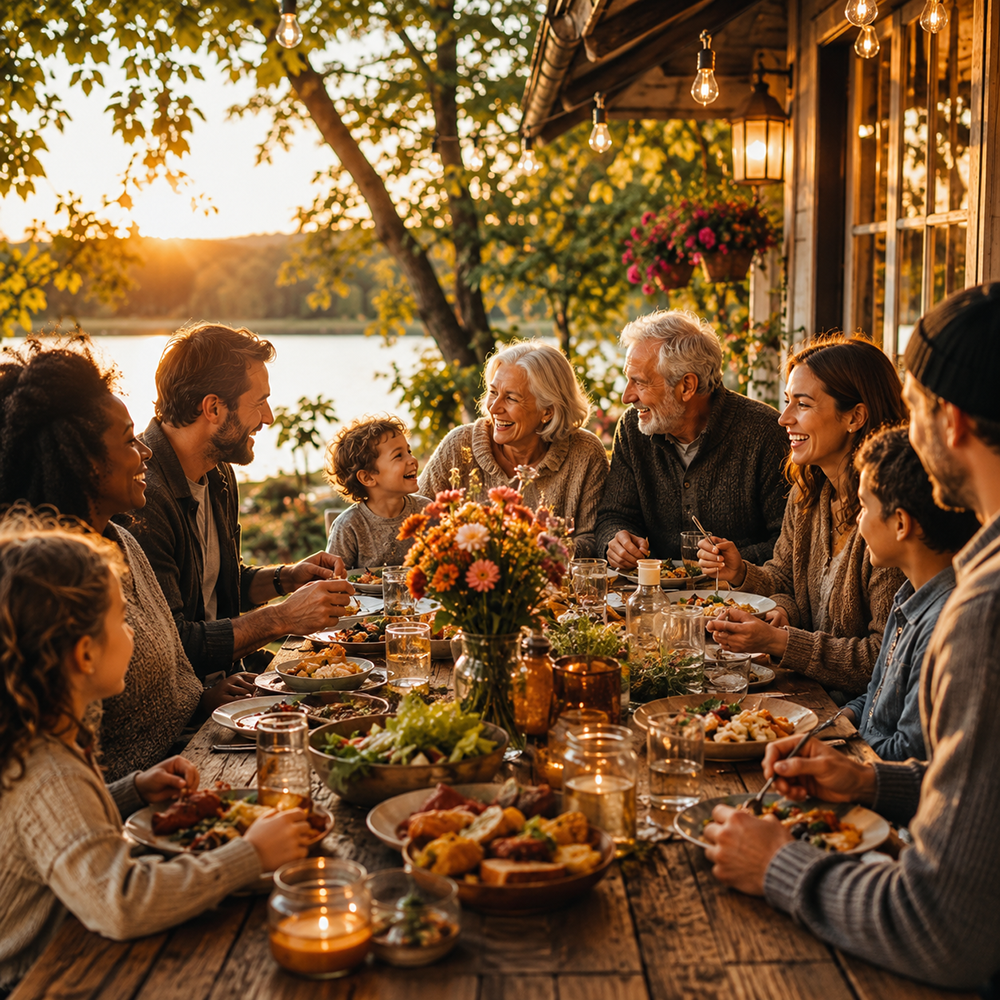
Healthy Relationships Let Both People Carry the Weight
One of the beautiful things about healthy relationships is that responsibility isn't carried by one person.
Sometimes you're the one bringing groceries.
Sometimes you're the one needing groceries.
Sometimes you're the one giving encouragement.
Sometimes you're the one needing someone to sit beside you.
Healthy relationships allow these seasons to change without shame.
No one is expected to be endlessly strong.
No one is expected to endlessly rescue.
Giving and receiving become part of the same rhythm.
Sometimes the greatest gift we can offer someone is allowing them the joy of caring for us, too.
Healthy relationships aren't built on one person always being the helper and the other always being helped.
They are built on the freedom for both people to give, receive, support, and be supported as life's seasons change.
Healthy relationships aren't measured by perfect equality in every moment. They are marked by a shared willingness to care for one another across the changing seasons of life.
 Jessica Carey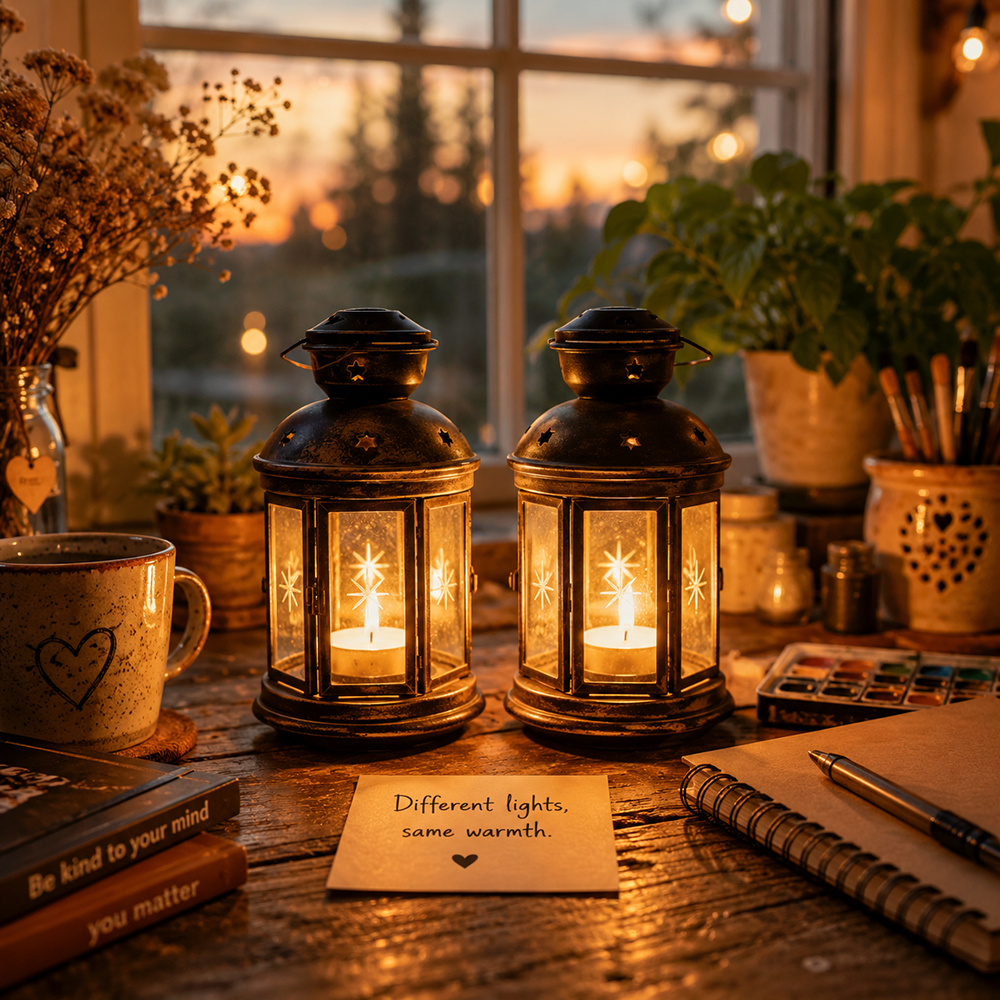
Love Lives in the Everyday
One of the most beautiful things about genuine care is that it rarely requires extraordinary wealth, influence, or status.
Anyone can practice it.
Sometimes it's making an extra sandwich because you know someone skipped lunch.
Sometimes it's sending a message that simply says: "I've been thinking about you. How are you doing?"
Sometimes it's offering someone a ride.
Sharing knowledge you've learned.
Making something by hand because you know it would mean something to them.
Listening without trying to fix everything.
Or simply showing up when you said you would.
These moments often seem too small to matter, yet they are the very moments relationships are built from.
We don't usually remember every conversation we've had with someone.
We remember how they consistently made us feel.
Whether we felt safe.
Whether we felt valued.
Whether we felt seen.
Whether we felt like we mattered.
Those are the memories that quietly shape our understanding of love.
 Jessica Carey
The Goal Isn't to Impress People. It's to Care for Them.
Healthy relationships aren't performances.
They aren't competitions over who gave the biggest gift or planned the most elaborate surprise.
The deepest expressions of love often go unnoticed by everyone except the people involved:
- A spouse making coffee before the other wakes up
- A friend remembering your favorite snack after a difficult week
- A neighbor mowing an elderly person's lawn
- Someone noticing you're unusually quiet and gently asking if you're okay
None of these things are flashy.
But all of them communicate the same message:
- "I see you."
- "You matter to me."
- "Your well-being matters."
And perhaps that is one of the simplest definitions of love.
Not merely feeling affection for another person.
But consistently choosing actions that communicate: "Your life has value, and I want to help protect and nurture it."
People rarely remember who impressed them most. They remember who consistently made them feel safe, respected, and genuinely cared for.
 Jessica Carey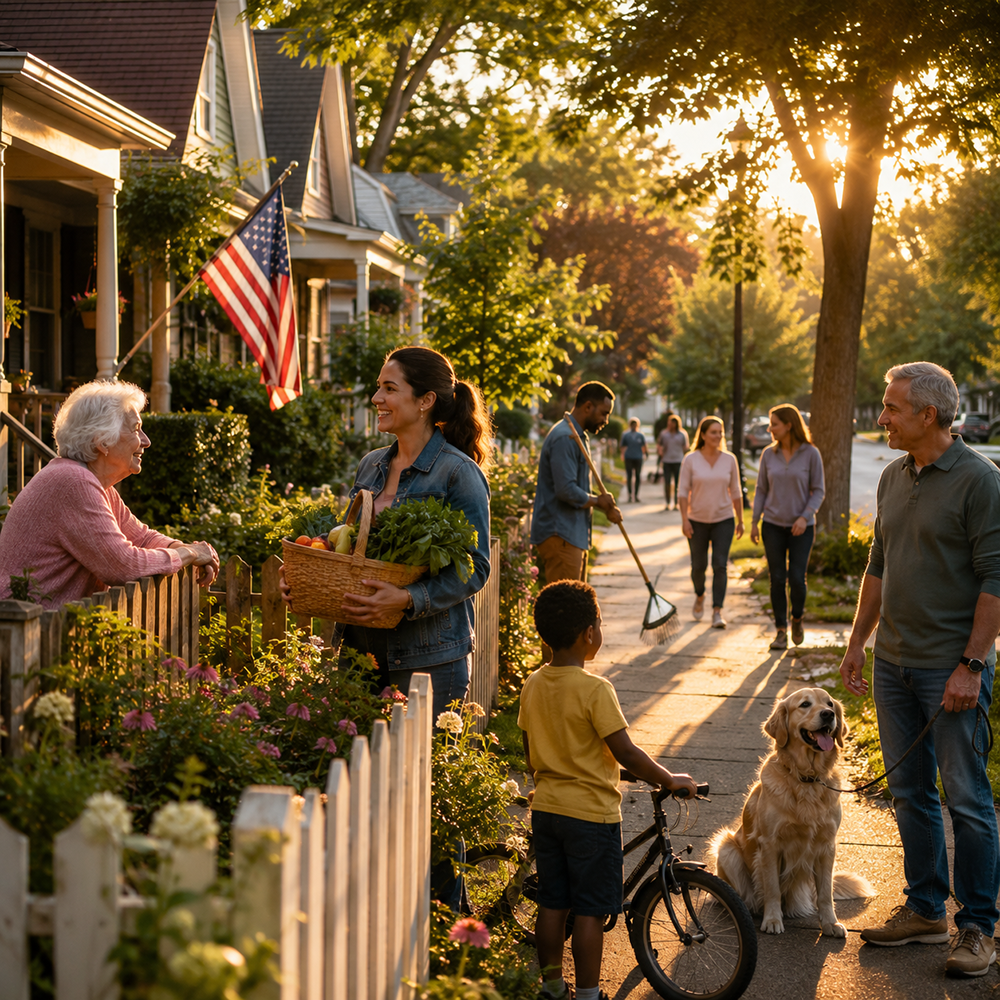
Relationships Are Built, Not Found
Many of us grow up searching for the "right person."
The right friend.
The right partner.
The right community.
The right neighbors.
The right workplace.
And while finding healthy people certainly matters, relationships don't become healthy simply because we meet someone compatible.
They become healthy because everyone involved continually chooses to build them.
Trust is built.
Respect is built.
Safety is built.
Friendship is built.
Love is built.
Community is built.
None of these things simply appear overnight.
They're created through countless ordinary choices that communicate:
- "I value you."
- "I respect you."
- "I'm willing to repair when I make mistakes."
- "I want this relationship to be a place where both of us can flourish."
Healthy relationships aren't accidents.
They're living things, and like any living thing, they require ongoing care.
Moreover, healthy environments don't eliminate storms; they help living things survive them.
 Jessica Carey
We Become One Another's Environment
One realization has changed how I think about every relationship in my life.
We don't simply exist around other people; we become part of one another's environment.
Just as plants respond to the soil, water, sunlight, and climate surrounding them, human beings respond to the emotional environments created by the people closest to them.
Some environments encourage growth while others make growth incredibly difficult.
An environment filled with encouragement, honesty, patience, accountability, curiosity, and mutual respect allows people to stretch toward the light.
An environment filled with fear, criticism, manipulation, unpredictability, or constant judgment teaches people to stay small.
Neither environment changes someone's inherent worth.
A flower planted in rocky soil is no less a flower.
A tree growing through concrete hasn't become less alive.
But the conditions surrounding living things profoundly influence how easily they can grow.
The same is true for us.
Think about what happens to a plant that never receives enough sunlight.
It doesn't stop being a living thing.
It simply spends its energy trying to survive rather than reaching its full potential.
Move that same plant into healthier conditions, and something remarkable often happens.
Growth that once seemed impossible begins to appear.
Not because the plant became something different.
But because the environment finally allowed it to become what it already had the capacity to be.
Human beings often experience something remarkably similar.
In healthy relationships, people laugh more freely.
They become more curious.
They take healthy risks.
They rediscover forgotten interests.
They speak more honestly.
They create more.
They rest more deeply.
They begin trusting their own thoughts and feelings again.
Not because another person "fixed" them.
But because they no longer have to spend every interaction protecting themselves.
Safety frees up energy that survival once consumed.
The opposite is equally true.
Imagine spending years in an environment where every mistake is criticized.
Every success is minimized.
Every disagreement becomes an argument.
Every need feels like an inconvenience.
Every vulnerable moment is later used against you.
Eventually, you don't stop dreaming because you lack dreams.
You stop dreaming because dreaming no longer feels safe.
You don't stop speaking because you have nothing to say.
You stop speaking because you've learned that silence carries fewer consequences.
The environment quietly teaches you how much of yourself feels "allowed."
This is why healthy relationships matter so profoundly.
They don't merely make us feel good.
They create conditions where courage can grow.
Where creativity can return.
Where laughter feels natural instead of forced.
Where rest no longer feels dangerous.
Where mistakes become opportunities for learning instead of reasons for shame.
Where people don't have to perform in order to be loved.
Perhaps this is one of the greatest gifts we can offer another human being.
Not perfection.
Not constant happiness.
Not solving every problem they face.
But becoming someone whose presence makes it easier—not harder—for them to become fully themselves.
Because long after people forget the exact words we spoke or the gifts we gave, they often remember something even more important.
They remember what it felt like to be with us.
Whether our presence felt like sunlight after a long winter.
Or whether it felt like walking through another storm.
Every one of us becomes part of the climate someone else lives in.
The question is not whether we'll influence the people around us.
The question is whether our presence consistently communicates:
- "You are safe here."
- "You are worthy of respect."
- "You don't have to pretend to earn your place."
- "You are free to grow."
 Jessica Carey
We All Help Shape the World Someone Else Lives In
This realization has made me think differently about everyday interactions.
Every conversation.
Every response.
Every promise we keep.
Every apology we offer.
Every act of kindness.
Every moment we choose to listen instead of dismiss.
Every time we respect someone's boundaries.
None of these moments are isolated.
Together, they create the emotional climate another person experiences when they're with us.
Do people feel calmer after spending time with us?
Safer?
More hopeful?
More understood?
More free to be themselves?
Or do they leave feeling tense...
Second-guessing themselves...
Wondering if they said the wrong thing...
Afraid they'll disappoint us...
Or feeling as though they have to earn the right to exist comfortably?
We all become part of someone else's world.
The question isn't whether we'll influence people.
It's what kind of environment our presence helps create.
 Jessica Carey
A Better Question Than "Who Loves Me?"
Perhaps one of the most transformative questions we can ask isn't: "Who loves me?"
Or even: "Who belongs in my life?"
Those are important questions.
But another one has quietly become just as meaningful: "What kind of person am I helping others become?"
- Do the people in my life feel more seen because they know me?
- More hopeful?
- More confident?
- More peaceful?
- More free to grow?
- Can they bring me difficult conversations without fearing humiliation?
- Do they know I'll celebrate their successes rather than compete with them?
- Do they trust that I'll own my mistakes and seek repair when I inevitably fall short?
Healthy relationships are never one-sided evaluations of whether someone else is "good enough."
They are mutual commitments to becoming people who create environments where life can flourish.
 Jessica Carey
A Healthy Society Is Built One Relationship at a Time
When we talk about making the world a better place, it's easy to imagine problems that feel far beyond our reach.
War.
Poverty.
Violence.
Division.
Loneliness.
Those challenges are real, and none of us can solve them alone.
But every one of those issues eventually reaches the level of ordinary human relationships:
- How we speak to our children
- How we treat our neighbors
- How we respond when someone is struggling
- Whether we tell the truth
- Whether we repair after we've caused harm
- Whether we choose compassion over contempt
- Whether we see people as human beings or simply as obstacles, conveniences, or opponents
Communities are not built by buildings; they are built by relationships.
A neighborhood becomes safer when people begin looking out for one another.
A workplace becomes healthier when respect replaces competition and fear.
A family becomes stronger when accountability replaces blame.
A friendship deepens when vulnerability is met with understanding instead of judgment.
A marriage flourishes when both people consistently choose kindness, honesty, and repair.
Large-scale change often begins with remarkably ordinary choices.
 Jessica Carey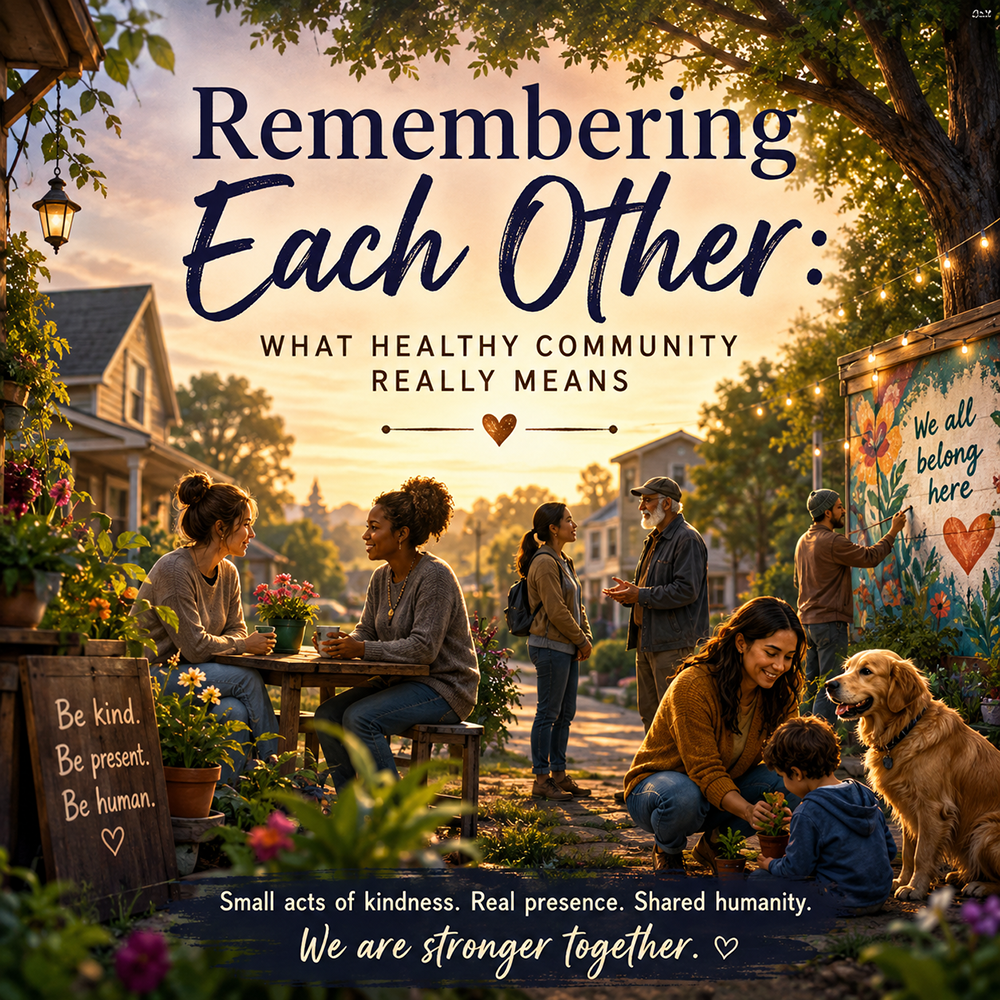
Every Person You Meet Is Carrying a Story You Cannot See
One of the greatest gifts we can offer another human being is remembering that we rarely know the full story.
The cashier who seems distracted may have spent the night caring for a sick child.
The quiet coworker may be grieving someone they loved.
The neighbor who keeps to themselves may be carrying invisible disabilities or overwhelming responsibilities.
The friend who suddenly cancels plans may be struggling with depression, burnout, financial hardship, or something they don't yet have words to explain.
None of this excuses harmful behavior.
People are still responsible for how they treat others.
But it does invite us to replace quick assumptions with curiosity.
To ask before we accuse.
To listen before we judge.
To remember that every person we meet is more complex than the few moments we happen to witness.
Healthy relationships begin with seeing people as whole human beings—not as characters we've invented in our own minds.
 Jessica Carey
The Small Things Are Never Really Small
Sometimes people hesitate to show kindness because they believe their actions won't make enough of a difference.
- "What good will one meal do?"
- "What difference does one conversation make?"
- "I'm only one person."
But relationships are rarely transformed by a single grand gesture; they're shaped by consistent moments of care.
A ride to work during a dangerous heat wave.
Remembering someone's favorite author.
Checking in after a difficult week.
Sharing a meal.
Helping someone carry groceries.
Sitting quietly beside someone who is grieving.
Offering encouragement before a job interview.
Listening without interrupting.
None of these things solve every problem.
But they communicate something every human heart longs to hear:
- "You matter."
- "You're not invisible."
- "You don't have to carry this alone."
Sometimes the greatest gift we can give another person isn't fixing their circumstances.
It's helping them remember that they don't have to face those circumstances by themselves.
 Jessica Carey
The World Changes Through Ordinary People
It's easy to believe that only extraordinary people change the world.
History often remembers leaders, inventors, activists, and public figures.
But most of our lives are shaped by people whose names will never appear in history books.
The teacher who believed in us.
The neighbor who checked in.
The friend who stayed.
The grandparent who listened.
The stranger who offered help when we needed it most.
The partner who consistently chose respect.
The community that welcomed us when we felt alone.
The person who quietly reminded us that goodness still exists.
These people may never become famous.
Yet they often change lives in ways that echo for generations.
Every act of genuine care has the potential to become part of someone else's story.
Sometimes the kindness we receive becomes the kindness we later give.
Sometimes one safe relationship teaches someone that healthy love is possible.
Sometimes one person believing in us gives us the courage to believe in ourselves.
That is how compassion spreads.
Not all at once.
But one relationship at a time.
 Jessica Carey
Becoming the Kind of Person You Hope to Find
When we long for healthier relationships, it's natural to focus on finding the right people.
A trustworthy friend.
A loving partner.
A supportive community.
A peaceful home.
Those desires are deeply human.
But over the years, I've come to believe there's another question that's just as important: Am I becoming the kind of person who helps create the relationships I'm hoping to find?
- Am I someone who listens before assuming?
- Who tells the truth even when it's uncomfortable?
- Who respects another person's boundaries?
- Who repairs instead of defending?
- Who celebrates other people's growth?
- Who notices when someone is struggling?
- Who uses my words to encourage rather than diminish?
- Who leaves people feeling safer than I found them?
None of us will answer "yes" to those questions all the time.
We're all imperfect.
We'll misunderstand one another.
We'll make mistakes.
We'll have moments when we're impatient, distracted, or unaware of how our actions affect someone else.
Healthy relationships don't require perfect people.
They require people who are willing to keep learning, growing, apologizing, forgiving, and choosing one another again.
 Jessica Carey
The Grief of Realizing You Deserved More
One of the most unexpected parts of healing is grief.
Not because you've lost something new.
But because you finally begin to understand what was missing all along.
As we experience healthier relationships—or even begin learning what healthy relationships actually look like—we often find ourselves grieving the ones that weren't.
The childhood where emotional safety never existed.
The friendships built on convenience instead of mutual care.
The romantic relationships where love was confused with control, guilt, or obligation.
The workplaces where respect was replaced with manipulation or fear.
The communities where belonging had to be earned instead of freely offered.
At first, this grief can feel confusing.
You might wonder why learning something beautiful suddenly hurts so much.
But the answer is surprisingly simple.
You cannot recognize what was absent until you finally experience—or imagine—what could have been.
For years, you may have believed that walking on eggshells was normal.
That constantly apologizing for your needs was simply part of loving others.
That criticism was motivation.
That emotional unpredictability was passion.
That exhaustion was the price of connection.
Then, perhaps for the first time, someone listens without interrupting.
Respects your boundaries without punishment.
Celebrates your successes without jealousy.
Apologizes sincerely after hurting you.
Makes you feel calmer instead of more anxious.
Suddenly, your heart realizes something your mind couldn't fully grasp before: it wasn't supposed to be that hard.
That realization is both freeing and heartbreaking because once you've experienced genuine respect, you begin grieving every place where respect was absent.
Once you've experienced emotional safety, you begin grieving all the years you spent surviving instead of flourishing.
Once you've experienced relationships rooted in mutual care, you begin grieving the energy you spent trying to earn love that should never have required earning.
For many people, that realization is accompanied by another painful thought: If relationships can feel like this, then what I experienced before wasn't simply "normal life."
This grief isn't a sign that you're moving backward.
It's often a sign that your understanding of love is becoming healthier.
You are no longer grieving because you believe you deserved less.
You're grieving because you finally understand that every human being—including you—deserves relationships rooted in dignity, respect, honesty, and care.
Grief is often the bridge between surviving unhealthy relationships and learning to build healthier ones.
It honors what was lost, but it also makes room for something new.
Not perfection.
Not a life free from disappointment.
But relationships that no longer require you to abandon yourself in order to belong.
 Jessica Carey
The World Needs More People Who Create Safety
When I think about the people who have changed my life for the better, I rarely remember their accomplishments first.
I remember how they made me feel.
Safe.
Respected.
Encouraged.
Seen.
Free to be myself.
Hopeful.
Those gifts are difficult to measure.
Yet they often become turning points in a person's life.
Every one of us has the opportunity to become that kind of person for someone else.
Not because we have all the answers.
Not because we can fix everyone's problems.
But because we can choose to respond to another person's humanity with care.
Sometimes that care looks like offering practical help.
Sometimes it looks like listening without trying to solve everything.
Sometimes it looks like respecting someone's boundaries.
Sometimes it looks like apologizing.
Sometimes it looks like simply staying present when life is difficult.
These moments may seem ordinary.
But they are often the moments people remember for years.
 Jessica Carey
Love Is Something We Practice
Perhaps that's the greatest lesson healthy relationships have taught me.
Love isn't merely something we feel.
It's something we practice.
We practice it through honesty.
Through kindness.
Through respect.
Through accountability.
Through generosity.
Through patience.
Through repair.
Through choosing to see another person's humanity, even when it's inconvenient.
And just as importantly, we practice love by extending those same things toward ourselves.
Healthy love doesn't ask us to abandon ourselves to prove our devotion.
It doesn't require us to tolerate cruelty in the name of loyalty.
It doesn't ask us to disappear so someone else can remain comfortable.
Real love makes room for truth.
It protects dignity.
It nurtures growth.
It honors both people.
 Jessica Carey
You Are Helping Shape Someone's Story
Whether we realize it or not, we become part of one another's stories.
A passing conversation.
A thoughtful gesture.
A safe friendship.
A respectful disagreement.
A moment of forgiveness.
A shared meal.
A ride when someone has nowhere else to turn.
A reminder that someone matters.
These moments may seem ordinary while we're living them.
Yet they often become the memories people carry for years.
The world doesn't become kinder because everyone suddenly agrees with one another or because every problem disappears.
It becomes kinder each time someone chooses compassion over indifference.
Curiosity over assumption.
Repair over pride.
Respect over control.
Generosity over convenience.
Presence over apathy.
No single person can carry the whole world.
But every one of us helps shape the small corner of it that other people experience.
And perhaps that's where lasting change has always begun.
Not in grand gestures.
But in ordinary people, quietly choosing—day after day—to make one another's lives a little safer, a little lighter, and a little more filled with hope.
Healthy relationships aren't measured by how long they've lasted, how passionate they feel, or what title they carry. They're measured by whether the people within them are becoming more whole, more free, and more fully themselves.
At the end of the day, think to yourself and ask:
- When people remember what it felt like to know you, what kind of environment will they remember living in?
- Who becomes possible because you were part of their story?
- Does your presence leave people freer to become themselves—or more afraid to be?
 Jessica Carey
Want even more content about creativity and art?
Be sure to check out all of our creative chronicles!
If you'd like to see examples of my work, you can find some of my art and creations at Redbubble and Gumroad!
Looking to learn more about my recent journey?
Check some of these articles:
-The Difference Between Resting and Giving Up
-Hidden Gems for St. Louis Artists
-Hidden Gems for Autistic & Neurodivergent Adults
-I Think I Might Be Autistic... Now What?
 Jessica Carey