

Respect is a word many people use.
But not everyone means the same thing when they say it.
Sometimes when people say: "I want respect,"
What they really mean is:
- "I want agreement."
- "I want obedience."
- "I want things done my way."
- "I do not want to be questioned."
But genuine respect was never supposed to mean one person disappears so another person can be comfortable.
Respect is not: "You matter instead of me."
And respect is not: "I matter instead of you."
Real respect says: "We both matter."
Your feelings matter.
But they are not the only feelings.
Your perspective matters.
But it is not the only perspective.
Your needs matter.
But they do not erase someone else’s needs.
Because every person we meet is carrying an entire world inside them.
Thoughts we cannot hear.
Experiences we have never lived.
Feelings we may not immediately understand.
Stories that shaped who they are.
Respect begins when we remember: "The person in front of me is not an object in my story."
They are not a character whose purpose is to make my life easier.
They are not a problem to fix.
They are not a possession to control.
They are not a reflection of whether I got my way.
They are a person.
A whole person.
With their own dreams.
Their own fears.
Their own needs.
Their own boundaries.
Their own journey.
And sometimes, honoring another person’s humanity requires accepting something uncomfortable:
They will not always choose what we would choose.
They will not always think what we think.
They will not always need what we need.
And that does not automatically mean someone is wrong.
Different does not always mean disrespectful.
Different does not always mean threatening.
Different does not always mean broken.
Sometimes different simply means: "There is another human being here besides me."
Because respect is not proven by how we treat people when they agree with us.
Respect is revealed in how we treat people when they do not.
When they say no.
When they have a different perspective.
When their needs inconvenience ours.
When understanding requires effort.
That is where respect becomes more than a word.
It becomes something we practice.
Love that lacks respect becomes control.
 Jessica Carey
Respect Is Not the Same as Obedience
Somewhere along the way, many people learned a confusing message: "If someone respects me, they will do what I want."
They will agree.
They will listen without questioning.
They will follow the path I believe is best.
They will avoid making me uncomfortable.
And when they do not?
People can interpret that as disrespect.
But disagreement is not automatically disrespect.
Different choices are not automatically disrespect.
Having boundaries is not automatically disrespect.
Having a voice is not automatically disrespect.
Because respect and obedience are not the same thing.
Someone can follow every rule placed in front of them while feeling unseen.
Someone can stay silent while feeling hurt.
Someone can do everything expected of them while slowly losing themselves.
From the outside, it may look like respect.
But inside, it is something else.
Fear.
Pressure.
Survival.
Keeping the peace.
 Jessica Carey
Real respect is not created when one person disappears.
Real respect requires seeing the person in front of you.
Not just who you wish they were.
Not just what they can provide.
Not just whether they make choices you understand.
Them.
Because a person is not disrespecting you simply by existing differently.
A child becoming their own person is not automatically disrespect.
A friend having different priorities is not automatically disrespect.
A loved one setting a boundary is not automatically disrespect.
Someone saying "no" is not automatically disrespect.
Sometimes it is actually a sign of a healthier relationship.
Because genuine connection requires honesty.
And honesty requires people feeling safe enough to show up as themselves.
 Jessica Carey
If someone can only be accepted when they agree...
If someone can only belong when they obey...
If someone can only receive kindness when they are convenient...
That is not respect.
That is conditional acceptance.
Of course, respect does not mean: "I can do whatever I want without considering anyone else."
Respect goes both ways.
Your choices may belong to you.
But your choices can still affect others.
Your feelings are valid.
But other people have feelings, too.
Your needs matter.
But other people’s needs matter, too.
Respect is not: "Everyone has to adjust around me."
Respect is: "How do we acknowledge everyone here?"
It is the ability to say: "I see this differently."
Without saying: "You are worthless because you see it differently."
It is the ability to say: "This does not work for me."
Without saying: "You are wrong for wanting or needing something different."
It is the ability to say: "I have my own thoughts, feelings, and boundaries."
While recognizing: "So do you."
Because respect was never supposed to mean: "I give up myself so you can exist."
And it was never supposed to mean: "You give up yourself so I can exist."
Real respect creates enough room for both people to be human.
And sometimes what people call respect is actually fear.
Fear can produce obedience.
Fear can produce silence.
Fear can produce compliance.
But fear cannot create genuine connection.
 Jessica Carey
A child who is terrified of making a mistake may appear respectful while quietly learning that love depends on never getting anything wrong.
An employee who never speaks up may appear respectful while feeling completely unheard.
A partner who is afraid to disagree may appear respectful while slowly disappearing.
Fear may control behavior.
Respect honors humanity.
One grows through intimidation.
The other grows through safety.
Trust allows people to think, choose, and grow.
 Jessica Carey
Respect Means Making Room for More Than One Experience
One of the deepest expressions of respect is recognizing that we are not the only person living this life.
It sounds simple.
But it changes everything.
Sometimes conflict grows because people unknowingly treat their own experience as the only one that matters.
- "My feelings are hurt."
- "My perspective makes sense."
- "My way is the best way."
- "My discomfort is the most important thing in this situation."
 Jessica Carey
Those feelings are real.
They deserve to be acknowledged.
But they are not the whole picture.
The person standing across from us also has thoughts.
Feelings.
Needs.
Experiences.
Dreams.
Fears.
Limits.
A lifetime that shaped how they see the world.
Respect begins when we remember that our own reality is not the only reality in the room.
That does not mean every perspective is equally accurate.
Sometimes people misunderstand.
Sometimes people make assumptions.
Sometimes people cause real harm.
Truth still matters.
Accountability still matters.
But before we decide someone is wrong...
Before we assume we know their intentions...
Before we dismiss what they are trying to communicate...
Respect invites us to become curious.
Instead of immediately asking: "How do I prove my point?"
Respect asks: "What might I be missing?"
Instead of saying: "My experience is the only one that matters."
Respect says: "Help me understand yours."
This is where empathy begins.
Not because we suddenly agree with everything another person believes.
But because we recognize there is another human being trying to make sense of life through experiences we have not lived.
Respect also means accepting something many of us find uncomfortable:
Someone else's needs do not disappear simply because ours feel urgent.
Your need for quiet may be real.
Another person's need to express joy may also be real.
Your desire for certainty may be understandable.
Another person's need for independence may be just as important.
Your fear may deserve compassion.
Another person's autonomy deserves respect.
Healthy relationships are not built by deciding whose humanity wins.
They are built by asking: "How do we make room for both of us?"
Sometimes there is not a perfect solution.
Sometimes compromise is needed.
Sometimes one person gives a little more in one season, and the other person gives more in another.
Sometimes the healthiest answer is recognizing that two people's needs simply cannot coexist in the same space, and creating distance with kindness instead of trying to force one another to change.
Respect is not pretending differences do not exist.
It is learning how to navigate them without forgetting each other's humanity.
Because another person's discomfort does not erase yours.
And your discomfort does not erase theirs.
Respect does not ask us to become smaller.
It asks us to become wider.
To expand our perspective enough to hold more than one human experience at a time.
When we do that, conversations become less about winning.
Relationships become less about power.
And connection becomes more about understanding.
Because respect is not built when everyone thinks the same.
It is built when people continue seeing each other as whole human beings, even when they do not.
Communities require making room for many experiences.
 Jessica Carey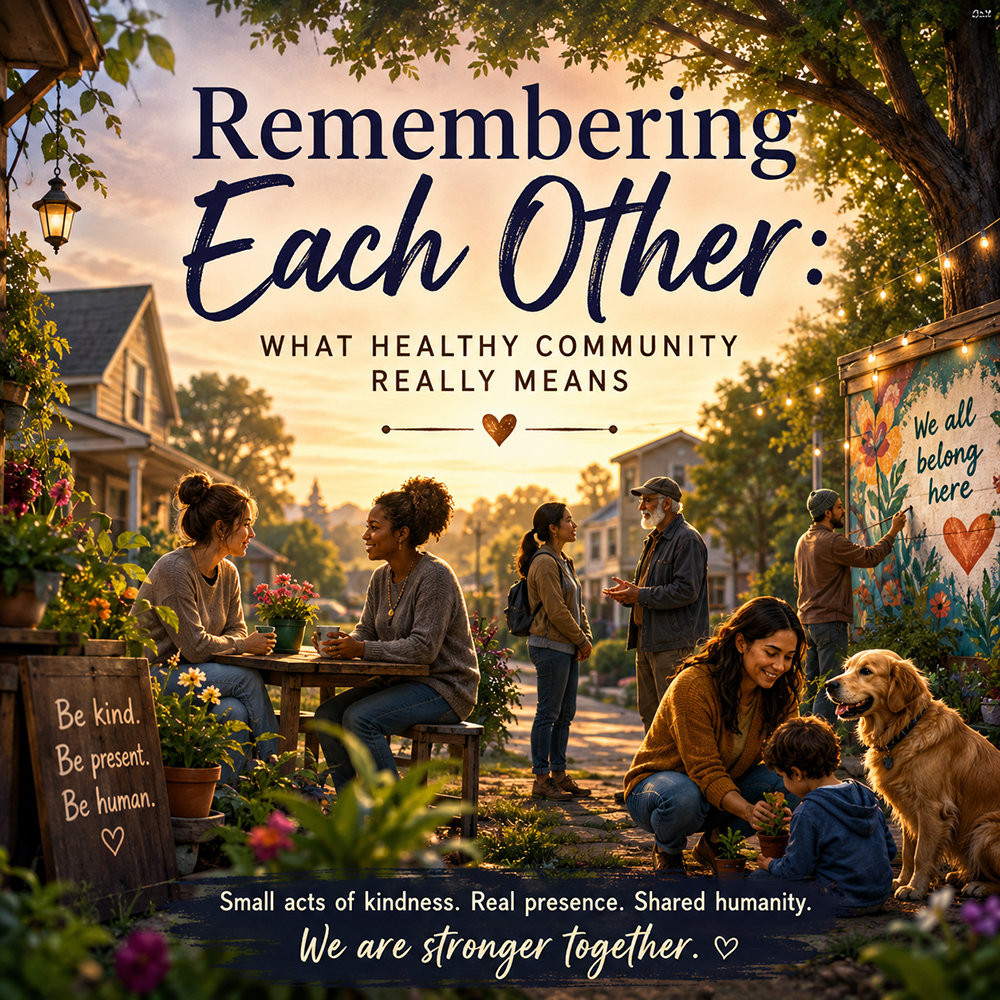
Respecting Boundaries Means Respecting "No"
One of the clearest expressions of respect is how we respond when another person says: "No."
- No, I am not comfortable with that.
- No, I do not have the capacity today.
- No, I see this differently.
- No, this is not right for me.
- No, I need something else.
For many people, hearing "no" creates discomfort.
Disappointment.
Frustration.
Confusion.
Sometimes even hurt.
Those feelings are real.
But another person's "no" is not automatically a rejection of our worth.
Nor is it an invitation to persuade, pressure, guilt, or wear them down until they finally say yes.
Respect recognizes something incredibly important: every person has the right to make choices about their own life.
Their own body.
Their own time.
Their own energy.
Their own relationships.
Their own future.
 Jessica Carey
That does not mean every decision will be one we understand.
It does not mean we will always agree.
But respect says: "I recognize that this choice belongs to you."
Sometimes people hear a boundary and immediately begin searching for a way around it.
- "If you really cared..."
- "You owe me."
- "You are being selfish."
- "You are overreacting."
- "You'll change your mind."
Those responses are usually not invitations to understand.
They are attempts to regain control.
Respect sounds different.
Respect says:
- "Thank you for being honest."
- "I may be disappointed, but I appreciate you telling me."
- "I do not fully understand, but I will honor your decision."
- "I trust you to know what is right for you."
 Jessica Carey
Respect also understands that boundaries are not walls built to punish people.
Healthy boundaries are often bridges.
They tell us where one person ends and another begins.
They help relationships remain healthy by allowing honesty instead of resentment.
Without boundaries, people often feel they have only two choices:
Stay silent and slowly disappear...
Or explode after carrying too much for too long.
Healthy boundaries create another option.
They make room for honest conversations before resentment has a chance to grow.
Respect also means recognizing that we are allowed to have boundaries ourselves.
Sometimes people believe respecting others means always saying yes.
Always giving more.
Always making ourselves smaller so someone else never experiences disappointment.
But that is not respect.
That is self-abandonment.
Respect goes both directions.
Just as we hope others will honor our limits, we are called to honor theirs.
Just as we hope others will listen when we speak honestly, we are called to listen when they do the same.
Because respecting someone's "no" is really another way of saying:
- "I recognize that your life belongs to you."
- "And I care about you enough to honor that."
That may not always be easy.
But it is one of the clearest ways love, kindness, friendship, trust, and respect all come together.
Because genuine respect is not measured by how people respond when everything goes their way.
It is revealed by how they respond when another person's humanity asks them to make room.
 Jessica Carey
Respect Includes Respecting Yourself
One of the hardest lessons many people learn is that respect is not only something we offer other people.
It is also something we owe ourselves.
Some people grow up believing that being respectful means always saying yes.
Keeping everyone happy.
Never questioning authority.
Never disagreeing.
Never having needs that inconvenience someone else.
If someone is upset...
You are expected to fix it.
If someone wants something...
You are expected to give it.
If someone crosses your boundaries...
You are expected to tolerate it.
And if you finally speak up?
You may hear:
- "You are being disrespectful."
- "You've changed."
- "You used to care."
- "You've become selfish."
But sometimes what another person calls "disrespect" is simply the moment you stopped abandoning yourself.
There is an important difference between respecting another person's humanity...
and surrendering your own.
Healthy respect never asks someone to disappear.
It never asks someone to accept repeated harm to prove they care.
It never asks someone to silence their voice so someone else never has to experience discomfort.
Because your humanity matters, too.
Your feelings matter.
Your needs matter.
Your safety matters.
Your boundaries matter.
Your well-being matters.
Respect is not measured by how much of yourself you are willing to sacrifice.
It is measured by whether everyone involved is treated as a whole person.
 Jessica Carey
Sometimes respecting yourself means saying:
- "No."
- "This doesn't work for me."
- "I see this differently."
- "I need to step away."
- "I will not continue this conversation if we cannot treat each other respectfully."
Those moments are not failures of respect.
Often, they are expressions of it.
Because respecting yourself is not the opposite of respecting others.
It is one of the things that makes genuine mutual respect possible.
A relationship where only one person's needs matter is not built on respect.
A relationship where only one person's voice matters is not built on respect.
A relationship where only one person's boundaries are honored is not built on respect.
Respect does not ask us to choose whose humanity matters.
It reminds us that everyone's humanity matters.
Including our own.
 Jessica Carey
Respect Allows Differences Without Turning Them Into Threats
No two people experience the world in exactly the same way.
We each carry different stories.
Different personalities.
Different strengths.
Different fears.
Different cultures.
Different dreams.
Different ways of thinking.
Different ways of communicating.
That diversity is not a flaw.
It is part of what makes humanity so remarkable.
And yet, differences can make people uncomfortable.
Sometimes when we encounter someone who thinks differently than we do, our first instinct is not curiosity.
It is correction.
We want them to understand us.
To agree with us.
To become more like us.
But respect asks something deeper.
Instead of asking: "How do I make this person more like me?"
Respect asks: "What can I learn from seeing the world through another set of eyes?"
That does not mean agreeing with everything.
Respect is not abandoning discernment.
It is not pretending every idea is equally healthy.
It is not remaining silent when someone is causing harm.
Respect and discernment can exist together.
We can say: "I disagree."
Without saying: "You have no value."
We can challenge harmful behavior.
Set boundaries.
Protect ourselves.
Walk away from relationships that repeatedly cause harm.
And still remember: the person in front of us is a human being.
 Jessica Carey
Sometimes respectful disagreement is one of the healthiest things two people can share.
Because it says: "I believe we can disagree without needing to destroy one another."
Respect also means recognizing that different needs are not personal attacks.
Someone needing quiet is not criticizing someone who enjoys excitement.
Someone needing time alone is not rejecting someone who enjoys togetherness.
Someone communicating differently is not necessarily being uncaring.
Someone setting a boundary is not automatically pushing people away.
Difference does not always require fixing.
Sometimes it simply requires understanding.
One of the greatest gifts respect offers is the freedom to be fully human.
To bring our authentic selves into a relationship without constantly fearing that every difference will become another reason we no longer belong.
That is especially important for people who have spent years feeling pressure to hide parts of themselves just to be accepted.
Who learned to mask.
To stay silent.
To shrink.
To become whoever they believed other people wanted them to be.
But healthy respect does not ask someone to erase themselves to earn belonging.
It creates space where people can become more fully themselves while also learning to honor the humanity of everyone around them.
Because respect is not built by making everyone identical.
It is built by remembering that every person has inherent worth, even when their life looks different from our own.
The healthiest relationships are not the ones where two people never disagree.
They are the ones where both people know:
- "My voice matters."
- "And so does yours."
 Jessica Carey
Respect Means Listening to Understand, Not to Win
One of the greatest gifts we can offer another person is our attention.
Not just hearing their words.
But genuinely trying to understand the person behind them.
Respect listens differently.
It is not waiting impatiently for the other person to stop talking.
It is not collecting evidence for the next argument.
It is not searching for the perfect response before someone has even finished speaking.
Respect slows down.
It becomes curious.
It recognizes that understanding another human being is often more valuable than winning a disagreement.
 Jessica Carey
Many conversations fall apart because people are not actually listening.
They are preparing.
Preparing their defense.
Preparing their rebuttal.
Preparing the next point that proves why they are right.
Meanwhile, the other person is left feeling invisible.
Not because nobody heard the words they said.
But because nobody truly listened to what they meant.
Respect asks us to pause before assuming.
Before interrupting.
Before deciding we already know someone else's intentions.
Instead of asking: "How do I prove my point?"
Respect asks: "What are they trying to help me understand?"
Sometimes the answer is not agreement.
Sometimes, after listening carefully, we still see things differently.
That is part of being human.
Respect does not require us to abandon our own perspective.
It invites us to make room for another one alongside it.
Healthy communication is not about deciding whose voice deserves to exist.
It is about creating enough safety that both people can speak honestly.
Sometimes the most respectful response is not giving advice.
It is asking another question.
Not immediately trying to fix.
Not assuming we know what someone needs.
Not taking over their experience.
Simply saying:
- "Can you tell me more?"
- "I want to understand."
- "Help me see what this feels like for you."
Those simple moments communicate something powerful: "Your inner world matters to me."
 Jessica Carey
Respect also means being willing to let what we learn shape us.
Not because we surrender our values.
But because every person we meet knows something we do not.
Has lived something we have not.
Has seen parts of life through eyes that are not our own.
Listening with respect expands us.
It reminds us that our perspective is valuable...
but it is not the only perspective that exists.
Ironically, people often become more willing to hear our perspective when they first feel heard themselves.
Not because listening is a strategy to persuade.
But because feeling understood creates safety.
And safety makes honest conversations possible.
Respect does not ask: "How do I win this conversation?"
It asks: "How do we leave this conversation with both of our humanity still intact?"
Because the goal of communication was never simply exchanging words.
It was learning how to understand another human being.
And allowing them the opportunity to understand us in return.
Listening is one of friendship's greatest expressions.
 Jessica Carey
Respect Includes Accountability, Humility, and Repair
No human being gets everything right.
We misunderstand.
We make assumptions.
We speak too quickly.
We miss things.
We hurt people we genuinely care about.
Being human means we will make mistakes.
Respect is not measured by whether we are perfect.
It is revealed by what we do when we discover we were not.
One of the greatest acts of respect is being willing to say:
- "I misunderstood."
- "I was wrong."
- "I did not see it that way."
- "I'm sorry."
- "Thank you for telling me."
- "What can I do differently?"
Those words require courage.
Not because admitting mistakes makes someone weak.
But because it asks us to value truth more than our pride.
Sometimes people become so attached to being right that they stop being willing to learn.
Every disagreement becomes a battle.
Every question becomes a challenge.
Every piece of feedback becomes an attack.
Respect chooses a different path.
Respect understands that learning is not humiliation.
Growth is not failure.
Changing our mind is not losing ourselves.
Sometimes the most respectful thing we can do is pause long enough to ask: "What if I missed something?"
That question does not erase our perspective.
It simply leaves room for the possibility that another person's experience contains something important we have not yet understood.
Respect also recognizes that apologies are only the beginning.
Words matter.
But lasting trust is rebuilt through consistent action.
A meaningful apology says:
- "I understand the impact."
- "I want to make this right."
- "I am committed to doing better."
Repair is not pretending the hurt never happened.
It is caring enough about the relationship to help rebuild what was damaged.
 Jessica Carey
Of course, repair requires willingness from everyone involved.
One person cannot repair a relationship while the other continues choosing the same harmful patterns.
Mutual respect requires mutual participation.
Sometimes the most respectful response is working together to rebuild.
Sometimes the most respectful response is recognizing that someone has repeatedly chosen not to rebuild.
There is an important difference between making a mistake...
and continuing to make the same choice after its impact has been clearly communicated.
Mistakes become opportunities to learn.
Repeated, unaddressed harm becomes a pattern.
Respect is willing to learn.
Respect is willing to change.
Respect is willing to repair.
Because respect is not about protecting our image.
It is about protecting the humanity within the relationship.
At its heart, accountability is not about shame.
It is about care.
Care for truth.
Care for growth.
Care for the people our choices affect.
When we value being right more than being respectful, relationships begin to fracture.
When we value understanding, humility, and repair, relationships have room to heal.
That does not mean every relationship can or should be restored.
Sometimes the healthiest choice is creating distance.
Sometimes repair is not possible because another person continues refusing accountability.
Respect cannot be forced.
It can only be practiced.
But wherever mutual respect exists, there is always room for something beautiful:
Two imperfect human beings... learning, growing, repairing, and choosing one another's humanity again and again.
 Jessica Carey
Choosing Respect in a World That Often Forgets It
Respect is not always easy.
Sometimes it asks us to slow down when we would rather react.
To listen when we would rather argue.
To become curious when we would rather assume.
To acknowledge another person's humanity while also honoring our own.
There will always be moments when we disagree.
Moments when our needs do not perfectly align.
Moments when someone disappoints us.
Moments when we disappoint someone else.
That is part of being human.
Respect does not remove those moments.
It changes how we move through them.
Instead of asking: "Who wins?"
Respect asks: "How do we protect each other's humanity while we work through this?"
Sometimes the answer is an honest conversation.
Sometimes it is a sincere apology.
Sometimes it is a healthy boundary.
Sometimes it is recognizing that two people simply need different things.
Sometimes it is walking away from relationships where respect is repeatedly refused.
Because respect is not pretending everything is okay.
Respect is not accepting repeated harm.
Respect is not making yourself smaller so someone else never has to experience discomfort.
Respect remembers that every person has inherent worth.
Including you.
Your voice matters.
Your needs matter.
Your boundaries matter.
Your dignity matters.
Just as mine do.
Healthy relationships are not built because one person always wins.
They are not built because one person is always right.
They are not built because one person disappears.
They are built because two people continue choosing to remember something incredibly simple: "There is another whole human being standing in front of me."
A person with dreams.
Fears.
Needs.
Memories.
Wounds.
Hope.
A life every bit as real as my own.
When we begin there... respect changes the way we speak.
The way we listen.
The way we disagree.
The way we love.
The way we parent.
The way we build friendships.
The way we create families.
The way we shape our communities.
Because respect is never only about manners.
It is about how we choose to see one another.
A respectful world is not one where everyone agrees.
It is not one where nobody ever makes mistakes.
It is not one where differences disappear.
It is a world where people remember that disagreement does not erase dignity.
Boundaries do not erase belonging.
Different does not erase worth.
Maybe that is where genuine respect begins.
Not with demanding it from other people.
But with choosing to practice it ourselves.
Choosing to see the humanity in others.
Choosing not to abandon the humanity within ourselves.
Choosing to make room for more than one life, more than one story, more than one perspective.
Because respect was never about deciding whose life matters most.
It has always been about remembering that every life matters.
And living like we truly believe it.
Want even more content about creativity and art?
Be sure to check out all of our creative chronicles!
If you'd like to see examples of my work, you can find some of my art and creations at Redbubble and Gumroad!
Looking to learn more about my recent journey?
Check some of these articles:
-The Difference Between Resting and Giving Up
-Hidden Gems for St. Louis Artists
-Hidden Gems for Autistic & Neurodivergent Adults
-I Think I Might Be Autistic... Now What?
 Jessica Carey