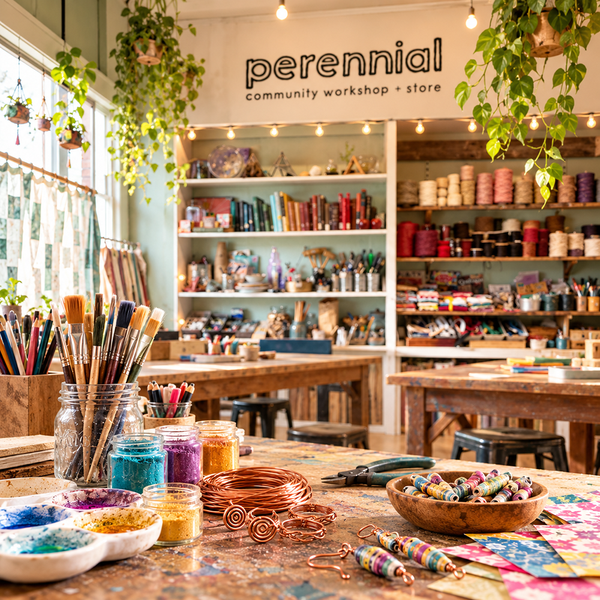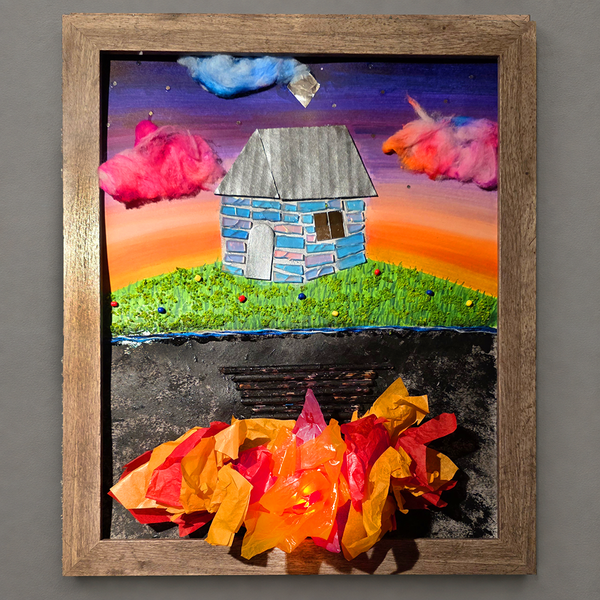


There are so many things we could have left plain.
A cup only needs to hold liquid.
A blanket only needs to keep us warm.
A building only needs to shelter us from the weather.
A piece of clothing only needs to cover and protect the body.
A chair only needs to hold us up.
And yet, humans have a peculiar habit of looking at perfectly functional things and apparently deciding: yes, but what if we did something to it?
So we glaze the cup.
We weave patterns into the blanket.
We carve details around the doorway.
We embroider the clothing.
We shape the chair's legs into curves no chair technically needs.
We paint walls, plant gardens, hang pictures, wear jewelry, decorate our bodies, arrange objects on shelves, put stickers on water bottles, choose colorful phone cases, add charms to bags, and keep tiny objects whose primary function seems to be I like looking at this.
We don't just make things.
We decorate them.
And we've been doing some version of that for a very, very long time.
Function Doesn't Seem to Be Enough
There's something fascinating about that.
From a strictly practical perspective, a lot of decoration can look unnecessary.
A pattern doesn't necessarily make a bowl hold food better.
A mural doesn't make a wall stand up straighter.
Flowers embroidered around the edge of a shirt don't make the fabric warmer.
A beautifully designed window doesn't have to let in more light than a plain rectangular one.
And yet reducing these things to their practical functions seems to miss something important about why humans make them in the first place.
Because we don't experience objects and environments only through the question: does it work?
We also notice:
- How does it feel?
- What does it look like?
- Does it mean something to me?
- Does this feel like mine?
- Do I enjoy being around it?
- Does it make this place feel like somewhere I want to be?
Those questions may not be necessary for keeping a roof from collapsing.
But they can matter enormously to the people living underneath it.
“Decorative” Isn't the Same as Meaningless
We sometimes use decorative almost dismissively: it's just decoration.
As though decoration is the frivolous layer we add after the important work is finished.
First make the thing useful.
Then, if there's enough time, money, energy, or interest left over, perhaps make it beautiful.
But I'm not sure human creativity has ever divided itself quite that neatly.
Decoration can carry identity.
Memory.
Culture.
Belonging.
Status.
Ritual.
Play.
Affection.
Beauty.
A pattern may identify where something came from or who made it.
A piece of jewelry may connect someone to another person.
A photograph on a wall may turn an anonymous room into a home.
A child's drawing on the refrigerator changes absolutely nothing about the refrigerator's ability to keep food cold—and may completely change what that refrigerator means to the family living around it.
And sometimes there doesn't need to be a grand symbolic explanation at all.
Sometimes we choose the blue one because we like blue.
Sometimes we put flowers on something because we think flowers are pretty.
Sometimes we make an ordinary object delightful simply because delight is something we value.
We Keep Making the World More Than Functional
That's what interests me.
Humans don't seem satisfied merely to exist among functional objects.
We personalize them.
Arrange them.
Color them.
Pattern them.
Adorn them.
We take the spaces we occupy and leave little pieces of ourselves everywhere.
And perhaps that should make us question the assumption that creativity is some unnecessary luxury humans pursue only after all the real needs of life have been met.
Because again and again, across ordinary life and human history, we have taken things that already worked—and kept making.
Maybe creativity isn't something separate from human life that we occasionally add for decoration.
Maybe decoration itself is evidence of something much older and more fundamental: humans don't only alter the world so that it works; we alter it so that it means something to us.
And if that's true, then perhaps the interesting question isn't why humans decorate things at all.
It's why we have been doing it for so long.
We Have Been Decorating for a Very Long Time
Whatever makes humans want to decorate things, it isn't new.
Archaeological evidence suggests just how deep this impulse runs: humans were using pigments and personal adornment tens of thousands of years ago, and some known shell beads date back more than 100,000 years.
Long before stickers, throw pillows, painted phone cases, gallery walls, or carefully coordinated kitchen cabinets, people were already adding color, pattern, texture, and imagery to the things around them.
They carved.
Painted.
Beaded.
Wove.
Engraved.
Adorned their bodies.
Decorated objects.
Made patterns in materials that could have remained plain.
And that's fascinating because decoration requires something.
Time.
Attention.
Materials.
Effort.
Someone had to make the marks.
Someone had to choose where they went.
Someone had to care enough about the result to do something beyond the object's most basic function.
An Object Can Do More Than One Job
Of course, we should be careful about looking at something made hundreds or thousands of years ago and assuming we know exactly why someone decorated it.
A pattern we find beautiful might have carried cultural or spiritual meaning.
Decoration could communicate identity, community, status, family, belief, ownership, or tradition.
Personal adornment is one especially clear example: archaeologists have interpreted ancient jewelry as potentially communicating things like group membership, age, sex, and social status.
Adornment could be ceremonial.
A mark could tell a story.
And something we classify as art or decoration today may not have been understood that way by the person who made it.
There probably isn't one universal answer to why humans decorate.
Maybe that's part of what makes the question so interesting.
Because a useful object doesn't have to be only useful.
A vessel can hold something and carry a pattern.
Clothing can protect a body and communicate identity.
A building can provide shelter and express something about the people who built it.
A tool can work perfectly well and have a beautifully carved handle.
Function and meaning don't have to compete.
Neither do function and beauty.
Sometimes the Meaning May Simply Be Beauty
There's another possibility worth protecting, too.
We don't need to assume every decorative choice contains a hidden message waiting for someone to decode it.
Sometimes humans may decorate because decoration itself is pleasurable.
We like color.
We like rhythm and repetition.
We like interesting textures.
We like arranging things.
We like transforming surfaces.
We like seeing what happens when one color sits beside another.
We like making something look different because we prefer it that way.
There can be something almost funny about imagining a person from the distant past carefully making a pattern and insisting that it must reveal some enormous mystery about human civilization.
Maybe it did.
But perhaps, every once in a while, the explanation was closer to: I liked how that looked.
And I think that possibility matters.
Beauty doesn't become less human because it isn't symbolic.
Play doesn't become meaningless because it isn't practical.
Aesthetic pleasure doesn't need to disguise itself as something more serious before we're allowed to value it.
 Jessica Carey
We Leave More Than Evidence That We Survived
When we look backward through human history, we don't only find evidence that people found food, built shelter, made tools, and protected themselves.
We also find evidence that they noticed what things looked like.
They made choices about surfaces.
Colors.
Shapes.
Patterns.
Bodies.
Objects.
Spaces.
They didn't merely interact with the world as something to survive.
They changed it.
Personalized it.
Marked it.
Made things within it that carried something beyond bare necessity.
We may never know precisely what every mark meant to the person who made it.
But the marks themselves tell us something.
Someone bothered.
Someone spent the time.
Someone looked at what existed and decided to alter it.
And generation after generation, humans have continued doing exactly that.
Perhaps decoration has never had only one purpose.
Perhaps it doesn't need one.
Humans don't only alter the world so that it works. We alter it so that it feels, communicates, remembers, belongs, delights, and means.
And one of the most ordinary places we can still see that impulse today is in the way we take something generic—and make it ours.
Decoration Turns “A Thing” Into “My Thing”
There is something strange about an empty room.
Technically, it can contain everything we need.
Walls.
A floor.
A ceiling.
A place to sleep.
Maybe a table and a chair.
Everything works.
And yet it may not feel like ours.
Then something starts happening.
A photograph goes on the wall.
A blanket appears on the bed.
Books accumulate on a shelf.
A plant finds its way to the window.
Someone puts a ridiculous little figurine on the desk.
A favorite mug ends up beside the coffee maker.
Maybe there are paintings.
Postcards.
Rocks collected on trips.
Children's drawings.
A lamp chosen because the light feels warmer.
Objects that would mean absolutely nothing to another person but somehow belong exactly where they are.
The room hasn't necessarily become more functional.
But it has become more inhabited.
Sometimes transformation doesn't begin with something new at all.
An overlooked or discarded object can become meaningful precisely because someone noticed possibility in what already existed.
 Jessica Carey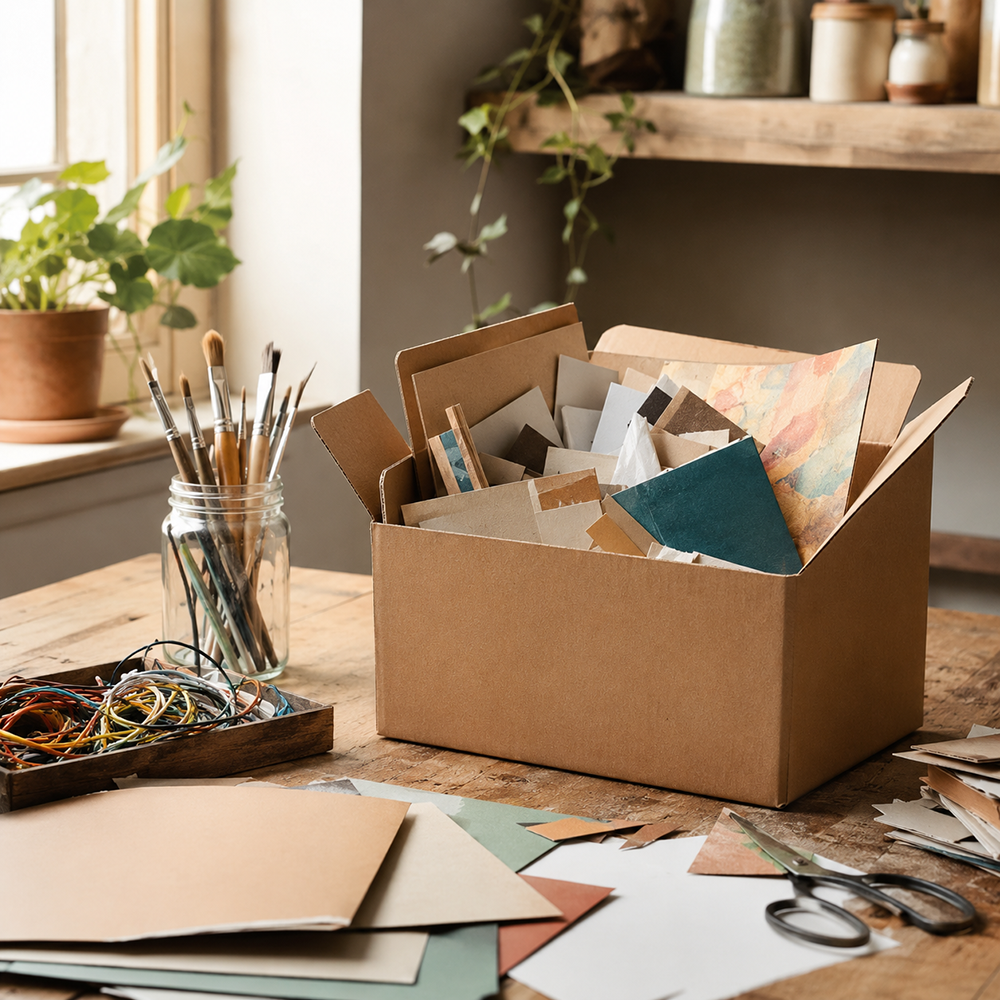
We Leave Evidence of Ourselves
Humans seem remarkably good at doing this.
Give two people identical notebooks and they may not remain identical for long.
One gets covered in stickers.
Another fills with doodles around the margins.
Someone writes their name carefully inside the cover.
Someone else chooses a particular pen because they like how the ink looks against the paper.
The same thing happens with backpacks, laptops, cars, desks, clothing, bedrooms, offices, lockers, phone cases, water bottles, and homes.
We alter things until they carry some evidence of us.
Sometimes that evidence is obvious.
A band sticker.
A pride flag.
A sports team.
A favorite character.
A religious or cultural symbol.
A photograph of someone we love.
Sometimes it's much quieter.
A color.
A texture.
The way books are arranged.
A collection of smooth stones.
The particular kind of cup someone always reaches for.
None of these choices tells us everything about a person.
But together, they can begin to say: someone lives here.
Decoration Can Be a Form of Identity
This becomes especially visible in spaces where people are figuring out who they are.
Think about bedrooms.
A child tapes drawings to the wall.
A teenager covers a door with posters, photographs, quotes, tickets, stickers, and pieces of whatever currently matters to them.
The room becomes more than the place where they sleep.
It becomes a small world they have some power to shape.
Adults don't necessarily stop doing this.
We may just become more socially acceptable about it.
We choose furniture.
Paint colors.
Artwork.
Plants.
Clothing.
Jewelry.
Collections.
Objects from travels.
Things inherited from people we love.
Things we found for fifty cents and inexplicably treasure.
Through hundreds of tiny decisions, we construct environments that reflect something about who we are—or perhaps who we are becoming.
Decoration doesn't simply change the object.
It changes our relationship to the object.
A Space Can Become a Place
There's a difference between occupying a space and feeling connected to it.
A hotel room can contain a bed, lamp, dresser, bathroom, and chair.
It can provide everything necessary for sleeping there.
But that doesn't automatically make it feel like home.
Home involves something harder to measure.
Familiarity.
Memory.
Safety.
Routine.
Recognition.
Belonging.
And the things we surround ourselves with can contribute to that feeling.
A photograph doesn't create belonging by itself.
Neither does a favorite blanket or a particular paint color.
But objects can become anchors for memory and identity.
They remind us of people.
Places.
Experiences.
Versions of ourselves.
Sometimes even the smallest decorative choice can say: I had some say in what this place became.
And perhaps that's one reason personalization can matter so much in spaces where we otherwise have very little control.
 Jessica Carey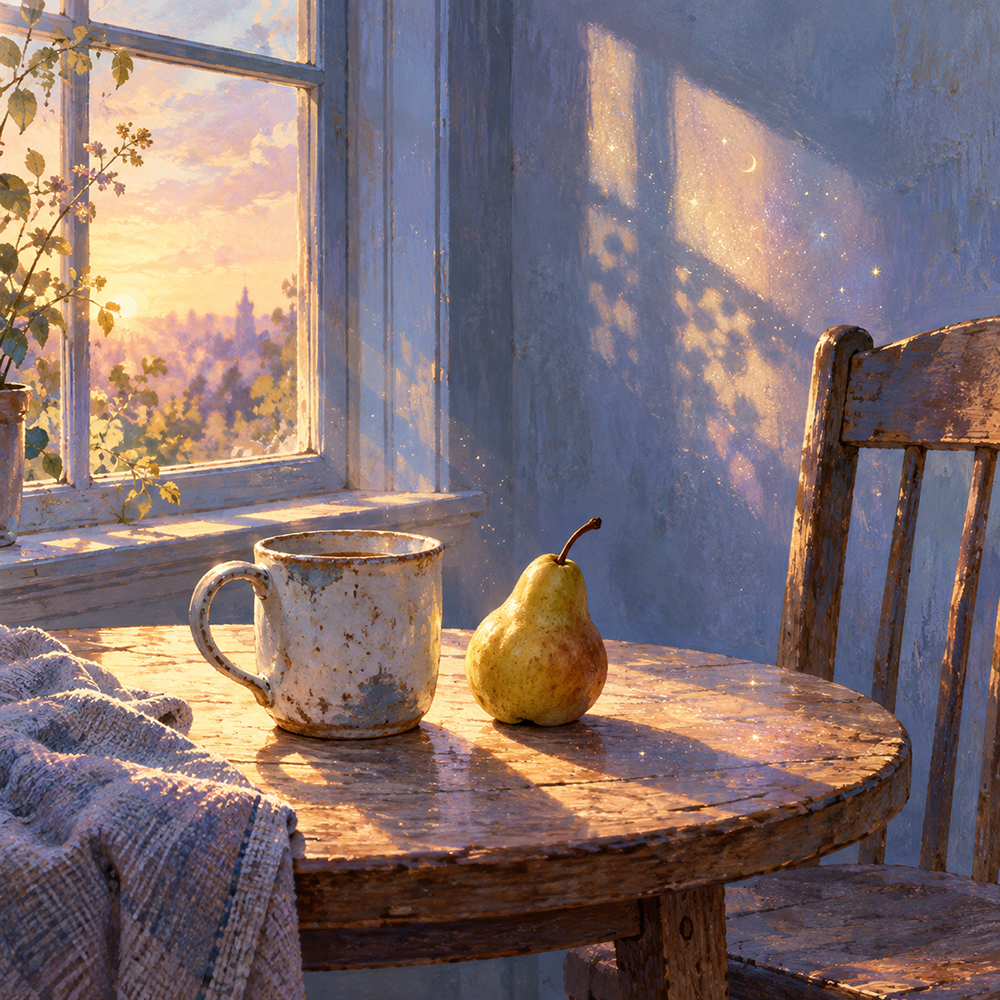
Decoration Can Turn Possession Into Relationship
Maybe that's what makes decorating more interesting than simply making something attractive.
We aren't only beautifying objects.
We're forming relationships with them.
A mass-produced mug becomes my mug.
A generic jacket becomes my jacket.
An apartment becomes my home.
A notebook becomes the one nobody else should dare write in.
The transformation may be almost entirely symbolic.
The object still performs exactly the same function.
But its meaning has changed.
And perhaps that's one of the simplest explanations for why humans keep decorating things.
We don't only want to exist among objects; we want to recognize something of ourselves in the world around us.
Decoration gives us one way to do that.
A mark.
A color.
A photograph.
A tiny object sitting on a shelf for no defensible practical reason whatsoever.
Little declarations that say:
- I chose this.
- This feels like me.
Decoration can turn space into place, and possession into belonging.
And if something as seemingly unnecessary as decoration can do that, perhaps we need to reconsider what we mean when we call beauty unnecessary.
Beauty Doesn't Have to Be Useful to Be Useful
There is a phrase that can make almost anything sound unimportant: it's just decorative.
Just decoration.
Just something pretty.
Just an aesthetic choice.
Take it away and the object still works, so apparently we didn't really need it.
And in the narrowest possible sense, that's often true.
A mural doesn't make the wall structurally stronger.
Flowers don't make a table better at holding plates.
An embroidered border doesn't necessarily make a blanket warmer.
A colorful tile pattern doesn't make the floor easier to walk across.
A beautifully carved doorway still performs the same basic job as a plain one.
But maybe we're asking too little of the things around us when function is the only kind of usefulness we're willing to recognize.
We Experience More Than Function
Imagine two rooms.
Both are structurally sound.
Both are the same temperature.
Both contain the same necessary furniture.
Both technically provide everything a person needs to occupy them.
But one is harshly lit, colorless, windowless, and bare.
The other has warm light, artwork, plants, interesting textures, thoughtful colors, and objects that someone clearly chose with care.
On a checklist of basic functions, the rooms might look remarkably similar.
Experiencing them may be completely different.
Because humans don't encounter our surroundings as lists of specifications.
We feel them.
Some spaces invite us to linger.
Some feel cold.
Some feel comforting.
Some feel chaotic.
Some feel sterile.
Some make us curious.
Some make us want to leave as quickly as possible.
And those responses are part of our experience of the space, even if they're harder to measure than square footage or structural integrity.
Beauty Can Do Something Without Performing a Task
Perhaps part of the problem is that we've made useful synonymous with productive.
Something useful should accomplish a task.
Save time.
Make money.
Increase efficiency.
Solve a problem.
Produce a measurable result.
Beauty doesn't always cooperate with that way of thinking.
A flower blooming beside a sidewalk isn't particularly efficient.
Neither is a stained-glass window, a mosaic, an intricately patterned quilt, or a ceiling someone bothered to paint even though nobody needed anything painted up there.
Their value can be experiential.
They give us something to notice, enjoy, wonder about, or remember.
Sometimes they make an ordinary moment a little less ordinary.
That isn't the same kind of usefulness as a hammer or a refrigerator.
But different kinds of value don't have to compete with each other.
 Jessica Carey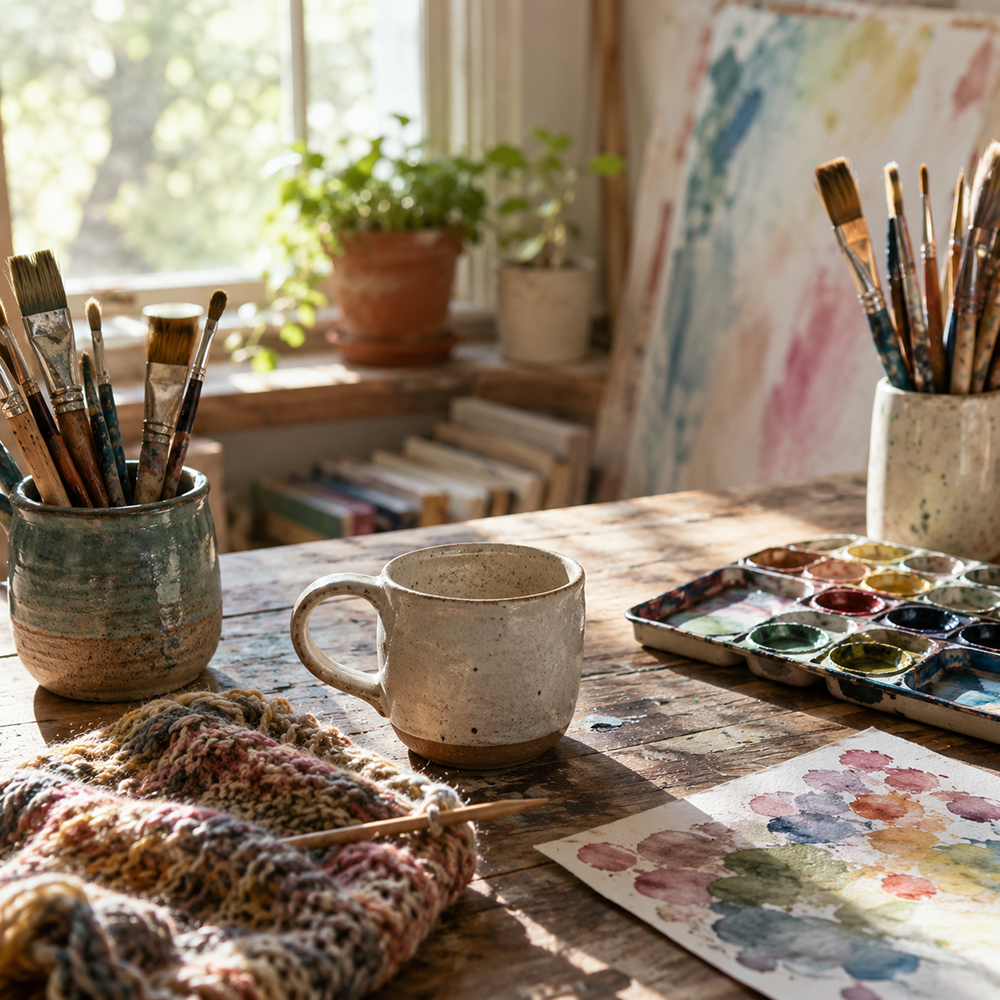
Delight Is Allowed to Count
I think there's something important in allowing delight to count without forcing it to justify itself.
A brightly colored door can make someone smile.
A ridiculous little figurine on a desk can make a difficult workday slightly more bearable.
A mural can make an otherwise forgotten wall somewhere people actually stop to look.
A garden can turn an ordinary walk into something we look forward to.
None of these things needs to transform someone's life to matter.
Sometimes the effect is tiny.
And tiny isn't the same as meaningless.
We live an enormous portion of our lives inside ordinary moments.
Walking down streets.
Sitting in rooms.
Waiting for appointments.
Going to work.
Coming home.
Looking out windows.
Passing the same buildings again and again.
The environments surrounding those moments become part of the texture of our lives.
So perhaps asking whether beauty is necessary misses the point.
Lots of things that make life richer aren't strictly necessary for biological survival.
Friendship isn't efficient.
Play doesn't always produce anything.
Wonder doesn't pay the electric bill.
A beautiful sunset accomplishes absolutely nothing for us on command.
And yet it would be strange to conclude that none of those things matter.
Survival Isn't the Whole Measure of a Life
There is an important distinction here.
Humans need food.
Water.
Shelter.
Safety.
Healthcare.
Rest.
We shouldn't romanticize beauty as a substitute for material needs.
A mural doesn't make unaffordable housing affordable.
A pretty waiting room doesn't repair an inaccessible healthcare system.
A flower bed doesn't compensate for unsafe working conditions.
Beauty cannot replace what people materially need.
But that doesn't mean beauty becomes irrelevant until every other need has been perfectly solved.
Human beings have repeatedly made, decorated, sung, danced, told stories, adorned themselves, and shaped their surroundings even under extraordinarily difficult circumstances.
Perhaps that's because survival and humanity aren't opposing categories.
We don't stop being people while we're surviving.
We still notice.
Feel.
Remember.
Imagine.
Prefer.
Express.
Make meaning.
Seek pleasure.
Want some small part of the world around us to feel like ours.
Maybe that's why creativity can look unnecessary when we're measuring human life only by what keeps the body functioning.
Something doesn't have to help us survive in the narrowest sense to help make life feel worth inhabiting.
And if our surroundings really can change what it feels like to move through everyday life, then decoration stops being quite so trivial.
Because the question becomes larger than why someone bothered to paint a flower on a cup.
It becomes: what happens when we build entire environments as though how they make people feel doesn't matter?
 Jessica Carey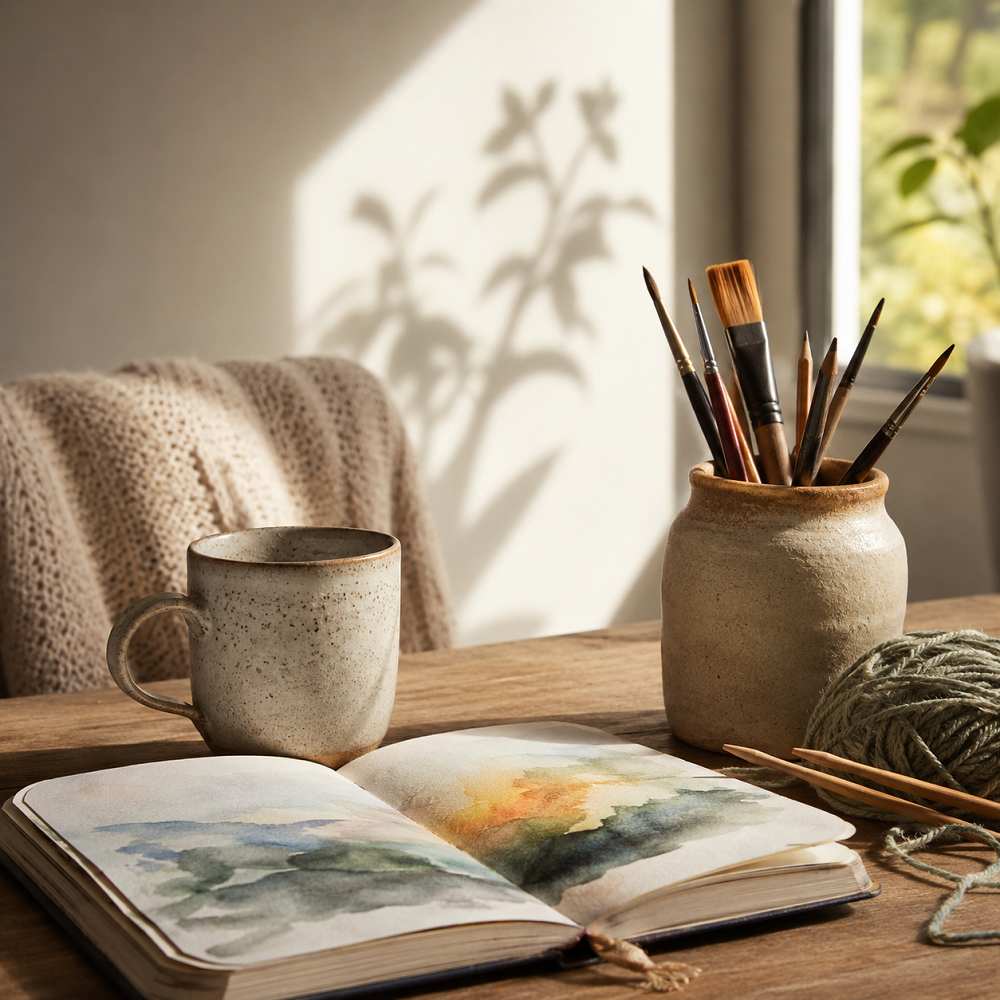
What Happens When We Build a World That Doesn't Care How It Feels?
Walk through an older part of almost any city and you may find details that seem strangely extravagant by today's standards.
Decorative brickwork. Carved stone. Patterned tile. Iron railings. Cornices, arches, mosaics, stained glass, elaborate doors—even tiny architectural details several stories above the ground that most people would never stop long enough to examine.
Someone spent time on that.
Someone decided the building didn't merely need to stand.
It could also be beautiful.
Then look at some of the environments we've built more recently: blank walls, windowless boxes, enormous parking lots, nearly identical developments, warehouses surrounded by asphalt, concrete barriers, utility structures, and commercial buildings designed to be constructed quickly and replicated easily.
Of course, this isn't a clean division between past and present.
There is extraordinary contemporary architecture.
There are beautiful modern buildings and public spaces.
And history contains no shortage of plain, unpleasant, overcrowded, or purely utilitarian environments.
But there is still a worthwhile question hiding inside the contrast: what happens when beauty stops being one of the things we're designing for?
Efficiency Is a Value—But It Isn't the Only Value
There are legitimate reasons buildings become simpler.
Construction, materials, labor, safety, maintenance, usable space, and infrastructure all impose real constraints.
Not every electrical box needs to become a sculpture, and not every warehouse needs a stained-glass window.
Function matters.
Efficiency matters.
Affordability certainly matters.
The problem begins when those values quietly become the only values that count.
The problem begins when those values quietly become the only values that count.
Then the questions shaping our environment become:
- How cheaply can we build it?
- How quickly can we finish it?
- How much usable space can we fit here?
- How easily can this design be repeated?
- What is the minimum required?
Those questions can produce perfectly functional places.
But they don't necessarily produce places people enjoy inhabiting.
Because there's another set of questions we could be asking, too:
- What will it feel like to walk here every day?
- Will people want to spend time here?
- Is there anything interesting to look at?
- Does this place feel welcoming?
- Does it feel cared for?
- Does it feel like it was designed for human beings rather than simply around them?
We Spend Our Lives Looking at What We Build
That's what makes architecture different from decorating a private object.
If I decide I want the ugliest lamp imaginable in my bedroom, that's mostly my problem.
Buildings, streets, parking lots, utility infrastructure, transit systems, commercial corridors, and public spaces are different.
Other people have to live among them.
We pass the same structures on our way to work.
We look at them from our windows.
We wait beside them for buses.
We walk through them.
We grow up around them.
They become the visual background of childhoods, routines, neighborhoods, and entire lives.
A cell tower may be technologically useful while still being visually intrusive.
A huge blank wall may perform its architectural function perfectly while making a street feel barren.
A parking lot may efficiently store hundreds of cars while creating a landscape almost nobody would choose to spend time in.
The criticism doesn't have to be that these things shouldn't exist.
The more interesting criticism is: why do we so often act as though their effect on the places around them doesn't count?
What We Don't Decorate Says Something, Too
Maybe decoration isn't only about what we add.
It's also about what we decide is worth caring about.
A carved doorway says someone considered the experience of approaching it.
A mural says a blank wall was seen as an opportunity.
Trees along a street suggest that walking beneath them matters.
A thoughtfully designed bench says someone imagined a human being sitting there.
Color says somebody considered what people would see.
None of those things automatically makes a place good. Beautiful architecture can exist alongside enormous inequality, exclusion, and suffering.
But removing beauty doesn't solve those problems either.
And there is something unsettling about environments that repeatedly communicate: it works; what more do you want?
Because humans have always seemed to want something more.
Not luxury.
Not extravagance.
Not ornament covering every available surface.
Just some evidence that our experience of being there mattered to whoever made the place.
Maybe the Built World Is Decorating on a Larger Scale
Perhaps that's why the question of decoration eventually becomes a question about architecture.
A person decorating a bedroom and a city designing a public square are obviously doing things on radically different scales.
But underneath them may be a related question: what kind of experience do we want this place to create?
We can make spaces that merely accommodate human bodies.
Or we can also consider the humans inside those bodies.
Their attention.
Comfort.
Curiosity.
Sense of belonging.
Desire for nature.
Need for stimulation or calm.
Capacity for delight.
The visual world isn't something we encounter occasionally.
We're inside it all the time.
Which means the things we build around people may not be psychologically neutral simply because they're functional.
And that raises a question we can actually investigate: what do our surroundings do to us?
Our Surroundings Aren't Neutral
We sometimes talk about the built environment as though it were simply a container for human life.
The buildings, sidewalks, roads, waiting rooms, and public spaces are there—and people supposedly move through them affected only by whether everything works.
But that's not really how we experience places.
We notice light, noise, color, scale, crowding, greenery, temperature, texture, clutter, openness, and whether there's somewhere comfortable to sit.
We notice whether we can see the sky, whether a place is easy to navigate, and whether something catches our attention.
Our surroundings are constantly giving us information.
And while different people can respond very differently to the same environment, the environment itself isn't irrelevant.
Research in environmental psychology has long examined how features of the built environment can influence psychological well-being, stress, and the way people experience the places they inhabit.
Beauty Isn't a Magic Ingredient
It's important not to oversimplify this.
There isn't some universal formula where ornate architecture makes everyone happy and plain architecture makes everyone depressed.
Some people love minimalism.
Some find highly ornamented environments visually overwhelming.
A beautiful building can be inaccessible.
A gorgeous public square can still feel unsafe.
A plain room can feel peaceful.
An elaborate room can feel exhausting.
Culture, disability, sensory needs, personal associations, familiarity, maintenance, safety, and individual taste can all change how a place feels.
So the argument isn't: pretty places make people happy while ugly places make people sad.
Human beings are much more complicated than that.
The more defensible—and more interesting—idea is that how environments are designed can affect how people experience being inside them.
Which means design isn't merely visual decoration added after the “real” work is complete.
It becomes part of the experience the place creates.
A Place Can Ask Something of Us
Think about how different environments feel to move through.
A huge parking lot in summer asks us to cross hot asphalt with little shade.
A narrow sidewalk beside fast-moving traffic asks us to remain alert.
A fluorescent waiting room with nowhere private to retreat may ask us to tolerate sensory input while we're already stressed.
A street lined with trees offers something different.
Green space is one example where research does suggest meaningful associations with well-being, although the strength of those relationships varies depending on how green space and well-being are measured.
So does a library with comfortable places to sit.
A courtyard.
A garden.
A window with a view.
A mural that gives our attention somewhere to land.
A building with enough detail that we keep noticing new things as we walk past it.
These aren't interchangeable experiences.
And importantly, this isn't only about beauty.
It's about human-centered design.
Shade is functional and experiential.
Trees and vegetation are a good example of that overlap: beyond their visual presence, they can cool urban environments through shade and evapotranspiration.
A window is functional and experiential.
A bench can be practical and welcoming.
Trees can provide environmental benefits while also making a street more pleasant to walk along.
Public art can contribute identity and visual interest to a place that would otherwise feel anonymous.
The distinction between useful and beautiful starts getting much less tidy.
Even Infrastructure Becomes Part of the Landscape
This is where things like cell towers become interesting—not because simply seeing a 5G tower can be blamed for depression, but because necessary infrastructure still becomes part of the visual environment.
Cellular networks need equipment. Electricity needs transmission systems. Roads need signs and barriers. Cities need utilities.
The question isn't whether infrastructure should disappear.
It's whether functionality automatically excuses us from considering what that infrastructure does to a place.
Utility structures can sometimes be integrated into buildings, softened through landscaping, transformed through public art, or otherwise designed with their surroundings in mind.
Not every solution will work beautifully. But the effort reveals something important: infrastructure has an aesthetic presence whether we intended it to or not.
What We See Every Day Becomes Part of Everyday Life
Perhaps this matters most not because of any single building.
It's accumulation.
One blank wall probably isn't going to ruin someone's day.
Neither is one parking lot, utility pole, monotonous building, or neglected corner.
But environments are made from thousands of these decisions.
So are beautiful ones.
A tree. An interesting doorway. A garden. A mural. A patch of shade. A bench someone actually wants to sit on. A little detail discovered while walking the same route for the hundredth time.
It accumulates.
The environment becomes the backdrop against which ordinary life happens.
The cumulative environment becomes the backdrop against which ordinary life happens.
And ordinary life is where we spend most of our time.
That's why I think the question of beauty in architecture and public space deserves more than: well, the building works.
Of course it works, but what is it like to live beside it?
- To walk past it?
- To wait inside it?
- To see it from your bedroom window?
- To encounter hundreds of places like it over decades?
Those questions matter, too.
And once we recognize that our surroundings can influence our experience of everyday life, another uncomfortable question appears: who actually gets access to places designed with that experience in mind?
 Jessica Carey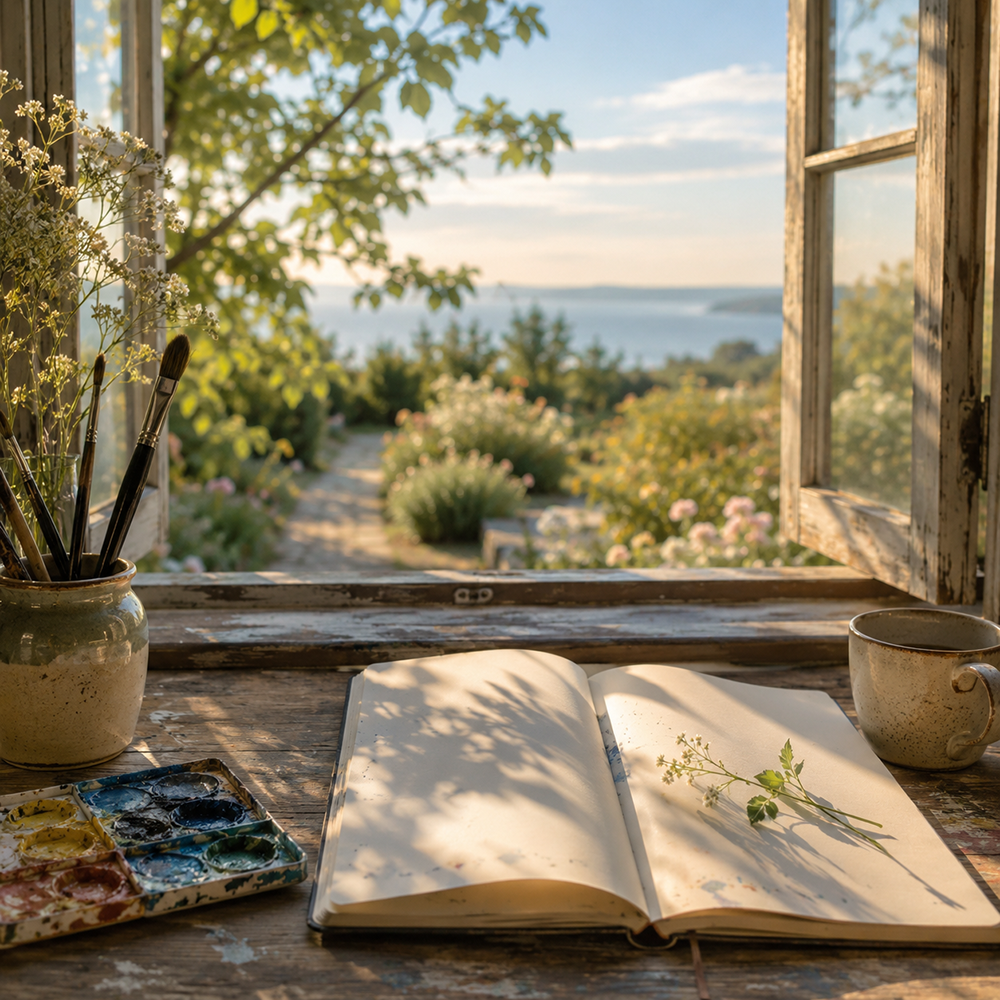
Beauty Is Also an Access Question
There is a privilege hidden inside the advice: just make your surroundings beautiful.
Because not everyone gets to choose their surroundings.
Some people own homes they can renovate, paint, furnish, garden around, and alter until the environment feels like theirs.
Other people live in rentals where they're barely allowed to put a nail in the wall.
They share spaces they don't control or spend their days in workplaces, schools, hospitals, shelters, waiting rooms, transit stops, and public buildings designed by someone they'll never meet.
They may not have a backyard, a balcony, a pleasant view, or the money to purchase beautiful things to compensate for an environment they didn't choose.
And that means the question of beauty eventually becomes a question about who gets access to it.
And that means the question of beauty eventually becomes a question about who gets access to it.
Some People Can Buy Their Own Beauty
When public environments fail us, money can provide alternatives.
A person with enough resources can buy a home on a tree-lined street, renovate an unpleasant room, purchase artwork, travel somewhere beautiful, or pay for experiences surrounded by nature.
Even something as ordinary as having enough space to create a peaceful corner of your own can be affected by money.
But if you don't have those options, the quality of the shared world matters even more.
The park you can walk to matters.
The trees on your street matter.
The library matters.
The bus stop matters.
The playground matters.
The public square matters.
The view outside your apartment matters.
And access to those kinds of environmental benefits isn't always distributed equally.
That inequality can be very concrete; in St. Louis, Trust for Public Land reports that residents of low-income neighborhoods have 17% less park space per person than residents of the average city neighborhood, and 38% less than residents of high-income neighborhoods.
Research in the United States has found widespread inequities in access to high-quality urban parks and their amenities; other research has found socioeconomic disparities in pedestrian shade, with lower-income neighborhoods receiving less of it in the cities studied.
So when we talk about creating places that feel good to inhabit, we're not only talking about taste.
We're talking about the shared environments people have access to whether or not they can afford something else.
Public Beauty Belongs to Everyone
That's one reason public beauty feels important to me.
A mural doesn't ask whether you can afford admission before you look at it.
A flowering tree doesn't know your income.
A beautifully designed library can be enjoyed by someone who could never afford a home that looks anything like it.
A mosaic in a transit station can interrupt an otherwise ordinary commute.
A neighborhood garden can give people something living and changing to encounter.
Interesting architecture can offer something to notice every time we walk past it.
None of these things solves poverty.
They don't replace affordable housing.
Healthcare.
Food.
Safety.
Accessible transportation.
Adequate income.
We shouldn't use beautification as a decorative bandage over structural neglect.
But the opposite conclusion doesn't follow either.
People with fewer resources don't somehow need beauty less.
In fact, when private alternatives are limited, the quality of the public realm can become especially consequential.
Research on urban green space, for example, has found both unequal access and meaningful benefits for health and well-being, while environmental-psychology work on placemaking has examined how public space can contribute to place identity, inclusion, and community life.
Care Can Be Built Into a Place
Maybe what I'm really describing isn't ornament at all.
It's care made visible.
A tree planted where someone will need shade.
A bench placed where someone might need to rest.
A mural commissioned from people who actually belong to the neighborhood.
A playground that isn't treated as an afterthought.
A library filled with natural light, color, artwork, comfortable places to sit, and spaces different people can actually use.
Flowers along a sidewalk.
A public building designed with dignity instead of the assumption that good enough is good enough for the people who have no alternative.
These choices aren't all purely decorative.
That's exactly the point.
Once we start asking how places feel to the humans using them, the boundary between function, beauty, comfort, accessibility, nature, identity, and belonging starts breaking down.
A tree can be beautiful and provide shade.
A bench can be attractive and give someone a place to rest.
A mural can beautify a wall and tell a community story.
Thoughtful design can make something work and make using it a better experience.
Maybe beauty was never as separate from function as we've been pretending.
No One Should Have to Purchase Every Beautiful Thing They Experience
There is something bleak about imagining beauty as a private commodity—beautiful homes, gardens, views, and interiors for people who can afford them, while everyone else gets whatever is cheapest to build and easiest to maintain.
That doesn't have to be the bargain.
Public spaces can contain delight.
Schools can contain color. Affordable housing can contain thoughtful design. Libraries can be beautiful. Sidewalks can have trees. Ordinary neighborhoods can contain art.
Because if our surroundings really do become part of the texture of everyday life, then beautiful, interesting, humane places shouldn't be treated exclusively as rewards for people wealthy enough to buy them.
If beauty affects how a place feels, access to beautiful environments shouldn't belong only to people who can afford to purchase them privately.
And perhaps that brings us back to the much smaller question we started with.
Why do humans decorate things?
Maybe because making a place feel human has never been quite as frivolous as the word decoration makes it sound.
Maybe “Decoration” Was Never Just Decoration
Maybe decoration is too small a word for everything we've been asking it to hold.
Because when humans decorate things, we aren't necessarily doing only one thing.
We might be making something beautiful.
Or familiar.
Or playful.
Or culturally meaningful.
Or unmistakably ours.
We might be remembering someone.
Expressing something.
Claiming a little control over a space we didn't choose.
Making somewhere temporary feel slightly more like home.
Or simply looking at an ordinary surface and thinking: that could use some color.
There doesn't have to be one universal explanation.
Decoration can turn space into place, and possession into belonging.
Humans were doing some version of this long before we had terminology for it.
We Keep Leaving Little Marks
Look around ordinary life and the impulse is everywhere.
Someone puts fairy lights around a bedroom window.
Someone paints their nails.
Someone grows flowers beside a front step.
Someone covers a laptop with stickers.
Someone chooses the bright yarn instead of the gray.
Someone doodles in the margins of a notebook.
Someone hangs a child's drawing on the refrigerator.
Someone puts a tiny ceramic frog beside a houseplant for no reason beyond: I wanted a tiny ceramic frog there.
These choices are easy to dismiss because they're small.
But perhaps their smallness is exactly what makes them interesting.
Most human creativity doesn't happen on the ceiling of the Sistine Chapel.
It happens quietly, constantly, in ordinary places.
On our bodies.
In our homes.
On our belongings.
At our desks.
In gardens.
On walls.
Around doorways.
Inside notebooks.
Humans keep finding little surfaces and saying: I want to do something to that.
 Jessica Carey
Maybe We're Making a World We Recognize
And perhaps that's the thread connecting all of this.
The ancient patterned vessel.
The embroidered shirt.
The teenager's bedroom wall.
The stickers on the water bottle.
The carved doorway.
The neighborhood mural.
The flowers planted beside the sidewalk.
They're wildly different things, created for wildly different reasons.
But all involve humans doing something beyond merely accepting the world exactly as it arrived.
We alter it.
Arrange it.
Mark it.
Color it.
Personalize it.
Sometimes we make the world communicate something about us.
Sometimes the things and places around us become intertwined with memory, identity, and belonging.
Environmental psychology has spent decades studying versions of this relationship between self and place.
And sometimes, perhaps, we simply make something prettier because we want there to be something pretty there.
That counts, too.
Because maybe decoration was never merely the frivolous layer placed on top of the things humans actually need.
Maybe it is one expression of a much deeper impulse: to participate in the appearance of our own lives.
To look at the world we've been given and have some small say in what it becomes.
Perhaps decoration is one of the ways humans turn an environment we happen to occupy into a world we recognize ourselves inside.
And if we've been doing some version of that for thousands upon thousands of years, creativity begins to look much less like an optional extra.
It starts looking like something humans simply do.
More Than Survival
A cup only needs to hold liquid.
A blanket only needs to keep us warm.
A building only needs to shelter us.
A chair only needs to hold us up.
And yet, over and over again, humans have looked at functional things and decided that function wasn't the end of the conversation.
We painted them.
Carved them.
Patterned them.
Wove them.
Personalized them.
Covered them in images, symbols, colors, textures, memories, and tiny details nobody technically needed.
This isn't some peculiar modern habit.
Archaeological evidence preserves personal adornment, pigments, engravings, and other forms of symbolic or decorative making tens of thousands of years into our past.
For an extraordinarily long time, apparently, we could have left it plain.
And we didn't.
That Doesn't Mean Everything Needs Decoration
None of this means ornament is inherently better than simplicity.
A plain ceramic bowl can be beautiful.
So can a minimalist building.
Some people feel most comfortable in visually quiet environments.
Others delight in rooms bursting with color, pattern, objects, and detail.
There is no single aesthetic humans ought to prefer.
And there are moments when efficiency really does need to come first.
Beauty cannot replace safety.
Decoration cannot substitute for accessibility.
A mural cannot repair structural inequality.
Thoughtful architecture cannot make unaffordable housing affordable.
The point isn't that everything should be covered in ornament.
It's that human experience deserves a place among the things we're designing for.
Maybe the mistake is assuming that once something technically works, everything beyond that becomes frivolous.
Because humans don't merely use the world around us.
We experience it.
We Have Always Wanted More Than Bare Necessity
There is something deeply moving to me about the sheer persistence of this impulse.
Across enormous differences in culture, place, purpose, and time, humans have adorned bodies and belongings and transformed ordinary materials into objects carrying beauty, identity, meaning, and social information.
Those meanings vary enormously; decoration has never been one universal human language.
But the impulse to do something more keeps appearing.
And perhaps that tells us something about the way we sometimes talk about creativity now.
As though making things beautiful is what humans do once the serious work is finished.
As though delight is indulgent.
As though making something feel like ours doesn't matter because we could technically live without doing it.
But people don't seem to have spent human history behaving as though survival were the only thing worth doing.
We survive.
And then, sometimes right alongside the surviving, we make.
We decorate the shelter.
Pattern the vessel.
Adorn the body.
Sing while we work.
Plant flowers beside the doorway.
Hang something on the wall.
Put the silly little frog beside the houseplant.
Not because every one of those things is necessary.
But perhaps because necessity is not the only measure of a human life.
Maybe We Were Never Just Decorating
Maybe that's the answer I've been circling this entire time.
Decoration can be beauty.
But it can also be identity.
Memory.
Culture.
Play.
Communication.
Belonging.
Comfort.
Choice.
Care.
A way of leaving evidence that somebody was here.
A way of transforming an anonymous space into somewhere recognizable.
A way of saying:
- This matters to me.
- I chose this.
- I want to look at this.
- I want this place to feel different because I am here.
And when enough of those choices accumulate, we aren't merely decorating objects anymore.
We're shaping the environments in which human life happens.
That doesn't make every decorative choice profound.
Sometimes we really did just like the blue.
But even that tells us something.
We cared what color the world was.
Maybe creativity isn't an unnecessary extra humans invented after taking care of the important things.
Maybe the impulse to shape our surroundings has always been part of how we make a human life.
So perhaps the question isn't: why do humans waste so much time decorating things?
Maybe it's: why did we ever decide that making the world feel more human was a waste of time?
Want even more content about creativity and art?
Be sure to check out all of our creative chronicles!
If you'd like to see examples of my work, you can find some of my art and creations at Redbubble and Gumroad!
Looking to learn more about my recent journey?
Check out some of these articles:
-Hidden Gems for St. Louis Artists
-Hidden Gems for Autistic & Neurodivergent Adults
-Learning What Love Was Supposed to Feel Like
-I Wasn't Broken--I'm Burned Out
-The Difference Between Resting and Giving Up
-What Chronic Autistic Burnout Actually Feels Like
-When You Had to Raise Yourself
 Jessica Carey