
I've heard some version of this sentence more times than I can count: “Oh, I'm not creative. I can't even draw a stick figure.”
It's usually said with complete certainty.
As though the case has been closed.
Can't draw a convincing person?
Not creative.
Can't paint something that looks like a photograph?
Definitely not an artist.
Never learned how to shade a sphere, draw realistic hands, or make a landscape look like the landscape sitting in front of you?
Apparently, your creative credentials have been revoked.
Except... why did drawing become the test?
And not even all drawing.
Usually when people say they can't draw, they're comparing themselves to a particular kind of art: something recognizable, technically polished, and often realistic.
A beautifully rendered portrait.
A detailed landscape.
A drawing of an animal that looks almost photographic.
We see someone create something like that and think: wow, they're so creative.
And they very well may be.
But somewhere along the way, many of us seem to have learned to confuse being creative with being technically skilled at a narrow collection of art forms.
Those aren't the same thing.
What If the Definition Is the Problem?
Even within visual art, creativity can look wildly different.
It can look like carefully drawing a realistic portrait.
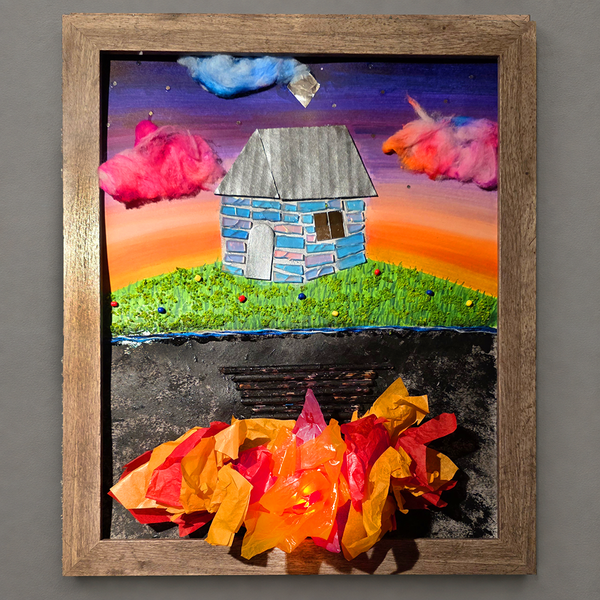
But it can also look like pouring paint across a canvas and seeing how the colors move together.
Splattering paint.
Cutting up old magazines for a collage.
Taking photographs.
Pressing objects into clay.
Arranging shapes.
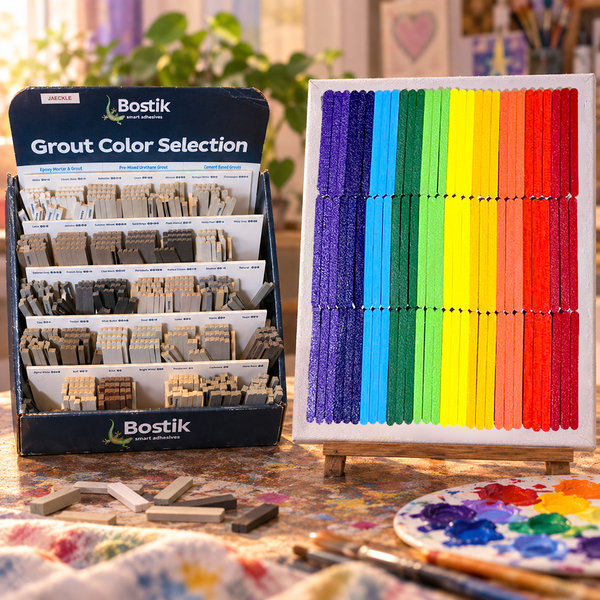
Experimenting with color.
Building something from scraps.
Making marks simply because you enjoy making them.
None of those require someone to prove that they can draw a photorealistic eye first.
And that's before we've even left the world of visual art.
Because creativity can also happen in a kitchen.
A garden.
A notebook.
A dance studio.
A workshop.
A living room.
Or somewhere we might never think to call creative at all.
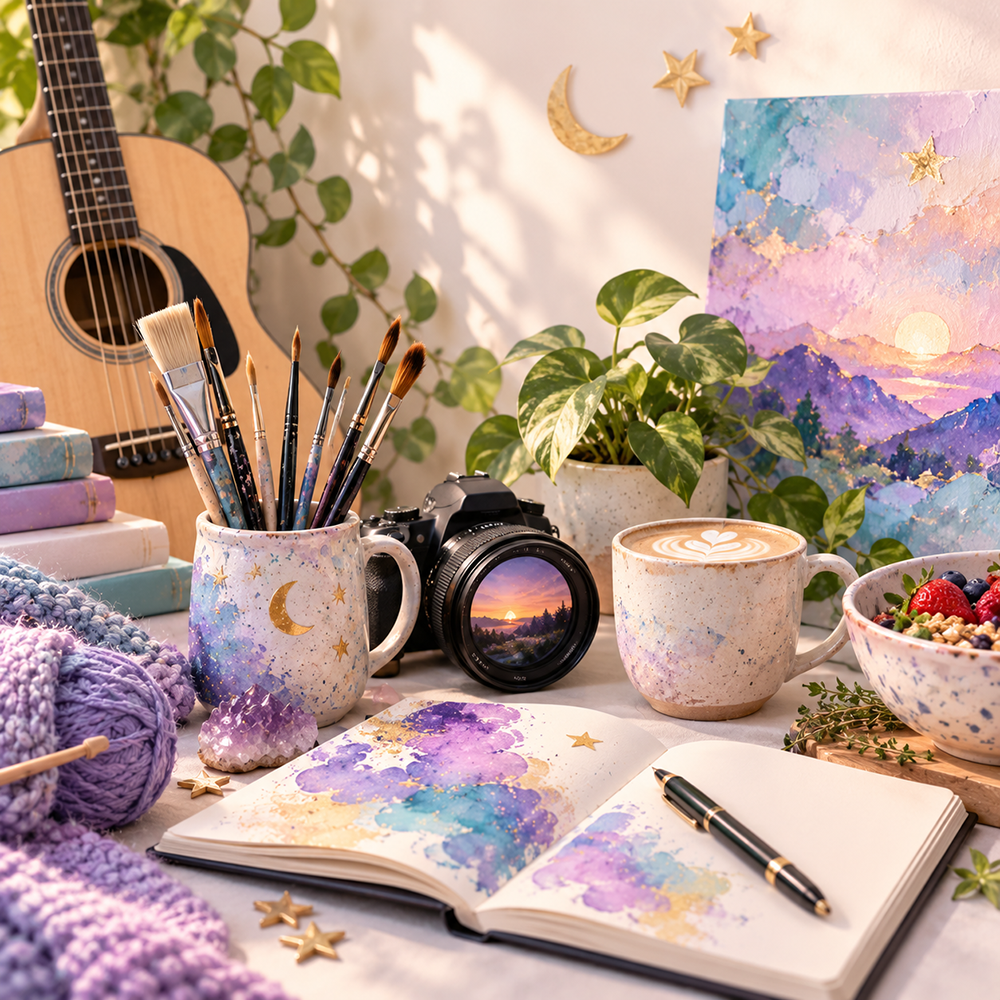
It can happen while decorating a cake, putting together an outfit, rearranging furniture, improvising a meal from whatever happens to be in the refrigerator, or figuring out what to do with an object everyone else was ready to throw away.
Which makes me wonder whether we've been asking the wrong question.
Maybe the problem isn't that enormous numbers of people somehow missed out on receiving the mysterious creativity gene.
Maybe our picture of creativity has simply become much too small.
Because creativity isn't one particular medium.
It isn't realism.
It isn't technical perfection.
It isn't a talent reserved for people who have been officially declared creative.
Creativity doesn't have one look.
And once we stop expecting it to, we may begin noticing it in far more places—including places in our own lives that we've never thought to count.
Creativity Is Much Bigger Than Visual Art
And here's where the definition gets even bigger.
Because creativity isn't just broader than realistic drawing.
It's broader than visual art altogether.
Someone standing in their kitchen, tasting a sauce and deciding it needs a little more garlic is making choices.
Someone planting a garden is thinking about color, height, texture, space, seasons, and what might grow well together.
Someone putting together an outfit is combining shapes, colors, patterns, textures, and pieces of their identity.
Someone decorating a room is deciding how they want a space to look, feel, and function.
Someone writing a story is building something that didn't exist before out of words.
Someone playing music might interpret the same song differently than anyone else.
Someone dancing can communicate something through movement.
Someone taking a photograph decides where to stand, what to include, what to leave outside the frame, and exactly when to press the button.
Someone decorating a cake is working with color and composition—and possibly discovering that frosting has absolutely no interest in cooperating with the original plan.
And the list keeps going: sewing, knitting, woodworking, theater, fashion, hairstyling, floral arranging, costume-making, game design, and countless other practices.
Some of these things are traditionally labeled the arts.
Some aren't.
But the boundaries aren't nearly as tidy as we sometimes pretend they are.
Creativity Isn't a Medium
Maybe that's part of the confusion.
We tend to think of creativity as though it's an activity.
- Painting is creative.
- Drawing is creative.
- Sculpture is creative.
But creativity isn't really a material someone picks up.
It's something that can happen through all kinds of activities.
Two people can receive the same ingredients and make completely different meals.
Two photographers can stand in exactly the same place and create dramatically different photographs.
Two people can decorate identical rooms and make them feel nothing alike.
Give several people the same pile of fabric, cardboard, beads, yarn, wood scraps, or other materials, and they may imagine completely different possibilities.
The materials don't contain a single correct creative answer.
People make choices.
They combine.
Experiment.
Interpret.
Adapt.
Arrange.
Imagine.
Respond.
Sometimes they begin with a clear idea.
Sometimes they discover the idea while they're already doing it.
Sometimes they make a mistake and decide they like the mistake better than the original plan.
Sometimes creativity is less about making an art object and more about seeing another possibility.
And that may be a much more useful way to think about it.
Creativity isn't a medium; it's something humans can do through mediums.
Which means the question isn't simply: can you draw?
It's much bigger than that.
- What do you imagine?
- What do you combine?
- What do you change?
- What possibilities do you notice?
Because once creativity stops meaning “Can you make a realistic picture?” a surprising number of people who insist they aren't creative may already be doing creative things every day.
Creativity Can Look Like Making Choices
If creativity isn't a particular medium, what actually makes something creative?
Maybe part of the answer is possibility.
Creativity often appears when we don't simply choose between existing answers, but begin wondering what another answer might be.
- What if I put these colors together?
- What if I substitute this ingredient?
- What if I move the couch over there?
- What if I photograph this from the floor instead?
- What if I use this scrap of cardboard for something it was never intended to become?
- What if I change the ending?
- What if I try it this way?
Creativity often lives inside those little questions.
Creativity Doesn't Require Inventing Something Nobody Has Ever Seen Before
I think this is another place where we make creativity unnecessarily intimidating.
If someone hasn't invented an entirely new artistic style, written a groundbreaking novel, composed a completely original genre of music, or created something nobody in human history has ever thought of before, they may assume they haven't really been creative.
But that's an impossibly high bar.
Most creativity involves working with things that already exist.
Words already exist.
Colors already exist.
Musical notes already exist.
Ingredients already exist.
Fabric, clay, wood, plants, photographs, furniture, movement, recipes, stories, and techniques already exist.
Creativity can happen in what we do with them.
You can follow a familiar recipe and decide to change the seasoning.
You can knit a familiar pattern in colors you chose yourself.
You can take a photograph of something thousands of other people have photographed and still make decisions about light, angle, framing, timing, and composition that belong to this photograph.
You can take an object headed for the trash and wonder: what else could this become?
None of those things requires creating something from absolute nothing.
They require seeing possibilities.
And creativity doesn't necessarily require unlimited options.
Sometimes constraints are exactly what invite it: a limited budget, a handful of ingredients, three colors, a small space, a particular material, or a problem that needs solving.
Creativity can be less about having endless possibilities and more about discovering possibilities within what we have.
 Jessica Carey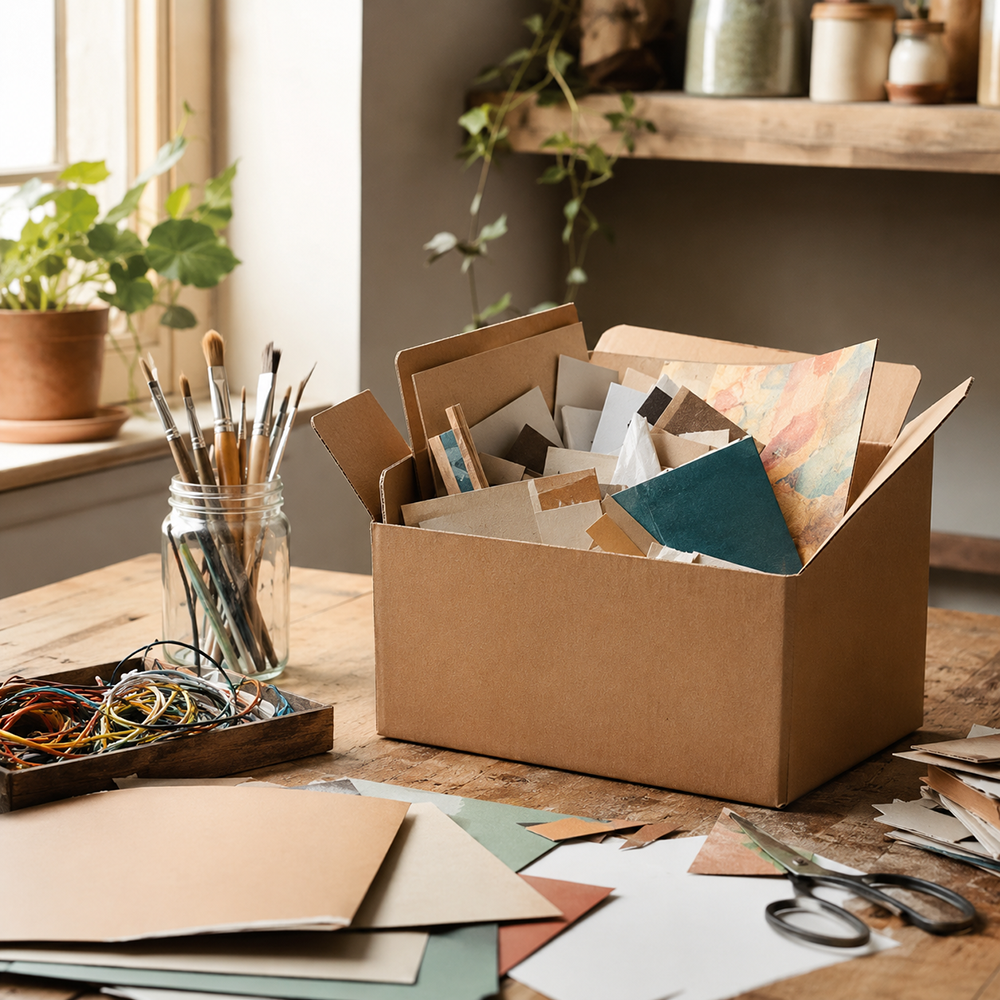
Sometimes Creativity Is Improvisation
And sometimes creativity doesn't even begin with an idea.
It begins with a problem.
You don't have the ingredient the recipe calls for.
The paint behaves differently than you expected.
The material you wanted isn't available.
The furniture doesn't fit where you thought it would.
The costume breaks.
The frosting refuses to cooperate.
The photograph doesn't look right from the angle you planned.
So you adapt.
You substitute.
Rearrange.
Experiment.
Try again.
Maybe the solution works.
Maybe it doesn't.
Maybe the mistake produces something more interesting than the original idea.
That counts, too.
Because creativity isn't only the ability to imagine something beautiful and then execute it perfectly.
It can also be the ability to respond to what actually happens.
 Jessica Carey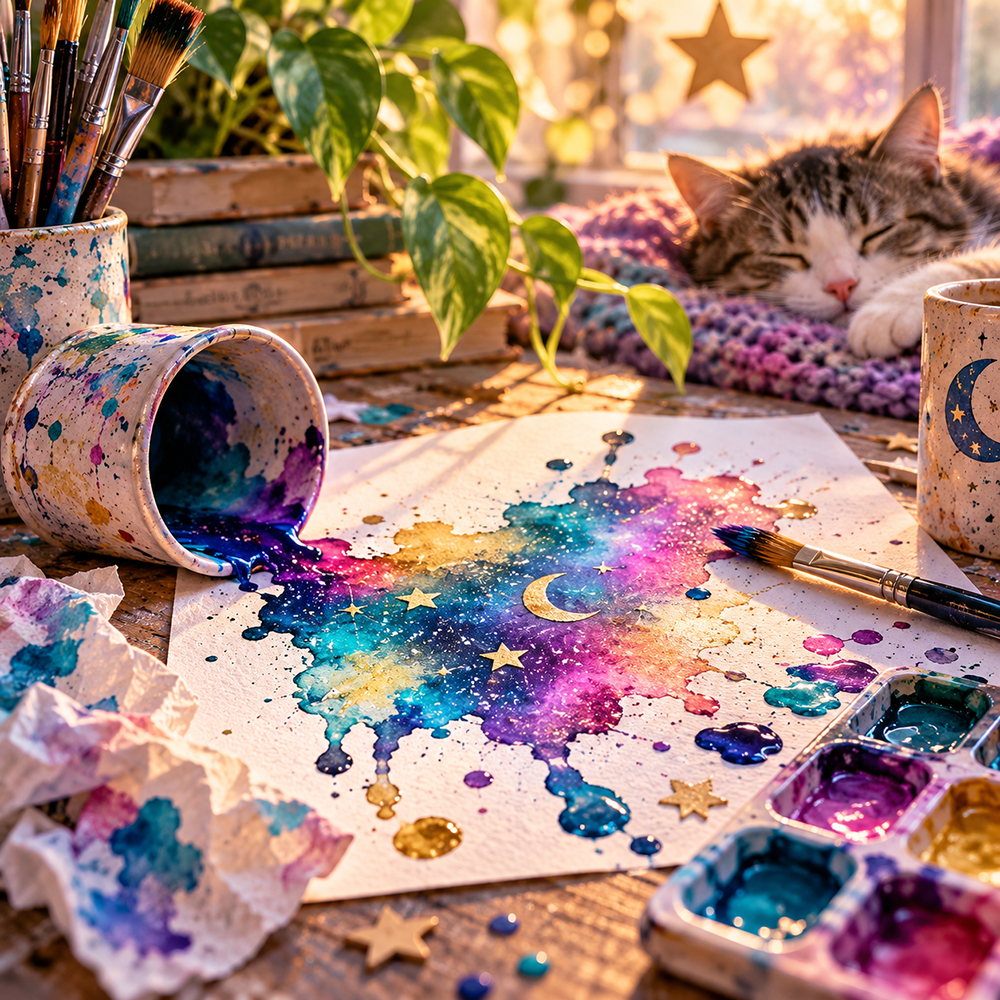
Creativity Can Be a Way of Seeing Possibility
Maybe that's one of the threads connecting all these wildly different forms of creativity.
A cook sees possibilities in ingredients.
A gardener sees possibilities in a patch of ground.
A writer sees possibilities in words.
A photographer sees possibilities in light and framing.
A musician hears possibilities in sound.
An artist sees possibilities in materials.
Someone decorating their home sees possibilities in a room.
Someone repairing, repurposing, rearranging, inventing, improvising, or experimenting sees that what exists right now isn't necessarily the only way things could be.
And that doesn't mean every choice we make is automatically a profound creative act.
Choosing which socks to wear doesn't have to become an existential statement about human imagination.
But creativity may be much more ordinary—and much more available—than we've been taught to believe.
Sometimes it begins with nothing more dramatic than looking at what's in front of us and wondering: what could I do with this?
You May Already Be Creative Without Calling It Creativity
Here's the part I find especially interesting.
A person can spend years doing creative things while remaining completely convinced that they aren't creative.
- They might cook without recipes.
- Take photographs everywhere they go.
- Put together elaborate cosplay and/or Halloween costumes.
- Arrange their home until it feels exactly right.
- Plant flowers in combinations they love.
- Make playlists for every conceivable mood.
- Write funny birthday cards.
- Experiment with makeup.
- Come up with ridiculous games to entertain their kids.
- Repair things using solutions they invented because the obvious solution didn't work.
And then someone asks: “Are you creative?”
And they say: “Oh, absolutely not. I can't draw.”
Somehow, none of the other evidence gets entered into the case.
Maybe You've Been Calling It Something Else
Part of the problem may simply be language.
We don't necessarily call it being creative when someone improvises dinner from whatever is left in the refrigerator.
We call it cooking.
We don't necessarily call it creativity when someone spends an afternoon rearranging furniture, choosing where artwork should hang, and deciding which objects look good together.
We call it decorating.
Someone coordinates an outfit.
Gets dressed.
Takes photographs on vacation.
Takes pictures.
Makes up stories for their children.
Plays.
Experiments with flowers in the yard.
Gardens.
Writes elaborate fictional scenarios with friends.
Plays a game.
The creative act can disappear inside the name of the activity.
But changing the label doesn't necessarily change what's happening.
There can still be imagination.
Choice.
Experimentation.
Expression.
Interpretation.
Problem-solving.
Play.
We can become so busy looking for creativity in the places we've been told it belongs that we miss all the places it is already happening.
What Do You Do Differently Because You're You?
Maybe that's a more interesting question than asking whether someone is a creative person.
- What do you make your own?
- What do you experiment with?
- What do you improvise when the original plan doesn't work?
- Where do you make choices because one possibility feels more you than another?
Maybe it's the way you season food.
The photographs you take.
The clothes you combine.
The way you wrap gifts.
The plants you choose.
The stories you tell.
The playlists you build.
The way you decorate your desk.
The strange little solutions you invent to everyday problems.
None of those things needs to become a career.
Nobody needs to buy them.
Nobody needs to applaud.
They don't even need to be particularly impressive.
They're simply places where you aren't moving through the world mechanically.
You're participating in what something becomes.
Maybe the Creativity Wasn't Missing
That doesn't mean everyone needs to identify as an artist.
And it doesn't mean everyone enjoys traditionally artistic activities.
Someone can genuinely dislike drawing.
They can hate painting.
They can have absolutely no desire to touch clay, learn an instrument, write poetry, or spend Saturday afternoon wandering around a craft store.
That's fine.
The point isn't to replace one rigid definition with another and announce that everyone must express creativity in the same way.
It's to make the definition spacious enough for us to recognize what's already there.
Because perhaps some people who have spent their entire lives saying: “I'm just not a creative person,” haven't been describing an absence of creativity at all.
Maybe they've been describing an absence of recognition.
Maybe nobody ever told them that the things they make, combine, imagine, arrange, adapt, and reinvent count.
And maybe they deserve a little more credit than they've been giving themselves.
 Jessica Carey
Creativity Doesn't Have to Be Impressive
There's another trap waiting for us once we expand our definition of creativity.
Maybe someone accepts that cooking can be creative.
But I'm not a very good cook.
Photography?
I only take pictures with my phone.
Writing?
I've never published anything.
Gardening?
I just have a few pots on the porch.
Painting?
You definitely wouldn't want to hang mine in a museum.
It's remarkably easy to move the goalposts.
First, creativity only counts if it's art.
Then art only counts if it's realistic.
Then other forms of creativity can count—but only if you're good at them.
And suddenly we've rebuilt the same tiny box with slightly different walls.
Creativity and Skill Aren't the Same Thing
Skill matters.
Practice matters.
Experience matters.
Someone who has spent twenty years learning to paint, play an instrument, sew, cook, photograph, dance, garden, or write has developed knowledge and abilities that a beginner hasn't.
Acknowledging that doesn't threaten the idea that beginners can be creative.
 Jessica Carey
Because skill and creativity aren't synonyms.
Skill can help us execute an idea.
Creativity can help us imagine, interpret, combine, experiment, or respond.
Often the two work beautifully together.
But they aren't interchangeable.
A beginner can make highly creative choices without having the technical ability to execute them exactly as imagined.
An experienced artist can use extraordinary technical skill while working within familiar conventions.
And someone can be creative while learning.
While fumbling.
While making something crooked.
While discovering that the cake they're decorating looks considerably less like the reference photo than anticipated.
Creativity doesn't begin after mastery.
That matters especially when we're learning how to be beginners again instead of expecting immediate competence.
 Jessica Carey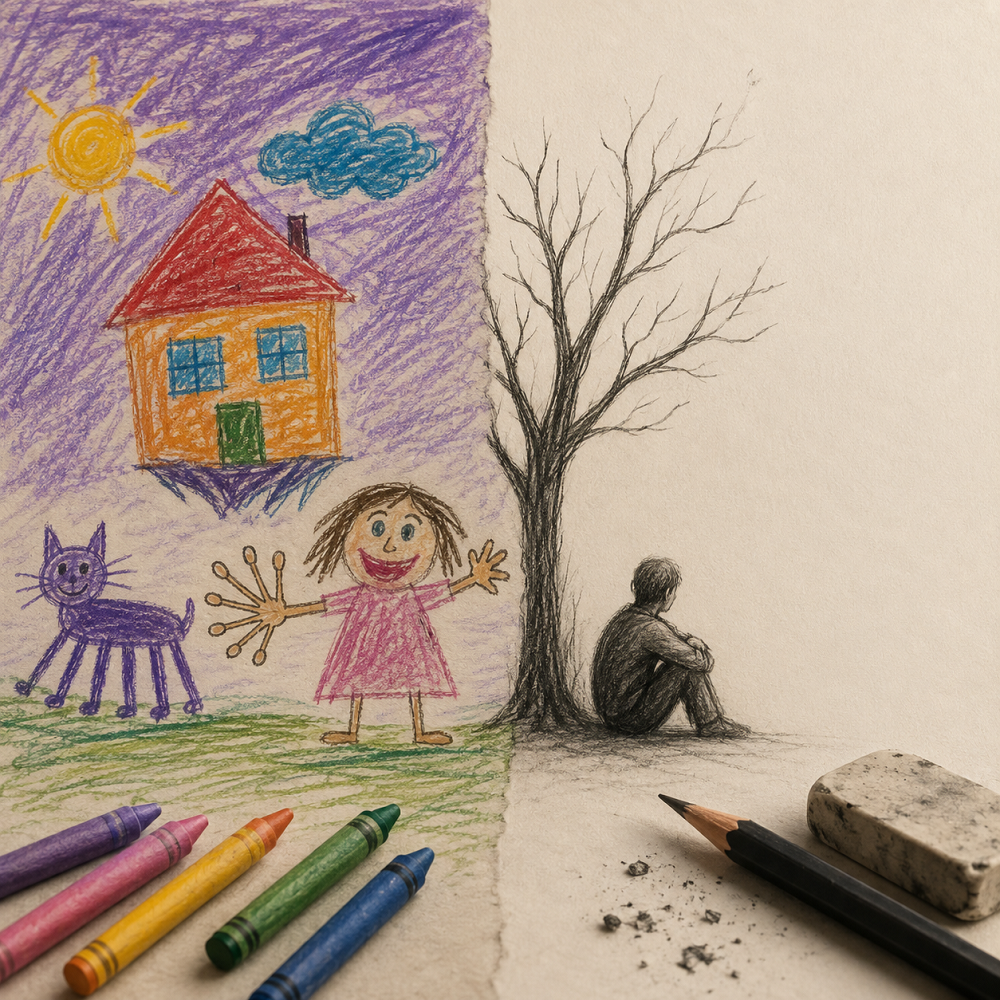
It Doesn't Need an Audience, Either
Creativity also doesn't become more legitimate when somebody pays for it.
You don't need to sell your photographs before photography counts.
You don't need to publish your stories before writing counts.
You don't need to perform onstage before music counts.
You don't need thousands of followers before your ideas matter.
You don't need to turn your hobby into a business.
And you don't need to produce something polished enough to show anyone at all.
You can make something purely because you wondered what would happen.
Because you liked the colors.
Because you wanted to try.
Because you were bored.
Because making it felt good.
Because the idea made you laugh.
Because you wanted something that didn't exist quite that way yet.
Creativity does not require an audience to witness it before it becomes real.
The Ugly Cake Still Counts
Maybe you decided to decorate a birthday cake.
You chose colors.
Tried piping frosting.
Changed the design halfway through because something went wrong.
Added sprinkles to cover the suspicious-looking section in the corner.
Improvised.
Adapted.
Made choices.
And perhaps the finished cake is... not your finest work.
That doesn't erase the creativity that happened while making it.
Success and creativity aren't synonyms.
Neither are professionalism and creativity.
Neither are perfection and creativity.
Sometimes creativity produces something beautiful.
Sometimes it produces something useful.
Sometimes it produces something weird.
Sometimes it produces something that immediately teaches us what not to do next time.
And sometimes it produces an ugly cake that still tastes pretty good.
It all counts.
Because being creative was never supposed to mean: everything I make turns out impressive.
Sometimes it simply means: I imagined a possibility, and I tried something with it.
Maybe Give Yourself More Credit
So maybe you really can't draw a stick figure, or at least not one you particularly like.
That's okay.
Maybe you have no interest in painting.
Maybe clay feels terrible on your hands.
Maybe you've never written a poem, played an instrument, sewn a piece of clothing, or stepped onto a stage.
None of that answers the bigger question: are you creative?
Because perhaps we've been asking that question as though creativity were something people either possess or don't.
Creative.
Not creative.
Artist.
Not artist.
As though humanity were divided into people who received the mysterious creativity gene and everyone else.
But creativity may be much less exclusive than that.
It can appear when we make something.
When we combine things.
When we experiment.
When we improvise.
When we express something.
When we solve a problem.
When we look at what already exists and imagine another possibility.
Those moments can happen in an art studio.
But they can also happen in kitchens, gardens, workshops, notebooks, living rooms, and countless places we would never think to label creative at all.
Maybe Ask a Different Question
Instead of asking: am I creative?
Maybe ask: where does my creativity already show up?
Maybe it's in the meals you make without measuring anything.
Maybe it's in the photographs filling your phone.
Maybe it's in your garden.
Your clothes.
Your stories.
Your playlists.
The way you've decorated your home.
The gifts you make unusually personal.
The ridiculous jokes you invent with your friends.
The way you solve problems when the obvious solution doesn't work.
The little choices you make because one possibility feels more interesting, useful, beautiful, funny, meaningful, or simply more you than another.
None of it has to be extraordinary.
And none of it has to prove anything.
You don't have to monetize it.
Master it.
Show it to anyone.
Or become good enough before you're allowed to recognize what you're doing.
Maybe creativity was never something reserved for a special category of people.
Maybe we've simply been taught to recognize some forms of it more easily than others.
So the next time you catch yourself saying: “I'm just not creative,” maybe don't worry about the stick figure.
Look at the rest of the evidence.
You may not need to become creative.
You may need to start giving yourself credit for the ways you already are.
Want even more content about creativity and art?
Be sure to check out all of our creative chronicles!
If you'd like to see examples of my work, you can find some of my art and creations at Redbubble and Gumroad!
Looking to learn more about my recent journey?
Check out some of these articles:
-Hidden Gems for St. Louis Artists
-Hidden Gems for Autistic & Neurodivergent Adults
-Learning What Love Was Supposed to Feel Like
-I Wasn't Broken--I'm Burned Out
-The Difference Between Resting and Giving Up
-What Chronic Autistic Burnout Actually Feels Like
-When You Had to Raise Yourself
 Jessica Carey